25 Holiday Decor Storage Ideas for 2026
Putting away holiday decorations can be surprisingly challenging once the celebrations are over. Christmas ornaments, decorative garlands, string lights, wreaths, and artificial trees all need a place to stay until the next festive season.
Without a practical organization system, these items can quickly fill closets, crowd garages, and become difficult to locate. Fragile decorations may also get scratched or damaged when they are packed carelessly.
The good news is that you do not need a large storage room to keep everything organized. With a combination of smart containers, vertical shelving, and designated storage areas, you can make the most of the space you already have.
These 25 holiday decor storage ideas offer practical ways to protect seasonal belongings, reduce clutter, and make decorating easier when the holidays return.
Where Should You Store Christmas and Holiday Decorations in a Small Home?
In a small home, the best storage solution often involves making better use of overlooked spaces rather than adding more furniture. Look at the areas beneath your bed, above closet shelves, inside hallway cupboards, and along unused garage walls.
Choose containers that fit these spaces without blocking everyday essentials. Stackable bins are useful for lightweight decorations, while narrow shelving can turn an unused corner into a compact storage station.
You can also use storage benches, under-bed organizers, and over-door hooks to keep seasonal belongings accessible without sacrificing valuable floor space.
Before packing everything away, sort decorations by category and label each container. This simple habit prevents unnecessary searching and helps you return items to their proper places after every holiday.
1. Wreath Wall
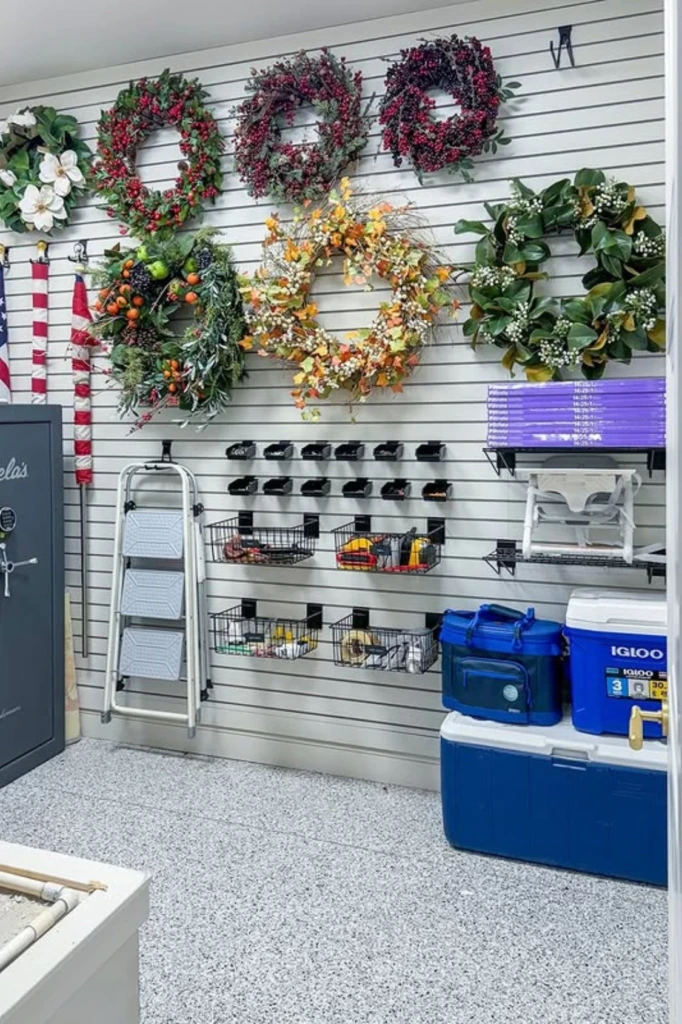
Decorative wreaths can become flattened or misshapen when they are buried beneath heavy storage boxes. Hanging them individually is an effective way to preserve their shape while freeing up shelf and floor space.
Install sturdy hooks on a garage wall, inside a utility room, or along a suitable closet wall. Hang each wreath by its frame or a secure ribbon loop, leaving enough room between pieces to prevent them from rubbing against one another.
A slat-wall panel or adjustable hook system offers additional flexibility if your collection includes wreaths of different sizes.
For extra protection, cover delicate wreaths with breathable bags before hanging them. Keep the hooks securely attached to the wall, particularly when storing larger wreaths with heavy decorative embellishments.
The result is an organized display where seasonal greenery is easy to identify and retrieve without crushing other decorations.
2. Clear Bins
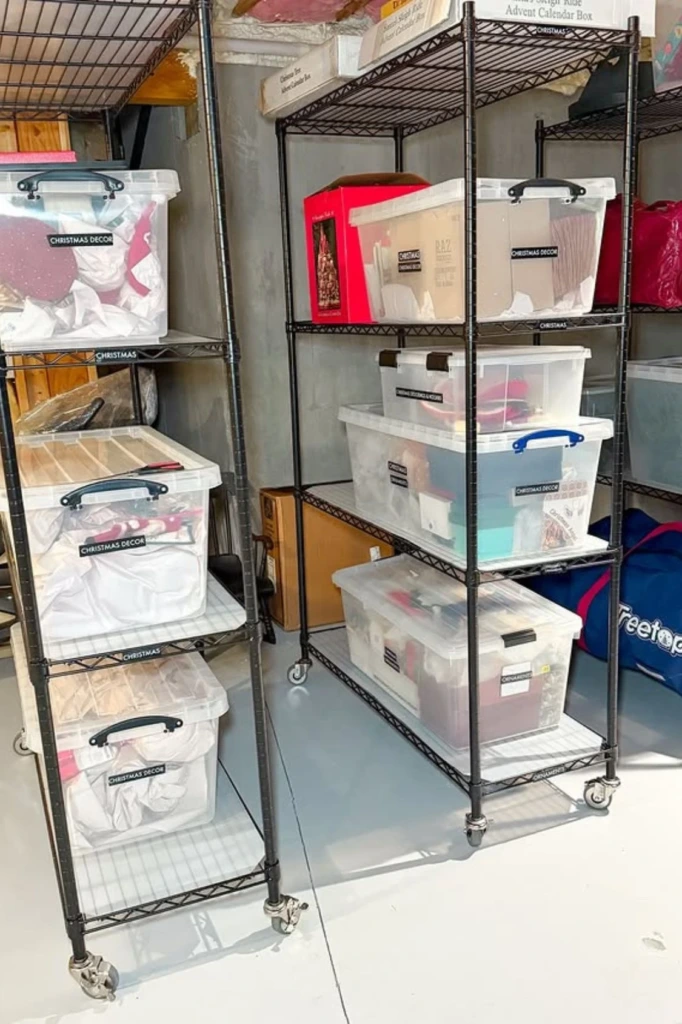
Transparent storage bins make it easier to locate decorations without opening every container. They are especially useful when you have several boxes filled with similar seasonal items.
Use separate bins for ornaments, Christmas lights, artificial greenery, outdoor decorations, and miscellaneous accessories. Choose durable containers with secure lids to help keep dust away from their contents.
Place the bins on stable shelving instead of stacking everything directly on the floor. This arrangement improves visibility and makes it easier to reach frequently used items.
Clear containers work particularly well in garages, basements, and utility rooms. However, if your storage area receives direct sunlight, choose an appropriate location or opaque containers for items that could fade.
A consistent system of transparent bins and category labels makes seasonal decorating much less complicated.
3. Label System

A good labeling system saves time both when packing decorations away and when preparing for the next celebration. Without clear labels, even an organized collection can become difficult to navigate.
Assign each container a specific purpose. For example, one bin might hold tree ornaments, another could contain outdoor lights, and a third might store holiday table accessories.
Attach large, readable labels to the front of every container. If your bins are opaque, include a short inventory of the most important items inside. For clear bins, simple category names are usually sufficient.
Keep matching containers together on shelves and avoid mixing unrelated decorations just to fill an empty box.
You can also use color-coded labels for different holidays, making it easy to distinguish Christmas supplies from Halloween or Easter decorations.
Once this system is established, putting everything away becomes a repeatable routine instead of a yearly organizational challenge.
4. Ornament Cases
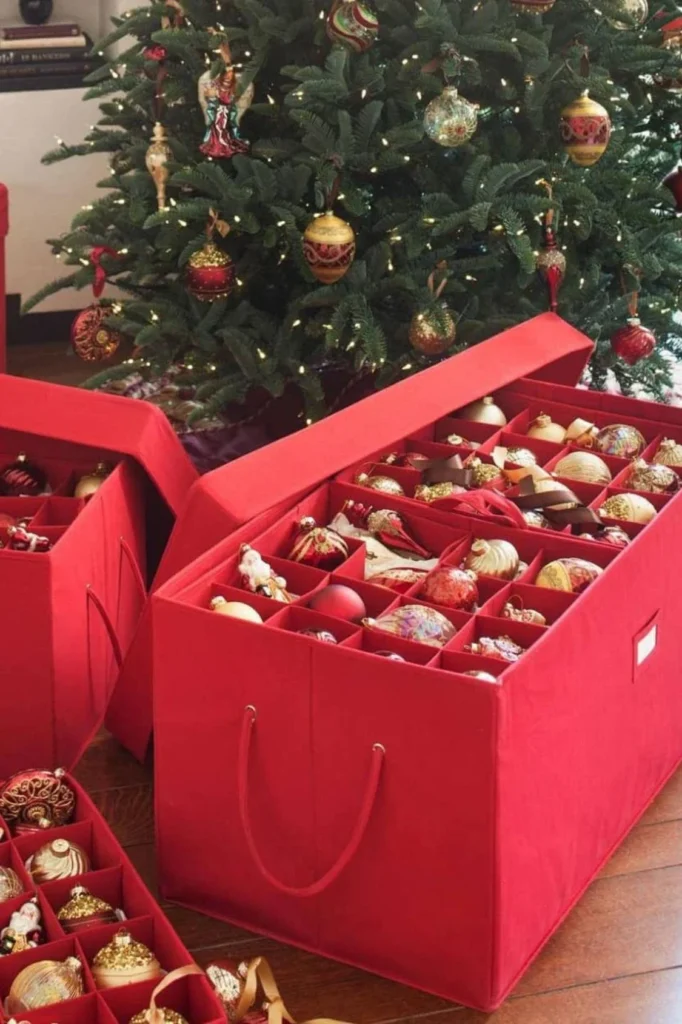
Glass ornaments, handmade decorations, and delicate collectibles need more protection than ordinary seasonal accessories. Keeping them loose in a large box can lead to scratches, chipped paint, or broken pieces.
Compartmentalized ornament cases provide individual spaces that help prevent decorations from colliding. Fabric organizers with padded dividers are particularly suitable for fragile or unusually shaped ornaments.
Wrap especially delicate pieces in acid-free tissue paper or another appropriate protective material before placing them in their compartments. Avoid packing ornaments so tightly that pressure builds around their surfaces.
Store small hooks, hanging ribbons, and ornament toppers in a separate pouch so they do not scratch the decorations.
Place the completed cases on a stable shelf where they will not be crushed by heavier containers. Keep them in a dry environment, away from extreme temperature changes.
With the right protection, your favorite ornaments can remain in good condition and be ready to hang when the next holiday season arrives.
5. Holiday Zones
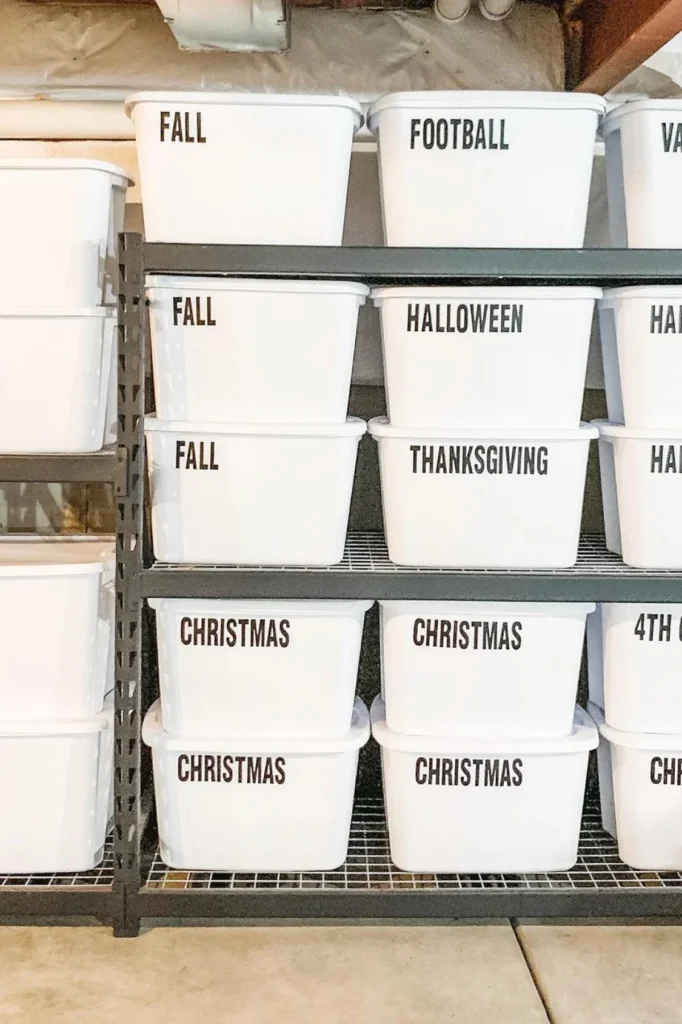
If you decorate for several occasions throughout the year, assigning a separate storage zone to each holiday can make your entire collection easier to manage.
Group Christmas decorations together, reserve another section for Halloween, and create dedicated areas for Easter, Thanksgiving, or other seasonal celebrations.
Use labeled bins on shelves to keep each category distinct. Larger celebrations may require several containers, while smaller collections can often fit into a single box.
Arrange the zones according to how frequently you need them. For example, keep decorations for the next upcoming holiday in an accessible position rather than behind items you will not use for months.
A shelf-based system works especially well in garages, spare closets, and basement storage rooms.
This approach prevents decorations from becoming mixed together and allows you to retrieve everything for a particular occasion without disturbing the rest of your collection.
6. Tree Storage
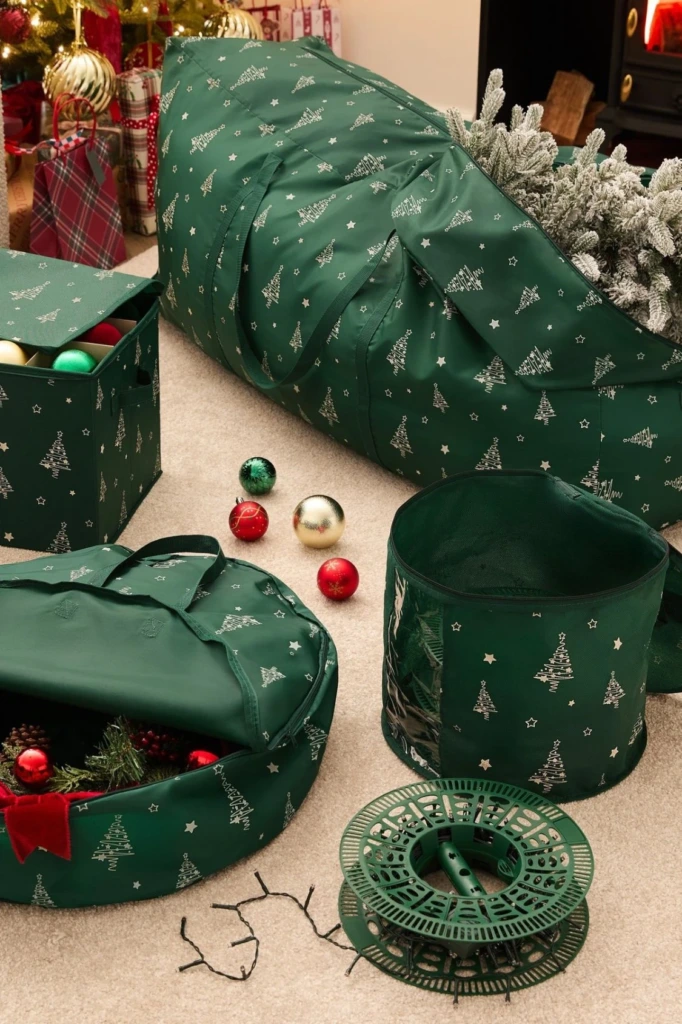
Artificial Christmas trees require careful storage to maintain their shape and prevent branches from becoming bent or dusty.
After disassembling the tree according to the manufacturer's instructions, gently compress the branches and place each section inside a purpose-built tree storage bag. Choose a bag with enough room to accommodate the tree without forcing the branches into an unnatural position.
A sturdy zipper and durable fabric help keep dust away during the off-season. Some bags include handles, making it easier to move the tree between storage areas.
Before packing, ensure that the branches and other components are completely dry. Remove detachable accessories and keep the stand or assembly hardware in a clearly labeled pouch.
Store the bag in a clean, dry location such as a suitable closet, basement, or garage shelf. Avoid placing heavy objects on top of it.
A dedicated tree bag keeps bulky components together and makes the annual decorating process easier.
7. Storage Room
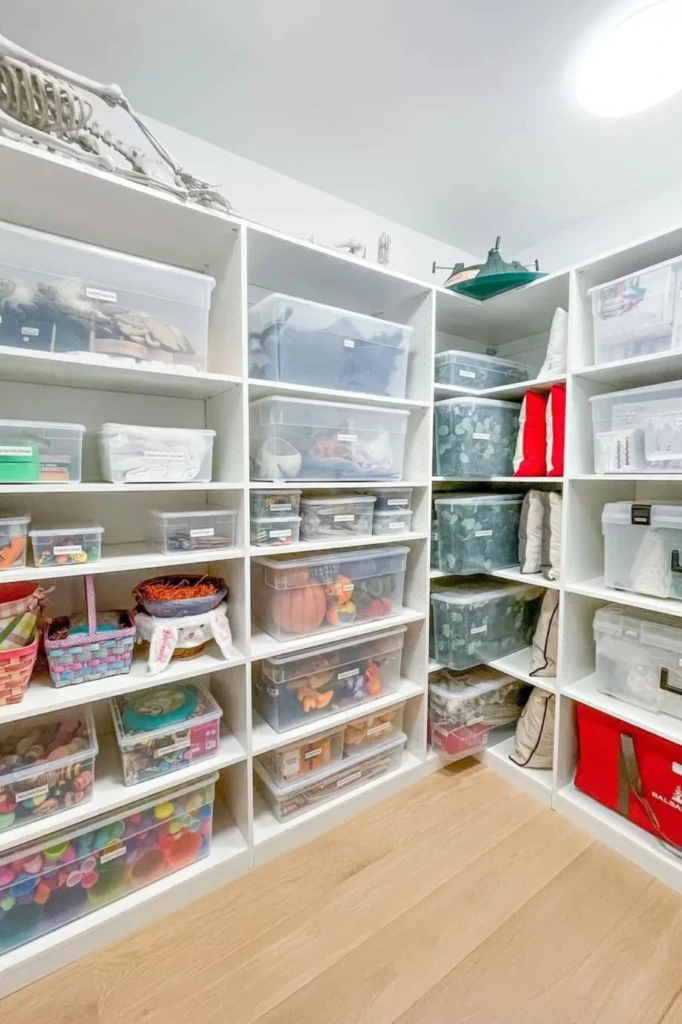
If you have access to a spare room, basement area, or part of a garage, consider transforming one wall into a dedicated holiday storage station.
Install shelving or cubby units that accommodate your containers and larger decorative pieces. Assign each section a category, such as wreaths, ornaments, string lights, table decorations, or artificial greenery.
Clear bins make small items easier to identify, while open compartments can hold oversized decorations that do not fit inside standard containers.
Keep fragile pieces separate from heavy outdoor accessories, and place frequently needed supplies where you can reach them comfortably.
You do not need to fill an entire room with storage furniture. Even a single well-organized shelving unit can create a useful seasonal storage area.
This arrangement keeps holiday belongings together instead of spreading them across several closets and drawers throughout the home.
8. Drawer Towers
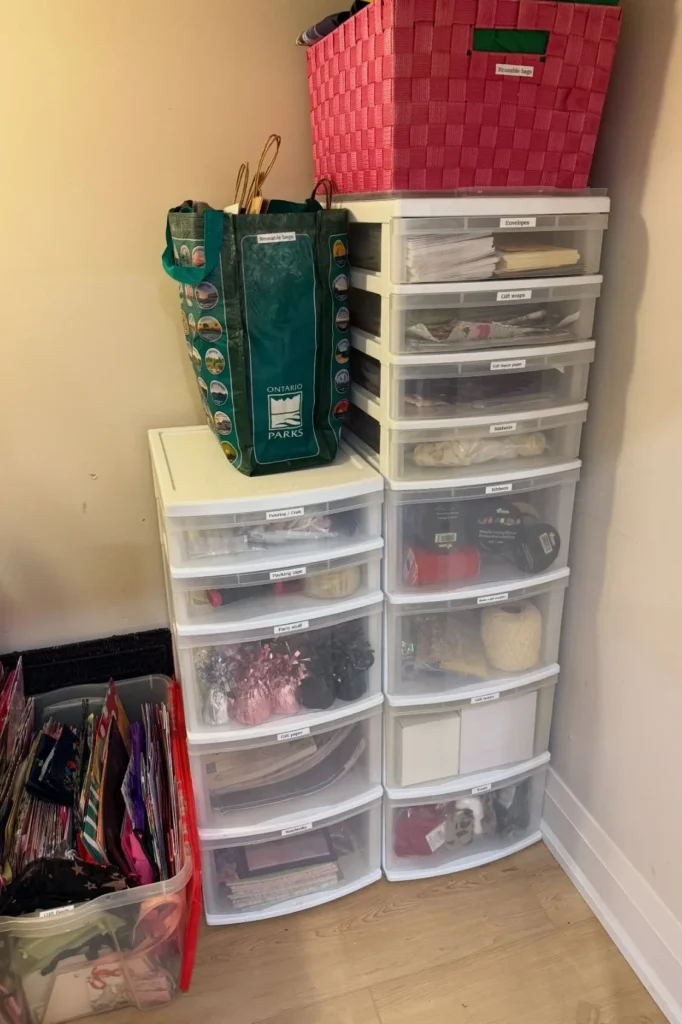
Small decorative accessories are easy to lose when they are stored in large containers. Drawer towers provide a practical solution for items such as ornament hooks, gift tags, ribbons, miniature figurines, and craft supplies.
Choose a narrow drawer unit that fits into an unused closet corner, craft room, or storage nook. Transparent drawers are particularly convenient because you can see the contents without opening every compartment.
Assign a specific category to each drawer and add small labels to keep the arrangement consistent.
For very small items, use internal dividers or small pouches to prevent everything from shifting when a drawer opens.
Keep heavier supplies in the lower drawers to improve stability, and avoid overloading lightweight plastic units.
A compact drawer tower makes the most of vertical space while keeping the little pieces that complete your holiday decorations easy to find.
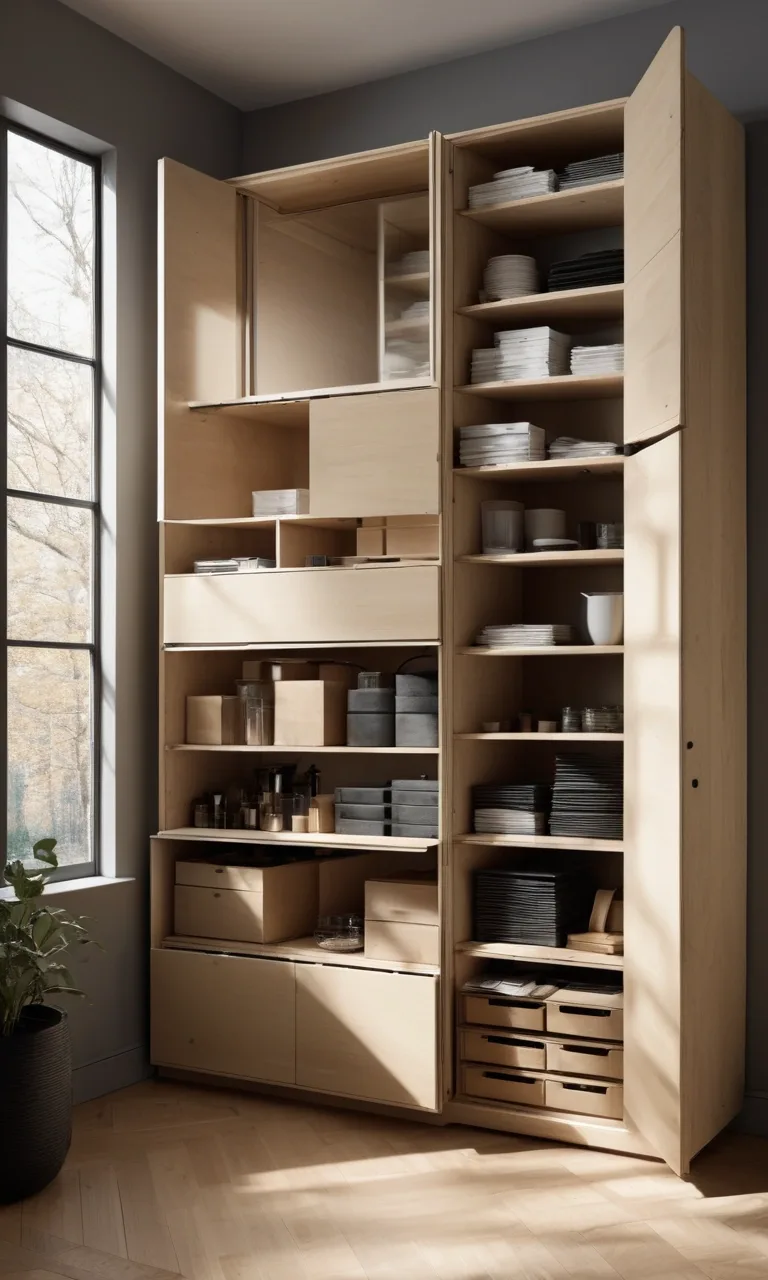
9. Cabinet Shelves
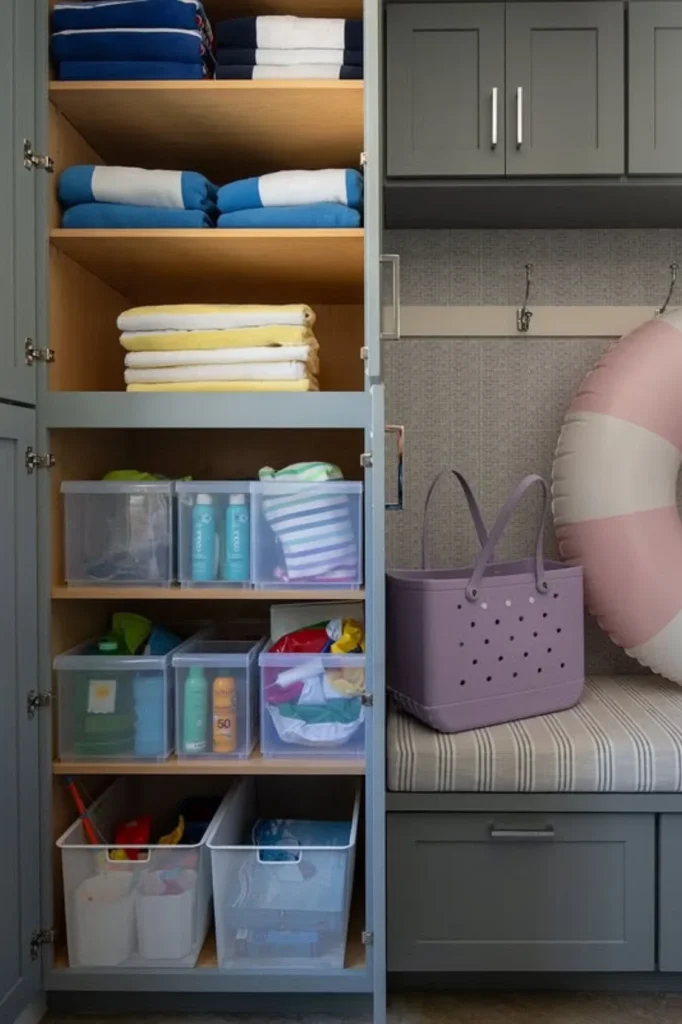
Storage cabinets are ideal for homeowners who want to keep seasonal decorations out of sight. They offer a tidy appearance while protecting belongings from everyday dust and accidental bumps.
Adjustable shelves allow you to customize the interior for different types of decorations. Use smaller containers for ornaments, ribbons, miniature accessories, and holiday table settings.
Keep larger items on open shelves within the cabinet, provided they fit safely without being squeezed against the doors.
Laundry rooms, mudrooms, hallway cupboards, and spare closets can all serve as convenient locations for this setup.
Label the containers clearly so you can identify their contents without removing everything from the cabinet.
If the cabinet is located in a humid area, make sure the environment is suitable for the materials being stored. Delicate decorations, fabrics, and electrical items should be kept dry.
When the doors are closed, your seasonal supplies remain organized without adding visual clutter to the rest of the home.
10. Closet Storage
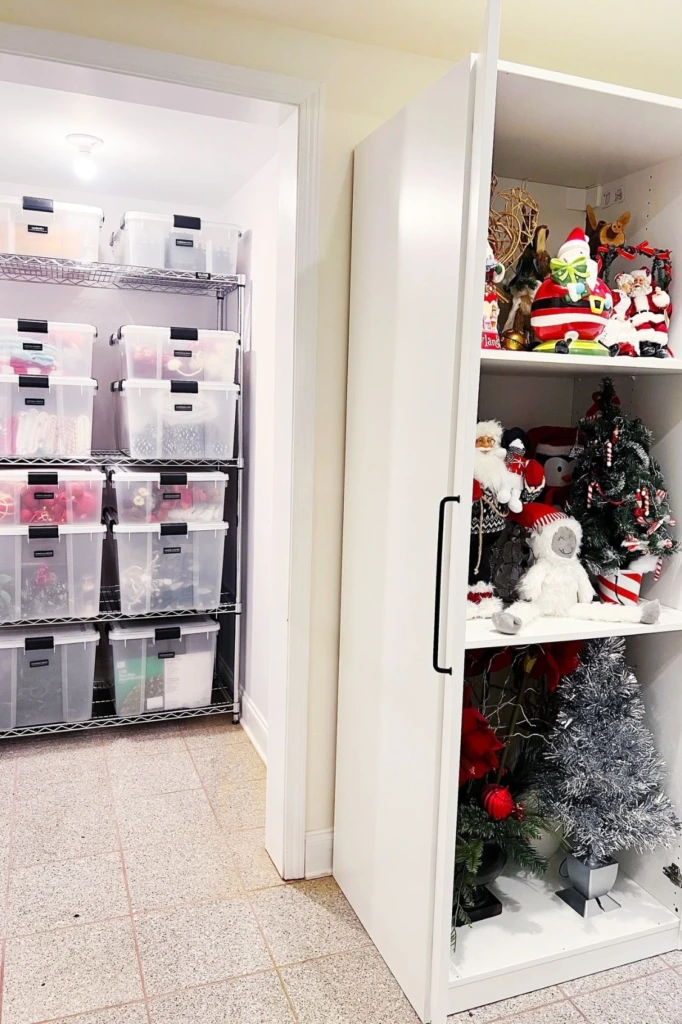
A closet can become an efficient holiday storage area when seasonal items have dedicated shelves rather than competing with everyday clothing and household supplies.
Start by removing anything you no longer need and measuring the available space. Add adjustable shelving or stackable organizers to create separate sections for different decoration categories.
Use labeled bins for ornaments, garlands, lights, stockings, and small decorative accessories. Reserve the upper shelves for lightweight items that you do not need to access frequently.
Larger pieces, such as miniature Christmas trees or decorative figurines, can occupy open shelves where they will not be crushed.
Keep a small inventory of the contents if your collection is extensive. This is particularly useful when several containers look similar.
By giving holiday decorations a consistent home, you can keep closets functional throughout the year and avoid searching through unrelated household belongings whenever a celebration approaches.
11. Rolling Cart
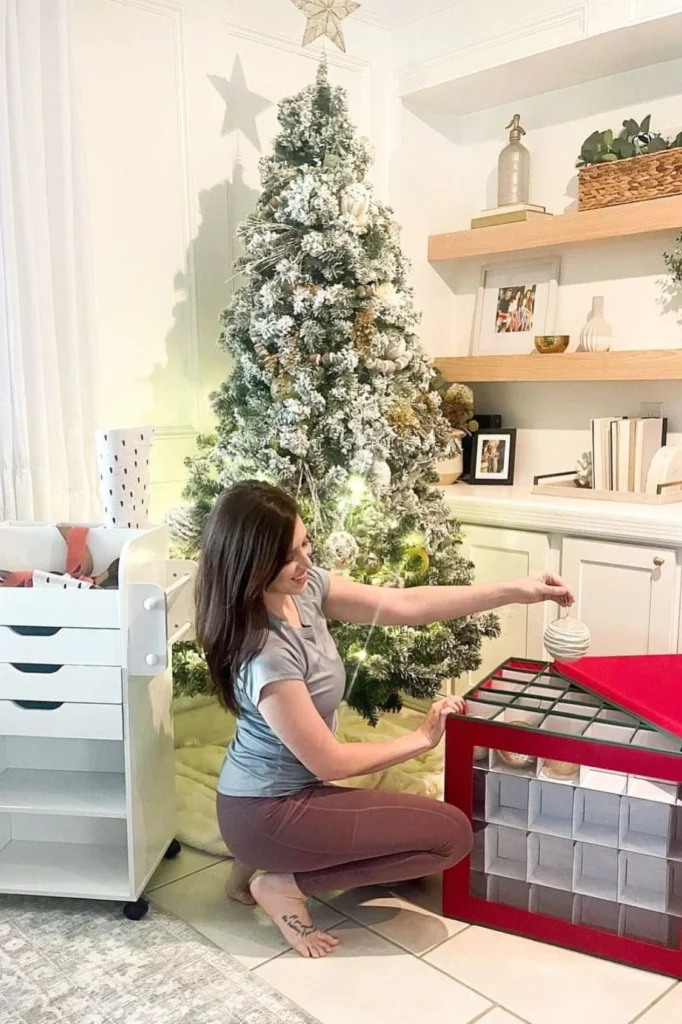
A rolling storage cart can serve as a portable station for holiday decorating supplies, especially in homes with limited storage space.
Choose a cart with several shelves or drawers for items such as ribbon, ornament hooks, batteries, spare light accessories, and small decorations.
During decorating, move the cart close to the tree or another work area so everything you need remains within reach. Once the job is finished, roll it back into a closet, craft room, or designated storage corner.
Wheeled carts are particularly useful when supplies need to travel between rooms. Models with locking wheels provide additional stability when stationary.
Use small trays or drawer dividers to stop accessories from mixing together during movement.
Although a cart is not suitable for every bulky decoration, it works exceptionally well for frequently handled supplies that would otherwise be scattered across drawers and tabletops.
12. Closet Tree
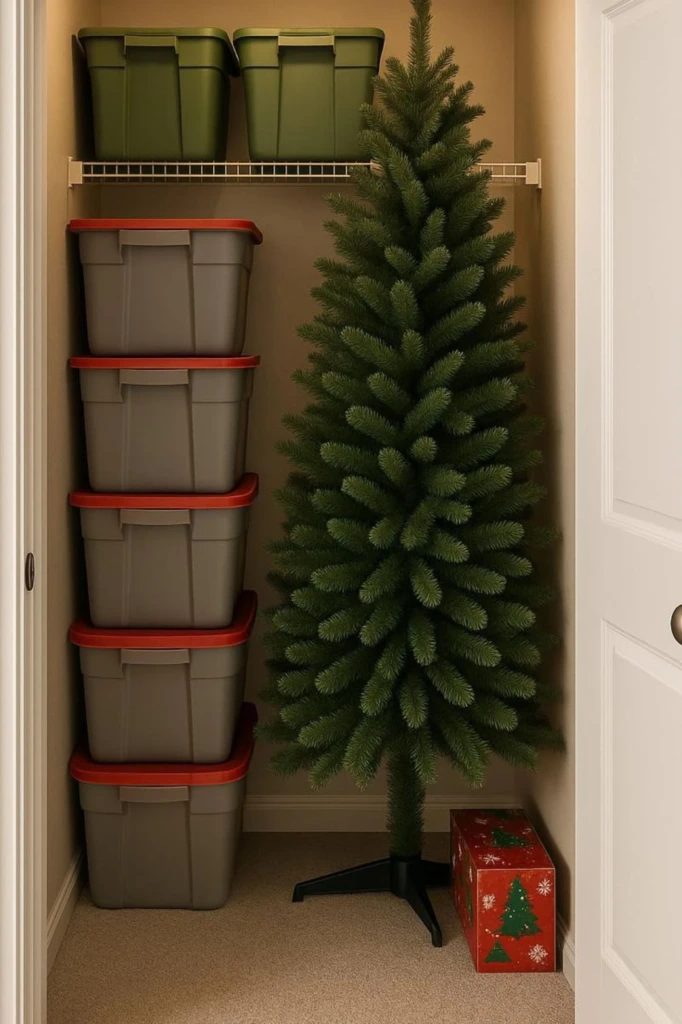
An artificial Christmas tree can occupy a surprising amount of space when it is packed away in several separate sections. If you have a suitable tall closet, storing the tree upright may be a convenient alternative.
First, check whether the tree manufacturer permits vertical storage and whether the closet provides enough clearance. Some trees are designed to remain assembled, while others require disassembly.
Use a protective tree cover or a suitable upright storage bag to reduce dust accumulation. Make sure the tree is stable and cannot tip over when the closet door opens or other belongings are moved.
Place lightweight decoration bins on nearby shelves, keeping the tree's space clear and accessible.
This arrangement can reduce the effort involved in unpacking and assembling the tree each year. It may also help preserve branch shape when the tree is stored correctly.
For smaller homes, the key is to dedicate a suitable vertical space to the tree rather than allowing it to occupy valuable living areas.
13. Color Sorting

If your holiday decorating style depends on a particular color palette, sorting ornaments by color can make decorating more efficient.
Separate decorations into groups such as gold, silver, red, green, blue, or neutral tones. Store each group in a labeled container or divided organizer.
Transparent bins let you identify colors quickly, while colored labels make opaque containers easier to recognize.
You can also organize ornaments by finish, such as metallic, matte, glittered, or glass, if you have a large collection.
Keep matching accessories, such as ribbon and ornament hooks, in a nearby compartment so you can gather everything needed for a coordinated display.
Color sorting is especially useful when you alternate between different decorating themes each year. Instead of unpacking your entire collection, you can select the colors that suit your preferred style.
The result is a more organized collection that makes it easier to create a consistent look throughout your home.
14. Attic Shelves
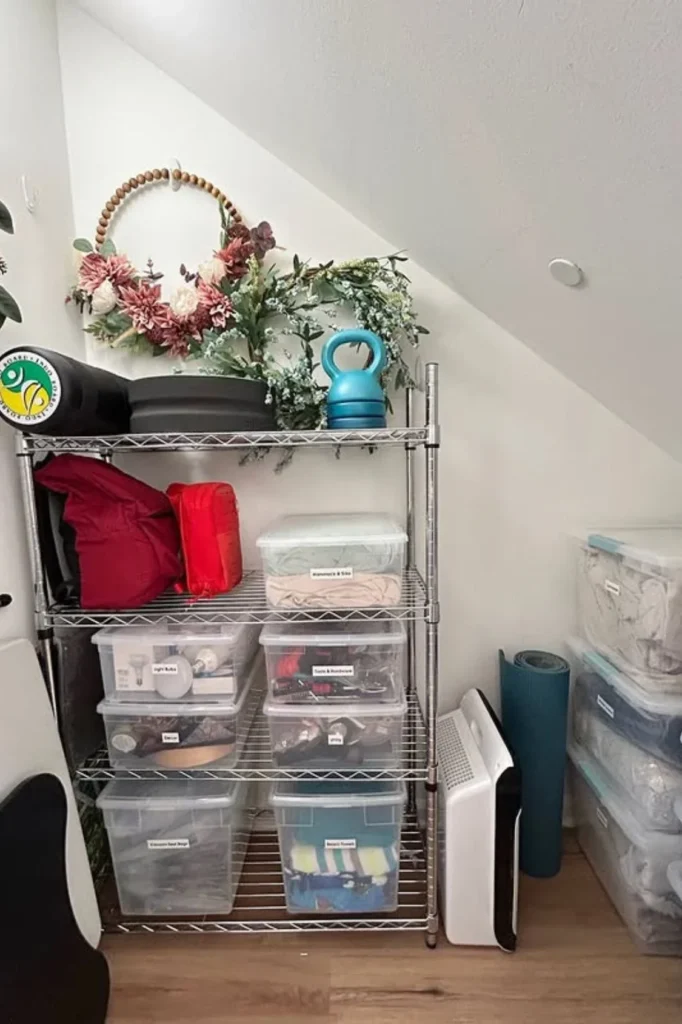
An attic can provide valuable seasonal storage space, particularly when closets and garages are already full. However, temperature fluctuations and humidity should be considered before storing delicate decorations there.
Install shelving that fits the available ceiling height and leaves enough room to move containers safely. Adjustable or modular shelves can work well in spaces with sloping ceilings.
Place heavier bins on lower shelves and reserve higher levels for lightweight items that you can reach safely. Keep a clear walkway so containers can be removed without shifting other belongings.
Use sturdy, securely closed containers to protect decorations from dust. Fragile ornaments, candles, electronics, and heat-sensitive materials may need a more climate-controlled location if attic conditions are unsuitable.
Label every bin and group similar items together to make retrieval easier.
When the attic is dry, stable, and accessible, shelving can turn an awkward storage area into a useful home for decorations that are only needed once or twice a year.
15. Garland Bins
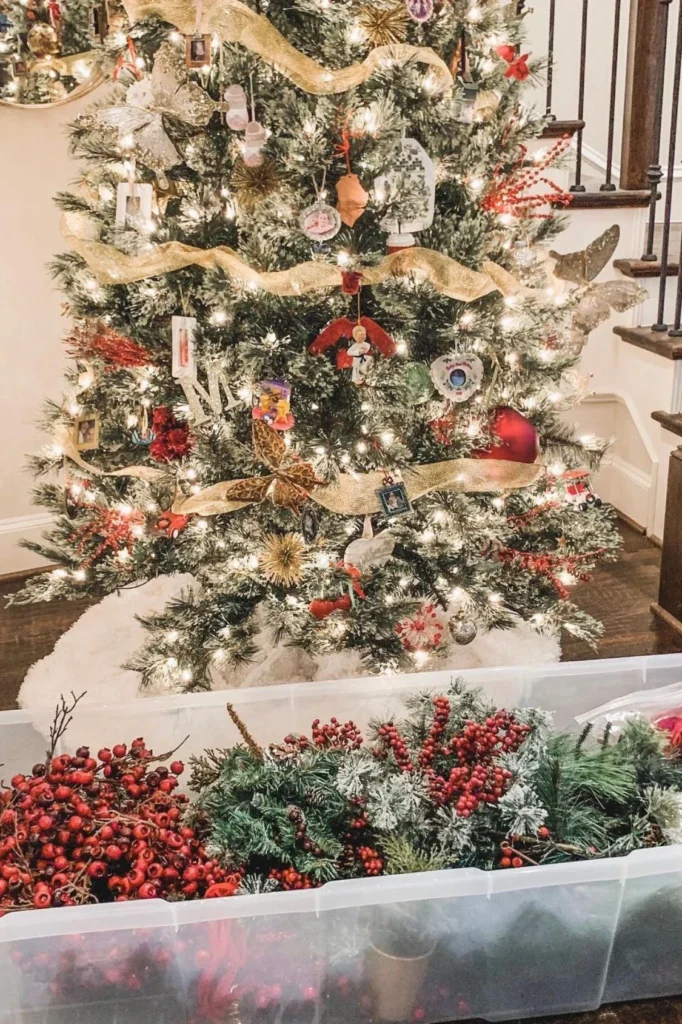
Artificial garlands, decorative branches, and seasonal greenery can become tangled or misshapen when packed into undersized containers.
Choose long, roomy bins that allow garlands to rest without excessive bending. Gently coil each piece into a loose loop instead of forcing it into a tight bundle.
Separate delicate decorative picks, berries, and wired branches so they do not snag on other materials. If the garland contains fragile embellishments, wrap those sections lightly with protective tissue.
Transparent containers are useful for identifying different styles of greenery without opening every lid.
Store the bins on a suitable closet shelf, beneath a staircase, or in a dry basement storage area. Avoid placing heavy containers on top of garlands, as prolonged pressure can flatten decorative foliage.
Keeping greenery in appropriately sized containers helps preserve its appearance and reduces the time needed to fluff and arrange it before the next celebration.
16. Gift Closet
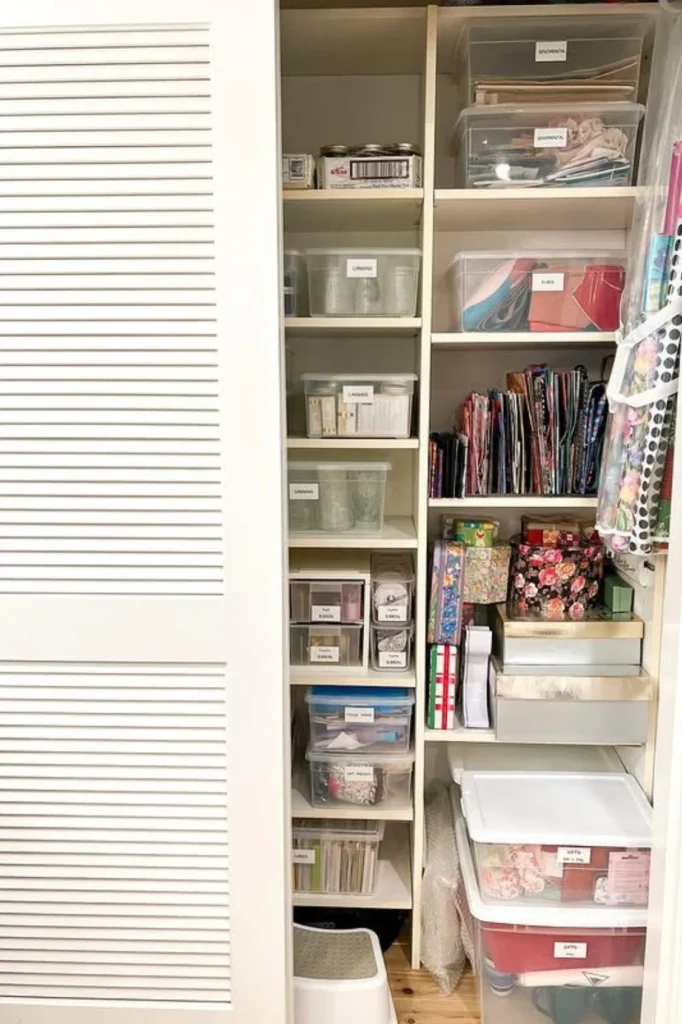
Gift wrapping materials often become scattered among desk drawers, cupboards, and miscellaneous storage boxes. A dedicated gift closet brings these supplies together in one convenient location.
Use tall shelving for labeled containers holding gift tags, ribbons, bows, tape, scissors, and seasonal gift bags. Install a vertical organizer or narrow compartments to keep wrapping paper rolls upright and prevent them from becoming crushed.
Smaller baskets can hold greeting cards, tissue paper, and decorative accessories. Store sharp tools and small items safely, particularly if children can access the closet.
If space is limited, add hanging organizers to the inside of the door or use a narrow rolling cart that can fit beneath a shelf.
You can also reserve a section for holiday-specific supplies, keeping Christmas wrapping materials separate from birthday and everyday gift items.
A well-planned gift closet makes preparing presents more convenient while reducing clutter in the rooms where you normally wrap them.
17. Seasonal Boxes
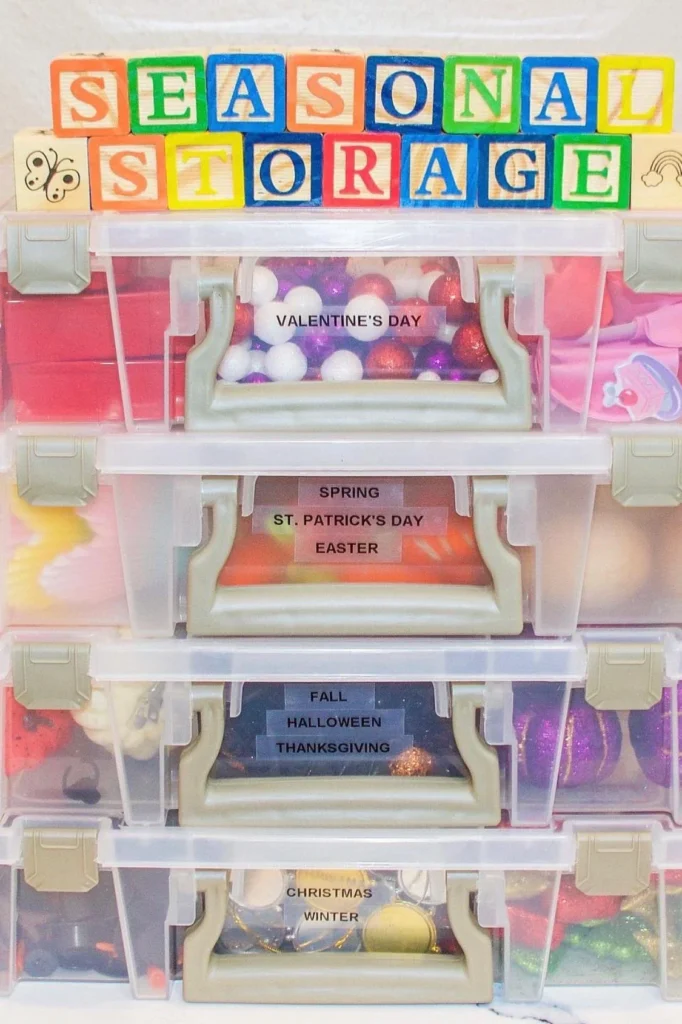
Storing decorations according to the season makes it easier to find the right items when each celebration approaches.
Use separate containers for Christmas, Halloween, Easter, Thanksgiving, and other occasions you celebrate. Smaller boxes work well for tabletop accessories, themed figurines, decorative candles, and craft materials.
Choose containers that fit your shelving dimensions so they can be stacked securely without creating unstable piles. Mark the holiday name prominently on the front and, if necessary, add a short list of the contents.
Keep each season's supplies together instead of distributing them among several unrelated boxes.
For households with extensive collections, divide a holiday into additional categories. Christmas decorations, for instance, might be separated into tree ornaments, outdoor lights, and table accessories.
This approach makes it possible to retrieve only the decorations you need while leaving the rest of your storage area undisturbed.
18. Shelf Wall
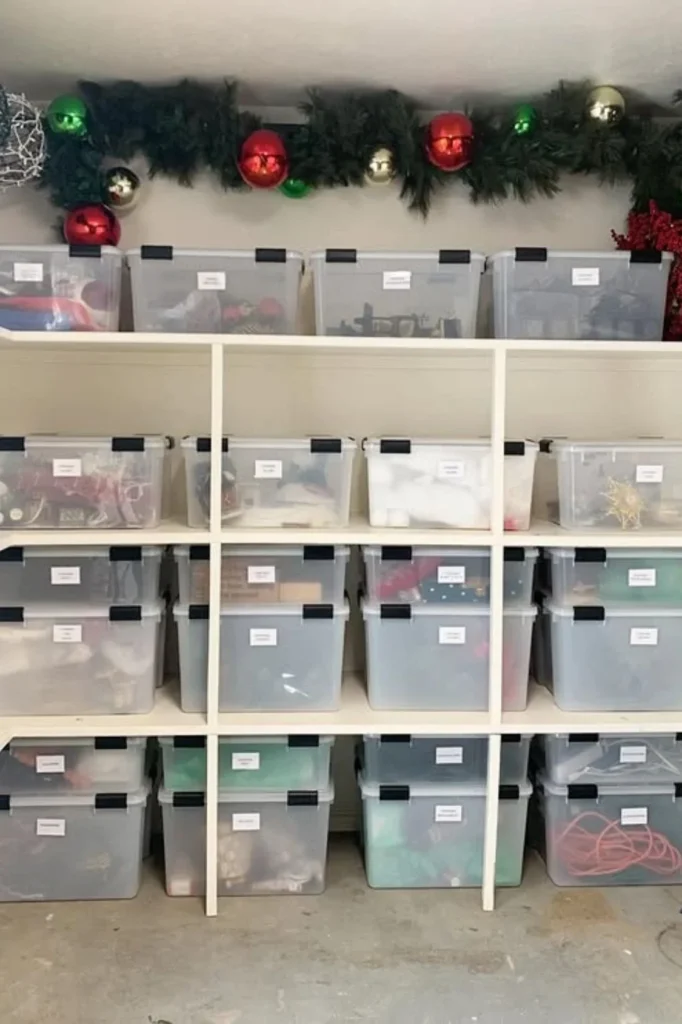
A dedicated shelving wall is a practical option for households with a large collection of holiday decorations.
Instead of stacking boxes randomly on the garage or basement floor, install sturdy shelving that can support the weight and dimensions of your containers.
Arrange decorations by category, keeping lights, ornaments, artificial greenery, stockings, and outdoor accessories in separate sections. Place labels where they remain visible even when bins are stored close together.
Adjustable shelves offer flexibility if your collection changes over time or includes unusually large items.
Keep heavier containers at a comfortable lower level and reserve higher shelves for lighter decorations. Secure the shelving appropriately, especially if the unit is tall or located in a busy area.
A full shelving wall can make excellent use of vertical space while keeping the floor clear for other household activities.
With a consistent arrangement, putting decorations away becomes simpler because every item has a designated location.
19. Wrap Station
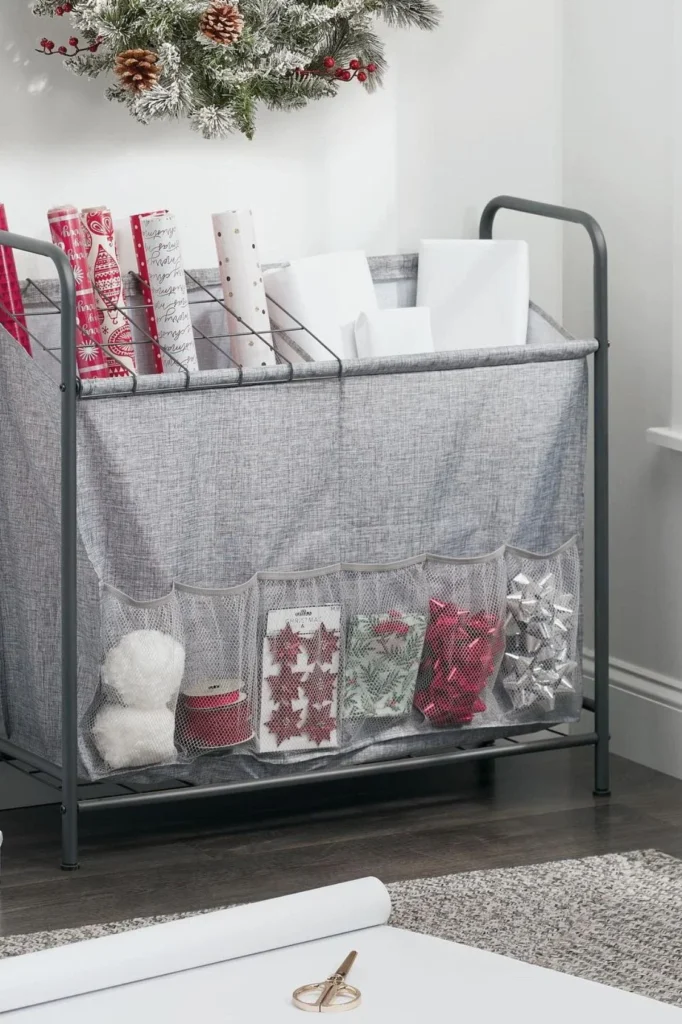
A dedicated wrapping station helps prevent paper rolls, ribbons, bows, and tape from becoming mixed together in random drawers.
Choose an organizer with tall compartments for wrapping paper and smaller sections for scissors, tags, adhesive tape, and decorative accessories.
Wall-mounted organizers are useful when floor space is limited, while freestanding units can be moved into a convenient working area whenever you need them.
Keep rolls upright or securely supported to prevent them from bending. Store delicate bows in spacious compartments so their shapes remain intact.
If you use different wrapping styles for different holidays, separate the supplies into labeled sections or removable containers.
A compact wrapping station can fit inside a closet, craft room, or spare corner without taking up much space.
Keeping these materials together makes gift preparation more efficient and reduces the need to search through multiple storage areas.
20. Pillow Rack
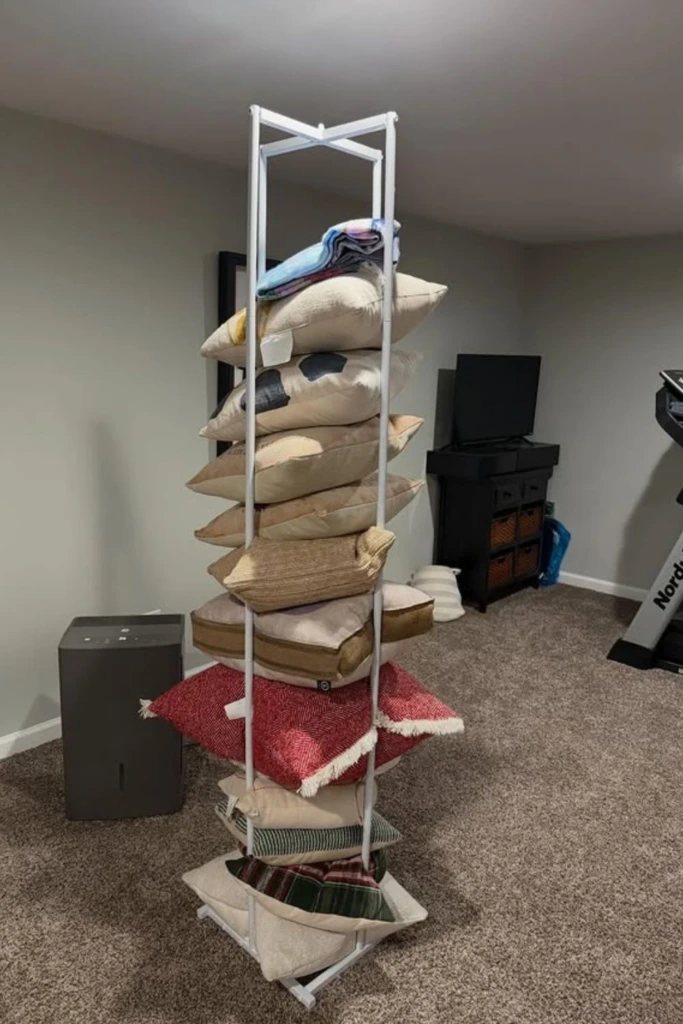
Seasonal throw pillows can quickly fill a linen closet, especially when you have different covers and designs for Christmas, autumn, or other celebrations.
A vertical pillow rack helps keep them organized without requiring a large shelf or several bulky containers.
Choose a rack with sufficiently wide supports so pillows rest securely without becoming compressed. Arrange larger cushions toward the bottom and smaller ones higher up, provided the structure remains stable.
Before storing pillows, check their care labels and make sure they are clean and completely dry. Removable covers may be easier to store separately in labeled fabric bags.
For pillows that need extra protection from dust, use breathable covers or suitable fabric storage containers.
Place the rack in a dry spare room, closet, or basement area with appropriate environmental conditions.
This setup makes seasonal textiles easier to locate and helps prevent unnecessary pressure that could flatten their filling or distort their shape.
21. Light Spools
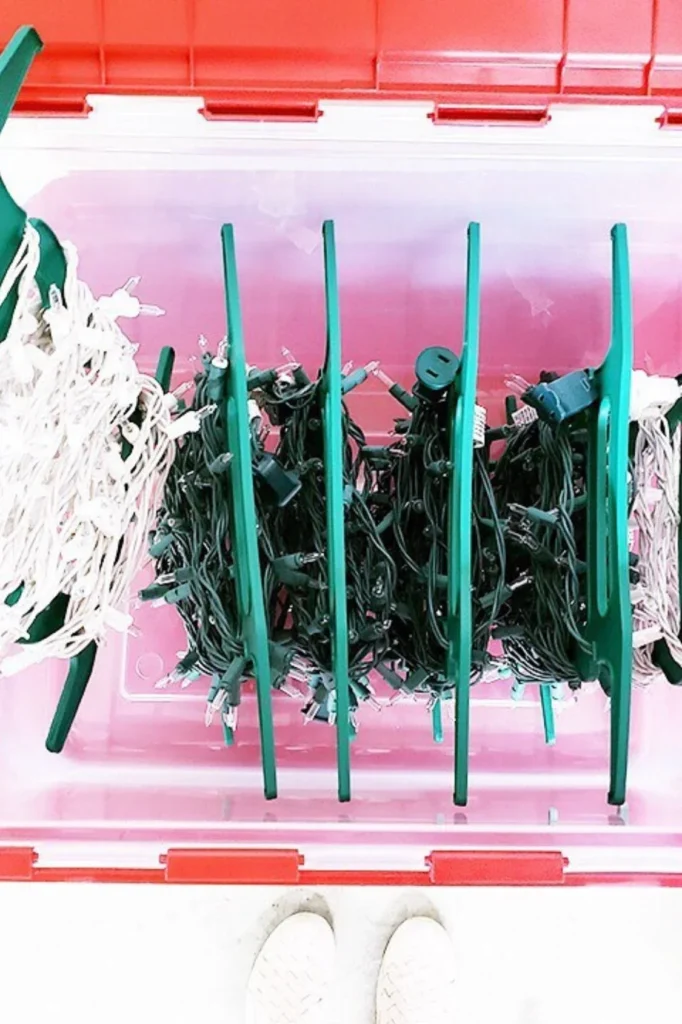
Christmas lights are much easier to reuse when each strand is stored separately rather than thrown into a tangled pile.
Wind each strand loosely around a purpose-built spool, reel, or sturdy organizer designed for electrical cords. Avoid wrapping lights so tightly that the wires become strained or sharply bent.
Inspect every strand for damaged insulation, broken bulbs, or other visible problems before storing it. Set aside faulty lights rather than returning them to the container for next year.
Place the wound strands in a sturdy bin and label each one according to its intended use, such as indoor tree lights, outdoor lights, or window decorations.
Keep plugs and connectors from pressing against delicate bulbs, and follow the manufacturer's storage instructions for specialty lighting.
A dedicated light-storage system reduces tangles, protects the cords from unnecessary wear, and makes it easier to estimate how many strands you have before decorating.
22. Garage Shelves
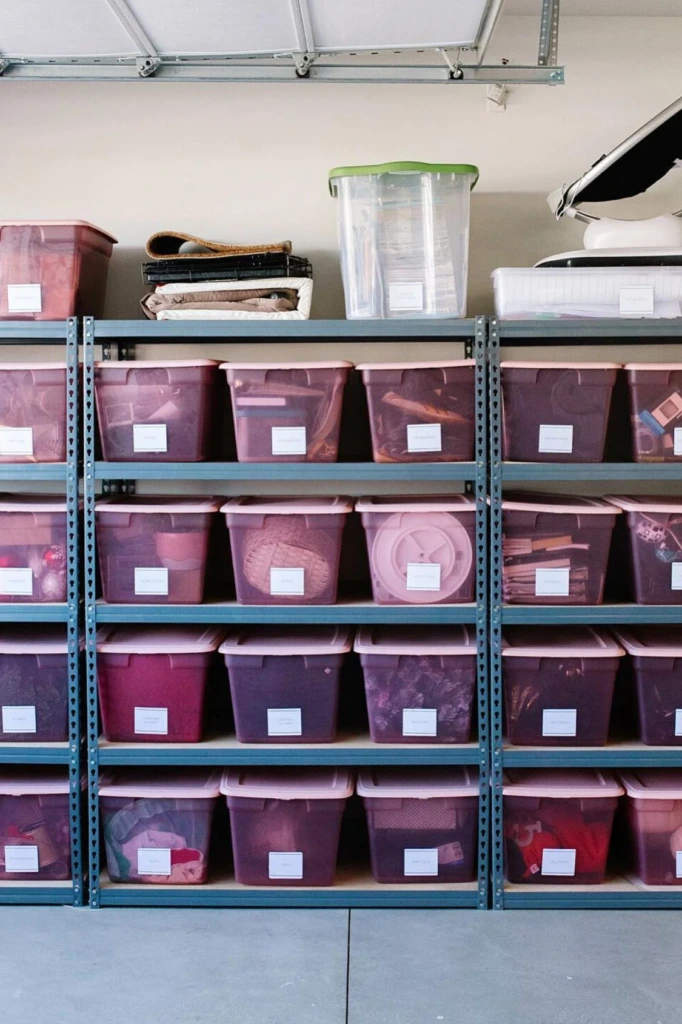
Garage shelving can provide a substantial amount of storage for holiday decorations that are used only occasionally.
Install a sturdy shelving unit with enough depth for your storage bins. Organize the containers by category and attach clear labels to the front so you can identify their contents without moving everything around.
Store heavier items, including tree stands and large outdoor accessories, on lower shelves. Keep lightweight decorations higher up where they can be handled safely.
Choose durable containers with secure lids to help protect against dust and ordinary garage debris. If the garage experiences damp conditions or extreme temperature changes, store delicate materials and electronics elsewhere.
Leave enough space around the shelving to remove bins comfortably. Avoid overloading shelves beyond their rated capacity, and anchor tall units according to the manufacturer's instructions.
A dedicated garage storage area keeps seasonal belongings off the floor and leaves more room for vehicles, tools, and everyday household activities.
23. Decor Shelves
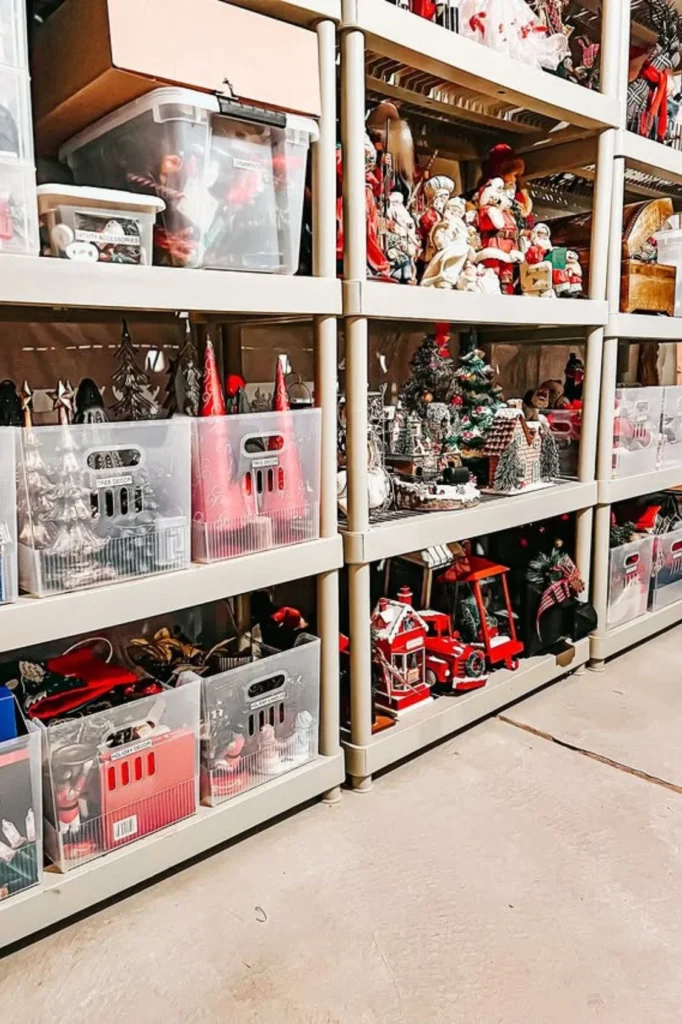
Decorative figurines, miniature holiday villages, nutcrackers, and other display pieces often need individual attention when being packed away.
Open shelving allows larger decorations to remain upright instead of being forced into containers that are too small. Arrange pieces with enough clearance to prevent them from touching or falling when nearby items are removed.
Use divided or padded boxes for smaller fragile objects, especially those made from glass, ceramic, or delicate resin.
If a display includes several components, such as a miniature village with separate buildings and accessories, label each container so the pieces remain together.
Keep heavier decorative objects on lower shelves and avoid placing fragile items beneath bulky containers.
This approach is particularly useful in basements, spare rooms, and dedicated storage areas where larger pieces need more space than standard bins provide.
By separating display items according to their size and fragility, you can protect your collection while keeping everything easy to access.
24. Bin Labels
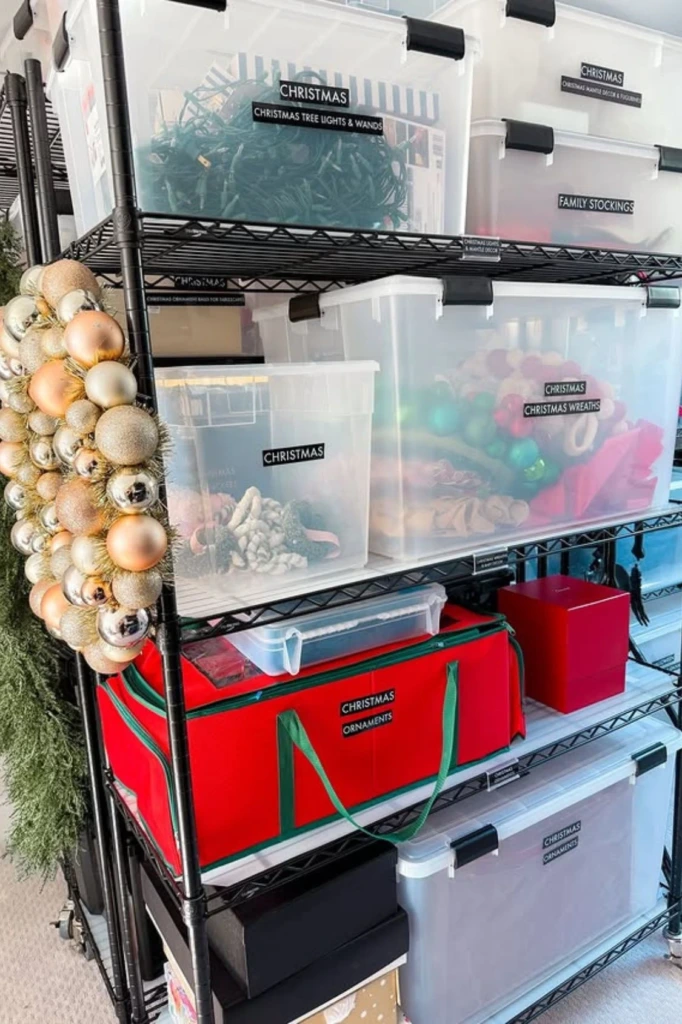
Clear labels are one of the simplest ways to improve a holiday storage system. They help everyone in the household identify where decorations belong and reduce the need to open multiple containers.
Assign each bin a category, such as tree ornaments, wreaths, string lights, stockings, or outdoor decorations. Use large lettering that remains readable when the containers are placed on high shelves.
For extensive collections, include additional details such as the holiday, room, or decorating theme. A label reading "Christmas — Living Room" may be more useful than a general label such as "Decorations."
Attach labels to the same side of every bin so they remain visible when the containers are lined up.
If you frequently reorganize your collection, use removable labels that can be updated as needed.
Place labeled bins on suitable shelves in a garage, basement, or storage closet, grouping related categories together.
A straightforward labeling system creates a predictable arrangement and makes both unpacking and cleanup faster from one season to the next.
25. Dish Protectors
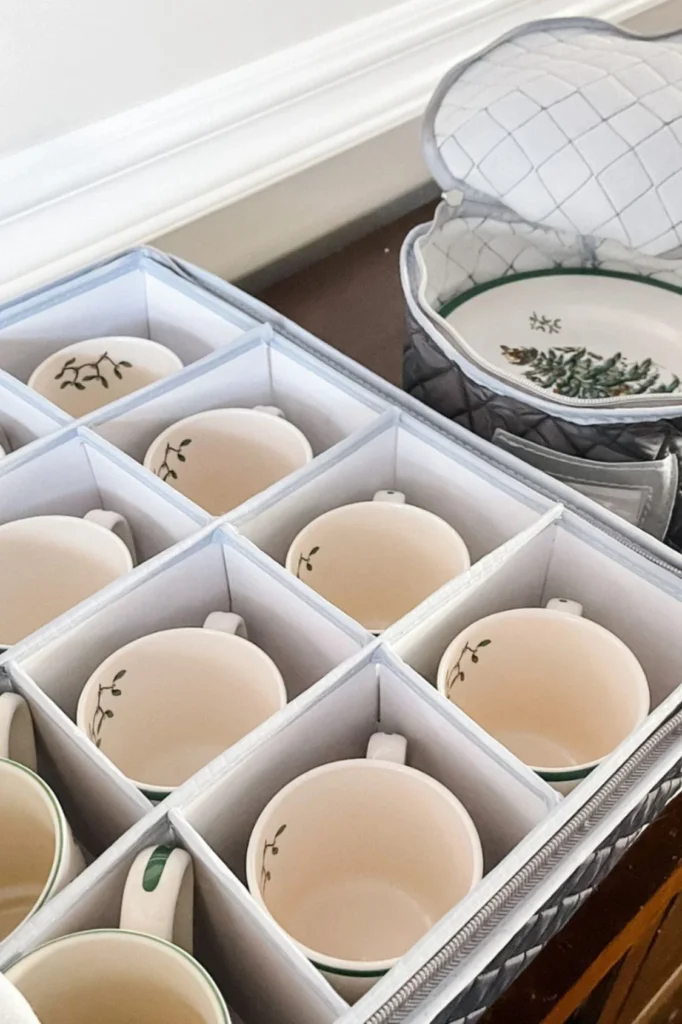
Holiday dishes, decorative mugs, serving platters, and seasonal glassware can become chipped when stored without adequate cushioning.
Padded dish organizers provide individual compartments that help prevent pieces from knocking against one another. Choose cases sized for the plates, cups, or bowls you own.
Before packing, wash and thoroughly dry every item. Place plates in protective sleeves or padded dividers, and wrap unusually delicate pieces individually.
Keep heavier dishes near the bottom of a storage container and avoid stacking more weight than the organizers can safely support.
For mugs and serving accessories, use appropriately sized compartments that prevent excessive movement. Large platters may require separate padded storage rather than being forced into a standard dish case.
Store the containers in a dry cupboard, pantry, or stable basement shelving area. Clearly label boxes containing fragile tableware so they can be handled carefully.
With individual protection and thoughtful packing, your holiday tableware will be easier to retrieve and safer to use when special occasions return.
What is the best way to protect fragile holiday decorations during storage?
The most effective approach is to separate delicate decorations and provide cushioning that prevents them from moving around.
Use divided ornament boxes for glass decorations, padded organizers for ceramic pieces, and appropriately sized containers for collectible figurines. Wrap especially delicate items individually with suitable protective materials, and avoid packing them so tightly that pressure builds between pieces.
Keep fragile decorations away from heavy objects that could crush their containers. Store them in a dry area with stable environmental conditions, particularly if they contain painted finishes, fabric, electronics, or other sensitive materials.
It is also helpful to label the containers clearly so anyone handling them knows to take extra care.
How can you keep holiday decorations organized year after year?
Create a repeatable system that gives every category of decoration a permanent storage location.
Start by sorting items by holiday and type. Keep ornaments, lights, wreaths, garlands, tableware, and wrapping supplies in separate containers. Label each box clearly and place related containers together on shelves or in designated storage zones.
Before packing, remove damaged decorations, discard unnecessary packaging, and check that items are clean and dry. Keep small accessories in separate pouches or divided drawers so they do not disappear among larger decorations.
You can also maintain a simple inventory of what each container holds. This is particularly useful if your collection is large or spread across multiple storage areas.
Finally, return decorations to their assigned places after each celebration. Maintaining the same arrangement throughout the year makes seasonal decorating easier, protects your belongings, and prevents clutter from gradually building up again.