24 Ladder Storage Ideas for 2026: Creative Ways to Organize Your Home
A ladder can do much more than help you reach a high shelf. With a little creativity, it can become a decorative storage feature that keeps everyday essentials organized while adding character to your home. From displaying quilts and houseplants to storing shoes, towels, and kitchen supplies, ladder storage offers practical solutions for rooms of almost any size. Whether you prefer rustic wood, sleek metal, or a freshly painted finish, these ideas will help you turn an ordinary ladder into something both useful and attractive.
How Can a Ladder Be Used as a Stylish Storage Solution in Your Home?
Ladders offer vertical storage, making them particularly useful in apartments, compact rooms, and homes where floor space is limited. Depending on the design, you can lean a ladder against a wall, use a freestanding step ladder, or install a secure wall-mounted version.
A wooden ladder can introduce warmth to a farmhouse-inspired interior, while a black metal ladder complements industrial or contemporary decor. Add baskets, hooks, shelves, or fabric organizers to make the structure more functional.
Before choosing a ladder, consider its intended purpose. A decorative ladder works well for lightweight accessories, but heavier items require a stable structure with an appropriate weight capacity. Secure leaning ladders when necessary, and never use a decorative model as a climbing ladder unless it is specifically designed for that purpose.
1. Quilt Display
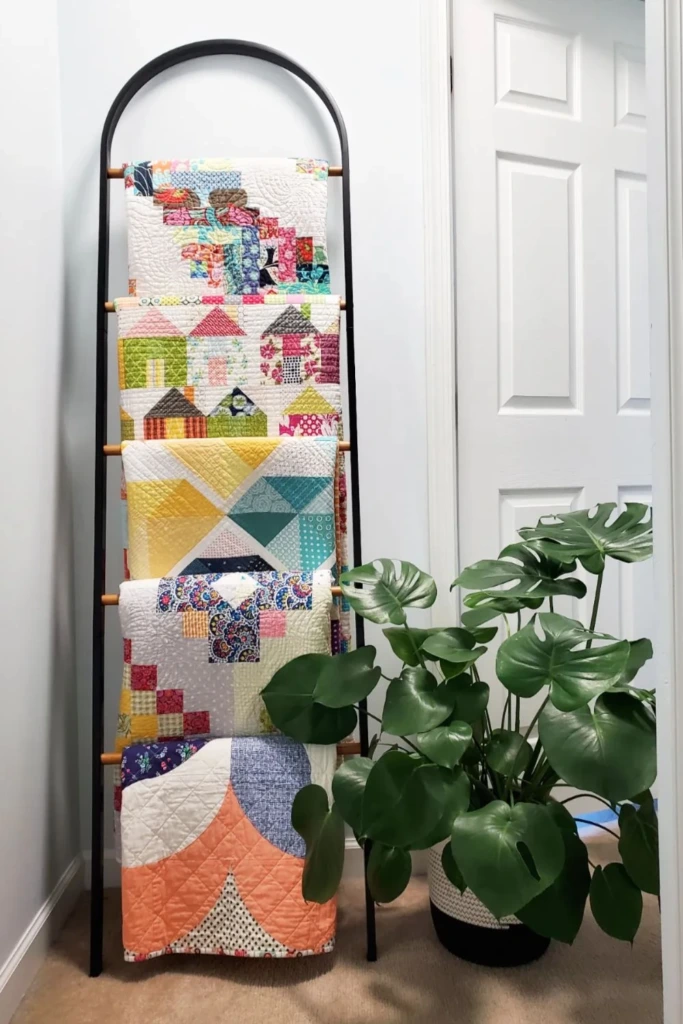
A wooden ladder makes an attractive way to store and display quilts, blankets, and handmade throws. Instead of folding everything into a closet, drape each piece over a separate rung so the colors, textures, and patterns remain visible.
Place the ladder in a bedroom, guest room, or living room where the textiles contribute to the overall decor. Neutral quilts create a calm appearance, while colorful designs can become an eye-catching feature.
Choose a ladder with smooth, sturdy rungs to avoid snagging delicate fabrics. Leave enough space between the layers to prevent the display from looking bulky, and wash or air out the quilts regularly to keep them fresh.
2. Sliding Ladder
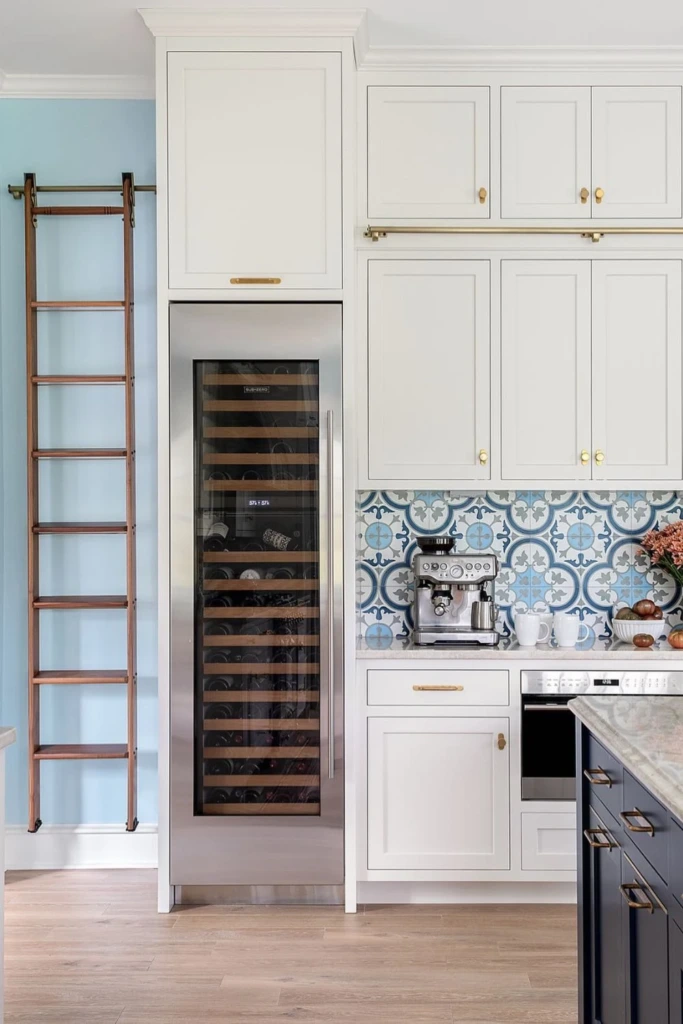
A sliding ladder can combine convenient access with a distinctive architectural look. In a home library, pantry, or room with tall built-in cabinets, a properly installed rolling ladder helps you reach upper shelves without permanently occupying valuable floor space.
For an especially polished appearance, choose a finish that complements the surrounding cabinetry. Natural wood suits traditional interiors, while dark metal hardware creates a more modern effect.
Sliding ladders need a suitable rail system, secure mounting points, and sufficient clearance for movement. Have the installation assessed for the ladder's intended load, and follow the manufacturer's safety instructions. This arrangement is best suited to spaces where upper storage is used regularly and the installation can be completed safely.
3. Shelf Ladder
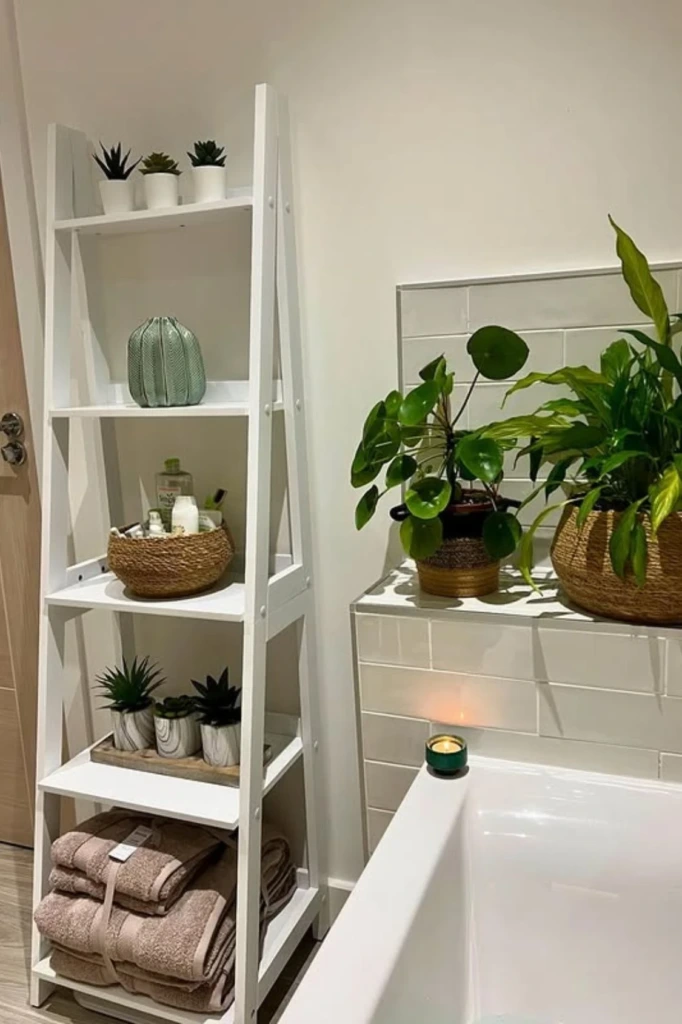
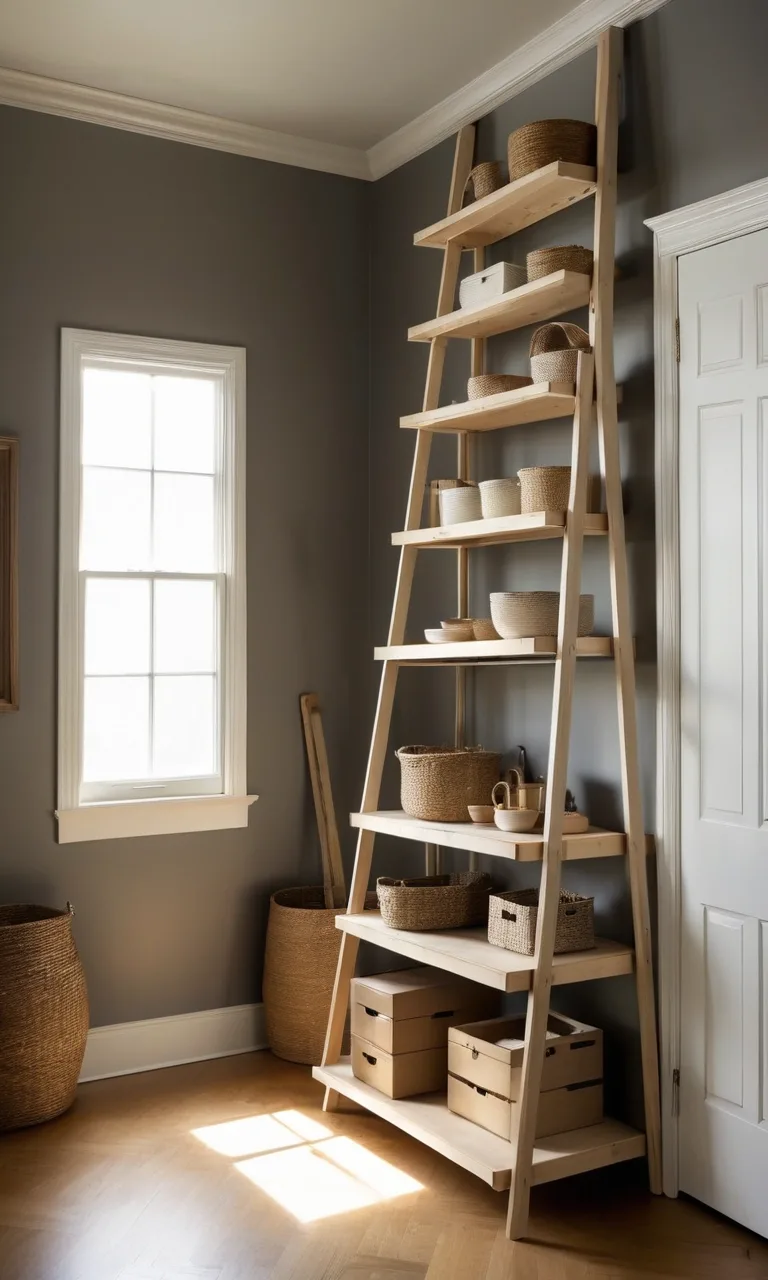
A ladder shelf is a practical choice when you need several levels of storage without adding a large bookcase. Its tiered design typically provides broader surfaces toward the bottom and narrower shelves near the top, creating a balanced silhouette.
Use the lower shelves for baskets, books, or heavier accessories and reserve the upper levels for lightweight decorations. In a home office, it can hold notebooks and supplies; in a living room, it can display framed photographs, small plants, and decorative objects.
Measure the available floor and wall space before buying one. Select a model with a suitable weight rating, and secure it to the wall if the manufacturer recommends it, especially in homes with children or pets.
4. Ceiling Ladder
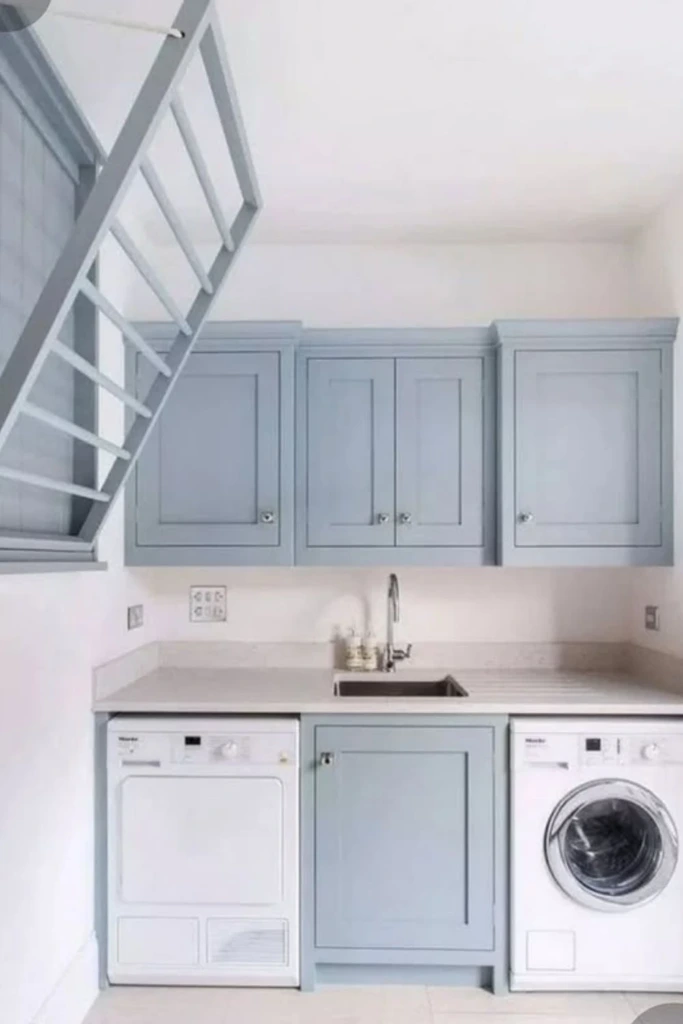
An old ladder suspended from the ceiling can create a distinctive storage feature in rooms with adequate overhead clearance. In a kitchen or dining area, a professionally installed ceiling-mounted ladder may hold lightweight decorative items, dried herbs, or seasonal greenery.
Another option is to use a ladder-shaped ceiling fixture or purpose-built hanging rack that captures the same visual style without repurposing an unsuitable climbing ladder.
Because overhead storage can pose serious risks if poorly installed, avoid hanging a heavy ladder from ordinary ceiling hooks. The mounting system must be appropriate for the ceiling structure and the combined load. Keep the installation clear of fans, lights, doorways, and walking routes, and never hang fragile or heavy objects where they could fall onto people.
5. Entry Organizer
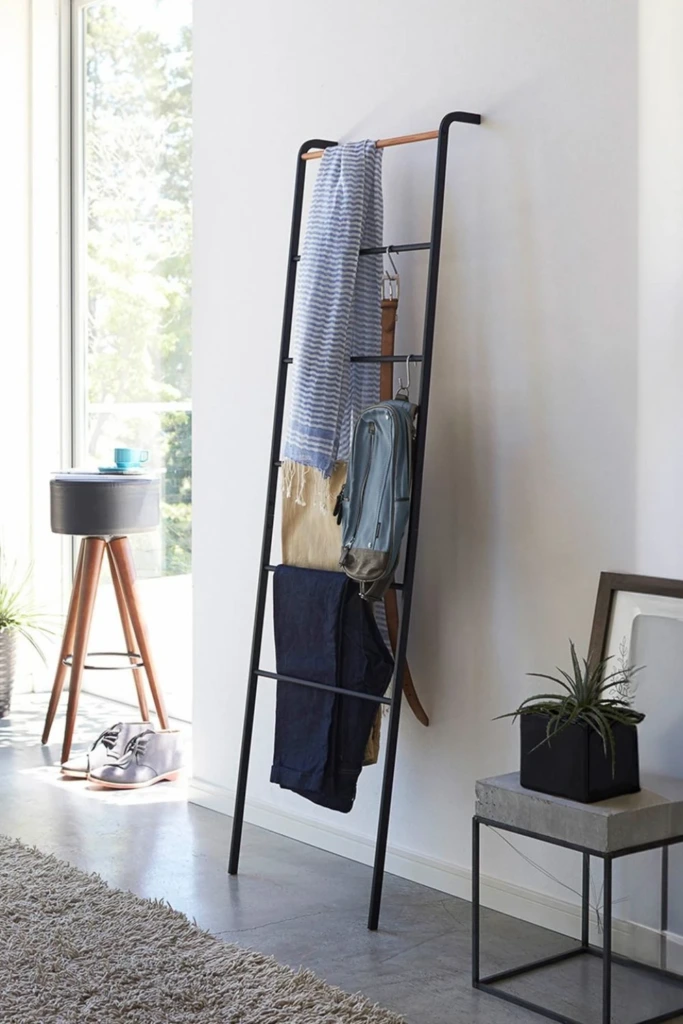
The entryway is an ideal place for ladder storage because it is where many everyday belongings tend to accumulate. A narrow ladder with hooks or attached baskets can provide a designated home for lightweight bags, scarves, caps, and other accessories.
Place a small tray or basket near the bottom for items you frequently carry, such as reusable shopping bags. If the entryway is spacious enough, pair the ladder with a shoe bench to create a complete drop zone.
Choose a design that fits the width of the hallway without obstructing doors or creating a tripping hazard. Secure the ladder against slipping, and avoid hanging so many items that you can no longer reach individual belongings easily.
6. Decor Shelf
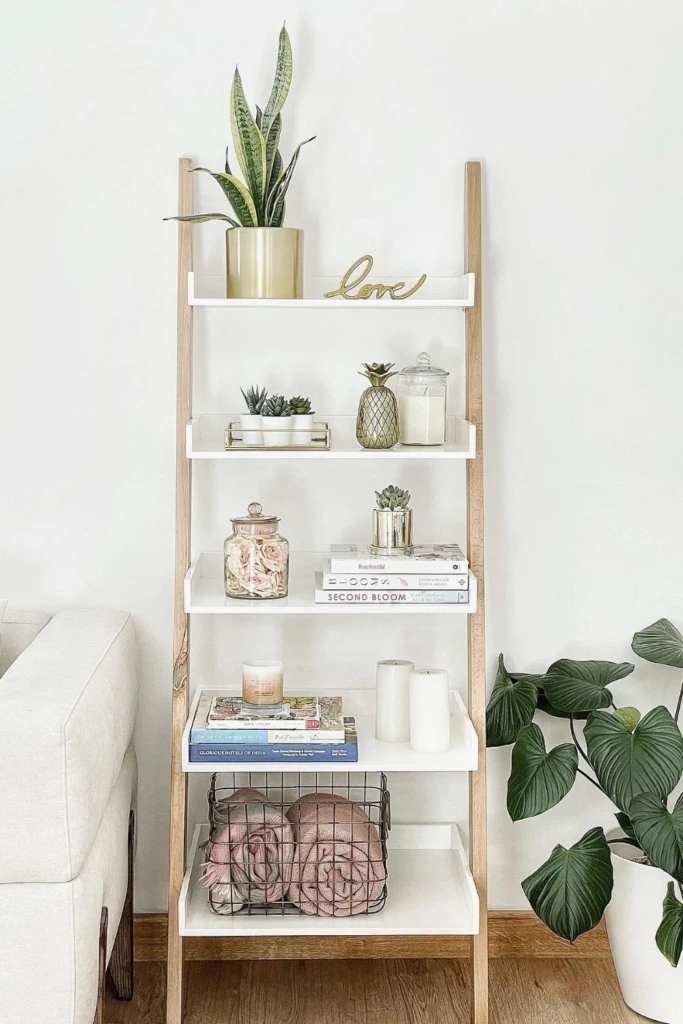
Turn a decorative ladder into a display shelf for accessories that reflect your personality. Depending on the ladder's construction, you can add properly fitted shelf boards across the rungs or choose a ready-made ladder shelf designed for decorative use.
Arrange framed prints, ceramic pieces, small sculptures, and a few books at different heights. Combining objects of varying shapes creates visual interest, while repeating a color or material helps the display feel coordinated.
Keep heavier decorations on lower shelves and avoid placing valuable or breakable objects where they could easily fall. Leave some areas empty so each piece has room to stand out rather than competing for attention.
7. Produce Storage
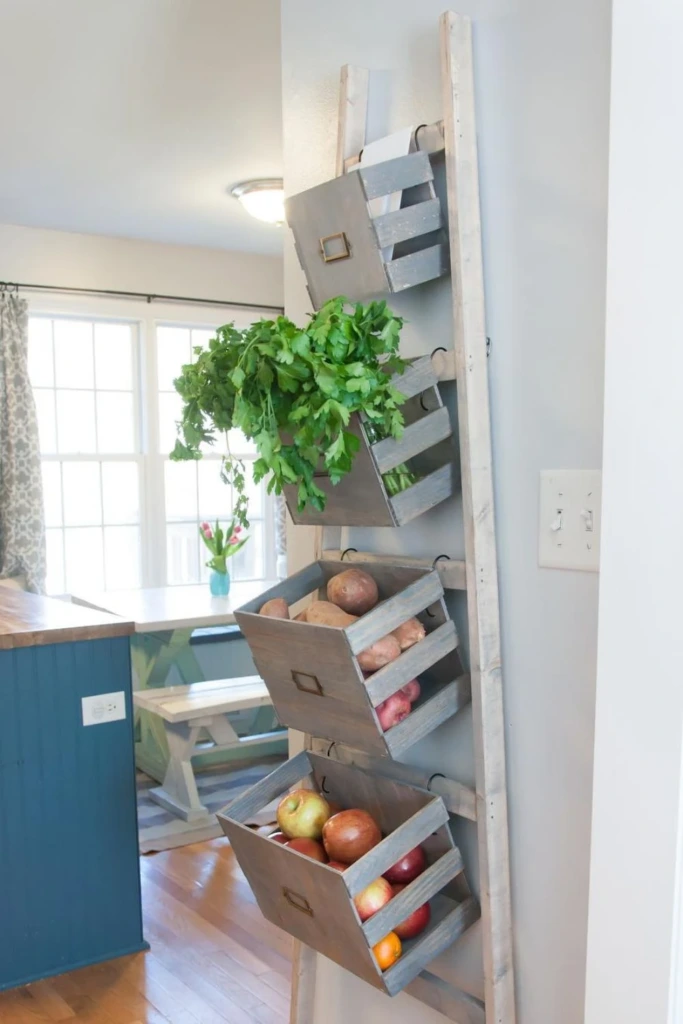
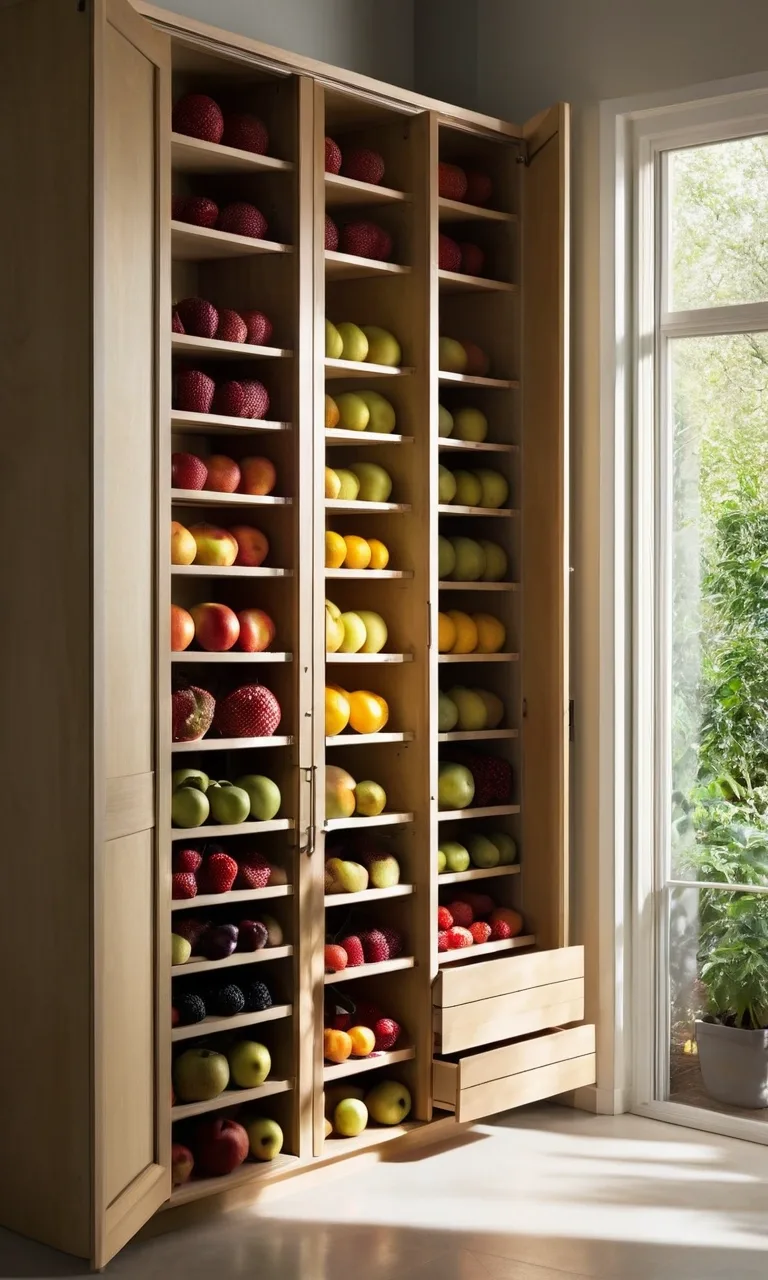
A ladder-style rack can help organize fruits and vegetables in a kitchen, pantry, or covered utility area. Use purpose-built baskets or stable shelves to separate produce and make frequently used ingredients easy to reach.
Apples, onions, potatoes, and other produce have different storage requirements, so avoid treating the ladder as a universal storage solution. Potatoes and onions, for example, are generally best kept in separate, cool, dark, well-ventilated locations. Refrigeration may be appropriate for other fruits and vegetables.
Choose washable containers with good airflow, and check stored produce regularly for spoilage. Keep the rack away from direct sunlight, heat sources, and damp areas. A dedicated produce stand with a ladder-inspired design can be a safer option than modifying a traditional climbing ladder.
8. Bath Storage
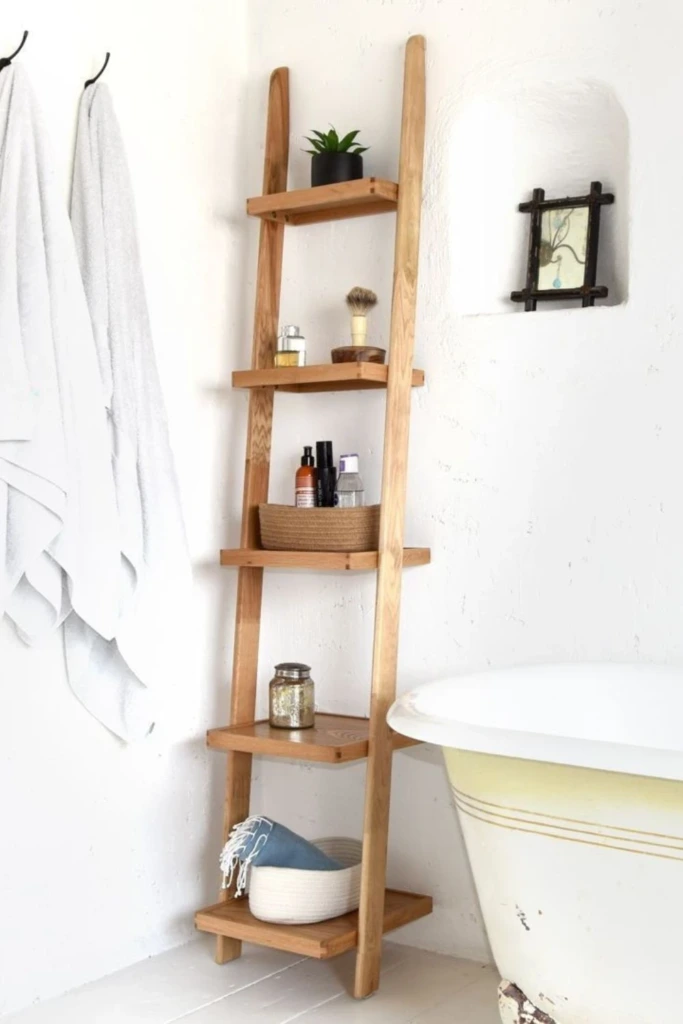
A ladder shelf can provide additional storage in a bathroom where cabinets are limited. Use its levels for rolled washcloths, spare toilet paper, skincare products, and small baskets containing personal care essentials.
Wooden ladders can introduce a spa-like, natural appearance, while metal versions offer a clean, modern finish. For bathrooms with frequent moisture, select materials and coatings intended for humid environments rather than assuming untreated wood will hold up indefinitely.
Position the unit where it will not obstruct the toilet, shower, or door. Keep toiletries in stable containers and avoid placing electrical appliances or delicate products where splashes could reach them. Good ventilation helps protect both the stored items and the ladder itself.
9. Towel Rack
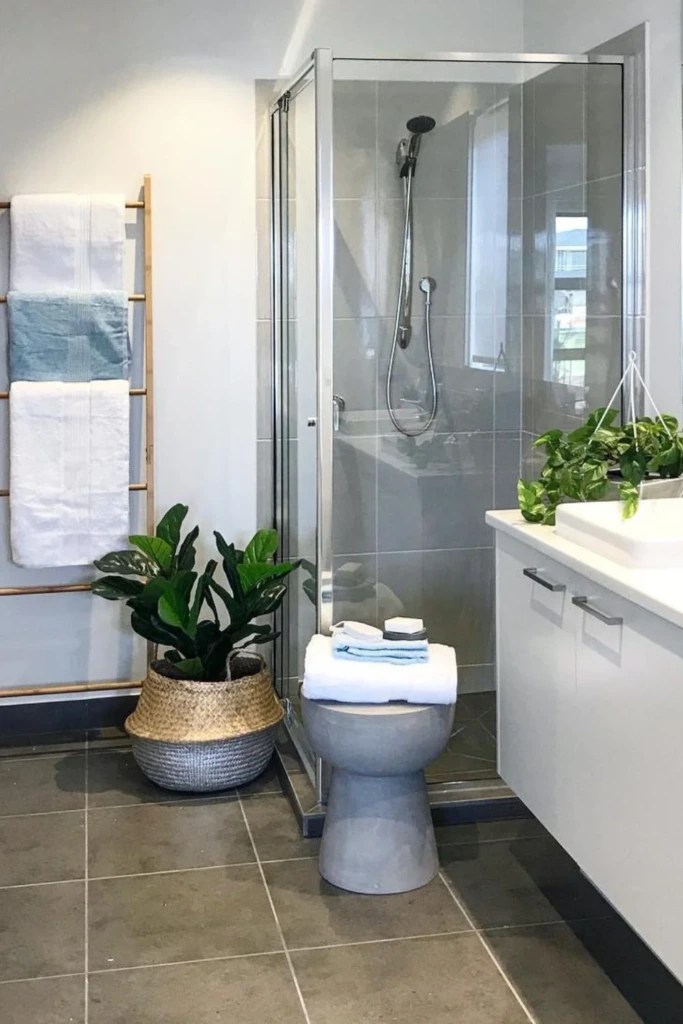
A simple ladder can function as an alternative towel rack in a bathroom, guest room, or laundry area. Hang bath towels over separate rungs so they are easy to grab and have room to dry between uses.
A slim wooden ladder works well in rustic or natural interiors, while a metal model can complement a contemporary bathroom. Choose a ladder with enough rung spacing to prevent towels from bunching together.
Position the rack in a well-ventilated area rather than a permanently damp corner. Make sure the ladder cannot slide or tip when a towel is pulled away, and keep it far enough from the shower to prevent unnecessary water exposure.
10. Corner Shelf
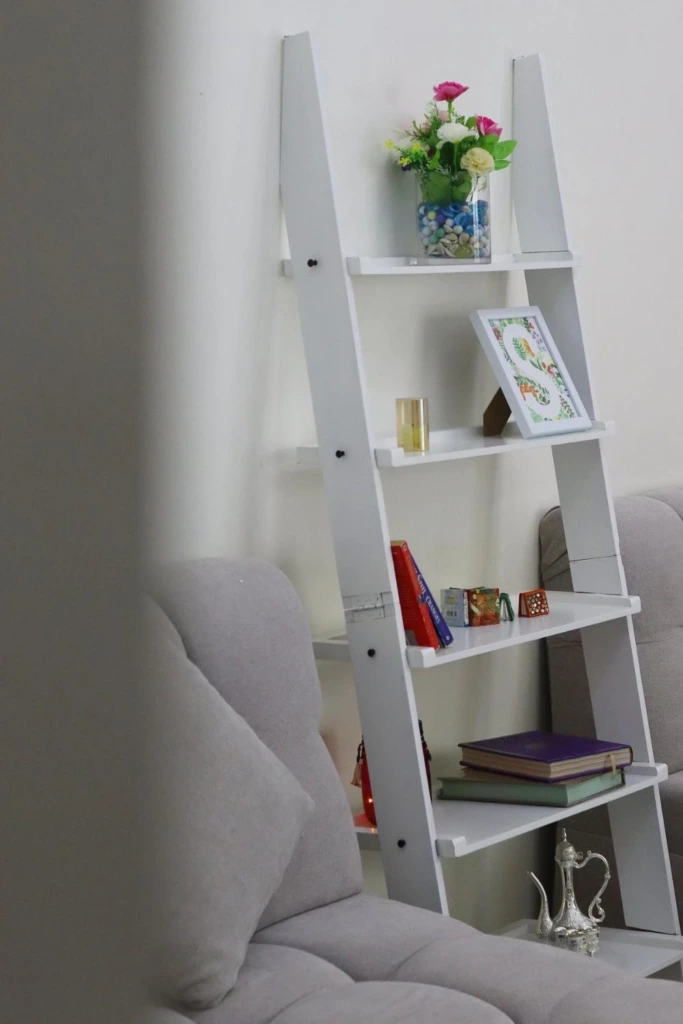
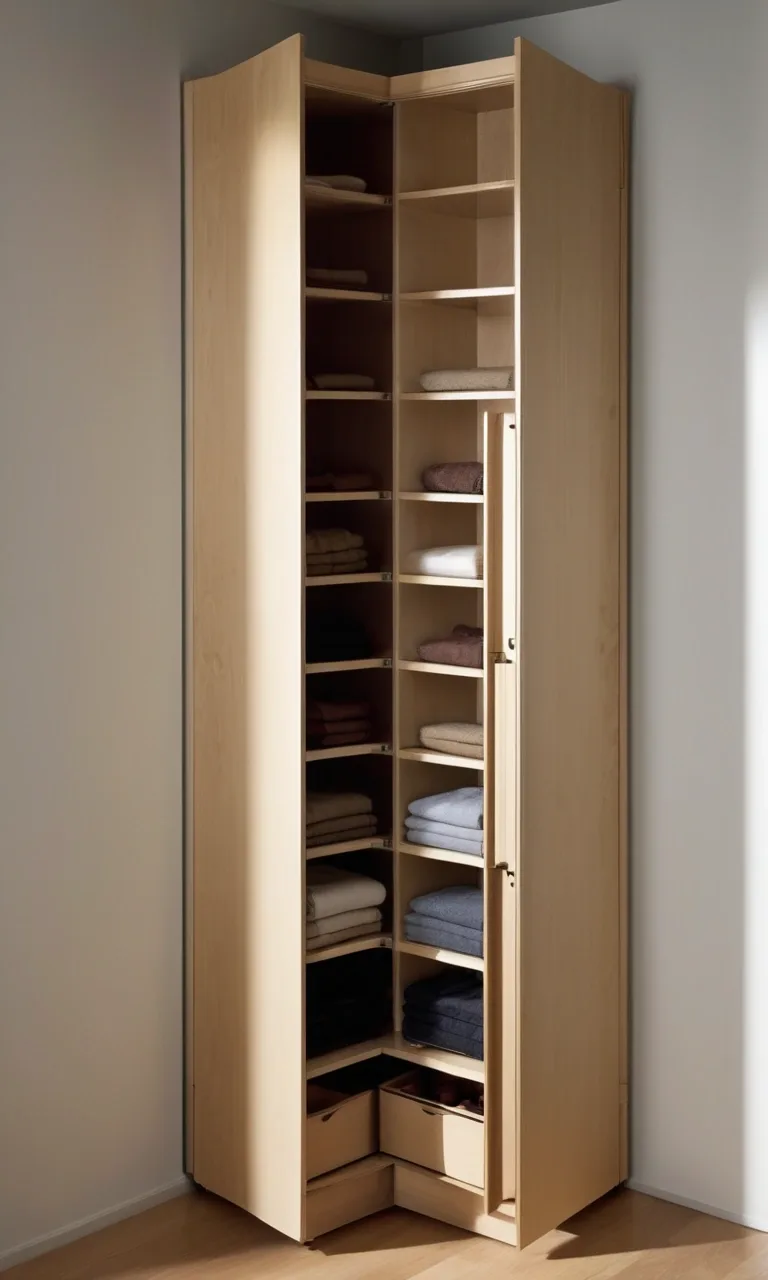
Unused corners often become awkward spaces that are difficult to furnish. A compact ladder shelf can turn one of these areas into useful storage without taking up the room needed for larger furniture.
Use the lower levels for baskets or books and the upper shelves for smaller decorative accents. In a bedroom, the unit might hold accessories and reading material; in a living room, it can display plants and framed photographs.
Measure both walls around the corner before selecting a model, since the shelf depth affects how much walking space remains. Choose a stable design with a footprint that suits the corner, and anchor it when appropriate to prevent accidental tipping.
11. Kitchen Shelf
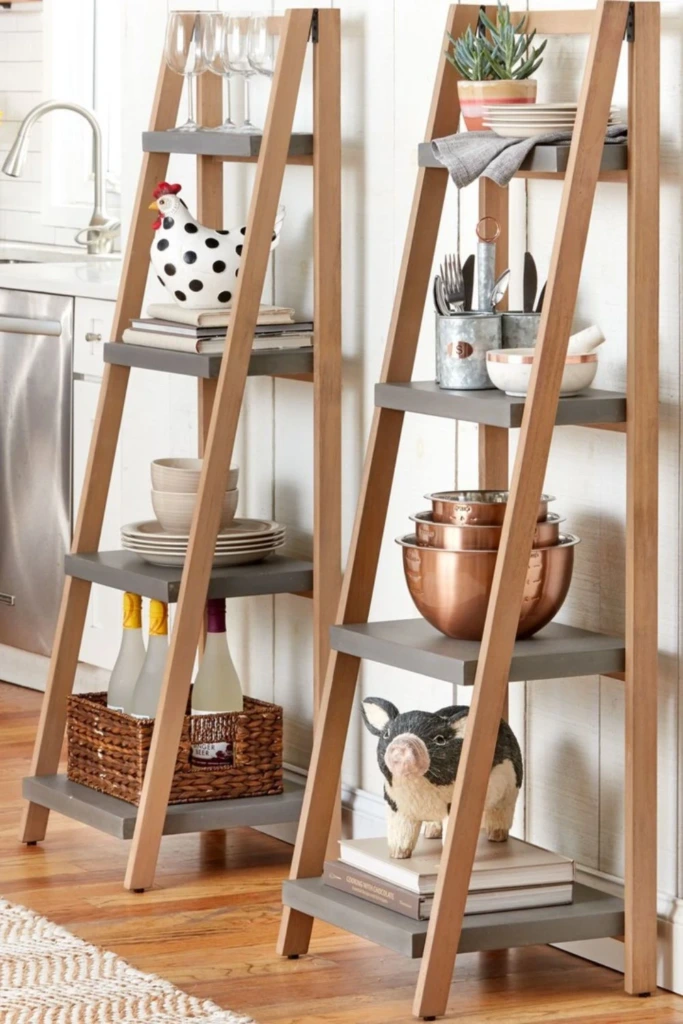
A ladder shelf can provide extra room for frequently used kitchen essentials, especially when counter space and cupboards are limited. Arrange cookbooks, spice containers, serving bowls, and lightweight storage baskets on suitable shelves.
Keep the items you reach for most often at a comfortable height. Heavier cookware should go on lower, sturdier shelves, while decorative pieces can occupy the upper levels.
Because kitchens experience heat, grease, and moisture, choose a finish that is easy to clean. Avoid placing the unit close to a stove or oven, and ensure that food containers are protected from splashes and cooking residue. A purpose-built shelving unit with a ladder profile is generally preferable to an unstable repurposed ladder.
12. Shoe Storage
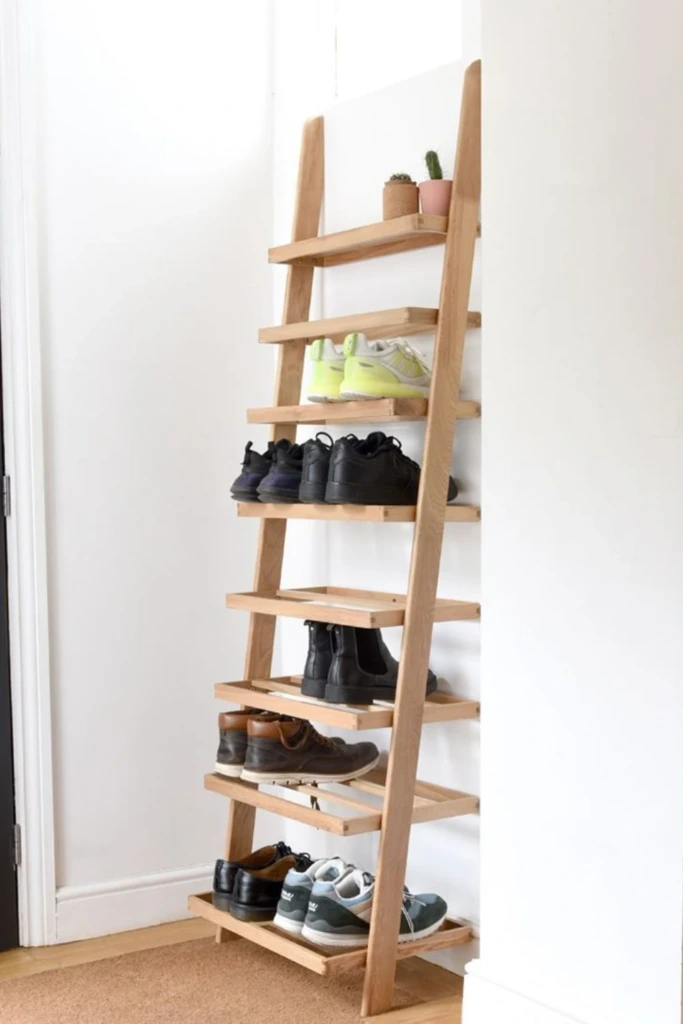
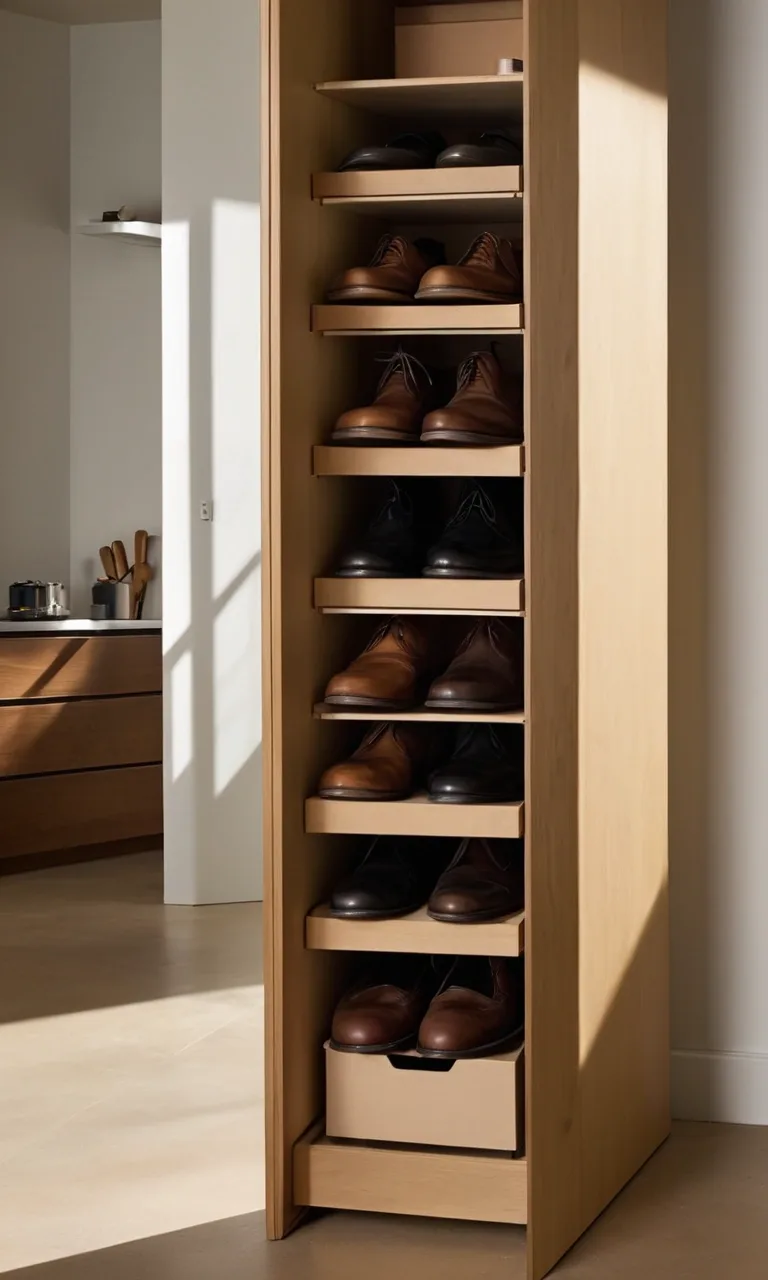
A ladder-inspired shoe rack can help keep footwear organized near the entrance, inside a walk-in closet, or along a bedroom wall. Depending on the design, shoes can sit on flat shelves, hang from purpose-made supports, or be arranged in labeled baskets.
Keep frequently worn shoes on the lower levels so they are easy to retrieve. Store less-used pairs higher up, provided the shelves are designed to support them safely.
Allow damp shoes to dry before storing them, and clean the rack regularly to prevent dirt from collecting. For households with several people, assign a shelf or basket to each person to make the system easier to maintain.
13. Seasonal Decor
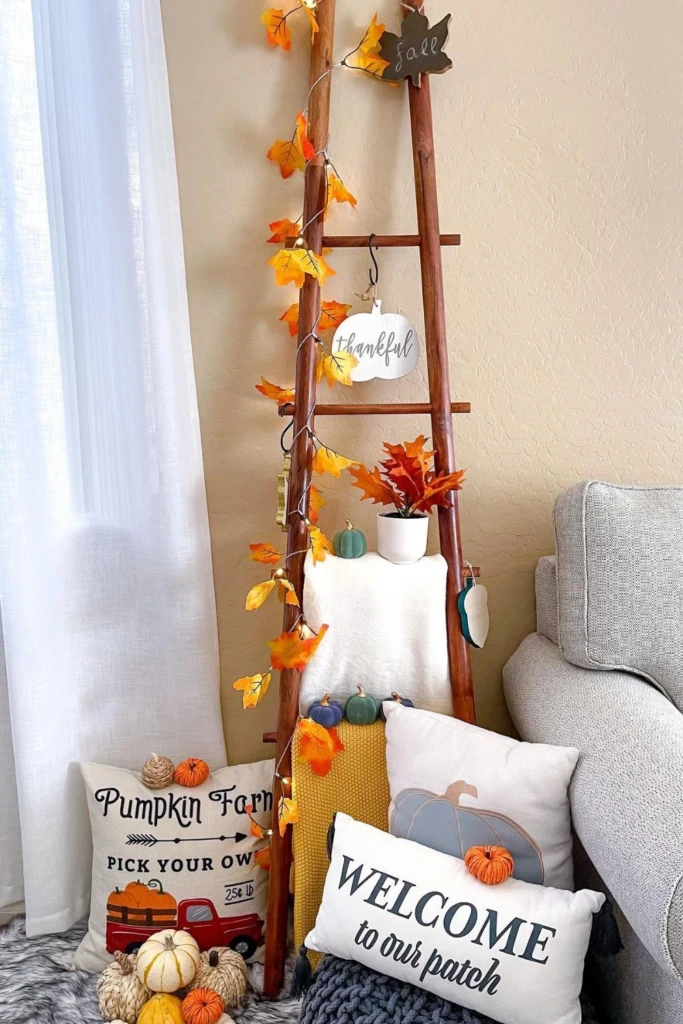
A decorative ladder offers a convenient way to display seasonal decorations without permanently changing the room. During winter, drape it with lightweight garlands or small ornaments. In spring, add faux flowers or pastel ribbons; during autumn, use miniature wreaths and fabric accents.
The advantage of this arrangement is that you can update the display throughout the year while keeping the basic structure in place. Store decorations in labeled containers when they are not being used, making seasonal changes simpler.
Keep decorations lightweight and avoid blocking pathways. If you use lights, select products suitable for the installation and follow their electrical and fire-safety instructions. Keep fabric, paper, and greenery away from candles and other heat sources.
14. Plant Ladder
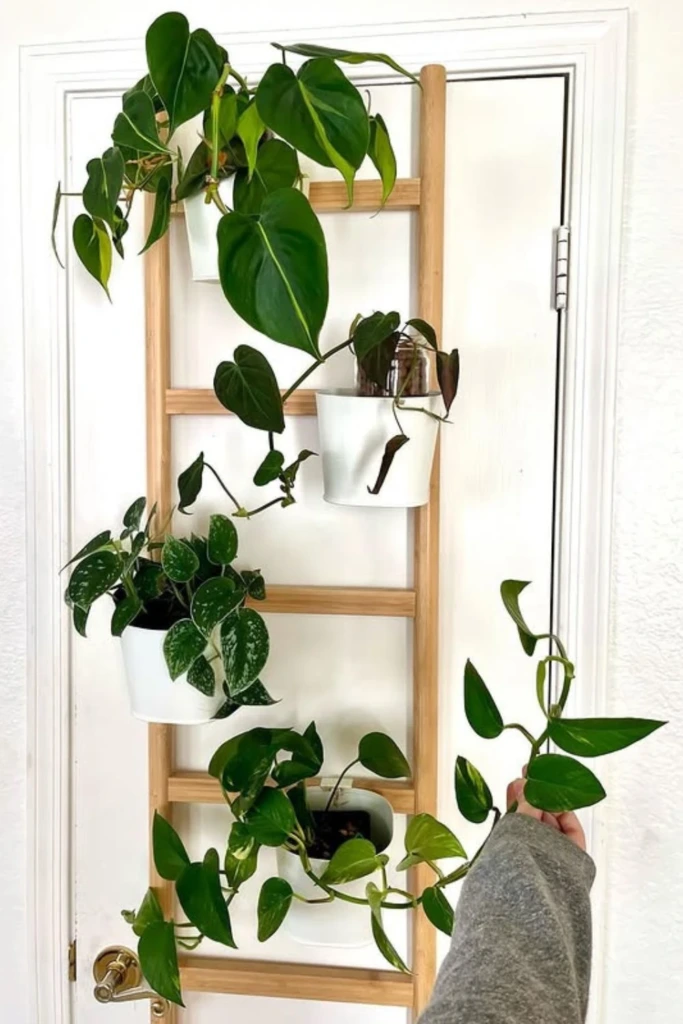
A ladder plant stand is a useful way to introduce greenery at several heights. Place compact potted plants on its shelves, arranging them according to their light requirements rather than appearance alone.
Trailing plants can add movement along the sides, while upright varieties help balance the overall shape. If the ladder sits near a bright window, rotate plants occasionally so they grow evenly, provided their individual care requirements allow it.
Use shelves that can support the combined weight of the pots, soil, and water. Waterproof trays help protect the ladder and floor from drips, and a stable, level base reduces the risk of tipping. Make sure the ladder receives appropriate light and does not obstruct windows or heating equipment.
15. Blanket Holder
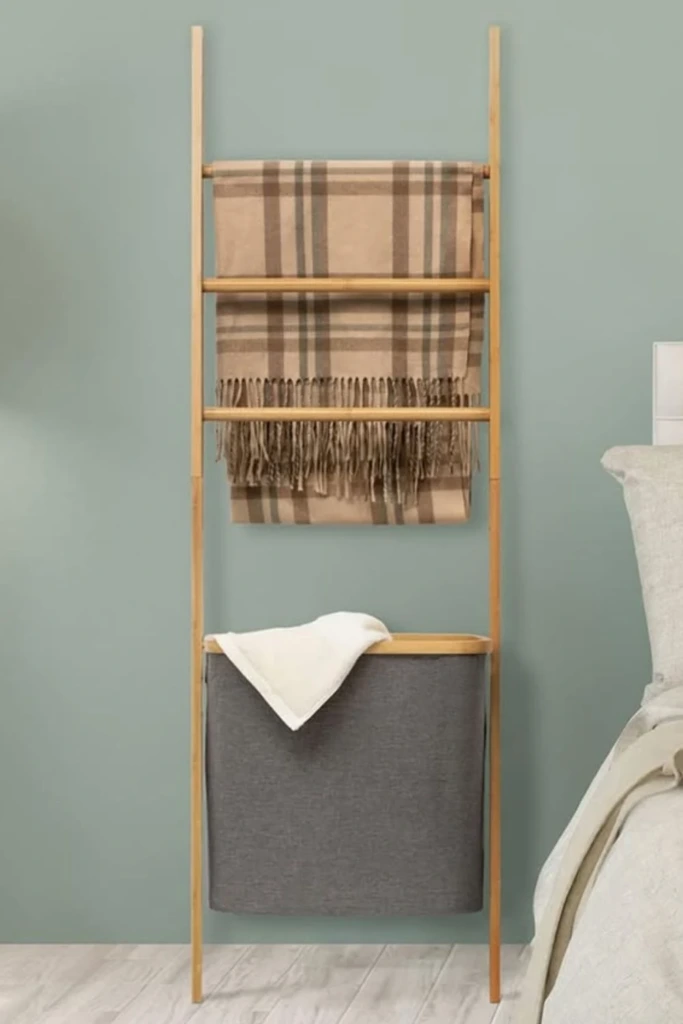
A ladder blanket holder can keep throws accessible while adding a cozy decorative touch to a bedroom or living room. Fold each blanket loosely over a separate rung so you can see the different colors and choose one quickly.
For a coordinated look, group blankets by color family or mix different textures in a restrained palette. A natural timber ladder works particularly well with knitted throws, linen fabrics, and soft neutral furnishings.
Avoid overloading the rungs, especially if the ladder is decorative rather than designed for heavy use. Place it against a secure wall or use an appropriate anti-slip arrangement. Wash blankets as needed and allow them to dry fully before returning them to storage.
16. Event Display
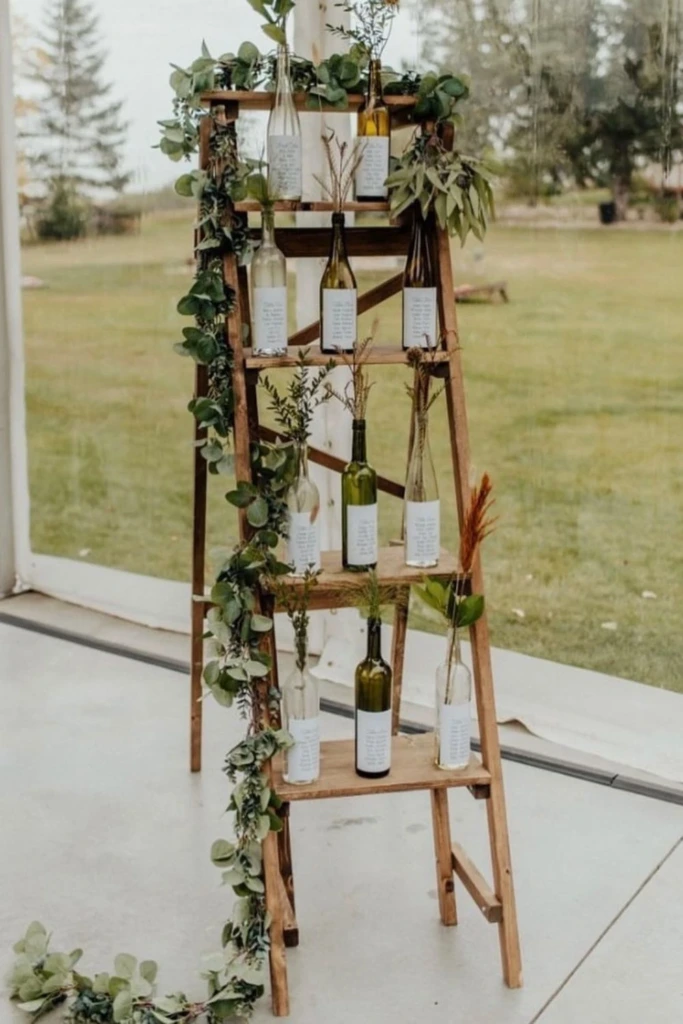
Ladders can become attractive display stands for weddings, parties, markets, and other special occasions. A freestanding ladder shelf may hold guest favors, small flower arrangements, photographs, place cards, or packaged treats.
For a rustic celebration, decorate the structure with simple greenery and natural fabrics. For a modern event, use a restrained color scheme and neatly arranged signage. The ladder can also serve as a photo display or a decorative welcome station.
Use a purpose-built display ladder with stable shelves, and keep the heavier objects near the bottom. Secure decorations so they cannot fall when guests move nearby. For outdoor events, account for wind, uneven ground, and changing weather conditions.
17. Toy Storage
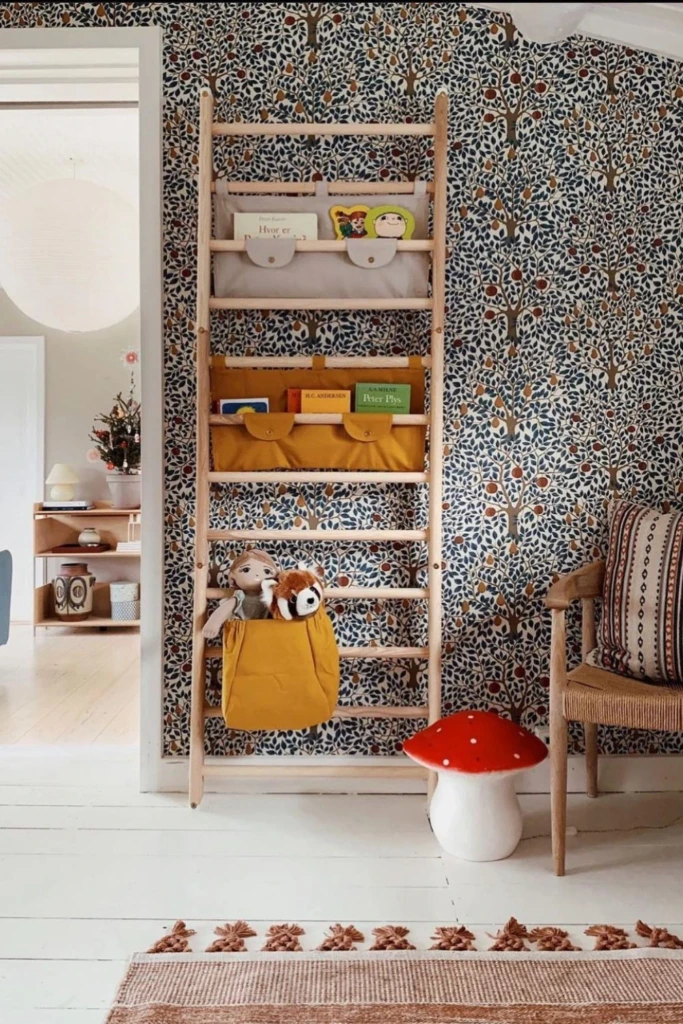
A ladder shelf can make children's toys easier to organize while keeping the room visually tidy. Place baskets on the lower shelves for building blocks, dolls, stuffed animals, and other toys that children use regularly.
Label the baskets with words or pictures so children can identify where each category belongs. Keeping similar toys together makes cleanup less complicated and helps prevent small pieces from spreading across the room.
Choose sturdy furniture with a wide, stable base and secure it to the wall according to the manufacturer's instructions. Avoid top-heavy arrangements and heavy objects on upper shelves. Check that baskets do not have sharp edges or pinch points, and keep small items away from children who could choke on them.
18. Spa Corner
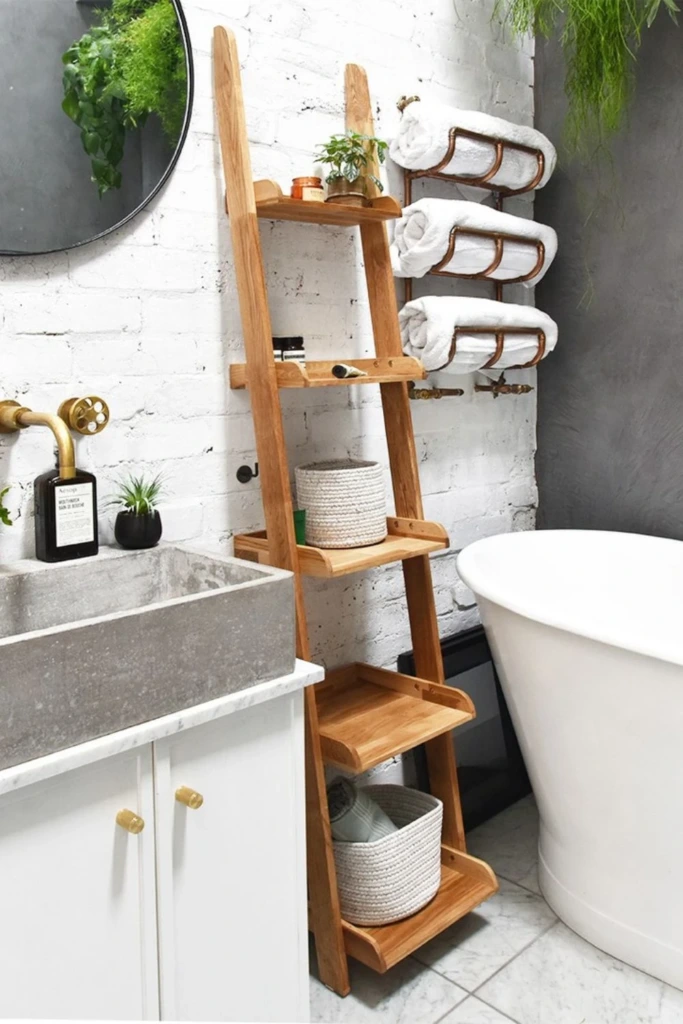
Create a relaxing spa-inspired corner by using a ladder shelf to organize bath essentials and soft accessories. Fold clean towels into neat stacks, place toiletries in matching containers, and add a small decorative plant if the lighting and humidity suit it.
A light wood finish, neutral fabrics, and a few carefully selected accessories can make the arrangement feel calm without requiring a complete bathroom makeover. In a bedroom, the same idea works as a quiet self-care station for lotions, skincare products, and other everyday essentials.
Keep the display simple and hygienic. Store products away from direct heat, clean the shelves regularly, and avoid placing candles or fragranced items near towels and other flammable materials.
19. Desk Storage
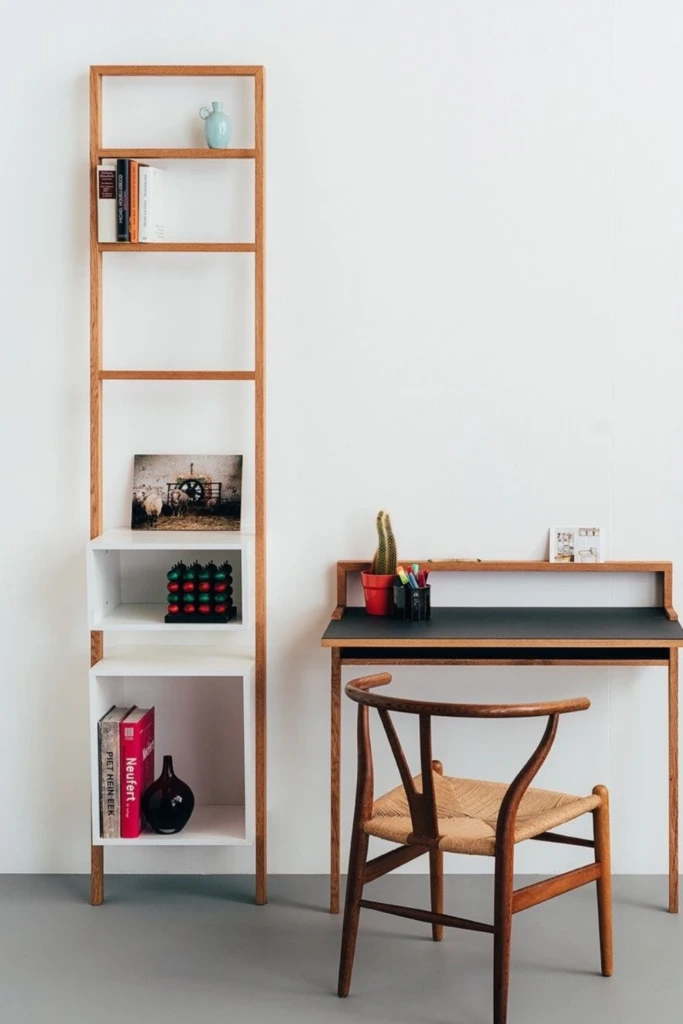
A ladder shelf beside a desk can create extra room for office supplies without crowding the work surface. Store notebooks, reference books, folders, and stationery in separate containers so each category has a designated place.
Use the lower shelves for heavier books and paper supplies, while the upper levels can hold lightweight accessories or a small plant. If the ladder has a compact footprint, it can be especially useful in a home office or study nook.
Keep frequently used items within easy reach and avoid placing the shelf where it blocks natural light or chair movement. Manage charging cables separately, and make sure the ladder cannot tip if someone brushes against it while working.
20. Dish Storage
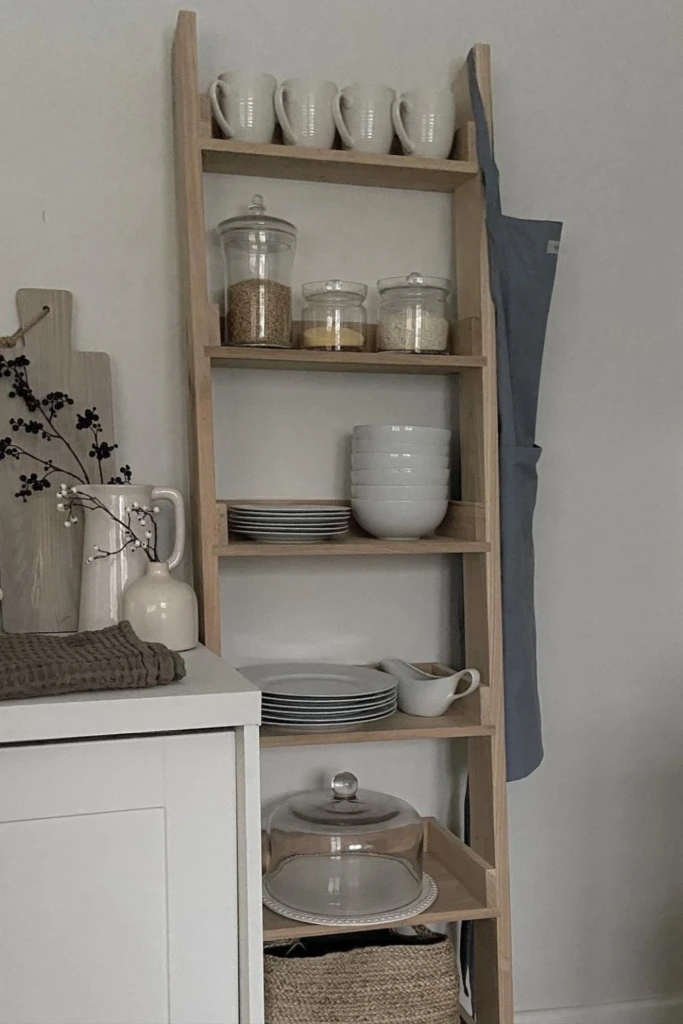
A ladder-style shelving unit can provide additional room for dishes, mugs, serving bowls, and selected kitchen accessories. It can also be used to display attractive ceramic collections in a dining room or open-plan kitchen.
Use wide, level shelves with enough depth to support the dishes securely. Place heavier bowls and plates lower down, and keep frequently used items at a comfortable height. A shelf with a raised edge can offer additional protection against accidental slips.
Avoid balancing plates directly on narrow ladder rungs, as the surfaces may not be stable enough. Keep the unit away from busy walkways, and check its weight capacity before adding a full collection of dinnerware. For everyday dishes, a purpose-built kitchen rack is often the more practical choice.
21. Library Ladder
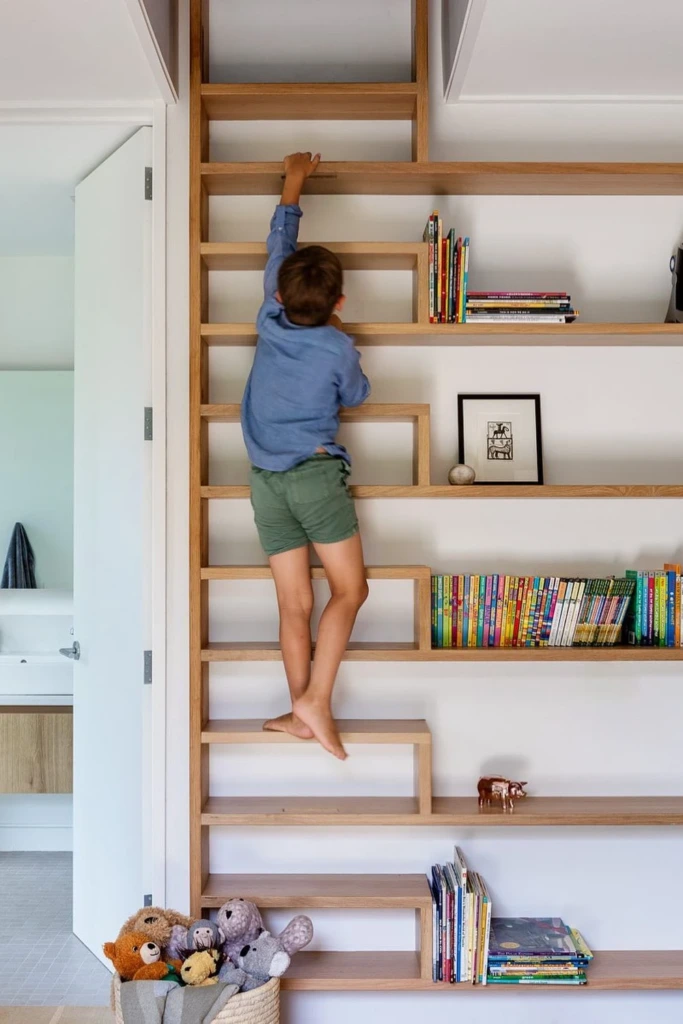
A library ladder is a functional feature for homes with tall bookcases, built-in shelving, or high storage cabinets. When fitted to a compatible rail system, it helps you access books and other items stored above normal reaching height.
Choose a style that complements the shelving. A traditional wooden ladder can suit a classic library, while a metal-and-wood combination may work better in a contemporary interior.
The rail, brackets, floor clearance, and mounting points must be suitable for the ladder and the person using it. Have the system professionally installed when necessary, and follow the manufacturer's guidance for climbing and movement. Do not improvise a sliding mechanism with ordinary hardware that has not been designed for the load.
22. Corner Display
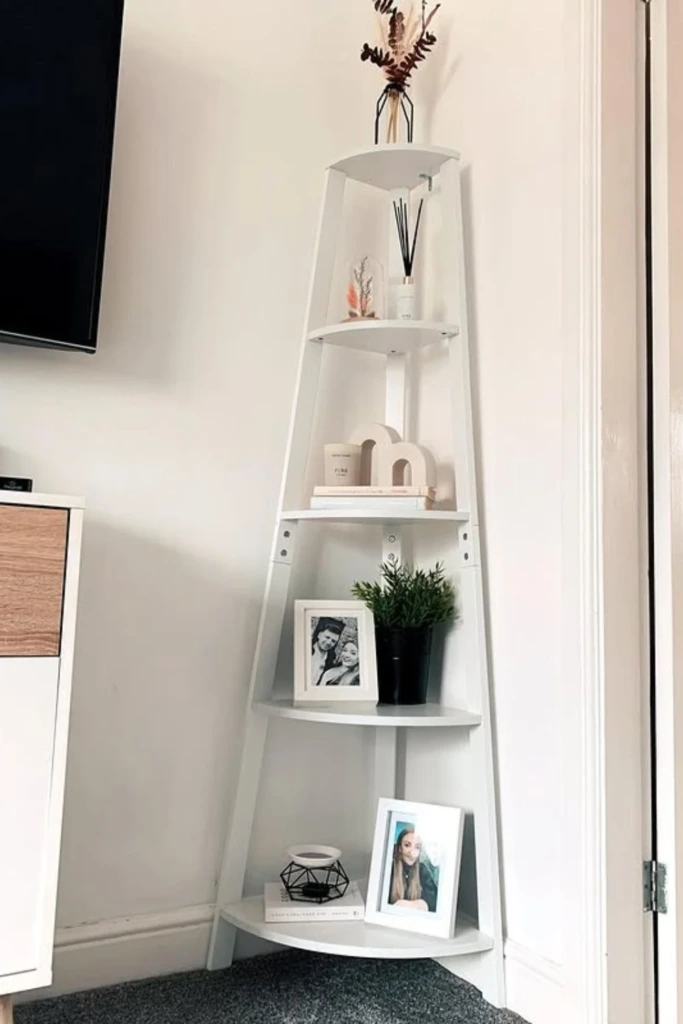
A ladder can turn an otherwise overlooked corner into a small display area for treasured belongings. Use it to showcase framed photographs, handmade crafts, souvenirs, or a few decorative objects collected over time.
A cohesive arrangement usually looks better than filling every available space. Choose a consistent color palette, combine objects of different heights, and leave some open space between them. A small plant or a framed print can help connect the display with the rest of the room.
Make sure the ladder fits comfortably without interfering with doors, curtains, or nearby furniture. Secure the structure if necessary, and keep delicate objects away from the edges of the shelves.
23. Bedside Shelf
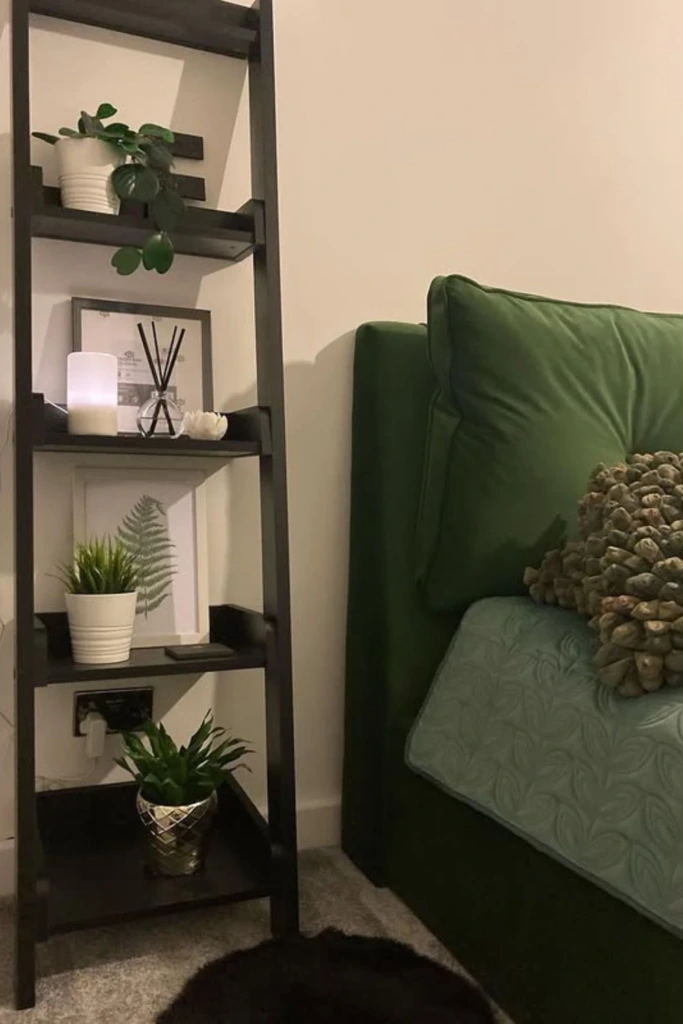
If a conventional nightstand feels too bulky, a narrow ladder shelf may provide a space-saving alternative. It can hold a book, reading glasses, a small lamp, or a basket for personal items.
Choose a model with a stable base and shelves positioned at convenient heights. Keep the items you need at night on a lower or middle shelf so they are easy to reach from bed without stretching.
Avoid placing drinks, heavy objects, or breakable decorations on narrow or unstable surfaces. If you use the shelf for a lamp or charging device, manage the cables carefully and keep electrical equipment away from bedding. A dedicated bedside ladder shelf is preferable to a lightweight decorative ladder that was never intended to hold everyday items.
24. Bathroom Display
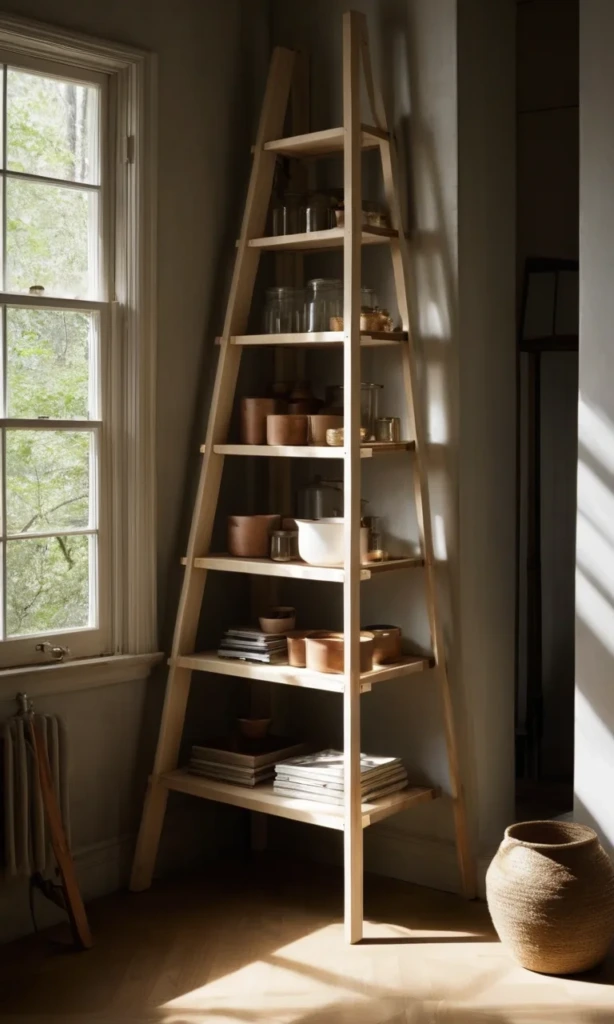
A ladder shelf can make bathroom storage feel more decorative while keeping essentials visible. Arrange folded towels, cotton pads, toiletries, and small baskets on separate levels, using containers to keep loose items together.
In a guest bathroom, the shelves can hold fresh hand towels and spare supplies. In a larger bathroom, a wider ladder unit may provide room for neatly arranged skincare products and decorative accents.
Choose materials that can tolerate bathroom humidity and wipe the shelves dry when needed. Keep products securely positioned and avoid storing medicine or valuable cosmetics where heat and moisture could affect them. Leave enough room around the unit for cleaning and ensure that it does not narrow access to sinks, toilets, or showers.
FAQs
Ladder storage can be adapted to many rooms, but the best arrangement depends on the ladder's design, available space, and intended load. The following answers cover common questions about choosing and styling a ladder for everyday organization.
How do you style a ladder without making it look cluttered?
Start by deciding what the ladder should store or display. Keeping one clear purpose in mind prevents it from becoming a catchall for unrelated belongings.
Choose a limited color palette that complements the room, then group smaller objects in baskets or containers. Combine a few larger pieces with smaller accessories, and leave some rungs or shelves empty to create breathing room.
Place heavier items on lower shelves when the structure is designed to support them. Remove objects that do not contribute to the display or serve a practical purpose. Most importantly, keep the ladder stable and avoid hanging so many items from it that its shape and function become difficult to appreciate.
Where should you place a ladder for the best storage and look?
The best location is one where the ladder adds useful storage without interrupting the flow of the room. A slim ladder can work beside a sofa, in an entryway, next to a desk, or in an unused corner. Bathroom and kitchen versions should be made from materials suitable for their surroundings.
Consider natural light, nearby furniture, door openings, and how often you need to access the stored items. A plant ladder benefits from suitable lighting, while a blanket ladder is most useful near seating or a bed. A towel ladder should be positioned where towels can dry properly.
Always check the available floor space and secure the ladder when necessary. Avoid narrow walkways, unstable surfaces, and locations where people might accidentally knock it over.
A well-chosen ladder can make your home more organized while adding texture, height, and personality to your decor. Whether you use one for blankets, plants, books, or everyday essentials, focus on stability, appropriate materials, and a clear storage purpose. With thoughtful placement and a little restraint, ladder storage can be both practical and visually appealing.