23 Key Storage Ideas for 2026 to Keep Your Entryway Organized
Keys are small, easy to misplace, and surprisingly frustrating to search for when you're already running late. A dedicated storage spot makes everyday routines smoother while helping your entryway look tidy and welcoming. Whether you prefer a decorative bowl, a simple wall-mounted rack, or a clever hidden organizer, there are plenty of ways to keep keys within reach. These key storage ideas combine practical features with attractive designs to suit different homes, spaces, and personal styles.
What Is the Most Practical Key Holder for an Entryway?
The most practical key holder is one that sits near your usual entrance, provides enough space for your everyday keys, and makes putting things away effortless. Wall-mounted hooks are excellent for narrow hallways because they use vertical space without occupying a table or countertop. If you have a console table, an entry tray or small bowl can offer a convenient alternative.
Consider your household's routine before choosing a design. A family with several sets of keys may need multiple labeled hooks, while someone living alone might prefer a compact organizer. Look for durable materials, easy installation, and a design that complements your decor. The best option is one everyone can use consistently without creating clutter.
1. Entry Tray
<text> </text>
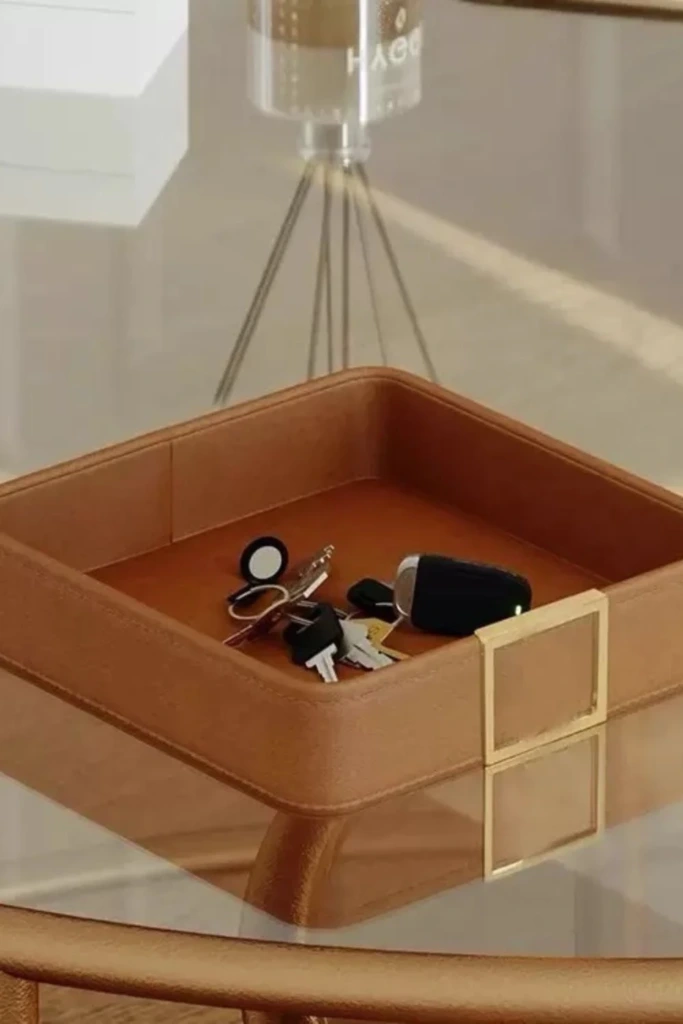
An entry tray is a straightforward way to collect keys, coins, earbuds, and other small essentials in one place. Position it on a console table, hallway cabinet, or shelf near the front door so you can drop your belongings there as soon as you arrive.
Choose a tray made from wood, ceramic, metal, or leather depending on your interior style. A shallow design makes keys easy to spot, while a tray with separate compartments helps keep smaller objects organized. If several people share the space, consider assigning each person a section or using a few small dishes inside a larger tray.
To prevent the surface from becoming a dumping ground, limit the tray to items you regularly carry. Store paperwork, spare batteries, and unrelated accessories somewhere else.
2. Wall Hooks
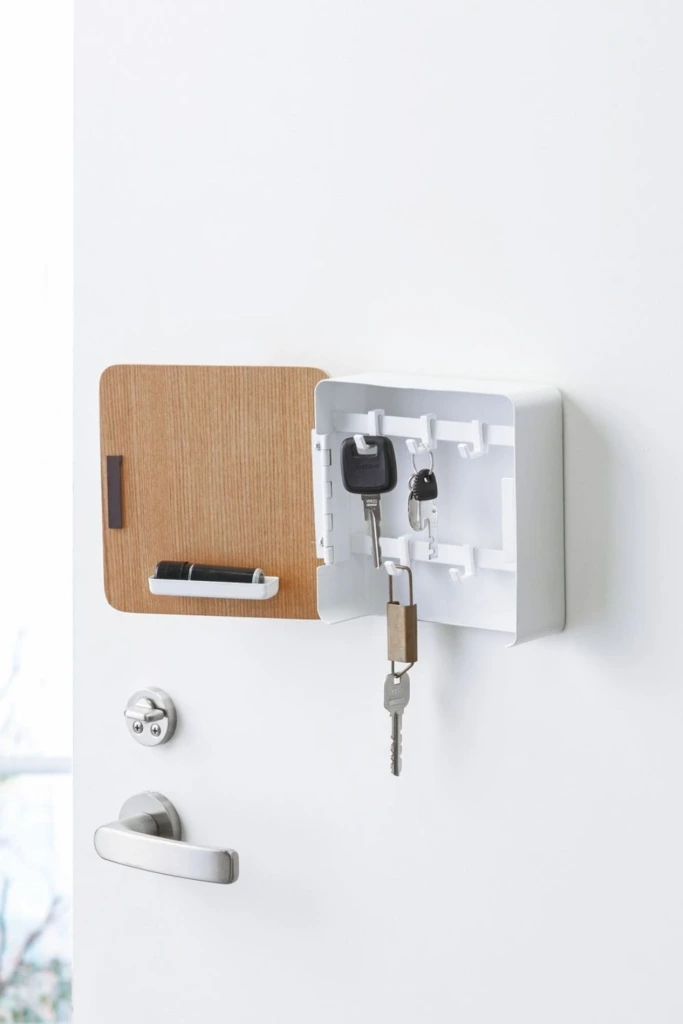
Wall hooks are ideal when floor space and tabletop surfaces are limited. A row of hooks beside the entrance gives every set of keys a visible, accessible home. You can find minimalist metal designs, rustic wooden rails, colorful individual pegs, and decorative shapes that double as wall art.
Install the hooks at a comfortable height where household members can reach them easily. For a family, space the hooks far enough apart to prevent key rings from tangling. Small labels can identify each hook by person, vehicle, or purpose.
Before drilling, check the wall material and use appropriate anchors or mounting hardware. If you rent your home, removable adhesive hooks may work for lightweight key rings, provided the product is suitable for your wall surface and expected load.
3. Bear Tray
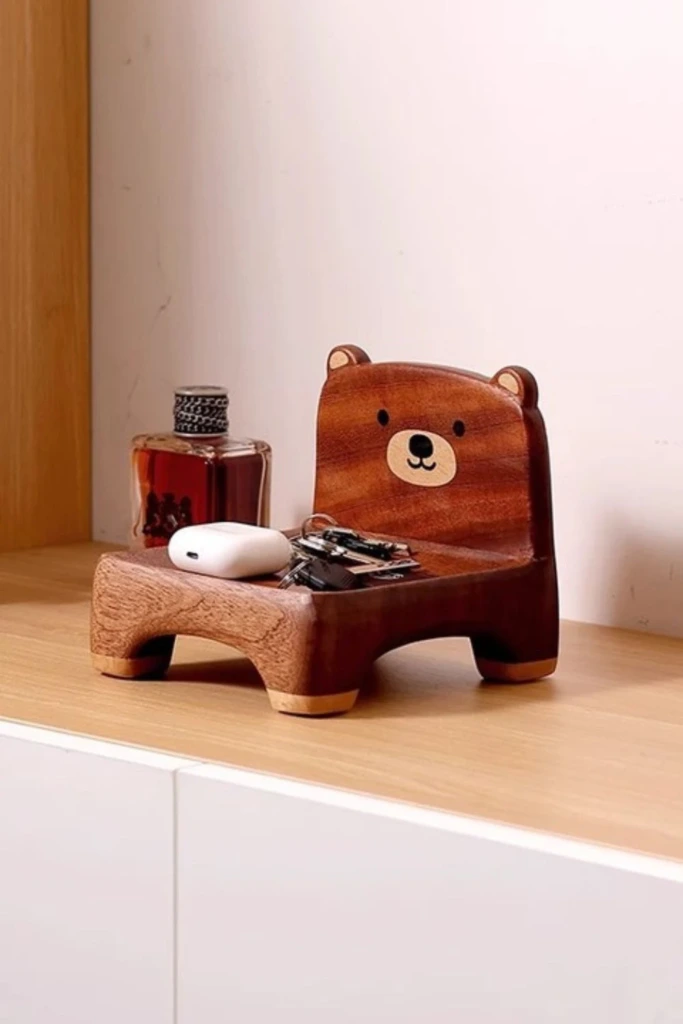
A bear-shaped tray adds a playful touch to an otherwise ordinary entryway. Its decorative silhouette can make a small landing area feel more personal while providing a place to leave keys after coming home.
Look for a model with a sufficiently flat interior and a raised edge that helps prevent keys from sliding onto the floor. Resin, ceramic, and molded metal are common choices for decorative catchall trays. A neutral-colored bear can suit a modern interior, while a brightly colored version works well in a cheerful or eclectic space.
Place the tray on a stable console or shelf away from the edge. If you have children or pets, avoid fragile materials and keep small accessories beyond their reach.
4. Shelf Hooks
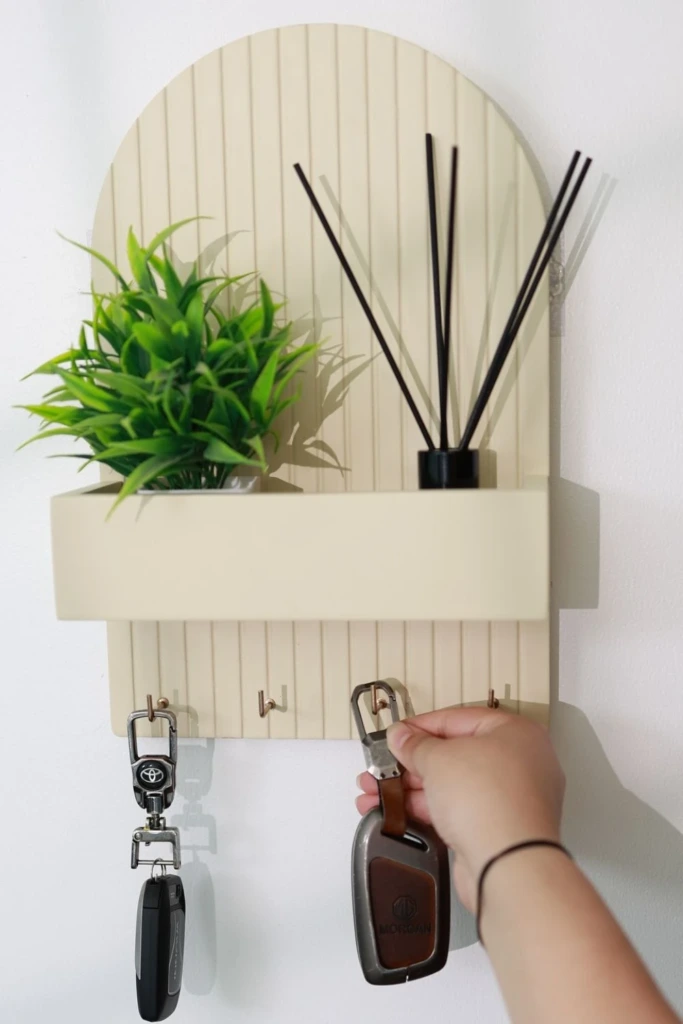
Shelf hooks combine two useful storage features in one compact fixture. The upper shelf can hold a small plant, framed photograph, or decorative object, while the hooks underneath keep keys accessible. This arrangement works particularly well in an entryway that lacks a dedicated console table.
Choose a shelf with enough depth for your intended items without making the fixture project too far into a narrow walkway. Hooks should be sturdy enough to support your key rings without bending or pulling loose.
For a coordinated look, match the shelf finish to your door hardware, furniture, or nearby frames. Keep decorative objects simple so the shelf remains functional rather than becoming another cluttered surface.
5. Doll Rack
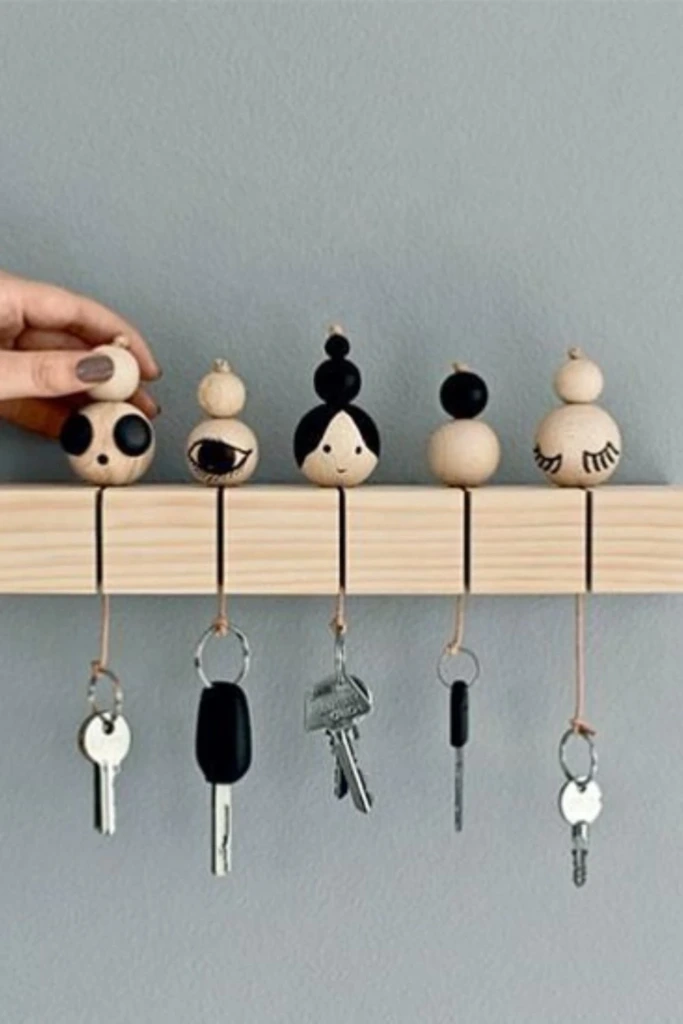
A doll rack offers a whimsical storage solution for anyone who enjoys playful decor or handmade accessories. A small wooden rack with decorative doll figures can turn key storage into a distinctive feature rather than something purely functional.
You can purchase a novelty rack or adapt a suitable decorative wall piece by adding secure hooks beneath it. Make sure the decorative elements do not obstruct the hooks or make it difficult to remove key rings.
This idea works nicely in craft rooms, children's family spaces, or homes with colorful interiors. For everyday use, prioritize a sturdy backing and smooth edges. Avoid designs with delicate protruding parts that could break when keys are repeatedly taken on and off.
6. Astronaut Bowl
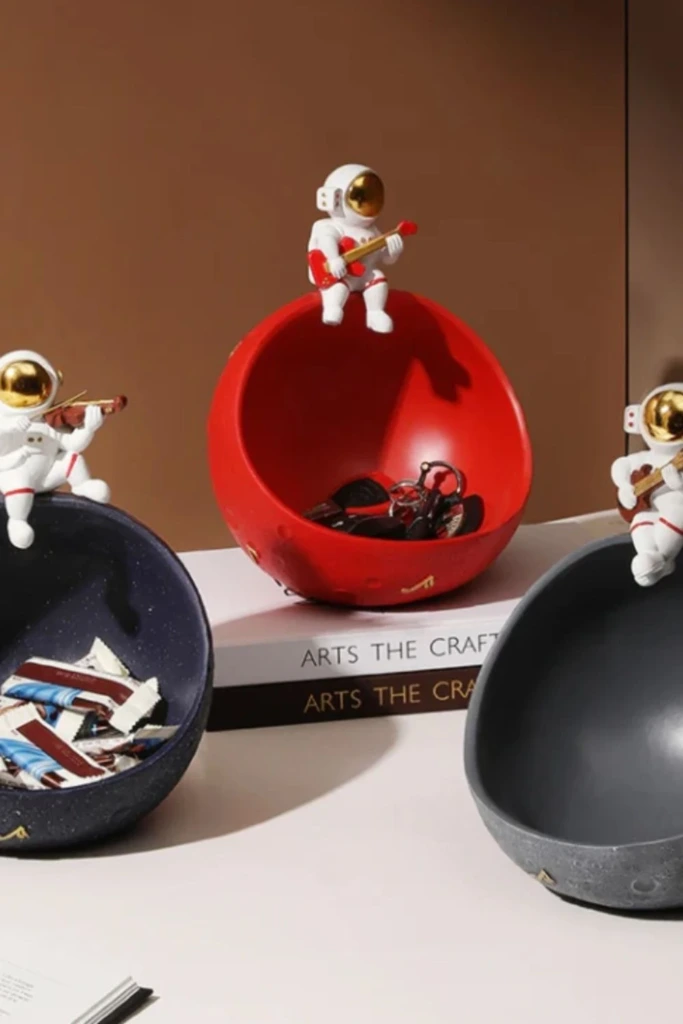
An astronaut-shaped bowl brings a space-inspired accent to a desk, console, or entryway shelf. Its unusual shape makes it an appealing choice for anyone who likes science fiction, astronomy, or modern novelty accessories.
Use the bowl to collect everyday keys, a garage remote, or other small items that fit comfortably inside. Before purchasing, check the interior dimensions because some sculptural bowls offer less usable space than their overall size suggests.
Pair the piece with a simple lamp, a small framed print, or other understated accessories to let the design stand out. If you prefer a cleaner appearance, choose a metallic or monochrome finish. A colorful version can create a more playful focal point in an otherwise neutral entryway.
7. Key Stand
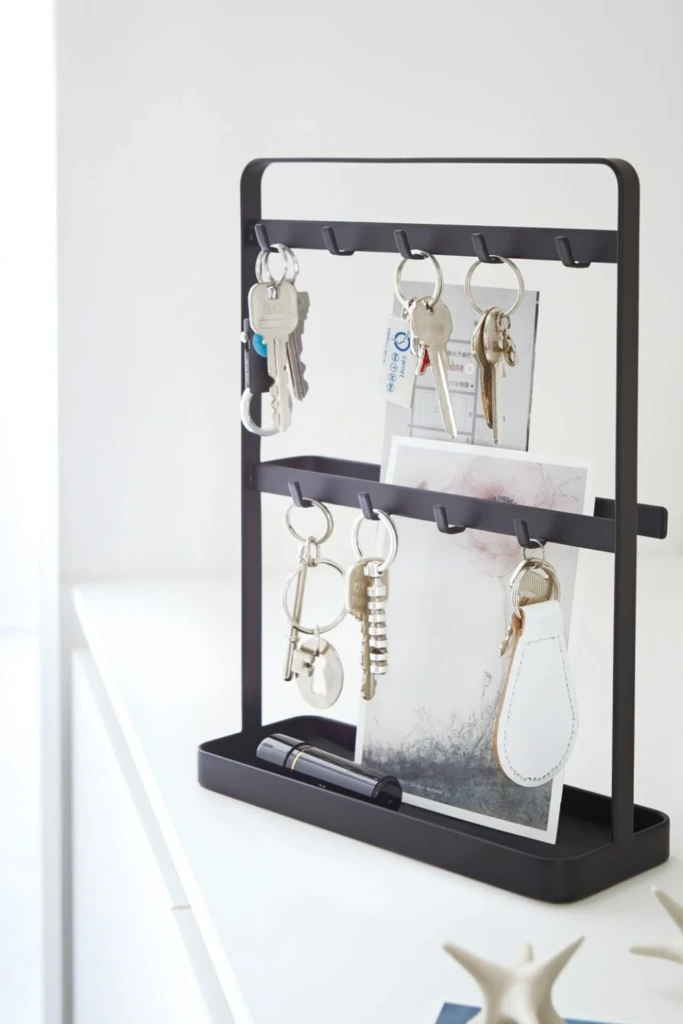
A freestanding key stand provides a dedicated place to hang keys without requiring wall installation. It can sit on a hallway table, a desk, or a shelf near the door, making it suitable for renters and people who prefer not to drill holes.
Look for a weighted base that stays stable when you remove a key ring. The hooks should be tall enough to keep keys from dragging against the surface, and the overall stand should fit comfortably within the available space.
Some designs resemble miniature trees, towers, or sculptural branches. These can serve as decorative accents while keeping several key sets visible. If you carry bulky car keys, check the spacing and strength of the hooks before choosing a compact model.
8. Frame Shelf
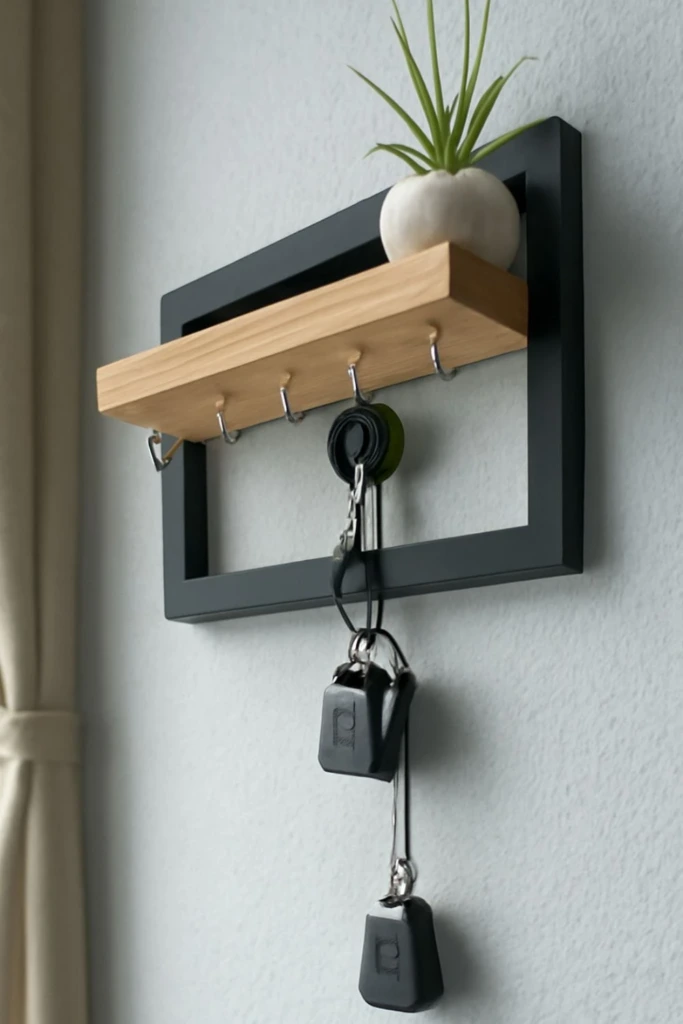
A frame shelf combines the appearance of framed wall decor with the usefulness of a small storage ledge. Depending on the design, it may feature a picture frame around the shelf or a rectangular frame with hooks incorporated into the lower section.
Use the upper ledge for a small photograph or decorative object, then hang your keys underneath. This arrangement creates a coordinated entryway feature without requiring several separate accessories.
A frame shelf is especially effective above a narrow console or beside a doorway. Choose a frame finish that matches the surrounding decor, such as natural wood for a warm interior or black metal for a contemporary space. Avoid placing heavy objects on a shallow ledge unless the fixture is designed to support them.
9. Key Cabinet
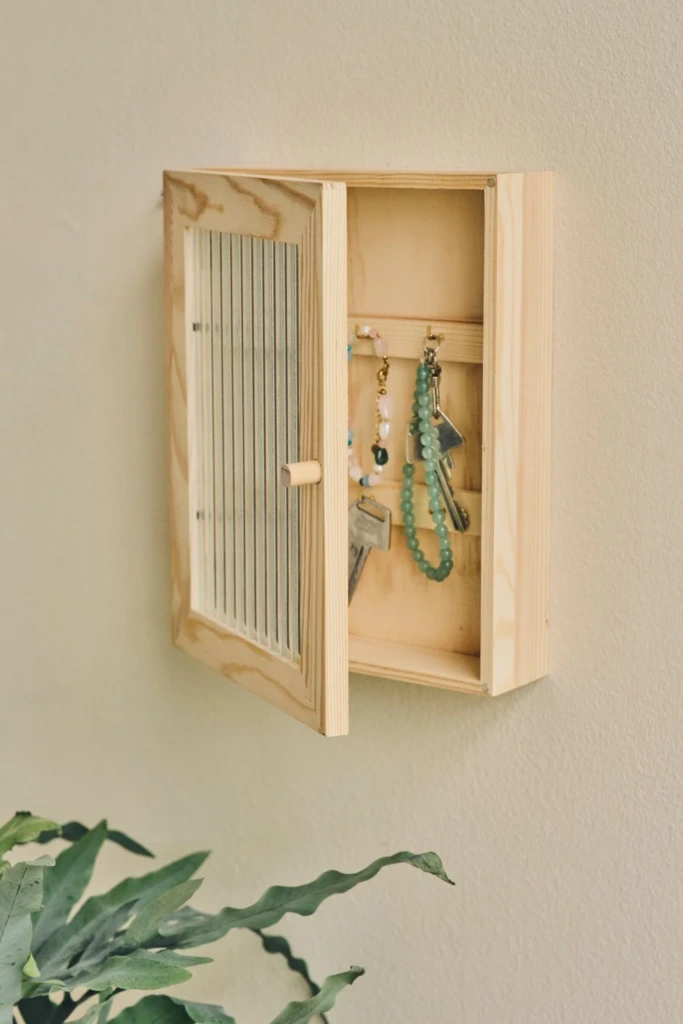
A key cabinet keeps keys organized behind a door, creating a neat appearance when the entryway is not in use. Inside, individual hooks can hold house keys, spare keys, mailbox keys, and other frequently needed sets.
Choose a cabinet with enough internal space for your key rings and any labels you want to add. A model with a small shelf or separate compartments may provide extra room for a garage remote or compact accessories.
Mount the cabinet somewhere convenient but not immediately visible from an open exterior doorway. If it holds keys to valuable property or multiple vehicles, consider a lockable design and avoid displaying identifying information on the labels. A cabinet is most useful when each key has a clearly assigned location.
10. Peg Shelf
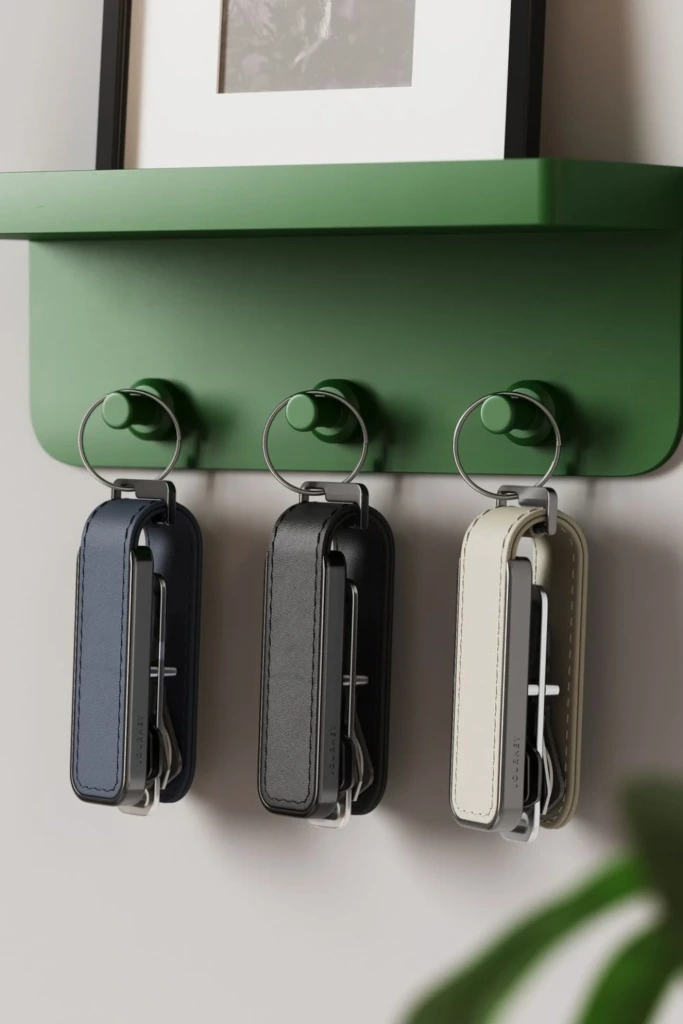
A peg shelf offers a simple combination of a small display surface and several hanging points. Its clean lines make it easy to incorporate into Scandinavian, farmhouse, minimalist, or contemporary interiors.
Use the pegs for keys, lightweight lanyards, or a compact reusable shopping bag. The shelf can hold a small plant, a framed note, or a decorative dish, provided the items fit securely and do not interfere with the hanging space.
For a coordinated arrangement, choose a wood tone that complements nearby furniture or paint the shelf to match your wall. Install it where the pegs are easy to reach and where hanging keys will not strike a door as it opens.
11. Hidden Holder
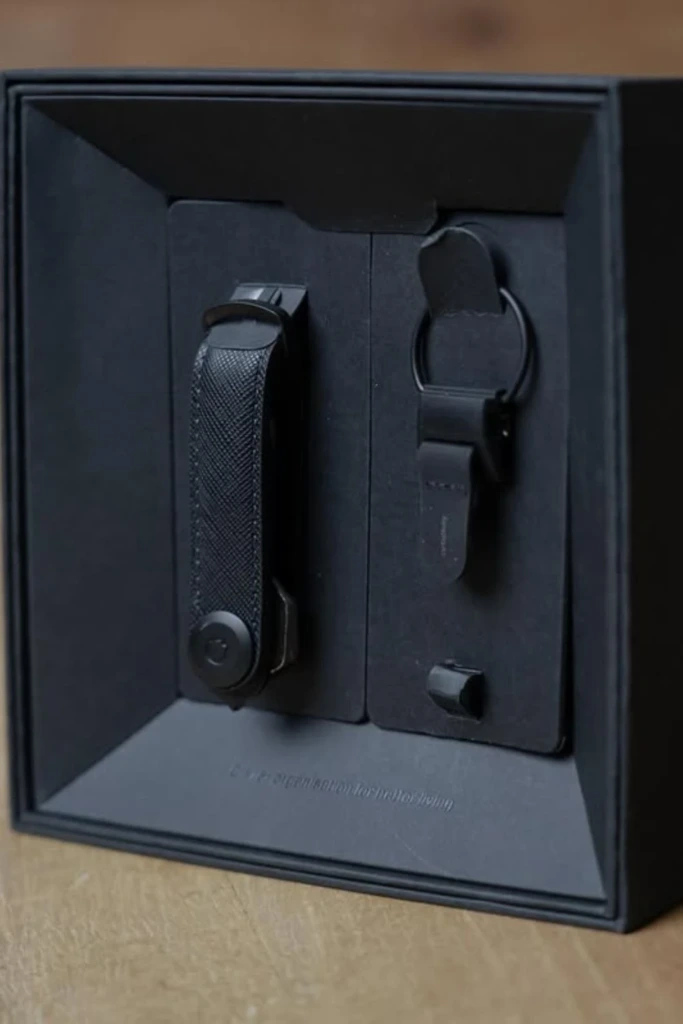
A hidden key holder is a good option when you prefer a streamlined entryway with minimal visible accessories. Some designs resemble ordinary wall art, while others conceal hooks inside a small cabinet or behind a hinged panel.
These organizers keep key rings out of sight and can reduce visual clutter in a compact hallway. Choose a design that opens easily so the process of putting keys away does not become inconvenient.
Hidden storage should not be confused with secure storage. A decorative cover alone does not protect valuable keys from someone who knows where to look. If security is important, select a lockable cabinet and install it away from direct view through exterior windows or doors.
12. Dog Hooks
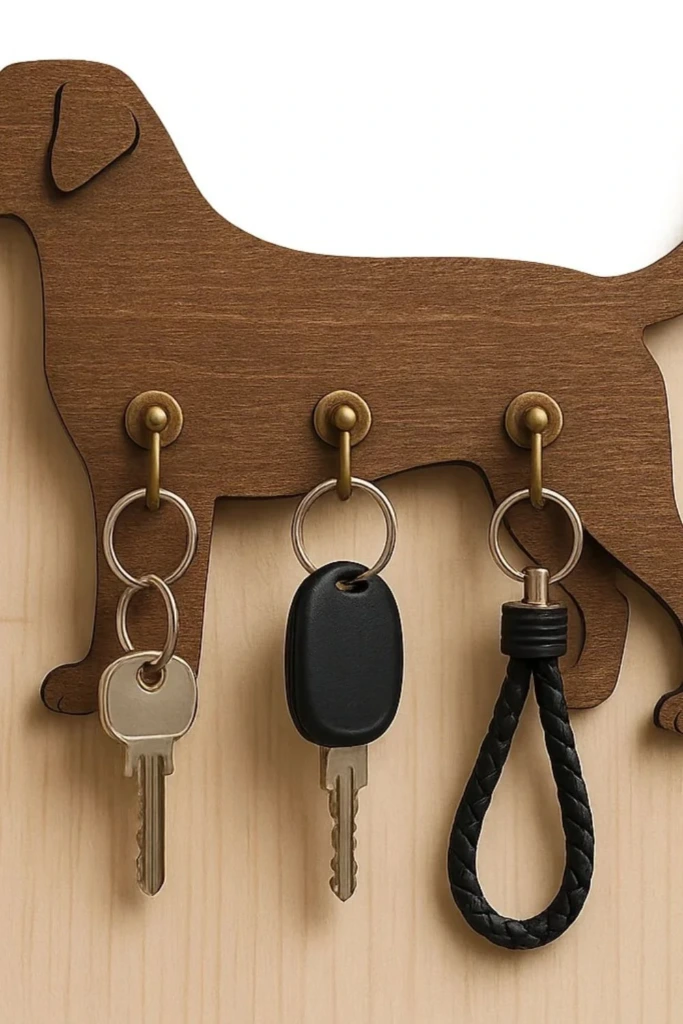
Dog-shaped hooks combine practical storage with a decorative theme. They are particularly appealing to dog lovers and can add personality to an entryway, mudroom, or utility area.
Choose a design with hooks positioned far enough apart for several key rings. Some versions feature a dog's silhouette above individual hooks, while others incorporate the hooks into the shape of the animal. Both styles can provide convenient storage while serving as wall decor.
For a cohesive look, coordinate the material and color with your existing furniture or other pet-themed accessories. If the rack will hold more than keys, verify the manufacturer's weight limit and use suitable wall fixings.
13. Round Shelf
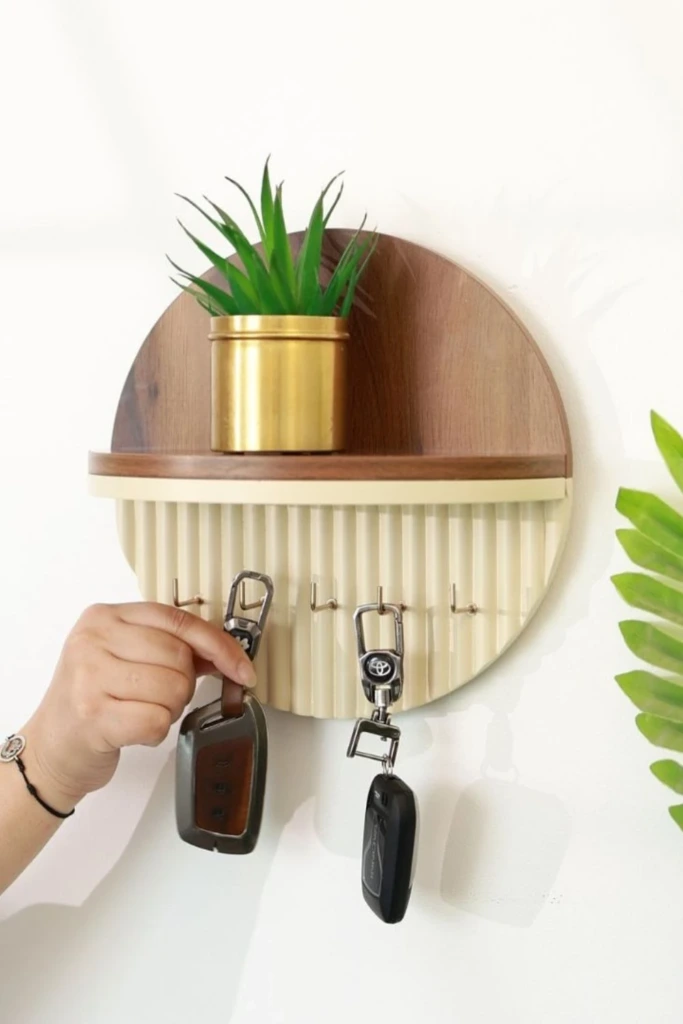
A round shelf softens the straight lines often found in hallways, doors, and rectangular furniture. It can function as a small display area while providing a convenient place to keep a key bowl or other daily essentials.
Choose a shelf with a stable mounting system and enough usable surface area for the objects you intend to store. A raised rim can help prevent small items from sliding off, while a separate hook beneath the shelf keeps keys accessible.
Round shelves work particularly well in compact entryways because they create a decorative focal point without the visual weight of a large cabinet. Avoid overcrowding the surface with ornaments; leaving space for everyday belongings makes the design more useful.
14. Leaf Hooks
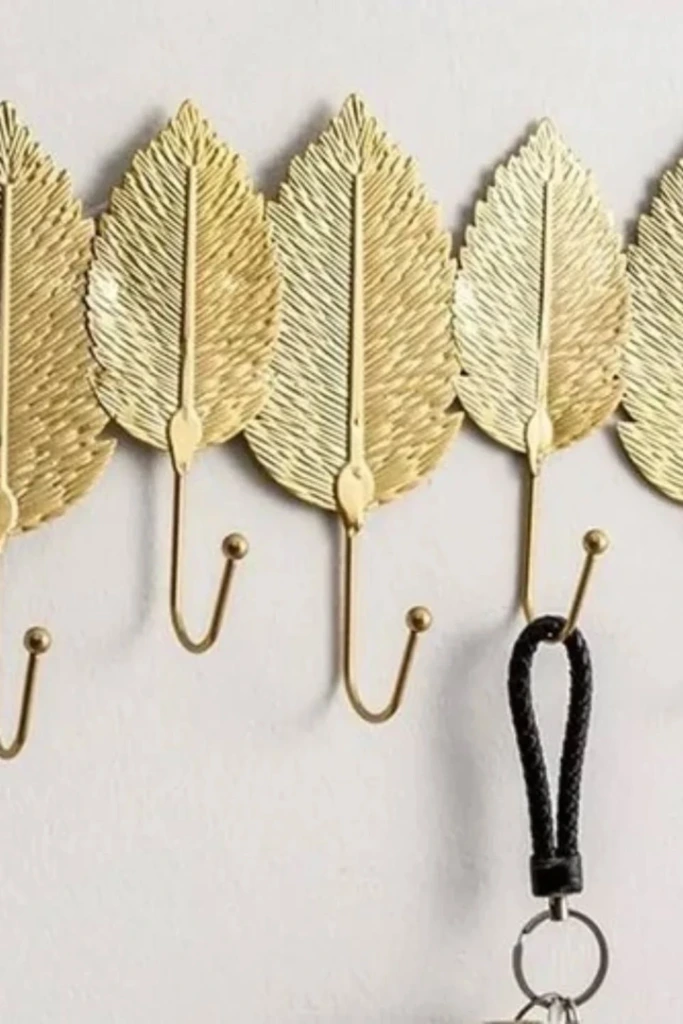
Leaf-shaped hooks introduce a natural motif into your home's organization system. Their organic outlines can complement botanical prints, indoor plants, natural wood furniture, and earthy color palettes.
Use them individually for a subtle accent or arrange several in a row to create a decorative key station. Depending on their construction, they may also hold lightweight lanyards or other small accessories.
When choosing leaf hooks, look for smooth edges and a hook shape that securely supports a key ring. A matte black finish suits a modern interior, while brass or bronze can add warmth. For outdoor-inspired or humid areas, select a finish appropriate for the environment to reduce the risk of corrosion.
15. Key Organizer
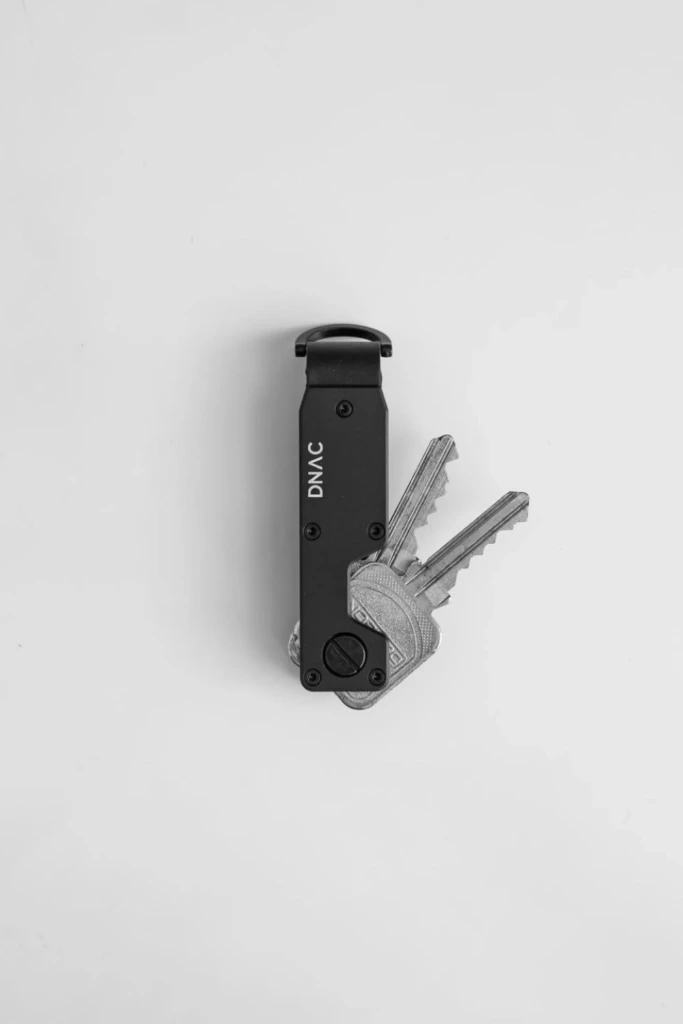
A key organizer is designed to keep multiple key sets in order, whether it sits on a table or attaches to a wall. Options range from simple hook strips to compact cases that arrange keys in a folding or stacked format.
For household use, a wall-mounted organizer with individual hooks makes it easy to see which keys are available. For someone who carries several keys daily, a pocket-sized organizer can reduce rattling and prevent keys from scratching other belongings.
Think about the number and type of keys you own before selecting a model. Oversized vehicle fobs, access cards, and thick key rings may require more space than standard keys. Labeling spare sets can also save time when you need to find a less frequently used key.
16. Honeycomb Rack
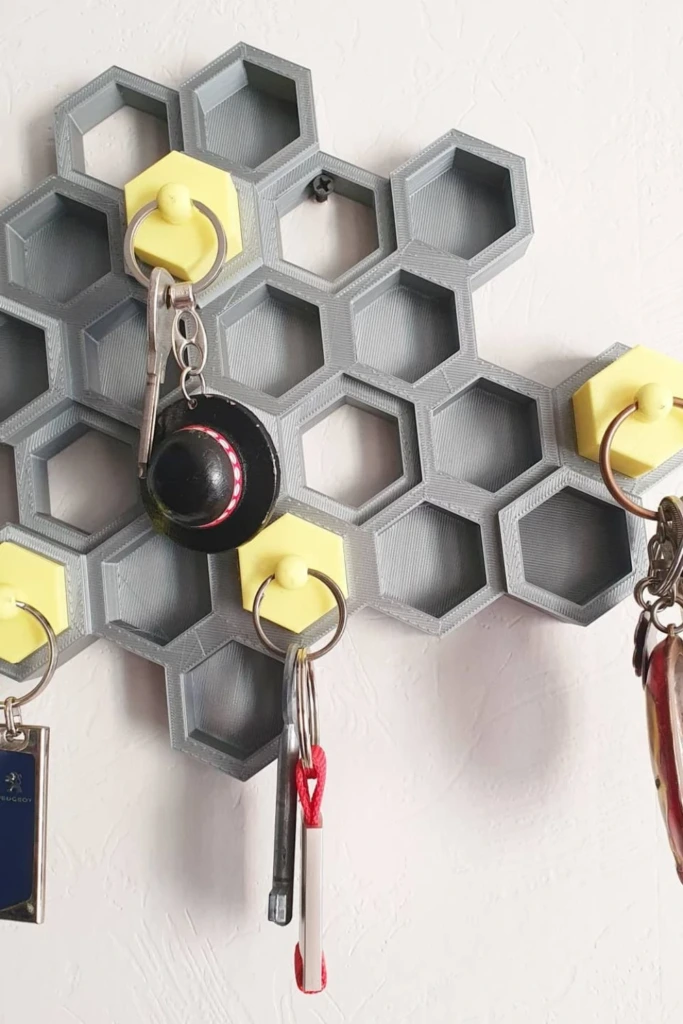
A honeycomb rack brings geometric interest to the entryway through a pattern inspired by interconnected hexagons. Depending on the design, individual sections may provide hooks, tiny shelves, or a mixture of both.
This style is particularly suitable for modern interiors and can work as a decorative feature on an otherwise plain wall. A compact honeycomb unit may hold a few everyday key rings, while a larger arrangement can create separate zones for different household members.
Before buying, examine the actual storage capacity rather than judging the rack by its overall size. Some honeycomb designs prioritize appearance and offer fewer usable hooks than expected. Install the unit securely and keep heavier items off sections that are not intended to bear substantial weight.
17. Frame Hooks
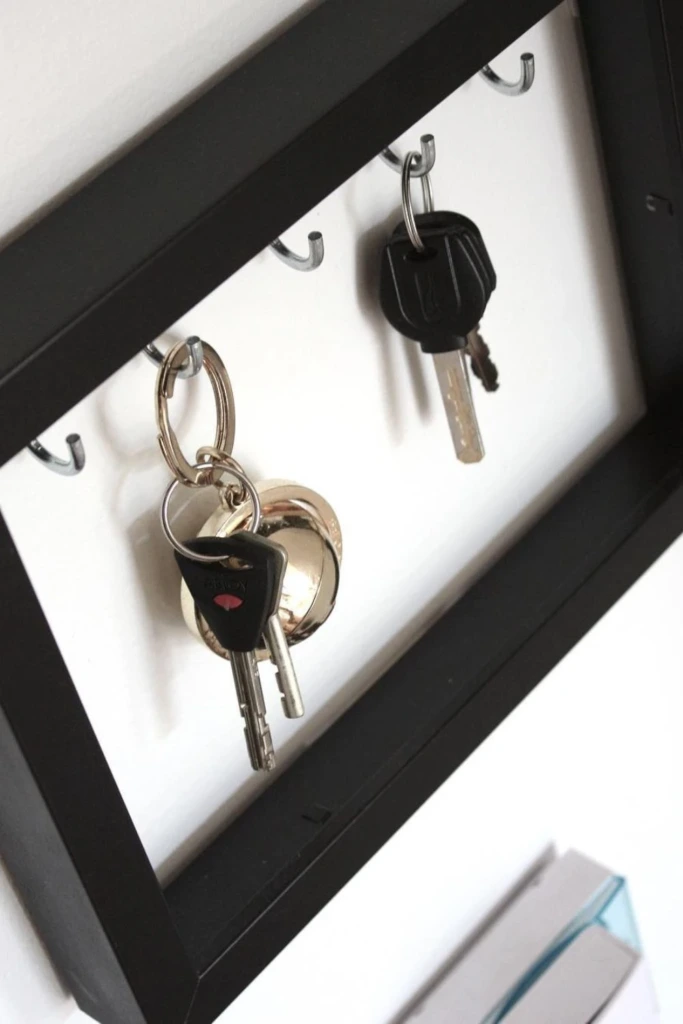
Frame hooks use a picture-frame-inspired outline to give a practical wall organizer a finished, decorative appearance. The frame may surround a row of hooks or form part of a larger design featuring a message, illustration, or patterned backing.
This option works well when you want key storage to blend with the rest of your wall decor. Match the frame to nearby artwork for a coordinated display, or choose a contrasting finish to create a small focal point near the entrance.
Keep the hook spacing practical, particularly if several people will use the rack. A good frame hook organizer should make keys easy to remove without forcing you to move neighboring key rings or decorative objects.
18. House Hooks
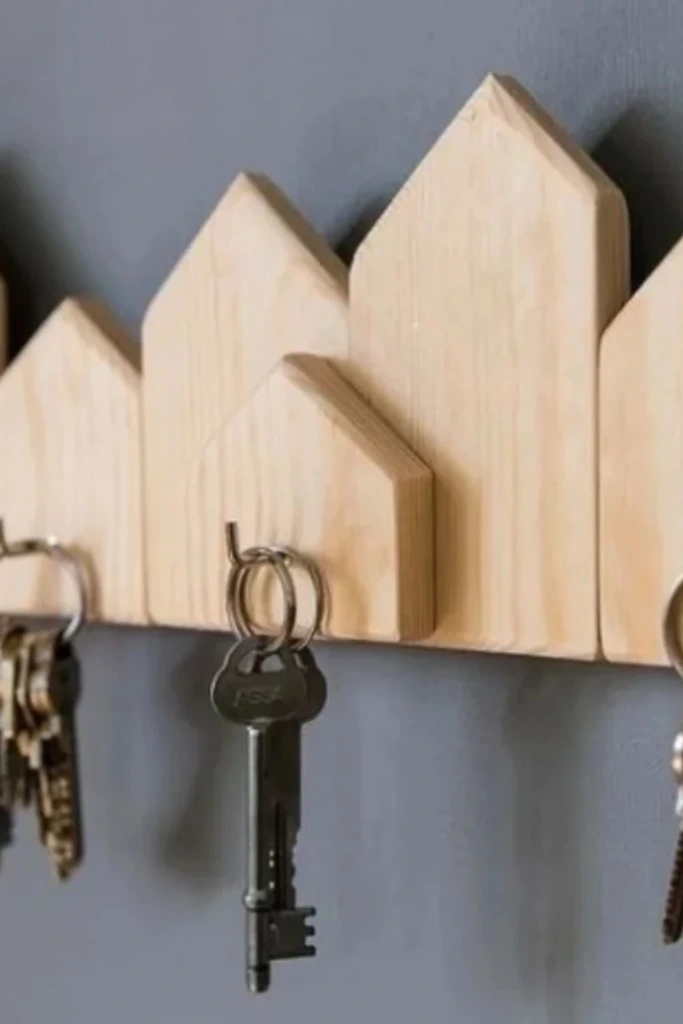
House-shaped hooks are a natural fit for the entryway because their design reflects the purpose of the space. Some feature a simple roof outline with hooks beneath it, while others include tiny windows, doors, or colorful architectural details.
Use the hooks to separate keys for different doors, vehicles, or household members. A house-shaped rack can also complement farmhouse decor, cottage-inspired rooms, and welcoming family spaces.
If you prefer a subtle appearance, choose a plain wooden or metal silhouette. For a more decorative effect, look for painted details or a small message incorporated into the design. Make sure the hooks are firmly attached and positioned so key rings hang freely without hitting the wall.
19. Metal Hooks
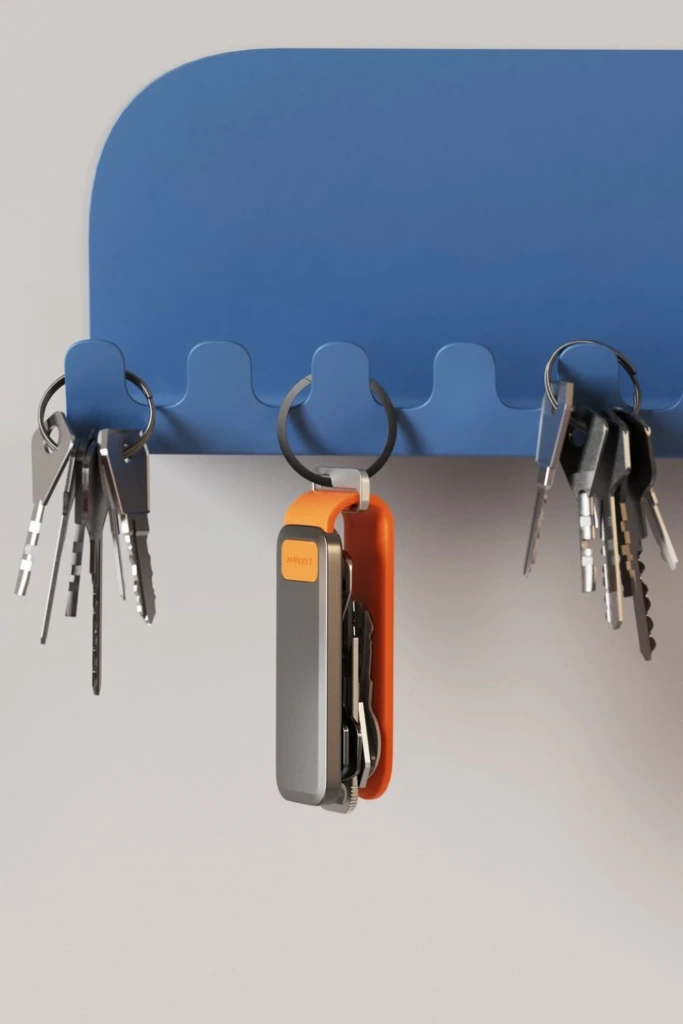
Metal hooks are a durable, versatile choice for everyday key storage. They come in a variety of finishes, including brushed steel, black iron, brass, and chrome, making it easy to coordinate them with existing hardware.
Install a few individual hooks for a minimalist setup or use a metal rail when several key rings need separate spaces. Metal can support frequent use, but the strength of the entire installation depends on the hook design, fasteners, and wall material.
Choose rounded or smoothly finished hooks to reduce the chance of scratching your hands or damaging nearby items. If the organizer will be installed in a damp mudroom or near an exterior entrance, check that the metal and finish are suitable for those conditions.
20. Key House
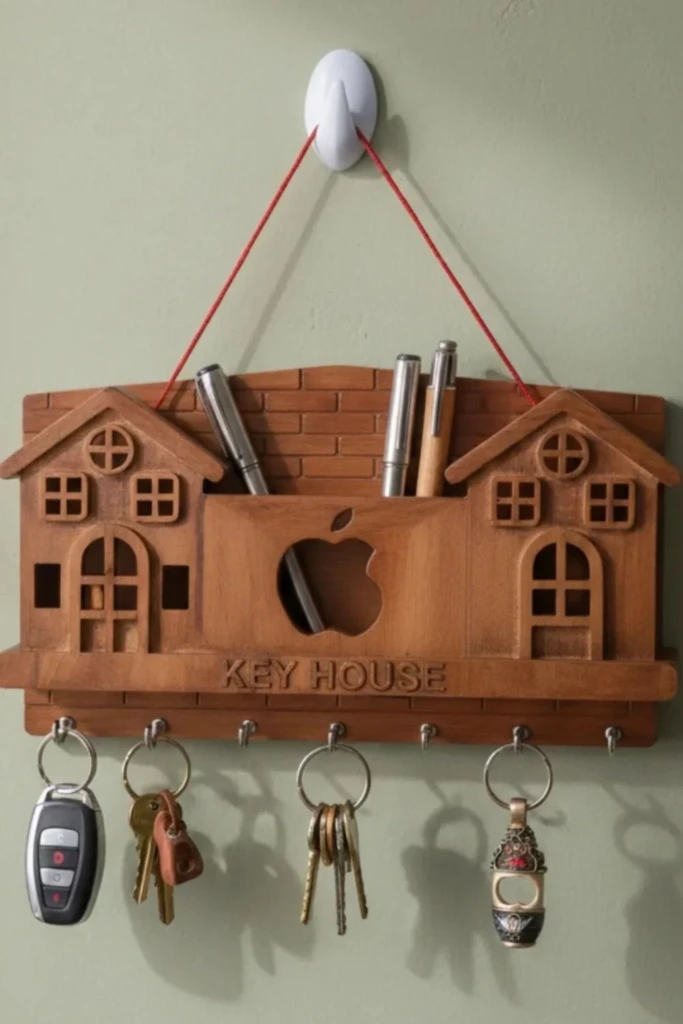
A key house is a small, house-shaped storage container designed to keep keys together in one dedicated place. Depending on the style, it may function as a tabletop holder or a wall-mounted organizer with hooks inside or underneath.
Its compact shape makes it easy to incorporate into an entryway without introducing a bulky storage unit. Place it near the door you use most often, and give each frequently used key set a consistent location.
Look for a design that provides enough room for your key rings without making them difficult to retrieve. If you want to store spare keys inside an enclosed compartment, choose a model with an appropriate closure and avoid treating a decorative container as a secure lockbox.
21. Key Sign
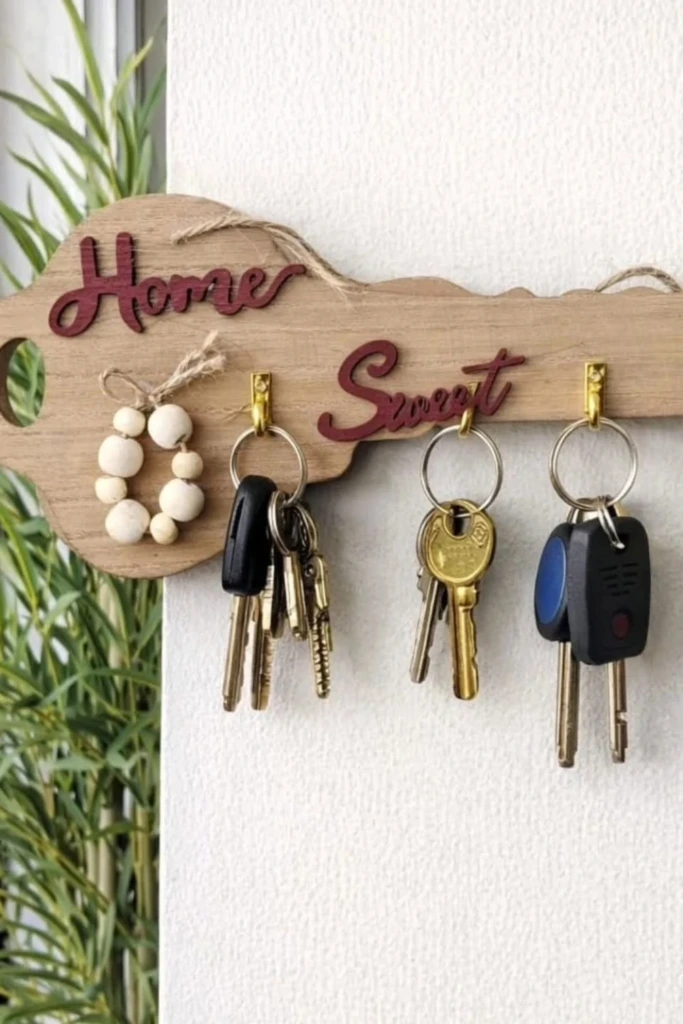
A key sign combines a short message or decorative word with practical hooks for everyday storage. Designs may feature phrases about home, family, or coming and going, making them suitable for an entryway that needs a little personality.
The sign can become a useful reminder to return keys to the same place each time you arrive. Choose wording that complements your home's style, whether you prefer rustic lettering, modern typography, or a simple painted design.
Pay attention to the quality of the hooks and mounting hardware rather than choosing solely for appearance. A well-made sign should hold your key rings securely and remain stable during repeated use. Keep the area beneath it clear so the keys are easy to reach.
22. Mario Hooks
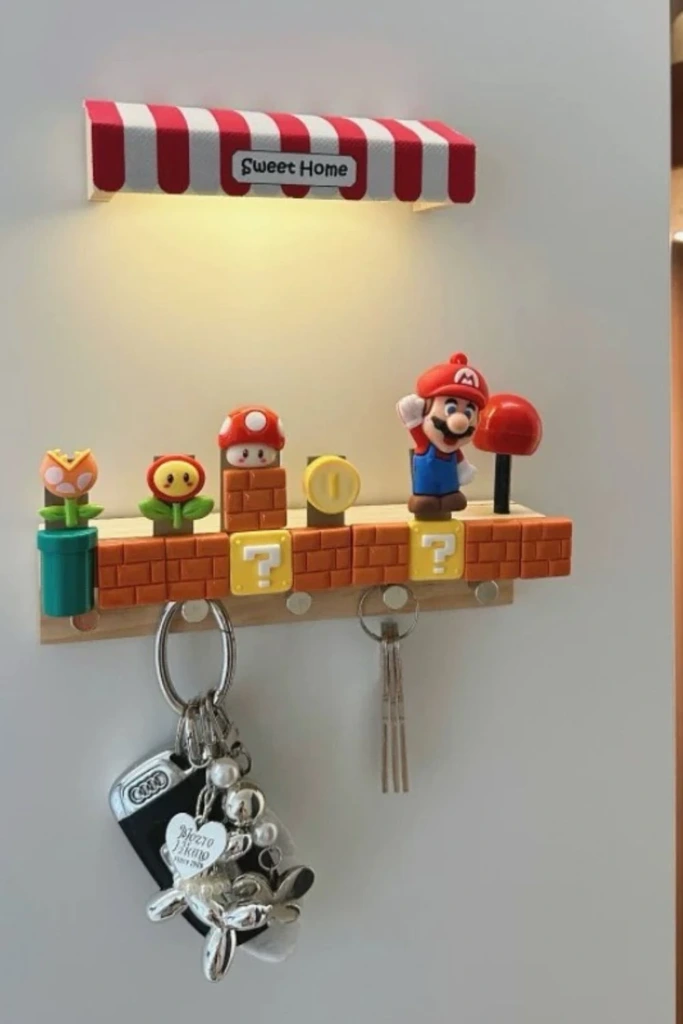
Mario-themed hooks bring a recognizable video game aesthetic to a playful home office, gaming room, or family entryway. Designs may incorporate character graphics, familiar symbols, or bright colors associated with the popular game series.
Use the hooks for lightweight key rings, lanyards, or other small accessories. If you want to create a coordinated display, pair the organizer with a small gaming print or a themed storage box without overcrowding the wall.
Check the dimensions and hook spacing before purchasing, especially if the product is designed primarily as novelty decor. A sturdy backing and secure mounting system are essential for everyday use. In a shared household, make sure the theme appeals to the people who will actually use the organizer.
23. Family Rack
A family key rack helps multiple household members keep their belongings separate. Rather than placing every key ring in one bowl, you can assign an individual hook or labeled section to each person.
Choose a rack with enough capacity for house keys, vehicle keys, and frequently used access keys. If children are old enough to manage their own belongings, position their hooks at an accessible height while keeping spare keys and sensitive access items in a more secure location.
Labels, initials, or different colored hooks can make the system easier to follow. Establish a simple household habit: return keys to their assigned place immediately after coming home. This small routine reduces confusion and makes it easier to notice when a set is missing.
FAQs
Choosing a key storage system often comes down to the size of your entryway, the number of people in your household, and how much you want to display. A few practical considerations can help you select a setup that remains convenient over time.
Wall-mounted racks generally work well in narrow spaces, while trays and bowls suit homes with a console table or shelf. If you prefer a clean appearance, an enclosed cabinet can keep key rings out of sight. Whatever style you choose, place it near your usual entrance and make sure every frequently used key has a consistent home.
Where is the best place to install a key holder in your home?
The best location is usually near the entrance you use most frequently, such as beside the front door or near the door leading from the garage. This makes returning and collecting keys part of your normal routine.
For a wall-mounted holder, choose a spot that is easy to reach without blocking the doorway, light switches, or nearby furniture. If you have children or other household members who need access, consider their height and mobility when deciding where to install it.
Avoid placing keys where they can be easily seen or reached through a window or open exterior door. Keys that provide access to valuable property should be stored more discreetly, and spare or sensitive keys may be better kept in a secure cabinet.
How many hooks should a key holder have?
The ideal number depends on how many separate key sets your household uses regularly. A person living alone may need only two to four hooks, while a family with several vehicles, multiple entrances, and shared access keys may benefit from six or more.
Count the key rings you expect to store, then allow a little extra room for future needs. Leaving space between hooks helps prevent bulky rings and vehicle fobs from overlapping, making each set easier to identify and remove.
You do not necessarily need one hook for every individual key. Keep keys that belong to the same person or purpose together on a single ring when practical, and reserve separate hooks for sets that need to remain independent. A rack with the right capacity should make storage simpler, not create another crowded surface.
Final Thoughts
An organized key station can save time, reduce everyday frustration, and make your entryway feel more intentional. From simple metal hooks and practical trays to decorative bear bowls, house-shaped racks, and concealed cabinets, there is an option for nearly every home and budget.
Start by identifying where you usually enter your home and how many key sets you need to store. Then choose a design that fits your available space, complements your decor, and makes returning keys effortless. With a consistent storage spot and a simple daily habit, you'll spend less time searching for keys and more time getting on with your day.