21 Fishing Rod Storage Ideas for 2026
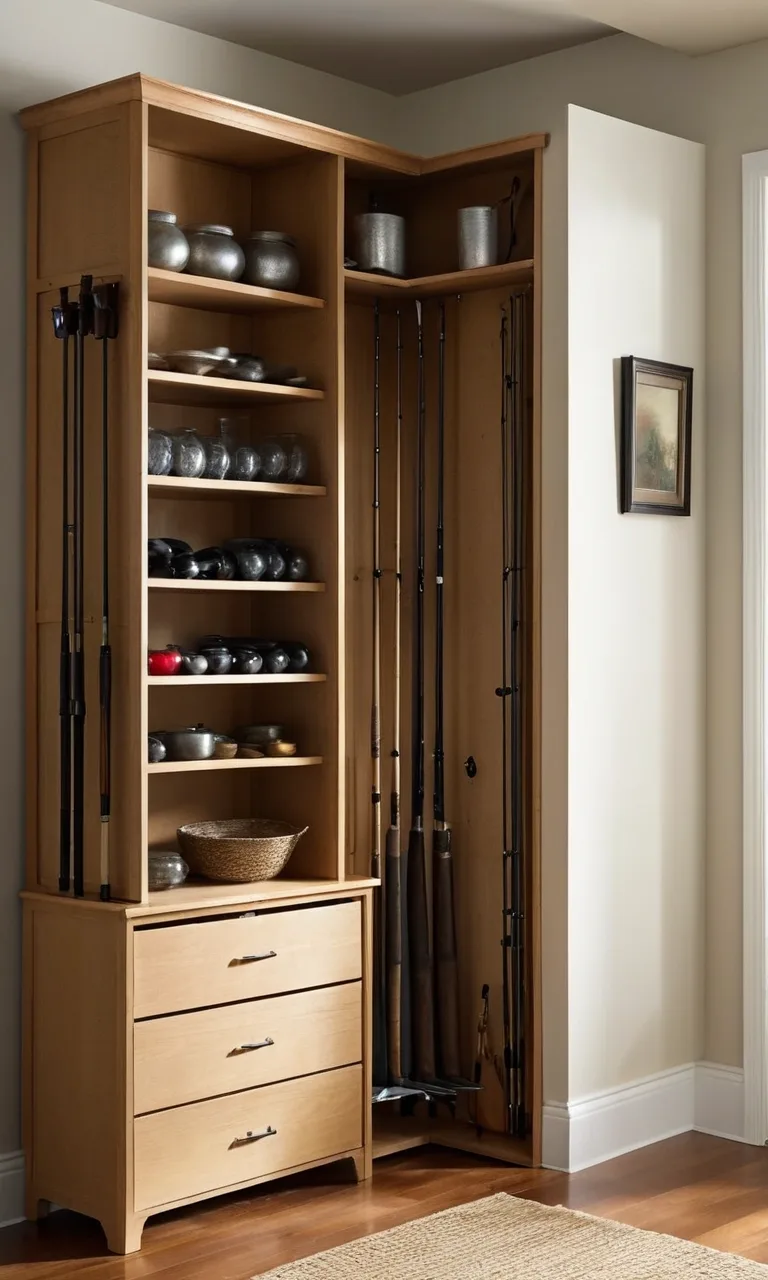
Fishing rods are valuable pieces of equipment, and storing them properly helps protect their blanks, guides, reels, and delicate tips from unnecessary damage. Whether you own a couple of spinning rods or a growing collection of specialized setups, the right storage system can keep everything organized and ready for your next trip.
You don't need an expensive fishing room to create a practical setup. From simple PVC holders to attractive wooden displays and space-saving ceiling racks, there are plenty of ways to make use of the space you already have. Here are 19 fishing rod storage ideas to help you find a solution that suits your equipment, available room, and fishing habits.
1. Ceiling & Overhead Storage
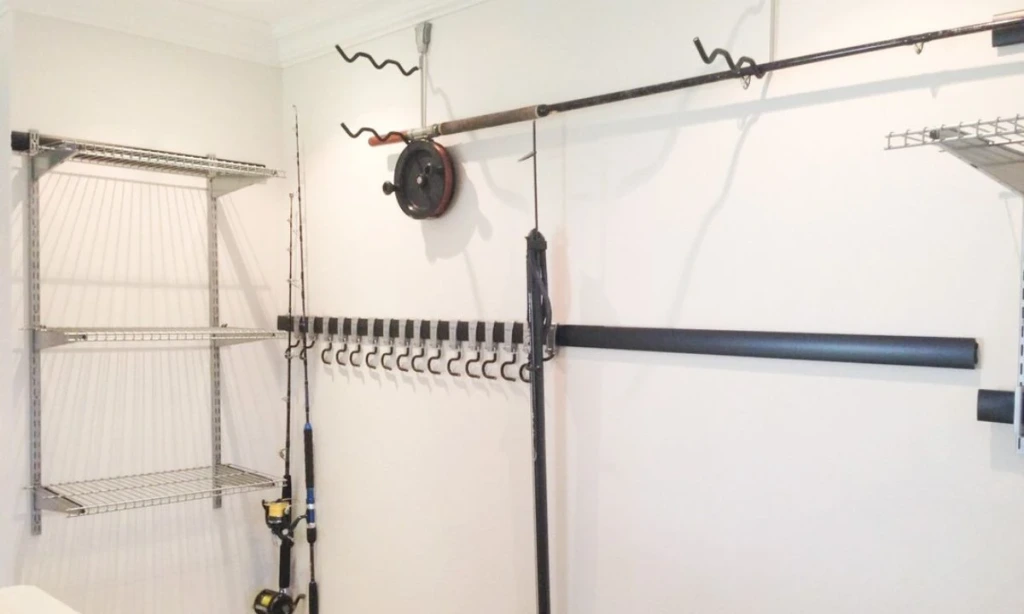
Ceiling storage is an excellent option when garage floors and walls are already occupied by other equipment. Overhead racks hold rods above your head, leaving valuable space available for tackle boxes, kayaks, tools, and other fishing essentials.
Choose a rack designed specifically for fishing rods, with supports that prevent them from rolling or bending. Measure the longest rods before installation and make sure the ceiling structure can safely support the combined weight. Keep the rack away from garage doors, lighting fixtures, and ceiling fans.
This approach works especially well for rods that aren't used every week. However, position frequently used equipment within comfortable reach so you don't have to climb a ladder every time you want to go fishing.
2. Fishing Rod Storage Ideas
The best fishing rod storage system depends on how many rods you own, where you keep them, and whether they stay assembled between trips. A compact wall holder may be enough for a few freshwater setups, while a larger collection might need adjustable racks, labeled compartments, or a dedicated storage cabinet.
Before choosing a design, consider these practical options:
Wall racks: Keep rods visible and easy to access without taking up floor space.
Ceiling holders: Make use of otherwise wasted overhead room.
Freestanding racks: Offer flexibility when drilling into walls isn't possible.
PVC organizers: Provide an affordable way to create individual rod compartments.
Boat storage systems: Secure equipment during transportation and while fishing.
Cabinets and lockers: Protect rods from dust, accidental impacts, and clutter.
Always store rods without placing heavy objects on top of them. If possible, separate rods from loose hooks, sharp tools, and other items that could scratch the blanks or damage the line guides. For long-term storage, clean the equipment and allow it to dry completely before putting it away.
3. Elegant Rack Display
A thoughtfully designed rod display can turn fishing equipment into an attractive feature in a garage, study, or dedicated fishing room. Wooden racks with smooth finishes, dark metal supports, or carefully spaced horizontal rails can complement the surrounding decor while keeping rods neatly arranged.
Select a design that supports the rods at multiple points without applying pressure to delicate sections. Rounded grooves or padded contact surfaces are preferable to sharp edges that could scratch the finish.
You can also arrange rods by type, length, or preferred fishing technique. Keep especially valuable or collectible rods in a protected area away from direct sunlight and high-traffic walkways. A decorative rack should still function as safe storage rather than merely a place to display equipment.
4. Boat Side Mount
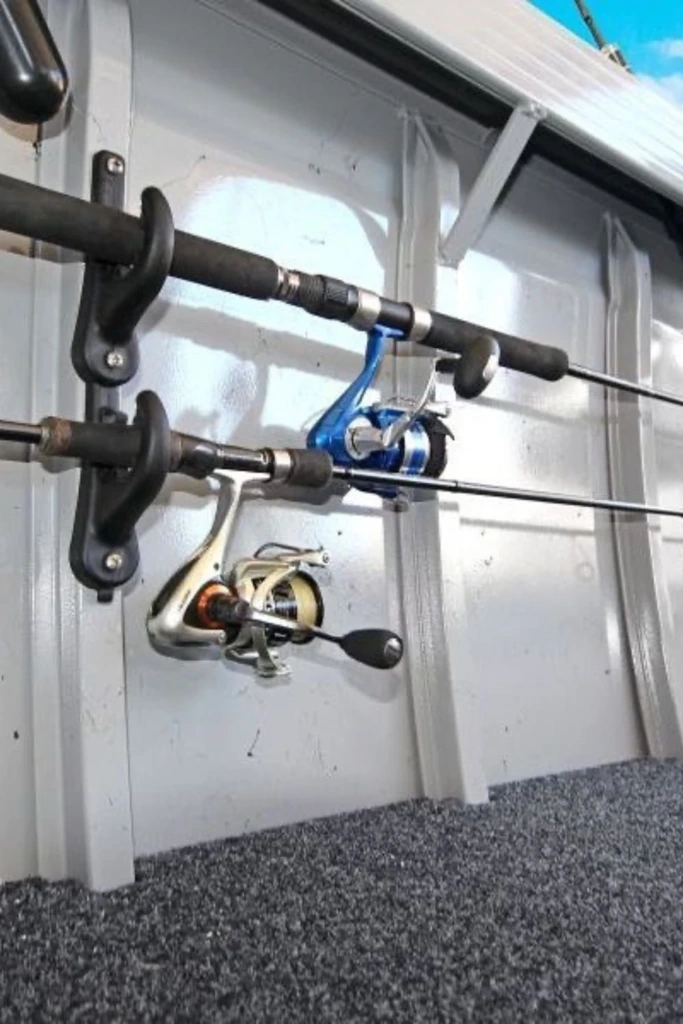
A side-mounted rod holder can make excellent use of unused space along a boat's interior wall. By positioning rods parallel to the hull, you can keep them out of walkways and make room for seating, tackle storage, and other gear.
Choose a marine-grade holder with secure retainers that accommodate the diameter and length of your rods. Corrosion-resistant hardware is important because saltwater, moisture, and changing weather conditions can quickly damage ordinary metal fittings.
Before drilling, inspect the mounting area and confirm that the fasteners won't interfere with wiring, plumbing, or the boat's structure. The holder should also keep rods clear of moving equipment, sharp edges, and areas where passengers might accidentally step on them.
For boats exposed to rough water, use additional straps or locking retainers where appropriate. A rod resting in an open groove may be adequate at the dock but could slide out during transport.
5. Pegboard Wall Rack
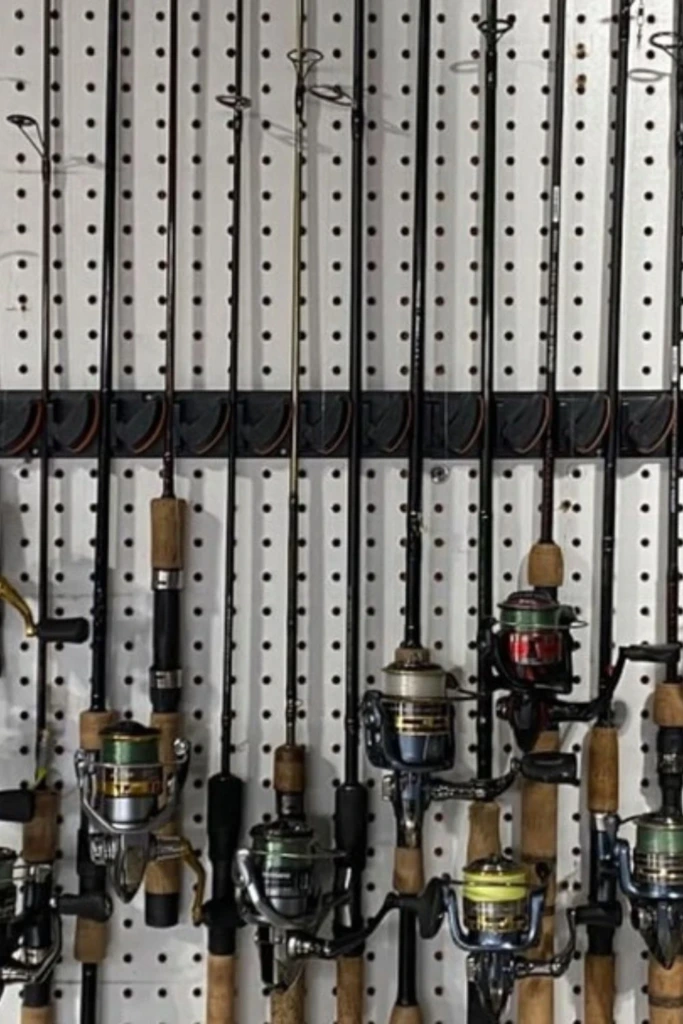
A pegboard offers a customizable way to organize fishing rods and accessories in a garage or workshop. With compatible hooks, brackets, and rod-support attachments, you can arrange the equipment to fit your collection and change the layout whenever your needs evolve.
Install the board securely and use attachments designed to support the weight and shape of fishing rods. Ordinary small pegs may not provide enough contact or stability for long equipment, so dedicated rod holders are usually a better choice.
The surrounding board can also accommodate lightweight accessories such as line spools, pliers, scissors, and measuring tools. Keep sharp hooks safely covered and avoid overcrowding the area.
One advantage of this setup is its adaptability. As you add different rods or reorganize your tackle, you can reposition the holders without replacing the entire storage system.
6. Mobile Storage Cart
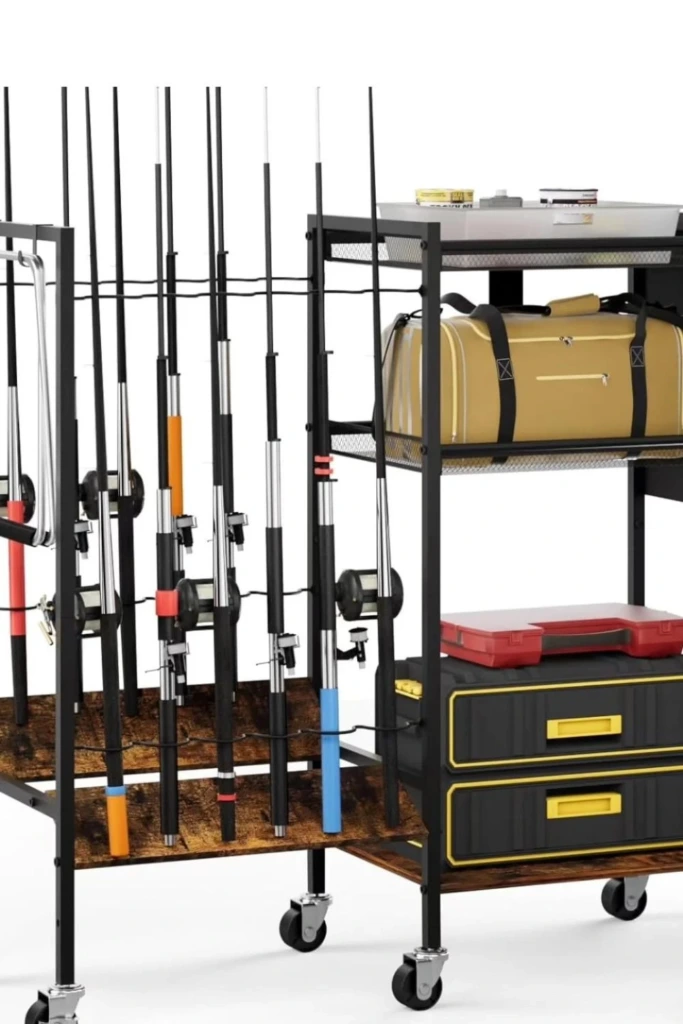
A mobile storage cart is useful for anglers who move equipment between a garage, workshop, shed, or vehicle. With locking casters and a stable frame, it allows you to transport several rods and accessories without carrying everything separately.
Look for a cart with tall enough supports to keep rods upright and spaced apart. Add padded slots or secure clips so the rods don't swing into one another when the cart moves. A wide base and suitable weight capacity will help reduce the risk of tipping.
The lower shelves can hold tackle boxes, line supplies, cleaning products, and other heavier items. Place heavier objects toward the bottom to improve stability, and use wheel locks whenever the cart is parked.
If you build your own cart, smooth every cut edge and check that all supports are firmly attached. A mobile organizer is most useful when it keeps equipment secure rather than simply providing a place to lean rods together.
7. Ceiling Rack Setup
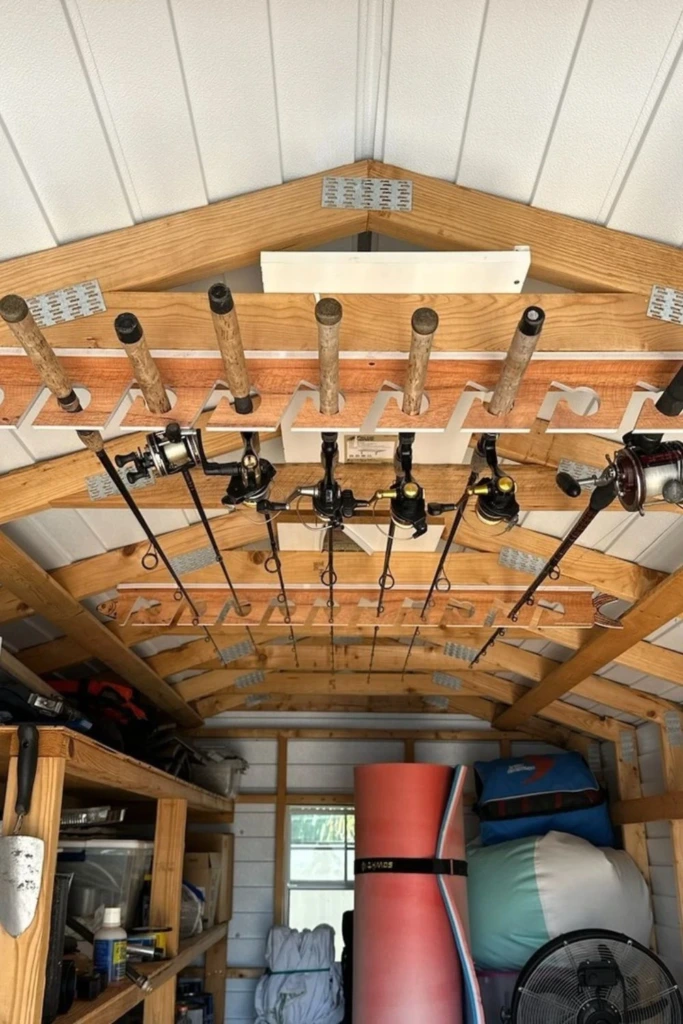
A dedicated ceiling rack can hold several fishing rods in a compact, organized arrangement. Depending on the design, rods may rest horizontally in padded channels or sit inside opposing supports that keep them parallel and separated.
Start by measuring the available ceiling space and the length of your longest rod. Allow enough clearance to insert and remove each setup without striking a wall or overhead obstacle.
Use mounting hardware appropriate for the ceiling material, and attach the rack to suitable structural supports rather than relying on drywall alone. Follow the manufacturer's load rating and distribute the rods evenly across the holder.
For added convenience, group your equipment by use. Frequently used spinning rods can occupy the easiest-to-reach positions, while seasonal or backup setups can go farther back. Before lifting any rod overhead, remove loose lures and secure the line to prevent tangles.
8. Wall-Mounted Wood
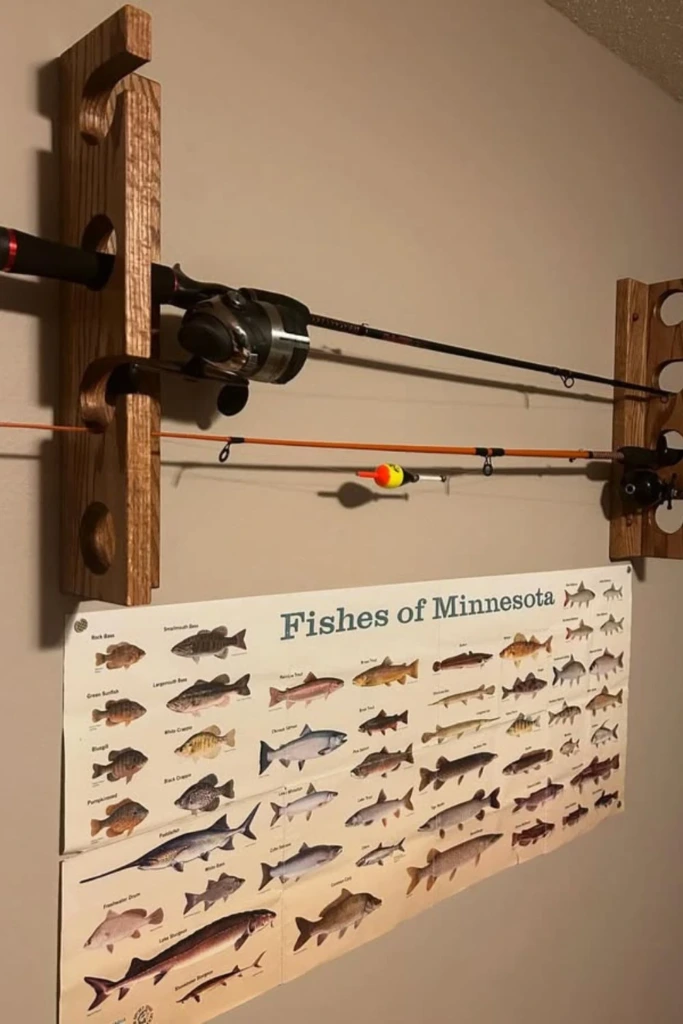
A wooden wall rack combines straightforward construction with a natural appearance. It can be made to match existing shelves, workbenches, or cabinetry, making it a good choice for anglers who want functional storage without the industrial look of metal brackets.
Hardwood and quality plywood are common options, provided the finished rack is strong enough for the intended load. Create evenly spaced openings or padded cradles that accommodate the rod handles and blanks without pinching them.
Sand all contact surfaces thoroughly and apply a suitable finish after allowing the wood to dry. If the rack will be installed in a damp garage or shed, choose materials and coatings that tolerate the environment.
Mount the rack securely and check that the rod tips won't extend into doorways or other busy areas. A well-made wooden holder can last for years and can be expanded later if your collection grows.
9. Low Wall Rack
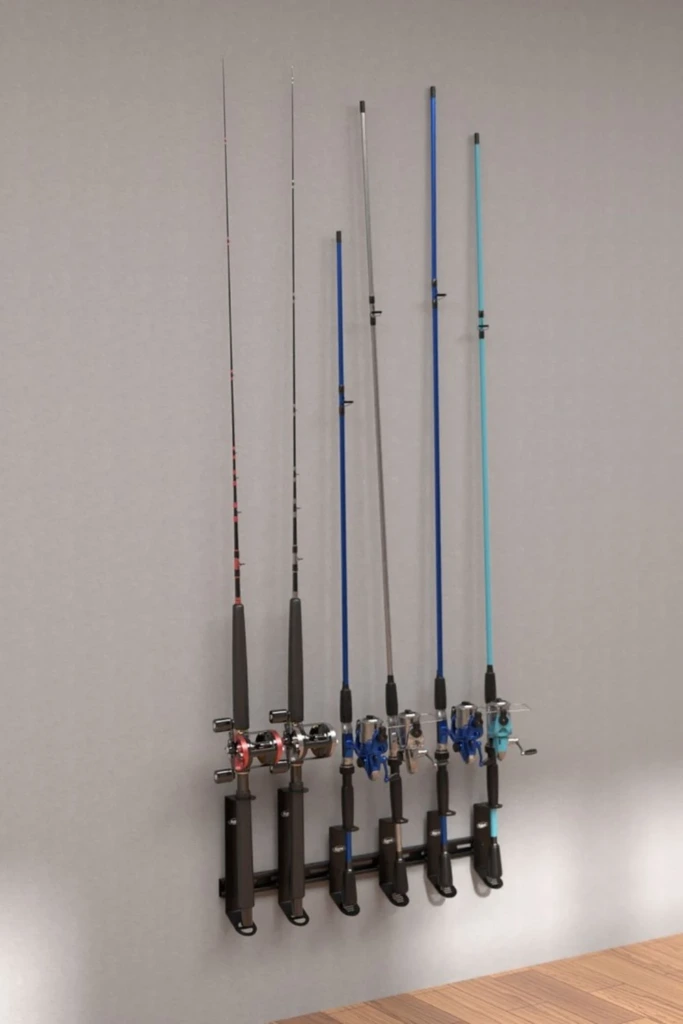
A low wall rack provides convenient storage for anglers who prefer not to reach overhead. Installed at a comfortable height, it can hold rods along the lower portion of a garage or storage-room wall while leaving upper wall space available for shelves and tools.
This arrangement is especially practical for children, shorter adults, or anyone who regularly handles heavy or delicate setups. Choose supports that hold the rods firmly and prevent them from rolling onto the floor.
Keep the rack away from locations where bicycles, lawn equipment, or storage bins are frequently moved. Rod tips and guides can be damaged by even a small collision, so leave enough clearance around the entire setup.
A low-mounted design may also be useful beneath a workbench or along a relatively empty wall. Just ensure that the rods won't interfere with cleaning, walking, or opening nearby cabinets.
10. Dockside Stand
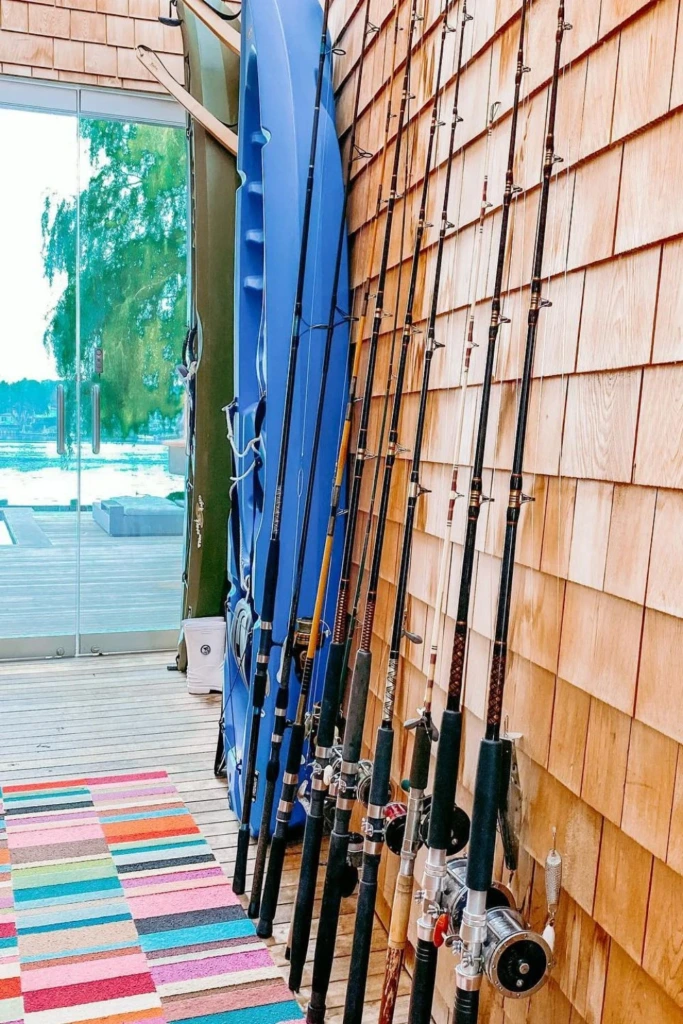
A dockside rod stand gives anglers a convenient place to organize their equipment near the water. It can keep rods upright and separated while you prepare bait, change tackle, or get ready to launch a boat.
Choose a stand made from weather-resistant materials and designed to remain stable on the intended surface. Stainless steel, suitable marine-grade plastics, and properly treated materials are useful choices for outdoor environments.
If the stand will remain on a dock, secure it against wind and accidental knocks. A broad base can improve stability, while individual slots help prevent rods from leaning against one another.
Keep the stand away from the edge of the dock and from areas where people walk or carry heavy gear. Rods stored outside should also be protected from prolonged sunlight and rain whenever possible.
For portable use, consider a lightweight stand that folds or breaks down for transport. This allows you to bring organized storage to different fishing locations without leaving equipment permanently exposed.
11. Bucket Storage Hack
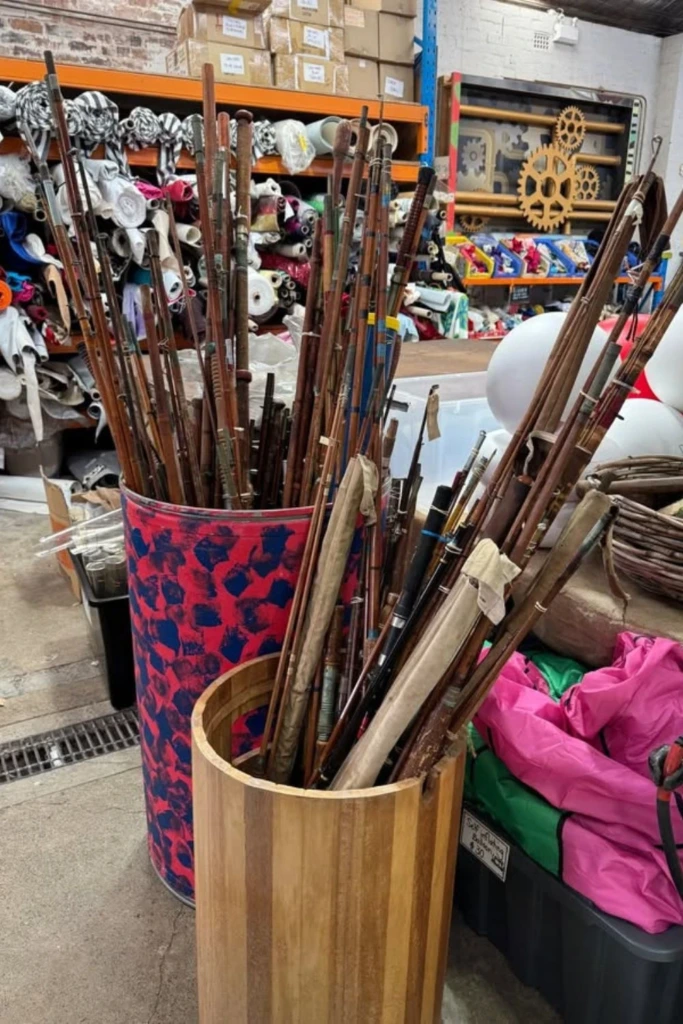
A sturdy bucket can serve as a simple holder for rod handles when you need a quick, inexpensive storage solution. It is particularly useful for short-term organization in a garage, workshop, or fishing area where a permanent rack isn't available.
To make the setup more stable, place a weighted insert or another suitable support inside the bucket and create individual compartments for the rod handles. A fitted foam insert can help keep the rods separated and prevent them from knocking together.
Avoid simply dropping a large bundle of rods into an empty bucket. They may cross over one another, putting pressure on the tips and guides. A bucket also doesn't provide much protection against side impacts, so position it away from doors and busy walkways.
For longer rods, an open bucket alone is rarely sufficient. Add an upper support or use the bucket as the base of a properly secured vertical rack. Check that the finished arrangement cannot tip over when one rod is removed.
12. PVC Rod Rack
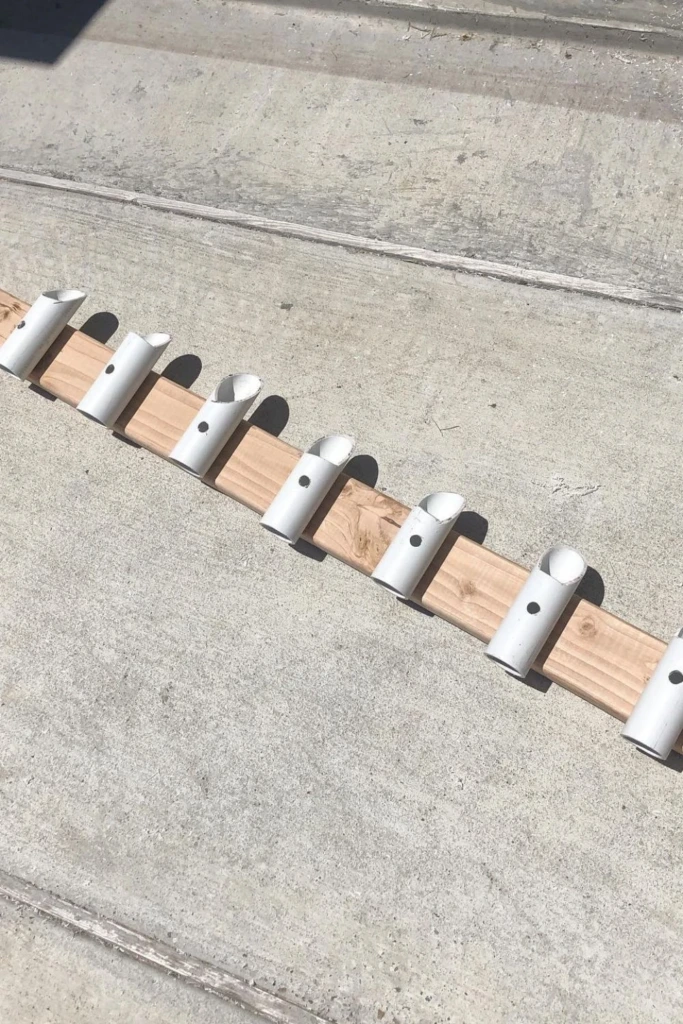
PVC pipe is a popular material for DIY fishing rod storage because it is lightweight, affordable, and easy to cut into individual holders. A series of short pipe sections attached to a wooden board can create separate spaces for rod handles or other suitable rod sections.
Select pipe with an inside diameter large enough for the components you intend to store. Smooth the cut edges carefully and avoid rough surfaces that could scratch the equipment. If needed, line the openings with foam or another soft material.
A horizontal or vertical rack can be built from PVC sections, but the design must support the rods at appropriate points. One row of short tubes may hold the handles while a separate padded support stabilizes the upper sections.
Secure the assembled rack to a solid wall or a stable frame. PVC is convenient for indoor storage, but standard pipe fittings and adhesives may not be appropriate for every outdoor or marine environment. Use materials rated for the conditions in which the rack will be installed.
13. Round Stand Rack
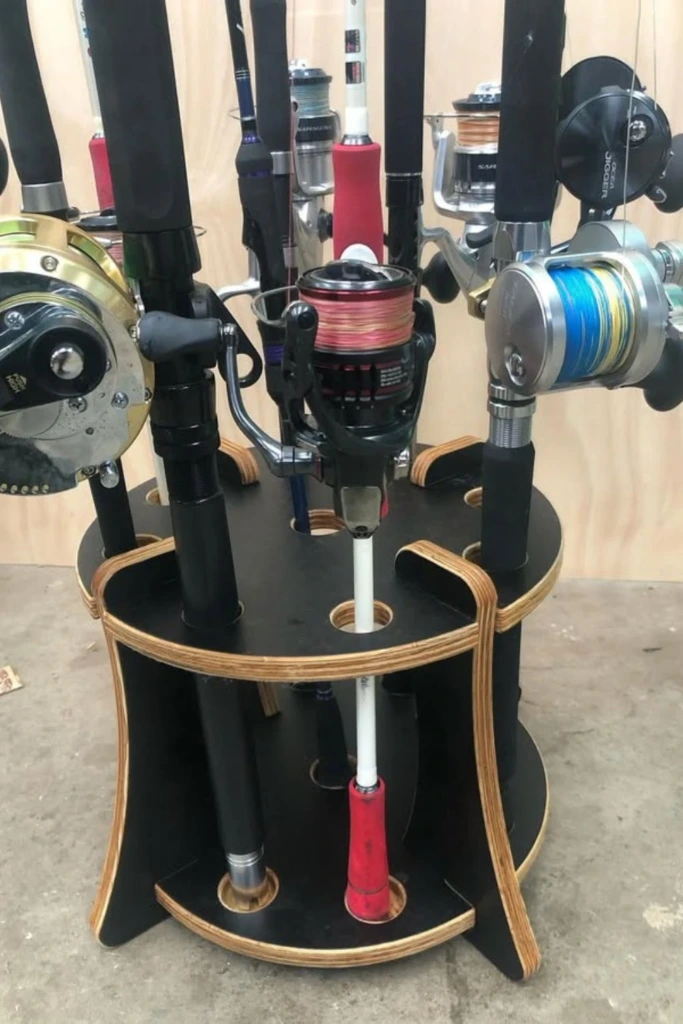
A round stand rack is a practical option for keeping numerous rods together in a central location. Its circular arrangement provides multiple storage positions around a central support, allowing rods to be organized without spreading across several walls.
Choose a model with enough slots for your collection and a stable base that can handle the combined weight. Each position should accommodate the rod handle or blank without forcing it into a tight opening.
Circular racks are particularly useful in dedicated fishing rooms, tackle shops, and garages where equipment needs to be accessible from different directions. They can also make it easier to separate rods by fishing style or frequency of use.
Leave sufficient space around the stand so you can remove one rod without catching another. If the rack is tall, check its resistance to tipping, especially when only a few rods remain in it. A padded contact surface can provide additional protection against scratches.
14. Side Table Combo
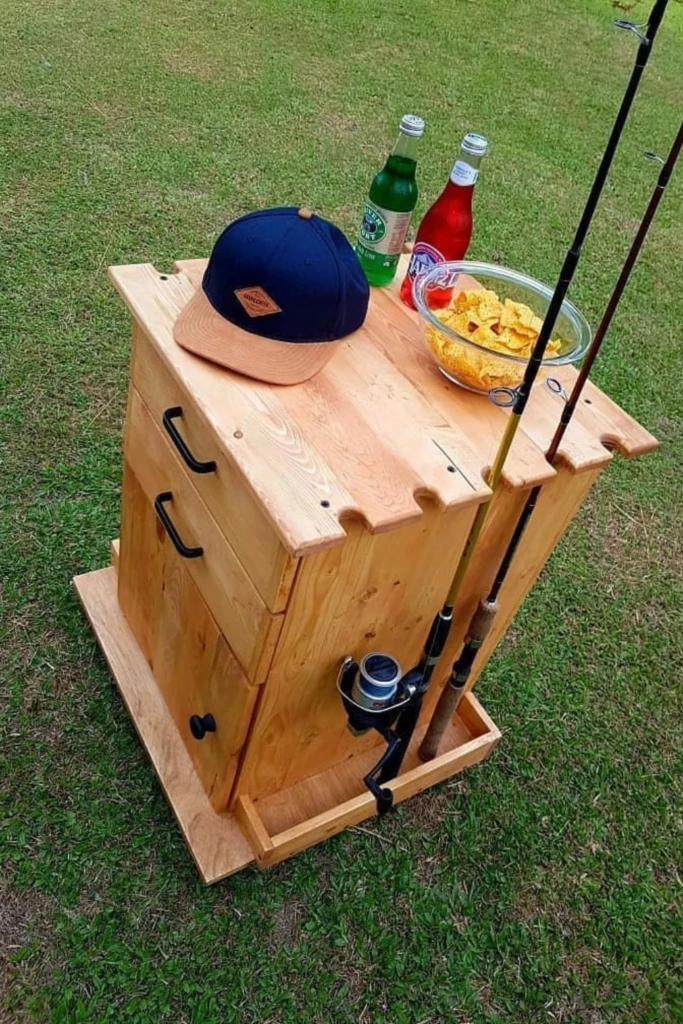
Combining fishing rod storage with a side table creates a useful workstation for preparing equipment before or after a trip. The table provides a surface for organizing tackle, tying knots, inspecting line, or cleaning reels, while a built-in holder keeps rods close at hand.
A sturdy table can be adapted with side-mounted brackets, a lower rod compartment, or a dedicated holder attached to its frame. Keep the rod storage separate from the main work surface so hooks, tools, and loose hardware don't damage the equipment.
Choose a table that won't wobble under the weight of your supplies. If you plan to work with wet gear, use a surface that is easy to clean and resistant to moisture.
This combination works well in a garage, shed, or fishing room where space is limited. Arrange the rods so their tips and guides remain clear of the table edges, and avoid leaning them against the table without secure supports.
15. Horizontal Wall Grid
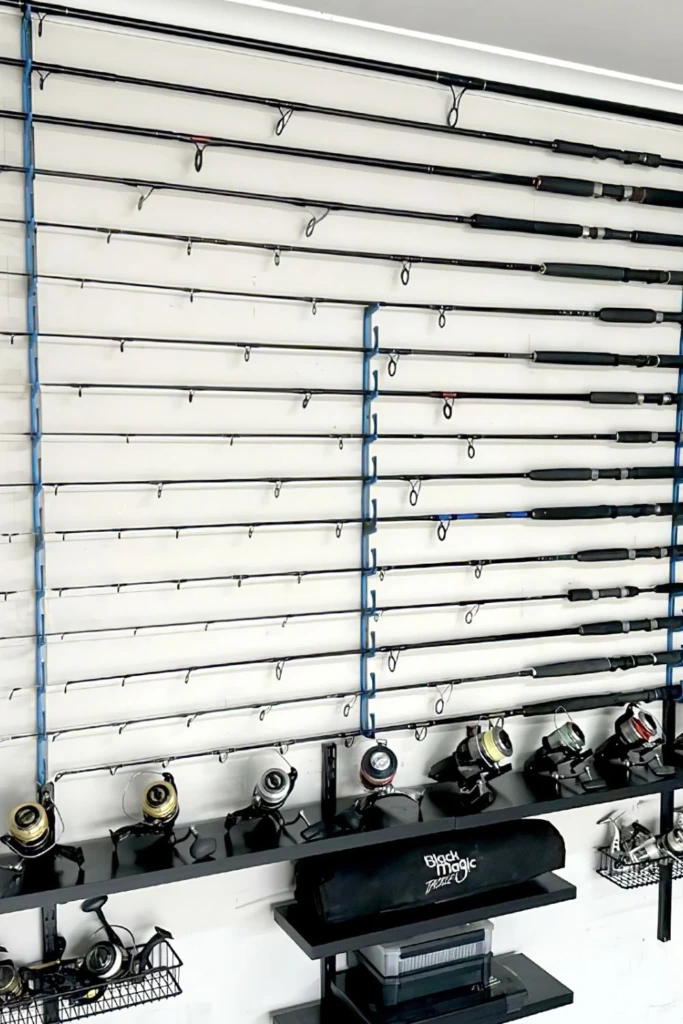
A horizontal wall grid offers a flexible way to arrange fishing rods across a broad section of wall. The grid can be constructed from suitable rails, a slotted panel, or a framework that accepts adjustable holders.
The main benefit is the ability to customize spacing. Longer rods can occupy wider positions, while compact setups can be grouped closer together. If the system uses adjustable brackets, you can modify the layout as your equipment changes.
Use holders that support rods without putting pressure on the guides or creating sharp bends. Install the grid on a secure backing and verify that the mounting hardware is appropriate for the wall.
For a neat appearance, align the rods and leave enough space between them to remove individual setups easily. Labeling sections can also help you locate particular rods when preparing for different fishing conditions.
A horizontal grid works best when the wall provides enough uninterrupted length. Measure your equipment first, including any reels that will remain attached, to avoid a layout that looks spacious but is difficult to use.
16. PVC Clip Holder
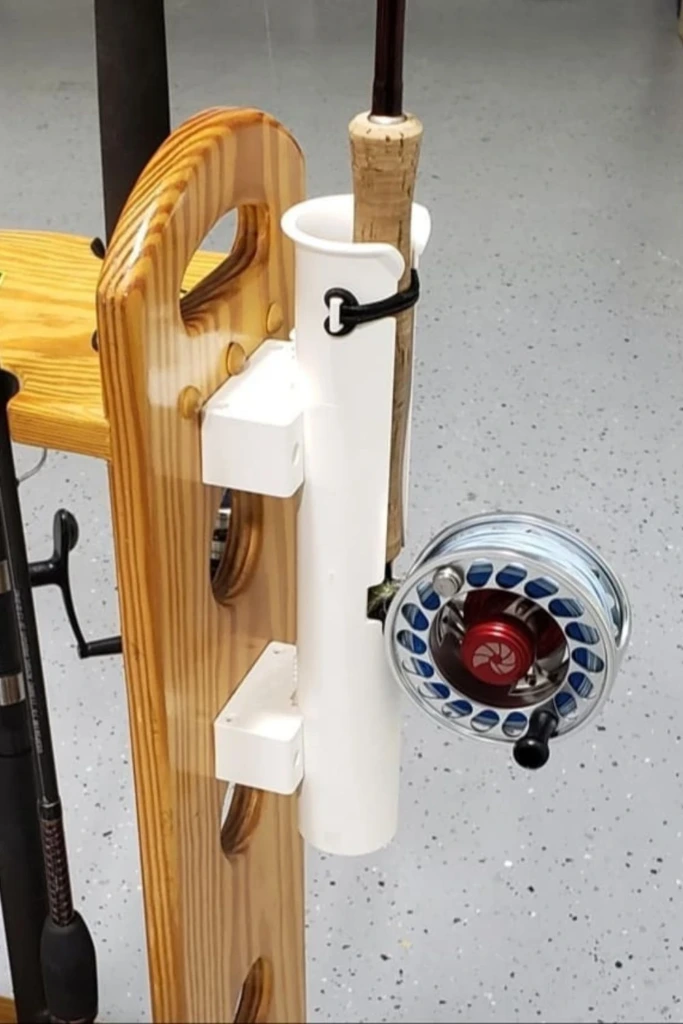
PVC clips provide another simple option for organizing fishing rods, particularly when you want a compact rack with individual holding points. Depending on the design, the clips may attach to a board, rail, or purpose-built frame.
Choose clips that fit the rod diameter and provide enough grip to hold the equipment without squeezing the blank. Some rigid plastic clips can be too tight or have edges that cause scratches, so test the fit before storing valuable rods.
For longer setups, use multiple support points to keep the rods aligned and prevent excessive movement. A single clip may secure one section, but it generally won't stabilize an entire rod on its own.
Space the clips according to rod length and the position of the reels. Ensure that the line guides and reel handles don't become tangled with neighboring equipment.
This method is well suited to small collections and custom DIY projects. It can also be combined with padded lower supports to create a more complete wall-mounted organizer.
17. Speargun Wall Mount
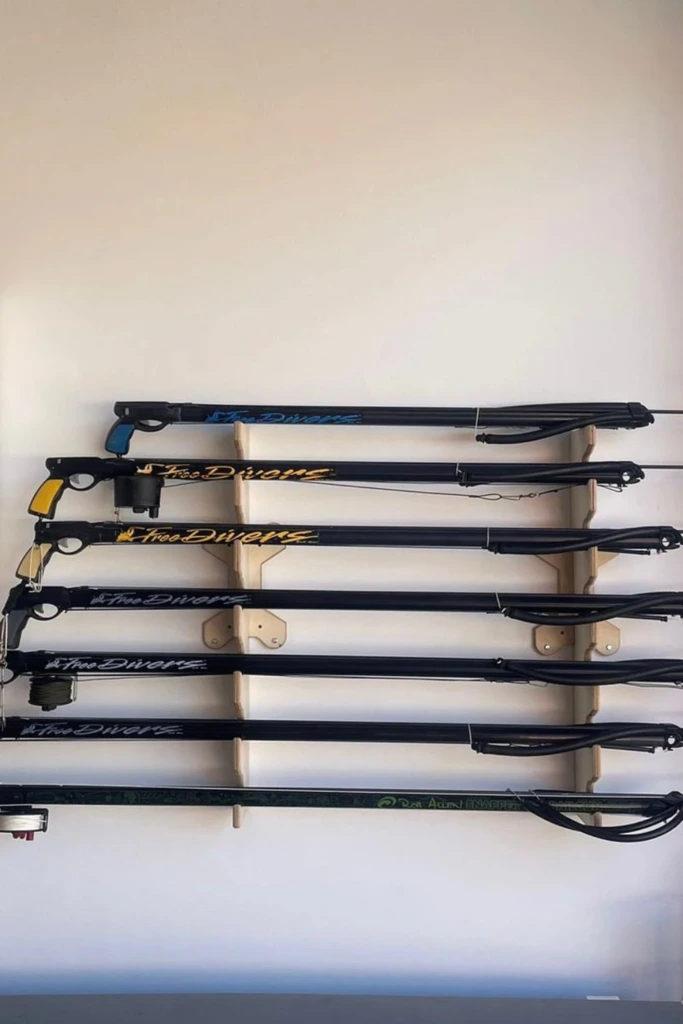
Spearguns require storage designed around their particular shape, length, and operating mechanism. A dedicated wall mount can keep them organized in a fishing room, garage, or equipment shed while preventing them from lying across the floor.
Select a mount that supports the speargun securely without pressing against delicate components, shafts, bands, or triggers. Check the manufacturer's storage recommendations, as different designs may require different support positions.
Before storing a speargun, ensure it is unloaded and rendered safe according to its manufacturer's instructions. Keep shafts, tips, and other sharp components secured so they cannot injure someone reaching into the storage area.
Install the holder where children and unauthorized users cannot access the equipment. A locked cabinet or restricted storage space may be more appropriate when the speargun needs additional security.
If the equipment is used in saltwater, rinse and dry it according to the manufacturer's maintenance guidance before putting it away. A suitable mount should keep the equipment accessible to its owner while protecting it from unnecessary moisture and accidental damage.
18. Polished Rod Rail
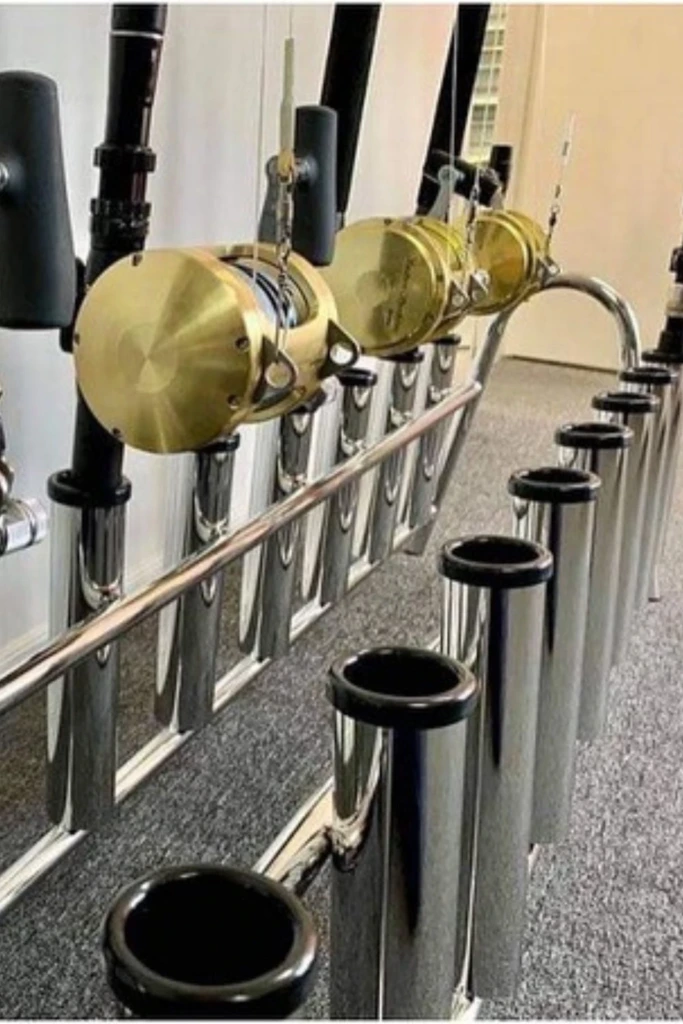
A polished rod rail provides a clean, streamlined appearance for organized fishing equipment. It can be made from finished wood, coated metal, or another durable material that complements the surrounding storage space.
The rail typically supports several rods through individual brackets, padded cradles, or adjustable clips. The finish may improve the overall appearance, but the quality of the contact points and mounting hardware matters more than shine alone.
Choose a rail long enough to accommodate your rods with reasonable spacing. Check that the brackets don't interfere with reels, line guides, or handles, and make sure the entire assembly is firmly attached to the wall or supporting frame.
A polished design works particularly well in a dedicated fishing room or an organized garage. Wipe it down periodically to remove dust and moisture, and inspect the fasteners for loosening over time.
For outdoor or marine use, select a finish and hardware appropriate for exposure to water, humidity, and corrosion. Decorative materials should never compromise the rack's ability to support the equipment safely.
19. Track Wall Mount
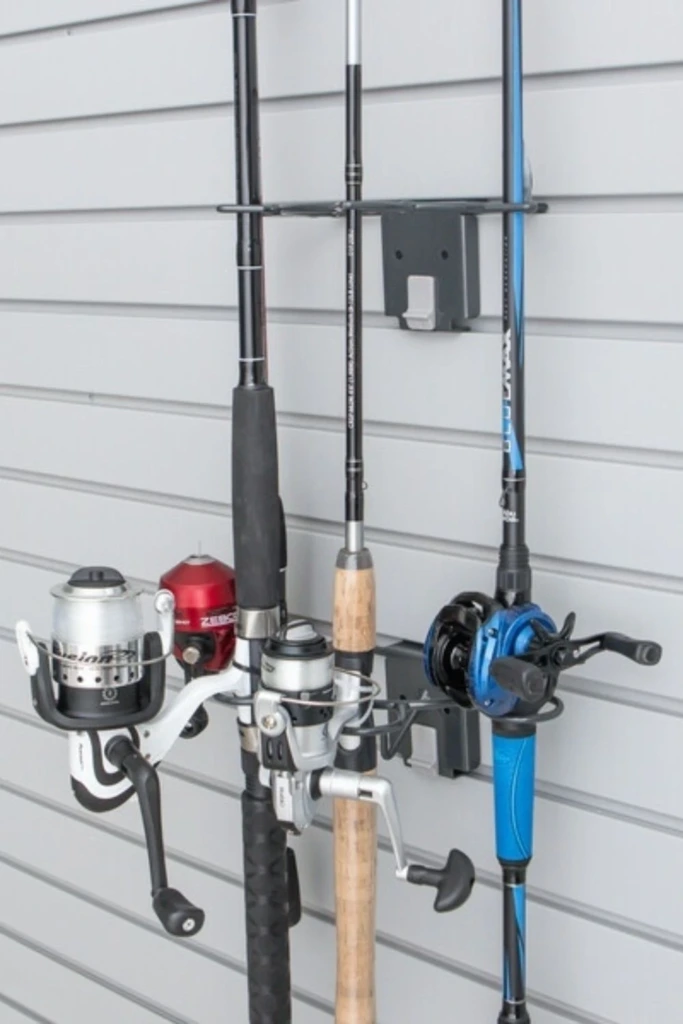
A track wall mount uses a fixed rail or mounting track with compatible attachments that can be moved or replaced as needed. This arrangement is useful when you want a storage system that can adapt to different rod lengths and changing equipment collections.
Install the track according to its rated load capacity and the manufacturer's mounting instructions. Depending on the system, it may require attachment to wall studs, masonry anchors, or another suitable structural surface.
Once installed, position the rod holders to create enough room for reels and guides. Keep heavier equipment within the system's load limits, and don't assume that every accessory designed for a similar-looking track will fit securely.
The modular design makes future adjustments relatively simple. You can reposition the holders, add storage for lightweight accessories, or reorganize rods by type without rebuilding the entire setup.
Check the track and its attachments periodically for wear or movement. A flexible storage system is most effective when every component remains securely locked in place.
20. Modular Peg System
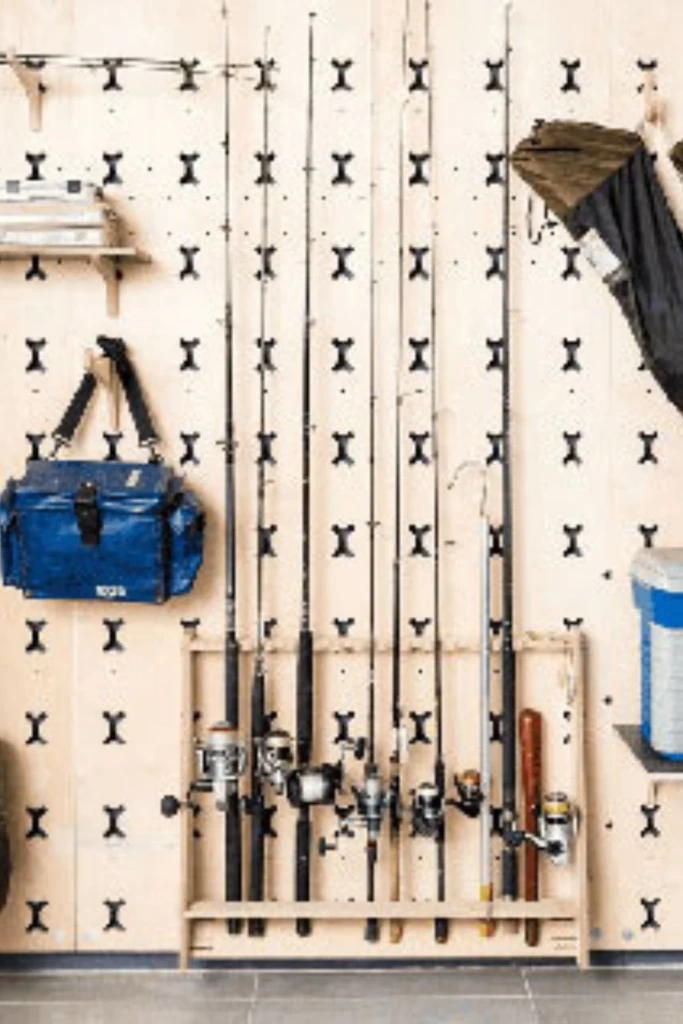
A modular peg system lets you build a personalized storage arrangement from interchangeable components. Unlike a fixed rack, it can be expanded or rearranged to accommodate new rods, tackle accessories, and other lightweight fishing equipment.
Start with a mounting panel or rail that is rated for the intended load. Add rod holders with broad, smooth contact surfaces and position them so the equipment remains supported along its length.
One advantage of this approach is that different rod types may need different spacing. A large reel can require more room than a compact setup, while longer rods may need their own section to avoid crossing neighboring equipment.
Use compatible accessories and follow the system's installation requirements. Generic pegs are not necessarily strong enough to support fishing rods, especially when several are mounted close together.
For a more organized setup, assign separate areas to freshwater rods, saltwater equipment, and spare setups. The modular layout makes it easier to keep frequently used gear accessible while leaving room for future additions.
21. Boat Locker Storage
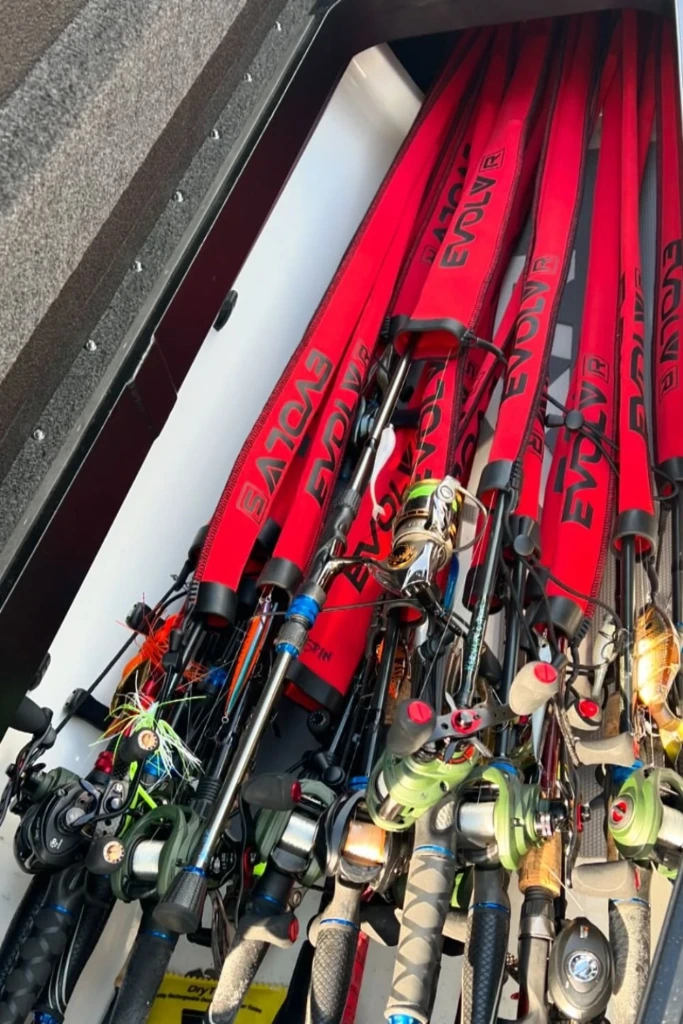
A boat locker offers a protected place to store fishing rods when they aren't being used. Unlike open holders, an enclosed compartment can reduce exposure to sunlight, spray, and accidental contact with other equipment.
Before placing rods inside, check that the locker is long enough and that its interior won't force the tips against a hard surface. Use padded dividers or dedicated rod sleeves to keep individual setups apart and reduce the risk of scratches or tangled lines.
Keep the compartment dry and ventilated where possible. Saltwater residue, damp clothing, and wet tackle can create an environment that promotes corrosion and mildew, so clean and dry your gear before putting it away for extended periods.
Secure the rods against movement while the boat is underway. Loose equipment can shift when the boat encounters waves, potentially damaging rod tips, guides, or reels. Use retaining straps or internal supports suited to the compartment.
Organize the locker so that frequently used rods are easy to remove without pulling out the entire collection. If space is limited, separate longer rods from compact setups and avoid storing heavy tackle boxes on top of them.
Final Thoughts
Good fishing rod storage protects your equipment, makes preparation easier, and helps keep your garage, boat, or fishing room organized. The right solution could be a simple PVC rack, a customizable pegboard, an elegant wooden display, or a secure boat locker.
Consider your available space, the number and length of your rods, and how often you use them before choosing a design. Most importantly, provide stable support, keep delicate sections clear of pressure, and protect your equipment from moisture and accidental impacts. With a little planning, you can create a storage system that keeps every rod ready for your next fishing adventure.