22 Pool Storage Ideas for 2026 to Keep Your Outdoor Space Organized
A swimming pool area needs more than comfortable loungers and clear water to feel inviting. Towels, pool noodles, inflatable floats, cleaning tools, and toys can quickly take over the deck if everything lacks a designated place. The right storage solutions make it easier to keep supplies accessible, protect them from the weather, and maintain a tidy outdoor environment.
Whether you have a spacious backyard pool or a small patio plunge pool, these pool storage ideas offer practical ways to organize your essentials without sacrificing style or valuable outdoor space.
1. Outdoor Storage Benches
Outdoor storage benches combine useful seating with concealed space for pool accessories. Place one near your loungers or along the edge of the pool deck to create a convenient spot for storing rolled towels, sunscreen, goggles, and small toys.
Choose a model made from weather-resistant resin, treated wood, or another outdoor-rated material. A hinged lid makes it easy to reach everything inside, while a design with a supportive seat gives swimmers somewhere to sit while putting on sandals or drying off.
For better organization, use smaller waterproof containers inside the bench to separate clean towels from accessories. Keep wet items out until they have been properly drained and dried, since trapped moisture can encourage mildew and unpleasant odors.
2. Pool Storage Ideas
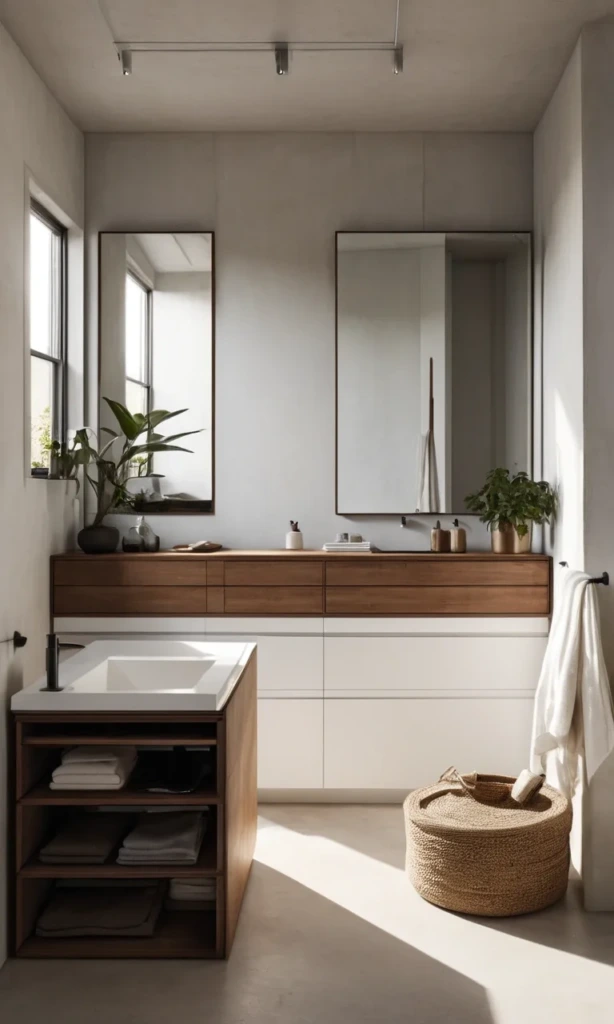
An effective pool storage system starts by identifying what you use most often and where those items are needed. Towels belong near the changing area, toys should be easy for children to reach with supervision, and maintenance supplies should stay in a separate, secure location.
Begin by grouping your belongings into categories, such as swimming equipment, inflatable accessories, cleaning products, and personal essentials. Then choose storage that suits each category rather than forcing everything into one oversized container.
Open baskets and mesh organizers work well for frequently used items because they allow air to circulate. Cabinets and storage chests provide a neater appearance when you want to hide clutter. Wall-mounted racks make use of vertical space, while portable carts help move supplies between the pool, patio, and outdoor shower.
Consider the local climate before choosing materials. Strong sunlight can fade plastic, rain can damage untreated wood, and salty air may corrode unsuitable metal. Weather-resistant construction, good ventilation, and regular maintenance help keep your storage system functional throughout the swimming season.
3. Mesh Bin Stations
Mesh bin stations are a convenient way to collect pool toys, kickboards, goggles, and other accessories after swimming. Their breathable construction allows water to drain and air to move around the contents, making them more suitable for damp equipment than sealed containers.
Set up several bins on a stable surface near the pool entrance. Assign one to small toys, another to swimming aids, and a third to equipment that needs to be returned to storage after rinsing. Clear categories make cleanup quicker, especially when several family members share the pool.
Choose bins with sturdy frames and mesh that resists tearing. If the station will remain outdoors, secure it against wind and select materials designed to withstand sunlight and moisture. Avoid overfilling the bins, since heavy loads can strain the frame and make items difficult to retrieve.
Mesh bins are especially useful for households with children because they encourage an easy cleanup routine. Keep any equipment that poses a safety risk, along with chemical products, outside children's reach.
4. Wall-Hung Mesh Organizers
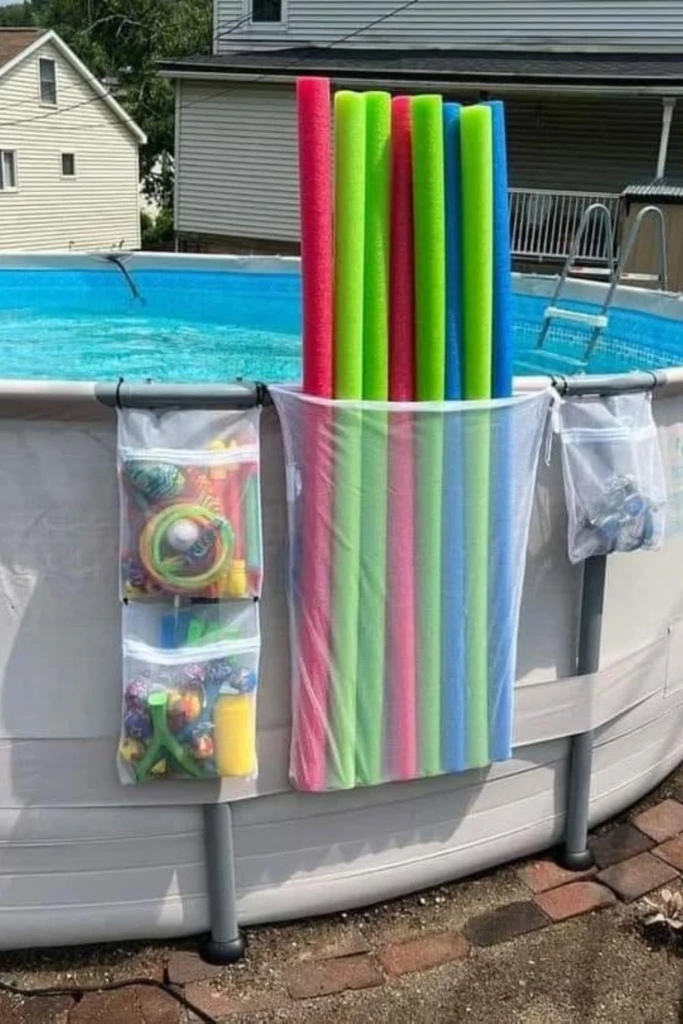
Wall-hung mesh organizers are ideal when floor space is limited. Attached to a suitable wall, fence, or outdoor utility area, they provide accessible storage for lightweight pool accessories without occupying valuable deck space.
Use separate pockets for goggles, swim caps, sunscreen, small water toys, and other frequently used essentials. A hanging organizer near an outdoor shower or changing area can also serve as a temporary place for accessories while swimmers get ready.
Select a model with corrosion-resistant hooks or mounting hardware suitable for the surface. Make sure the wall or fence can support the loaded organizer, particularly if it will hold several items. Keep it away from areas where it could obstruct walkways or create a snagging hazard.
For better results, empty the pockets regularly and allow the organizer to dry completely. Although mesh encourages airflow, it does not eliminate moisture, and items left damp for extended periods may still develop odors or mildew.
5. Pallet Towel Rack
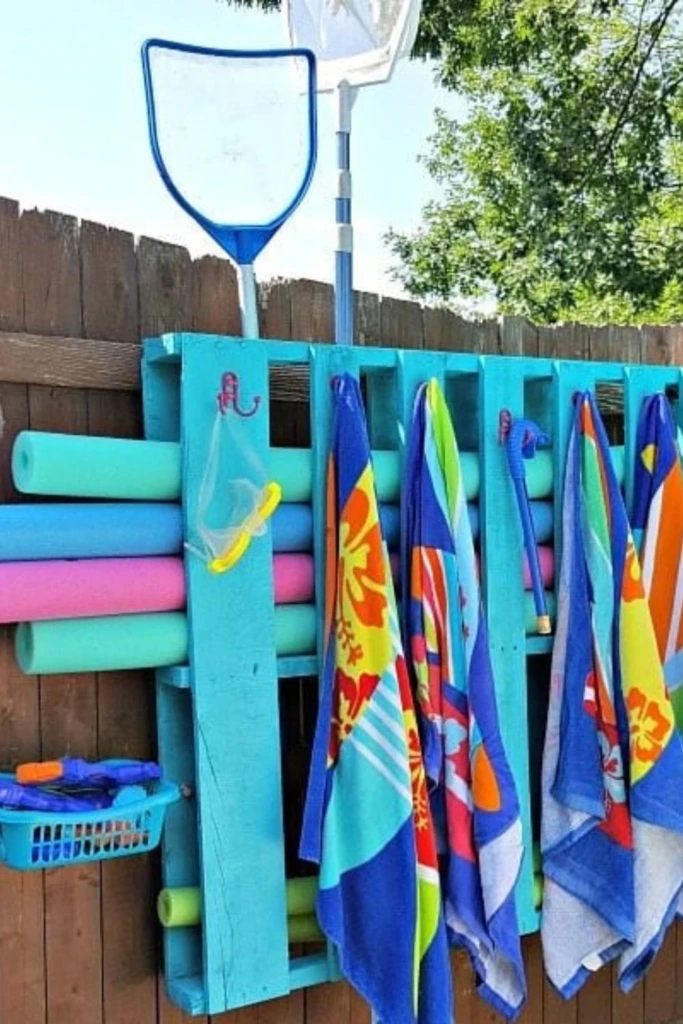
A pallet towel rack offers a rustic, budget-friendly way to organize towels beside the pool. A suitable wooden pallet can be adapted into a vertical rack with hooks or horizontal rails, providing hanging space for several towels without requiring a large footprint.
Start with a clean pallet that is structurally sound and appropriate for reuse. Sand rough edges thoroughly, remove protruding nails, and apply an exterior-rated finish if needed. Add secure hooks or rails at heights that are comfortable for the people using the pool.
Mount the rack firmly to a suitable wall or fence, or stabilize it with a properly designed freestanding support. Do not assume a pallet is safe simply because it looks sturdy; inspect it for damage, contamination, and loose components before using it.
Position the rack where towels can receive plenty of airflow. Spacing the hooks apart helps prevent damp fabric from bunching together, allowing towels to dry more effectively between swims.
6. Oversized Storage Chest
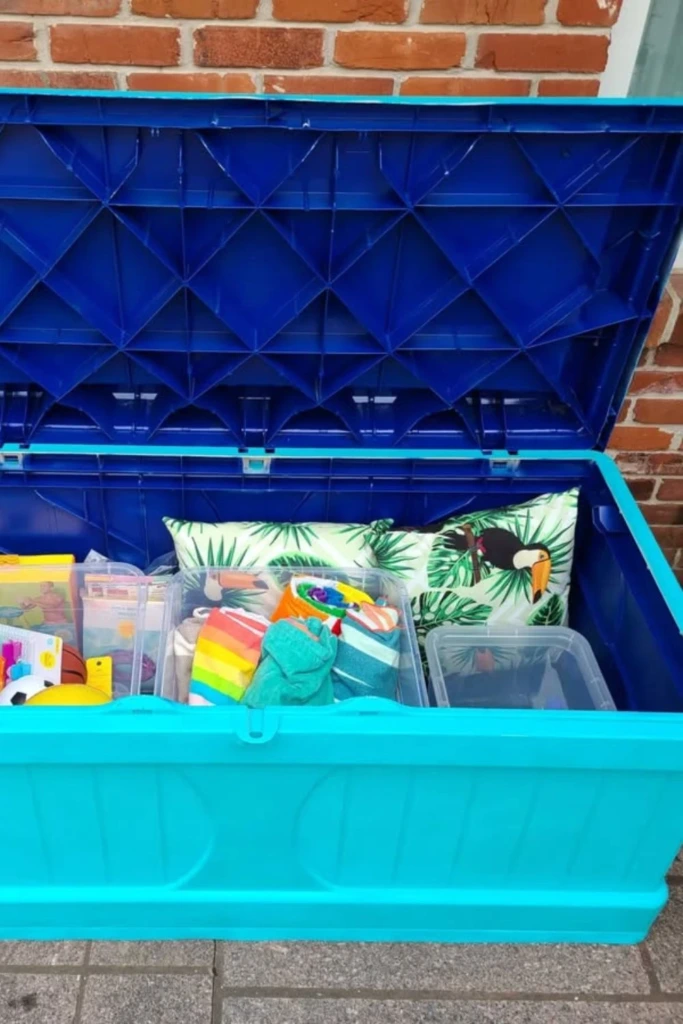
An oversized storage chest is useful when your pool area contains bulky floats, large toys, spare cushions, and seasonal accessories. Instead of scattering these items around the patio, you can keep them together in one accessible location.
Look for a chest with enough internal capacity to accommodate your largest belongings without forcing them inside. A wide opening is particularly helpful for inflatable loungers and pool toys that are awkward to fold or stack.
Weather-resistant resin is a practical choice for outdoor use, while treated wood can complement traditional garden furniture. Features such as drainage, ventilation, a UV-resistant finish, and a lid that opens smoothly can make a noticeable difference in everyday use.
Place the chest on a level surface and avoid blocking its opening with furniture. If you store inflatables inside, make sure they are clean and fully dry before packing them away. Do not rely on an ordinary storage chest as a secure barrier for pool chemicals or as a safety device for children.
7. Wooden Float Rack
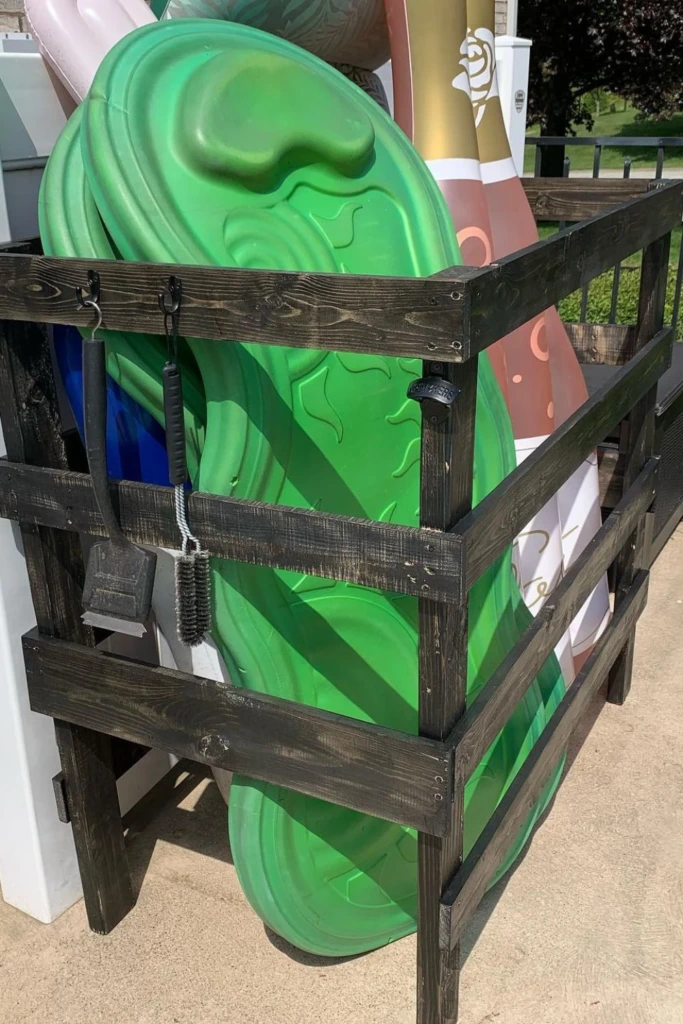
A wooden float rack gives oversized pool noodles, inflatable rings, and lightweight swimming accessories a dedicated home. Its open design makes it easy to see what is available, while a timber finish can blend naturally with a wooden deck or garden furniture.
Build or purchase a rack with compartments wide enough for your typical floats. Vertical slots work well for pool noodles, while broader sections can accommodate deflated inflatables or other lightweight accessories. Smooth, rounded edges help prevent snags and reduce the chance of damaging inflatable materials.
Use outdoor-rated timber and an appropriate protective finish to help the rack withstand sun and rain. Secure it against tipping, especially if children will frequently remove or return equipment.
A float rack should not become an obstacle beside the pool. Place it against a fence or wall, away from entrances, steps, and narrow walking routes. Store floats only after removing excess water, and allow inflatable products to dry according to their care instructions.
8. Hanging Mesh Bag
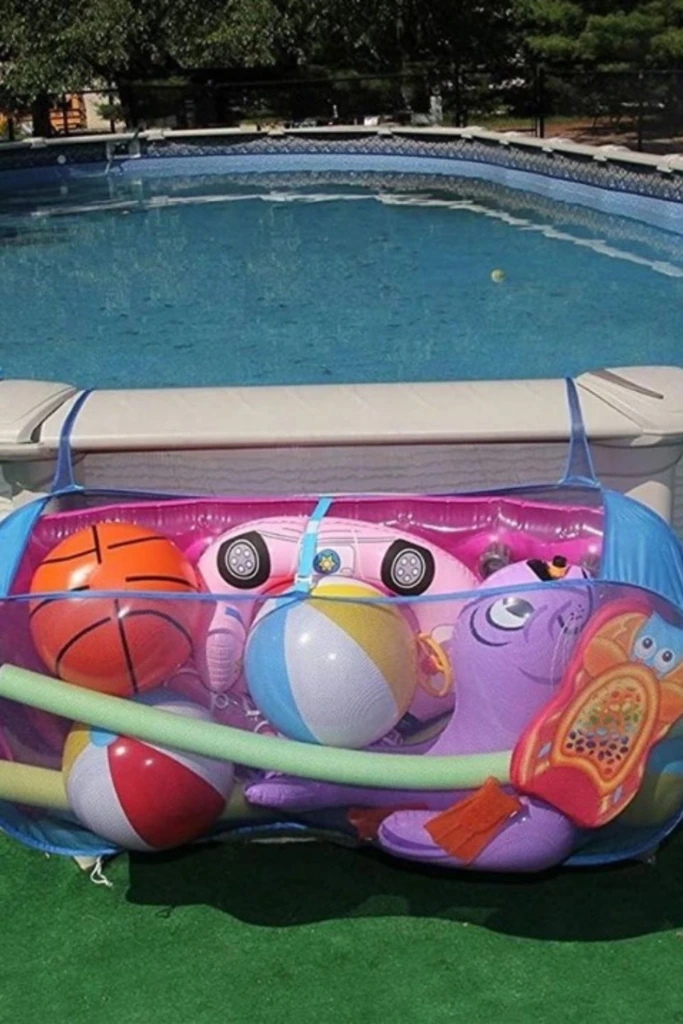
A hanging mesh bag is a simple solution for collecting small, lightweight pool toys. It can hold items such as dive rings, soft balls, water toys, and other accessories that would otherwise spread across the deck.
Choose a bag with a durable mesh body, reinforced seams, and a secure hanging loop. Attach it to a suitable hook in a ventilated storage area where it can drain without dripping onto an electrical outlet, indoor flooring, or another sensitive surface.
A bag with a wide opening makes cleanup easier, while a drawstring can help prevent small items from spilling out during movement. For households with multiple swimmers, consider using separate bags for different types of toys.
Avoid putting sharp objects or heavy equipment into a lightweight mesh bag. Inspect it periodically for stretched seams and damaged attachment points, and empty it regularly so that dirt and debris do not accumulate at the bottom.
9. Dual Deck Boxes
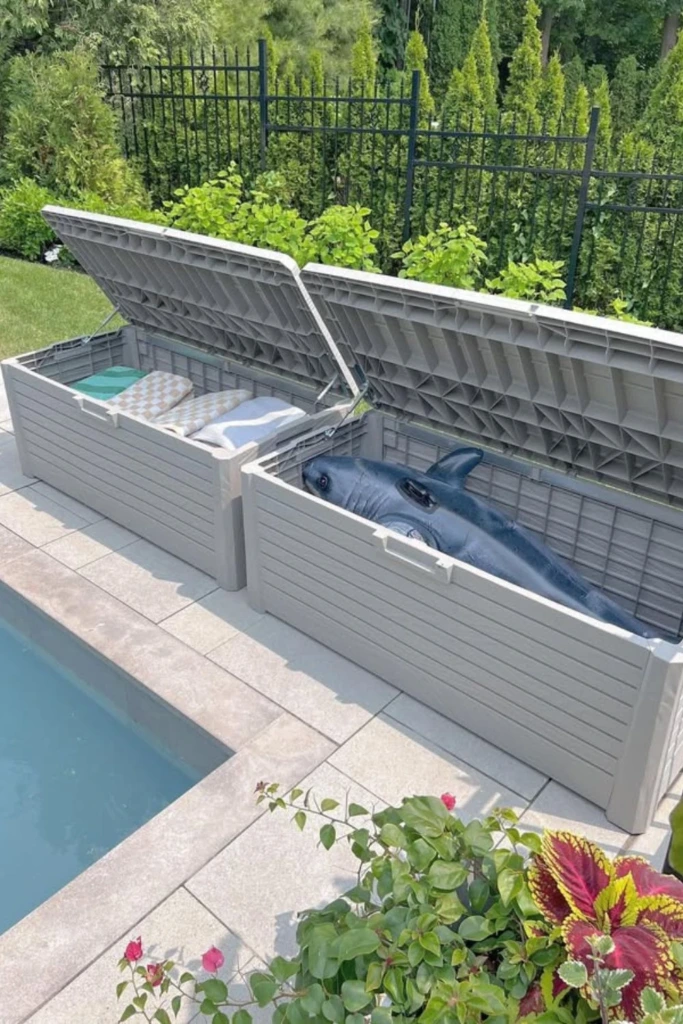
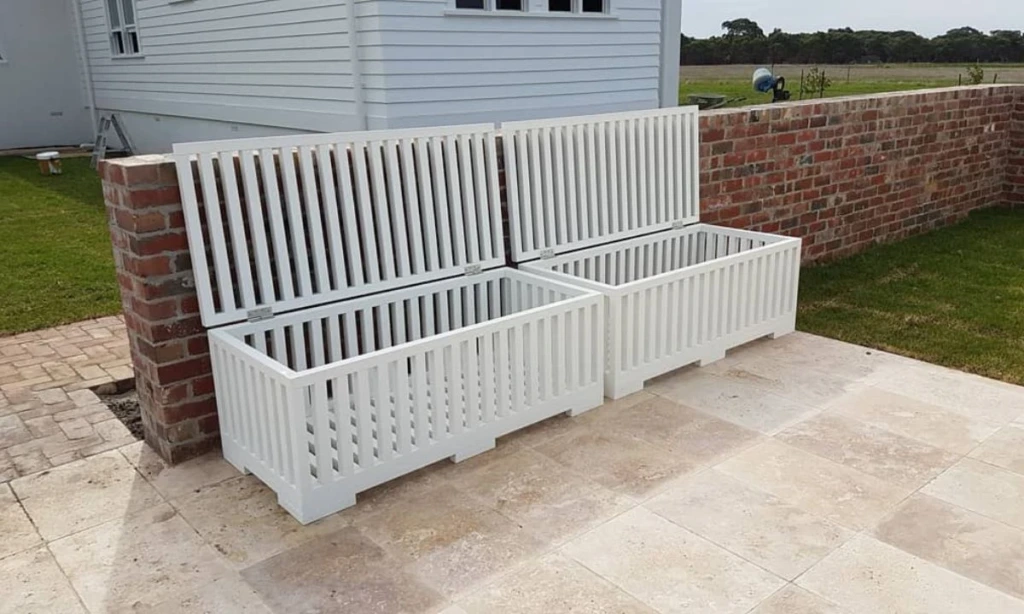
Dual deck boxes offer a practical way to divide pool supplies into two separate storage zones. Instead of mixing everything together, use one box for clean towels and personal items and the other for toys, floats, or general accessories.
This arrangement is especially helpful for larger households, where swimmers may need different items at different times. Position the boxes in convenient locations, such as one near the seating area and another closer to the pool entrance.
Matching boxes can create a coordinated appearance, while different colors or labels make their purposes immediately obvious. Select outdoor-rated models with sturdy lids and sufficient capacity for the items you intend to store.
Keep clean towels in a dry, ventilated location rather than sealing them inside while damp. If one box holds wet equipment, choose a design that allows appropriate drainage and is easy to clean. Leave enough clearance around both boxes so their lids can open fully without interfering with nearby chairs or walkways.
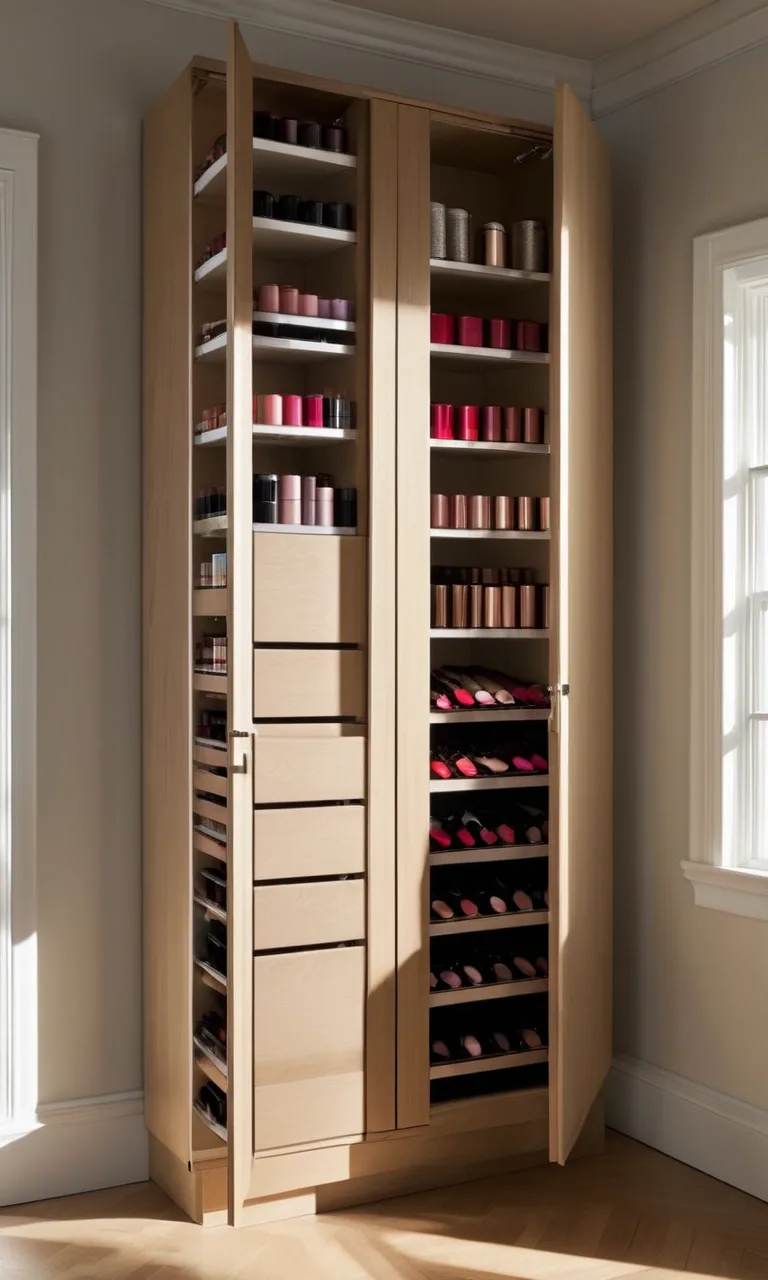
10. Outdoor Storage Cabinet
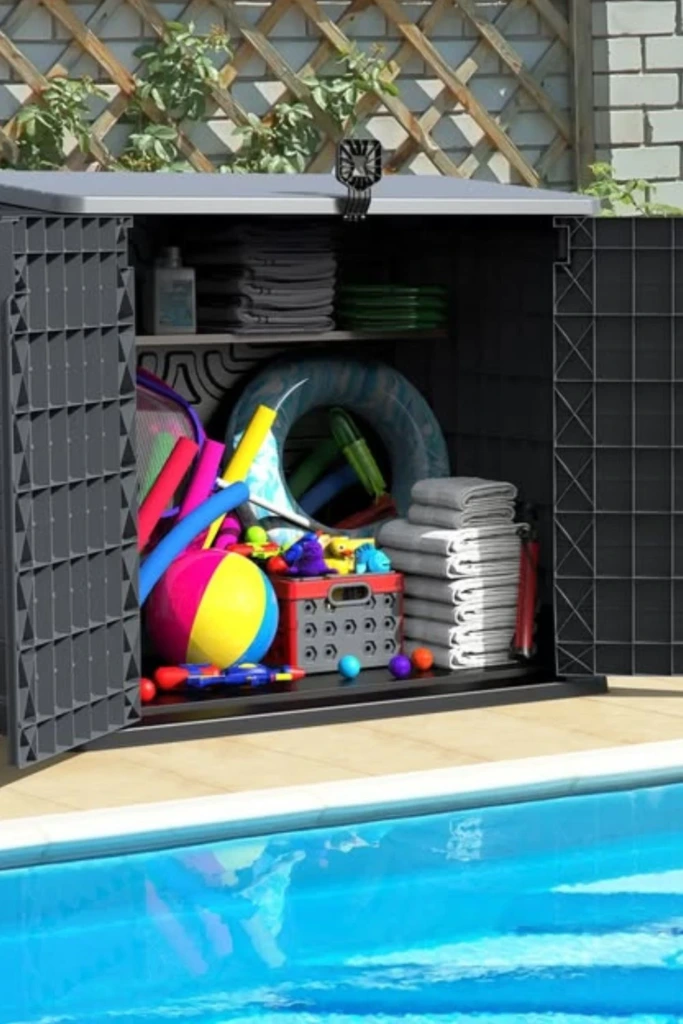
An outdoor storage cabinet creates a more structured home for pool supplies, particularly when you want to keep smaller accessories out of sight. Adjustable shelves can accommodate towels, goggles, sunscreen, cleaning cloths, and other everyday essentials.
Choose a cabinet built for outdoor exposure, with moisture-resistant construction and hardware that will tolerate the local climate. Plastic and resin cabinets are often easy to clean, while treated wood or suitable coated metal can provide a more furniture-like appearance.
Organize the interior according to how frequently you use each item. Keep everyday accessories on reachable shelves and less frequently needed supplies higher up, provided they remain safely accessible to adults.
A cabinet should sit on a stable, level base and be secured against tipping where necessary. Keep pool chemicals in their original, properly closed containers and store them separately from towels, toys, and personal products, following the manufacturer's instructions and applicable safety guidance.
11. Decorative Metal Cabinets
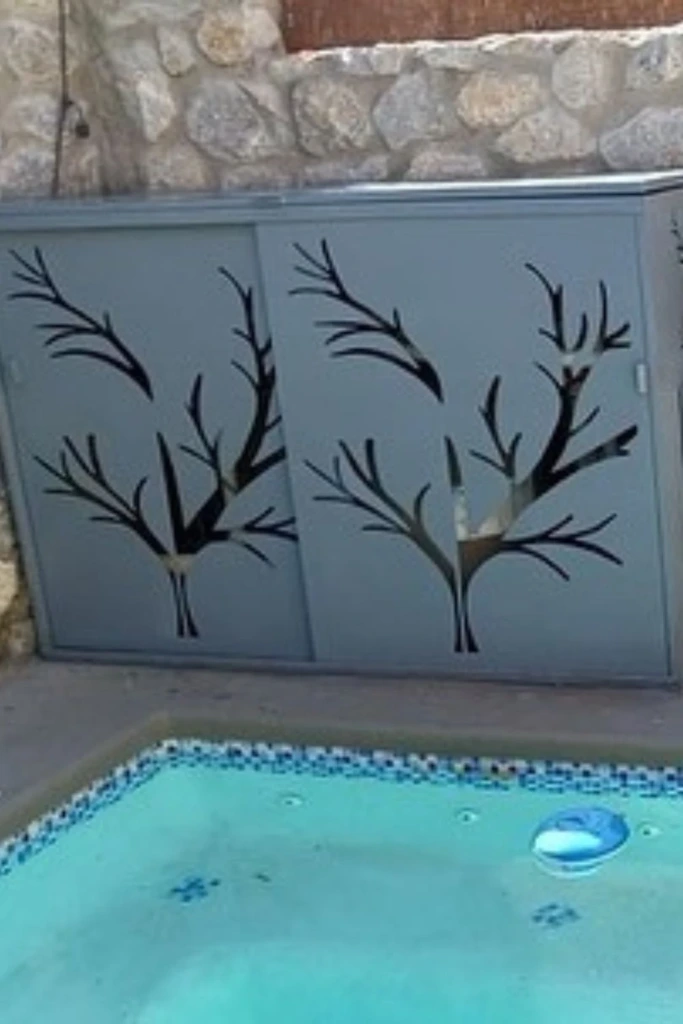
Decorative metal cabinets can turn practical pool storage into an attractive feature. Designs with slatted doors, perforated panels, or simple geometric details suit contemporary patios, while darker finishes can complement outdoor furniture and landscaping.
Use the cabinet for items that benefit from a dedicated shelf, such as folded towels, lightweight accessories, and poolside serving essentials. Internal baskets help separate small objects, and adjustable shelving makes it easier to accommodate different sizes of supplies.
Material selection is important because ordinary metal can rust when exposed to water and humid conditions. Look for corrosion-resistant finishes and hardware intended for outdoor use. Even coated metal may need occasional inspection for scratches, chips, or signs of rust.
A metal cabinet can become hot in direct sunlight, so avoid storing heat-sensitive products inside it. Keep the unit stable, ensure the doors open freely, and choose a location that does not narrow the path around the pool.
12. Standing Towel Station
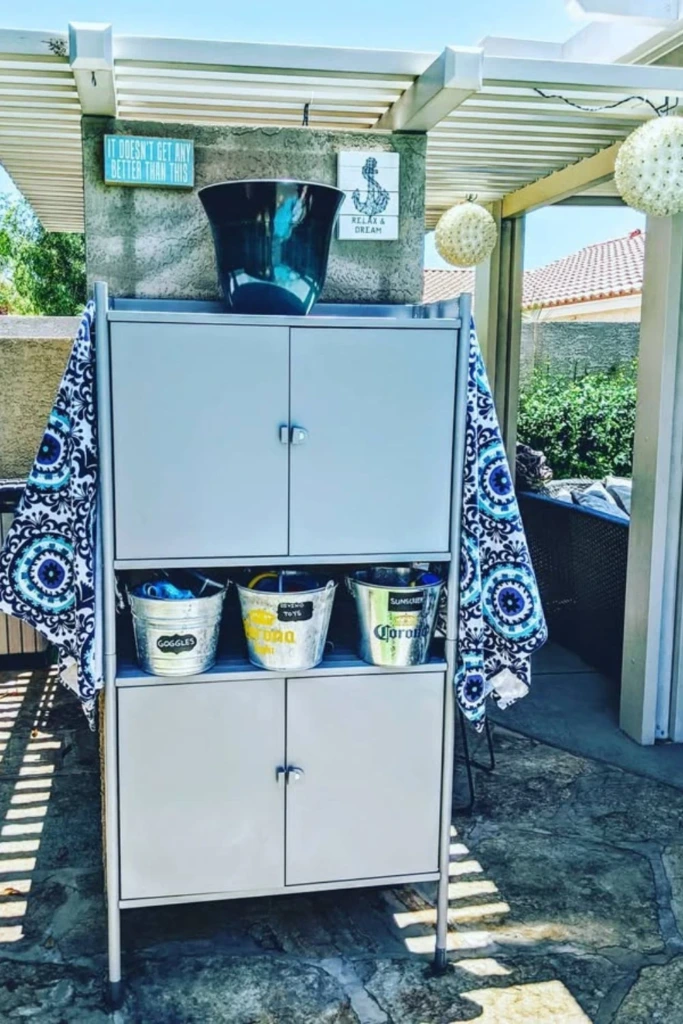
A standing towel station keeps towels within reach while giving them enough space to dry. It can be a freestanding rack with several bars, a combination of shelves and hooks, or a compact unit designed specifically for poolside use.
Arrange the bars so towels hang separately rather than overlapping heavily. This improves airflow and makes it easier for each swimmer to identify their own towel. Lower hooks may suit children, while higher bars can accommodate bath sheets and larger beach towels.
Choose a stable model made from outdoor-suitable wood, coated metal, or weather-resistant synthetic materials. A weighted base or secure mounting system helps prevent the station from tipping in windy conditions.
Place it near the pool exit or outdoor shower, but keep it clear of wet steps and busy walking areas. Wash towels regularly and bring them indoors or into protected storage when they are completely dry, especially if rain or overnight humidity is expected.
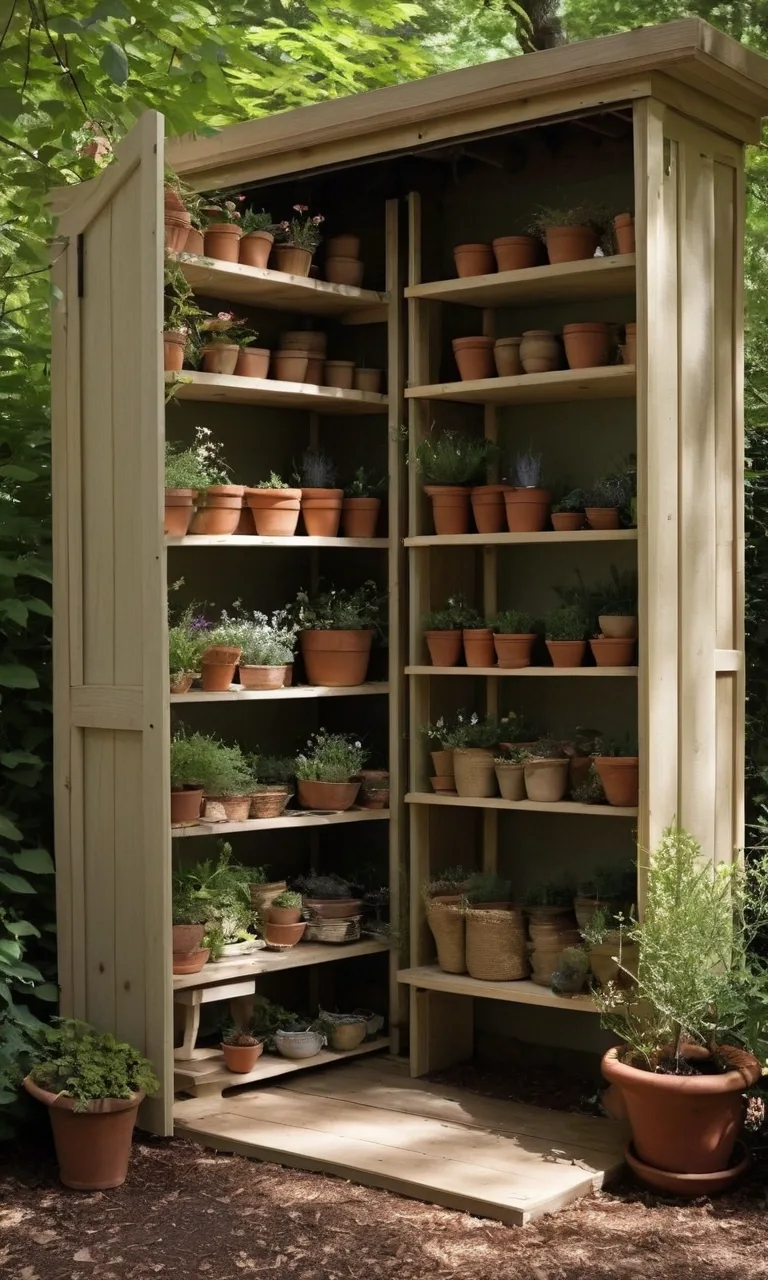
13. Compact Pool Shed
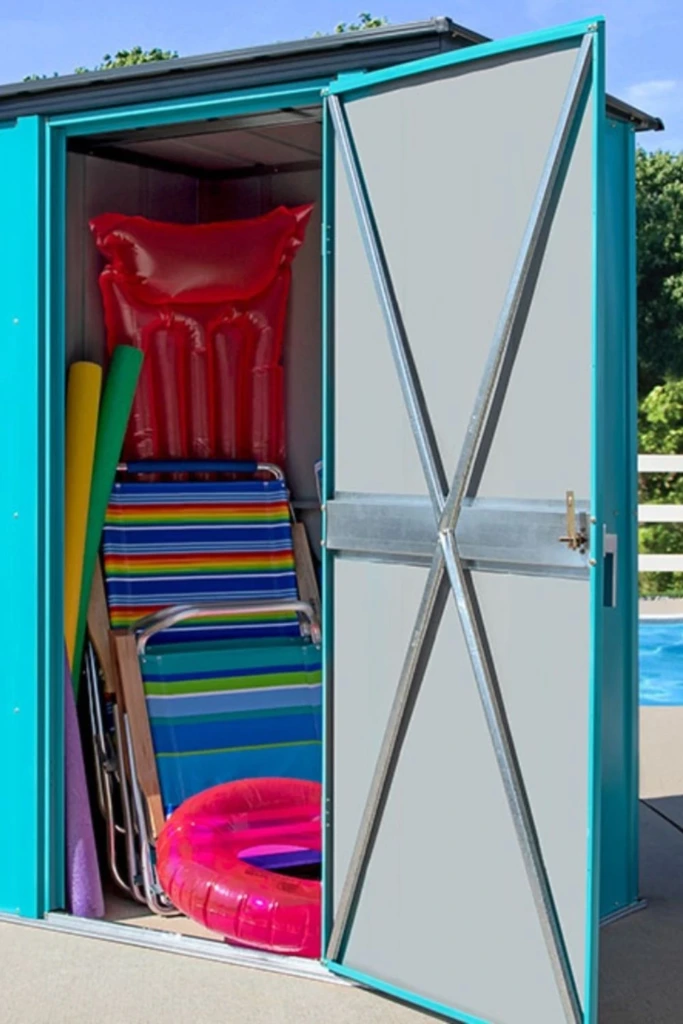
A compact pool shed provides enclosed storage for equipment that would otherwise occupy the patio or garage. It can accommodate maintenance tools, folded loungers, garden accessories, spare floats, and other items that are used regularly during the swimming season.
Before purchasing or building a shed, measure the largest items you plan to store and leave enough room to remove them without rearranging everything else. Vertical shelving, wall hooks, and overhead storage can help make a small structure more efficient.
Choose materials that suit your climate, such as a weather-resistant resin shed or properly treated timber construction. A sound roof, secure doors, and appropriate ventilation help protect the contents from rain and moisture.
Place the shed on a stable base and check local requirements before installing a permanent structure. Keep chemical products in a separate, appropriately ventilated and secure area, following their labels. Never store incompatible chemicals together or mix them during handling.
A shed is most useful when its contents remain organized. Use labelled containers for small accessories and reserve clear floor space for bulky equipment.
14. Rolling Supply Cart
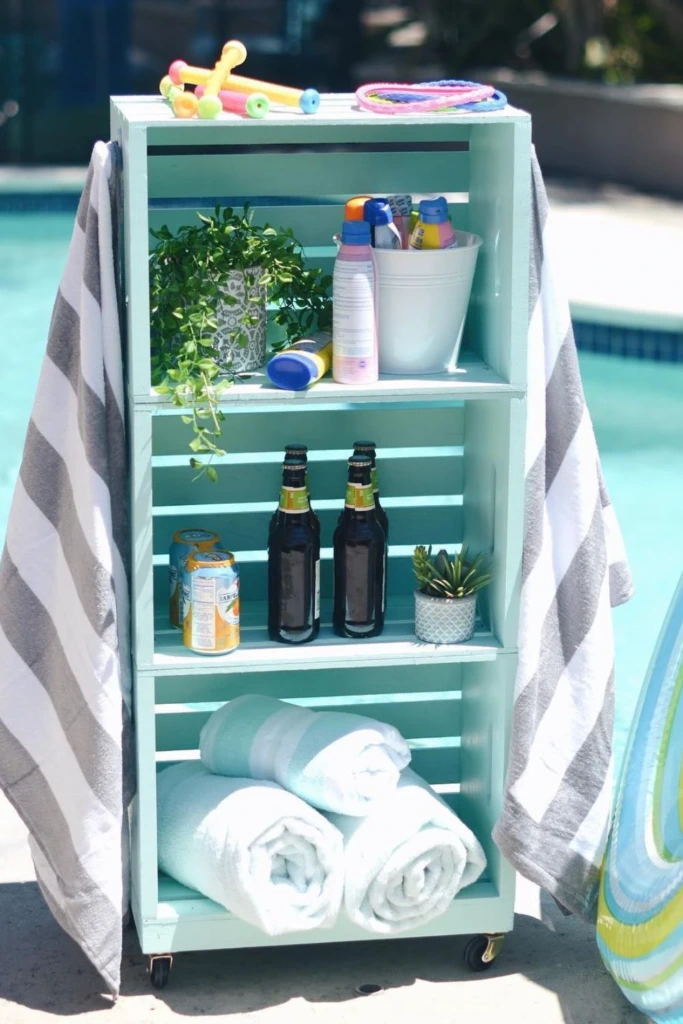
A rolling supply cart makes it easy to transport pool essentials wherever they are needed. It can carry sunscreen, goggles, folded towels, cleaning cloths, cups, and lightweight toys between the house, outdoor shower, and poolside seating area.
Choose a cart with sturdy wheels suitable for your patio surface. Locking casters are useful when the cart needs to remain stationary, and raised edges help prevent small items from sliding off. Models with multiple shelves allow you to separate clean towels from accessories.
For wet environments, prioritize rust-resistant frames and shelves that are easy to wipe clean. Avoid overloading the cart or placing heavy items on the top shelf, since a high center of gravity can make it unstable.
Keep the cart on level ground when unattended and park it away from the pool edge. It should never block an exit or become an obstacle that swimmers might trip over. A cart is best used for portable supplies rather than as permanent storage for heavy equipment or pool chemicals.
15. Towel Hamper Stand
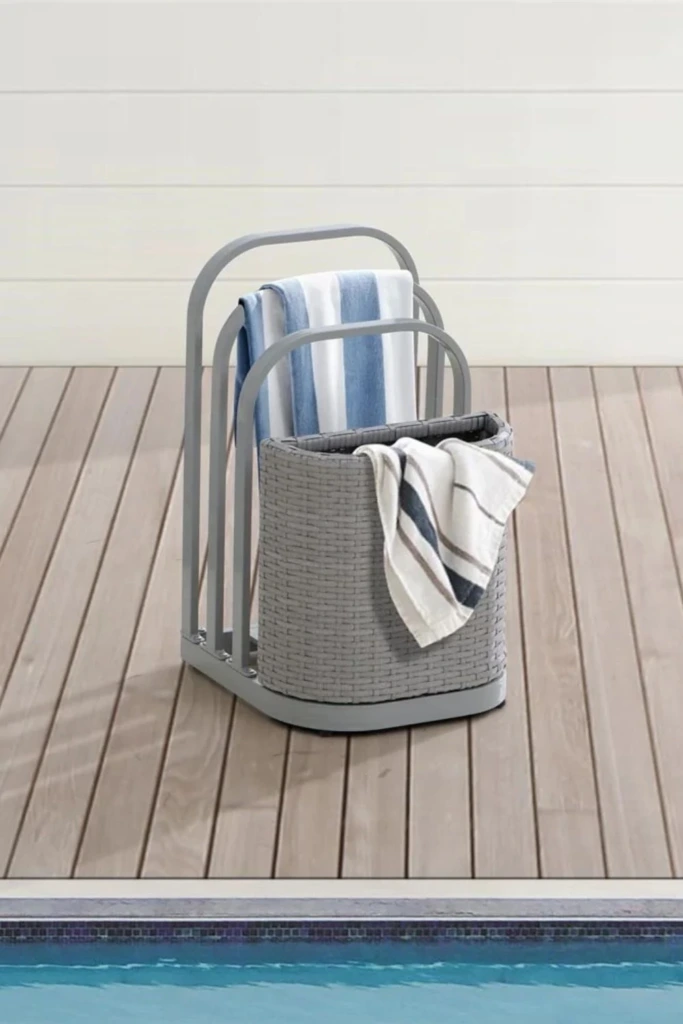
A towel hamper stand creates a designated collection point for used pool towels. Instead of leaving damp fabric on chairs or spreading it across the deck, swimmers can place their towels in one clearly marked location.
Look for a hamper with a removable liner that can be washed easily. A breathable fabric bag or ventilated basket helps reduce trapped moisture, while a sturdy stand makes it convenient to use throughout the day.
If several people share the pool, a larger hamper may be worthwhile. Alternatively, use two separate containers to distinguish lightly used towels from those that are ready for laundering, provided both are handled hygienically.
Do not leave saturated towels compressed inside a hamper for long periods. Allow them to dry or transfer them promptly to the laundry area, as prolonged dampness can encourage mildew. Keep the hamper away from splashing water and position it where it will not obstruct movement.
16. Industrial Wire Cage
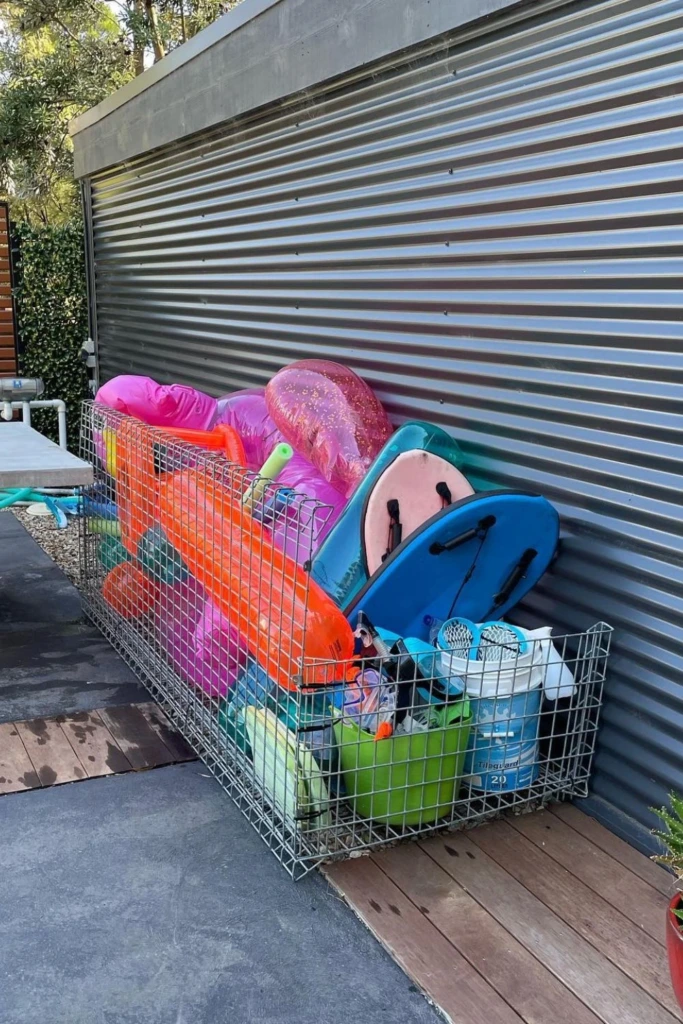
An industrial wire cage provides open, visible storage for durable pool accessories. Its metal framework can hold kickboards, lightweight floats, cleaning tools, and other equipment that benefits from airflow and easy access.
The open structure makes it simple to identify items without removing a lid. It can also be fitted with separate compartments or smaller baskets to keep loose accessories from collecting in one untidy pile.
Choose a cage with a corrosion-resistant finish, particularly if it will remain near chlorinated pool water or in a humid environment. Check that the wire ends are smooth, the frame is stable, and the openings are appropriate for the equipment being stored.
A cage may not be suitable for delicate inflatables unless the contact points are smooth enough to prevent punctures. Use protective liners or separate containers where necessary. Keep the unit anchored if it could tip, and never store hazardous chemicals alongside toys or personal belongings.
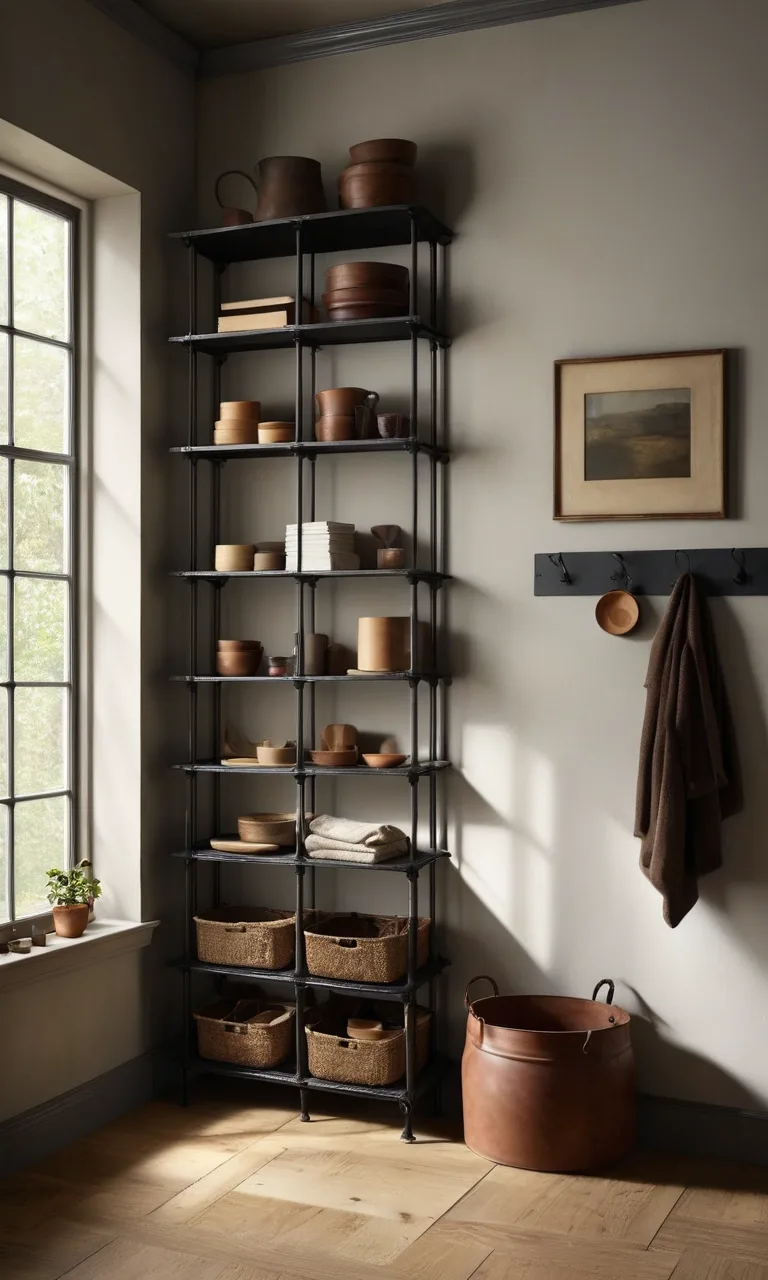
17. Labelled Shelf Unit
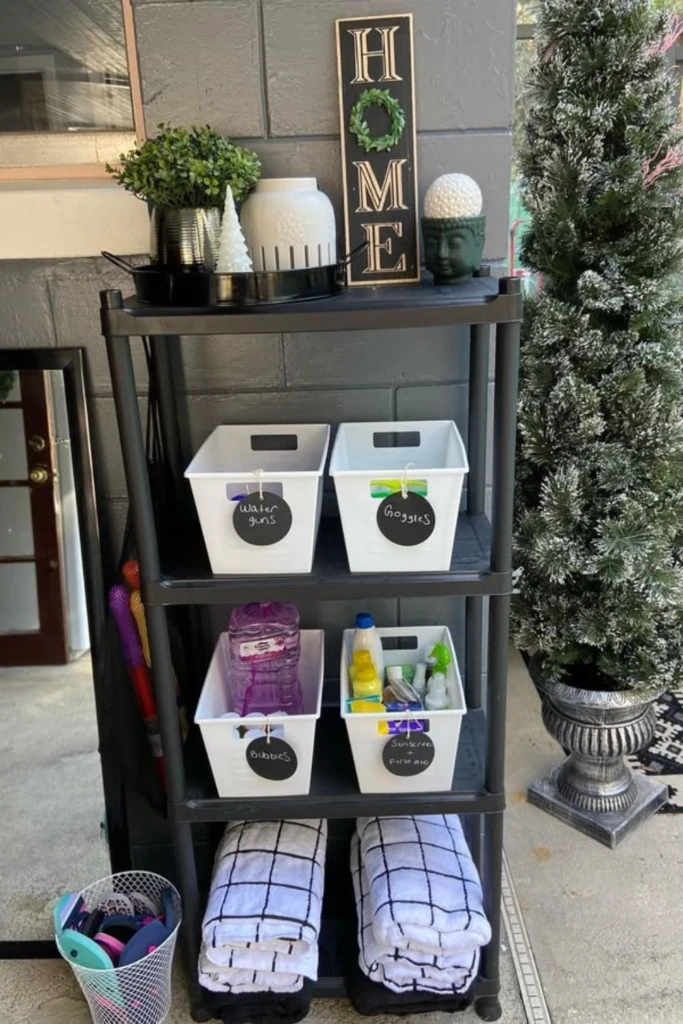
A labelled shelf unit helps establish a consistent place for every pool accessory. It works particularly well in a pool shed, covered patio, garage, or other protected area where shelves can remain dry and accessible.
Assign each shelf a clear purpose. One might hold goggles and swim caps, another could contain towels and sun hats, while a lower shelf might be reserved for larger toys or cleaning equipment. Use waterproof labels or washable tags that remain readable through the swimming season.
Choose shelving that can support the expected load without bending or wobbling. Plastic shelves can be easy to maintain, while coated metal or treated timber may suit more demanding storage needs. Secure tall units to a wall where appropriate to reduce the risk of tipping.
Place heavier objects on lower shelves and keep frequently used items at a comfortable height. Store clean, dry towels separately from wet gear, and keep maintenance chemicals in their own secure storage area rather than placing them beside household or pool accessories.
18. Shower Stall Storage
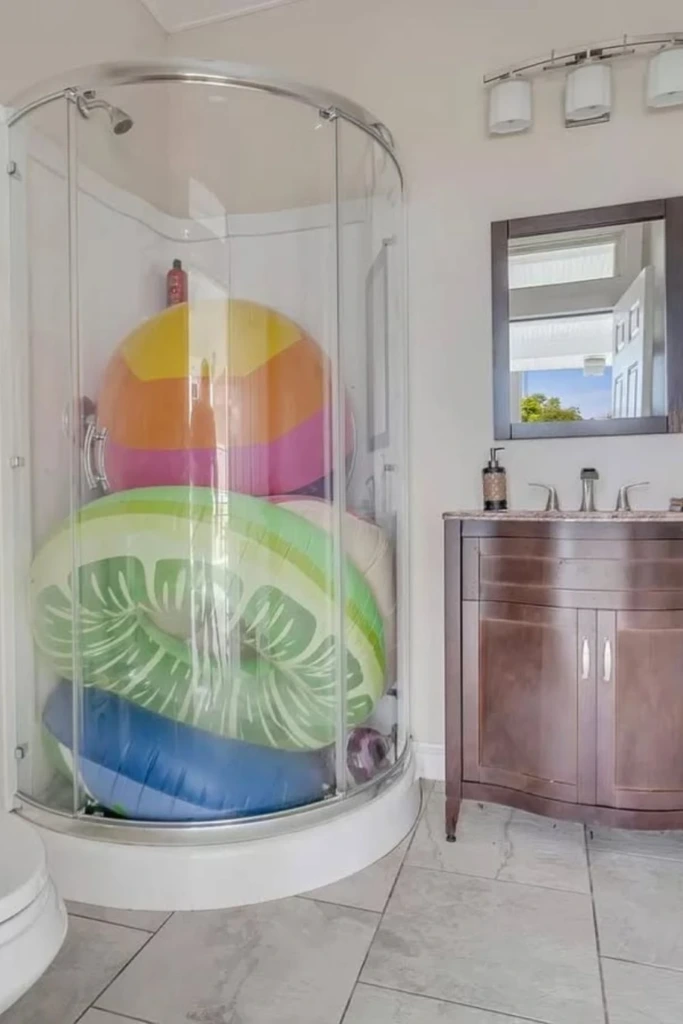
An outdoor shower stall can do double duty as a compact storage zone for bathing essentials. Wall-mounted baskets, hooks, and narrow shelves provide places for shampoo, soap, swim caps, and small personal items without taking up much floor space.
Select fittings made from materials that tolerate repeated exposure to water, such as suitable stainless steel, corrosion-resistant coated metal, or outdoor-rated plastic. Slatted shelves and open baskets are useful because they allow water to drain instead of collecting around stored products.
Install organizers where they are easy to reach but do not interfere with the shower controls or movement. Avoid placing shelves at head height in tight spaces, where someone could bump into them.
Keep the floor clear to reduce slipping and tripping hazards. Personal-care products should remain in closed containers when possible, and the storage area should be cleaned regularly to prevent soap residue and mildew buildup.
If the shower stall doubles as a changing area, a few sturdy hooks can hold towels and robes while swimmers rinse off. However, wet garments should be moved to a suitable drying location rather than left hanging in a damp enclosure for extended periods.
19. Colorful Noodle Rack
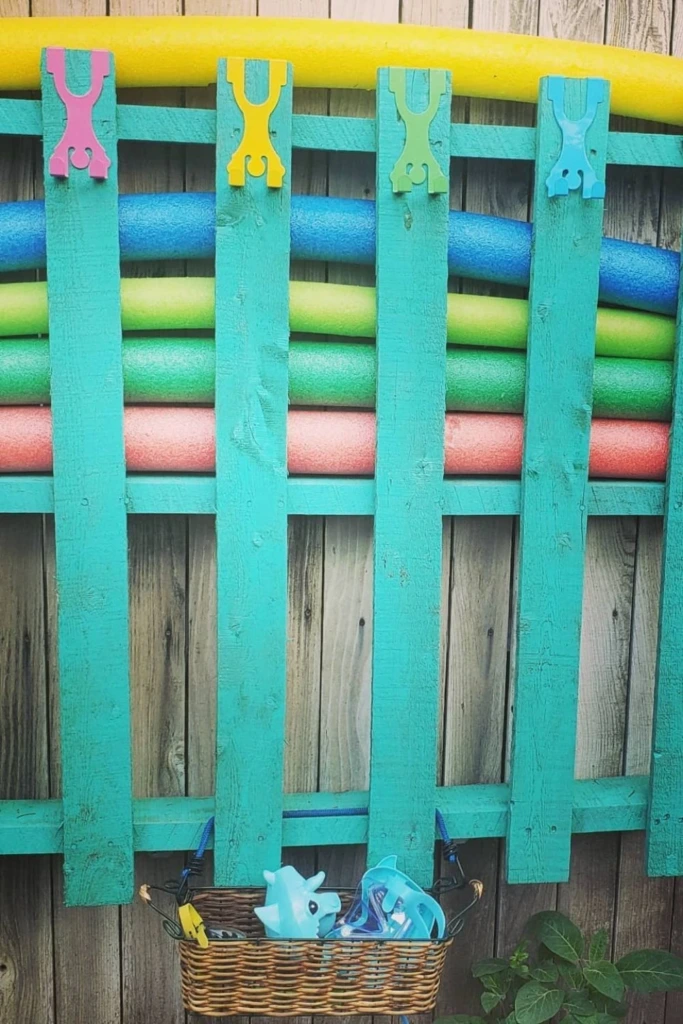
A colorful noodle rack makes pool cleanup more appealing while keeping long foam noodles organized. These lightweight accessories are awkward to stack on the ground, but a rack with vertical openings or wide compartments can hold them neatly in one place.
Choose a rack with openings large enough for your noodles without squeezing or deforming the foam. A freestanding design works well near a fence, while a wall-mounted version can save space in a narrow pool area.
Bright colors can help distinguish different types of equipment or make the storage station easier for children to recognize. If you prefer a coordinated outdoor look, choose colors that complement your pool furniture and garden accessories.
Use materials that withstand sun and moisture, and secure the rack so it cannot topple when noodles are removed. After swimming, let the noodles drain and dry before returning them to storage. Keep the rack away from narrow paths and avoid placing it where loose noodles could roll into the pool or onto wet steps.
20. Woven Float Bin
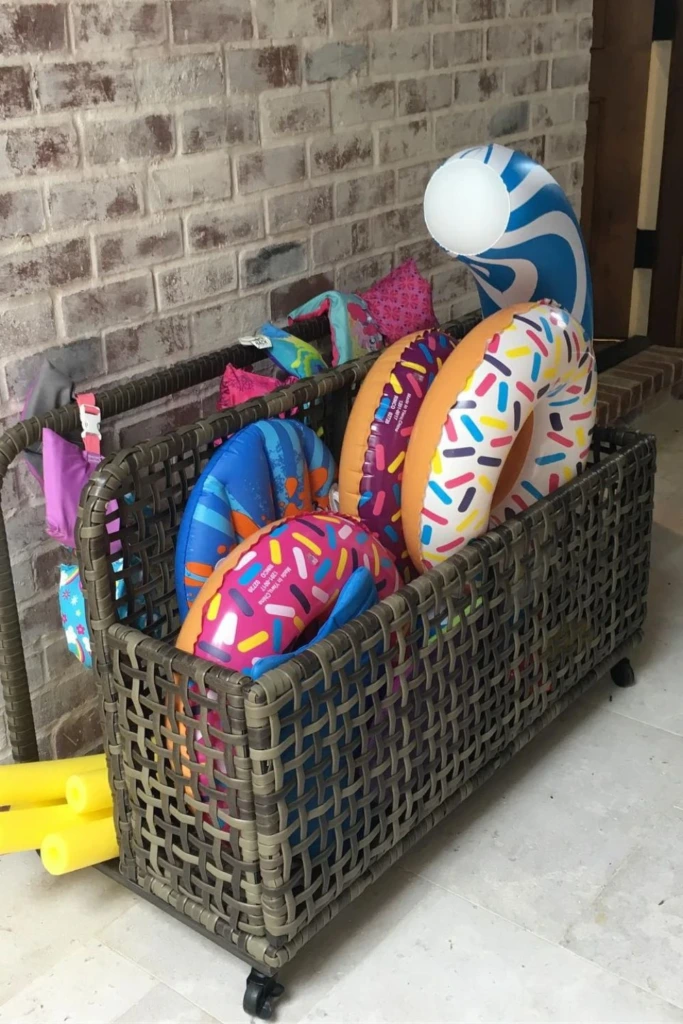
A woven float bin brings a softer, decorative look to pool storage. It works well on a covered patio or beside outdoor seating, where it can hold lightweight accessories such as folded pool towels, small toys, and compact inflatables.
Natural woven materials can look attractive but may deteriorate when exposed to persistent moisture, direct sunlight, or frequent splashing. For an uncovered pool deck, consider a synthetic woven basket designed for outdoor use. It offers a similar appearance while generally being easier to clean and maintain.
Choose a wide opening so larger accessories can be removed without snagging. A removable liner can help contain small items, while a waterproof tray underneath may protect the patio from occasional drips.
Keep damp equipment out until it has dried, and clean the bin regularly to remove dust and debris. If you prefer natural wicker or rattan, place it in a sheltered location and bring it indoors during prolonged wet weather.
21. Double Pallet Wall
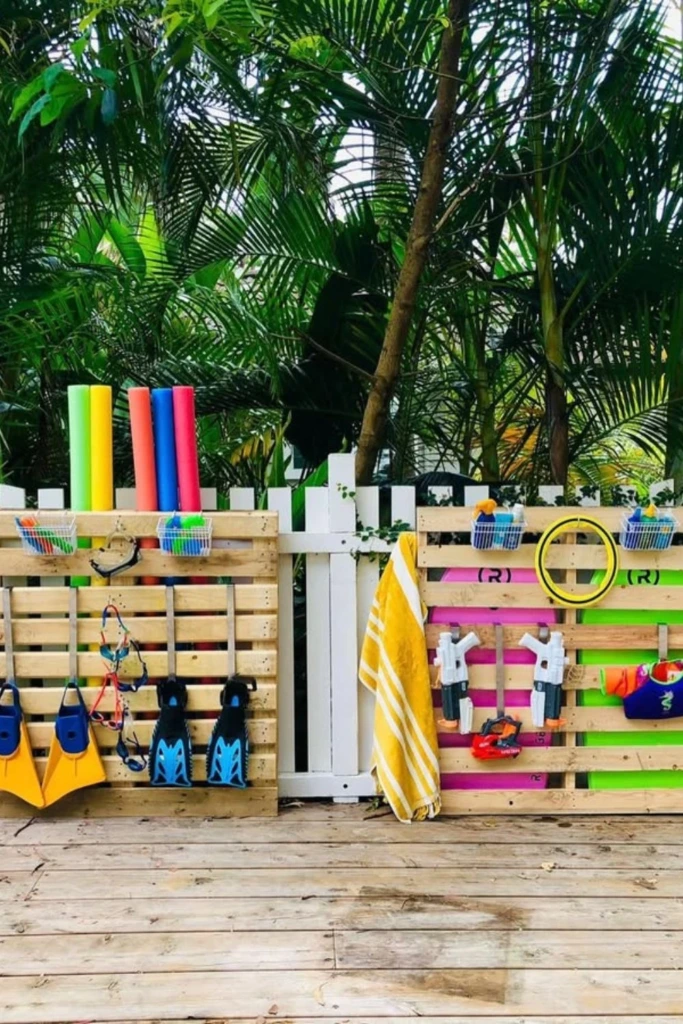
A double pallet wall can transform an unused fence or sturdy outdoor wall into a vertical storage feature. By arranging two suitable pallets to create separate sections, you can make dedicated spaces for towels, small baskets, lightweight accessories, and selected pool tools.
Inspect both pallets carefully before repurposing them. Avoid timber with unknown chemical contamination, visible mold, severe cracking, or unstable boards. Sand rough surfaces, remove exposed nails, and apply an appropriate outdoor finish when necessary.
Secure the pallets to a sound supporting structure using hardware suited to the wall material and the expected load. Do not rely on the pallets' weight alone to keep them upright, particularly in windy conditions.
Add weather-resistant hooks or small baskets to create individual storage zones. Towels can hang from suitable rails, while lightweight toys can go into open containers. Keep heavier objects low and avoid attaching items that could swing into walkways.
A pallet wall should not compromise the fence's stability or obstruct access to pool equipment. If you are renting or modifying a shared outdoor area, confirm that the installation is permitted before making permanent changes.
22. Under-Stairs Storage
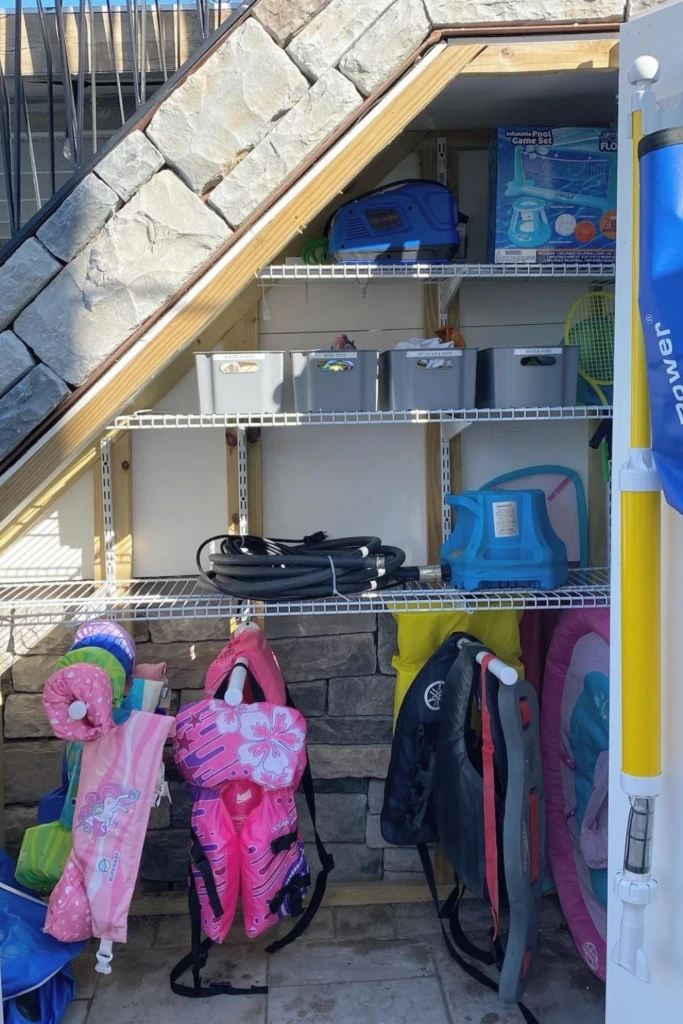
The area beneath outdoor stairs is often overlooked, yet it can provide useful storage for pool accessories when designed carefully. A fitted cabinet, weather-resistant storage boxes, or open shelving can turn this awkward space into an organized zone without adding another structure to the yard.
Measure the available height, width, and depth before choosing storage. Sloping staircases create uneven clearance, so low-profile bins may fit better near the lower end, while taller items can be placed where there is more headroom.
If the space is exposed to rain, use outdoor-rated containers and check whether water drains toward the storage area. Good ventilation is particularly important if the enclosure is partly closed, since trapped humidity can damage towels, wood, and other materials.
Keep the stairs and their supporting structure accessible for inspection and maintenance. Storage must not block the route, reduce safe headroom, or interfere with handrails and supports. Avoid leaving loose objects where they could slide out into the walking area.
For a neat finish, use matching containers and clear labels so everything can be returned to its proper place. Store pool toys and dry accessories here, but keep chemicals and other hazardous materials in a separate, appropriately secure location.
Final Thoughts
A well-organized pool area makes swimming more enjoyable and reduces the time spent searching for towels, gathering toys, and clearing clutter. Storage benches, mesh bins, towel racks, deck boxes, cabinets, and compact sheds each solve different problems, so the best arrangement depends on your available space and the equipment you use most often.
Start with a few practical changes, such as creating a dedicated towel station and separating wet equipment from clean supplies. Add vertical storage or a portable cart if you need more capacity, and choose materials that can handle your local weather. With a little planning and a consistent cleanup routine, your poolside space can remain tidy, functional, and ready for the next swim.