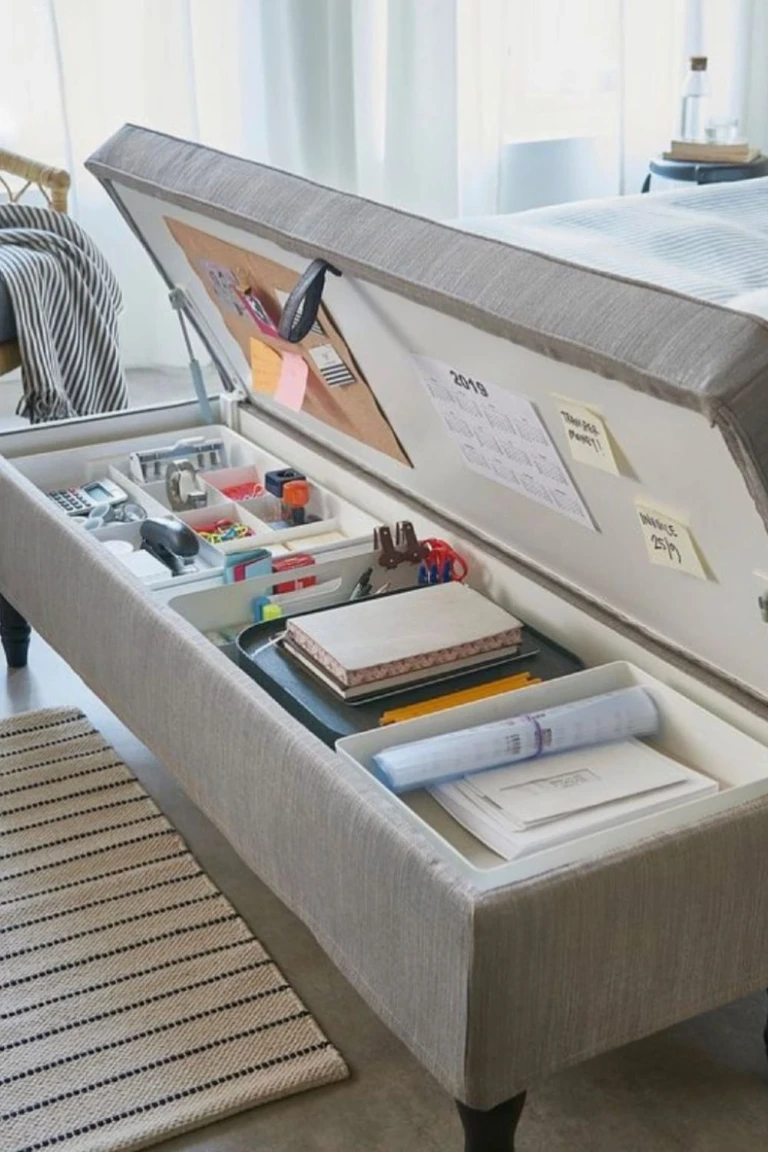
16 Window Seat Storage Ideas for 2026
A window seat can do much more than provide a comfortable place to read, relax, or enjoy the view. With thoughtful planning, it can also become a practical storage solution for books, blankets, seasonal accessories, and everyday household items. Whether you have a small bedroom window, a spacious bay window, or an unused landing, the right design can help you make better use of every inch.
These window seat storage ideas combine attractive seating with clever cabinetry, drawers, shelving, and display spaces. From simple DIY bases to custom-built library benches, there are options for different room sizes, budgets, and decorating styles.
How Can You Maximize Space with Built-In Window Seat Storage?
Built-in window seats make efficient use of areas that might otherwise remain empty, especially beneath wide windows, inside bay windows, or along unused walls. The key is to choose a storage arrangement that suits what you need to keep nearby.
Drawers are useful for items that benefit from being concealed, such as spare bedding, toys, and seasonal clothing. Lift-up seats provide a roomy compartment for bulky belongings, while open cubbies make frequently used items easier to reach. Shelving on either side of the window can provide additional space for books, plants, and decorative objects.
Before choosing a design, measure the available width, depth, and height carefully. Check the position of window handles, curtains, electrical outlets, heating equipment, and nearby walkways. A comfortable seat should have enough depth for relaxing without making the room feel cramped.
You can also improve functionality by adding a supportive cushion, washable upholstery, soft-close drawers, and dividers inside storage compartments. Matching the seat's finish to existing cabinetry helps it look like a natural part of the room rather than an added piece of furniture.
1. Framed Drawer Nook
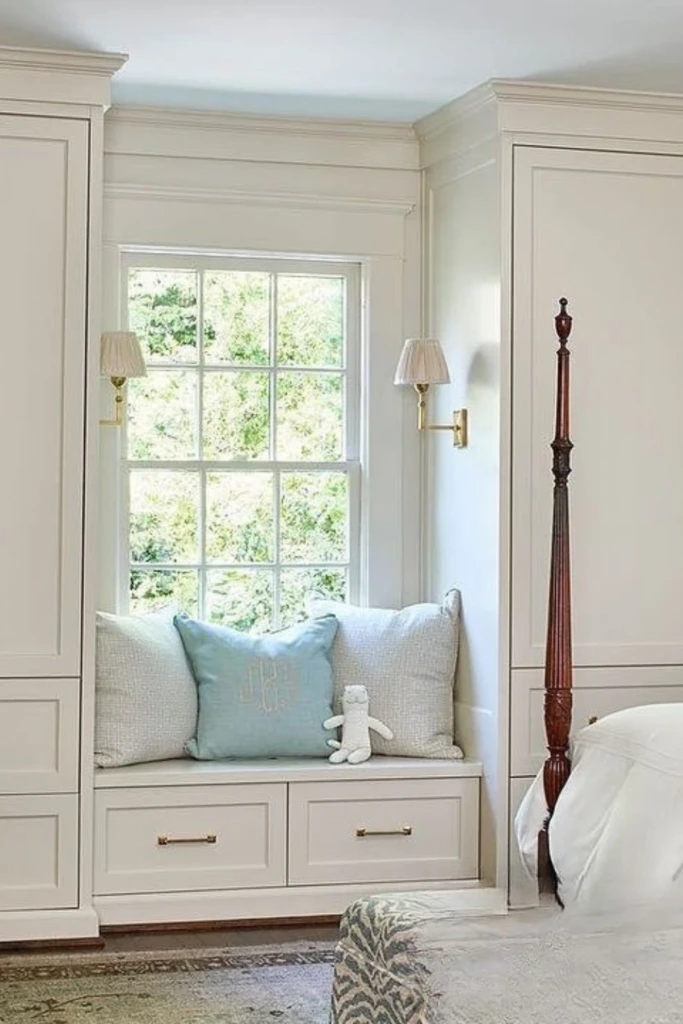
A framed drawer nook creates a neat, furniture-like appearance beneath a window. The seat sits above a structured base, with drawers fitted into the lower section to keep everyday belongings out of sight.
This design works particularly well in bedrooms, living rooms, and home offices where visual clutter can quickly accumulate. Store extra pillowcases, folded throws, children's books, or small accessories in separate drawers so each category has its own place.
Choose drawer fronts that complement the surrounding walls or woodwork. Simple recessed panels create a traditional look, while flat fronts give the seat a contemporary feel. Hardware can be subtle or decorative, depending on the room's style.
For a polished result, ensure the drawer openings are easy to access and that the frame can support the combined weight of the seat, cushions, and occupants. Properly fitted drawer runners also make daily use smoother and quieter.
2. Library Corner Bench
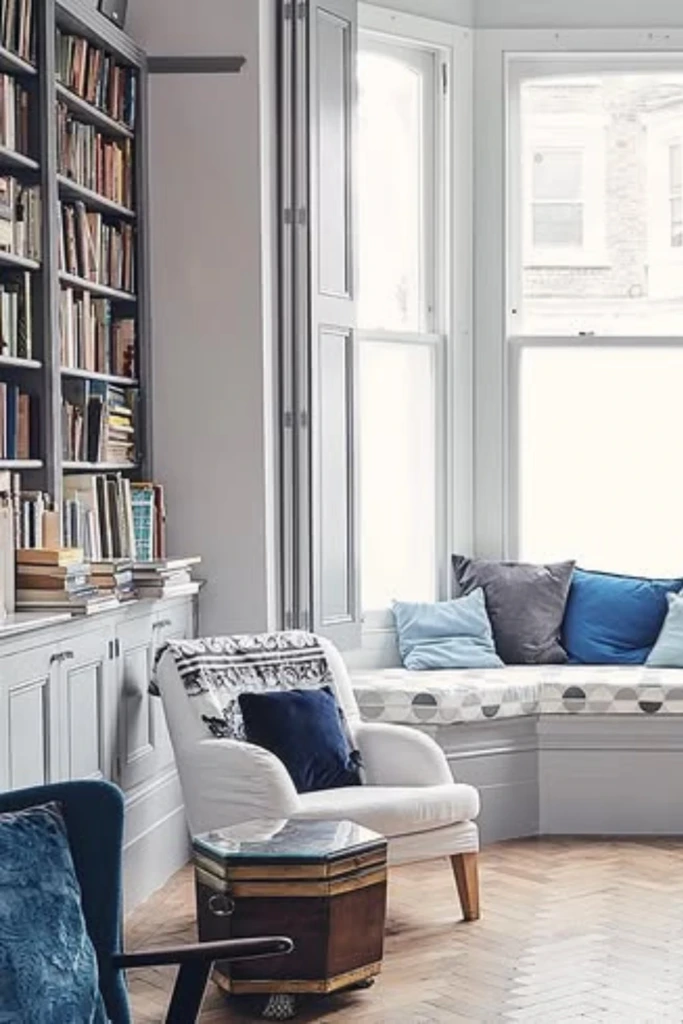
A library corner bench combines a cozy reading spot with storage for books and other reading essentials. It is especially effective in a home library, study, or living room where bookshelves already form part of the decor.
Install shelving along one or both sides of the window, then extend the arrangement beneath the seat if the layout allows. The bench can contain drawers or a concealed compartment for blankets, magazines, and less frequently used materials.
Keep favorite books within easy reach and arrange them by subject, author, size, or color. A reading light, supportive cushion, and small side table can make the corner more inviting without requiring much additional floor space.
If you are planning a full library wall, consider how the shelves will look around the window. Consistent shelf depths and aligned edges create a balanced appearance, while a few open display areas prevent the design from feeling too crowded.
3. Glass Cabinet Bench
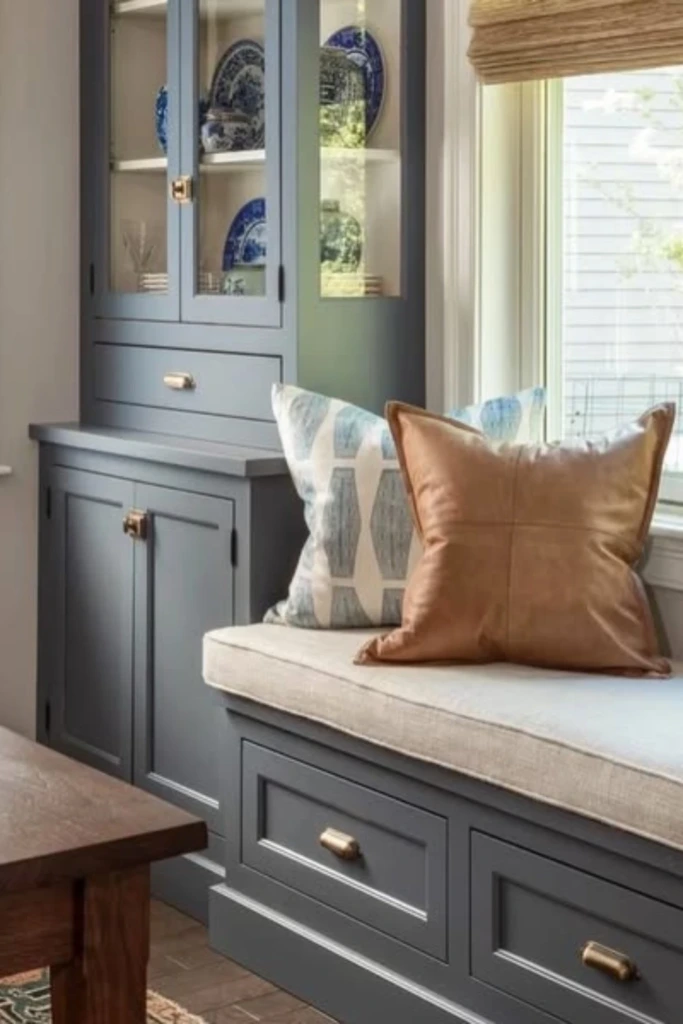
A glass cabinet bench offers a decorative alternative to completely enclosed storage. Glass-fronted compartments beneath or beside the seat let you display books, ceramics, collectibles, and other carefully selected objects.
This arrangement works well in rooms where storage also serves as part of the interior design. Transparent doors make displayed items visible while providing a degree of protection from dust. You can use baskets or fabric boxes inside selected cabinets to conceal smaller belongings.
Consider tempered glass for appropriate cabinet applications and choose doors that open without interfering with the seating area. If the bench is used by children, avoid placing fragile or heavy objects in easily accessible compartments.
For a coordinated finish, combine glass doors with wood framing or painted cabinetry. Warm lighting nearby can highlight the display, but keep the arrangement restrained so the window seat remains a comfortable place to sit rather than simply a showcase.
4. Stair Landing Storage
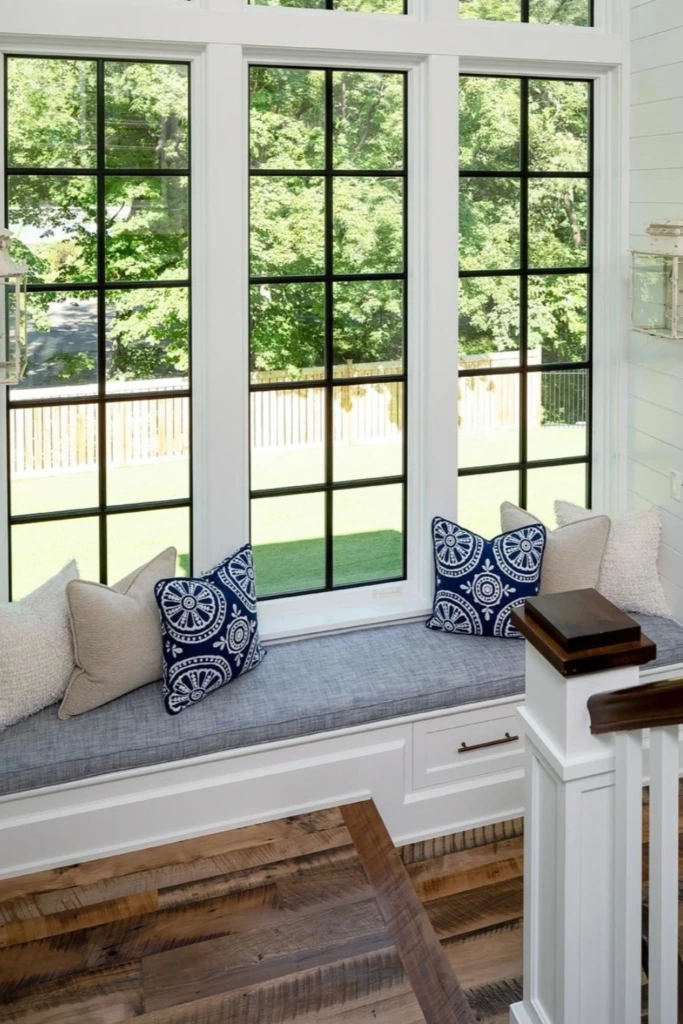
A window on a stair landing can create an appealing architectural feature, but the surrounding space is often difficult to furnish. A compact window seat with integrated storage can turn this overlooked area into a useful resting spot.
Depending on the layout, the base may accommodate drawers for hats, gloves, scarves, or other accessories. A hinged compartment can also hold spare cushions and lightweight blankets. If the landing is wide enough, a narrow bench with a small cushion may be all you need.
Safety should guide the design. Keep stairs, handrails, and circulation paths clear, and avoid adding furniture that makes the landing difficult to navigate. The seat should not create an obstacle near the top or bottom of the stairs.
Use durable finishes that can withstand everyday contact, and consider a fitted cushion that stays securely in place. A small wall light or nearby sconce can make the corner more inviting without taking up valuable floor space.
5. Extended Drawer Bench
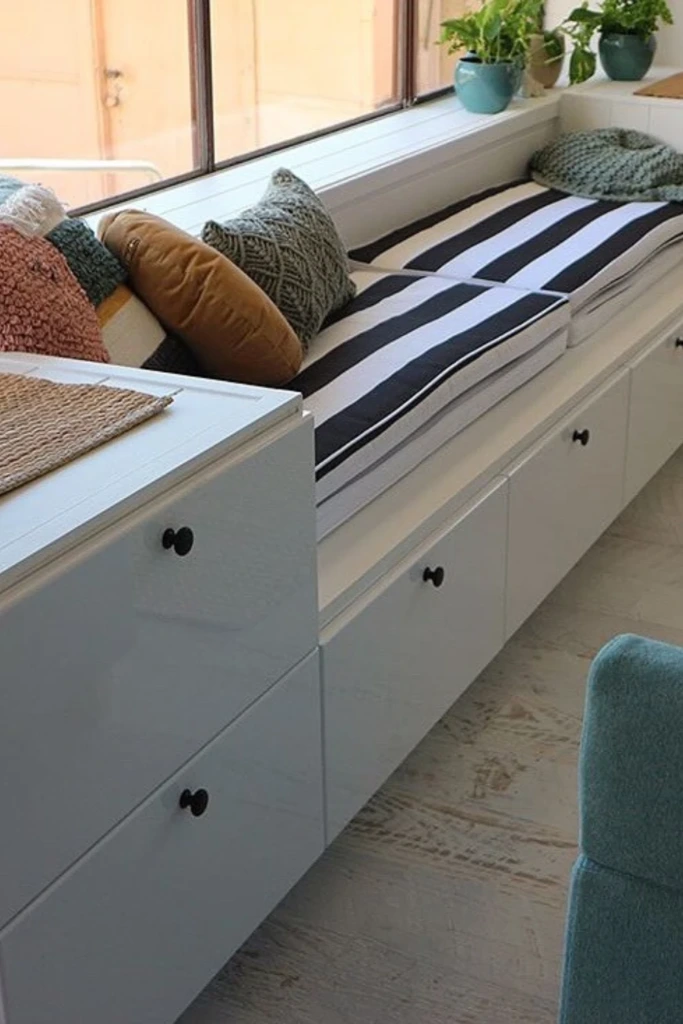
An extended drawer bench stretches across a longer section of wall beneath a window, creating a generous seating area with substantial storage capacity. It is a practical choice for family rooms, large bedrooms, and wide window openings.
Multiple drawers allow you to organize different categories of belongings rather than placing everything into one large compartment. For example, one drawer could hold spare bedding, another could store toys, and a third could contain books or hobby supplies.
A continuous cushion gives the bench a unified appearance and provides enough room for more than one person to sit comfortably. Select a fabric that suits the room and is easy to clean, especially if the bench will be used every day.
For long installations, make sure the base has adequate internal support and that the drawers operate independently without rubbing against neighboring fronts. If the seat spans several cabinets, repeating the same drawer proportions can help the entire unit look balanced.
6. Open Log Storage
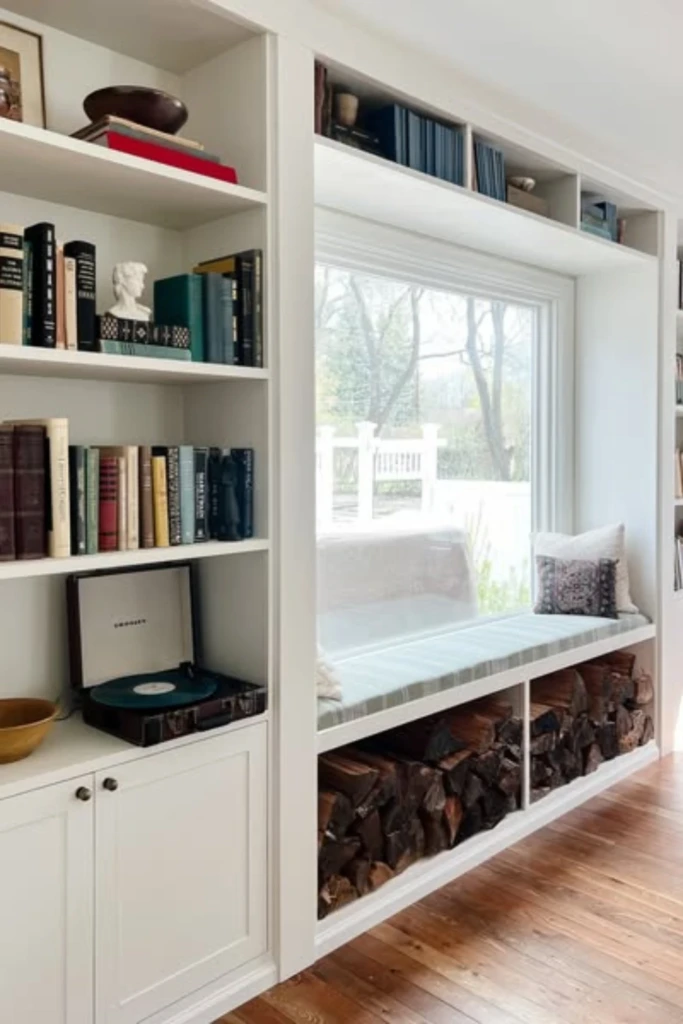
Open log storage beneath a window seat is a practical feature for homes with a wood-burning fireplace or stove. A recessed compartment keeps firewood organized and accessible while adding a rustic detail to the room.
The open section can sit beneath one end of the bench or occupy a dedicated bay within the base. Its size should reflect the amount of wood you typically keep indoors, rather than taking up space needed for more useful household storage.
Choose a location that can accommodate the weight and occasional debris associated with firewood. Use a durable, easy-to-clean surface, and allow sufficient space for handling logs without damaging the surrounding cabinetry.
Firewood should be properly seasoned and stored in accordance with your appliance manufacturer's guidance. Keep it away from flames, hot surfaces, and required clearances around heating equipment. Avoid using the compartment for wood if it interferes with safe ventilation or the operation of nearby appliances.
Even if you do not burn wood, a similar open cubby can hold woven baskets, magazines, or folded blankets, giving you a comparable look with greater flexibility.
7. Wood-Tone Drawers
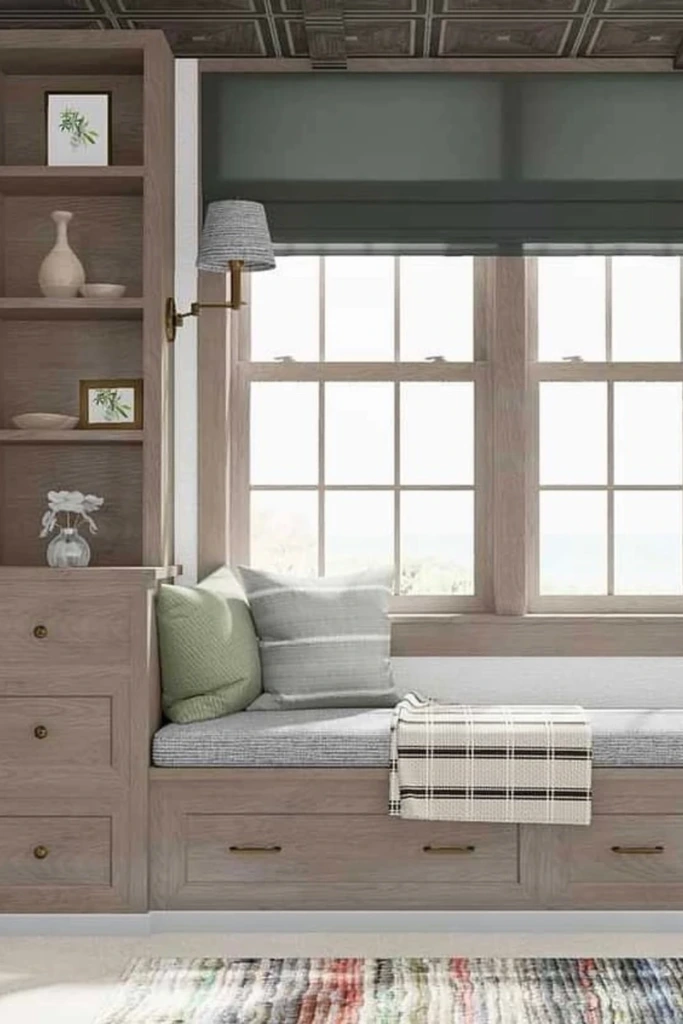
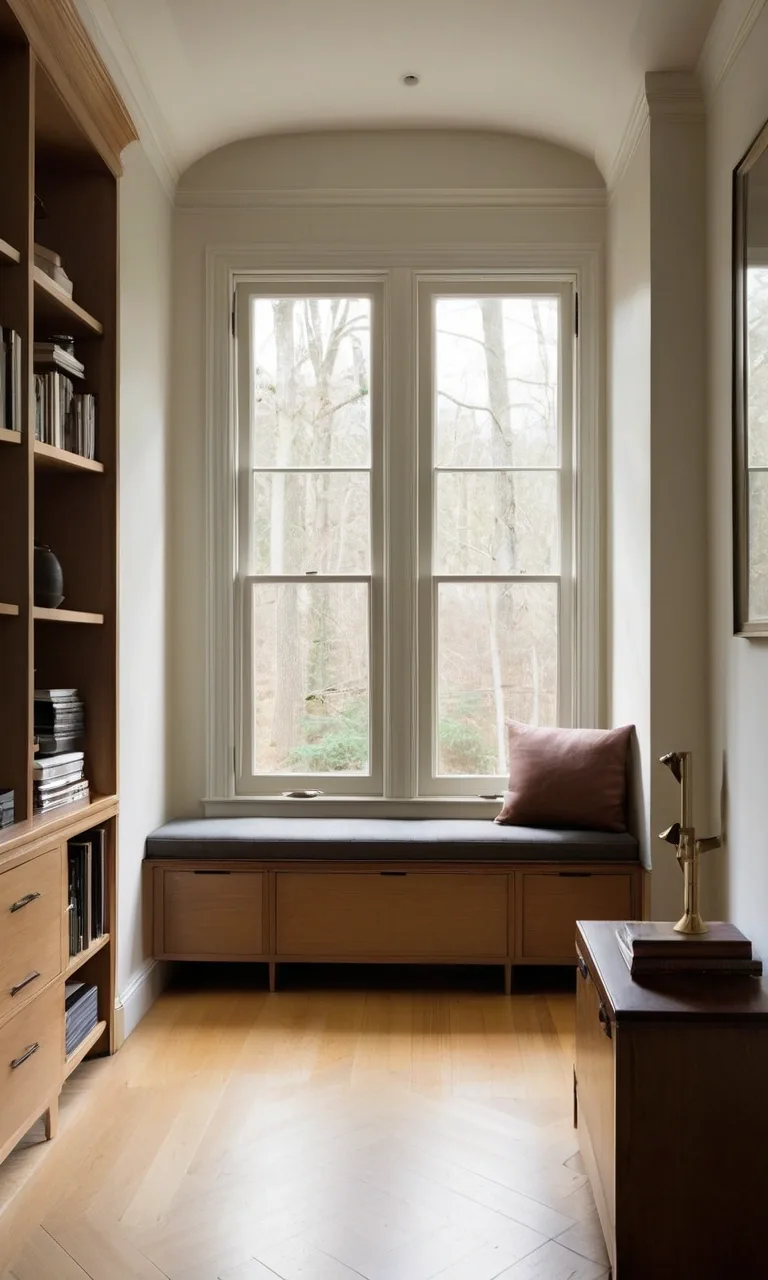
Wood-tone drawers bring warmth and natural texture to a window seat. Oak, walnut, ash, and other wood finishes can complement flooring, furniture, or exposed architectural details, helping the bench feel integrated with the room.
The storage arrangement can be as simple as two wide drawers or as detailed as several smaller compartments. Wide drawers suit folded textiles and bulky belongings, while smaller drawers are useful for accessories and miscellaneous household items.
You can choose solid wood, veneered panels, or wood-look materials according to your budget and maintenance preferences. A clear finish emphasizes the grain, while a stained finish can deepen the color or coordinate different wood elements.
For a modern interior, pair natural wood with plain walls and understated hardware. In a traditional room, framed drawer fronts and classic handles may be more appropriate.
Pay attention to how the wood tone interacts with natural light. A darker finish can create contrast beneath a bright window, while a lighter finish may help a small room feel more open.
8. Minimal Panel Storage
Minimal panel storage is ideal for interiors where clean lines and a calm appearance take priority. The seat features smooth cabinet fronts, concealed handles, and a simple silhouette that allows the window and surrounding architecture to remain the focus.
Behind the panels, you can install cupboards, pull-out drawers, or a combination of both. This makes the design adaptable to different storage needs without introducing visual clutter.
A painted finish that matches the walls can help the bench blend into the background. Alternatively, a contrasting neutral shade can define the seating area while maintaining a restrained aesthetic.
Choose durable cabinet materials and finishes that can withstand regular use. Push-to-open hardware may be suitable for a handle-free appearance, although it should be selected with consideration for how frequently the compartments will be used.
The cushion can introduce a little softness through texture or color without overwhelming the simple design. Linen-look fabrics, subtle patterns, and neutral upholstery are all suitable options.
9. Wall-to-Wall Library
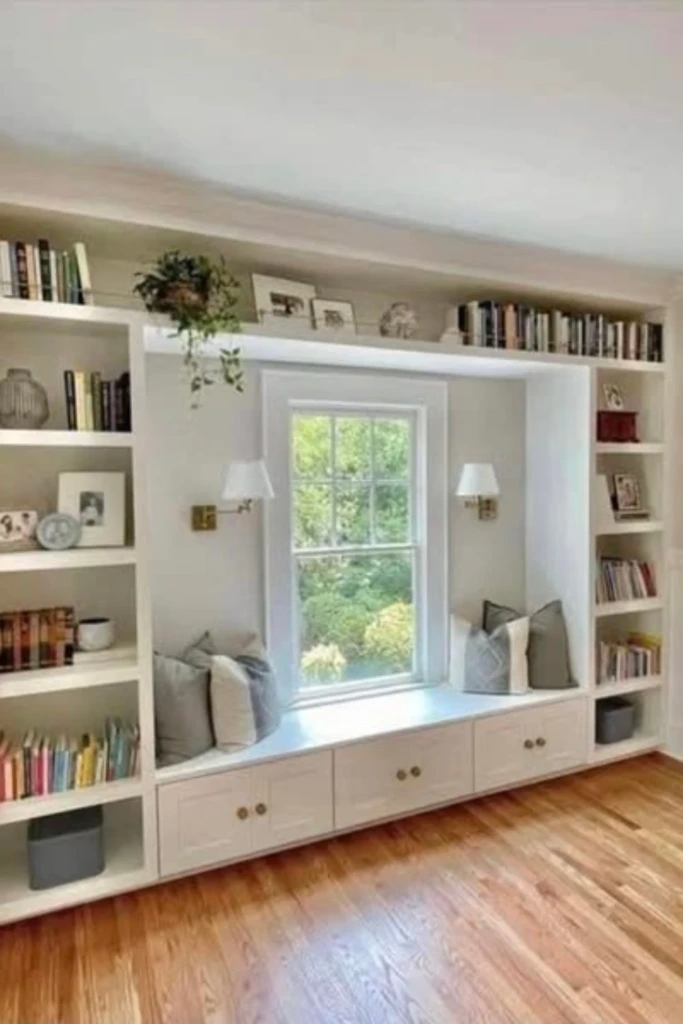
A wall-to-wall library transforms a window seat into the centerpiece of a reading room. Shelves extend across the available wall, with the window and bench incorporated into the overall arrangement.
The shelving can accommodate books, framed photographs, plants, and selected decorative objects. Beneath the seat, concealed storage provides room for belongings that do not need to remain on display.
For an organized appearance, decide how much space books will require before finalizing the shelf layout. Adjustable shelves are useful if your collection includes different book heights or changes frequently.
The bench should be positioned so that sitting down does not block access to nearby cupboards or make lower shelves difficult to reach. If the wall is particularly tall, secure shelving appropriately and keep heavier objects on lower levels.
Lighting also makes a difference. A reading lamp or well-positioned wall light can illuminate the seat, while daylight from the window brightens the shelves during the day.
To prevent the wall from looking overcrowded, leave some open space between decorative items and avoid filling every shelf to capacity. A mixture of books, useful objects, and breathing room creates a more comfortable environment.
10. Balanced Cabinet Wall
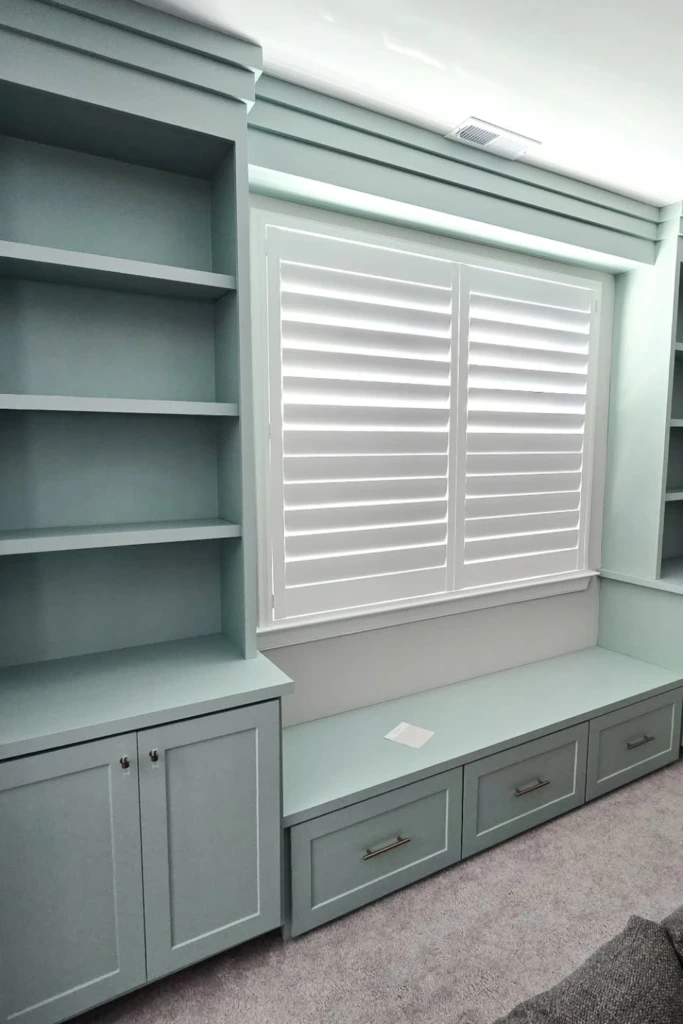
A balanced cabinet wall places storage units around a central window seat, producing a symmetrical and orderly composition. Matching cabinets on either side can make the window feel like a deliberate architectural feature.
The side units might include closed cupboards, open bookshelves, or a combination of both. Drawers beneath the seat add another layer of storage without increasing the room's footprint.
This design suits formal living rooms, bedrooms, studies, and spaces where built-in cabinetry is already present. Repeating the same colors, panel details, and hardware helps the arrangement feel cohesive.
However, symmetry should not come at the expense of practicality. If one side of the window contains a door, radiator, or other obstruction, slightly different cabinet dimensions may produce a better result.
Before installation, check that doors and drawers can open fully and that the seat receives sufficient natural light. A central cushion in a complementary fabric can soften the strong lines of the cabinetry.
11. DIY Frame Base
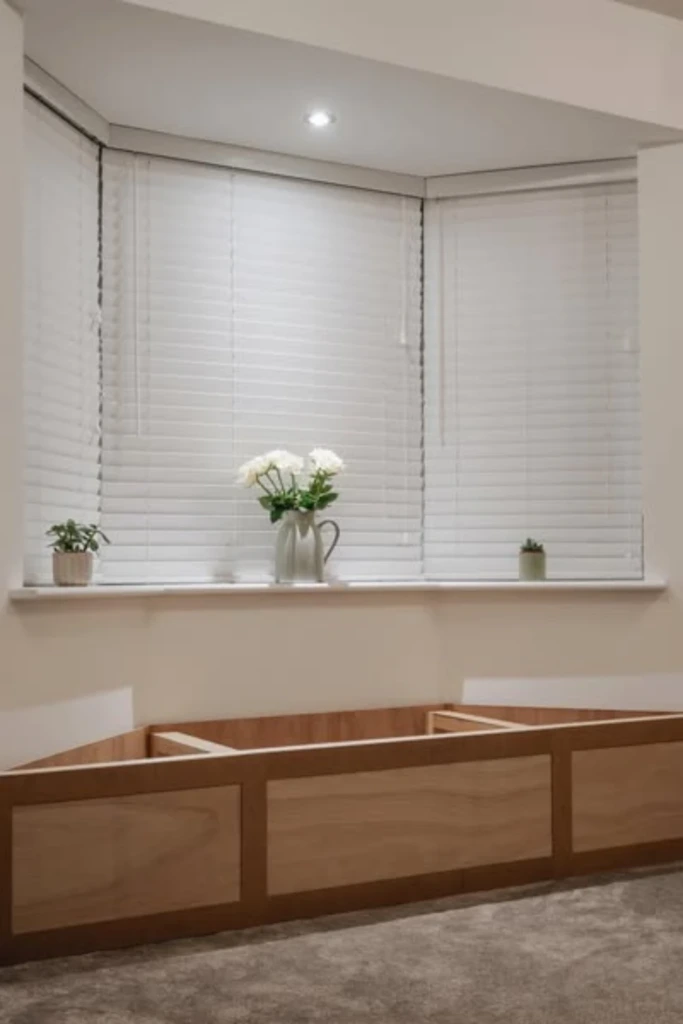
A DIY frame base is a useful starting point if you want to build a window seat without commissioning a complete custom cabinet system. The basic structure supports the seating surface and creates an enclosed area underneath for storage.
Start by measuring the window and deciding on a comfortable seat height and depth. Check the wall, floor, and any nearby fixtures before purchasing materials. A simple timber frame or appropriately constructed panel base can then be fitted to the available space.
The storage can be kept straightforward with open compartments and removable baskets. If you have suitable woodworking experience, you might add drawers or a hinged top, provided the design remains stable and easy to operate.
Use materials appropriate for the expected load, and secure the structure correctly. Avoid relying on thin decorative panels to carry the weight of the seat. If the installation is attached to a wall, identify the appropriate fixing points and account for the wall construction.
Sand exposed edges, finish the surfaces, and check for protruding screws or rough areas before adding a cushion. If you are unfamiliar with structural joinery, heavy loads, or concealed services, consult a qualified professional rather than guessing.
A simple DIY base can be customized with paint, trim, baskets, or upholstery to suit nearly any decorating style.
12. Integrated Vent Bench
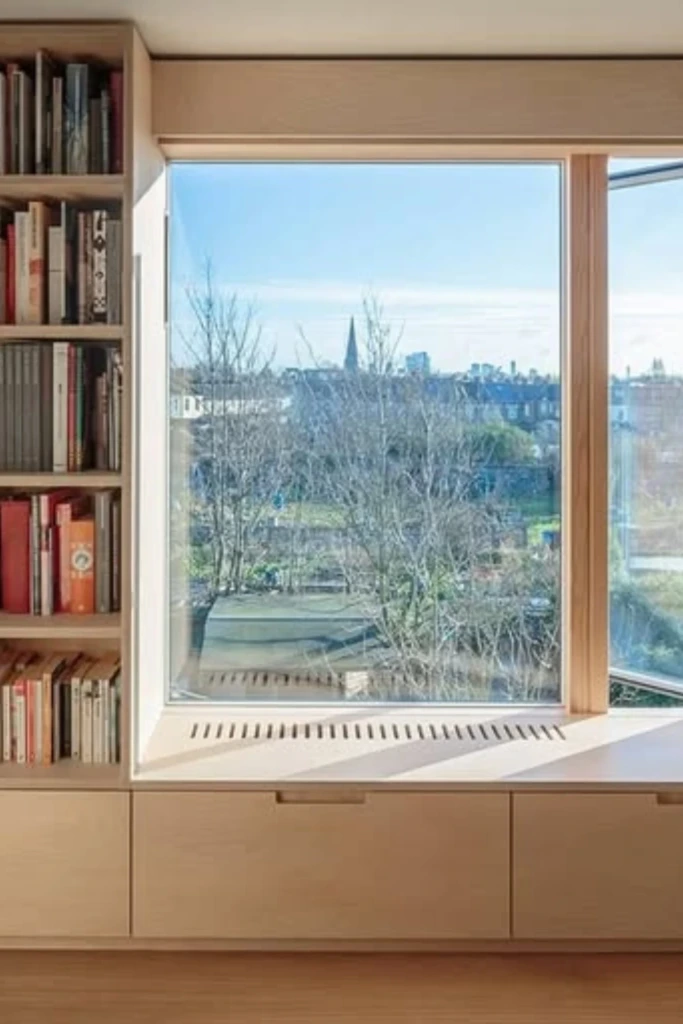
An integrated vent bench incorporates a window seat into a wall that also needs heating or ventilation access. It can create a seamless built-in appearance, but the design must accommodate the equipment rather than simply covering it.
First, identify whether the opening serves a heating system, return-air duct, supply vent, or another purpose. These systems have different requirements, so the seat should be planned around the manufacturer's instructions and applicable building guidance.
Where appropriate, a purpose-designed grille or vent opening may preserve airflow while allowing the bench to fit into the surrounding cabinetry. The required opening area, clearance, and access for maintenance must be determined for the specific system.
Do not assume that a decorative grille alone makes an installation safe. A bench can obstruct air circulation even when a small opening remains visible. It may also trap heat or interfere with a heating appliance's operation.
If the design involves a radiator, furnace component, or ductwork, have the arrangement assessed before construction. When the necessary clearances cannot be maintained, repositioning the bench or choosing a freestanding seat may be the better solution.
13. Cushion Drawer Combo
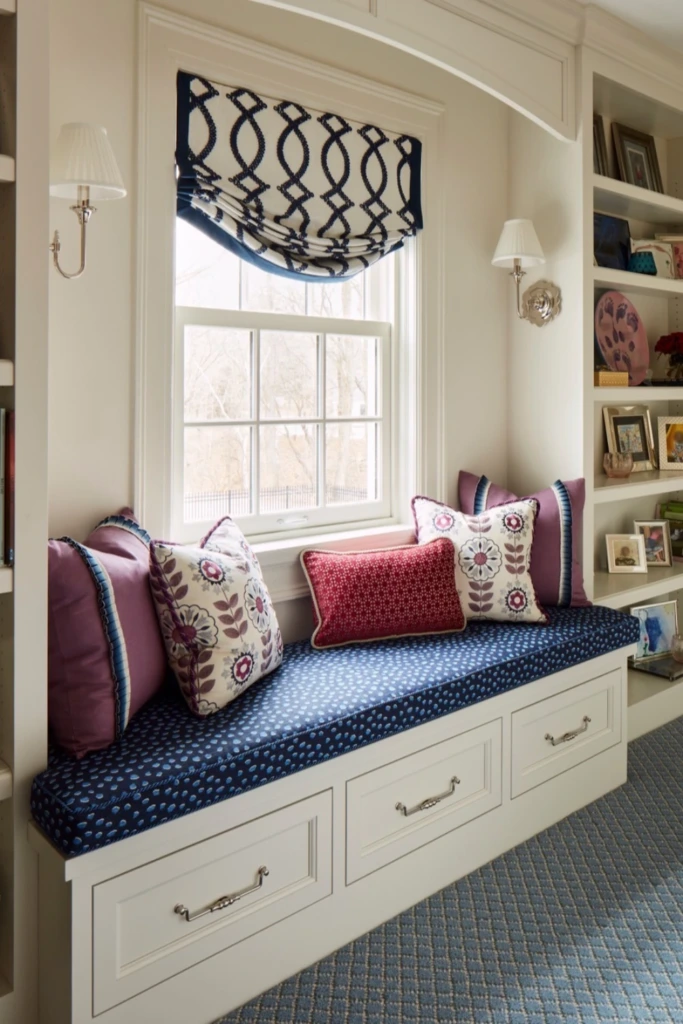
A cushion drawer combo pairs comfortable upholstered seating with practical concealed storage. It is one of the most versatile arrangements for a window seat because the soft upper surface makes the area inviting while the drawers keep belongings organized.
Choose the drawer configuration according to what you intend to store. Deep drawers work well for blankets and larger textiles, while shallower compartments are suitable for books, stationery, or small accessories.
A fitted cushion helps create a finished appearance and reduces the chance of the seating surface looking unfinished. Measure the bench carefully so the cushion fits without blocking drawer fronts or making handles difficult to reach.
For busy households, removable covers are particularly useful. Washable fabric, durable upholstery, and a stain-resistant finish can make the seat easier to maintain.
You can coordinate the cushion with curtains or bedding, or use a contrasting color to make the window seat stand out. Add a few pillows for comfort, but leave enough seating space for practical everyday use.
14. Classic Panel Seat
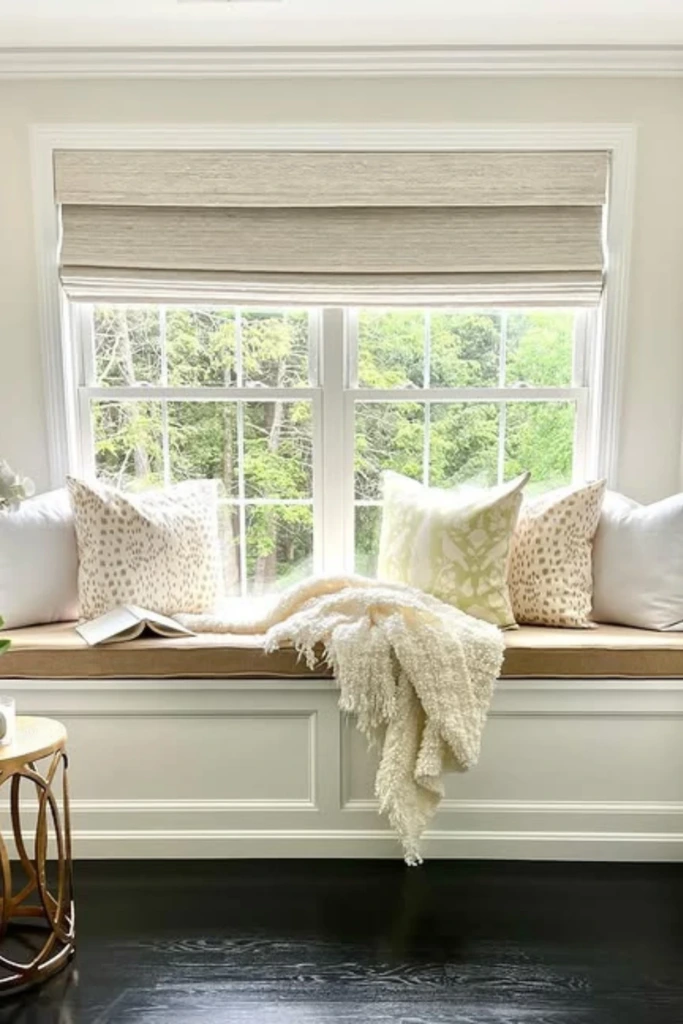
A classic panel seat features framed cabinet fronts, traditional trim, and a timeless shape that suits both older homes and contemporary interiors with traditional details.
The base can include cupboards, drawers, or a combination of enclosed compartments. Framed panels provide visual interest without requiring elaborate decoration, while traditional handles can reinforce the style.
Painted white, cream, or muted gray finishes work well in many rooms. If you prefer a richer look, a stained wood finish can emphasize the joinery and coordinate with other wooden furniture.
This style is especially effective beneath sash windows, bay windows, or windows surrounded by decorative molding. Matching the trim details to nearby architectural features helps the seat appear original to the room.
Inside the cabinets, baskets or dividers can keep small belongings organized. A tailored cushion with a subtle pattern or textured fabric complements the traditional design while making the bench comfortable enough for reading or relaxing.
15. Bay Wrap Storage
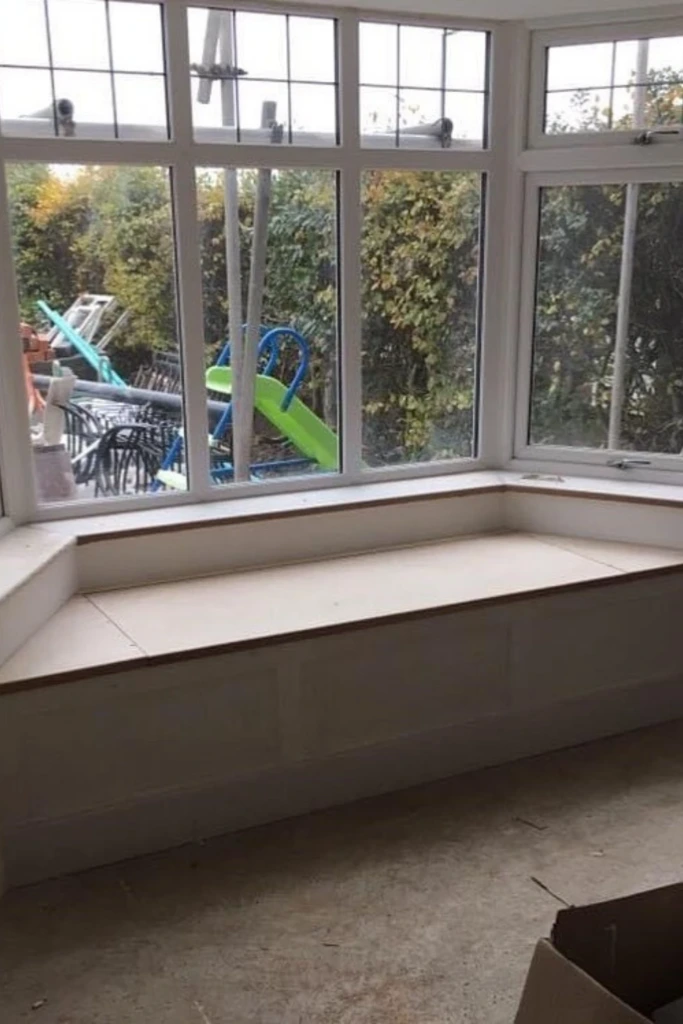
Bay wrap storage follows the shape of a bay window, turning the entire recess into a continuous seating and storage area. Rather than leaving the corners unused, the design makes the most of the available width.
Depending on the bay's shape, the bench may wrap around two or three sides of the window. Storage can be arranged beneath each section, with separate drawers or hinged compartments fitted to suit the geometry.
This design is useful in living rooms, breakfast areas, and bedrooms where a bay window creates a natural focal point. The extended seat provides room for several people, while the lower cabinets keep spare cushions, books, games, or linens close at hand.
Accurate measurements are especially important because angled walls and window frames can complicate the construction. Check the depth at multiple points and account for curtains, blinds, and any projecting handles.
A continuous cushion can unify the different sections, although separate cushions may be easier to remove and clean. Use corner details and cabinet fronts that follow the bay's lines for a more cohesive result.
Avoid making the bench so deep that it restricts movement around the room. The goal is to use the bay efficiently while preserving a comfortable seating area.
16. Lit Display Nook
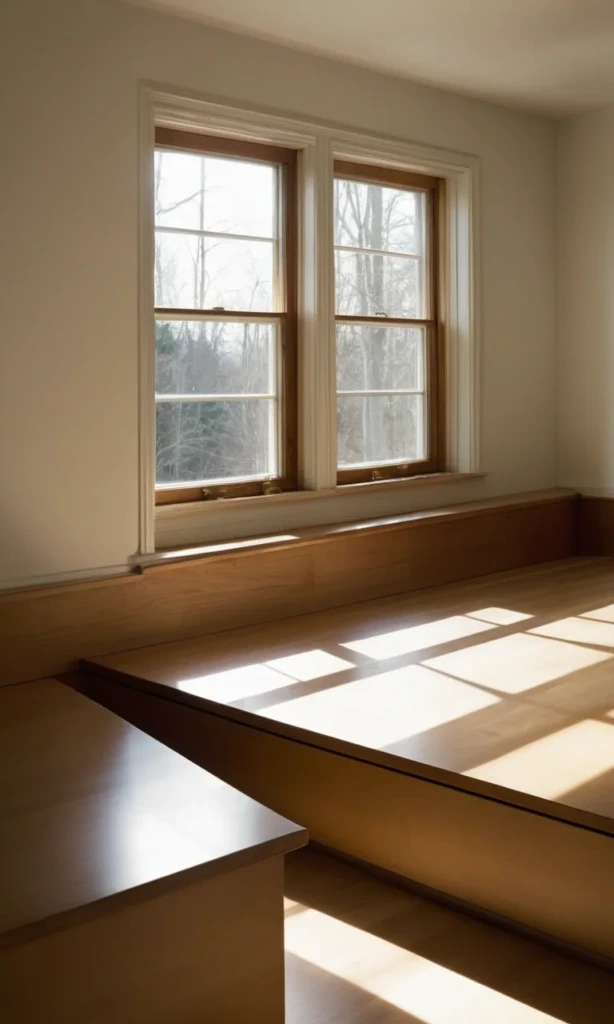
A lit display nook combines a window seat with illuminated shelves or small display compartments. It adds atmosphere to the room and gives decorative objects a dedicated place without sacrificing the practical storage beneath the bench.
Install suitable lighting within nearby shelves or recessed display areas to highlight books, artwork, ceramics, or plants. Concealed LED fixtures can provide a subtle glow, while a small reading light can make the seat more functional after dark.
Use closed drawers below the seat for items that are less attractive to display. This contrast between open presentation areas and concealed storage helps maintain an organized appearance.
When planning the lighting, select fixtures rated for the intended location and follow the manufacturer's installation instructions. Keep electrical components accessible for maintenance, and manage cables so they do not interfere with drawers, moving seat panels, or stored belongings.
Avoid placing heat-sensitive objects directly against unsuitable light fixtures. If the window receives strong sunlight, consider how fading and temperature changes might affect books, fabrics, and collectibles.
For a balanced result, illuminate a few carefully selected objects rather than every shelf. The light should make the corner welcoming without creating glare or competing with the natural light from the window.
FAQs
Window seat storage can be adapted to many rooms, but the most suitable design depends on the space available, the items you want to store, and any features that need to remain accessible. The following answers address two common questions to consider before building or buying a window seat.
What should you store in a window seat?
A window seat can hold many everyday household items, provided the compartment is suitable for their size, weight, and storage conditions.
Good choices include:
Blankets and throws: Keep extra layers close at hand for relaxing on the sofa or reading beside the window.
Books and magazines: Store current reading materials in drawers or nearby shelves to keep them accessible.
Cushions and spare bedding: Use larger compartments for lightweight pillows, pillowcases, and folded sheets.
Children's toys: Store puzzles, soft toys, and other playthings in labeled bins or easy-to-open drawers.
Seasonal accessories: Hats, gloves, scarves, and similar items can be grouped into separate containers.
Craft supplies: Keep yarn, stationery, fabric, and small projects organized in divided compartments.
Board games: Use suitably sized storage spaces for boxed games and playing cards.
Pet accessories: Store lightweight toys, grooming supplies, or spare blankets if the compartment is clean and dry.
Before putting anything away, make sure it is clean and completely dry. Fabrics and paper products can be damaged by moisture, particularly near poorly sealed windows or exterior walls.
Avoid storing damp towels, wet clothing, or other items that may encourage mold. Heavy objects should only be placed in compartments designed to support their weight, and hazardous materials should be kept elsewhere.
The best storage plan gives frequently used belongings easy access while reserving deeper or less convenient compartments for items you need only occasionally.
Can you build one over a radiator?
Yes, a window seat can sometimes be designed around a radiator, but it must preserve the heating system's required airflow, heat distribution, and service access. Simply placing a solid wooden bench over a radiator can trap heat and reduce the amount of warmth that reaches the room.
The correct approach depends on the radiator type, its position, and the manufacturer's clearance recommendations. Some installations may allow a purpose-designed enclosure with suitable ventilation openings, while others may require the seat to remain separate.
Before construction, check the following:
Required clearances: Leave the space specified by the radiator manufacturer between the heating unit and surrounding materials.
Air circulation: Ensure the design does not prevent warm air from rising or circulating into the room.
Material suitability: Choose materials and finishes appropriate for the temperatures the surrounding surfaces may experience.
Maintenance access: Make sure the radiator's valves, connections, and other service points remain reachable.
Curtains and upholstery: Keep fabrics away from hot components where necessary and follow the manufacturer's safety guidance.
A qualified heating professional can help determine whether the proposed design is suitable, particularly if the radiator is part of a central heating system or sits beneath a large built-in enclosure.
If the required clearances or airflow cannot be maintained, place the window seat beside the radiator instead. You can still achieve a coordinated look with matching finishes and cushions without compromising the heating system.
Final Thoughts
Window seat storage offers a practical way to combine comfortable seating with useful organization. Whether you prefer a simple DIY base, traditional panel cabinetry, a full library wall, or storage that follows the shape of a bay window, the right design can make an overlooked area more functional.
Start by identifying what you need to store, measuring the available space, and considering any nearby windows, radiators, or ventilation openings. Then choose materials, compartments, and finishes that suit your home and daily routine. With thoughtful planning, a window seat can become a welcoming place to relax while helping keep the rest of your room tidy.