23 Outdoor Fairy Garden DIY Ideas for 2026
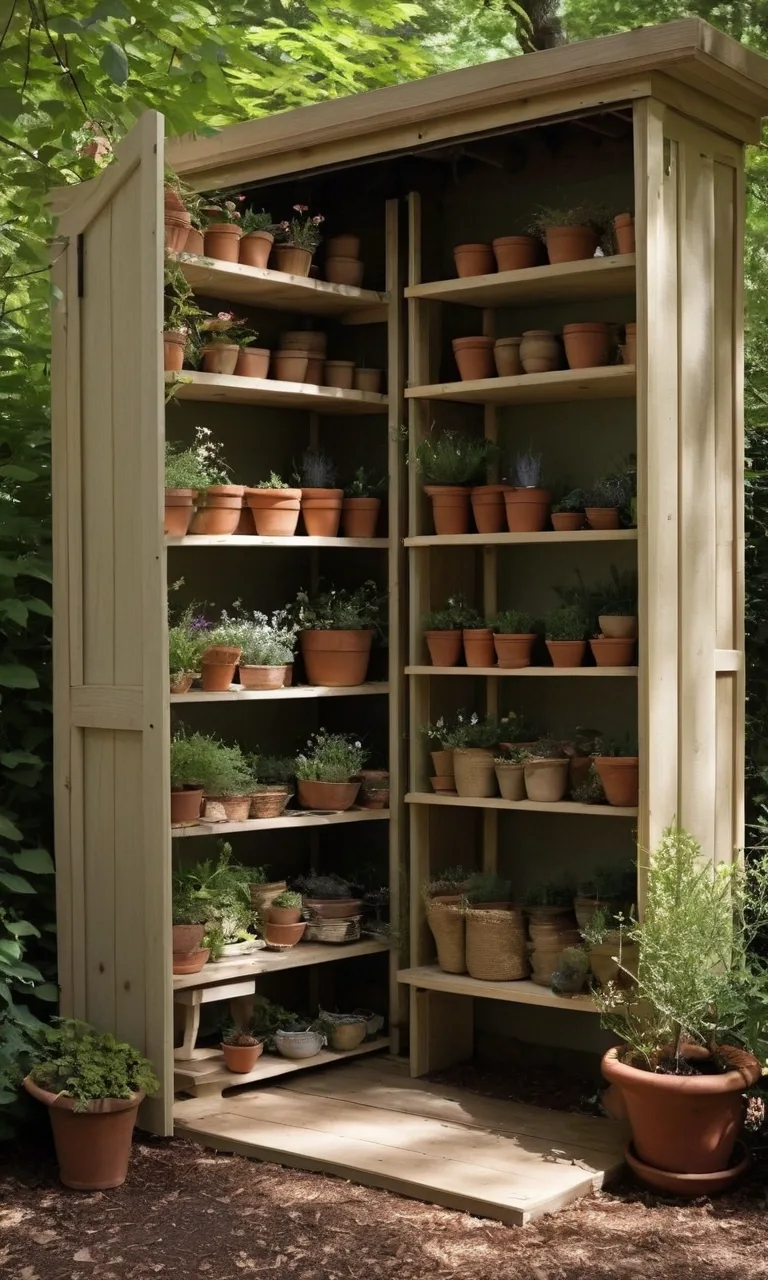
An outdoor fairy garden can turn an ordinary corner of your yard into a miniature world filled with personality, natural textures, and whimsical details. Whether you have a spacious backyard, a small patio, or just a sunny spot beside your favorite plants, you can create a charming display with a few simple materials.
The best part is that there is no single way to design a fairy garden. You can build a woodland hideaway, arrange a tiny cottage among flowers, or create an entire miniature village using containers, stones, twigs, and decorative accessories. These projects are easy to personalize, making them enjoyable for gardeners, craft lovers, and families alike.
1. Creative Fairy Garden

A creative fairy garden combines miniature architecture with living plants to create a small landscape that feels imaginative and inviting. Tiny houses, winding paths, miniature fences, and decorative mushrooms can give the arrangement a storybook appearance without requiring a large outdoor space.
Start with a suitable location and build your design around a few key elements. Moss, small succulents, pebbles, bark, and twigs provide natural textures, while colorful flowers and miniature accessories introduce visual interest. Recycled containers, old pots, and wooden pieces can also become useful building materials.
For a more convincing result, vary the heights of your decorations and leave open spaces between them. A narrow gravel path, a tiny bridge, or a small wooden doorway can become the focal point. Choose weather-resistant accessories and plants suited to your local climate so your miniature landscape remains attractive throughout the season.
2. Suitcase Village
Give an old suitcase a second life by turning it into a portable miniature village. A hard-sided vintage suitcase works particularly well because its interior can hold several small decorative scenes while the edges help define the garden's boundaries.
Fill the base with a suitable growing medium, then arrange miniature cottages, tiny café furniture, and small plants to suggest a welcoming village square. Use fine gravel or flat pebbles to create pathways between the buildings, and add a few colorful flowers around the edges.
A small sign, miniature lamp posts, and a seating area can make the village feel lived-in. If you plan to grow real plants, protect the suitcase material from constant moisture and provide drainage. A removable planter insert is a practical way to keep the display looking good without damaging the case.
3. Hedgehog Retreat
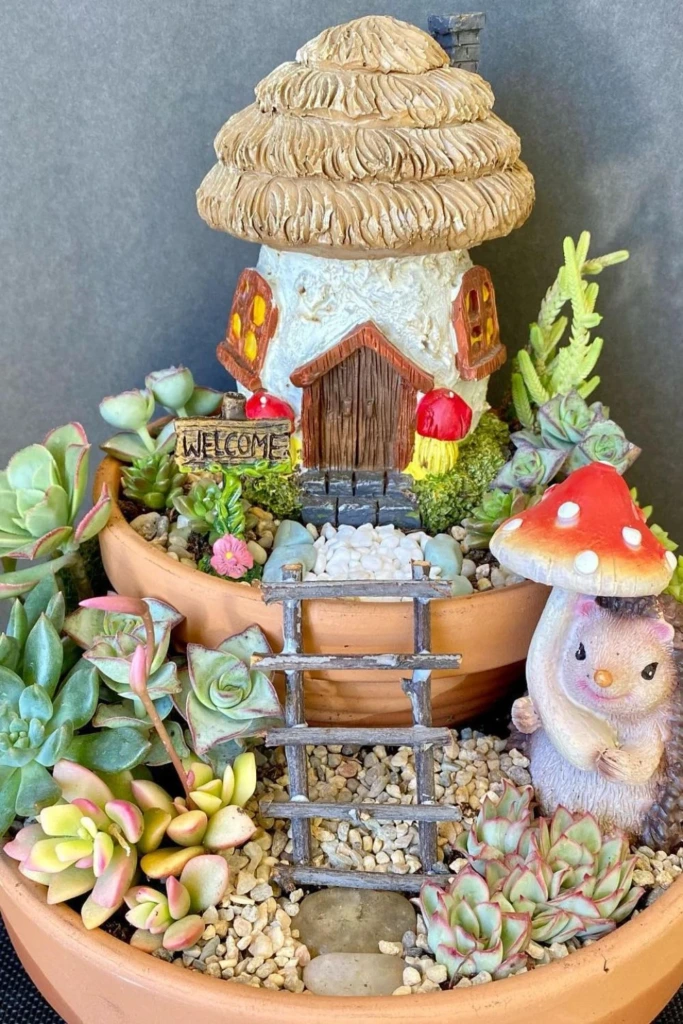
Create a woodland-inspired retreat by combining a small decorative house with succulents, miniature mushrooms, and a friendly hedgehog figurine. This design is especially suitable for a compact patio display or a collection of small terracotta pots.
Begin with a wide container that offers enough room for both plants and accessories. Arrange the miniature house toward the back, then use low-growing succulents to frame the entrance. A pebble pathway can lead toward the front, while a tiny ladder or wooden stepping stones add another layer of detail.
Choose plants with contrasting shapes to make the arrangement more interesting. Rounded succulents, upright varieties, and a few small decorative stones create variety without overcrowding the scene. Keep the figurines positioned securely, especially if the display will sit outdoors in windy weather.
4. Gnome Garden
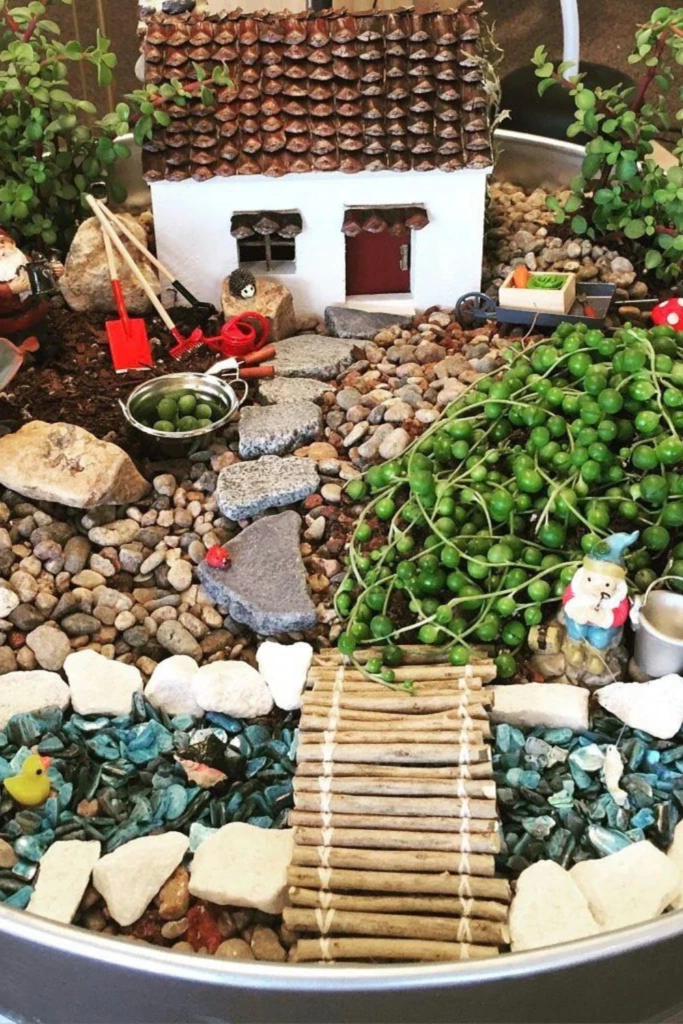
A gnome garden offers a playful alternative to a traditional fairy-themed landscape. A large, shallow planter provides enough room for miniature houses, small bridges, decorative stones, and tiny woodland characters.
First, fill the container with a well-draining planting mix appropriate for your chosen plants. Place a small cottage toward one side, then arrange succulents and compact greenery around it. A curved bridge made from wood or stone can connect different sections of the miniature landscape.
Blue glass pebbles can represent a stream, while larger decorative stones suggest rocky hills or garden boundaries. Add gnome and animal figures to give the scene a sense of activity. If children will help with the project, invite them to decide where each character belongs and invent a story for the tiny village.
5. Woodland Tea Time
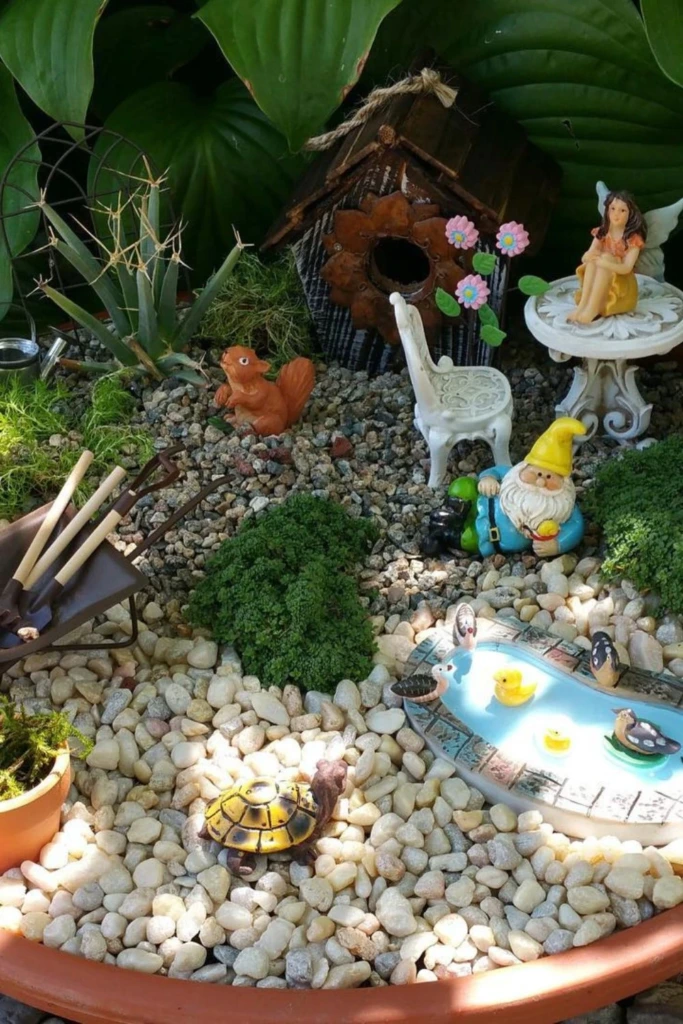
Turn a shallow planter into a miniature woodland tea party. This design works well for anyone who enjoys delicate decorations and wants to create a peaceful scene among greenery.
Place a tiny table and chairs near the center, then surround them with moss, small plants, and a miniature birdhouse. A fairy figure, squirrel ornament, or woodland animal can make the arrangement feel as though a quiet gathering is taking place beneath the trees.
For extra detail, add a small pond made from a shallow decorative dish or a patch of blue glass stones. White pebbles can outline the seating area, while miniature pots provide height around the edges. Keep the furniture and ornaments small enough to leave room for the plants to grow.
6. Flower Hut
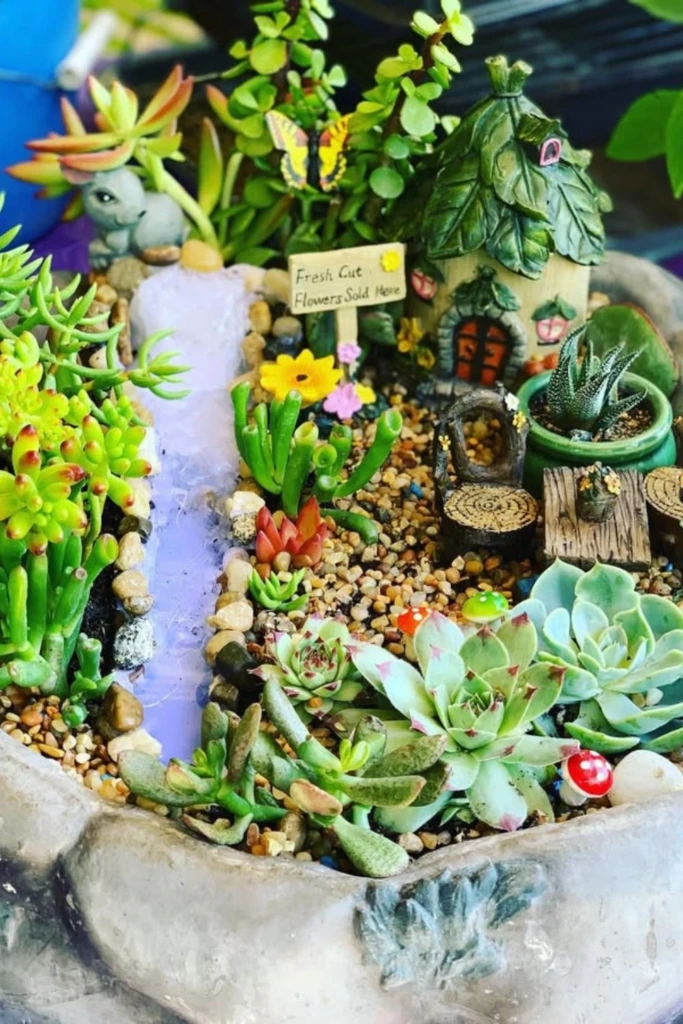
A flower hut makes colorful blooms the main feature of your fairy garden. Choose a miniature cottage with a leafy appearance or decorate a simple wooden house with natural materials to give it a garden-inspired character.
Arrange flowering plants and compact succulents around the building, using different heights to create a layered effect. A small sign advertising imaginary fresh flowers can add a playful touch, while a rustic table provides a place to display miniature pots or bouquets.
A winding path made from pebbles or colored gravel can lead toward the cottage. You could also use blue or purple decorative stones to suggest a narrow stream. Select flowering plants that suit the amount of sunlight available, and leave sufficient space for them to develop without covering the miniature house.
7. Mini Meadow
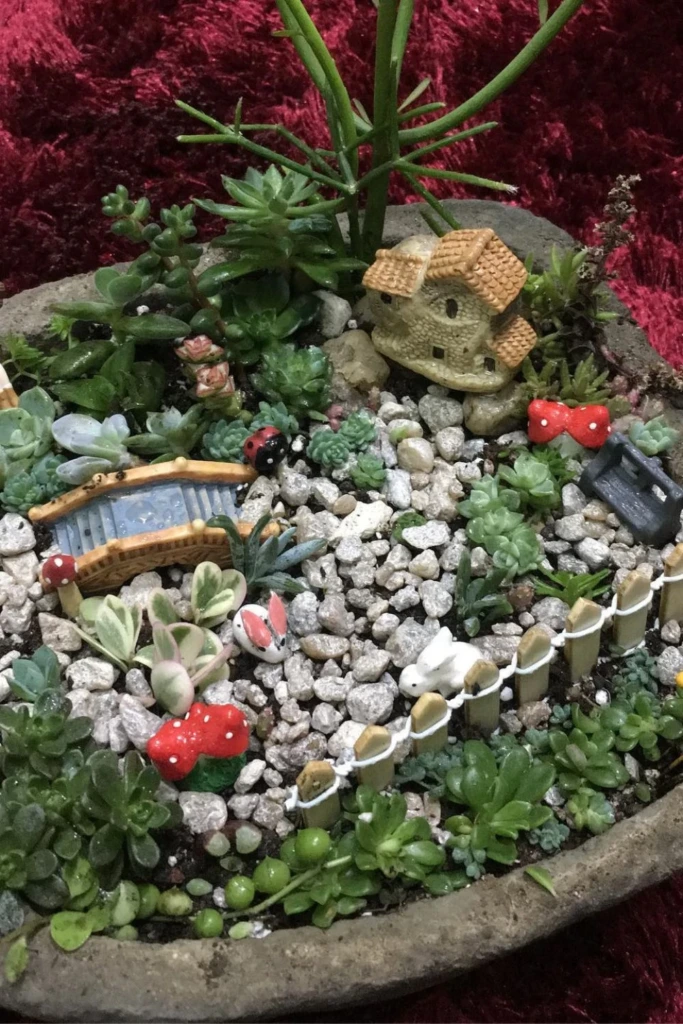
Recreate the relaxed appearance of a meadow in a low stone planter or wide garden bowl. This idea combines simple landscaping materials with small plants and a few carefully chosen decorative figures.
Begin with a base of well-draining soil and arrange compact succulents or other suitable miniature plants in small clusters. Fill the gaps with white gravel, smooth stones, or patches of moss to create contrasting textures. A tiny bridge and a small two-story house can provide focal points without overwhelming the arrangement.
Miniature rabbits, mushrooms, and ladybug ornaments add color and personality. A short picket fence can define one edge of the meadow, making the display look like a tiny countryside home. Keep the layout relatively open so each decorative element remains visible as the plants grow.
8. Door Garden
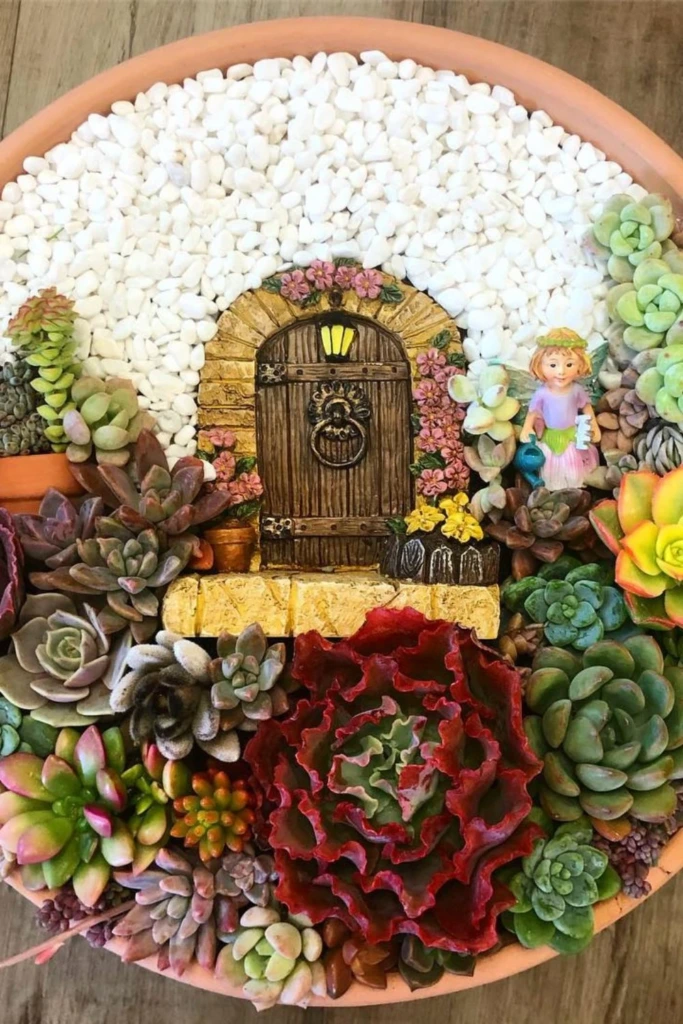
A fairy door garden creates the illusion of a secret entrance hidden among plants. It is a simple project that works well in a circular planter, a garden bed, or the base of a suitable tree.
Choose a small wooden or weather-resistant decorative door and position it against a stable surface. Arrange compact plants around the entrance to make it appear tucked into a miniature hillside. Pink flowers, trailing greenery, and small ferns can soften the edges, while pale pebbles create a clear pathway leading toward the door.
A tiny welcome mat, a miniature lantern, or a small fairy figure can complete the scene. If you attach the door to a living tree, avoid drilling into or otherwise damaging the bark. A freestanding backing or nearby garden ornament provides a safer way to create the same hidden-door effect.
9. Poolside Cottage
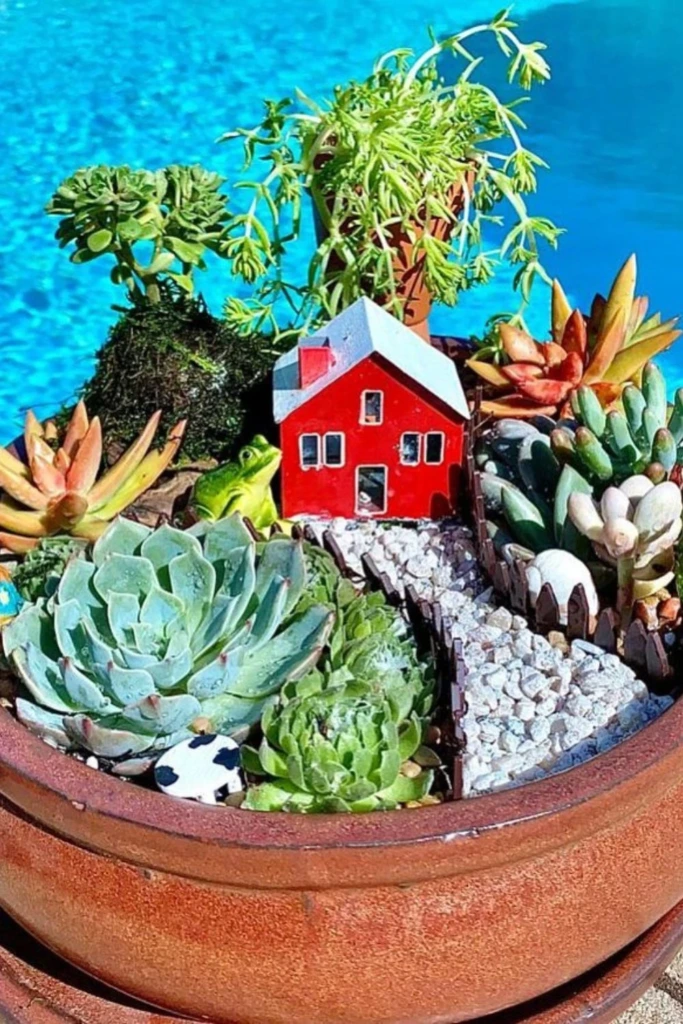
Bring a summery atmosphere to your outdoor décor with a miniature cottage surrounded by light-colored gravel and green plants. A bright red house can create a striking focal point, especially when paired with blue accents.
Use a shallow container or a defined section of a garden bed as the base. Position the cottage toward the back, then create a winding path using white pebbles or pale gravel. Add compact succulents and low-growing greenery along the edges to frame the building.
Tiny frogs, farm animals, or gnome figurines can make the scene feel lively. A few blue glass stones may suggest a small pond and echo the colors of a swimming pool nearby.
For safety, place the fairy garden on stable ground away from pool edges and walking routes. Keep loose decorative pieces where they cannot easily fall into the water, and choose accessories that can tolerate outdoor conditions.
10. Mossy Swing
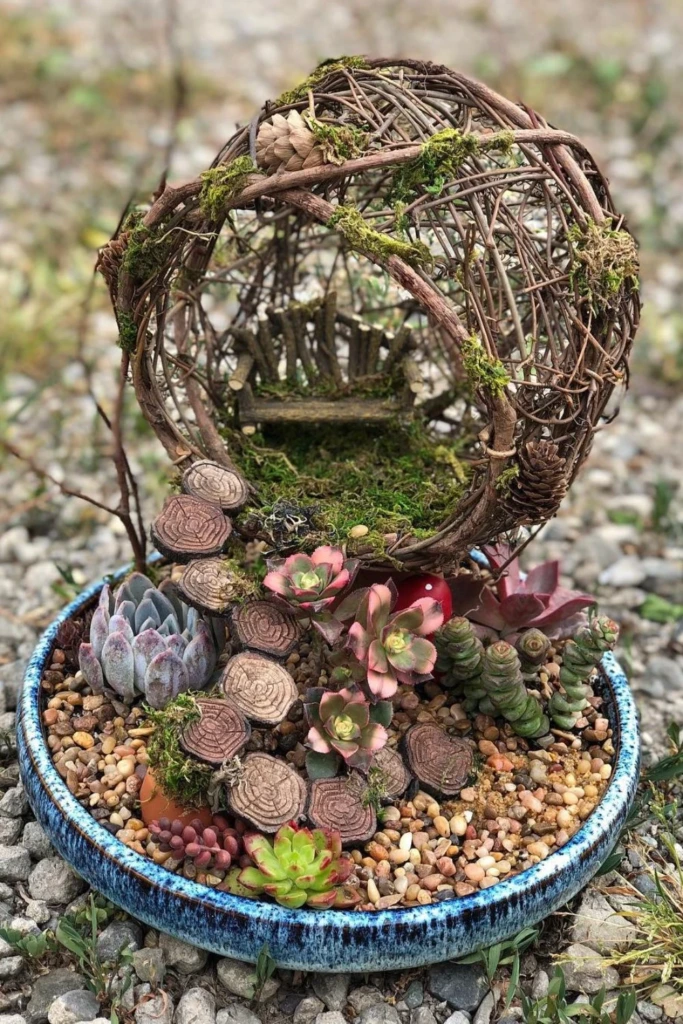
A mossy swing garden brings together natural materials and miniature woodland furniture. It is a good choice for gardeners who prefer an earthy appearance rather than a brightly colored decorative display.
Start with a shallow container and arrange moss or suitable low-growing plants around a small wooden bench. A lightweight grapevine sphere or curved twig structure can create a natural-looking canopy above the seating area. Make sure any overhead decoration is securely supported rather than resting loosely on the plants.
Use thin wood slices or flat pebbles to form a winding staircase or pathway through the arrangement. Pinecones, bark, and small stones add texture and help the display resemble a miniature forest floor.
If you use live moss, select a species suited to the available moisture and light. In hot or dry climates, preserved moss or artificial moss may be easier to maintain, although these materials will not provide the same living habitat as natural vegetation.
11. Garden Burrow
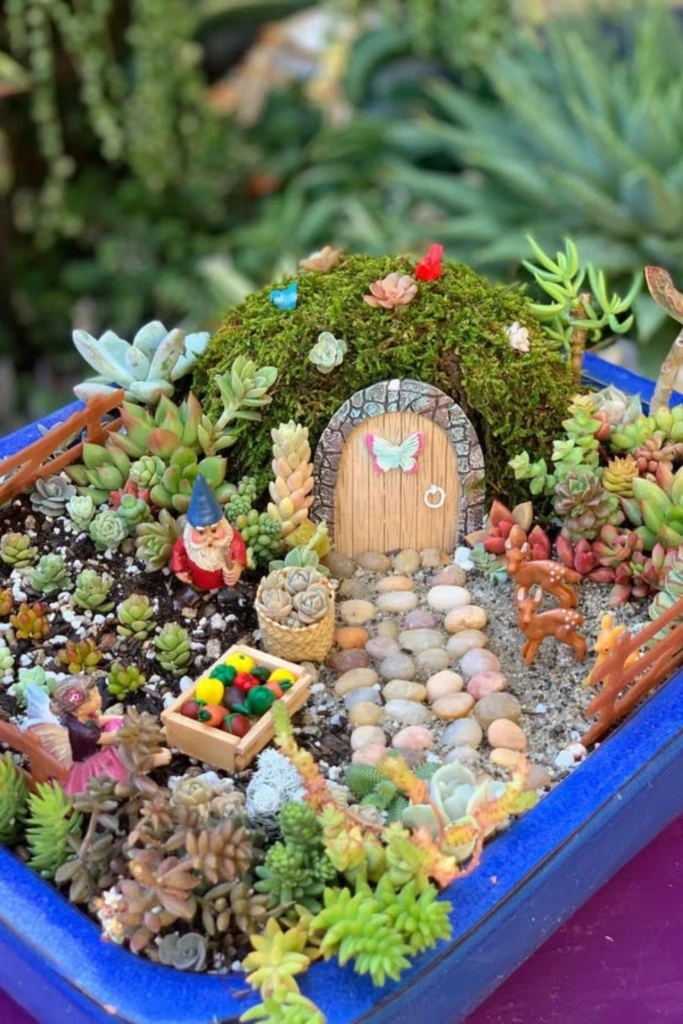
Design a miniature garden burrow inspired by cozy hillside homes. A rounded container in a bold color can provide an interesting contrast to the greenery and natural materials inside it.
Create a low mound using suitable planting material, then position a small arched door against the slope. Cover selected areas with moss or low-growing plants to make the entrance look as though it belongs to a tiny underground cottage.
Surround the burrow with rounded pebbles and compact succulents. A miniature vegetable stall, deer figures, or a small gnome can add a sense of everyday activity to the imaginary settlement. Use stones of different sizes to suggest a rocky landscape without making the arrangement feel crowded.
A container with drainage holes is important if you are growing live plants. If the burrow is intended mainly as decorative outdoor art, use a removable planting insert so you can adjust the design or protect the miniature house when necessary.
12. Fairy Trail
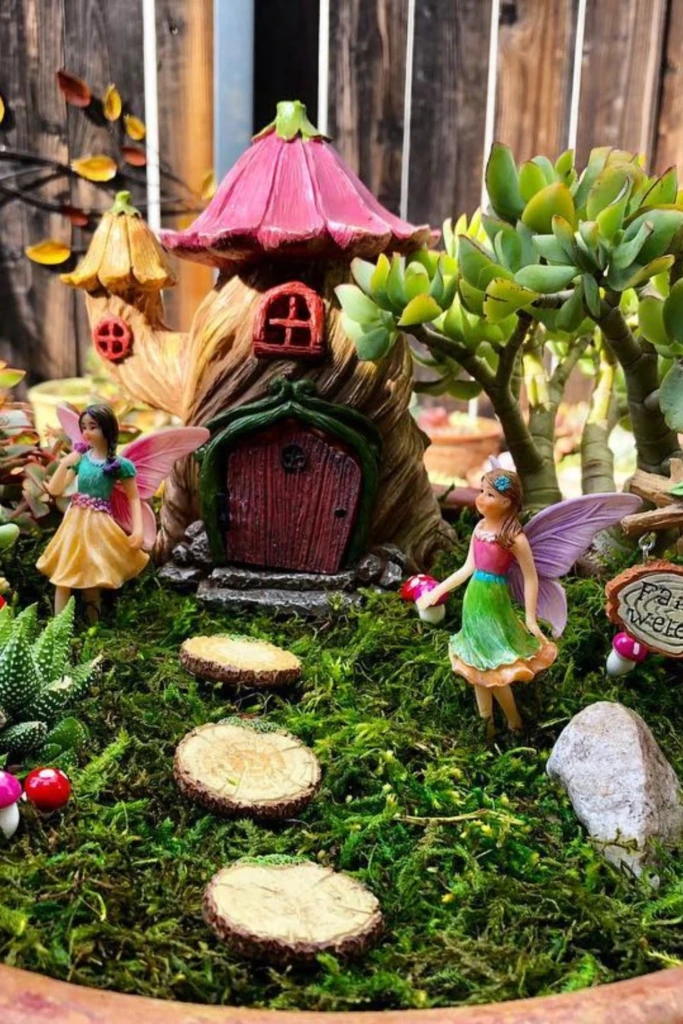
A fairy trail turns a miniature garden into a little adventure. Instead of concentrating on a single cottage, this design encourages the eye to follow a pathway through a series of decorative details.
Begin with a mushroom-shaped house or another whimsical building as the main feature. Create a winding trail from small wood slices, flat pebbles, or stepping-stone ornaments. Position miniature trees, moss, and low plants along the route to create the feeling of walking through a tiny forest.
Add small signs pointing toward imaginary fairy homes or gnome villages. A few colorful mushroom decorations and friendly fairy figures can make the display especially appealing to children.
For a balanced composition, vary the distance between the decorations and leave some sections of the path uncovered. The visible trail will help connect the different elements and make the entire miniature landscape easier to appreciate.
13. Tree Stump Cottage
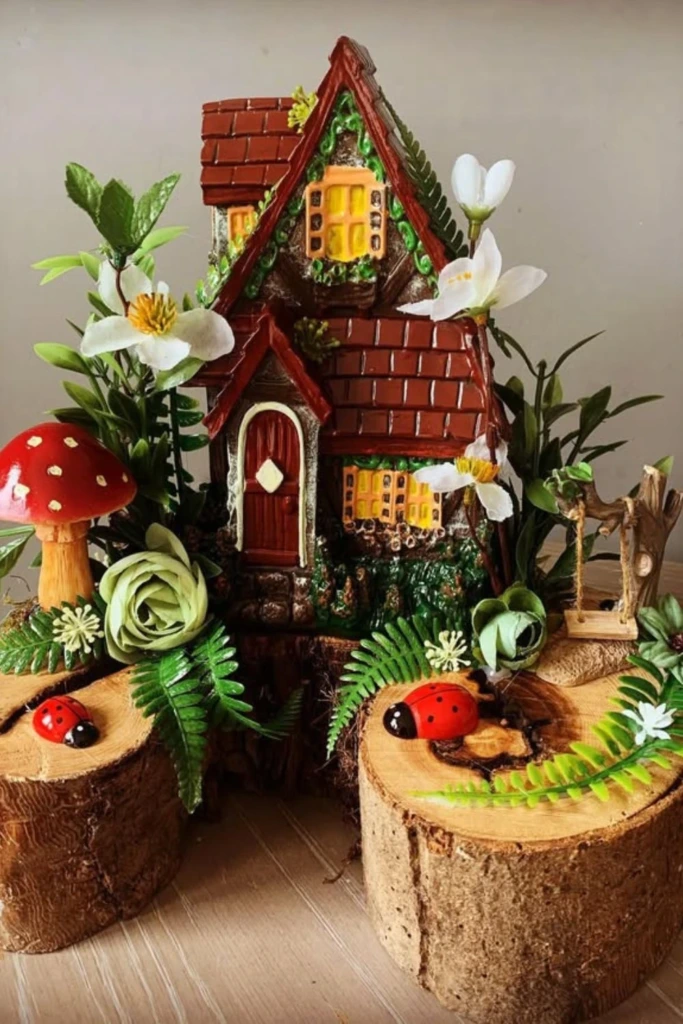
A tree stump cottage is a charming way to combine rustic materials with colorful miniature architecture. You can use a stable, weather-resistant wooden base or arrange several decorative wood sections to create a raised platform.
Place a small cottage with a bright roof near the center, then surround it with ferns, compact plants, and miniature mushrooms. White flowers can brighten the darker wood tones, while small ladybug ornaments add a cheerful accent.
A raised arrangement is especially attractive when displayed on a sturdy outdoor table or sheltered patio shelf. Ensure the base is level and strong enough to support the container, soil, and decorations.
If you use a real stump, check that it is stable and free from sharp splinters. For a longer-lasting display, seal appropriate wooden components with an outdoor finish that is safe for the intended use, and keep the arrangement away from persistent standing water.
14. Cottage Walkway
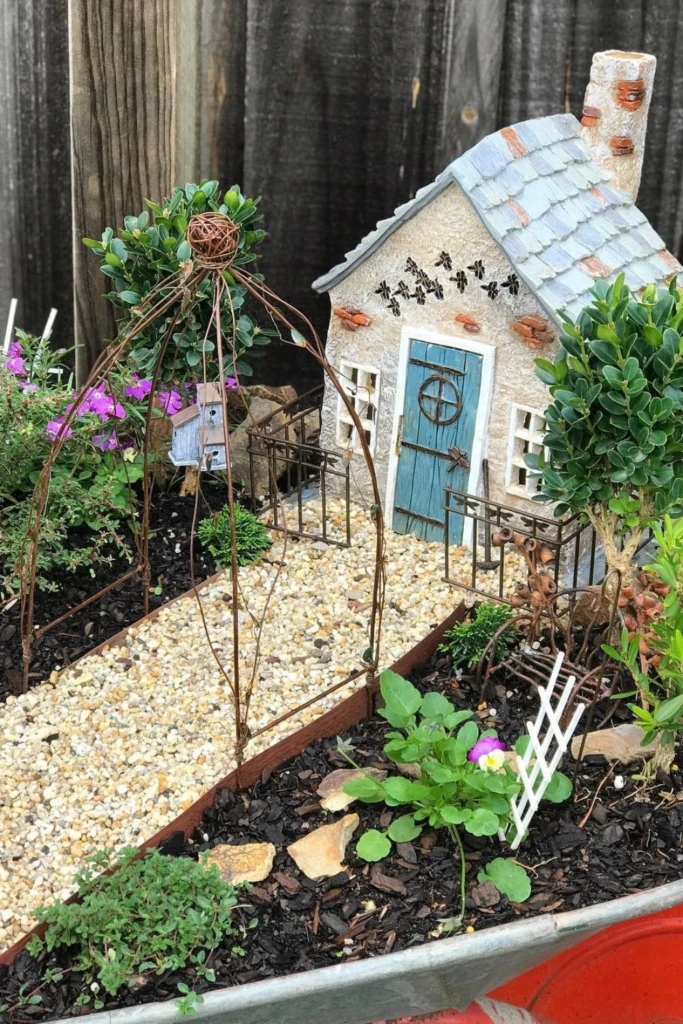
A cottage walkway gives your fairy garden a welcoming countryside appearance. The main feature is a miniature house connected to the surrounding landscape by a carefully arranged path.
Choose a cottage with a pale blue door or another soft color that complements the plants. Lay flat stones or small gravel pieces in a curved line leading toward the entrance. A simple arch made from twigs can frame the doorway and give the garden additional height.
Compact shrubs, small flowers, and tiny fencing help establish the boundaries of the miniature property. You can also include a little mailbox or bench beside the path to make the scene feel more complete.
Arrange the taller plants behind the house and keep the lower plants near the pathway. This creates depth while ensuring that the cottage remains visible. Use weather-resistant adhesive or stable supports for lightweight decorations that might otherwise shift in rain or wind.
15. Sandy Cabin
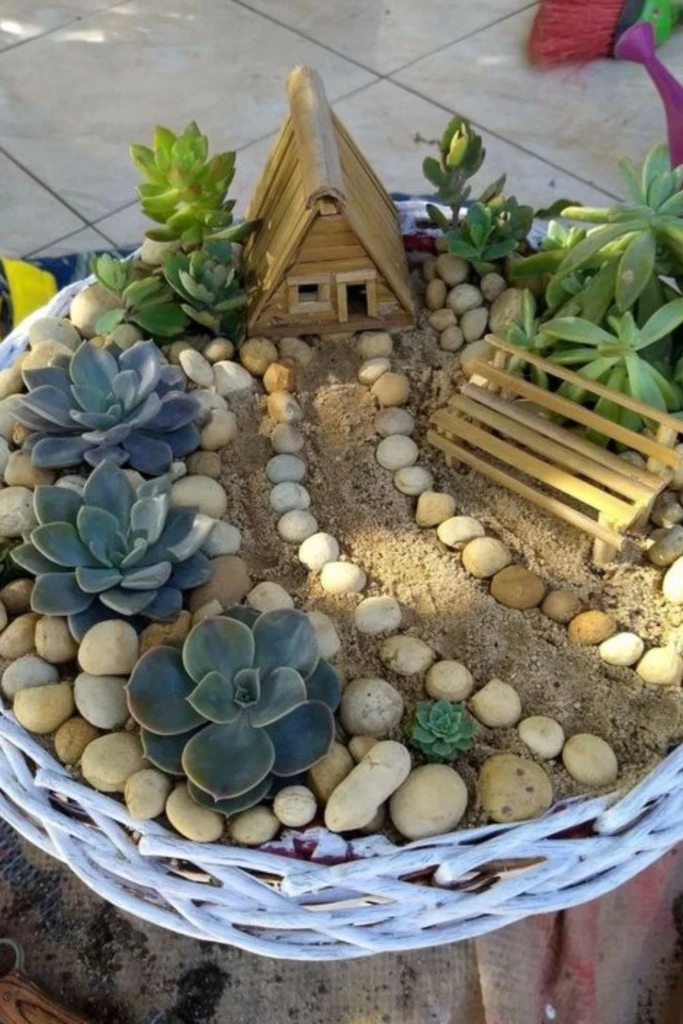
A sandy cabin garden takes inspiration from dry landscapes and rustic desert hideaways. It is particularly suitable for a sunny patio where drought-tolerant plants can thrive.
Use a wide, shallow container with adequate drainage, then create a sandy-looking surface with suitable horticultural materials. Position a small A-frame cabin toward the back and surround it with smooth river stones and compact succulents.
A curved stone path can guide the eye toward the entrance, while a miniature wooden bench provides a simple finishing touch. Natural shades of beige, brown, gray, and green help the display feel calm and cohesive.
For a practical planting arrangement, choose succulents suited to your local climate and avoid using beach sand or unsuitable decorative sand as the entire growing medium. A properly draining potting mix will support healthier roots, while a thin decorative layer can provide the sandy appearance.
16. Stump House
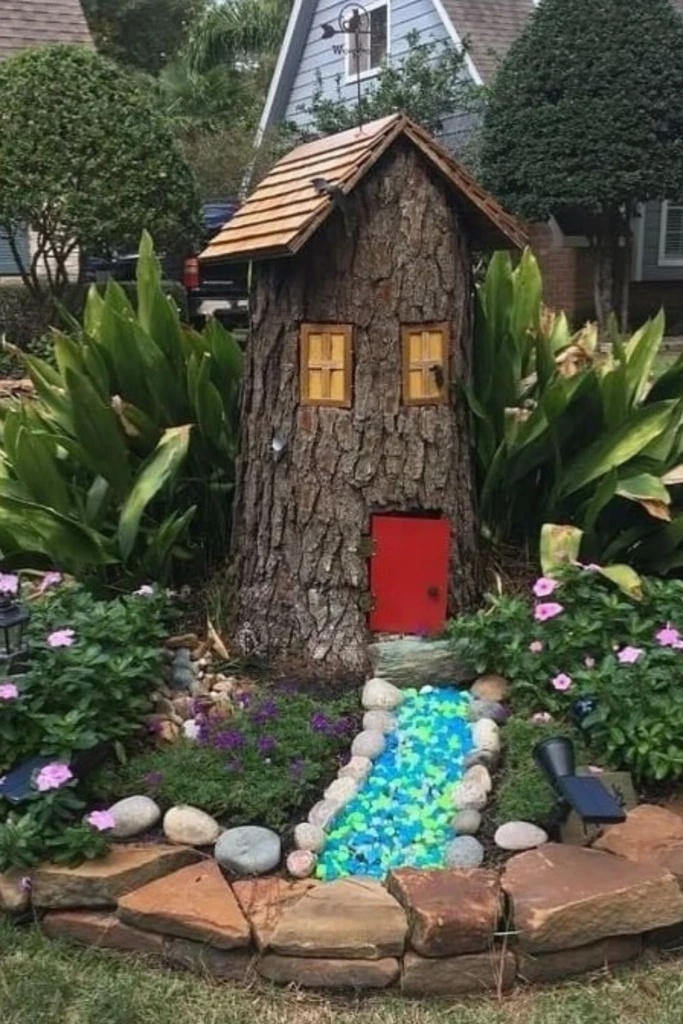
A stump house transforms an ordinary section of wood into a miniature woodland home. Brightly colored doors and windows can make the structure stand out against the surrounding greenery.
Start with a stable stump or a purpose-made wooden base. Position a small house or attach a decorative façade to the front, then arrange compact plants and flowers around the structure. Colorful stones can mark the edges of a path, while a narrow blue accent made from glass pebbles suggests a little stream.
Choose plants according to the light and moisture available near the stump. Ferns may suit a shady location, while certain succulents are better for sunnier conditions.
If the stump is part of a living tree, avoid carving into healthy bark or fastening decorations in ways that could damage the tree. A freestanding miniature structure beside the trunk can create a similar woodland effect without harming the plant.
17. Welcome Fairies
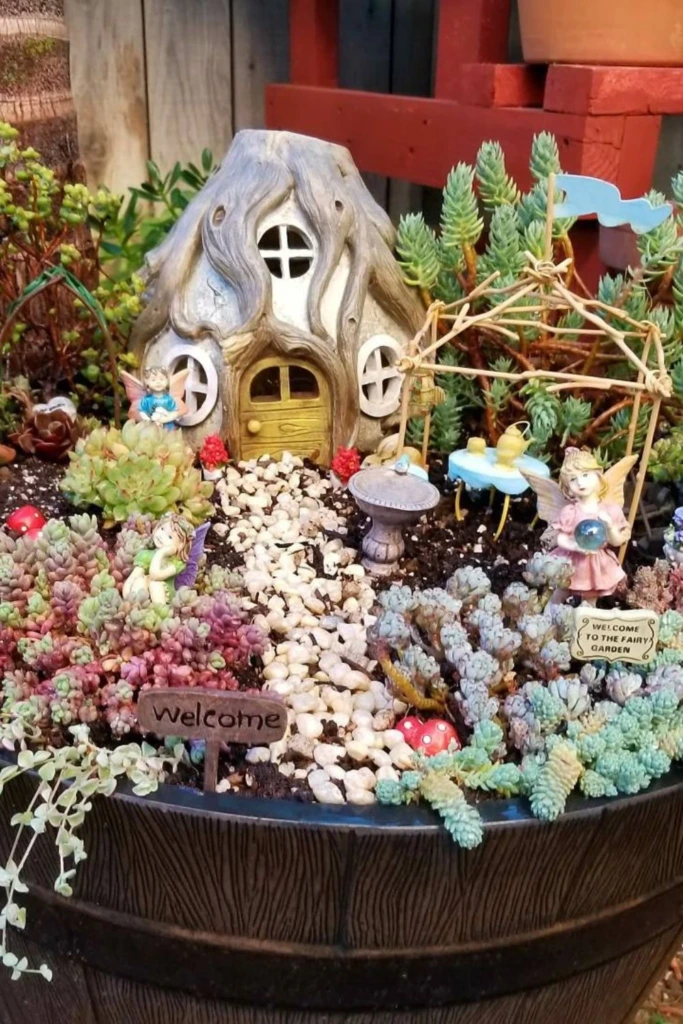
Create an inviting miniature garden with a whimsical cottage, bright flowers, and small fairy figures. This arrangement works well in a compact planter where every accessory can contribute to the overall theme.
Choose a cottage with a colorful door and place it slightly off-center. Surround it with succulents or other small plants, then add a few figurines near the entrance. A tiny welcome sign can make the house feel friendly, while a miniature gazebo or birdbath introduces another point of interest.
Use contrasting textures to keep the design visually appealing. Smooth stones, leafy plants, and wooden accessories each contribute something different without requiring a large number of decorations.
For a neat finish, group similar colors together and leave a clear route to the cottage door. This creates a more organized scene than scattering ornaments randomly throughout the container.
18. Twin Treehouse
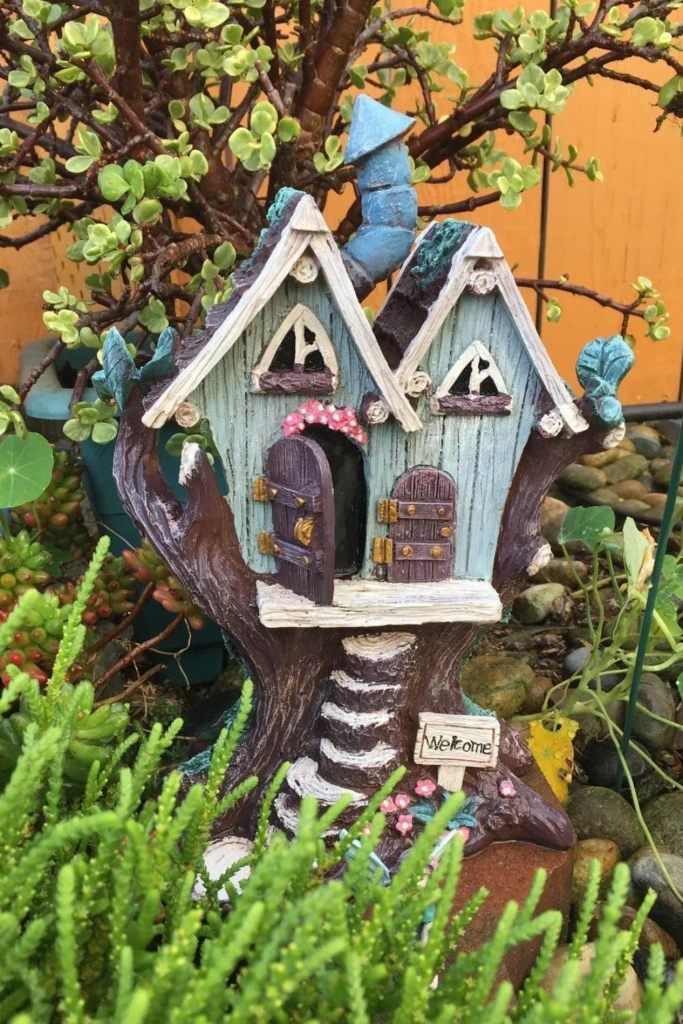
A twin treehouse design features a miniature home with two entrances or adjoining sections that appear to grow from a tree. It is a creative option for gardeners who enjoy unusual shapes and layered landscaping.
Use a tree-shaped ornament or a sturdy decorative base as the foundation. Position the two-door house where it can be seen clearly, then arrange greenery around its sides to blend the structure into the miniature landscape.
A curved stone staircase can lead toward the entrances, while tiny pink flowers add a soft splash of color. Decorative blue chimneys, small signs, and miniature climbing plants can give the treehouse a distinctive appearance.
Keep the tallest elements toward the back and the smallest accessories near the front. This arrangement creates a sense of depth and prevents the house from being hidden behind its own landscaping. Make sure the base is secure if the display will remain outdoors in changing weather.
19. Mossy Dome
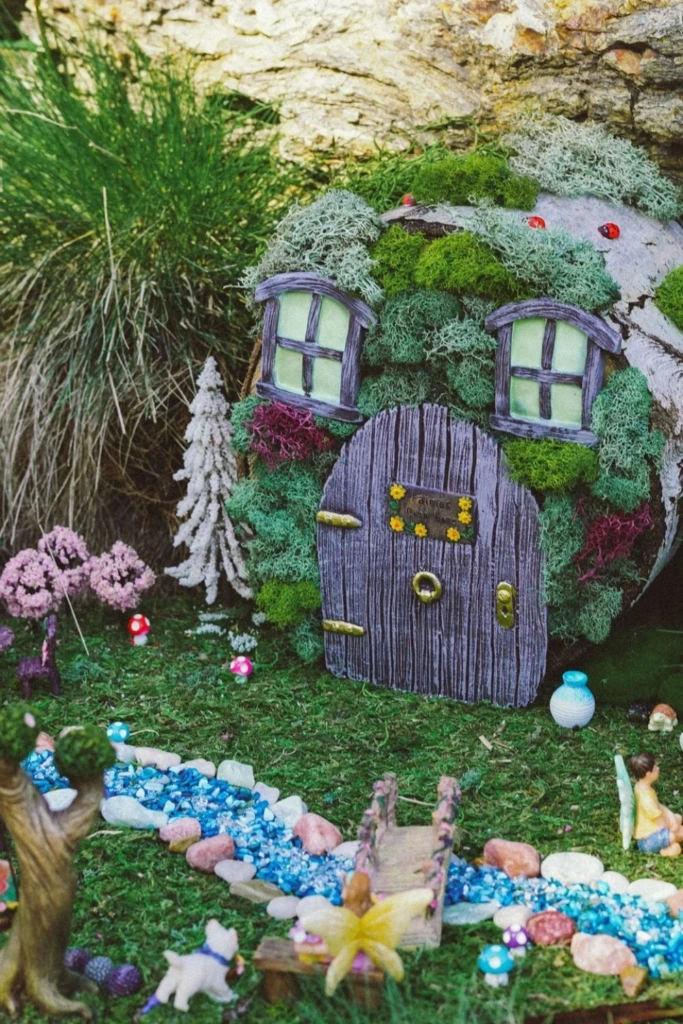
A mossy dome creates the impression of a small woodland dwelling tucked into a green hillside. Its rounded shape makes it an appealing centerpiece for a miniature forest garden.
Build the dome from a suitable decorative structure or use a miniature house with a curved roof. Cover selected areas with preserved moss or suitable living moss, depending on your maintenance preferences. Position a narrow pathway in front and add a small bridge to create a route through the landscape.
Blue glass stones can suggest a stream, while tiny trees and fairy figures help establish the woodland theme. Use a mixture of moss, stones, and compact plants to prevent the entire display from looking flat.
If you choose living moss, research its preferred light and moisture conditions before planting. Preserved moss is generally better for a dry decorative arrangement, but it should be protected from prolonged exposure to harsh weather if you want it to retain its appearance.
20. Cabin Retreat
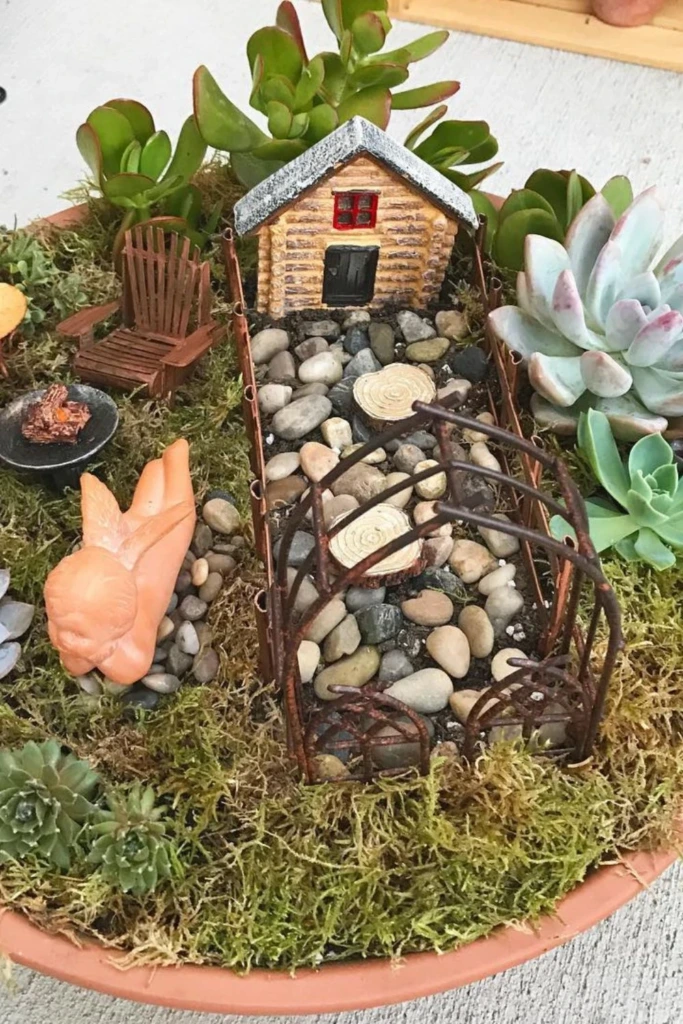
Create a miniature camping retreat with a small log-style cabin, a winding path, and a cozy seating area. This theme is ideal for anyone who enjoys the atmosphere of a woodland getaway.
Position the cabin toward the back of a wide planter. Use gravel to form a path leading to the entrance, then surround it with moss, compact plants, and a few small shrubs. A miniature firepit can become the central feature of the seating area, with tiny Adirondack-style chairs arranged nearby.
A small arch, lantern, or decorative camping accessory can reinforce the outdoor theme. Keep the colors natural by combining brown wood, gray stones, and green foliage, with one or two brighter accents to add personality.
For safety, use a decorative firepit rather than an actual flame. Miniature gardens contain dry materials and small accessories that should not be exposed to open fire.
21. Woodland Welcome
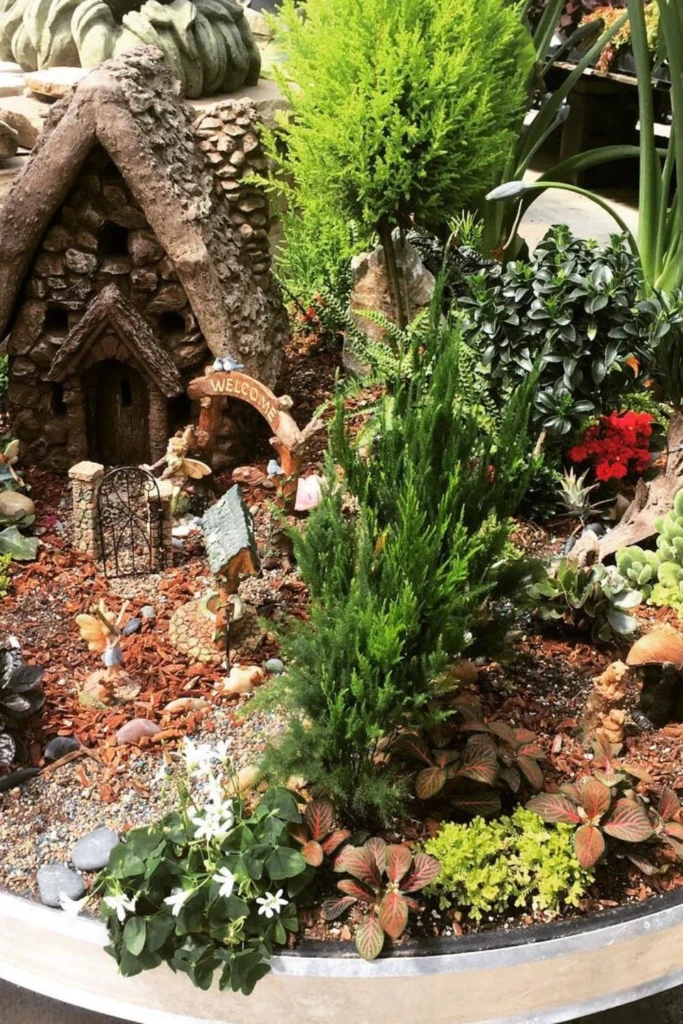
A woodland welcome garden uses bark, stones, greenery, and miniature buildings to recreate the feeling of a hidden forest settlement. It is an excellent option if you prefer natural-looking decorations over brightly colored ornaments.
Choose a small house with a bark-textured or stone-like exterior and place it among compact plants. Use mulch or suitable decorative bark around the base to create a forest-floor effect, leaving enough open space for a pathway and a few miniature accessories.
Tiny gates, signposts, and a mailbox can make the arrangement feel like a welcoming little community. Fairy figures and woodland animals add character, while varied foliage helps the scene look less artificial.
Select mulch carefully if you are growing real plants, and avoid materials that may contain harmful treatments. Keep bark and decorative stones away from plant crowns to prevent excess moisture from collecting around the stems.
22. Flowercap Tower
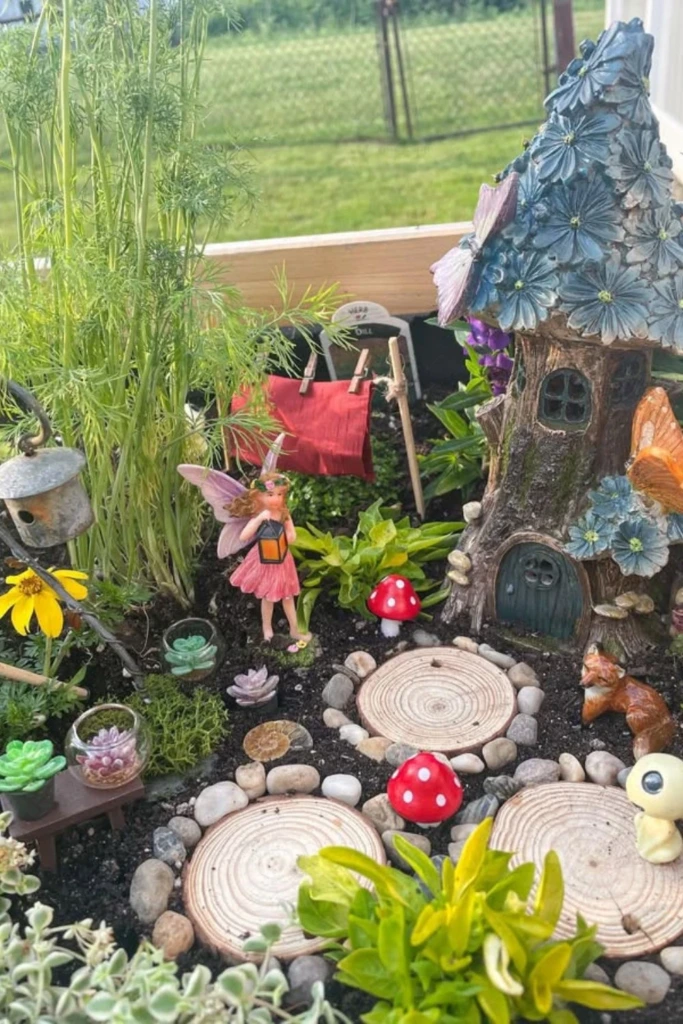
A flowercap tower makes a colorful focal point by combining a tall miniature structure with flowers or foliage arranged around its roof. The vertical design is particularly useful when you want to add visual height to a small planter.
Choose a stable fairy tower or a decorative house with a rounded roof. Arrange compact plants around the base, then use small stepping stones to form a route toward the entrance. Miniature mushrooms and a tiny bench can fill otherwise empty spaces without overwhelming the main feature.
For a playful finishing touch, add a fairy figure beside a miniature clothesline or a small birdhouse nearby. These details suggest an imaginary world without requiring many accessories.
If you use living flowers around the tower, choose varieties that remain relatively compact and suit the available sunlight. Regular trimming will help maintain the miniature scale and prevent the plants from hiding the structure.
23. Fairy Village
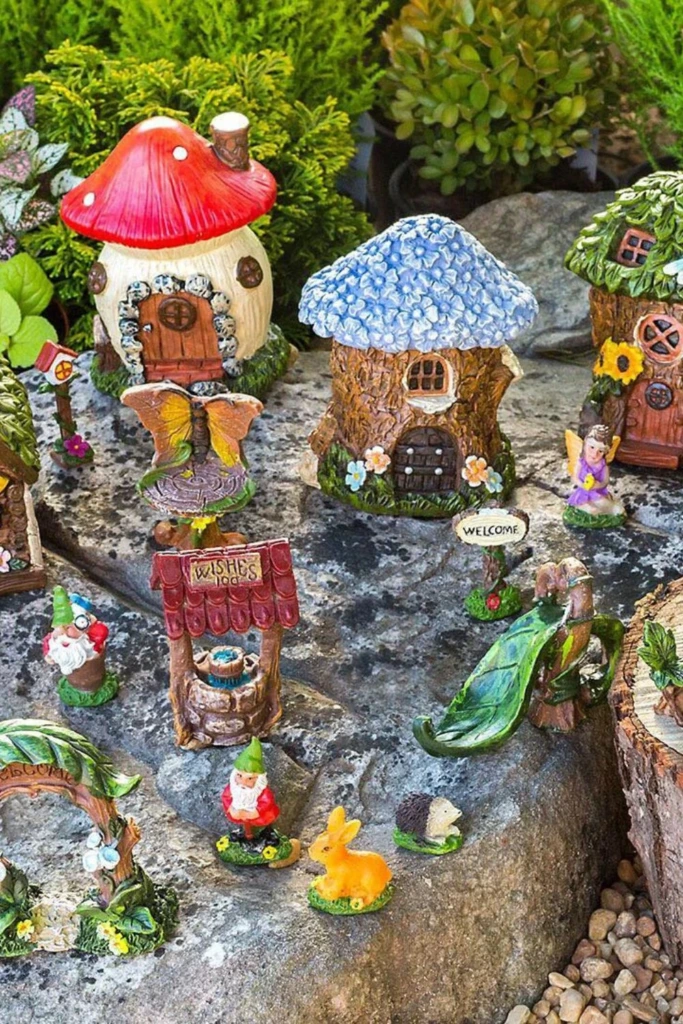
A fairy village brings several miniature homes together to create a complete little community. It is a great choice for a larger planter, a dedicated garden bed, or a wide outdoor container with enough room for different scenes.
Begin by selecting two or three houses with complementary colors and shapes. Arrange them at different distances from the front edge so that every building remains visible. Add a network of paths using small pebbles or fine gravel, then use low plants, moss, and decorative stones to connect the separate areas.
A miniature wishing well, a tiny playground, or a welcoming arch can serve as a shared village feature. Fairy figures, gnomes, and woodland animals give the arrangement a sense of activity and help distinguish one area from another.
Keep the layout organized by leaving open spaces between the houses. Too many ornaments can make the village feel crowded, while a few carefully chosen details create a stronger visual impression. Check plant growth regularly and move any decorations that become hidden by expanding foliage.
With the right combination of plants, miniature buildings, and simple natural materials, an outdoor fairy garden can become a delightful feature of your yard. Start with a manageable container, build around one main focal point, and add details gradually as your design takes shape. The most successful fairy gardens are the ones that reflect your imagination while remaining practical to maintain in your outdoor space.