15 Scarf Storage Ideas for 2026 to Keep Your Collection Neat and Accessible
Scarves add color, warmth, and personality to an outfit, but keeping them organized can be challenging when you own several styles, fabrics, and sizes. They can easily become tangled, creased, or buried beneath other accessories when stored without a proper system. Fortunately, a few practical storage solutions can help you make better use of your closet space while keeping every scarf easy to find.
Whether you prefer hanging organizers, compact drawer systems, or decorative displays, these scarf storage ideas offer options for different budgets, room sizes, and collections.
Which Storage Tools Help Keep Scarves Tangle-Free?
The right storage tool depends on how many scarves you own, the materials they are made from, and how much room you have available. Hanging organizers work well for everyday accessories because they keep individual pieces visible and separated. Drawer dividers are useful for folded scarves, while baskets and fabric cubes can accommodate seasonal items.
For delicate silk, satin, or cashmere scarves, choose storage methods that minimize friction, snagging, and unnecessary folding pressure. Smooth wooden hangers, fabric-lined compartments, and rounded hooks are generally gentler than rough surfaces or sharp metal edges.
Before buying an organizer, consider the dimensions of your closet, the length of your scarves, and how frequently you use them. A simple system that suits your routine is often more effective than an elaborate organizer that becomes difficult to maintain.
1. Multi-Hook Hanger
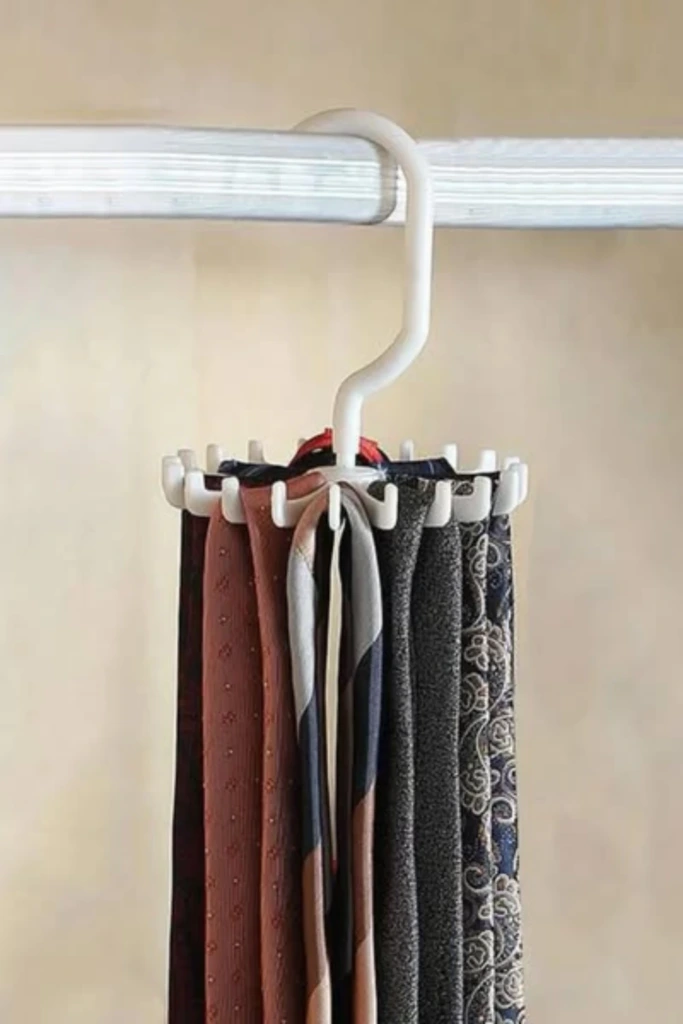
A multi-hook hanger is an easy way to organize several scarves in one compact space. It typically features multiple hooks arranged along a vertical frame, allowing you to hang individual accessories without dedicating a separate hanger to each one.
Choose a design with rounded edges or coated hooks to reduce the risk of pulling delicate threads. You can group scarves by season, color, or frequency of use, making it easier to select the right accessory when getting dressed.
This option works particularly well in narrow wardrobes where horizontal hanging space is limited. Place lightweight scarves on the upper hooks and heavier winter styles toward the bottom if the organizer is designed to support them. Avoid overcrowding the hooks, as tightly packed fabric can become difficult to remove without disturbing neighboring pieces.
2. Tiered Loop Rack

A tiered loop rack offers several levels of storage on a single frame. Each loop holds a scarf, creating separate spaces that help prevent accessories from becoming mixed together.
The vertical arrangement is especially useful when you have a growing collection but limited closet width. Depending on the design, the rack can hold lightweight scarves, neckerchiefs, and other soft accessories.
Look for a model with smooth, sufficiently wide loops so fabric does not become compressed against narrow edges. Arrange your most frequently worn scarves on the easiest-to-reach levels, keeping special-occasion pieces higher or farther back.
Before purchasing, check the distance between tiers. Longer scarves may overlap lower sections if the rack is too compact, so a design with adequate clearance will make your collection easier to manage.
3. Drawer Divider Boxes
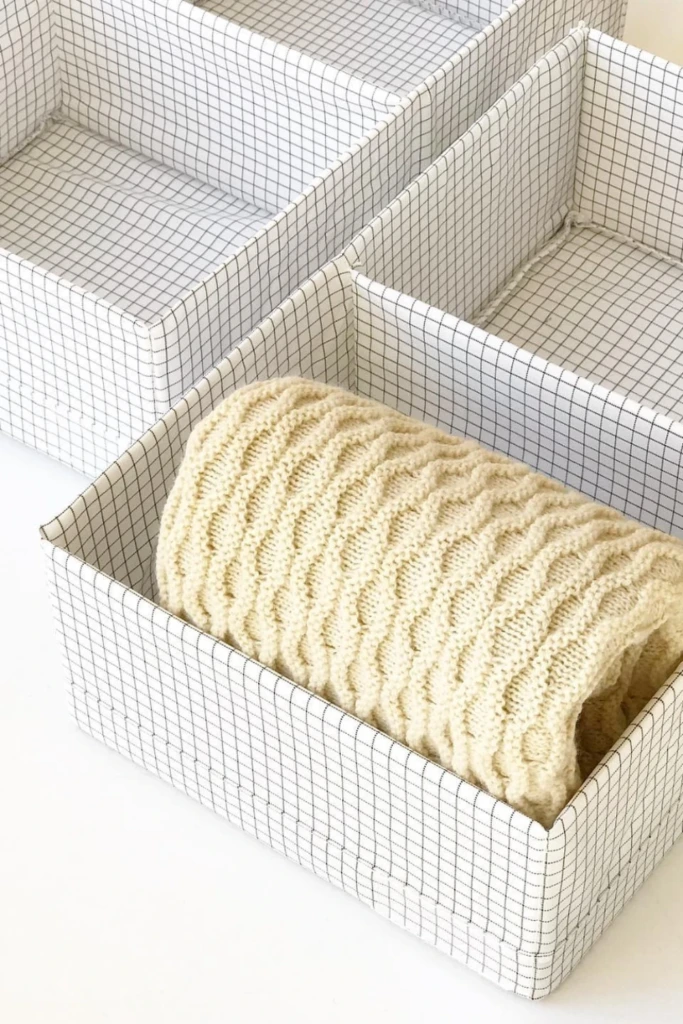
Drawer divider boxes transform an ordinary dresser drawer into a collection of smaller compartments. Each section can hold a folded scarf, preventing lightweight fabrics from slipping beneath heavier accessories or becoming tangled together.
These boxes are especially convenient for silk scarves, square bandanas, and thin fashion scarves that are better stored flat or loosely folded than suspended from hooks. Fabric-covered dividers offer a soft surface, while plastic or bamboo versions can provide more rigid compartments.
Fold each scarf neatly and place it inside its own section without forcing it into a space that is too small. If your collection includes different sizes, choose adjustable dividers or a combination of large and small compartments.
You can also label sections by color, fabric, or season. This makes it easier to return scarves to their proper places and maintain an organized drawer over time.
4. Rolled Tray System

A rolled tray system stores scarves by placing them in individual rolled sections inside a shallow tray. It is an excellent choice for drawers, closet shelves, or wardrobe cabinets where you want to see your collection at a glance.
To use this method, fold each scarf lengthwise and roll it loosely rather than tightly twisting the fabric. Arrange the rolls in a divided tray so they remain separate and do not unravel when you remove one.
This approach works well for cotton scarves, lightweight blends, and casual everyday accessories. For delicate silk or fabrics that develop creases easily, loose folding may be preferable to rolling, depending on the material and how long the scarf will remain stored.
Choose a tray with compartments that fit your scarves without squeezing them. Keeping the rolls in a single layer also makes it easier to identify different patterns without disturbing the entire collection.
5. Door Pocket Organizer
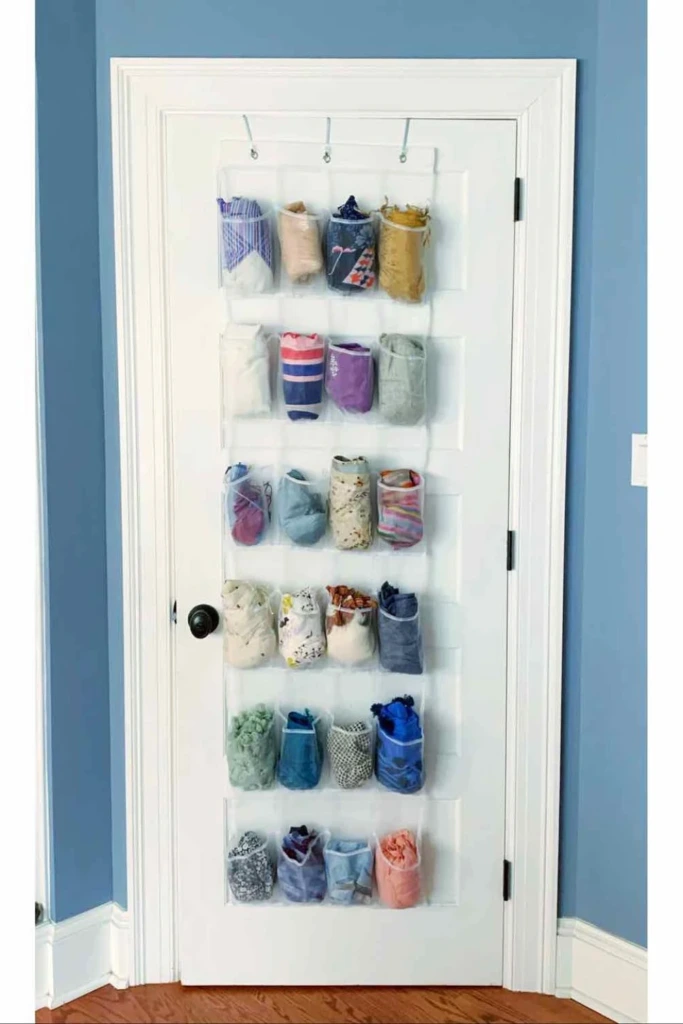
A door pocket organizer makes use of vertical space that often goes unused. Hanging one over a closet door or mounting it on a suitable interior surface creates several pockets for scarves without taking up shelf or drawer space.
Transparent pockets are useful when you want to identify patterns quickly, while fabric versions offer a softer appearance that blends with your closet. You can dedicate individual pockets to lightweight scarves, winter neckwear, bandanas, or other small accessories.
Avoid stuffing too many scarves into a single pocket. Excessive weight can strain the organizer, and crowded fabric may develop creases. Keep delicate pieces loosely folded and reserve larger pockets for bulky knit scarves.
Before installation, confirm that the organizer fits the door and does not interfere with its movement. If you rent your home, an over-door model can be a practical alternative to drilling holes into walls or cabinetry.
6. Color-Sorted Cubes
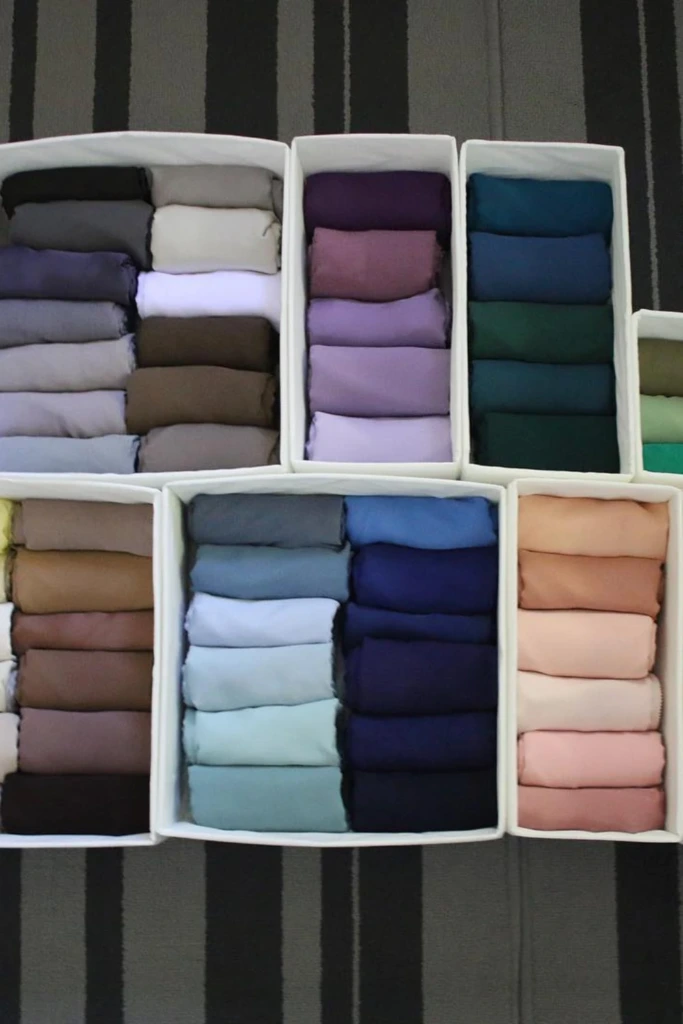
Color-sorted storage cubes combine a simple storage system with an attractive visual arrangement. Each cube or compartment holds scarves of a particular color family, making it easy to coordinate accessories with your clothing.
For example, you might group neutral scarves together, place bright colors in another compartment, and keep patterned designs in a separate section. If you prefer organizing by season, assign one cube to lightweight summer scarves and another to thicker winter styles.
Fabric storage cubes are useful for closet shelves and modular shelving units. Open-front designs provide quick access, while closed containers can protect less frequently worn scarves from dust.
Fold scarves before placing them inside, and avoid stacking them too high. If the cubes are deep, use small internal dividers to prevent items at the bottom from becoming forgotten. A consistent arrangement will make it easier to maintain the system as your collection grows.
7. Ring Bar Hanger
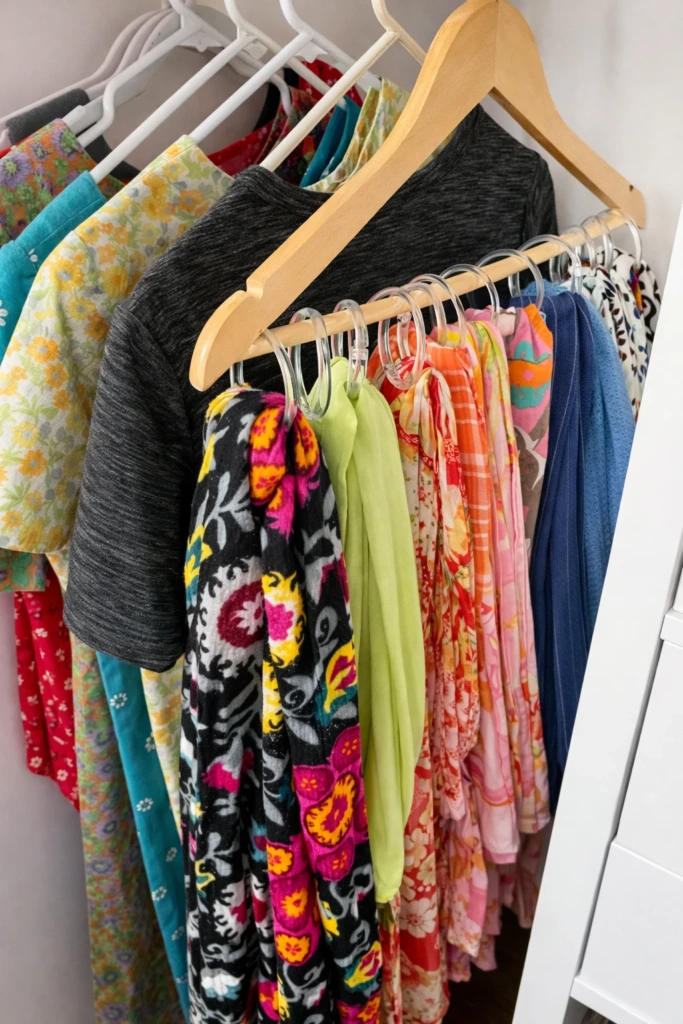
A ring bar hanger consists of a horizontal bar fitted with individual rings through which scarves can be threaded or draped. It offers a simple hanging solution for people who want their accessories separated without using multiple conventional hangers.
The bar can be installed inside a wardrobe or used as part of a suitable hanging organizer. Depending on its construction, it may accommodate lightweight scarves, narrow wraps, and casual neckwear.
Choose rings with smooth interiors and enough space for the fabric to pass through without friction. Avoid pulling a scarf tightly through a small opening, particularly if it is made from delicate silk or has loose decorative threads.
This system is most useful when the scarves are not excessively bulky. Thick knitted pieces can make the rings crowded and difficult to use, so consider storing heavier winter scarves in a separate basket or on a sturdy shelf.
8. Freestanding Rack Display
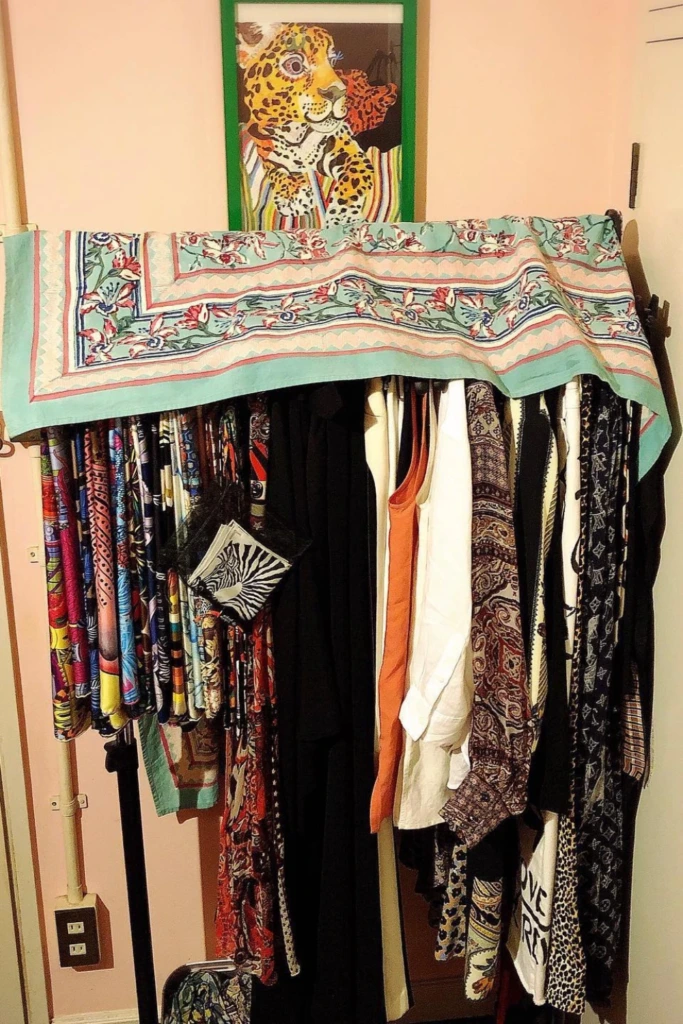
A freestanding rack offers accessible storage without requiring permanent installation. You can place it in a bedroom, dressing area, walk-in closet, or another convenient location where scarves are easy to reach.
Depending on the design, a rack may include horizontal bars, hooks, rails, or multiple hanging levels. These features allow you to organize scarves by length, fabric, or occasion while keeping them visible.
A decorative rack can also become part of your room's styling, particularly when scarves have attractive colors and patterns. However, display storage works best when the surrounding area is relatively clean and protected from direct sunlight, dust, and excessive humidity.
Select a stable frame with a suitable weight capacity, especially if you intend to store heavy winter accessories. Place frequently used scarves at the front and arrange the rest with enough space between pieces to prevent tangling.
If you have a small room, measure the available floor area before purchasing a freestanding unit. A slim vertical design may provide the storage you need without obstructing walkways.
9. Wooden Hole Hanger
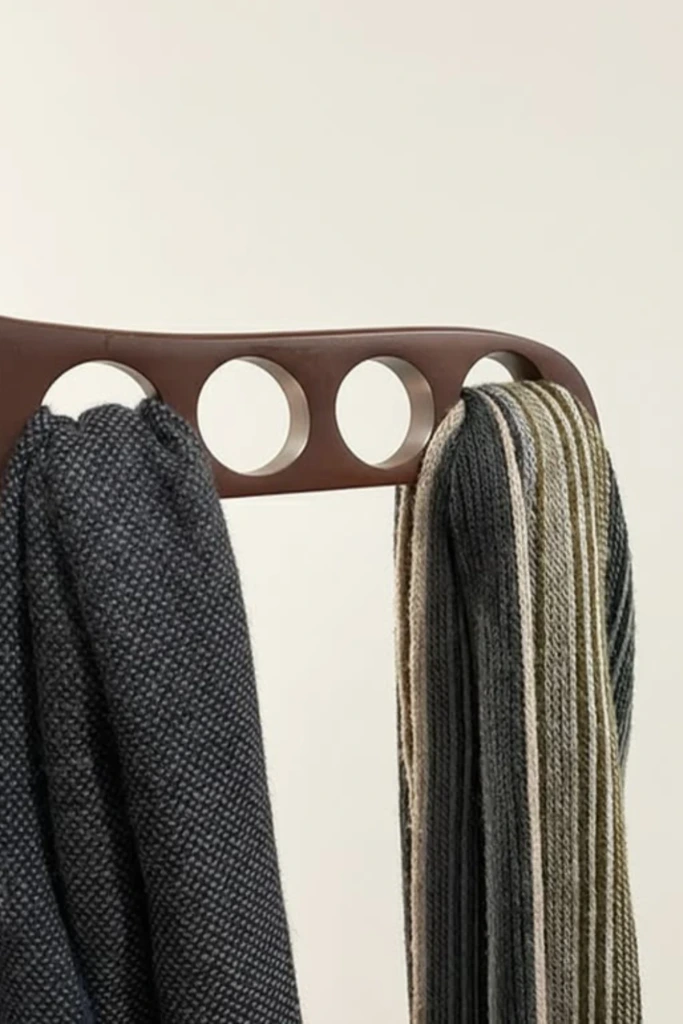
A wooden hole hanger features several openings drilled or formed into a wooden board or frame. Each opening provides a place to thread or drape a scarf, keeping individual pieces separated along one compact organizer.
Wooden designs can add a natural decorative touch to a wardrobe or dressing space. They are particularly appealing if you prefer storage accessories made from materials that complement wooden furniture.
The most important consideration is the finish. Openings should be smooth, rounded, and free from splinters that could catch on fine fabric. A properly sanded and sealed surface is preferable to unfinished wood.
Thread scarves through the openings loosely, leaving enough room to remove them without pulling against neighboring pieces. This method works best for lightweight and medium-weight scarves that fit comfortably through the holes.
For expensive silk or delicate woven fabrics, test the surface carefully before using the hanger. If the holes are narrow or rough, a smooth ring organizer or fabric-lined storage compartment may be a safer choice.
10. Multi-Ring Organizer
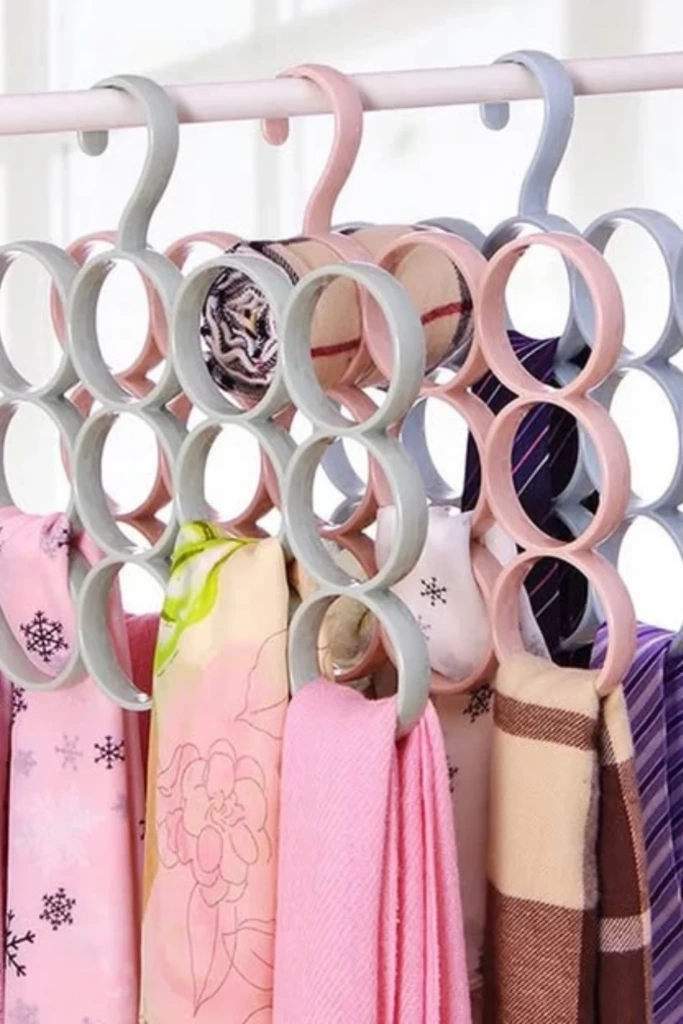
A multi-ring organizer uses several connected rings to create separate spaces for hanging scarves. The rings may be arranged vertically or attached to a single frame, allowing multiple accessories to share one hanging point.
This design is convenient for smaller wardrobes because it consolidates storage into a narrow area. You can group similar scarves together or reserve individual rings for your most frequently worn pieces.
Look for rings that are wide enough to accommodate the scarves without creating tight bends. Smooth plastic, coated metal, or well-finished wooden rings can work, provided their edges do not snag the fabric.
When arranging the scarves, avoid placing several thick pieces in the same ring. Too much fabric can make the organizer bulky and cause the lower scarves to become difficult to reach.
A multi-ring organizer is particularly practical for casual scarves and lightweight wraps. For fragile fabrics or scarves with embellishments, choose a design that minimizes rubbing and allows each piece to hang freely.
11. Hanging Cubby Grid
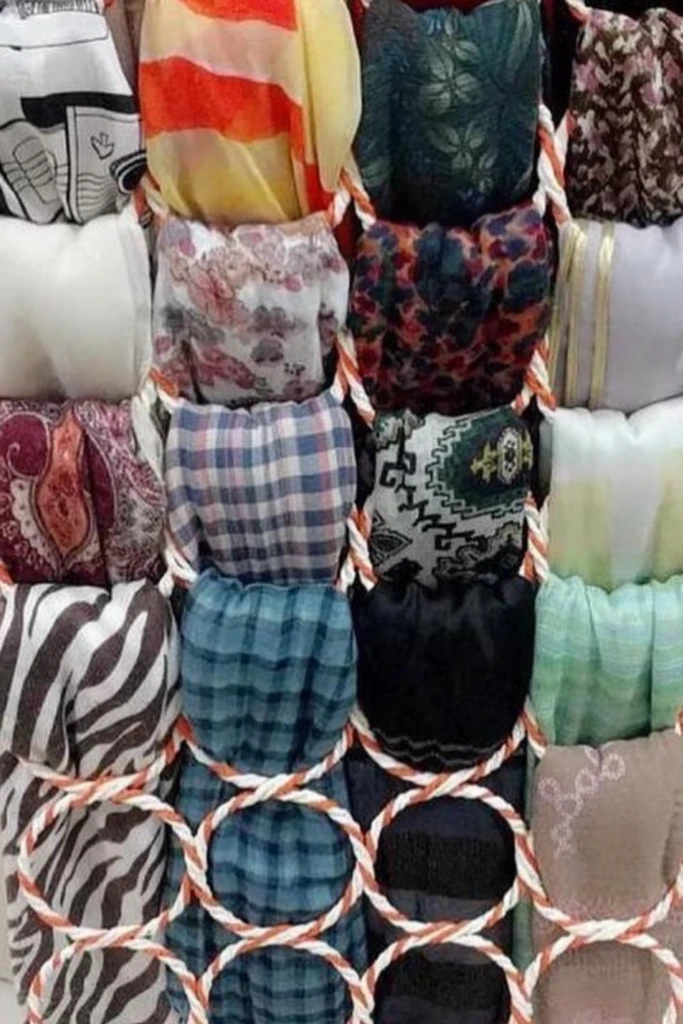
A hanging cubby grid provides a series of fabric compartments suspended from a closet rod. Each cubby can hold one or more folded scarves, offering a balance between open shelving and drawer-style storage.
This organizer is useful when you want to keep accessories visible but do not have enough shelf space for separate storage boxes. It can also be placed beside hanging clothes, making it easy to coordinate scarves with outfits.
Arrange your collection so that everyday pieces occupy the middle compartments, where they are easiest to reach. Reserve upper cubbies for seasonal accessories or less frequently worn designs.
Fold scarves loosely and avoid filling the compartments beyond their capacity. Overstuffed cubbies can sag, distort their shape, and make it harder to remove individual items.
Check the organizer's hanging support and total weight capacity before loading it with heavy knitted scarves. A sturdy design with reinforced shelves will generally last longer than one made from very thin fabric.
12. Circular Ring Hooks
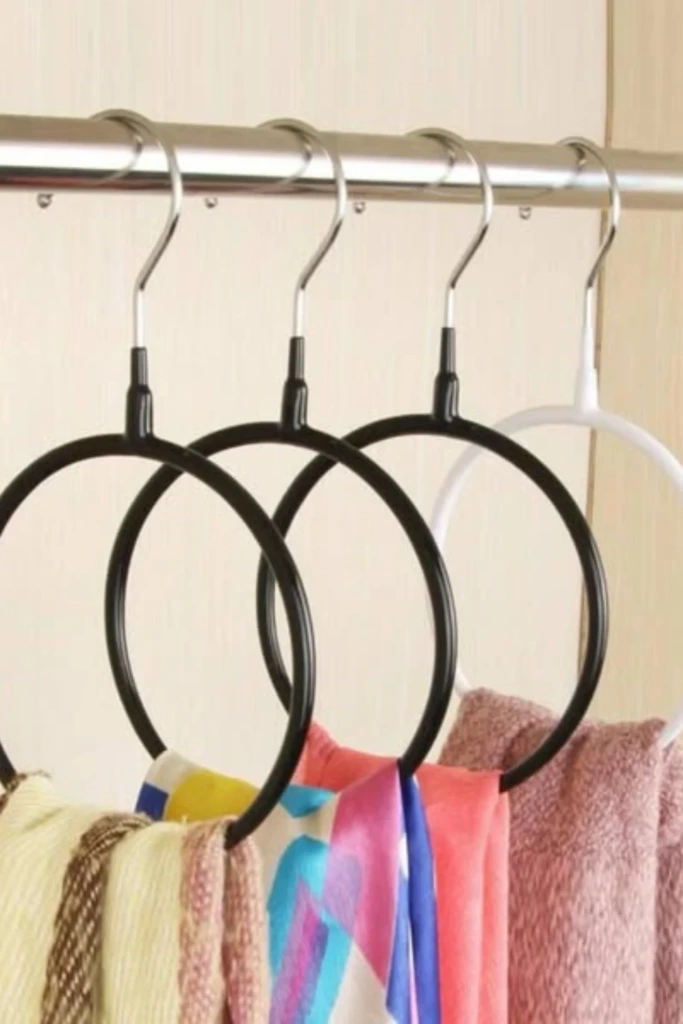
Circular ring hooks are individual round holders that allow scarves to hang from a hook, rail, or other compatible support. Their simple design can help separate accessories while making use of a small amount of space.
You can install suitable hooks inside a wardrobe, attach them to an existing rail, or use a standalone version if the design permits. Grouping scarves by color or season can make the arrangement more practical.
Choose rings with a smooth, rounded finish and sufficient diameter for your scarves. Narrow rings can create pressure points, while rough metal edges may damage delicate threads.
This option works well for lightweight scarves that can be draped naturally through a ring. Thick knits and heavily embellished pieces may require more spacious storage to prevent compression or snagging.
If the hooks are mounted on a wall or cabinet, make sure the fixing method suits the surface and the expected load. Keep the rings spaced apart so you can remove one scarf without pulling on the others.
13. Shelf Rod Display
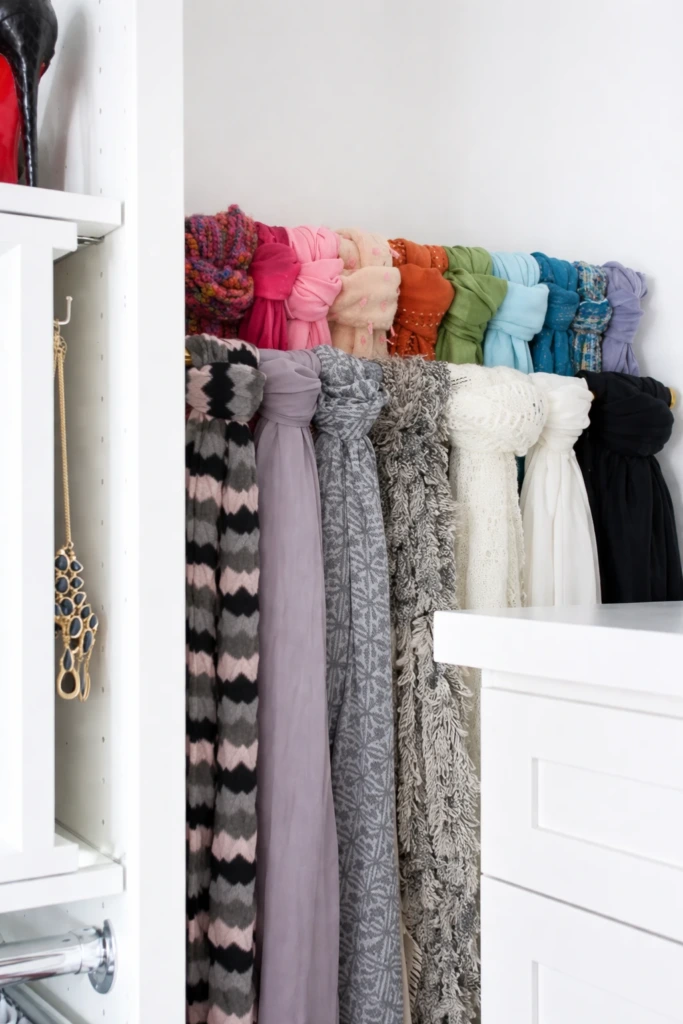
A shelf rod display combines a shelf with a horizontal hanging rod, giving you two useful storage areas in one place. The shelf can hold folded scarves or storage baskets, while the rod accommodates pieces that are better kept hanging.
This arrangement is useful in walk-in closets, dressing rooms, and wardrobes with a little extra vertical space. It also makes it possible to coordinate scarves with handbags, hats, or other accessories stored on the shelf.
For a tidy appearance, hang scarves loosely over the rod or use smooth individual hangers. Arrange them so their ends do not drag across the shelf or become trapped behind nearby clothing.
Use the shelf for neatly folded seasonal scarves and keep everyday favorites on the rod. If the shelf is positioned above a clothing rail, check that hanging scarves will not interfere with garments below.
Pay attention to the rod's load capacity and the distance between the rod and shelf. Adequate clearance prevents fabric from bunching and allows you to retrieve scarves comfortably.
14. Ladder Style Rack
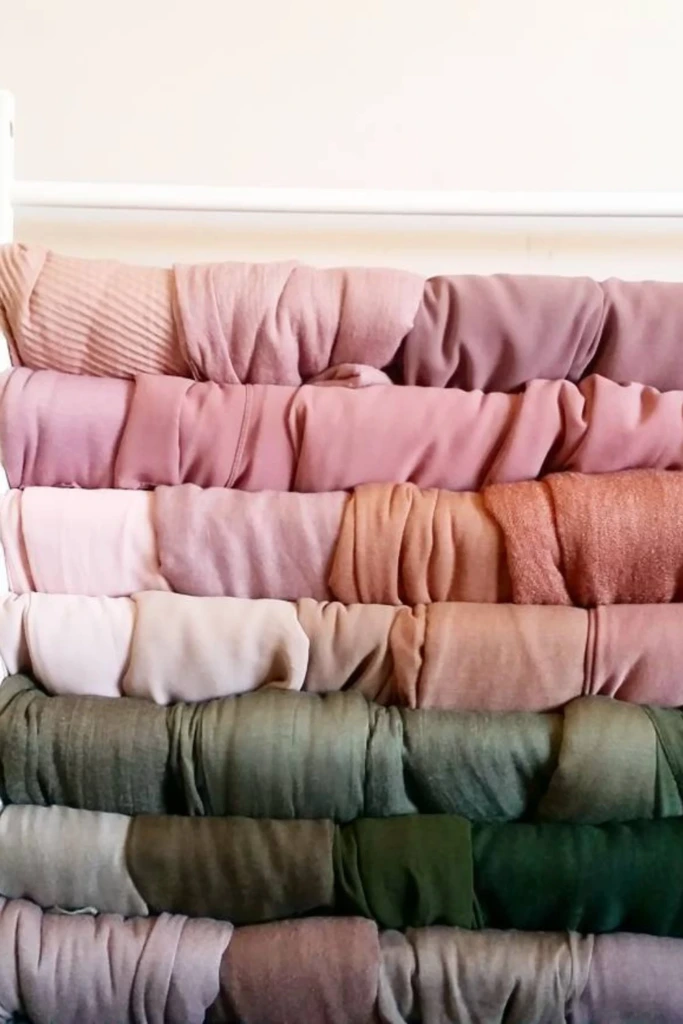
A ladder-style rack features horizontal rungs supported by two vertical sides. Scarves can be draped over the rungs, creating an open display that is both functional and decorative.
This style suits bedrooms, dressing areas, and larger closets where a freestanding accessory display fits comfortably. It can also be useful when you want to keep a small selection of frequently worn scarves within easy reach.
Place lighter scarves on the upper rungs and bulkier pieces on the lower ones if the rack is stable and designed for the weight. Avoid layering too many scarves on the same rung, as overlapping fabric can hide patterns and make individual pieces difficult to remove.
Choose a rack with a secure base or suitable wall support. If it leans against a wall, follow the manufacturer's setup instructions and keep it away from busy walkways where it could be knocked over.
Since the scarves remain exposed, a ladder rack is best for accessories you use regularly. Keep it away from direct sunlight and dusty areas to help preserve colors and fabric quality.
15. PVC Tube Organizer
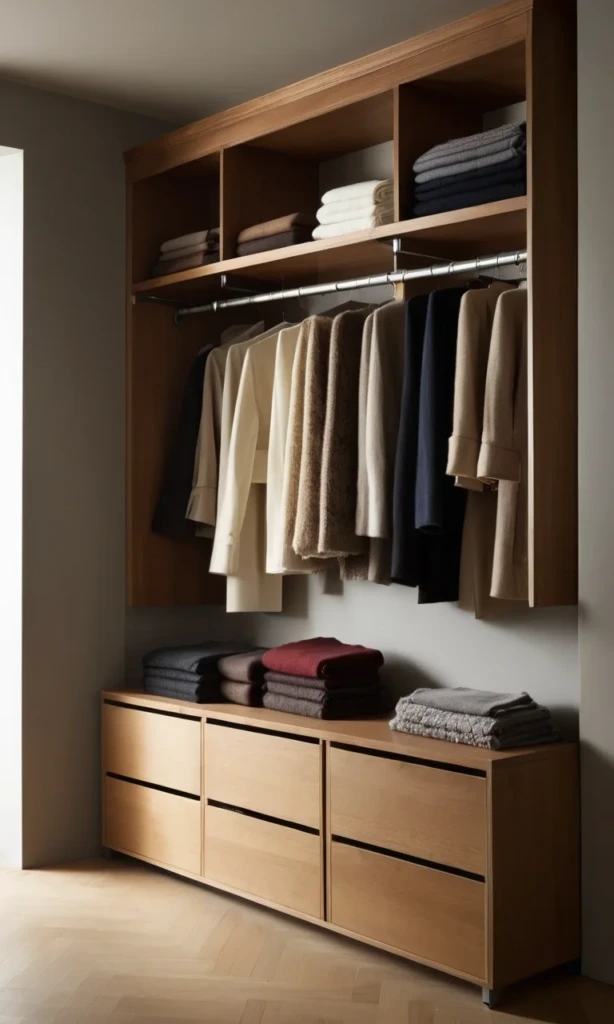
A PVC tube organizer uses short sections of plastic tubing to create individual compartments for rolled scarves. The tubes can be arranged inside a drawer, on a shelf, or within a larger container, depending on the dimensions of the setup.
This is a practical DIY option if you want inexpensive, clearly separated storage. Each tube holds a scarf roll, helping prevent lightweight accessories from mixing together when the organizer is moved or a neighboring item is removed.
Measure your scarves and storage area before cutting or buying tubes. The openings should be wide enough for the rolled fabric to slide in and out comfortably without forcing it into a tight space.
All cut edges must be smooth and free of burrs. Use clean, suitable materials intended for indoor storage, and avoid any tube with sharp edges, strong residual odors, or an unsuitable surface finish.
Roll scarves loosely and place them in the compartments without compressing the fabric. For delicate silk, heavily textured materials, or scarves that crease easily, consider storing them flat in a divided drawer instead.
PVC tubes are especially useful for casual accessories and compact storage areas, but the finished organizer should be easy to clean and sized to suit the fabrics you own.
FAQs
Choosing a scarf storage system often comes down to two priorities: protecting the fabric and making everyday accessories easy to access. The answers below cover common questions about keeping scarves neat, preventing wrinkles, and organizing collections in smaller closets.
How do you store scarves without wrinkles?
The best way to reduce wrinkles is to choose a storage method that suits the fabric rather than forcing every scarf into the same arrangement.
For delicate silk and other lightweight scarves, fold each piece gently along its natural lines and place it flat in a drawer or fabric-lined compartment. Avoid tight creases, heavy stacks, and placing bulky items on top of delicate materials.
Cotton scarves and many everyday fashion scarves can be rolled loosely and stored in individual compartments. This can help reduce sharp fold lines while keeping the collection organized. However, some fabrics hold their shape better when folded, so check the care instructions for special materials.
If you prefer hanging storage, use a smooth, wide hanger or a suitable ring organizer. Make sure the scarf is not pulled tightly through a narrow opening or pressed between other accessories.
Before storing any scarf for an extended period, ensure it is clean and completely dry. Keep the storage area away from excessive moisture, direct sunlight, and sources of heat. If a scarf develops creases, follow its care label before using steam or an iron, since high temperatures can damage certain fibers.
What is the best way to store scarves in a small closet?
For a small closet, vertical storage is often the most efficient solution because it uses space that would otherwise remain empty. A multi-hook hanger, tiered loop rack, or over-door pocket organizer can hold several scarves without taking up much shelf or drawer space.
If you already have a free drawer, adjustable dividers or a shallow tray can keep scarves organized without adding another hanging accessory. Fold or loosely roll the scarves according to their fabric and arrange them so the pieces you wear most often remain accessible.
Another option is to store seasonal scarves in labeled fabric cubes on a high shelf, leaving the easiest-to-reach spaces for everyday accessories. Keep bulky winter scarves separate from thin summer styles to avoid overcrowding.
Before buying an organizer, measure your available closet space and check the length of your scarves. A storage system that fits the dimensions of your wardrobe will be easier to use than one that blocks clothing rails or makes doors difficult to close.
The most effective setup is usually a combination of two simple methods: hanging the scarves you wear frequently and storing the rest in a divided drawer, box, or shelf container. This approach keeps your collection accessible while making the most of limited space.
Final Thoughts
A well-organized scarf collection does not require an expensive wardrobe makeover. From multi-hook hangers and drawer dividers to freestanding racks and DIY tube organizers, there are plenty of ways to keep accessories neat and easy to find.
Start by sorting your scarves according to fabric, season, and how often you wear them. Choose storage that protects delicate materials, accommodates bulkier pieces, and fits the space you already have. With a practical system and a little regular maintenance, your scarves can stay in good condition and remain ready to complement your next outfit.