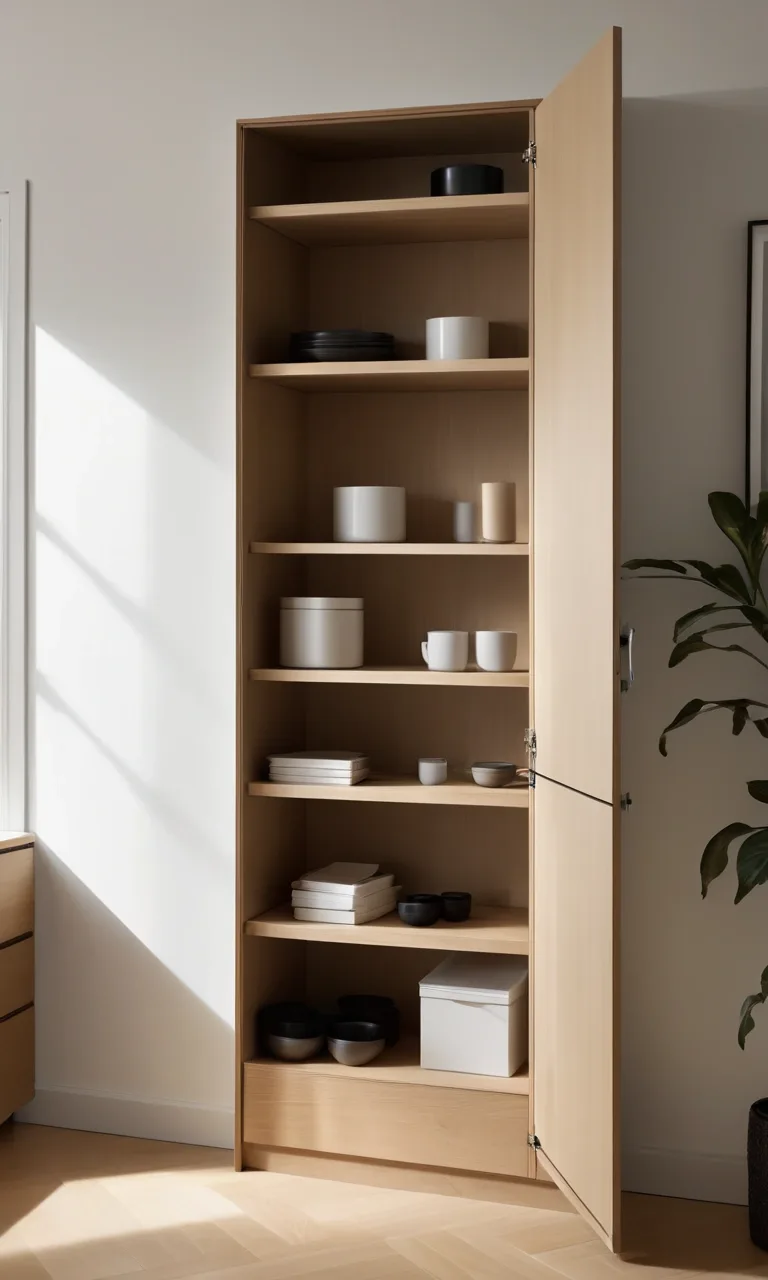
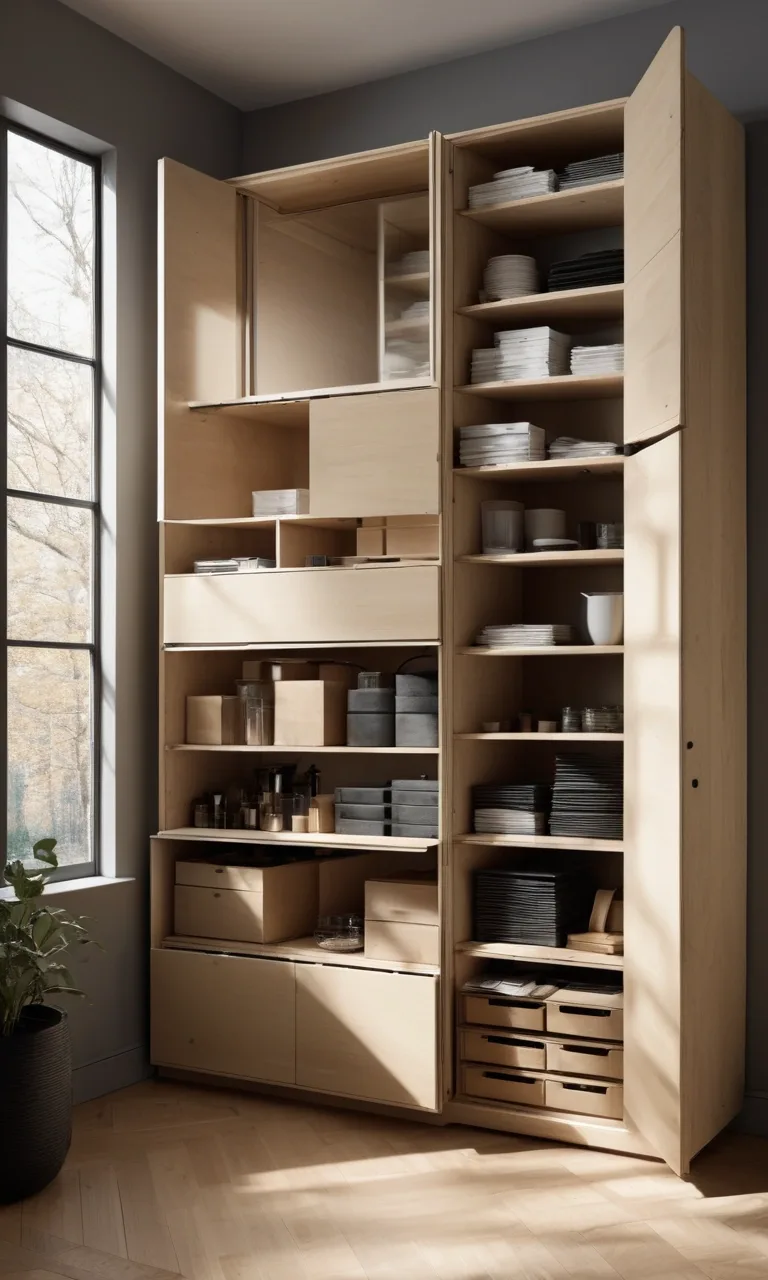
17 Foyer Storage Ideas for a Neat and Organized Entryway in 2026
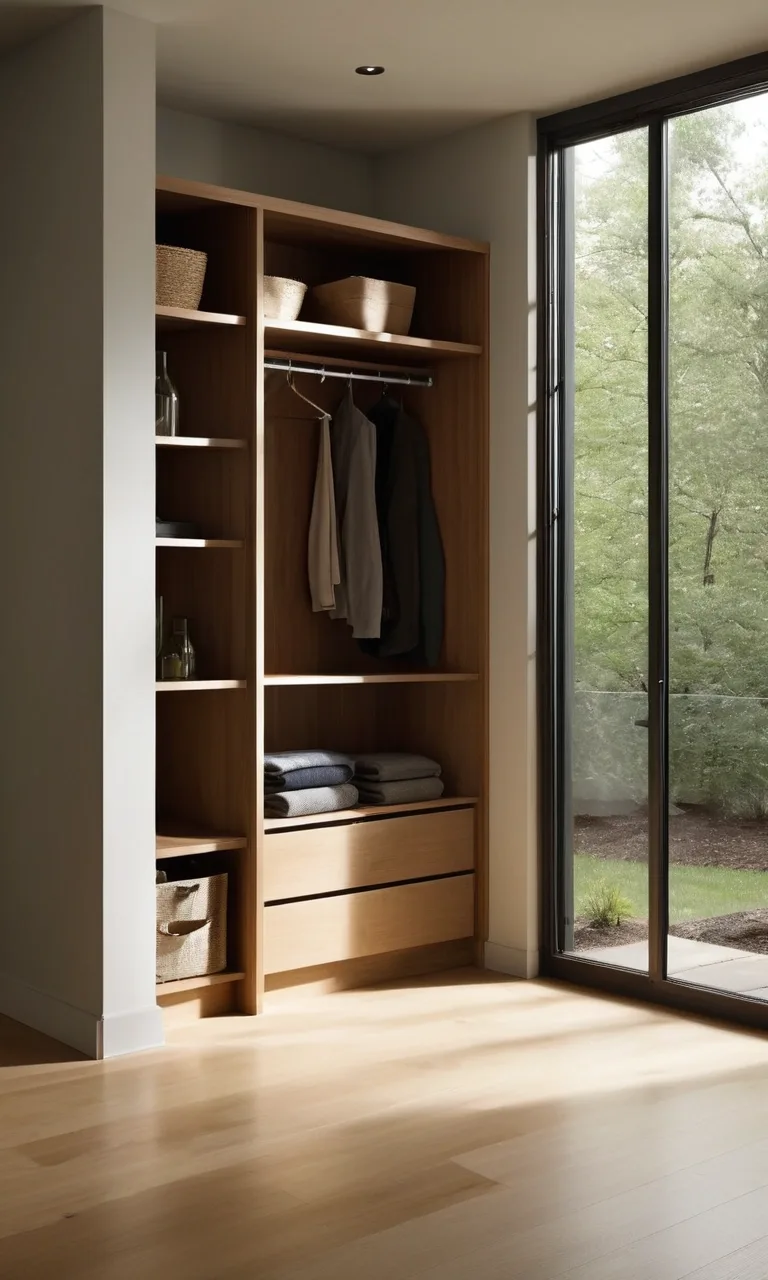
Your foyer is the first space you see when you walk through the front door, but it can quickly become a collection point for shoes, backpacks, jackets, keys, and everyday clutter. A well-organized entryway makes leaving home easier, keeps frequently used belongings within reach, and creates a welcoming first impression for guests.
The best foyer storage ideas combine practical features with a layout that suits your home. Whether you have a spacious entrance, a narrow hallway, or a busy household with children, these solutions can help you make better use of every available inch.
What’s the Most Practical Entryway Storage Setup for Families With Kids?
For families with children, the most practical entryway setup combines accessible hooks, individual shoe storage, baskets for small belongings, and a sturdy bench. These features give everyone a designated place to put their things as soon as they arrive home.
Place lower hooks where children can reach them independently, and reserve higher hooks for adult coats, bags, or items that need to stay out of reach. Shoe cubbies or open racks help prevent footwear from spreading across the floor, while labeled baskets make it easier to collect gloves, hats, scarves, and sports accessories.
A bench provides a convenient place to sit while putting on shoes. If space permits, choose one with drawers or compartments underneath to keep less attractive items out of sight. In smaller foyers, a wall-mounted rail, a slim shoe cabinet, and two or three baskets can accomplish much the same thing without overcrowding the entrance.
The key is to make the system easy enough for children to use without constant reminders. When every item has a convenient home, tidying becomes a simple daily habit rather than a major chore.
1. Hidden Bench Drawers
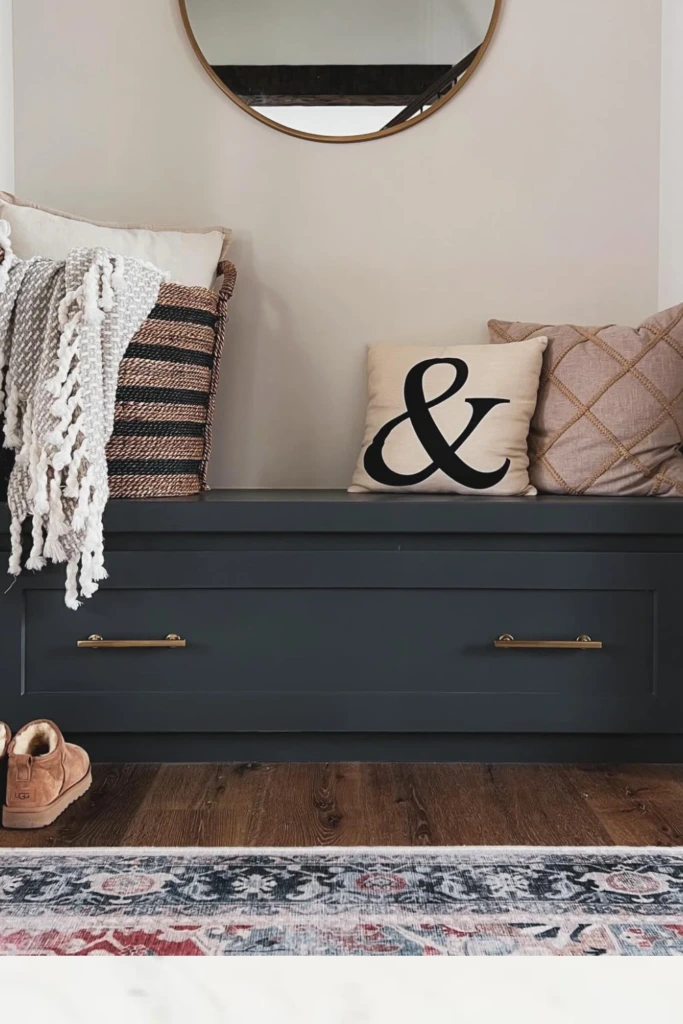
A bench with built-in drawers offers a tidy way to store shoes, accessories, and other entryway essentials without leaving everything visible. It is particularly useful when you want a clean, uncluttered foyer but still need plenty of storage.
Choose drawers deep enough for the belongings you plan to keep inside. Shallow compartments work well for gloves, hats, and pet leashes, while larger drawers can accommodate slippers or smaller shoes. Soft-close hardware can reduce noise, and sturdy drawer fronts are worth considering in busy family homes.
For a cohesive appearance, match the bench finish to nearby furniture or cabinetry. A cushioned seat adds comfort and makes changing shoes easier.
Keep everyday items in the most accessible drawers and reserve less convenient compartments for seasonal accessories. This prevents the storage space from becoming a catchall that is difficult to organize.
2. Open Basket Cubbies
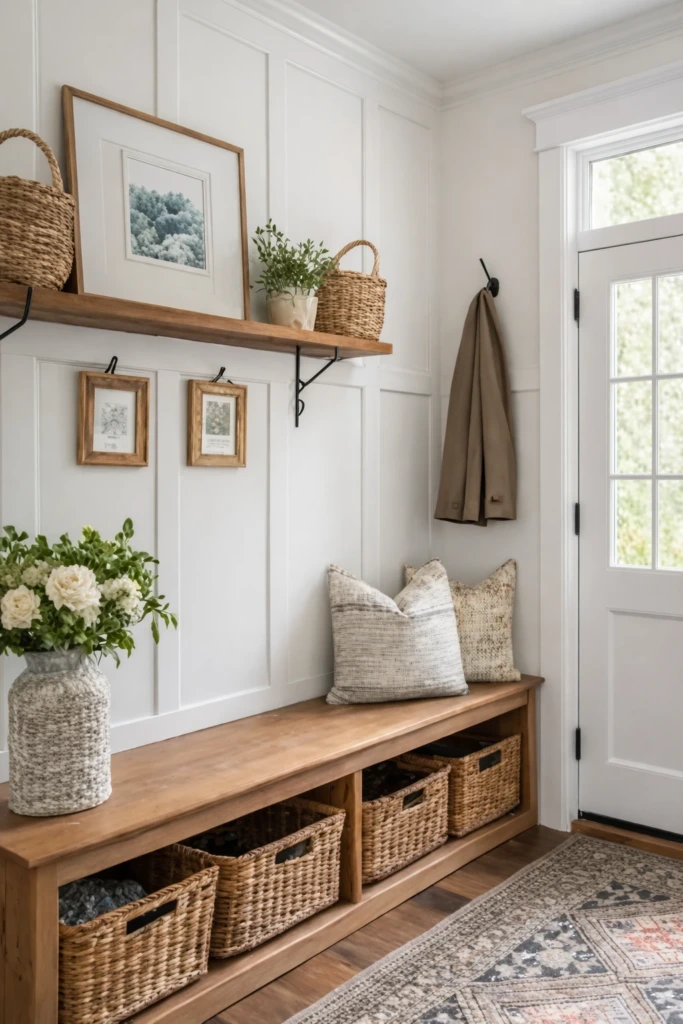
Open cubbies paired with baskets offer flexible storage for households that need to organize many different types of belongings. Each basket can hold a particular category, such as children's hats, reusable shopping bags, dog-walking supplies, or winter accessories.
The open design makes it easy to grab what you need, while the baskets prevent small objects from becoming scattered across shelves. Woven baskets create a warm, natural look, whereas plastic or washable fabric containers are practical choices for items that frequently become dirty.
Measure each cubby before purchasing containers so the baskets fit comfortably without catching on the edges. Handles are especially helpful for children who need to carry their belongings to another room.
To keep the system manageable, avoid assigning too many categories to one basket. A few clearly defined containers are generally more useful than a large collection of loosely organized bins.
3. Full Mudroom Wall
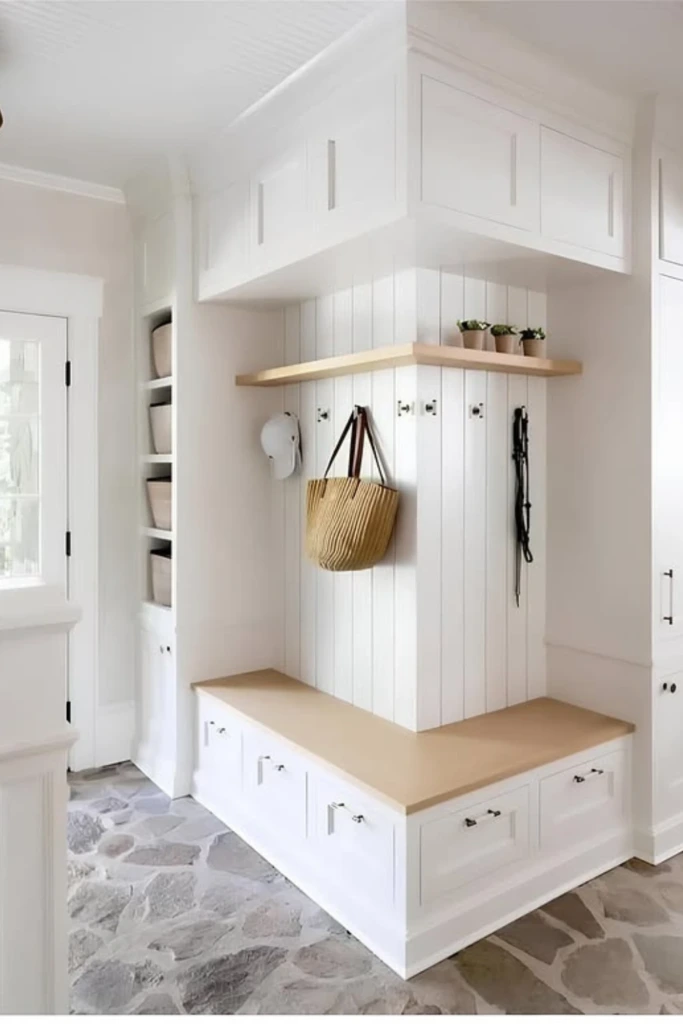
A full mudroom wall turns an ordinary foyer into a dedicated drop zone for the entire household. It typically combines hooks, upper cabinets, open shelves, seating, and lower shoe compartments in one coordinated installation.
This arrangement works especially well in homes with a generous entrance or a family that regularly carries school bags, sports equipment, coats, and outdoor footwear inside. Tall cabinets can conceal seasonal clothing and bulky accessories, while open hooks keep frequently worn items accessible.
If you are planning a custom installation, measure the available wall carefully and consider how doors, nearby walkways, and other furniture affect movement. Leave enough room for people to sit down and remove their shoes without blocking the entrance.
Durable finishes are important because mudroom walls experience frequent contact with wet coats, dirty shoes, and heavy bags. Easy-to-clean surfaces and a moisture-resistant floor will help the area remain attractive with regular use.
4. Wood Hook Nook
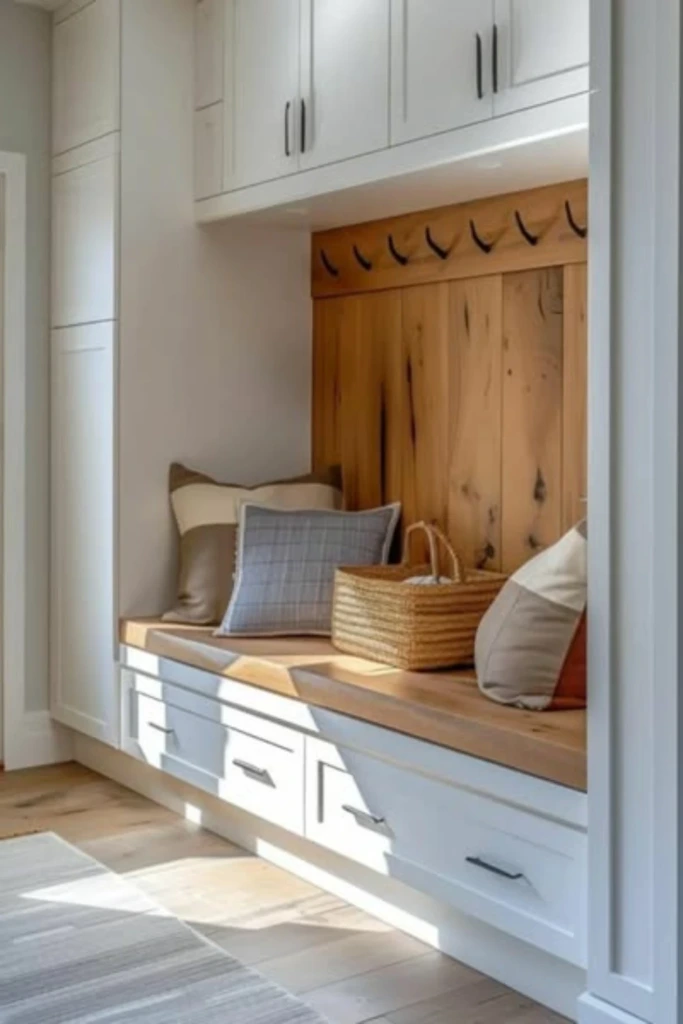
A wood hook nook creates a small but functional storage area with a welcoming, natural appearance. It can be as simple as a wooden backboard fitted with sturdy hooks or a recessed section of wall designed specifically for coats and bags.
Wood adds warmth to an entrance that might otherwise feel plain or cold. Depending on your decor, you can choose pale oak for a Scandinavian-inspired interior, walnut for a richer look, or painted timber for a more traditional style.
Install hooks at different heights to accommodate adults and children. Make sure they are securely attached to appropriate wall supports, especially if they will hold heavy backpacks or winter coats.
A narrow shelf above the hooks can hold a few decorative objects, a small tray for keys, or a container for sunglasses. Avoid placing fragile ornaments where swinging bags or jackets could knock them down.
This design is particularly effective in compact foyers because it uses vertical wall space without requiring a large piece of furniture.
5. Open Closet System
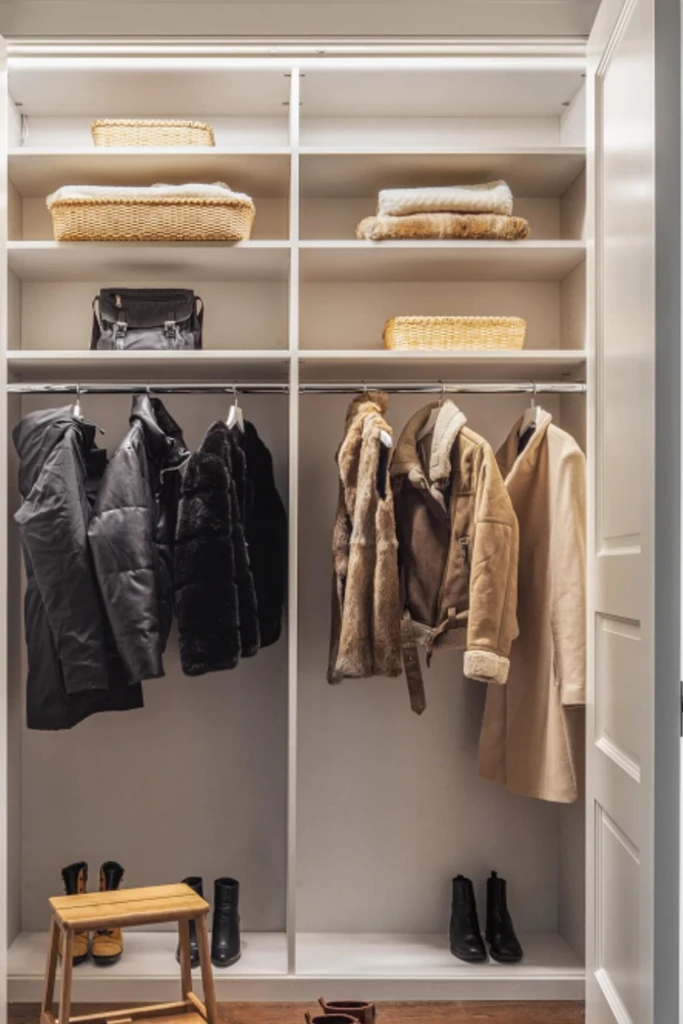
An open closet system brings the functionality of a wardrobe into the entryway without the need for full cabinet doors. It can include a hanging rail, wall hooks, shelves, and baskets arranged according to your family's needs.
This setup makes it easy to see where everything belongs. Coats can hang together, bags can sit on an upper shelf, and shoes can be arranged below. Open storage is also convenient for children because they do not have to open doors or navigate complicated compartments.
The main consideration is appearance. Since everything remains visible, overcrowded shelves and mismatched containers can make the foyer look messy. Keep only frequently used items in the open system and relocate seasonal or rarely worn belongings elsewhere.
If the entrance is narrow, choose a shallow arrangement that does not interfere with the walking path. A simple curtain can provide partial concealment when needed, although it should not obstruct access to the stored items.
6. Cabinet And Hooks
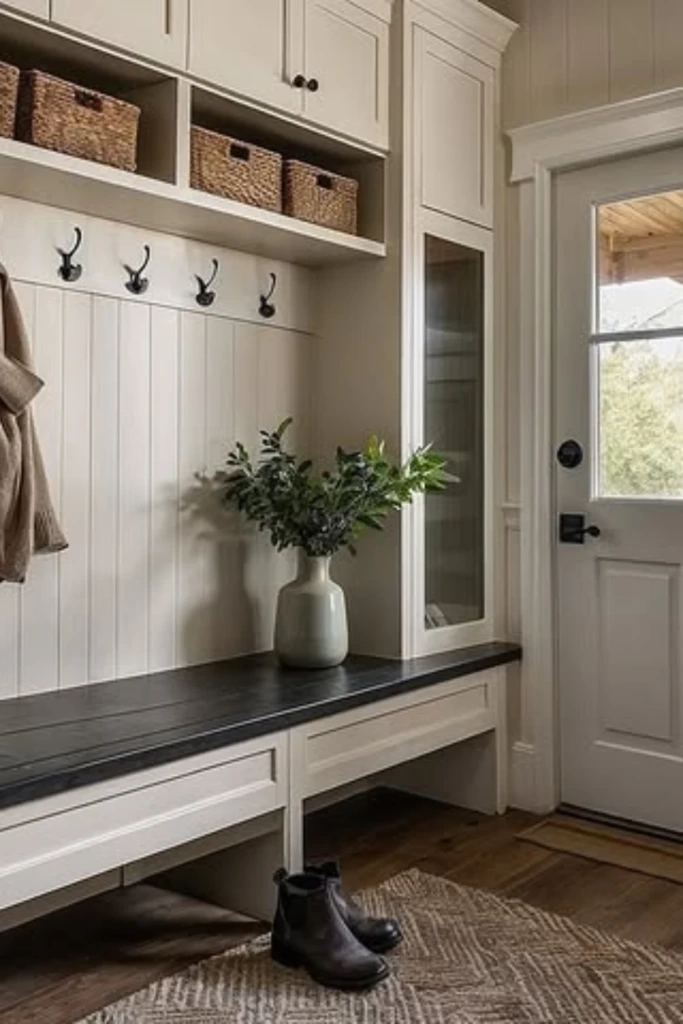
Combining a closed cabinet with wall hooks gives you the benefits of concealed storage and quick everyday access. It is an excellent choice for households that want a tidy-looking entrance without sacrificing convenience.
Use the cabinet for shoes, cleaning supplies intended for the entryway, spare bags, and seasonal accessories. Install hooks beside or above it for the coats, hats, and backpacks used most often.
This arrangement separates visual clutter from daily essentials. Bulky or unattractive belongings stay behind cabinet doors, while items that need to be grabbed quickly remain within reach.
For a balanced appearance, select a cabinet that suits the width of the wall and leave enough room for its doors to open fully. In a small foyer, sliding doors or a narrow cabinet may be more practical than a deep unit.
A small dish or wall-mounted key holder near the hooks can complete the setup and prevent keys from disappearing into bags or pockets.
7. Slim Cabinet Combo
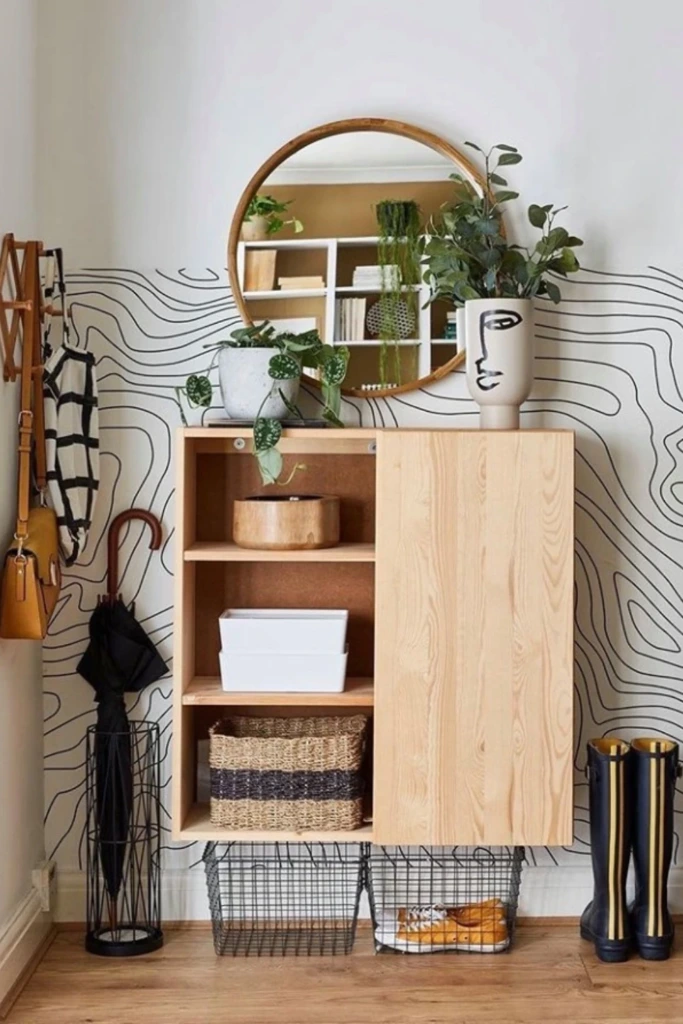
A slim cabinet combo is designed for entryways where floor space is limited. By pairing a narrow storage cabinet with a few hooks or a small upper shelf, you can organize essentials without making the hallway feel crowded.
Look for a cabinet with a compact depth and internal compartments suited to your belongings. Some designs use angled shoe shelves to fit footwear into a relatively shallow footprint. Others provide narrow drawers for keys, sunglasses, and miscellaneous accessories.
Before buying, measure the hallway width and account for the space needed to walk past the cabinet comfortably. Also check whether cabinet doors can open without hitting another door or obstructing the entrance.
A wall mirror above the cabinet can make a small foyer feel more open and provides a convenient place for a final appearance check before leaving home.
Keep the cabinet top relatively clear. One decorative object, a key tray, or a small lamp is often enough to make the area feel finished without turning it into another cluttered surface.
8. Labeled Family Stations
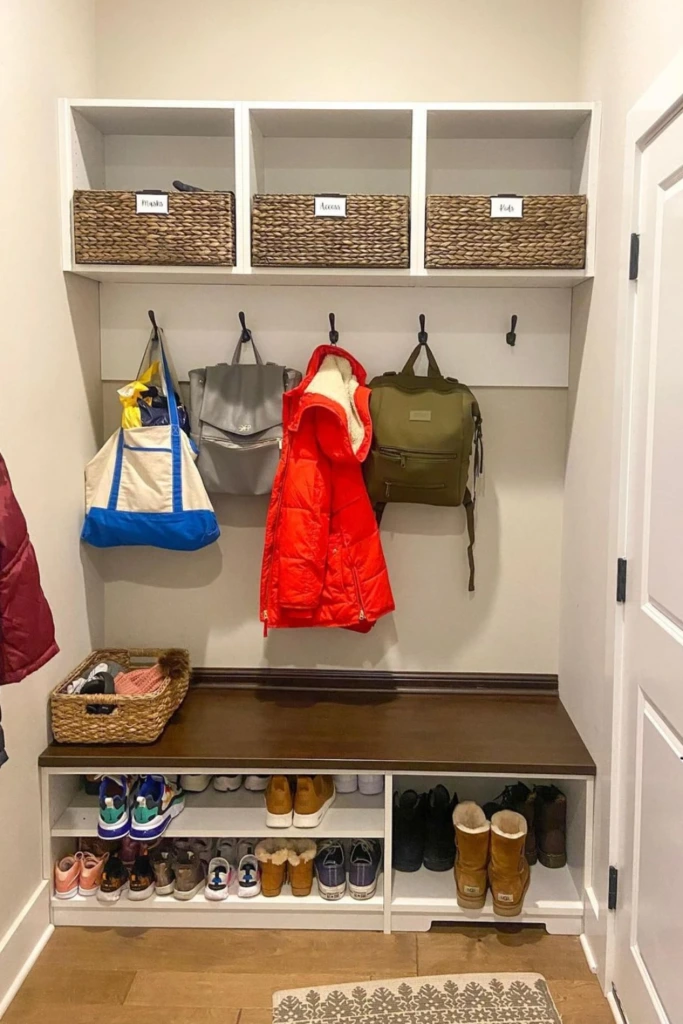
Labeled family stations create a dedicated place for each person's everyday belongings. Instead of sharing one crowded hook rail or a single overflowing basket, each household member gets an assigned section.
A station might include a name label, a coat hook, a shoe compartment, and a basket for smaller accessories. Children can use lower sections, while adults can take the upper spaces. If the household has several children, color-coded labels can make the arrangement easier to recognize.
This approach is especially useful when family members have similar belongings, such as identical school bags or winter hats. Individual storage reduces confusion and makes it easier to identify misplaced items.
Labels do not have to be elaborate. Printed names, simple icons, or reusable tags work well, particularly for young children who are still learning to read.
Review the contents periodically so each station holds only the items that person needs regularly. Outgrown shoes, unused bags, and seasonal accessories can be moved elsewhere to keep the everyday storage manageable.
9. Deep Bench Cubbies
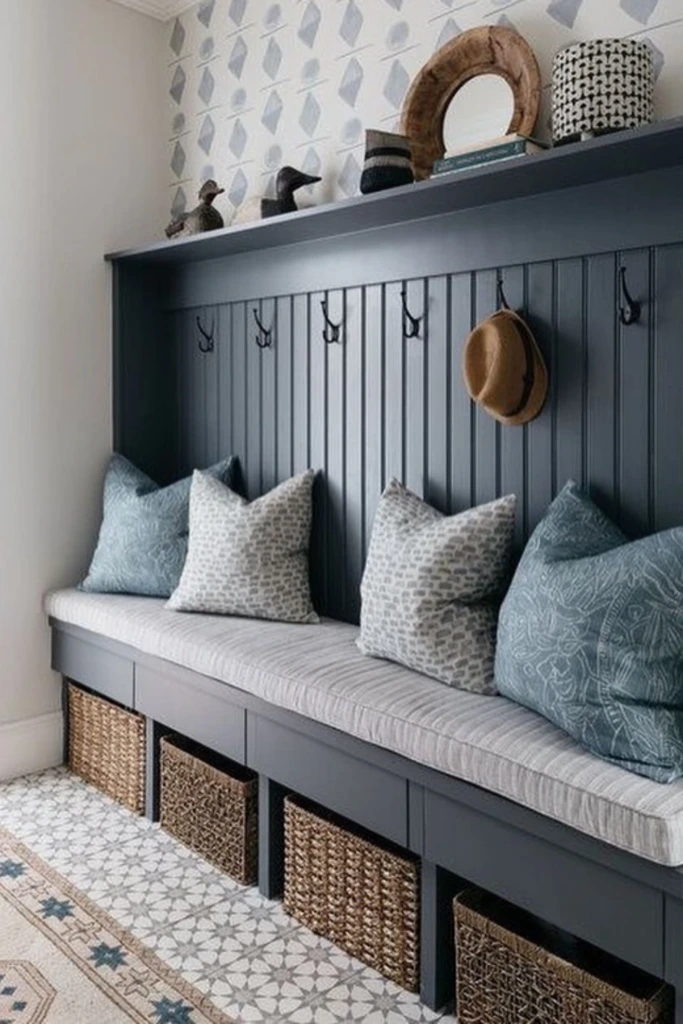
A deep bench with built-in cubbies combines comfortable seating with generous storage capacity. The space beneath the seat can accommodate multiple pairs of shoes, larger bags, or baskets filled with outdoor accessories.
This design is useful for families who need a dedicated place to sit while getting ready. A child can sit on the bench, put on shoes, and reach the appropriate cubby without moving around the foyer.
Choose cubby dimensions according to the footwear and bags you actually own. Tall boots may require a larger compartment than everyday sneakers, while removable baskets can help organize smaller items.
Because deep cubbies can become difficult to manage, avoid pushing belongings to the back where they may be forgotten. Arrange frequently used shoes toward the front and use separate compartments for different family members.
A firm seat cushion can make the bench more comfortable, but select a fabric that is easy to clean. If the foyer receives wet footwear, leave enough ventilation around the cubbies and allow damp shoes to dry before storing them for long periods.
10. Slatted Storage Wall
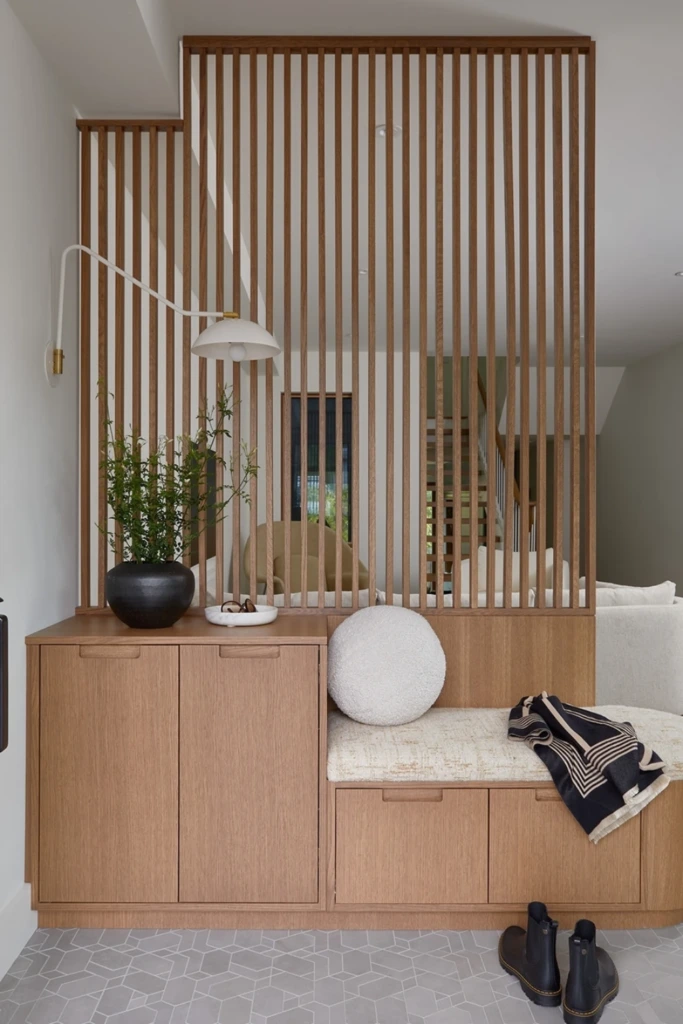
A slatted storage wall introduces texture while providing a practical foundation for hooks, shelves, and other entryway accessories. Vertical wood slats create visual interest and can help define the foyer as a separate zone in an open-plan home.
Depending on the design, hooks can be attached directly to suitable structural supports or mounted on a compatible backing system. Small shelves can hold keys, sunglasses, or decorative items, while lower hooks make everyday storage accessible to children.
The spacing and installation method matter. Ensure that the wall system is rated for the intended loads and that heavy bags are not attached to decorative slats that cannot support them.
Wood tones can coordinate with flooring, furniture, or nearby trim. For a contemporary interior, a simple natural finish works well; painted slats can create a more subtle background when you prefer storage to blend into the wall.
Keep accessories limited to the essentials so the slatted design remains visible and the entrance does not feel overcrowded.
11. Minimal Hook Bench
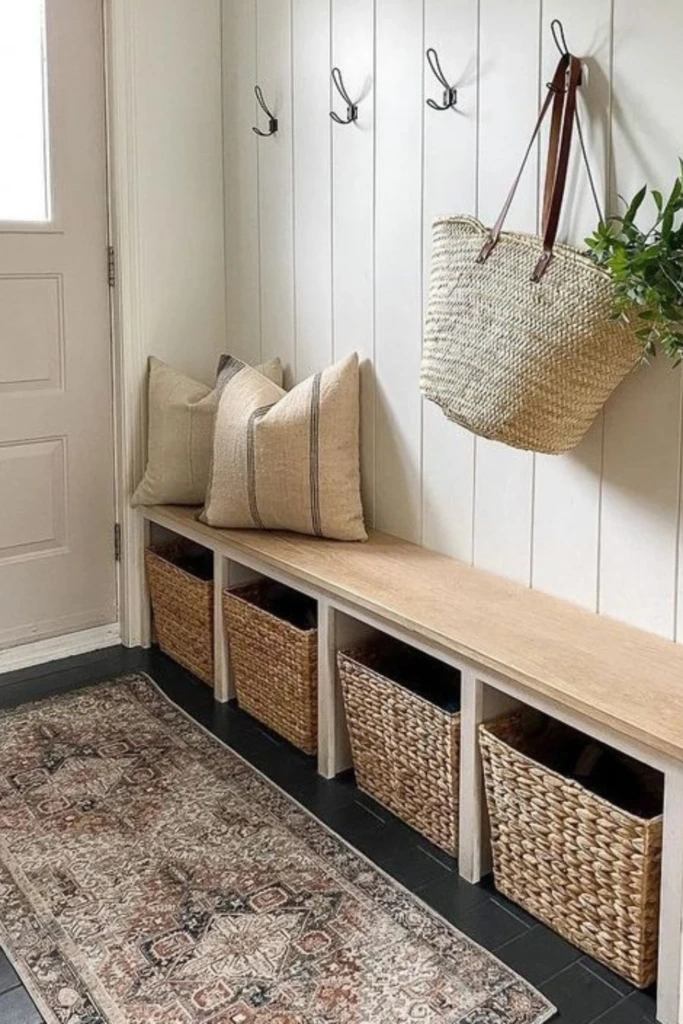
A minimal hook bench is a straightforward solution for anyone who prefers a clean, uncluttered entryway. It combines a simple seating surface with a small row of hooks, providing the essentials without a large storage installation.
The bench can hold everyday shoes underneath, while the hooks accommodate coats, bags, and lightweight accessories. A small basket beside the bench can collect slippers or other items that do not need individual compartments.
This setup suits apartments, narrow hallways, and homes where a large mudroom wall would be unnecessary. It can also work well in a secondary entrance used mainly for quick trips outdoors.
Choose a bench with a sturdy frame and a seat height that makes sitting and standing comfortable. Secure wall hooks properly and leave sufficient clearance so hanging coats do not interfere with doors or walkways.
To preserve the minimalist appearance, limit the number of items left out. Store extra footwear and off-season clothing elsewhere, keeping only the most frequently used belongings near the entrance.
12. Shelf And Rail
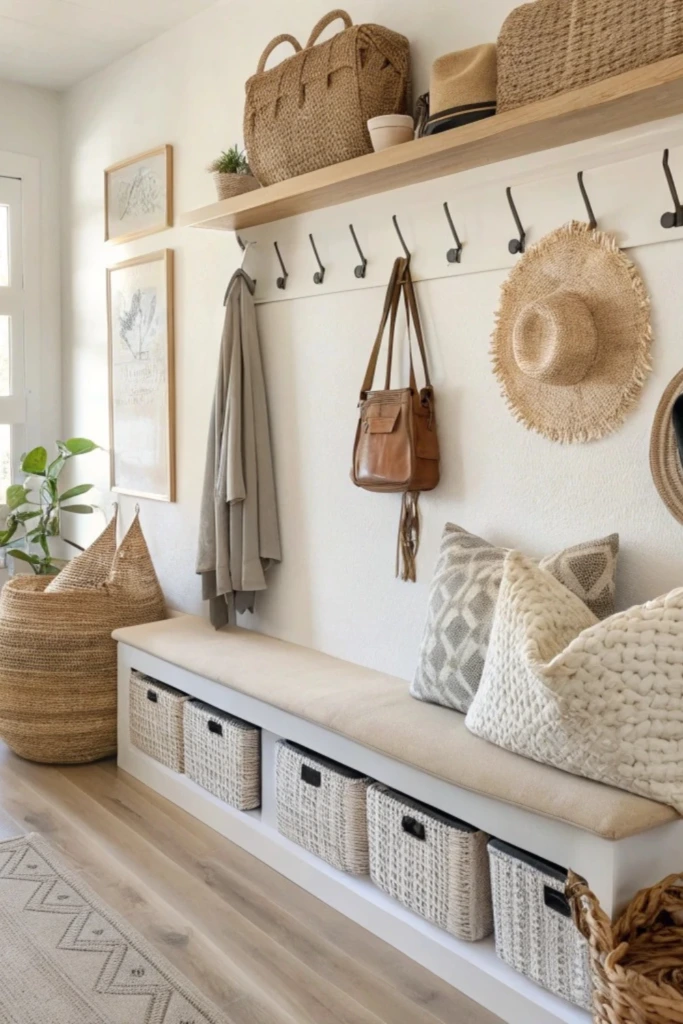
A shelf-and-rail arrangement uses vertical wall space to create a practical storage station. A shelf provides room for small containers, hats, or decorative accents, while a rail beneath it supports hooks or coat hangers.
This is a useful alternative to bulky entryway furniture, particularly when the foyer has a narrow footprint. It can be installed above a shoe rack, a compact bench, or an otherwise unused section of wall.
Use the upper shelf for items that are needed occasionally and keep daily essentials on the lower rail. A small tray can prevent keys and coins from spreading across the shelf, while hooks can hold bags, dog leashes, and jackets.
Pay attention to installation height. The shelf should be easy for adults to reach without becoming an obstacle, and the rail should leave enough hanging space for coats.
For a family entrance, adding a second lower row of hooks can give children a convenient place to store their belongings independently.
13. Compact Hall Tree
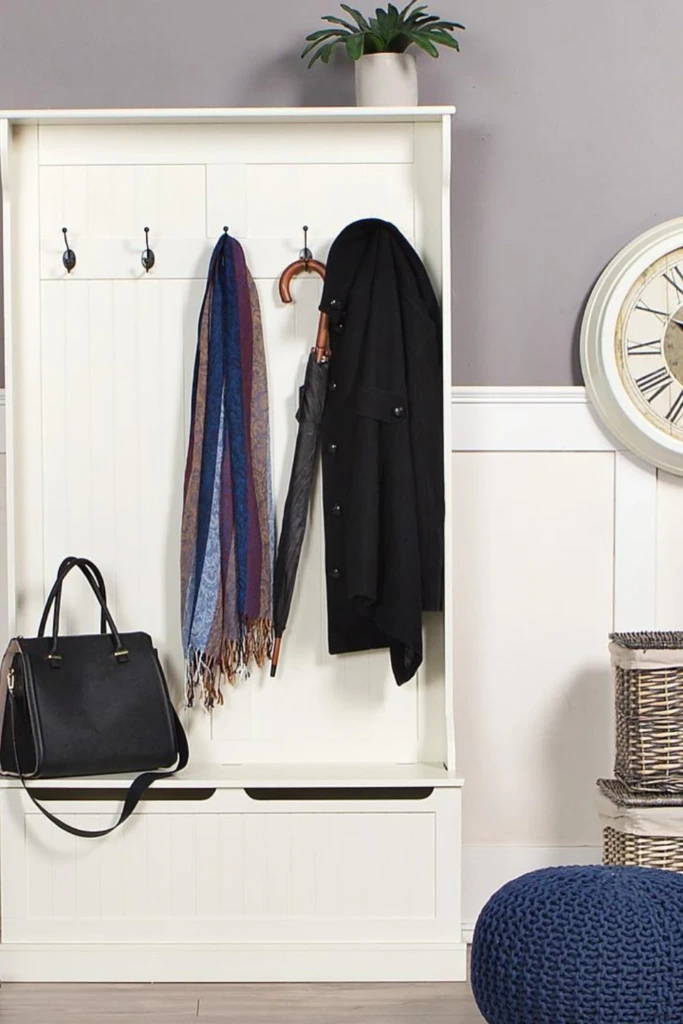
A compact hall tree brings several storage functions together in one freestanding unit. Most designs include hooks, a small bench, and space for shoes, with some models offering an upper shelf or enclosed compartments.
Because the components are integrated, a hall tree can be a convenient option when you do not want to install separate shelves and hooks. It is also easy to position in a rental property, provided the unit can be secured safely where necessary.
Measure the available floor area before choosing a model. Some hall trees appear compact in product photographs but extend farther into the room than expected. Consider the height of the hooks, the width of the bench, and the space required to sit comfortably.
For families, look for a design with accessible hooks and enough shoe storage for everyday footwear. Baskets can help organize smaller accessories, while a cushioned bench provides a more comfortable place to get ready.
Choose a finish that complements the surrounding furniture so the hall tree feels like part of the interior rather than an oversized utility piece.
14. Narrow Wall Built-In
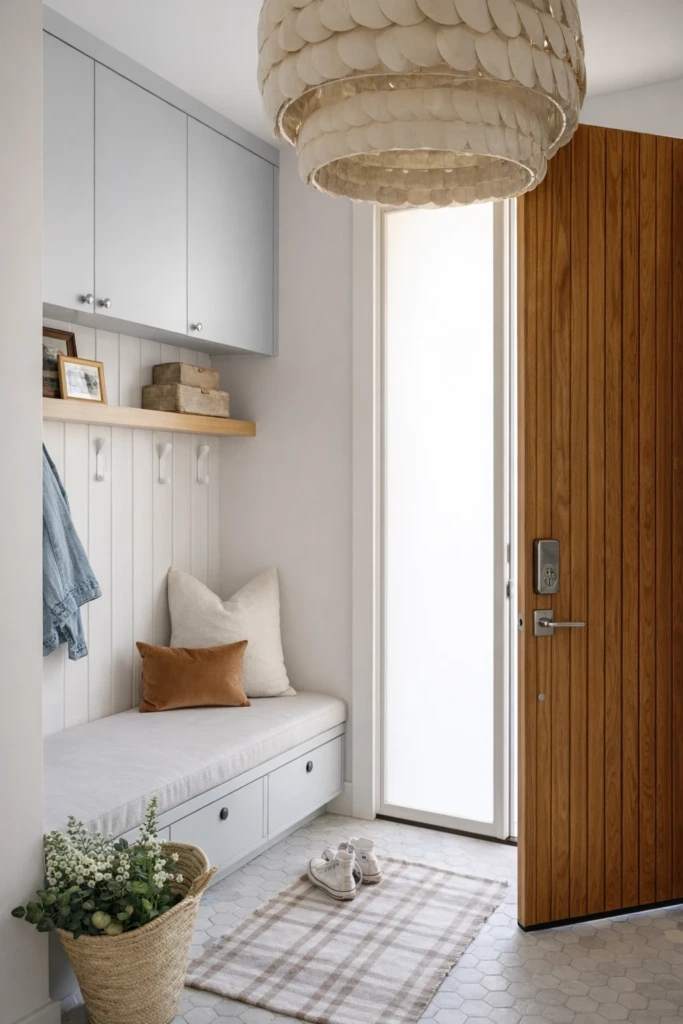
A narrow wall built-in makes use of an awkward or underused section of the foyer. Custom shelving, shallow cabinets, and strategically positioned hooks can transform a small stretch of wall into a useful storage area.
This solution is particularly valuable in tight hallways where conventional furniture would reduce the walking space. A shallow cabinet can conceal shoes and accessories, while a narrow open shelf provides a home for keys or small everyday items.
If you are planning a built-in, consider what needs to be stored before deciding on its dimensions. Shoes, handbags, coats, and folded accessories all require different amounts of depth and clearance.
A carpenter or cabinet installer can help account for wall conditions, skirting boards, electrical outlets, and door swings. In some homes, a combination of open shelving and closed compartments provides the best balance between accessibility and a streamlined appearance.
Use durable materials and finishes that can withstand regular handling. Built-ins are often long-term investments, so it is worth choosing a layout that can accommodate changing family needs.
15. Double Bench Alcove
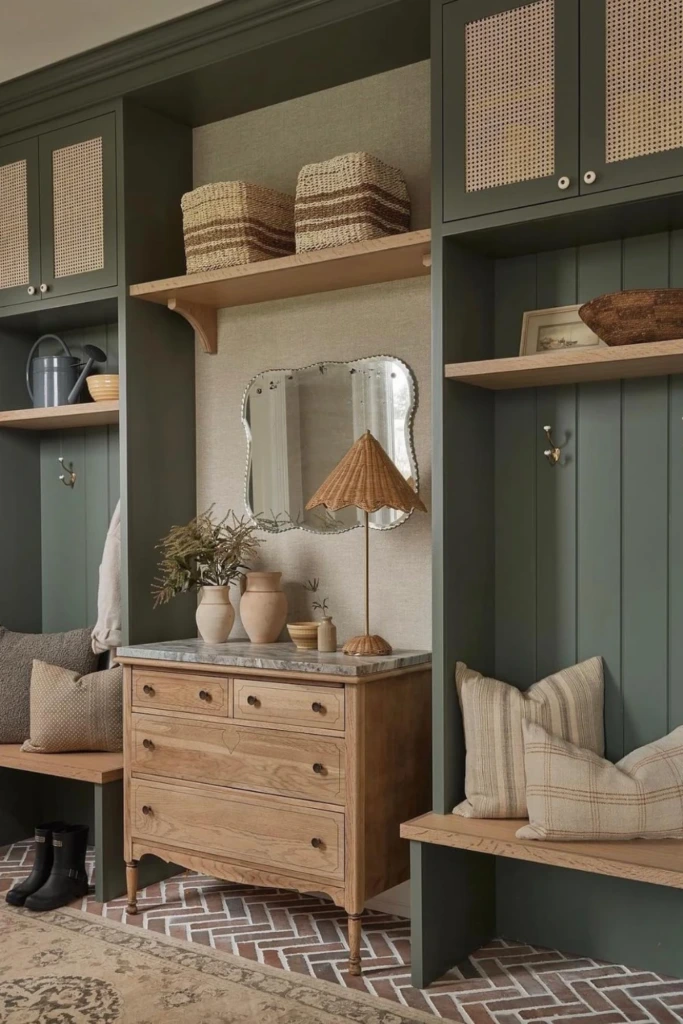
A double bench alcove creates two levels or sections of seating and storage within a recessed entrance area. Depending on the layout, it may feature a full-length bench divided into separate family zones or two adjoining seating sections with individual cubbies.
The extra organization can be helpful in a busy household where several people prepare to leave at the same time. Separate compartments make it easier to assign spaces for shoes, backpacks, and outdoor accessories.
If the alcove is large enough, one section can be dedicated to children while the other serves adults. Alternatively, the upper portion can provide hooks and shelves, with the lower portion reserved for seating and footwear.
Comfort and circulation are important considerations. Leave sufficient room in front of the benches so people can sit down and put on shoes without blocking the main entrance.
Add washable cushions if the benches will be used frequently, and choose storage compartments that are easy to clean. The result should be practical for everyday use rather than designed solely for appearance.
16. Simple Shoe Rack
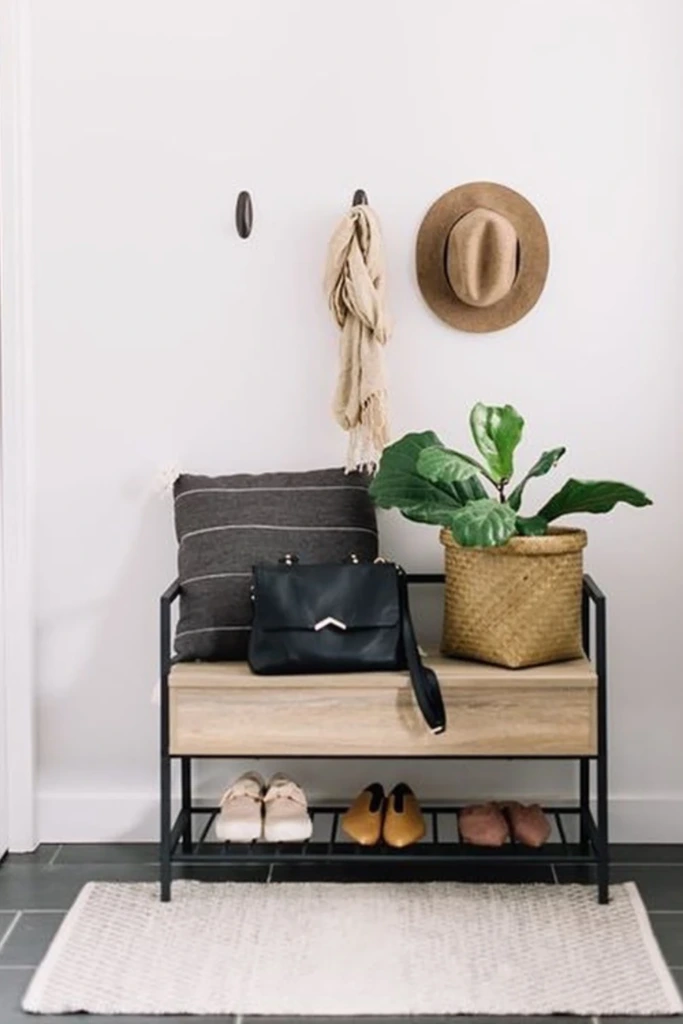
A simple shoe rack is one of the most affordable ways to reduce clutter near the front door. It keeps footwear grouped together, makes pairs easier to find, and prevents shoes from spreading across the entrance floor.
Choose a rack with enough capacity for the shoes regularly worn by your household. Open shelves offer quick access and good airflow, while tiered designs make better use of vertical space.
For a small foyer, a narrow or vertical rack may fit better than a wide unit. If children use the rack, ensure that the lower shelves are easy to reach and stable enough to withstand everyday handling.
Organize shoes by person or type, and avoid filling the rack with footwear that is rarely worn. Extra pairs can be stored in bedroom closets or seasonal storage areas.
Place a washable mat or boot tray underneath to catch dirt and moisture. This small addition makes cleaning easier and helps protect the surrounding floor, particularly during rainy weather.
17. Closet Turned Mudroom
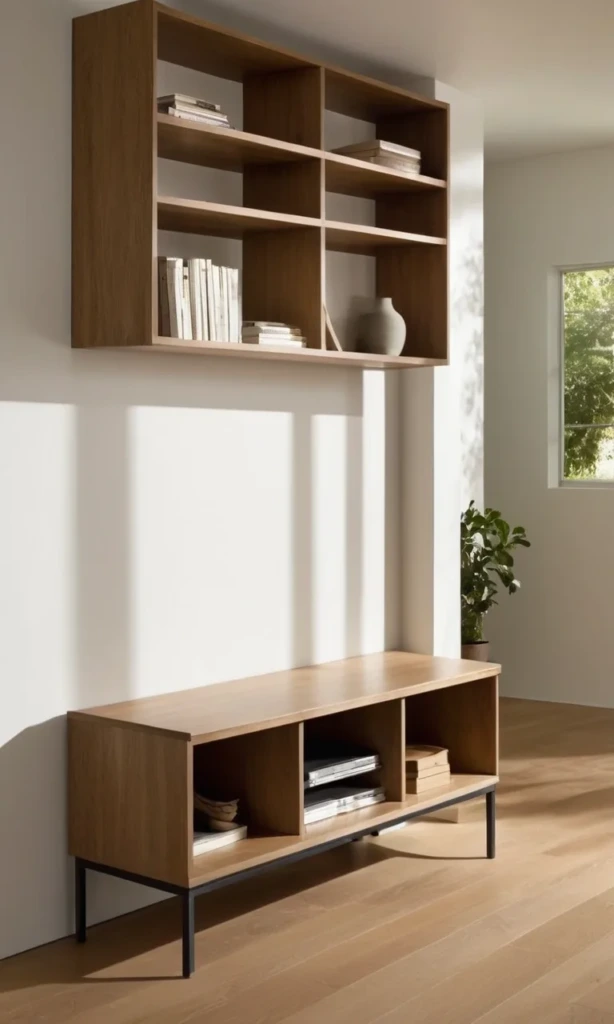
An existing entryway closet can become a functional mini mudroom with a few thoughtful changes. Instead of using the entire closet for coats on hangers, divide the interior into zones for footwear, bags, accessories, and everyday outerwear.
Install a low shelf or shoe organizer at the bottom, add hooks to an appropriate wall or backing panel, and use baskets for gloves, hats, and other small belongings. If the closet is deep enough, an upper shelf can hold seasonal accessories or rarely used bags.
For family use, make frequently accessed items easy to reach. Children may benefit from a lower hook or a dedicated basket, while adults can use the higher hanging rail.
Before making modifications, check the closet's dimensions and identify any obstructions that affect the available space. Avoid overcrowding the interior, since tightly packed belongings are harder to retrieve and can limit airflow around damp coats and shoes.
You can keep the closet doors for a neat exterior or remove them if an open arrangement better suits your routine. If the doors are removed, maintain a consistent organization system so the contents remain presentable.
FAQs
A well-planned foyer should make everyday routines easier without taking up more space than necessary. The right combination of hooks, seating, shelves, cabinets, and baskets depends on your household size, available floor area, and the belongings you need to store.
The following answers address two common challenges when organizing a family entryway.
How Do You Keep Kids From Dumping Everything on the Floor?
The most effective approach is to make putting things away easier than leaving them on the floor. Children are more likely to follow a storage routine when the designated spot is obvious, accessible, and close to where they naturally enter the house.
Start by giving each child a low hook for a coat and backpack, plus a specific place for shoes. Add an open basket for smaller accessories so children do not have to sort every glove, hat, or scarf into a separate container.
Keep the number of storage steps to a minimum. If a child must open a cabinet, move a basket, and reach a high shelf to put away one item, the system may be too complicated for everyday use.
Establish a short arrival routine: hang the bag, put away the coat, place shoes in the assigned area, and empty the backpack if necessary. Younger children may need reminders at first, but consistent expectations help turn the process into a habit.
It also helps to avoid overcrowding. When hooks are packed tightly and shoe shelves are full, children may leave belongings on the floor simply because there is nowhere convenient to put them.
Finally, spend a few minutes resetting the entryway each evening. Return stray items to their assigned locations and remove anything that does not belong there. A quick daily tidy prevents small messes from becoming overwhelming.
What’s Better for Families: Open or Closed Storage?
Neither open nor closed storage is universally better. The right choice depends on how your family uses the entrance, how much space is available, and whether quick access or a tidy appearance is the bigger priority.
Open storage is usually more convenient for everyday items. Hooks, cubbies, shoe racks, and baskets allow family members to see where belongings belong and retrieve them quickly. This arrangement can be especially helpful for children learning to organize independently.
However, open storage also makes clutter more visible. If everyone leaves extra coats, bags, and shoes in the foyer, the space can look untidy even when the belongings are technically organized.
Closed storage conceals visual clutter and gives seasonal items, spare footwear, and less frequently used accessories a protected place. Cabinets and drawers are particularly useful when the entrance is visible from the living room or dining area.
The trade-off is accessibility. Doors and drawers introduce additional steps, and deep cabinets can become disorganized if items are pushed to the back.
For most families, a combination of both works best. Use open hooks and cubbies for daily essentials, then reserve closed cabinets or drawers for extra belongings. This hybrid arrangement keeps frequently used items within reach while maintaining a calmer, more organized appearance.
Final Thoughts
An organized foyer can make a noticeable difference in how smoothly your household starts and ends each day. From hidden bench drawers and labeled family stations to compact hall trees and repurposed closets, there are plenty of ways to create useful storage without sacrificing style.
Begin by identifying what usually accumulates near your front door, then choose a few storage features that address those specific problems. Prioritize accessible hooks, convenient shoe storage, and clearly defined spaces for everyday belongings. With a practical layout and a simple routine, your entryway can remain welcoming, functional, and easier for the whole family to maintain.