26 Playroom Storage Ideas for 2026
A well-organized playroom gives children more freedom to explore, create, and play without turning every activity into a cleanup challenge. The secret is choosing storage that fits your available space, your child's favorite toys, and your family's daily routine.
From colorful toy bins and clever shelving to furniture that doubles as seating, there are plenty of ways to make a playroom both attractive and practical. The best systems keep frequently used items accessible, give smaller belongings a designated home, and make tidying up simple enough for children to participate.
Here are 25 inspiring playroom storage ideas to help you create a space that feels inviting, functional, and easy to maintain.
1. Multi-Use Furniture
When floor space is limited, furniture that serves more than one purpose can make a significant difference. A storage bench, upholstered ottoman, or toy chest with a seating cushion can provide a comfortable place to sit while concealing toys, stuffed animals, and other everyday belongings.
Activity tables with built-in drawers or open compartments are equally useful. They give children a dedicated surface for drawing, puzzles, and crafts while keeping essential supplies close at hand. Look for furniture with rounded corners, stable construction, and storage that children can open safely.
Combining seating, display space, and concealed storage reduces the need for separate furniture pieces. This approach works particularly well in shared family rooms, compact playrooms, and multipurpose bedrooms.
2. Floral Bin Wall
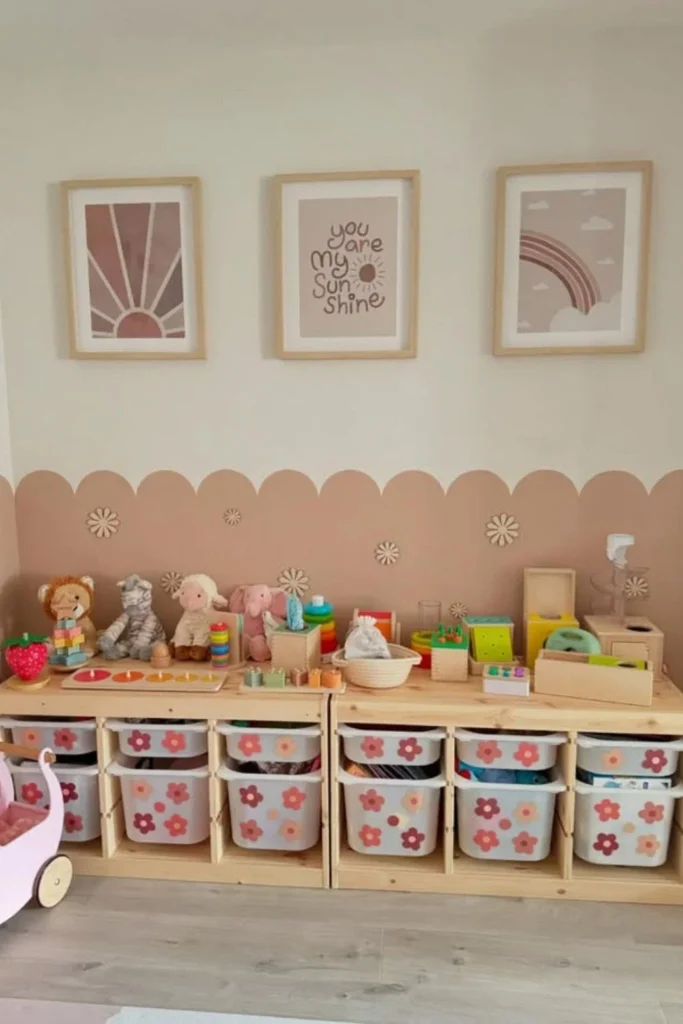
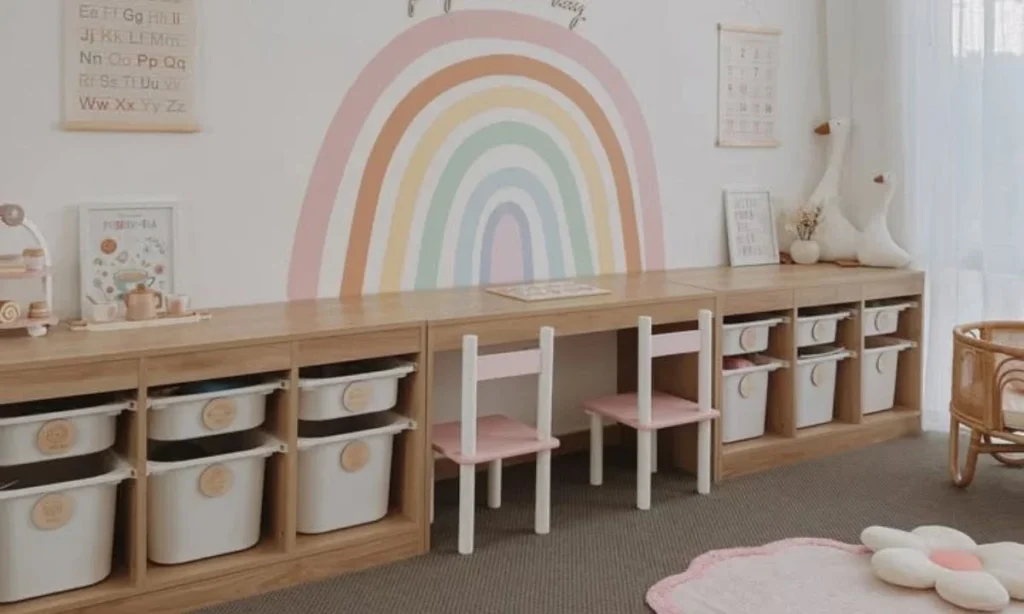
Bring a little personality to your storage wall with low wooden cubbies and floral-patterned containers. The cubbies provide a designated spot for baskets filled with building blocks, miniature figures, puzzles, and plush toys, while the upper surface can display a few favorite items.
Complete the arrangement with pastel artwork, soft pink accents, and natural wood finishes. Keeping the furniture low makes it easier for children to reach their belongings and return them after playing.
Choose washable bins that can withstand everyday use, especially if the playroom is shared by younger children.
3. Cubbie Basket Combo
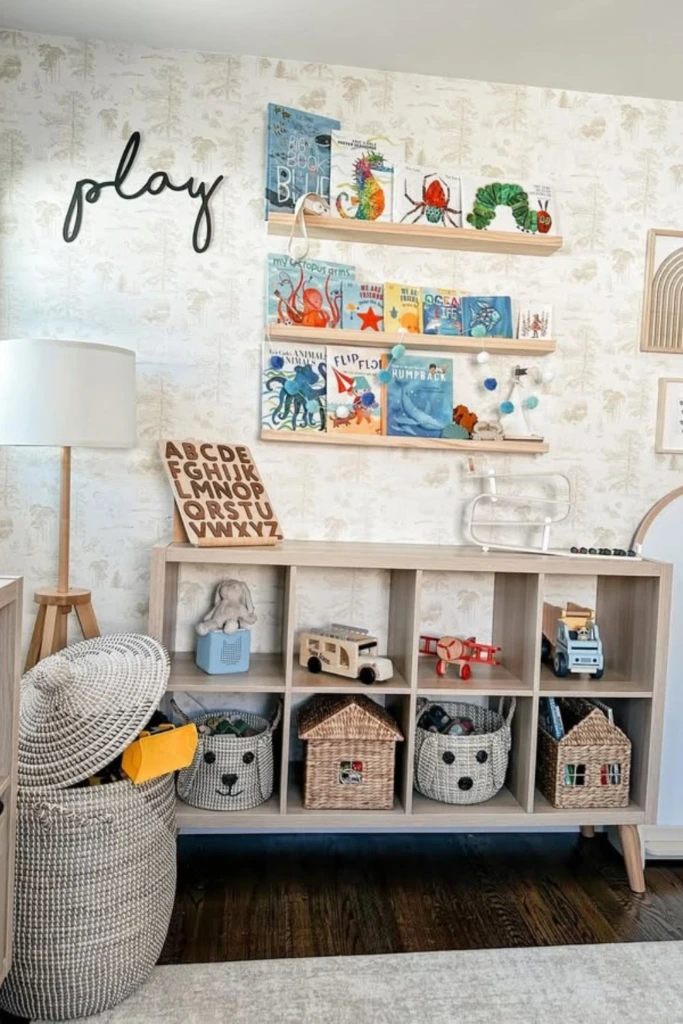
A cubby organizer paired with wicker baskets and fabric containers creates a practical storage system without making the room feel crowded. Assign each compartment a category, such as dolls, vehicles, construction toys, or dress-up accessories.
Use the top surface for larger toys or a small rotating display, and install narrow book ledges nearby to keep favorite stories visible. Neutral baskets can help the arrangement blend with the rest of your home, even when the room serves as a family living area.
For younger children, select lightweight containers with easy-to-grip edges. A consistent arrangement makes it easier to identify where everything belongs.
4. Yellow Locker Cabinet
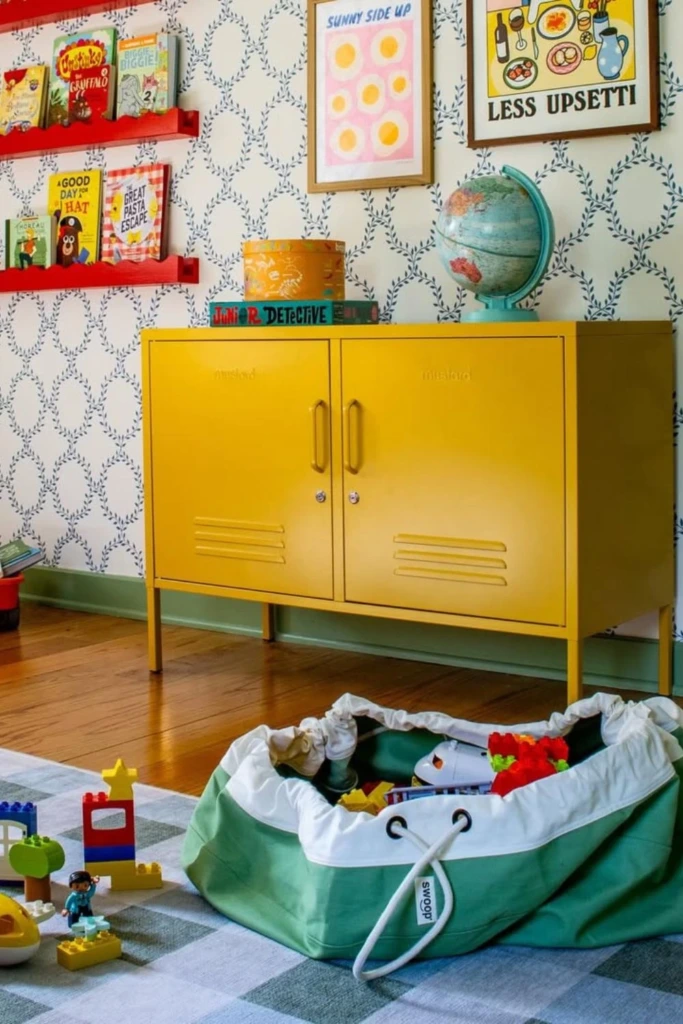
A bright yellow locker-style cabinet can become a cheerful focal point while providing concealed storage for toys and play equipment. Its solid doors help create a visually calmer room when colorful belongings are tucked away.
Add red floating shelves to display picture books, collectibles, or decorative objects. A few retro-inspired accessories can give the space a playful character without overwhelming it.
Metal cabinets are useful for families who prefer enclosed storage over open shelving. Before choosing one, check the door mechanisms, ventilation, stability, and accessibility of the compartments to make sure they suit your child's age.
5. Color Block Grid
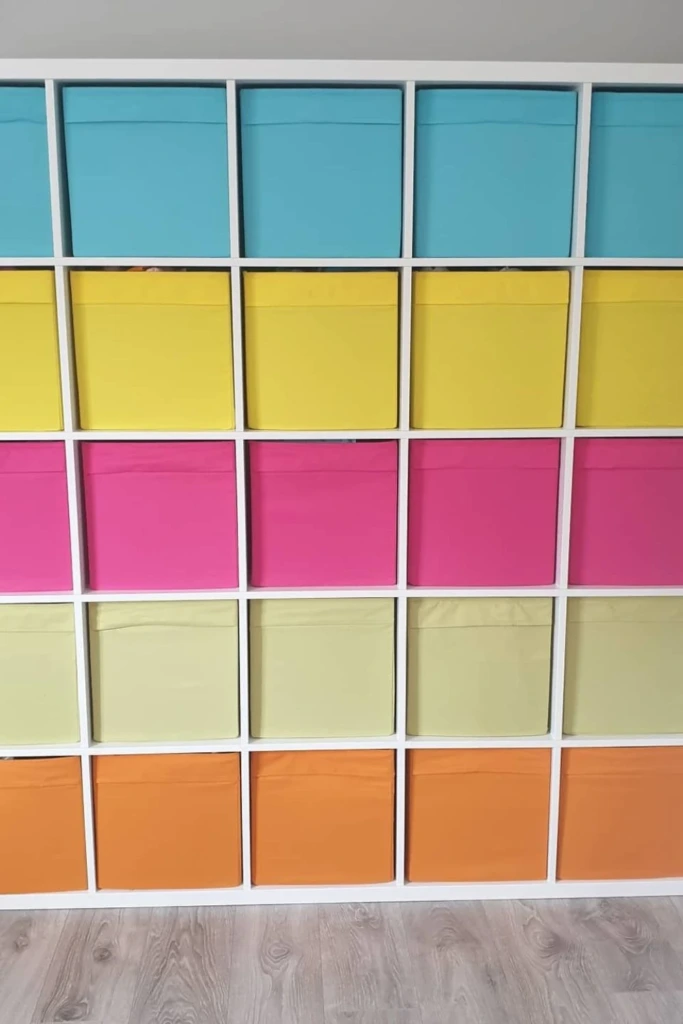
Turn organization into part of the room's design with a grid-style shelving unit filled with colorful fabric bins. Arrange the containers in coordinated rows, or use different colors to distinguish categories such as art materials, pretend-play accessories, and construction sets.
The repeating compartments create a tidy visual pattern, while the bright colors make the playroom feel energetic. This system can also adapt as children's interests change: simply relabel the bins or switch their positions.
Keep the most frequently used categories at child height. Reserve higher compartments for occasional-use items and anything that requires adult supervision.
6. Wall-Mounted Bins
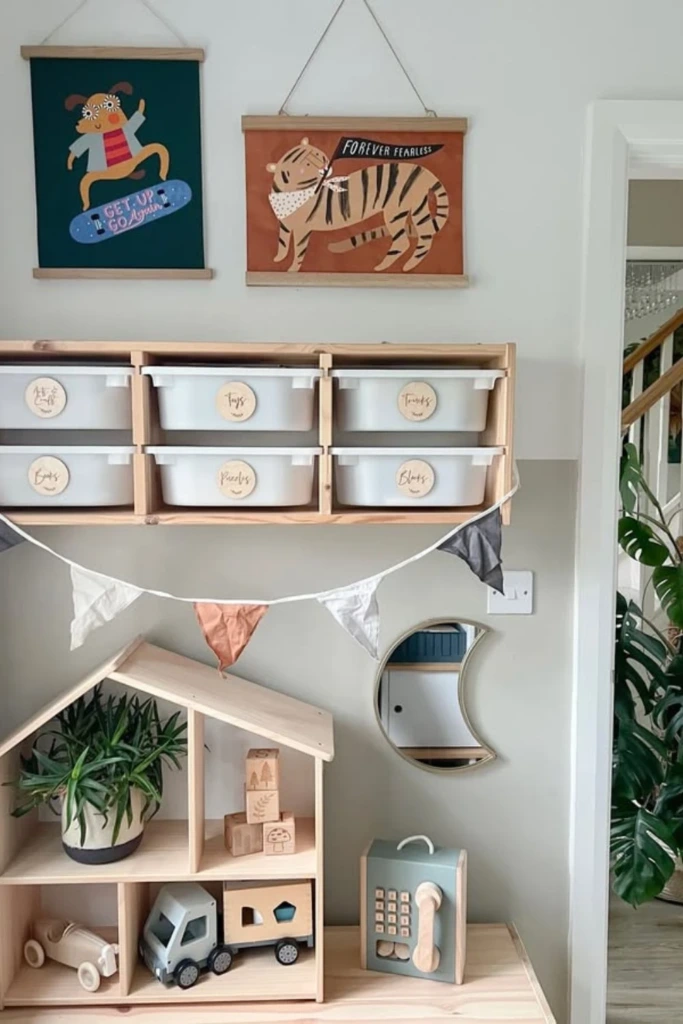
Wall-mounted bins provide storage without occupying valuable floor space. A sturdy wooden frame fitted with individual containers can hold small toys, craft supplies, building pieces, or other frequently misplaced items.
Use clear bins when children need to see what's inside, and add simple labels or picture symbols to help them identify each category. Below the main storage unit, a small display shelf can accommodate toy houses, model vehicles, or a few decorative plants placed safely out of reach.
This arrangement works especially well in narrow play areas. Secure the unit firmly to suitable wall supports, keep heavier items low, and ensure every container is easy to reach without climbing.
7. Rattan Doll Wardrobe
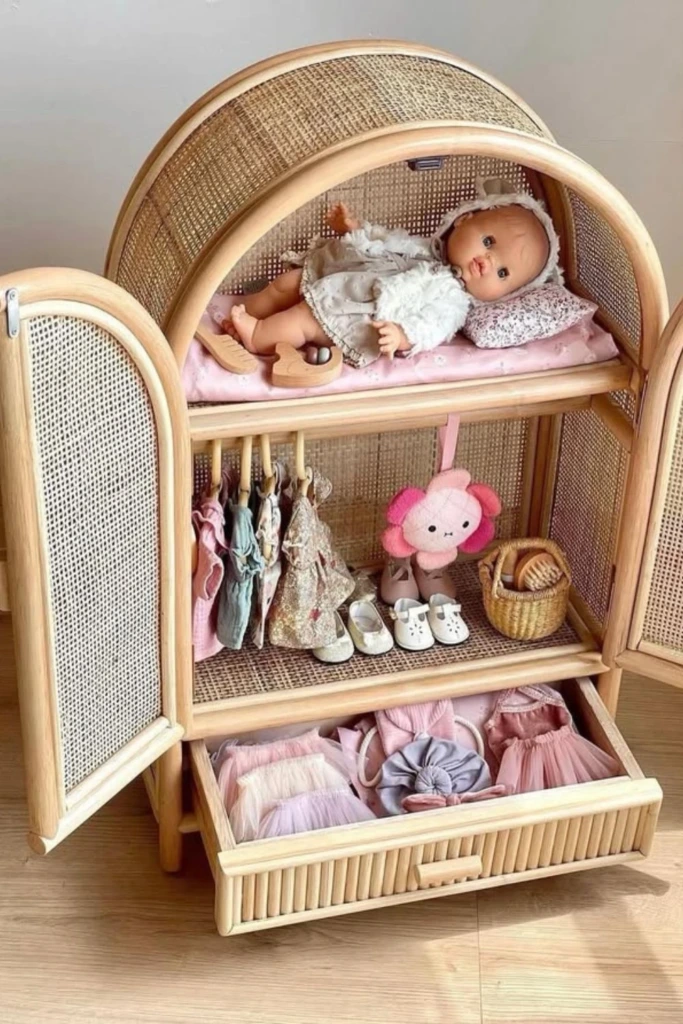
Give dolls and their accessories a dedicated home with a miniature wardrobe made from rattan or woven materials. Small hanging rails can hold doll clothes, while narrow shelves accommodate shoes, bags, and other miniature accessories.
A lower drawer provides space for loose items that might otherwise disappear into larger toy boxes. Depending on the design, the wardrobe can also become part of a dollhouse-inspired play corner.
Natural textures and a vintage appearance make this storage option particularly attractive in softly decorated bedrooms and playrooms. Check for secure hinges, smooth edges, and sturdy construction before letting children use the furniture independently.
8. Built-In Bench Storage
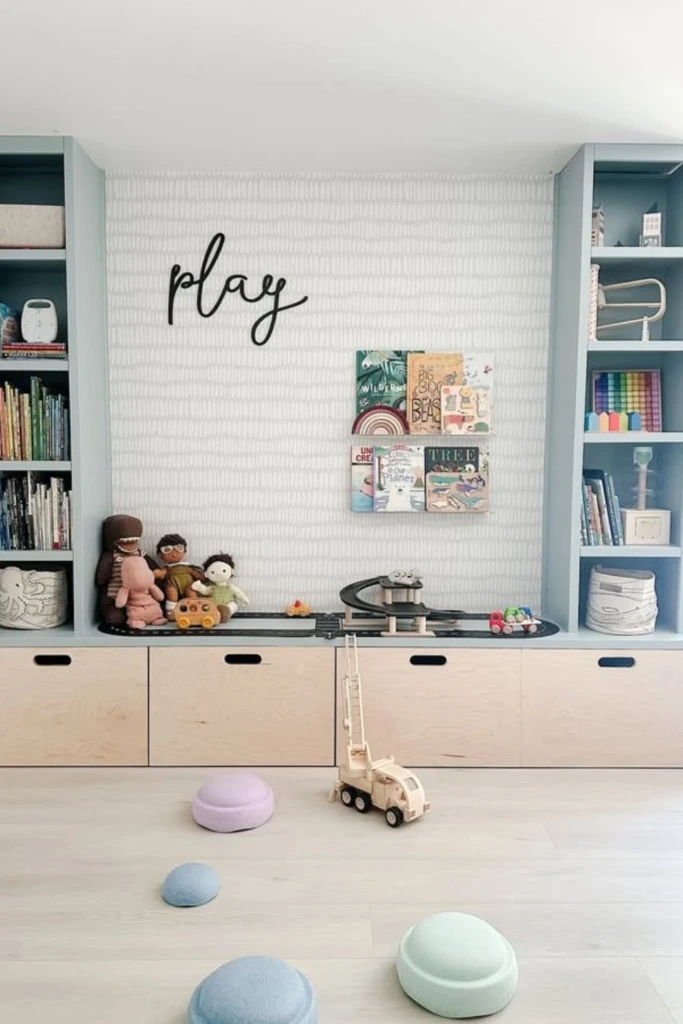
A built-in bench with deep drawers combines practical storage with a comfortable place to sit. Pair it with tall bookcases on either side to create a dedicated reading area that keeps books, toys, and soft furnishings organized.
Drawers are particularly useful for bulky items that make open shelves look untidy, while the bookcases provide room for favorite stories and selected toys. A painted trim color or playful wall sign can help the arrangement feel designed specifically for children.
This solution works best when planned around the room's dimensions. Choose smooth-running drawers with child-safe hardware, and secure tall shelving to the wall to reduce tipping risks.
9. Cabinet And Crates
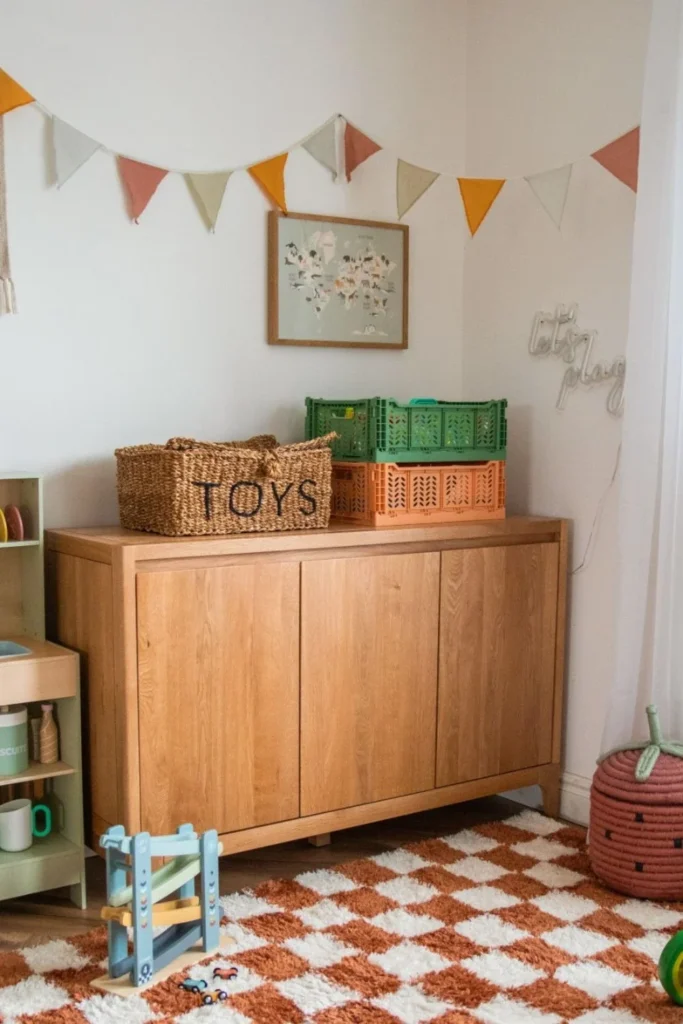
Combine a closed wooden cabinet with smaller crates to accommodate toys of different sizes. Use the cabinet for bulky playsets, board games, and supplies that you don't want on display, while the crates keep frequently used items easy to grab.
Wood, woven baskets, and durable plastic containers can work together as long as their colors and finishes feel coordinated. For example, natural wood paired with neutral baskets creates a relaxed appearance without sacrificing function.
A rug and simple decorative bunting can make the storage area feel more inviting. If you use stackable crates, ensure they remain stable and avoid placing heavy objects above children's reach.
10. Labeled Toy Crate
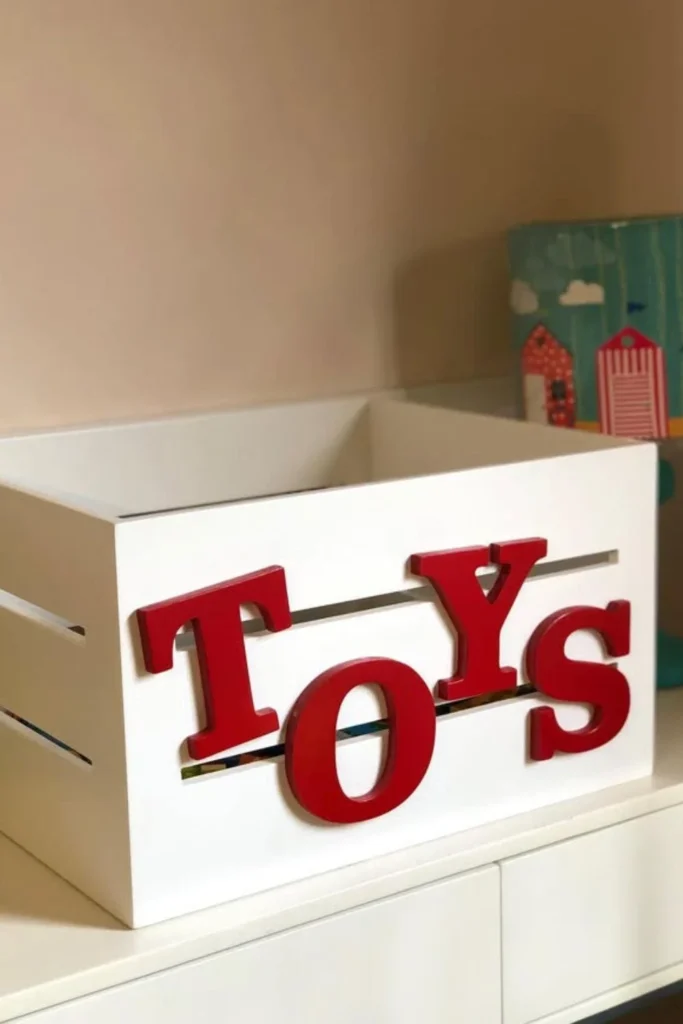
A wooden crate with a bold toy label offers a straightforward way to collect larger belongings in one place. Its open design allows children to see what's available and retrieve items without opening lids or sorting through several small compartments.
Use it for stuffed animals, oversized building pieces, soft balls, or other toys that are awkward to fit into regular cubbies. A painted finish can coordinate with the room's colors, while the natural wood structure adds a casual decorative touch.
Choose a crate with smooth edges and no protruding nails or splinters. If it will hold heavier toys, make sure it is strong enough to support the contents and remains easy to move without tipping.
11. Kitchen Corner Bins
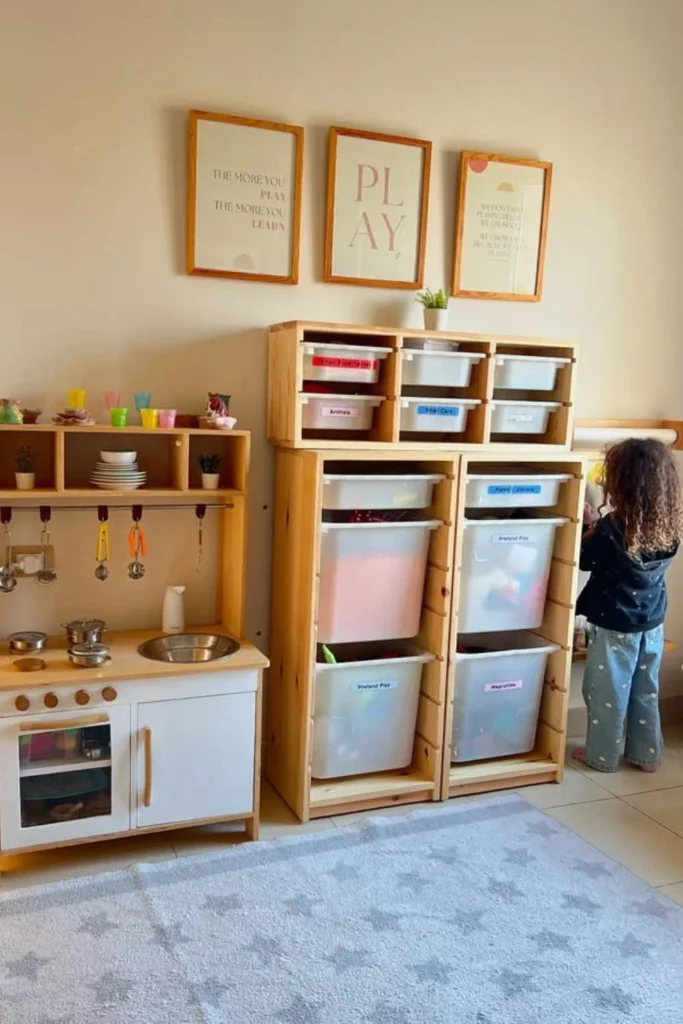
A toy kitchen becomes more functional when paired with a nearby shelving unit for pretend food, play utensils, miniature dishes, and cooking accessories. Clear containers help children find specific pieces quickly, while labels make returning them to the correct place more intuitive.
Arrange the most frequently used accessories on the lowest shelves and keep occasional-use items in higher compartments. You can also reserve a separate container for art supplies or other activities that take place in the same corner.
This layout encourages imaginative play while establishing a simple cleanup routine. Leave enough space around the play kitchen for children to move comfortably, and avoid placing shelves where they could obstruct doors or walkways.
12. Tiered Bin Stairs
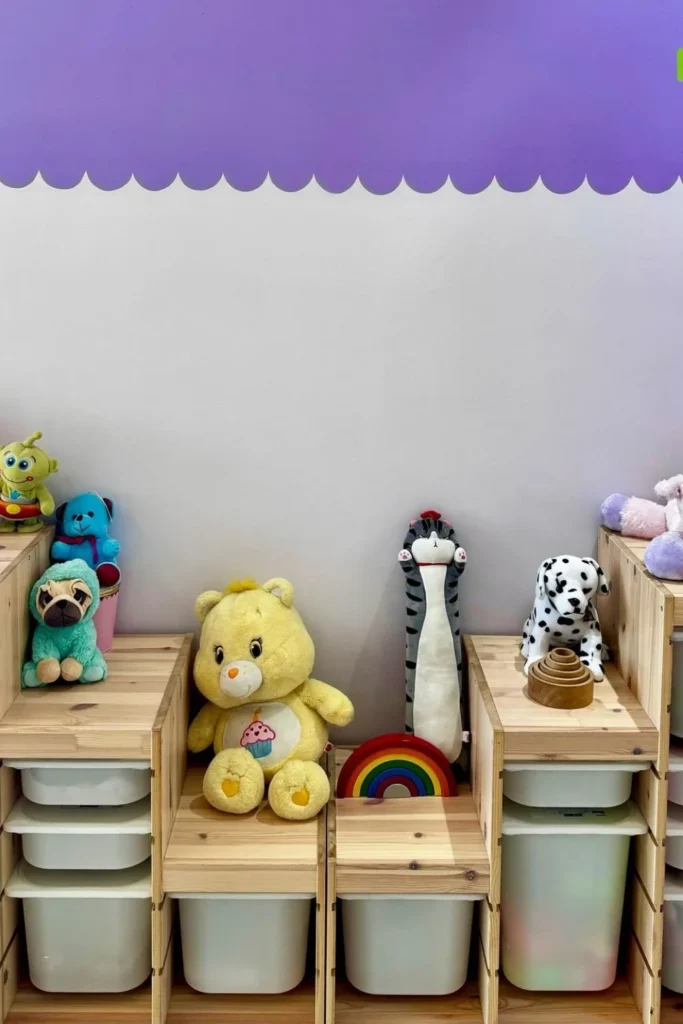
A stepped storage unit offers several levels of accessible compartments in a compact footprint. Each tier can hold a different toy category, allowing children to find their belongings without searching through one oversized container.
Use the lower drawers for heavier toys and the upper compartments for lighter items. If the design includes flat display surfaces, reserve them for a few books, stuffed animals, or decorative pieces rather than letting them become additional clutter zones.
This arrangement is useful in smaller playrooms where conventional wide shelving may not fit. Measure the available floor area before purchasing, and check that the unit is stable enough for everyday use.
13. Dino-Themed Bins
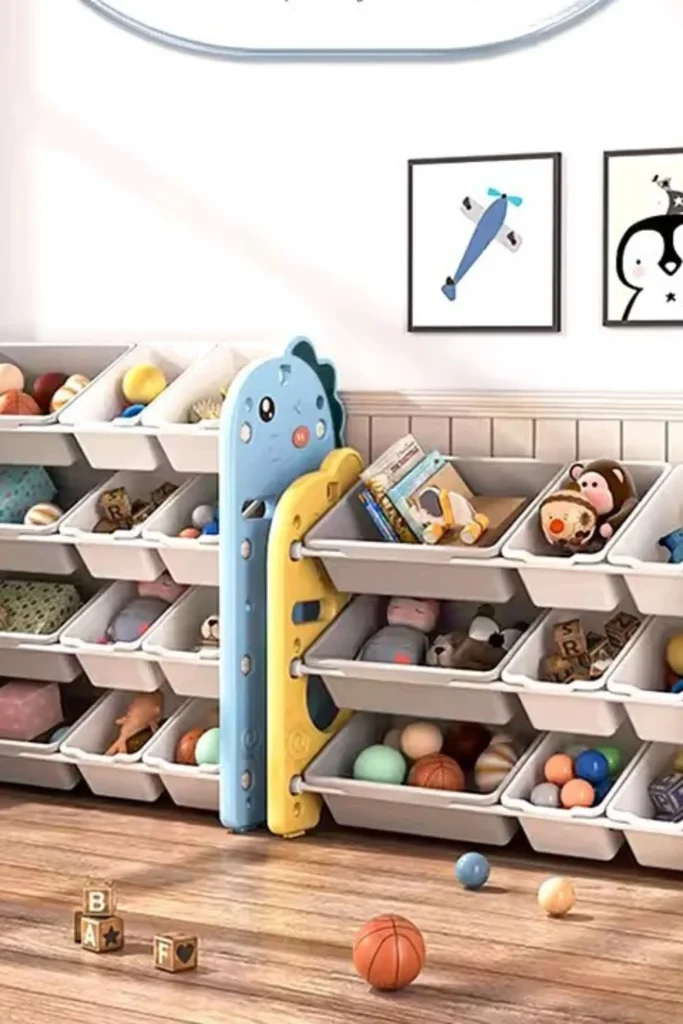
Make tidying more appealing with a dinosaur-themed organizer featuring colorful side panels and angled toy bins. The playful design can help establish a dedicated home for toy dinosaurs, vehicles, blocks, and other small collections.
Open compartments make the contents easy to see, which can reduce the time children spend searching for particular items. Assign each bin a clear category so that similar toys stay together even when the collection grows.
This style works especially well in rooms decorated around dinosaurs, animals, or other imaginative themes. Choose a sturdy model with secure connections and smooth edges, and position it where children can reach the bins without pulling the unit toward themselves.
14. Personalized Cubby Shelf
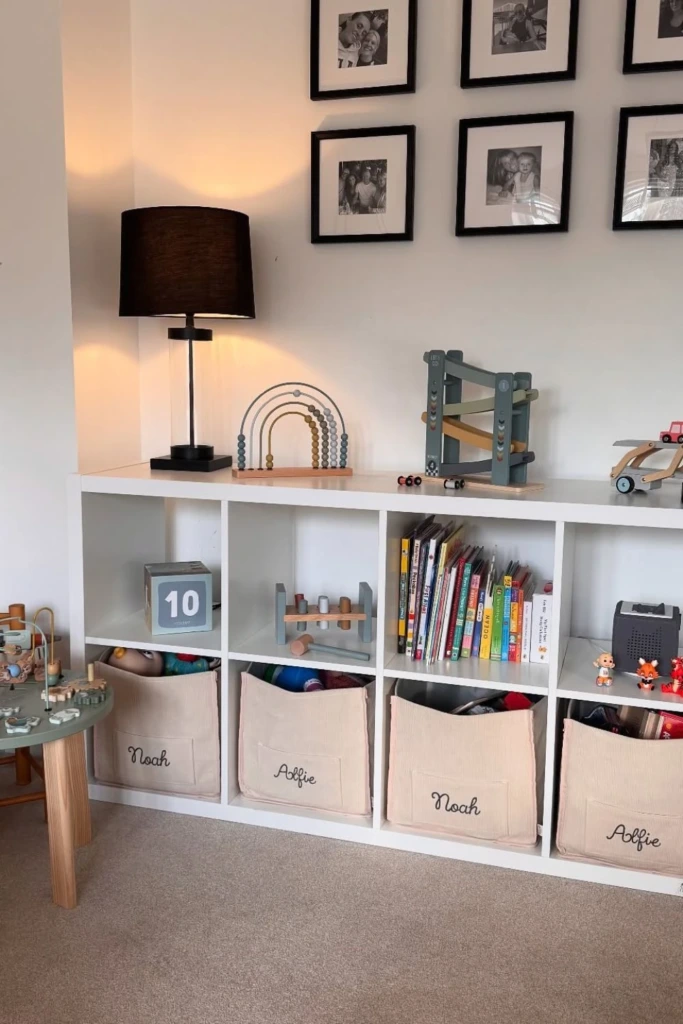
A cubby shelf with personalized fabric containers can give every child a clear place for their belongings. Add names, initials, or picture labels to distinguish individual compartments and help prevent toys from becoming mixed together.
The open sections can hold books, favorite figures, and frequently used games, while the bins conceal smaller pieces that might otherwise scatter across the floor. A white organizer with neutral containers also fits easily into rooms with more understated decor.
In shared spaces, assign each child a particular section and reserve one additional bin for communal toys. This simple arrangement encourages responsibility without making cleanup feel complicated.
15. Bench and Bin Combo
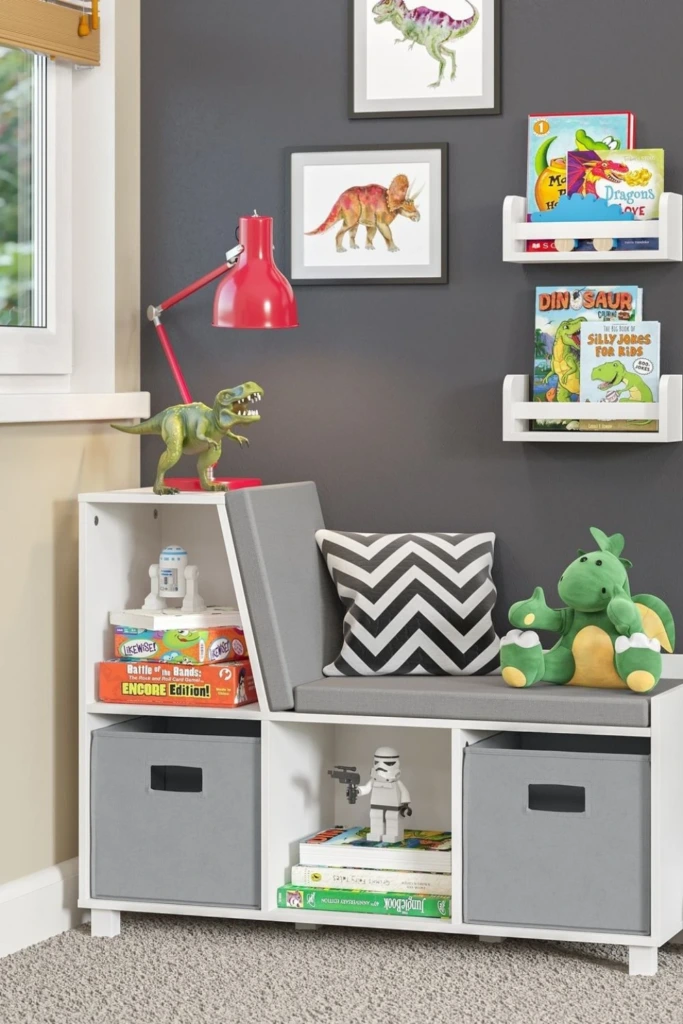
Combine a reading bench, open shelving, and soft storage baskets to make one corner serve several purposes. Children can sit comfortably with a book, keep blankets nearby, and store small toys in containers beneath or beside the seat.
Wall-mounted book ledges provide additional display space without requiring a large bookcase. Keep a small selection of current favorites within reach and rotate the books occasionally to maintain interest.
This arrangement is particularly effective in compact playrooms and bedroom reading nooks. Make sure the bench is sturdy, the baskets slide out easily, and any wall-mounted shelves are securely installed.
16. Lego Table Baskets
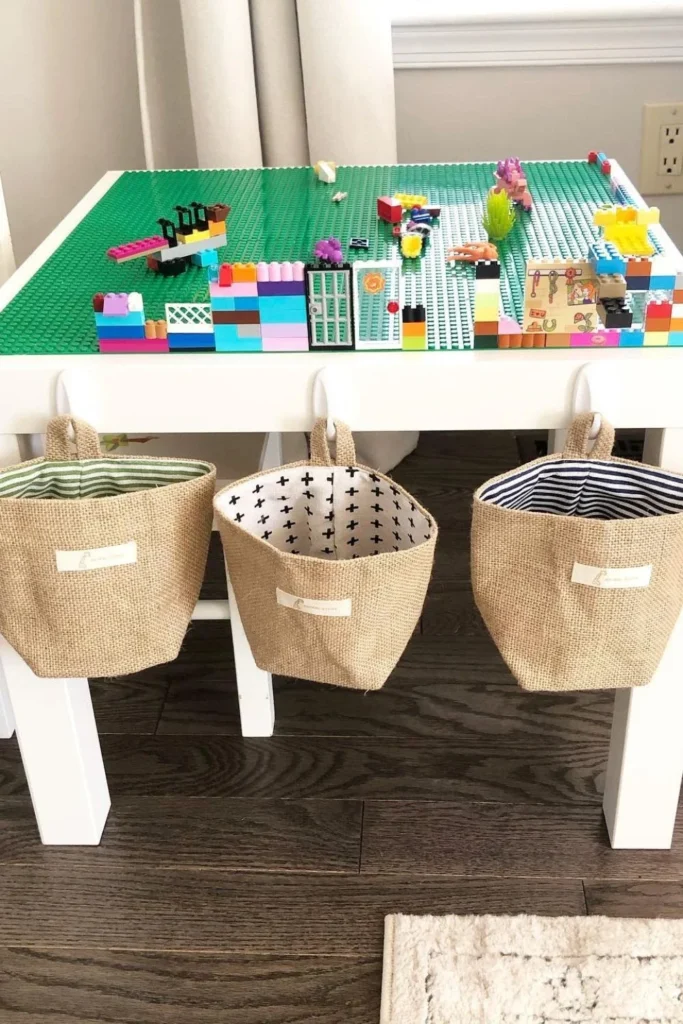
A dedicated building table is easier to maintain when storage is integrated into the surrounding area. Attach lightweight baskets to suitable table sides or place them in nearby cubbies to separate bricks, minifigures, wheels, and other small construction pieces.
Shallow containers are useful for pieces that children need frequently, while deeper bins can hold larger collections. If you sort bricks by color, size, or building set, use a system that matches how your child actually plays rather than creating unnecessary sorting work.
Choose containers that won't obstruct legroom or interfere with the table's stability. For very small pieces, consider secure storage away from younger siblings who could accidentally swallow them.
17. Pegboard Blaster Wall
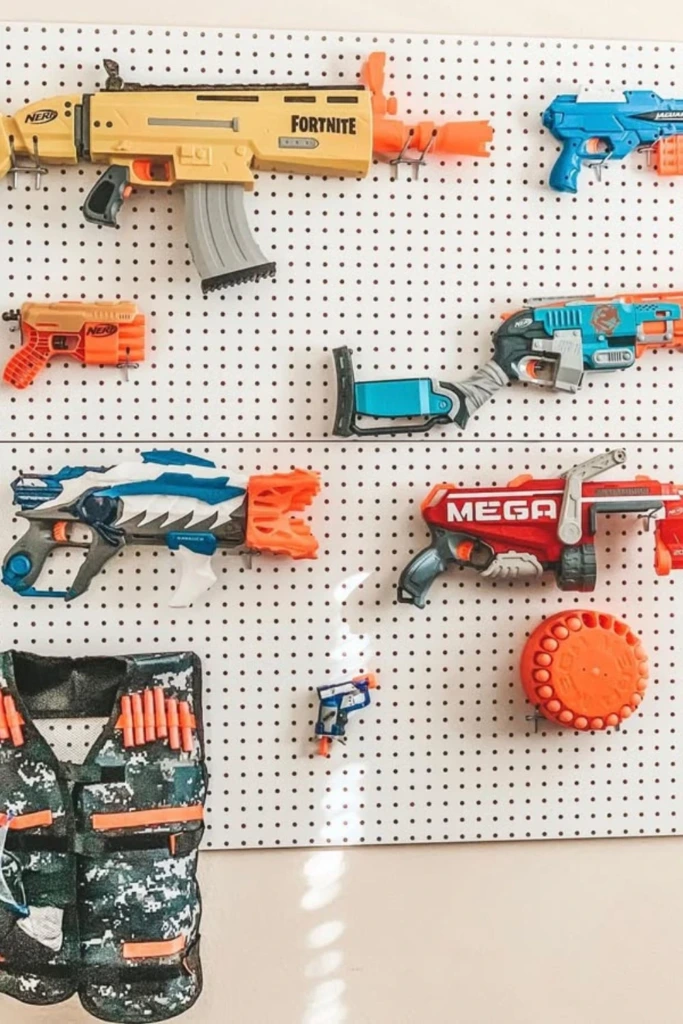
A pegboard can organize toy blasters, dart accessories, protective vests, and other pretend-play equipment in one visible location. Install suitable hooks and holders to give each item a defined position instead of leaving everything scattered across the floor.
Arrange the equipment by size or type, and use small labeled containers for loose accessories. A clean, evenly spaced layout makes the display look intentional while helping older children put items away independently.
This approach is best suited to a dedicated play zone or hobby area. Mount the board securely, use hardware rated for the items it will hold, and follow age-appropriate toy safety instructions. Keep projectiles and small accessories stored responsibly when playtime ends.
18. Crate Bin Station
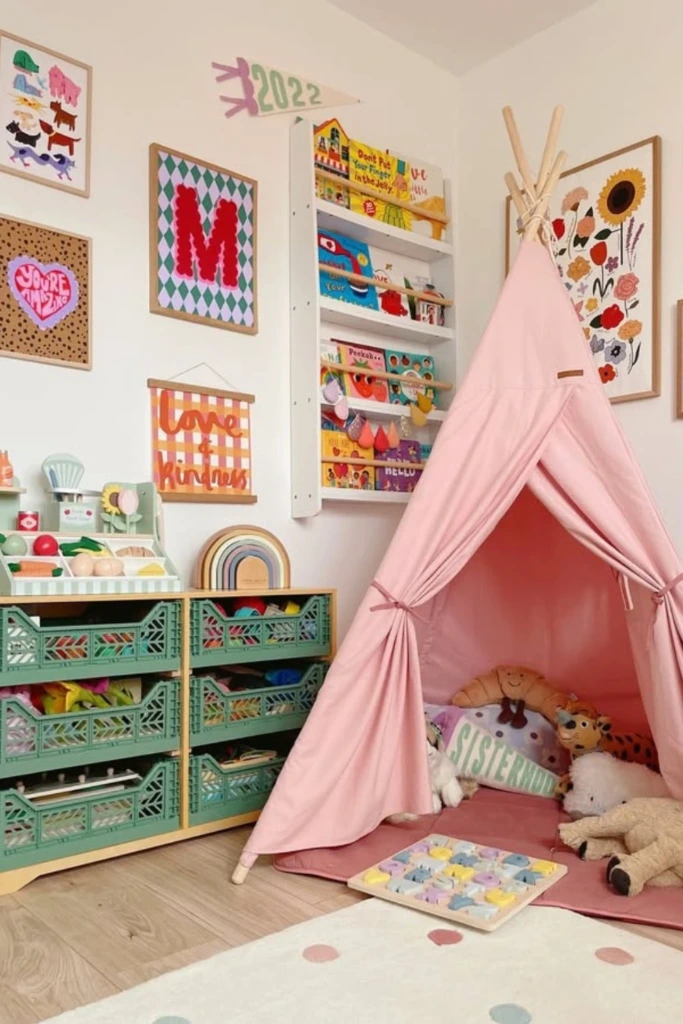
Create a flexible storage station with lightweight plastic crates arranged in a sturdy shelving frame. Different colors can separate stuffed animals, craft materials, dolls, and other toys, while open fronts make the contents easy to identify.
A mix of soft pink, mint, or other coordinating shades can complement a colorful play tent or reading corner. The containers can also support toy rotation: keep some toys stored elsewhere and switch them periodically to renew interest without adding more belongings.
Choose crates that fit the frame properly and cannot slide out unexpectedly. Keep the heavier contents on lower shelves, and avoid stacking loose containers where they might topple during play.
19. Circus Storage Boxes
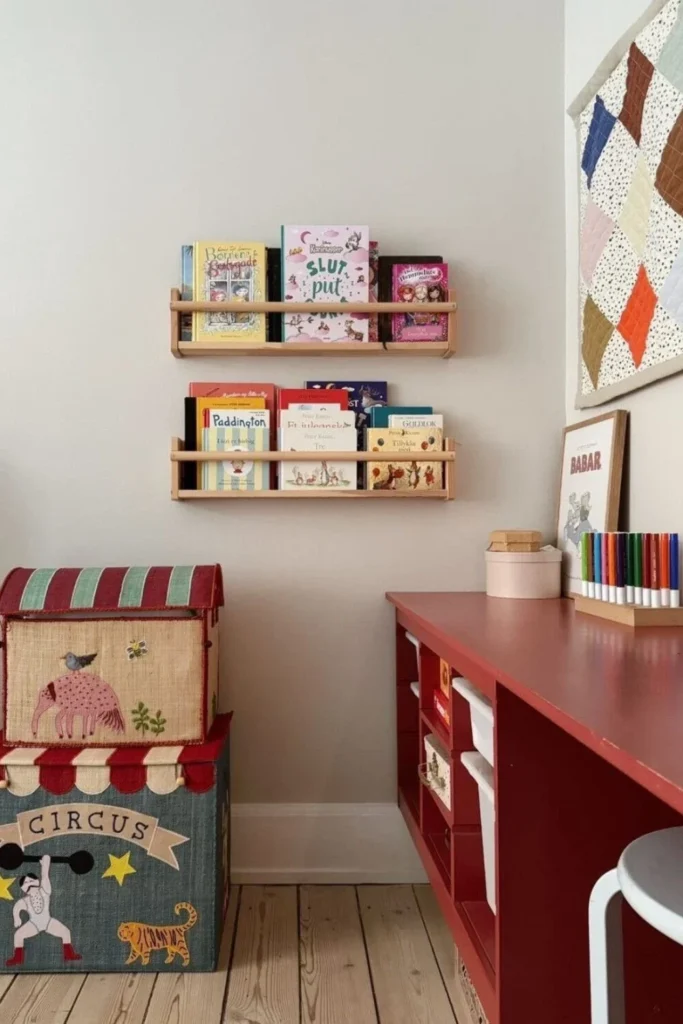
Circus-themed fabric boxes can turn ordinary storage into a decorative feature. Look for containers with playful illustrations, embroidered details, or bright patterns that complement the room's overall theme.
Use them for stuffed animals, dress-up accessories, soft toys, and other lightweight belongings. Pair the boxes with simple wall shelves or a small cubby table so that the colorful containers remain the main visual feature rather than competing with too many decorations.
Fabric boxes are generally easy to move and can be folded away when not needed, depending on their construction. Choose washable or wipe-clean materials where possible, and check that handles are firmly attached.
20. Mini Supply Drawer
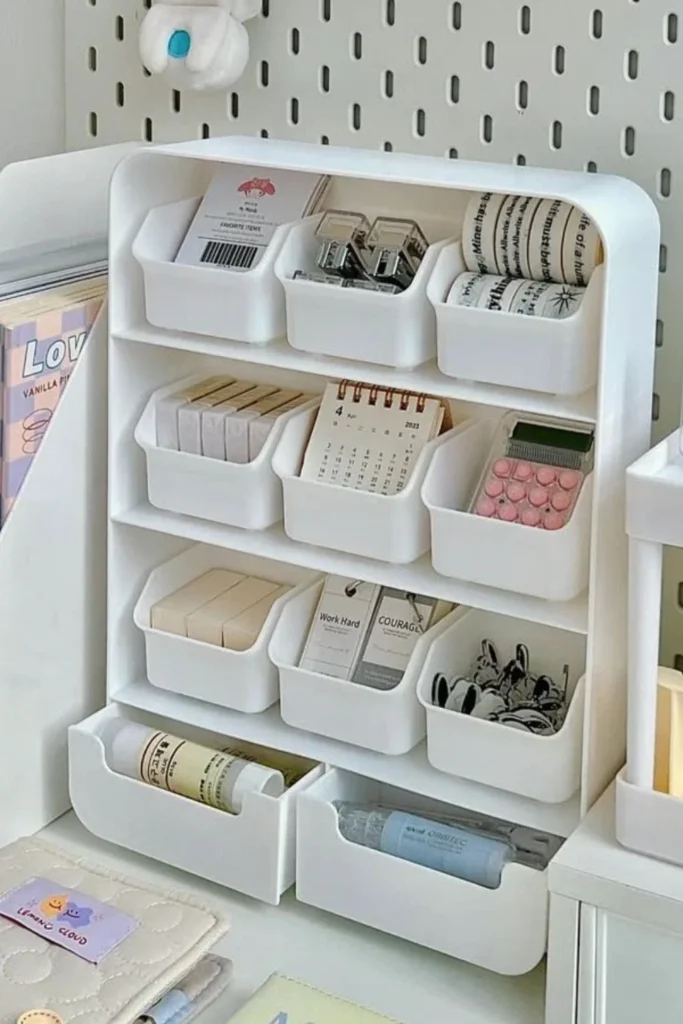
Small drawers are ideal for items that tend to disappear among larger toys. A compact desktop organizer can hold crayons, stickers, doll accessories, puzzle pieces, craft tools, and other small essentials.
Give each drawer a specific purpose, and use labels to make the contents easy to identify. Place the organizer on a stable desk or work surface, keeping frequently used supplies accessible while storing sharp tools and other unsuitable items securely away from young children.
This solution works particularly well in art corners, homework areas, and doll-play stations. A simple white or neutral design keeps the workspace looking neat without drawing attention away from creative activities.
21. Hanging Wooden Shelf
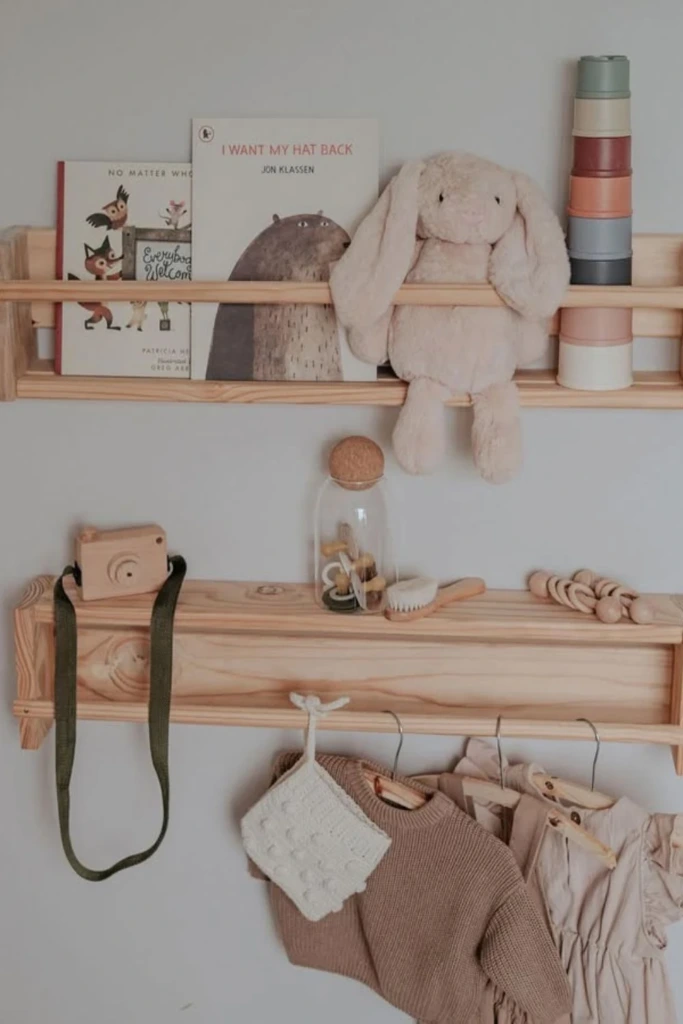
A two-tier wooden shelf with hooks can combine book display and accessory storage in a single wall-mounted unit. Use the upper shelf for picture books and lightweight decorative items, while the lower hooks hold dress-up clothes, small bags, or sensory-play accessories suited to the hooks.
The natural wood finish works well with Scandinavian-inspired interiors, pastel color schemes, and simple modern decor. It also leaves more floor space available for activities.
Install the shelf at a height that matches your child's abilities, and use appropriate wall fixings for the wall type. Avoid overloading the hooks, and keep the display free of objects that could fall onto children during play.
22. Barbie Wall Display
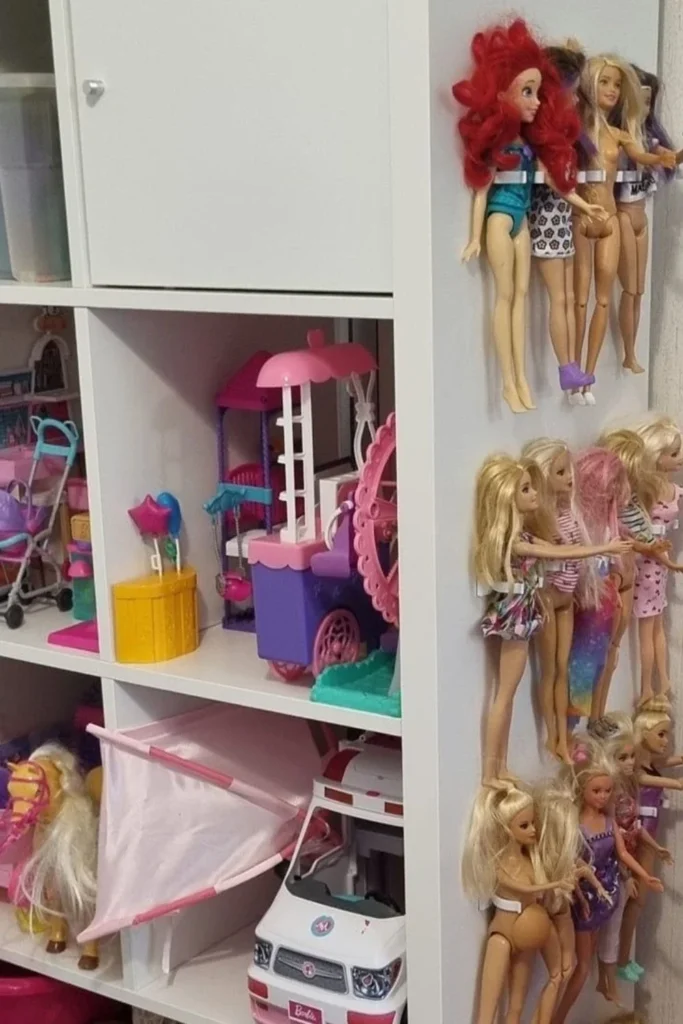
A vertical doll display can free up shelf space while keeping a collection visible and easy to access. Use a purpose-designed doll organizer or secure display system that holds each doll in place without damaging its clothing or accessories.
A nearby cubby shelf can accommodate larger items such as dollhouses, vehicles, furniture, and playsets. Small labeled containers are useful for shoes, handbags, brushes, and other miniature accessories that are easily misplaced.
Keep the arrangement organized by doll collection or outfit type if that makes playtime easier. Install wall-mounted displays securely and ensure dolls or small accessories cannot fall into areas used by younger children.
23. Closet Shelf System
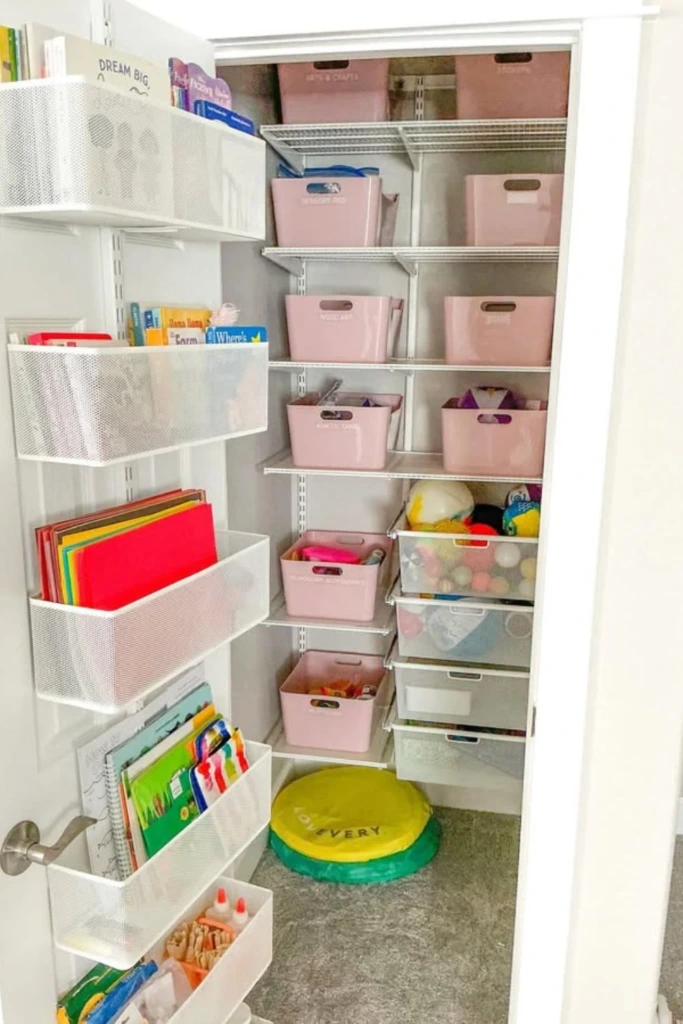
A closet can become a useful extension of the playroom when fitted with tiered shelving, labeled bins, and carefully arranged supplies. Reserve separate sections for crafts, educational toys, stuffed animals, and activities that aren't used every day.
Mesh organizers attached to the inside of a suitable closet door can hold coloring books, thin activity pads, and other lightweight items. Use transparent containers when visibility matters, or opaque bins when you want the storage area to look less busy.
Keep everyday toys on lower shelves and adult-managed supplies higher up. Avoid overloading shelves, and make sure door-mounted organizers don't interfere with the door's movement or create a tipping hazard.
24. Soft Gray Cubby
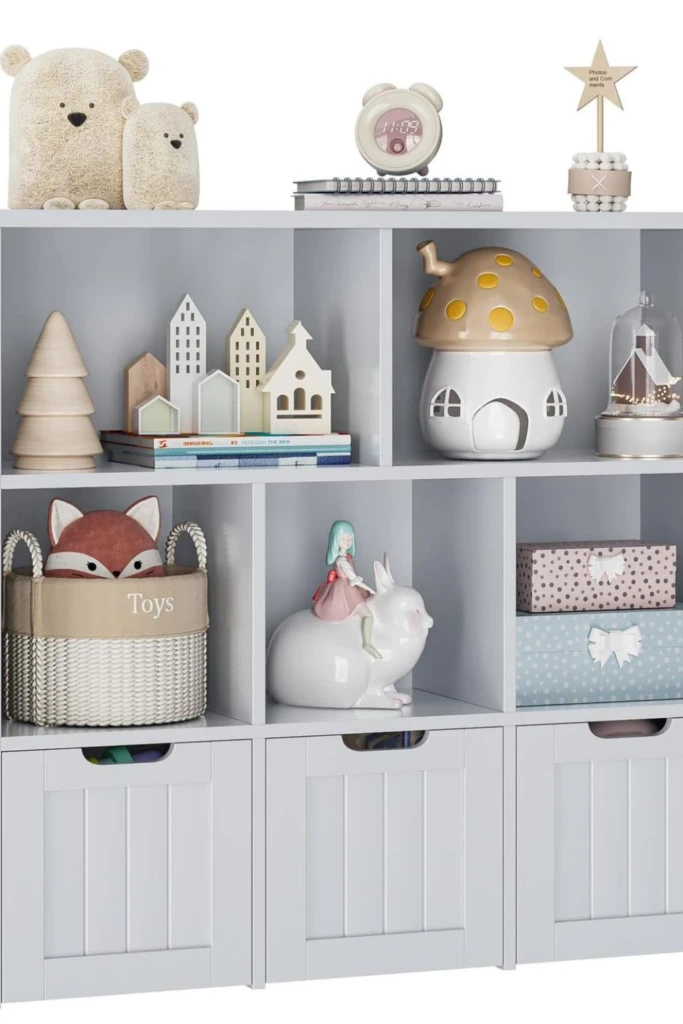
A soft gray cubby unit offers a neutral foundation for a playroom that needs to remain visually calm. Combine open compartments for books and display toys with drawers or baskets for items that are better kept out of sight.
Decorative containers can introduce texture or a small amount of color without overwhelming the room. For shared living spaces, gray furniture can blend more easily with existing decor than brightly themed storage pieces.
Arrange toys in manageable categories and avoid filling every compartment simply because space is available. A little empty room makes it easier to return belongings and accommodates new items without immediately creating clutter.
25. Rustic Wood Bins
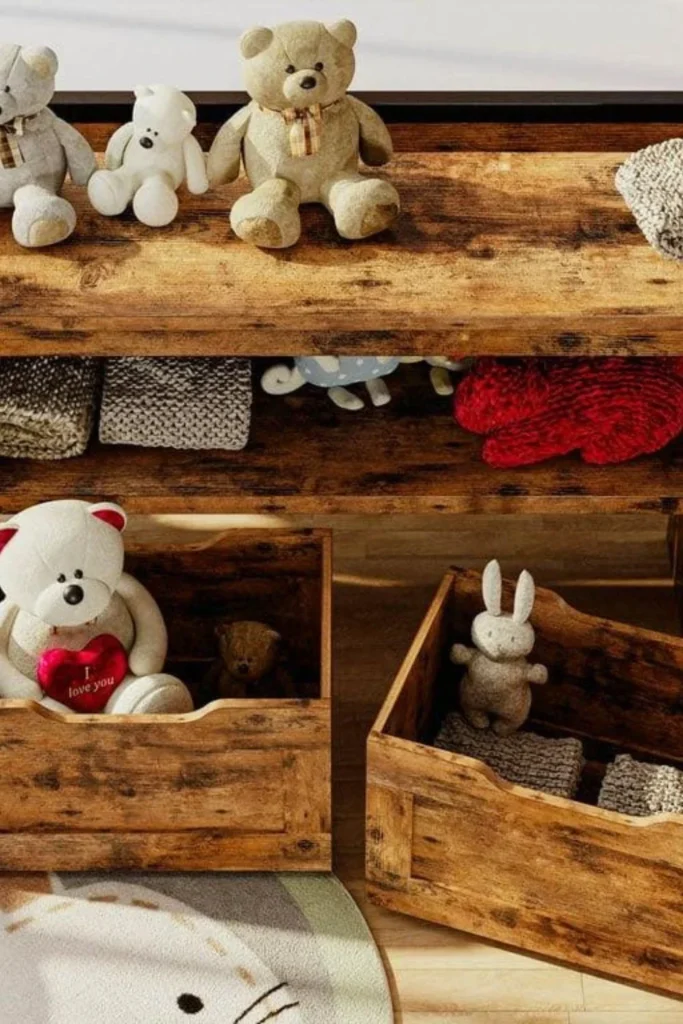
A wooden bench with pull-out crates can bring warmth and practical storage to a playroom. The open containers are suitable for blankets, plush toys, children's books, and other items that benefit from quick access.
Weathered finishes and visible wood grain create a relaxed, rustic look that pairs well with natural textiles, earthy colors, and simple rugs. The bench also provides extra seating when children gather for stories or group activities.
For everyday convenience, select crates that slide smoothly and have comfortable handholds. Inspect unfinished or reclaimed wood for splinters, loose fasteners, and rough edges before using it around children.
26. Window Seat Storage
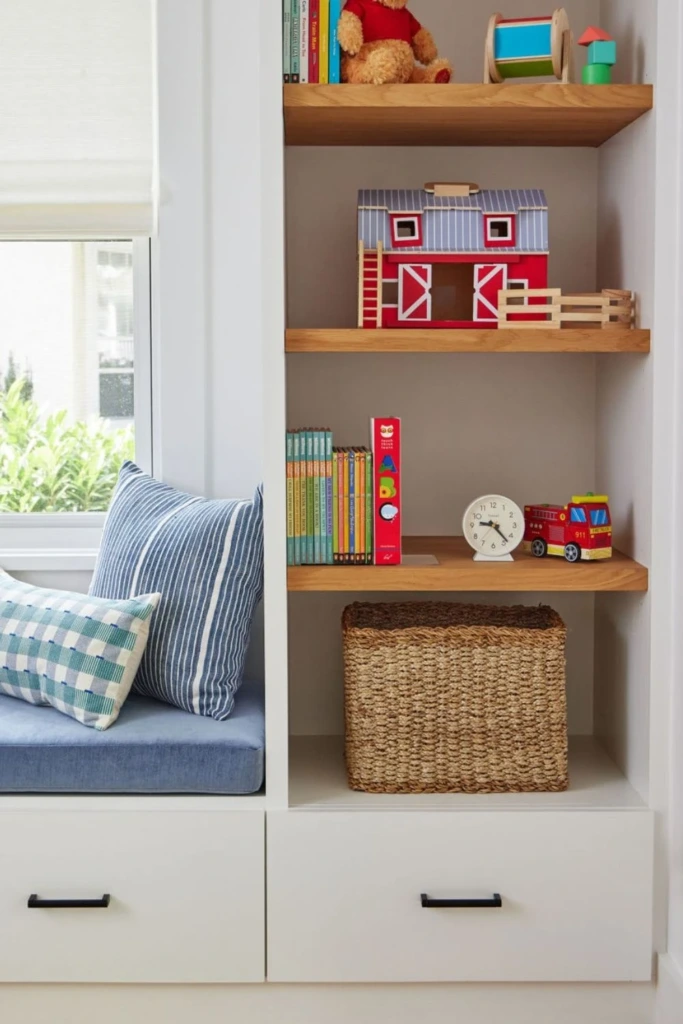
A window seat can turn an underused part of the room into a comfortable reading and storage area. A cushioned bench creates a place to relax, while drawers beneath the seat provide concealed space for toys, books, and spare blankets.
Nearby shelving can combine open displays with woven baskets to accommodate belongings of different sizes. Keep favorite books at an accessible height and use closed compartments for items that make the room feel cluttered.
Before building a window seat, measure the available space and consider the window's operation, ventilation, and any nearby heating equipment. Use suitable cushions and secure construction, and make sure children cannot use the furniture to reach an unsafe window opening.