
27 Indoor Games for Kids in 2026
Keeping children entertained indoors doesn't have to mean spending hours in front of a screen. Whether it's a rainy afternoon, a school holiday, or a weekend at home, indoor games can turn ordinary moments into exciting adventures filled with laughter, creativity, and learning.
From energetic movement challenges to imaginative activities and classic board games, there are plenty of ways to keep children engaged without needing expensive equipment. Many of these activities also encourage teamwork, problem-solving, coordination, and communication.
Here are 27 indoor games for kids in 2026 that are easy to organize, enjoyable for different age groups, and perfect for making family time more memorable.
27 Indoor Games for Kids
Indoor games offer children opportunities to explore their interests, develop new skills, and enjoy playful competition in a comfortable environment. Some activities require nothing more than paper and pencils, while others use everyday household supplies.
The following games combine physical movement, creative expression, memory challenges, and group entertainment. Choose activities according to your child's age, available space, and interests to create an exciting indoor play experience.
1. Hunt Against The Timer
Turn an ordinary scavenger hunt into an exciting race by introducing a countdown timer. Give children a list of household objects to locate, such as something yellow, a soft toy, a wooden item, or a book with an animal on its cover.
Set a reasonable time limit and challenge participants to collect everything before the alarm sounds. Younger children can search for colors and shapes, while older kids can follow riddles or descriptive clues.
For additional excitement, divide players into teams and award points for correctly identified objects. This fast-paced activity encourages observation, quick thinking, and cooperation while keeping children actively involved.
2. Grandma's Footsteps
Grandma's Footsteps is a classic movement game that challenges children to approach a designated player without being caught moving.
One participant stands at the opposite end of the room, facing away from everyone else. The remaining players slowly move toward them. Whenever the person playing Grandma turns around, everyone must immediately become motionless.
Anyone spotted moving returns to the starting line. The first child to reach Grandma successfully becomes the leader for the next round.
This game works particularly well in hallways or spacious living rooms. It helps children practice balance, patience, concentration, and body control while creating plenty of funny moments.
3. Egg Jousting
Egg Jousting brings friendly competition to indoor playtime with a simple balancing challenge. Instead of using real eggs, choose plastic eggs, lightweight balls, or other soft objects that won't create a mess.
Give each child a spoon holding an egg and mark a small playing area. Players attempt to complete a short course while keeping their eggs balanced. For a jousting variation, participants can gently approach one another and try to make the opponent lose balance without physical contact.
The player who keeps their egg secure the longest wins.
Make sure children have enough room to move safely and avoid sharp objects or slippery flooring. The activity encourages coordination, steady movement, and concentration.
4. Zingo
Zingo is a picture-matching game that combines the familiar excitement of bingo with early learning skills. It is especially appealing to younger children who enjoy recognizing images and competing to complete their boards.
Each player receives a card featuring pictures and words. A special dispenser reveals tiles, and children look for matching spaces on their boards. When a match appears, players claim the tile according to the game's rules.
The first participant to complete the required pattern calls out "Zingo!" to announce their victory.
The game introduces visual recognition, vocabulary development, and quick decision-making. Its simple structure also makes it suitable for family game nights involving children and adults.
5. What's The Time, Mr. Wolf?
This lively game combines counting practice with movement and anticipation.
Choose one player to act as Mr. Wolf and have them stand at one end of the room facing away from the other participants. Everyone else begins at the opposite end and asks, "What's the time, Mr. Wolf?"
The wolf responds with a number, such as "Four o'clock," and the players take that many steps forward.
At any moment, the wolf can answer, "Dinner time!" before turning around and attempting to tag someone. The first person tagged becomes the next wolf.
For indoor safety, use a spacious area and encourage fast walking instead of running. Children enjoy the surprise element while practicing counting, listening, and following instructions.
6. Go Fish
Go Fish is a simple card game that introduces children to matching, memory, and turn-taking.
Using a standard deck of playing cards, distribute cards to each participant and place the remaining deck face down. Players take turns asking another person for cards of a specific rank already held in their hand.
If the requested player has matching cards, they must hand them over. Otherwise, they respond with "Go fish," and the requesting player draws from the deck.
Players collect complete sets of four matching ranks, and the person with the most completed sets wins.
This game is ideal for quiet afternoons, travel breaks, and family gatherings. Younger children can use illustrated card decks to make recognizing matches easier.
7. Musical Chairs
Musical Chairs is an energetic party favorite that transforms music and simple seating arrangements into an exciting competition.
Arrange chairs in a circle with one fewer chair than the number of players. Start playing cheerful music while everyone walks around the chairs.
When the music suddenly stops, participants must quickly find a seat. The player left standing exits the round, and another chair is removed before the music begins again.
Continue until only one participant remains seated.
For a more inclusive version, keep everyone playing and challenge the group to share the remaining seats safely without pushing. Musical Chairs encourages listening, quick reactions, and social interaction.
8. Freeze Dance
Freeze Dance is an excellent choice for children who love music and movement. It requires very little preparation and can be enjoyed by small groups or the entire family.
Play an upbeat song and invite everyone to dance however they like. Pause the music unexpectedly and instruct participants to freeze in their current positions.
Anyone who moves after the music stops receives a playful challenge or sits out until the next round.
Make the game more interesting by introducing different dance styles, animal movements, or silly poses. You can also allow children to take turns controlling the music.
Freeze Dance supports coordination, listening skills, self-control, and creative expression while helping children release extra energy indoors.
9. Hopscotch
Hopscotch isn't limited to playgrounds. With painter's tape or removable floor markers, you can create a colorful indoor version on a safe, flat surface.
Arrange numbered squares in a traditional hopscotch pattern. Children take turns tossing a soft marker onto a square and hopping through the course while avoiding the marked space.
Players must maintain their balance and follow the numbered sequence.
For younger kids, use larger squares and allow two-footed jumps. Older children can try more complicated patterns or complete the course while counting backward.
Indoor hopscotch encourages balance, coordination, number recognition, and physical activity without requiring much space.
10. Play Pretend
Pretend play gives children the freedom to invent stories, explore different roles, and transform familiar surroundings into imaginary worlds.
Set up a pretend grocery store with empty food containers, create a doctor's office using toy medical supplies, or turn a blanket-covered table into a secret castle.
Children can become chefs, astronauts, teachers, explorers, or characters from their favorite stories.
Provide simple props such as costumes, cardboard boxes, notebooks, and stuffed animals to support their imagination.
Rather than directing every moment, allow children to develop their own scenarios and solve imaginary problems. Pretend play encourages storytelling, communication, creativity, and social understanding.
11. DIY Obstacle Course
A homemade obstacle course can transform your living room into an exciting indoor adventure.
Use cushions, tunnels made from cardboard boxes, painter's tape, and lightweight household objects to create different challenges. Children might crawl beneath a table, step over low obstacles, follow a winding tape path, and balance along a marked line.
Arrange the obstacles in a sequence and challenge participants to finish the course.
For older children, introduce timed rounds or ask them to design their own layouts. Younger kids can complete easier routes with adult supervision.
Keep the course away from furniture corners, unstable objects, and slippery surfaces. This activity promotes movement, planning, coordination, and problem-solving.
12. Race Paper Planes
Paper airplane racing combines creativity, experimentation, and friendly competition.
Give children sheets of paper and show them how to fold simple airplane designs. Once everyone has created a plane, establish a starting line and designate a clear landing area.
Participants launch their airplanes and compare the distances traveled.
You can organize several challenges, including the longest flight, the most accurate landing, or the most creative airplane design.
Encourage children to modify their folds and observe how different shapes influence flight. This hands-on activity introduces basic ideas about air resistance and aerodynamics while encouraging experimentation and patience.
13. Hot Potato
Hot Potato is a fast-moving group game that creates excitement through music and anticipation.
Gather players in a circle and give one child a soft ball, beanbag, or stuffed toy to represent the potato.
Play music while participants quickly pass the object around the circle. When the music stops, the person holding the potato completes a funny challenge or sits out for one round.
Continue playing until everyone has enjoyed several turns.
For younger children, avoid elimination and instead introduce entertaining tasks such as making an animal sound or performing a silly dance.
Hot Potato encourages quick reactions, hand-eye coordination, listening, and cooperation.
14. Play Dough Art
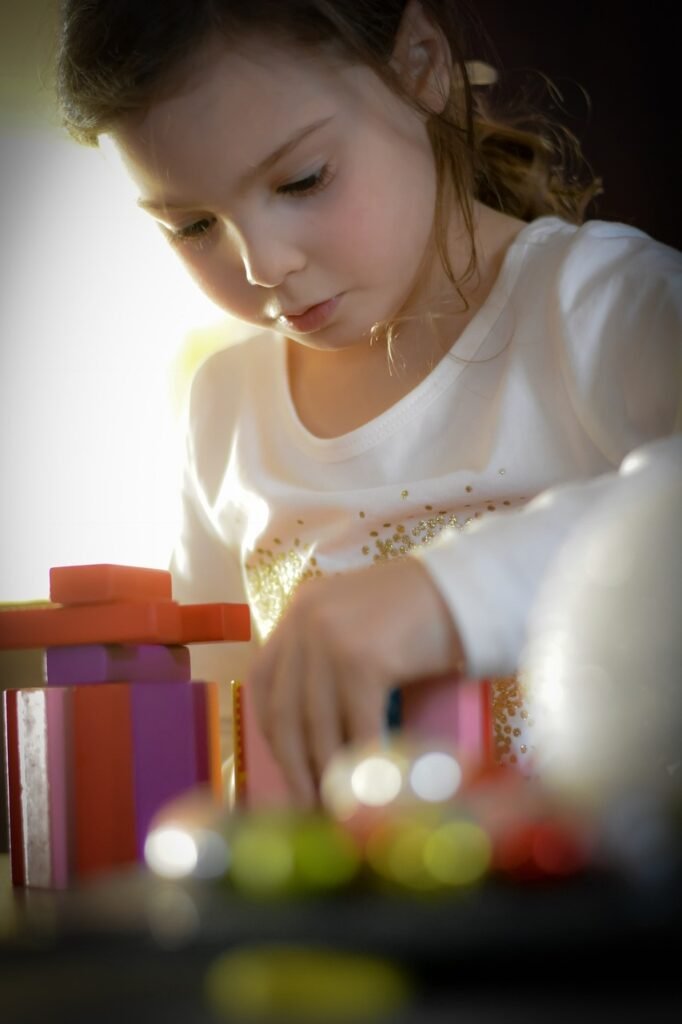
Play dough art offers a relaxing creative activity that children can enjoy independently or together.
Provide colorful play dough, rolling pins, child-safe cutters, and plastic shaping tools. Encourage kids to create animals, miniature houses, pretend food, flowers, or imaginative sculptures.
You can introduce themed challenges such as building an underwater world, designing a birthday cake, or creating a favorite cartoon character.
For additional learning, ask younger children to form letters, numbers, and geometric shapes.
Working with play dough strengthens fine motor skills, supports sensory exploration, and encourages creative thinking. Use age-appropriate materials and supervise younger children who may put objects in their mouths.
15. Guess Who
Guess Who is a deduction game that challenges children to identify a hidden character through carefully chosen questions.
Each player selects a mystery character while their opponent attempts to discover the identity by asking questions that can be answered with yes or no.
Questions might include, "Does your character wear glasses?" or "Does your character have a hat?"
Based on the answers, players eliminate characters until they can make a confident guess.
You can use the traditional board game or create a homemade version with drawings of fictional characters.
Guess Who encourages logical reasoning, attention to detail, communication, and strategic thinking. It is particularly enjoyable for children who like puzzles and mysteries.
16. Paint Your Dreams
Paint Your Dreams invites children to turn their imagination into colorful artwork.
Provide paper, washable paints, brushes, and protective coverings for the work area. Ask children to imagine a magical place, a dream adventure, or a world they would love to visit.
They might paint floating islands, friendly dragons, underwater cities, or imaginative landscapes.
Allow children to choose their colors and designs without worrying about creating realistic pictures.
Afterward, invite them to describe their artwork and explain the story behind it. This activity supports creativity, emotional expression, storytelling, and fine motor development while offering a peaceful alternative to energetic games.
17. Ping Pong
Ping Pong is a classic indoor activity that helps children develop coordination and concentration.
If you have a table tennis setup, organize friendly matches using paddles and lightweight balls. For a smaller space, create a simplified version on a sturdy table with a temporary net.
Younger children can begin by practicing how many times they can bounce a ball on a paddle without dropping it.
Another option is to create target zones and award points for accurate shots.
Keep fragile items away from the playing area and supervise children around tables. Ping Pong encourages quick reflexes, hand-eye coordination, focus, and friendly competition.
18. Memory Games
Memory games are excellent indoor activities for strengthening observation and recall.
One easy option involves placing several household objects on a tray. Allow children to study the collection for a short period before covering it with a cloth.
Secretly remove one item and ask players to identify what's missing.
Another version uses matching picture cards placed face down. Participants turn over two cards at a time, trying to locate identical pairs.
Increase the difficulty by adding more objects or reducing the viewing time.
These activities encourage attention, concentration, visual memory, and patience. They can also be adapted for different ages, making them suitable for family playtime.
19. Indoor Hockey
Indoor Hockey offers an exciting way to enjoy a team sport without leaving the house.
Create two small goals using cardboard boxes or floor markers. Use soft foam sticks or pool noodles and a lightweight foam ball to keep the activity suitable for indoor play.
Divide children into teams and challenge them to move the ball toward the opposing goal.
Set simple rules that prevent rough contact, high swings, and pushing.
If space is limited, organize a shooting challenge instead of a full match. Players can take turns aiming at designated targets.
Indoor Hockey encourages teamwork, coordination, movement, and strategic thinking while introducing children to basic sportsmanship.
20. Hula Hoop
Hula Hoop activities are a fun way to encourage physical movement while challenging balance and coordination.
Give children appropriately sized hoops and let them practice keeping them spinning around their waists. Beginners can start by rolling hoops across the floor or stepping in and out of stationary hoops.
Organize a friendly challenge to see who can keep a hoop moving the longest.
You can also place hoops on the floor to create jumping patterns or use them as targets for soft beanbags.
These variations keep the activity interesting for different skill levels. Choose an open area away from fragile furniture to ensure children have enough room to move comfortably.
21. Start A Band
Starting a homemade band gives children an opportunity to explore rhythm, sound, and teamwork.
Collect safe household objects that can produce interesting sounds, such as sealed containers filled with rice, wooden spoons, and small plastic buckets.
Allow children to experiment with different beats and discover how various materials create different tones.
Assign roles such as drummer, singer, conductor, or percussion player. Then encourage the group to perform a familiar song or invent an original tune.
For additional fun, organize a miniature family concert with handmade tickets and a decorated performance area.
This activity encourages musical awareness, cooperation, creativity, and confidence. Keep noise levels comfortable and ensure homemade instruments are securely assembled.
22. Make Bottle Hurricanes
Making Bottle Hurricanes is an engaging science-inspired activity that allows children to observe swirling water in motion.
Fill a clear plastic bottle approximately three-quarters full with water and close the cap tightly. For a more interesting visual effect, add a small amount of food coloring or biodegradable glitter.
Hold the bottle upright and move it in a circular motion before stopping.
The water continues rotating, creating a visible vortex that resembles the swirling motion associated with large storms.
Ask children to observe what happens when they change the speed or direction of their movements.
This activity introduces basic ideas about circular motion and fluid behavior. Adult supervision is recommended, particularly when preparing the bottles.
23. Ring Toss
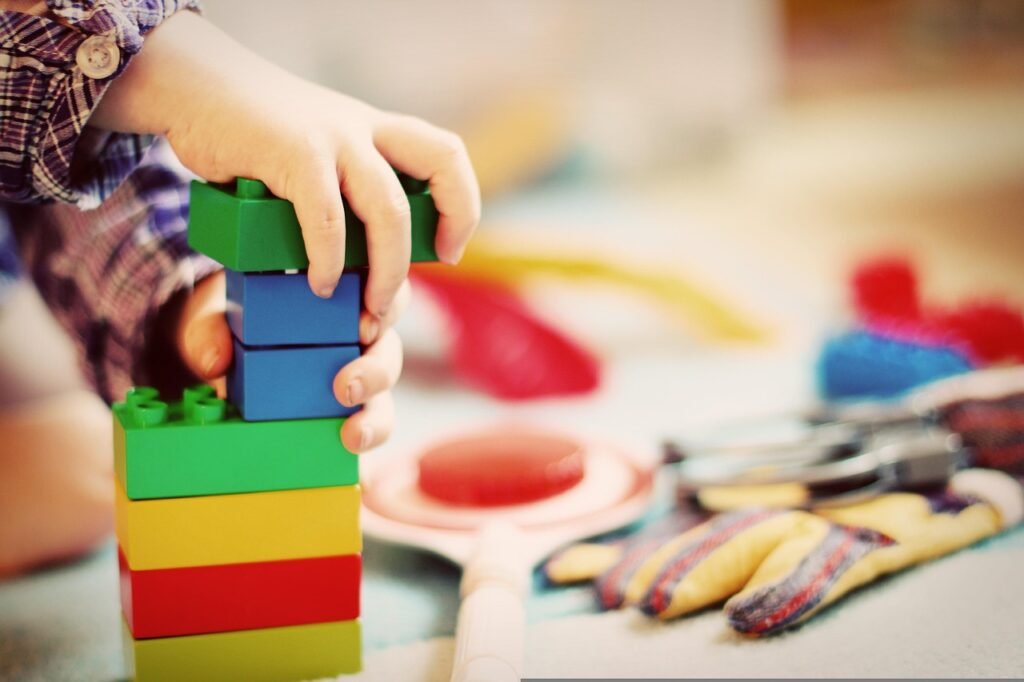
Ring Toss is a simple indoor game that combines accuracy, patience, and friendly competition.
Arrange plastic bottles, cardboard tubes, or other stable targets on the floor. Give children lightweight rings made from foam, rope, or flexible plastic.
Mark a throwing line and challenge participants to land their rings around the targets.
Assign different point values based on distance or difficulty.
Younger children can stand closer to the targets, while older players can attempt more challenging throws.
For a creative variation, decorate the targets with colors, numbers, or animal pictures. Ring Toss supports hand-eye coordination, distance judgment, concentration, and turn-taking.
24. Marshmallow Tinkertoys
Marshmallow Tinkertoys turns simple building materials into an imaginative construction challenge.
Provide large marshmallows and blunt-ended craft sticks or other age-appropriate connectors. Children can join the pieces to create geometric shapes, miniature towers, bridges, and unusual structures.
Start with basic shapes such as triangles and squares before introducing more complicated designs.
Challenge older children to build the tallest freestanding tower or construct a bridge that can support a lightweight object.
The activity encourages spatial reasoning, creativity, engineering thinking, and problem-solving.
Supervise closely because small marshmallows and pointed toothpicks can present choking or injury risks. Use safer materials for younger participants and keep building supplies separate from snacks.
25. Family-Photo Bingo
Family-Photo Bingo adds a personal touch to a traditional matching game by using familiar faces instead of numbers.
Create bingo cards featuring printed photographs of family members, relatives, or pets. Arrange the pictures in different positions on each card.
Prepare a separate set of matching photographs for the caller.
As each image is revealed, players search their cards and cover the corresponding picture with a marker.
The first person to complete the designated pattern announces "Bingo!"
This activity is especially enjoyable during family gatherings because children can recognize loved ones and share memories. It also encourages visual recognition, listening, and social connection.
26. Stop the Bus
Stop the Bus is a word-based game that challenges children to think quickly and use their vocabulary.
Give each participant a sheet of paper divided into categories such as names, animals, countries, foods, and objects.
Choose a letter of the alphabet and ask everyone to write an answer for each category beginning with that letter.
For example, if the selected letter is B, children might write Bella, bear, Brazil, banana, and bicycle.
The first player to complete the categories calls out "Stop the Bus!" and everyone puts down their pencils.
Award points for valid answers, with optional bonus points for unique responses.
This game encourages spelling, vocabulary development, general knowledge, and quick thinking. Adjust the categories to match children's ages and learning abilities.
27. Indoor Treasure Hunt
An Indoor Treasure Hunt transforms everyday rooms into a mysterious adventure filled with clues and hidden surprises.
Begin by selecting a small reward, such as stickers, a favorite snack, or a handmade certificate. Hide it somewhere safe and create a series of clues leading children from one location to another.
Each clue should guide participants toward the next hiding place.
For younger children, use simple pictures or recognizable objects as clues. Older kids can solve riddles, number puzzles, or word challenges.
You can build the hunt around themes such as pirates, detectives, superheroes, or magical kingdoms.
Make sure all hiding places are accessible and avoid areas containing cleaning products, electrical equipment, or breakable objects.
An indoor treasure hunt encourages problem-solving, teamwork, curiosity, and persistence while turning an ordinary day at home into a memorable experience.
Related Ideas You Might Love
Indoor games are more than a way to pass the time. They create opportunities for children to stay active, develop useful skills, express creativity, and strengthen relationships with family and friends.
Whether your kids prefer energetic challenges, artistic projects, science experiments, or classic guessing games, these 27 indoor games for kids in 2026 offer something for nearly every interest and age group. With a little preparation and a few everyday materials, you can make indoor playtime enjoyable, educational, and full of lasting memories.


2 Comments