31 Outdoor Kids Activities for 2026

Getting children outside is a wonderful way to encourage movement, creativity, curiosity, and independent play. From climbing trees and building backyard hideouts to experimenting with water and exploring nature, outdoor activities give kids opportunities to learn while having fun. The best part is that many of these ideas require little more than everyday household items, a safe outdoor space, and a little imagination.
Whether you have energetic school-age children or curious toddlers, these outdoor kids activities offer something for different ages, interests, and abilities.
What is Outdoor Play for Kids?
Outdoor play is any activity that allows children to explore, move, create, or interact with the natural world outside. It can include running through a garden, building with sticks, playing traditional games, splashing in water, or observing insects.
Spending time outdoors supports physical development, coordination, problem-solving, and social skills. Children also get opportunities to practice decision-making, manage small challenges, and discover how their surroundings work.
Outdoor play does not need to follow a strict schedule or involve expensive equipment. A patch of grass, a few natural materials, and some free time can be enough to create an enjoyable experience. Choose activities that suit your child's age and abilities, supervise appropriately, and let their interests guide the fun.
1. Tree Climbing Adventure
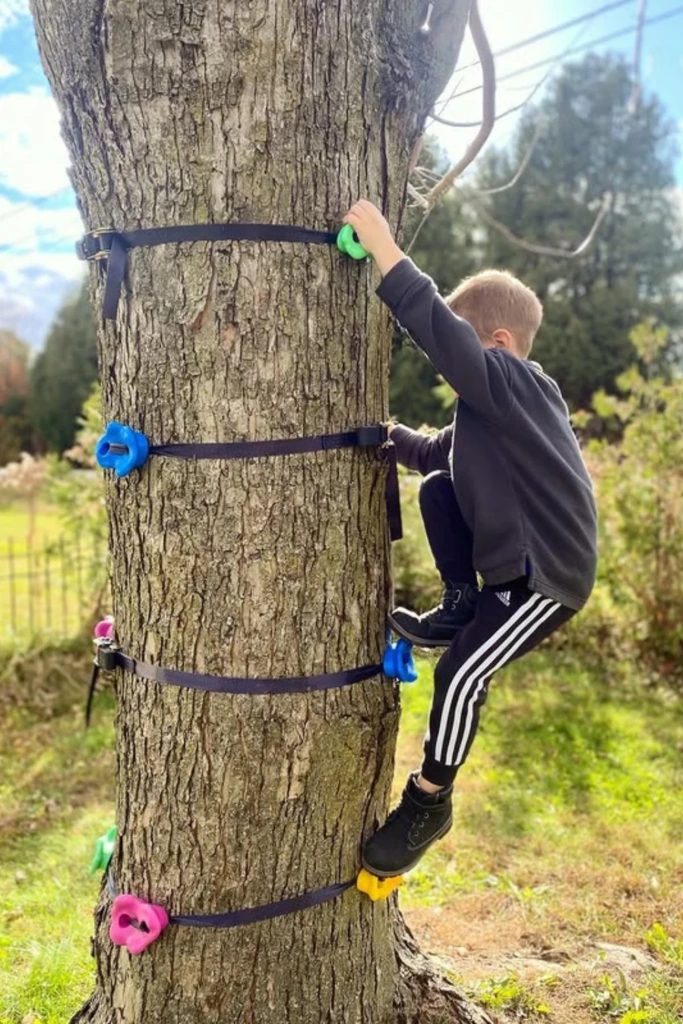
Climbing a tree can turn an ordinary afternoon into an exciting outdoor adventure. Children enjoy finding sturdy branches, exploring different viewpoints, and imagining that the tree is a castle, lookout tower, or secret headquarters.
Choose a healthy tree with strong, low branches and a clear area underneath. Avoid dead wood, slippery bark, and branches that look cracked or weak. Younger children can explore the trunk and practice stepping onto low, stable roots while an adult stays close.
Set clear boundaries about how high children may climb, and never encourage jumping from branches. If suitable trees are unavailable, a playground climbing structure offers a safer alternative for practicing similar movements.
2. Backyard Playhouse Zone
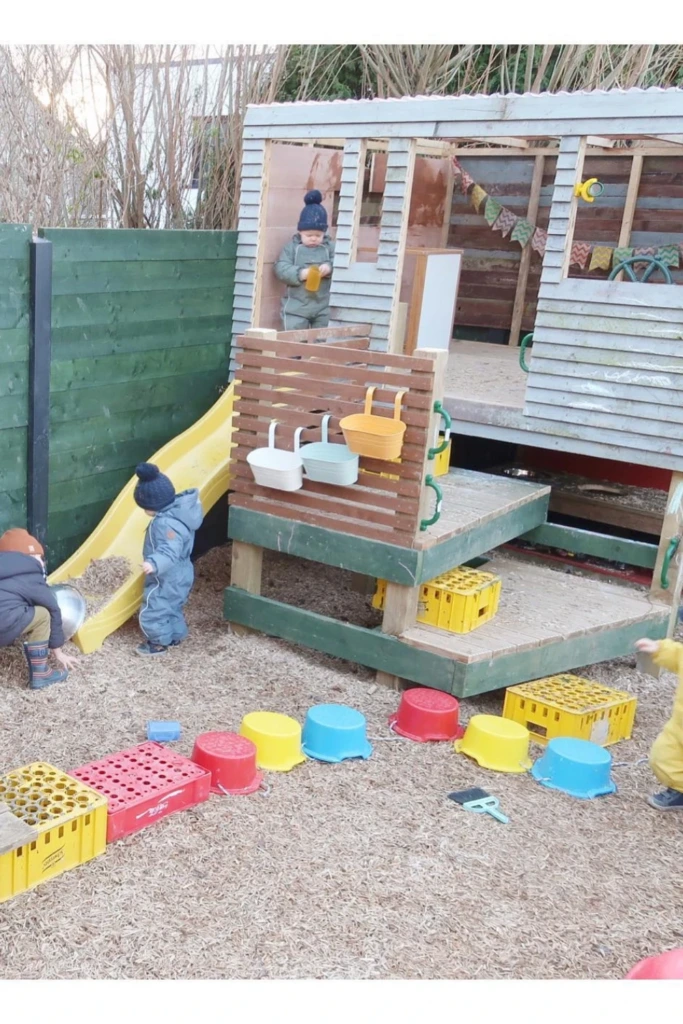
A backyard playhouse gives children a special place where imagination takes the lead. It might become a tiny café, a reading corner, a pirate ship, or a home for stuffed animals.
You can create a simple playhouse using a sturdy pop-up tent, a weather-resistant garden structure, or a blanket fort supported by a secure frame. Add washable cushions, child-sized chairs, pretend food, and a small basket for toys.
Let children help decorate their space with drawings, handmade signs, or colorful fabric. Keep the interior ventilated and free from sharp objects, unstable furniture, and anything that could tip over. A thoughtfully arranged playhouse can encourage hours of independent storytelling and cooperative play.
3. DIY Bird Feeder Craft
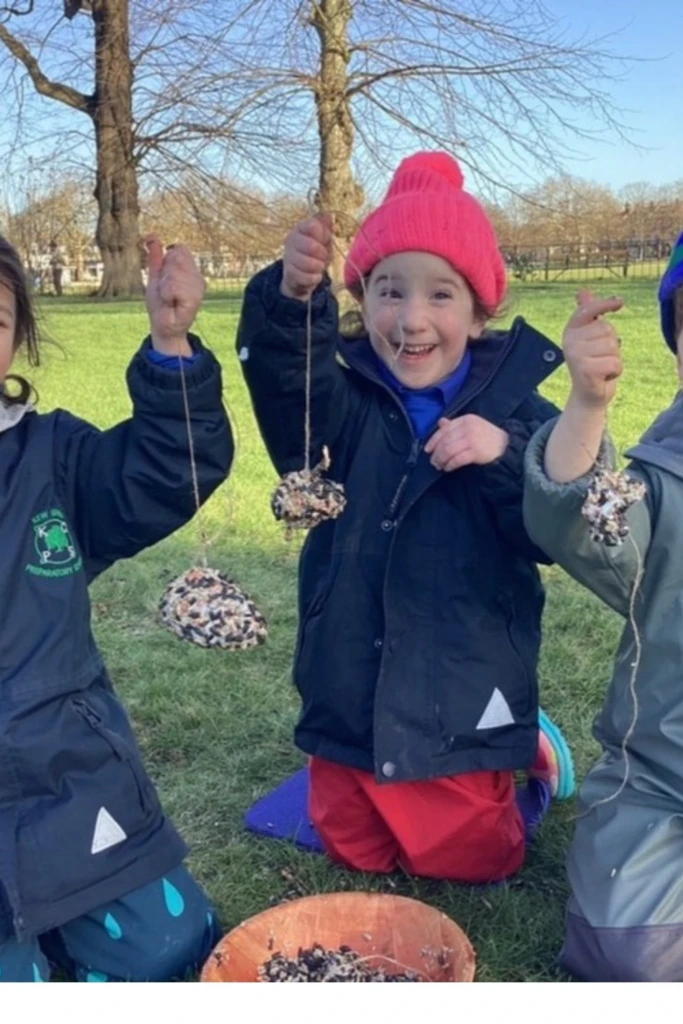
Making a bird feeder combines a hands-on craft project with an opportunity to observe local wildlife. Children can help prepare the feeder, choose an appropriate location, and watch for birds visiting throughout the day.
One easy option is to use a clean pinecone. Spread a thin layer of unsalted peanut butter or another suitable bird-safe binder over its surface, then roll it in birdseed. Attach a secure hanging loop and place it somewhere visible from a window or garden seating area.
Check local wildlife guidance before choosing food, and avoid bread, salty snacks, and spoiled ingredients. Keep feeders clean, refresh the food as needed, and wash hands after handling birdseed or feeder materials. Children can keep a simple bird journal to record the species they spot.
4. Spray Art in the Woods
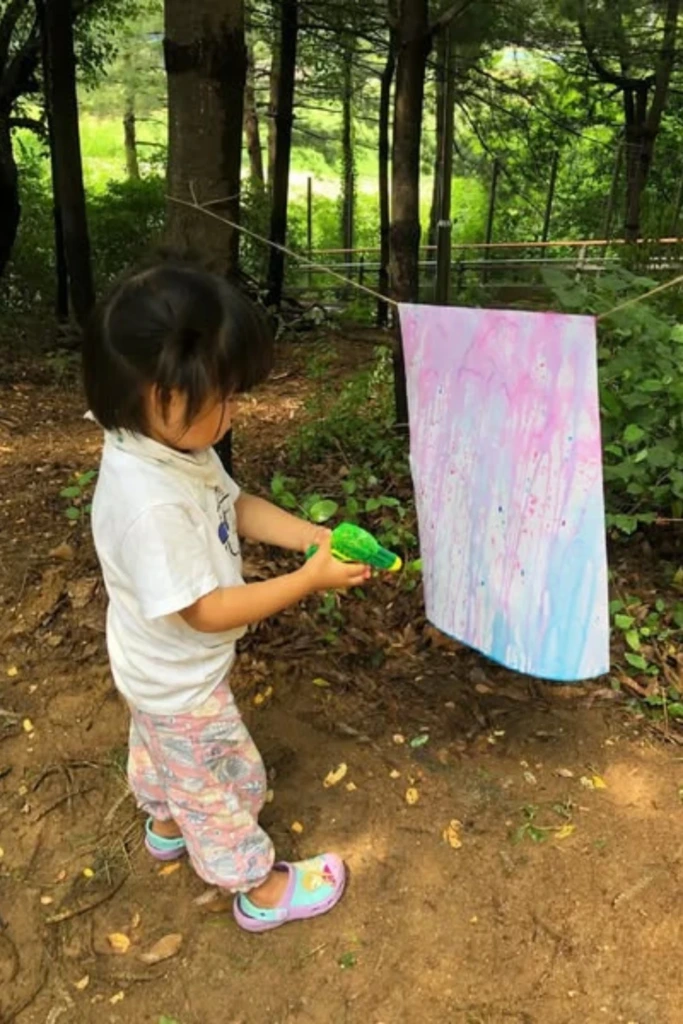
Spray art offers children a playful way to experiment with colors, patterns, and movement outdoors. With a few reusable spray bottles and washable, non-toxic paint diluted according to its label, they can create colorful designs on large sheets of paper.
Hang the paper on a temporary freestanding board or place it flat on a protected surface. Fill separate bottles with different colors and encourage children to spray dots, lines, circles, or overlapping patterns.
Use this activity in a designated outdoor area rather than spraying paint onto trees, rocks, or public woodland. Choose products suitable for children's ages, protect clothing, and keep paint away from eyes and mouths. Water-filled bottles can also be used for a mess-free version that lets children experiment with spraying patterns on pavement or a washable surface.
5. Sidewalk Chalk Mural
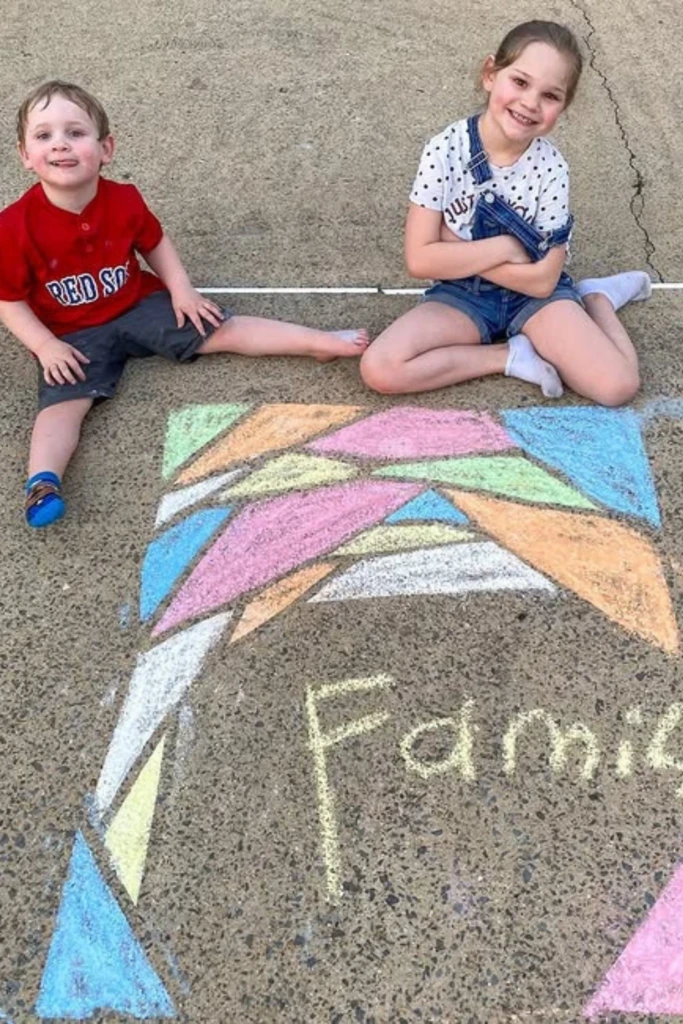
A sidewalk chalk mural gives children a large canvas without requiring art supplies or a dedicated studio. They can work together to design a neighborhood map, draw imaginary animals, create a colorful garden, or illustrate an underwater world.
Start with washable sidewalk chalk and a clean, dry paved surface. Children can outline large shapes, fill them with color, and add details such as roads, flowers, clouds, or characters. For a collaborative project, invite each child to contribute a section.
Turn the finished mural into a game by adding numbered stepping stones, hopscotch squares, or a trail of footprints to follow. Choose a location away from traffic and ensure the surface is not slippery. Check whether chalk is permitted on the chosen pavement, particularly in shared public spaces.
6. Balance Beam Walk
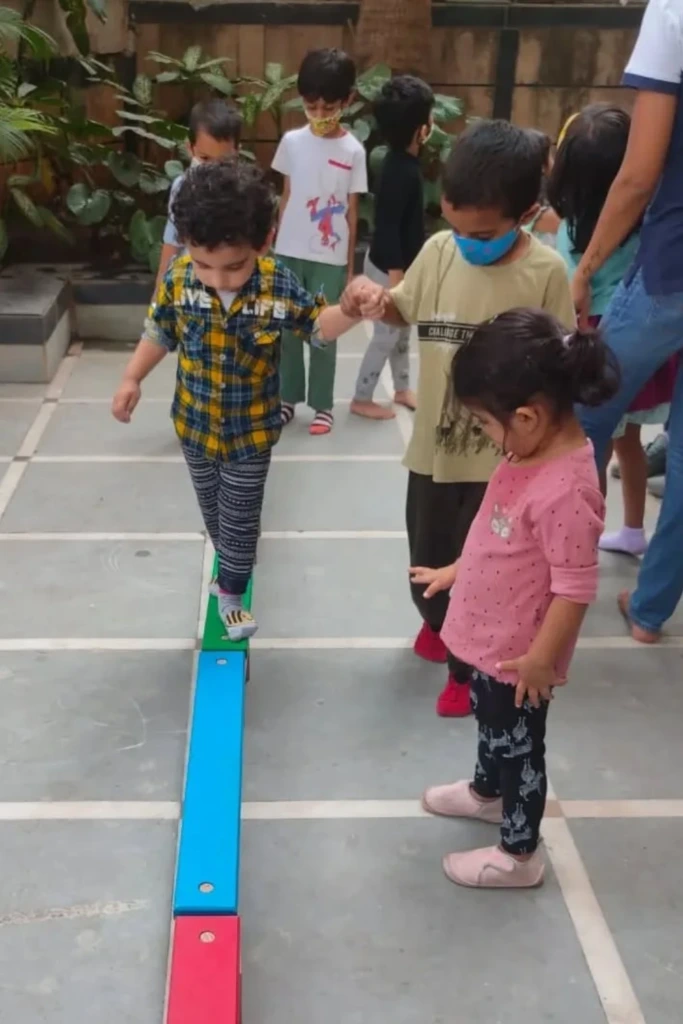
A balance beam activity helps children develop coordination, concentration, and body awareness. It can be as simple as walking along a line drawn with chalk or following a low, wide wooden beam positioned on level ground.
Invite children to walk forward, take small steps, pause at a marker, or turn around at the end. Older children may enjoy carrying a lightweight beanbag while balancing, provided the challenge remains manageable.
For beginners, use a line painted or marked on the ground rather than an elevated beam. Keep the surrounding area clear and offer a hand when needed. The aim is to build confidence through practice, not to see who can take the biggest risks.
7. Outdoor Rock Climbing
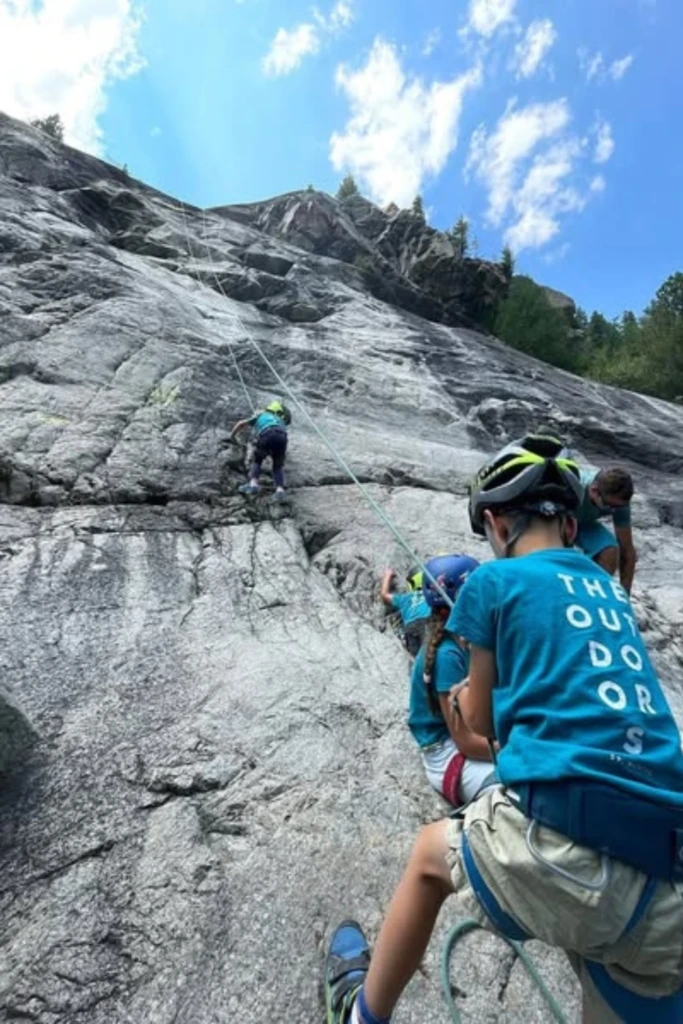
Rock climbing can help children build strength, coordination, and confidence while learning to assess challenges. For a safe introduction, choose a purpose-built climbing wall designed for children or a supervised climbing facility with appropriate safety equipment.
Start with easy routes that have large handholds and plenty of footholds. A trained instructor can teach children how to use climbing equipment, follow safety procedures, and move carefully between holds.
Natural rock faces and improvised climbing surfaces are not suitable substitutes for supervised climbing facilities. Loose stones, unexpected drops, and unstable surfaces can create serious hazards. Children should use properly fitted equipment and follow the facility's age requirements and supervision rules.
8. Rope Swing Fun
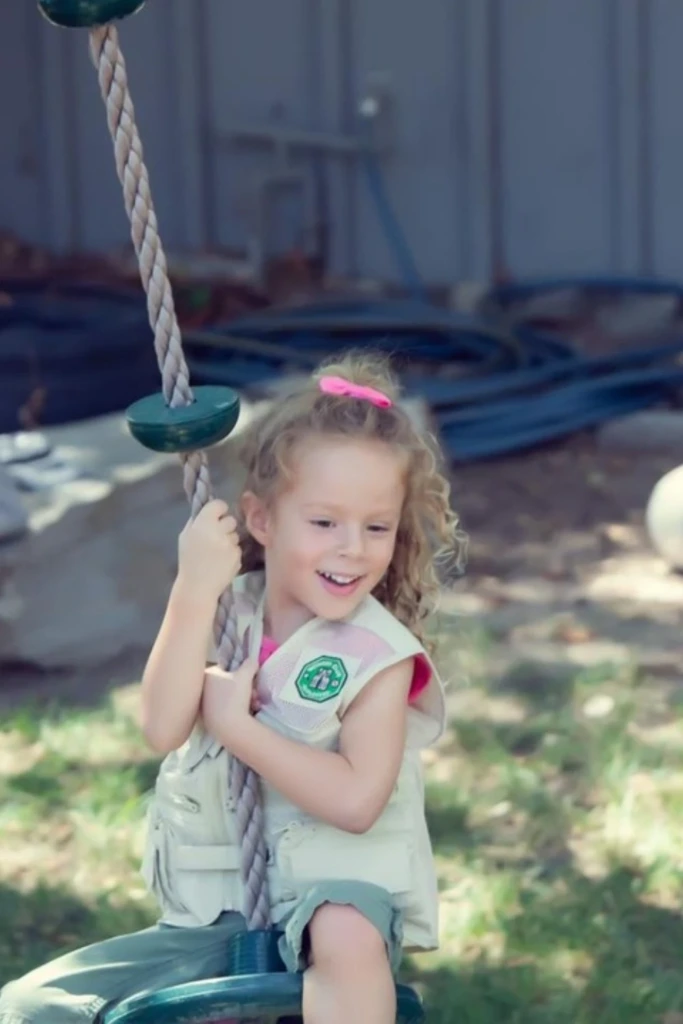
A rope swing can become a favorite backyard attraction, especially for children who enjoy gentle movement and outdoor adventures. However, a swing suspended from a tree needs careful planning because branch strength, rope condition, and installation quality all affect safety.
Use a swing specifically designed for its intended purpose, installed according to the manufacturer's instructions. If it requires a tree attachment, have the branch and installation assessed by someone qualified to determine whether they can support the load. Never rely on a branch simply because it looks thick.
Maintain a clear landing area with suitable impact-absorbing ground cover, and inspect the swing regularly for wear, loose connections, and weather damage. Children should take turns, avoid pushing one another too hard, and use the swing only as directed.
9. Tic Tac Toe Floor Game
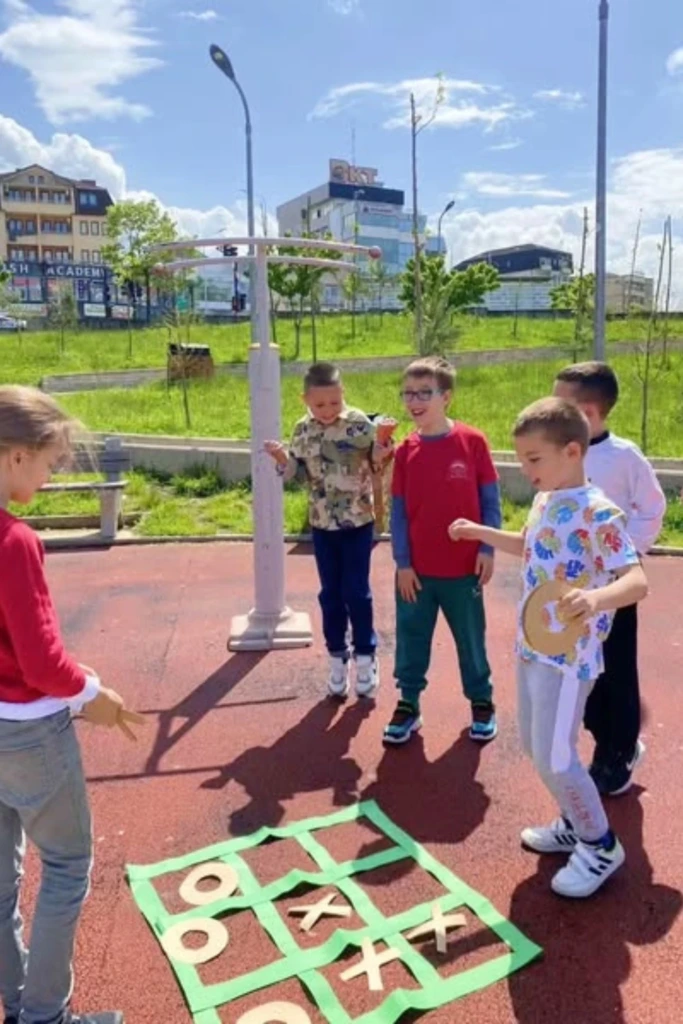
Take the familiar game of tic-tac-toe outside by creating a large playing grid on a patio, driveway, or patch of suitable ground. Draw nine squares with chalk, then use two sets of objects as playing pieces.
For example, one player might use smooth, clean stones while the other uses large leaves or wooden discs. Players take turns placing one piece in an empty square, aiming to complete a row of three horizontally, vertically, or diagonally.
This simple game introduces planning, pattern recognition, and turn-taking. Younger children can use large, easy-to-handle pieces, while older kids can invent new rules or play several rounds to keep score. Avoid small pieces around children who may put objects in their mouths.
10. Outdoor Mud Kitchen
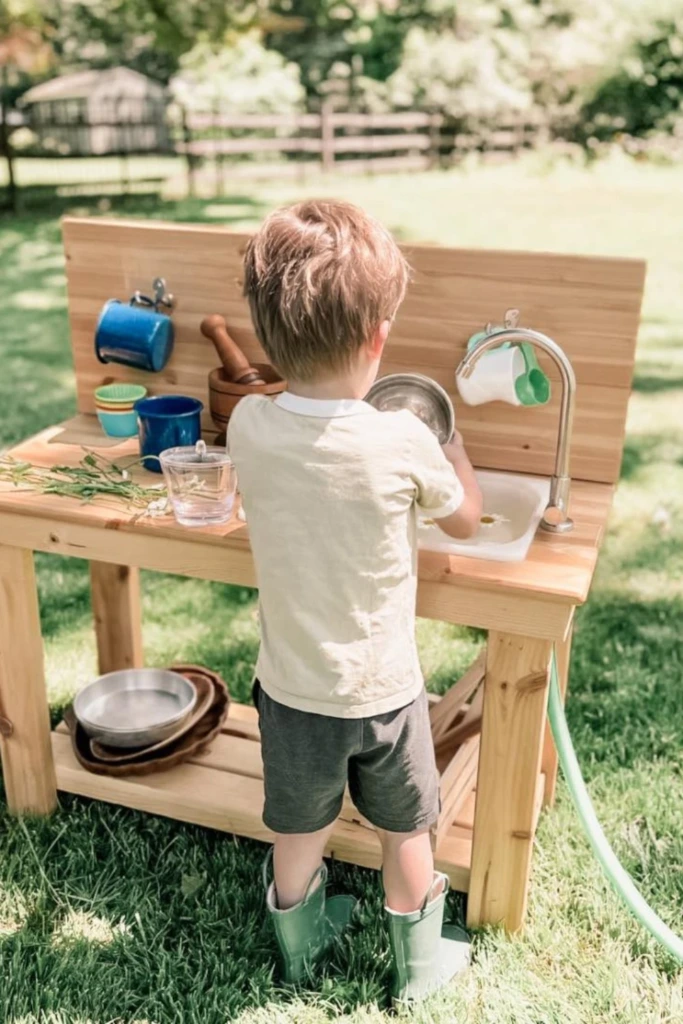
A mud kitchen lets children mix, scoop, pour, and pretend to cook using natural materials. It encourages imaginative play while introducing basic ideas about texture, volume, and cause and effect.
Set up a low table or sturdy play station with old pots, spoons, measuring cups, bowls, and a supply of clean water. Provide a designated area of clean soil or child-safe play mud. Children can create pretend soups, mud pies, leaf salads, and imaginative recipes.
Make sure all containers are stable and free from sharp edges. Keep the activity away from garden chemicals, animal waste, and potentially contaminated soil. Explain that mud kitchen creations are for pretend play and must never be eaten. Wash hands thoroughly afterward, especially before snacks or meals.
11. Nature Tic Tac Toe
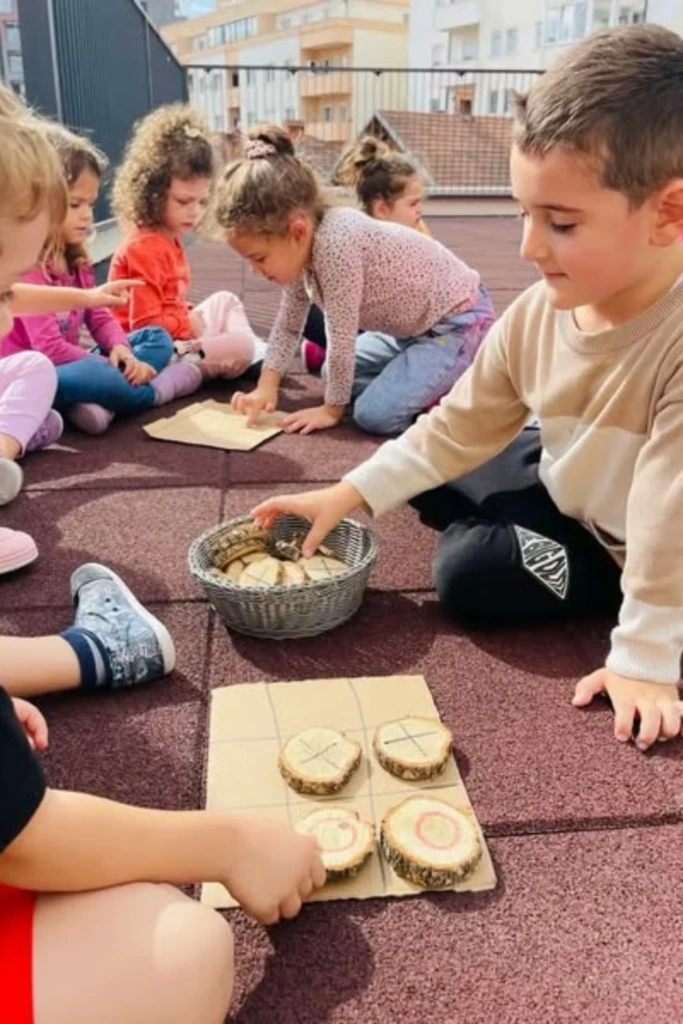
Nature tic-tac-toe combines a familiar strategy game with a small outdoor scavenger hunt. Children gather suitable natural objects and use them as pieces on a simple playing grid.
Draw the board in the soil with a stick or use chalk on a paved surface. Collect fallen leaves, small twigs, or other loose natural materials, creating two distinct sets of pieces. Players then alternate placing their pieces until someone completes a line of three.
Encourage children to collect only what they need from the ground rather than pulling leaves, flowers, or bark from living plants. Check objects for sharp edges or insects before handling them, and avoid using unknown berries or mushrooms.
This activity works especially well in a garden, park, or nature-themed play area where children can explore before starting the game.
12. Rainbow Water Pad Play
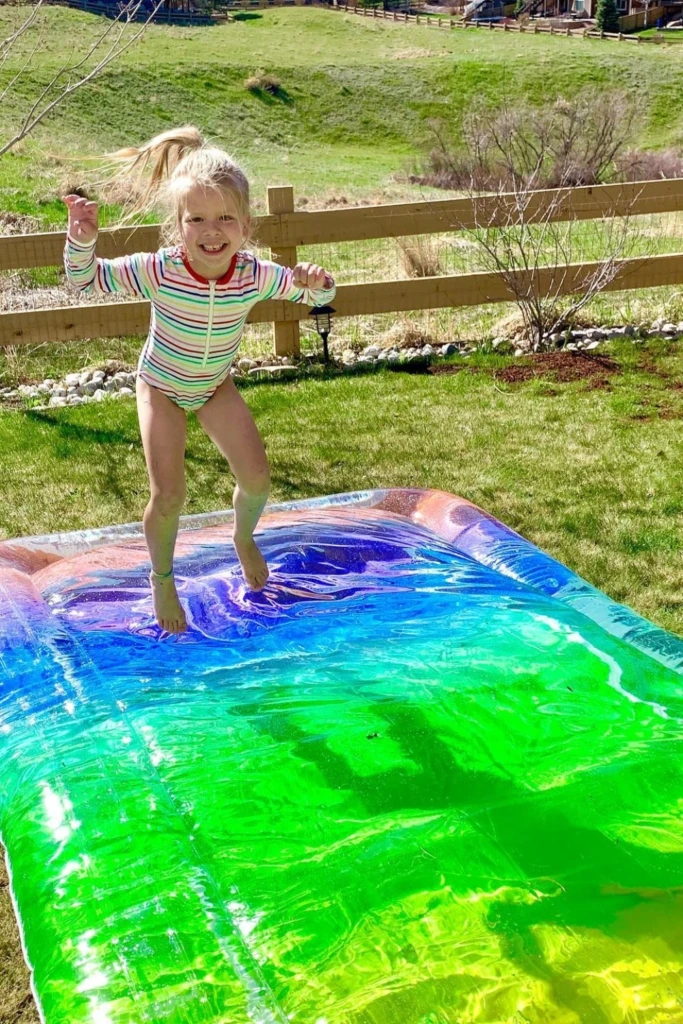
A rainbow water play area can transform a warm afternoon into a colorful sensory experience. Children can explore splashing, pouring, color mixing, and simple water experiments on a suitable outdoor surface.
Use shallow trays or a purpose-built water play mat on level ground. Fill a few containers with water tinted using a small amount of child-safe, washable coloring, following the product instructions. Provide cups, funnels, scoops, and squeeze bottles so children can move water between containers.
Place the station away from electrical equipment and slippery walkways. Keep water shallow, supervise children continuously, and empty containers immediately after play. Even small amounts of standing water can present a drowning risk to young children.
For an alternative without added coloring, offer clear water with brightly colored toys, translucent cups, and floating objects.
13. Target Toss Challenge
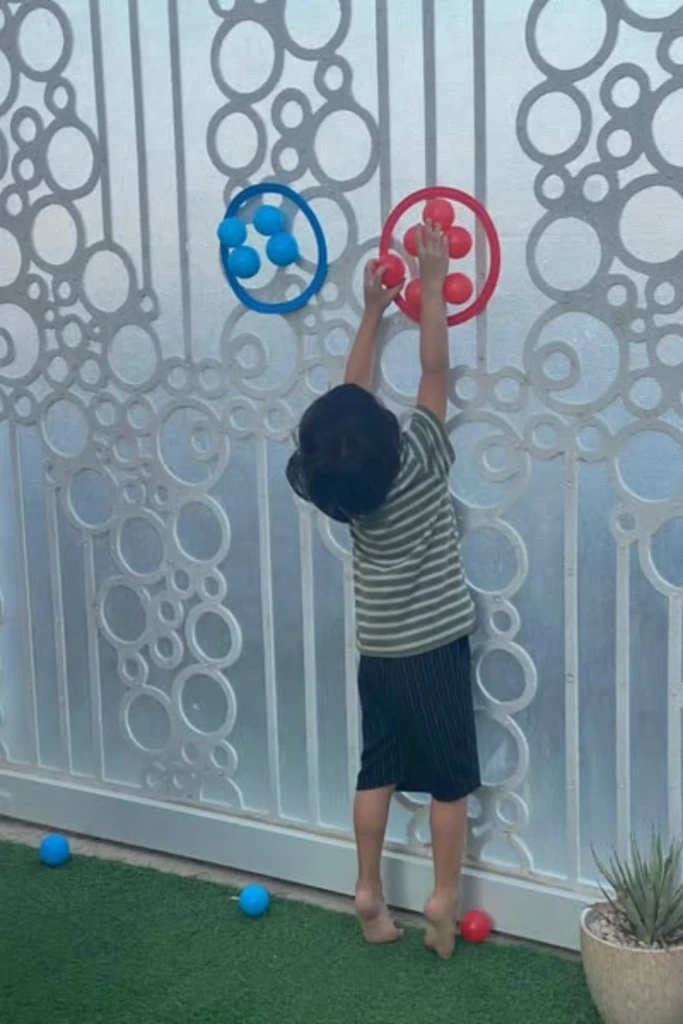
A target toss game is an easy way to help children practice hand-eye coordination and estimate distance. It also works well for siblings or small groups because the rules can be adjusted for different skill levels.
Set up buckets, baskets, or cardboard boxes at several distances. Give children soft beanbags, fabric balls, or rolled-up socks to throw toward the targets. Assign different point values to each container or let beginners aim for the largest target first.
Mark a throwing line and make sure the landing area is clear of people and breakable objects. Encourage children to retrieve the items only after everyone has finished throwing.
To add variety, use color-coded targets, create a team challenge, or change the throwing distance as children's confidence improves.
14. Forest Treehouse Adventure
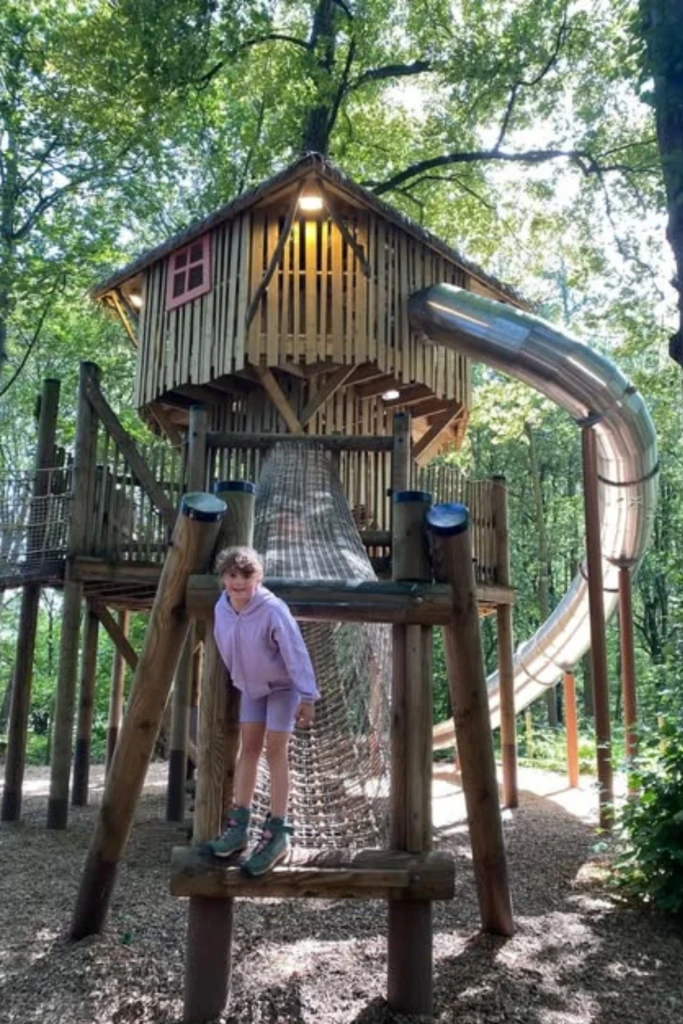
A treehouse can inspire imaginative adventures, from pretending to be forest explorers to watching birds from a quiet observation spot. If you do not have a treehouse, a ground-level woodland-style hideaway can provide a similar experience.
For a permanent treehouse, proper structural design and professional installation are important. The platform, supports, guardrails, access ladder, and surrounding landing area must all be appropriate for the structure and its intended users.
For a simpler activity, build a pretend treehouse using a sturdy ground-level play structure or create a small den from a freestanding frame and fabric. Add binoculars, nature notebooks, and a few cushions to make it feel like a real expedition base.
Keep children away from unstable homemade platforms and never allow them to climb onto roofs or elevated structures without suitable safeguards.
15. Balance Swing Ride
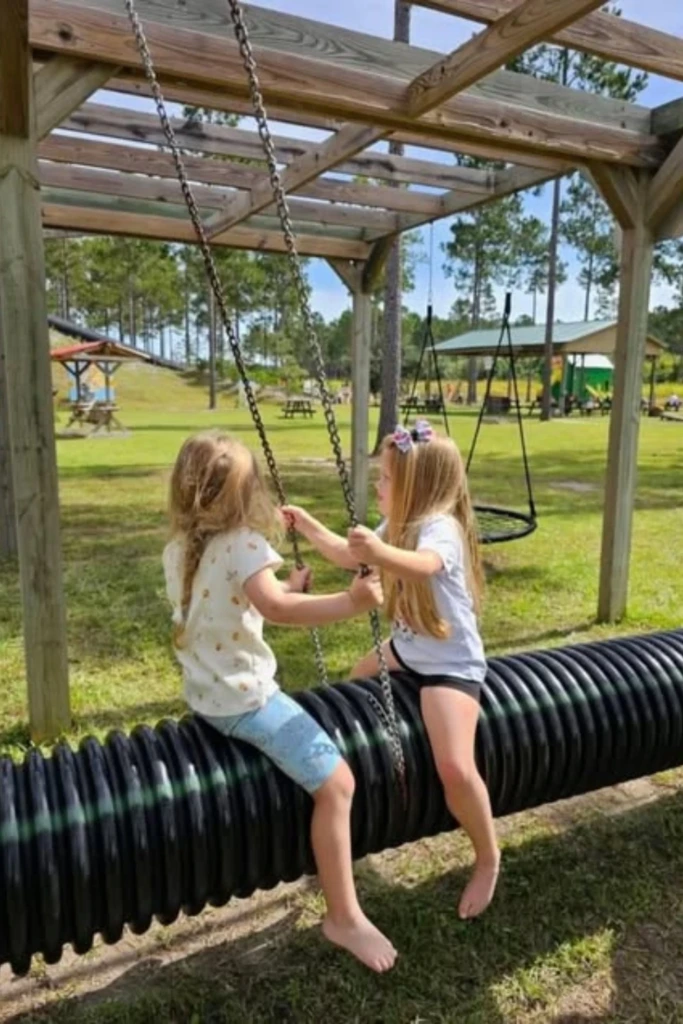
A balance swing combines movement with the challenge of staying steady while the seat moves. Depending on the equipment, children may need to adjust their posture, coordinate their movements, and work together to keep the ride comfortable.
Choose a commercially manufactured balance swing or another playground apparatus designed for the child's age group. Follow the manufacturer's instructions about seating positions, capacity, and appropriate use.
Show children how to wait for their turn, hold on as directed, and avoid standing on moving equipment. Younger children may benefit from watching an adult demonstrate the activity before participating.
If you do not have access to a suitable swing, create a ground-level balance challenge using a wide, stable platform or a chalk-marked path.
16. Tree Hug Game
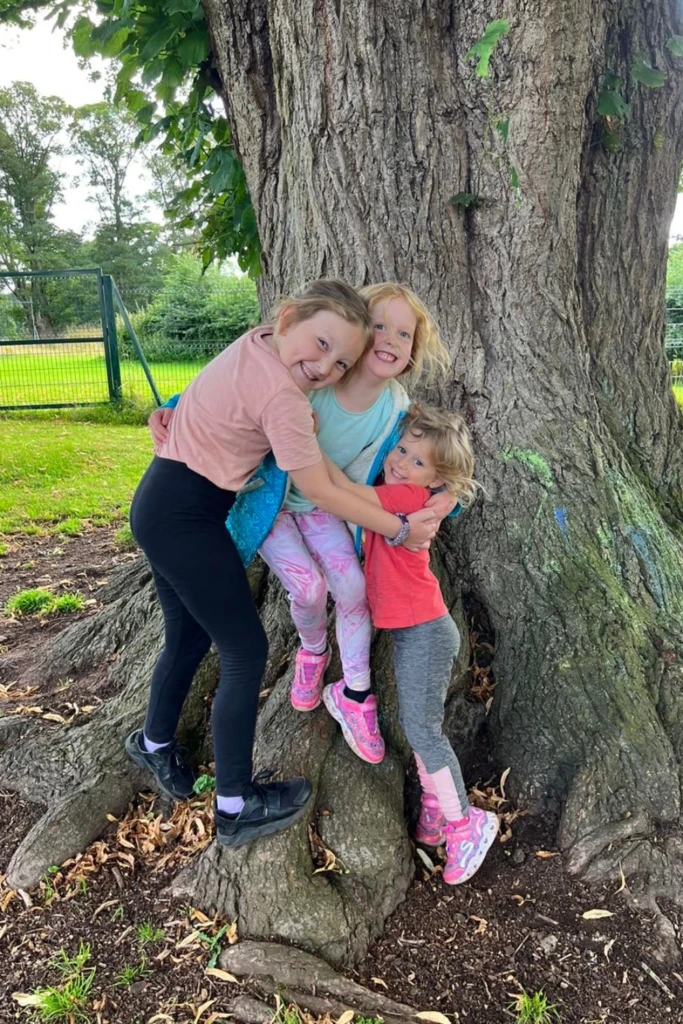
The tree hug game encourages children to slow down and notice the natural world. It can be a calming break between more energetic activities or a fun way to introduce younger children to outdoor observation.
Ask each child to choose a tree and gently place their arms around its trunk if they can do so comfortably. Invite them to notice the bark's texture, the tree's shape, the colors of its leaves, and the sounds around it.
You can turn the activity into a guessing game by asking children to describe their tree without naming it. Others can then try to identify it from the clues.
Remind children not to climb, pull at branches, damage bark, or disturb wildlife. If a tree is too large to hug, they can simply place a hand on its trunk and observe its features.
17. Water Table Station
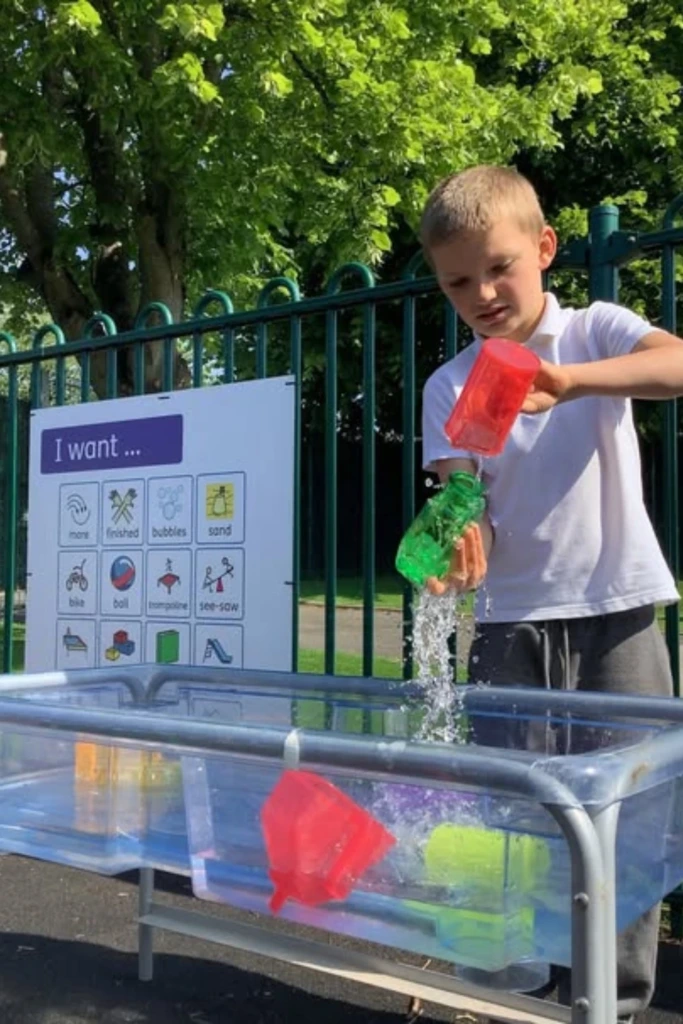
A water table offers a contained space for pouring, scooping, floating, and experimenting. It is particularly appealing to toddlers and preschoolers who enjoy repeating simple actions and discovering how objects behave in water.
Fill a sturdy, child-sized table with a shallow amount of water. Add large cups, funnels, floating toys, plastic animals, and washable containers. Children can transfer water between vessels, compare which objects float, or pretend to wash toy dishes.
Keep the station on a level surface and supervise closely throughout the activity. Water play requires uninterrupted adult attention, even when the water is very shallow. Empty the table as soon as the activity ends and store it so rainwater cannot collect.
For cooler weather, replace the water with large dry objects such as fabric squares, chunky blocks, or other age-appropriate sensory materials.
18. Outdoor Obstacle Playground
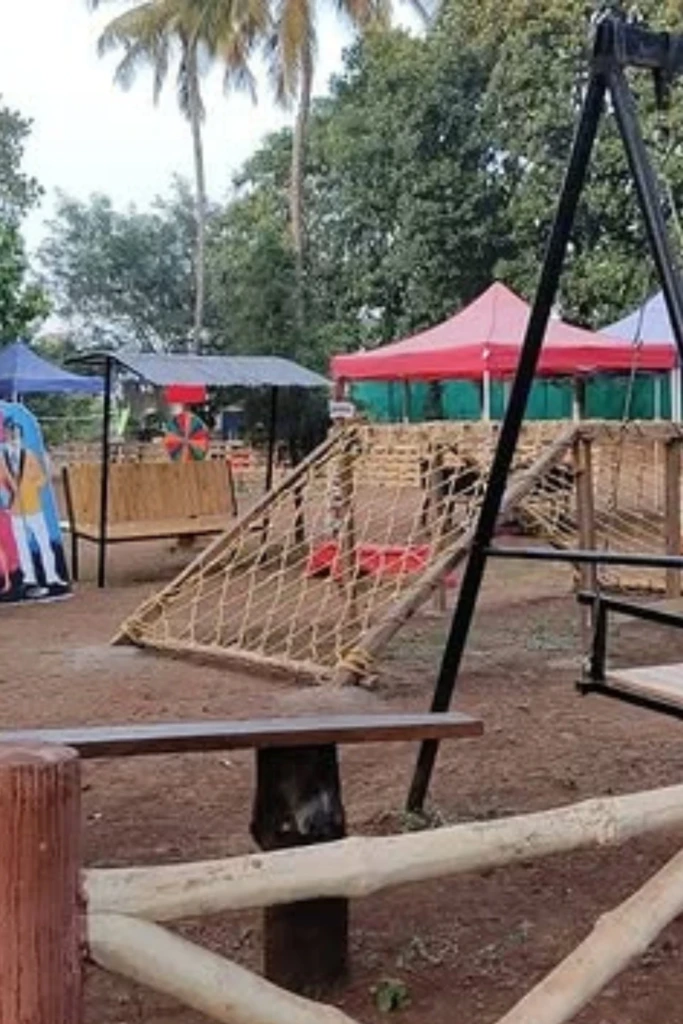
An outdoor obstacle course gives children an opportunity to run, step, crawl, balance, and solve movement challenges in one activity. It can be customized for almost any available space.
Arrange cones, hoops, floor markers, tunnels, and low stepping targets into a simple route. Children might weave between cones, crawl through a play tunnel, step over foam obstacles, and finish by tossing a beanbag into a basket.
Begin with a short, easy course and let children help design additional challenges. You can time each round if they enjoy friendly competition, but completing the route carefully can be just as rewarding as finishing quickly.
Use equipment designed for children's play, leave enough space between obstacles, and avoid hard jumps, unstable platforms, or anything that encourages collisions. Adapt the course for different mobility levels so everyone can participate.
19. Toddler Chalk Play
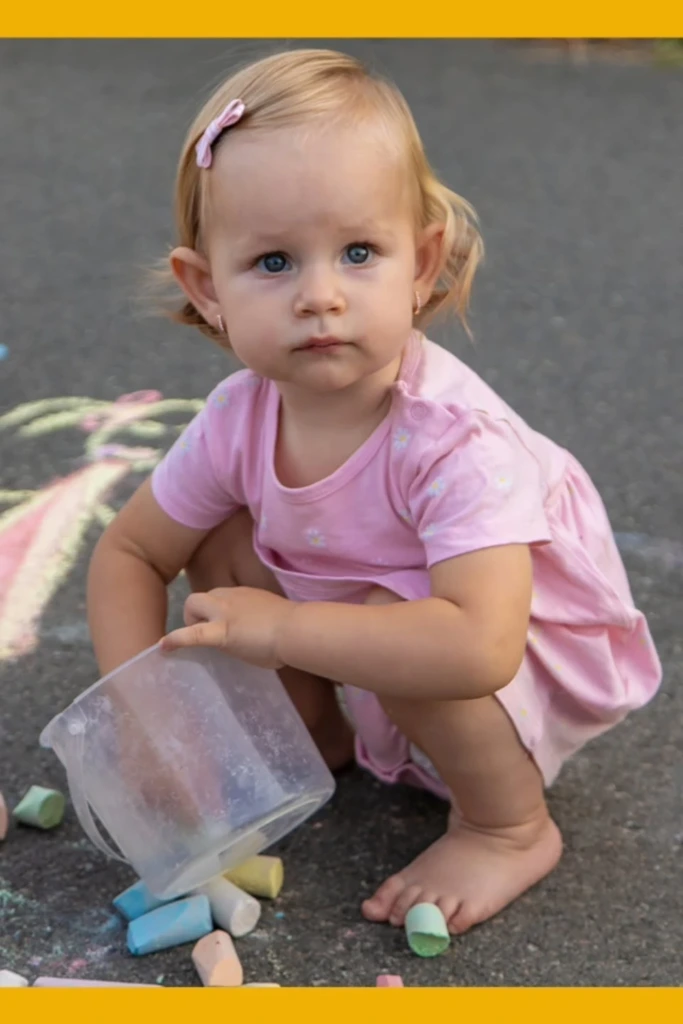
Chalk play is an inexpensive way for toddlers to explore color, movement, and early mark-making. Large pieces of washable sidewalk chalk are generally easier for little hands to grip than thin drawing pencils.
Offer a clean, flat area of pavement and encourage toddlers to make lines, circles, dots, and broad scribbles. Adults can draw simple shapes for children to copy or create a colorful path that toddlers can follow while walking.
You can also draw large circles, footprints, or animal shapes and invite children to point to their favorite designs. These simple activities support early visual recognition and coordination without turning play into a formal lesson.
Choose age-appropriate chalk, supervise closely to prevent mouthing, and avoid dusty materials that may irritate children's eyes or airways. Keep the surface dry enough to prevent slips.
20. Rope Net Climb
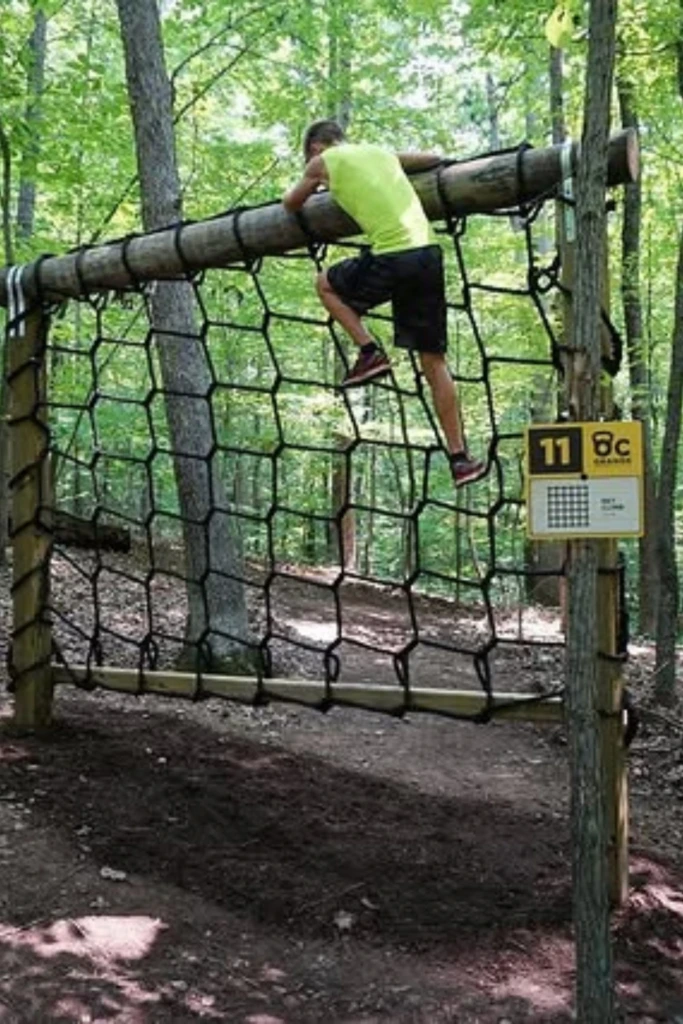
A rope net climbing structure gives children a chance to practice gripping, stepping, and coordinating their arms and legs. It can be an engaging feature of a playground or an organized climbing activity.
Use a professionally installed climbing net designed for children's play. Check that the ropes, connections, supporting frame, and ground surface are in good condition. Follow posted age, height, and weight restrictions, and ensure appropriate adult supervision.
Encourage children to move slowly, keep a secure grip, and wait until the person ahead has moved far enough away. Avoid climbing nets with damaged ropes or improvised setups attached to trees, fences, or other structures not designed to carry climbing loads.
If a climbing net is unavailable, children can practice similar movements on a low, purpose-built playground climber.
21. Forest Den Hideout
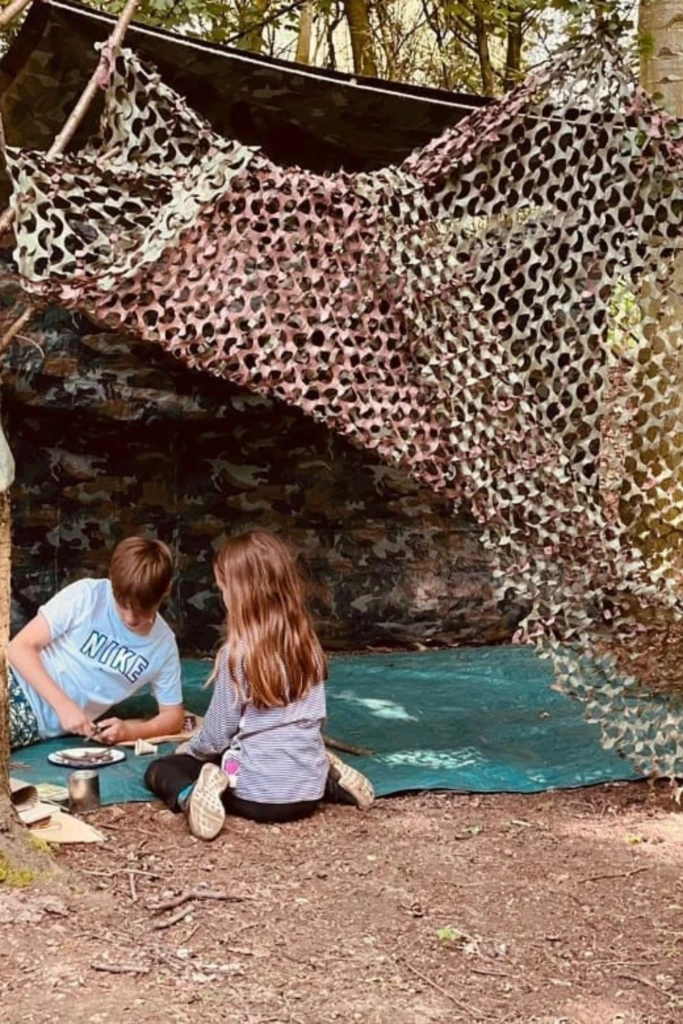
Building a forest den is a creative way for children to explore shelter-building and imaginative storytelling. A few branches, fallen leaves, and a lightweight fabric sheet can become a pretend woodland home.
Choose a designated area with stable ground and gather loose sticks or other materials that can be moved safely. Lean lightweight branches against a sturdy freestanding frame, or drape a sheet over a play tent to create a simple hideout.
Children can decorate the den with fallen leaves, draw a pretend map, or imagine that the shelter belongs to forest explorers. Encourage them to work together, share materials, and think about how to make the space comfortable.
Do not build against unstable trees, use heavy branches overhead, or enter abandoned structures. Avoid blocking paths, disturbing nests, or damaging vegetation. When play is over, return natural materials appropriately and leave the area tidy.
22. Nature Tic Tac Toe Board
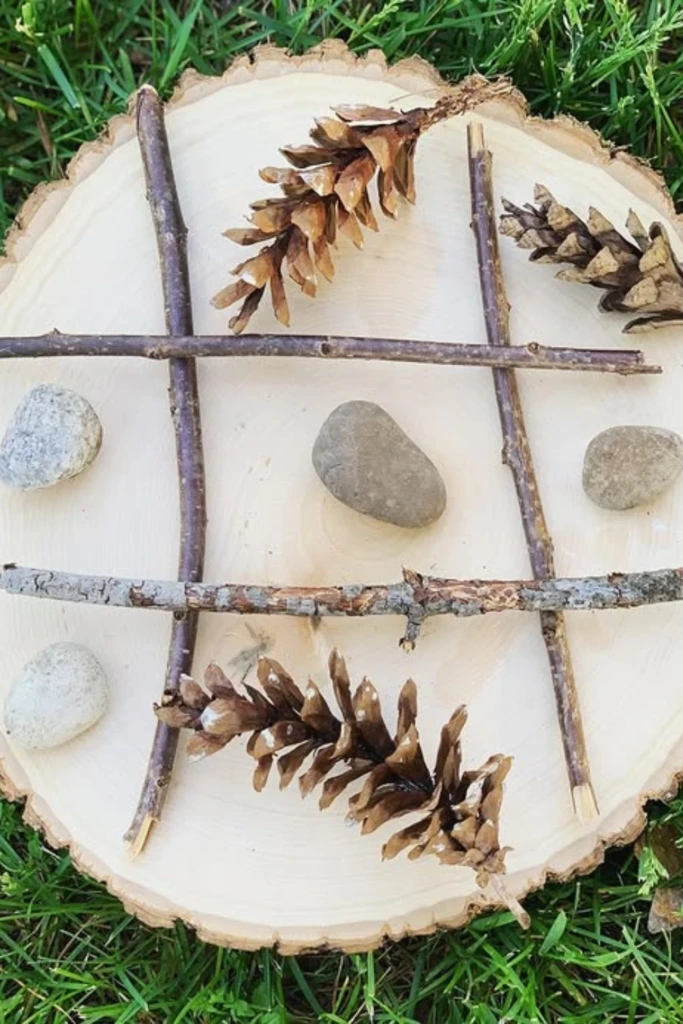
A reusable nature tic-tac-toe board makes it easy to bring an outdoor game to the garden, patio, or park. It can be created with simple craft supplies and then used repeatedly for family game time.
Draw a grid on a piece of cardboard, a small wooden board, or a washable outdoor mat. Make two sets of playing pieces from large wooden discs, painted stones, or other durable, child-safe materials. Distinguish the sets using different shapes, patterns, or colors.
For a nature-themed version, decorate the board with leaf and flower designs while keeping the playing pieces easy to identify. Children can also help make the board, practicing counting, drawing, and simple design skills along the way.
Store the game somewhere dry between uses, and supervise younger children around loose pieces that could present a choking hazard.
23. Nature Bug Habitat Craft
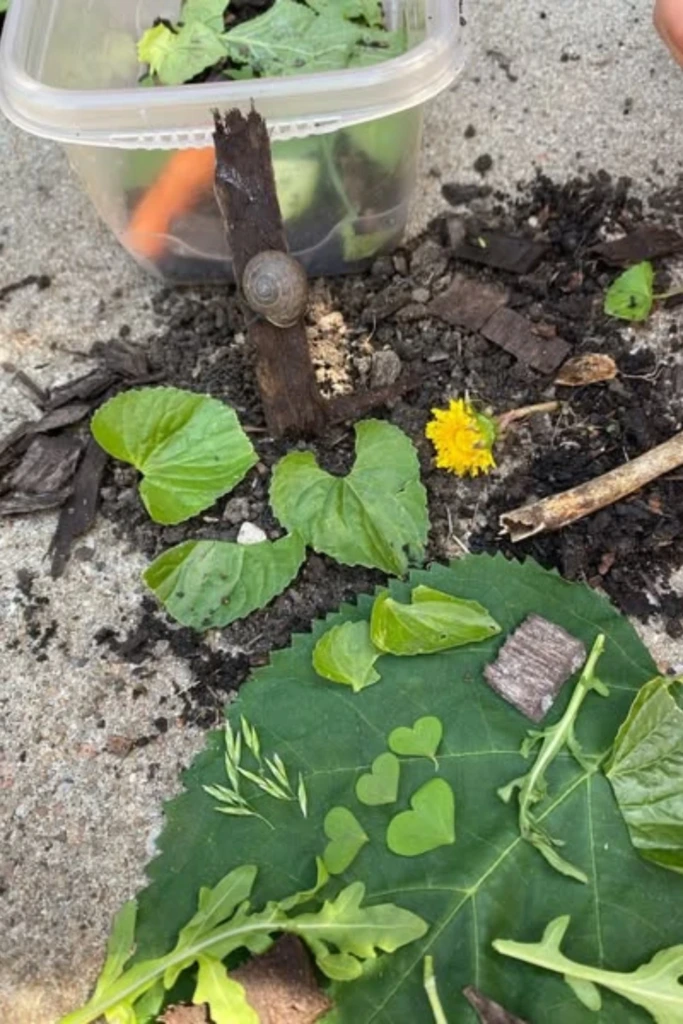
A small bug habitat helps children explore insects and learn why tiny creatures matter in an ecosystem. Depending on the design, it can provide shelter for insects that naturally use dead wood, hollow stems, and other garden materials.
One simple project is a bug hotel made from a sturdy wooden frame filled with dry bamboo canes, untreated wood pieces with existing holes, and other appropriate natural materials. Place it in a sheltered garden location where it will not be disturbed.
Children can help gather suitable materials, arrange them with adult assistance, and observe which insects visit over time. Keep the structure stable and avoid using treated timber, sharp metal edges, or materials that may trap or injure wildlife.
Explain that insects should be observed rather than handled unnecessarily. Do not disturb nests, collect potentially dangerous species, or introduce unfamiliar insects into the habitat. A nature journal can help children record their observations without interfering with the creatures.
24. Fairy Garden Play Spot
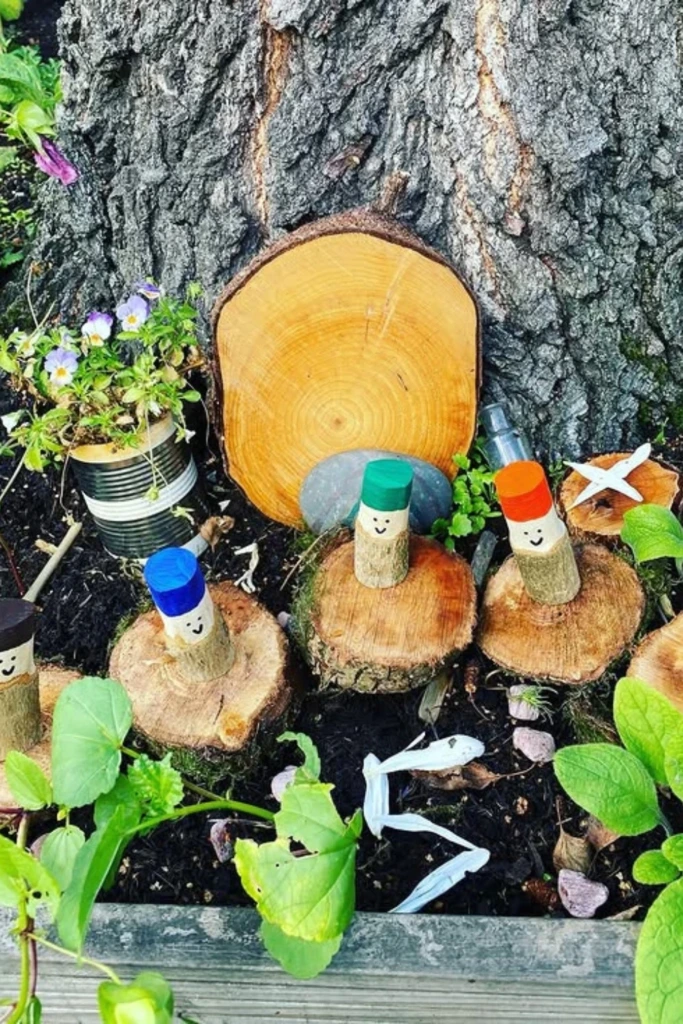
A fairy garden combines miniature design with imaginative outdoor play. Children can create a tiny fantasy landscape using a shallow planter, a large pot, or a designated patch of garden soil.
Start with child-safe plants, small stones, fallen leaves, and a few miniature accessories. Add a little pathway, a pretend pond made from a shallow decorative dish, or a tiny shelter created from natural materials.
Children can invent stories about the garden's imaginary residents, rearrange the layout, and observe how the plants grow. Choose non-toxic plants and avoid sharp decorations, fragile glass, and small accessories that younger children could swallow.
Place the garden where it receives suitable light for its plants, and water it as needed. The project can become an ongoing activity as children care for the living parts of their miniature world.
25. Backyard Slide House
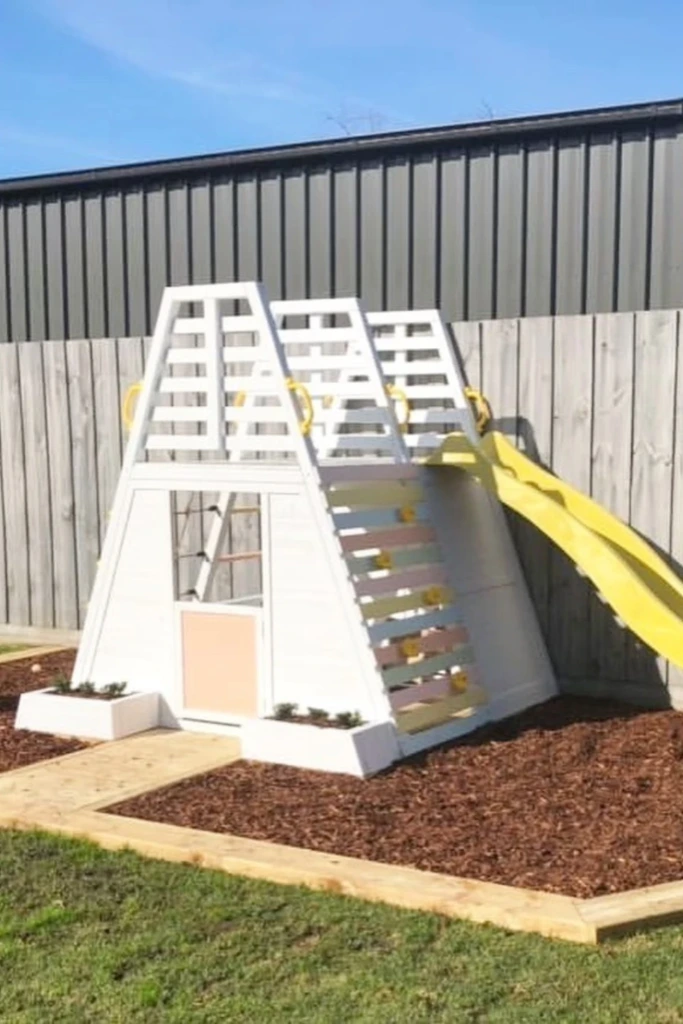
A slide house combines imaginative play with the excitement of climbing and sliding. It can be a useful addition to a family garden when there is enough room for the equipment and a suitable area for safe movement.
Choose a commercially manufactured playhouse with an attached slide that matches the children's ages and abilities. Assemble it according to the instructions, secure it as directed, and ensure the ladder, platform, handholds, and slide are properly installed.
Provide an appropriate impact-absorbing surface beneath and around the equipment, leaving enough clear space at the slide's exit. Check for loose fasteners, damaged plastic, sharp edges, and excessive heat on sunny days.
Teach children to use the ladder rather than climbing up the slide, wait for the person ahead to finish, and slide down one at a time. Regular maintenance helps keep the playhouse in good condition.
26. Winter Ice Skating Fun
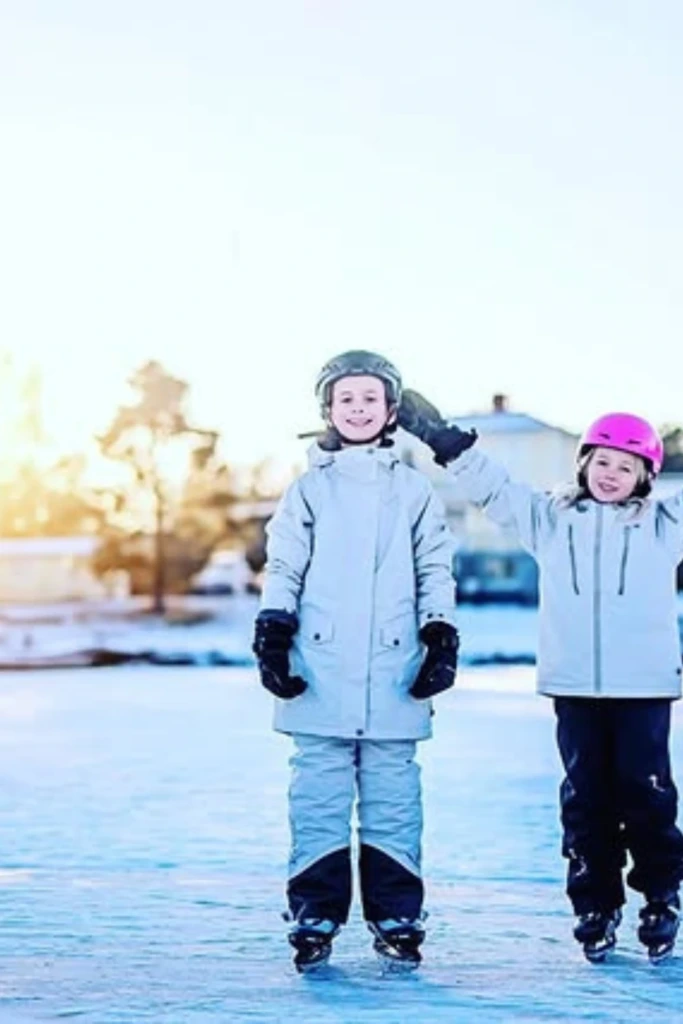
Ice skating can be a memorable winter activity that helps children practice balance, coordination, and controlled movement. A supervised ice rink is usually the most practical choice for families who want to introduce children to skating.
Choose a rink with suitable beginner sessions, properly fitted skates, and protective equipment where recommended. Younger beginners may benefit from an instructor who can demonstrate how to stand, glide, stop, and recover from a fall.
If skating on a natural frozen surface, never assume that the ice is safe simply because it looks solid. Ice thickness can vary significantly, especially near moving water, drainage points, and areas with changing temperatures. Use only locations officially assessed and approved for skating.
Children should dress warmly, wear appropriate footwear and protective gear, and take breaks when cold or tired. If natural ice has not been confirmed safe by local authorities, choose an indoor or maintained outdoor rink instead.
27. Bubble Chase Fun
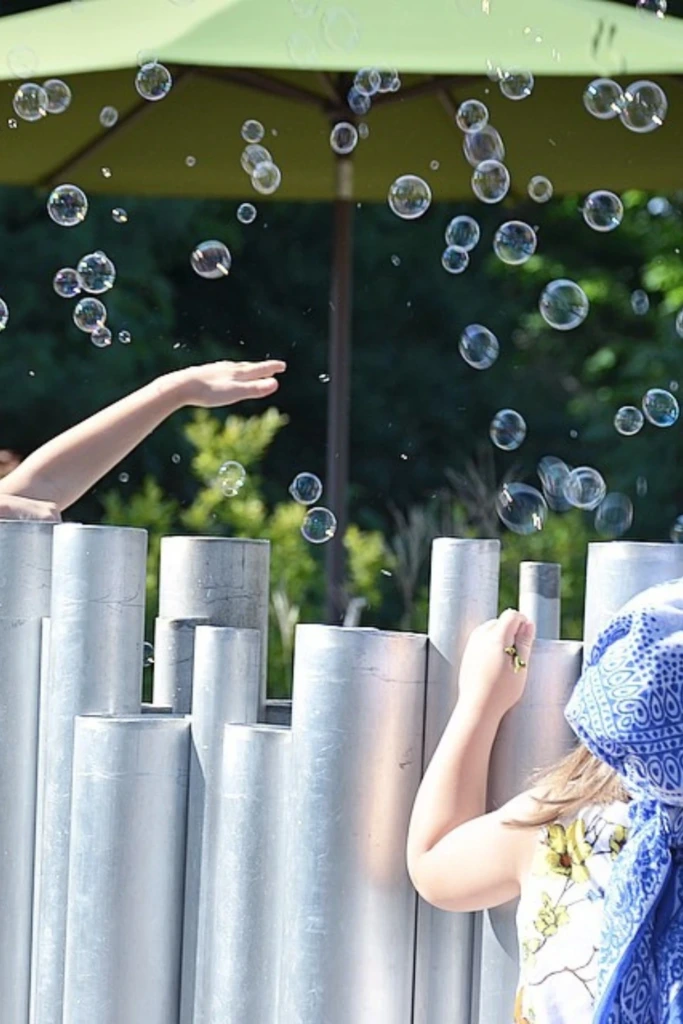
Bubble chasing is a delightful outdoor activity for toddlers, preschoolers, and older children. Floating bubbles encourage kids to run, reach, jump gently, and follow moving objects while enjoying a simple sensory experience.
Use a child-safe bubble solution and a wand or bubble machine designed for outdoor play. An adult can blow bubbles at different heights, inviting children to pop them with their fingers, catch them on a wand, or count how many they can burst.
For younger children, keep the activity in a small, open area away from steps, roads, and obstacles. Bubble solution can make paving slippery, so clean up spills promptly and keep the play surface as dry as possible.
You can make the game more challenging by asking children to pop only large bubbles, chase bubbles of a certain size, or see how long a bubble can float before bursting.
28. Sunflower Field Play
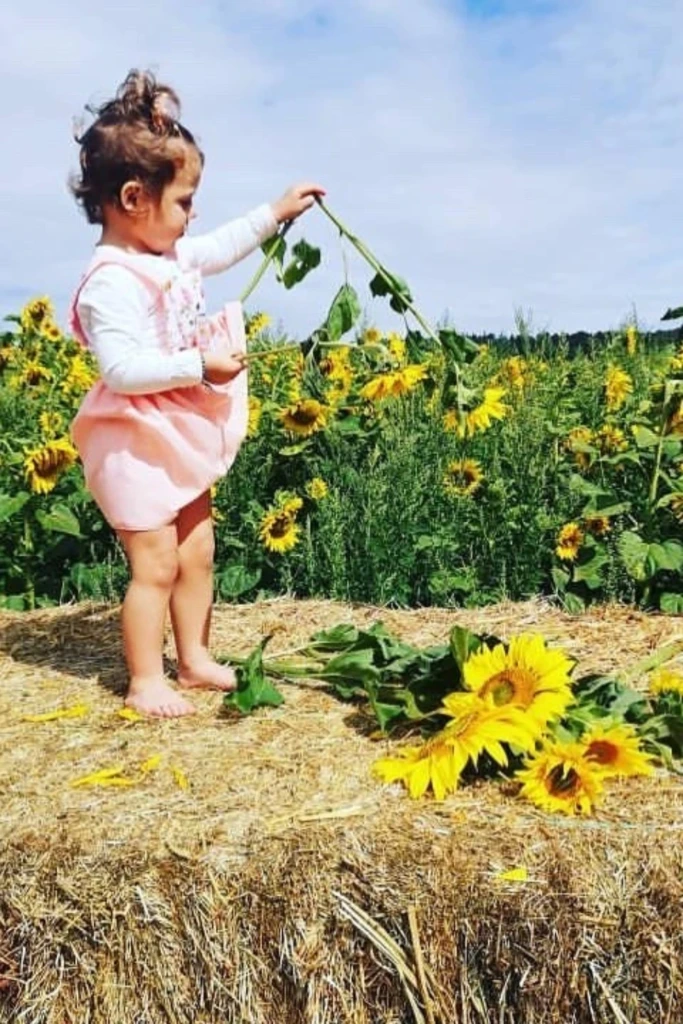
A sunflower field offers a beautiful setting for a family nature walk, photography activity, or seasonal outdoor adventure. The tall flowers, broad leaves, and visiting pollinators can spark children's curiosity about plants and insects.
Visit a field that welcomes the public, and check the owner's rules before entering or taking photographs. Some farms charge admission or restrict access to protect their crops.
Encourage children to look for different stages of growth, compare flower heads, and notice bees or butterflies from a respectful distance. A simple scavenger hunt might include finding a tall sunflower, a fallen petal, or a plant with a seed head.
Stay on designated paths, avoid trampling crops, and never eat seeds or plant parts unless they have been properly identified and prepared for consumption. Bring water, sun protection, and suitable footwear for walking outdoors.
29. Sensory Path Walk
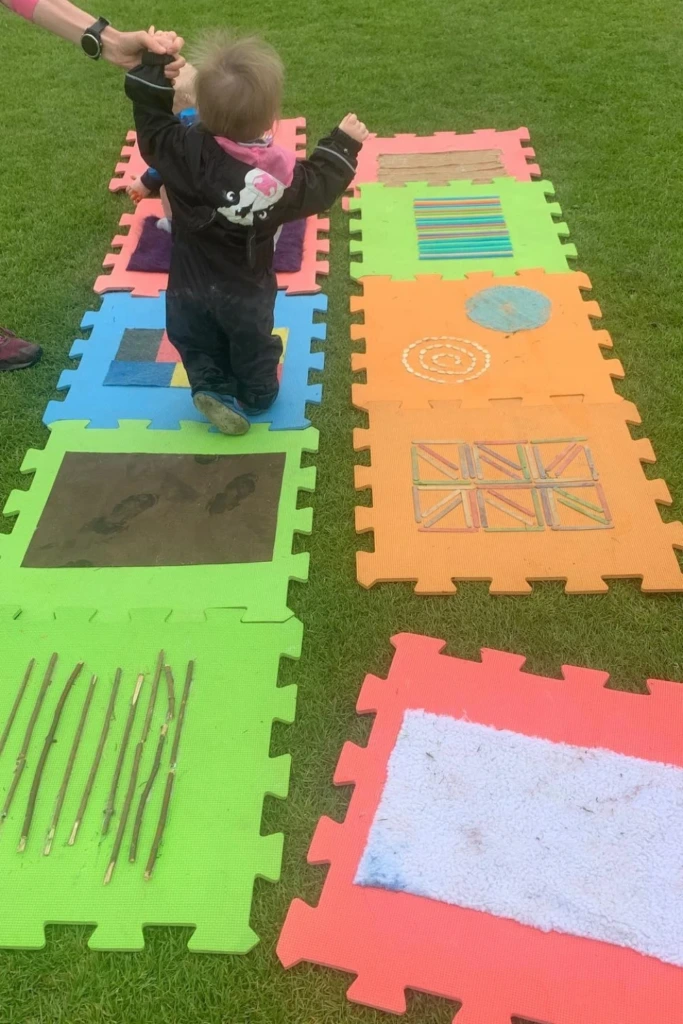
A sensory path encourages children to explore their surroundings through sight, sound, touch, and movement. It can be created in a garden or along a safe outdoor route with a series of simple stopping points.
Set out different stations featuring safe textures, such as a smooth stepping mat, a tray of large pebbles for looking at rather than walking barefoot on, a patch of grass, or a container of clean sand. Add listening activities, such as pausing to hear birds or identify nearby sounds.
Children can describe what they notice, compare textures with their hands, or move through the route using different walking patterns. Make participation flexible for children with sensory sensitivities or mobility differences.
Inspect every station for sharp objects, allergens, insects, and unstable surfaces. Children should not be required to touch unfamiliar plants or materials, and all loose objects should be large enough to avoid choking hazards for younger participants.
30. Balance Beam Log Walk
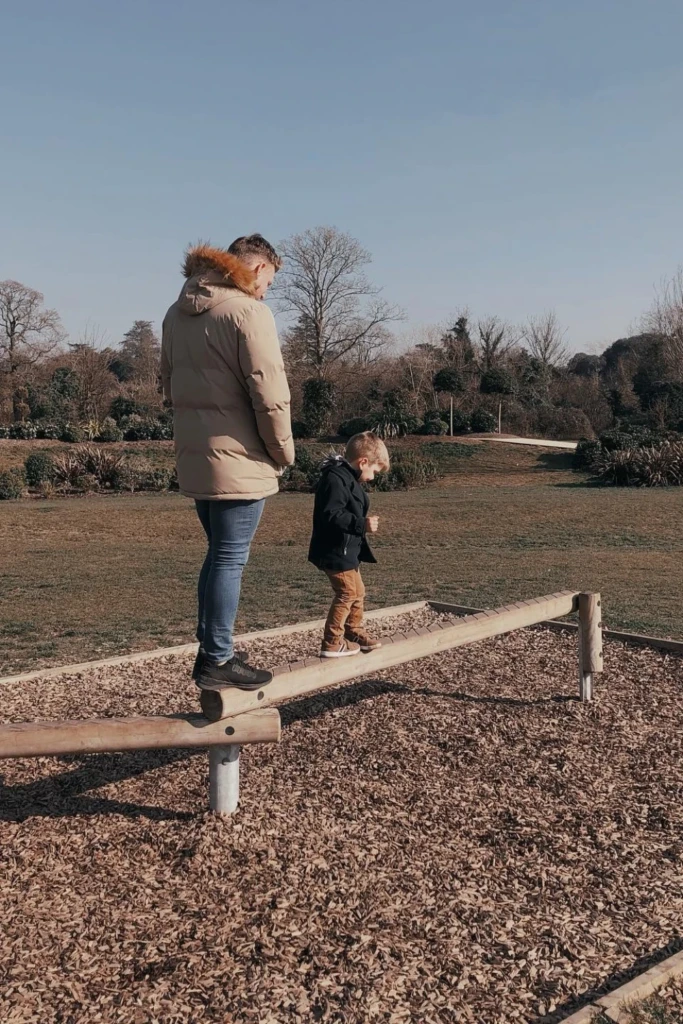
A fallen log can inspire a nature-themed balancing challenge, but not every log is stable enough to walk on. Choose a low, broad, firmly positioned log in a suitable outdoor area, or use a purpose-built balance beam instead.
Invite children to stand beside the log, walk along its length with an adult nearby, or practice stepping from one marked point to another. Beginners can follow a line on the ground to build confidence before attempting a slightly more demanding version.
Check that the surface is not slippery, rotten, or covered in loose bark. Avoid logs that can roll, sit above a drop, or have hidden holes and sharp branches. Keep the landing area clear and never encourage children to jump from the log.
This activity is most enjoyable when children can take their time, repeat the route, and celebrate improvements in control rather than competing to see who finishes first.
31. Slide Car Track
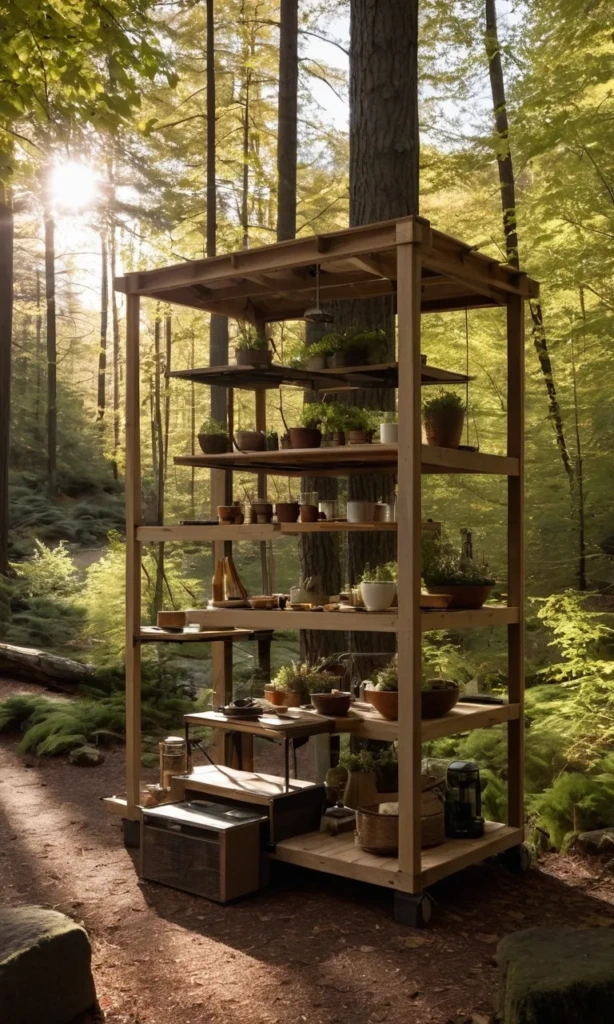
A slide car track is a fun way to combine toy vehicles with outdoor experimentation. Children can explore how slope, surface texture, and starting position affect the movement of small cars.
Use a purpose-built toy ramp or create a low track from a smooth, stable board secured firmly on a level surface. Mark a starting line and let children release their cars without pushing them. They can compare which vehicle travels farthest or test whether different surfaces change the result.
Keep the ramp low and ensure cars cannot roll into roads, stairs, or areas where people might trip. Use toys appropriate for each child's age, particularly when younger children are present.
Children can also design a simple parking area, draw road markings with chalk, or create a pretend town around the track. These additions encourage storytelling and problem-solving while keeping the activity accessible and inexpensive.
FAQs
Outdoor activities often work best when they are flexible enough to match a child's interests, energy level, and developmental stage. You do not need a large garden or expensive play equipment to make outdoor time enjoyable. A walk, a simple game, or an opportunity to explore natural materials can be just as engaging as a more elaborate setup.
The following answers cover common questions about choosing outdoor activities and games for children.
What activities do kids enjoy?
Children enjoy different activities depending on their ages, interests, abilities, and personalities. Some love active games that involve running, climbing, jumping, or balancing, while others prefer creative projects, nature exploration, or imaginative play.
Popular options include:
Active play: Obstacle courses, target tossing, bubble chasing, and playground games help children move their bodies and practice coordination.
Creative activities: Sidewalk chalk, spray art on paper, fairy gardens, and backyard playhouses encourage imagination and self-expression.
Nature exploration: Birdwatching, bug observation, leaf collecting, and sensory walks introduce children to their surroundings.
Water play: Water tables, pouring stations, and splash activities provide opportunities to explore movement, temperature, and volume.
Pretend play: Mud kitchens, forest dens, and miniature adventure spaces let children create stories and experiment with different roles.
Traditional games: Tic-tac-toe, simple races, and scavenger hunts help develop turn-taking, problem-solving, and cooperation.
The easiest way to discover what a child enjoys is to offer a few choices and notice which activities they return to. Some children prefer structured games with clear rules, while others thrive when given materials and the freedom to invent their own activities.
What are the most popular outdoor games for kids?
Many children enjoy outdoor games that are easy to understand, allow plenty of movement, and can be played with friends or family. Traditional games remain popular because they need very little equipment and can be adapted for different ages.
Some excellent choices include:
Hide-and-seek: One player counts while the others find hiding places within agreed boundaries.
Tag: Players chase one another in an open, obstacle-free area, with simple rules for who is it.
Hopscotch: Children jump through numbered squares drawn with chalk, practicing balance and coordination.
Scavenger hunts: Players search for listed objects, such as a feather, a round stone, or a yellow leaf, without disturbing wildlife.
Tic-tac-toe: This simple strategy game works well on a chalkboard, patio, or reusable outdoor board.
Obstacle course races: Children navigate cones, hoops, and low obstacles while practicing a variety of movements.
Target toss: Players aim soft beanbags at buckets or baskets and earn points for successful throws.
Bubble chase: Children run after floating bubbles and try to pop as many as they can.
For group play, choose games that allow everyone to participate and adjust the rules to suit the children involved. Cooperative challenges, where players work toward a shared goal, can be particularly enjoyable when ages and abilities vary.
Final Thoughts
Outdoor kids activities can turn ordinary time outside into opportunities for movement, creativity, discovery, and connection. From simple chalk games and bubble chasing to nature crafts and backyard obstacle courses, there are plenty of ways to keep children engaged without spending much money.
Choose activities that match your available space and your child's interests, provide age-appropriate supervision, and make safety part of the fun. Most importantly, allow room for exploration and spontaneous ideas. Sometimes the most memorable outdoor adventures begin with nothing more than a curious child and a little time to play.