30 Olympic Games Ideas for Kids in 2026
The excitement of the Olympics can turn an ordinary afternoon into an unforgettable adventure for children. Whether you're planning a school sports day, a backyard birthday party, a summer camp activity, or a family gathering, Olympic-inspired games offer an entertaining way to encourage teamwork, movement, and friendly competition.
The best part is that you don't need expensive sports equipment or a professional playing field. Everyday household supplies, colorful decorations, and a little creativity are enough to create exciting challenges for different ages and abilities.
These 30 Olympic games ideas for kids in 2026 combine active races, creative crafts, skill-building challenges, and playful competitions. From teddy bear sporting events to miniature ice hockey, there's something for every young athlete to enjoy.
30 Olympic Games Ideas for Kids
Hosting your own mini Olympics is an excellent opportunity to bring children together through playful challenges. You can organize participants into teams, assign countries, create a simple scoring system, and celebrate everyone's achievements with homemade medals.
For a successful event, choose activities that match the children's ages, provide regular water breaks, and keep the emphasis on participation rather than winning. Mixing energetic games with quieter challenges also helps maintain excitement throughout the day.
1. Teddy Bear Olympics
Turn your child's favorite stuffed animals into Olympic athletes with an adorable teddy bear competition. This imaginative activity is especially enjoyable for preschoolers and younger elementary school children.
Create miniature sporting events such as teddy bear races, soft toy long jumps, and stuffed animal gymnastics. Children can carry their bears through obstacle courses, help them perform pretend routines, or compete to see which toy travels the farthest in a gentle toss onto a padded landing area.
Use colorful ribbons to identify different teams and prepare small paper medals for the winning bears. You can even organize an opening ceremony where children introduce their cuddly competitors.
This activity encourages imaginative play, coordination, and social interaction without requiring complicated equipment.
2. World Flag Garland
Bring an international atmosphere to your celebration by helping children create a decorative garland featuring flags from around the world.
Provide construction paper, colored pencils, markers, glue, and string. Let each child select a country, look at its national flag, and recreate the design on a rectangular piece of paper.
Once the flags are finished, attach them to a long string using tape or small clothespins. Hang the completed garland around the activity area to create a festive Olympic-inspired setting.
You can make this project educational by discussing where each country is located and sharing interesting cultural facts.
A world flag garland also gives children an opportunity to appreciate international diversity while contributing something personal to the celebration.
3. Olympic Medal Chart
An Olympic medal chart adds excitement to your games while helping children follow their teams' progress.
Start with a large poster board and divide it into columns for team names, gold medals, silver medals, and bronze medals. Decorate the chart with colorful borders and sports-themed illustrations.
After each competition, update the chart using stickers, paper medals, or colored markers. Children can take turns recording results, making everyone feel involved in the event.
For younger participants, consider recognizing achievements such as excellent teamwork, creative thinking, persistence, and sportsmanship alongside competitive results.
Displaying the medal chart throughout the celebration creates a sense of accomplishment and gives everyone something to celebrate.
4. Javelin Throw
Introduce children to a simplified version of the Olympic javelin throw using lightweight, child-friendly materials.
Instead of traditional sporting equipment, provide soft foam throwing sticks or rolled paper tubes. Mark a throwing line in the grass and place distance markers several feet apart.
Each participant stands behind the line and throws their foam javelin toward an open landing area. Measure the distance from the throwing line to the point where the object first lands.
Allow several attempts so children can practice their technique and improve their scores.
Encourage participants to focus on controlled arm movements rather than throwing with maximum force. Keep spectators behind the throwing line and ensure the landing area remains clear.
This game helps develop hand-eye coordination, balance, and basic throwing skills.
5. Human Ring Toss
Human ring toss transforms a familiar carnival game into a hilarious team activity that children will remember.
Choose one participant to stand inside a designated circle while teammates attempt to toss large, lightweight foam rings around them. Alternatively, use inflatable rings that are large enough to pass comfortably over a standing player's body.
Place a throwing line a short distance away and give each participant several attempts. Award points for successful tosses.
For safety, players should remain still, and rings should be tossed gently below head height. Avoid rigid hoops or rings that could strike someone.
You can increase the challenge by changing the throwing distance or assigning different point values to successful attempts.
This activity encourages cooperation, accuracy, and plenty of laughter.
6. Balloon Ping Pong
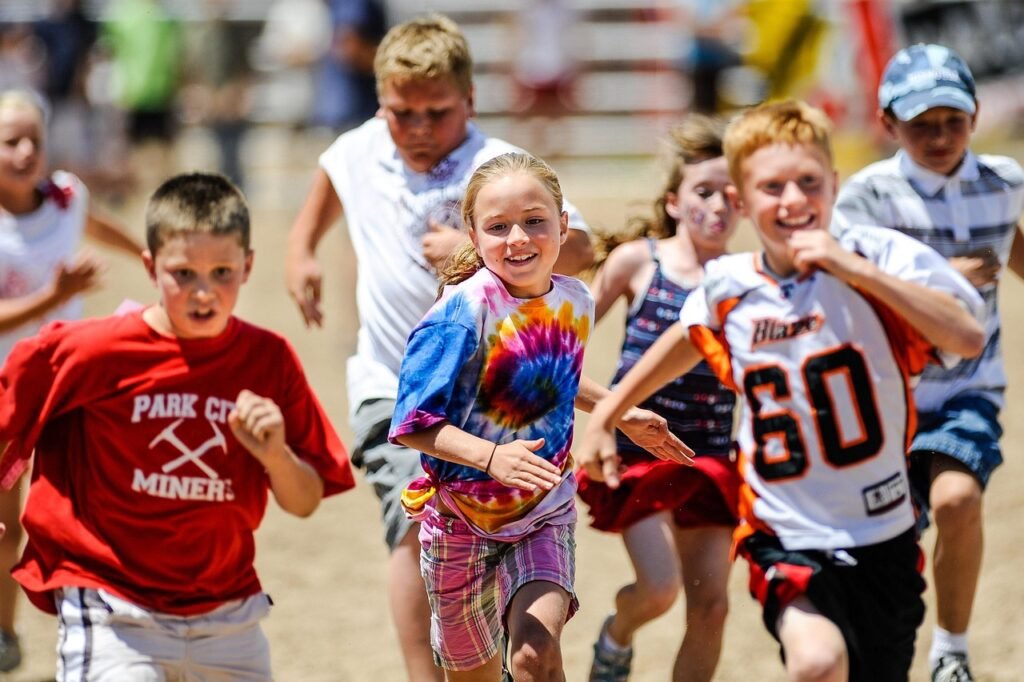
Balloon ping pong is an energetic indoor game that replaces traditional table tennis equipment with softer, slower-moving materials.
Create paddles using paper plates attached securely to craft sticks, or simply let children use their hands. Inflate a balloon and stretch a ribbon across a table or between two chairs to represent a net.
Players take turns tapping the balloon across the net, trying to prevent it from touching their side of the playing surface.
You can play individual matches or organize doubles competitions for extra teamwork.
Because balloons move unpredictably, children must pay attention, react quickly, and adjust their movements.
This activity works particularly well when outdoor play isn't possible. Supervise younger children and promptly remove any broken balloon pieces.
7. Backyard Volleyball
Transform your backyard into a miniature volleyball court using a rope, portable net, or ribbon stretched between two stable supports.
Divide the children into teams and provide a lightweight beach ball or soft volleyball. The goal is to send the ball over the net while preventing it from touching the ground on your side.
For younger players, allow the ball to bounce once before returning it. Older children can follow simplified volleyball rules with a limited number of team touches.
Keep matches short so every participant has multiple opportunities to play.
You can also introduce cooperative rounds where both teams work together to keep the ball moving across the net for as long as possible.
Backyard volleyball supports coordination, communication, and teamwork while keeping children physically active.
8. Olympic Ring Snacks
Food preparation can become part of the Olympic celebration with colorful snacks inspired by the five interlocking Olympic rings.
Arrange circular foods such as sliced fruit, mini bagels, or ring-shaped cereal into a playful display. Use blueberries, blackberries, strawberries, pineapple, and green grapes to represent the traditional Olympic colors.
For another option, decorate round rice cakes or cookies with colorful fruit pieces.
Invite children to help assemble their snacks while discussing the meaning of the Olympic rings and the spirit of international participation.
Set up a snack station where participants can create their own edible designs between sporting events.
Remember to accommodate food allergies and prepare age-appropriate portions. Cut round fruits appropriately for younger children to reduce choking risks.
9. Pantyhose Bowling
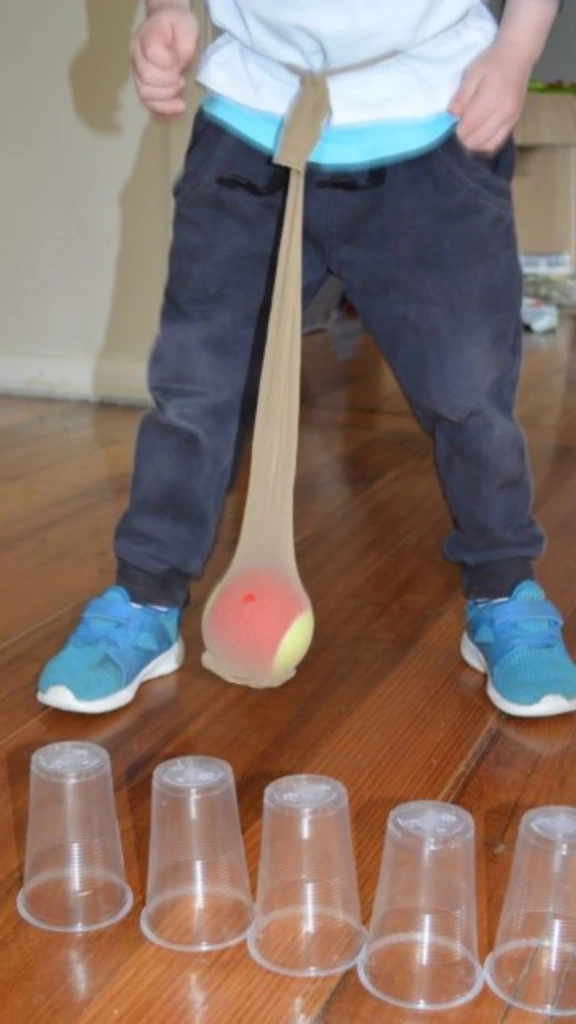
Pantyhose bowling offers a silly twist on traditional bowling and is guaranteed to produce some entertaining moments.
Place a soft tennis ball inside the foot of a clean pair of pantyhose. Secure the waistband around a child's waist so the ball hangs between their legs, leaving enough clearance for comfortable movement.
Arrange lightweight plastic bottles as bowling pins a short distance ahead.
Without using their hands, participants gently swing the hanging ball by moving their hips and body, attempting to knock over the bottles.
Give each player a limited amount of time to topple as many pins as possible.
Adjust the length of the hanging ball to suit each child's height, and use a smooth, obstacle-free playing surface.
This unusual challenge encourages balance, body awareness, and creative problem-solving.
10. Frisbee Golf
Create a backyard disc golf course using plastic flying discs and household objects as targets.
Place laundry baskets, large buckets, or marked landing zones at different locations around your yard. Assign each target a number to create a complete course.
Players begin at a designated starting point and throw their discs toward the first target. They continue throwing from where their discs land until they reach the target.
Record the number of throws required to complete each hole. The participant with the lowest total score wins.
Make the course more interesting by including gentle turns, different distances, and targets at varying heights.
Use soft flying discs for younger children and ensure throwing paths remain clear.
Frisbee golf introduces children to aim, distance judgment, patience, and strategic thinking.
11. Cookie Face Race
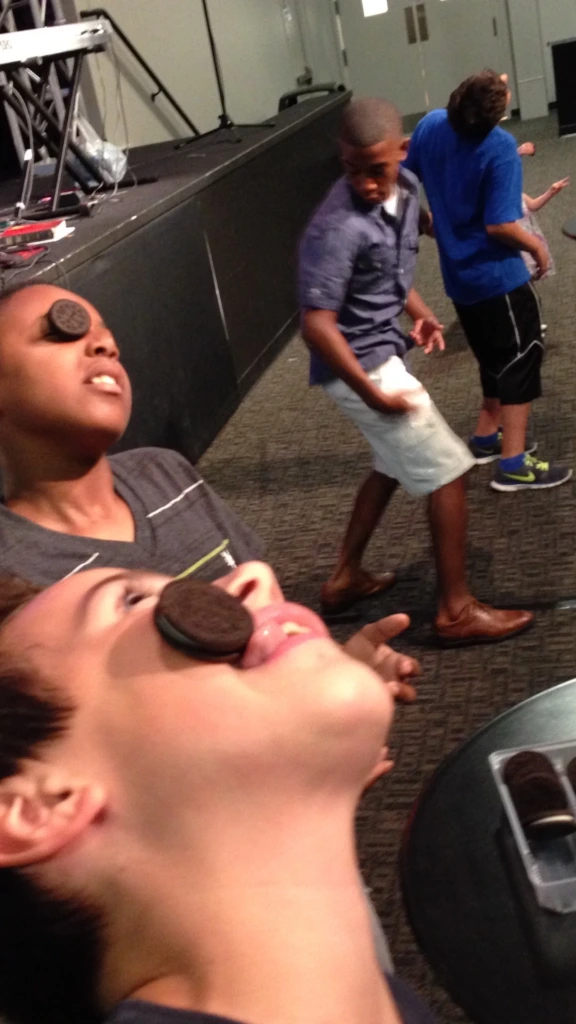
The cookie face race is a funny Olympic-style challenge that tests facial coordination and patience.
Give each participant a small, flat cookie and ask them to tilt their head slightly backward. Place the cookie on their forehead while they remain seated.
When the race begins, players attempt to move the cookie toward their mouth using only facial movements. Hands must stay away from the cookie.
The first participant to successfully reach their mouth wins the round.
Children will enjoy experimenting with eyebrow movements, nose wrinkles, and funny expressions.
Use a clean cookie for each attempt, check for allergies, and avoid this game with children who may have difficulty safely managing food near their mouth.
For a non-food alternative, players can move a lightweight paper circle from their forehead to their cheek.
12. Penny Drop
Penny drop is a simple accuracy challenge that requires concentration and careful hand control.
Place a small cup or container inside a larger transparent bowl. Fill the bowl with enough water to cover the smaller container, keeping everything on a stable table.
Give participants a few clean coins or similarly sized tokens and ask them to drop each one from a fixed height, aiming for the small container.
Award points whenever a token lands successfully inside the target.
You can adjust the difficulty by changing the size of the container or the dropping height.
For younger children, use large plastic counters instead of coins to avoid choking hazards.
This activity provides a calmer break between running games while helping children practice precision and patience.
13. Hula Hoop Contest
A hula hoop contest is a classic outdoor activity that combines exercise, rhythm, and friendly competition.
Provide hoops in different sizes so children can choose equipment that feels comfortable. Begin with a simple challenge to see how long each participant can keep a hoop spinning around their waist.
Use a stopwatch to record individual times.
After the first round, introduce additional events such as arm hooping, rolling a hoop toward a target, or walking a short distance while keeping the hoop moving.
You can also organize a team challenge where participants pass a hoop along a line without breaking their handholds.
Award recognition for creative techniques, persistence, and improvement.
Hula hoop games develop coordination, balance, and body control while creating a lively atmosphere.
14. Tunnel Relay
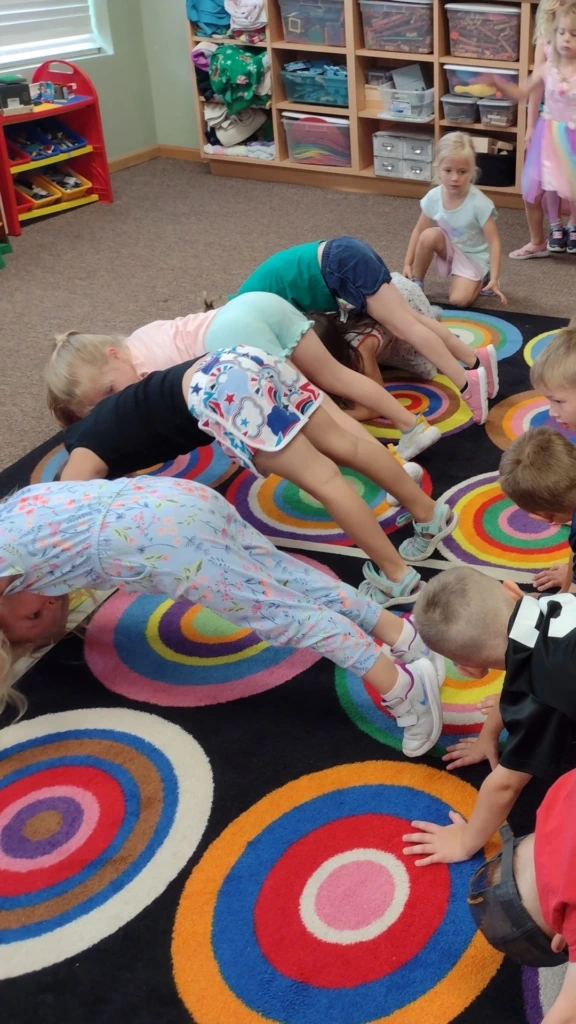
Tunnel relay races bring excitement to team competitions while encouraging children to move in unusual ways.
Set up several collapsible play tunnels on a grassy surface or indoor play area. Divide participants into teams and position them behind separate starting lines.
At the signal, the first player from each team crawls through the tunnel, runs around a marker, and returns to tag the next teammate.
The relay continues until everyone has completed the course.
For added variety, include a short balancing section or a bean bag pickup station after the tunnel.
Make sure the tunnels are well-ventilated, securely positioned, and wide enough for participants to move comfortably.
This game helps strengthen gross motor skills, spatial awareness, and teamwork.
15. Water Cup Relay
A water cup relay is a refreshing choice for warm-weather Olympic celebrations.
Divide children into teams and provide each group with a bucket of water, a plastic cup, and an empty container positioned several feet away.
One participant at a time fills the cup, carefully carries it to the empty container, pours in the water, and returns to pass the cup to the next teammate.
Continue until the time limit ends or the destination container reaches a marked level.
The team that transfers the most water wins.
To increase the challenge, introduce a winding path or ask participants to carry the cup using one hand.
Choose a surface that won't become dangerously slippery and encourage careful movement rather than sprinting.
This game promotes cooperation, balance, and controlled movement.
16. Long Jump
Recreate the excitement of the Olympic long jump with a simple backyard jumping station.
Mark a takeoff line using chalk, tape, or a rope laid flat on the grass. Create a soft landing area using a suitable gym mat or level grassy ground.
Ask participants to begin behind the line and jump forward as far as possible, landing on both feet.
Measure the distance from the takeoff line to the closest point where their body touches the ground.
Give each child several attempts and record their best distance.
Younger participants can perform standing long jumps, while older children may try a short controlled approach if there is sufficient space and a suitable landing surface.
This activity develops leg strength, coordination, and confidence.
17. High Jump
A child-friendly high jump challenge can introduce basic jumping skills without using traditional high jump equipment.
Place a foam pool noodle horizontally on low, stable supports or use a soft ribbon that releases easily when touched.
Participants take turns jumping over the obstacle and landing on a cushioned surface or level grass.
Begin with a very low height and increase it gradually only when children demonstrate comfortable, controlled movements.
For younger players, keep the obstacle near ground level and encourage two-footed jumps.
Avoid rigid bars, high obstacles, and backward jumping techniques that require specialized equipment and supervision.
Rather than focusing only on height, recognize careful technique and personal improvement.
This activity supports agility, leg strength, and body awareness.
18. Egg and Spoon Race
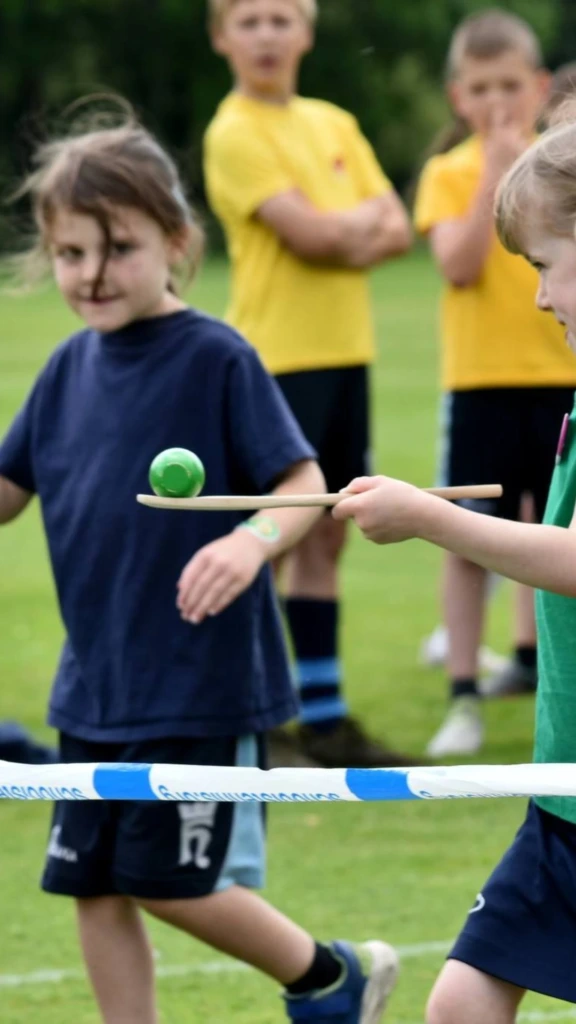
The egg and spoon race remains a favorite children's competition because it combines suspense, concentration, and hilarious mishaps.
Give each participant a spoon and a plastic egg, ping pong ball, or other lightweight object.
Mark a starting line and a finish line across a safe playing area.
Players must carry their objects on their spoons while walking toward the finish line. If an object falls, the participant stops, replaces it, and continues.
For older children, add gentle turns or small obstacles to increase the difficulty.
You can also organize relay races where teammates carefully transfer the object from one spoon to another.
This activity encourages patience, steady movement, and hand-eye coordination.
19. Bean Bag Toss
Bean bag toss is a versatile Olympic-inspired activity suitable for almost any age group.
Set up buckets, baskets, or cardboard targets at different distances from a throwing line. Assign point values to each target based on difficulty.
Give every participant a set number of bean bags and ask them to aim for the targets.
Record the points earned during each round.
For younger children, position targets closer together and use larger containers. Older participants can aim for smaller openings or attempt throws from greater distances.
You can also create themed targets using colorful paper and Olympic-inspired decorations.
Bean bag toss helps children develop accuracy, concentration, and controlled throwing movements.
20. Tic-Tac-Toe
Transform traditional tic-tac-toe into an active team competition with a giant outdoor game board.
Create a three-by-three grid on the grass using rope, tape, or chalk. Prepare two sets of markers in different colors, such as bean bags or flat fabric squares.
Divide participants into two teams and position them behind a starting line.
One player from each team runs to the grid, places a marker in an empty square, and returns to tag the next teammate.
Teams continue taking turns until one completes a horizontal, vertical, or diagonal line.
For an extra challenge, require players to complete a short physical activity before placing their markers.
This game combines strategic thinking, communication, and movement in a fun competitive format.
21. Painted Tin Can Bowling
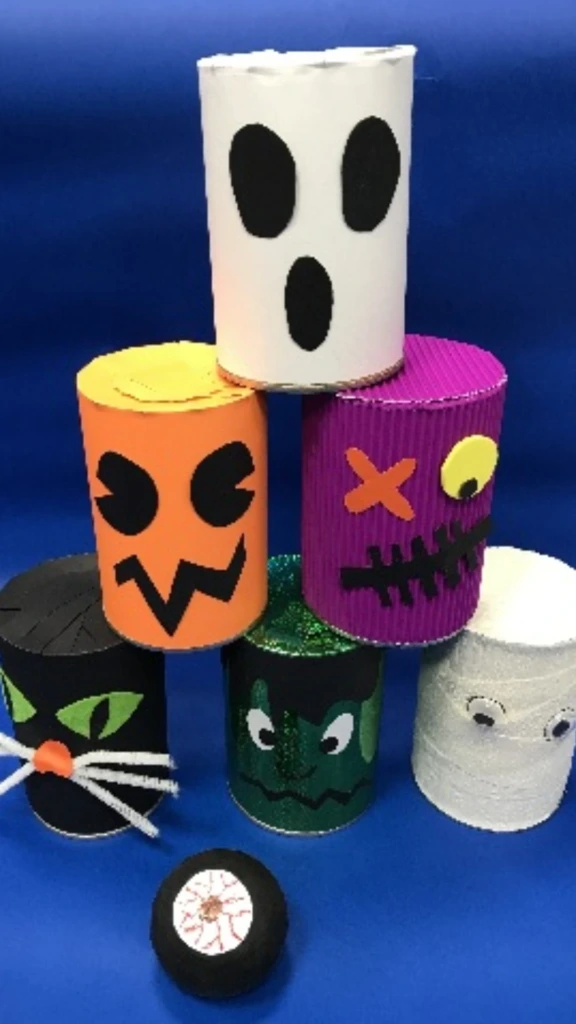
Painted tin can bowling combines a creative craft project with a traditional target game.
Collect clean, empty cans with smooth, safe edges. Paint them in bright colors or decorate them with numbers, stars, and national flag designs.
Stack the cans into a pyramid on a stable surface.
Players stand behind a marked line and roll a soft ball toward the stack, attempting to knock down as many cans as possible.
Assign points according to the number of cans toppled during each attempt.
For a quieter indoor version, replace metal cans with decorated cardboard tubes or lightweight plastic containers.
Children can participate in designing the equipment before the competition begins, making this activity both artistic and athletic.
22. Crab-Walk Race
Crab-walk races challenge children to move using their hands and feet while facing upward.
Ask participants to sit on the ground, place their hands behind them, bend their knees, and lift their hips slightly off the surface.
Mark a short racecourse and explain that players must travel toward the finish line while maintaining the crab-walk position.
Begin the race with a countdown and encourage everyone to move at a comfortable pace.
You can add a relay format or create a course with gentle turns for older children.
Keep distances short, especially for beginners, because the movement requires arm strength and coordination.
This activity develops core stability, upper-body strength, and motor planning while providing a playful physical challenge.
23. Water Balloon Race
A water balloon race is an entertaining outdoor activity that adds a splash of excitement to summer Olympic games.
Fill several small balloons with water and divide children into teams.
One option is a partner relay where two participants carry a water balloon between their hands while moving toward a finish line.
Another variation involves carrying a balloon on a small tray without dropping it.
If a balloon bursts, the team returns to a designated point and begins again with a replacement.
Use short distances and encourage careful walking to prevent slips.
For an environmentally friendlier alternative, replace balloons with reusable water-filled sponge balls.
Always collect broken balloon fragments immediately and keep them away from young children.
24. Pool Noodle Javelin
Pool noodle javelin is a lightweight throwing game that works well for backyard sporting events.
Cut foam pool noodles into manageable lengths using adult supervision, or use full-length noodles for older children when space allows.
Mark a throwing line and establish several distance zones across an open grassy area.
Participants take turns throwing their noodles forward, aiming for maximum distance or a designated target.
You can award points based on the landing zone or create a team challenge where everyone contributes to a combined score.
Because foam noodles are lightweight, they are easier for children to handle than traditional throwing equipment.
Make sure participants throw only in the designated direction and wait until the landing area is clear before retrieving equipment.
25. Obstacle Course
An Olympic obstacle course combines several physical challenges into one exciting event.
Use cones, hoops, tunnels, balance markers, and soft objects to design a course suitable for the available space.
Children might begin by weaving around cones, crawling through a tunnel, jumping between floor markers, and finishing with a bean bag toss.
Explain the course before the competition and let everyone complete a practice round.
Time each participant individually or organize team relays.
Adjust the obstacles for different age groups and abilities so every child can participate comfortably.
A well-designed obstacle course encourages agility, balance, problem-solving, and determination.
It also provides an opportunity for children to support one another as they complete each stage.
26. Olympic Hoop Ring Toss
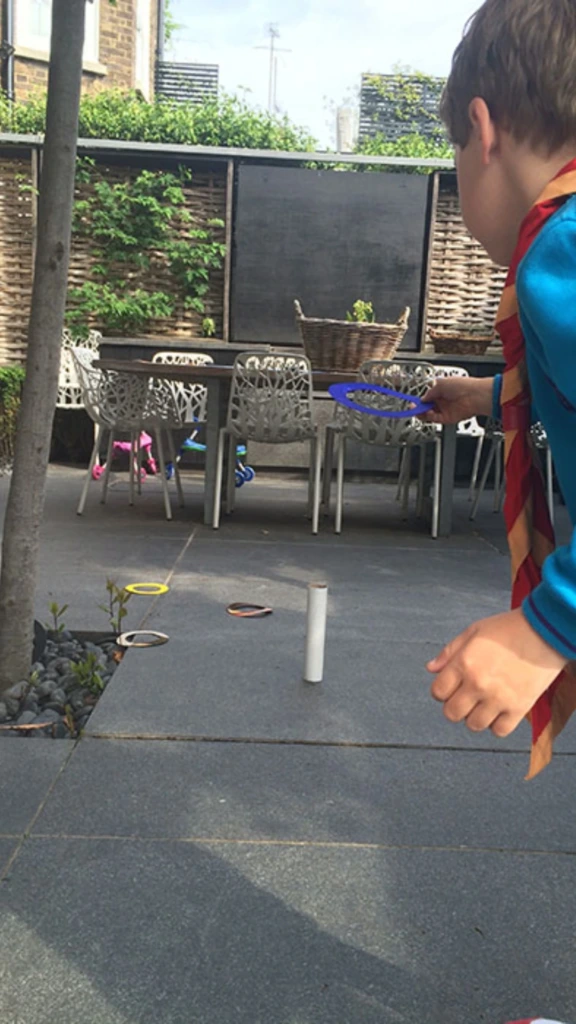
Olympic hoop ring toss brings the familiar five-ring theme into an interactive throwing competition.
Arrange five large hoops on the grass in an overlapping pattern inspired by the Olympic symbol. Use blue, yellow, black, green, and red hoops if available.
Provide soft bean bags or small fabric balls for participants to toss into the rings.
Assign a different point value to each hoop or ask children to complete a specific sequence of colors.
For younger players, use larger hoops and shorter throwing distances. Older children can attempt more difficult targets from farther away.
You can also create a cooperative version where teams work together to land at least one bean bag inside every hoop.
This activity develops accuracy, concentration, and color recognition.
27. Equestrian Events
Introduce children to the excitement of equestrian sports with imaginative hobby horse competitions.
Provide toy stick horses or create simple versions using cardboard horse heads attached to lightweight handles.
Set up a miniature riding course with cones, low foam obstacles, and marked pathways.
Participants pretend to ride their horses through the course, following a sequence of turns, stops, and gentle jumps.
You can organize timed races or create a dressage-inspired event where children perform a short routine featuring controlled movements.
Encourage creativity by allowing participants to name their horses and decorate their equipment.
Keep obstacles low and ensure that handles have smooth edges.
These pretend equestrian events promote imagination, coordination, and physical activity.
28. Discus Throw
A simplified discus throw gives children an opportunity to practice controlled throwing techniques using safe equipment.
Replace traditional heavy discs with soft foam flying discs or lightweight fabric discs.
Create a designated throwing area and mark several distance zones across an open field.
Participants stand behind the throwing line and attempt to send their discs as far as possible using a controlled sideways throwing motion.
Measure each attempt and record the best distance.
You can also introduce accuracy challenges by placing large ground targets at different distances.
Explain that children should release the disc only when the throwing area is completely clear.
This activity encourages coordination, balance, and an understanding of how movement affects distance and direction.
29. Shot Put
Shot put can be adapted into a safe children's activity using soft, lightweight balls instead of heavy metal equipment.
Mark a throwing line and provide foam balls or small fabric bean bags that fit comfortably in each participant's hand.
Show children how to begin with the ball near their shoulder and push it forward using one hand rather than swinging their arm.
Participants take turns attempting to send the ball into marked distance zones.
Measure each throw from the starting line to the first landing point.
For younger children, emphasize controlled pushing movements and personal improvement rather than distance.
Make sure everyone waits behind the line while another participant is throwing.
This game introduces basic athletic techniques while developing coordination and upper-body control.
30. Ice Hockey
Finish your mini Olympics with an exciting ice hockey-inspired game that can be played indoors or outdoors without a frozen rink.
For a tabletop version, use a smooth table, small plastic goals, lightweight paddles, and a soft foam puck.
Children compete in short matches, attempting to guide the puck into their opponent's goal.
For a larger floor-based activity, create goals using cardboard boxes and provide foam pool noodles as hockey sticks. Use a soft ball instead of a hard puck.
Divide participants into small teams and establish simple rules that prevent rough contact, high sticks, and aggressive play.
Rotate players frequently so everyone has an opportunity to participate.
This activity develops reaction time, coordination, teamwork, and strategic thinking.
Related Ideas You Might Love
Organizing Olympic games for kids in 2026 is a wonderful way to combine physical activity, creativity, and meaningful social interaction. From energetic relay races and backyard volleyball to imaginative teddy bear competitions and colorful Olympic crafts, these activities offer endless opportunities for fun.
The most memorable celebrations focus on inclusion, encouragement, and shared experiences rather than competition alone. With simple supplies, thoughtful planning, and age-appropriate challenges, you can create a mini Olympic event where every child feels like a champion.