Hall Closet Organization Ideas: Smart Ways to Create a Tidy, Functional Entryway
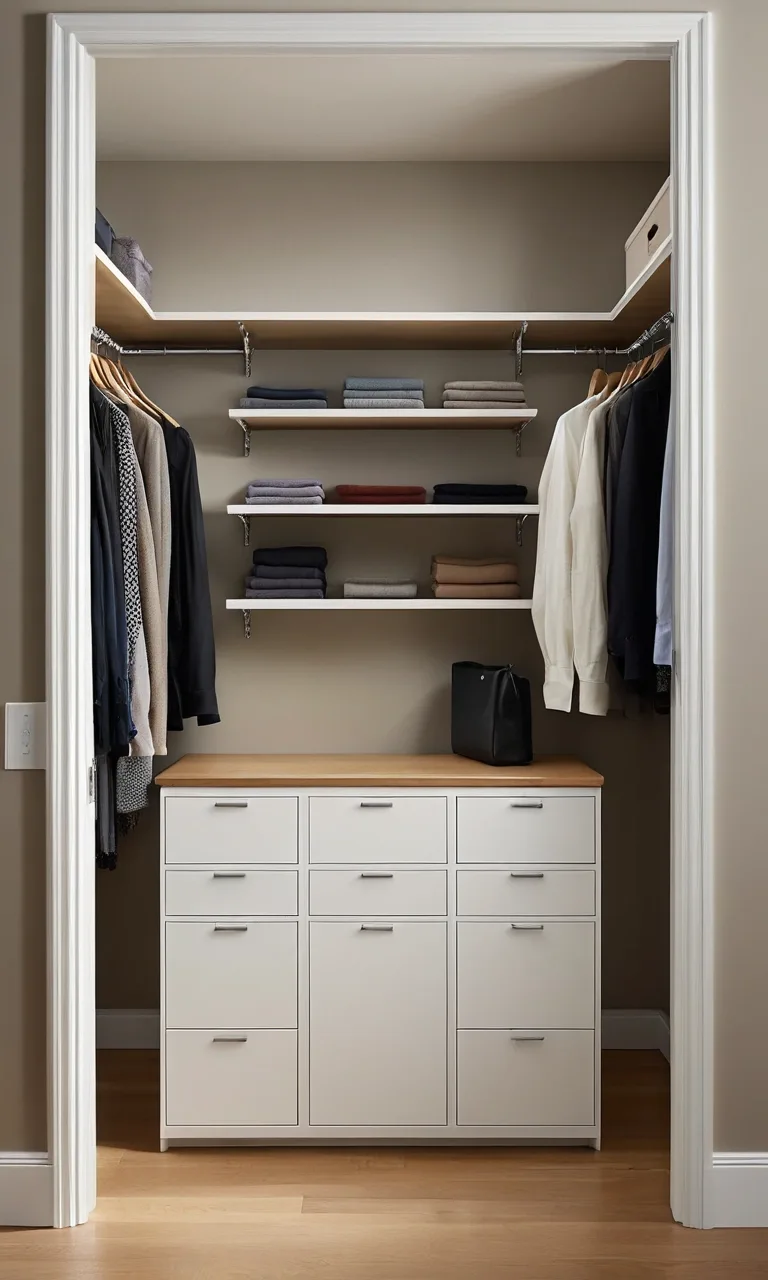
A well-organized hall closet can make everyday life easier by giving coats, shoes, umbrellas, bags, and household essentials a dedicated place. Without a clear system, this small storage area can quickly become crowded with misplaced belongings and items nobody remembers putting there.
The key to an efficient hall closet is to make the most of its available space while keeping frequently used belongings easy to reach. A combination of shelves, baskets, hooks, drawer units, and suitable lighting can transform even a narrow closet into a practical storage area.
Whether your hallway closet serves as a family drop zone, a linen cupboard, or a place for cleaning supplies, these ideas can help you create a setup that suits your home and daily routine.
How to Organize Hall Closets?
Start by removing everything from the closet so you can see how much space you have and what needs to be stored. Group similar belongings together, including outerwear, footwear, household supplies, linens, and seasonal accessories.
Next, decide which items deserve the most accessible locations. Keep everyday coats, shoes, and umbrellas near the entrance, while placing occasional-use belongings on higher shelves or inside labeled containers.
Adjustable shelving helps accommodate items of different sizes, and slim organizers can take advantage of unused vertical space. Door-mounted racks are particularly useful for lightweight accessories, while baskets prevent small items from spreading across shelves.
Finish by improving visibility with adequate lighting and assigning a specific location to every category. An effective organization system should be simple enough for everyone in the household to maintain.
Patterned Family Command Closet
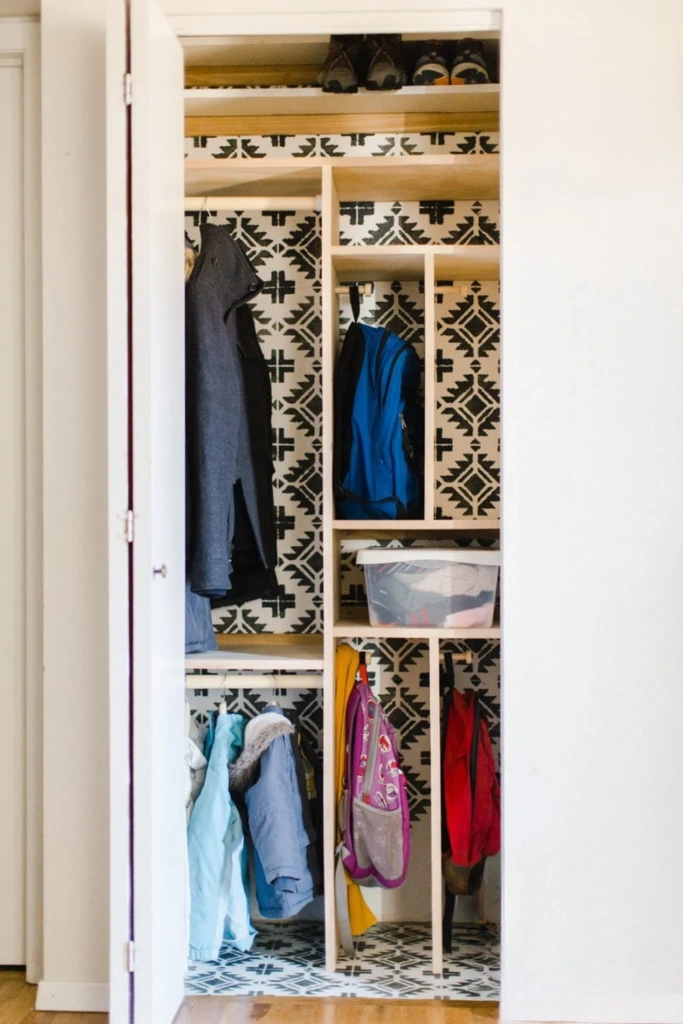
A patterned backdrop can give a family hall closet personality while making its storage arrangement feel intentional. Choose wallpaper that complements the surrounding hallway, then balance it with practical shelving and simple storage containers.
Wooden dividers can separate individual family members' belongings, while baskets provide convenient places for gloves, hats, and scarves. A small overhead light helps make the closet easier to use during busy mornings.
For a household with children, assign each person a specific hook or basket. This encourages everyone to put belongings away rather than leaving them scattered around the entrance.
Every Inch in Action
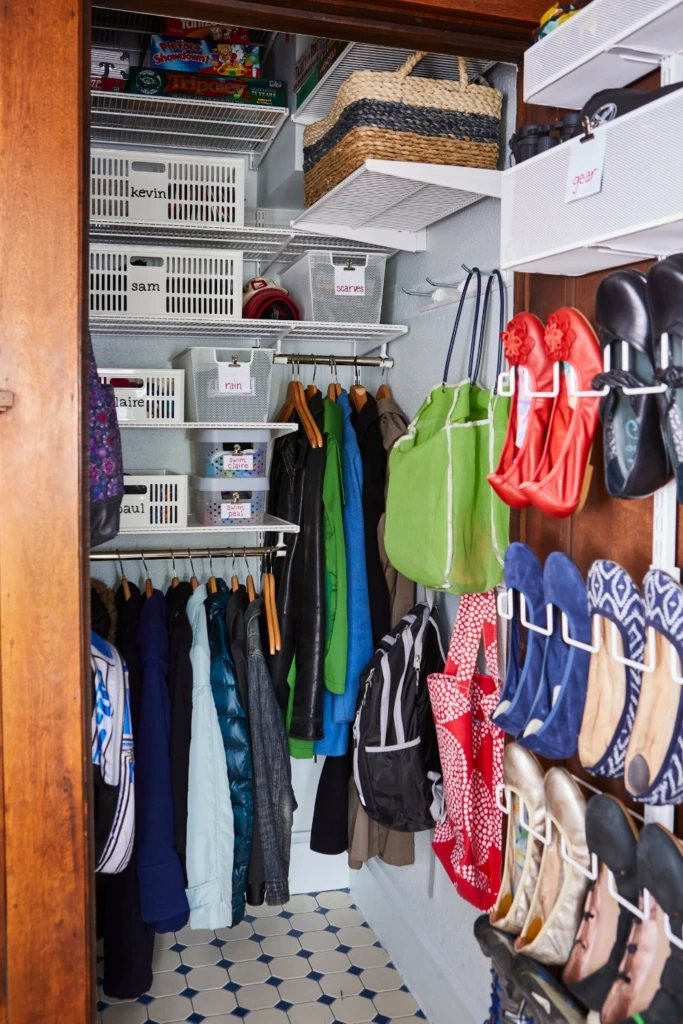
A compact closet can hold much more than expected when its interior is organized vertically. Combine shelves, labeled containers, hanging storage, and a shoe organizer to make productive use of the available space.
Transparent bins work well for accessories you need to identify quickly, while opaque baskets hide less attractive household items. Door-mounted hooks can accommodate lightweight bags and frequently used accessories without taking up shelf space.
Measure the closet before purchasing organizers to avoid wasting room on containers that are too wide or tall. Bright lighting also makes it easier to see belongings stored toward the back.
Labeled Linen Perfection
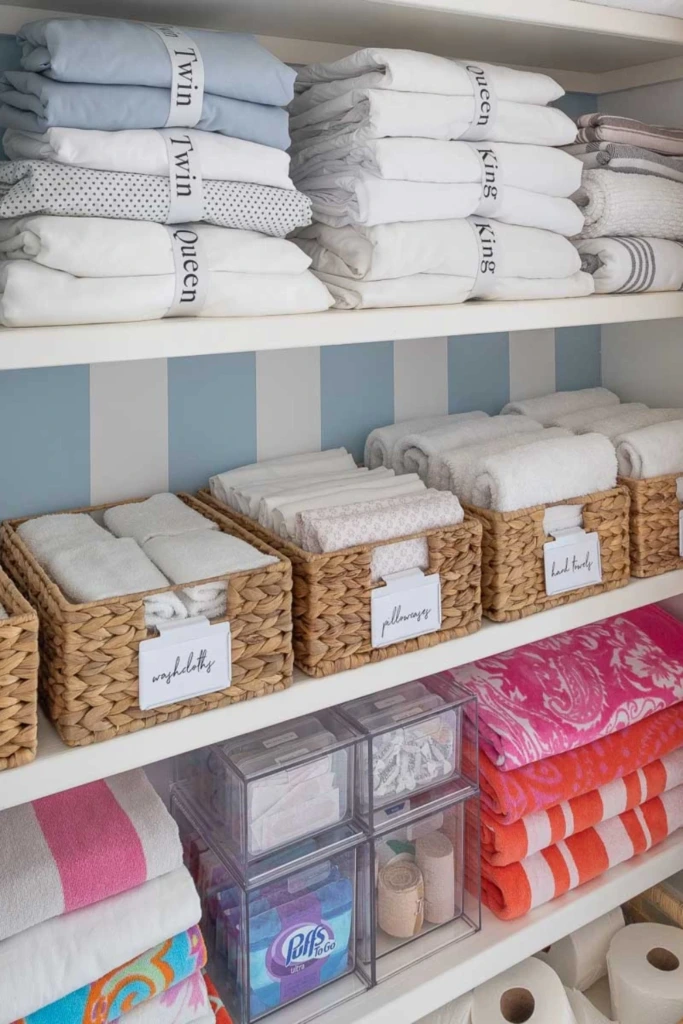
If your hallway closet doubles as linen storage, create separate sections for bath towels, hand towels, bedsheets, and spare blankets. Keeping similar items together makes it easier to locate what you need without disturbing the rest of the shelf.
Woven baskets add texture while concealing smaller linens and miscellaneous accessories. Shelf dividers can keep folded stacks upright, preventing them from toppling when someone removes an item.
Use clear labels to identify the contents of each basket, especially when several household members share the storage space. Store heavier blankets on lower shelves and reserve upper shelves for lighter, less frequently used bedding.
Streamlined Entry Closet
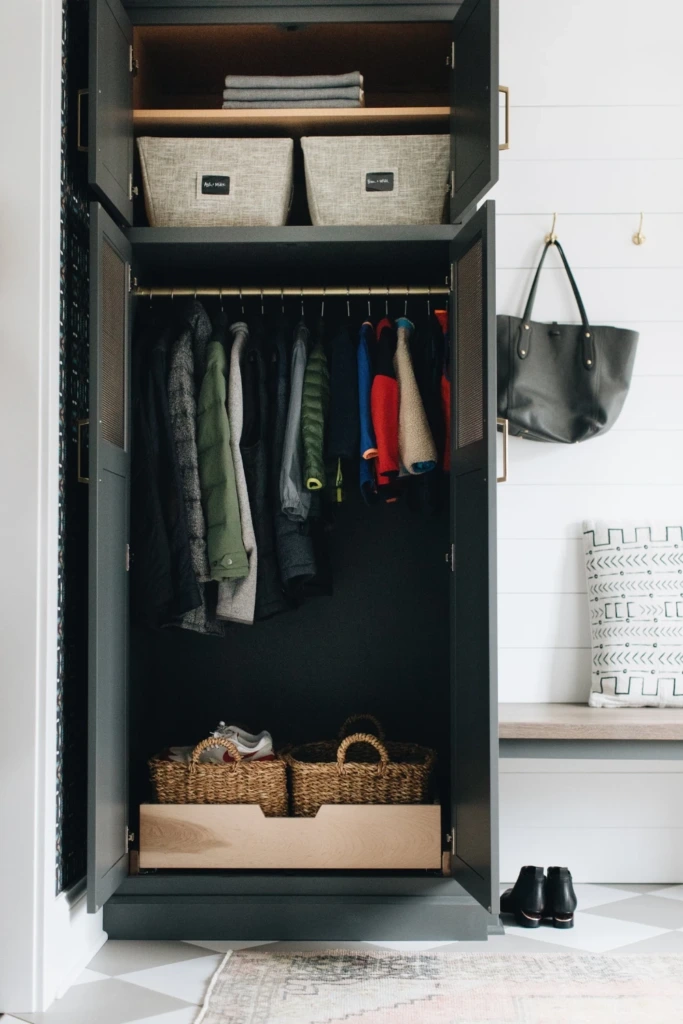
A streamlined entry closet prioritizes the belongings you reach for every day. Keep jackets on matching hangers along one rod, then use the upper shelf for compact baskets containing hats, gloves, and other accessories.
If the closet has enough floor space, add a small tray or rack for frequently worn shoes. An extra hook outside the closet can hold a handbag or the jacket currently in use.
Simple containers and consistent hangers help the space look neat without requiring expensive renovations. Motion-activated lighting is another useful addition, particularly in deep closets or dim hallways.
Back-of-Door Tote Rail
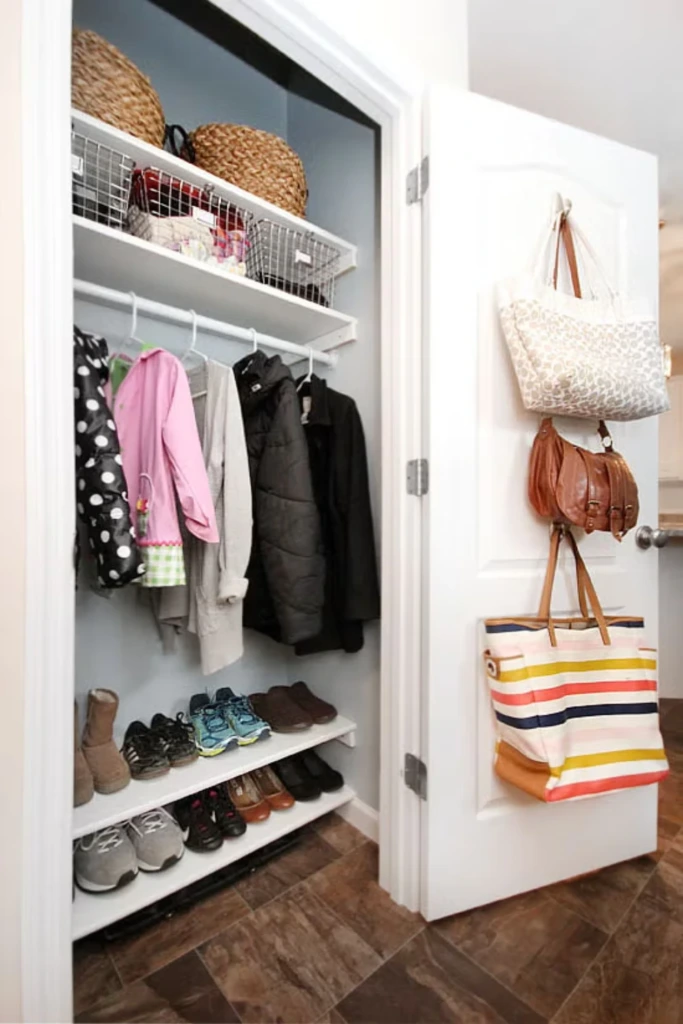
The back of a closet door offers valuable storage space that often goes unused. An over-door hook rack can hold reusable shopping bags, scarves, lightweight backpacks, and pet leashes while keeping the closet floor clear.
Choose a rack that fits the door properly and allows it to open and close without obstruction. If you prefer a cleaner appearance, select a design that blends with the door's finish.
Give each family member an assigned hook or group similar accessories together. Keep heavier bags on sturdy hooks and avoid overcrowding the rack, which can make items difficult to remove.
Door-Mounted Entry Station
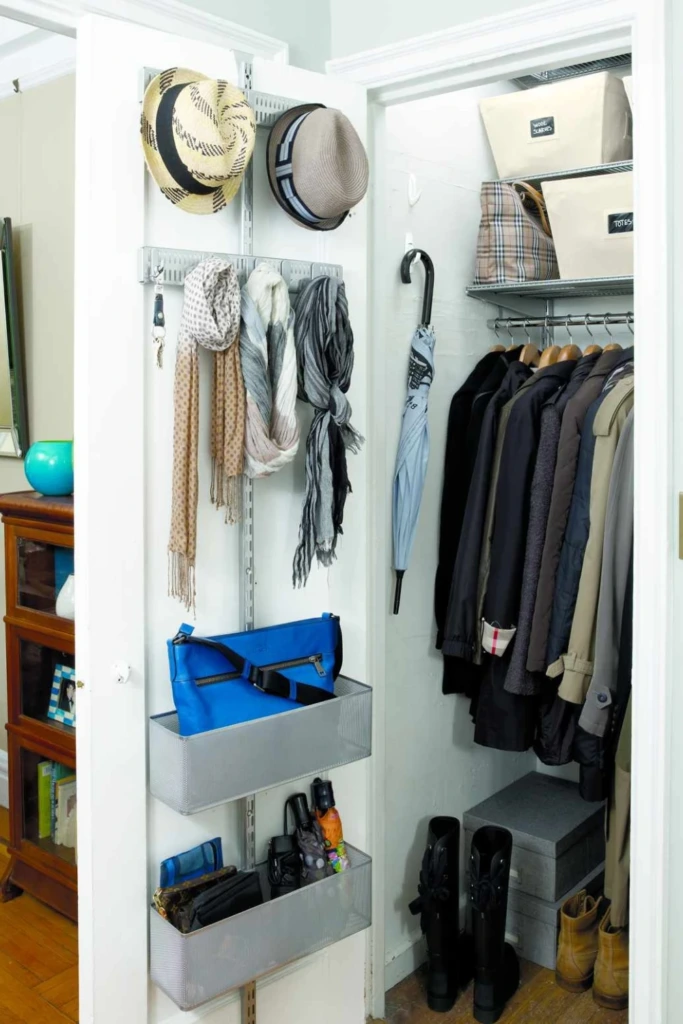
A door-mounted entry station keeps small essentials close to the entrance. Hooks can accommodate hats and scarves, while compact baskets provide storage for gloves, sunglasses, and other accessories.
An umbrella holder near the bottom of the closet keeps wet accessories contained and helps protect surrounding surfaces. Make sure the holder allows water to drain or evaporate safely.
For a more flexible setup, consider an adjustable hanging organizer with movable hooks or compartments. Add lighting if the closet is difficult to navigate, and keep frequently used belongings at a comfortable height.
Built-In Mudroom Nook
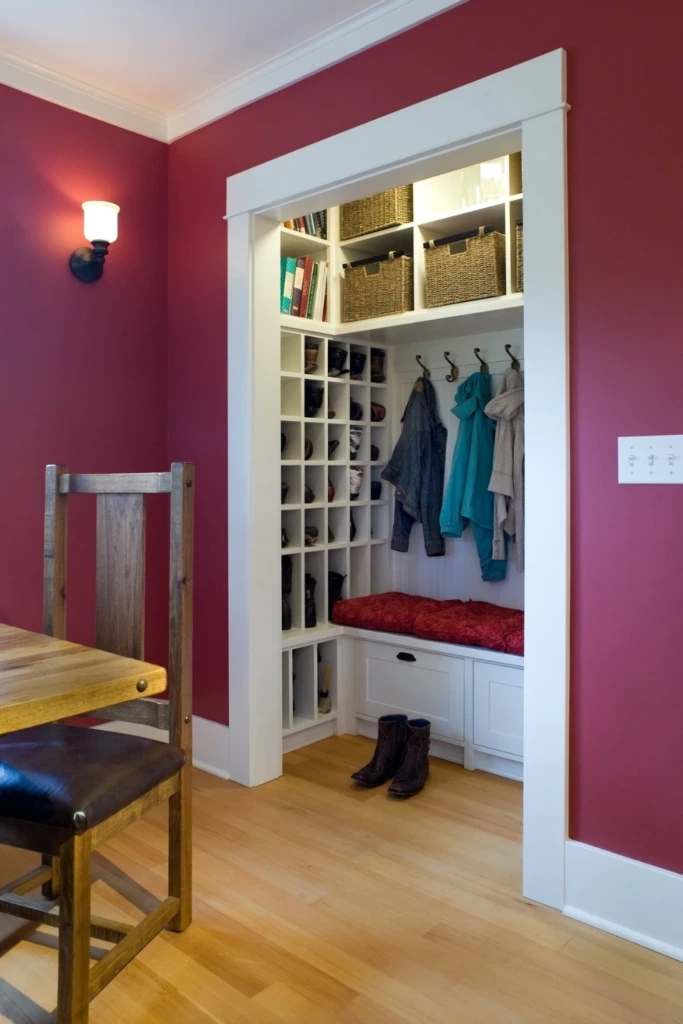
A built-in mudroom nook combines seating, hanging space, and shoe storage in one compact area. It is particularly useful for families who need a convenient place to remove shoes, hang coats, and organize bags when arriving home.
A narrow bench provides a comfortable spot for putting on footwear, while cubbies underneath keep shoes separated. Hooks above the bench make jackets and backpacks accessible without using a full-length closet rod.
If a permanent renovation is not practical, recreate the arrangement with a freestanding bench, wall hooks, and a few floating shelves. Choose durable materials that can handle everyday wear and occasional moisture from shoes and outerwear.
Dual-Purpose Storage Zone
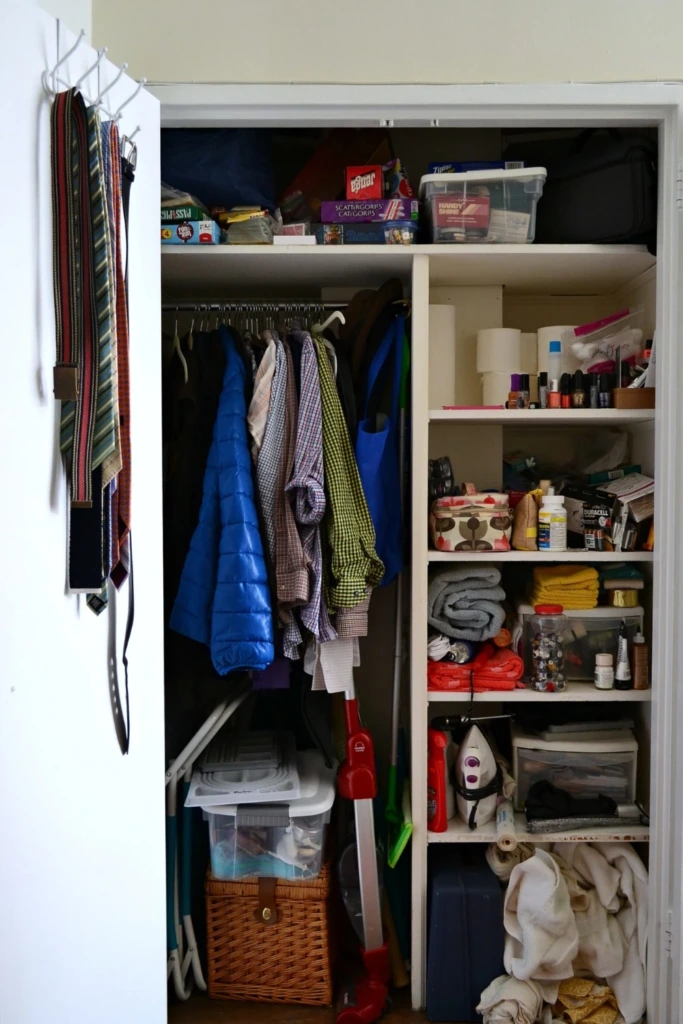
A hall closet can serve more than one purpose when its storage areas are clearly separated. Dedicate one section to coats, bags, and accessories, and use another for suitable household supplies.
Adjustable shelves make it easier to accommodate tall bottles, folded textiles, or bulky containers as your needs change. Labels help distinguish the different sections and prevent household items from becoming mixed together.
Keep cleaning products securely stored away from children and pets, preferably in their original containers. Avoid placing heavy supplies on high shelves, and make sure the arrangement leaves enough room to retrieve everyday belongings safely.
Warm Minimal Closet Setup
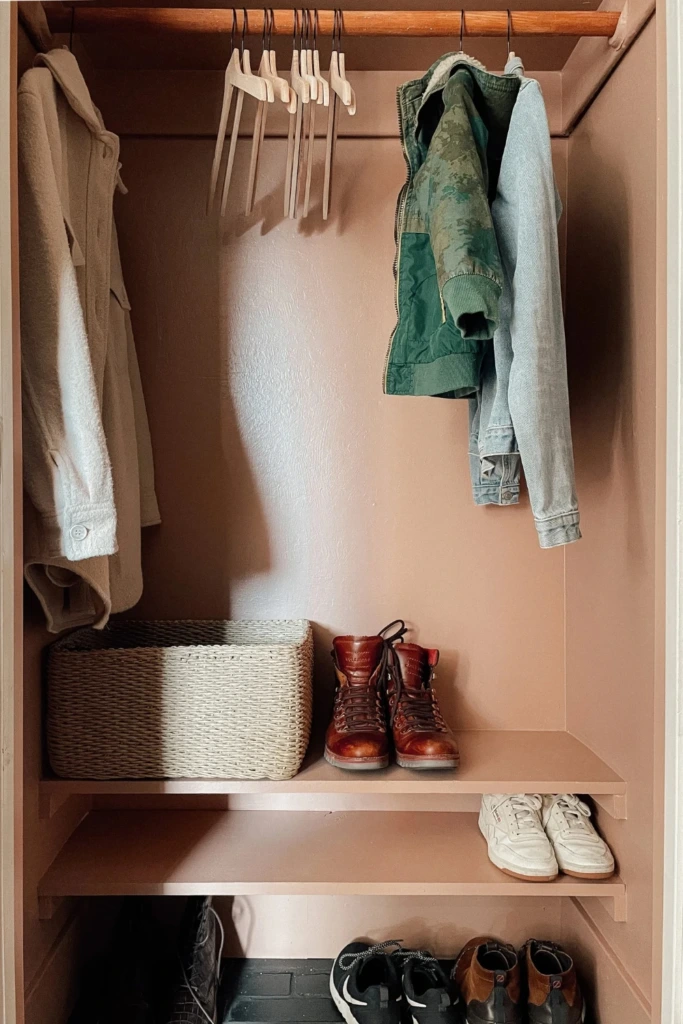
A warm, minimalist closet combines a restrained color palette with practical storage. Soft beige, cream, or muted pink tones can make the interior feel more inviting, while matching hangers and simple baskets create a cohesive appearance.
Two or three well-planned shelves may be more useful than filling the closet with unnecessary organizers. Reserve hanging space for garments that wrinkle easily and use baskets for smaller accessories.
Under-shelf lighting can improve visibility while highlighting the closet's finishes. The goal is to create a calm, functional interior where every item has a place and the storage system remains easy to maintain.
Compact Entry Organizer
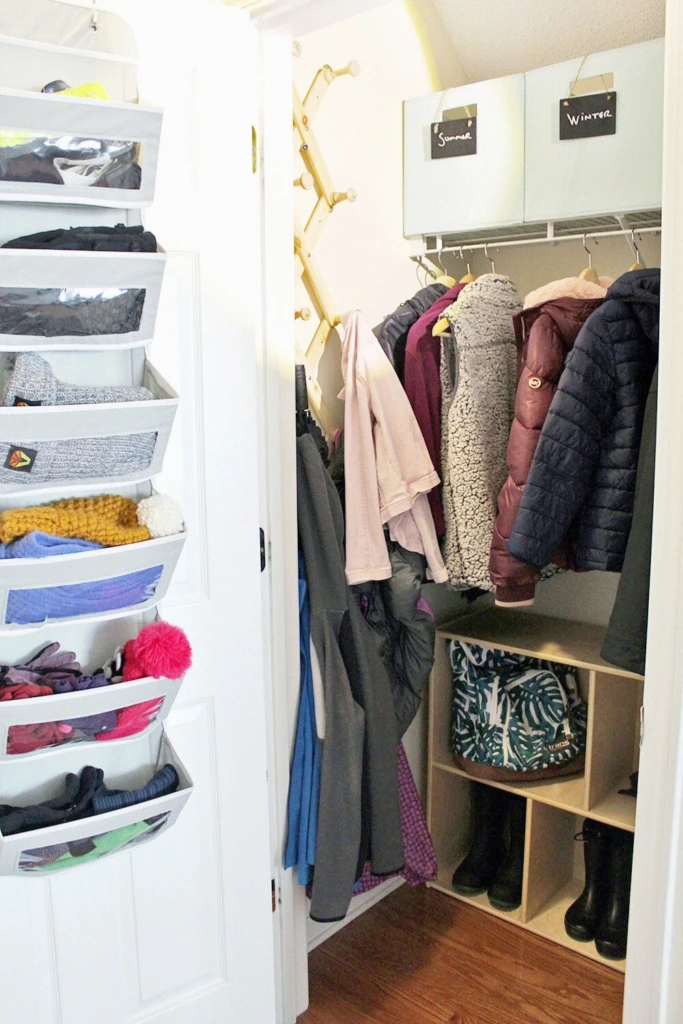
A small entry closet can function like a miniature mudroom when its limited space is divided carefully. Use the hanging rod for coats, the lower section for footwear, and the door for lightweight accessories.
Cube shelves or narrow shoe racks can make better use of the bottom area than a collection of loose shoes. Small labeled containers are useful for gloves, hats, keys, and other items that are easily misplaced.
Choose slim hangers to create additional room on the rail, and measure every organizer before buying it. In a narrow closet, compact storage solutions are usually more effective than bulky furniture.
Sporty Hall Closet Setup
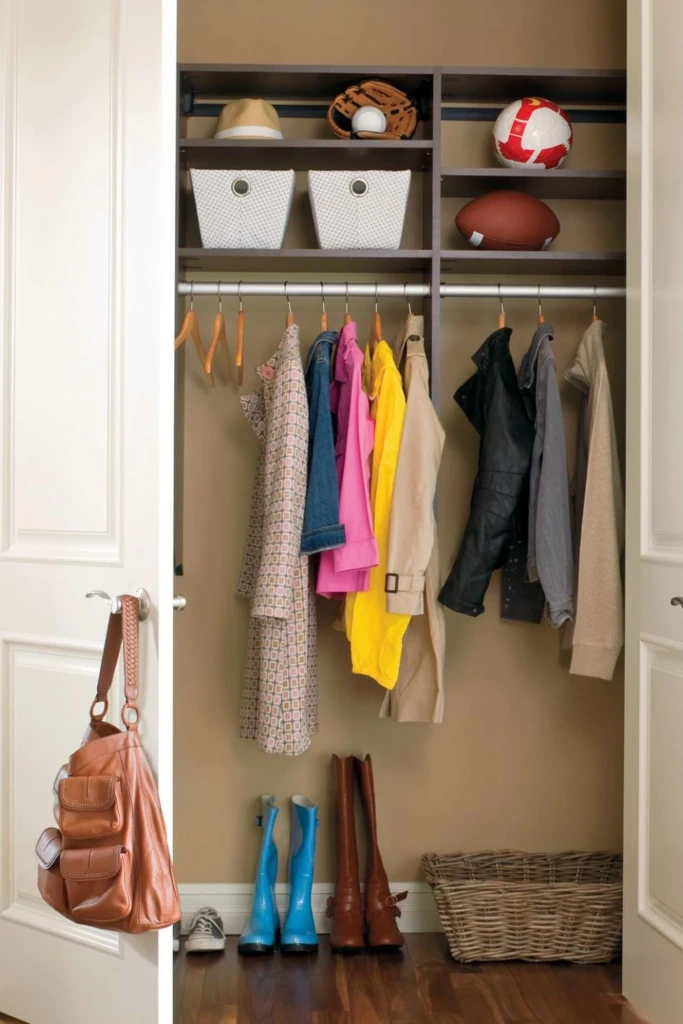
Families with active lifestyles can use a hall closet to organize the gear they regularly take outdoors. Place jackets and backpacks near the entrance, then reserve shelves or sturdy bins for sports accessories and equipment.
If the closet has sufficient height, a two-tier hanging system can increase capacity for shorter garments. Keep frequently used items on the lower rail and less common seasonal clothing above.
Separate equipment by activity or family member so that everything is easy to find before leaving home. Store dirty or damp gear only after it has been cleaned or dried, and avoid placing heavy equipment on unstable shelves.
Cluttered Closet Before the Reset
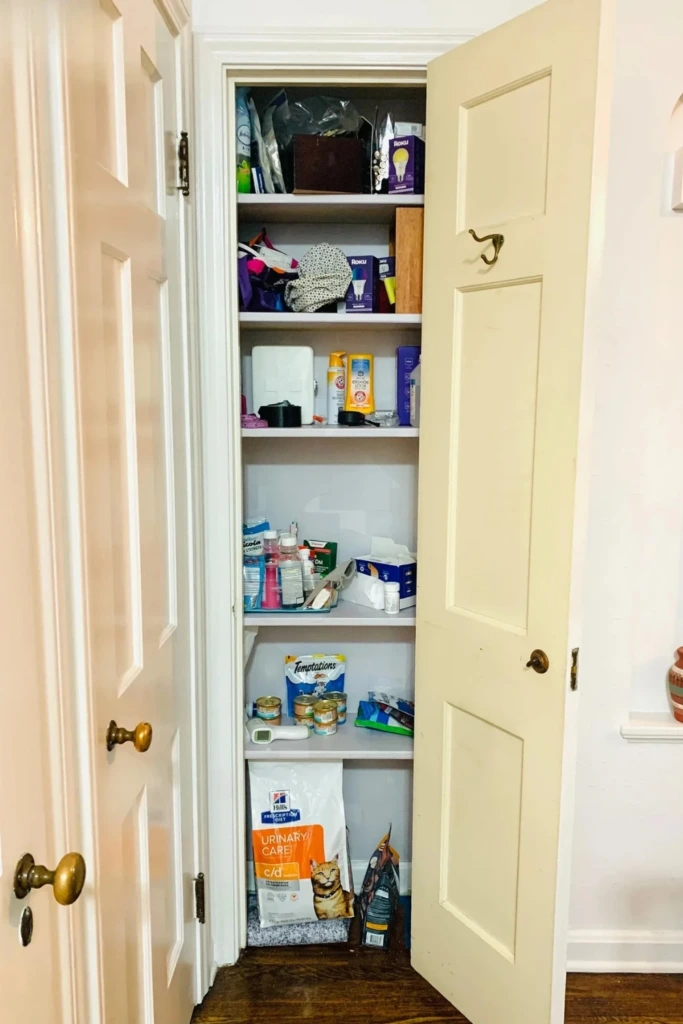
An overcrowded closet is a useful starting point for identifying what needs to change. Loose bags, unused accessories, misplaced shoes, and random storage boxes often take up space that could serve a clearer purpose.
Begin by removing unnecessary belongings and deciding which items genuinely belong near the entrance. Donate usable items you no longer need, relocate belongings that belong elsewhere, and discard anything that is no longer suitable for use.
Once the closet is empty, measure the interior and plan the storage layout before purchasing containers. A few well-chosen shelves, labeled baskets, and sturdy hooks can often solve the problem without a major expense.
Soft Neutral Linen Storage
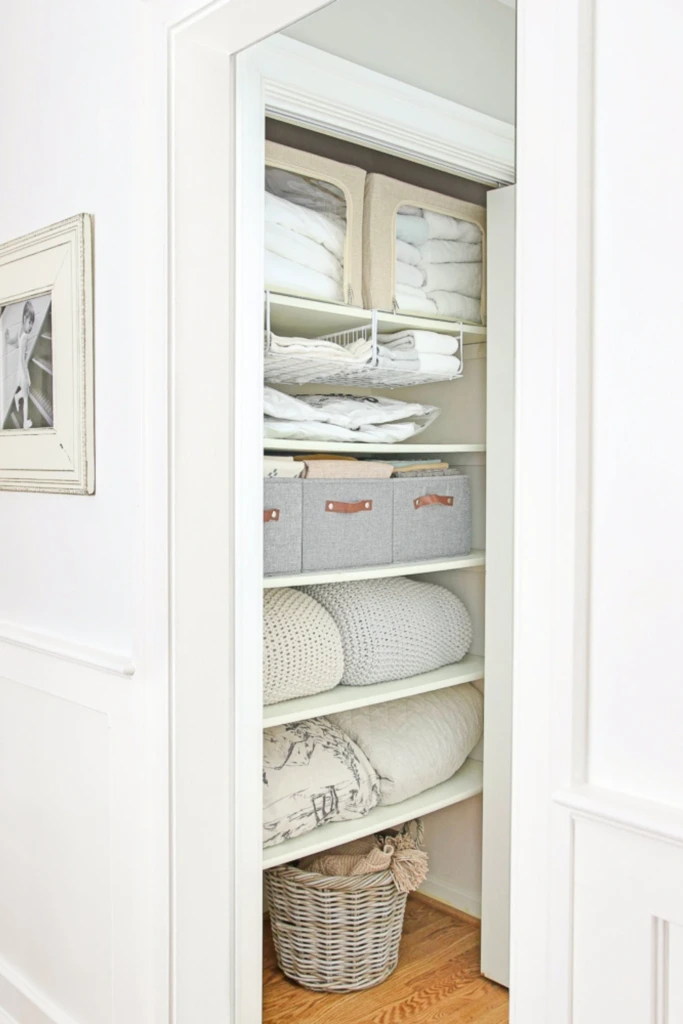
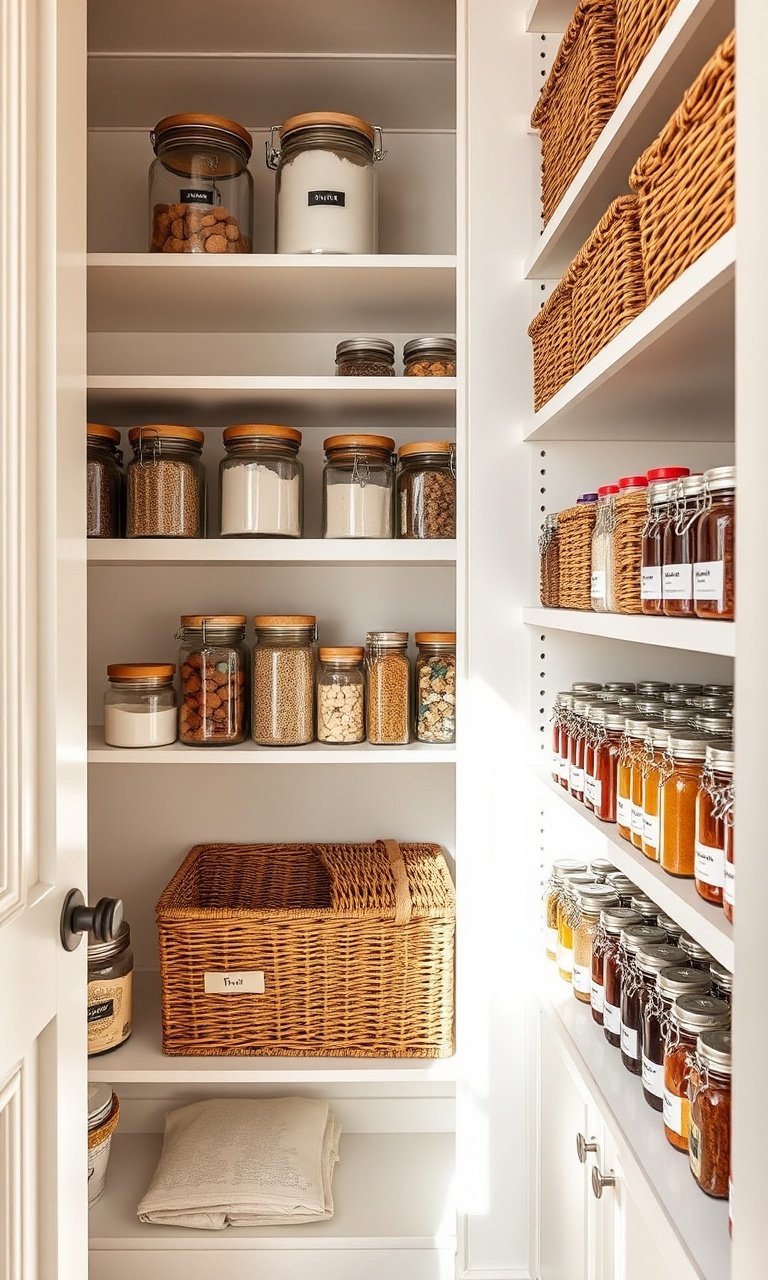
Neutral storage creates a coordinated look without sacrificing practicality. Cream fabric bins, natural woven baskets, and neatly folded blankets work particularly well in a closet used for spare linens.
Arrange bedding and towels by category, then use shelf dividers to prevent folded stacks from slipping. A larger basket on the bottom shelf can accommodate bulky blankets or extra pillows.
Labels make it easier to identify contents without opening every container. Choose washable or easy-to-clean organizers where appropriate, and avoid packing linens so tightly that they become difficult to remove.
Layered Linen Shelving
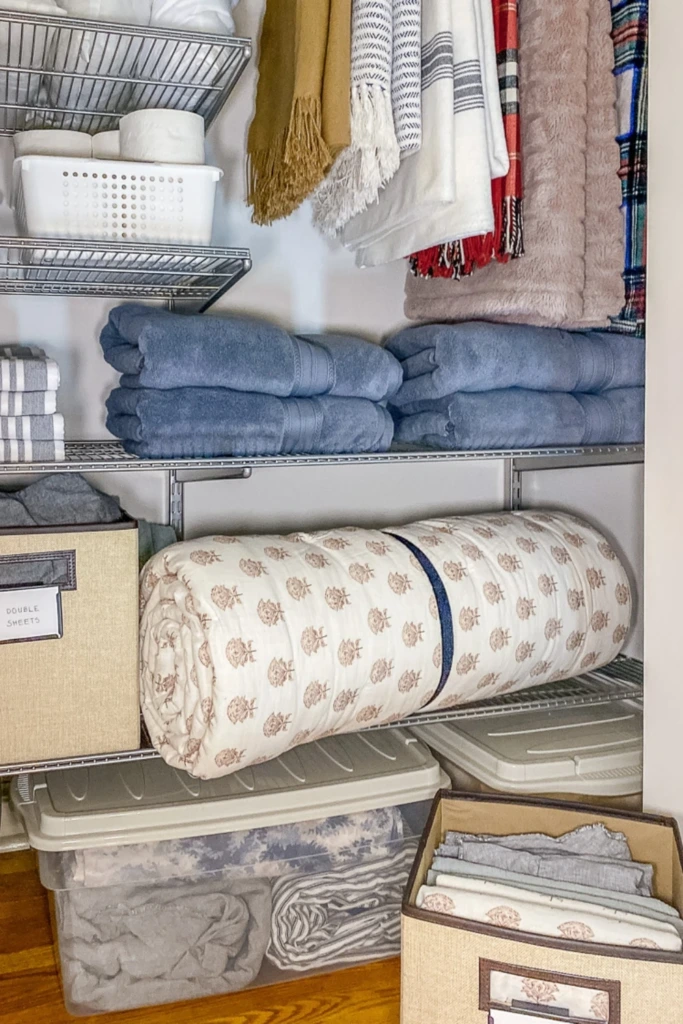
Layered shelving is a practical way to combine folded linens, hanging garments, and seasonal bedding in one closet. It works especially well when the available space is tall but relatively narrow.
Use the upper shelves for spare duvets and bedding that are only needed occasionally. Keep everyday towels and sheets on middle shelves, where they can be reached comfortably, and place heavier items lower down.
Clear containers help identify seasonal textiles, while fabric baskets give smaller items a dedicated home. Adjustable shelves allow the arrangement to change as your storage needs evolve.
Earthy Basket Harmony
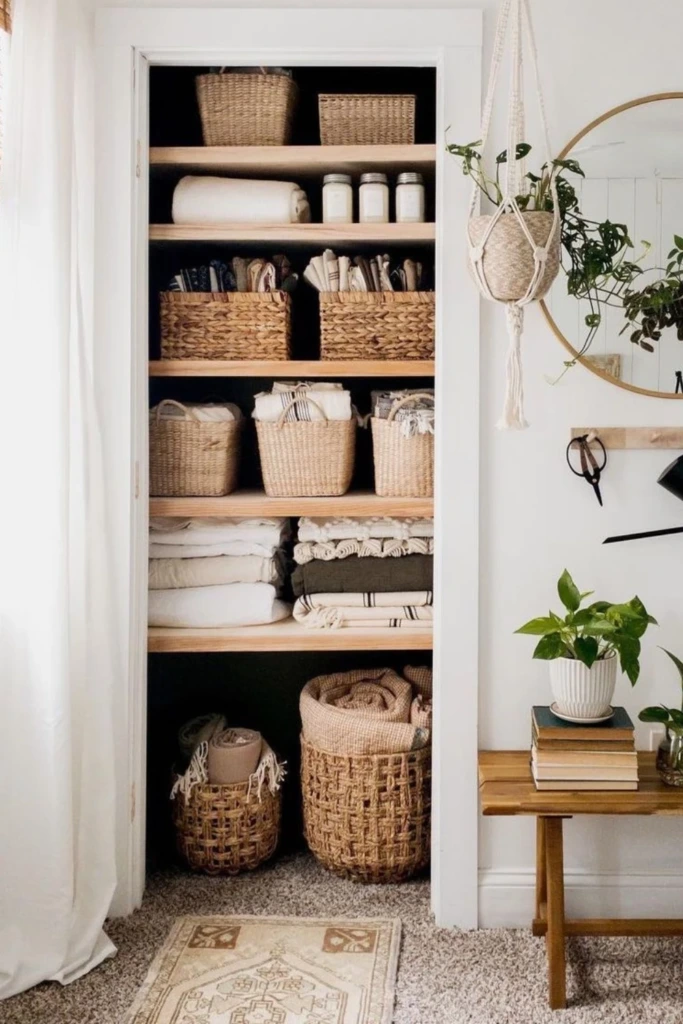
Natural materials can make a functional closet feel warmer and more thoughtfully designed. Wooden shelves paired with woven baskets create an inviting appearance while providing useful storage for blankets, table linens, and accessories.
Group related items together rather than filling each basket with unrelated belongings. Use larger baskets for bulky textiles and smaller ones for accessories that tend to disappear on deep shelves.
For a coordinated finish, choose baskets in complementary shades and keep the visible contents tidy. Make sure the baskets are sturdy enough for their intended use and can be removed without catching on neighboring shelves.
Color-Coded Family Closet
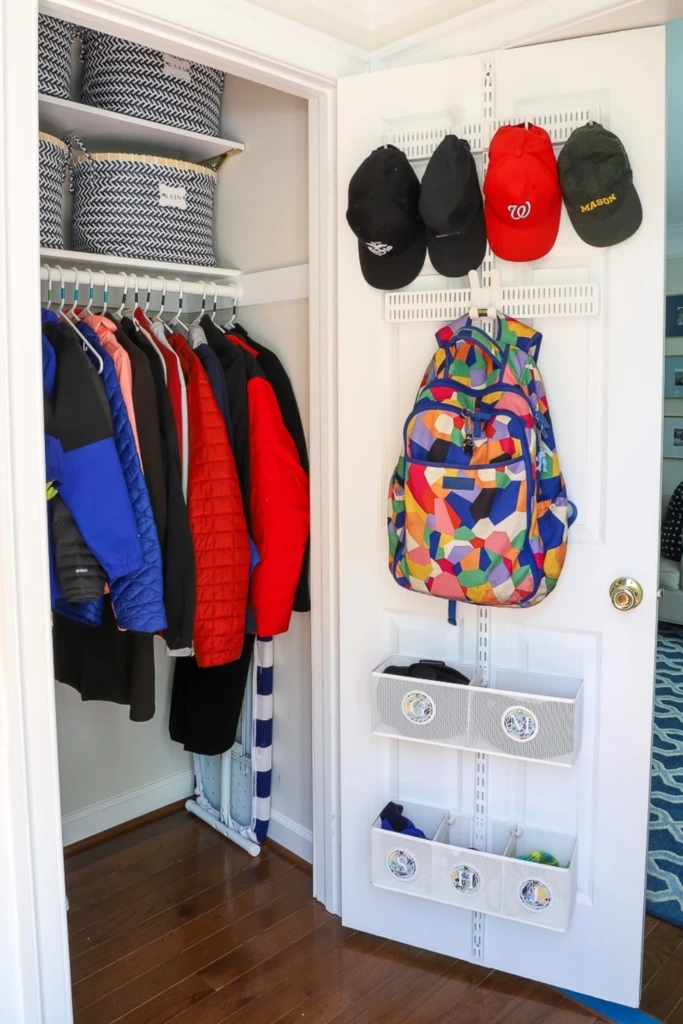
Color coding can make a shared closet easier to manage, particularly when several family members use the same storage space. Assigning each person a hanger color, basket, or shelf section helps everyone identify their belongings quickly.
Backpacks and frequently used jackets should remain within easy reach. Store smaller accessories in labeled containers and reserve higher shelves for seasonal items or less frequently used belongings.
Keep the color scheme simple enough to understand at a glance. A consistent system is more useful than an elaborate arrangement that requires frequent rearranging or explanation.
Utility Closet Setup
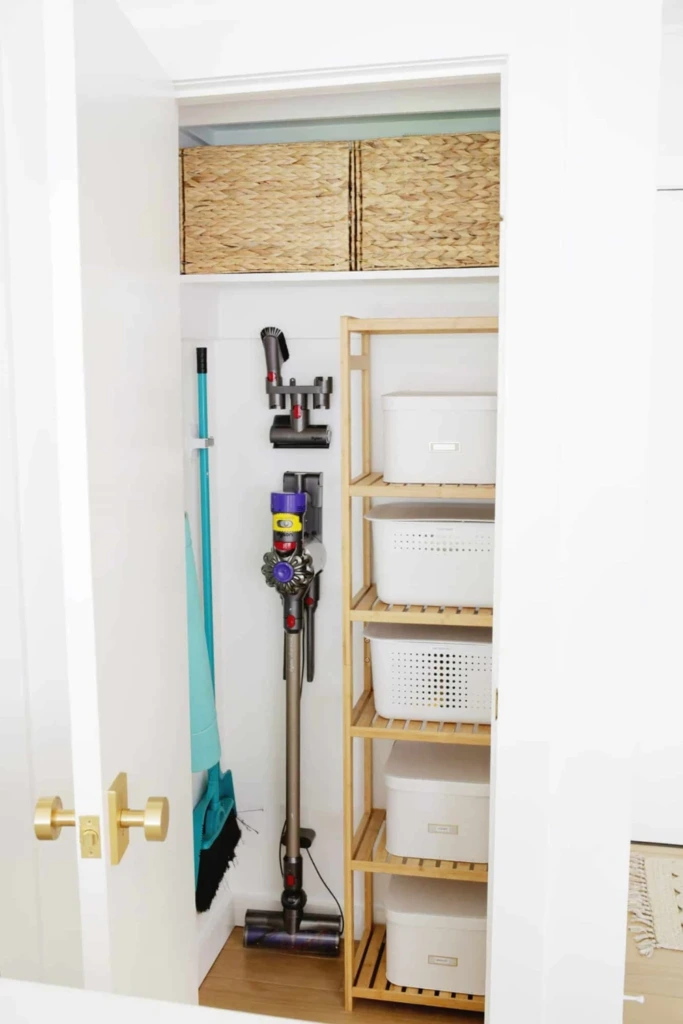
When a hall closet is needed for household maintenance supplies, organization should focus on safe storage and easy access. Wall-mounted holders can keep brooms, mops, and lightweight cleaning tools upright, freeing up valuable floor space.
Use shelves or suitable bins to group sponges, cloths, and other supplies by purpose. Store cleaning products according to their labels, keep hazardous substances away from children and pets, and never mix chemicals that could produce dangerous fumes.
Leave enough room to remove tools without disturbing everything else. A narrow shelving unit and a few sturdy wall hooks may be all that is needed to create a functional utility area.
Multi-Zone Storage Closet
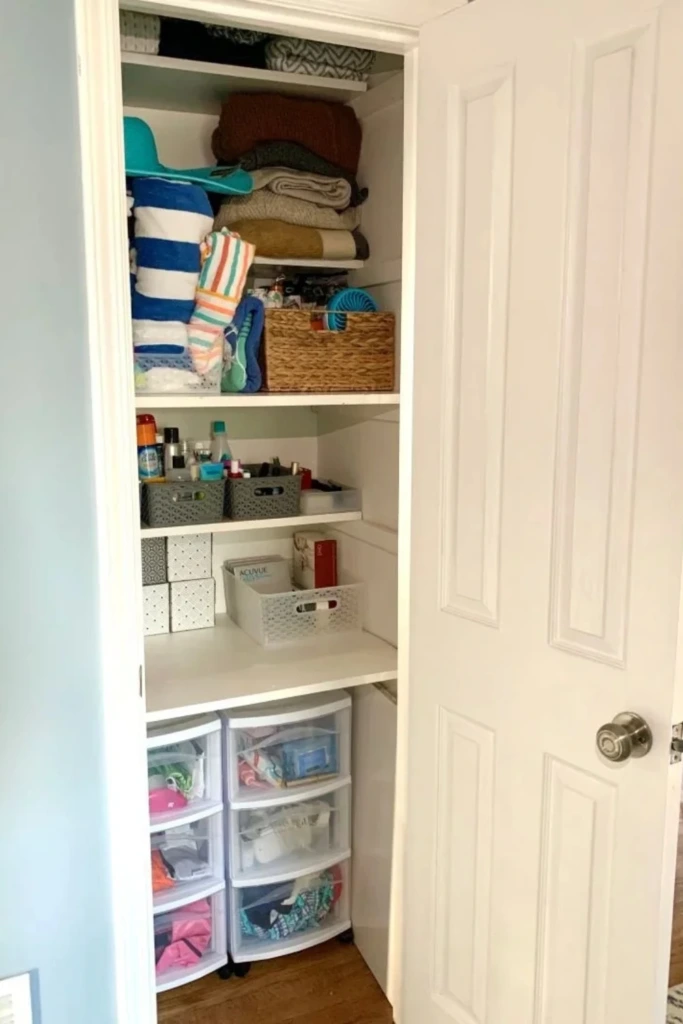
A multi-zone closet gives different belongings their own clearly defined areas. Upper shelves can hold spare bedding, middle shelves can accommodate everyday household essentials, and drawers can keep smaller accessories contained.
Use baskets for items that are difficult to stack neatly and clear containers for belongings you want to identify quickly. Adjustable drawers are useful when the contents change throughout the year.
Arrange each zone according to how often you use it. Keep daily essentials at a convenient height, reserve higher locations for occasional-use items, and make sure heavier objects remain on stable, accessible shelves.
Clear Bin Categorized Closet
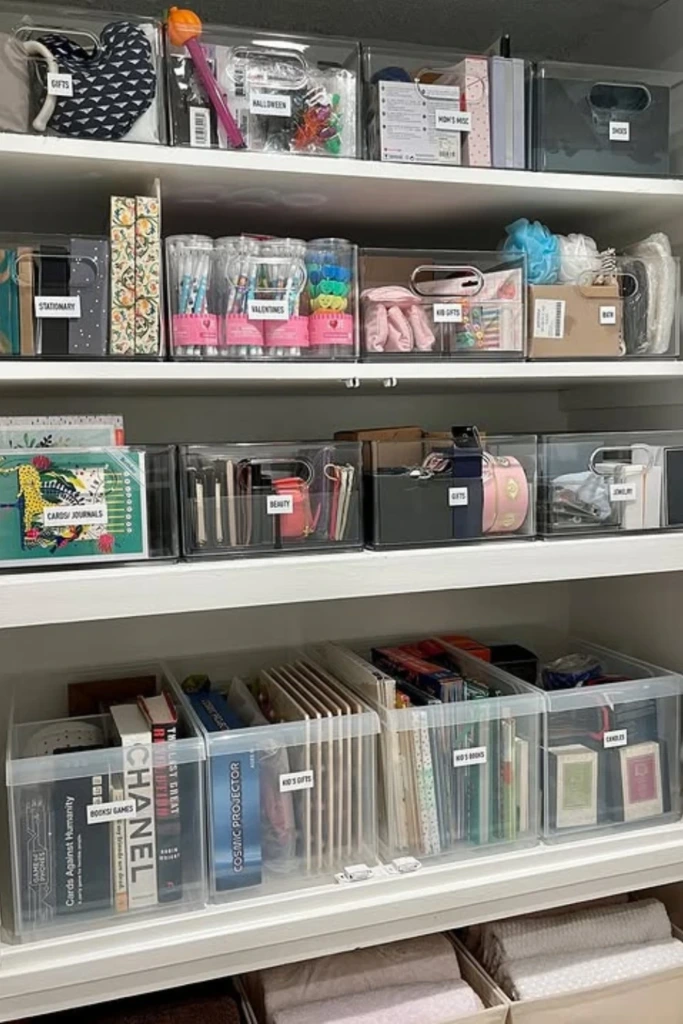
Transparent bins make it easier to see what a closet contains without opening every box. They are especially useful for small household supplies, stationery, craft materials, and other items that tend to become mixed together.
Assign each container a single category and use readable labels to identify its contents. Group similar bins on the same shelf, and place the most frequently used categories where they are easiest to reach.
Choose containers that fit the shelves properly and can be pulled out comfortably. Avoid filling them to the point where lids become difficult to close or contents are hard to locate.
Color-Coordinated Closet Zone
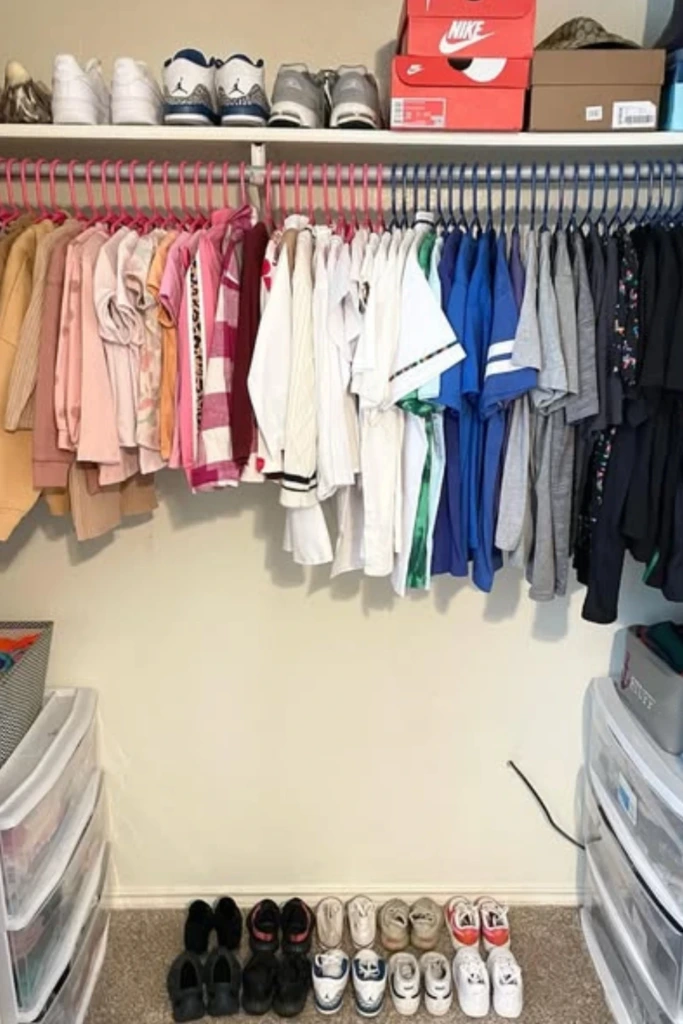
Arranging clothing by color can make a closet look orderly and help you locate particular garments more quickly. Start by grouping similar clothing types together, then organize each group from light to dark or according to your preferred color sequence.
Matching hangers create a consistent line along the hanging rod, while drawers or fabric bins can hold scarves, gloves, and folded accessories.
Keep practical considerations in mind when choosing the layout. Leave enough space between garments to retrieve them easily, and avoid using decorative organizers that take up more room than they save.
Luxe Built-In Closet
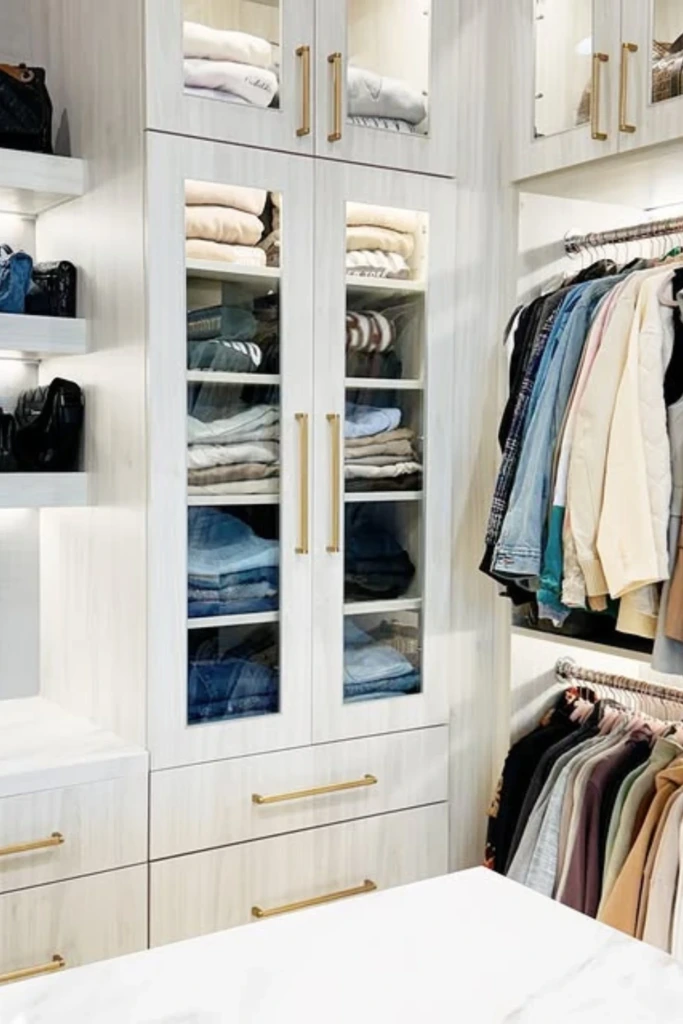
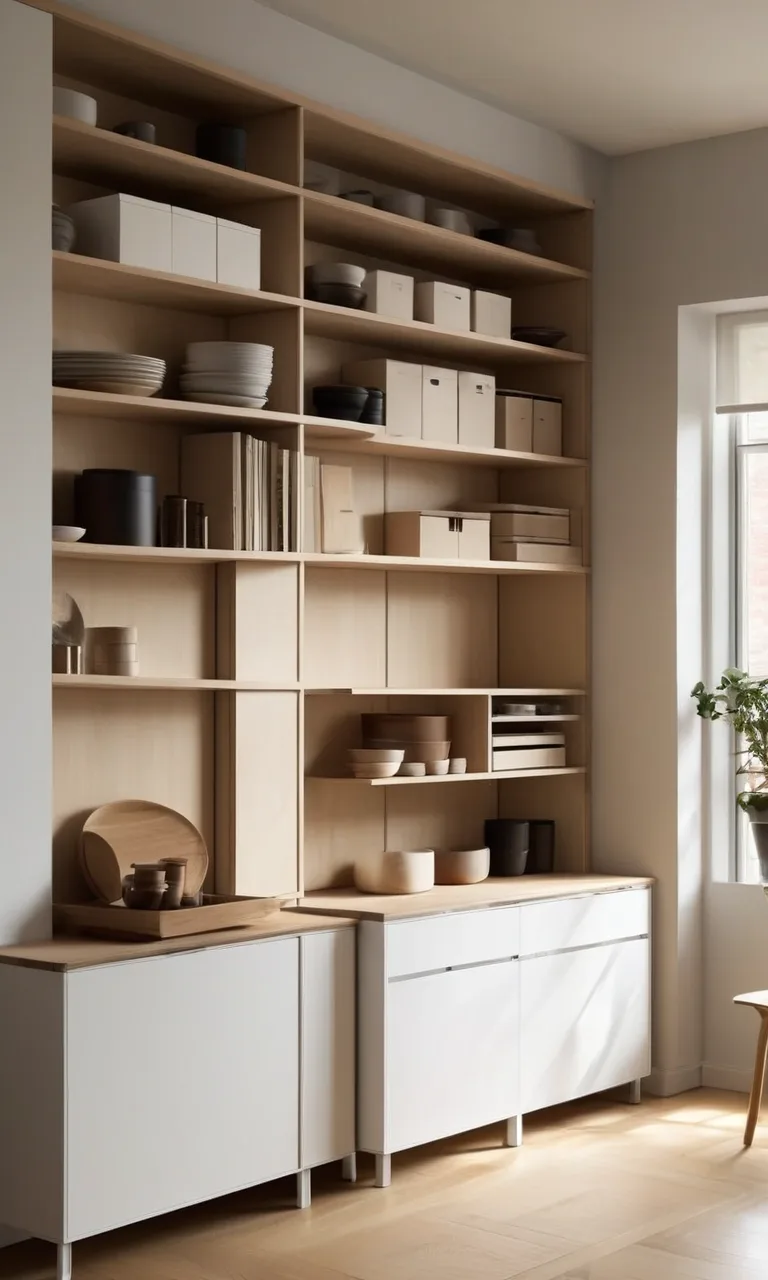
A built-in closet can provide a polished appearance while maximizing storage along a hallway. Light wood finishes, carefully arranged shelves, and coordinated hardware help create a refined design that feels connected to the rest of the home.
Glass-front cabinets can protect stored belongings from dust while keeping their contents visible. Closed cabinets are another option if you prefer to conceal everyday clutter.
Integrated LED lighting improves visibility inside deeper sections, and adjustable shelving makes the storage more adaptable. Before investing in custom cabinetry, consider which features you genuinely need and whether modular shelving could achieve a similar result for less.
Warm-Toned Wardrobe Nook
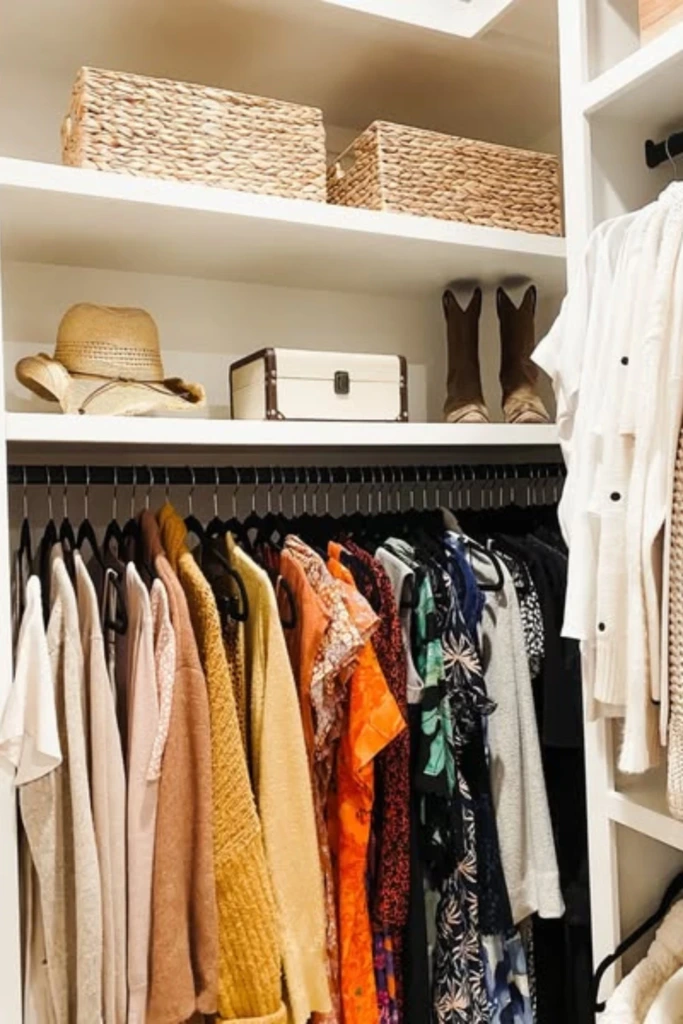
A wardrobe nook can create additional hanging space when the main hall closet is too small for the household's needs. Warm wood, natural baskets, and neutral textiles make the arrangement feel welcoming rather than purely functional.
Keep regularly worn jackets on an accessible rail and use baskets to contain hats, scarves, and other small accessories. A shelf above the hanging area can hold lightweight seasonal items.
This approach works best when the nook does not obstruct the hallway or make movement difficult. Keep the floor clear, avoid overcrowding the rail, and choose storage pieces that fit comfortably within the available footprint.
Dual-Sided Utility Closet
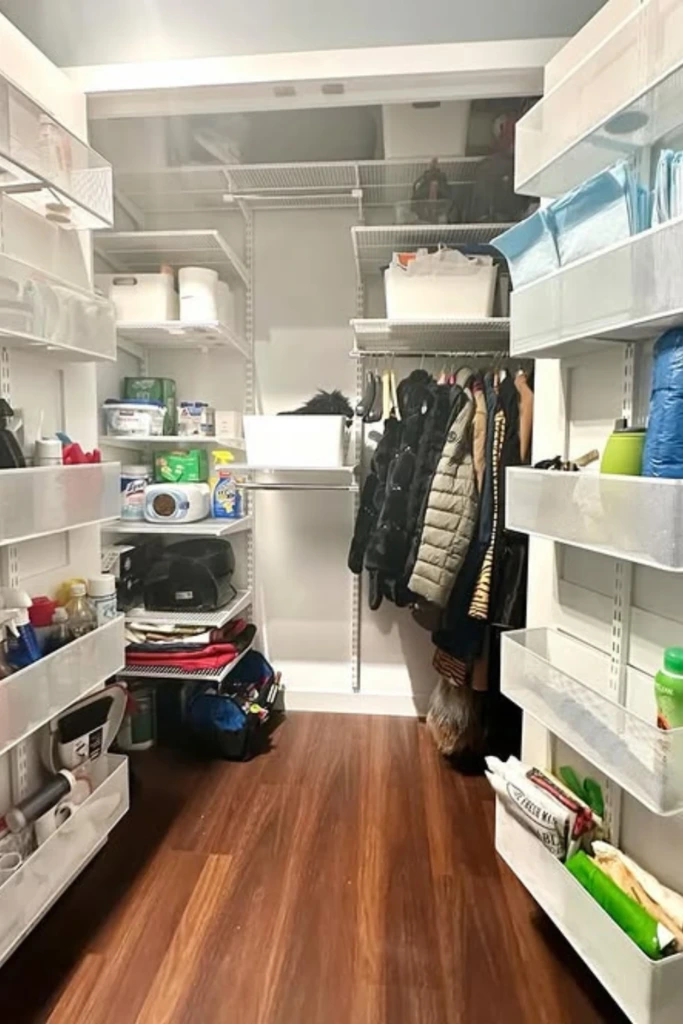
A dual-sided layout can help a shared closet accommodate both outerwear and household supplies. One section can hold coats and bags, while the other stores suitable paper products, cleaning tools, and other essentials.
Adjustable wire shelves can improve airflow around appropriate stored items and make it easier to change the arrangement as needed. Door-mounted organizers offer extra space for lightweight accessories.
Keep the categories physically separated and use labels to prevent confusion. Cleaning chemicals should remain securely stored and away from food, personal-care products, and items that could become contaminated.
Everyday Shoe and Coat Closet
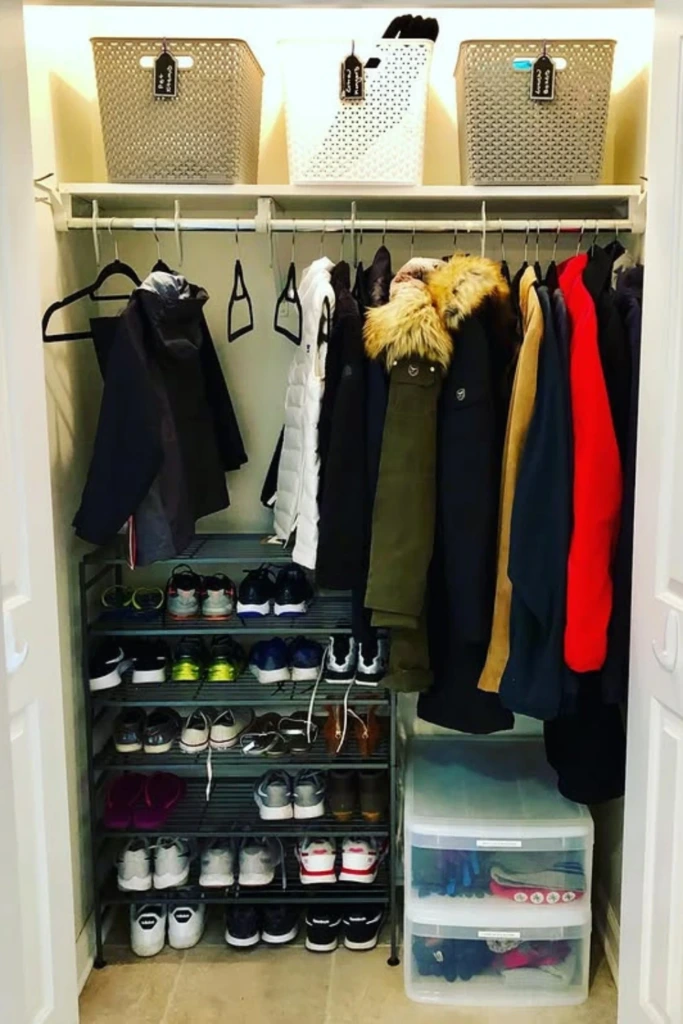
A practical shoe and coat closet should make leaving and returning home straightforward. Hang frequently worn outerwear near the front, and use a shoe rack to keep everyday footwear off the floor and separated by pair.
Place off-season clothing and accessories in labeled containers on higher shelves. Small drawers can accommodate shoe-care products, gloves, and other compact essentials.
Choose a shoe rack that allows enough airflow and is easy to clean. Avoid storing wet footwear directly against fabric items, and keep the most frequently used shoes within comfortable reach.
What should be stored in a hallway closet?
A hallway closet is best used for belongings that you regularly need when leaving or returning home. Common choices include coats, jackets, shoes, umbrellas, bags, hats, gloves, and seasonal accessories.
Depending on its size and layout, it may also accommodate spare linens or selected household cleaning supplies. Keep categories separate and make sure potentially hazardous products are stored safely.
Avoid turning the closet into a general dumping ground for items that belong in other rooms. If you have not used something for a long time and it does not serve a seasonal or practical purpose, consider relocating, donating, or discarding it.
What furniture do you put in a hallway?
Hallway furniture should provide a useful function without making the passage difficult to navigate. A slim console table can hold keys and mail, while wall hooks provide a convenient place for coats and bags.
If the hallway is wide enough, a narrow bench can offer seating for putting on shoes. A wall-mounted mirror can make the space feel brighter and provides a practical last-minute check before leaving home.
Floating shelves and compact cabinets can supply additional storage, but measure the available walkway before adding furniture. The best arrangement leaves enough room for comfortable movement while keeping frequently used essentials accessible.