27 Under Sink Organization Ideas for 2026
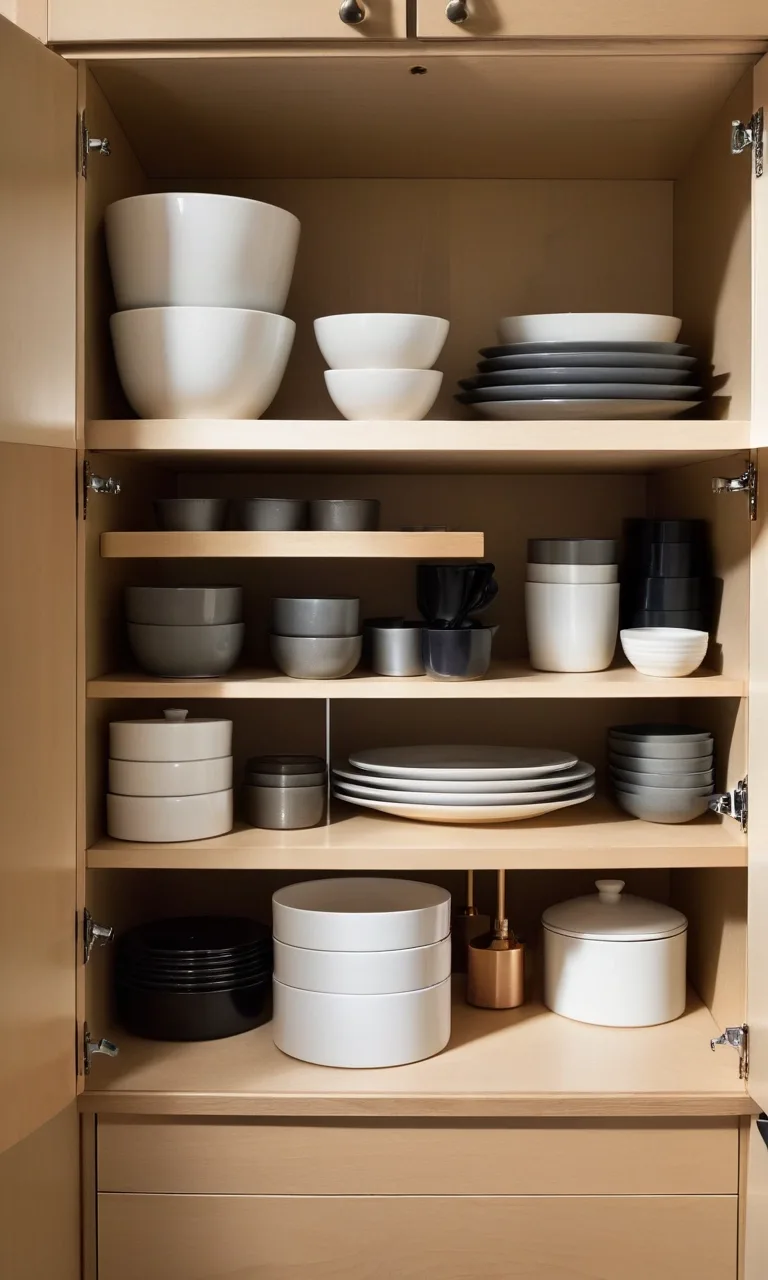
The cabinet beneath a sink can quickly become a catch-all for cleaning products, spare toiletries, sponges, and other household essentials. Plumbing makes the available space awkward, and items pushed toward the back often become difficult to reach. With a thoughtful storage system, however, even a small cabinet can become a practical and orderly part of your home.
The best approach is to choose organizers that fit around pipes, group similar items together, and make everyday supplies easy to access. You don't need a complete renovation or expensive storage furniture to achieve a noticeable improvement. A few well-chosen bins, drawers, or rotating trays can make the entire space easier to maintain.
Whether you're organizing a kitchen sink or a bathroom vanity, these 27 ideas offer different ways to use the available room efficiently while keeping essentials visible and accessible.
What Do You Call the Drawer Under the Sink?
The shallow compartment sometimes built into the front of a sink cabinet is commonly called a tip-out tray. Unlike a conventional drawer, it tilts outward to provide a small storage area for lightweight items such as sponges, sink stoppers, and scrub brushes.
Because the basin and plumbing occupy much of the cabinet's interior, this narrow compartment makes use of space that might otherwise remain empty. It's particularly convenient for items you reach for frequently but prefer to keep out of sight.
If your cabinet has a fixed decorative panel beneath the sink, a compatible tip-out tray kit may be an option. Before installing one, check the panel's construction and make sure the hardware won't interfere with the basin or plumbing. This small addition can improve convenience without taking away much-needed storage space below.
1. Stacked Clear Boxes for Cleaning Supplies
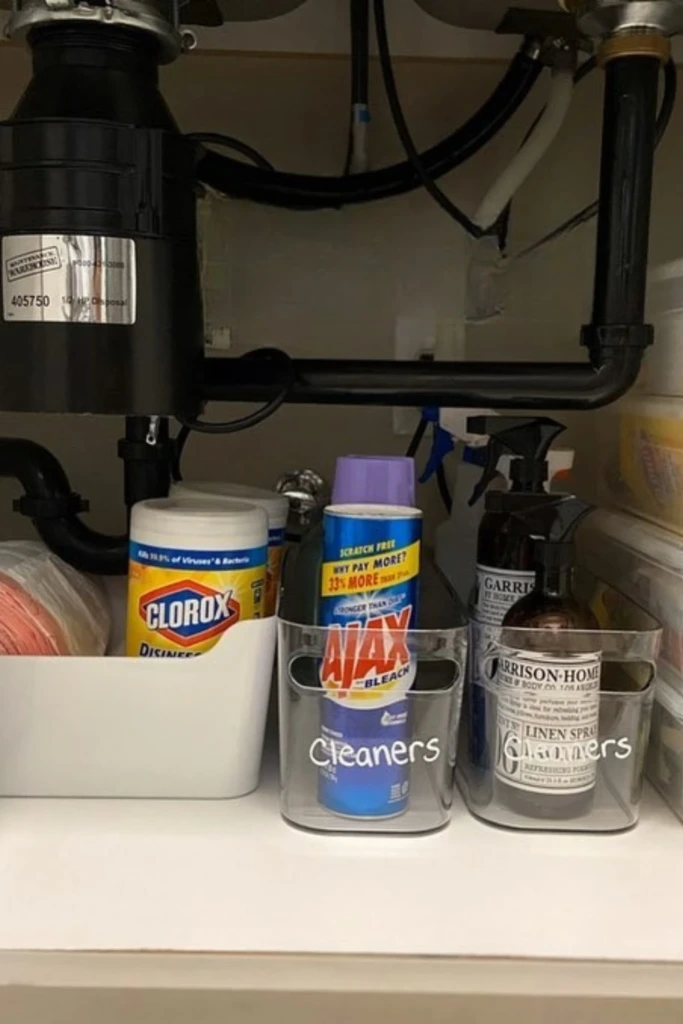
Stackable transparent containers are a practical way to divide a crowded cabinet into manageable sections. They allow you to use vertical space while keeping smaller products from disappearing behind larger bottles.
Assign each container a specific purpose, such as cleaning cloths, disposable gloves, sponges, or spare supplies. Clear sides make it easy to identify the contents, while labels help everyone in the household return items to the correct place.
Before stacking the boxes, check that the lower containers can support the weight above them and that frequently used products remain accessible. Leave enough room around plumbing and avoid placing containers where they could conceal a leak.
2. Labeled Clear Bins for Hair Tools
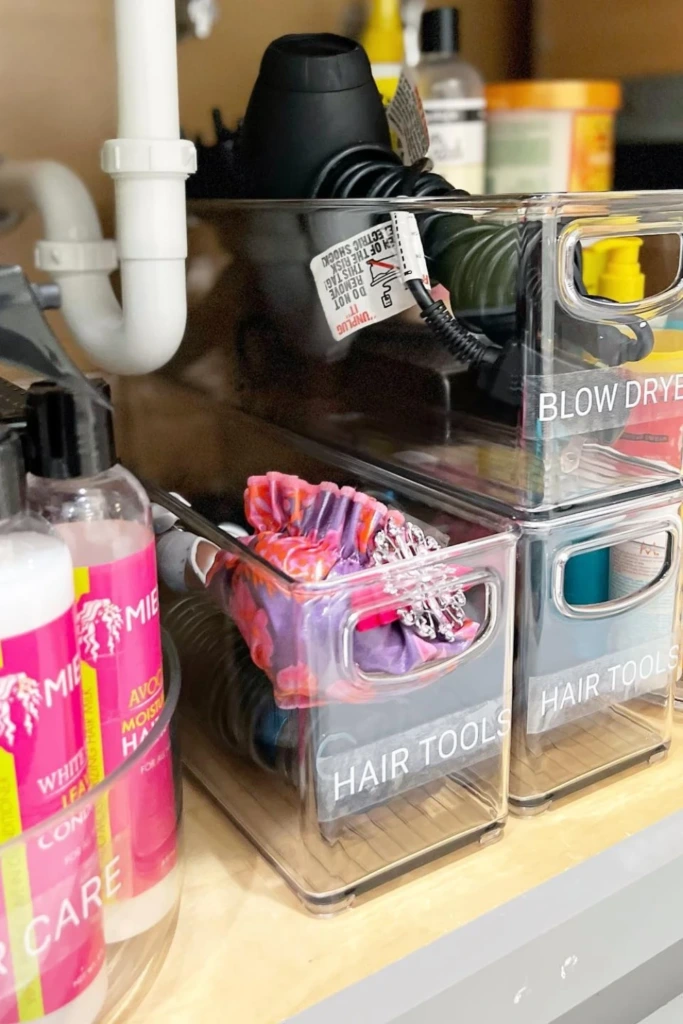
The cabinet beneath a bathroom sink can provide useful storage for hair dryers, straighteners, brushes, and styling products. Transparent bins help separate these items so that cords, accessories, and bottles don't become tangled together.
Create dedicated containers for electrical tools, hair accessories, and styling products. Use labels to identify each category and choose bins that accommodate the tools without forcing cords into tight spaces.
Always allow hot styling tools to cool completely before storing them. Keep electrical appliances away from damp areas and never place them inside a container while they are hot. If the cabinet has limited clearance, shallow bins may be more practical than deep, stacked containers.
3. Dual Lazy Susans for Cleaning Products
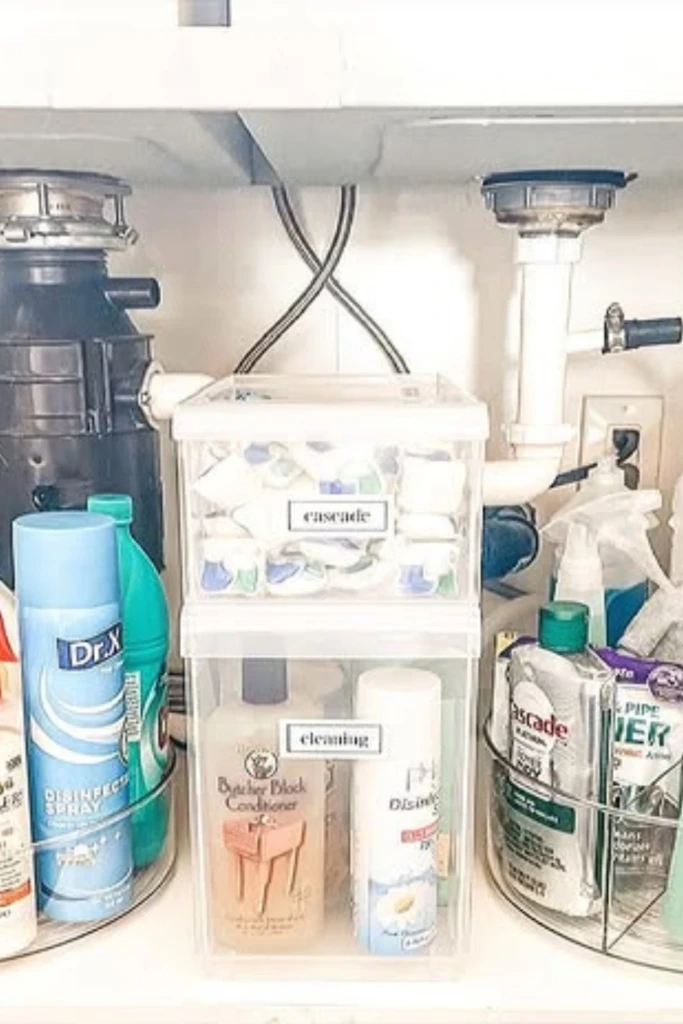
Two rotating trays can make a deep under-sink cabinet much easier to use. Instead of reaching behind a row of bottles, you can turn the tray to bring the product you need toward the front.
Use one turntable for frequently used sprays and another for refill bottles or smaller cleaning supplies. Choose trays with raised edges to help keep containers upright, and measure carefully to ensure the trays can rotate without striking pipes or cabinet walls.
Clear containers can hold smaller accessories such as brushes and sponges alongside the rotating organizers. Store heavier bottles securely and keep all cleaning products in their original, labeled containers. This arrangement works particularly well in cabinets with enough open floor space for the trays to turn freely.
4. White Bins with Wooden Handles
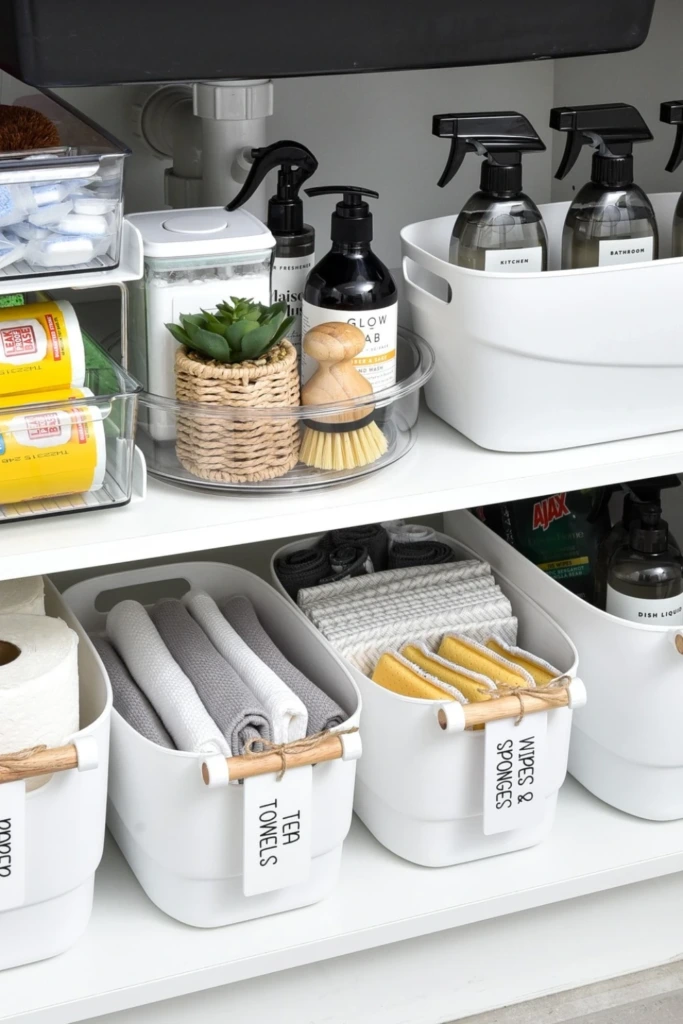
White storage bins paired with wooden handles or label tags create a coordinated look while keeping everyday supplies neatly separated. This option suits larger sink cabinets where several categories of household items need their own space.
Dedicate individual bins to dishcloths, cleaning sponges, spare towels, or paper products. The handles make containers easier to pull forward when something is stored at the back.
For the best results, select bins that fit comfortably beside the plumbing rather than filling every available inch. White containers can brighten a dark cabinet, while consistent labels make the arrangement easy to understand. If you store towels or other fabric items, keep them dry and away from any pipes that might develop condensation or leaks.
5. Mesh Drawers for Easy Access
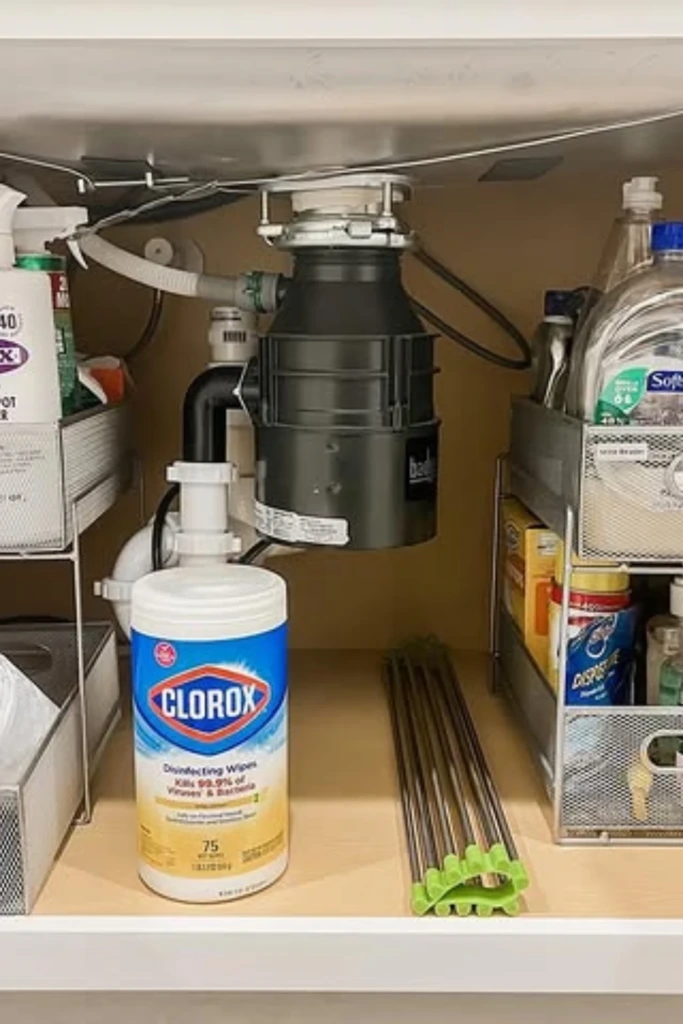
A two-tier mesh drawer unit creates separate storage levels without making the cabinet feel completely enclosed. The sliding drawers let you reach smaller supplies while keeping them contained.
Use the upper drawer for frequently needed cleaning cloths, wipes, or lightweight accessories. The lower drawer can hold backup supplies and other items you don't need every day.
Mesh construction allows air to circulate, which can be useful in a cabinet that occasionally feels stuffy. However, it won't prevent moisture damage on its own, so inspect the area regularly and address leaks promptly. Measure the space beneath the sink before buying a unit, paying particular attention to pipes, drain fittings, and any garbage disposal.
6. Color-Coded Bins for Bathroom Essentials
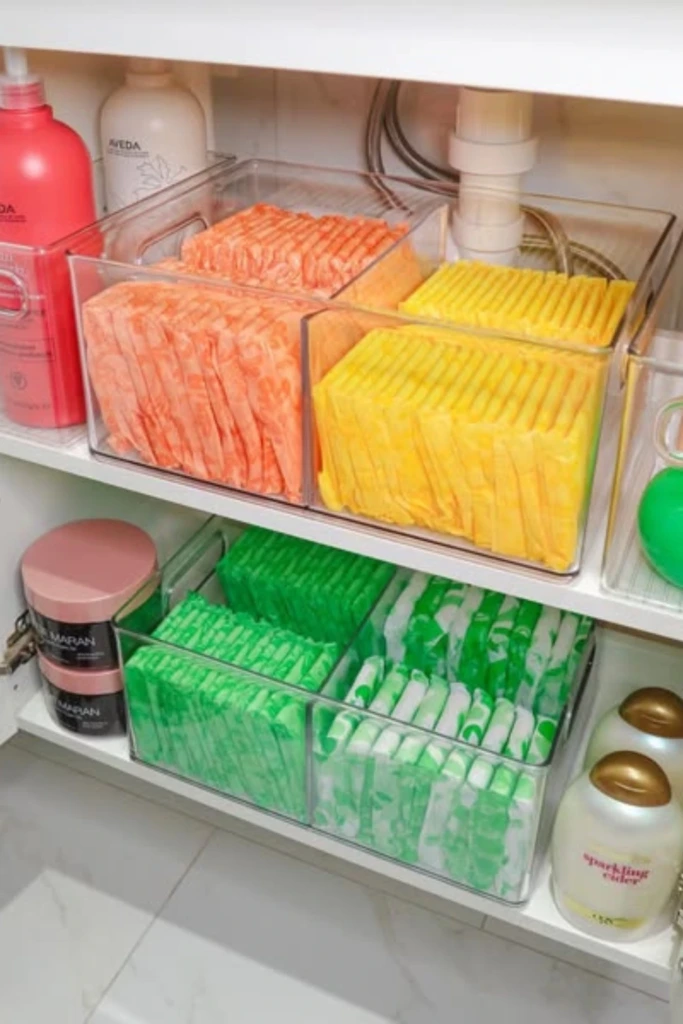
Color-coded containers can simplify bathroom storage, especially when several people share the same vanity. Giving each product category a consistent color makes it easier to find toiletries without opening every container.
For example, use one color for dental care, another for skincare, and a third for personal hygiene products. Transparent bins with colored handles or labels offer a similar benefit while keeping contents visible.
Arrange frequently used supplies toward the front and reserve the back of the cabinet for occasional-use items. If the bins will be shared by family members, choose a labeling system that everyone can understand. This approach is particularly useful for keeping small packages, replacement products, and daily essentials from becoming mixed together.
7. Rolling Two-Tier Cart for Cleaners
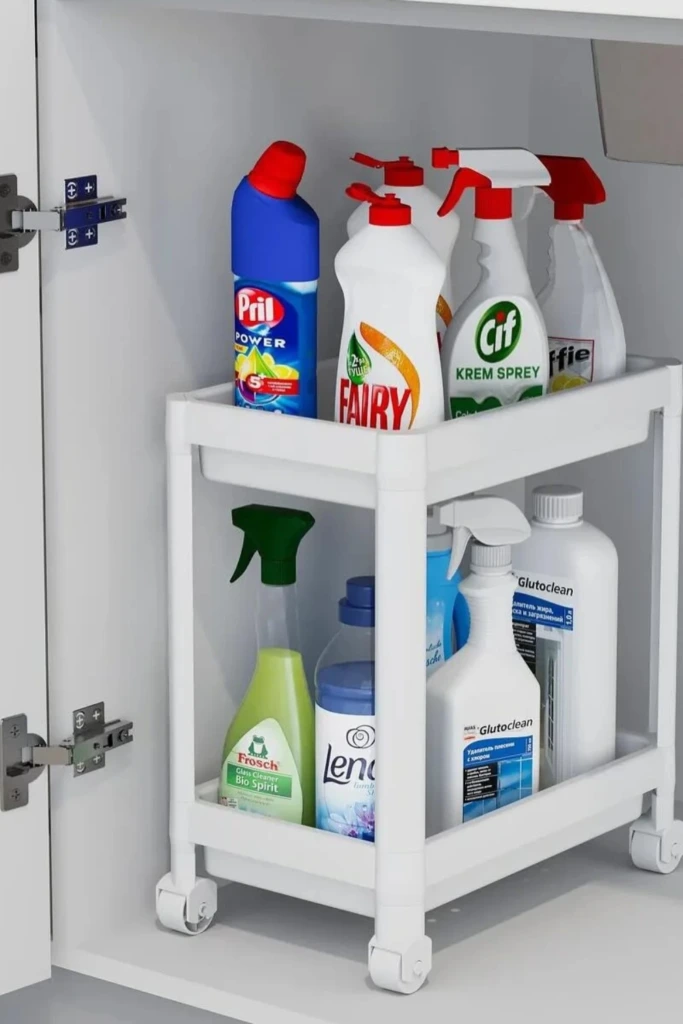
A compact rolling cart can turn an awkward under-sink cabinet into a flexible storage area. Its two levels separate products vertically, while the wheels allow you to pull the entire unit forward whenever you need something stored at the back.
Place frequently used sprays and lighter supplies on the upper shelf, with larger refill bottles on the lower level. A cart with a sturdy frame and raised edges can help prevent items from sliding off during movement.
Measure the cabinet's opening as well as its interior height and width. The cart must pass through the opening and move around the plumbing without getting stuck. Locking wheels are useful if the model offers them, particularly when storing heavier bottles.
8. Tiered Clear Drawers for Compact Storage
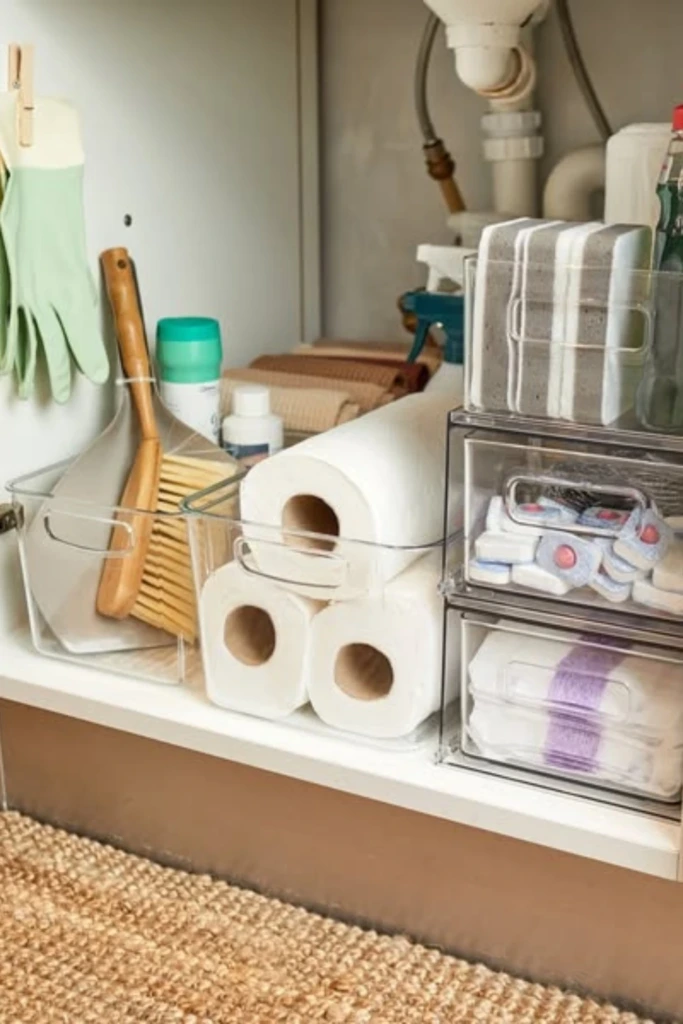
Transparent stacking drawers help organize small cabinets where floor space is limited. Instead of spreading everything across the bottom, you can create separate levels for dishwasher tablets, sponges, wipes, and other household necessities.
Choose drawer units that open fully without hitting pipes or the cabinet frame. Keep heavy items in the lowest drawers to improve stability, and avoid stacking more units than you can comfortably reach.
Small adhesive hooks attached to a suitable cabinet door can provide extra room for lightweight brushes or cleaning gloves. Before attaching hooks, check the door material and make sure the added storage won't prevent the door from closing. A combination of drawers and hooks can make a compact cabinet far more functional without requiring permanent alterations.
9. Mixed Baskets for Quick Sorting
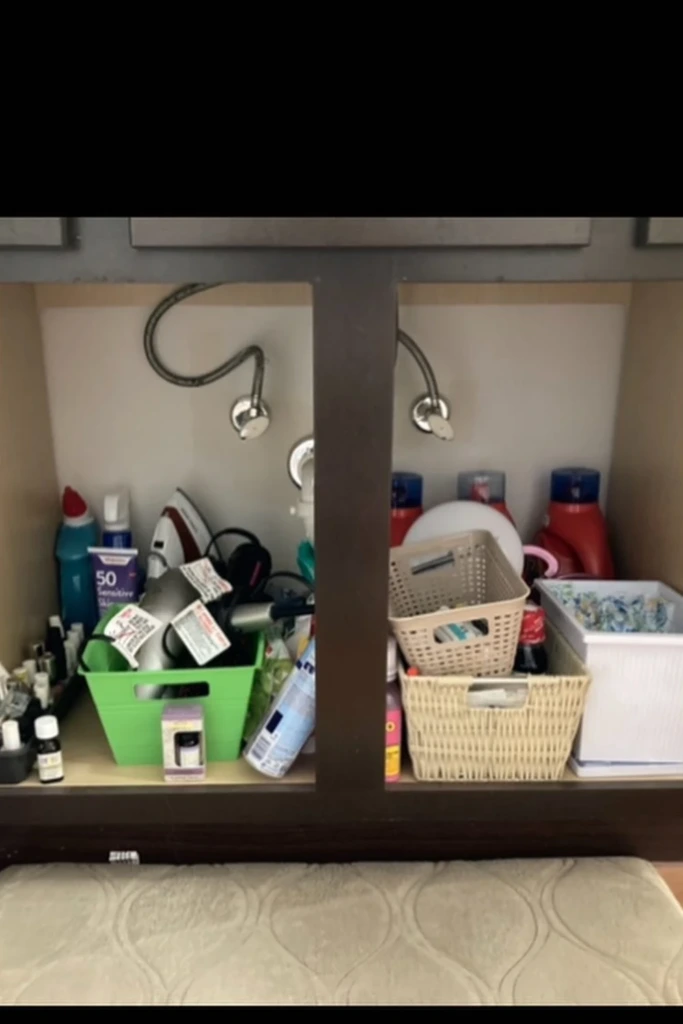
You don't need a matching set of containers to create an organized under-sink cabinet. Combining baskets of different sizes lets you work around unusual corners, pipes, and changes in cabinet depth.
Use small baskets for sponges, gloves, and scrubbers, while larger containers can hold cleaning products or refill supplies. Place items you use frequently near the front and reserve less accessible areas for products used only occasionally.
Open baskets are convenient because you can see their contents and lift them out when cleaning the cabinet. To keep the arrangement manageable, assign every basket a clear purpose rather than using it as a miscellaneous catch-all. A simple label on each container helps maintain the system over time.
10. Pull-Out Sliding Baskets for Heavy Bottles
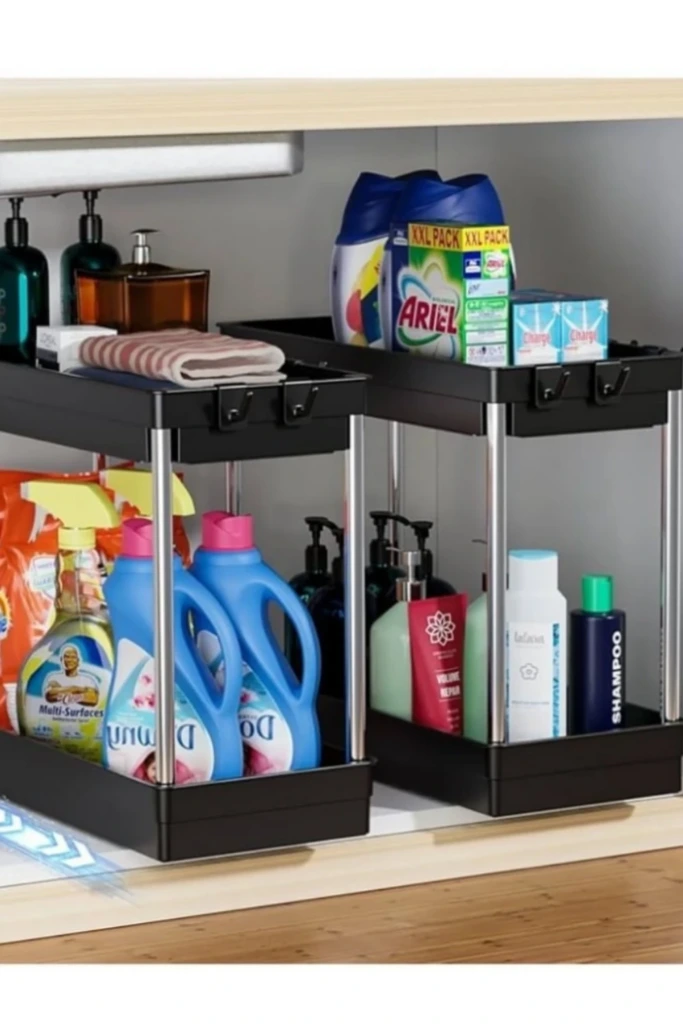
Sliding baskets are especially useful when large detergent bottles, bulk cleaners, or refill containers occupy the back of a cabinet. Rather than bending down and lifting several products out of the way, you can pull the storage unit toward you.
A two-level design provides room for different sizes of supplies. The lower basket can hold heavier bottles, while the upper section accommodates lighter products and smaller accessories.
Check the unit's weight capacity before loading it, and make sure its rails are compatible with the cabinet construction. Leave enough clearance for the baskets to extend without catching on pipes. Keep an eye on stored liquids and clean up spills immediately so residue doesn't collect around the sliding hardware.
11. Clear Turntable Beside Trash Bin
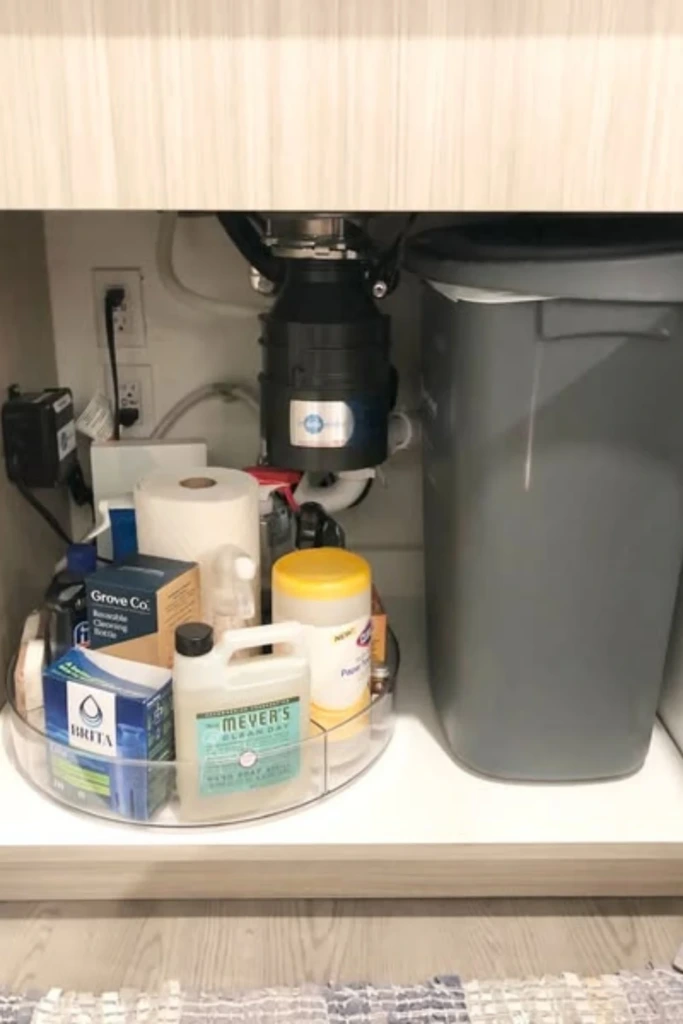
A transparent rotating tray can make efficient use of the narrow space beside a kitchen trash bin. It keeps everyday products grouped together while allowing you to reach items with a simple turn.
Store dish soap, cleaning sprays, and small surface-cleaning supplies on the tray, provided the products are suitable for the area. Raised edges help keep bottles stable as the tray rotates.
Choose a compact model that fits between the bin and the cabinet wall without obstructing access to either one. Avoid overloading the tray, and keep leaking or damaged containers out of the cabinet. This solution works best when the surrounding space remains clear enough for the tray to turn smoothly.
12. Chalk-Labeled White Bins
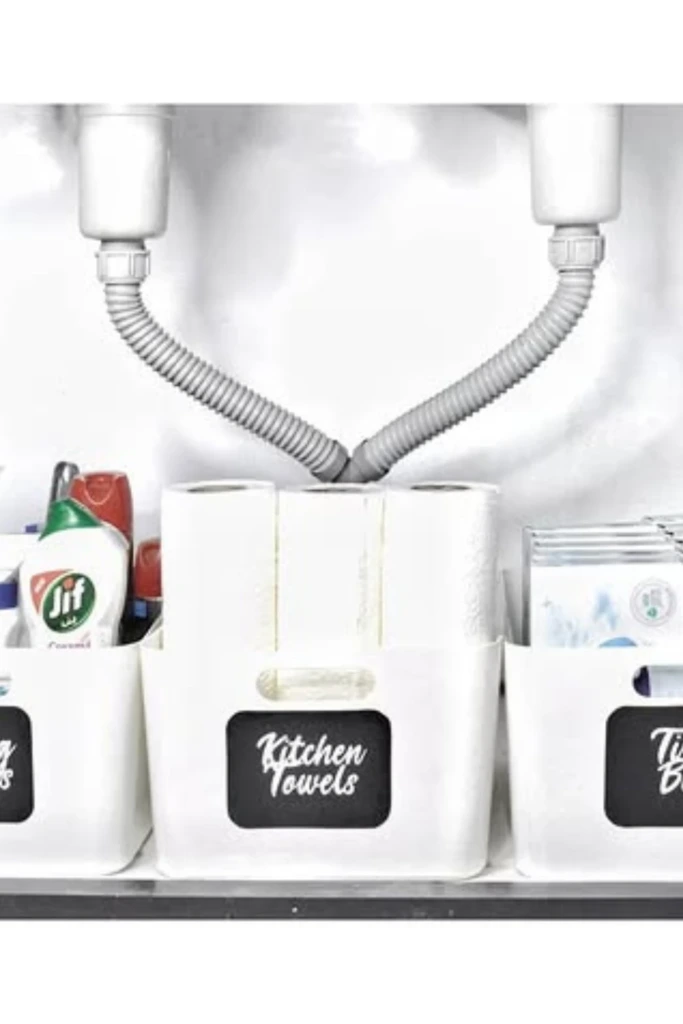
White bins with reusable chalk labels combine a simple appearance with flexible storage. You can quickly identify where cleaning products, dishcloths, tissues, and spare supplies belong without relying on memory.
The labels can be changed whenever your storage needs shift, making this option useful for households that regularly rotate products or reorganize their cabinets. Select bins with handles so you can remove them easily when cleaning or restocking.
If you use chalkboard-style labels, choose a surface that allows the writing to remain legible and can be wiped clean when necessary. White containers can make a dark cabinet easier to scan, but they still need occasional cleaning to remove dust, drips, and product residue.
13. Clear Drawers for Bathroom Essentials
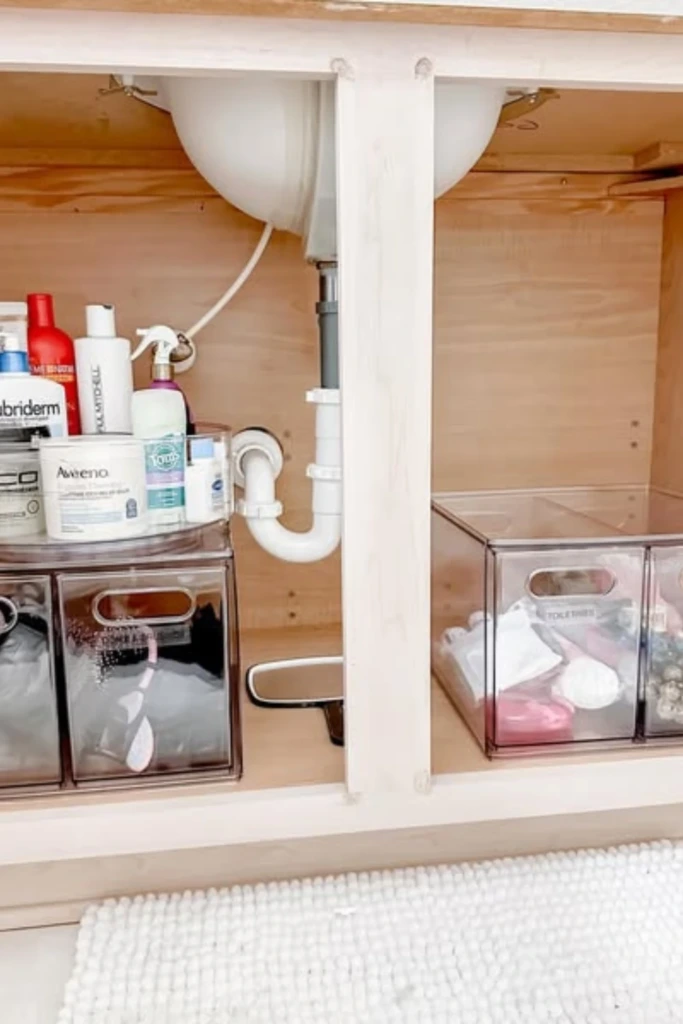
Transparent drawers offer an effective way to organize the small products that tend to accumulate beneath a bathroom sink. Lotions, skincare items, hair accessories, and spare toiletries can each have their own designated compartment.
Assign a separate drawer to each category and label the front if several drawers look alike. Shallow drawers work well for small accessories, while deeper sections can accommodate taller bottles and larger packages.
Place products you use every morning near the top, keeping occasional-use items on lower levels. Check that drawers can open fully without hitting the drainpipe or cabinet frame. Since bathrooms can be humid, make sure the storage area stays dry and avoid keeping moisture-sensitive products in damp conditions.
14. Wooden Drawer Unit with Hanging Rod
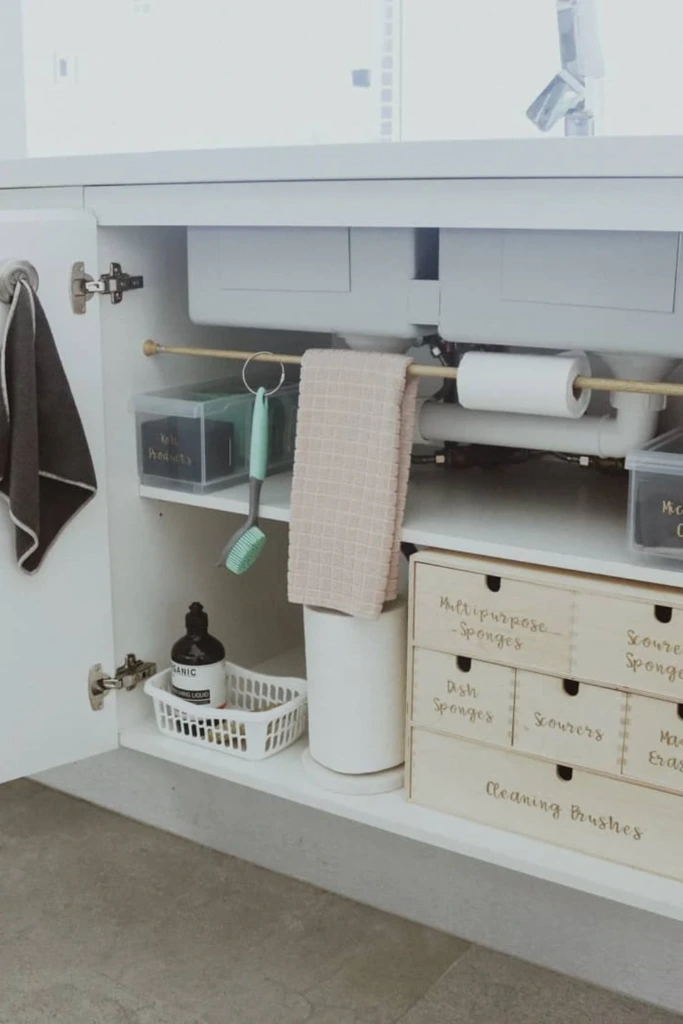
A small wooden drawer unit can introduce a more structured storage system while adding warmth to the cabinet interior. It is particularly appealing in bathrooms and kitchens with natural wood finishes or a minimalist design.
Use the drawers to separate brushes, sponges, cloths, and other small tools. If the unit includes a hanging rod, you may be able to use it for lightweight towels or cloths, provided there is enough clearance and the items can dry properly.
Measure the available height before purchasing the unit, since sink plumbing often limits the space for taller organizers. Protect the wood from standing water and excessive moisture, and choose a finish suitable for the cabinet's environment. Keeping wet cleaning supplies away from the wooden surfaces will help preserve their condition.
15. Full Drawer System with Clear Bins
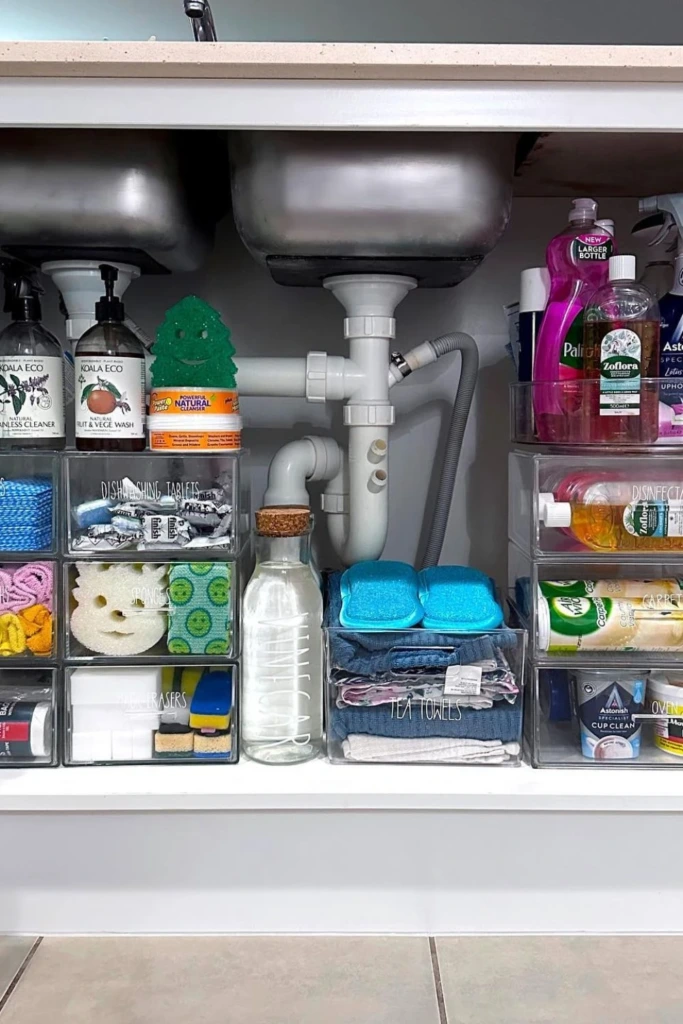
A complete drawer system can turn a large under-sink cabinet into several organized storage zones. Combining pull-out drawers with smaller transparent bins provides space for everything from cleaning cloths to refill packages.
Group similar products together and use labels to distinguish each section. Clear containers help you monitor supplies, while drawers make it easier to reach items that would otherwise sit behind the plumbing.
When planning a full system, consider the location of the drainpipe, water lines, and any disposal equipment. Leave enough room for maintenance access rather than filling the cabinet from wall to wall. A well-planned arrangement should make everyday storage convenient without preventing you from inspecting the plumbing when necessary.
16. White Bin Setup with Matching Labels
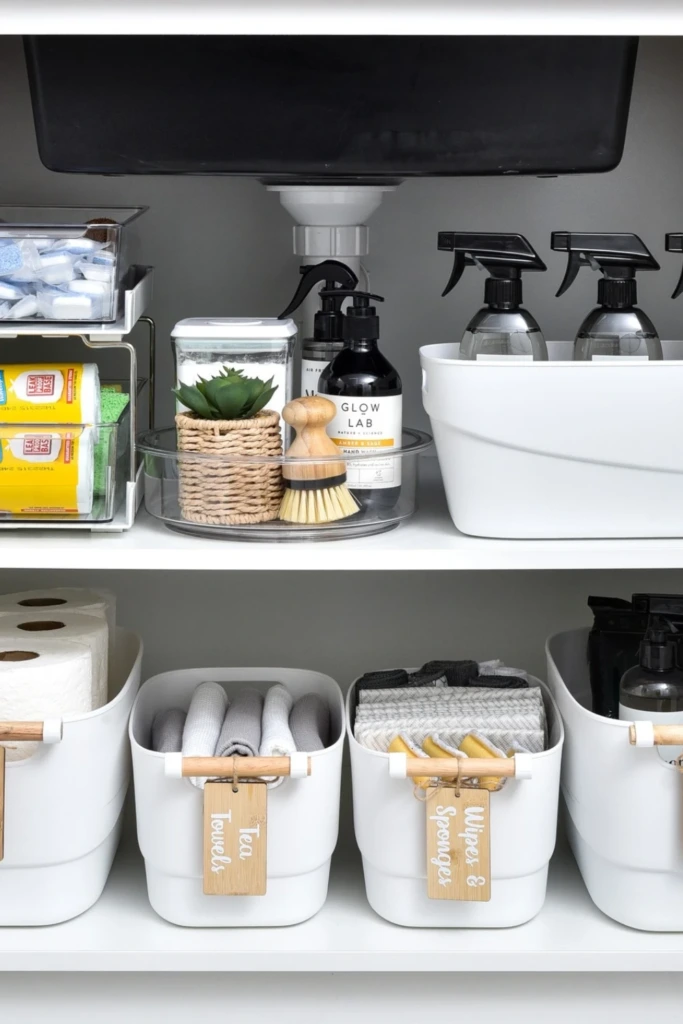
Uniform white bins with coordinated labels create a consistent look and help keep household essentials separated. This system is useful when you want the cabinet to look tidy without sacrificing practical storage.
Assign bins to categories such as cleaning cloths, paper products, dishwashing supplies, and spare accessories. Matching wooden or printed labels can make the arrangement feel cohesive while clearly identifying each container.
A small shelf or two-tier organizer can provide additional storage above the bins if the cabinet has sufficient clearance. Keep heavier items on the bottom and avoid placing containers where they could block pipes or valves. The most effective arrangement is one that looks orderly and allows every item to be returned to its proper place easily.
17. Tiered Turntable Setup for Daily Products
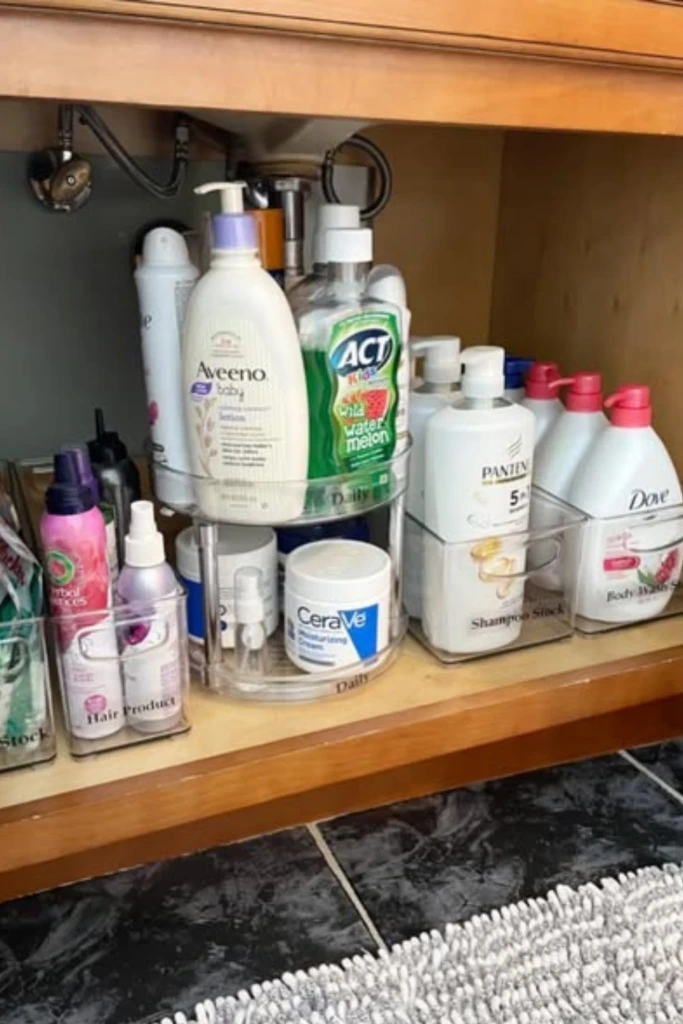
A two-level rotating organizer can keep frequently used products accessible without taking up the entire cabinet floor. The upper and lower tiers provide separate areas for different bottle sizes and product categories.
For bathroom storage, place everyday lotions, skincare products, or smaller toiletries on top and taller shampoo bottles or larger supplies below. In a kitchen, the same principle can be used for dishwashing products and cleaning accessories.
Choose a turntable with enough clearance for both levels to rotate freely. Raised edges are helpful for keeping containers upright, and a non-slip surface can improve stability. Avoid overcrowding the tiers, since tightly packed bottles may become difficult to remove or cause the tray to jam.
18. Dual Mesh Drawer Units for Bathroom Storage
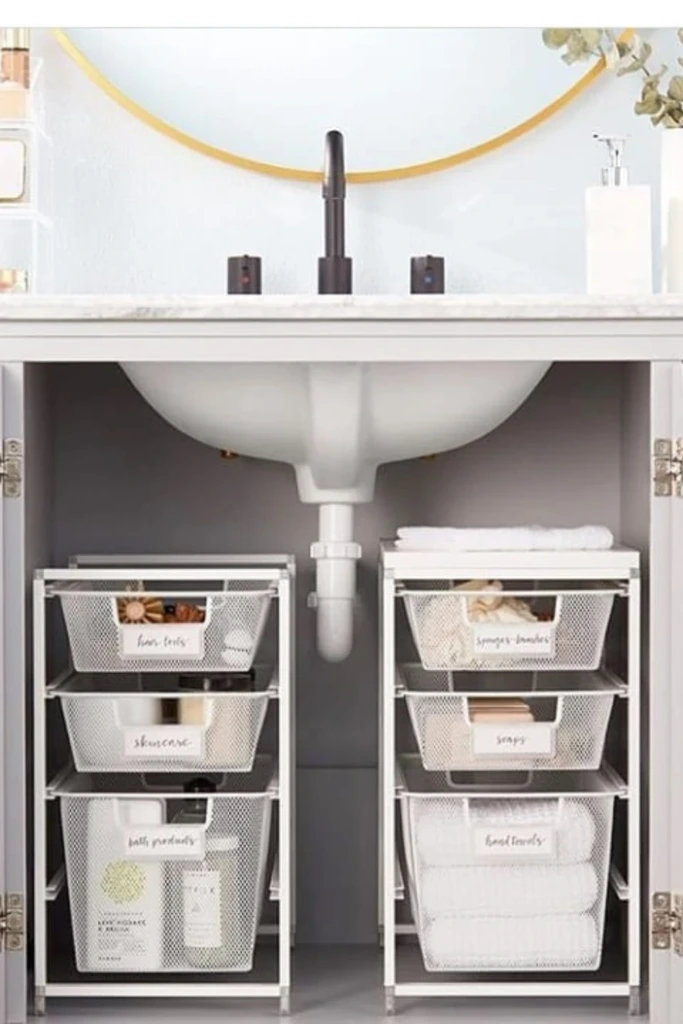
Two mesh drawer units can provide a useful combination of storage capacity and visibility beneath a bathroom vanity. The separate drawers help prevent toiletries, towels, and skincare products from becoming mixed together.
Use one unit for everyday essentials and the other for backup supplies or less frequently used items. Labeling each drawer makes the arrangement easier to maintain, particularly in a shared bathroom.
Measure the cabinet carefully before installing two units side by side. Pipes and fittings may require you to position the drawers toward the outer edges or choose narrower models. Although mesh drawers allow airflow, keep folded towels and other absorbent materials dry before storing them to prevent unpleasant odors and moisture-related problems.
19. Compact Trio Storage Setup
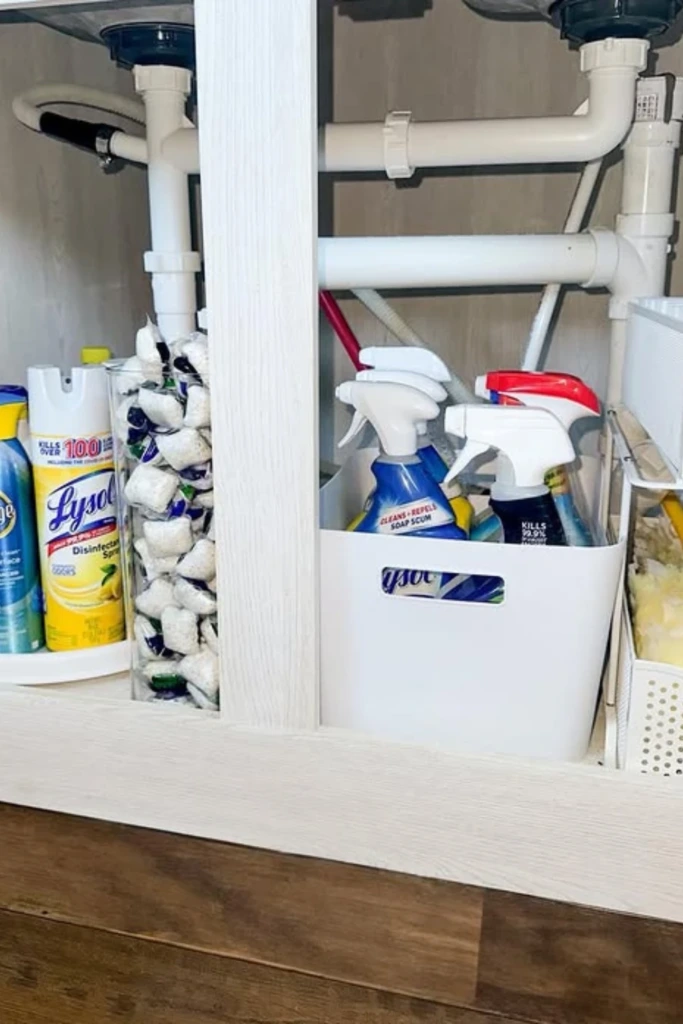
Dividing the cabinet into three functional zones can make a small space easier to manage. A rotating tray, a dedicated bin, and a pull-out basket provide different storage options without requiring a large organizer system.
Use the turntable for bottles you reach for regularly, the bin for smaller cleaning accessories, and the pull-out basket for refills or heavier products. This arrangement is especially useful when pipes run through the middle of the cabinet and prevent you from placing one large container in the center.
Select containers that fit around the plumbing rather than forcing them into narrow gaps. Keep bottles upright and leave enough space to remove individual items comfortably. A simple three-zone layout often works better than filling every corner with separate organizers.
20. Labeled Cleaning Bins with Clear Stackable Storage
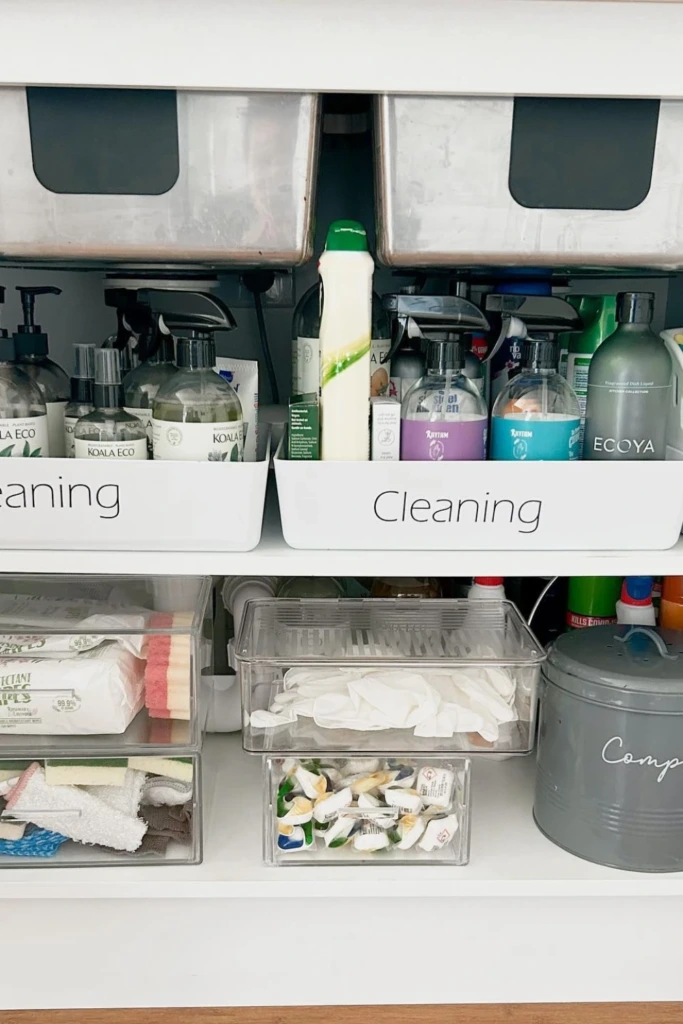
Combining labeled bins with transparent drawers allows you to store both large bottles and small accessories in one organized area. Each container has a defined purpose, reducing the chance that frequently used supplies will become buried beneath backups.
Use open bins for spray bottles and taller products, while drawers can hold dishwasher tablets, sponges, gloves, and replacement supplies. Labels make the categories obvious, and clear sides help you see when something needs replenishing.
Choose a stackable arrangement that remains stable when drawers are opened. Place heavier products toward the bottom and avoid storing liquids directly above items that could be damaged by a spill. Leave enough room to inspect the cabinet floor and plumbing regularly.
21. Dual Lazy Susans for Toiletries
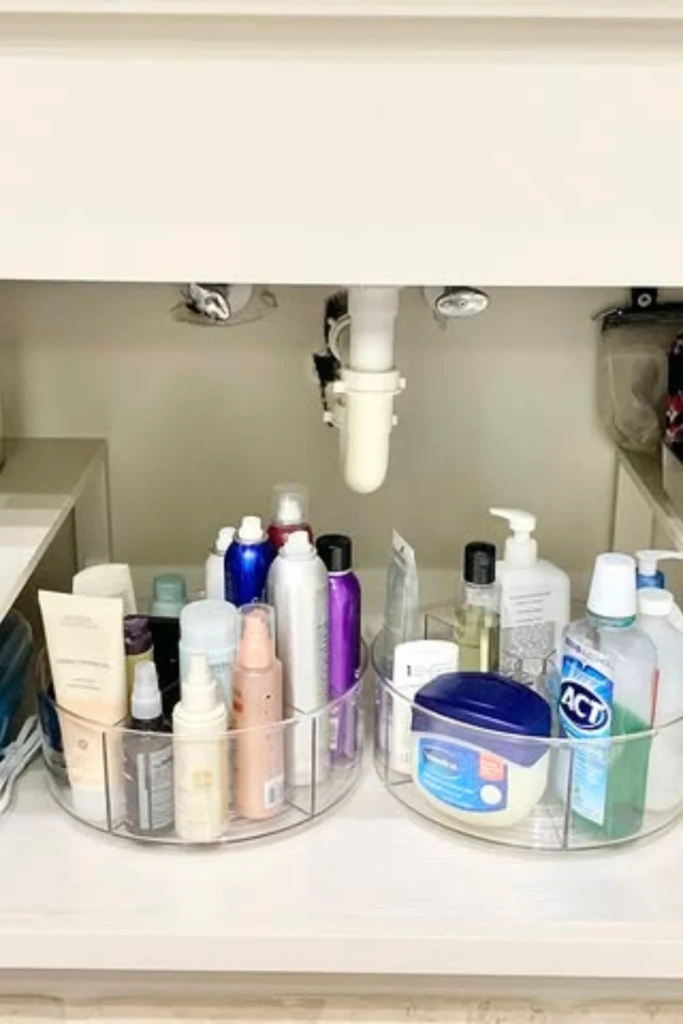
Two rotating organizers can make toiletries easier to access beneath a bathroom sink, particularly when several tall bottles share a limited space. Their circular design allows products at the back to move into view without requiring you to remove everything in front.
Use one tray for daily skincare and hair products, and reserve the second for backup toiletries or less frequently used items. A transparent model makes it easy to identify contents, while raised sides help keep containers from sliding off.
Measure around the drainpipe and other fittings before selecting the trays. Make sure both turntables can rotate independently and that taller bottles won't collide with the cabinet top. Keeping similar products together also makes it easier to check expiration dates and identify items you no longer need.
22. Two-Tier Pull-Out Rack for Tight Spaces
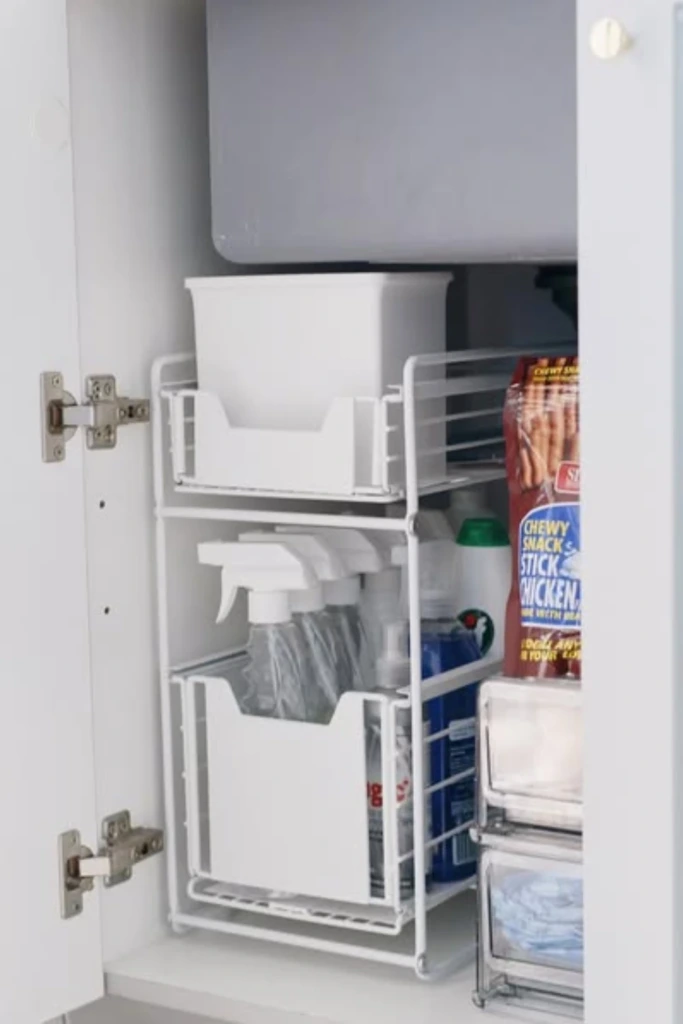
A narrow pull-out rack is a useful option for cabinets where the plumbing leaves only a slim strip of available space. Its vertical design creates two storage levels without requiring a wide footprint.
Place smaller spray bottles or cleaning accessories on the upper level and heavier products on the lower shelf. Pull-out access helps you reach items stored near the back, which is particularly helpful in deep cabinets.
Before buying a rack, measure the narrowest point between the pipes, cabinet wall, and other obstructions. Confirm that the rack can slide in and out without catching on fittings. If you need additional storage, a small drawer unit may fit beside it, provided both organizers can operate independently.
23. Door-Mounted Holders with Turntable Setup
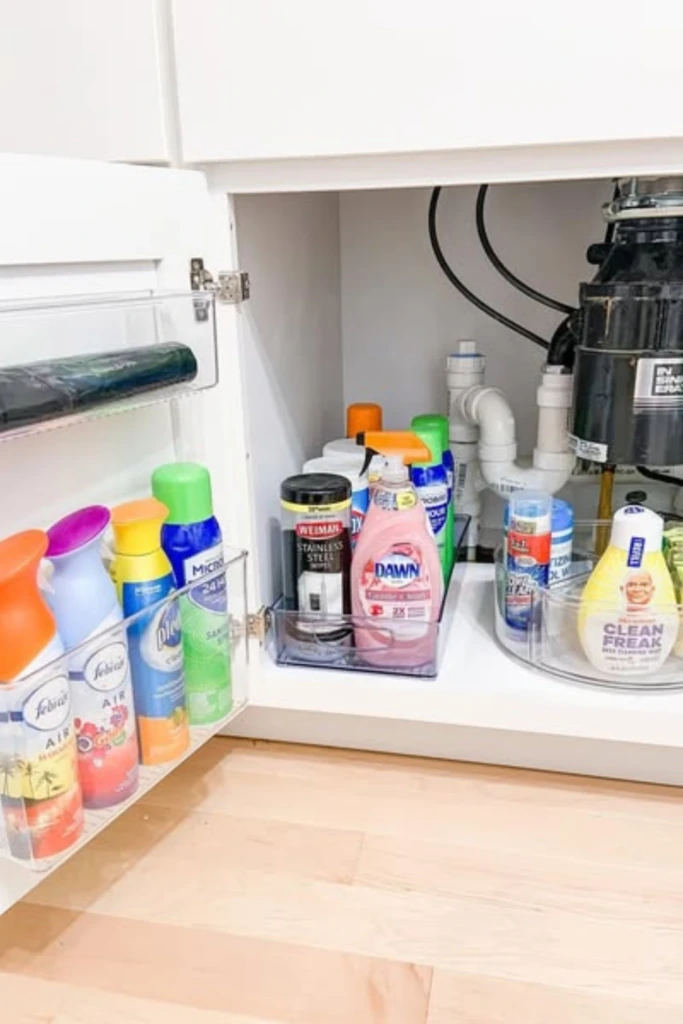
The inside of a cabinet door can provide extra storage for lightweight supplies, freeing the main cabinet floor for larger containers. Small holders or suitable over-door organizers can keep cleaning cloths, brushes, and other accessories within easy reach.
Pair the door storage with a rotating tray inside the cabinet for products that are easier to store upright. The turntable makes bottles accessible, while the door-mounted holders use an otherwise overlooked surface.
Check the door's construction and available clearance before installing anything. The added weight should not strain the hinges, and stored items must not collide with pipes when the door closes. Use secure holders for lightweight products and avoid hanging heavy chemical bottles where they could fall.
24. Modular Clear Drawer Stack
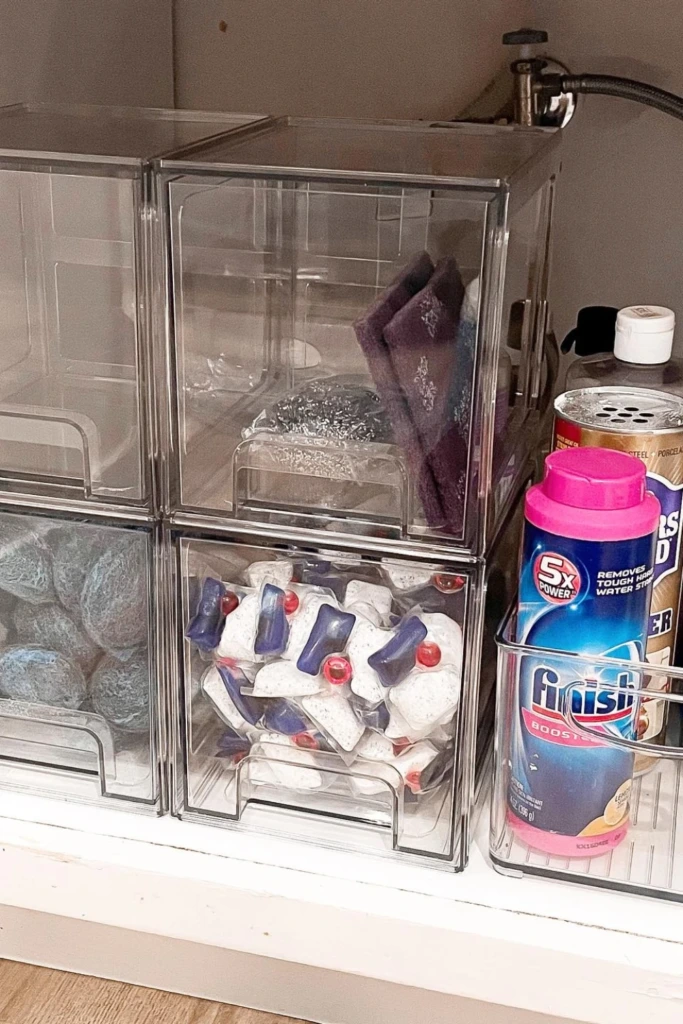
Modular transparent drawers allow you to customize under-sink storage according to the supplies you actually own. Individual units can be stacked or arranged side by side, making them suitable for cabinets with unusual dimensions.
Use separate drawers for cleaning tablets, scrubbers, sponges, and small refill packages. Taller bottles can remain in an adjacent bin, keeping the drawers from becoming overcrowded.
The main advantage of a modular setup is flexibility. You can rearrange the units when your needs change or remove a single drawer for cleaning. Choose sturdy containers that stack securely, and keep the overall height low enough to clear the sink basin and plumbing. Avoid putting heavy products in lightweight drawers that aren't designed to support them.
25. Mixed Wood and White Bin Setup
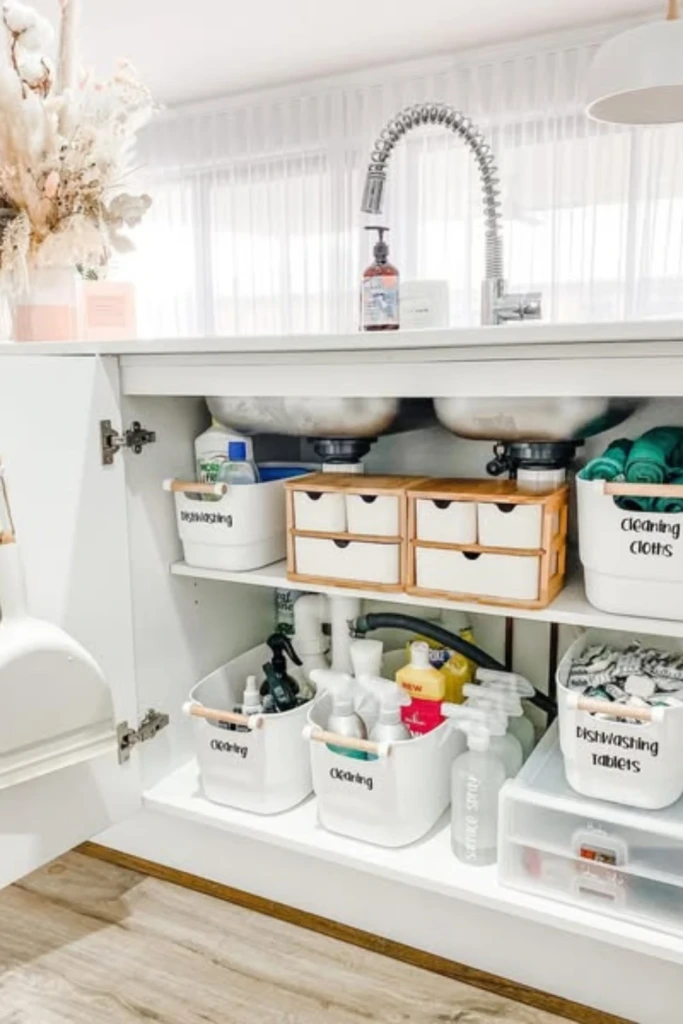
Combining wooden drawers with white storage bins creates a balanced arrangement that feels both practical and visually coordinated. The bins keep larger categories together, while drawers provide a contained place for smaller tools and replacement supplies.
Use labeled containers for cleaning cloths, sprays, sponges, and other frequently used products. Small drawers can hold accessories that would otherwise become scattered across the cabinet floor.
This combination suits homes with neutral colors, natural finishes, or simple contemporary interiors. To maintain the setup, wipe down containers periodically and ensure the wooden components remain protected from moisture. Select pieces that fit the actual cabinet dimensions rather than choosing organizers solely for their appearance.
26. Labeled Acrylic Bins for Beauty Products
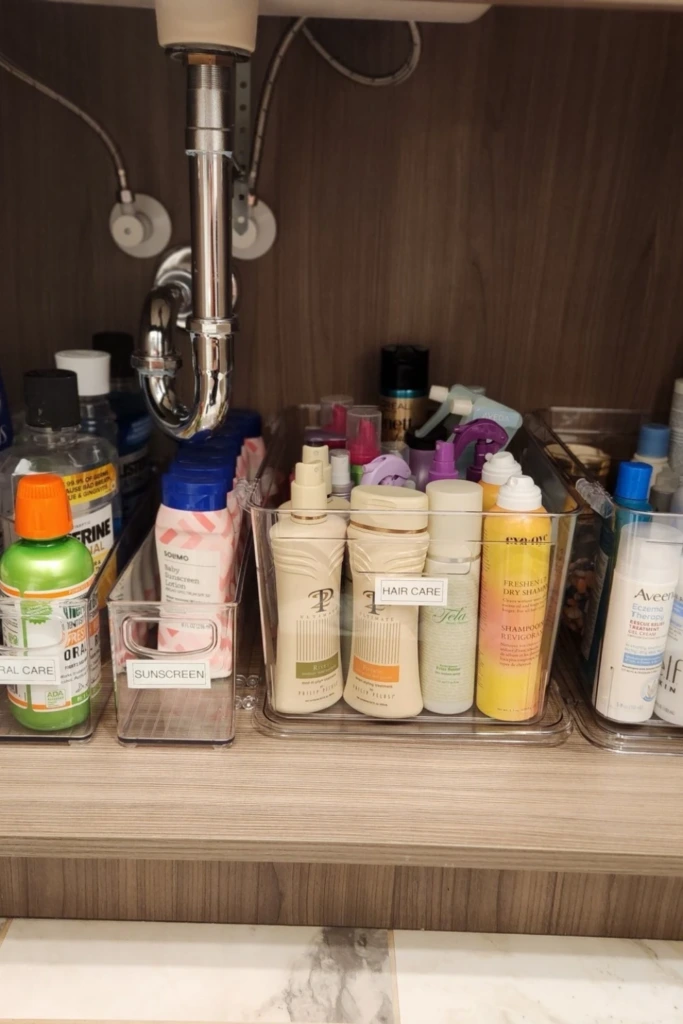
Acrylic organizers are well suited to bathroom cabinets because their transparent walls make small products easy to identify. Labels help distinguish skincare, dental care, hair accessories, and other personal-care categories.
Use separate containers for everyday essentials and unopened replacements. Smaller acrylic bins can keep items such as floss, cotton pads, and travel-size toiletries from getting lost among larger bottles.
Choose bins with enough room to remove products without squeezing them together. If you stack containers, make sure the arrangement is stable and that the lower bins remain accessible. Keep cosmetics and toiletries away from leaks and excessive humidity, and clean the organizers regularly to prevent residue from building up.
27. Compact Drawer Towers for Bathroom Storage
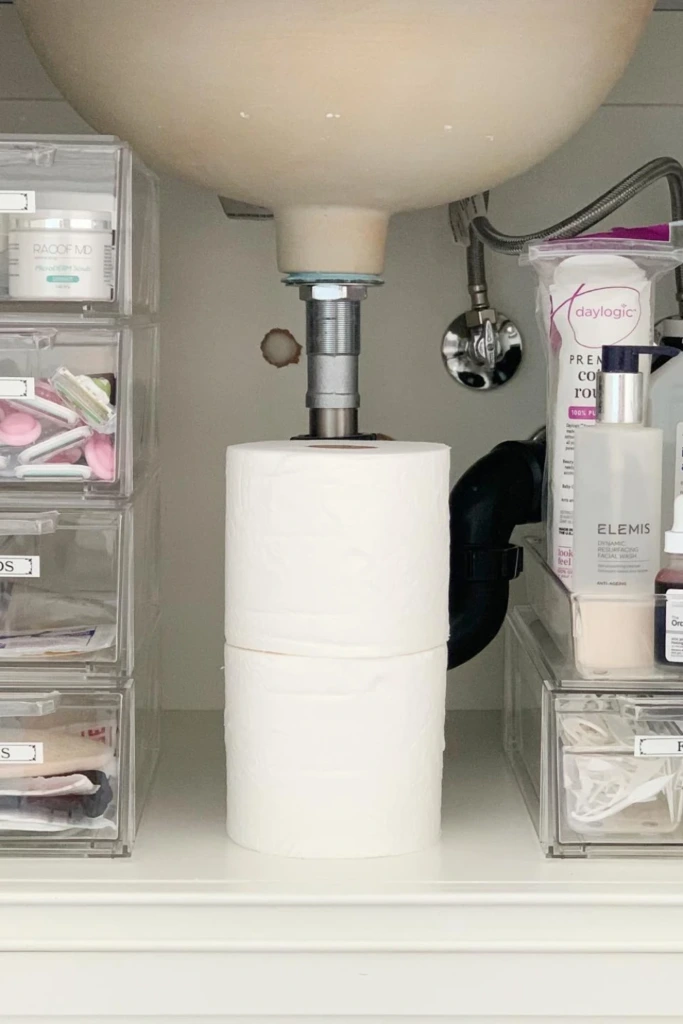
A compact tower of drawers can make vertical use of the limited space beneath a bathroom sink. It provides several distinct compartments for personal-care products while keeping the cabinet floor relatively clear.
Use individual drawers for first-aid supplies, dental accessories, hair products, or spare toiletries. Labels on the drawer fronts make each category easy to identify, and the stacked arrangement can reduce the need for multiple loose containers.
Before choosing a tower, measure the space around the drain and supply lines. Ensure that the drawers open freely and that the unit remains stable when fully loaded. Keep first-aid products in their original packaging and store medicines according to their label instructions rather than placing them in a warm or humid cabinet automatically.
What are the different types of sink organizers?
Sink organizers come in several styles, each designed for a different storage challenge. Pull-out drawers and sliding baskets make products at the back of a cabinet easier to reach, while two-tier shelves create additional room vertically.
Other options include rotating trays for bottles, narrow racks for tight spaces, door-mounted holders for lightweight accessories, and stackable bins for small supplies. U-shaped organizers are designed to fit around certain plumbing layouts, although you should verify their dimensions and compatibility before buying one.
The right choice depends on the size of your cabinet, the position of the pipes, and the items you plan to store. A combination of two or three complementary organizers may be more useful than one large unit that doesn't fit the available space.
How to organize under the sink cupboard?
Start by removing everything from the cabinet so you can clean the surfaces and assess the available room. Discard empty packaging, dispose of unwanted products responsibly, and check stored items for leaks or damage.
Measure the cabinet's width, depth, and height, paying special attention to drainpipes, water lines, valves, and any garbage disposal. Group the remaining supplies by purpose, separating cleaning products from personal-care items and keeping frequently used essentials near the front.
Choose clear bins, labeled drawers, or pull-out organizers that fit around the plumbing. Store heavier bottles on stable lower shelves, secure small accessories in separate containers, and leave access to important fittings. A waterproof cabinet liner or drip tray can help contain minor spills, but it should never replace checking for leaks.
Finally, establish a simple routine: return products to their assigned places after use, remove empty containers, and review the cabinet occasionally to prevent clutter from accumulating again.