21 DIY Pantry Shelving Ideas for 2026
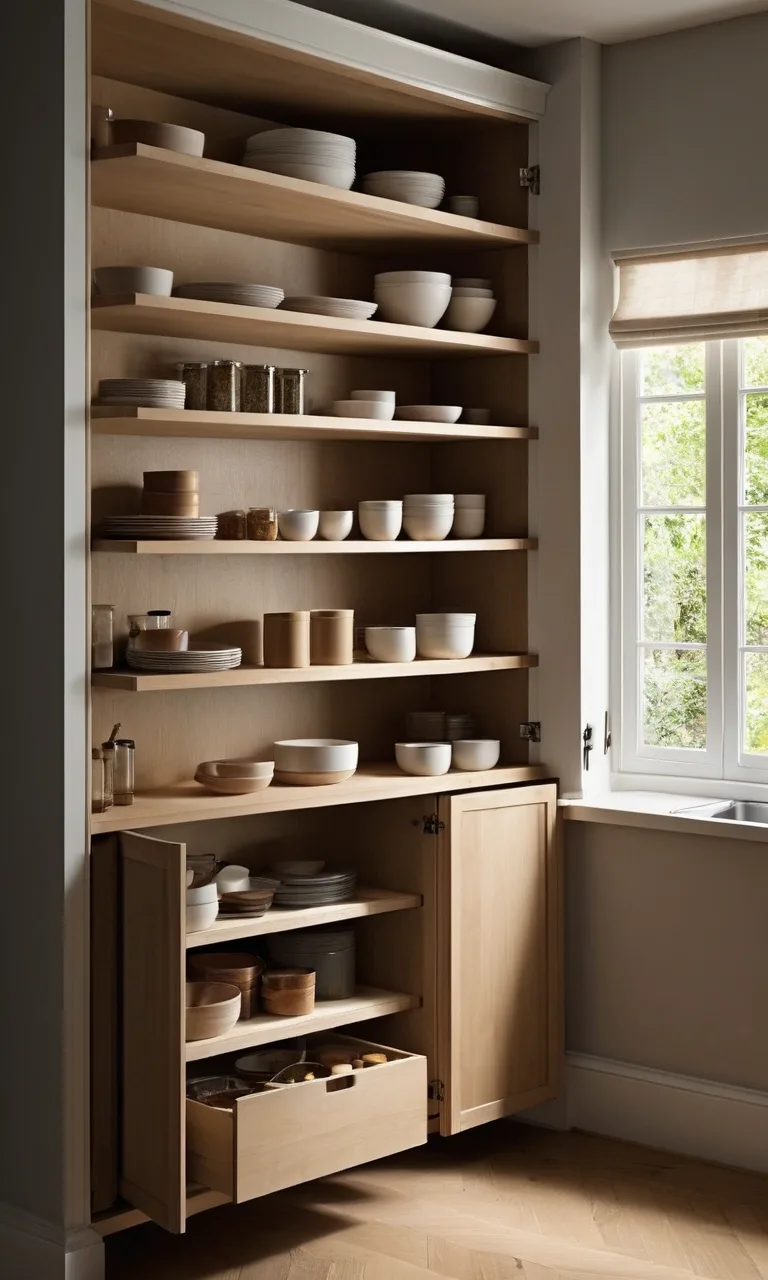
A well-organized pantry can make everyday cooking easier, reduce food waste, and help you get more value from your available storage space. The right shelving system keeps ingredients visible, makes room for bulky packages, and gives even a small kitchen a more orderly appearance.
Building your own pantry shelves lets you choose the dimensions, materials, and layout that suit your household. From simple wooden boards to pull-out drawers and adjustable wire racks, there are plenty of ways to create practical storage without investing in an entirely new kitchen.
The key is to select a design that matches your pantry's dimensions and the weight of the items you plan to store. With thoughtful planning, durable materials, and a few finishing touches, you can create a pantry that looks attractive and works efficiently.
What are pantry shelves made of?
Pantry shelving can be constructed from plywood, solid wood, laminated particleboard, metal, or wire. Each material has advantages, depending on your budget, preferred appearance, and storage requirements.
Plywood is a popular DIY option because it offers good strength when appropriately supported. Solid wood provides a natural finish and can be sanded or stained, while laminated boards create a smooth surface that's relatively easy to clean. Metal shelving is useful when adjustability and straightforward installation are priorities.
Before choosing a material, consider shelf depth, unsupported span, moisture exposure, and the weight of canned goods, appliances, or bulk ingredients. Thick boards alone do not guarantee strength; suitable brackets, cleats, fasteners, and wall anchoring matter just as much.
For a balanced combination of appearance and practicality, wooden shelves with adjustable supports are an excellent starting point. Wire racks are particularly convenient for renters or anyone who prefers a system that can be rearranged as storage needs change.
1. Bracketed Wood Shelves
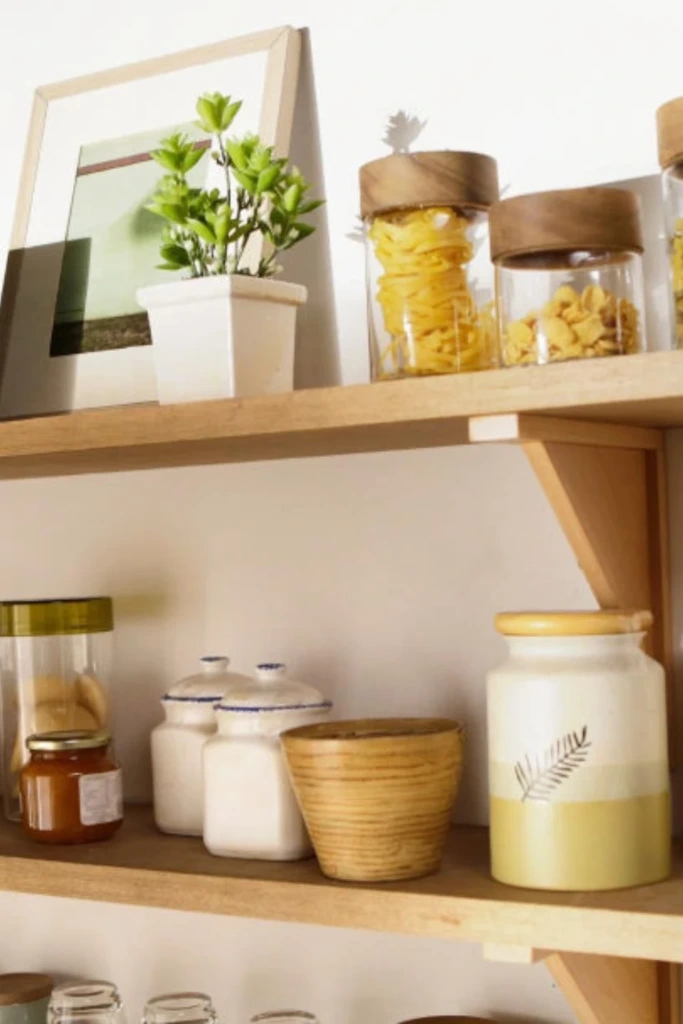
Wooden shelves mounted on brackets offer a straightforward way to improve pantry storage without building a complete cabinet system. They work well in compact cupboards, larger walk-in pantries, and unused kitchen wall spaces.
Measure the wall carefully, cut plywood or solid wood to the desired dimensions, and install appropriately rated brackets into wall studs wherever possible. The number and spacing of supports should reflect the shelf length and expected load.
For a finished appearance, sand the edges and apply a suitable paint, stain, or protective coating. Keeping the shelves relatively shallow can make ingredients easier to reach, while under-shelf LED lighting helps illuminate jars and containers on lower levels.
2. Full-Wall Pantry Units
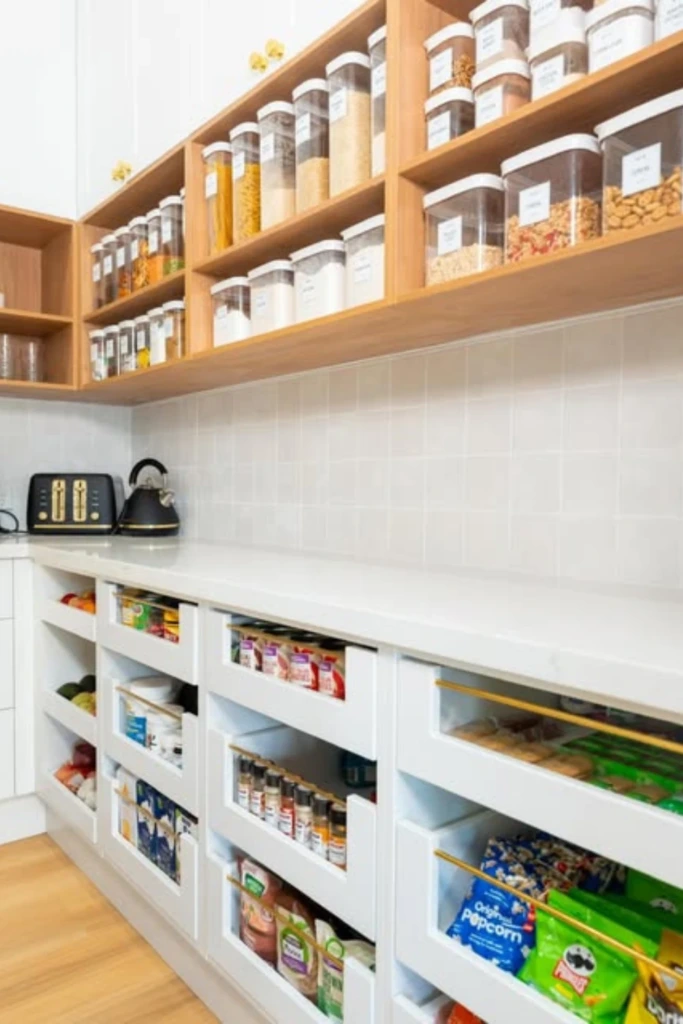
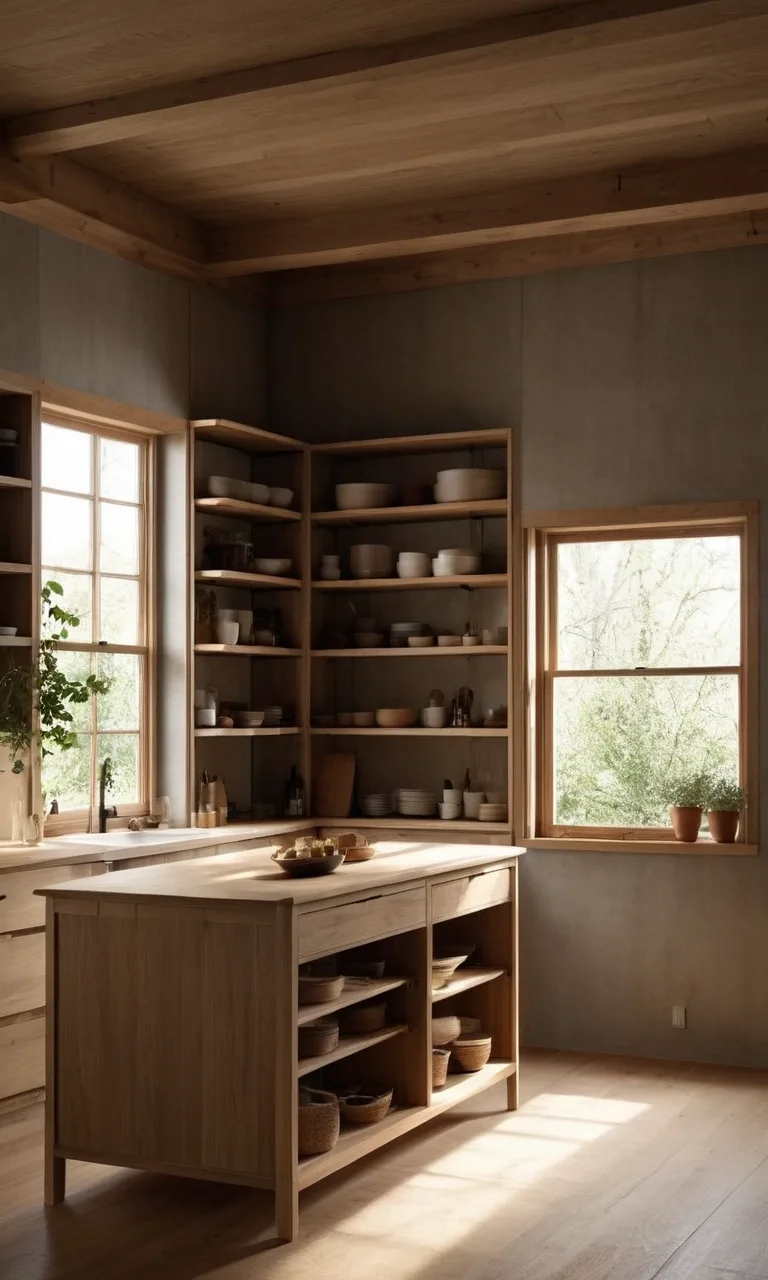
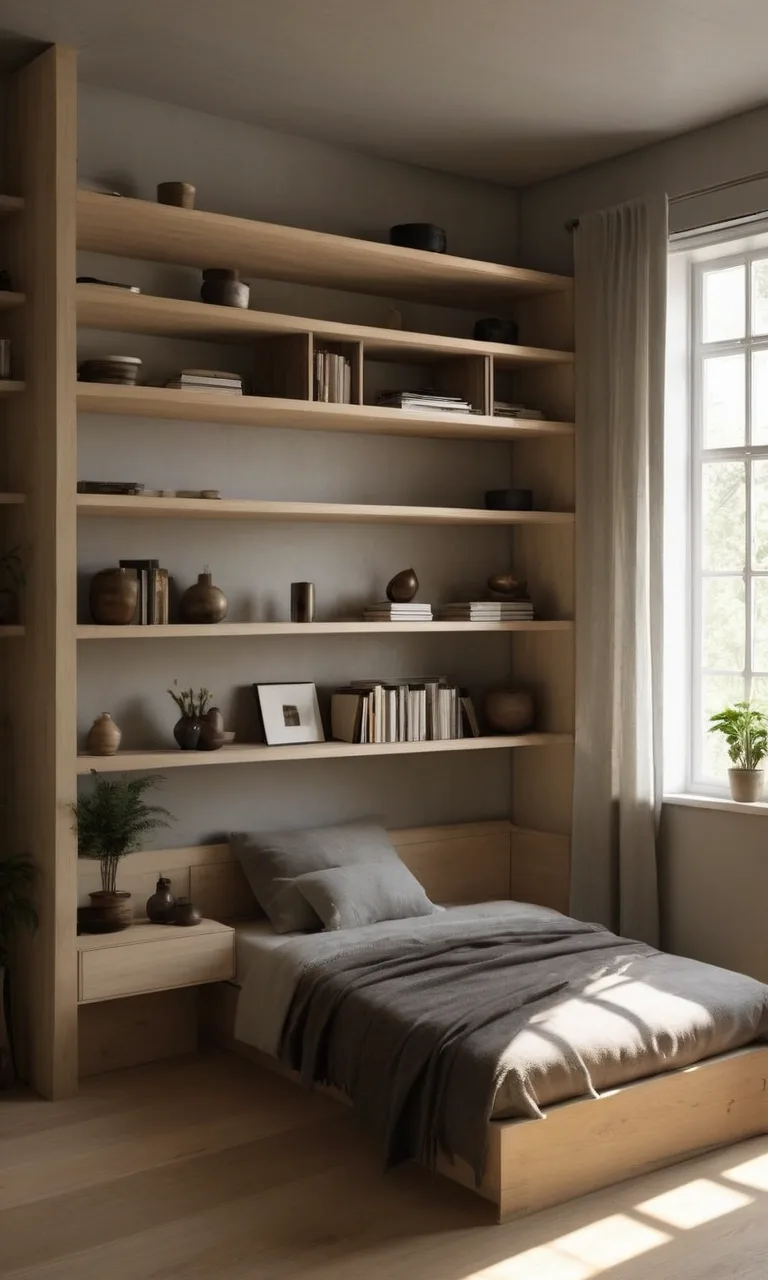
A full-wall shelving unit transforms an otherwise unused wall into a dedicated storage area. This layout is especially useful for households that purchase groceries in bulk or need separate spaces for baking supplies, snacks, cookware, and dry ingredients.
Create a combination of shelf sizes rather than making every level identical. Deeper lower sections can accommodate large containers and baskets, while narrower upper shelves work well for spices, jars, and smaller packages.
You can also incorporate drawers or pull-out baskets near the bottom to keep heavy items accessible. Plan the arrangement around the products you use most often, and leave enough clearance for doors, appliances, and comfortable movement.
Consistent shelf finishes and integrated lighting can make a large storage wall feel intentional rather than cluttered.
3. Curved Corner Shelves
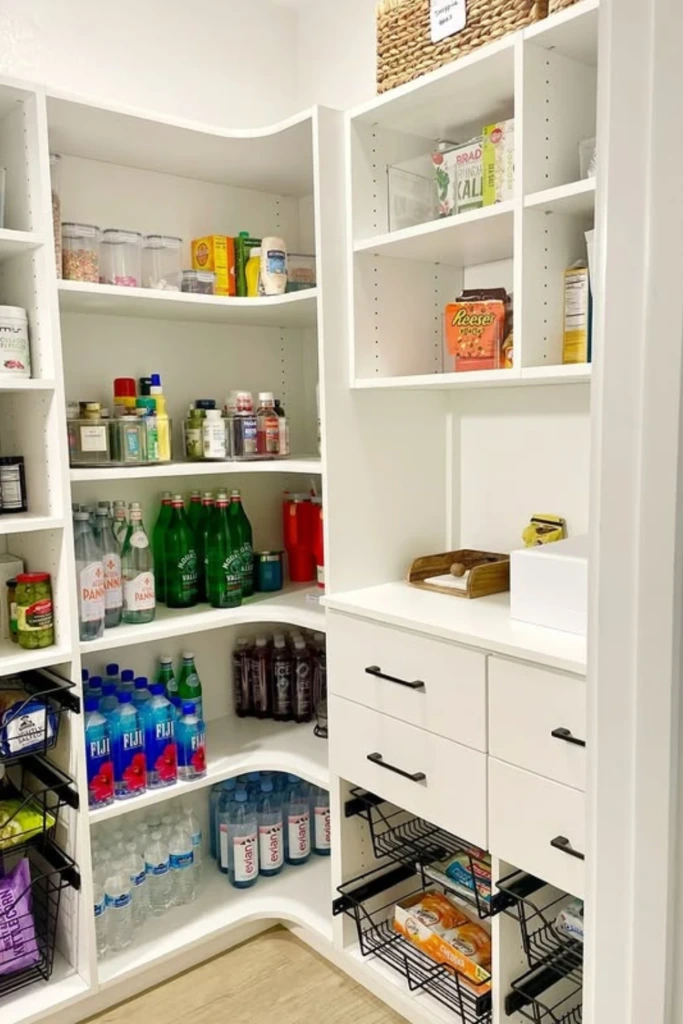
Corners can be difficult to organize because items placed at the back are often overlooked. Curved shelves make these areas easier to use while softening the appearance of a pantry with a compact or unusual layout.
Cut rounded shelf fronts from plywood using a suitable template, and support the shelves with securely attached cleats, brackets, or a purpose-built frame. Accurate measurements are important because a small error can leave gaps against adjoining walls.
Store frequently used ingredients toward the front and reserve the lower levels for heavier supplies. If the corner extends deep into the room, consider adding lighting that reaches the back of each shelf.
This design is particularly effective in walk-in pantries where conventional straight shelves would leave awkward gaps.
4. Built-In Work Shelf
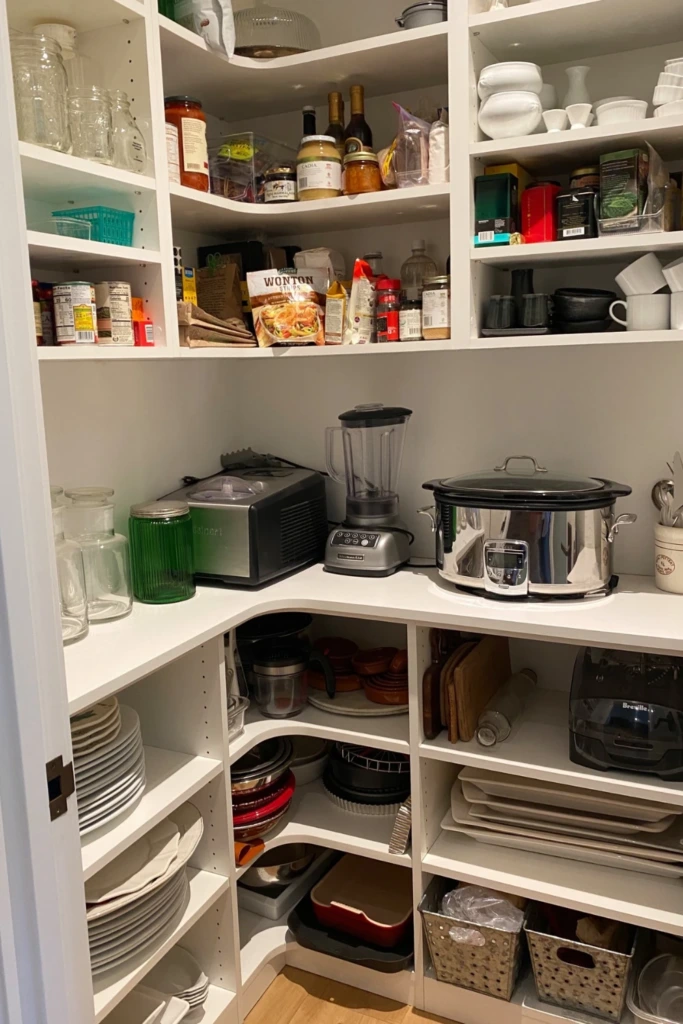
A built-in work shelf gives you a convenient place to operate small appliances, portion ingredients, or prepare items before cooking. It is especially useful in larger pantries where a little extra counter space can reduce congestion in the main kitchen.
Choose a sturdy work surface, such as appropriately thick plywood with a durable finish or a suitable laminated countertop. Support it with securely fastened side panels or a properly designed frame capable of carrying the intended load.
Measure your appliances before deciding on the shelf height, and allow sufficient space for plugs, ventilation, and safe operation. Appliances that produce heat should follow their manufacturers' clearance requirements rather than being enclosed in a tight compartment.
Shelves above and below the work surface can hold accessories, mixing bowls, and pantry essentials. Under-shelf lighting adds visibility without occupying valuable counter space.
5. Uniform Container Shelves
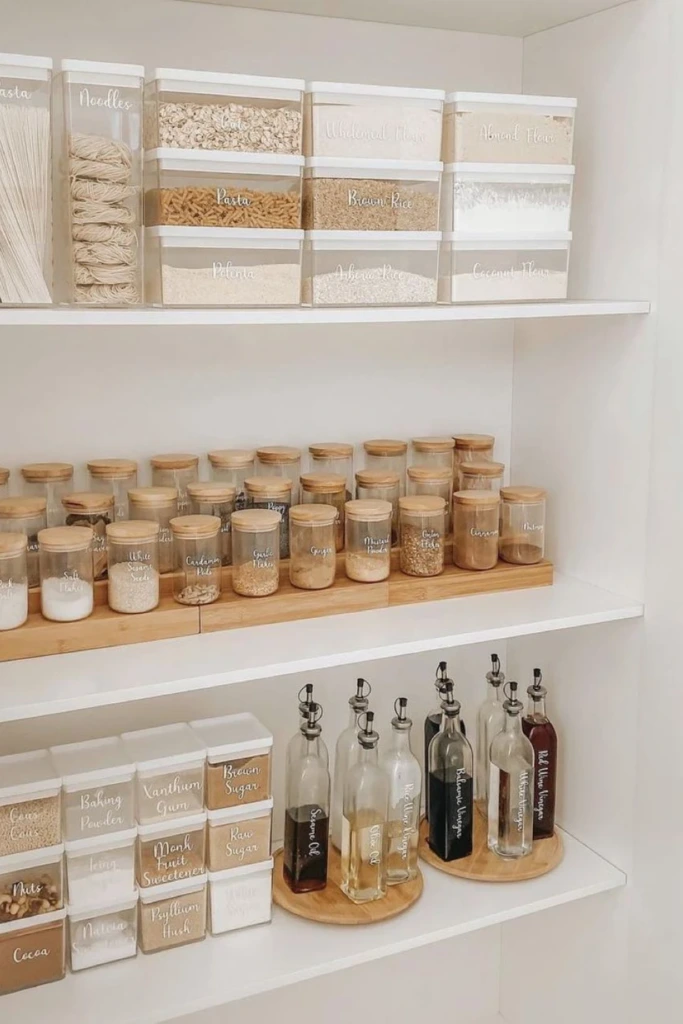
Matching containers can make an ordinary pantry look cleaner and help you identify ingredients quickly. This arrangement works particularly well in small cupboards where inconsistent packaging makes every shelf feel crowded.
Install adjustable shelves with enough clearance for your tallest containers. Transfer suitable dry goods into food-safe, airtight containers, and label each one with its contents and, when useful, its expiration or opening date.
Clear containers make it easier to check quantities before shopping, while a consistent container style creates a more coordinated appearance. However, always keep allergen information and important product instructions available when transferring packaged foods.
Arrange frequently used ingredients at eye level and heavier containers on lower shelves. Soft overhead lighting or compact cabinet lights can make labels easier to read.
6. Pull-Out Pantry Cabinet
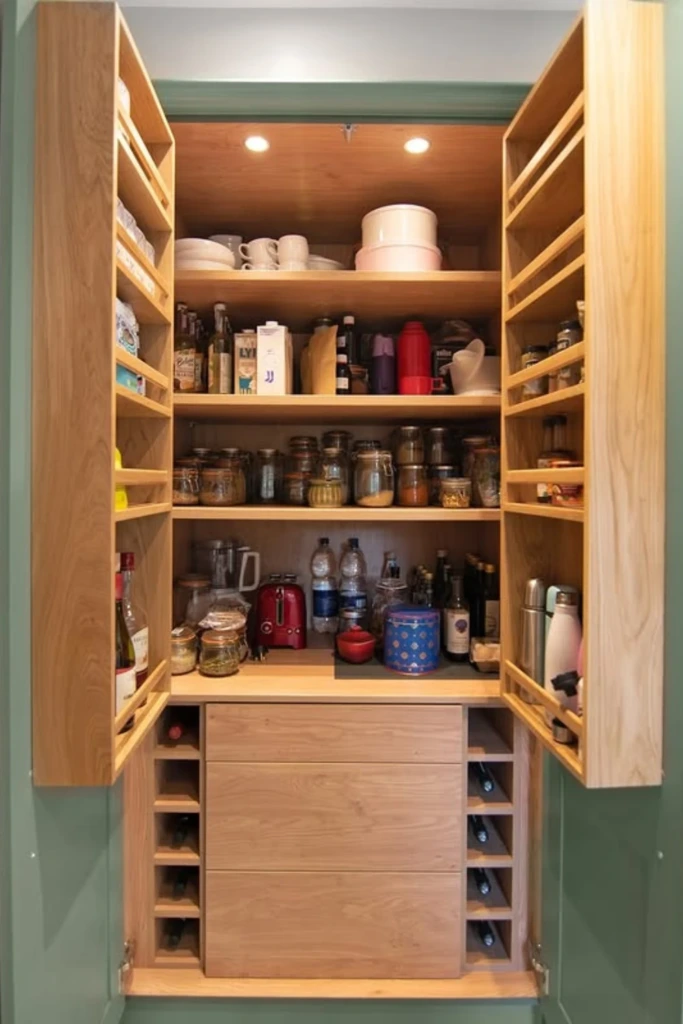
A pull-out pantry cabinet makes efficient use of narrow gaps between kitchen cabinets, appliances, or walls. Instead of reaching into a deep cupboard, you can slide the entire storage unit forward to access its contents.
Build a narrow cabinet with appropriately spaced shelves and install full-extension slides rated for the cabinet's total loaded weight. Accurate measurements are essential because the available opening must accommodate the cabinet, slides, and required clearances.
Use shallow shelves or adjustable dividers to prevent bottles, cans, and packets from shifting as the unit moves. Place heavier products toward the lower or central sections, following the slide and cabinet manufacturer's loading guidance.
A tall pull-out unit can provide substantial storage without taking up much floor space. For easier visibility, consider lighting near the opening, provided it does not interfere with the cabinet's movement.
7. Galley Pantry Shelves
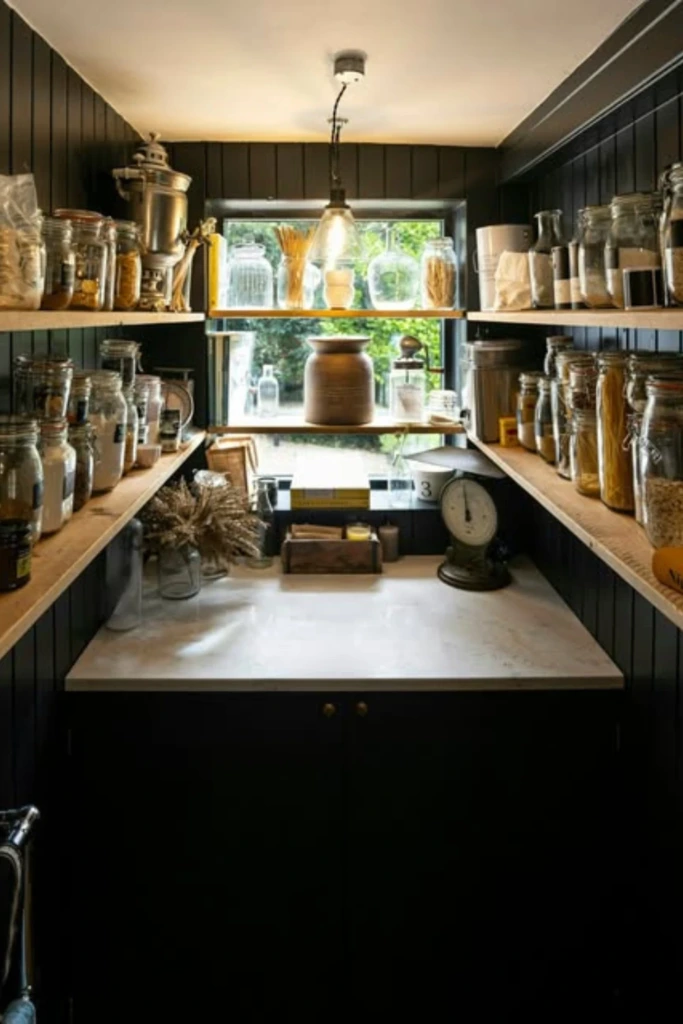
A galley pantry uses two opposing walls to create a practical storage corridor. This layout works best in long, narrow rooms where the available wall space is more valuable than adding bulky freestanding furniture.
Install shelves on both sides, arranging the most frequently used ingredients within comfortable reach. Keep the depth moderate so that you can access items without leaning excessively or blocking the walkway.
One side can hold everyday groceries, while the other stores baking ingredients, beverages, or less frequently used supplies. Consistent shelf heights make the room look organized, although different depths can be useful for specialized storage.
Good central lighting is important because the shelving may cast shadows along the walls. Ensure the aisle remains wide enough for safe movement, particularly when carrying groceries or handling large containers.
8. Door Storage Shelves
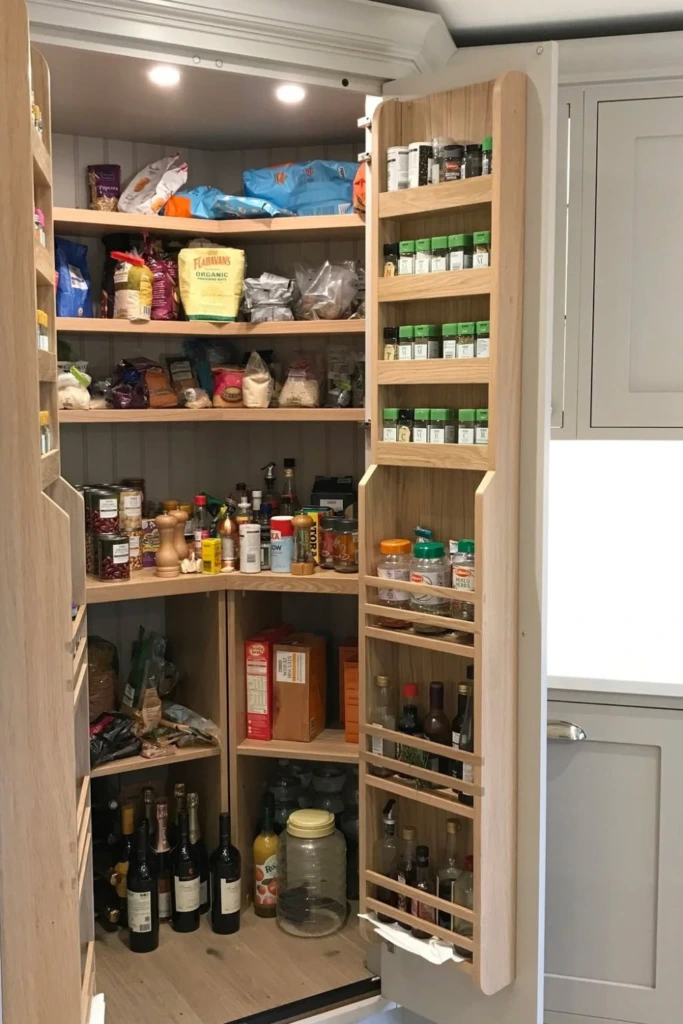
The inside of a pantry door can provide additional storage for small items that would otherwise occupy valuable shelf space. It is especially useful when the cupboard is narrow and there is little room to install more shelving.
Use purpose-built over-the-door organizers or mount shallow racks with suitable hardware. Before drilling, check the door's construction and make sure the fasteners will support the intended load.
Small spice containers, seasoning packets, lightweight snacks, and frequently used accessories are good candidates for door storage. Avoid placing heavy glass bottles or bulky packages on racks that are not designed to carry them.
Check that the shelves do not interfere with hinges, handles, or the door's closing mechanism. A tidy arrangement with consistent containers can make this extra storage both attractive and practical.
9. Wraparound Pantry Shelves
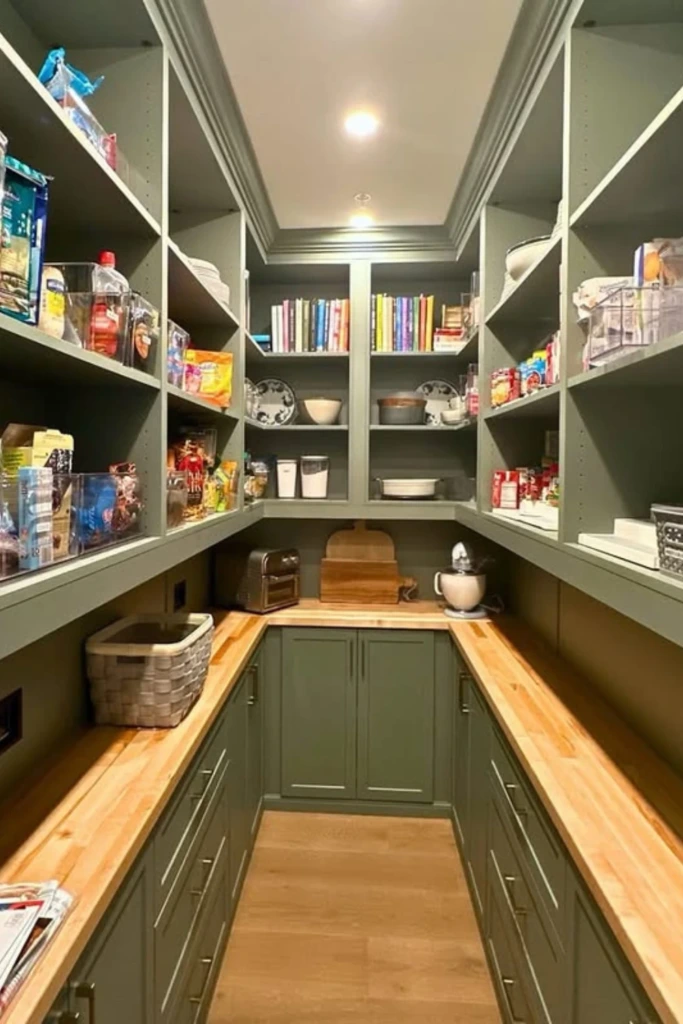
Wraparound shelving follows multiple walls, creating a continuous storage arrangement that makes good use of a walk-in pantry's perimeter. It is an effective option when you want to maximize storage without filling the center of the room with cabinets.
Plan the shelf depth and height before installation so that adjoining sections meet neatly at the corners. Use suitable corner supports and provide additional reinforcement wherever longer spans or heavier loads require it.
Keep bulky groceries, appliances, and heavy containers on lower levels. Reserve the upper shelves for lightweight supplies or items that are not used daily.
A consistent material and finish help the room feel cohesive. Under-shelf lighting can illuminate the lower levels, while ceiling lights provide general visibility throughout the space.
10. Wire Rack Shelving
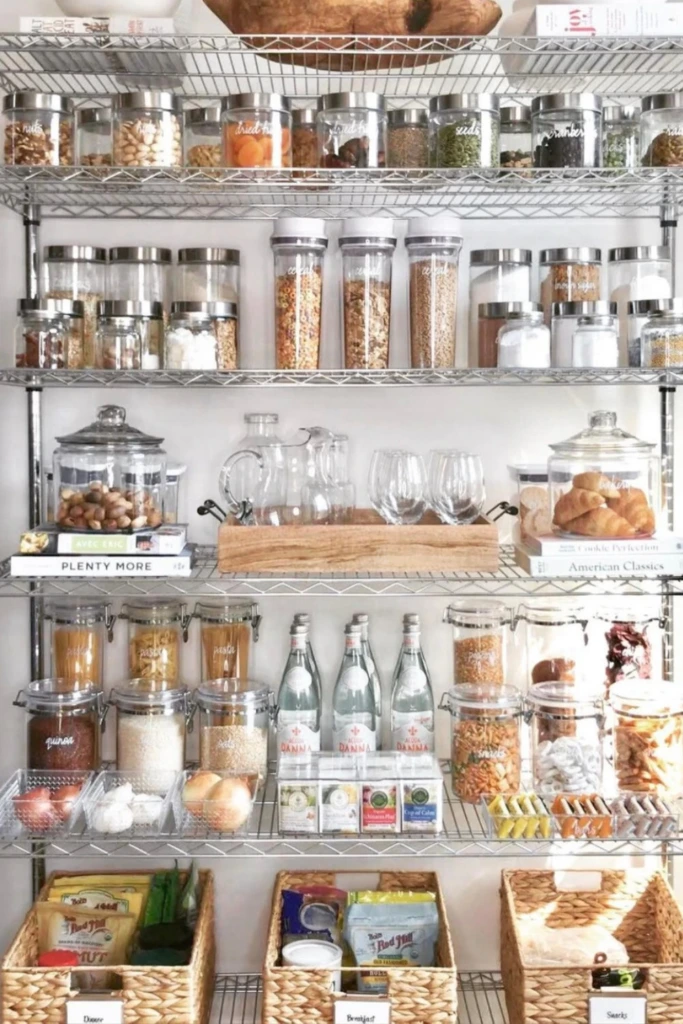
Wire rack shelving is a practical choice for people who want flexible storage without extensive carpentry. Many systems offer adjustable shelf heights, making them suitable for changing grocery supplies and containers of different sizes.
Choose a rack with an appropriate load rating and secure it according to the manufacturer's instructions. Adjustable feet can help stabilize the unit on uneven flooring, while wall anchoring may be advisable for taller systems.
Wire shelves allow air and light to pass through, making it easier to see products on lower levels. However, small packets and narrow containers may require baskets or shelf liners to prevent them from slipping through the gaps.
Store heavier items near the bottom and group similar products together. This inexpensive approach can work equally well in a kitchen cupboard, utility room, or dedicated pantry.
11. LED-Lit Shelving
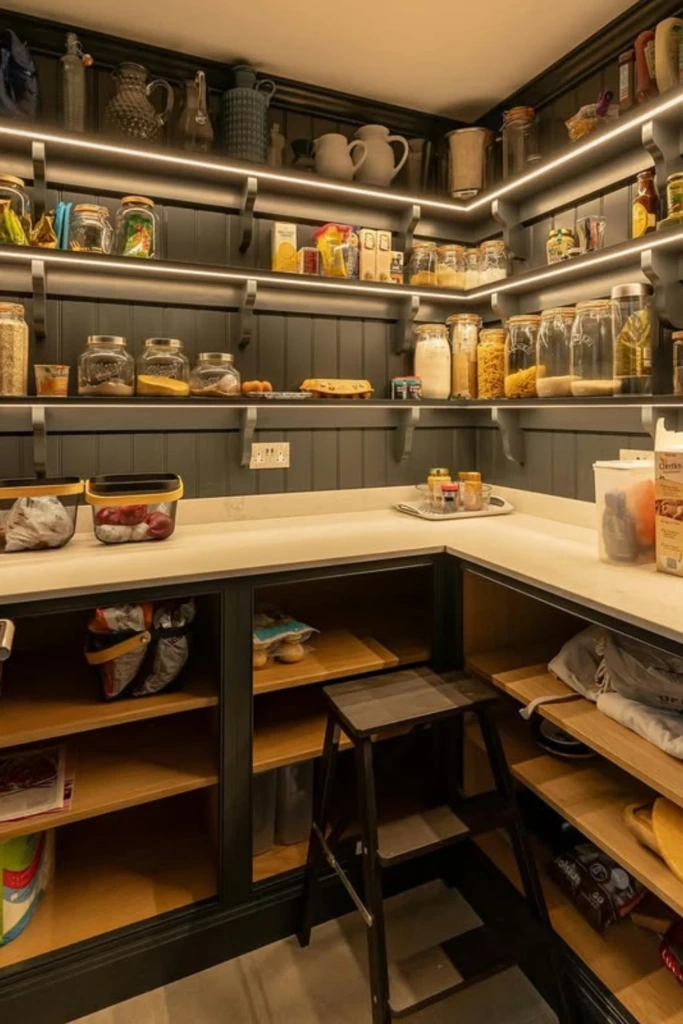
Adding LED lighting to pantry shelves improves visibility and makes it easier to locate ingredients without moving several containers. It can also give a simple shelving arrangement a more finished appearance.
Begin with sturdy wooden or laminated shelves, then select LED strips or cabinet lights suitable for the installation location. Under-shelf placement generally directs light toward the level below, helping illuminate labels and containers.
Battery-powered lights are convenient where outlets are unavailable, while plug-in systems may suit pantries with accessible electrical sockets. Hardwired installations should be completed by a qualified electrician when required.
Choose lighting that distributes illumination evenly without creating excessive glare. Conceal cables neatly, keep electrical components away from moisture, and make sure the lighting does not interfere with stored food or appliances.
12. Utility Wire Shelves
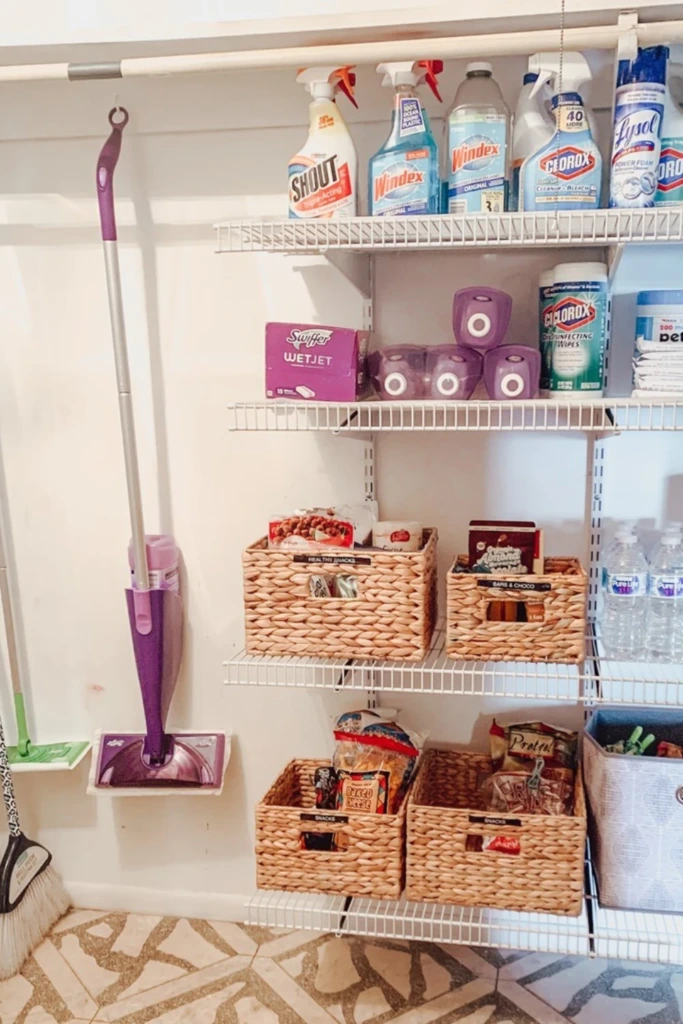
Utility wire shelving is useful when a pantry doubles as a storage area for household supplies. Its open construction provides flexible space for baskets, cleaning accessories, spare paper products, and other everyday essentials.
Install adjustable shelves so that tall bottles and bulky packages can fit comfortably. Side hooks or compatible accessories can provide additional space for lightweight tools and reusable bags.
If food and cleaning products share the same room, store them in clearly separated areas. Keep chemicals in their original labeled containers, follow their storage instructions, and place them where they cannot spill onto food or food-contact surfaces.
Choose a shelving system with a suitable weight rating and clean it regularly to prevent dust from accumulating. A few labeled bins can keep smaller supplies from spreading across the shelves.
13. Labeled Wire System
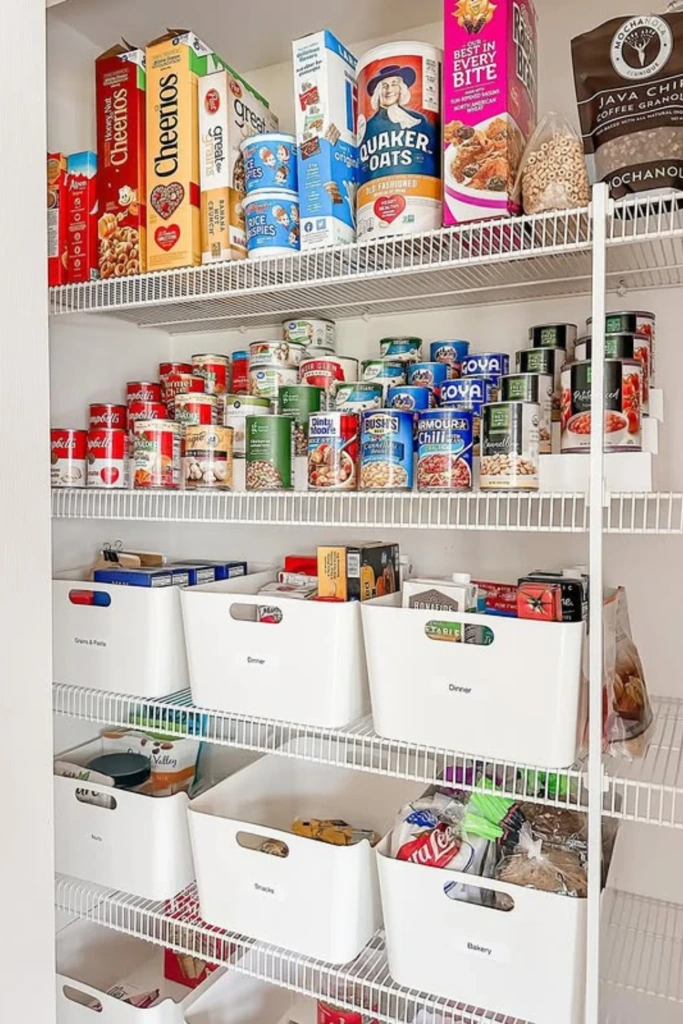
An adjustable wire system combined with labeled containers is a convenient solution for anyone who wants an organized pantry without custom-built cabinetry. It is particularly suitable for standard reach-in cupboards and storage areas that need to adapt over time.
Install the rails and shelves according to the manufacturer's instructions, making sure the supports are firmly secured. Arrange the shelves around the height of your containers instead of leaving large, unused gaps between levels.
Use baskets for small packets and labels to distinguish baking ingredients, breakfast foods, snacks, and cooking essentials. Put heavier items on lower shelves and keep frequently used products where they are easy to reach.
Because wire shelving allows light to pass through, ordinary ceiling lighting may be sufficient. Add small cabinet lights if the cupboard is deep or receives little natural light.
14. Bracketed Recess Shelves
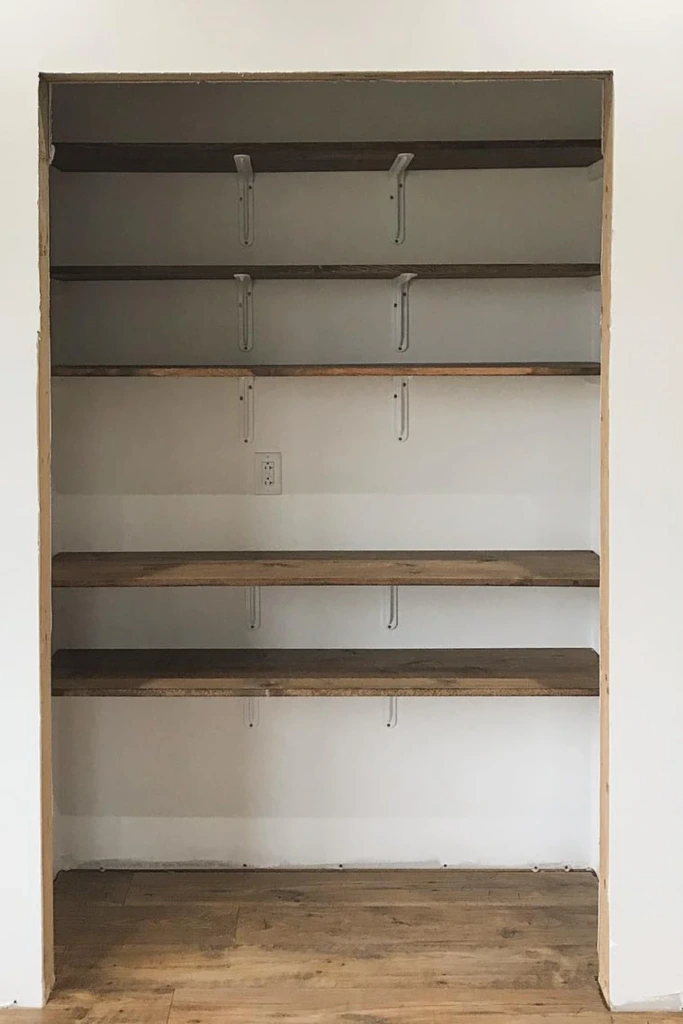
If your pantry has a recessed wall opening, bracketed shelves can turn that unused niche into attractive built-in-style storage. The result looks more integrated than a freestanding rack while requiring less construction than a full cabinet installation.
Measure the opening at several points because older walls may not be perfectly square. Cut shelves to fit, then install suitable brackets or cleats into secure structural supports.
Adjustable brackets provide flexibility if your storage needs change. Fixed shelves, on the other hand, can create a clean, permanent appearance when you already know the dimensions of your containers.
Finish exposed edges neatly and paint the shelves to coordinate with the surrounding walls or cabinetry. Good overhead lighting helps prevent the recess from becoming a dark storage corner.
15. Mixed Material Shelves
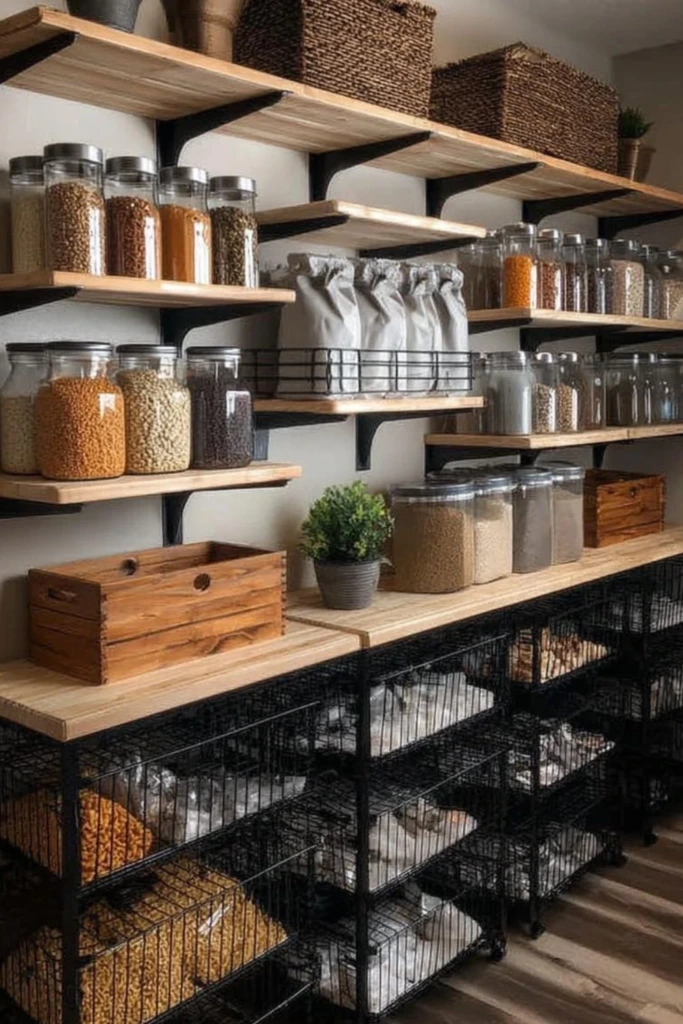
Combining wood and metal creates a pantry shelving system that balances warmth with durability. Wooden shelves offer a natural appearance, while metal brackets or frames provide structural support when properly selected and installed.
Use materials suited to the expected load, and check that the brackets, fasteners, and wall anchors work together as a complete support system. Decorative hardware should never substitute for adequate structural capacity.
Wire baskets beneath wooden shelves can hold onions, packaged snacks, or other suitable items that benefit from separate compartments. Store heavy containers lower down and arrange smaller jars on higher shelves.
For a coordinated finish, repeat the same wood tone and metal color throughout the pantry. Discreet lighting beneath the shelves can highlight the materials while making the contents easier to identify.
16. Ladder Style Shelves
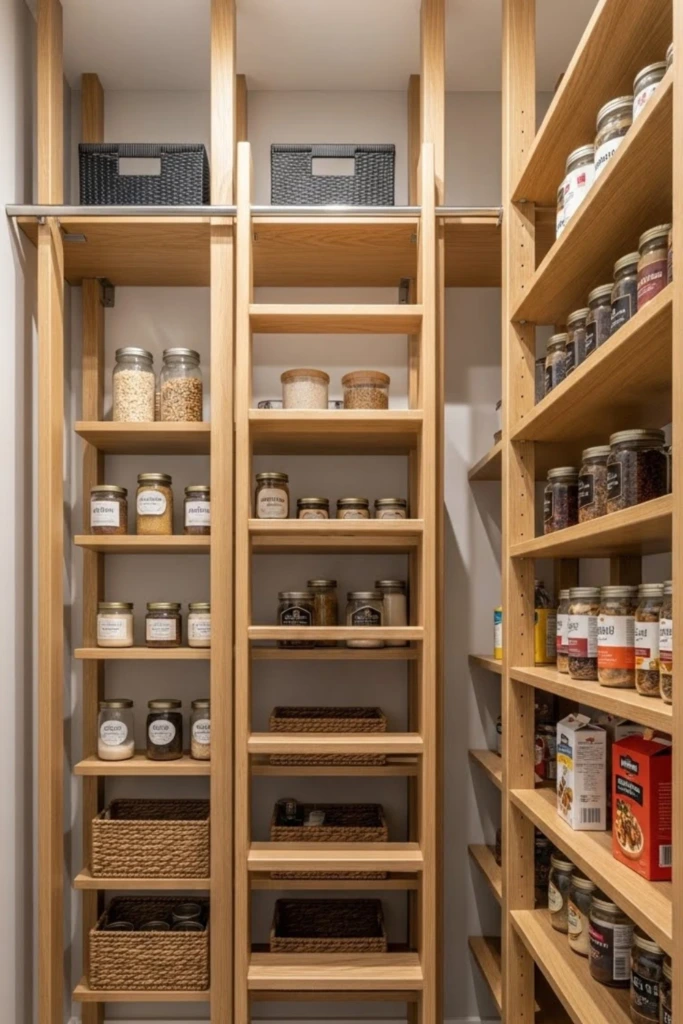
Ladder-style shelving uses vertical side supports with horizontal shelves to take advantage of a tall wall. It is particularly useful in narrow pantries where expanding outward would reduce valuable floor space.
Build or purchase a stable frame with shelves sized for your storage needs. The depth can vary between levels, with wider shelves below for bulky goods and narrower ones above for lighter packages.
Make sure the structure cannot tip or shift under load. Secure it to the wall when required by the design, and follow the manufacturer's guidance for weight distribution.
This arrangement works well for canned foods, jars, baskets, and dry ingredients. A top-mounted light or suitable ceiling fixture can illuminate the upper shelves, where shadows are more likely to develop.
17. Slide-Out Shelves
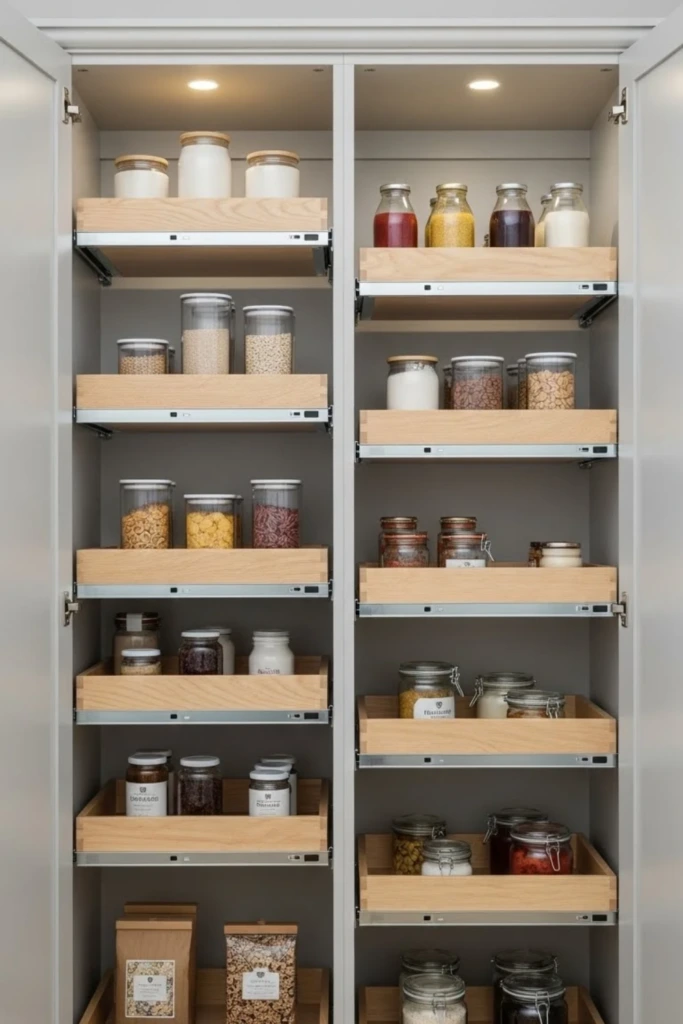
Slide-out shelves help solve a common pantry problem: items disappearing behind other products. Instead of reaching deep into a cupboard, you can pull the shelf toward you and view its contents more easily.
Build shallow wooden trays or use compatible premanufactured shelves, then fit full-extension drawer slides rated for the expected weight. Measure the cabinet interior carefully to account for the slides and the clearance needed for smooth operation.
Use dividers to keep bottles upright and prevent smaller packages from moving around. Reserve deeper pull-outs for larger containers and use narrower trays for spices, packets, or baking ingredients.
This design is particularly helpful in lower cupboards and deep pantry cabinets. Keep the slides clean and avoid exceeding their stated capacity to maintain reliable movement.
18. Open Box Shelves
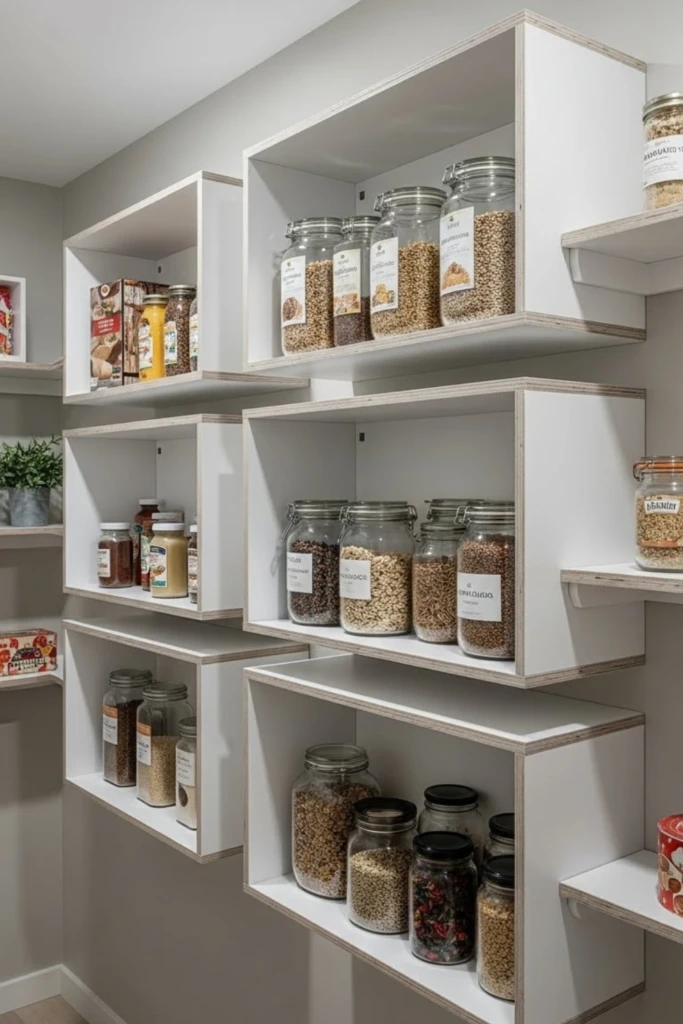
Open box shelving provides separate compartments for different pantry categories. Unlike long, uninterrupted shelves, these units help prevent small products from spreading into neighboring storage areas.
Construct the compartments from suitable plywood or another sturdy panel material. Reinforce the joints, finish the edges, and secure wall-mounted units to appropriate structural supports.
Use individual boxes for snacks, breakfast foods, baking ingredients, or packaged goods. The compartment dimensions should reflect what you intend to store rather than forcing every category into an identical space.
Open fronts make the contents easy to see, while baskets can keep loose packets contained. For a neat appearance, maintain consistent spacing and use similar finishes throughout the arrangement.
19. Hanging Shelf Rails
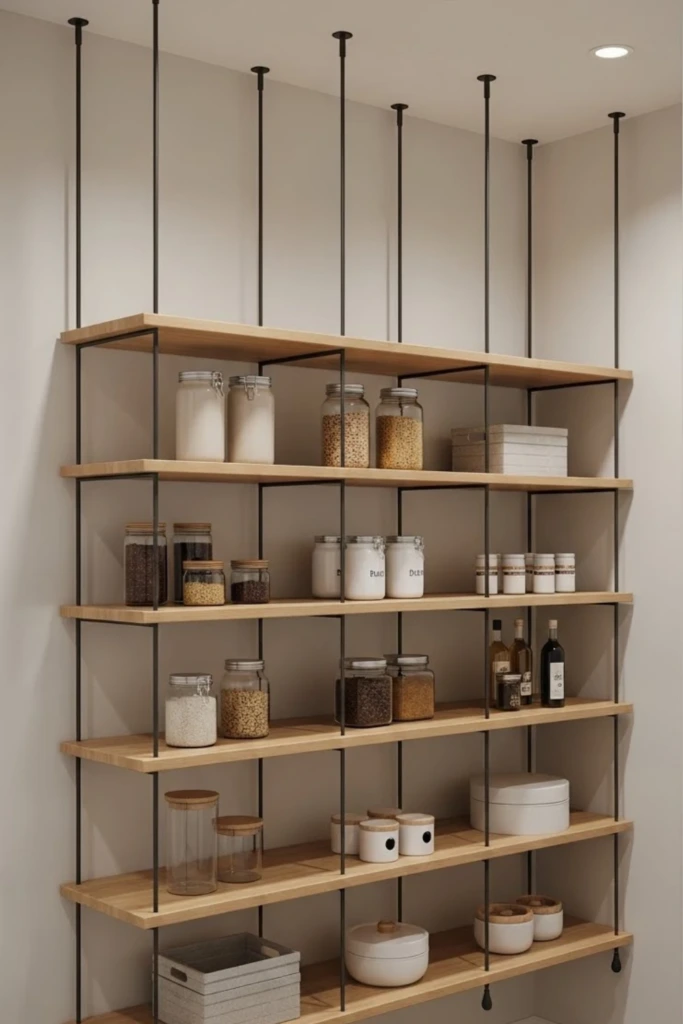
Suspended shelves can create an airy appearance and free up floor space in a pantry with suitable overhead structural support. They can also provide an alternative to conventional brackets when the room's design calls for a lighter visual effect.
Use purpose-designed suspension hardware, rods, or cables rated for the intended load. Attach the system to verified ceiling framing or another suitable structural support rather than relying on drywall anchors alone.
Measure carefully so the shelves remain level and leave enough clearance for movement underneath. Keep the load modest unless the complete system has been designed and rated for heavier storage.
This approach works best for lightweight containers and frequently used supplies. Arrange lighting so the suspended boards do not cast excessive shadows over the work area.
20. Pantry Shelf Dividers
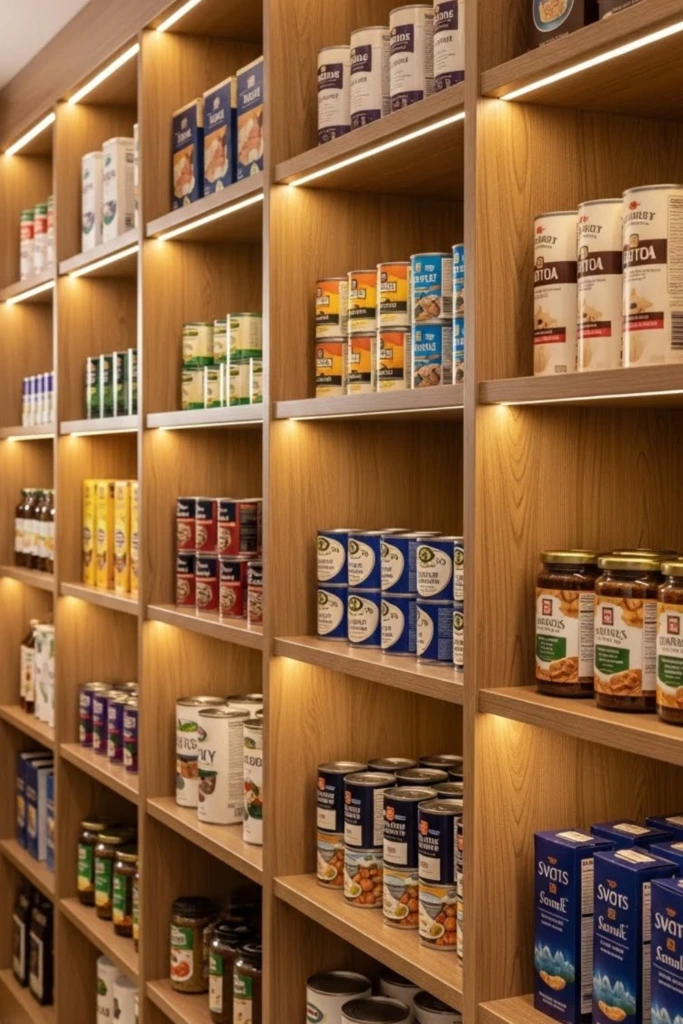
Shelf dividers are an easy way to improve an existing pantry without replacing the shelving itself. They separate stacks of plates, baking trays, cutting boards, and packaged foods, reducing the chance of items falling into one another.
Choose adjustable metal dividers, clear acrylic panels, or thin wooden partitions that fit your shelf dimensions. Make sure the dividers remain stable during everyday use and do not damage the shelf surface.
Use them to create distinct spaces for different categories or to keep rows of containers aligned. They are particularly valuable on long shelves where products tend to spread out.
Because dividers require little installation, they are also a good choice for renters and anyone who wants a reversible organization project. A well-lit shelf makes the newly separated sections easier to navigate.
21. Tiered Shelf Inserts
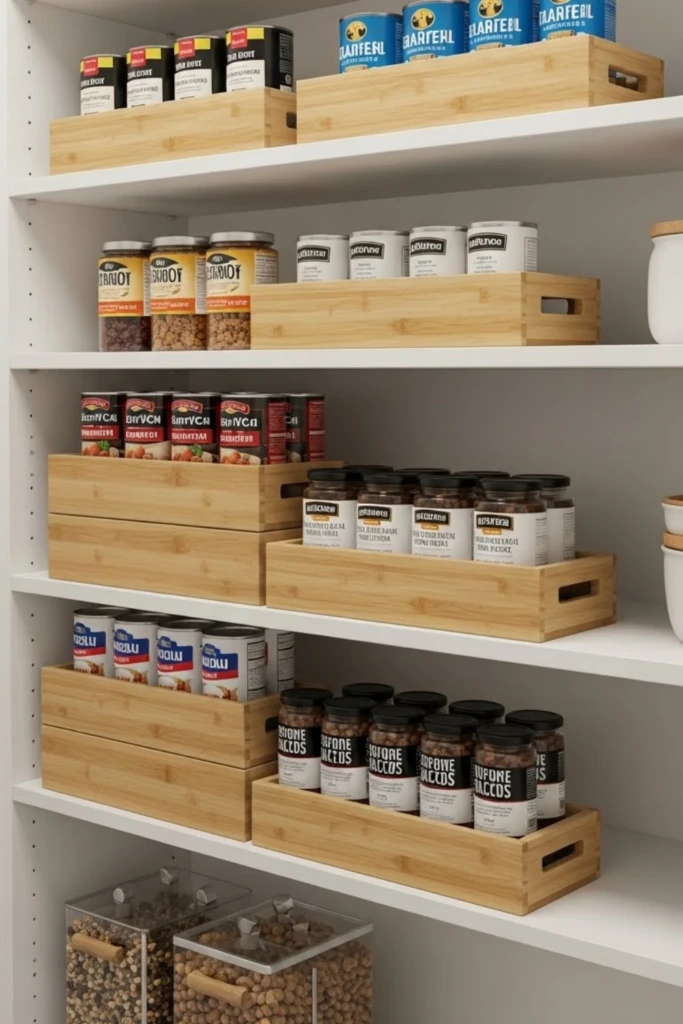
Tiered inserts raise the containers at the back of a shelf so their labels remain visible above the products in front. They are useful when a pantry contains many cans, jars, spice bottles, or other items that are easily hidden.
You can purchase ready-made risers or build stepped inserts from appropriately finished plywood. Measure the available shelf depth and height before choosing the number of tiers.
Place shorter containers toward the front and taller products toward the back when the arrangement permits. Keep the structure stable, especially when storing glass jars or heavy canned goods.
Tiered organizers work particularly well on fixed shelves that cannot be repositioned. With good overhead lighting, they make it easier to identify what you have and avoid buying ingredients you already own.
What is the latest trend for pantries?
Modern pantry design increasingly emphasizes practical storage, clear visibility, and layouts that can adapt as household needs change. Rather than focusing exclusively on decorative cabinetry, many homeowners favor a combination of open shelving, pull-out drawers, and dedicated spaces for different types of food.
Natural wood finishes, neutral colors, and coordinated containers remain appealing because they create a calm, consistent appearance. Adjustable shelves are especially useful for accommodating changing grocery sizes, while integrated lighting helps make deep cupboards easier to use.
Another popular approach is zoning. Keeping breakfast foods, baking supplies, snacks, and cooking ingredients in separate areas simplifies daily routines and makes restocking more efficient.
The best trend to follow is the one that solves your actual storage problems. A simple, well-planned pantry can be more useful than an elaborate design with inaccessible shelves.
How can you make an open pantry look aesthetic?
An attractive open pantry begins with a clear organizational plan. Group similar products together, give frequently used items accessible positions, and avoid filling every shelf to its maximum capacity.
Matching containers can create visual consistency, while labels make ingredients easy to identify. Choose a limited palette of materials, such as natural wood with white shelves or white laminate paired with simple metal supports.
Pay attention to spacing as well. Leave enough room to remove containers comfortably, keep taller items from blocking smaller ones, and place heavy supplies on lower shelves.
Lighting also makes a noticeable difference. Evenly distributed ceiling lights or under-shelf LEDs can brighten the contents and highlight the shelving finish. Finally, review the pantry periodically to remove expired products, reorganize misplaced items, and maintain enough space for new groceries.