27 DIY Cat Tree Ideas For 2026
A cat tree gives your feline friend a dedicated place to climb, scratch, nap, and observe the world from above. However, finding one that fits your home, matches your décor, and stays within your budget can be challenging. Building your own cat tree lets you choose the dimensions, materials, and features that suit both your space and your cat's personality.
Whether you live in a small apartment or have plenty of room for a large climbing structure, there are countless ways to create an attractive and practical cat tree. From natural wood designs to wall-mounted climbing systems, these 27 DIY cat tree ideas offer inspiration for creating a comfortable environment your cat will enjoy.
How Can You Build a Cat Tree in a Small Space?
When floor space is limited, focus on vertical movement rather than a wide structure. Cats naturally enjoy elevated resting places, so a tall, narrow cat tree can provide plenty of entertainment without crowding your living area.
Start by selecting an unused corner or a suitable section of wall. Add several platforms at different heights, making sure the distances between them are manageable for your cat. A small enclosed cubby can provide a private resting spot, while sisal-wrapped posts encourage scratching.
Stability should always come first. Use a substantial base for freestanding designs, or secure wall-mounted platforms directly to appropriate structural supports. Arrange the climbing surfaces so your cat can move comfortably between levels.
If your home is particularly compact, consider incorporating cat shelves into existing furniture or using a vertical wall system instead of a traditional floor-standing tower.
What Materials Are Used To Make a Cat Tree?
The best materials depend on the design, your budget, and the size of your cat. Plywood and solid wood are useful for platforms, support frames, and bases because they can provide dependable strength when properly selected and assembled.
Wooden posts and suitable heavy-duty cardboard tubes can serve as vertical supports, although cardboard components should be chosen carefully and replaced when damaged. Sisal rope is a popular covering for scratching posts because it provides a textured surface cats can grip with their claws.
For comfort, use washable cushions, durable fabric, or securely attached carpet remnants. Choose materials that resist tearing and are easy to clean. Avoid exposed staples, protruding screws, loose cords, toxic finishes, and small decorations that could become choking hazards.
Before allowing your cat to use the finished structure, inspect every connection, test the platforms for movement, and confirm that the entire unit remains stable during climbing and jumping.
1. Plush Fantasy
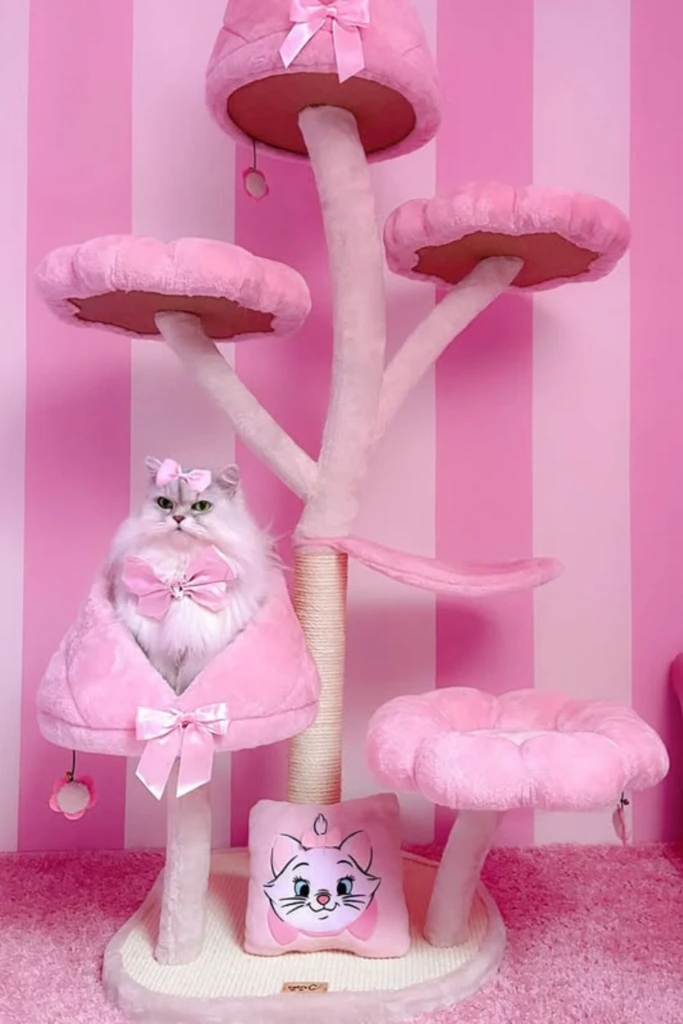
A plush cat tree is a good choice for homes where pet furniture needs to feel as comfortable as the rest of the interior. Soft surfaces, rounded platforms, and cushioned resting areas create an inviting place for cats to relax between play sessions.
Build a sturdy wooden frame first, then attach padded platforms and cover them with durable upholstery fabric. Choose removable cushion covers whenever possible to make cleaning easier.
You can introduce different textures across the structure, such as a soft sleeping platform and a separate sisal scratching post. Keep scratching surfaces accessible rather than covering them entirely with slippery fabric.
This design works especially well in bedrooms, reading corners, and studio apartments where a cat tree remains visible throughout the day.
2. Natural Branches
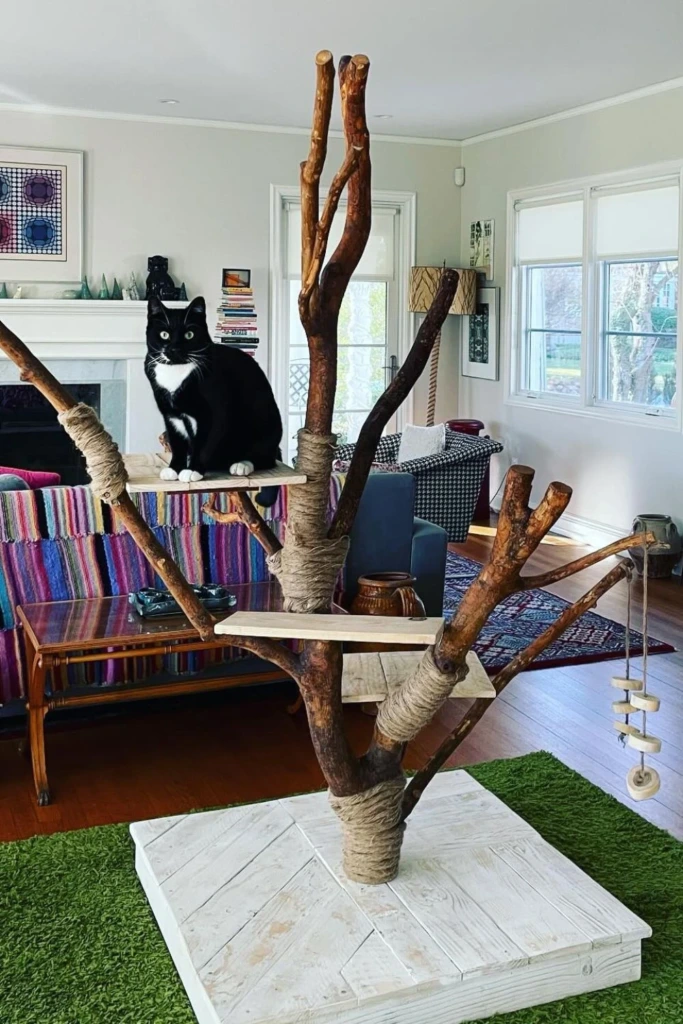
A cat tree made from natural branches brings an outdoors-inspired appearance into your home. Each branch creates a slightly different climbing route, giving the structure a distinctive shape that manufactured posts cannot easily reproduce.
Choose sound, sturdy branches without signs of rot, insect damage, or splitting. Clean and dry the wood thoroughly, remove loose bark where necessary, and sand rough areas that might injure your cat. Attach the branches securely to a wide, weighted base before adding resting platforms.
Short sections of sisal rope can turn suitable areas into scratching surfaces, while small wooden perches provide convenient stopping points.
This design suits rustic living rooms and nature-inspired interiors. Because natural branches vary in shape and strength, inspect them carefully rather than assuming every piece of wood is suitable for supporting a climbing cat.
3. Corner Tower
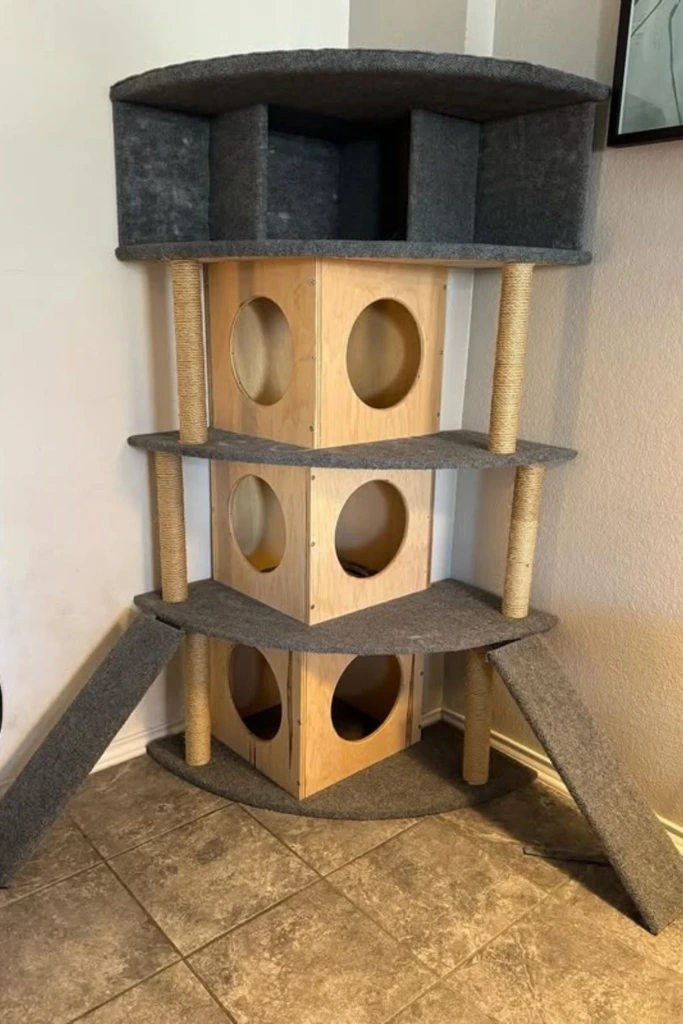
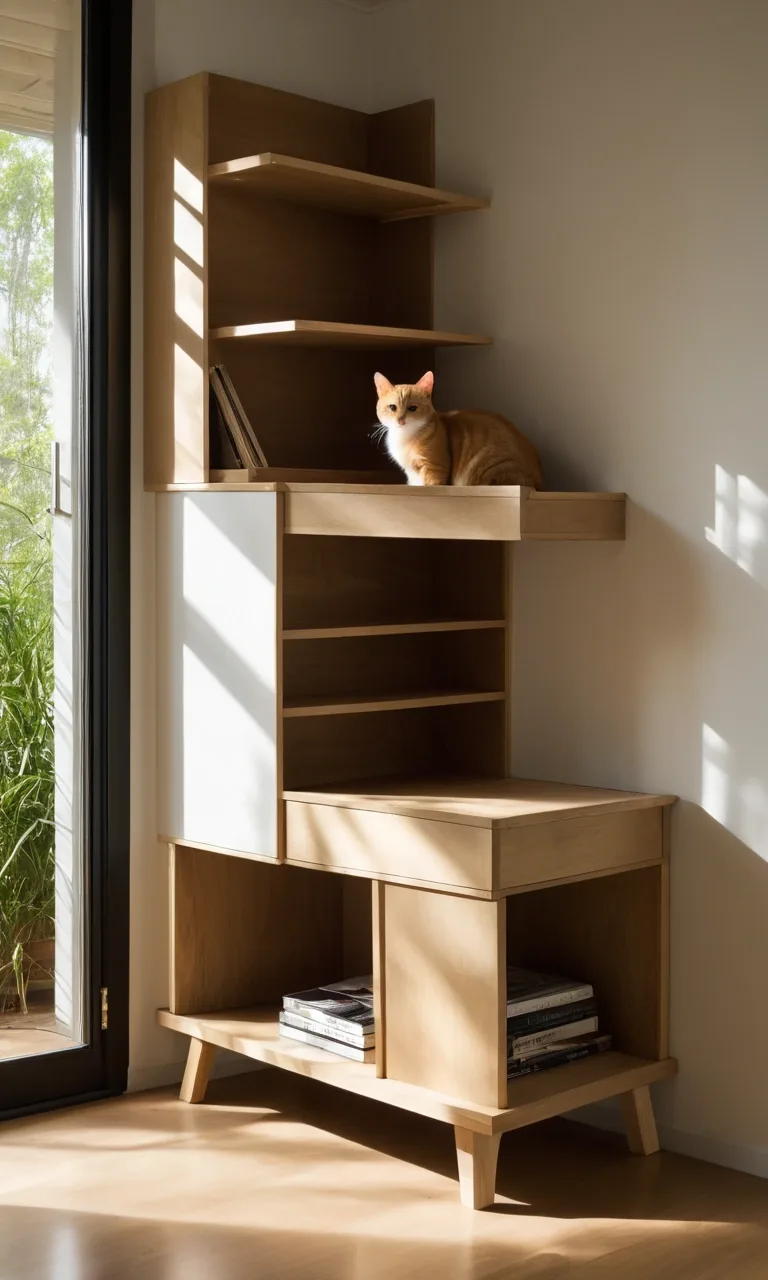
An unused corner can become a compact playground with a tiered cat tower. Instead of spreading outward, this design uses stacked compartments to provide climbing opportunities, hiding spaces, and elevated sleeping areas.
Construct several wooden boxes with smooth, generously sized openings. Arrange them vertically and connect the levels with secure platforms or short ramps. Reinforce the joints and attach the structure to a stable base.
You can place a cushion inside one compartment and leave another open as a lookout. Sisal-covered supports between levels give cats an additional place to scratch.
A corner tower is particularly useful in smaller homes because it makes productive use of an area that might otherwise remain empty.
4. Vertical Habitat
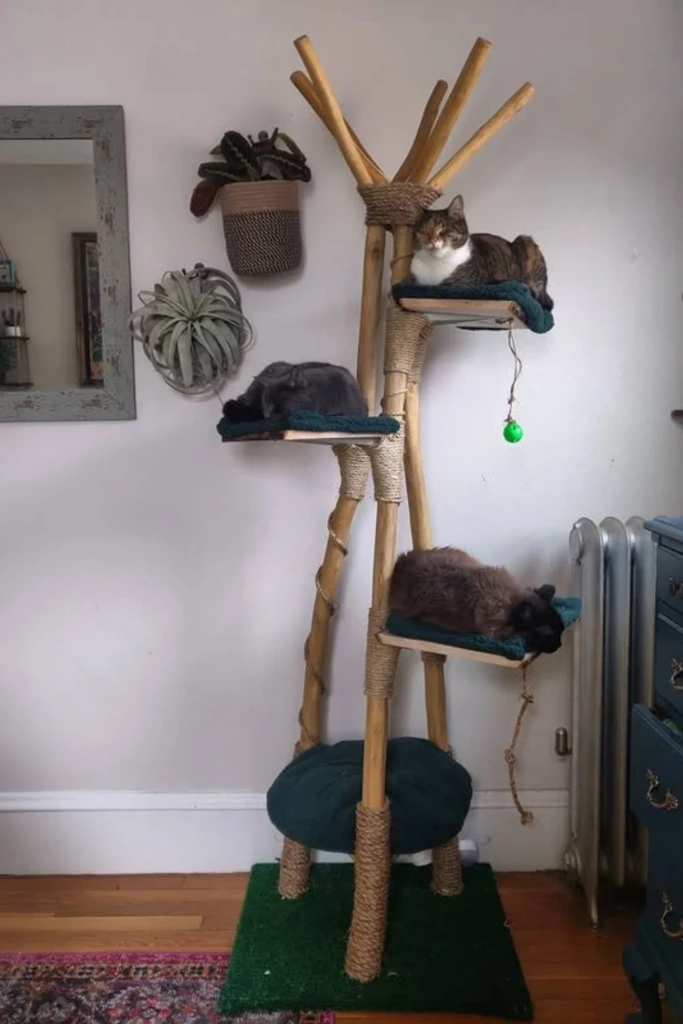
A vertical cat habitat provides several resting levels within a relatively narrow footprint. It can be especially helpful in homes with multiple cats, provided each animal has enough room to move without being trapped by another.
Begin with a sturdy central support or a carefully designed wooden frame. Attach broad platforms at staggered heights, leaving sufficient room for comfortable climbing and turning. Add scratching sections and one or two enclosed resting areas if space allows.
Different levels can serve different purposes. A lower platform may be suitable for lounging, while an upper perch can provide a quiet observation point.
Place the structure where it will not obstruct doors or walkways. For homes with several cats, make sure there are alternative ways to move away from a perch so one cat cannot easily block another's route.
5. Modular Stacking
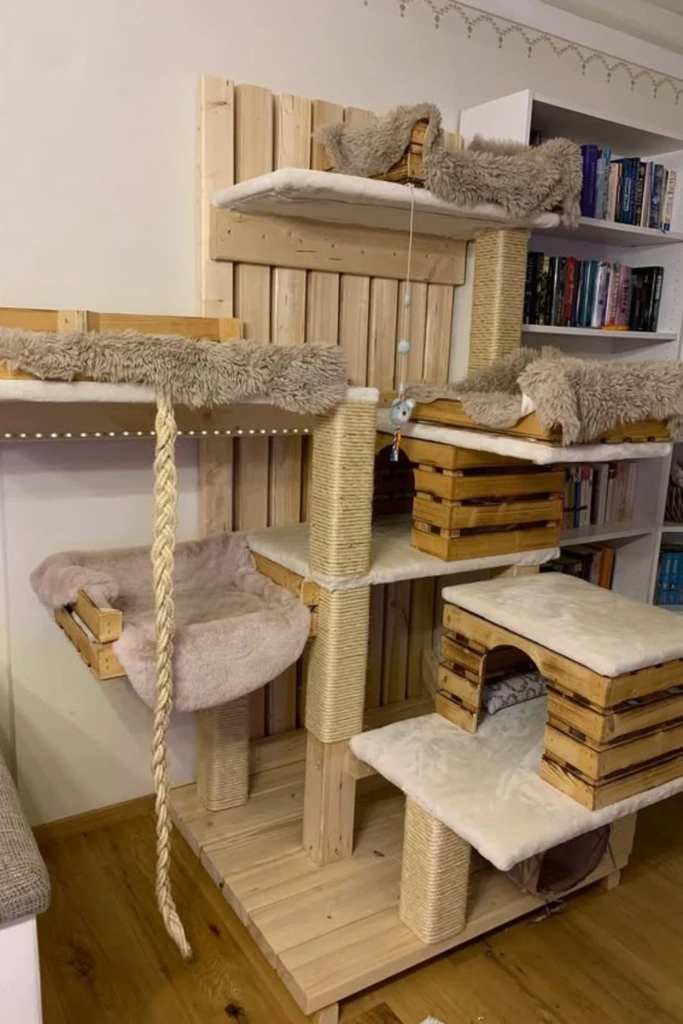
A modular cat tree uses separate components that can be rearranged or expanded as your needs change. Wooden crates, sturdy cubbies, and individual platforms can be combined to create a customized climbing and resting system.
Choose boxes made from durable materials and reinforce any sections that will bear weight. Connect the modules using appropriate fasteners rather than relying on gravity alone. If the finished structure is tall, secure it against tipping.
Add washable pads to sleeping areas and leave selected compartments open for play or hiding. You can also incorporate scratching posts between modules to connect the levels.
This approach is useful for growing kittens, changing room layouts, or households that want to add features gradually. Every new configuration should be checked for stability before your cat uses it.
6. Twin Perches
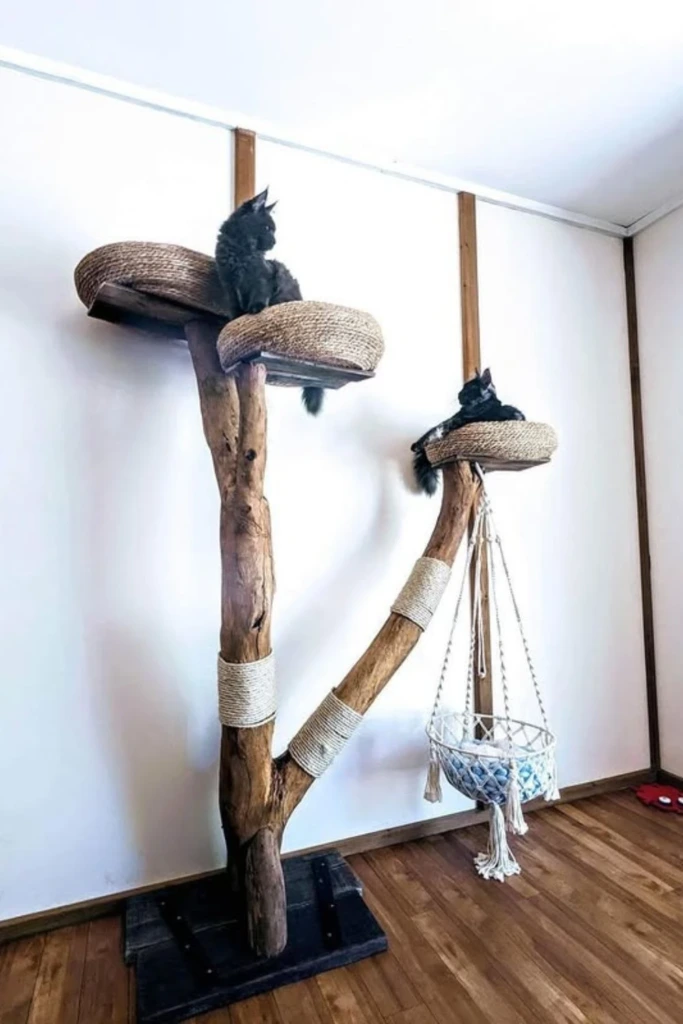
A twin-perch cat tree gives cats separate elevated places to sit while sharing one compact structure. It is a practical option for households with two cats that enjoy watching their surroundings but do not always want to sit together.
Use a strong central post or two securely mounted wooden supports attached to a substantial base. Install two roomy platforms at different heights or on opposite sides of the frame. Their placement should allow each cat to settle comfortably without creating an awkward jumping distance.
Wrap selected sections with sisal rope to provide scratching opportunities, and consider adding a lower resting shelf for easier access.
This design works well in living rooms and unused corners where cats can look out across the home. Make sure each perch is large enough for the cat that will use it.
7. Compact Condo
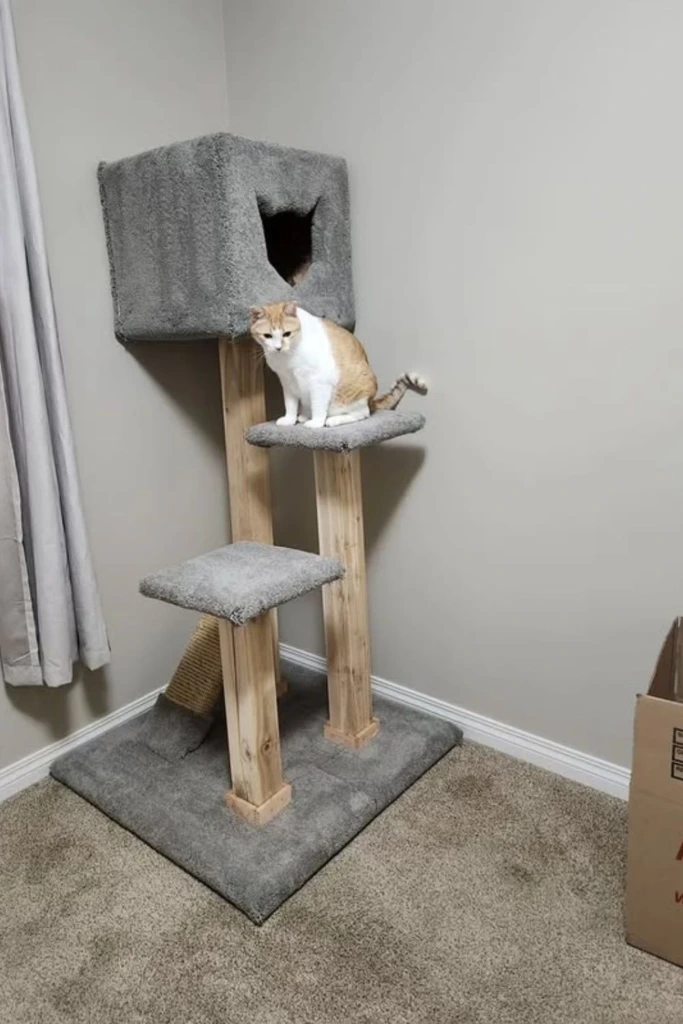
A compact cat condo combines climbing platforms with a sheltered resting compartment. It provides several useful features without requiring the floor area of a large cat tower.
Build a narrow frame using sturdy timber, then attach a secure base and several platforms. Add a small enclosed box with a smooth entrance so your cat can retreat when it wants privacy. Carpeted or textured steps can improve traction during climbing.
Position the enclosed area where it will not interfere with movement between levels. Avoid making the highest platform too small or difficult to reach.
This design is suitable for apartments, bedrooms, and homes where one corner needs to serve as the cat's main activity area. A removable cushion inside the condo makes routine cleaning much simpler.
8. Wall Ladder
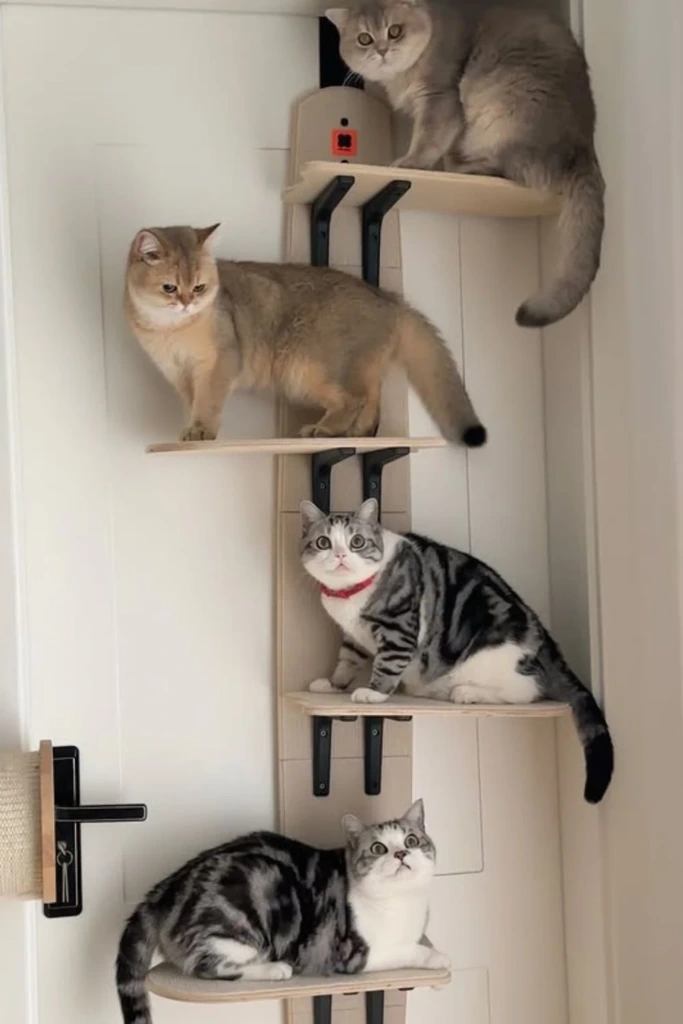
A wall-mounted cat ladder creates a climbing route without taking up valuable floor space. It can also help turn an otherwise empty wall into an engaging environment for indoor cats.
Start by locating suitable wall studs or another verified structural mounting system. Install strong brackets and attach wooden shelves in a gradual, stair-like arrangement. Each platform should provide enough depth for secure footing, with gaps appropriate for your cat's age, mobility, and jumping ability.
Adding a scratching panel near the bottom gives your cat a convenient place to stretch and scratch before climbing.
This design is especially useful in small apartments. However, wall-mounted furniture must be anchored correctly, and renters should obtain permission before drilling or making permanent changes.
9. Multi-Level Play
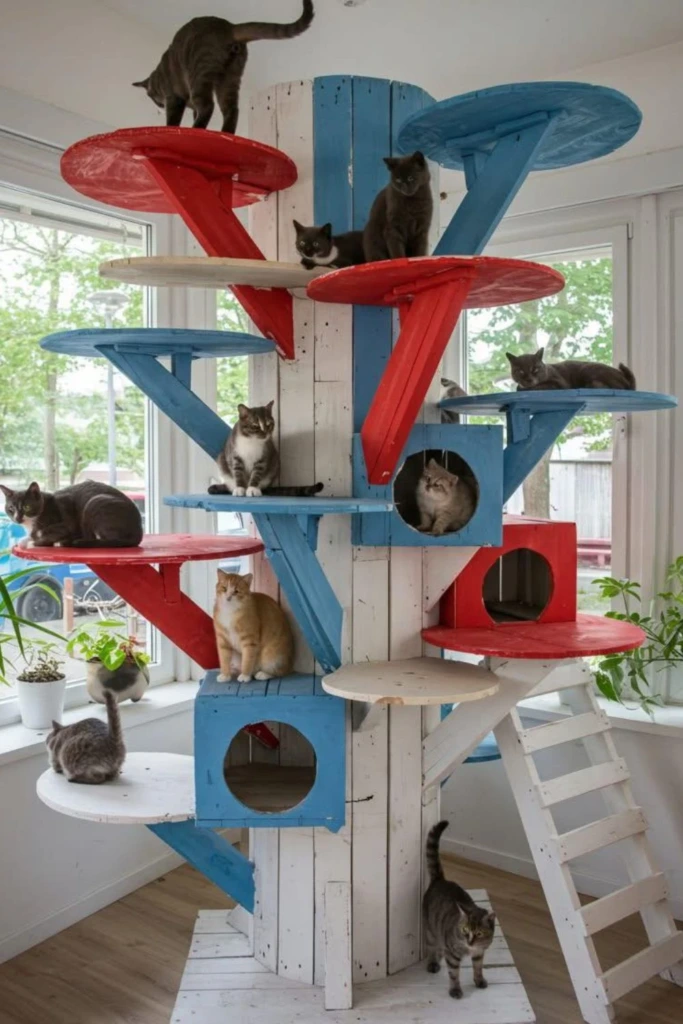
A multi-level cat climbing system combines platforms at different heights to encourage movement, exploration, and rest. It can be built as a freestanding tower or arranged across a suitable wall.
Use strong wooden shelves or platforms with a nonslip surface. Position them in a sequence that allows your cat to climb without needing to make unusually large jumps. A combination of resting ledges, scratching surfaces, and a larger top perch keeps the structure interesting.
For a more playful arrangement, include a small tunnel or an enclosed resting box where space permits. Keep all accessories firmly attached and avoid dangling strings that could become entangled.
This option suits active indoor cats that enjoy exploring elevated spaces. Make sure the layout includes a comfortable way back down, especially if your cat is young, older, or less agile.
10. Window Bench
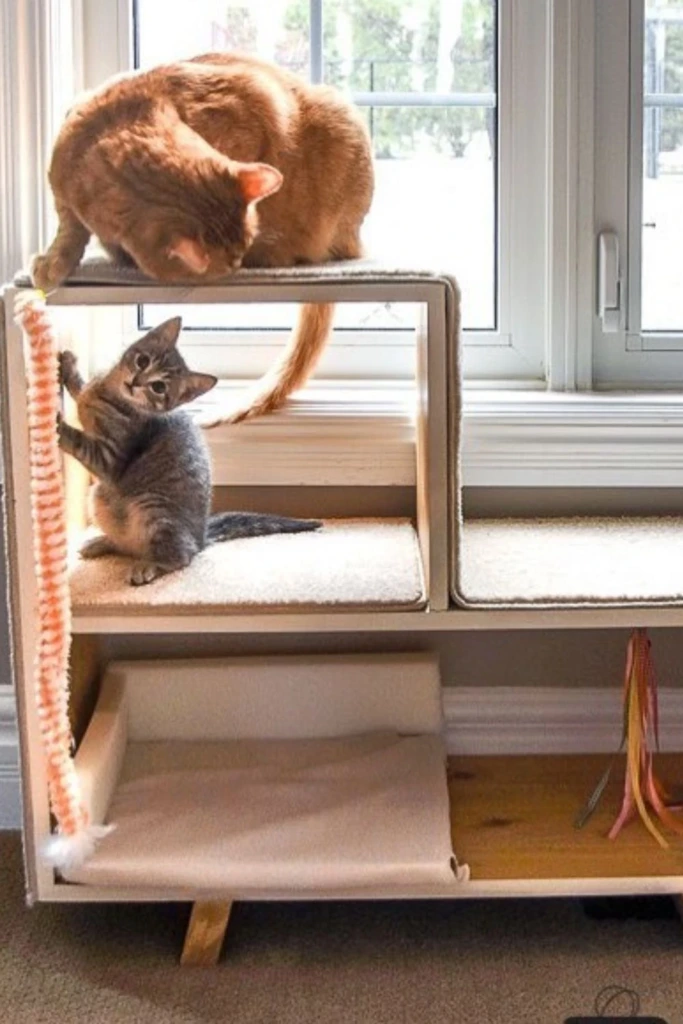
A window bench gives cats a comfortable place to watch birds, follow outdoor activity, and enjoy natural daylight. Its low-profile shape can also provide useful resting space without filling an entire room with furniture.
Build a sturdy bench-style frame or adapt a suitable wooden storage box. Secure a padded top and consider adding a lower cubby where your cat can hide. A vertical scratching panel along one side makes the design more versatile.
Check that the finished bench does not obstruct the window or interfere with its safe operation. If the window opens, ensure that the cat cannot escape through an unsecured screen or opening.
This design is ideal for sunny bedrooms and living areas. Use washable cushions and choose a location where the temperature remains comfortable throughout the day.
11. Sculpted Wood
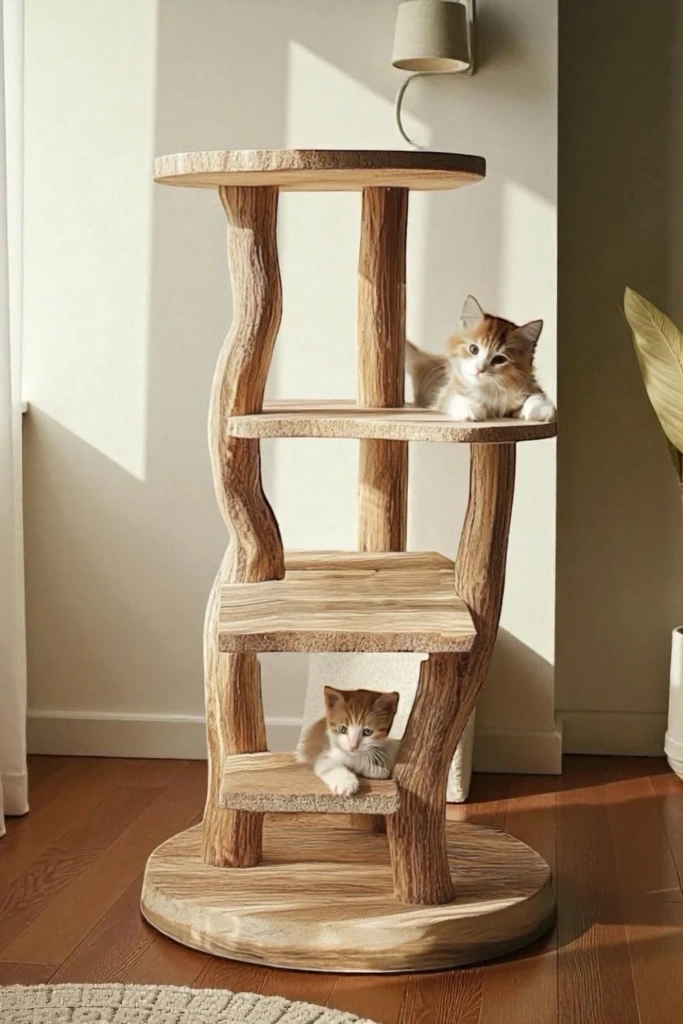
A sculpted wooden cat tree combines functional climbing features with carefully finished furniture design. Smooth curves, rounded corners, and attractive wood grain can help the structure blend naturally into a well-designed living room.
Choose sound hardwood or suitable structural plywood for the supports and platforms. Shape and sand the edges before assembly, then seal the wood with a fully cured, pet-safe finish. Attach each platform securely and distribute the weight so the structure remains balanced.
Rather than placing all the resting surfaces at extreme heights, create several accessible levels. Add a dedicated scratching post or panel to keep the design useful as well as attractive.
This idea suits homeowners who want their cat furniture to look intentional instead of temporary. Prioritize dependable construction over decorative curves or unusual shapes.
12. Sculptural Stack
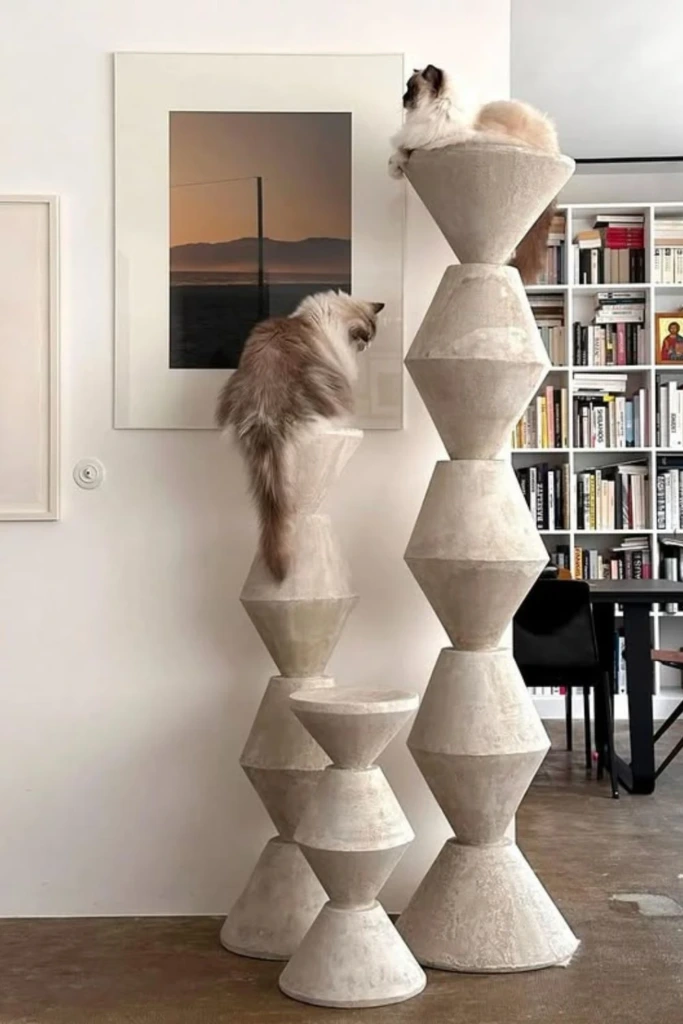
A sculptural cat tree turns geometric shapes into a distinctive climbing feature. Stacked cubes, offset platforms, and asymmetrical forms can give a room a modern appearance while creating several routes for a cat to explore.
Build the structure from appropriately strong plywood or solid wood. Secure each section internally with suitable fasteners and keep the base broad enough to support the highest level. Avoid relying on decorative materials that cannot safely carry a cat's weight.
Use the shapes to create different experiences, such as an open lookout, a covered resting nook, and a low climbing step. Apply nonslip finishes to surfaces that cats will regularly cross.
This approach is best for contemporary interiors where pet furniture also contributes to the room's overall design. Every unusual shape should be evaluated for balance and ease of access before assembly is considered complete.
13. Basket Towers
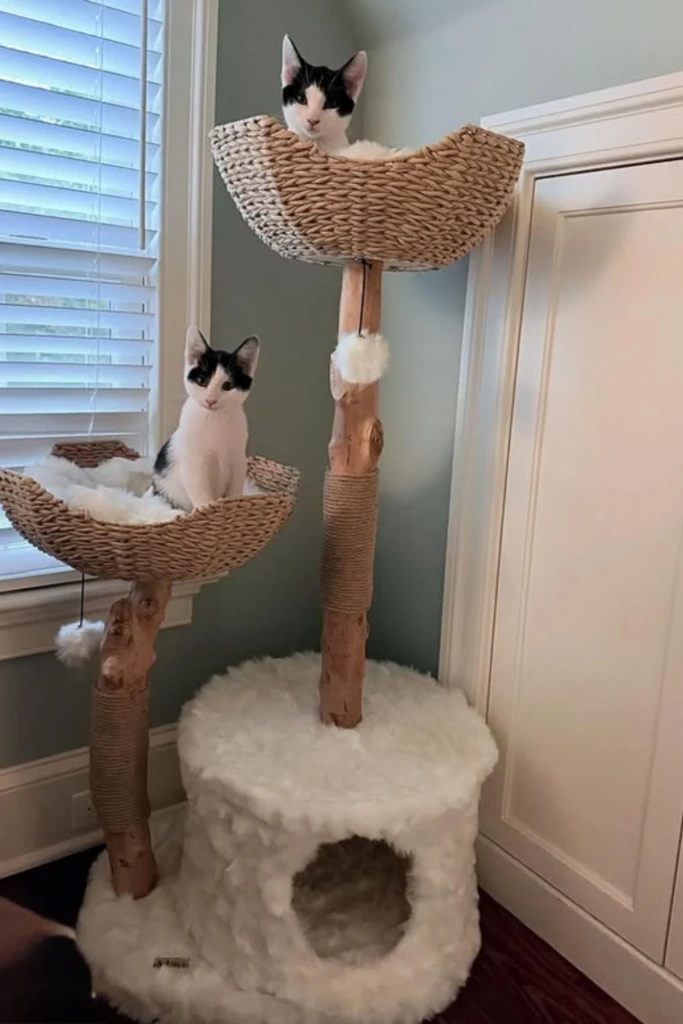
A basket tower uses raised woven resting spots to create a softer, more natural-looking cat tree. It can be a charming option for cats that prefer curling up in a contained space.
Select baskets that are strong enough to support your cat without bending or splitting. Inspect the weave for sharp ends, loose strands, and openings that might catch claws. Attach each basket to a solid wooden support using secure hardware, and connect the support to a stable base.
A padded insert makes the resting area more comfortable, while a separate sisal-covered post provides a useful scratching surface.
Place the tower in a quiet area where your cat can observe its surroundings. Regularly inspect the baskets because woven materials can deteriorate with scratching and repeated use.
14. Play Cabinet
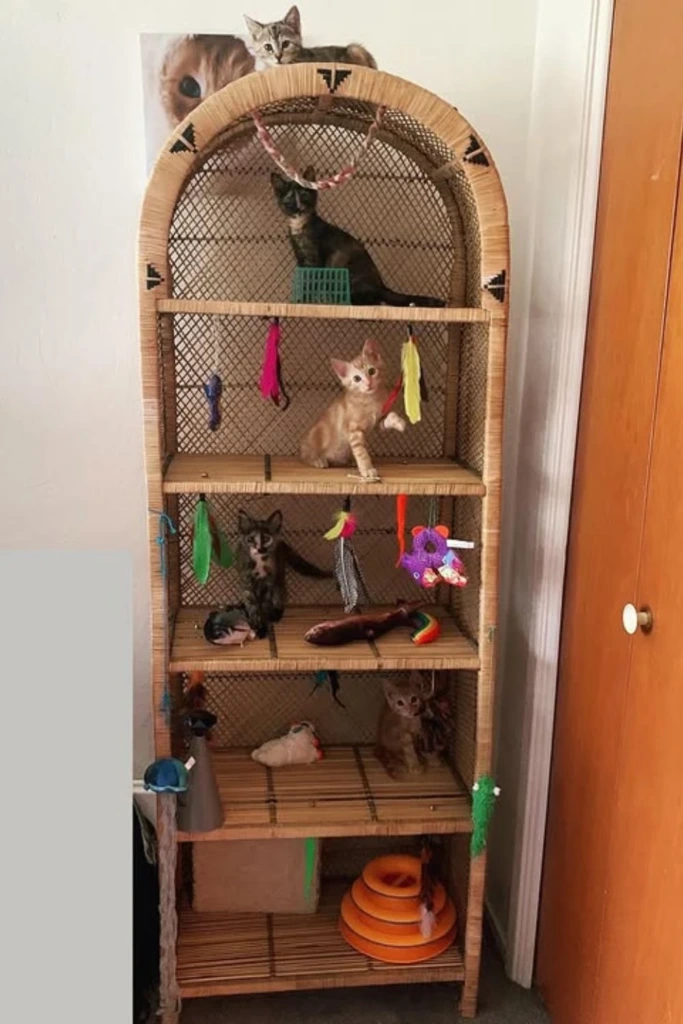
An old cabinet or shelving unit can be transformed into a vertical play area with a little planning. This design combines storage-style compartments with climbing routes, sheltered resting places, and opportunities for interactive play.
Choose a sturdy unit that can be securely anchored to a wall. Check its condition and reinforce weak shelves before adding any new features. Install platforms at suitable heights and use smooth-edged openings if you want to create enclosed cubbies.
A washable mat can protect individual shelves, while securely attached toys offer occasional enrichment. Avoid loose cords and small accessories that could be swallowed.
This project works well in an unused nook or spare room. Before repurposing a cabinet, remove unstable doors, exposed hardware, and anything that could swing shut or trap a curious cat.
15. Wall Trunk
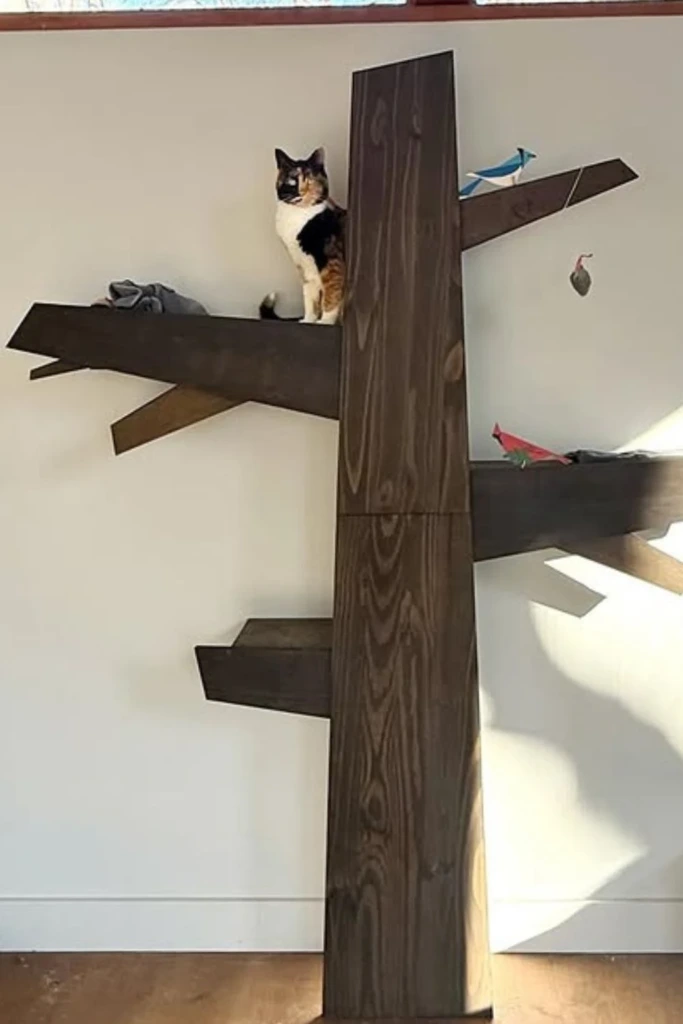
A wall trunk uses a prominent vertical wooden support with smaller platforms branching out from it. The result resembles a tree and offers a climbing route without placing a large structure on the floor.
Select a strong timber beam or a purpose-built wooden panel. Secure it to suitable structural supports using hardware rated for the intended load. Add offset shelves at different heights, checking that each platform has adequate depth and does not tilt under pressure.
You can include a vertical scratching strip along the central support and a larger perch near the top. Sand all wooden surfaces and eliminate exposed screw points.
This arrangement is ideal for modern rooms with unused wall space. Since the design depends on wall strength and precise installation, take particular care with mounting rather than relying on ordinary nails or adhesive.
16. Climbing Ramp
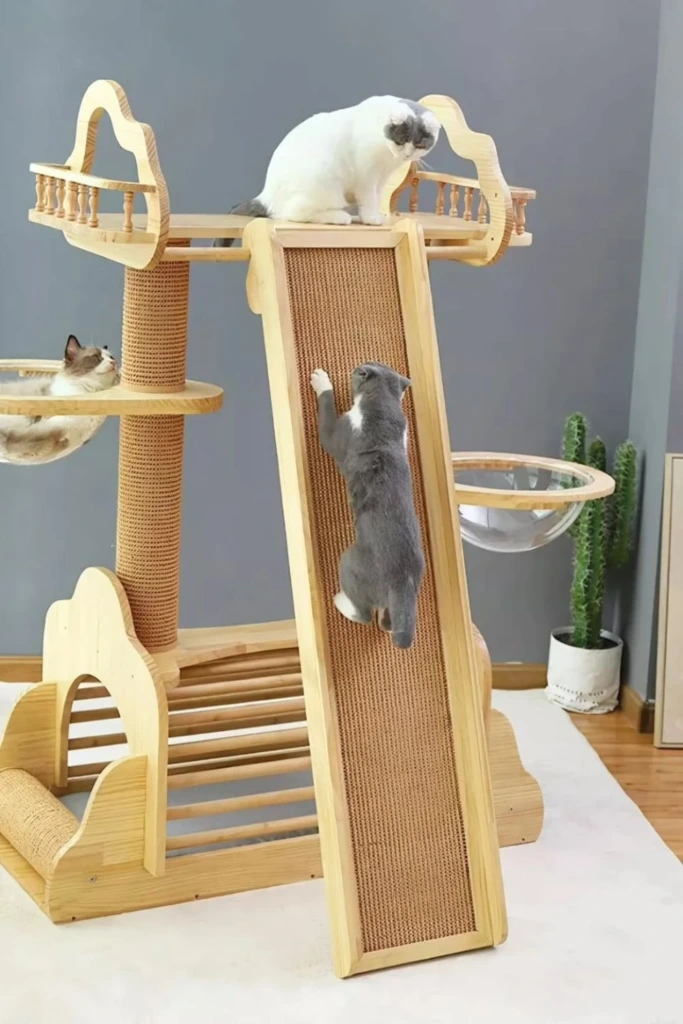
A climbing ramp provides a more gradual route between the floor and an elevated resting place. It can be useful for energetic cats that enjoy climbing and for cats that find repeated high jumps uncomfortable.
Cut a sturdy wooden panel to the required length and attach a textured surface such as securely fitted sisal or suitable nonslip material. Support the ramp at both ends and make sure it cannot slide when your cat climbs.
You can add low resting ledges along the route or position a platform at the top. Keep the incline manageable and inspect the surface for loose fibers or worn sections.
A ramp is a practical addition to a cat tree or wall-mounted climbing setup. For older cats or animals with mobility problems, choose a gentler slope and seek veterinary advice if climbing or jumping has recently become difficult.
17. Lean Ladder
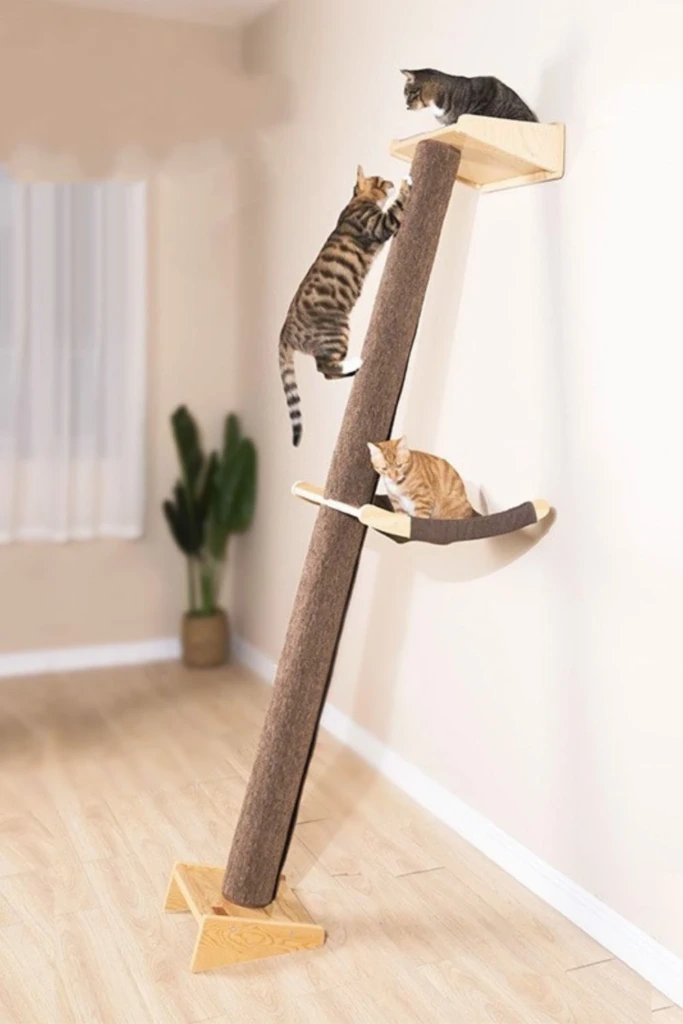
A leaning cat ladder offers an alternative to a bulky tower. Its angled design allows a cat to move between different heights while using relatively little floor space.
Construct the ladder from strong timber and attach broad, evenly spaced steps. Place nonslip material on the surfaces and secure the ladder to the wall or another suitable support so it cannot shift during use. A weighted base alone may not be sufficient for a tall or steep structure.
Small resting platforms along the sides can make the climb more comfortable. Position the ladder away from doors, furniture edges, and other places where a fall could cause injury.
This design works well in compact rooms where a vertical climbing route is more practical than a wide cat tree.
18. Floating Path
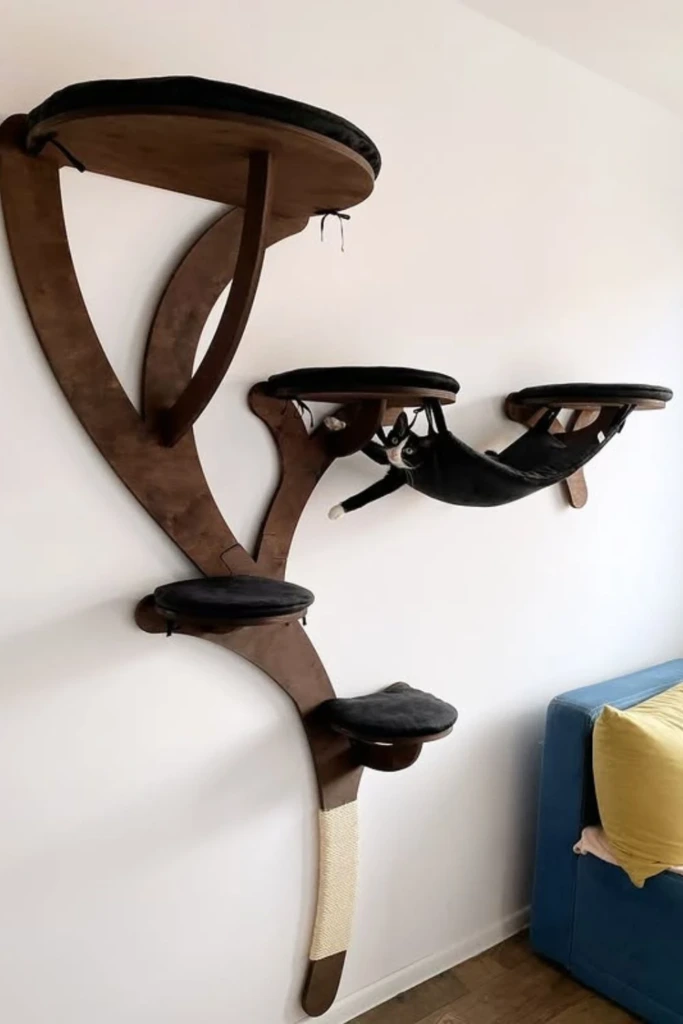
A floating cat path creates an elevated route across a wall using separate shelves and resting platforms. Instead of climbing straight upward, cats can travel horizontally, pause on a perch, and continue exploring.
Install sturdy mounting brackets into suitable structural supports, then arrange the platforms so the transitions between them feel natural. Use nonslip surfaces and make sure each shelf can support your cat's weight without flexing.
A fabric hammock or compact resting platform can add variety, provided it is securely installed and easy to clean. Leave enough clearance around the route so your cat can turn comfortably.
This setup is useful in rooms where floor space is limited but a long section of wall is available. Plan the complete route before drilling to avoid awkward gaps or dead ends.
19. Wall Panel
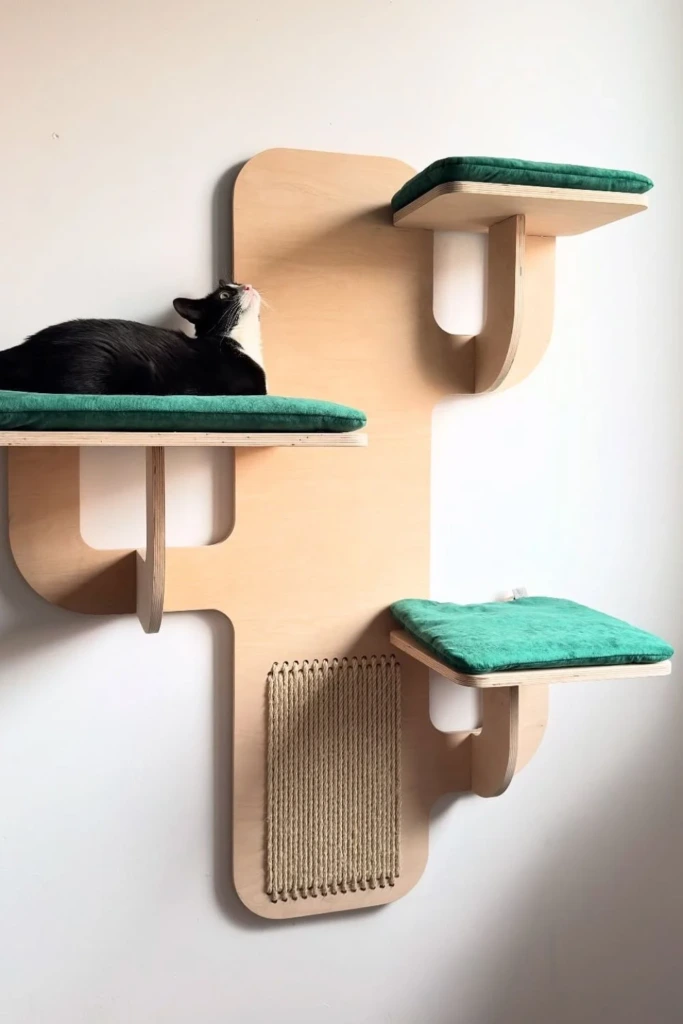
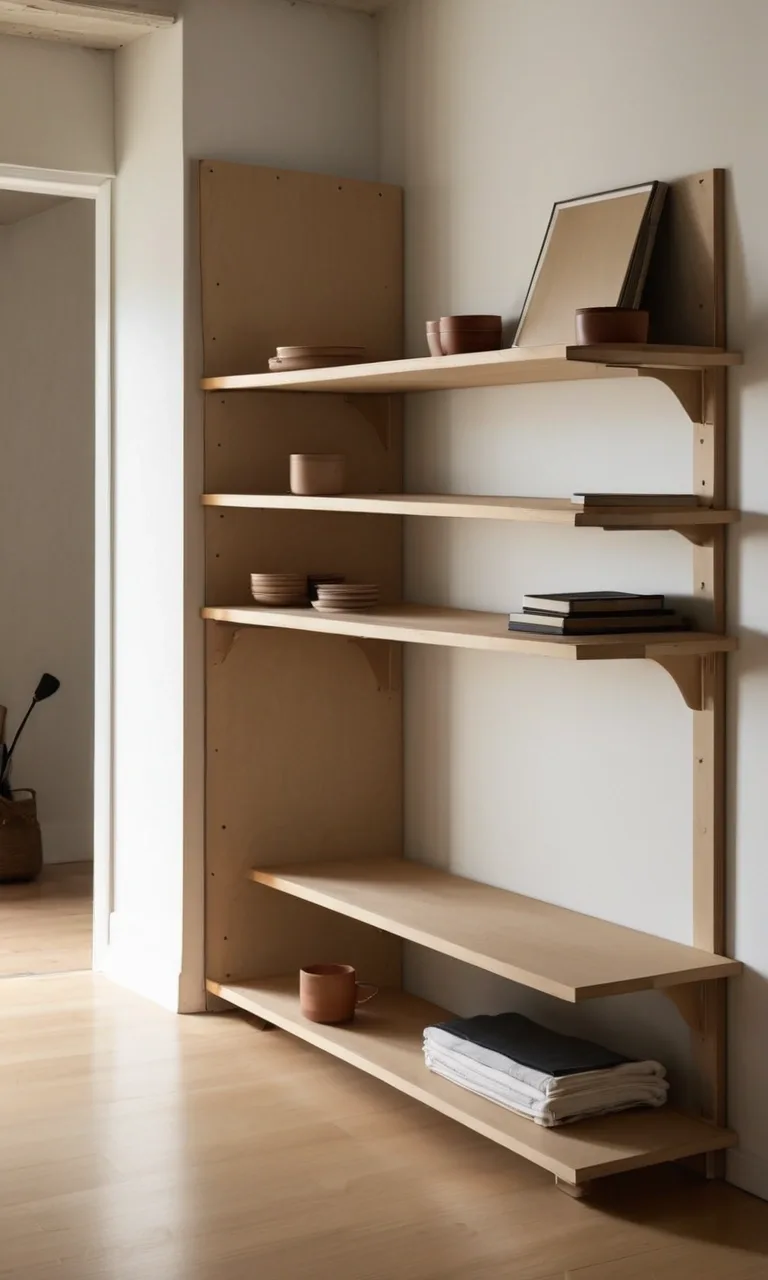
A wall panel creates a unified foundation for several cat shelves and scratching areas. It can simplify installation by allowing multiple features to be arranged on one carefully mounted backing structure.
Cut a suitable plywood panel to the desired dimensions and secure it to appropriate wall supports. Attach shelves at different heights, then add a textured scratching section and a larger resting platform if space allows.
Check the strength of the panel, its anchors, and every shelf connection before introducing your cat. Round off exposed edges and use finishes that are safe for pets once fully cured.
This design suits smaller homes and carefully organized interiors because it keeps most of the climbing equipment off the floor. It also allows you to coordinate the panel's appearance with nearby furniture.
20. Cube Loft
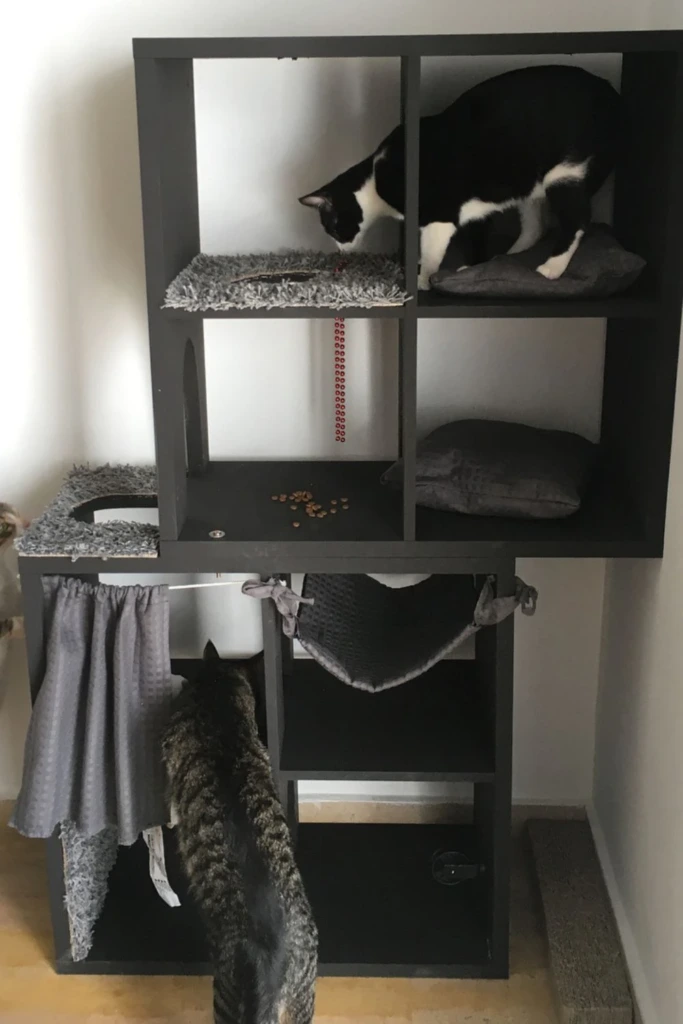
A cube loft combines enclosed resting spaces with open shelves, creating a compact environment for cats that enjoy switching between hiding and observing.
Use a sturdy cube shelving unit or construct individual compartments from suitable wood. Reinforce the joints, secure the unit against tipping, and create openings that are large enough for comfortable entry and exit.
Some compartments can contain washable cushions, while others remain open as climbing steps or lookout points. Arrange the cubes so your cat can leave each resting area without needing to squeeze through a narrow route.
This design is particularly useful in smaller households where cats need both shared space and occasional privacy. Make sure no fabric panels, curtains, or decorative pieces can trap a paw or obstruct an exit.
21. Cozy Basket
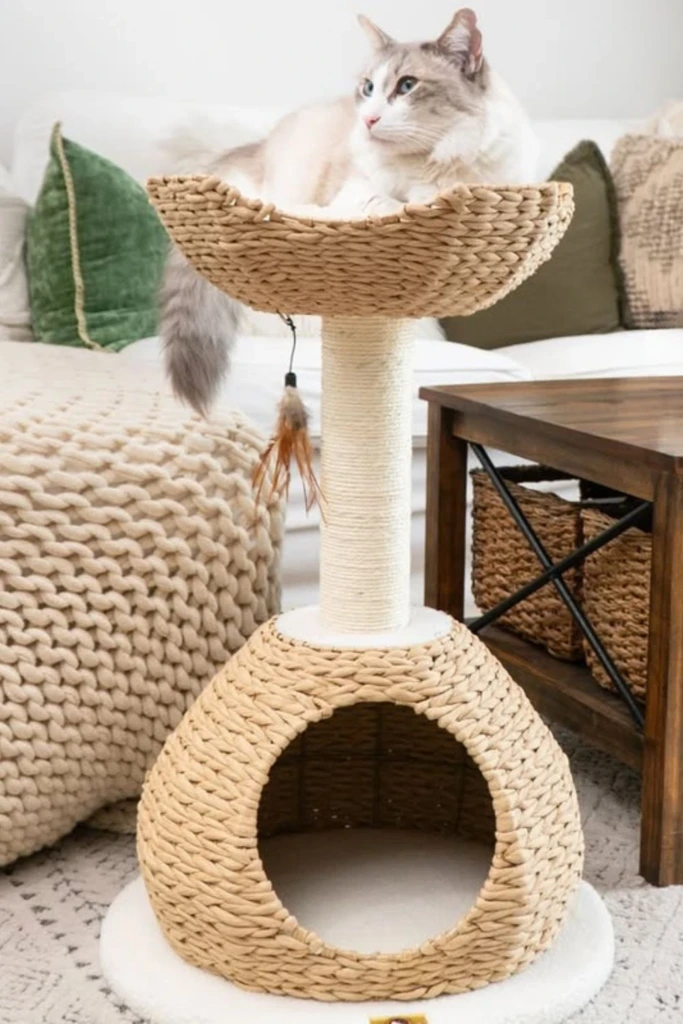
A cozy basket cat tree provides a sheltered resting spot above the floor. It combines the appeal of a comfortable sleeping nook with the practical benefits of an elevated perch.
Choose a durable basket with a smooth interior and no loose strands. Attach it securely to a strong post or support frame, then anchor the entire assembly to a stable base. A soft, washable cushion can make the basket more inviting.
Consider adding a low platform or a short climbing step so the basket is easy to reach. The entrance should be wide enough for your cat to turn around without becoming stuck.
This idea works well in family living spaces where cats enjoy staying near people while maintaining a comfortable place of their own.
22. Ceiling Pole
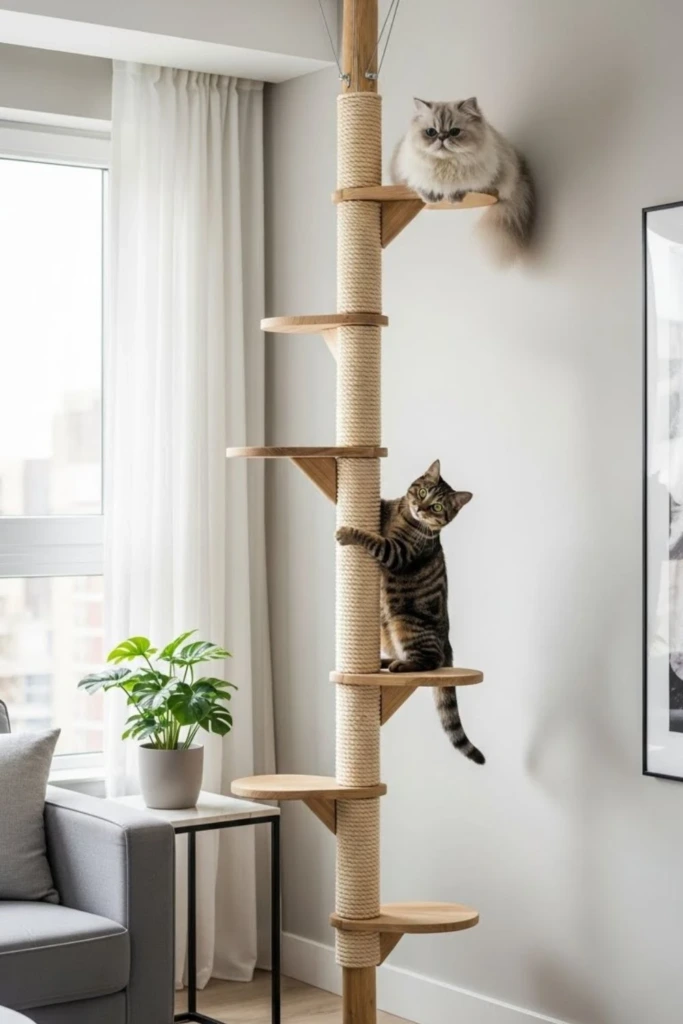
A floor-to-ceiling cat pole uses vertical space to create a tall climbing feature with a small footprint. Depending on the design, it may be possible to install one without permanent wall attachments, although the manufacturer's or builder's structural requirements must always be followed.
Choose a purpose-built tension system or construct a suitable support pole with secure upper and lower contact points. Add firmly attached platforms or climbing steps at gradual intervals.
Check that the pole cannot slip, rotate, or damage the ceiling. Avoid improvised pressure fittings that might loosen when a cat jumps onto the structure.
This design can be useful in apartments where drilling is restricted. Even so, a tension-mounted pole is only appropriate when the floor and ceiling can safely accommodate the installation and the entire system remains secure during use.
23. Bookshelf Hybrid
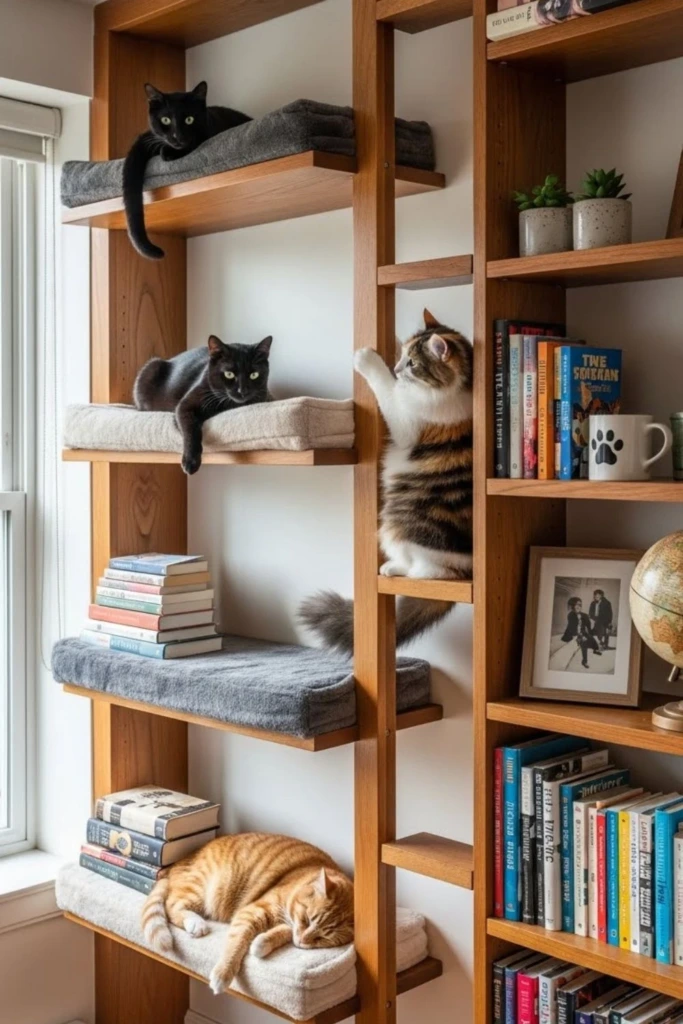
A bookshelf can serve as part of a cat climbing system when its shelves are strong, its layout is suitable, and the unit is securely anchored.
Start with a stable bookcase and remove objects that could fall or break if disturbed. Reinforce weak shelves where necessary, then add nonslip mats or dedicated resting pads to selected levels. Leave a clear route for climbing and avoid placing fragile items near the edges.
A low shelf can become a comfortable resting area, while a higher level may serve as a lookout. Add a separate scratching post nearby if the bookcase does not provide a suitable scratching surface.
This approach is practical for homes that already have shelving and cannot accommodate another large piece of furniture. Do not assume an ordinary bookcase is safe for climbing without checking its strength and stability first.
24. Staircase Side
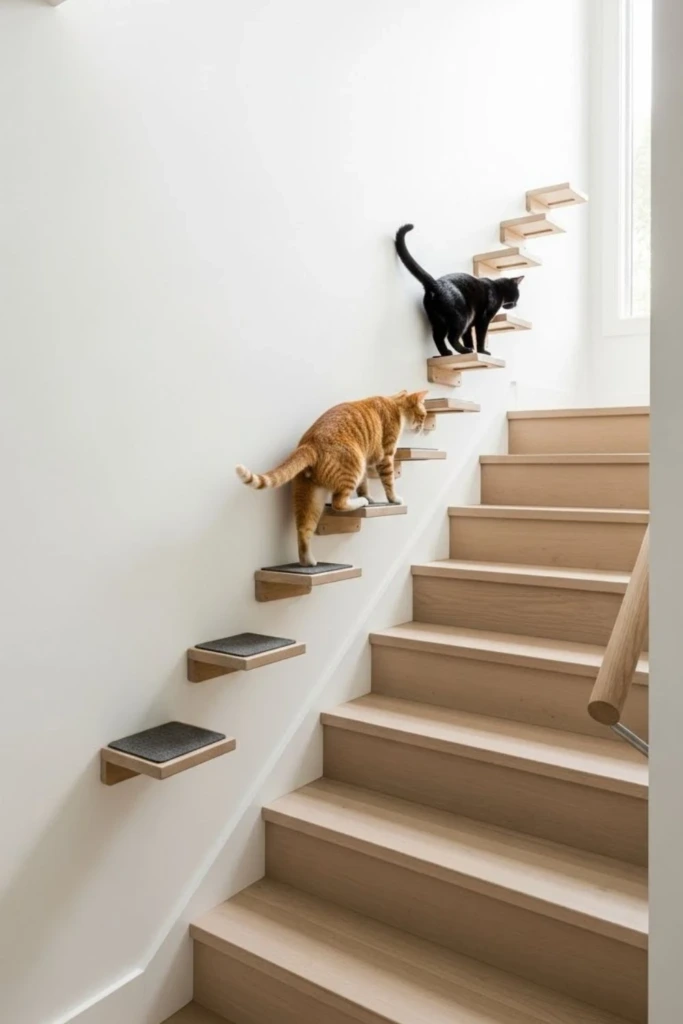
The wall alongside a staircase can provide valuable climbing space for cats that already enjoy exploring the stairs. A series of wall-mounted platforms can turn this unused vertical area into a dedicated route.
Locate suitable structural supports before installing the shelves. Arrange the platforms in a gradual sequence and choose depths that provide secure footing. The mounting hardware must be appropriate for both the wall material and the expected load.
Keep the climbing route separate from the part of the staircase used by people, and avoid creating obstacles that could cause someone to trip. Consider the height of each platform and provide a safe way for your cat to return to the floor.
This idea is particularly suitable for multi-level homes where the staircase wall has enough space for a carefully planned installation.
25. Radiator Lounge
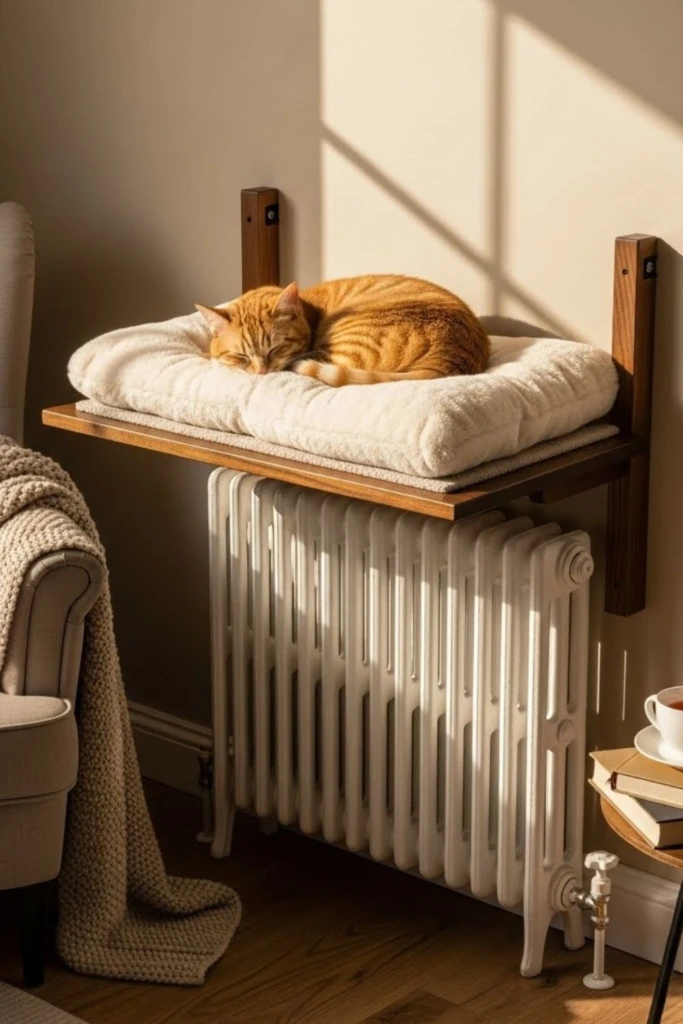
A radiator-side cat lounge can offer a warm resting place during colder weather. Cats often seek comfortable temperatures, but any design near a heat source must be planned with particular care.
Choose a purpose-built, heat-appropriate shelf or support frame designed for the specific radiator. Maintain the clearances required by the heating appliance and preserve its necessary airflow. Never allow fabric, cushions, or wood components to overheat or interfere with ventilation.
Use a securely fitted resting surface and inspect it regularly for heat damage or loose attachments. The cat should be able to leave the perch easily without becoming trapped against the radiator.
This option may suit homes with chilly winters, but it should never be installed in a way that creates a burn risk or interferes with safe radiator operation.
26. Closet Climber
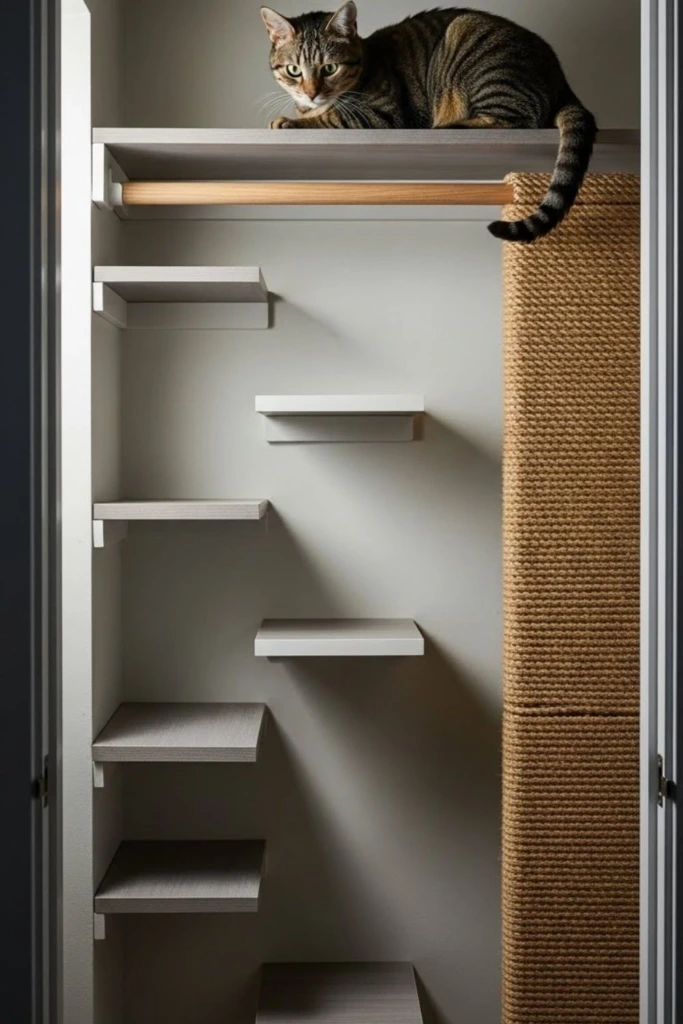
A closet climber turns an unused section of a wardrobe or closet into a compact activity space. It can give a shy cat somewhere quiet to rest while keeping its climbing equipment away from busy parts of the home.
Install sturdy shelves along an appropriate interior wall, leaving enough room for comfortable movement between levels. A vertical scratching panel and a padded resting platform can make the space more useful.
Keep clothing, cleaning products, chemicals, and small objects out of reach. Ensure that the closet door cannot close accidentally and leave the cat trapped inside. Provide adequate ventilation and an unobstructed entrance at all times.
This idea is particularly suitable for cats that prefer quiet retreats. It also works well when the home has limited space for a conventional cat tree.
27. Sliding Panels
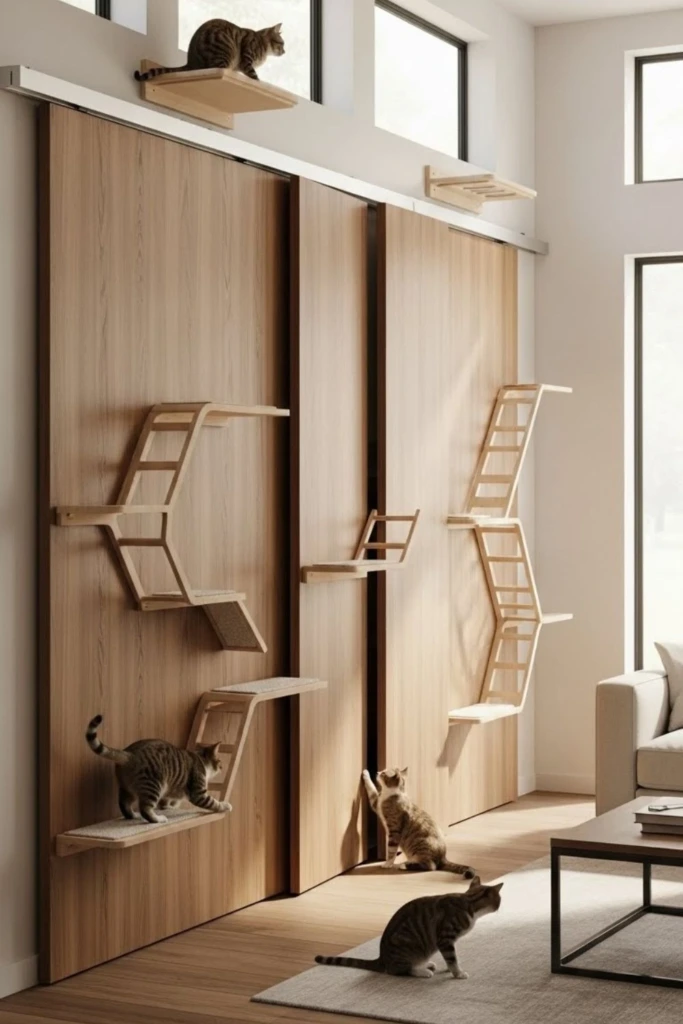
Sliding cat panels offer a flexible way to arrange an elevated climbing route. Depending on the design, shelves can be repositioned or removed to suit changing room layouts or a cat's developing abilities.
Use a properly engineered track system and mount it securely to structural supports. Choose shelves that are compatible with the track, can be locked firmly into place, and will not slide unexpectedly when a cat lands on them.
Plan the route carefully before use and check every moving component for wear. Keep the track free of obstructions, and never reposition a shelf while your cat is on it.
This concept is best suited to DIY enthusiasts who are comfortable working with secure mounting systems and moving hardware. For most homes, a fixed shelf arrangement will be simpler to maintain, but a well-designed adjustable system can offer greater flexibility.
Can a DIY cat tree really replace a store-bought one?
Yes. A thoughtfully constructed DIY cat tree can provide the same basic functions as a commercial model, including climbing platforms, scratching posts, resting areas, and enclosed hiding places.
The main advantage of building your own is the ability to customize its dimensions, appearance, and features. You can choose materials that suit your budget, match your existing furniture, and provide the type of enrichment your cat enjoys most.
However, a homemade structure is only a good alternative if it is built securely. Use suitable materials, reliable fasteners, and a stable base. Inspect the finished tree regularly for loose joints, damaged rope, cracked platforms, and other signs of wear.
A well-planned design can be economical and practical, but cutting corners on stability or construction quality may create unnecessary risks for your pet.
How tall should a cat tree be in a small home?
There is no single ideal height for every cat tree. The right dimensions depend on your available space, the size and agility of your cat, and whether the structure will stand independently or attach to a wall.
In a small home, a narrow design with several accessible levels often makes better use of space than a broad tower. Choose platform spacing that allows your cat to climb comfortably, and include a secure resting place at a height your cat can reach confidently.
Kittens may need closely spaced platforms, while senior cats or those with mobility limitations may benefit from lower levels and gentle ramps. Larger or more active cats may need broader platforms and stronger supports.
Above all, prioritize stability and safe access over maximum height. A moderately tall, well-built cat tree is more useful than a towering structure that wobbles or is difficult for your cat to navigate.