20 Glove Storage Ideas for 2026

Gloves are easy to misplace, difficult to organize, and often left in piles near the front door, inside coat pockets, or at the bottom of a drawer. Whether you own winter gloves, gardening gloves, work gloves, sports gloves, or cleaning gloves, a dedicated storage system can make finding the right pair much easier. The best solution depends on how many gloves you have, how frequently you use them, and whether they need to dry between uses.
These 20 glove storage ideas offer practical ways to organize your collection, save space, and keep gloves ready for their next use.
What Is The Best Storage Solution For A Large Glove Collection?
For a large glove collection, the most effective approach is to combine labeled storage bins, drawer dividers, and wall-mounted organizers. Instead of storing every pair together, separate gloves by purpose, season, family member, or size. This prevents everyday gloves from getting mixed up with occasional-use items.
Choose breathable baskets or open shelving for gloves that need ventilation, especially winter and outdoor pairs. Clean, completely dry gloves can go into drawers, fabric organizers, or sealed travel pouches when protection from dust is important.
If you have limited floor space, use vertical storage such as wall baskets, hook rails, or hanging organizers. A simple labeling system makes it easier for everyone in the household to return gloves to the correct place.
1. Wall Baskets
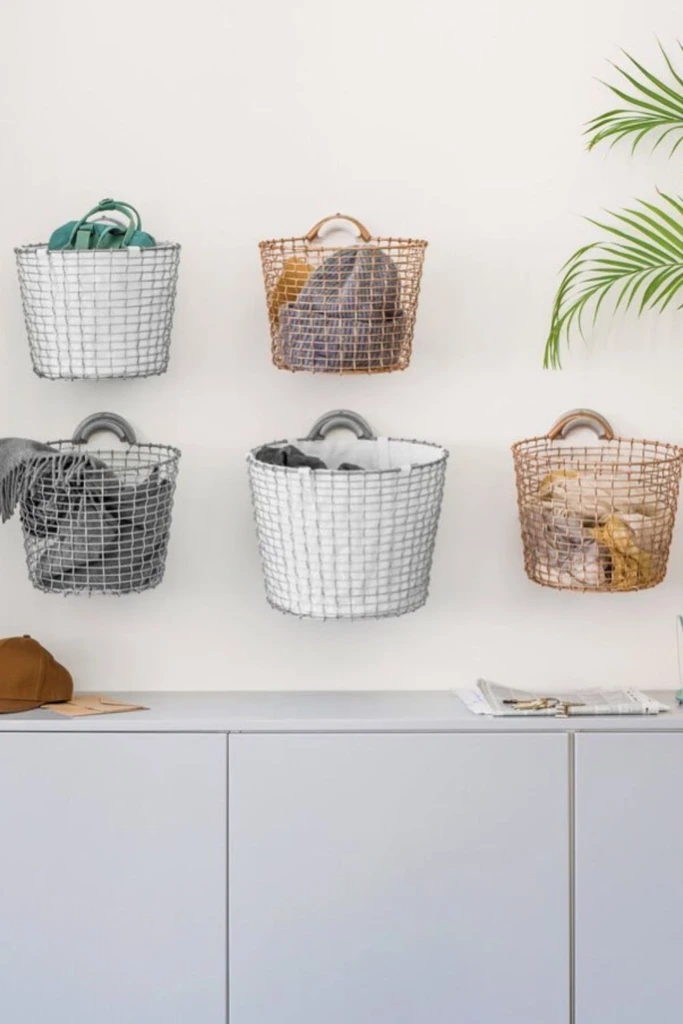
Wall baskets are a convenient option for keeping frequently used gloves close to the entrance. Attach sturdy baskets to an entryway wall, inside a mudroom, or near a coat rack so family members can drop off their gloves without cluttering furniture.
Assign a separate basket to each person or glove category. Wire baskets provide good airflow, while fabric or woven baskets offer a softer decorative appearance. Choose a basket with enough depth to hold gloves securely without making them difficult to retrieve.
For outdoor gloves, allow wet or damp pairs to dry fully before placing them in a basket for long-term storage.
2. Family Bins
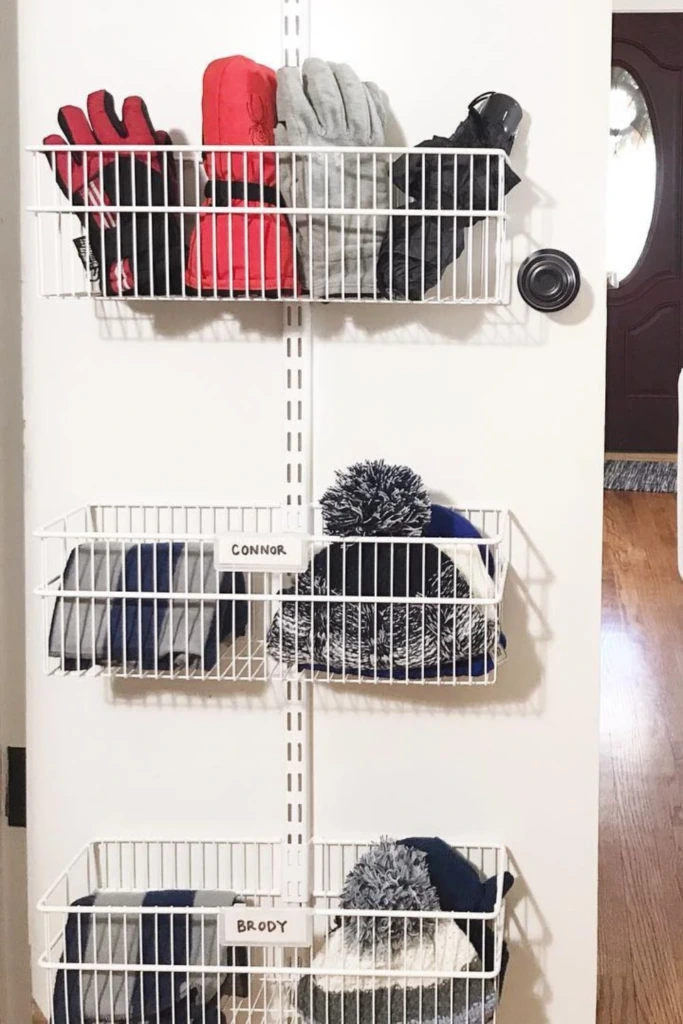
Family bins help households keep everyone's gloves organized in one central location. Give each person a small container labeled with their name, or use different colors to distinguish between family members.
Place the bins on a low shelf near the front door so children can reach their own belongings. Larger containers can accommodate bulky winter gloves, while smaller ones work well for lightweight gloves and liners.
For better organization, use an additional seasonal bin for spare pairs and out-of-season accessories. Store clean, dry gloves together and avoid overfilling containers, which can make individual pairs difficult to find.
3. Drawer Dividers
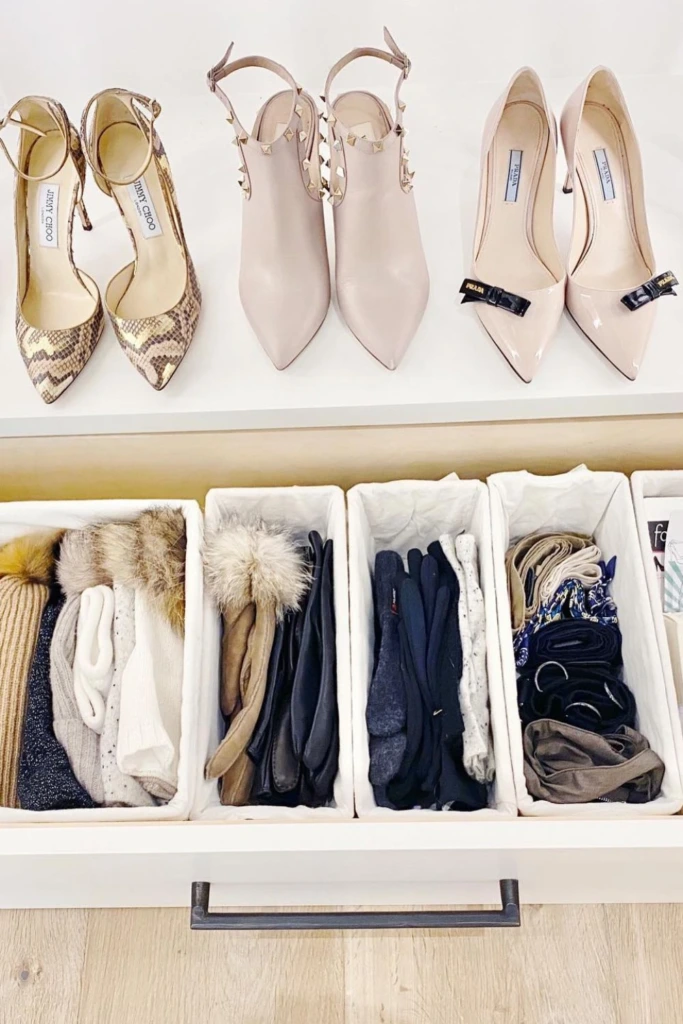
Drawer dividers turn an untidy drawer into a practical glove storage area. Adjustable dividers are particularly useful because they can be repositioned to fit different glove sizes, from thin dress gloves to thicker knitted pairs.
Fold or lay gloves flat and place matching pairs in the same compartment. You can also create separate sections for work gloves, winter accessories, driving gloves, and lightweight everyday pairs.
If you have several people sharing a storage drawer, dedicate individual compartments to each person. This arrangement makes it easier to put gloves away properly and prevents smaller pairs from disappearing beneath larger ones.
4. Clip Hangers
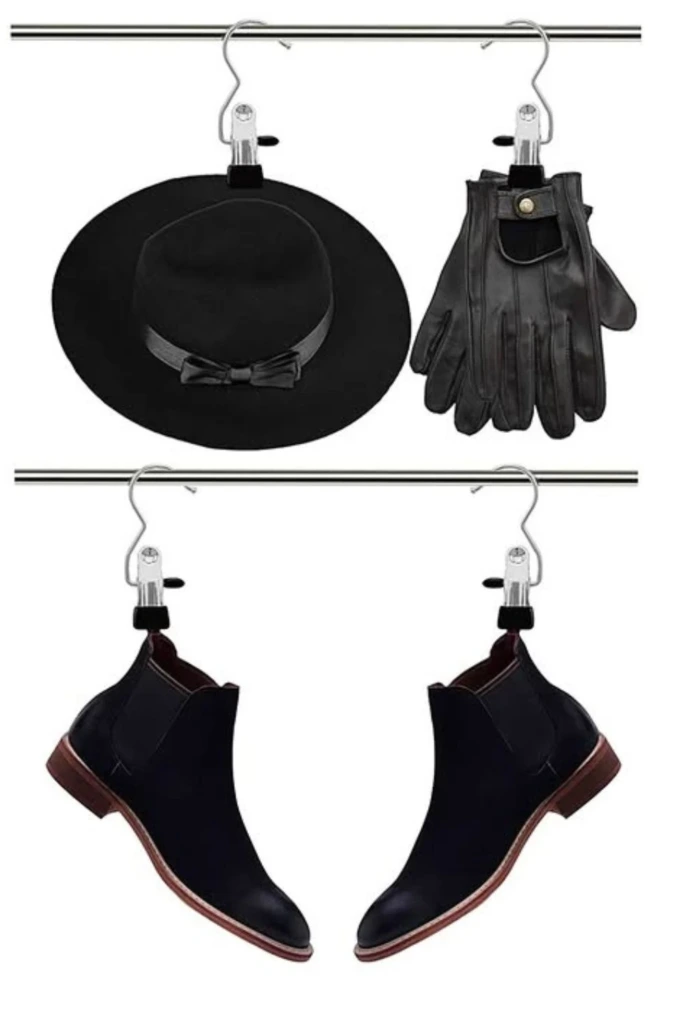
Clip hangers provide a simple way to organize lightweight gloves vertically. Use a hanger with several clips to hold individual pairs, keeping them visible in a closet, mudroom, or laundry area.
Clips can also be useful for drying washable gloves, provided the material can tolerate hanging and the clips do not leave marks. Position the clips along a sturdy section of the glove rather than gripping delicate fabric tightly.
For heavy leather or insulated gloves, choose a stronger hanger and suitable clips. Avoid leaving wet gloves hanging in a crowded closet, where limited airflow can slow drying.
5. Glove Rack
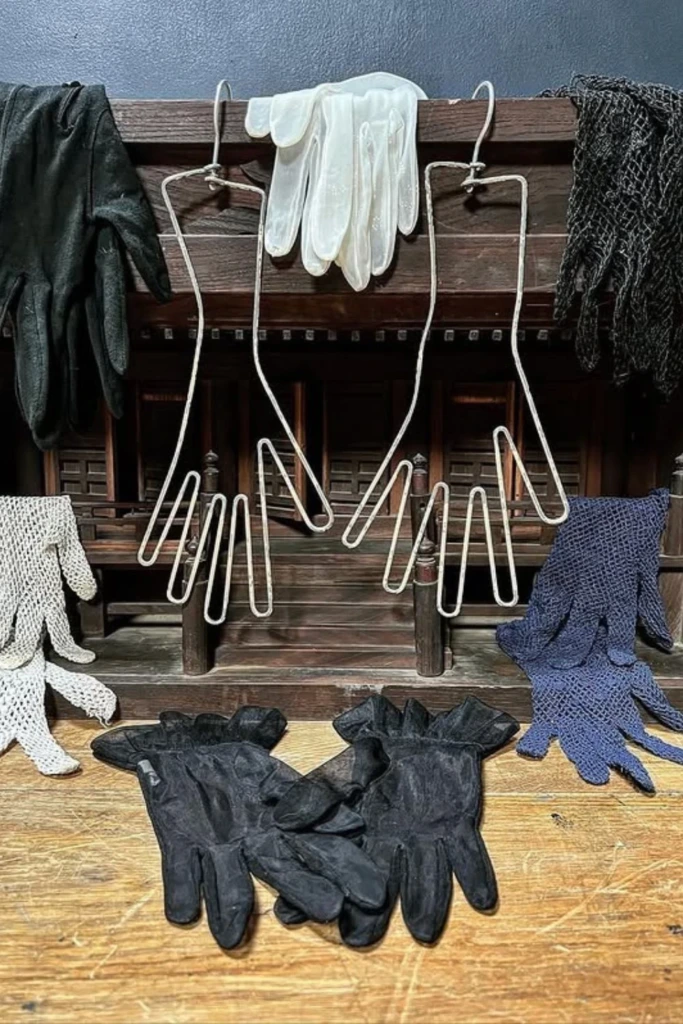
A glove rack gives your collection a designated place instead of leaving pairs scattered around the house. Depending on your needs, you can use a freestanding rack, a compact countertop organizer, or a wall-mounted design with several slots.
Choose a rack with enough space between sections to keep bulky gloves separate. Open racks are especially helpful for gloves used daily because you can see what is available at a glance.
For a family entryway, arrange the rack by person or glove type. If you use gloves for several activities, reserve separate sections for gardening, household cleaning, outdoor work, and cold weather.
6. Drying Hooks
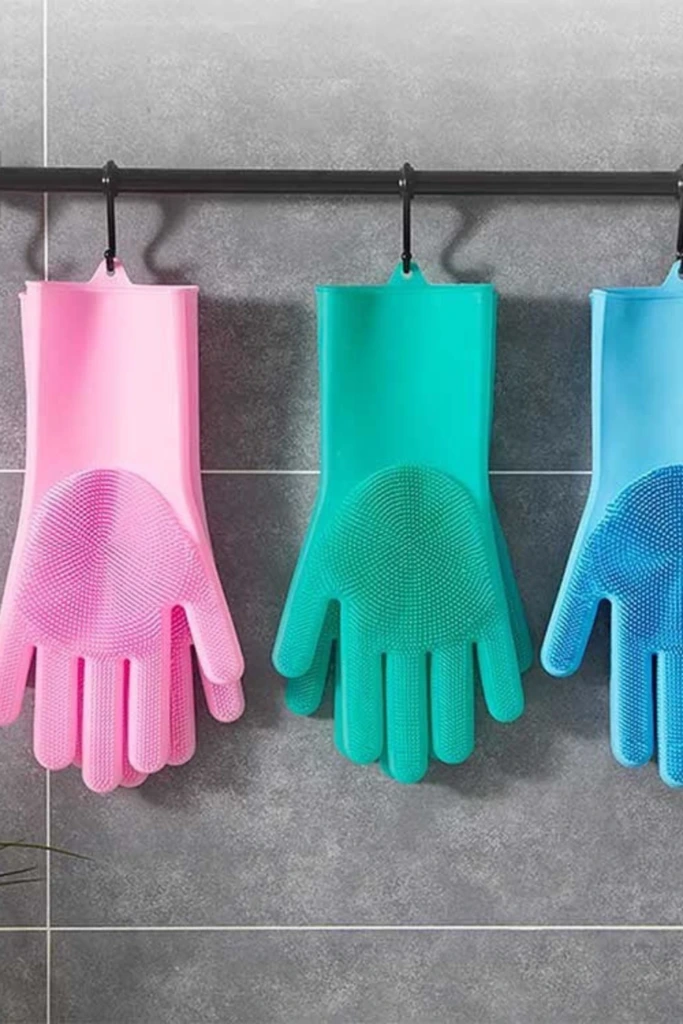
Drying hooks are useful for gloves that become damp after rain, snow, exercise, or outdoor work. Install a row of hooks in a ventilated laundry room, mudroom, or utility area where gloves can hang without touching one another.
Position gloves so that air can circulate around the fingers and cuffs. Some gloves dry more efficiently when opened wide or turned inside out, depending on their construction and the manufacturer's care instructions.
Keep drying hooks separate from your main storage area when possible. Once gloves are fully dry, move them into their assigned basket or drawer to maintain an orderly space.
7. Travel Case
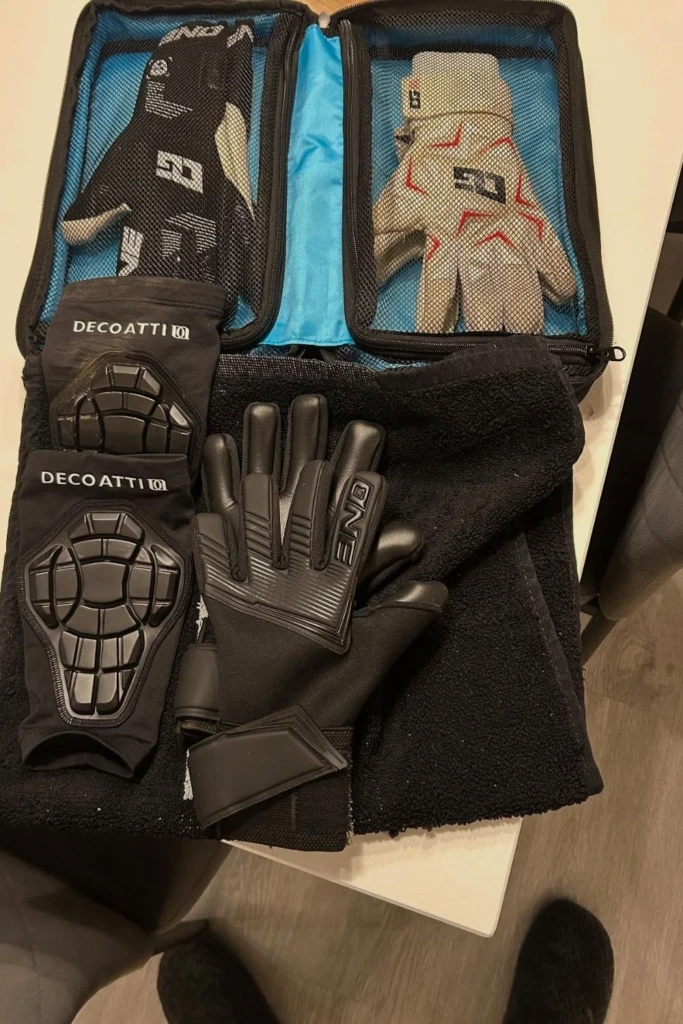
A travel case protects gloves from dirt, crushing, and separation while you're away from home. A compact zippered case, small toiletry pouch, or soft accessory organizer can work well for dress gloves, driving gloves, and lightweight outdoor pairs.
Choose a case that fits the gloves without forcing them into tight folds. Separate compartments are helpful if you carry several types of gloves or want to keep clean pairs away from other items in your bag.
For bulky winter gloves, use a larger packing cube or expandable pouch. Always pack gloves completely dry, and avoid sealing damp pairs inside an airtight case because trapped moisture can cause unpleasant odors and damage some materials.
8. Rail Hooks
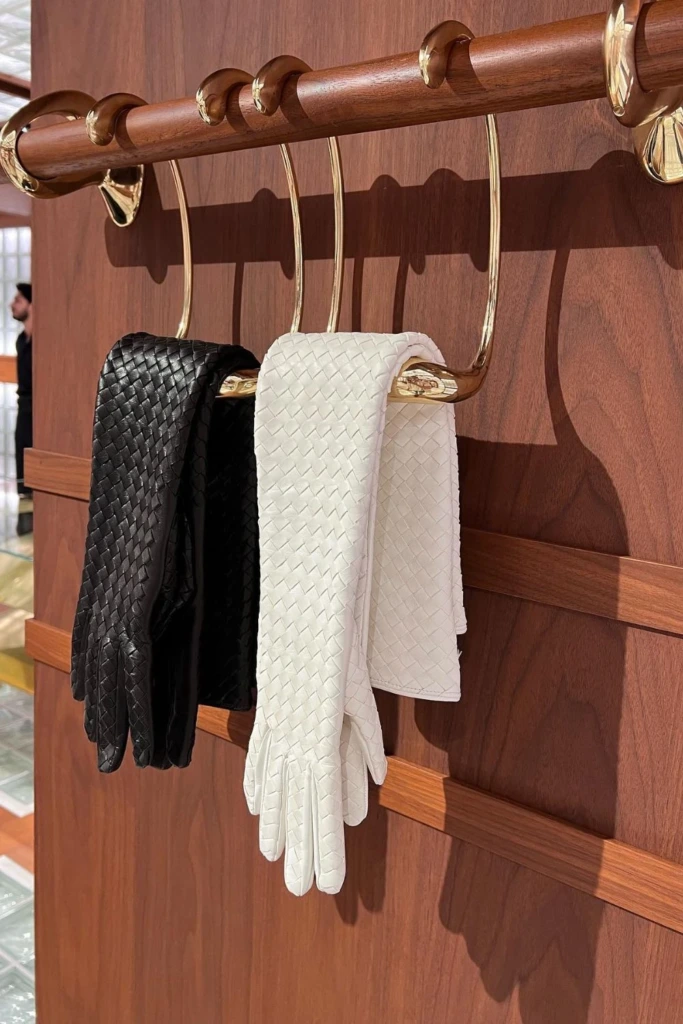
Rail hooks make use of narrow wall spaces that might otherwise remain empty. Mount a sturdy rail in a hallway, laundry room, garage, or mudroom, then add individual hooks for gloves and other frequently used accessories.
You can dedicate two hooks to each pair or use a single hook for a small storage pouch containing matching gloves. Removable hooks may work for lightweight items, but heavier gloves and frequently handled accessories need secure mounting.
Keep the rail at a convenient height and leave enough space between hooks to prevent gloves from overlapping excessively. This system works particularly well when several people need quick access to their outdoor gear.
9. Cabinet Hooks
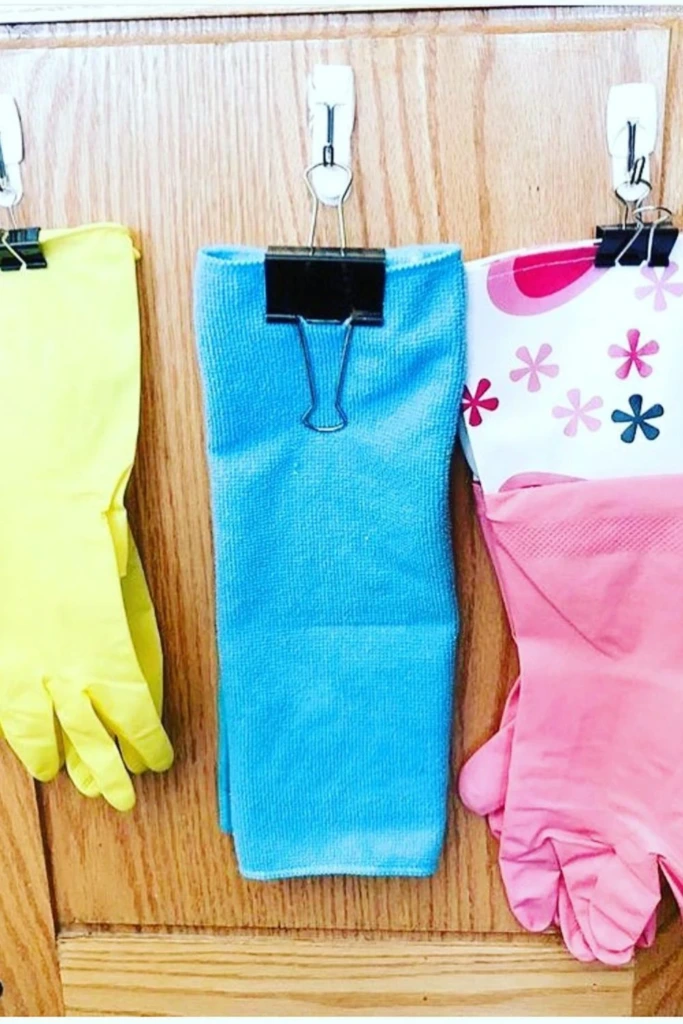
Cabinet hooks offer discreet glove storage without taking up additional wall space. Attach suitable hooks to the inside of a utility cabinet, closet door, or mudroom cupboard to hold lightweight gloves when they're not in use.
Before installing them, check the cabinet's clearance so the door can close without pressing against the gloves. Adhesive hooks are convenient for lighter items on suitable surfaces, while screw-mounted hooks generally provide a more secure option.
Use this method for clean, dry gloves rather than wet outdoor gear. Keeping gloves inside a cabinet protects them from dust and helps maintain a tidy appearance in shared living spaces.
10. Clip Board
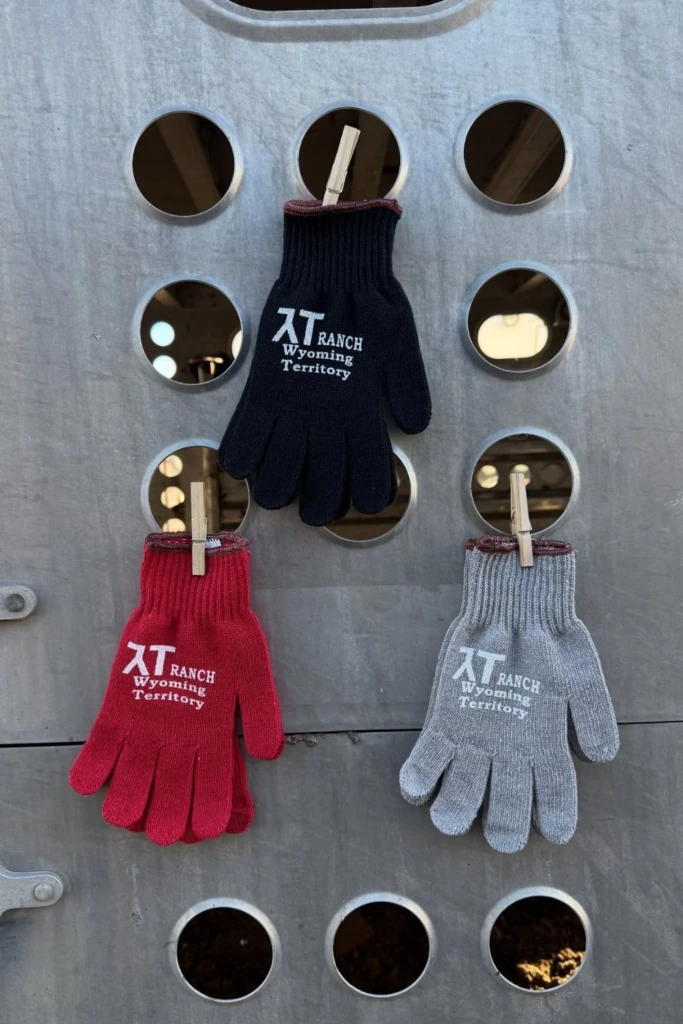
A clip board-style organizer can be repurposed to keep glove pairs together and easy to identify. Use a sturdy board fitted with several clips, or attach suitable clips along a wooden panel to create a compact hanging organizer.
Secure each pair together at the cuff, making sure the clip does not damage delicate fabric or leave marks on leather. Mount the board inside a closet or near a storage shelf where the gloves can be accessed easily.
This idea works best for lightweight gloves and small collections. For thick insulated gloves, check that the clips can support the weight and that the gloves are not squeezed tightly enough to distort their shape.
11. Hook Rail
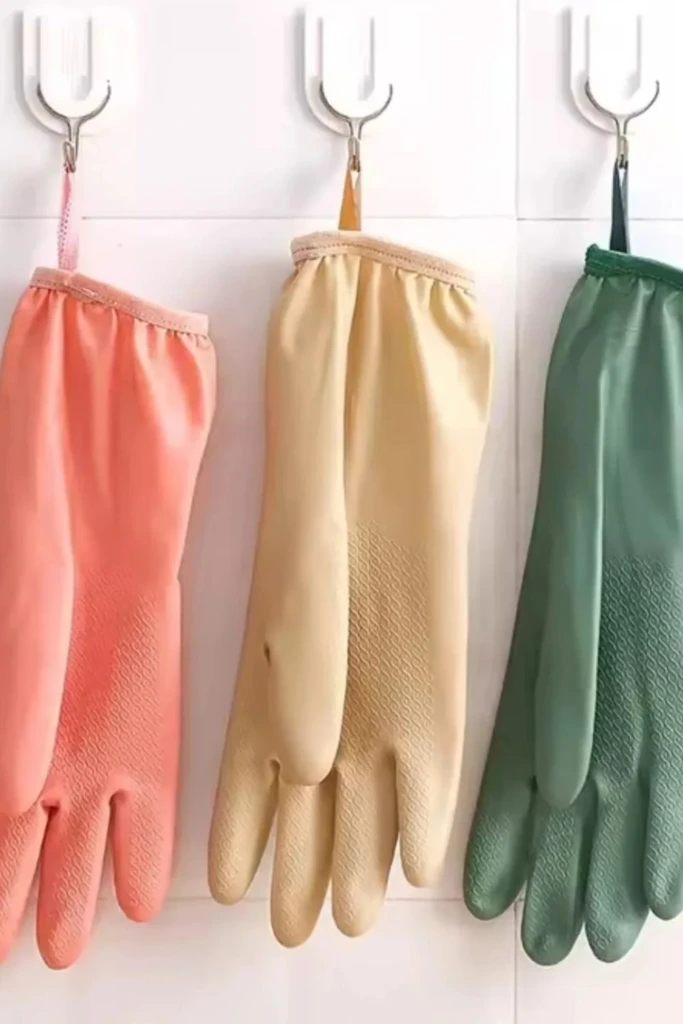
A hook rail is one of the simplest ways to keep frequently used gloves accessible. Install it near the main entrance, beside a coat rack, or inside a utility room to create a dedicated spot for everyday accessories.
You can hang a pair over one wide hook, attach a small pouch to each hook, or use separate hooks for individual gloves that need to air out briefly. Labeling sections can help family members remember where their gloves belong.
Choose a rail with durable hooks and secure wall fixings. If the gloves are wet, give them enough room to dry before moving them into enclosed storage.
12. Bar Hooks
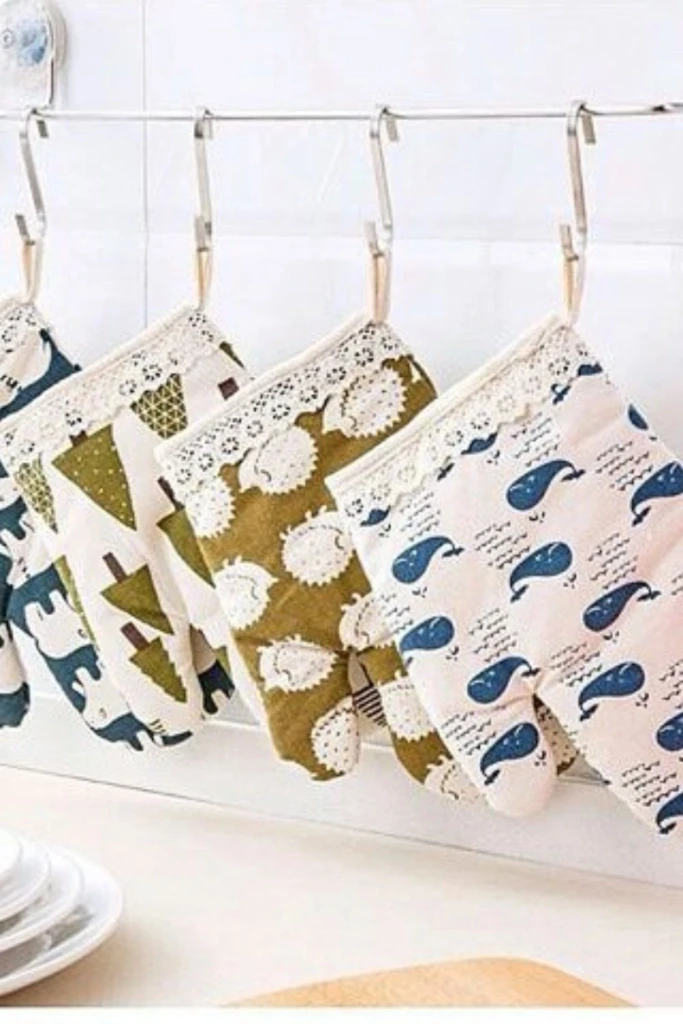
A horizontal bar fitted with hooks can hold several glove pairs while keeping them off countertops and shelves. It works well beneath an entryway shelf, inside a closet, or along a garage wall.
Slide movable hooks along the bar to create the spacing you need. Wider spacing helps accommodate thick ski gloves or work gloves, while closer hooks can hold smaller, lightweight pairs.
If you prefer a cleaner look, place the bar behind a cabinet door or inside a wardrobe. Make sure the bar is firmly attached and positioned where gloves can hang without brushing against the floor.
13. Shelf Basket
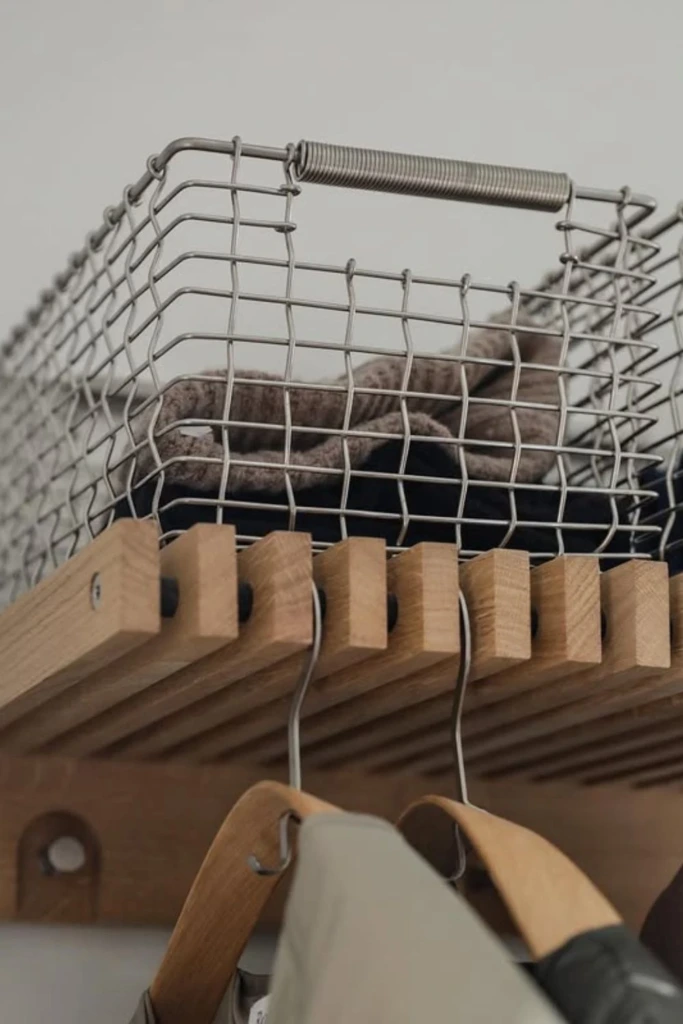
A shelf basket makes good use of existing closet or entryway shelving. Choose a basket that fits the shelf depth and is large enough for your collection without becoming difficult to lift or search through.
Use smaller containers inside a larger basket to separate gloves by type or season. For example, keep everyday gloves near the front and reserve another section for spare pairs, special-occasion gloves, or accessories that are used less often.
Open-front baskets provide quick access, while handled baskets can be pulled down from higher shelves. Store only dry gloves inside, and choose a ventilated design for materials that benefit from airflow.
14. Drying Rack
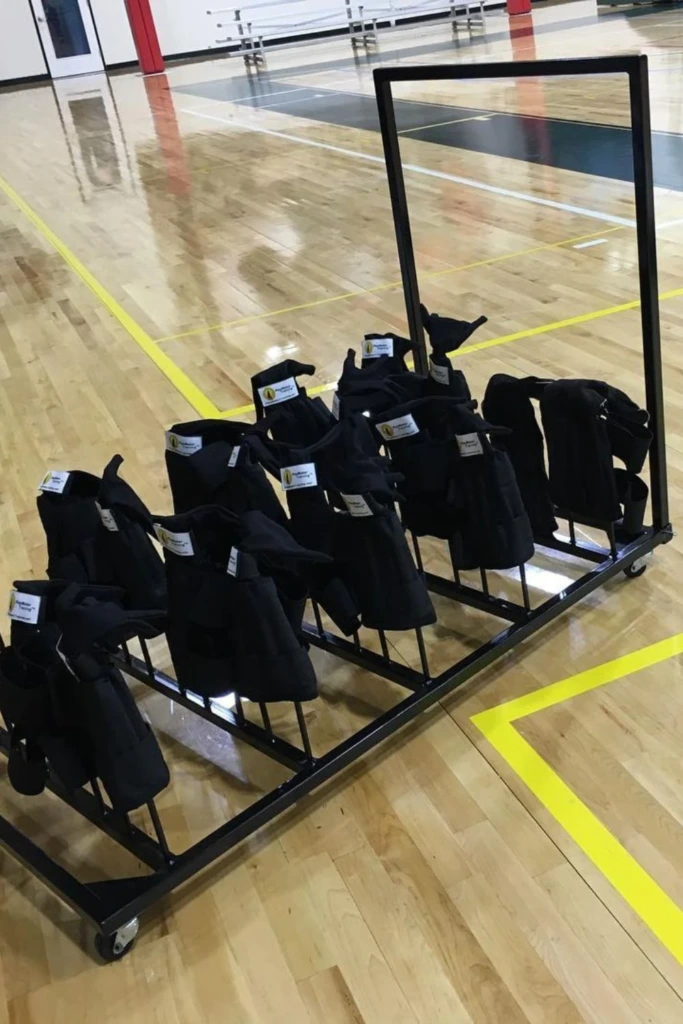
A drying rack is a practical choice for households that frequently use washable gloves, sports gloves, gardening gloves, or winter accessories. A folding laundry rack can provide enough room for multiple pairs without requiring permanent installation.
Spread gloves out instead of stacking them, and position them so air reaches both sides. For gloves with removable liners, drying the liners separately may help moisture escape more efficiently.
Follow the care instructions for each material. Some gloves should dry naturally away from direct heat, while others may have specific requirements. Once everything is fully dry, return the gloves to their regular storage locations rather than leaving the rack permanently cluttered.
15. Hanging Basket
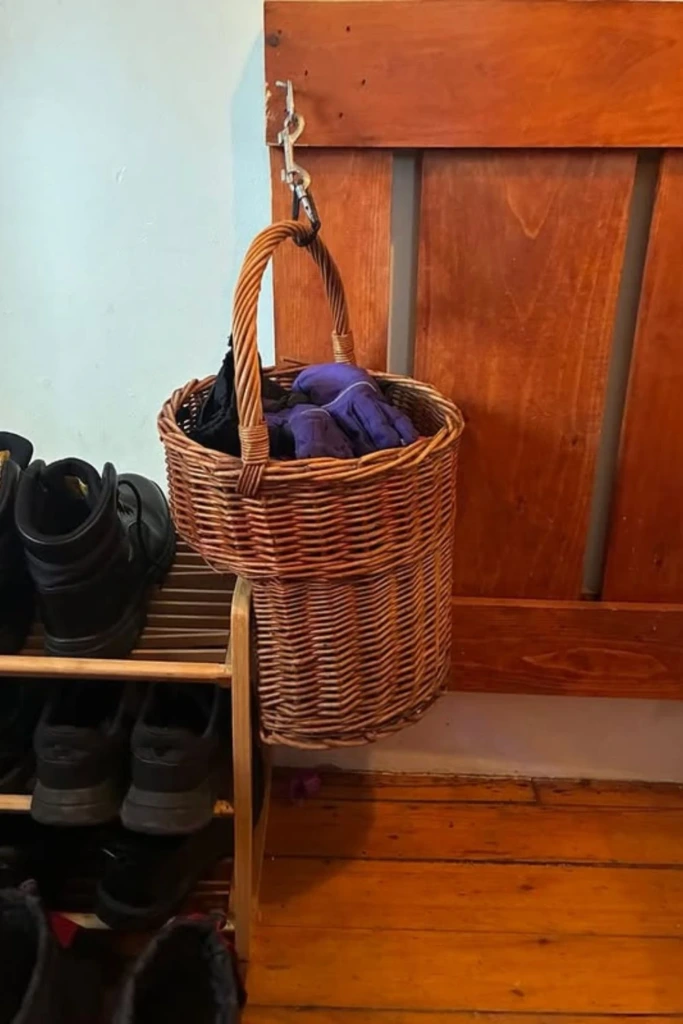
A hanging basket creates extra storage when floor and shelf space are limited. Suspend a basket from a suitable wall bracket, closet rail, or purpose-built hanging organizer to hold gloves and other small accessories.
Choose a basket with secure attachments and a design that prevents smaller gloves from slipping through the openings. Fabric hanging pockets are another option if you prefer separate compartments for different glove types.
Place everyday gloves at a reachable height and reserve higher compartments for occasional-use pairs. Keep the basket away from areas where it might be bumped frequently, and never overload the mounting hardware.
16. Zipper Pouch
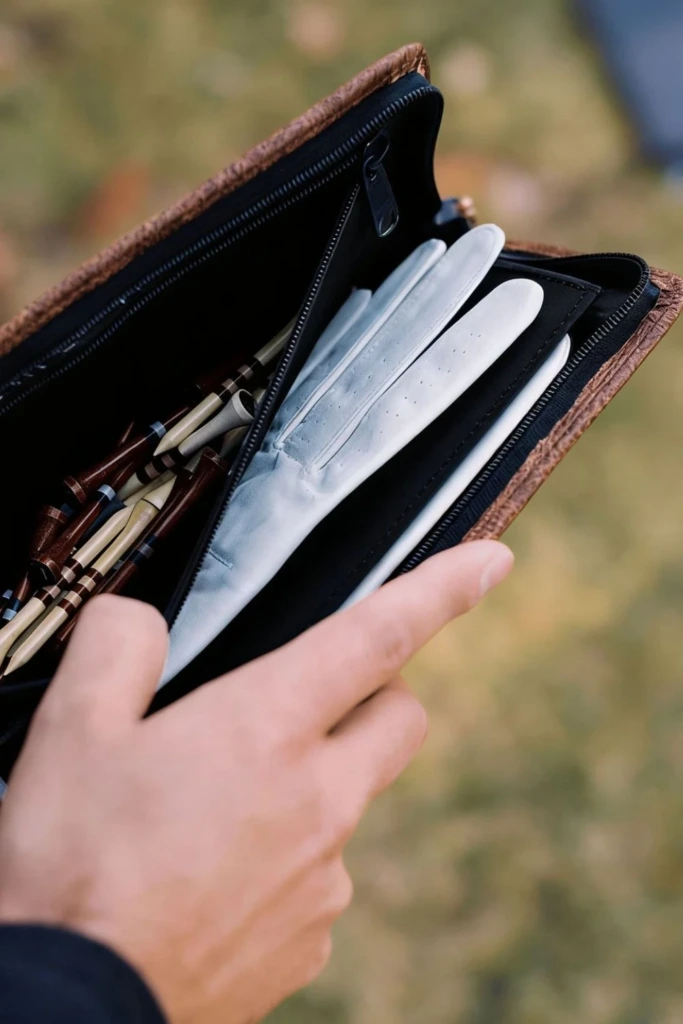
Zipper pouches are useful for keeping matching gloves together in drawers, handbags, backpacks, and luggage. A small pouch can hold thin gloves, while a larger one may accommodate thicker winter pairs.
Choose a pouch that fits comfortably around the gloves rather than compressing them. Mesh or breathable fabric can be helpful for storage in a closet, while a more protective pouch works well for carrying clean gloves during travel.
Label the pouch according to its contents if you own several types. For example, keep driving gloves in one pouch and spare cold-weather gloves in another. Make sure the gloves are completely dry before closing the zipper.
17. Clamp Clips
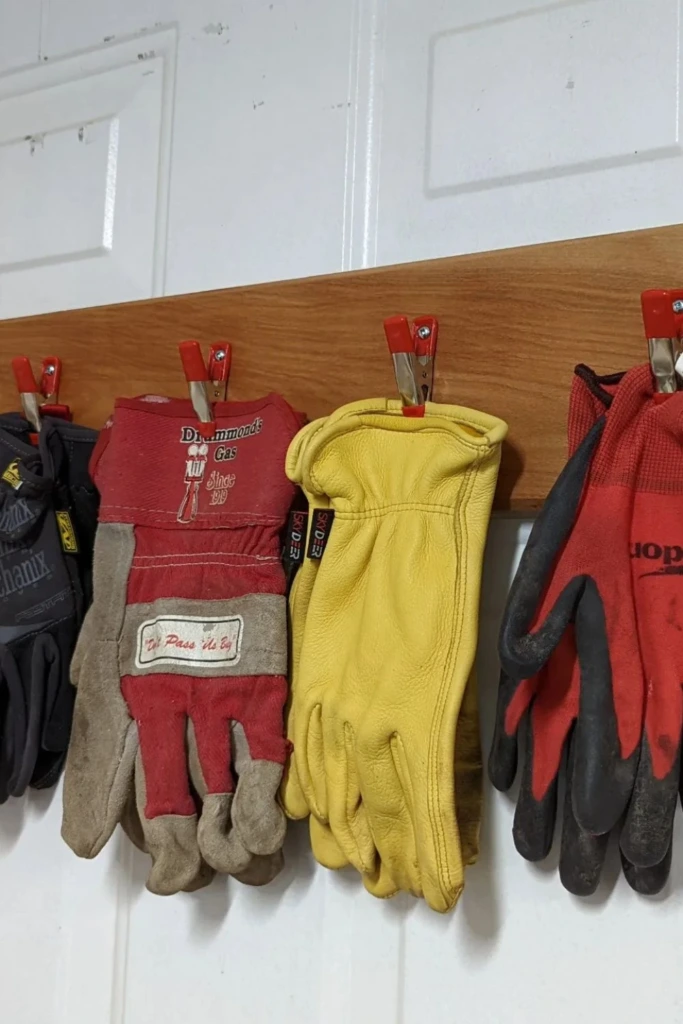
Clamp clips can organize gloves by attaching them to a rail, hanger, or storage board. They are especially useful for keeping matching pairs together and preventing lightweight gloves from getting lost among other accessories.
Select clips with enough grip to hold the gloves securely but with smooth or padded surfaces that will not tear the fabric. Avoid clamping delicate leather, fine knits, or insulated sections that could become permanently creased.
For an inexpensive DIY organizer, attach several clips to a sturdy hanger or board and label the positions. This arrangement works well for lightweight gloves, reusable household gloves that are fully dry, and small collections that need a visible storage solution.
18. Deep Soak
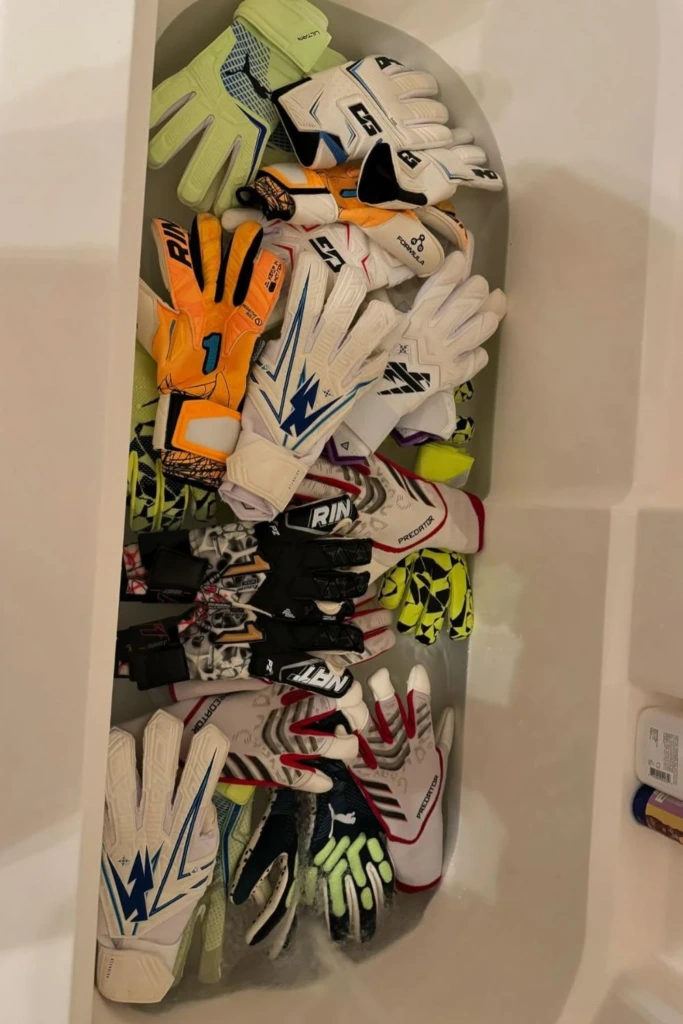
Deep soaking is a cleaning method rather than a storage system, but it can help prepare washable gloves for storage after heavy use. Dirt, sweat, and odors can build up on gardening gloves, fabric work gloves, and certain sports gloves.
First, check the care label to confirm whether soaking is appropriate. Remove loose dirt, use a suitable cleaning solution, and follow the recommended water temperature and washing instructions. Delicate leather, suede, insulated gloves, and gloves with special coatings may require a different cleaning method.
Rinse thoroughly when needed and allow the gloves to dry completely before putting them away. Never store gloves while damp, and do not assume that every material can tolerate a long soak.
19. Belt Clip
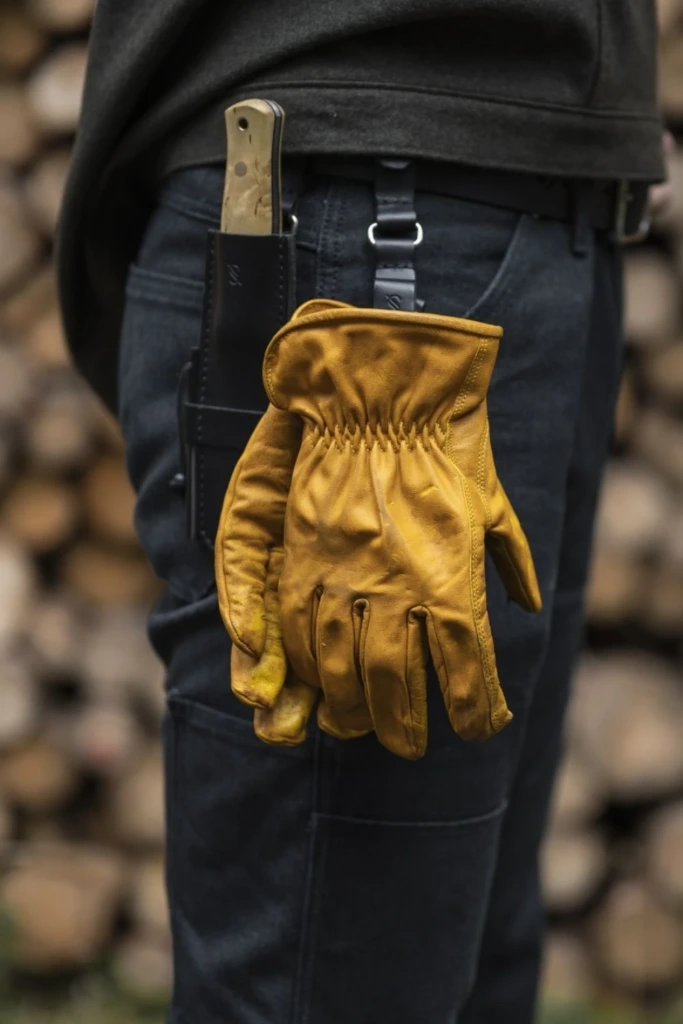
A belt clip can keep lightweight gloves close at hand when you're working outdoors, walking, hiking, or completing gardening tasks. Some utility clips are designed to hold gloves by their cuffs, while others attach to a belt loop or backpack strap.
Choose a clip specifically suited to the gloves and activity. Make sure it holds securely without damaging the material, and check that the gloves cannot easily fall off when you bend or move around.
This method is best for temporary carrying rather than long-term home storage. After use, clean the gloves as necessary, allow them to dry, and return them to a dedicated storage spot.
20. Radiator Dry

Drying gloves near a radiator can seem convenient during cold weather, but direct heat may damage leather, shrink some fabrics, weaken adhesives, or affect waterproof membranes and insulation. Avoid placing gloves directly on a hot radiator unless the manufacturer specifically permits it.
A safer approach is to dry gloves in a well-ventilated room at a moderate temperature. Hang them on a nearby rack or hook at a safe distance from the heat source, allowing air to circulate around the fingers and cuffs.
For thick winter gloves, remove detachable liners when permitted and dry each component separately. Make sure both the outer gloves and any liners are completely dry before storing them to reduce the risk of odors and mildew.
FAQs
Organizing gloves becomes easier when you choose a storage method that suits your space and routine. The following answers address two common challenges: keeping pairs together and finding room for storage in a small home.
What is the best way to keep glove pairs from getting separated?
The easiest method is to give each pair a designated place and use a system that keeps the two gloves together. You can tuck one glove inside the other, fasten matching pairs with a gentle clip, or place each pair in its own drawer compartment or labeled pouch.
For children and busy households, individual family bins are especially useful because everyone knows where to look for their belongings. If you store gloves on hooks, assign one hook to each pair or attach a small pouch to hold both gloves.
After washing, return gloves to their storage location only when both pieces are completely dry. Building a quick habit of checking and pairing gloves before putting them away can prevent most mix-ups.
Where should gloves be stored in a small home or apartment?
In a small home, prioritize storage that uses existing vertical space or furniture rather than adding bulky containers. A slim hook rail beside the entrance, a hanging organizer inside a closet, or a small basket on an existing shelf can keep gloves accessible without occupying valuable floor space.
Drawer dividers are ideal when you have a spare drawer, while compact zipper pouches work well inside a wardrobe or storage cabinet. If several people share the same area, use small labeled containers to avoid mixing up their belongings.
For damp gloves, create a separate drying spot in a ventilated laundry area or bathroom before transferring them to enclosed storage. Keeping wet gloves away from clean, dry accessories helps prevent odors and makes even a small storage area easier to maintain.
Final Thoughts
The best glove storage system is one that fits your collection, available space, and everyday habits. Wall baskets, family bins, drawer dividers, hook rails, and zipper pouches can all make gloves easier to find while reducing clutter. Choose a dedicated place for each pair, separate wet gloves until they are fully dry, and organize different glove types according to how often you use them. With a simple, consistent system, your gloves will stay organized and ready whenever you need them.