20 Cat Litter Storage Ideas for 2026 to Keep Your Home Clean and Stylish
Living with a cat means making room for a litter box, but that doesn't mean it has to become the focal point of your home. With a little planning, you can create a dedicated litter area that looks attractive, controls mess, and gives your cat a comfortable place to do its business. From discreet cabinets to clever corner arrangements, these cat litter storage ideas offer practical ways to combine everyday convenience with a tidy interior.
How Do You Hide Cat Litter Storage Without Affecting Your Home Décor?
The best way to conceal cat litter storage is to make it look like a natural part of your existing furniture and layout. A cabinet, side table, or purpose-built enclosure can hide the litter tray while keeping it accessible to your cat.
Before choosing a design, consider the available floor space, ventilation, cleaning routine, and your cat's preferences. The enclosure should provide enough room for your cat to enter, turn around, dig, and leave comfortably. Avoid airtight containers or cramped compartments that trap odors and dust.
Choose materials that are easy to wipe clean, and make sure the litter box can be removed without dismantling the entire setup. A well-designed solution should simplify your routine rather than make litter maintenance more difficult.
1. Covered Litter
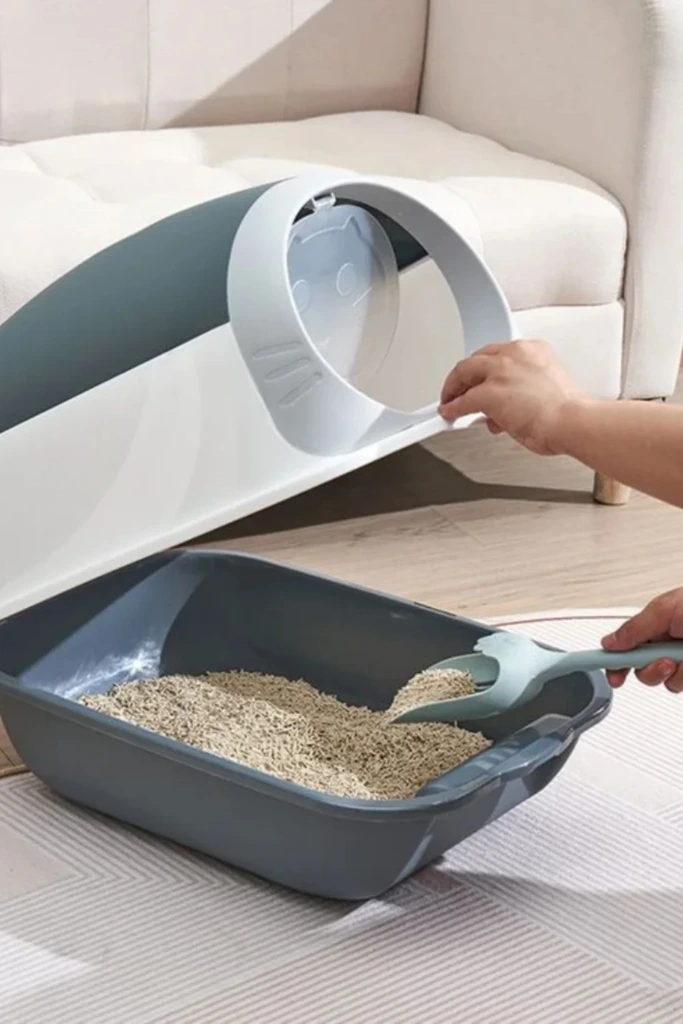
A covered litter box is a straightforward option for households that want to keep litter contained and reduce its visibility. Its lid or hood provides a more enclosed appearance than a standard tray and may help limit scattered litter, depending on the design and your cat's habits.
Look for a model with a removable top, a generously sized interior, and convenient access for scooping. Place it in a quiet location where your cat can approach without being startled.
Keep in mind that some cats dislike enclosed boxes because they restrict visibility or allow odors to accumulate. If your cat hesitates to use a covered tray, try an open alternative rather than forcing the change.
2. Open Design
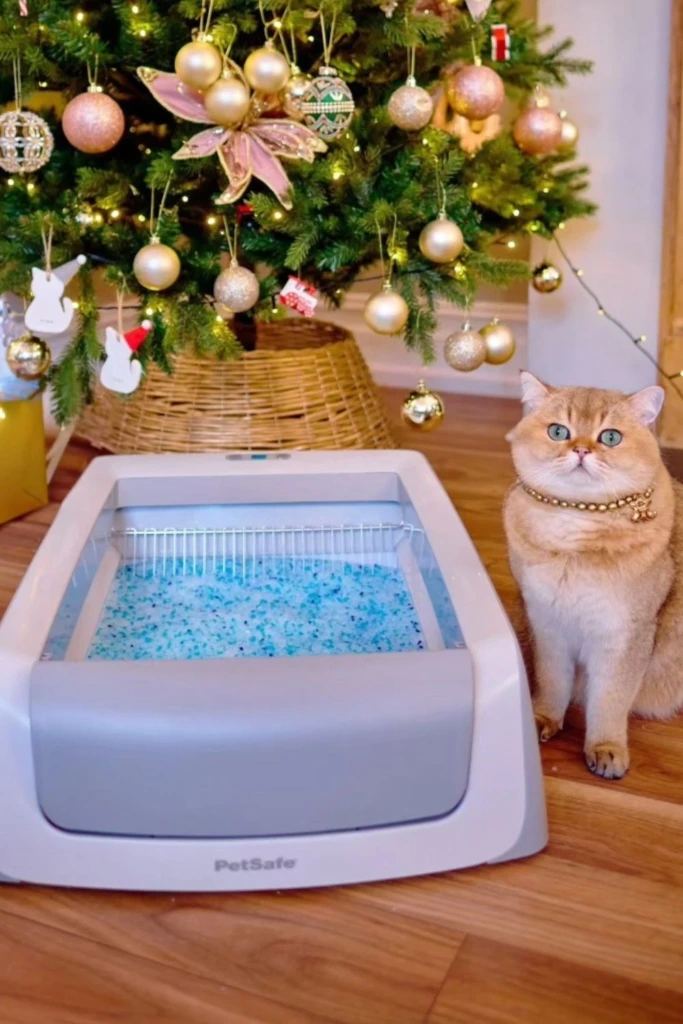
An open litter station works well for cats that prefer an unobstructed view of their surroundings. It can also make scooping, checking litter levels, and washing the tray much easier.
To make an open setup look intentional, use a tray in a neutral color and position it on a washable mat. A simple screen or low divider can separate the area visually from the rest of the room without blocking access.
This arrangement is particularly useful in utility rooms, spacious bathrooms, and laundry areas. Since the tray remains visible, regular scooping and keeping the surrounding floor clean will help maintain a neat appearance.
3. Cabinet Hideout
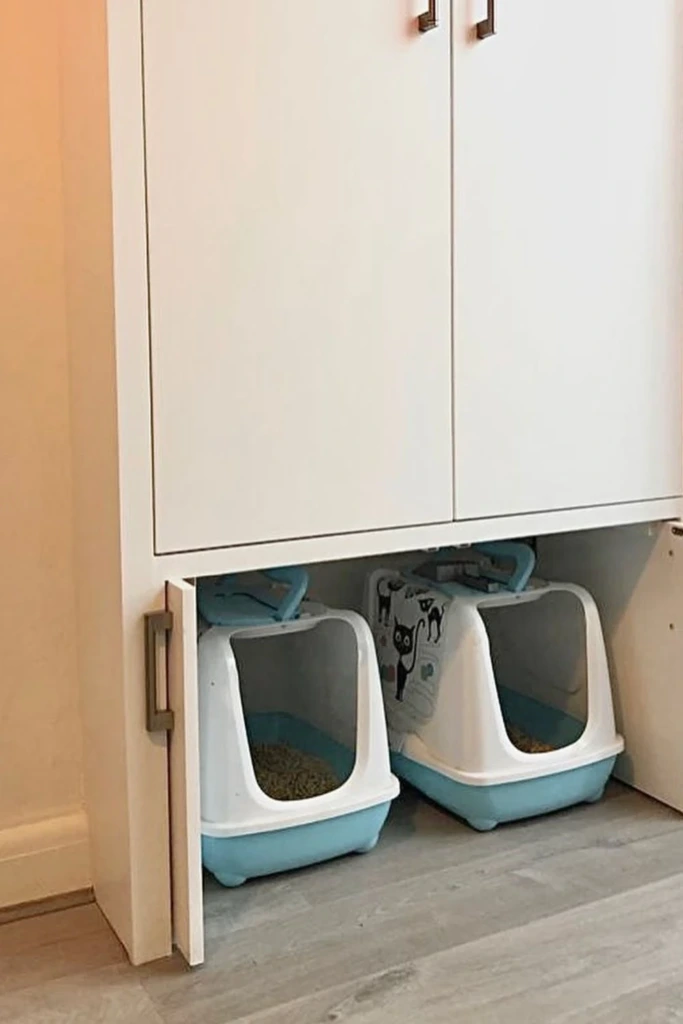
A cabinet hideout can transform an ordinary piece of furniture into a discreet litter station. A suitable cabinet may feature a side entrance, an internal compartment for the tray, and a separate shelf for litter supplies.
Choose a sturdy unit with enough internal clearance for your cat. Remove or modify shelves that obstruct movement, and provide ventilation so moisture and odors do not build up.
The entrance should remain unobstructed, and the litter tray should slide out easily for cleaning. Avoid using a cabinet with an inaccessible interior or a door that could accidentally trap your cat inside.
For a cohesive look, match the cabinet's finish to nearby furniture. The result is a functional pet area that blends naturally into your living space.
4. Corner Station
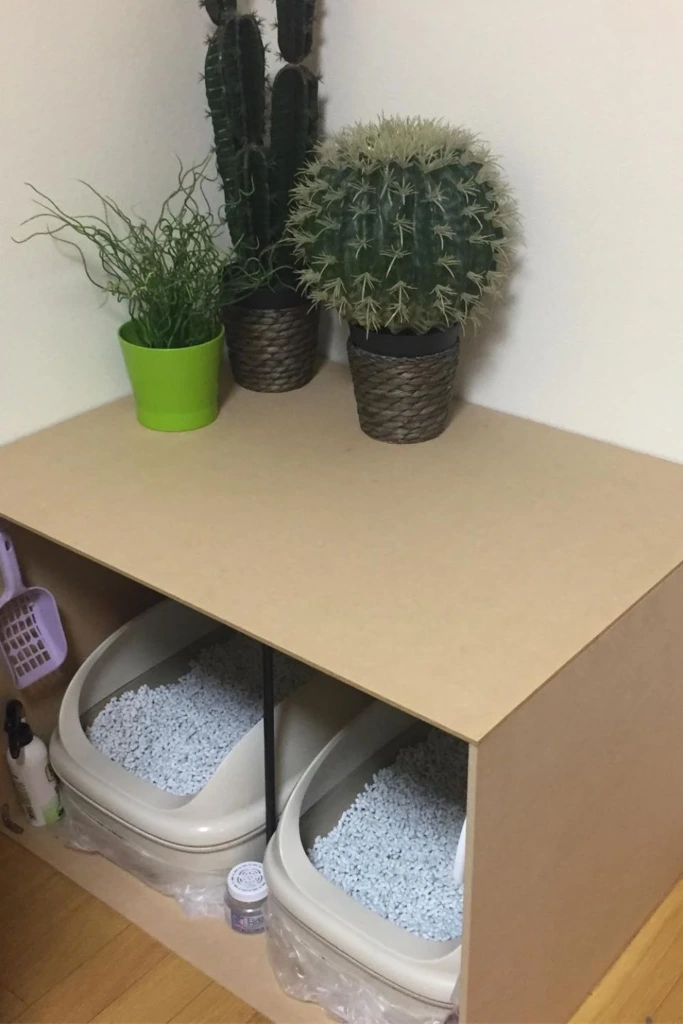
An unused corner can provide a practical home for a litter box without consuming the center of a room. This setup is especially helpful in apartments where every square foot matters.
Measure the corner carefully before selecting a triangular tray or compact rectangular box. Make sure your cat has enough room to enter, turn, and exit comfortably, and leave clear space around the entrance.
A washable mat can catch loose litter, while a small nearby container can hold the scoop and waste bags. Keep the corner away from loud appliances, busy walkways, and food or water bowls.
Although corners can make the setup less noticeable, the area should never be so tucked away that your cat feels trapped or has difficulty reaching it.
5. Low Profile
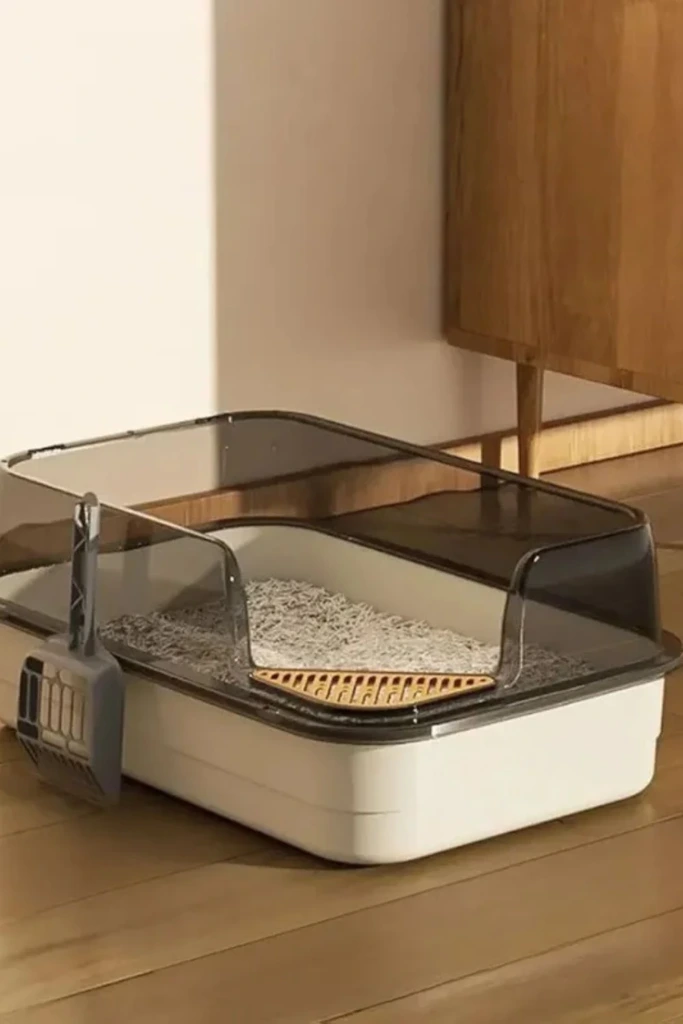
A low-profile litter station keeps the setup visually subtle by using furniture and accessories with simple shapes and minimal height. A shallow enclosure or streamlined litter tray can fit neatly beneath a suitable counter or beside a low storage unit.
The key is to prioritize usable space over appearance. Your cat should be able to enter naturally without squeezing beneath a low opening or crouching uncomfortably.
Use understated colors, clean lines, and a tray that fits the available footprint. Keep the surrounding area free of unnecessary decorations to make cleaning easier.
This approach suits modern, minimalist interiors where bulky pet accessories might otherwise disrupt the overall design.
6. Top Entry
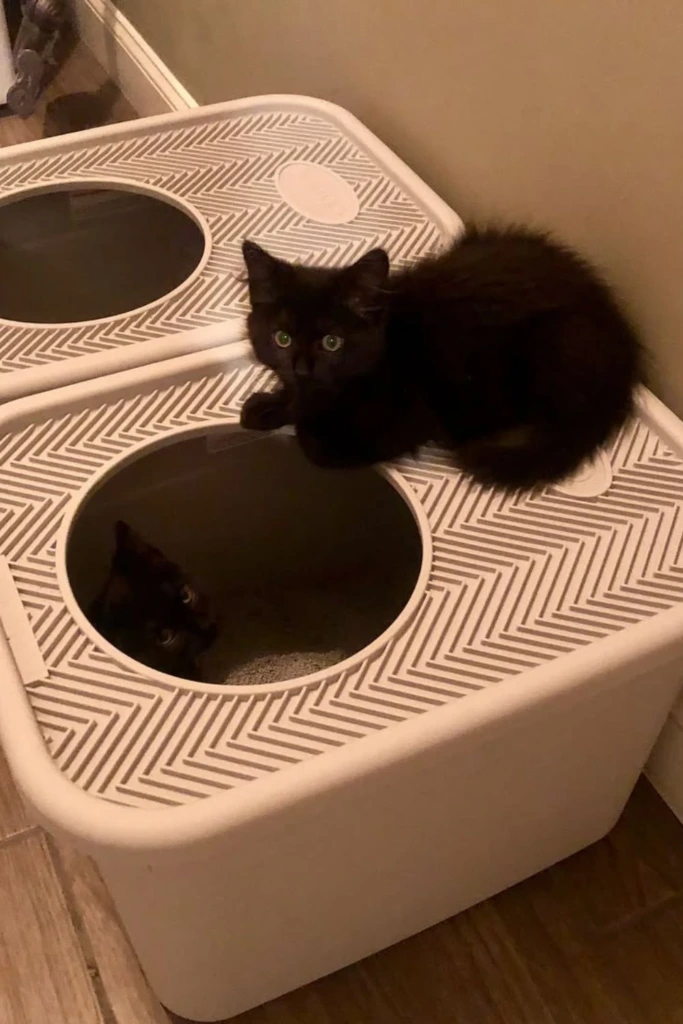
A top-entry litter box has an opening on its upper surface rather than a conventional side entrance. Some designs can reduce litter tracking because cats may step onto the lid when leaving, allowing loose particles to fall back into the box.
This style can be useful in compact homes where a tall, enclosed container fits better than a wide tray. Choose a model with a stable base, a secure lid, and enough internal room for your cat.
Top-entry boxes are not suitable for every cat. Kittens, older cats, and pets with mobility difficulties may struggle to climb in and out. If your cat shows discomfort or avoids the box, select an easier-access design.
Place the box on a non-slip, washable surface and clean the lid regularly, since litter dust and paw marks can collect there.
7. Mat Zone
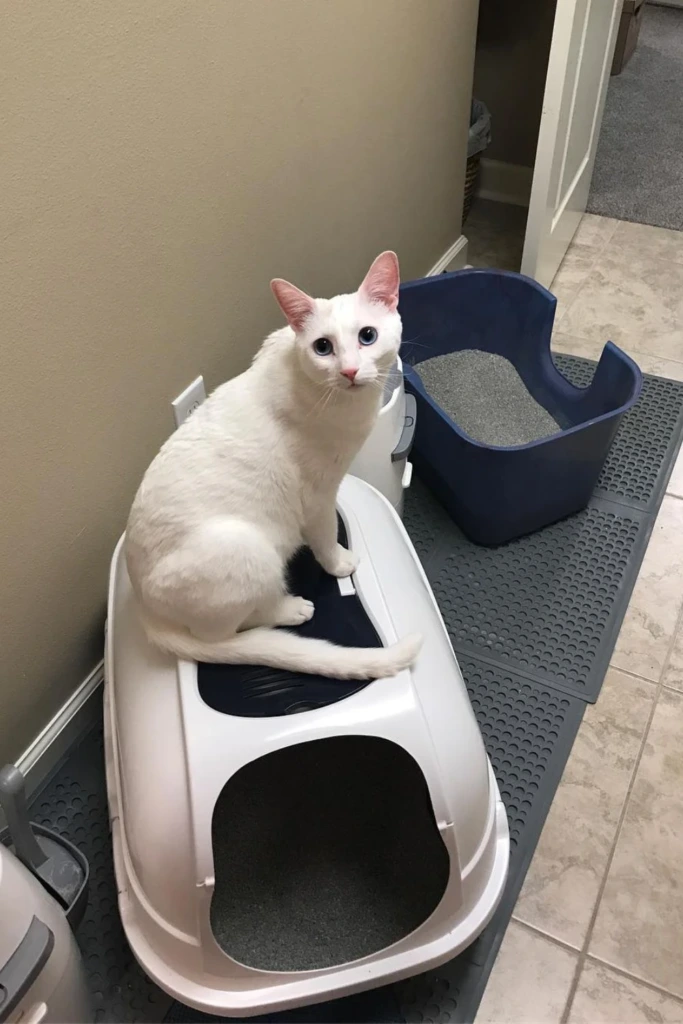
A dedicated mat zone helps keep litter from spreading across the floor. Even a well-designed box can release particles when a cat digs, turns around, or jumps out, so the surface around it deserves attention.
Choose a mat that extends beyond the entrance and the sides where litter tends to scatter. Textured or honeycomb-style mats can catch loose particles, while washable fabric or rubber-backed options may suit different flooring types.
The mat should lie flat and remain stable under your cat's paws. Avoid materials that absorb urine easily or are difficult to clean.
Shake or vacuum the mat regularly, and wash it according to the manufacturer's instructions. Pairing a suitable mat with a litter tray that has an appropriate height can help maintain a cleaner floor.
8. Decor Blend
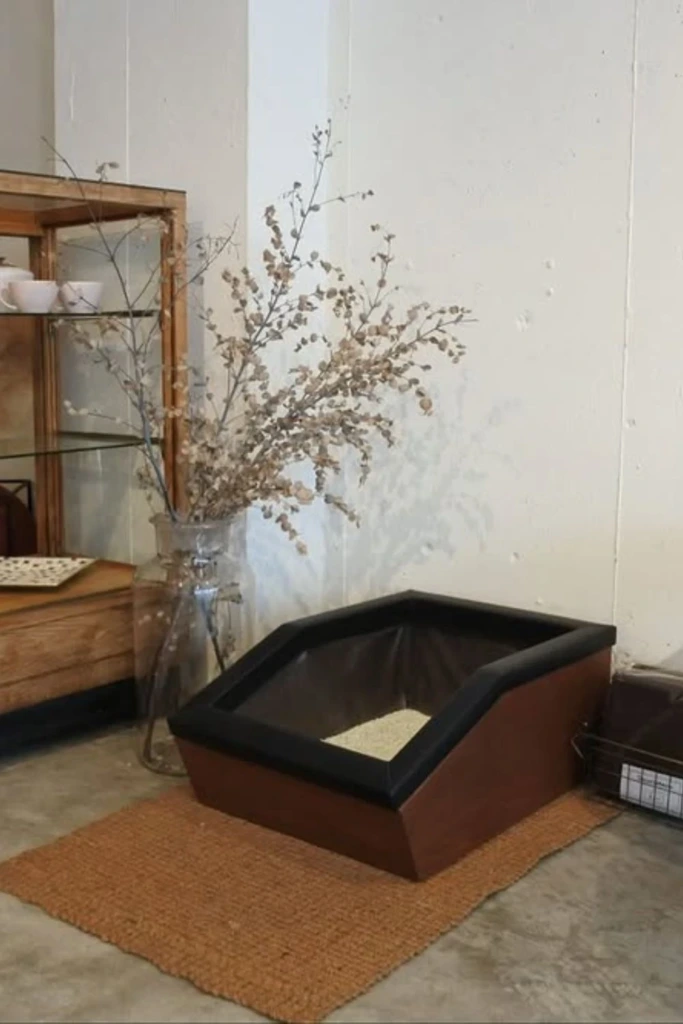
Instead of trying to make the litter box disappear completely, incorporate it into your home's existing design. A coordinated litter station can look like a planned part of the room rather than an afterthought.
For example, select a cabinet that matches your wood furniture, use a neutral tray that complements your flooring, or place the station alongside other practical storage pieces. Keep accessories simple and choose finishes that can tolerate regular cleaning.
Decorative touches should stay outside the cat's reach and never obstruct ventilation or access. Avoid placing fragile ornaments on an enclosure that your cat may jump onto.
The goal is to balance appearance with everyday function. A beautiful setup is only successful if your cat feels comfortable using it and you can maintain it without difficulty.
9. Dual Setup
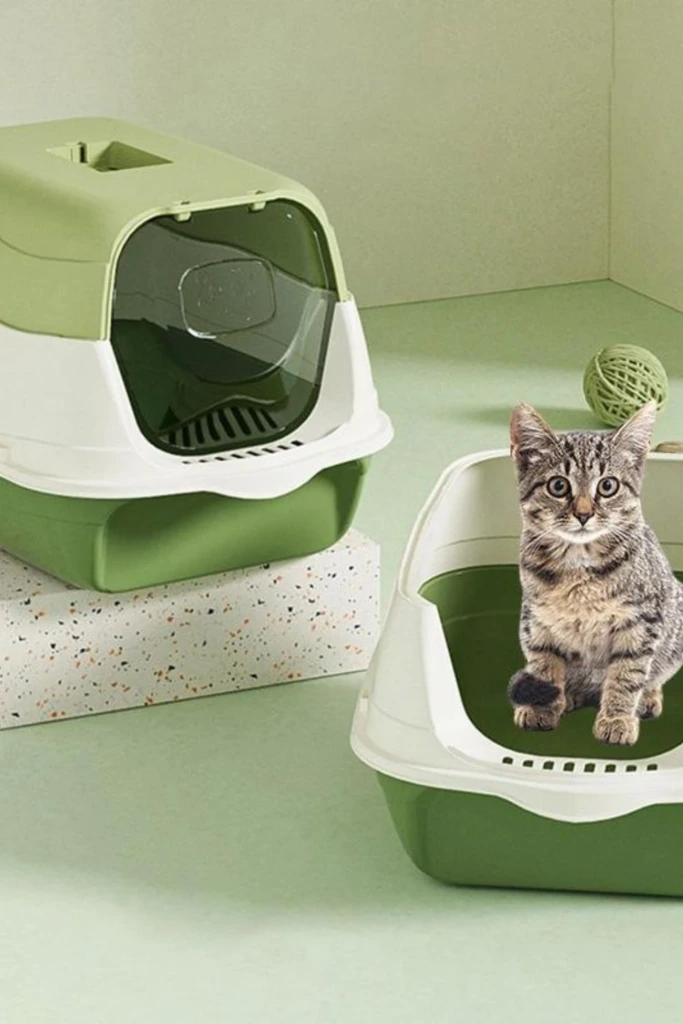
A dual-purpose litter station combines the litter area with another useful household function. A suitable furniture enclosure might provide a hidden compartment for the tray alongside storage for litter bags, cleaning cloths, and other pet essentials.
Some designs resemble sideboards or benches, allowing them to fit naturally into a hallway or utility room. Separate compartments help keep clean supplies away from the litter itself.
Make sure the second function does not compromise the cat's space. For example, a storage compartment should not reduce the clearance needed for comfortable movement, and a bench should be structurally strong enough for its intended use.
Keep cleaning products securely stored, particularly if they contain ingredients that could harm pets. With thoughtful planning, one piece of furniture can meet several household needs without creating clutter.
10. High Walls
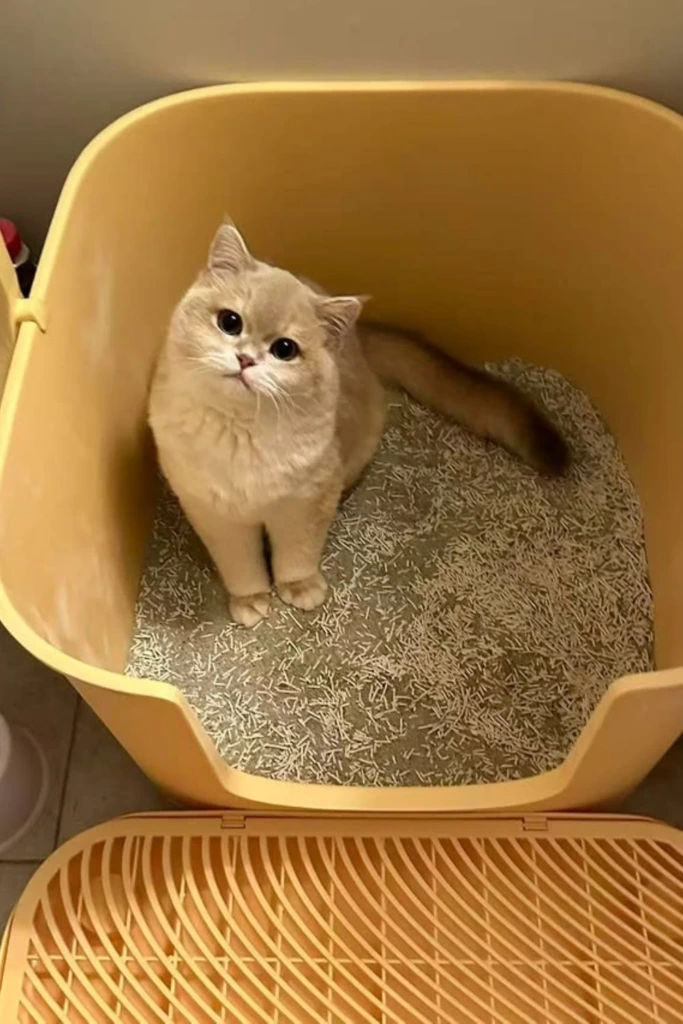
A litter box with high sides can help contain kicked litter and reduce the amount that lands on nearby floors. This design is often useful for cats that dig enthusiastically or tend to scatter litter while covering their waste.
Choose a tray with a large enough base and an entrance that your cat can use comfortably. Some high-sided models have a lower entry section, which can provide containment without requiring the cat to climb over a tall wall.
High sides alone will not eliminate tracking or splashing, so a litter mat and regular cleaning remain useful additions.
Consider your cat's age, size, and mobility before selecting this style. A box that is difficult to enter may discourage proper litter habits, particularly for kittens or senior cats.
11. Box Hack
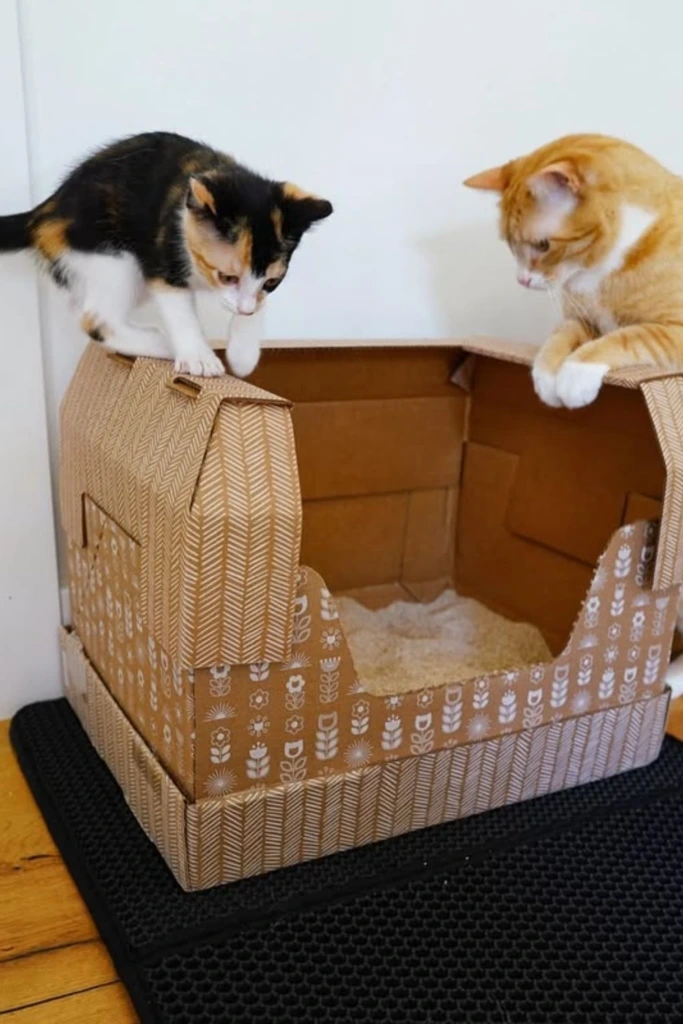
A DIY box hack can turn an ordinary storage container into an affordable litter enclosure. A suitably sized plastic tote, for instance, may offer more room than some ready-made litter boxes and can be adapted to your available space.
Select a sturdy container made from pet-safe, easy-to-clean material. If you create a side opening, smooth every cut edge thoroughly and ensure there are no sharp corners or loose plastic fragments.
The opening should be large enough for your cat to pass through comfortably. Check that the container does not have a lid that can fall shut, and never create an enclosed space without adequate airflow.
Use a separate litter tray inside whenever practical, making waste removal and washing simpler. Inspect the container regularly for cracks, damage, or surfaces that retain odors.
A homemade solution can save money, but it should never sacrifice your cat's comfort or safety for a more concealed appearance.
12. Smart Cleaner
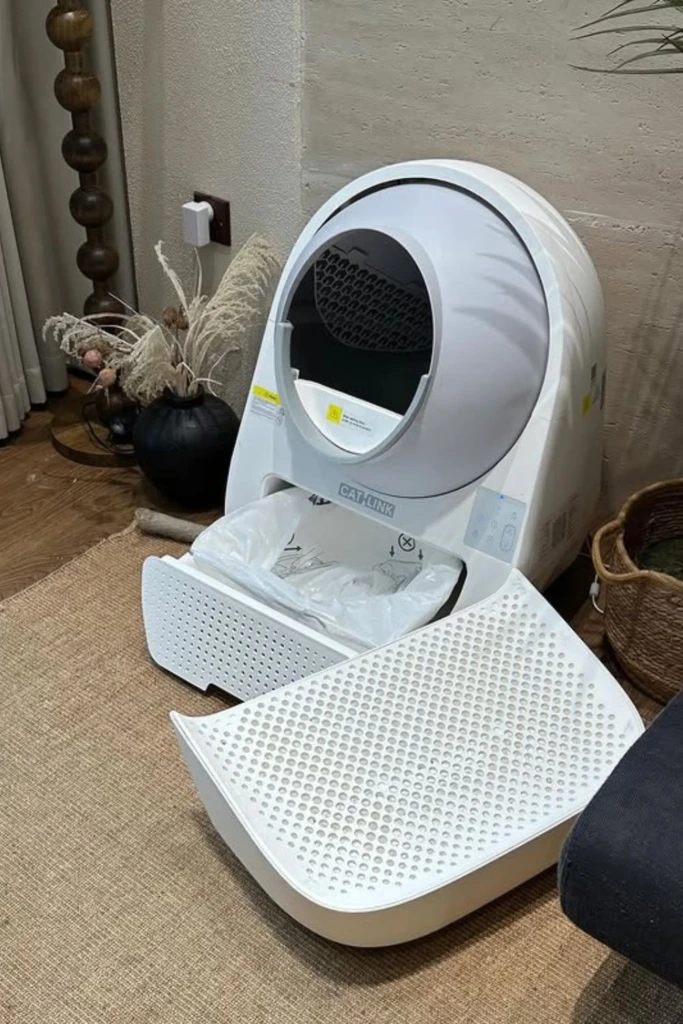
A smart litter-cleaning setup can reduce daily maintenance and help keep the surrounding area organized. Options range from a self-cleaning litter box to a simple arrangement with a scoop holder, a small waste container, and an easy-to-clean floor covering.
Automatic litter boxes vary in their cleaning mechanisms, maintenance needs, and compatibility with different litter types. Before purchasing one, check the manufacturer's recommendations for your cat's size, age, and weight. Some models are unsuitable for very young kittens.
Even an automatic system requires attention. Waste compartments need emptying, components need periodic washing, and the litter itself must be replenished as necessary.
Keep power cords away from scratching, chewing, and wet areas. If you use a waste container, choose one with a secure closure and empty it frequently.
The smartest setup is one that makes cleaning more manageable without making the litter area inaccessible or uncomfortable for your pet.
13. Drawer Design
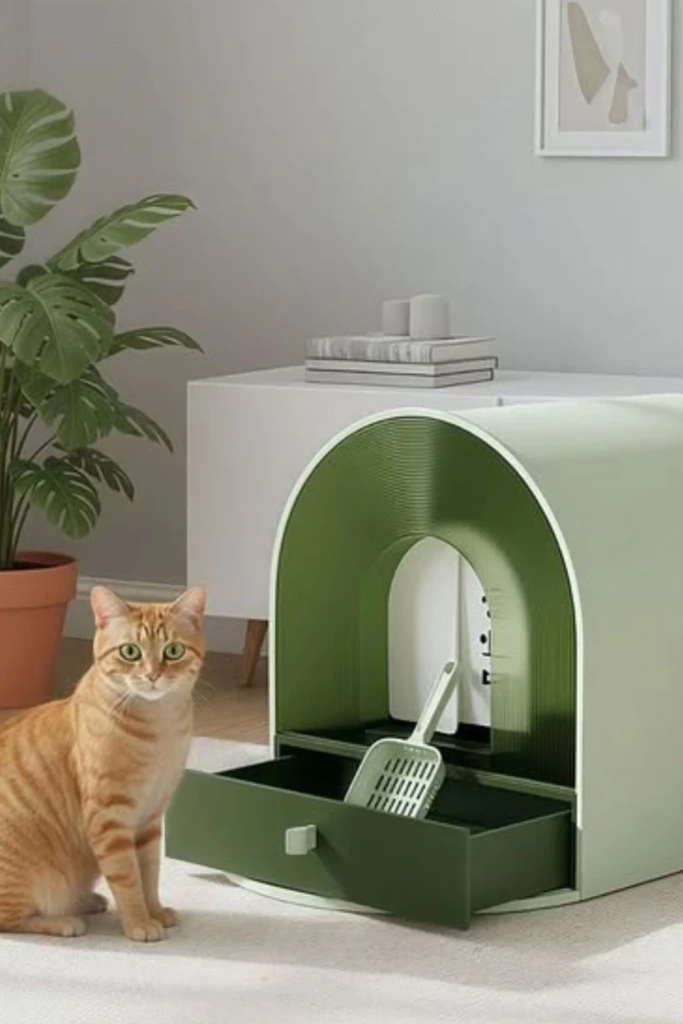
A drawer-style litter station can work well when a cabinet has a pull-out compartment designed specifically to support a litter tray. The tray can slide forward for scooping or removal, making routine maintenance easier.
A properly built system should use smooth-running hardware and a stable base capable of supporting the filled tray. Ensure the drawer cannot close accidentally while your cat is inside, and never rely on a mechanism that could trap or injure the animal.
Ventilation is important because a closed compartment may hold moisture and unpleasant smells. Leave suitable openings and avoid sealing the litter area completely.
This style is best suited to a purpose-built enclosure or carefully adapted cabinet with sufficient space. A drawer that is too shallow or narrow can make normal litter behavior difficult.
14. Bin System
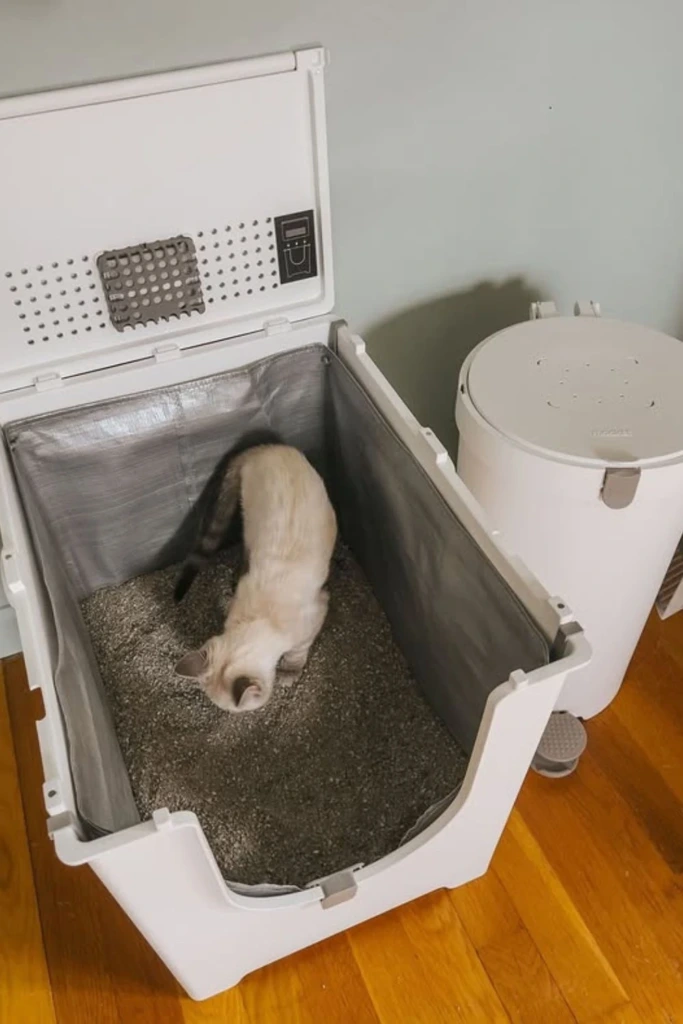
A bin system provides a simple way to organize litter supplies while keeping the main area uncluttered. Use separate containers for fresh litter, waste bags, scoops, cleaning cloths, and other essentials.
A lidded bin can help keep unused litter dry and reduce accidental spills. Select a container that closes securely and is easy to lift or pour from without creating dust clouds.
Store fresh litter separately from waste and dirty cleaning tools. If you keep supplies near the litter box, place them where your cat cannot chew packaging or knock containers over.
A small waste bin with a well-fitting lid can be convenient for temporarily holding bagged waste, but it should be emptied frequently. Follow local waste-disposal guidance and avoid allowing used litter to accumulate indoors.
Clear labels or matching containers can make the storage area look organized while helping everyone in the household find what they need.
15. Nook Spot
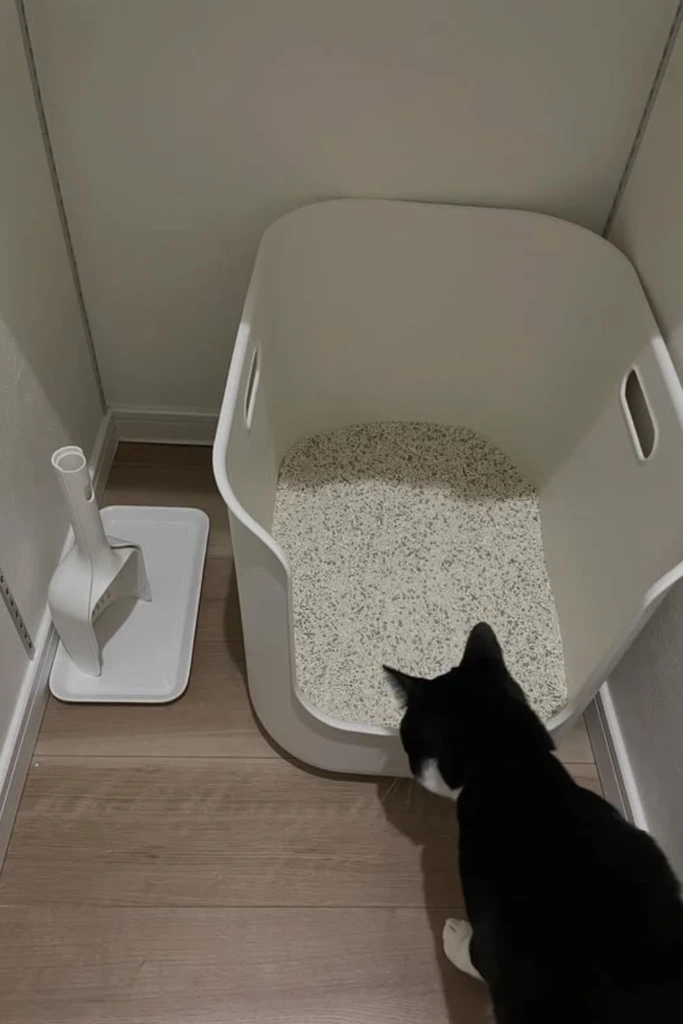
A nook can provide a natural place for a litter station in a home with an awkward alcove or unused recess. Suitable locations might include a quiet area beside a utility cabinet or a dedicated section of a spacious bathroom.
Before placing the box, check the nook's dimensions, ventilation, lighting, and accessibility. Your cat should be able to enter and leave without squeezing past furniture or navigating a narrow passage.
Avoid locations next to loud washing machines, heating equipment, or doors that open suddenly. A quiet nook is useful only when it remains accessible and does not become an isolated or stressful space.
Keep enough clearance to remove the tray, replace litter, and clean the floor. If the nook has a door, make sure it cannot accidentally shut and prevent your cat from reaching the box.
16. Multi Station
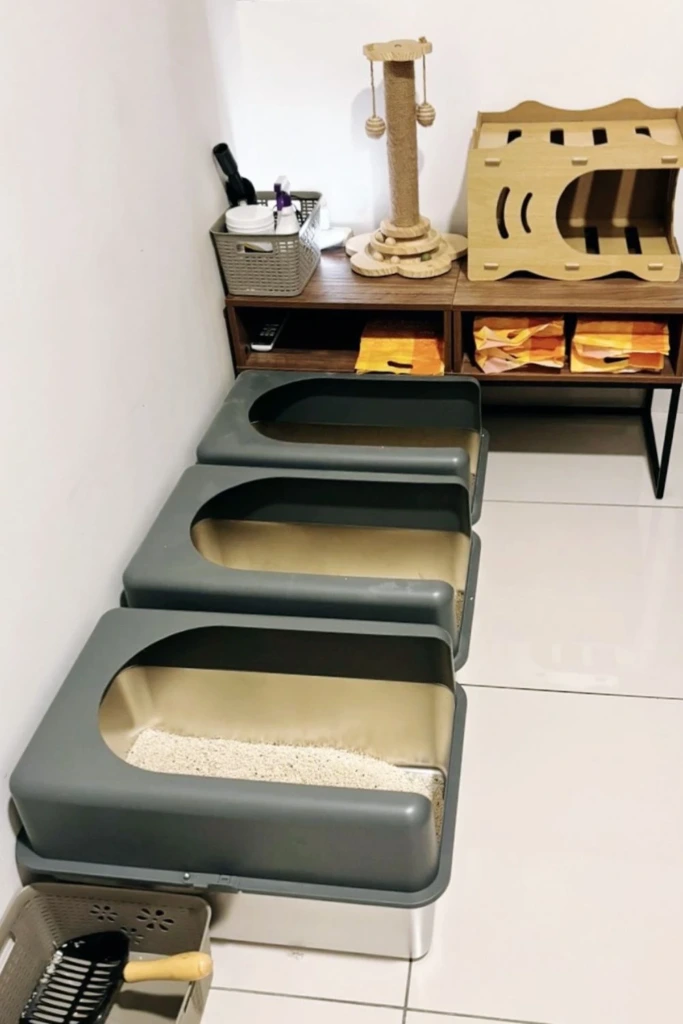
A multi-station arrangement is useful for homes with several cats or a layout that makes one litter area inconvenient. Instead of placing every tray in a single enclosure, you can distribute boxes across quiet, accessible parts of the home.
Cats may prefer separate toileting locations, and one pet may block another from reaching a shared area. Providing multiple stations can reduce competition and make it easier for each cat to find a suitable box.
A commonly recommended starting point is one litter box per cat, plus one extra. For a household with three cats, that means four boxes, although individual needs and home layout can affect the best arrangement.
Keep stations far enough apart that one cat cannot easily guard every option. Each box should have its own cleaning access, and all locations should remain comfortable and reasonably private.
Rather than concealing every station behind identical furniture, use designs that fit each room while preserving the same basic standards of hygiene and accessibility.
17. Plant Disguise
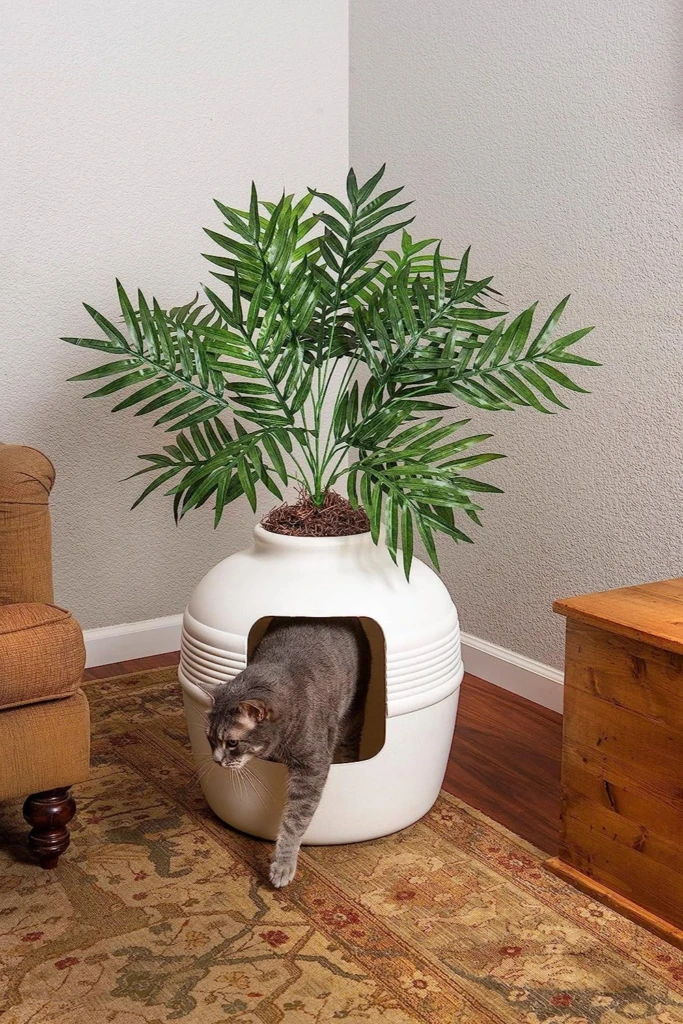
A plant-inspired litter enclosure can soften the appearance of a litter station and help it blend into a room with natural textures and greenery. Some commercial enclosures resemble large decorative planters, with the litter tray housed inside and an entrance discreetly positioned on the side.
Choose a model with adequate interior space, accessible cleaning panels, and proper ventilation. The plant or decorative cover should never obstruct the entrance or allow leaves, soil, or debris to fall into the litter.
If you use real plants nearby, verify that they are safe for cats. Many common houseplants can be toxic when chewed, and curious pets may investigate leaves or potting soil.
Artificial greenery can offer a lower-maintenance alternative, provided small detachable parts are kept out of reach. Avoid placing heavy pots on top of the enclosure unless the furniture is specifically designed to support them.
A plant-inspired design can be attractive, but it should remain easy to inspect, clean, and maintain.
18. Cabinet Box
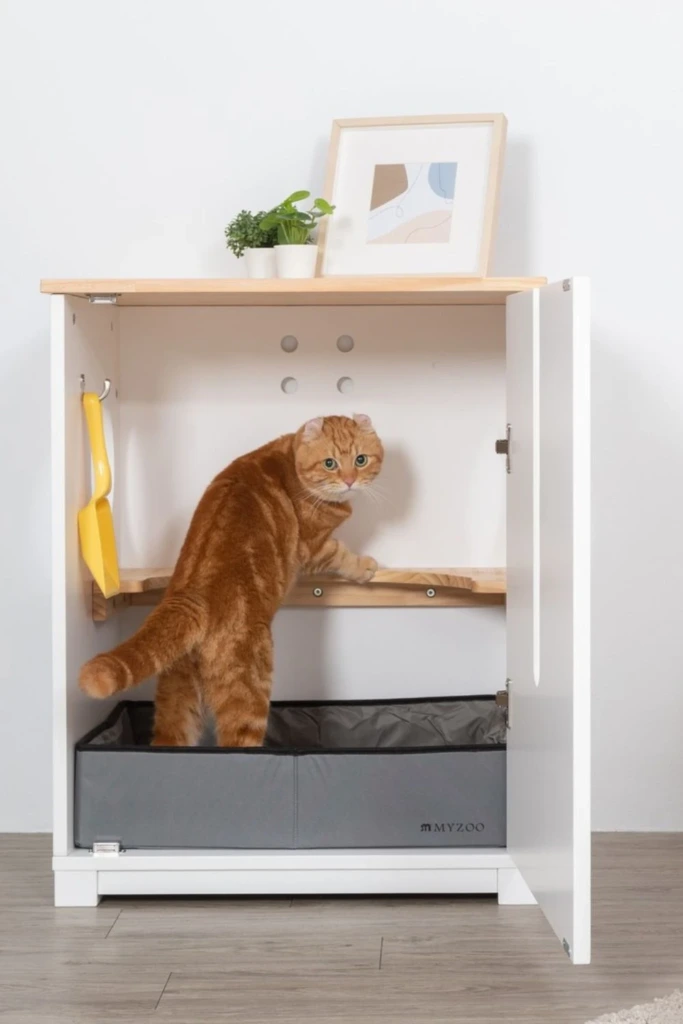
A cabinet box is a dedicated enclosure that surrounds the litter tray and gives the station a furniture-like appearance. Compared with an improvised storage unit, a purpose-built design may offer a more suitable entrance, a removable panel, and space for routine cleaning.
Look for a model with smooth interior surfaces and a base that can handle occasional spills. Doors should open wide enough to remove the tray without awkward lifting, and the enclosure should remain stable when your cat jumps onto or moves around it.
A side entrance can keep the front of the cabinet visually simple. However, the entrance must be appropriately sized, and the interior should not be so enclosed that odors become concentrated.
If you are adapting an existing cabinet, remove any shelves that restrict movement and secure the structure against tipping. Make sure the cat can leave freely, even when the cabinet doors are closed.
The best cabinet box combines discreet styling with practical access for both the cat and the person cleaning it.
19. Color Match
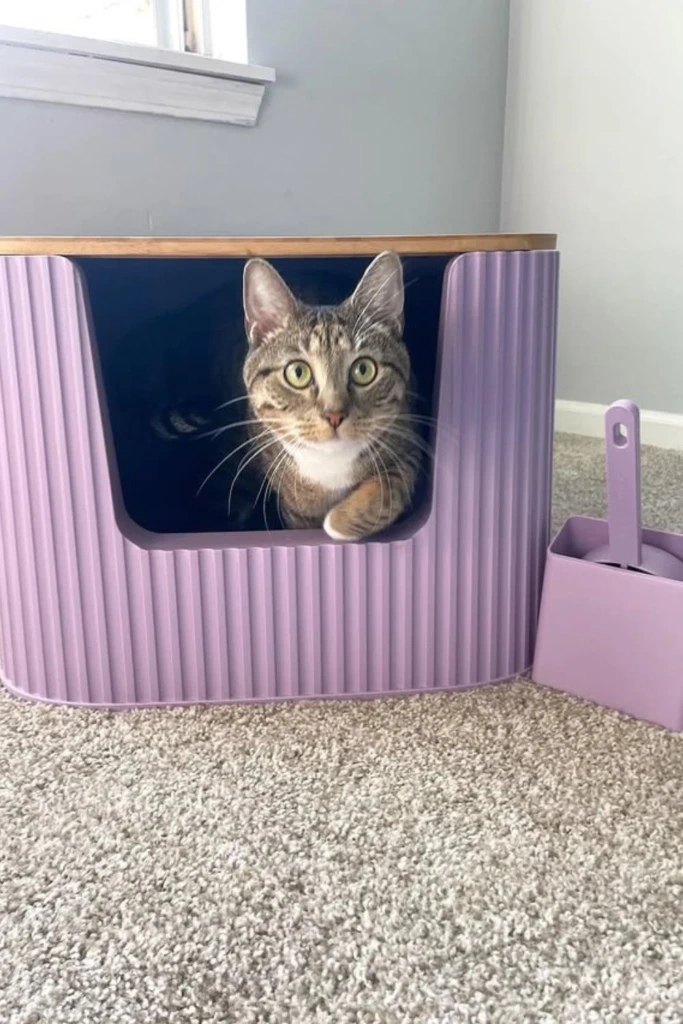
Matching the litter station to your room's color scheme can make it less visually distracting without requiring elaborate concealment. A white enclosure may complement a bright bathroom, while a wood-toned cabinet can suit a warm, traditional interior.
Consider the colors of nearby furniture, flooring, and walls before choosing the finish. Neutral shades tend to work in many settings, but a coordinated accent color can also make the station feel intentional.
Practicality matters just as much as appearance. Select surfaces that tolerate frequent wiping, and remember that very dark or glossy finishes may make dust, fur, and litter particles more noticeable under certain lighting.
You can also coordinate the litter mat and supply containers to create a consistent look. Keep decorative accessories outside the litter area so they do not collect dust or interfere with cleaning.
Color coordination is a simple improvement that can help a necessary pet accessory feel more at home in your interior.
20. Twin Boxes
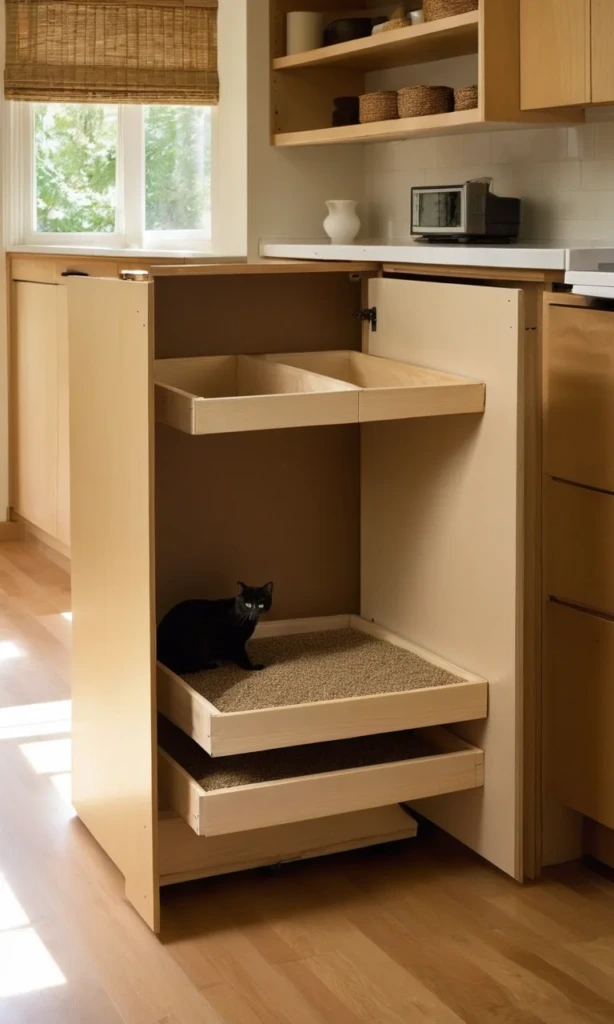
Twin litter boxes can be useful for multi-cat households, cats with different toileting preferences, or pets that need more than one accessible option. Two boxes may also help when a single tray fills quickly or when different floors of the home need separate facilities.
Where possible, place the boxes in separate quiet locations rather than squeezing both into one small enclosure. This gives cats more choice and can prevent one pet from controlling access to both trays.
If you prefer a coordinated appearance, use matching litter boxes, mats, or cabinets. However, make sure each enclosure has sufficient room and that neither box is difficult to reach or clean.
Monitor how your cats use the stations. If one remains unused, consider whether the location, litter type, box shape, or level of privacy is discouraging your pet.
Two well-positioned boxes can provide greater flexibility than a single crowded station, especially in homes where pets have different habits.
FAQs
Choosing a cat litter storage solution often raises questions about location, odor control, and the best way to keep a home looking tidy. The right answer depends on your floor plan, the number of cats you have, and how comfortable your pet feels using the selected setup.
When comparing options, prioritize accessibility, ventilation, easy cleaning, and enough room for natural litter-box behavior. Decorative features are useful, but they should always support your cat's needs rather than interfere with them.
Where is the best place to hide a cat litter box in a small home?
In a small home, a quiet bathroom corner, a well-ventilated utility area, or a dedicated space beneath a suitable counter can be a practical choice. A compact cabinet enclosure may help the litter box blend into the room while keeping the floor area organized.
Choose a location that your cat can reach at all times, including when household doors are closed. Avoid placing the box beside noisy appliances, in busy walkways, or near food and water bowls.
Measure the available space before buying an enclosure. The tray must fit comfortably, and there should be enough clearance to remove it for cleaning. A side entrance or low-profile design can save space, but the opening should never be so small that your cat struggles to use it.
If you have a multi-story home, consider providing a litter option on each floor your cat regularly uses. Convenience and reliable access are more important than hiding the box in the least visible spot.
How can you control odor when the litter box is inside a living space?
Effective odor control starts with frequent waste removal and a litter box that stays clean. Scoop solid waste and urine clumps at least daily, or more often if needed, and follow the litter manufacturer's recommendations for replacing the contents and washing the tray.
Use a litter type your cat accepts and maintain an appropriate depth so waste can be covered or clumped effectively. Unscented litter is often a good starting point because strong fragrances may bother cats and can mask odors rather than address their source.
Good ventilation also makes a difference. Position the litter station in an area with reasonable airflow, and avoid airtight cabinets that trap moisture and smells. A discreet enclosure should have adequate ventilation and easy access for cleaning.
Wash the box periodically with mild soap and water, then rinse and dry it thoroughly before refilling. Replace trays that become heavily scratched or retain persistent odors. Clean any urine spills promptly with a suitable pet-safe enzymatic cleaner.
Keep the surrounding mat and floor clean, and empty the waste container regularly. Avoid using strong perfumes, ammonia-based cleaners, or essential oils around the litter area, as some products may irritate or harm cats.
If the litter box develops an unusually strong odor despite regular maintenance, or your cat suddenly changes its toileting habits, consult a veterinarian. Changes in odor or bathroom behavior can sometimes indicate a health problem.
Final Thoughts
A well-planned cat litter storage area can make your home feel cleaner and more organized without compromising your cat's comfort. Whether you choose a cabinet hideout, a simple corner station, a coordinated furniture enclosure, or a multi-box arrangement, focus on easy access, proper ventilation, and straightforward cleaning.
Start with the space you have, observe how your cat responds, and adjust the setup when necessary. With the right combination of practical storage and thoughtful design, you can create a litter area that works for your pet and fits naturally into your home.