18 Yarn Storage Ideas for 2026
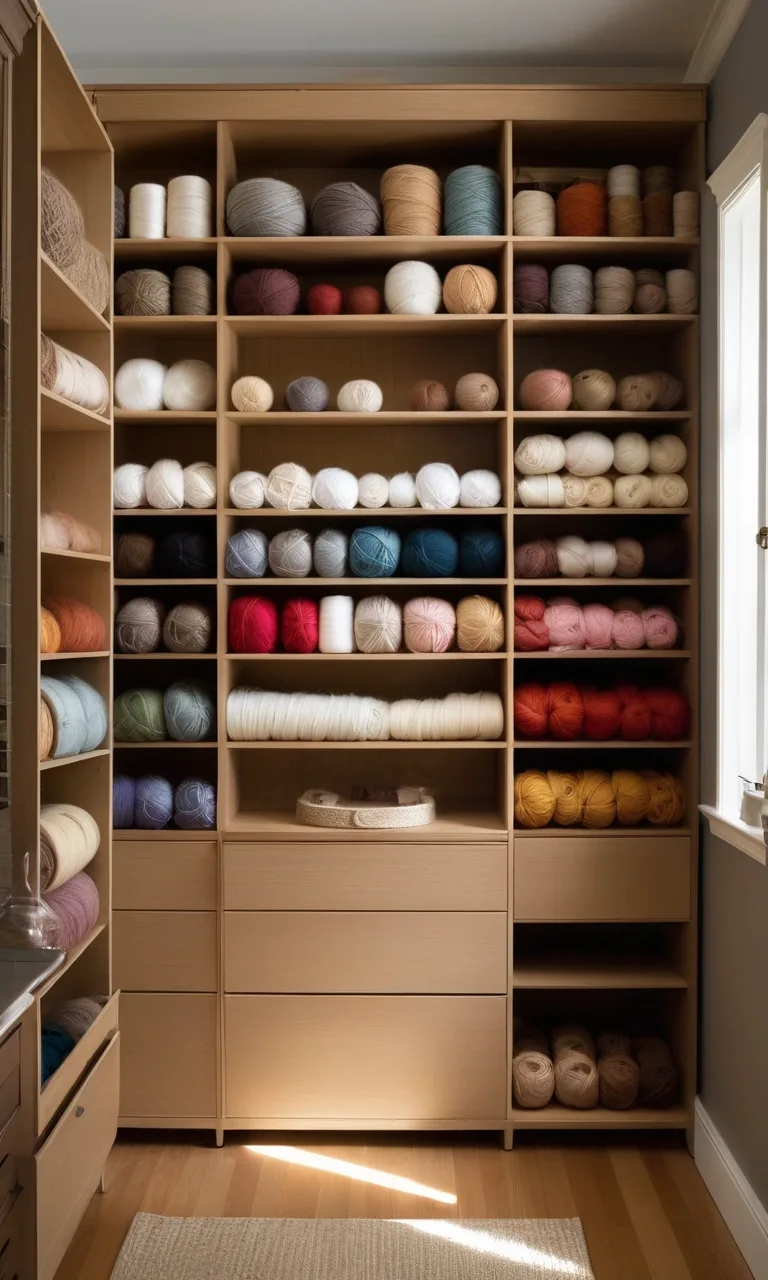
A growing yarn collection can quickly take over your home, especially when colorful skeins, unfinished projects, and leftover balls start piling up. Whether you enjoy knitting, crocheting, or weaving, keeping your supplies organized makes crafting more enjoyable and saves valuable time.
The right yarn storage ideas can transform a crowded corner into a practical, attractive crafting space. From compact wall organizers to spacious shelving systems, there are plenty of creative ways to arrange your collection without sacrificing style or convenience.
These 22 yarn storage ideas will help you make better use of your available space, protect delicate fibers, and keep your favorite colors within easy reach.
What is the Most Space-Efficient Way to Store Yarn?
The most space-efficient approach to yarn storage combines vertical shelving, appropriately sized containers, and a simple organization system.
Instead of keeping everything in oversized boxes, consider arranging skeins in individual compartments, stacking storage cubes, or installing shelves above your crafting table. These solutions make use of wall space while leaving floors and work surfaces clear.
Grouping yarn by color, fiber type, weight, or project also makes finding supplies easier. Frequently used materials should remain accessible, while extra skeins and seasonal collections can go into labeled containers.
For long-term storage, choose clean, dry locations away from direct sunlight and excessive humidity. Breathable storage works well in suitable indoor conditions, while properly dried yarn can be kept in sealed containers when additional protection from dust or pests is needed.
The best system is one that fits your collection, protects your materials, and remains easy to maintain.
1. Color-Sorted Cubes
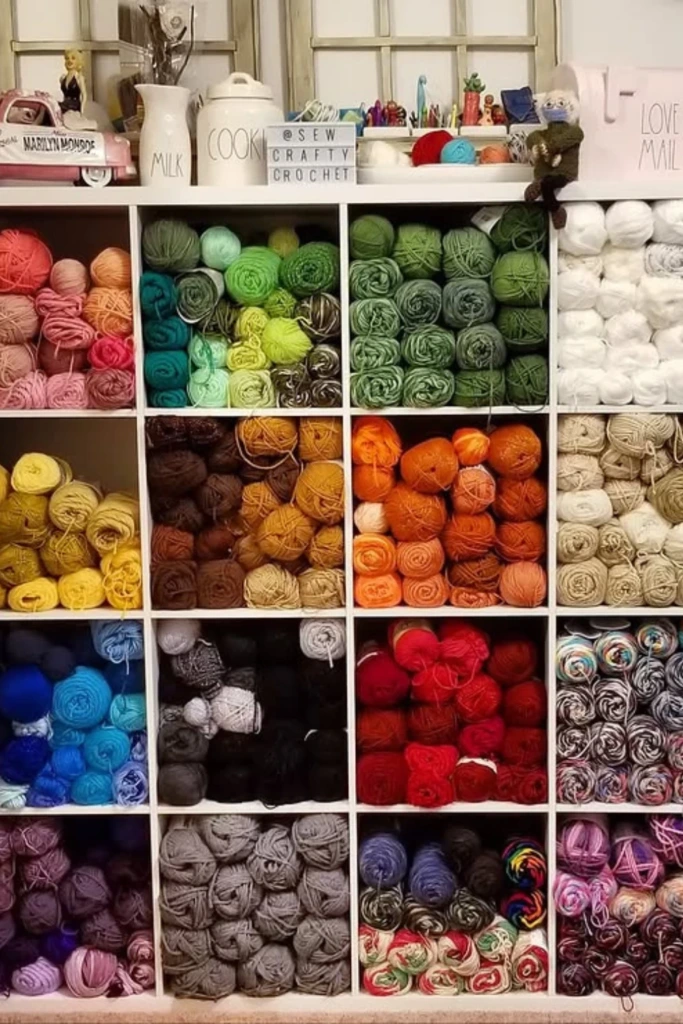
Color-sorted storage cubes turn a collection of yarn into an attractive, organized display. By dedicating individual compartments to specific shades, you can quickly identify matching colors and plan combinations for future projects.
A cube shelving unit works particularly well for larger collections because it provides separate spaces without requiring numerous containers.
Arrange similar tones together, such as blues, greens, warm neutrals, and bright colors. You can also separate different yarn weights within each color group if your collection is extensive.
Avoid squeezing delicate skeins too tightly, as excessive compression can affect their shape. Keep the cubes away from prolonged direct sunlight to reduce the risk of fading.
2. Open Shelf Storage
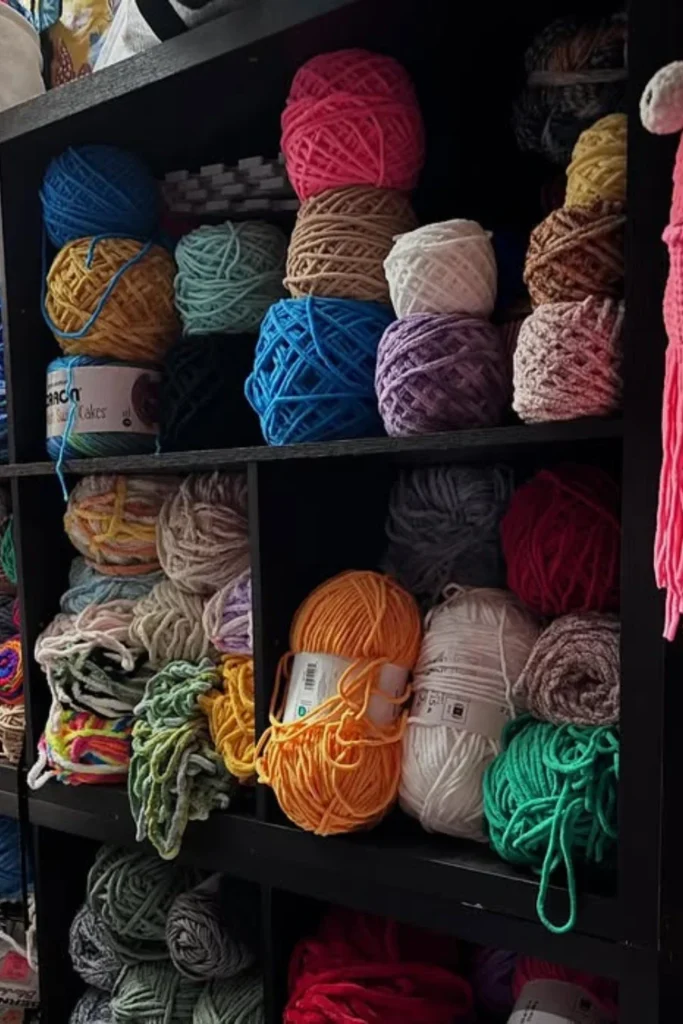
Open shelves provide a straightforward solution for crafters who prefer seeing their supplies rather than searching through boxes.
Installing a few sturdy shelves along an empty wall creates dedicated storage without requiring expensive furniture. This approach works especially well in craft rooms, home offices, and creative corners.
Place yarn in small groups based on fiber type or current projects. Shallow shelves are particularly useful because they prevent skeins from becoming hidden behind one another.
Decorative bookends or small baskets can keep loose balls from rolling off the edges.
Since exposed yarn collects dust over time, this arrangement is most practical for supplies you use regularly.
3. Wall-Mounted Shelves
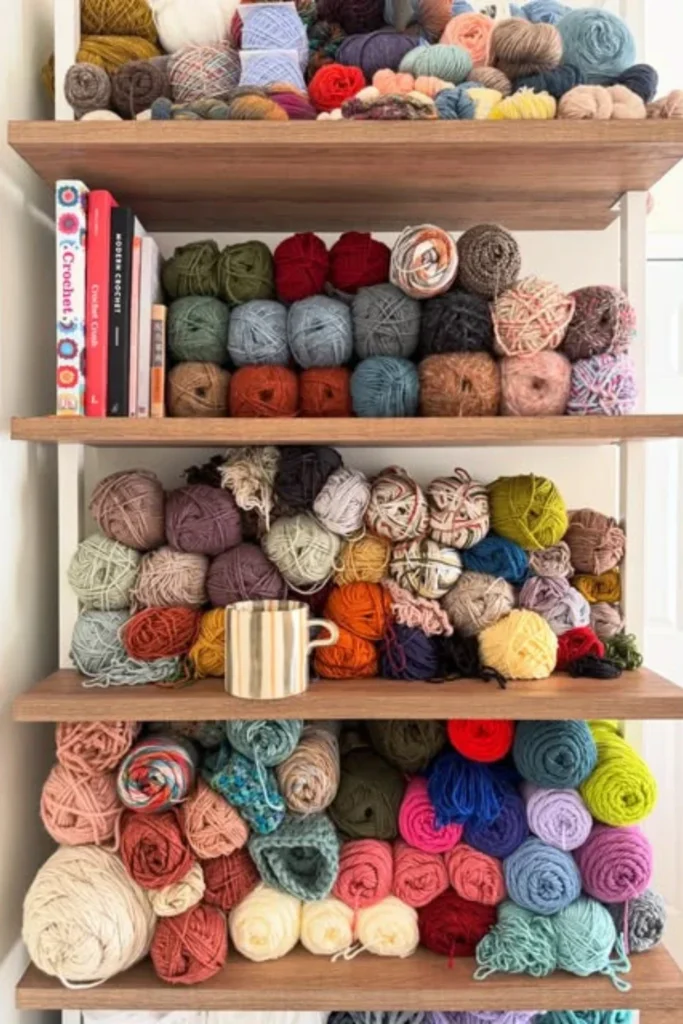
Wall-mounted shelves are excellent for small homes where floor space is limited. They create storage above desks, sewing tables, or other furniture without making the room feel crowded.
Floating shelves offer a clean appearance, while shelves with raised edges provide extra security for round yarn balls.
Position frequently used materials at a comfortable height and reserve upper shelves for lightweight supplies you need less often.
Before installation, check the wall type, shelf weight capacity, and appropriate mounting hardware. Properly secured shelves are essential, especially when storing a substantial collection.
Adding small labels beneath each shelf can make your yarn arrangement even easier to manage.
4. Modular Cube Units
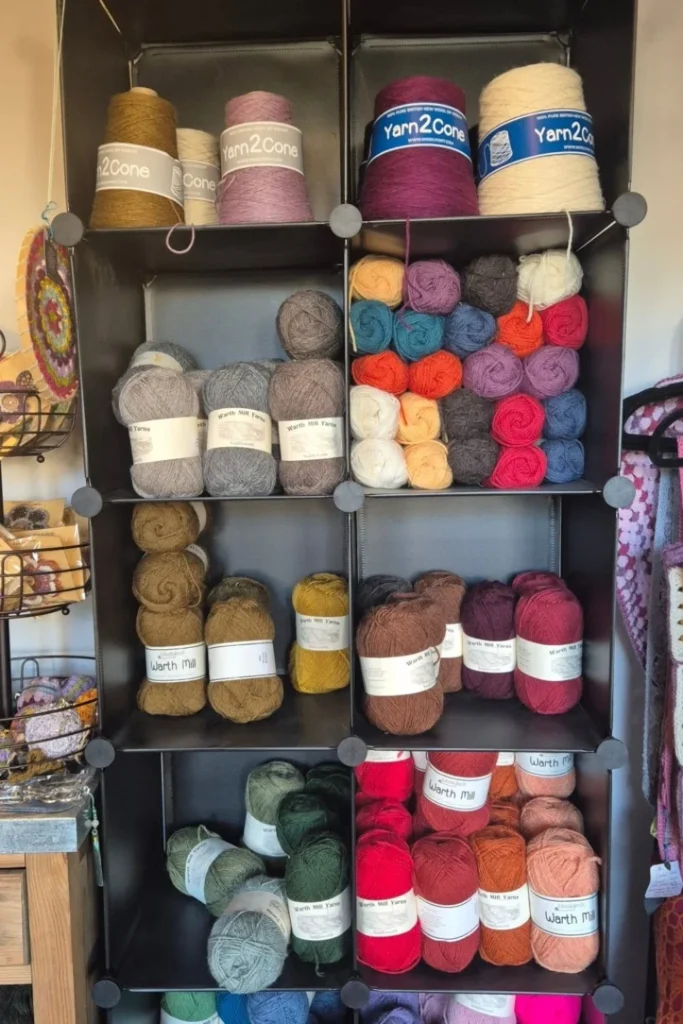
Modular cube units offer flexibility for anyone whose yarn collection changes throughout the year.
Unlike fixed shelving, modular systems allow you to expand or rearrange compartments as your storage requirements evolve. You can start with a small arrangement and add sections when necessary.
Use individual cubes for cotton, acrylic, wool, or other yarn categories. Alternatively, organize them by project, color family, or thickness.
Some modular units accommodate removable baskets, making them useful for storing crochet hooks, stitch markers, and smaller accessories alongside yarn.
Choose a stable system, follow the manufacturer's stacking instructions, and anchor taller configurations when recommended.
5. Compartment Wall Shelves
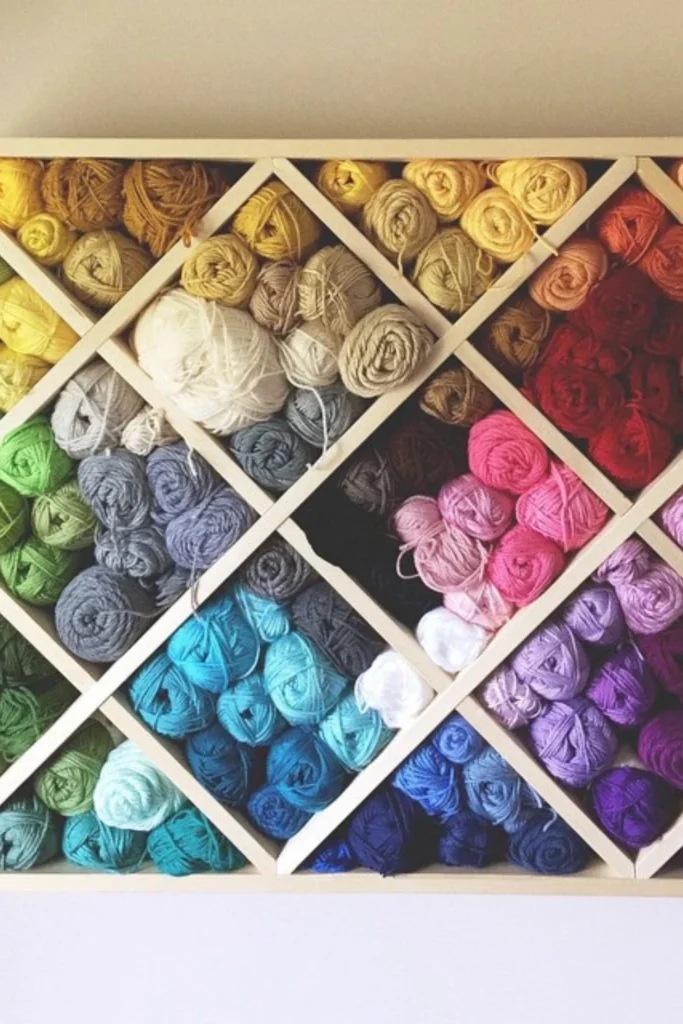
Compartment wall shelves provide individual spaces that prevent yarn from spreading across a large shelf.
Their divided design is especially useful for organizing smaller skeins, specialty fibers, and frequently used colors.
Wooden cubby shelves can also become an attractive feature in a crafting area. Different compartments create a colorful arrangement while keeping supplies separated.
Measure your typical skein dimensions before selecting a unit. Compartments that are too small may crush loosely wound yarn, while excessively large sections can waste valuable space.
For a coordinated appearance, arrange colors in a gradient or dedicate each row to a particular yarn weight.
6. Shelves With Baskets
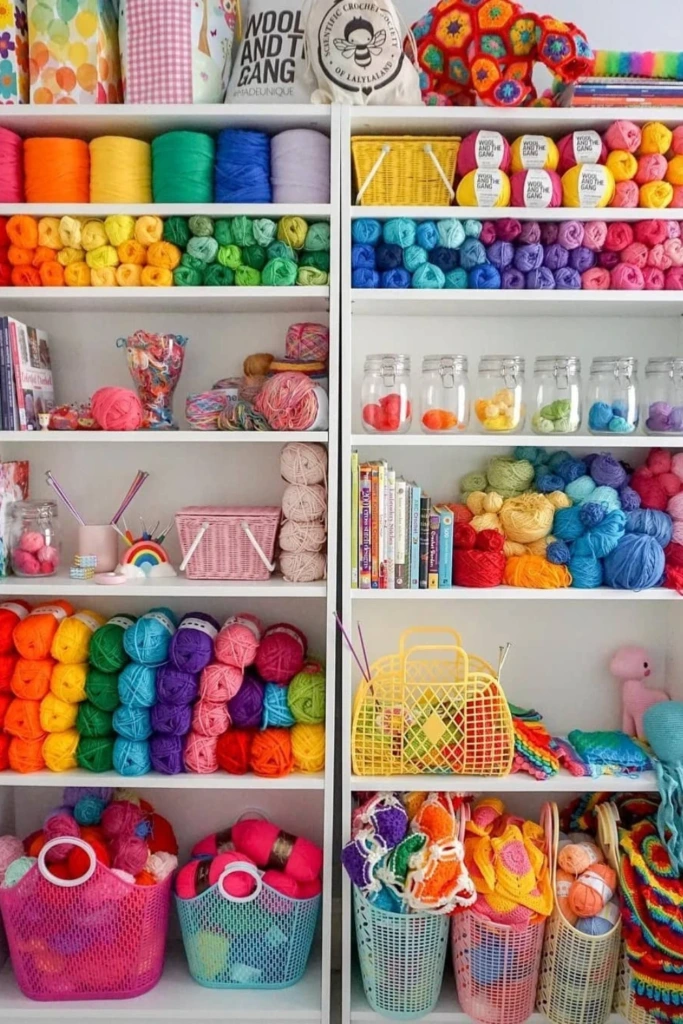
Combining shelves with baskets creates a practical balance between visible storage and concealed organization.
Keep neatly wound skeins on open shelves while using baskets for scraps, unfinished projects, and accessories that might otherwise create clutter.
Woven baskets bring a warm, natural appearance to living rooms and bedrooms. Fabric or smooth plastic baskets are useful for delicate yarn because they are less likely to catch loose fibers.
Choose baskets that fit comfortably within the shelf openings and can be removed without disturbing nearby supplies.
Small labels on basket handles help identify their contents without requiring you to open every container.
7. Stacked Crate Storage
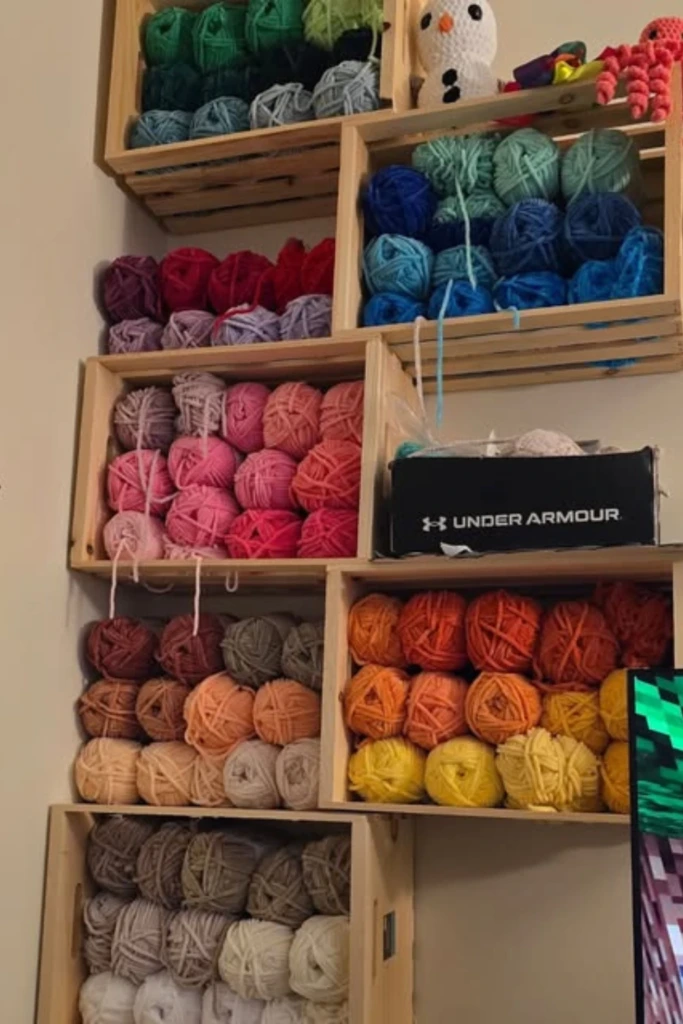
Stacked crates offer an affordable way to build personalized yarn storage using simple materials.
Wooden crates can create a rustic display, while sturdy plastic crates provide a lightweight, easy-to-clean alternative.
Arrange crates into a vertical structure, assigning different sections to yarn colors, weights, or ongoing projects.
If using wooden crates, sand any rough surfaces to prevent splinters from snagging yarn.
For safety, use crates designed for stacking, secure the arrangement appropriately, and keep heavier supplies near the bottom.
This approach is particularly useful when you want customizable storage without purchasing a large shelving unit.
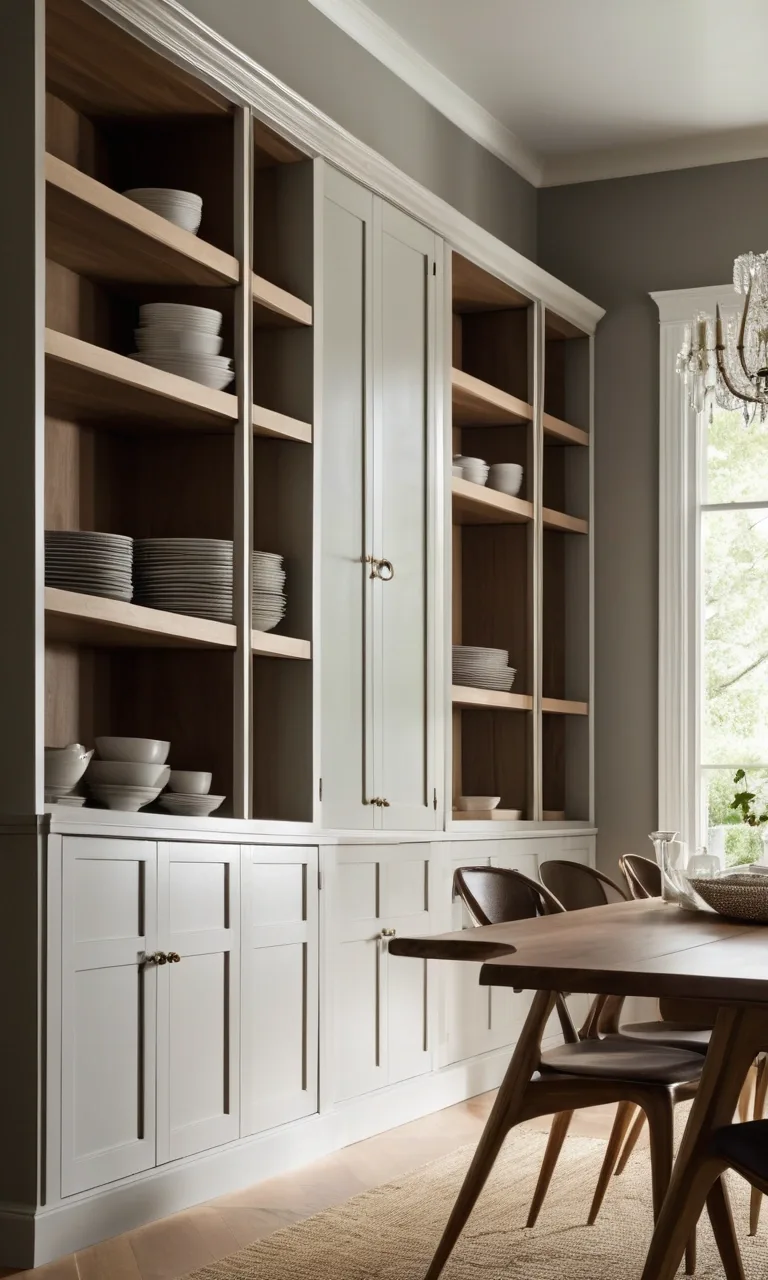
8. Open-Closed Storage
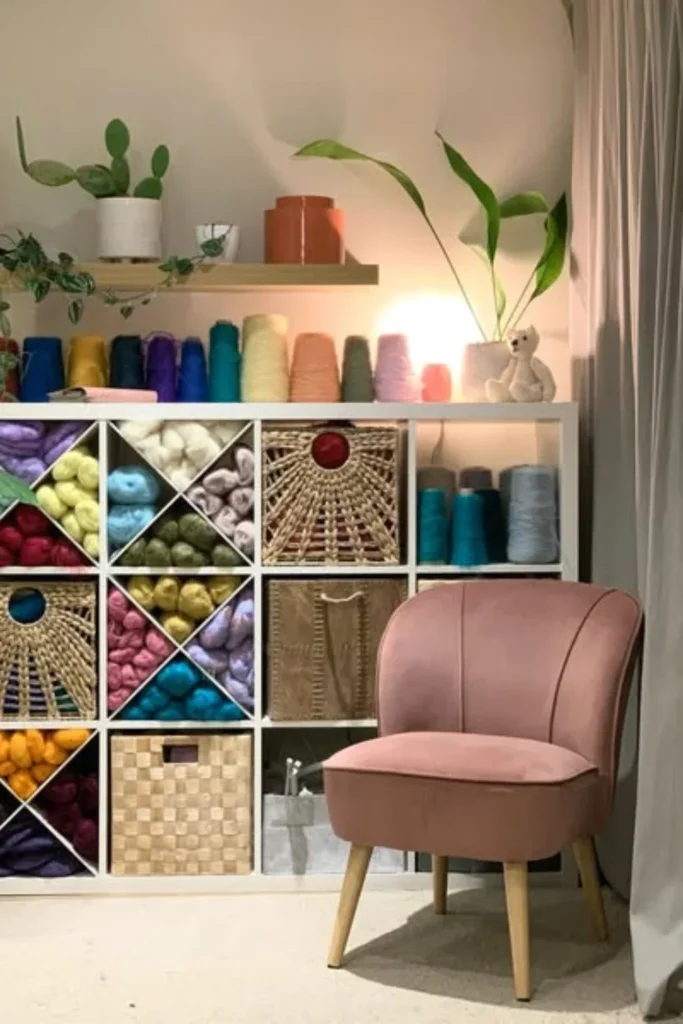
An open-closed storage arrangement combines the convenience of exposed shelves with the protective benefits of enclosed containers.
Display the yarn you use most frequently in open compartments, while keeping extra supplies, specialty fibers, and unfinished materials inside drawers or cabinets.
This arrangement is ideal for shared living spaces because it keeps crafting essentials accessible without allowing supplies to dominate the room.
Matching storage boxes can create a consistent appearance even when their contents vary.
Consider placing your current projects in open baskets and storing less frequently used yarn in labeled, closed containers.
The result is a flexible system that supports both everyday crafting and longer-term organization.
9. Tall Yarn Cabinet
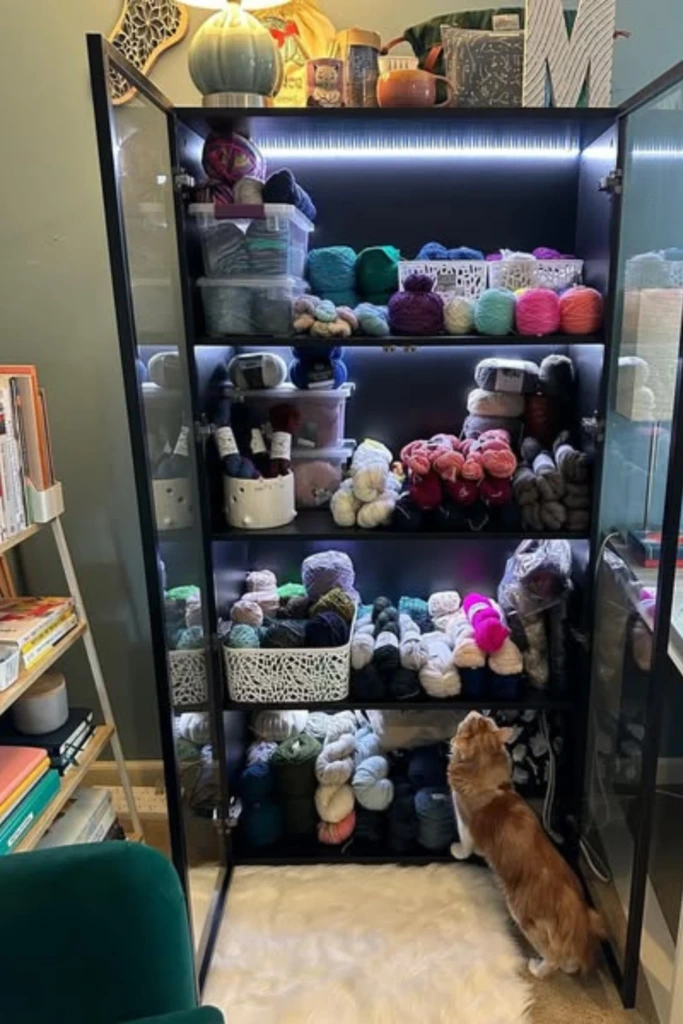
A tall cabinet makes excellent use of vertical space while keeping yarn contained within a relatively small floor area.
Cabinets with adjustable shelves are especially practical because you can change the spacing to accommodate different skein sizes, storage bins, and crafting equipment.
Solid doors help reduce dust exposure and shield yarn from direct sunlight. Glass-front cabinets offer visibility, although they should still be positioned away from strong sunlight.
Arrange supplies according to frequency of use, keeping everyday yarn between waist and shoulder height.
Use smaller baskets inside the cabinet to separate loose balls and leftover materials.
For added safety, anchor tall furniture to the wall according to the manufacturer's instructions.
10. Grid Shelf System
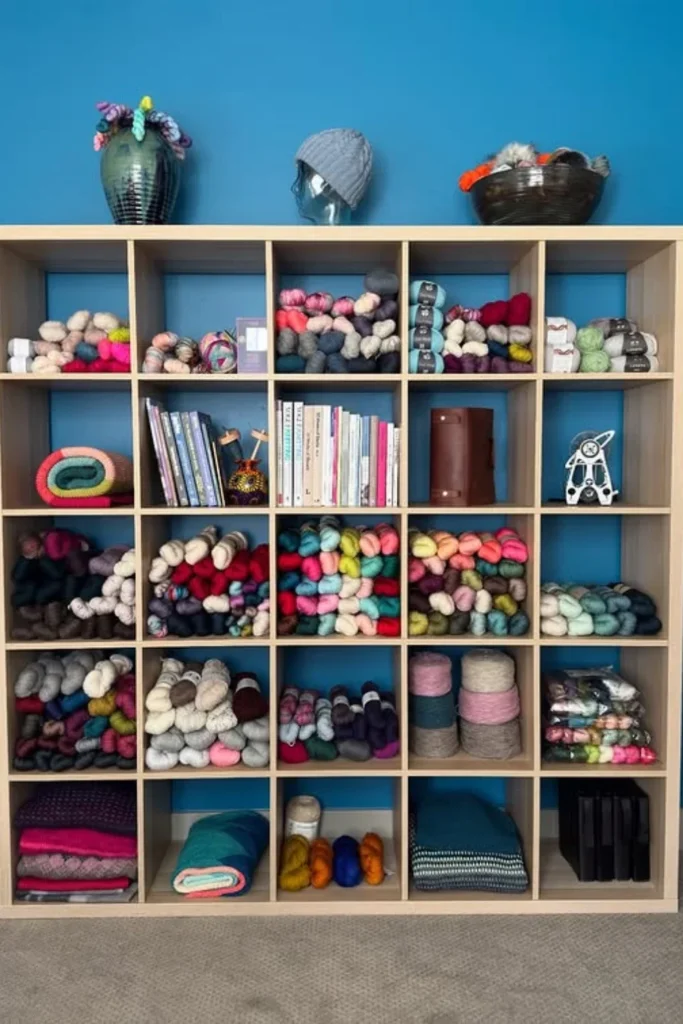
A grid shelf system creates a structured storage area with multiple evenly divided compartments.
Its simple layout makes organizing a large yarn collection easier because every category has a designated location.
You might reserve one section for lightweight yarn, another for bulky varieties, and additional compartments for specific fiber types.
Grid shelving also makes it easy to identify when certain categories are running low.
Choose a system with smooth surfaces and adequate support for your supplies. Wire-grid units may benefit from liners or baskets to prevent delicate fibers from catching on exposed joints.
This option works particularly well in dedicated craft rooms where organization and accessibility are priorities.
11. Hanging Yarn Holders
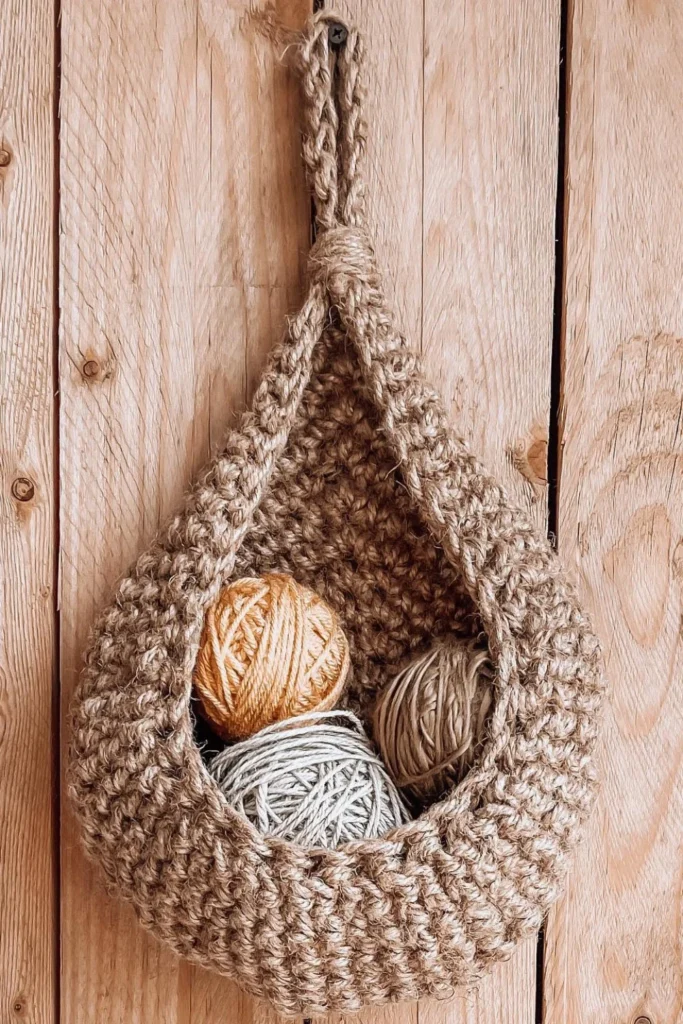
Hanging yarn holders make use of unused vertical space and keep smaller collections close to your crafting area.
Fabric pocket organizers, hanging baskets, and mesh storage systems can hold individual balls or lightweight skeins without requiring additional furniture.
Install a holder beside your favorite chair, near a worktable, or on the back of a suitable door.
Transparent or mesh pockets make it easier to recognize colors without removing the contents.
Avoid overfilling pockets, especially with heavy yarn, because excess weight can stretch the organizer or strain its mounting points.
Hanging holders are particularly convenient for current projects and frequently used supplies.
12. Yarn Rail Storage
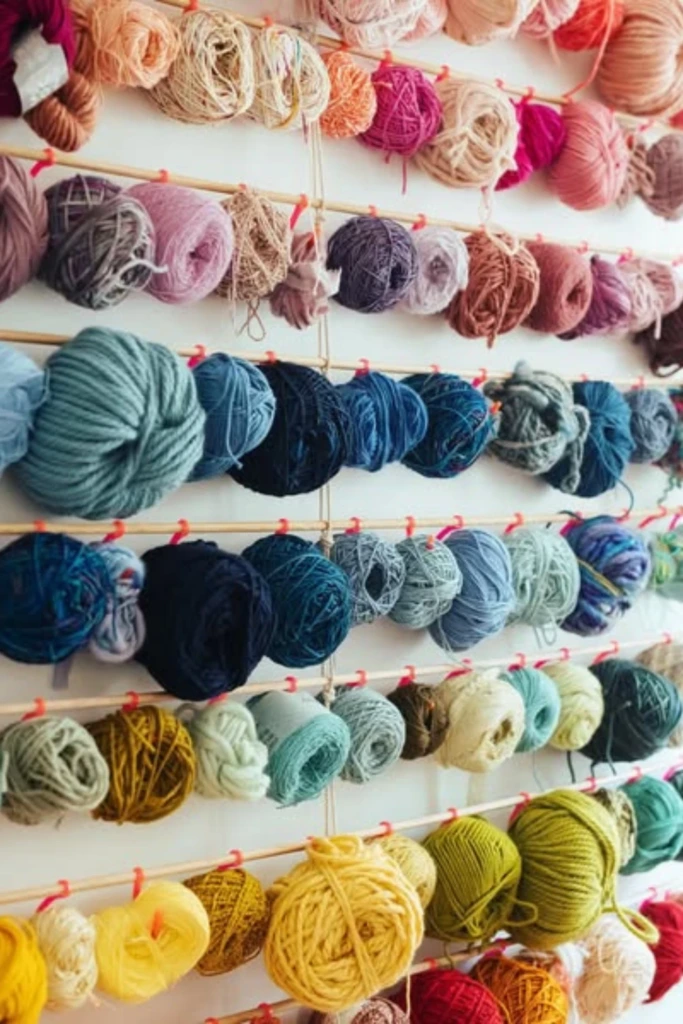
Yarn rail storage offers a creative alternative to traditional shelves by using horizontal rods or rails to organize crafting materials.
Depending on the design, rails can support hanging baskets, removable hooks, or lightweight yarn holders.
Install the system above a crafting desk or along an available wall to keep supplies visible and accessible.
Smooth hooks and rounded hardware are important because rough edges can damage delicate fibers.
If you prefer displaying yarn cakes or balls, use suitable hanging containers rather than suspending loosely wound yarn in a way that might cause unraveling.
This arrangement works especially well in narrow spaces where conventional shelving would extend too far into the room.
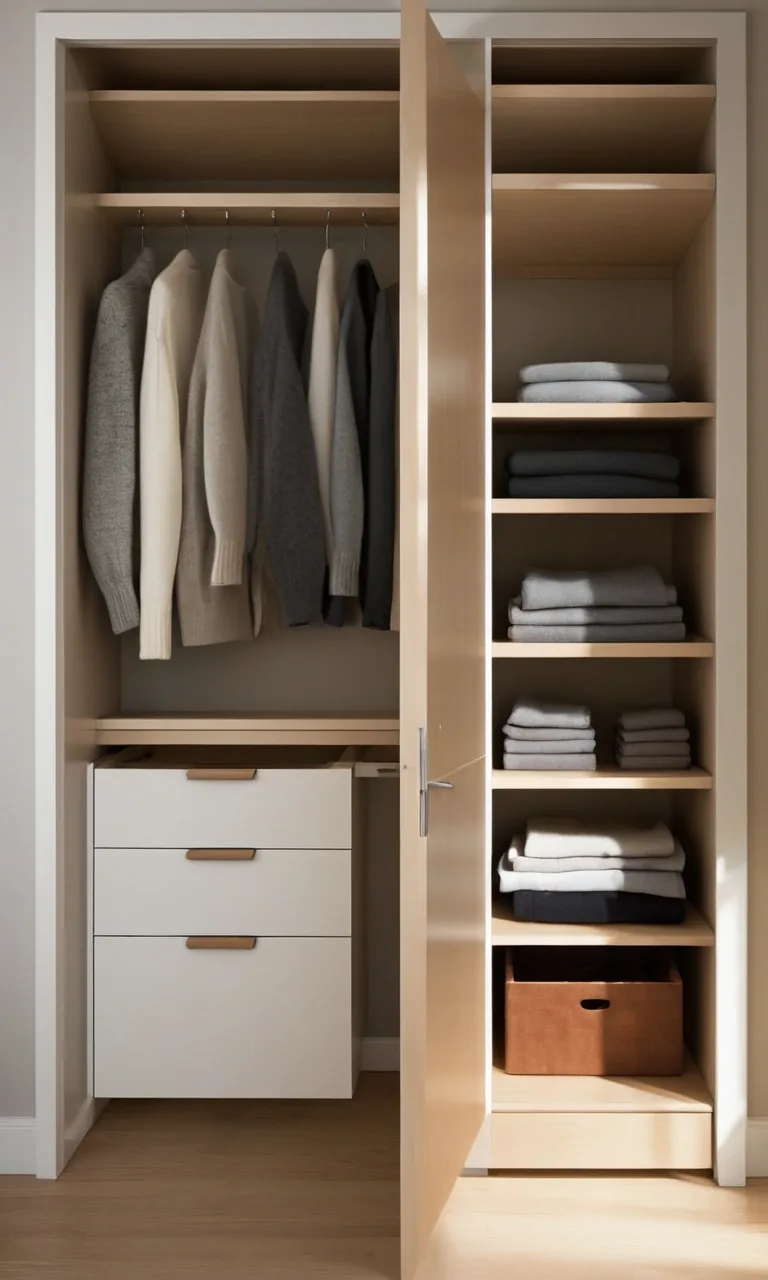
13. Hidden Closet Storage
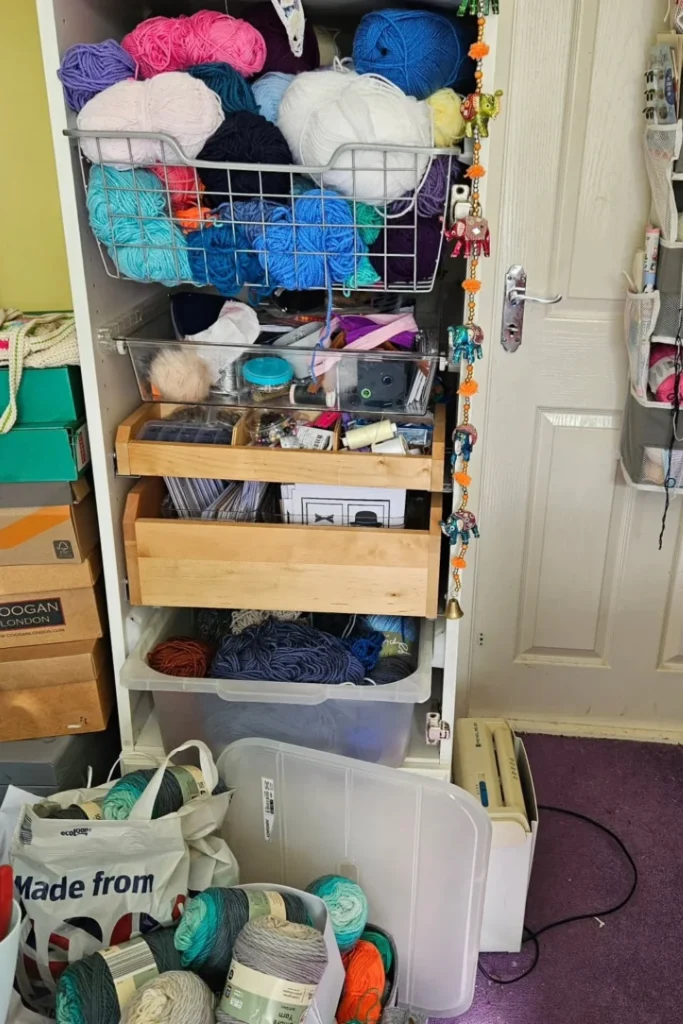
A closet can become an efficient yarn storage area without changing the appearance of your main living space.
Use existing shelves for labeled containers and install a hanging organizer on the inside of the door for lightweight accessories or smaller skeins.
Clear bins make identifying supplies easier, while opaque containers can help protect yarn from light exposure.
Organize materials by category and place frequently used supplies toward the front.
Avoid storing yarn in closets with persistent dampness, musty odors, or poor moisture control.
A small battery-operated closet light can improve visibility, especially when shelves extend into darker areas.
This solution is ideal for keeping larger collections organized but out of sight.
14. Lightweight Cube System
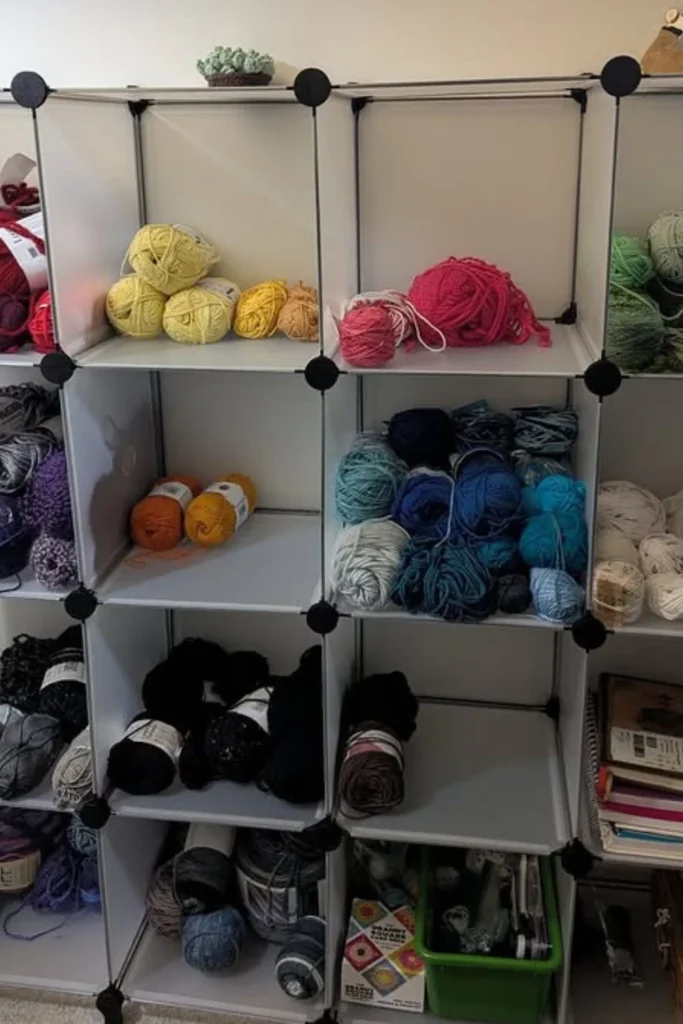
Lightweight storage cubes are useful when you need an arrangement that can be moved or reconfigured without much effort.
Fabric cubes, lightweight modular panels, and compact plastic units are popular choices for temporary crafting areas and smaller rooms.
You can position several cubes beside a desk or arrange them into a low shelving structure.
Removable fabric bins make it simple to transport yarn between your storage area and crafting space.
However, lightweight systems have varying load capacities. Avoid stacking them higher than recommended or placing heavy equipment on unsupported sections.
Choose smooth, cleanable materials that will not snag fibers.
15. Deep Cube Shelves
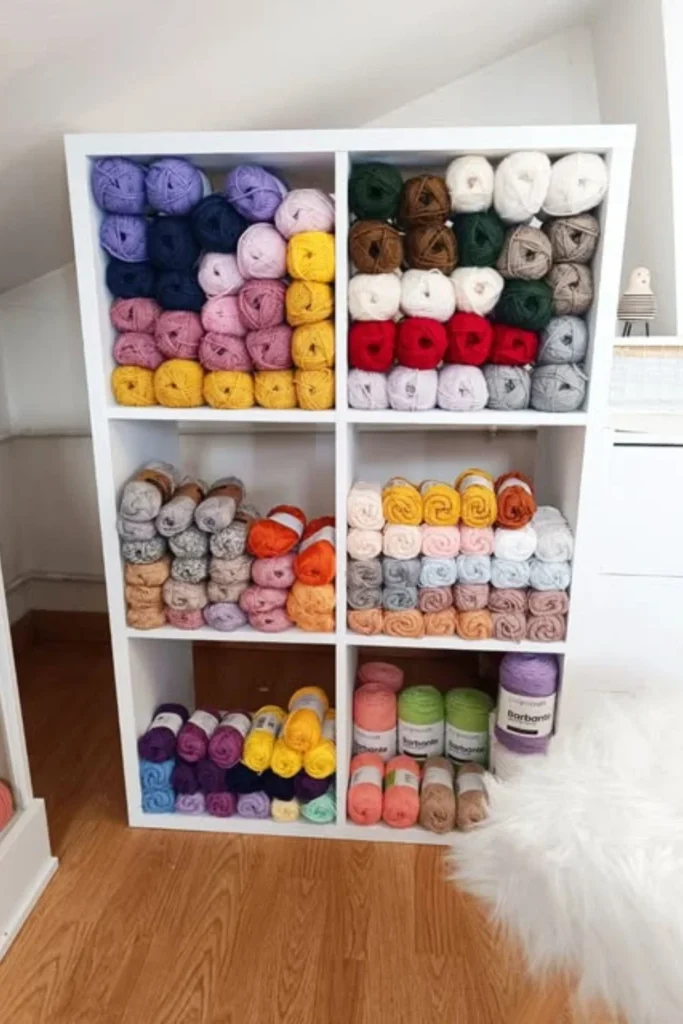
Deep cube shelves provide additional storage capacity for people who own substantial amounts of yarn.
Their generous compartments can accommodate multiple rows of skeins, larger yarn cakes, or removable storage bins.
To prevent supplies from disappearing at the back, place similar materials together and use pull-out baskets where possible.
Another useful method is keeping backup skeins behind the matching yarn currently in use.
Labeling compartments by color or yarn weight helps maintain organization as the collection grows.
Avoid packing skeins so tightly that retrieving one causes the entire arrangement to shift.
Deep cubes are most effective when paired with a clear system for tracking stored materials.
16. Corner Cube Storage
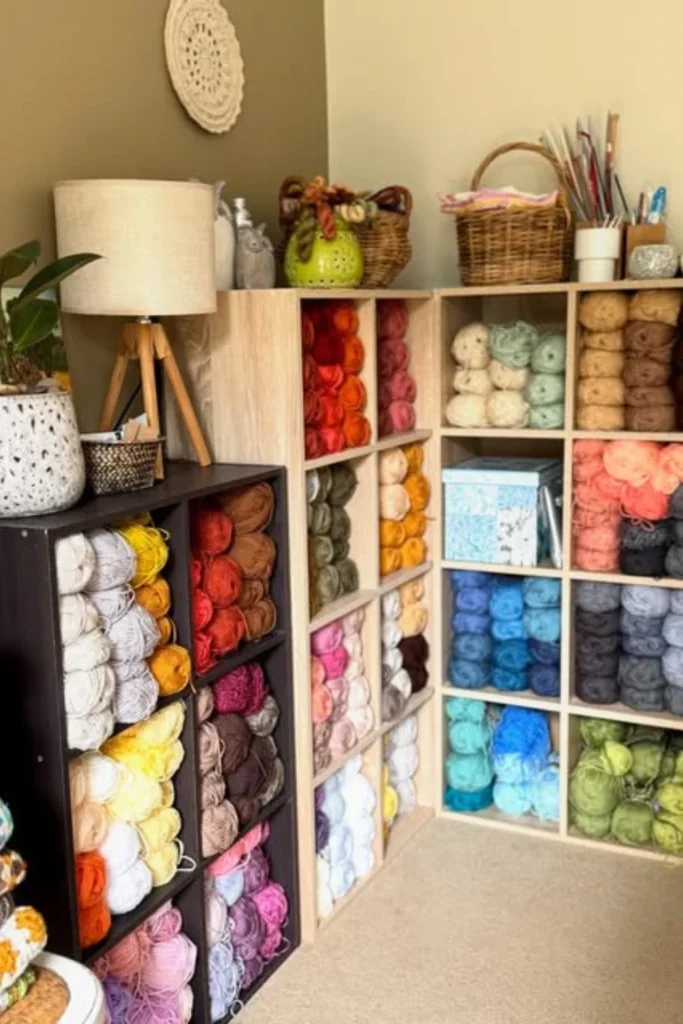
Unused room corners can provide valuable storage space, particularly in compact craft rooms.
Corner cube arrangements allow you to create a dedicated yarn station without occupying an entire wall.
You can use a purpose-built corner unit or position compatible shelving units in an L-shaped configuration.
Keep the most frequently used materials near the accessible outer edges and reserve deeper sections for less-used supplies.
A nearby lamp can improve visibility and make the corner more inviting.
Before arranging the furniture, check that drawers, doors, and storage baskets can open fully without obstruction.
This setup can turn an overlooked corner into a functional crafting area.
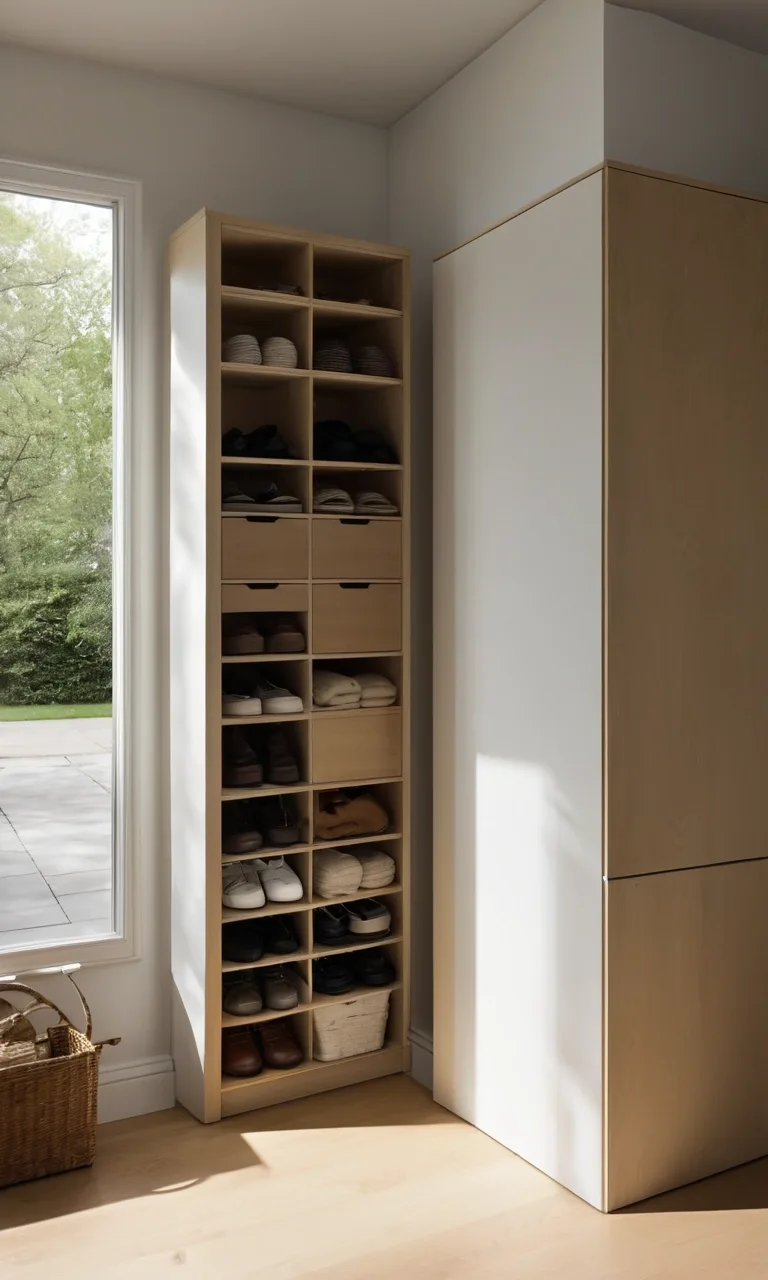
17. Tall Shelf Storage
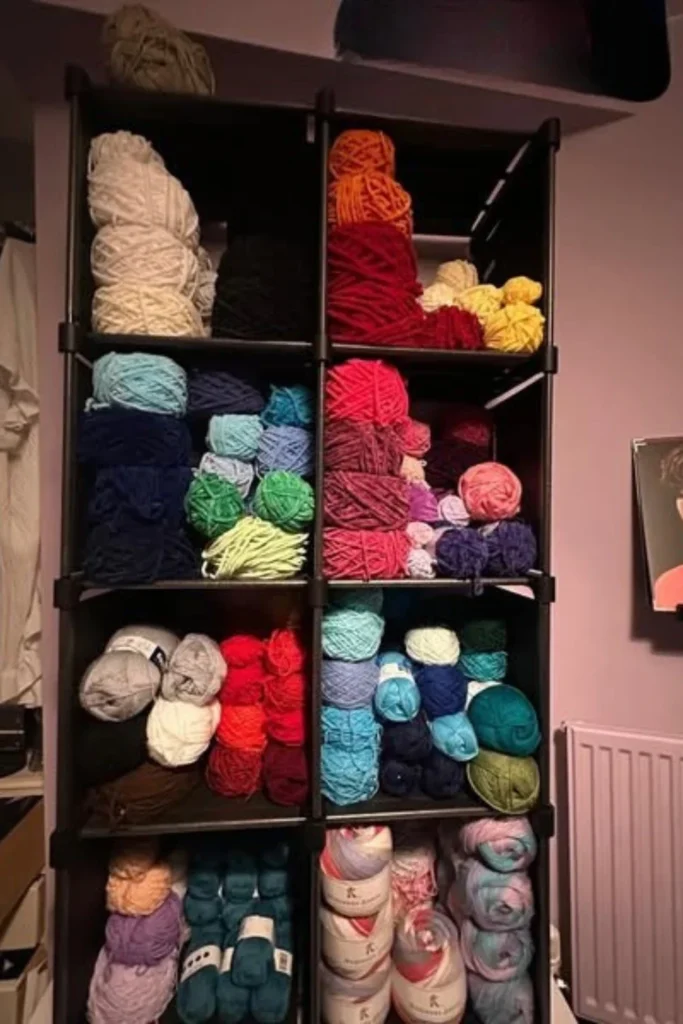
Tall shelves are ideal for organizing large yarn collections while conserving floor space.
A narrow bookcase or vertical storage unit can hold numerous skeins, baskets, and crafting tools within a compact footprint.
Divide the shelves into sections according to how often you use the materials.
Keep heavier containers and regularly used supplies on lower or middle shelves, with lightweight backups toward the top.
Using matching baskets helps maintain a tidy appearance and prevents smaller items from becoming scattered.
Make sure the shelving unit is stable and properly anchored where necessary.
For easier access, avoid placing essential supplies on shelves that require frequent climbing or stretching.
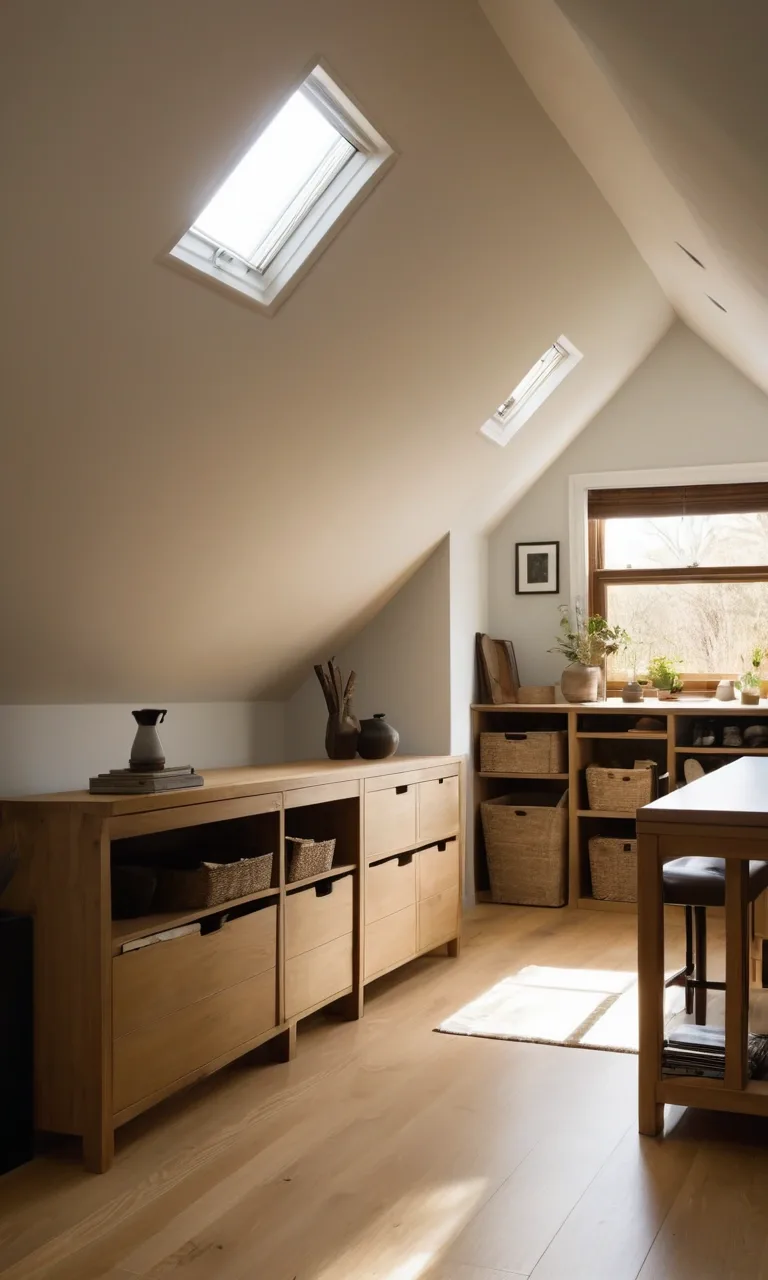
18. Workspace Yarn Storage
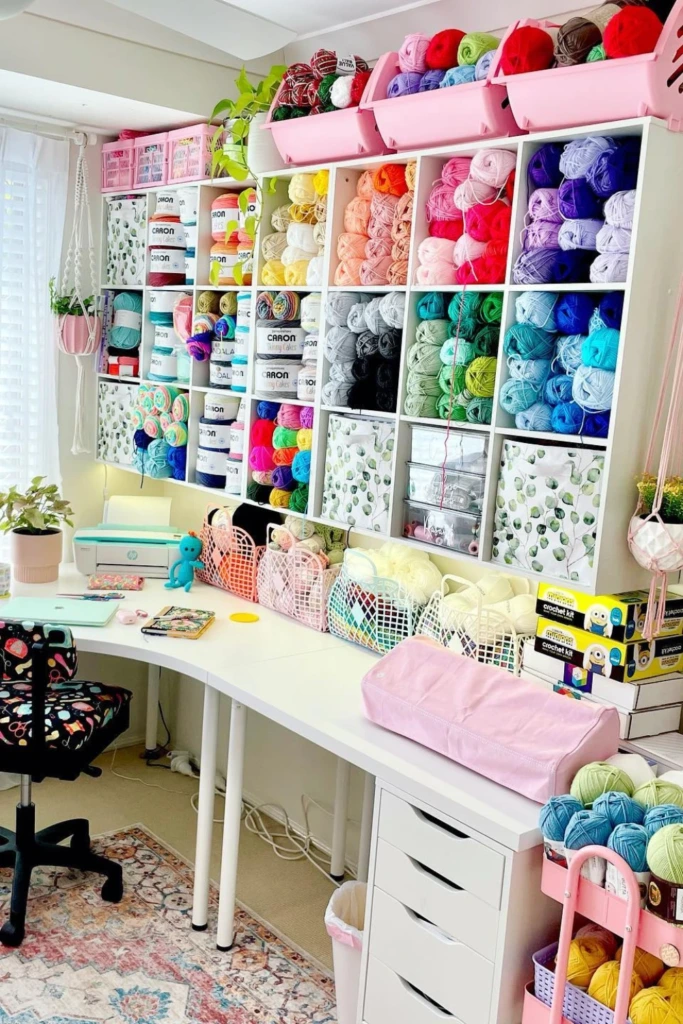
Keeping yarn near your crafting workspace can make knitting and crocheting more convenient.
A small shelving unit beside your desk, wall-mounted organizers, or a compact rolling cart can provide immediate access to the materials needed for your current projects.
Separate active supplies from your main collection so the workspace remains manageable.
A dedicated container for each project can hold the yarn, pattern, hooks, needles, and other necessary accessories.
Position storage so that yarn can be retrieved comfortably without interfering with your working surface.
Good task lighting also makes it easier to distinguish similar shades and inspect stitches.
The goal is to create a workspace where everything