20 Smart Shoe Storage Ideas to Keep Your Home Neat and Organized
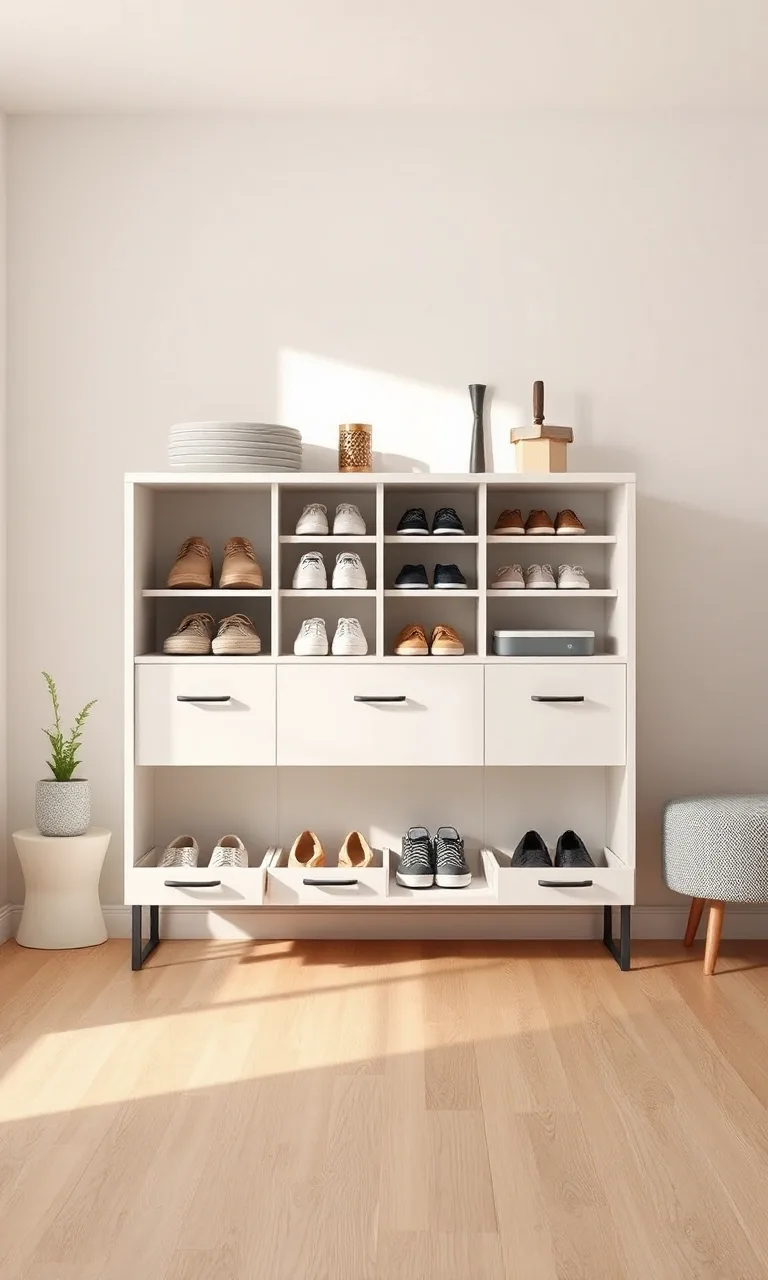
Shoes can quickly become a source of clutter, especially when you have limited closet space or several people sharing the same entryway. Sneakers, sandals, boots, and everyday footwear often end up scattered across the floor, making even a tidy room feel messy.
Fortunately, organizing your shoes doesn't require a huge closet or expensive furniture. With the right shoe storage ideas, you can make better use of unused corners, empty walls, and overlooked spaces while keeping your favorite pairs easy to find.
1. Use an Over-the-Door Shoe Organizer
An over-the-door shoe organizer is a convenient solution when floor space is limited. It transforms the back of a closet or bedroom door into useful storage without requiring additional furniture.
Choose an organizer with clear pockets so you can identify your shoes immediately. Fabric versions are lightweight and work particularly well for sandals, slippers, and flats.
Before purchasing, check the door clearance and pocket dimensions to ensure the organizer fits comfortably.
2. Install Floating Shoe Shelves
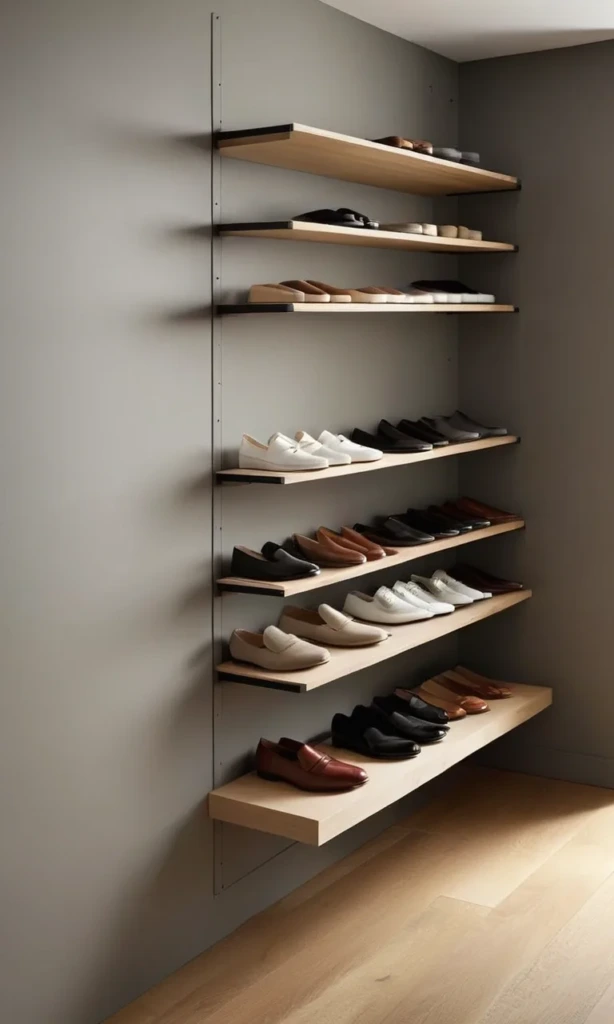
Floating shelves offer a clean, modern way to store shoes while keeping the floor open. They work especially well in bedrooms, walk-in closets, and small dressing areas.
Arrange shelves vertically to take advantage of wall height. You can adjust the distance between them to accommodate different footwear styles, from low-profile sneakers to ankle boots.
For a more polished appearance, group similar shoes together and leave a little space between pairs.
3. Choose a Shoe Storage Bench
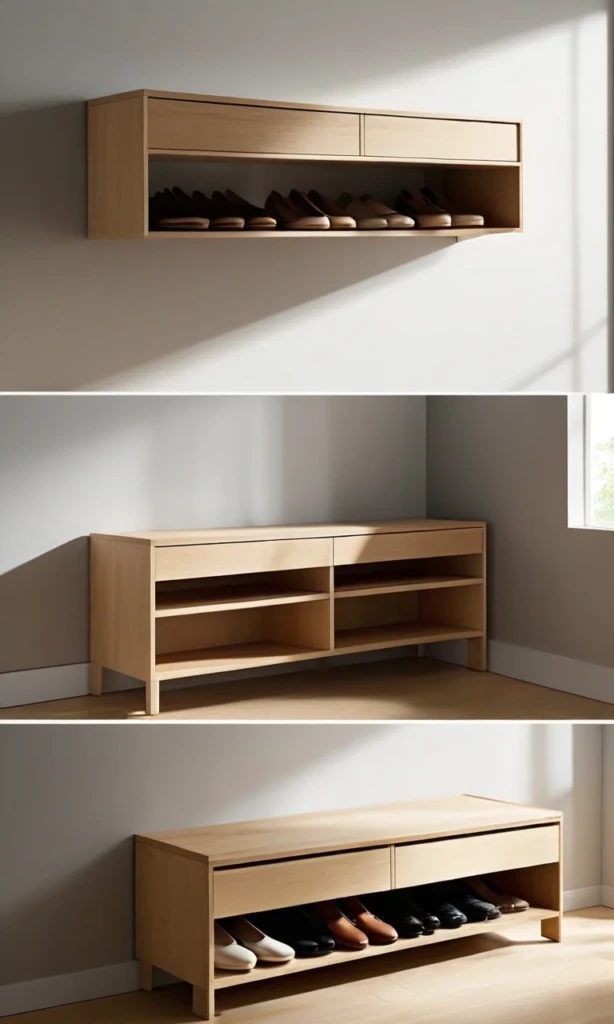
A shoe storage bench combines comfortable seating with practical organization. It's particularly useful near the front door, where people regularly put on and remove their footwear.
Look for a bench with open cubbies, pull-out baskets, or shelves underneath. These compartments keep everyday shoes accessible while preventing them from spreading across the entryway.
A cushioned top adds comfort, while a wooden bench can bring a warm, natural element to your decor.
4. Try a Slim Shoe Cabinet
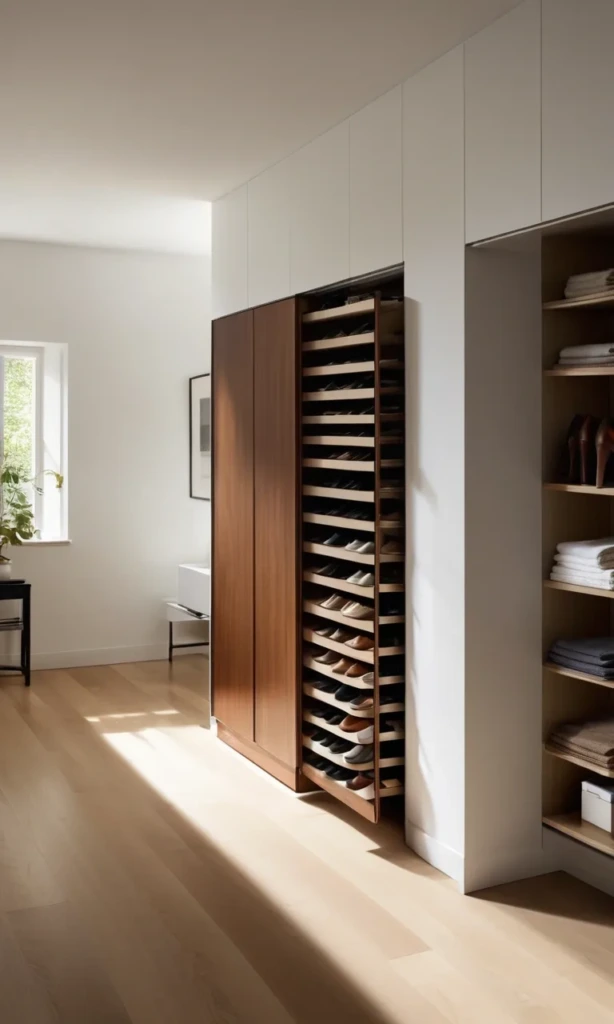
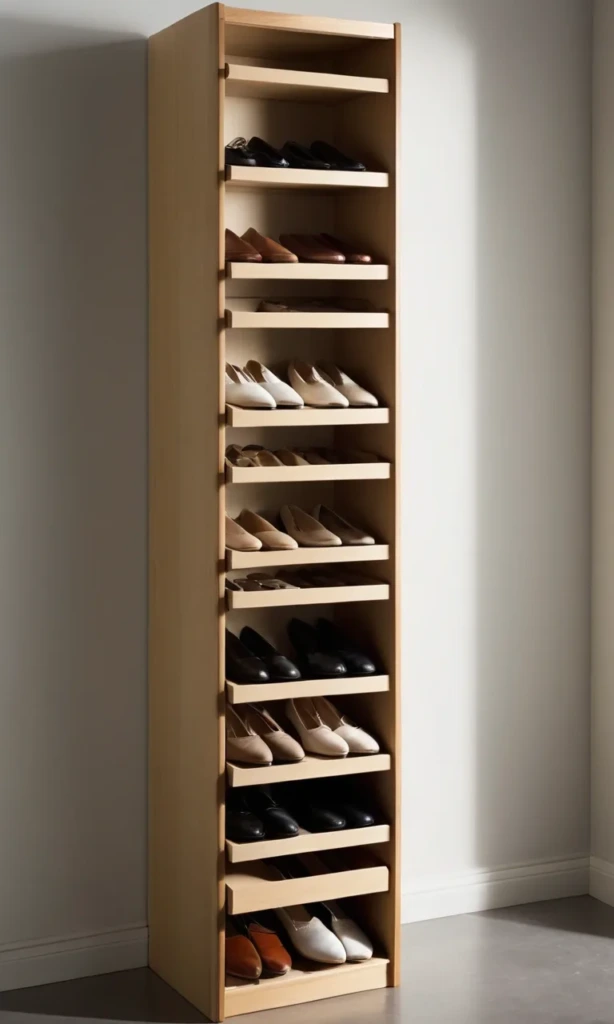
Narrow shoe cabinets are ideal for hallways, apartments, and entryways where traditional furniture would take up too much room.
Many designs feature tilt-out compartments that hold shoes at an angle, reducing the cabinet's overall depth. Closed fronts also conceal footwear and create a less cluttered appearance.
Measure your available space carefully, and secure tall or narrow cabinets to the wall according to the manufacturer's instructions.
5. Store Shoes Under the Bed
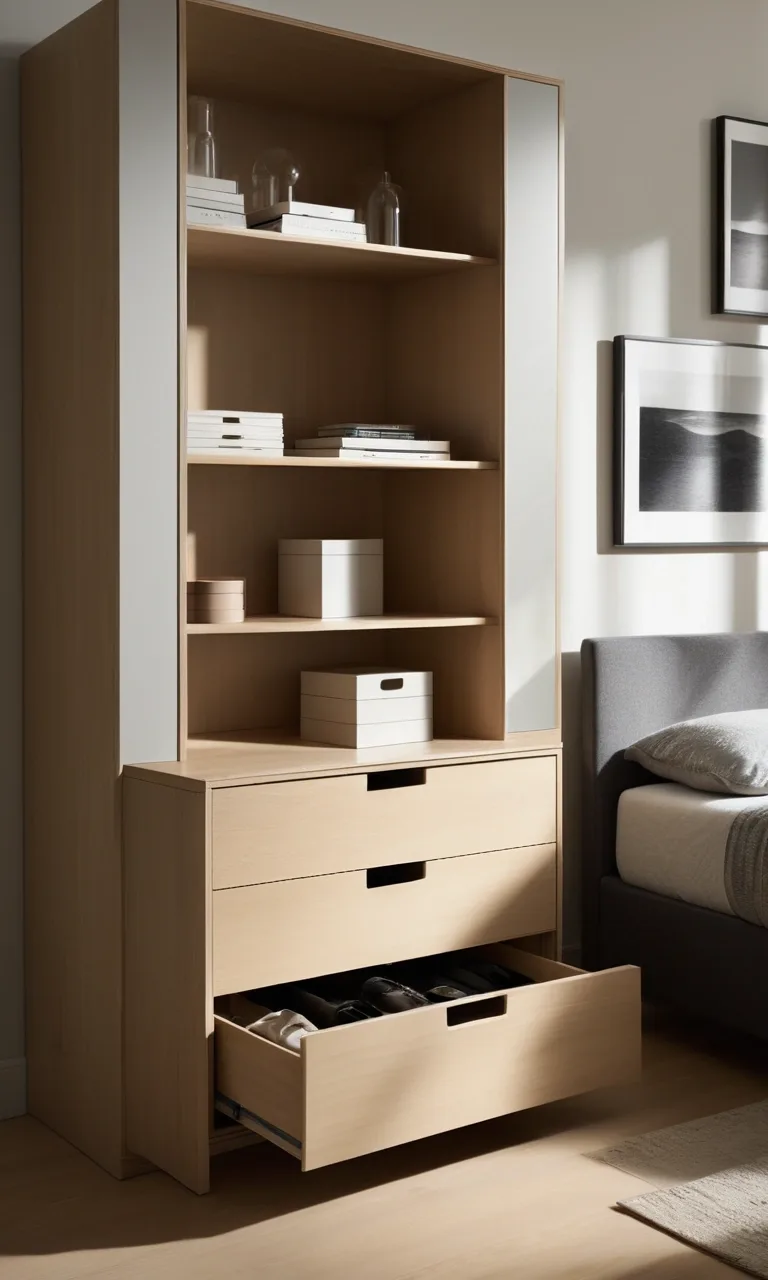
The space beneath your bed can provide valuable storage for footwear you don't use every day.
Low-profile containers, rolling drawers, and zippered storage bags are useful for keeping shoes organized and protected from dust.
Choose containers with transparent lids or labels to make finding specific pairs easier. Always clean and thoroughly dry footwear before putting it into enclosed storage.
6. Use Stackable Shoe Boxes
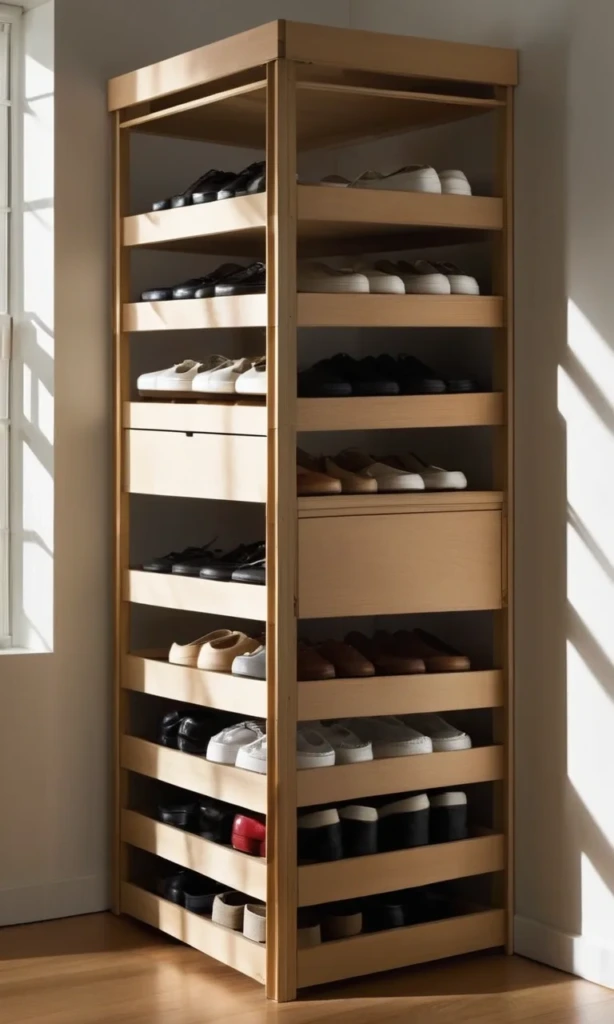
Stackable shoe boxes help organize a growing collection without wasting vertical space.
Clear boxes make it easy to see what's inside, while front-opening designs allow you to retrieve a pair without moving the entire stack.
Select boxes that comfortably accommodate your largest shoes. For leather footwear, consider breathable storage options and avoid trapping moisture inside.
7. Add a Shoe Rack Inside Your Closet
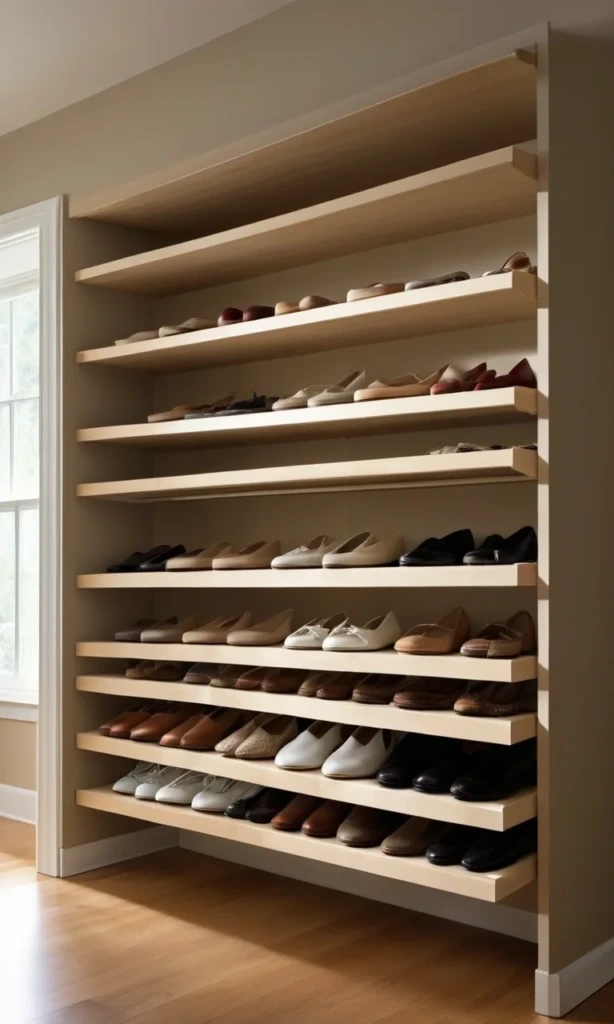
A simple shoe rack can turn the bottom of your closet into a more organized space.
Two-tier and three-tier racks work well for everyday footwear, allowing you to store several pairs without creating messy piles.
Adjustable racks are especially useful because they can accommodate different shoe sizes and closet widths. Keep your most frequently worn pairs on the easiest-to-reach level.
8. Create a DIY PVC Pipe Shoe Organizer
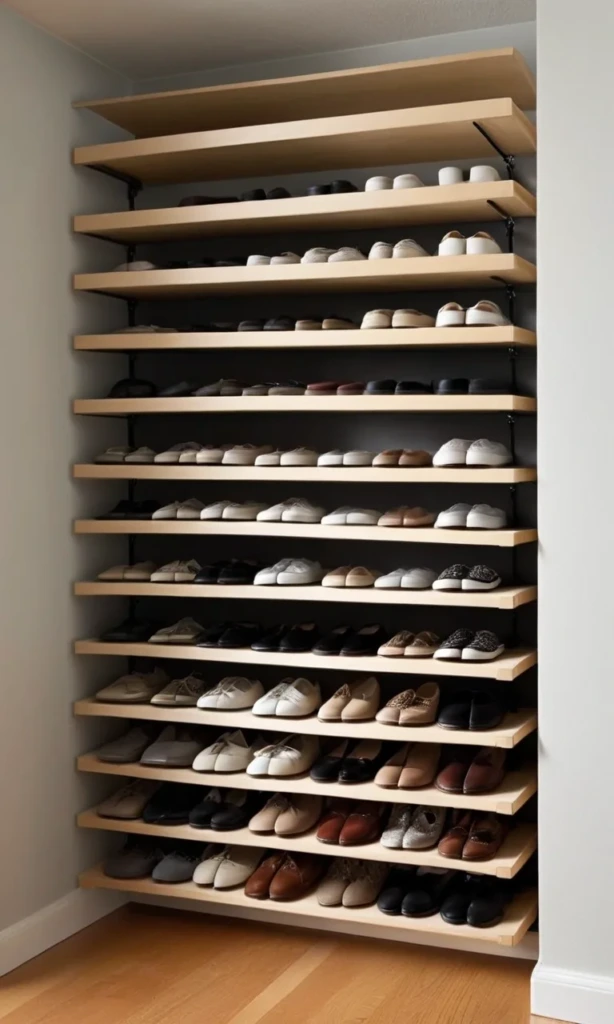
PVC pipes can be used to build an inexpensive, customized shoe organizer.
Cut wide-diameter pipes into equal sections, smooth the edges, and arrange them into a honeycomb-style structure. Each opening can hold suitable lightweight footwear.
Make sure the pipe diameter fits your shoes and that the finished organizer is securely joined and stabilized.
This project is a creative option for garages, utility rooms, or casual storage areas.
9. Use Wicker Baskets for Casual Shoes
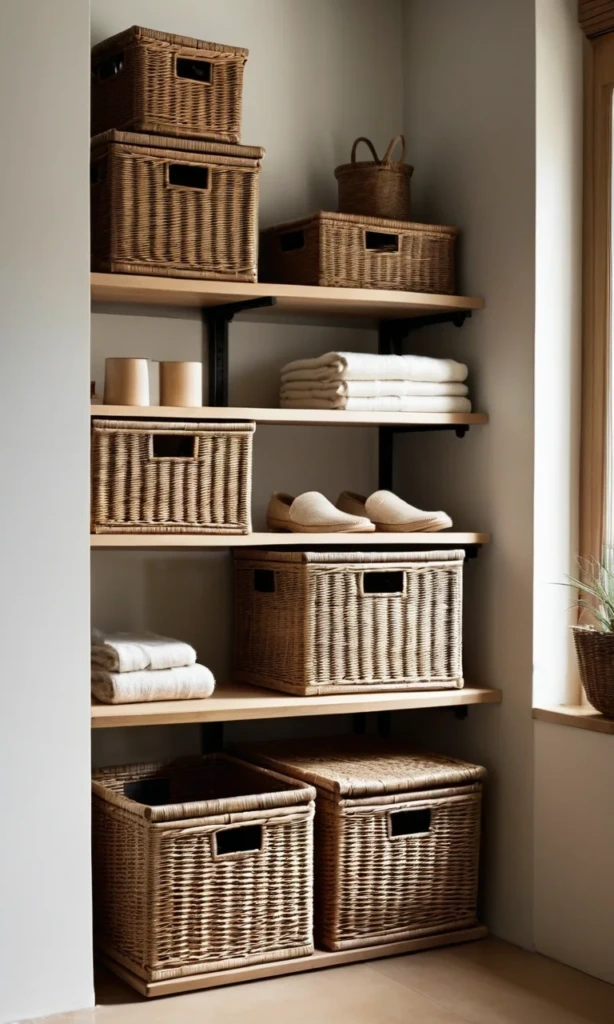
Wicker baskets provide an attractive way to store lightweight footwear while adding texture to your home.
Place a few baskets beneath an entryway bench or on a low closet shelf. Separate slippers, flip-flops, and children's shoes into different containers to make everything easier to find.
Choose baskets with smooth interiors to avoid snagging delicate materials, and avoid piling heavy shoes on top of softer pairs.
10. Install a Wall-Mounted Shoe Rack
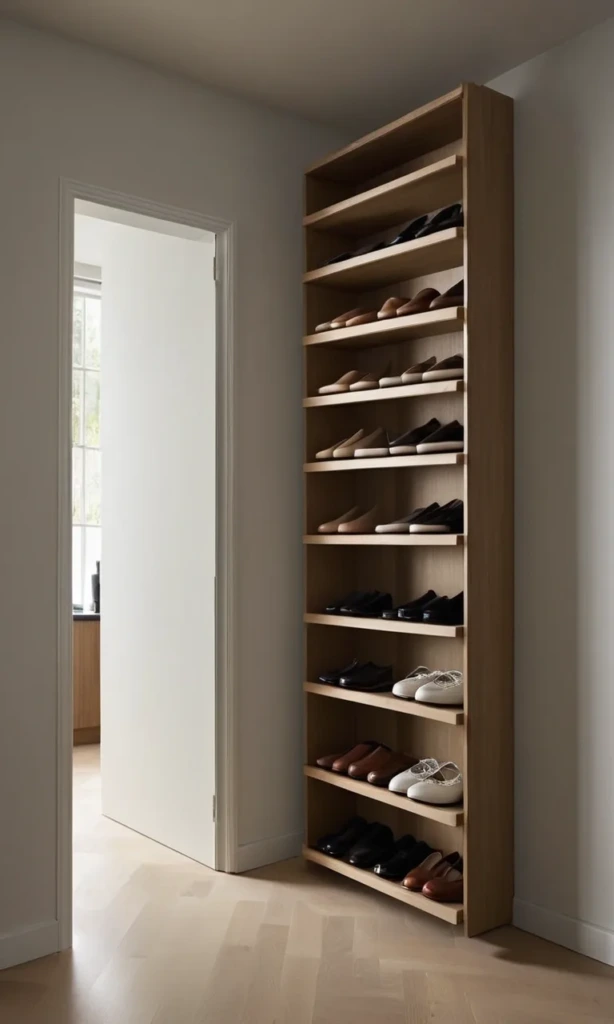
Wall-mounted racks are useful when you want to preserve floor space in a narrow room.
Depending on the design, they can hold shoes on angled shelves, rails, or individual supports. This keeps footwear visible and reduces the need to search through crowded closets.
Install the rack into appropriate wall supports and follow its weight limits. Position it where shoes won't obstruct doors or walking areas.
11. Organize Shoes with a Rotating Shoe Rack
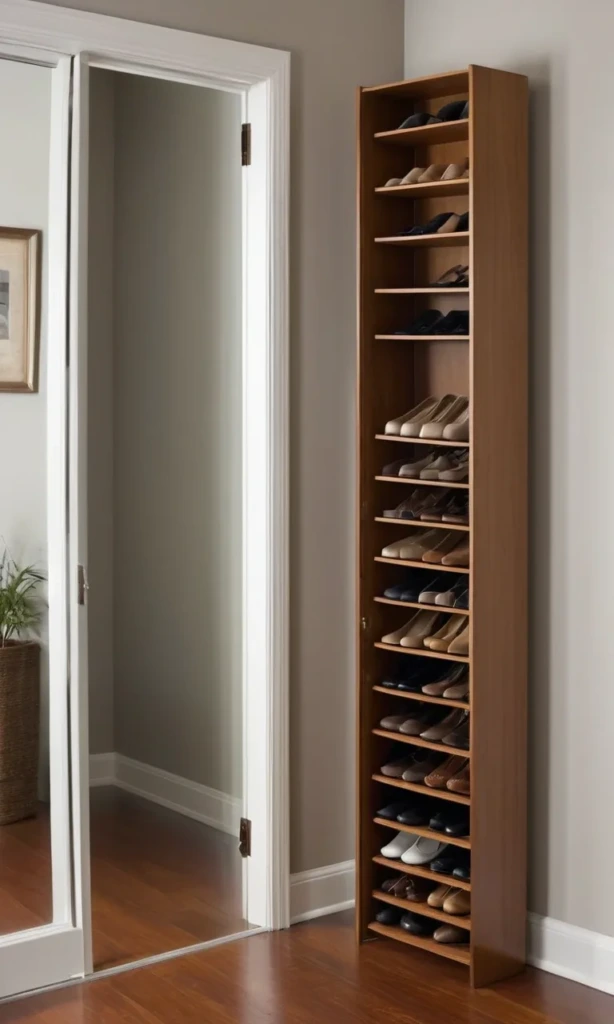
A rotating shoe rack offers easy access to multiple pairs while using a relatively compact footprint.
These organizers often feature circular shelves that turn, allowing you to browse your collection without reaching into deep storage spaces.
They're especially convenient for closets with enough clearance for rotation. Choose a stable model and avoid overloading the upper levels.
12. Repurpose an Old Bookshelf
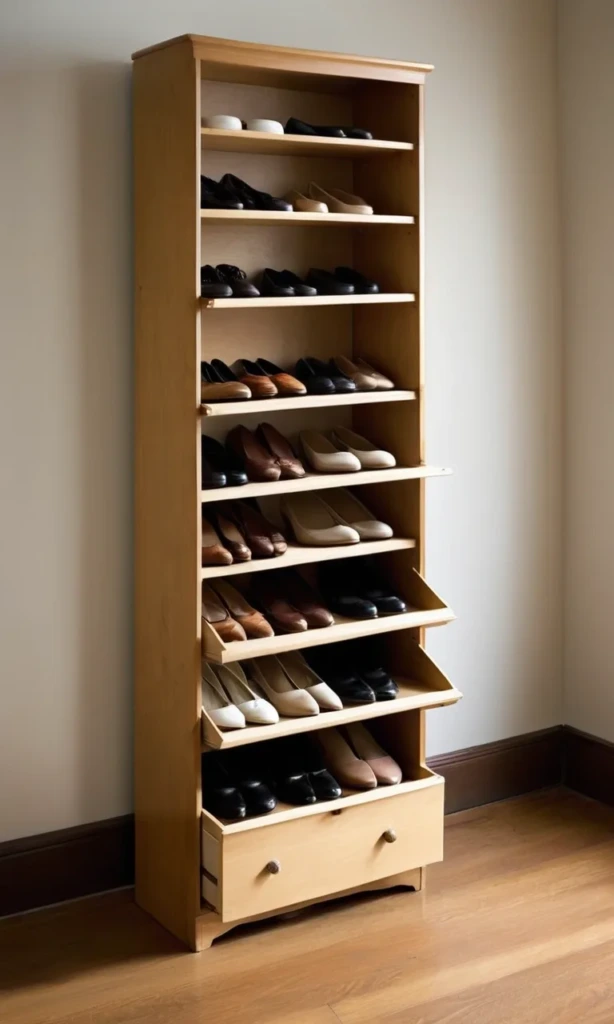
An unused bookshelf can become a practical shoe storage unit with very little effort.
Adjust the shelves to accommodate your footwear, keeping taller spaces for boots and shorter sections for flats or sneakers.
You can repaint the bookshelf to coordinate with your bedroom or closet decor. Adding baskets to lower shelves provides extra storage for shoe-care products and accessories.
Secure tall bookshelves to the wall to reduce tipping risks.
13. Use Hanging Closet Shoe Organizers
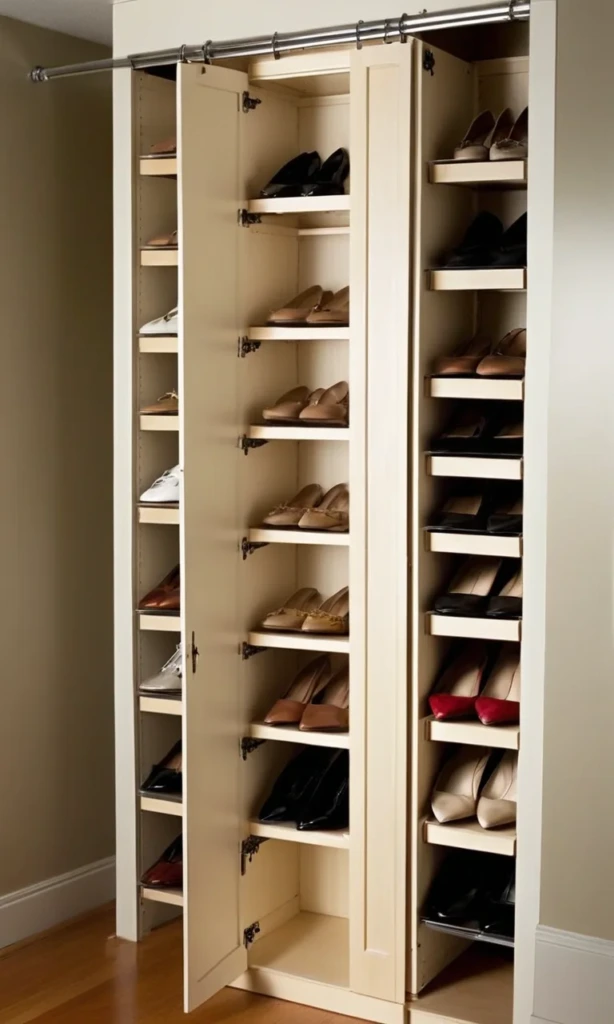
A hanging shoe organizer makes use of the vertical space beneath your closet rod.
Its fabric compartments are suitable for lightweight footwear, and the organizer can usually be installed without tools.
This option works particularly well for renters or anyone who prefers flexible storage. Just ensure the closet rod can support the added weight.
Keep heavier boots and bulky shoes on sturdier shelves rather than in soft hanging compartments.
14. Add Shoe Storage Beneath the Stairs
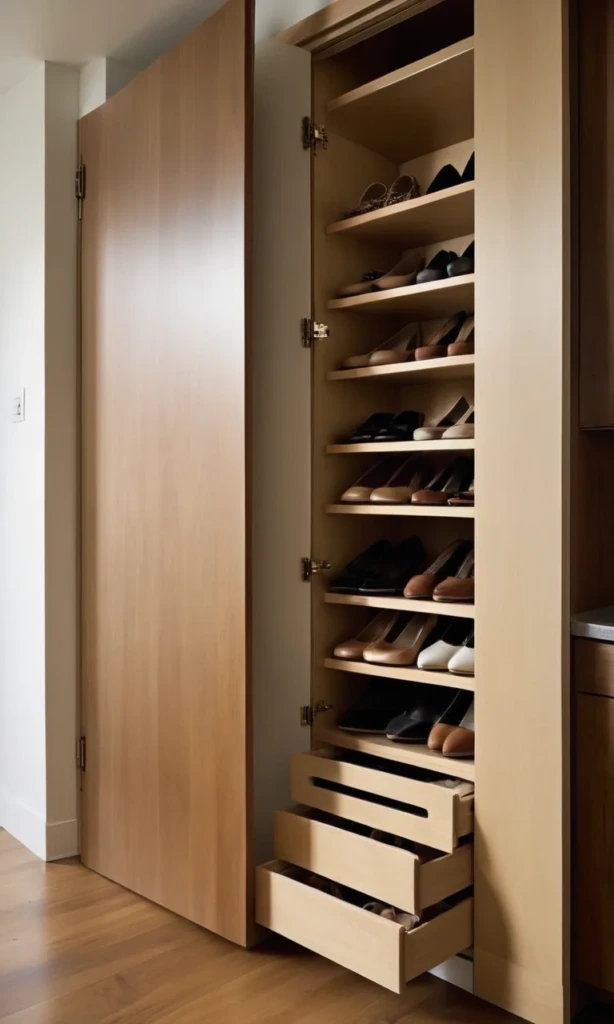
The area under a staircase is often overlooked, but it can become an excellent place to store shoes.
Depending on the layout, you might install pull-out drawers, custom cubbies, or a compact shelving unit.
Pull-out storage is especially helpful for reaching footwear kept toward the back of a deep space.
For built-in modifications, consider the structure of the staircase and consult a qualified professional before changing walls or framing.
15. Use a Ladder-Style Shoe Shelf
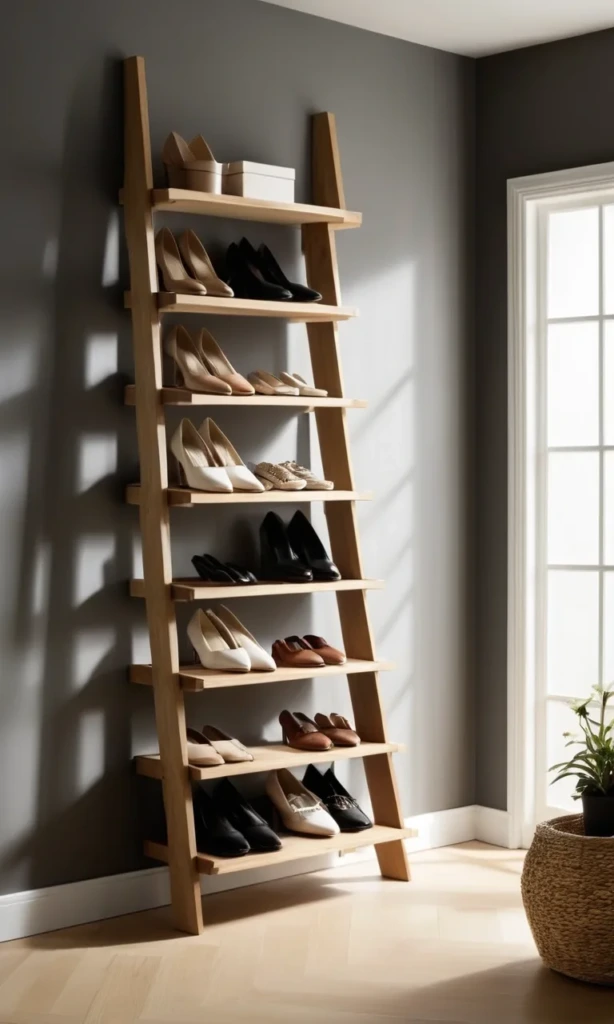
A leaning ladder shelf can add visual interest while providing open storage for shoes.
Its tiered design works well in bedrooms or dressing rooms, particularly when you want your footwear collection to become part of the decor.
Place heavier shoes on lower shelves and lighter pairs above. Choose a model designed for storage and secure it as directed to prevent tipping.
16. Create a Dedicated Shoe Drop Zone
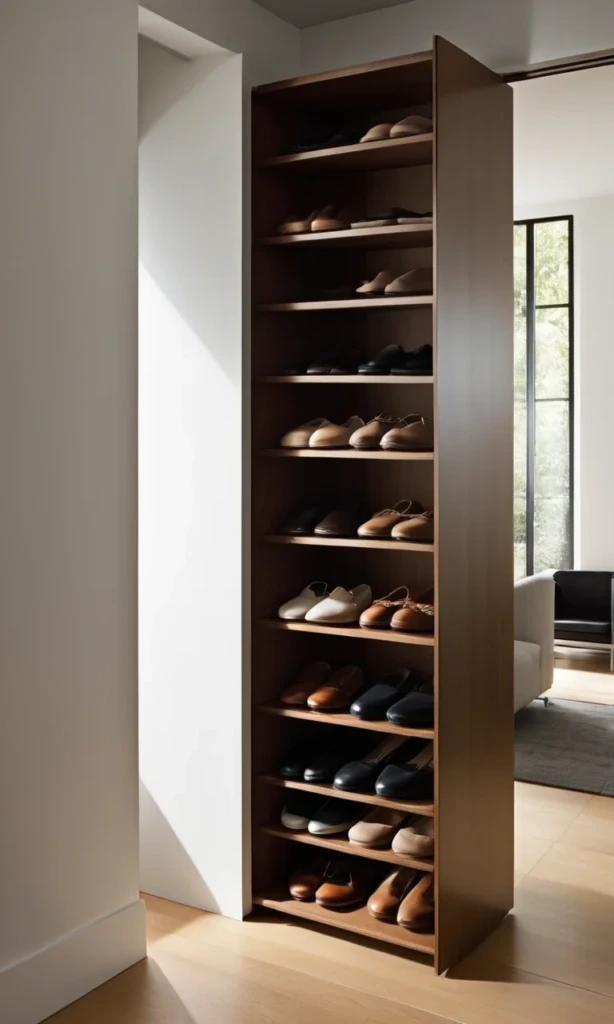
A designated shoe drop zone near the entrance helps prevent footwear from spreading throughout the house.
Start with a washable mat or boot tray and add a small rack or basket for the shoes your household wears most often.
Give each family member a specific section when possible. This makes daily cleanup easier and reduces confusion during busy mornings.
Keep the area simple so shoes can be put away quickly without extra effort.
17. Use Adjustable Shoe Slot Organizers
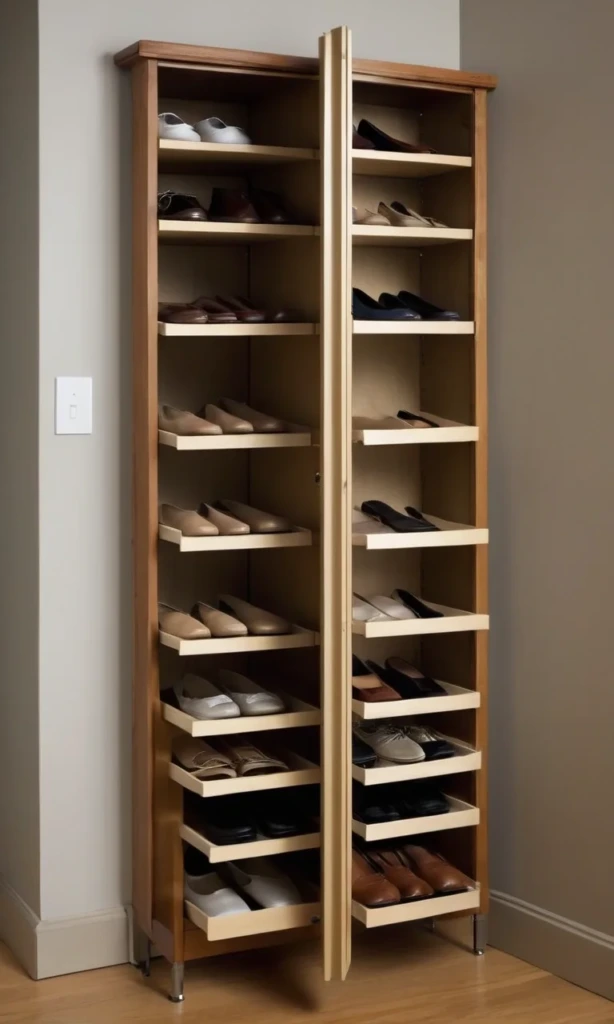
Shoe slot organizers are designed to fit one shoe above another, helping you use shelf space more efficiently.
They're particularly useful for flats, sandals, and low-profile sneakers. Adjustable versions allow you to change the height according to the footwear.
These organizers work best on sturdy, level shelves and may not suit tall boots or bulky shoes.
18. Store Seasonal Shoes in Labeled Containers
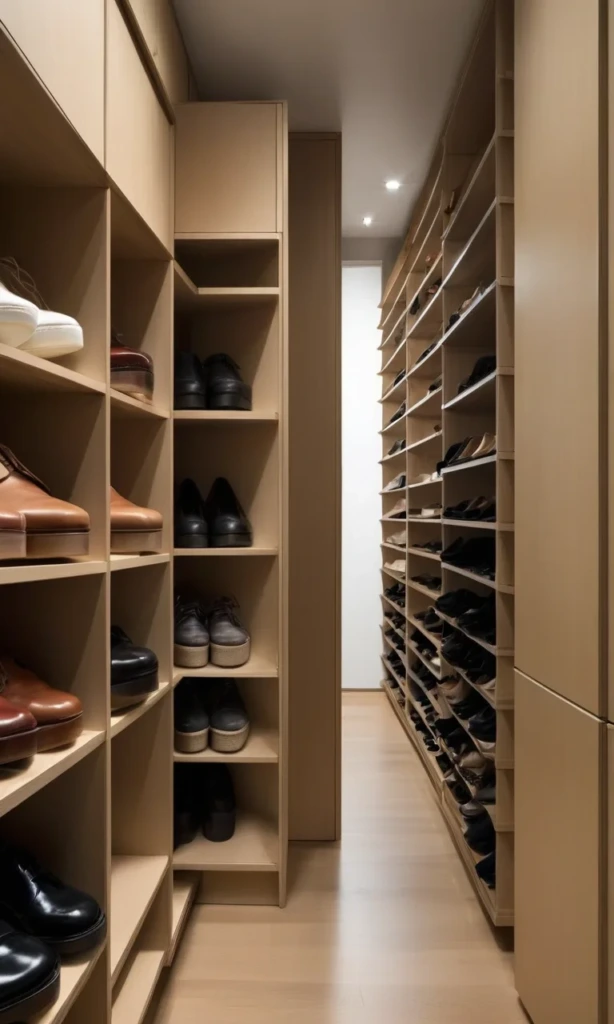
Keeping every pair of shoes accessible throughout the year can make your closet unnecessarily crowded.
Instead, rotate your collection according to the season. Store winter boots during warmer months and move summer sandals into storage when temperatures drop.
Use clean, dry containers and label them by footwear type or season. Stuff delicate shoes with acid-free tissue paper to help preserve their shape.
Store containers in a cool, dry area rather than a damp basement or excessively hot attic.
19. Build Custom Shoe Cubbies
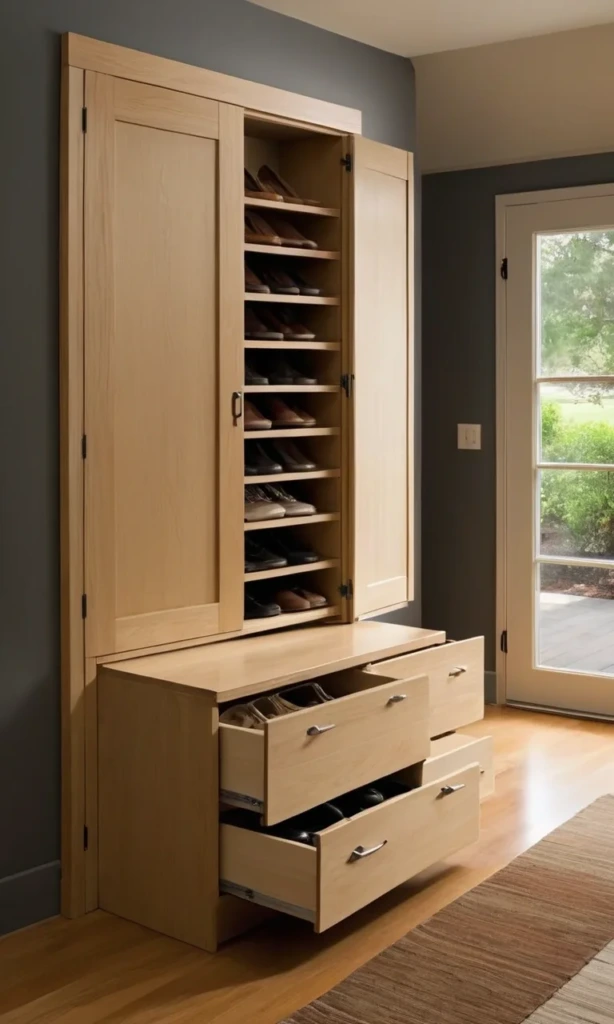
Custom shoe cubbies are an excellent choice for families or anyone with a large footwear collection.
Individual compartments give each pair a dedicated location, making it easier to maintain order.
You can install cubbies inside a closet, beneath a bench, or along an entryway wall. Mix compartment heights to accommodate sneakers, heels, and boots.
For a coordinated look, use matching materials and keep frequently worn shoes at a comfortable reaching height.
20. Make Use of Awkward Corners
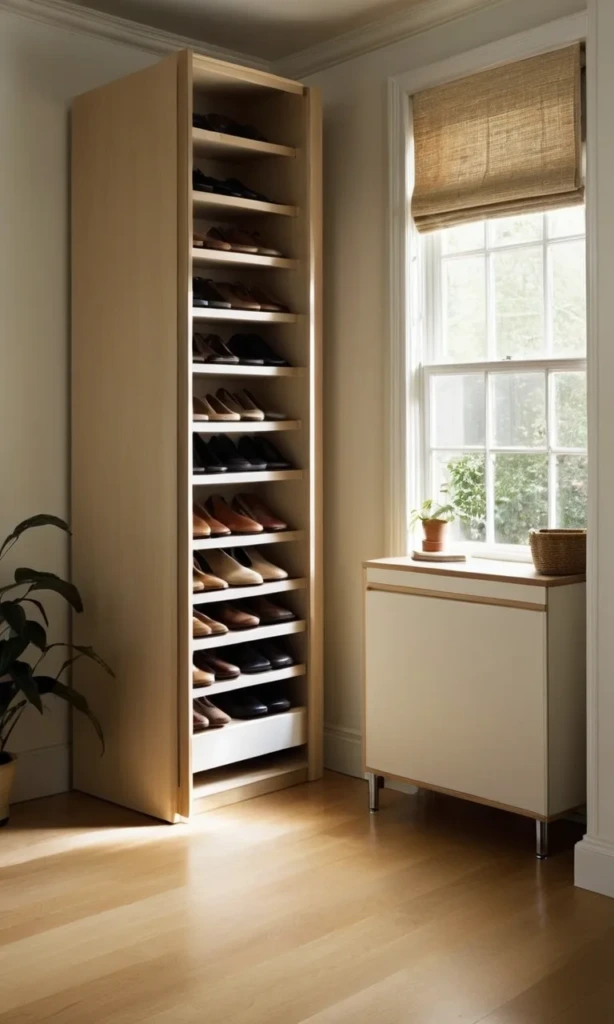
Small corners and narrow gaps can provide surprisingly useful shoe storage.
A compact corner shelf, triangular rack, or narrow freestanding unit can fit into areas where standard furniture won't work.
Measure the space before choosing an organizer, paying attention to baseboards, door swings, and walking clearance.
Even a small corner setup can hold several pairs and help keep the rest of the room clutter-free.
Organizing your shoes becomes much easier when every pair has a designated place. Whether you choose floating shelves, a slim cabinet, or simple storage baskets, the most effective solution is one that fits your available space and daily routine.
Start by sorting your footwear, removing pairs you no longer use, and choosing storage that suits your collection. With a few thoughtful changes, you can create a cleaner, more functional home without sacrificing valuable space.