17 Family Organization Wall Ideas for a More Organized Home
A busy household can feel overwhelming when schedules, school papers, keys, and everyday reminders have no consistent place. A family organization wall offers a simple way to bring these essentials together, making it easier for everyone to stay informed and prepared.
You don't need a large home or an expensive organizing system to create one. A small section of wall near the kitchen or front entrance can become a useful hub for managing daily responsibilities, keeping track of important dates, and displaying meaningful family memories.
The best setup is one that suits your family's routines rather than adding more work. These family organization wall ideas cover practical storage, planning tools, creative displays, and simple systems that can make everyday life feel more manageable.
Where Is The Best Place To Set Up A Family Organization Wall?
Choose a location that naturally fits into your family's daily routine. The kitchen, hallway, mudroom, and entrance are excellent options because family members regularly pass through these areas when leaving or returning home.
A kitchen wall works particularly well for calendars, meal plans, grocery lists, and household reminders. An entryway is more suitable for keys, bags, jackets, and documents that need to leave the house. If your family spends considerable time in a shared living area, you could also dedicate a small section there to schedules and messages.
Visibility is essential. Mount frequently used items at convenient heights, and make sure everyone can read the calendar without moving other objects out of the way.
Consider the activities that create the most clutter in your home before choosing your layout. If school paperwork constantly covers the kitchen counter, prioritize wall-mounted file holders. If mornings involve searching for shoes, coats, and backpacks, focus on creating an accessible drop zone. A well-placed organization wall should solve real problems while remaining easy to maintain.
How Can A Family Organization Wall Work In Small Homes Or Apartments?
Limited wall space doesn't prevent you from creating an effective family command center. The key is to use vertical surfaces thoughtfully and choose compact organizers that serve more than one purpose.
A narrow area beside the front door can accommodate a small calendar, a row of hooks, and a few wall pockets. The side of a cabinet or the inside of a pantry door may also provide useful storage, provided the organizers don't interfere with normal use.
Look for slim shelves, collapsible baskets, magnetic boards, and wall-mounted file holders. These options help keep everyday essentials accessible without taking up valuable floor space.
Start with the items your household needs most. A shared calendar and a designated place for incoming paperwork may be enough initially. Once these elements become part of your routine, add other features only when they offer a clear benefit.
Keep the arrangement visually simple, too. Too many labels, containers, and decorative accessories can make a small wall feel crowded. A few well-chosen components will usually be more useful than a complicated system that requires constant attention.
1. Memory Grid
<image src="" alt=""/>
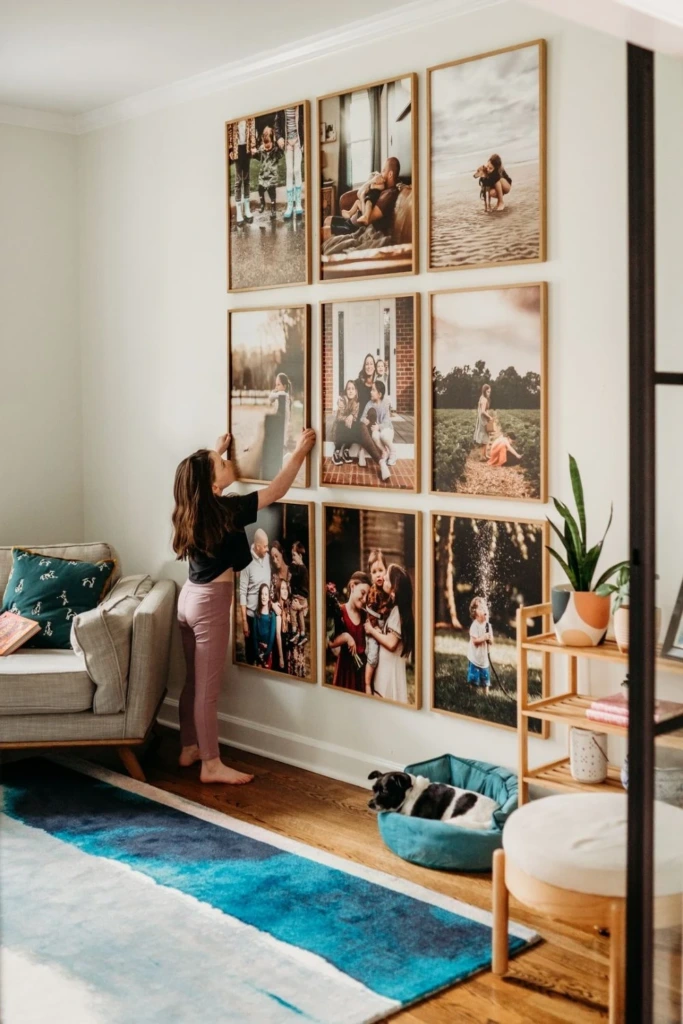
Turn a blank hallway or living room wall into a personal gallery of family photographs. A memory grid creates a dedicated place for vacation pictures, birthday celebrations, family portraits, and everyday moments worth remembering.
For a balanced appearance, choose frames in a consistent finish and plan the arrangement before hanging anything. Equal spacing helps the display feel intentional, while a mixture of photographs keeps it personal.
If you prefer a flexible arrangement, use lightweight frames or picture ledges so you can change photographs without repeatedly making new holes in the wall.
Keep the display separate from busy planning areas whenever possible. This allows family memories to remain a decorative feature without competing with calendars, paperwork, and daily reminders.
2. Backpack Zone
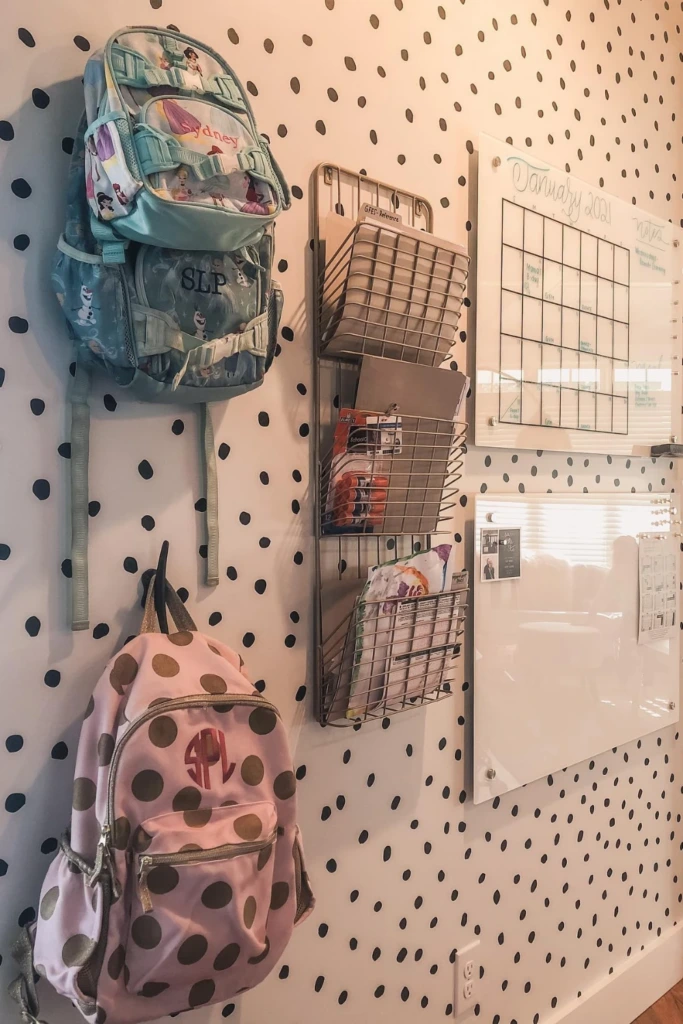
Give every family member a designated place to store schoolbags, activity bags, or work backpacks. A backpack zone near the entrance prevents bags from accumulating on chairs, sofas, and floors.
Install sturdy hooks at heights that children can reach comfortably. Small baskets or wall pockets nearby can hold permission slips, library books, lunch notes, and other items that might otherwise disappear inside a bag.
A calendar positioned within the same area helps everyone check upcoming school events before leaving home. You can also add a small checklist for items that need to be packed each morning.
Choose hooks that can support the actual weight of loaded backpacks, and secure them according to the manufacturer's instructions. Keeping the arrangement simple makes it easier for children to return their belongings to the correct place independently.
3. Entry Lockers
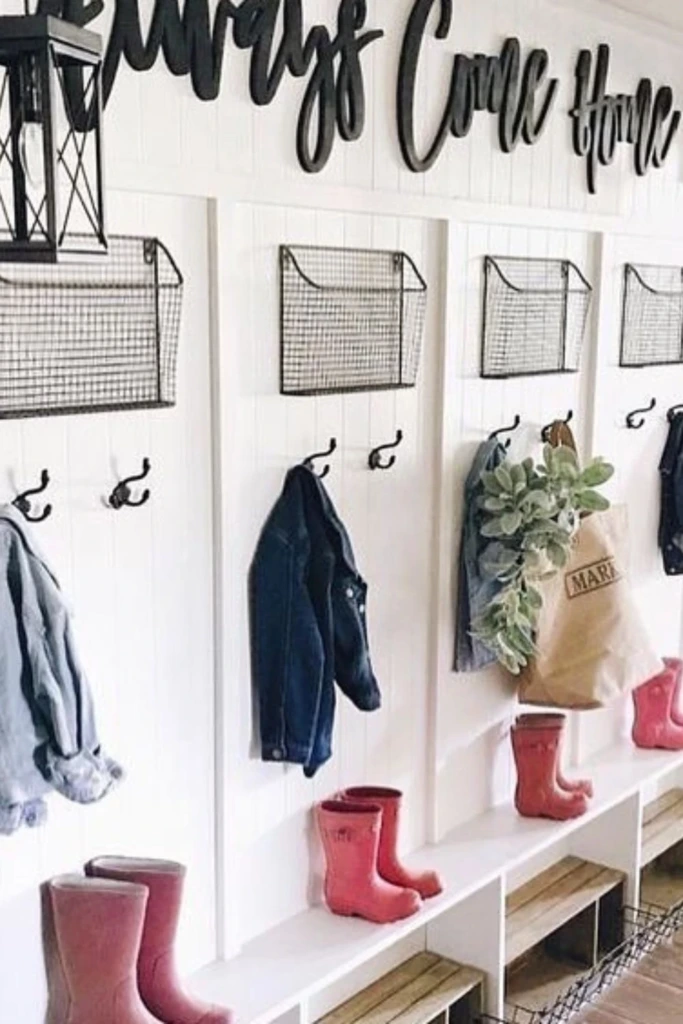
Create a mini locker area that gives each household member a personal space for everyday belongings. This setup is particularly useful for families who don't have a dedicated mudroom.
Individual hooks can hold coats and jackets, while baskets or cubbies provide storage for hats, gloves, scarves, and smaller accessories. A narrow bench underneath offers a convenient place to sit while putting on shoes.
Personal labels help everyone identify their own section, especially when several children share the same entrance. If space allows, place a shoe rack beneath the bench to keep footwear from spreading across the floor.
You can make the arrangement look cohesive by using matching baskets, coordinated hooks, and a shared color scheme. The goal is to create a practical landing area that keeps frequently used belongings accessible and contained.
4. Supply Wall
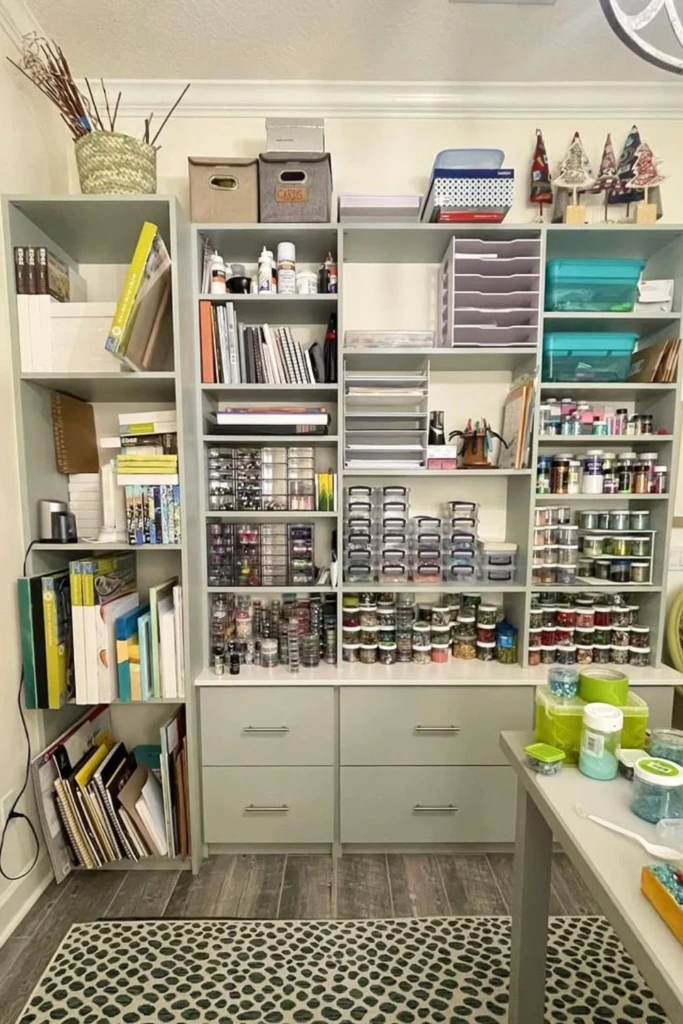
A supply wall keeps craft materials, stationery, and other frequently used household items organized in one accessible location. It works especially well in a playroom, hobby area, shared office, or family activity room.
Use open shelving, pegboards, and transparent containers to make supplies easy to identify. Group materials by purpose, such as drawing, painting, paper crafts, and school projects, rather than mixing everything into a single box.
Labels help children understand where materials belong and make cleanup easier. Place frequently used items within easy reach, while reserving higher shelves for occasional supplies that require adult supervision.
Review the containers periodically to remove dried-out markers, broken tools, and materials that are no longer useful. Keeping only relevant supplies on display prevents the wall from becoming overcrowded and makes it easier to find what you need.
5. Study Stations
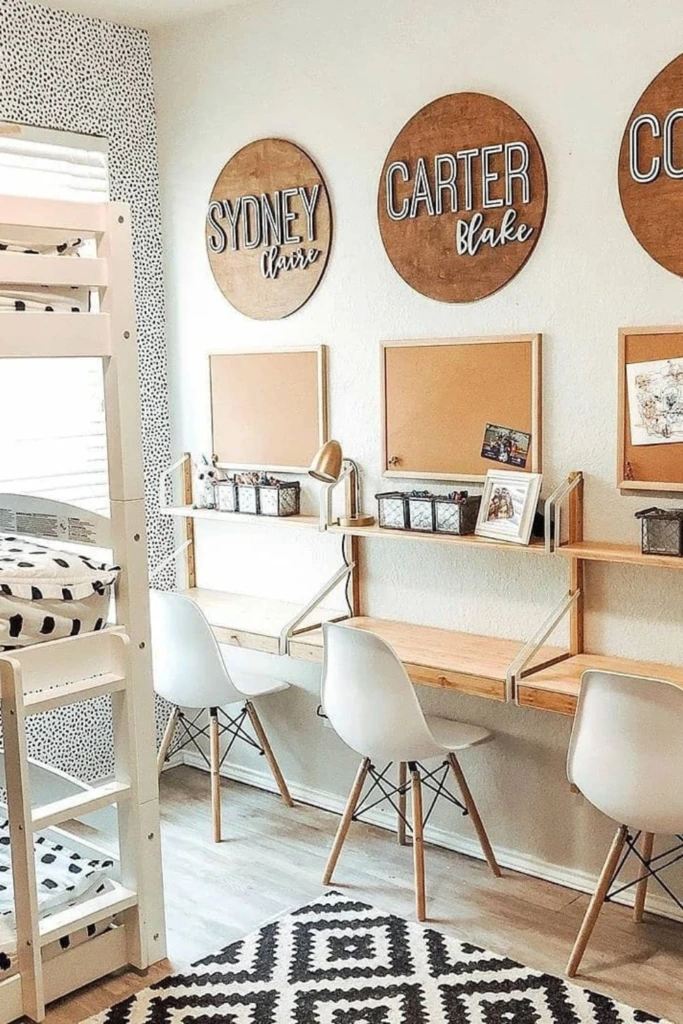
A dedicated study station can help children concentrate by giving schoolwork and learning materials a consistent home. Even in a shared bedroom, a wall-mounted desk or compact workstation can create a useful personal workspace without consuming too much floor area.
Add a small shelf for textbooks, containers for stationery, and a pinboard for assignments or artwork. If several children share the room, give each child a clearly defined section to reduce confusion over supplies and responsibilities.
Use similar storage arrangements for every child while allowing small personal touches, such as different folders or name labels. This keeps the overall design consistent without making the spaces feel identical.
Good lighting and an uncluttered work surface are just as important as storage. Keep only the materials needed for current assignments nearby, and move completed projects or older papers to a separate archive.
6. Weekly Hub
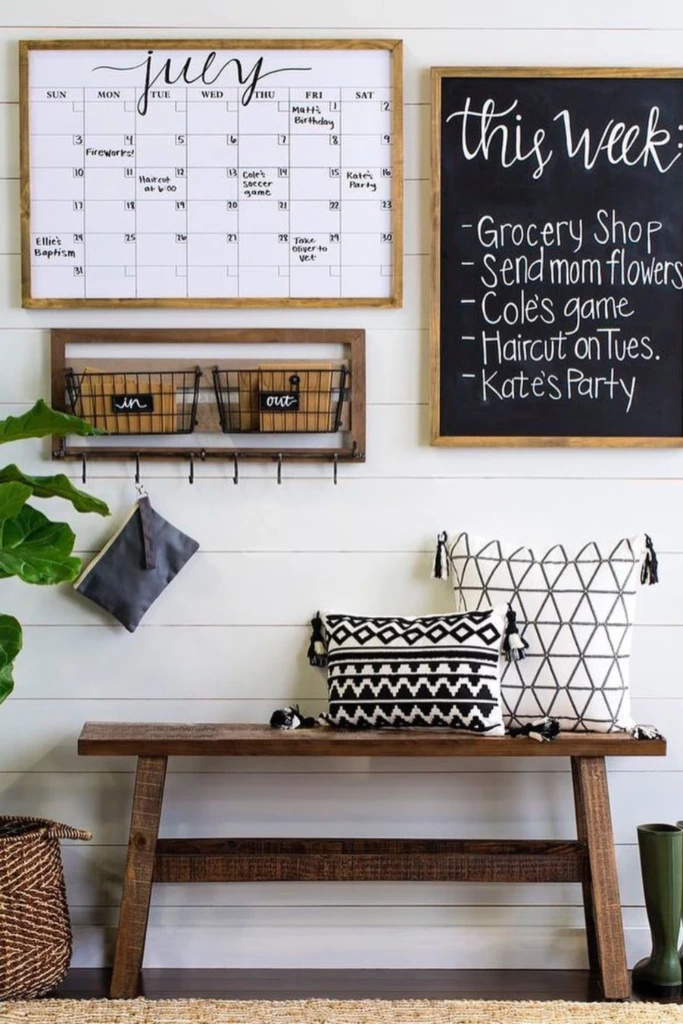
A weekly planning hub helps everyone understand what is happening over the coming days. It brings appointments, school activities, household responsibilities, and other commitments into one shared view.
Use a weekly whiteboard for short-term tasks and a monthly calendar for birthdays, appointments, holidays, and events scheduled further ahead. Wall-mounted pockets can hold documents that require signatures, review, or follow-up.
Position the hub in a location where family members naturally pause, such as the kitchen or entrance. Make updating it part of an existing routine, perhaps while planning meals or preparing for the week ahead.
Avoid duplicating every detail across multiple boards. Keep the main calendar focused on dates and commitments, while using the weekly planner for immediate priorities. This separation makes information easier to read and reduces unnecessary maintenance.
7. Drop Station
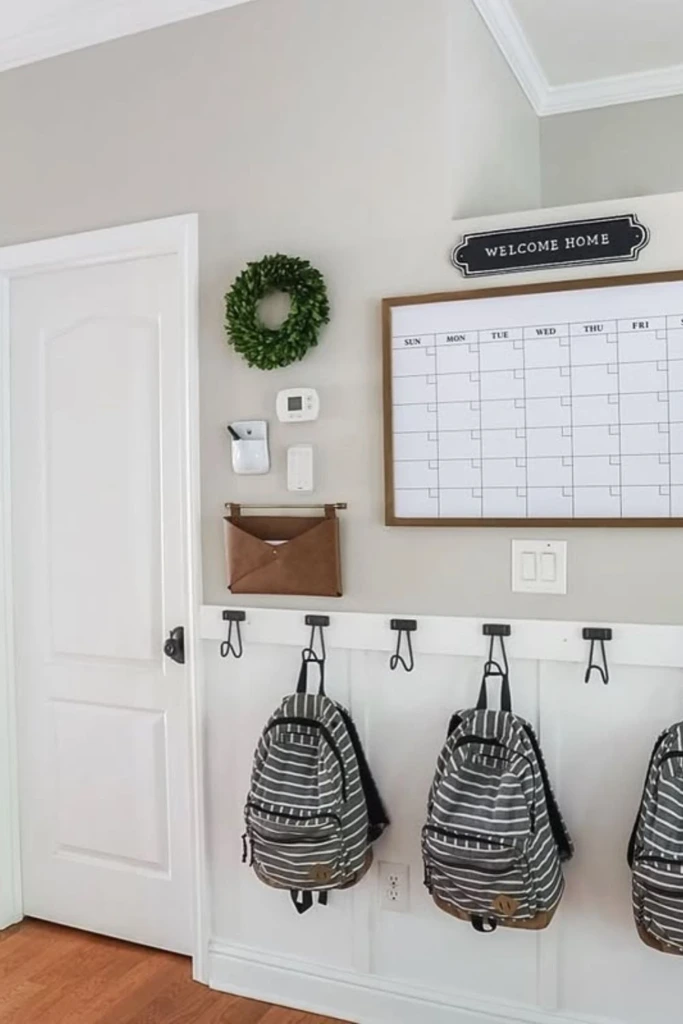
A family drop station provides one consistent place for the belongings everyone carries in and out of the house. It can reduce the familiar problem of searching for keys, bags, sunglasses, and important papers at the last minute.
Start with durable hooks for bags and jackets. Add a narrow shelf or small tray for keys, wallets, and other everyday essentials, along with a calendar for upcoming appointments and activities.
If children regularly bring home school documents, include a labeled pocket for papers that need attention. Keep outgoing items in a separate section so permission forms, library books, or packages are easier to remember.
The entrance or mudroom is usually the most practical location. Keep the station limited to items used regularly, and avoid turning it into a general storage area for things that belong elsewhere.
8. Reading Corner
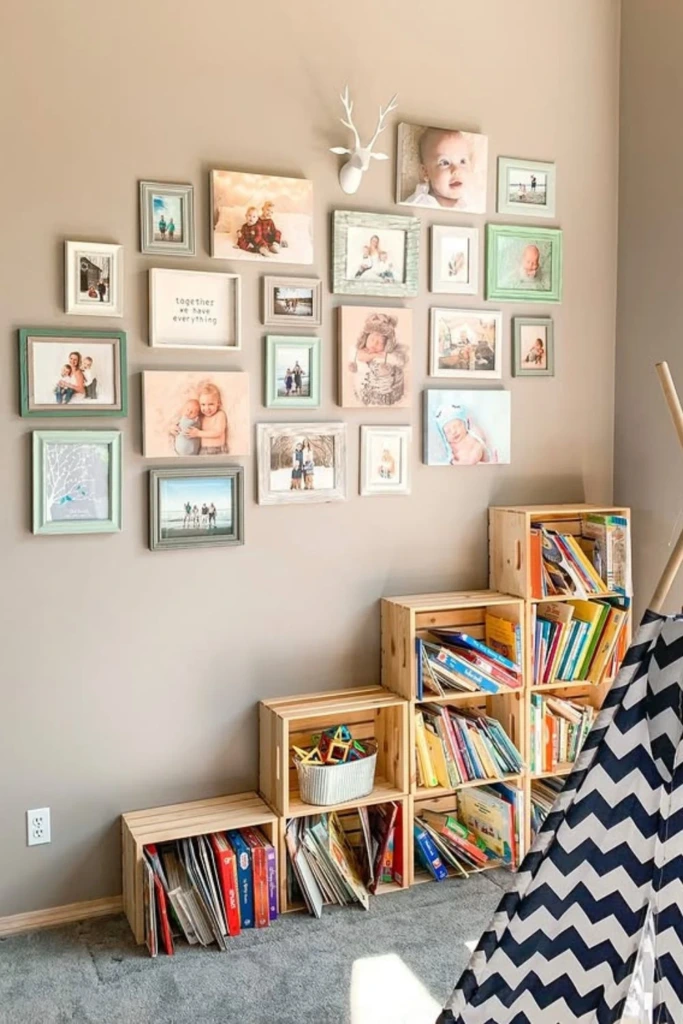
A reading corner gives children's books a visible, accessible home while making a bedroom or playroom feel more inviting. Wall-mounted book ledges, low shelves, and sturdy wooden crates can all work, depending on the available space.
Arrange books with their covers facing outward when possible, especially for younger readers who recognize pictures more easily than titles. For larger collections, organize books by subject, reading level, or family preference.
Place frequently chosen books within children's reach and keep heavier collections on securely mounted shelves. A comfortable cushion, small chair, or soft floor mat can make the area more appealing without requiring much additional furniture.
You can personalize the space with framed illustrations or family photographs above the shelves. Leave enough room between decorative elements and the books so the wall remains easy to use rather than becoming an overcrowded display.
9. Craft Command
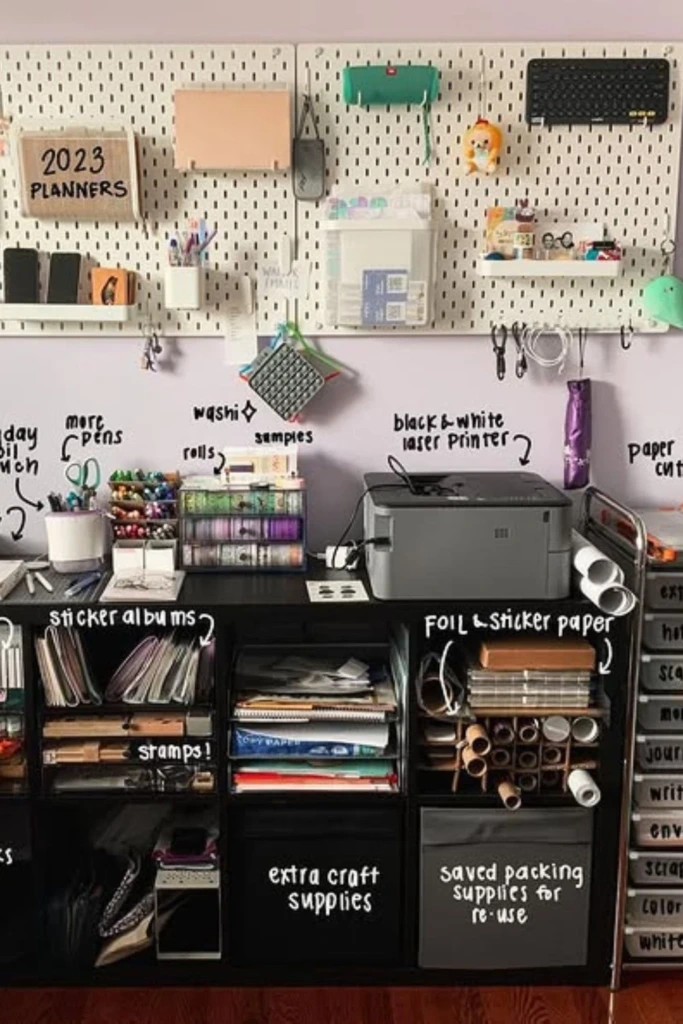
A craft command wall makes creative projects easier to start and simpler to clean up afterward. It is a useful addition to a family room, shared workspace, playroom, or dedicated hobby corner.
A pegboard provides flexible storage for scissors, rulers, brushes, and other tools that can be safely hung. Add labeled containers for glue, paper, paints, and smaller supplies that might otherwise become mixed together.
Arrange the most frequently used materials near the main work surface. Less common items can go into boxes or cabinets underneath, leaving the visible wall uncluttered.
If children use the area, store sharp tools, strong adhesives, and other potentially hazardous materials securely out of their reach. Establish a simple cleanup routine in which every item returns to its assigned place before the next activity begins.
10. Floating Layers
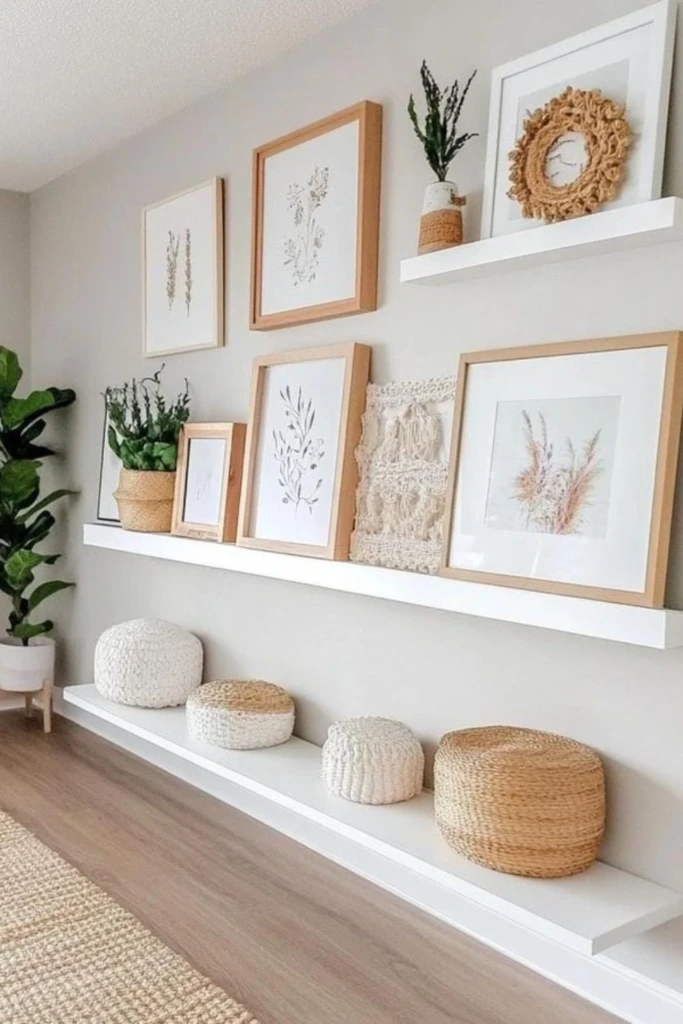
Floating shelves create useful storage without requiring bulky furniture. They work well in living rooms, hallways, shared offices, and other areas where you want to combine organization with decorative display.
Use lower shelves for baskets containing everyday items such as notebooks, chargers, or small accessories. Upper shelves can display framed photographs, a few books, plants, or meaningful decorative objects.
Choose shelves that suit the wall and the weight of the items you plan to store. Install them using appropriate hardware, and avoid placing heavy objects where they could fall onto children or frequently used seating areas.
For a balanced appearance, leave some open space rather than filling every shelf. Repeating a few materials or colors across the arrangement can help the wall look coordinated even when it serves several purposes.
11. Wall Library
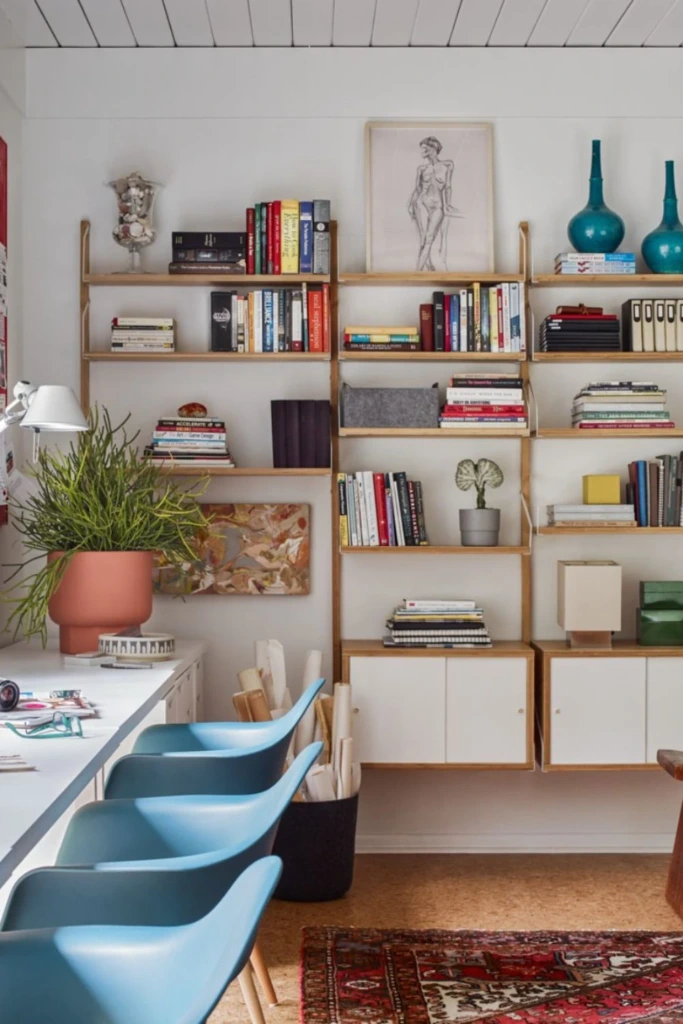
A wall library makes use of vertical space to store books, reference materials, board games, and other shared household resources. It can be particularly useful in a home office, study room, or living area that serves several purposes.
Open shelves make frequently used items easy to locate, while cabinets or closed boxes can hide less attractive supplies and miscellaneous belongings. Group books by subject or user so family members can return them without difficulty.
Place commonly used materials at a comfortable height and reserve upper shelves for lightweight items that are needed less frequently. Heavier books should be stored on appropriately supported shelves, with the weight distributed according to the shelving system's limits.
To prevent the library from becoming a catch-all, review its contents occasionally. Remove outdated paperwork, relocate items that belong elsewhere, and leave room for new books or resources as the household's needs change.
12. Signal Board
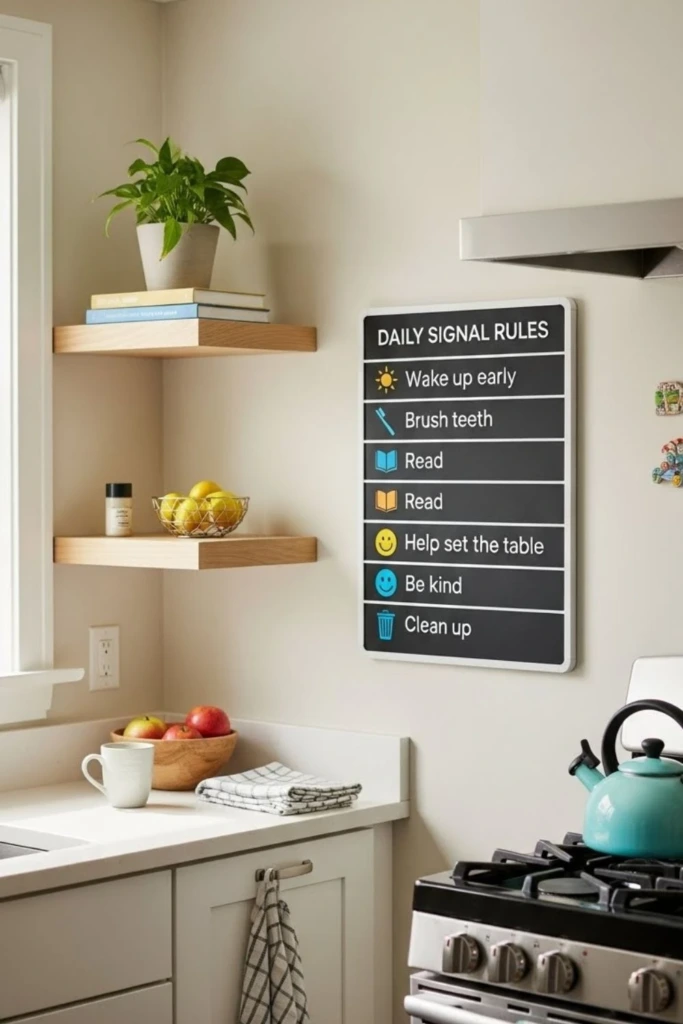
A signal board offers a visual way to communicate household expectations, reminders, and important daily information. Instead of repeating the same instructions verbally, you can use short messages or recognizable symbols to help everyone remember what matters.
For example, a board might display reminders about quiet study time, recycling day, screen-free meals, or preparing schoolbags the night before. Simple wording and consistent symbols make the information easier for children to understand.
Place the board in a shared area where the relevant activities take place. A kitchen wall may suit meal-related reminders, while a hallway could be more appropriate for departure routines.
Keep the messages positive, specific, and realistic. Review them regularly so the board reflects current family needs rather than becoming a permanent collection of rules that everyone stops noticing.
13. Rotation Rail
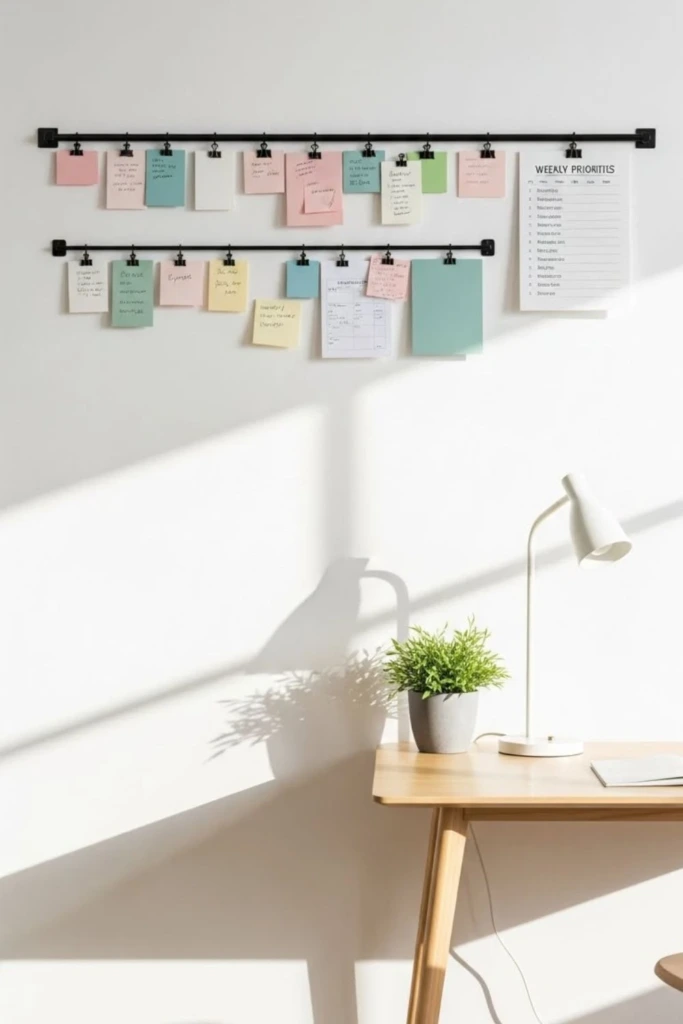
A rotation rail is a simple way to display changing priorities without filling the wall with outdated notes. A narrow rail with clips or hooks can hold weekly goals, school reminders, activity schedules, and temporary household information.
Use it for information that changes frequently rather than documents that need to be stored long-term. For example, you could display the week's meal plan, a child's current project, or reminders for an upcoming family event.
Position the rail near a calendar or work area so it becomes part of an existing planning routine. Keep the number of displayed items limited, making it easy to identify the most important information at a glance.
Choose a regular time to replace old cards and remove completed reminders. A weekly review helps the rail remain useful instead of becoming another place where forgotten notes accumulate.
14. Routine Ladder
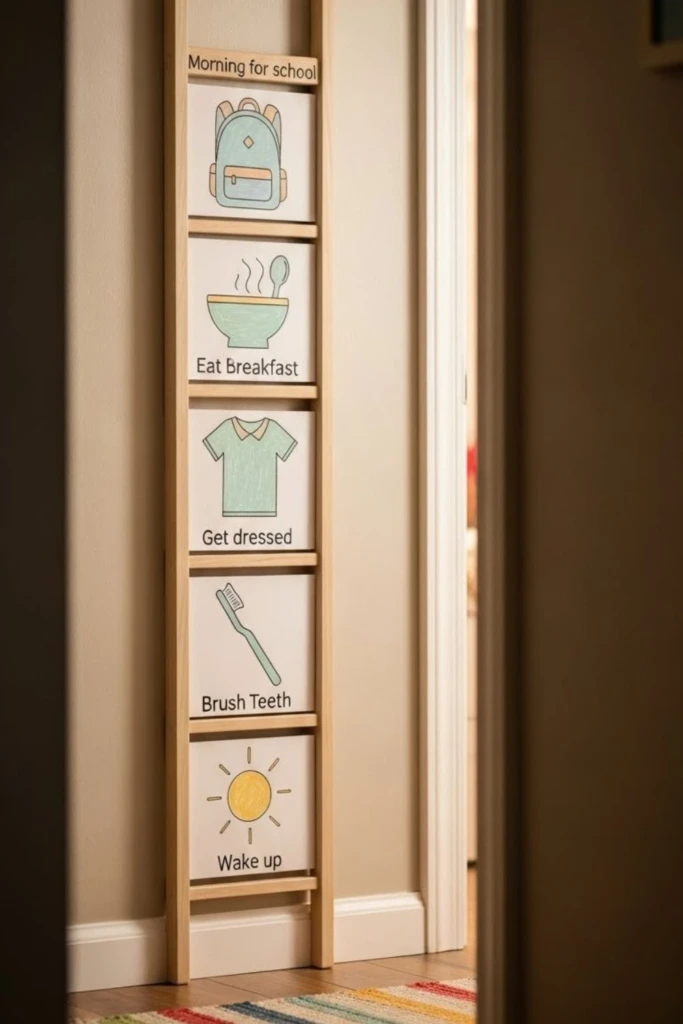
A routine ladder displays daily tasks in a clear sequence, helping children understand what needs to happen next. It can be particularly helpful for morning preparation, bedtime activities, or getting ready for school.
Use a vertical board with short written instructions, pictures, or removable cards. A morning sequence might include getting dressed, brushing teeth, eating breakfast, packing a bag, and checking the day's schedule.
Place the chart where the routine naturally happens. A bedroom or bathroom entrance may suit personal care tasks, while an entryway works well for final departure checks.
Keep the number of steps manageable and use language appropriate to the child's age. Removable markers or checkboxes allow children to track their progress and reset the chart for the next day.
The aim is to encourage independence, not to create a rigid schedule that becomes stressful when plans change. Adjust the sequence as children develop new skills and family routines evolve.
15. Tech Parking

A designated tech parking area gives phones, tablets, headphones, and other small devices a consistent storage location. It can help reduce misplaced chargers and encourage healthier boundaries around device use.
A wall-mounted shelf or charging station with individual spaces works well in a shared family area. Labeling each section makes it easier for everyone to identify where their devices belong.
Choose a location away from beds if you want to encourage a screen-free nighttime routine. Keep charging equipment compatible with the devices being used, follow manufacturer guidance, and avoid overcrowding outlets or covering devices while they charge.
Manage cables carefully to prevent tripping and keep charging equipment away from water and young children. If the station is intended for overnight use, check that it can accommodate the household's devices safely and conveniently.
16. Decision Strip
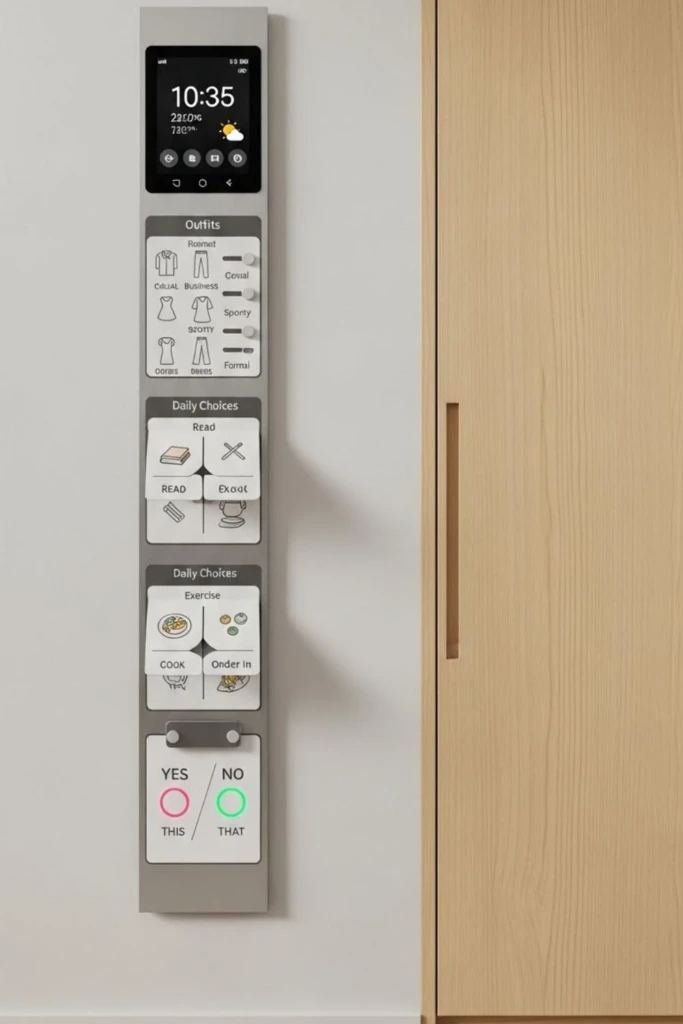
A decision strip can simplify recurring choices that tend to slow down busy mornings. It provides a small area for displaying options, making plans, or recording preferences that family members need to consult regularly.
For example, a kitchen strip might show lunch options for the week, while a section near the wardrobe could display outfit choices for upcoming school days or events.
Use magnetic cards, small clips, or a narrow whiteboard to keep the arrangement flexible. Short labels and clearly defined options make the information easy to update.
The most useful decision strips focus on choices that genuinely recur. Avoid listing every minor task or possibility, since too much information can create more work rather than reducing it.
Review the displayed options when schedules or preferences change, and remove anything that no longer helps the household make decisions more easily.
17. Memory Inbox
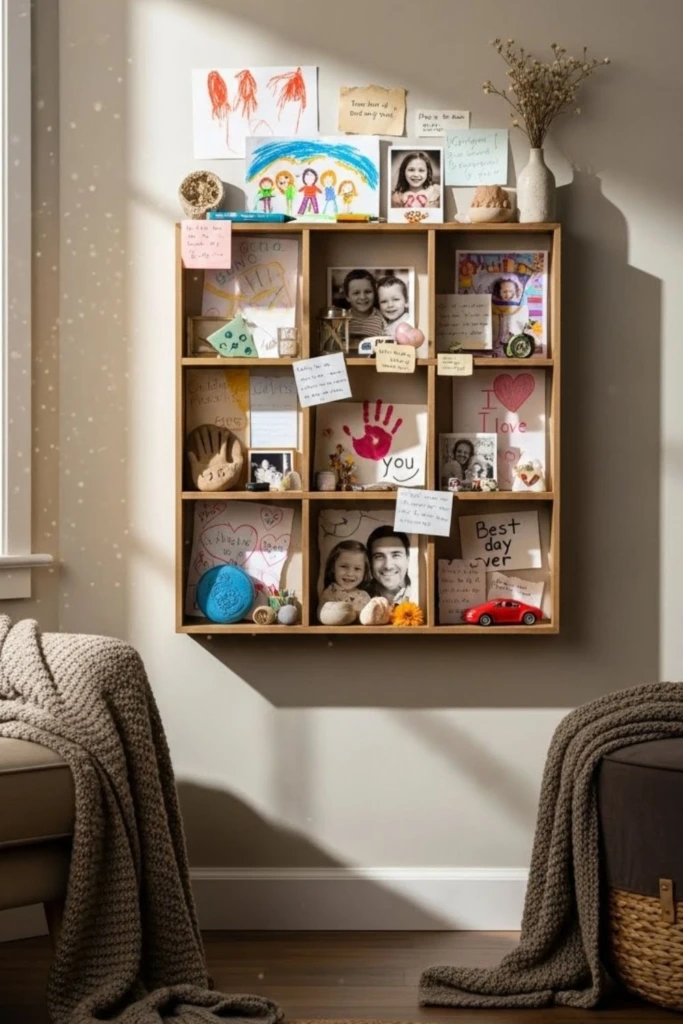
A memory inbox creates a temporary home for sentimental items that might otherwise spread throughout the house. Children's drawings, handwritten notes, postcards, photographs, and small keepsakes can be collected in one designated place.
Use a wall-mounted pocket, decorative box on a shelf, or labeled file to hold these items until you have time to review them. This allows you to appreciate meaningful objects without feeling pressured to display or preserve everything immediately.
Set aside time once a month to sort through the collection. Keep particularly meaningful pieces in a scrapbook or archival box, photograph artwork you want to remember, and recycle items that no longer need to be stored.
If several family members contribute, consider giving each person a separate folder or section. This keeps personal memories easy to find and prevents the inbox from becoming an unmanageable pile of paper.
How do you keep a family organization wall from turning into another clutter spot?
The easiest way to prevent clutter is to give every section a clear purpose and establish a simple maintenance routine. A calendar should display schedules, file pockets should hold paperwork, and hooks should be reserved for everyday belongings.
Review the wall once a week to remove expired notices, completed lists, and items that belong somewhere else. Recycle unnecessary papers promptly and move important documents to a more appropriate storage location when they no longer require immediate attention.
It also helps to limit how much each section can hold. When a basket or file pocket becomes full, treat that as a reminder to sort its contents rather than adding another container.
Most importantly, involve the whole family in maintaining the system. A short reset that everyone can manage is more sustainable than an elaborate organizing routine that depends on one person.
Should a family organization wall replace digital tools like calendars and apps?
A family organization wall and digital tools can work well together because each serves a slightly different purpose. A physical display makes shared information visible to everyone who passes by, while digital calendars provide portable access, alerts, and convenient updates.
Use the wall for information the household needs to see regularly, such as the week's appointments, meal plans, chore assignments, and departure reminders. Digital calendars are useful for detailed schedules, private appointments, travel information, and notifications when someone is away from home.
To avoid conflicting information, decide which system is the main reference for each type of information. For instance, a shared digital calendar can hold the official appointment details, while the wall displays the week's key events.
Choose the combination that your family will realistically maintain. A simple physical planner may be enough for some households, while others benefit from using a shared app alongside a visible command center.
Jenny
Hi, I'm Jenny, the founder of Fizzy Flare. Since 2021, I've been creating practical lifestyle content and working on websites that help people simplify everyday life. At Fizzy Flare, our focus is on useful organization ideas, approachable DIY projects, printables, self-care, and realistic ways to make daily routines easier.