22 Drop Zone Organization Ideas for 2026
A well-organized entryway can make everyday life feel less hectic. When shoes collect near the door, backpacks end up on chairs, and keys disappear just when you need them, leaving home becomes unnecessarily stressful. A thoughtfully arranged drop zone gives these everyday belongings a designated place and helps keep clutter from spreading into other rooms.
The good news is that you don't need a large mudroom or an expensive renovation to create a useful entryway. A few wall hooks, a compact storage unit, and a simple routine can make a noticeable difference. Whether you live in a small apartment or a busy family home, these drop zone organization ideas can help you create a welcoming, practical entrance that works with your lifestyle.
How Can You Create a Functional Entryway Drop Zone in Small Spaces?
The best way to organize a small entryway is to prioritize the items you regularly carry in and out of the house. Start by identifying your everyday essentials, such as shoes, coats, bags, keys, sunglasses, and incoming mail. Anything that doesn't belong in the entryway should be stored elsewhere.
Make use of vertical space by installing wall hooks or a narrow shelving unit. A slim shoe cabinet can keep footwear contained without obstructing the walkway, while a small wall-mounted shelf provides a convenient landing spot for keys and wallets. If you have enough room, choose a bench with storage underneath. In tighter spaces, a couple of baskets beneath a hook rail may provide all the storage you need.
Keep the arrangement simple and easy to maintain. When every frequently used item has an obvious home, it's much easier to keep the entrance tidy throughout the week.
1. Cubby Zones
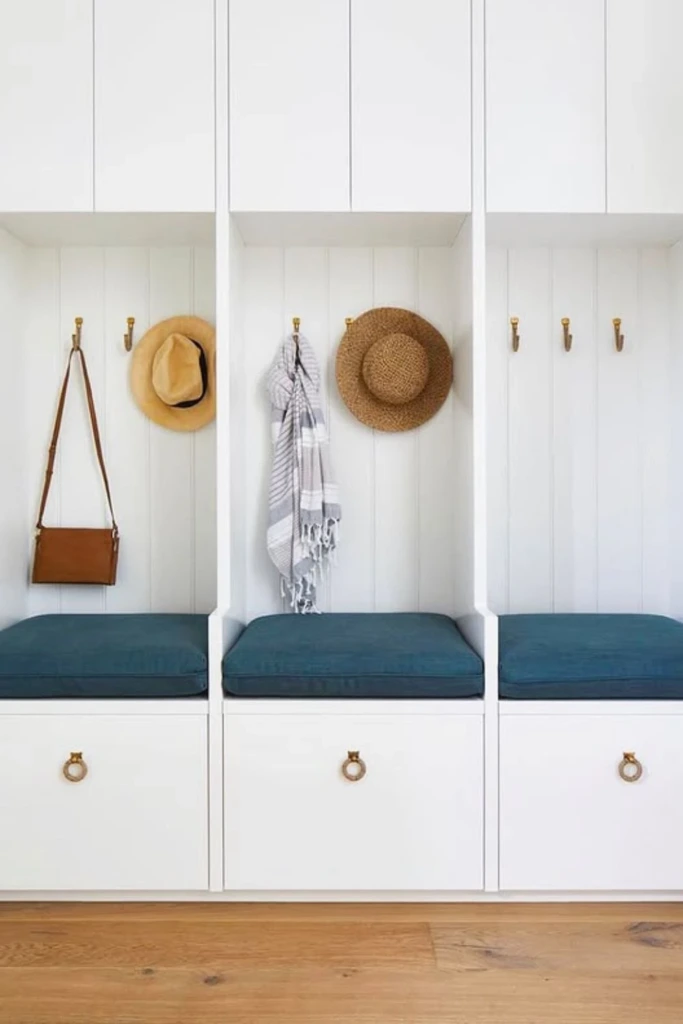
Individual cubbies help transform a shared entryway into an organized space where everyone knows where their belongings belong. Divide the storage into sections for coats, backpacks, hats, and other daily necessities so items don't become mixed together.
Install a few hooks inside each section to accommodate jackets, handbags, scarves, or reusable shopping bags. A bench beneath the cubbies creates a comfortable place to sit while putting on shoes, and lower compartments can hold footwear, gloves, and pet accessories.
This arrangement works especially well for households with several family members. Giving everyone a dedicated section makes putting things away easier and reduces the likelihood of belongings being scattered across the floor.
2. Layered Storage
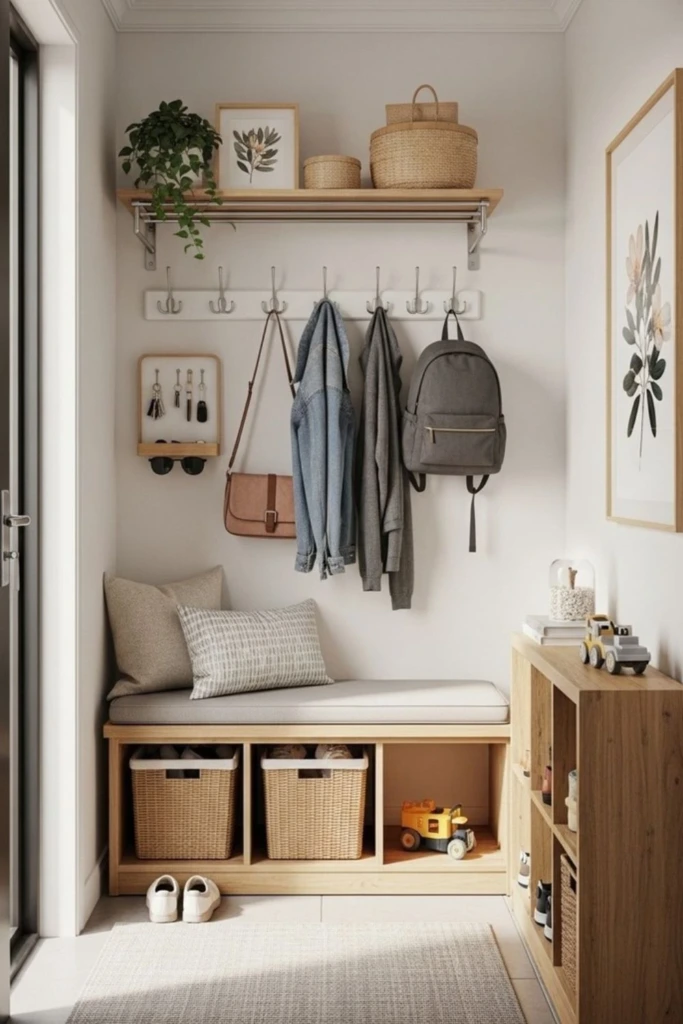
A layered storage arrangement uses several levels of a wall to keep everyday essentials organized without overcrowding the entrance. Start with a row of hooks for coats and bags, then add a shelf above them for baskets containing seasonal accessories.
A small tray on a nearby shelf or console can hold keys, sunglasses, and other pocket-sized necessities. Below the hooks, a bench with open compartments provides seating while keeping shoes grouped together.
Use baskets to separate different categories, such as slippers, gloves, or smaller accessories. Keeping frequently used items at an accessible height and less frequently needed belongings on higher shelves makes the entire setup easier to navigate.
3. Family Stations
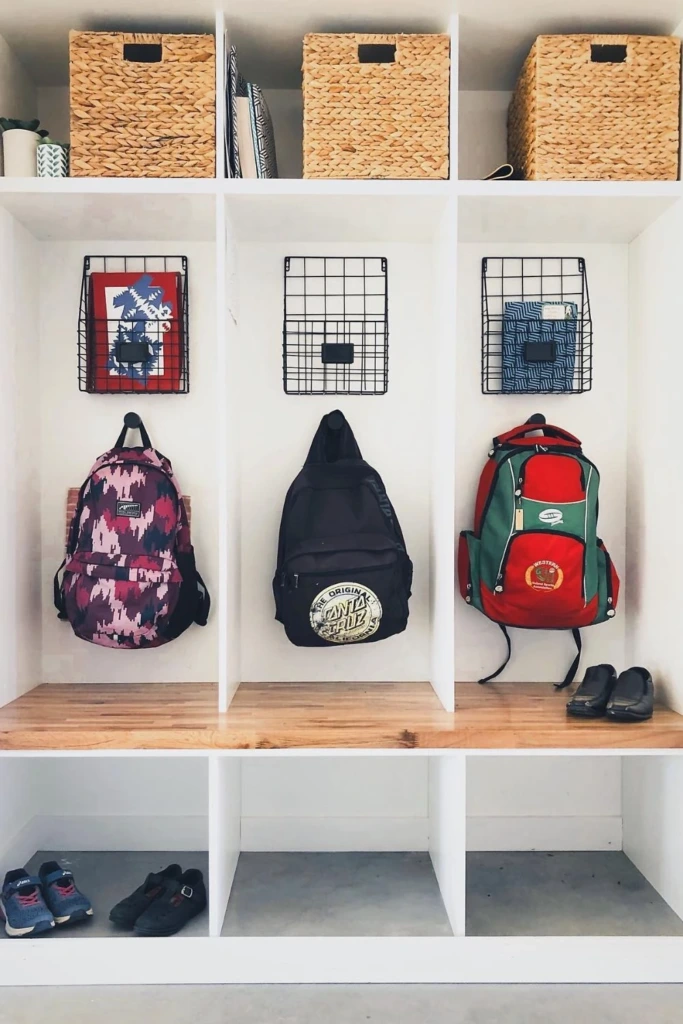
A family drop zone becomes more manageable when each person has a clearly defined place for their belongings. Individual storage sections can accommodate schoolbags, jackets, shoes, and the items family members need before leaving home.
Install hooks at suitable heights so children can hang their backpacks independently. Wall-mounted pockets or small document baskets are useful for homework folders, school notices, permission forms, and other papers that might otherwise disappear inside a bag.
Reserve upper shelves for sports equipment, hats, and seasonal accessories. A shared bench provides a convenient place to change shoes, while storage underneath keeps footwear from spreading across the entrance.
The goal is to create a routine that everyone can follow without constant reminders. When belongings have consistent locations, busy mornings become easier to manage.
4. Bag Hooks
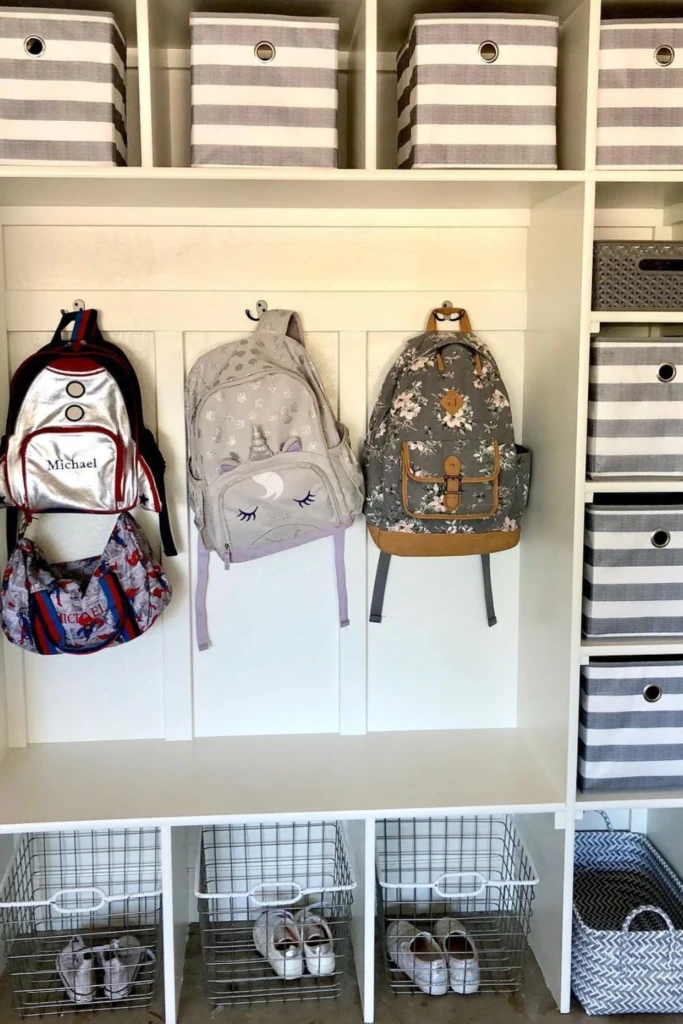
Backpacks and handbags often become entryway clutter because they lack a convenient storage spot. A dedicated row of hooks provides a straightforward solution by giving every frequently used bag a designated place.
Mount the hooks on a sturdy wall panel or directly onto suitable wall supports. A protective backing can reduce everyday scuffs and help the area look more finished. Make sure the hooks are strong enough for the bags you intend to hang.
Use shelves above the hooks for lunch bags, caps, and occasional-use accessories. Below, a ventilated shoe rack can keep everyday footwear organized while allowing air to circulate.
This arrangement is particularly useful in narrow hallways because it uses wall space instead of requiring several pieces of floor-standing furniture.
5. Corner Bench
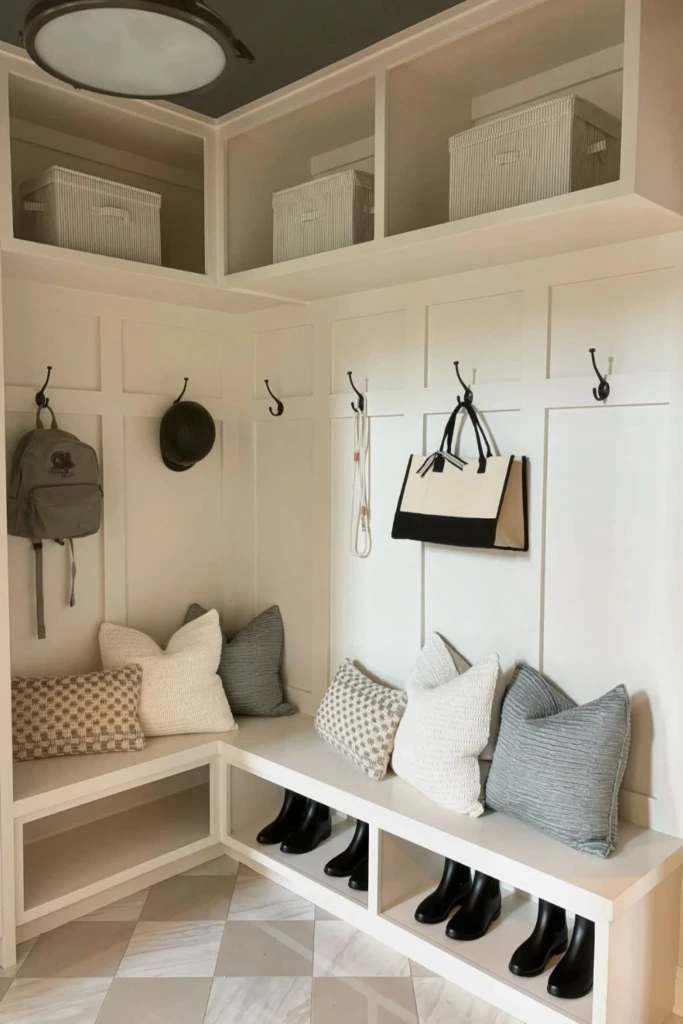
An unused corner can become a practical drop zone with an L-shaped bench and a few well-positioned hooks. This arrangement takes advantage of an area that might otherwise serve little purpose.
The bench provides seating for putting on or removing shoes, while hooks above it hold coats, backpacks, hats, and dog leashes. Keeping hanging items off the seat ensures that the bench remains available when someone needs it.
Open cubbies beneath the seating can accommodate boots, sneakers, and slippers. You can also add baskets to separate footwear by person or type.
Before installing a corner bench, measure the available area carefully. Leave enough room for doors to open and people to pass comfortably, especially if the entrance is part of a busy hallway.
6. Vertical Cubbies
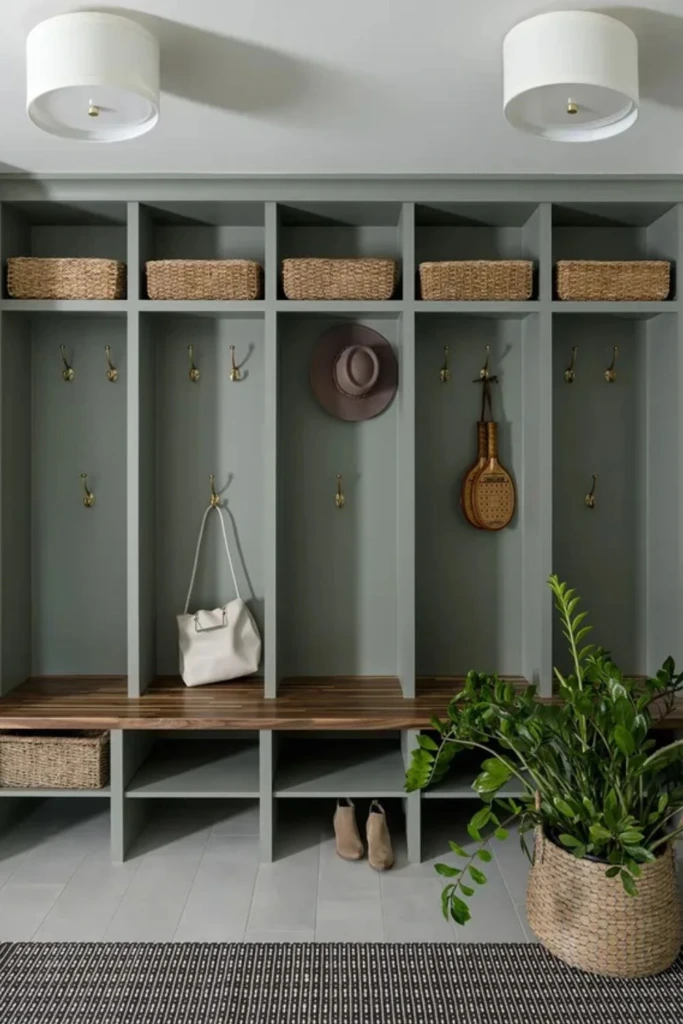
Vertical cubbies are a smart choice when floor space is limited but the entryway has an available wall. Tall compartments create separate storage areas for jackets, backpacks, hats, and other personal belongings.
Add hooks within each section so frequently used items remain visible and accessible. A bench at the bottom creates a convenient place to sit, while the lower compartments can hold shoes and everyday accessories.
For households with children, keep the most frequently used storage at a height they can reach comfortably. Assigning each person a separate compartment also reduces the chances of coats and bags becoming tangled together.
A vertical design can accommodate several categories of belongings without extending too far into the room, making it useful for compact homes and shared entrances.
7. Wall Niche
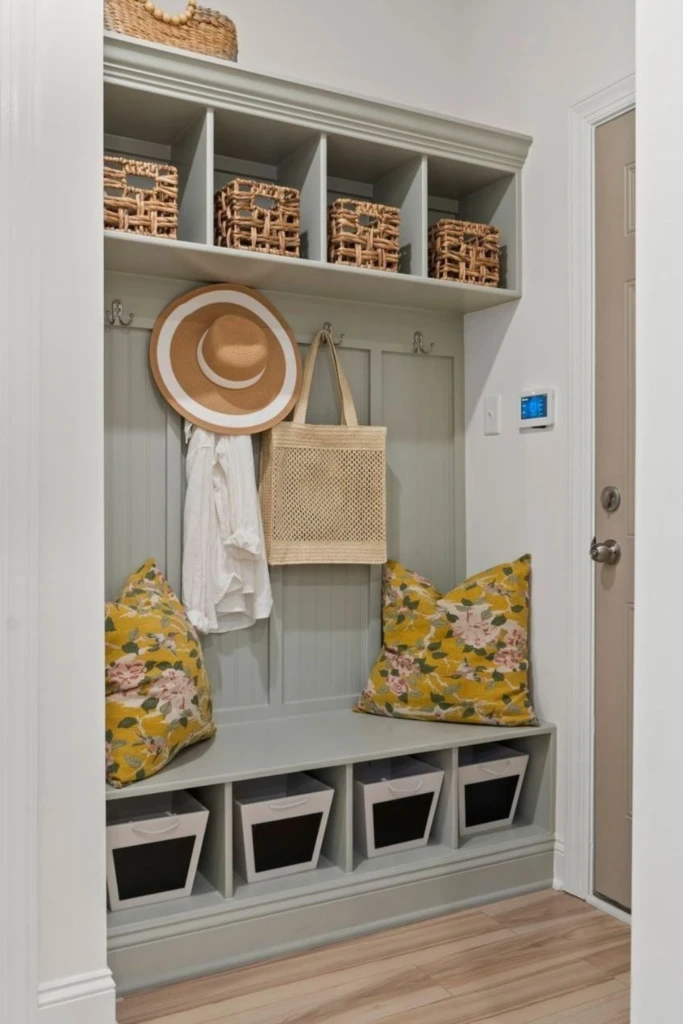
A recessed wall area can provide an ideal location for a built-in drop zone. Instead of allowing storage to protrude into the hallway, use the existing recess to create a compact station for everyday belongings.
Install hooks across the middle of the niche for jackets, tote bags, hats, and lightweight backpacks. Add shelves above them for baskets containing gloves, reusable shopping bags, pet supplies, or seasonal accessories.
A durable back panel can protect the wall from repeated contact with bags and coats while giving the nook a cohesive appearance.
If the recess is particularly narrow, focus on shallow shelves and a few essential hooks rather than trying to fit too many storage features into the space. The aim is to create a functional landing area without making the hallway feel crowded.
8. Stair Nook
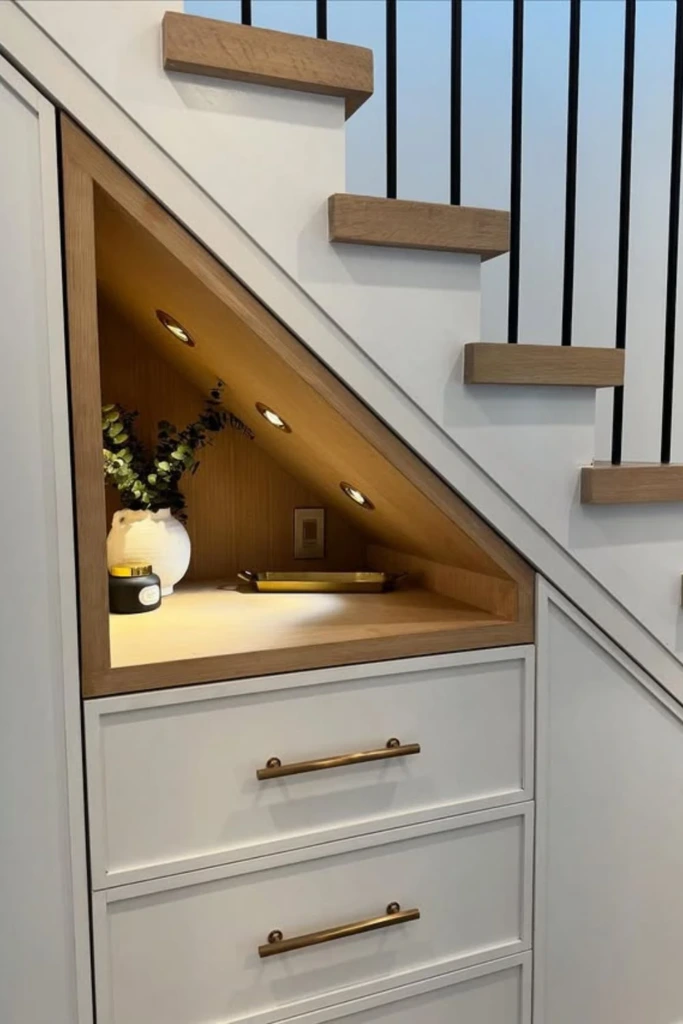
The space beneath a staircase can be converted into a useful drop zone, particularly when the stairs are near an entrance. Depending on the layout, you might create a small counter, a set of drawers, or a combination of open and closed storage.
Place a tray on the counter for keys, wallets, and sunglasses. Add hooks nearby for bags and jackets if the available wall space allows it. Drawers beneath the counter can conceal charging cables, spare accessories, pet leads, and other small items.
Good lighting helps make the nook easier to use in the evening and improves visibility when searching for essentials.
Because under-stair areas often have awkward dimensions, measure the height and depth before choosing storage. Custom shelving can make use of the available space, but a simple freestanding unit may work just as well when a built-in solution isn't practical.
9. Shoe Wall
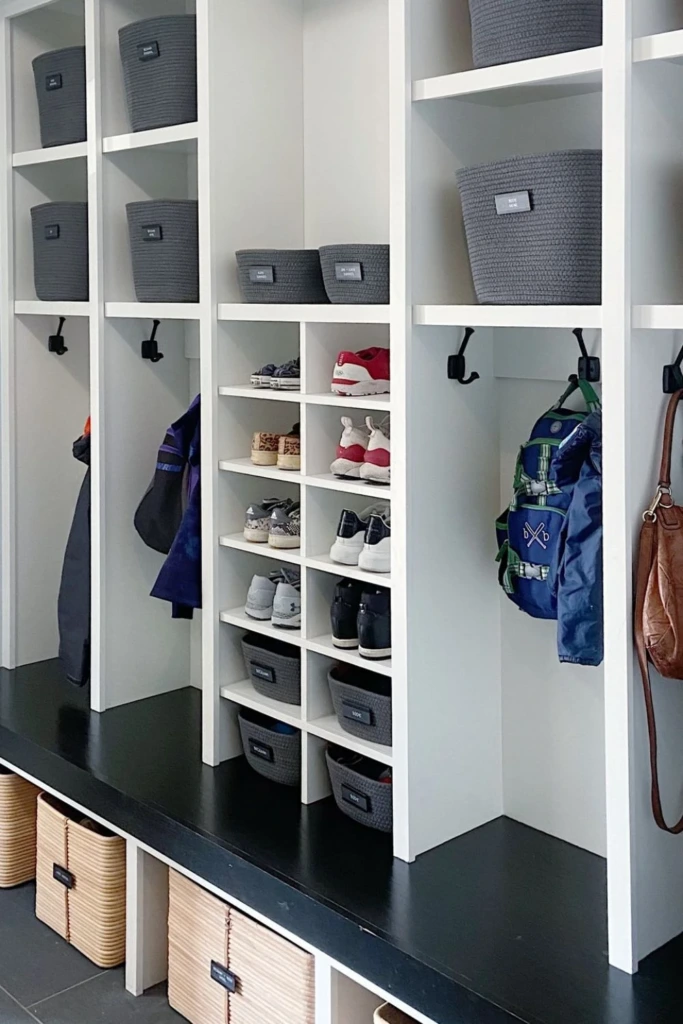
When shoes are the main source of entryway clutter, dedicate an entire section of wall to footwear storage. A shoe wall keeps pairs together, frees up walking space, and makes it easier to find the right shoes before heading out.
Tall shelving units with separate compartments can accommodate several family members. Narrow shelves help maximize capacity, while hooks above or beside the shoe storage provide a home for coats and bags.
For a household with many pairs of shoes, divide the storage into everyday footwear, occasional-use shoes, and seasonal options. Keep frequently worn pairs within easy reach and store less-used footwear higher up or in closed compartments.
Choose a layout that allows shoes to dry before being enclosed. A removable tray near the bottom can also help contain mud, dust, and moisture brought in from outside.
10. Name Zones
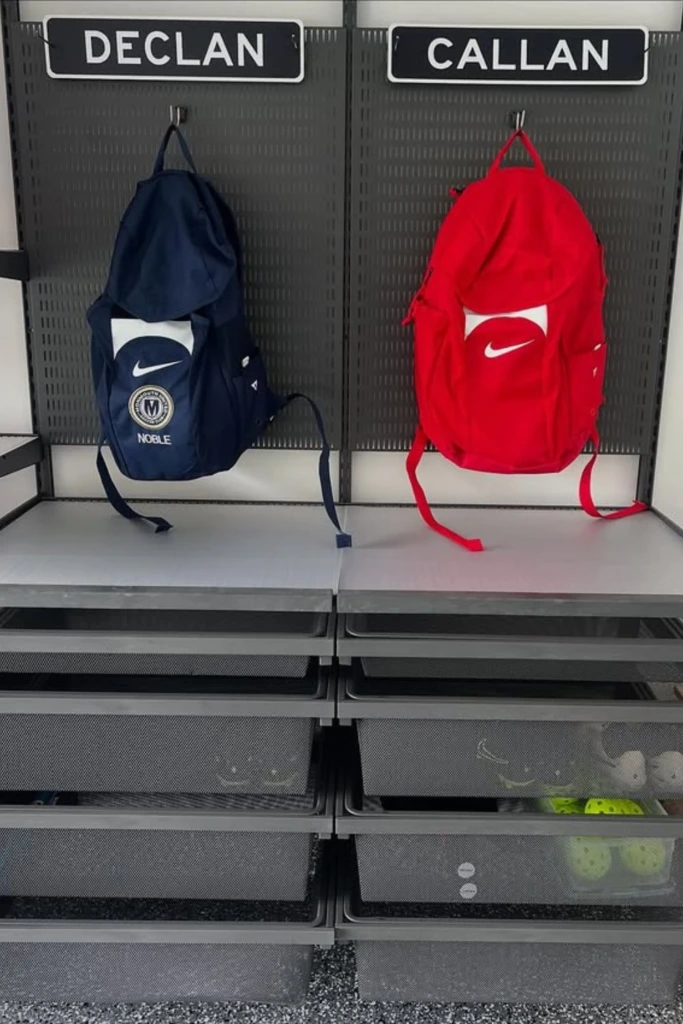
Personalized storage sections make it easier for everyone in the household to identify their own space. Name labels above hooks or cubbies are especially helpful for children who are learning to manage their belongings independently.
A pegboard can make the arrangement more adaptable. Move hooks as bags change, sports activities rotate, or family needs evolve. You can also add small baskets or containers for accessories that don't hang easily.
Use lower drawers or pull-out bins for shoes, lunch bags, sports equipment, and other items that need to remain accessible but don't necessarily need to be displayed.
Labels can be written names, simple symbols, or pictures, depending on the age of the people using the space. The important thing is to make each storage area easy to recognize and use.
11. Hidden Drawers
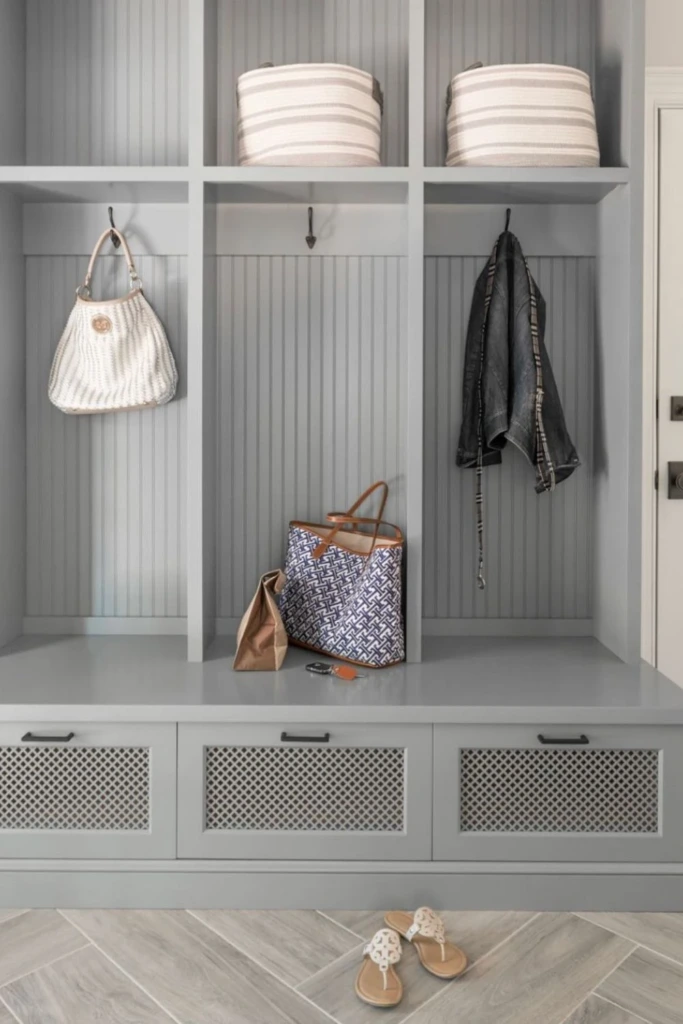
A bench with built-in drawers provides a way to store everyday belongings without leaving everything in plain sight. It's a useful option for entryways where an orderly appearance matters just as much as practical storage.
Use the drawers for spare shoes, scarves, reusable shopping bags, pet accessories, and other items that would otherwise collect near the door. Hooks above the bench can accommodate coats, handbags, and lightweight jackets.
Upper shelves or cabinets provide additional storage for seasonal belongings that don't need to be accessed every day.
If you plan to store footwear or damp accessories inside the drawers, choose a design with suitable ventilation and allow wet items to dry before putting them away. Dividers or small containers can keep the contents organized and prevent smaller belongings from becoming difficult to find.
12. Stair Hooks
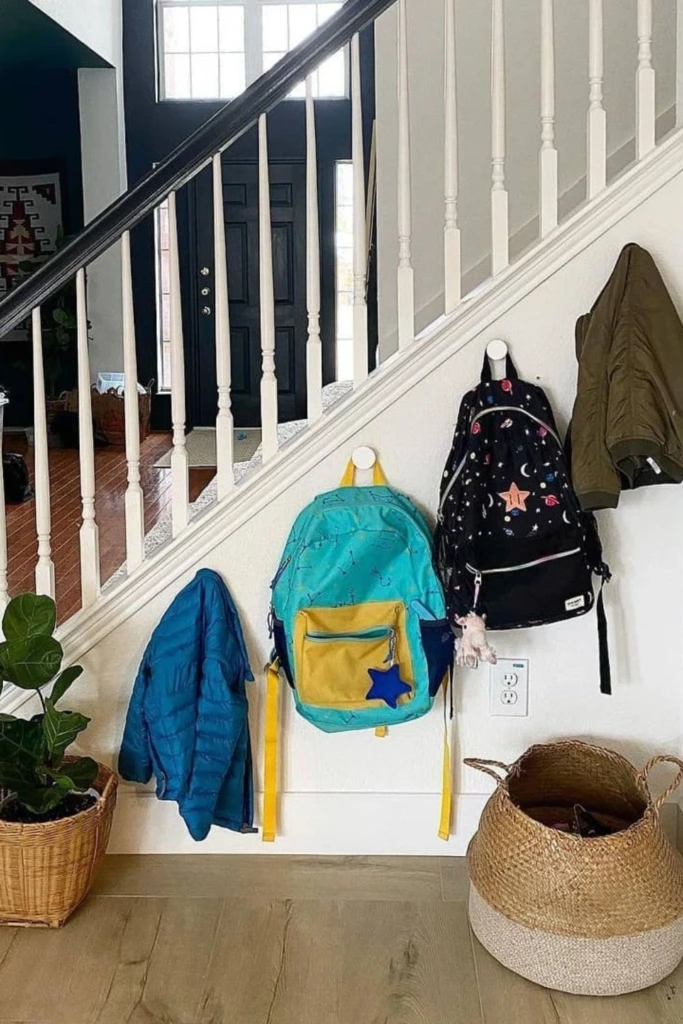
You don't need a built-in cabinet to make the area beside a staircase useful. A simple row of wall hooks can provide enough organization for jackets, schoolbags, backpacks, and other frequently used items.
Position the hooks where household members can reach them comfortably. If children use the space, lower hooks make it easier for them to hang their own bags without assistance.
Leave enough distance between hooks so bulky backpacks and coats don't overlap excessively. A basket or shoe tray below can collect footwear and accessories that don't need to be hung.
This solution works particularly well when the entrance opens directly onto a staircase. It uses existing wall space, requires relatively little furniture, and can be adapted as your storage needs change.
13. Storage Locker
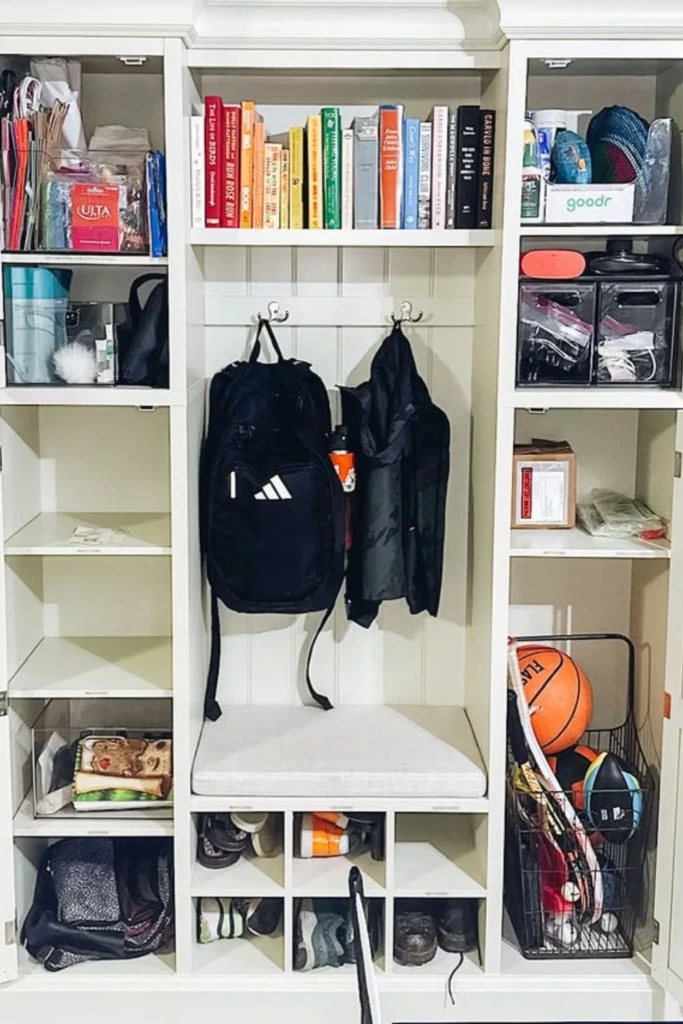
A locker-style drop zone combines open storage with enclosed cabinets to handle a variety of household belongings. It can be especially helpful for families who need somewhere to store backpacks, coats, sports equipment, shoes, and seasonal accessories.
Tall cabinets at either end provide space for bulkier items that would otherwise remain visible. The central section can include hooks for everyday bags and jackets, with a bench beneath for changing shoes.
Open compartments make frequently used belongings easy to retrieve, while closed doors create a cleaner appearance by concealing less attractive or less frequently used items.
When planning this type of unit, consider how much storage each family member needs. A well-designed locker system should accommodate daily essentials without making the entryway feel cramped or forcing people to stack belongings on the bench.
14. Long Lockers
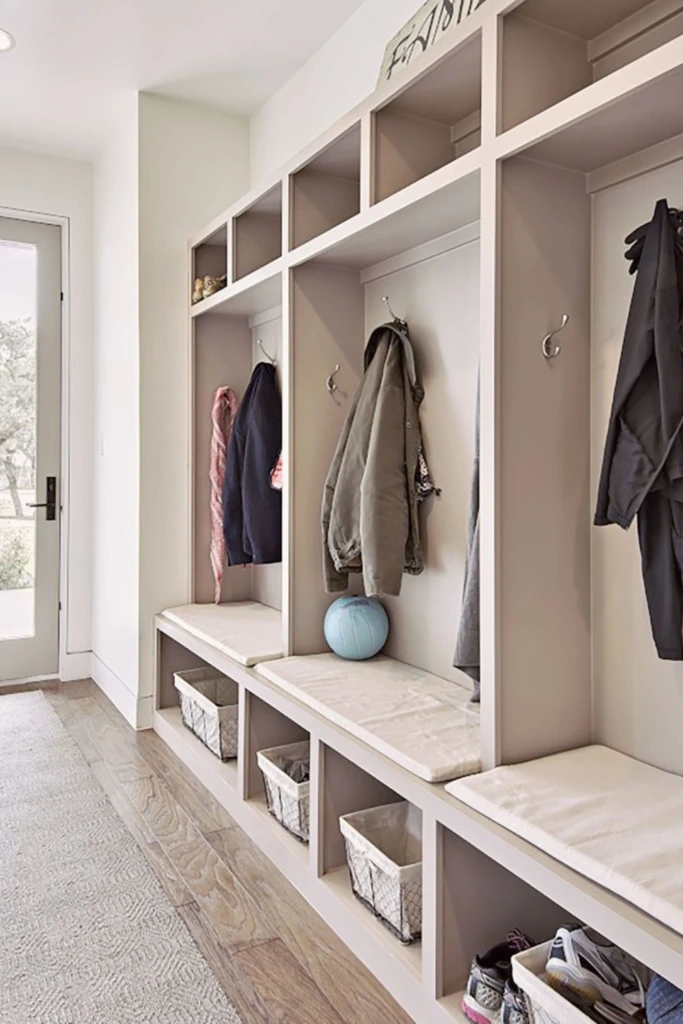
A long locker-style unit is well suited to larger households where several people need storage in the same entryway. Running multiple compartments along one wall creates a consistent place for coats, backpacks, shoes, and accessories.
Give each person a separate section with enough room for their most frequently used belongings. Individual hooks prevent jackets from becoming crowded together, while a continuous bench provides shared seating.
Underneath the bench, open cubbies can hold shoes, slippers, or baskets of smaller accessories. Baskets are especially useful for keeping gloves, hats, and seasonal items grouped together.
Before choosing a long unit, consider the length of the available wall and the amount of space required for comfortable movement. A streamlined design can provide generous storage without interfering with the main walkway.
15. Entry Console
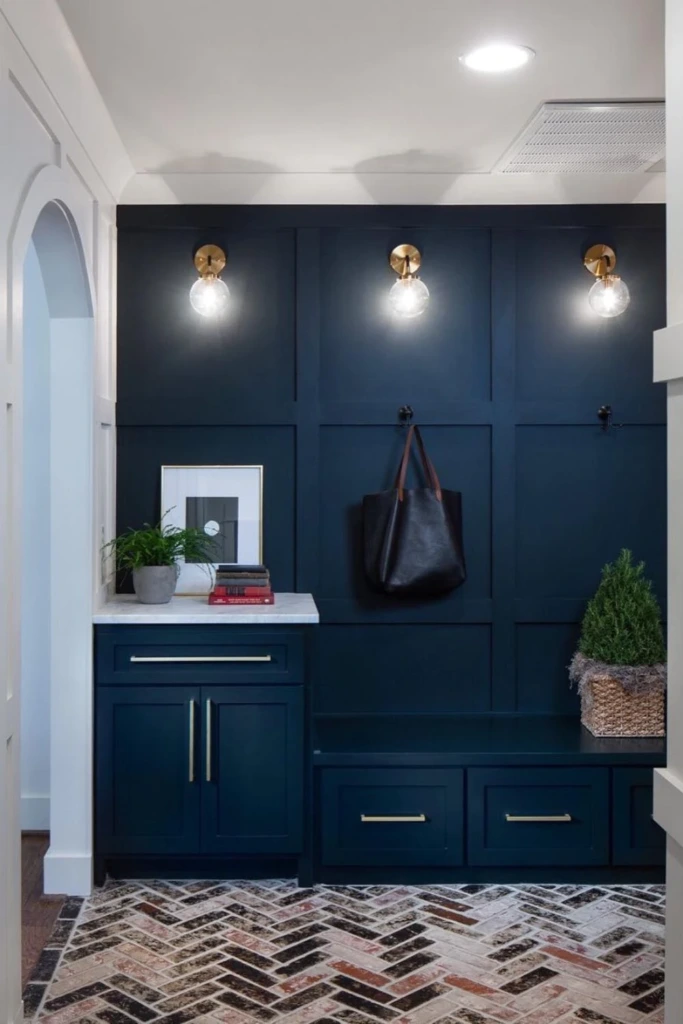
A compact entry console can serve as an effective drop zone when there isn't enough room for full-size cubbies or a mudroom bench. Choose a narrow table or cabinet that fits comfortably beside the front door.
Use the top surface for a small tray containing keys, sunglasses, and other essentials. A few hooks on the wall above can hold jackets, handbags, and reusable shopping bags, keeping them away from chairs and floor space.
Drawers or cabinets underneath provide concealed storage for extra footwear, pet supplies, and miscellaneous accessories.
To prevent the console from becoming another dumping ground, keep the surface relatively clear and limit the items stored there to things you genuinely use when leaving or entering the house. A small piece of furniture can make a big difference when its purpose is clearly defined.
16. Bench Nook
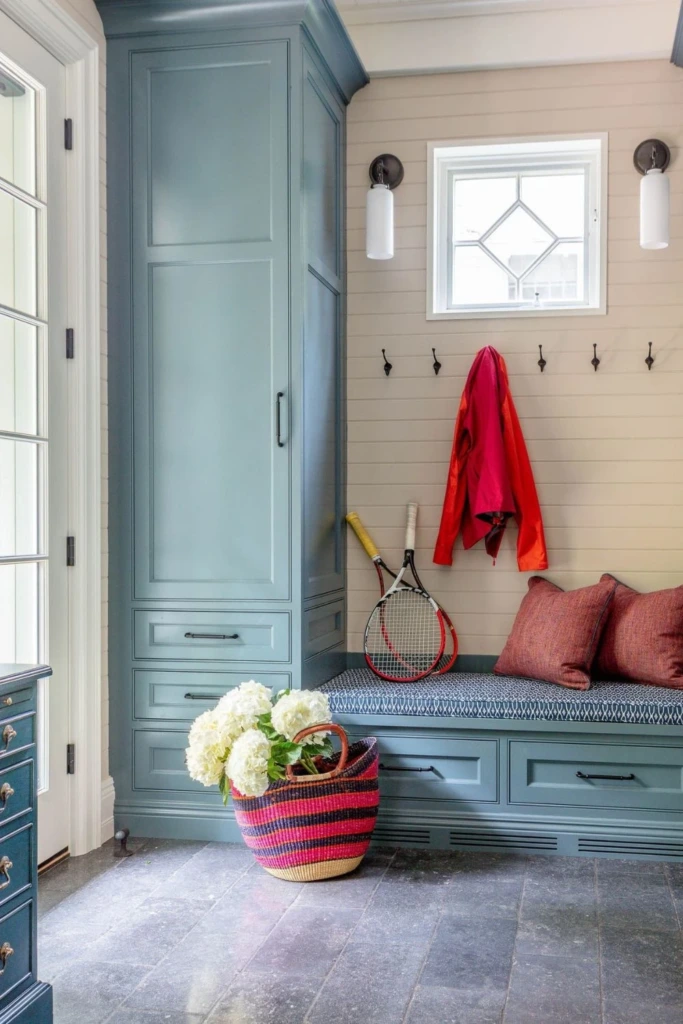
A dedicated bench nook creates a convenient transition point between the outdoors and the rest of the home. It provides a place to sit, hang outerwear, and organize belongings as soon as you arrive.
Install hooks above the bench for coats, bags, hats, and outdoor accessories. Position them at a comfortable height so items can be hung up without interfering with the seating area.
Deep drawers beneath the bench can accommodate footwear, scarves, sports equipment, and other belongings that tend to collect near the door. If space allows, add a tall cabinet alongside the bench for backpacks, umbrellas, or bulky seasonal clothing.
For a practical setup, divide the storage according to how often each item is used. Keep everyday essentials within easy reach and move occasional-use belongings into less accessible compartments.
17. Statement Wall
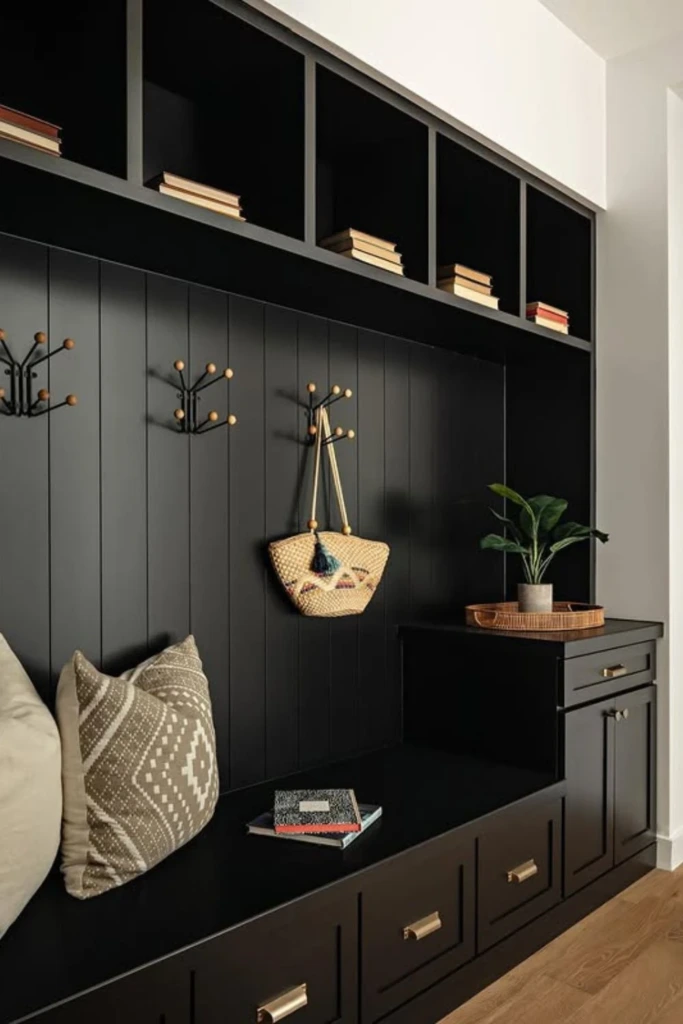
An entryway storage wall can be both functional and visually appealing. A paneled wall fitted with evenly spaced hooks creates an organized place for jackets, handbags, backpacks, and reusable totes without requiring a large freestanding unit.
Choose a durable wall finish that can withstand regular contact with bags and outerwear. Wood paneling, painted boards, or other suitable materials can help define the area while complementing the surrounding décor.
A bench with concealed storage underneath adds another layer of functionality. Use the compartments for shoes, scarves, and smaller accessories that would otherwise remain scattered on the floor.
Keep the number of hooks proportionate to the household's needs. Leaving some space between hanging items helps prevent the wall from becoming visually cluttered and makes individual belongings easier to retrieve.
18. Entry Locker
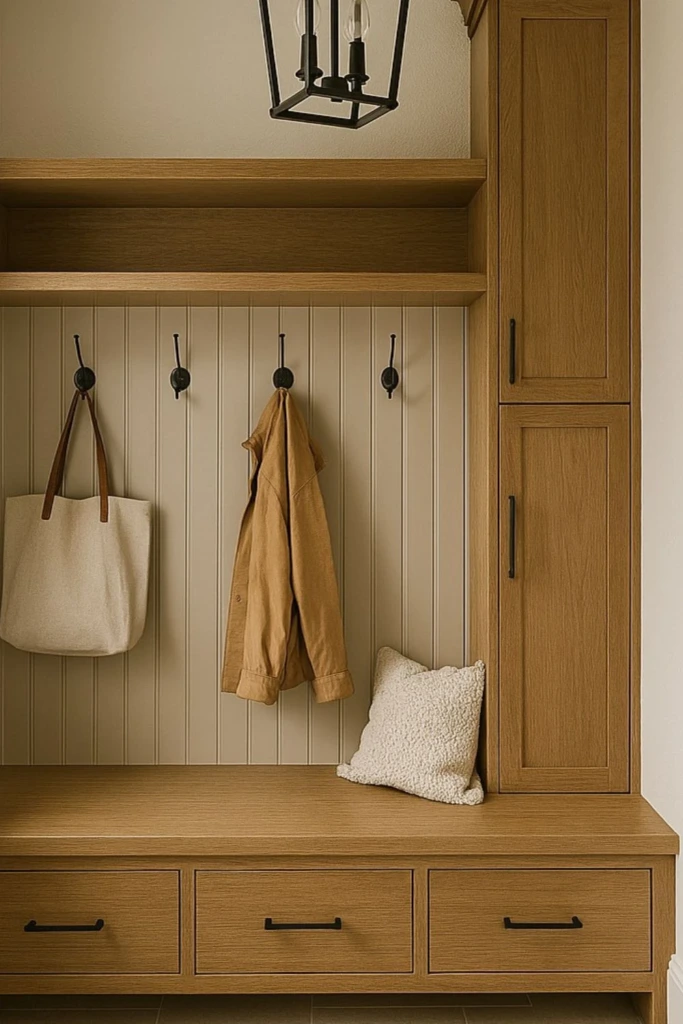
An entry locker offers a designated place for the items you need most often when leaving home. Even a compact version can help keep a busy doorway organized.
Install hooks on a sturdy panel for jackets, handbags, everyday backpacks, and lightweight coats. A bench beneath the hooks provides a comfortable spot for changing shoes, while drawers or cabinets underneath conceal footwear and small accessories.
You can also include a shelf for frequently used items such as sunglasses or a small basket for reusable shopping bags. Keep these essentials in consistent locations so they are easy to find during busy mornings.
An entry locker doesn't have to be elaborate. The most useful design is one that fits the available wall, accommodates the household's daily routine, and leaves enough room for people to move through the entrance comfortably.
19. Arch Cubbies
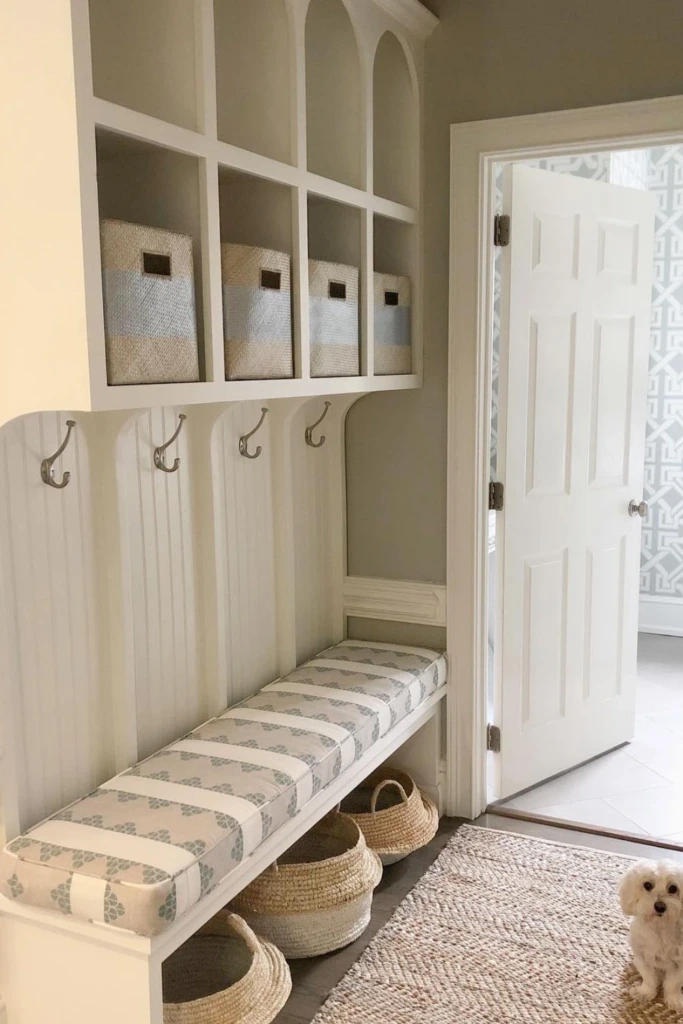
Arched cubbies introduce a softer architectural detail while providing practical storage for everyday essentials. This design can give a built-in entryway a distinctive appearance without sacrificing functionality.
Use the upper compartments for baskets containing gloves, scarves, reusable bags, and seasonal accessories. Hooks beneath the cubbies can hold coats, handbags, and backpacks, while a long bench offers convenient seating.
Baskets or open compartments underneath the bench provide space for shoes, slippers, and pet accessories. Keeping these items grouped together helps maintain a clear floor and makes cleaning easier.
For smaller entrances, keep the cubbies relatively shallow and avoid extending the bench too far into the walkway. The curved details should complement the home's style while leaving the storage easy to use.
20. Coat Columns
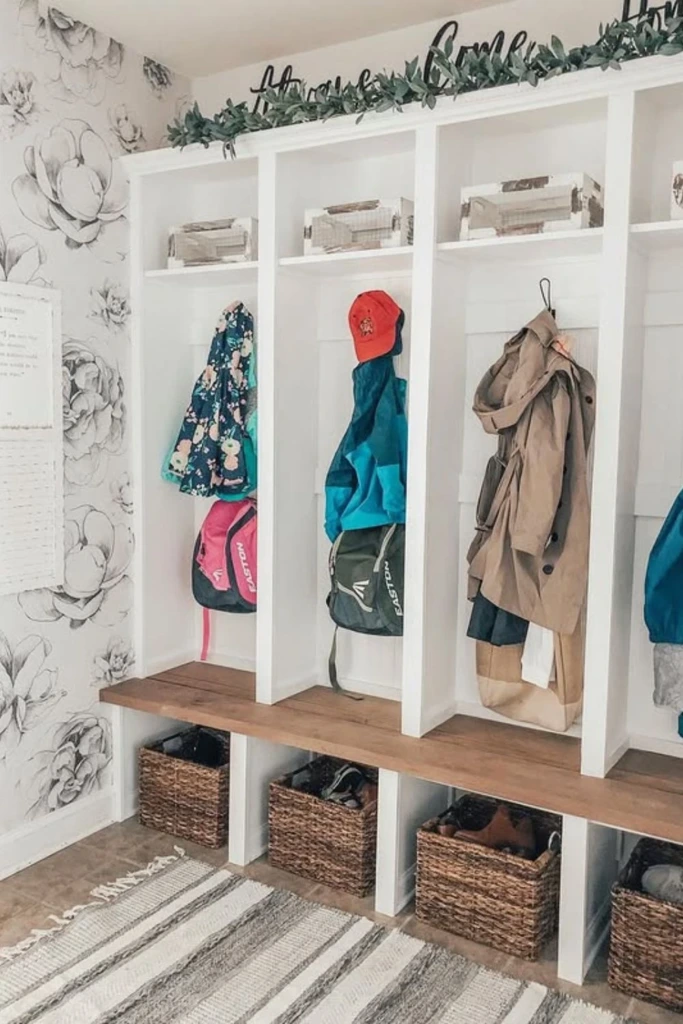
Coat columns create individual vertical sections for storing outerwear and bags. Instead of sharing a single crowded hook rail, each family member can use a separate section to keep their belongings organized.
Install hooks at practical heights and leave enough room for coats and backpacks to hang without overlapping excessively. If the household has several children, assigning each child a column can make daily routines more predictable.
A bench beneath the columns provides seating, while baskets or open cubbies below can hold sneakers, slippers, hats, and seasonal accessories.
This arrangement is particularly effective in homes with limited floor space because it concentrates storage along one wall. Keep everyday belongings within easy reach and use higher compartments for items that aren't needed regularly.
21. Family Hooks
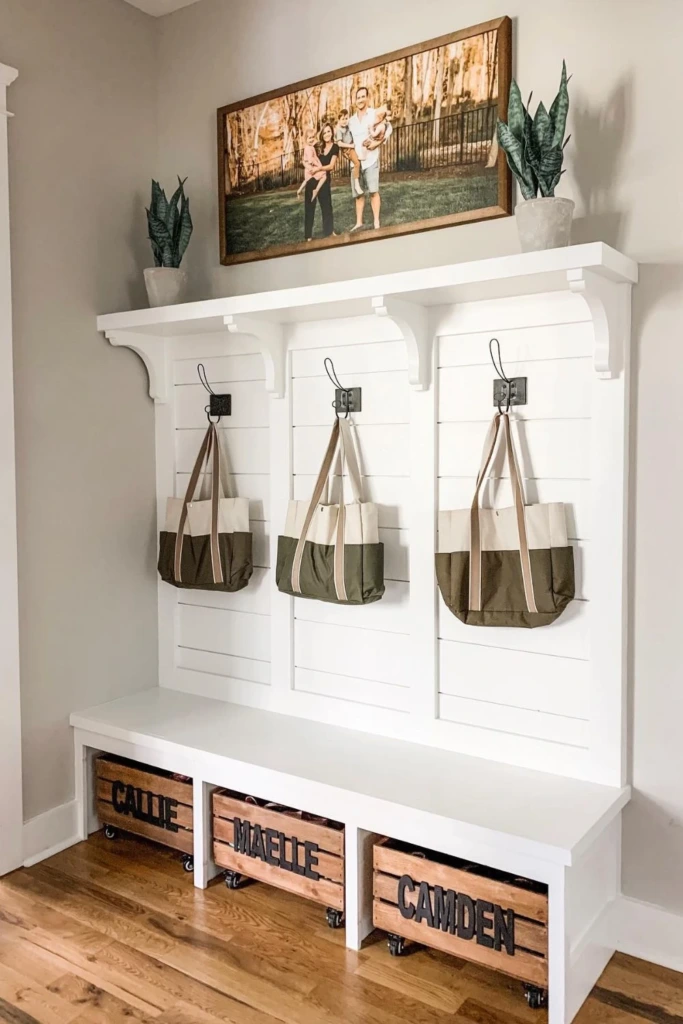
A family hook system is one of the simplest ways to organize an entryway without investing in a large storage unit. Divide a wall into sections or install a long hook rail with enough space for everyone.
Assign hooks to individual family members so coats, backpacks, and handbags have consistent locations. A small panel behind each group of hooks can visually separate the sections and protect the wall from everyday wear.
Place a bench underneath if space permits. It offers a convenient seat for changing shoes, and wheeled crates or baskets beneath it can hold footwear, sports equipment, or reusable bags.
The system works best when everyone has enough hooks for their usual belongings. Avoid assigning too many items to a single hook, as overcrowding can make the arrangement difficult to maintain.
22. Hook Rail
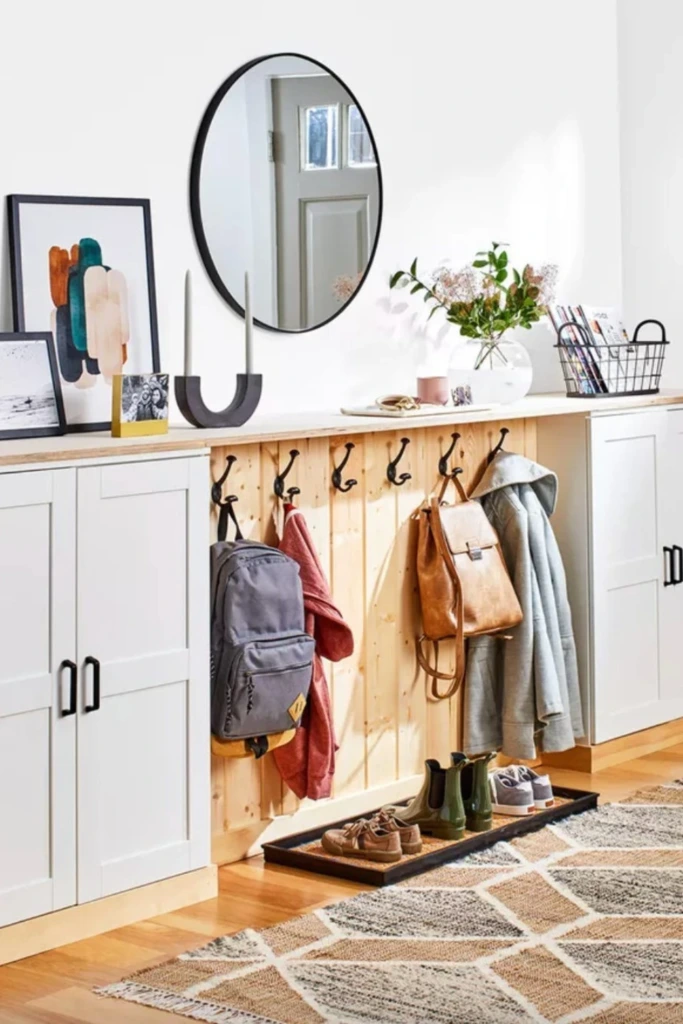
A wall-mounted hook rail provides a straightforward solution for entryways that need organization but have little room for additional furniture. Install it near the main entrance so coats, bags, and jackets can be hung up immediately.
A wooden backing board can add visual warmth and help define the storage area. Make sure the rail and its fixings are suitable for the weight of the items it will hold.
Place a shoe tray underneath to contain dirt and moisture from outdoor footwear. Nearby cabinets can store extra shoes, cleaning supplies, seasonal decorations, or other belongings that don't need to remain visible.
If several people use the entrance, choose a rail with enough hooks to prevent overcrowding. A small amount of planning can turn an otherwise empty wall into a useful part of your everyday routine.
What should always be included in a drop zone to keep it functional?
A functional drop zone should provide convenient storage for the items that regularly enter and leave your home. Wall hooks are useful for coats, backpacks, handbags, and reusable shopping bags, while a small tray or shelf keeps keys, wallets, and sunglasses from getting misplaced.
If your entryway has enough room, add a bench to make changing shoes easier. A shoe rack, baskets, or drawers beneath the bench can keep footwear and accessories organized.
You can also include a small mail organizer or document pocket if household paperwork tends to accumulate near the door. The exact setup depends on your routine, so prioritize the items that cause the most clutter rather than filling the space with unnecessary organizers.
Where is the best place in a home to create a drop zone?
The best location is usually near the entrance your household uses most often. This might be the front door, a garage entrance, a mudroom, or a side door that leads directly into the kitchen or hallway.
Choose a spot where people can put down their belongings naturally without blocking doors or restricting movement. Keeping the drop zone close to your usual route makes it easier to use consistently.
In a small home or apartment, a narrow section of hallway can work perfectly well. A few wall hooks, a slim shelf, and a compact shoe tray may be all you need.
The key is to create the drop zone where everyday clutter already tends to collect. When storage is convenient and clearly organized, family members are more likely to return their belongings to the right place instead of leaving them throughout the house.