22 Makeup Organization Ideas for 2026
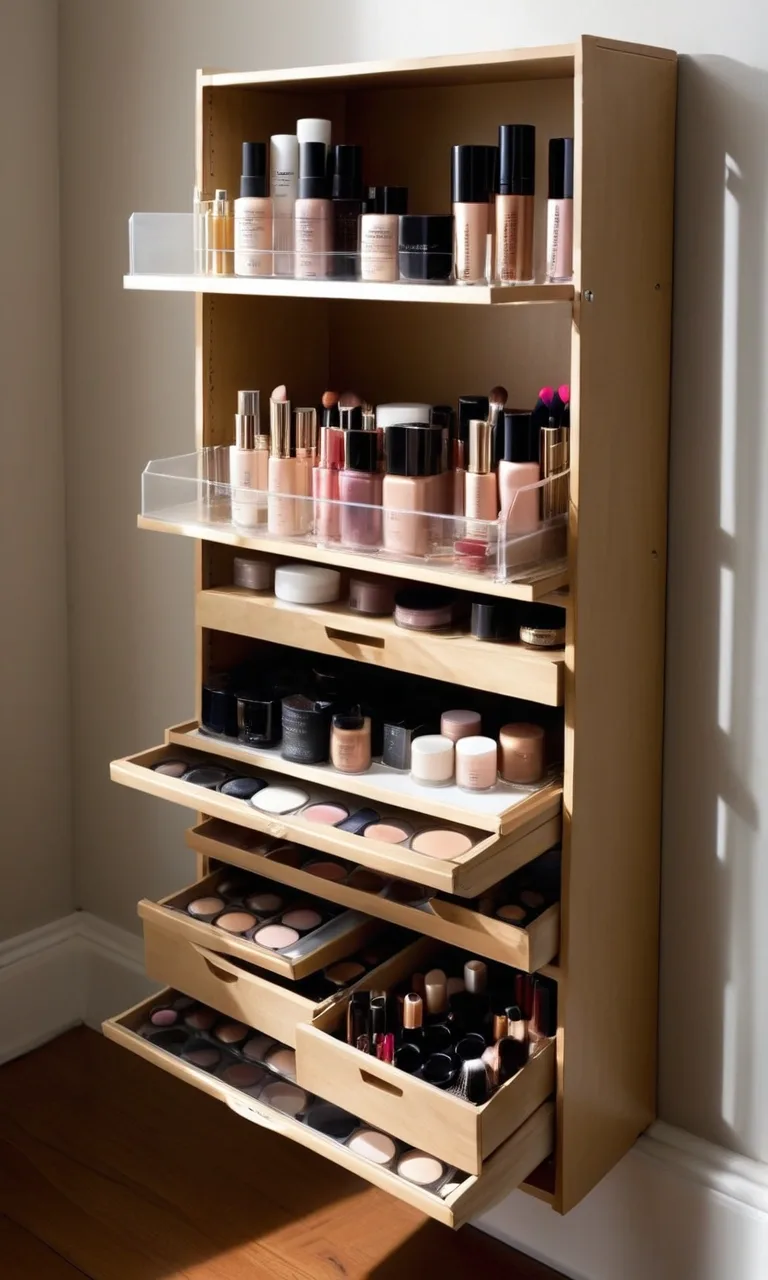
A cluttered makeup collection can turn a simple morning routine into a frustrating search for the right lipstick, brush, or foundation. When products are scattered across drawers and countertops, it becomes harder to find what you need and keep track of what you already own.
The secret to a functional makeup space is creating a home for every item. Whether you have an entire vanity or just a small bathroom shelf, thoughtful storage can make your collection easier to maintain without sacrificing style.
These makeup organization ideas offer practical ways to sort cosmetics, protect your beauty products, and create a setup that suits your daily routine. You can adapt each idea to your available space, collection size, and budget.
How Can You Organize Your Makeup?
Start by taking everything out of your current storage area. Check expiration dates, remove products you no longer use, and clean the surfaces before arranging anything.
Next, group similar items together. Keep face products, eye makeup, lip colors, brushes, and skincare separate so you can find each category quickly. Products used every day should stay within easy reach, while occasional-use items and unopened replacements can go into secondary storage.
Choose organizers that fit your actual collection instead of purchasing containers before measuring your space. Clear trays, drawer dividers, small baskets, and upright holders can make a significant difference without requiring an expensive vanity makeover.
Finally, arrange products in the order you use them. A practical system should make getting ready easier and returning everything to its place almost effortless.
1. Compartment Makeup Pouch
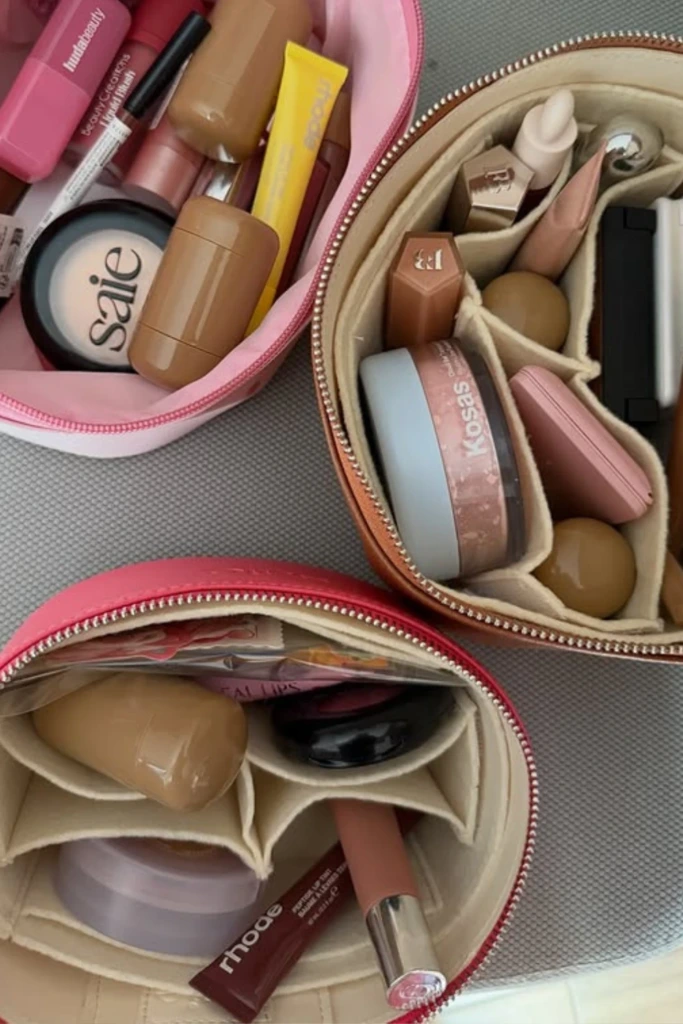
<PRIVATE_PERSON> single makeup bag can quickly become a jumble of loose products, especially when you carry it to work, the gym, or on trips. A pouch with multiple compartments helps separate cosmetics and keeps small essentials from disappearing beneath larger items.
Choose a design with dedicated pockets for brushes, lip products, complexion makeup, and compact tools. Flexible dividers are especially useful because they accommodate different product sizes without taking up unnecessary room.
For additional protection, place leak-prone liquids in a separate waterproof pouch. This simple arrangement keeps your everyday essentials together while reducing the chance of spills or damaged packaging.
2. Pro Kit Layout
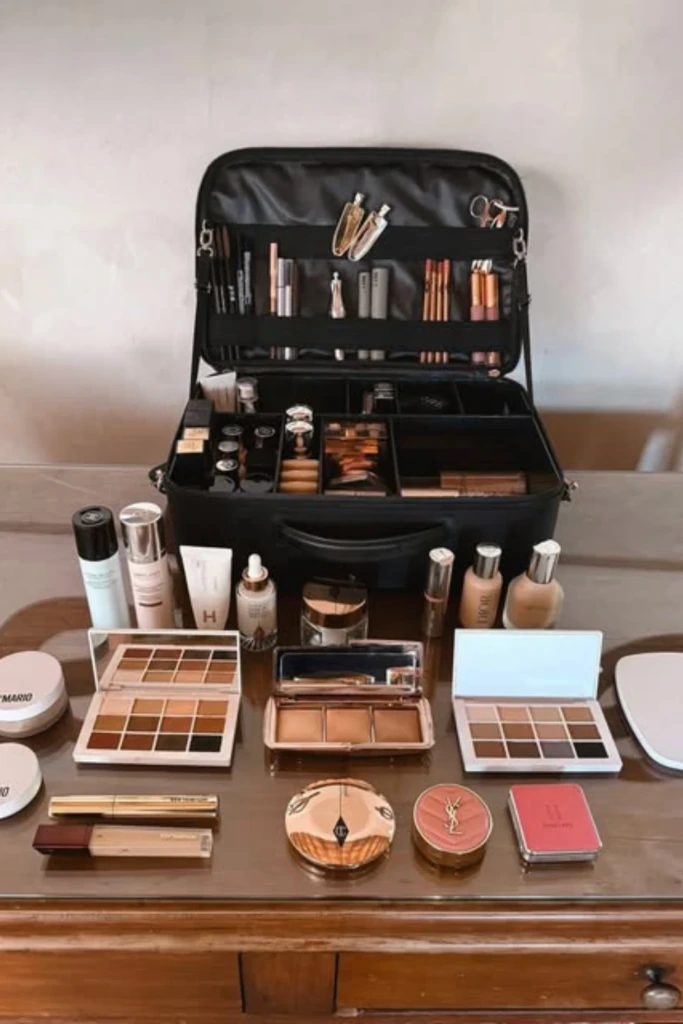
A professional-style makeup kit is useful for makeup artists, beauty enthusiasts with extensive collections, or anyone who prefers a highly structured setup. The goal is to make every product visible and accessible during application.
Arrange palettes and pressed powders in secure, flat sections. Store frequently used complexion products upright where possible, and use elastic loops or protective sleeves to hold brushes and tools in place.
Separate products by function so you can move from foundation to eye makeup without searching through the entire kit. If you regularly match foundation shades or apply makeup in detail, use bright, neutral lighting to help you assess colors accurately.
3. Vanity Case Zones
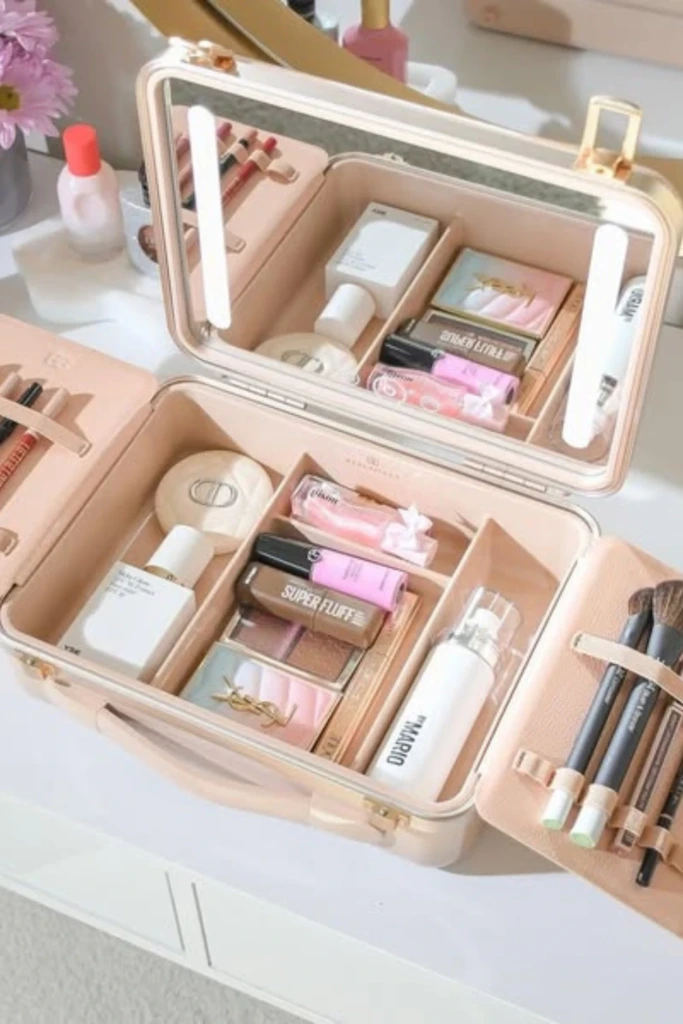
A vanity case with designated sections can turn a mixed collection into an organized beauty station. It works particularly well if you need portable storage that opens to reveal most of your essentials at once.
Divide the interior into practical zones for face products, lip makeup, eye cosmetics, and application tools. Keep the items you use most often near the center or front, reserving less accessible compartments for occasional-use products.
Choose a case with adjustable sections if your collection changes frequently. A built-in mirror and suitable lighting can also make the case more convenient for everyday grooming or travel.
4. Vertical Bottle Storage
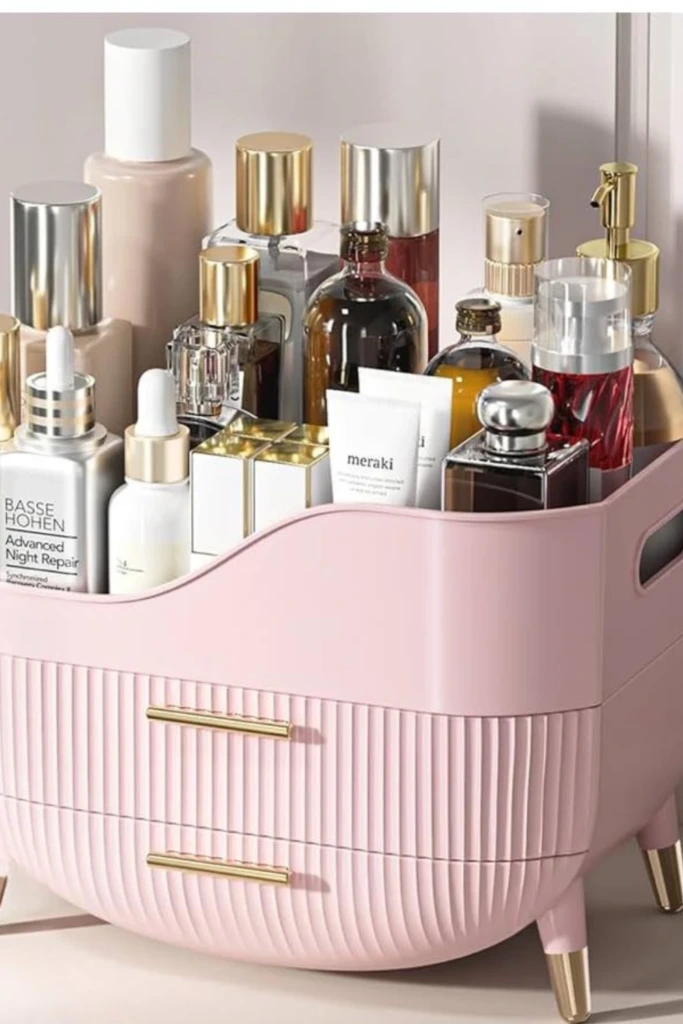
Tall bottles of foundation, setting spray, primer, and skincare can consume valuable space when they are scattered across a vanity. An upright organizer helps prevent tipping and makes products easier to identify.
Look for a holder with different compartment heights so short bottles do not get lost behind taller containers. A tiered stand or divided acrylic organizer can work well on a dressing table, while a compact caddy is useful for smaller surfaces.
Place frequently used bottles toward the front and keep heavier containers on a stable base. If you store cosmetics in a bathroom, choose a location away from direct water splashes and excessive heat.
5. Covered Counter Storage
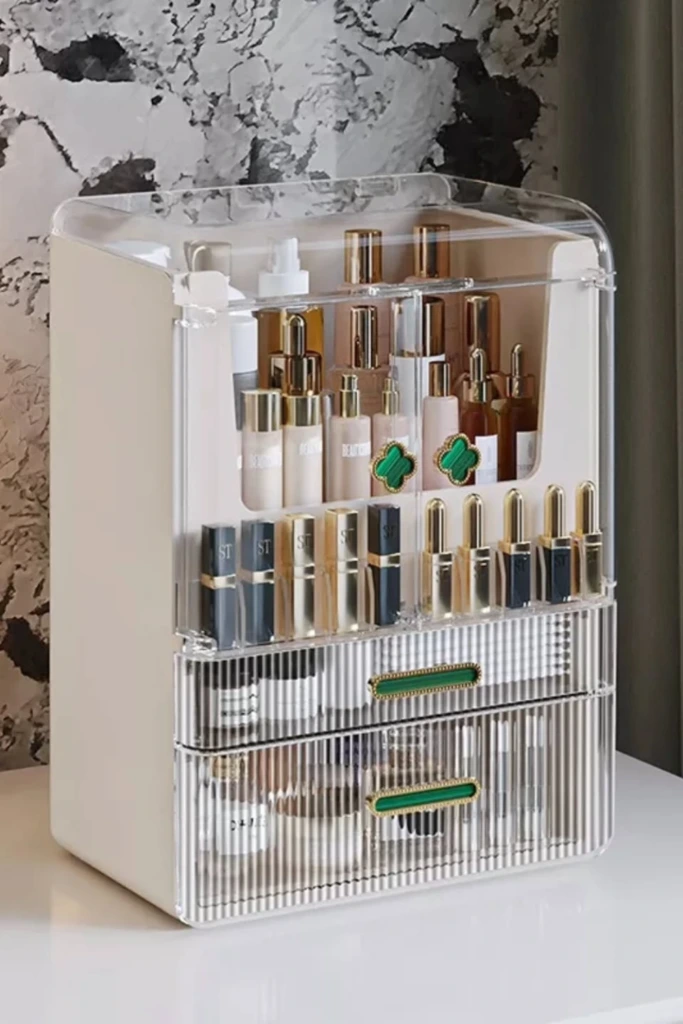
Open countertops look attractive when neatly arranged, but cosmetics left exposed can accumulate dust and may be affected by direct sunlight or heat. Covered storage provides a more protected place for products while keeping them accessible.
A lidded acrylic organizer, compact cabinet, or clear-front storage box lets you see the contents without leaving everything completely exposed. Place everyday lip products and complexion essentials in the easiest-to-reach section, with taller bottles toward the back.
Choose an organizer that is simple to open and clean. Keep it away from sunny windows and steamy areas whenever possible, particularly if the products are sensitive to temperature changes.
6. Clear Drawer Layers
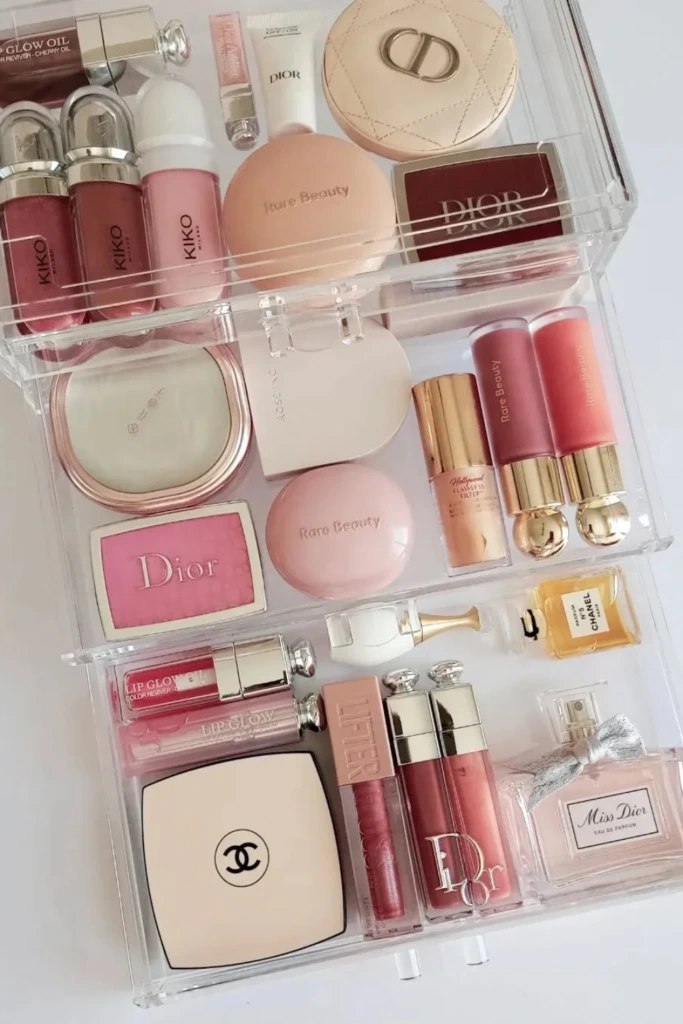
Transparent drawers make it easier to see your collection without opening multiple containers. They are particularly useful for vanities where countertop space is limited but vertical storage is available.
Use separate drawers for complexion products, lip makeup, eye cosmetics, and accessories. Arrange smaller products in shallow trays inside each drawer so they do not slide around whenever you open it.
Stackable acrylic units allow you to expand the system as needed. Add small labels if certain products look similar, and avoid overfilling the drawers so everything remains easy to remove and replace.
7. Everyday Access Station
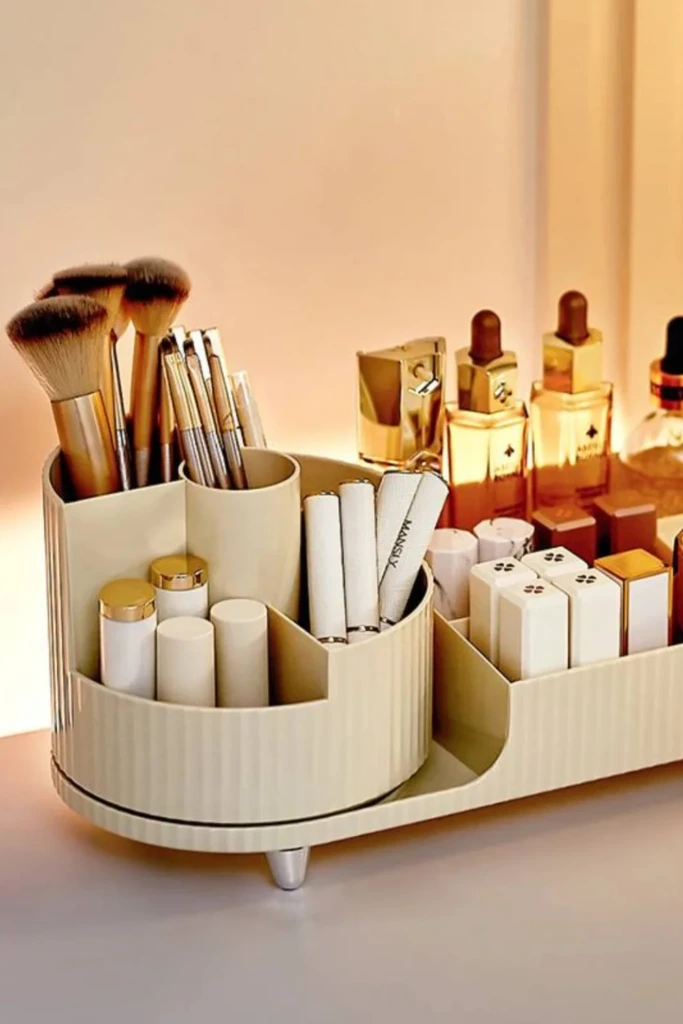
An everyday makeup station keeps your most frequently used products together in one convenient location. It is ideal for anyone who wants a quicker morning routine without searching through a large collection.
Place daily essentials such as foundation, concealer, mascara, lip balm, and your favorite brushes in a compact tray or open organizer. Store duplicates, special-occasion products, and less frequently used colors elsewhere.
Keep the station close to your mirror and leave enough space to work comfortably. A small, carefully selected group of products often proves more useful than displaying your entire collection.
8. Tool-First Storage
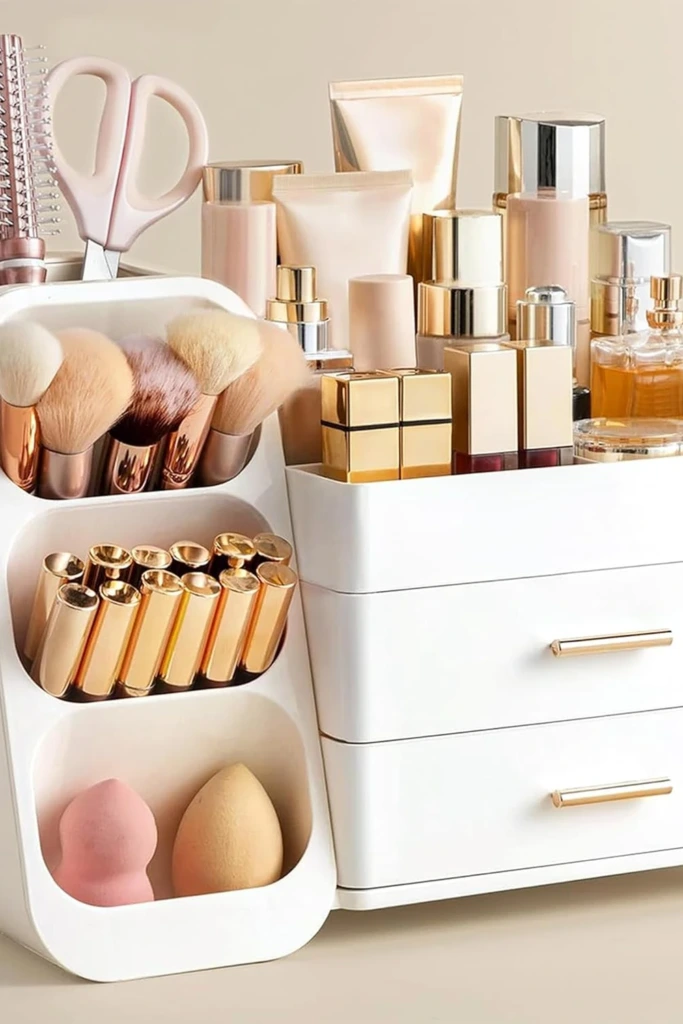
Makeup brushes, sponges, tweezers, and other accessories can create clutter when they are mixed with cosmetics. Giving these tools their own storage area makes them easier to locate and helps support good hygiene.
Use washable cups, divided holders, or a dedicated drawer insert to separate different brush sizes and tools. Keep clean brushes apart from used ones, and allow washed brushes to dry completely before placing them in enclosed storage.
Reusable makeup sponges should also be cleaned regularly and dried thoroughly. Choose containers that are easy to wipe down, and avoid keeping damp tools in closed compartments where moisture can linger.
9. Lip-First Drawers
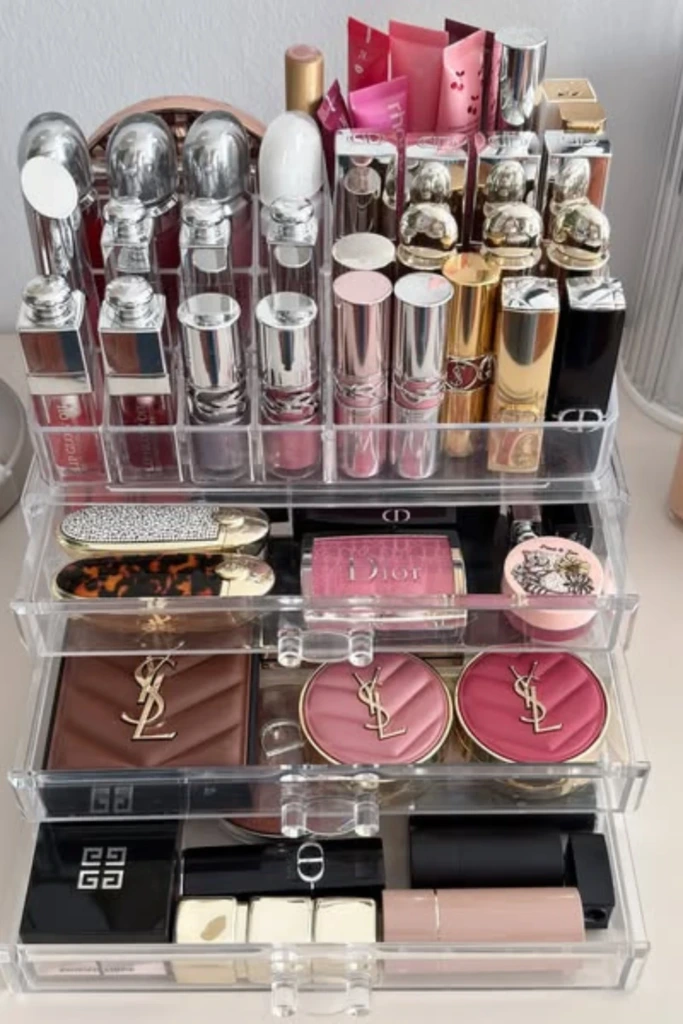
Lipsticks, glosses, balms, and lip liners often accumulate in large numbers because their packaging is small and easy to overlook. A dedicated drawer helps keep these products organized by color, finish, or frequency of use.
Use shallow trays with narrow sections to prevent tubes from rolling around. If you have a large collection, arrange lipsticks by color family and keep glosses and balms in separate compartments.
Store products in a way that makes their labels or shades easy to identify. Keeping your favorite everyday colors at the front will help you choose quickly without disturbing the rest of the collection.
10. Zoned Drawer Sections
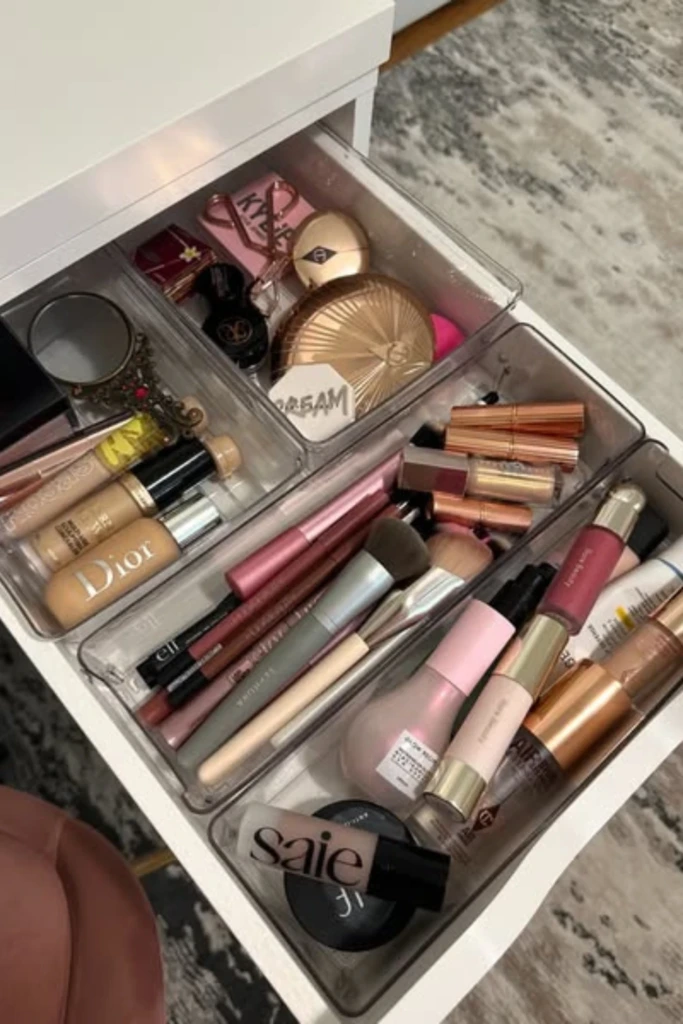
A single drawer can hold a surprising number of cosmetics when it is divided into clearly defined sections. Without boundaries, however, products tend to migrate and become difficult to find.
Use adjustable dividers to create separate areas for face makeup, eye products, lip colors, and beauty tools. Choose divider heights that suit the drawer so items stay in place when it opens and closes.
Reserve the front section for products you reach for most often. Leave a little extra room for new purchases rather than packing every compartment tightly, which makes the system harder to maintain.
11. Bathroom-Safe Stack
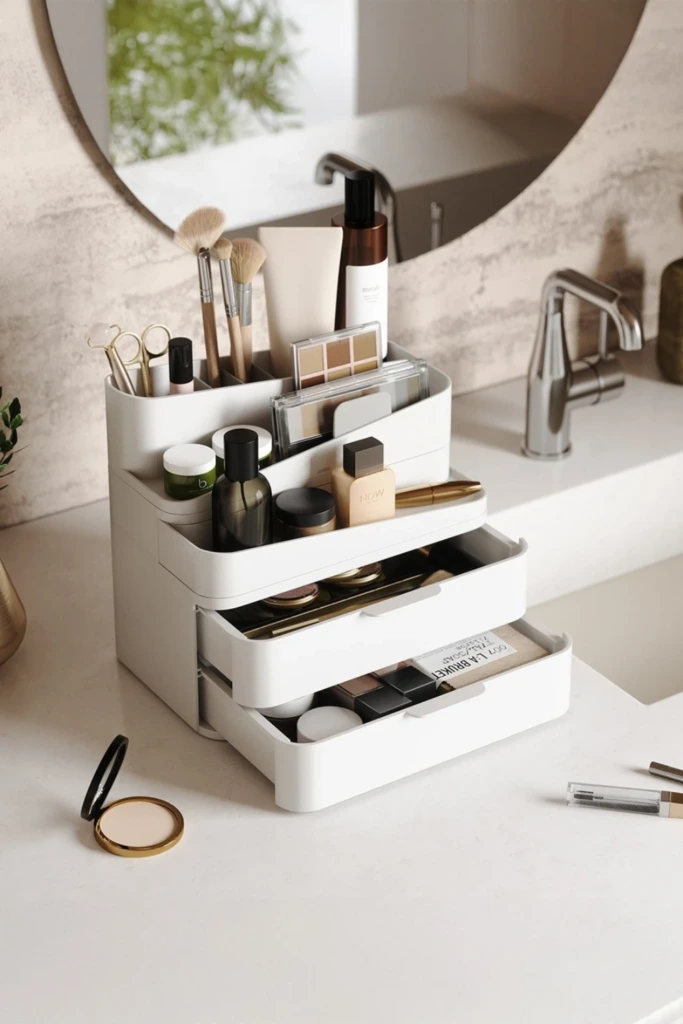
When bathroom storage is limited, stackable organizers can help make better use of vertical space. They provide separate compartments for cosmetics while keeping the countertop or cabinet from becoming overcrowded.
Choose sturdy units with stable bases and enough clearance to open drawers comfortably. Place smaller everyday products in the upper sections and heavier items toward the bottom to reduce the risk of tipping.
Bathrooms can expose cosmetics to humidity and temperature changes, so avoid storing sensitive products beside showers or directly over sinks. A cool, dry drawer or cabinet outside the main splash zone is generally a better option for long-term storage.
12. Full Drawer Control
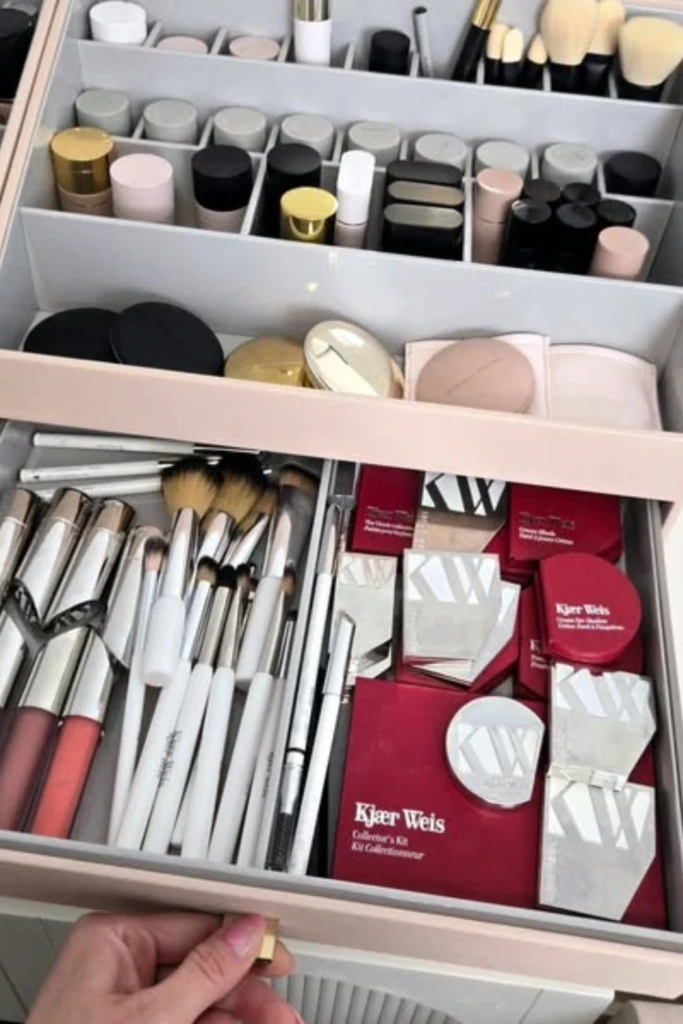
Large makeup collections need a storage system that can accommodate many categories without turning into one crowded compartment. A full-drawer organization system creates a designated place for every product group.
Measure the drawer before buying modular inserts. Use longer sections for palettes and larger bottles, medium compartments for complexion products, and smaller spaces for lipsticks, pencils, and accessories.
Arrange everything so labels remain visible and frequently used items can be reached without removing other products. A well-fitted insert reduces wasted space and makes it easier to notice when a category becomes overcrowded.
13. Mixed-Use Organizer
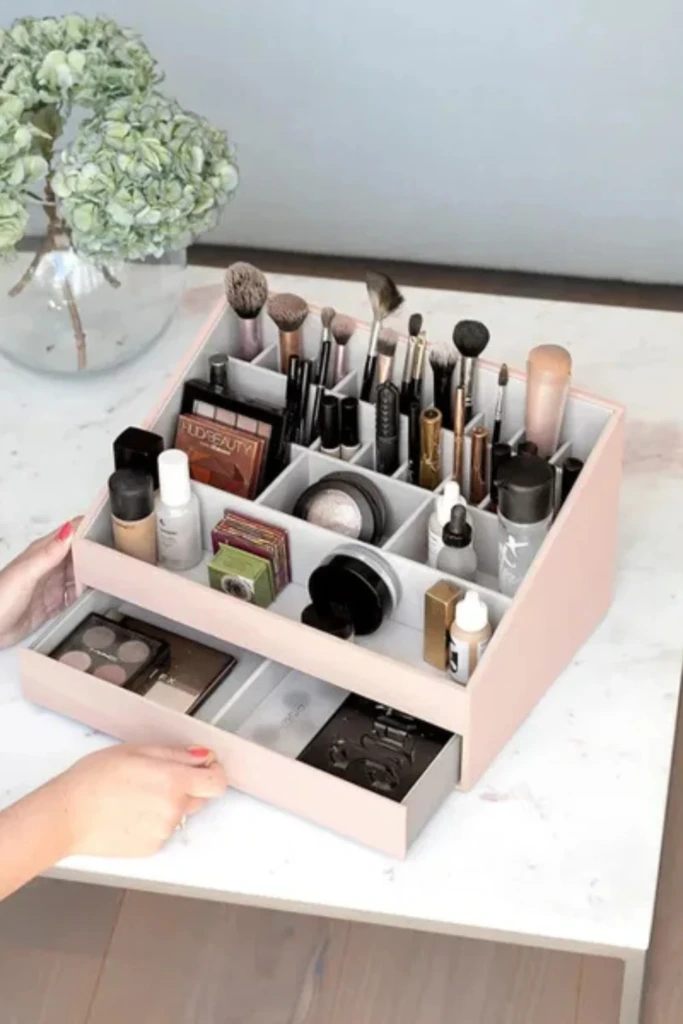
A mixed-use organizer is a practical choice when you want to store cosmetics and application tools together. It combines different compartment styles to accommodate products with varied shapes and sizes.
Use lower drawers for flat palettes, cotton pads, or other accessories. Keep foundations and skincare products in the middle sections, and place brushes in upright holders at the back if the design allows.
This setup is particularly useful on smaller dressing tables because it brings several functions into one unit. Look for removable trays and washable compartments so you can adjust the layout and clean it easily.
14. Backups Storage Zone
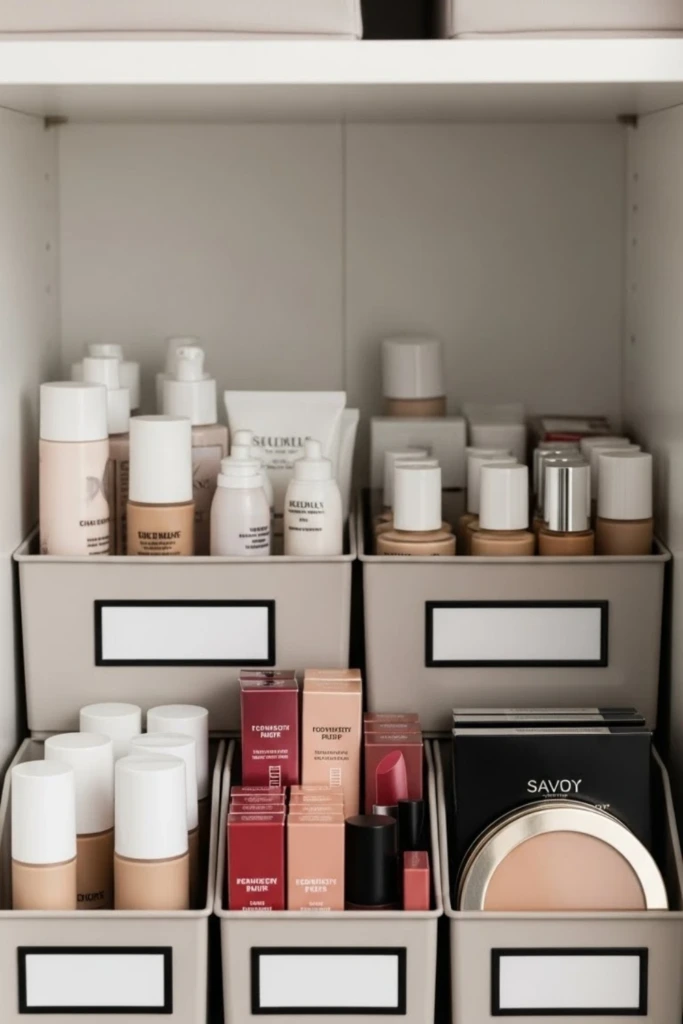
Extra foundations, unopened mascaras, replacement powders, and duplicate products can quickly crowd your everyday makeup area. A separate backup zone keeps these items organized without interfering with your routine.
Choose a labeled box, basket, or cabinet shelf for unopened products and refills. Arrange items by category and place products with earlier expiration dates toward the front so they are easier to use first.
Check the box periodically to avoid buying unnecessary duplicates. Keep sealed products in accordance with their packaging instructions, and do not assume that unopened cosmetics remain usable indefinitely.
15. Face-First Drawer
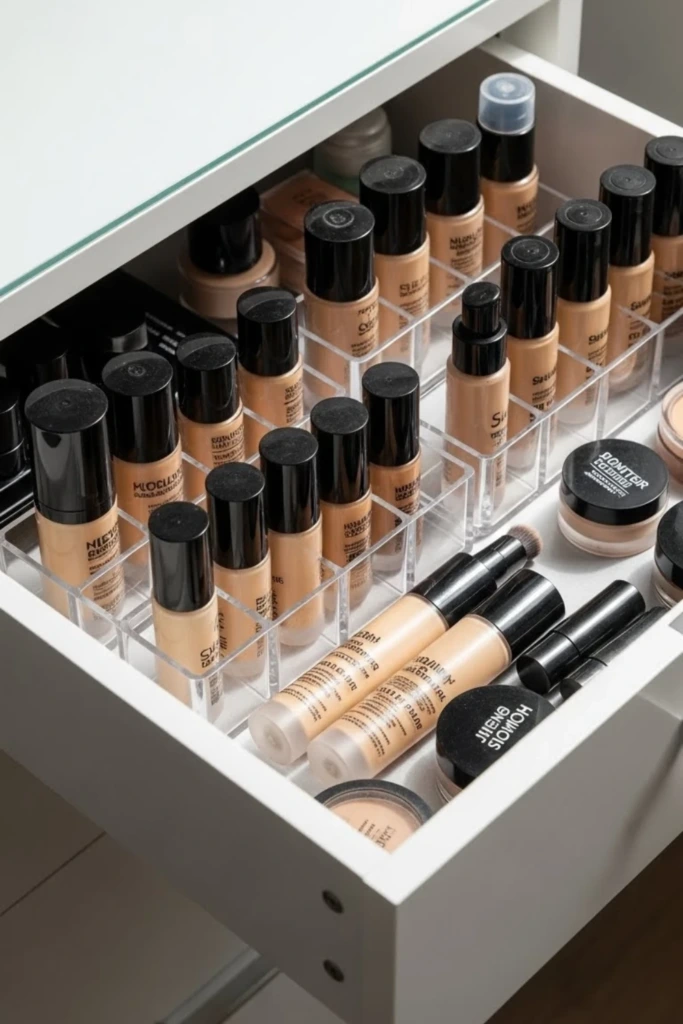
If complexion makeup is the foundation of your daily routine, a dedicated drawer can make getting ready much more efficient. It keeps products used to prepare and even out your skin together.
Group primers, foundations, concealers, powders, and blushes in separate sections. Store bottles upright when practical and use smaller dividers for compact products that might otherwise slide around.
Arrange products in application order, starting with the items you use first. This creates a simple workflow and makes it easier to notice when a frequently used product needs replacing.
16. Eye Makeup Row
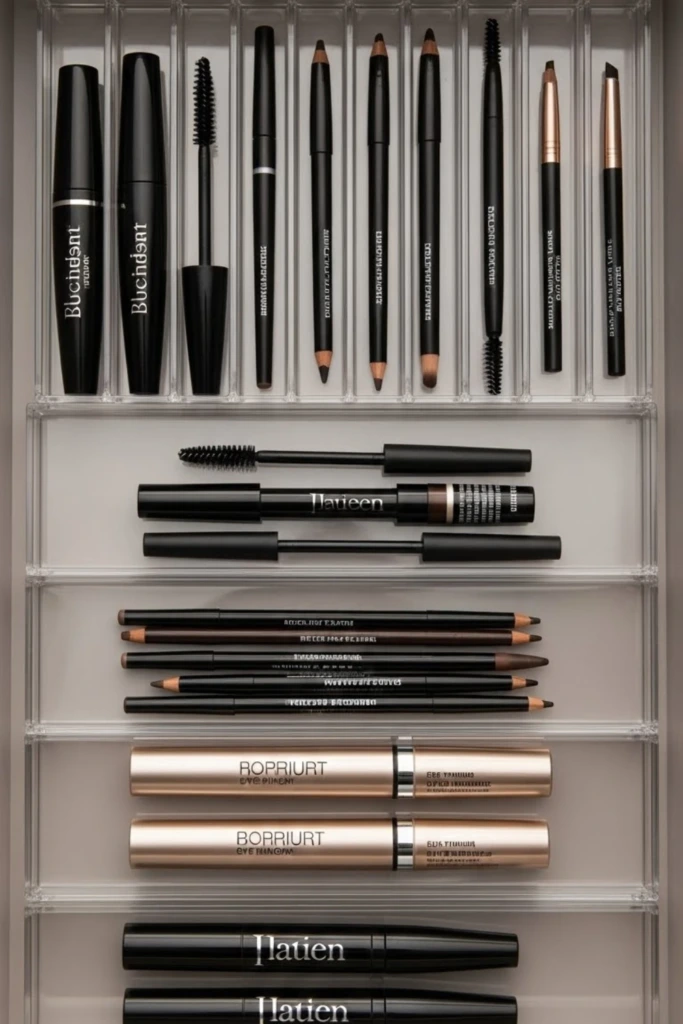
Eye makeup products are often small enough to disappear beneath larger cosmetics. A dedicated row or narrow organizer helps keep mascara, eyeliner, brow pencils, and eyeshadow sticks visible.
Use slim trays or drawer dividers to create individual spaces for pencils and tubes. Keep palettes in a separate section and group brow products together so similar items are easy to distinguish.
Check the condition and expiration guidance of eye products regularly, particularly mascara and liquid eyeliner. Keeping these products organized also makes it easier to identify old items that should be discarded.
17. Travel-Ready Edit
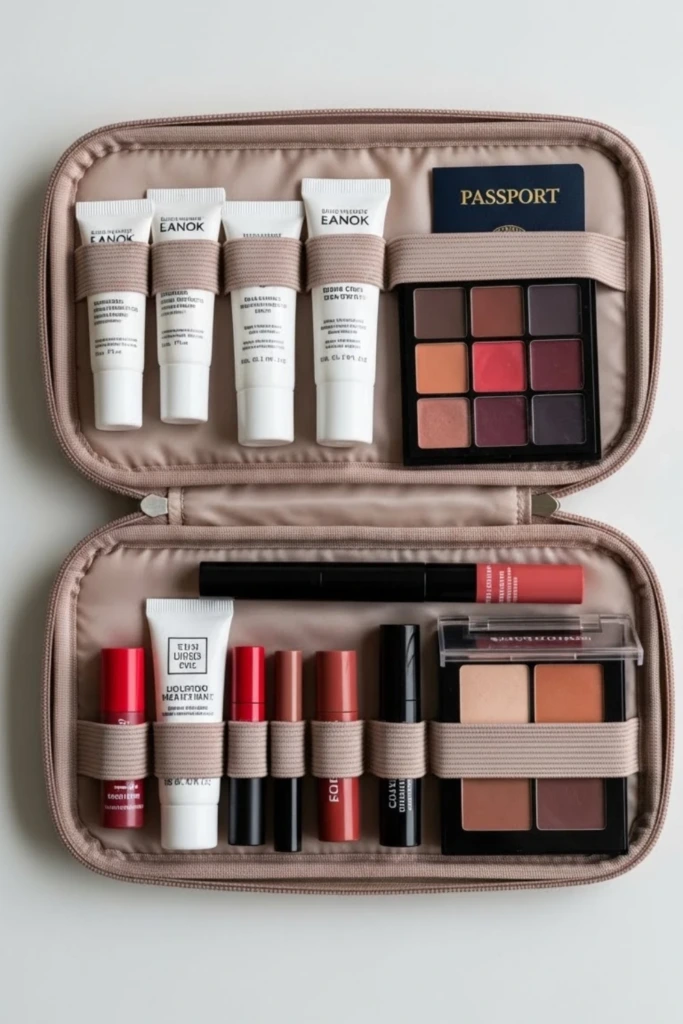
A separate travel makeup kit helps you pack efficiently without dismantling your everyday setup before each trip. It is especially useful for people who travel frequently or prefer carrying only a few essentials.
Choose a compact, secure case and fill it with travel-size products, versatile makeup items, and the tools you genuinely need. Include a small selection of lip colors, a reliable complexion product, mascara, and a multipurpose palette if these suit your routine.
Keep liquids in leak-resistant containers and follow the airline's current rules for carry-on liquids when flying. Review the kit after each trip, replace anything used up, and return it to its designated storage spot.
18. Flat Palette Stack
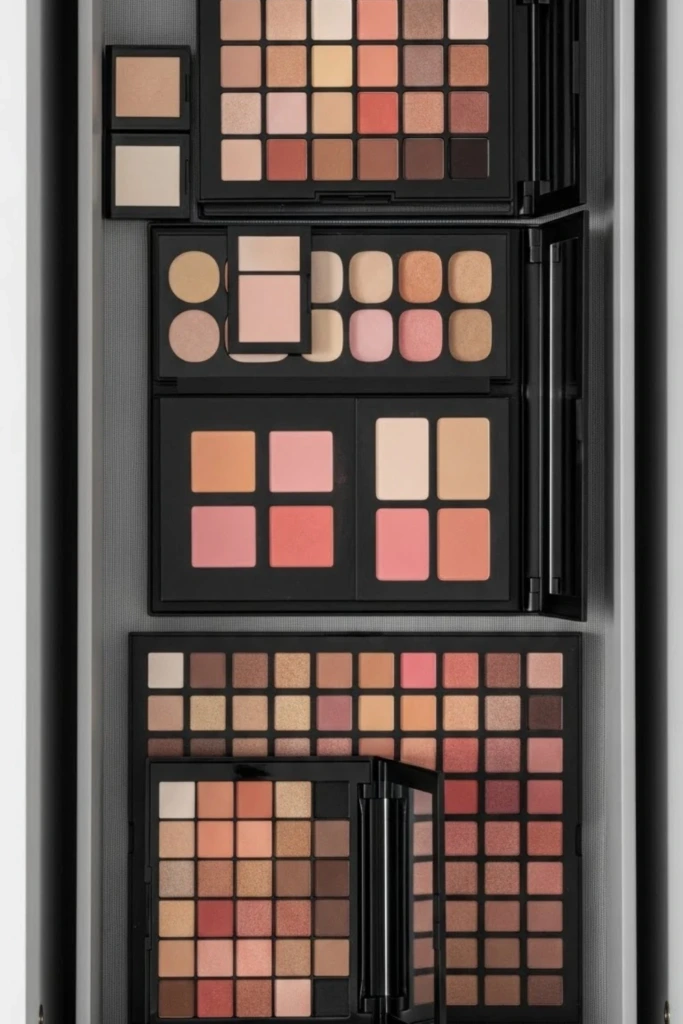
Eyeshadow palettes, face palettes, and other flat cosmetic cases can occupy considerable room when stored without a plan. A horizontal stack makes efficient use of drawer space and helps keep the collection together.
Place larger, heavier palettes at the bottom and lighter ones above them. Avoid creating a stack so tall that removing the bottom palette becomes difficult, and use a nonslip drawer liner to limit movement.
If your palettes are especially valuable or have fragile packaging, give them individual compartments or store them in protective sleeves. This reduces unnecessary pressure and helps prevent damage when the drawer is opened.
19. Hygiene Brush Zone
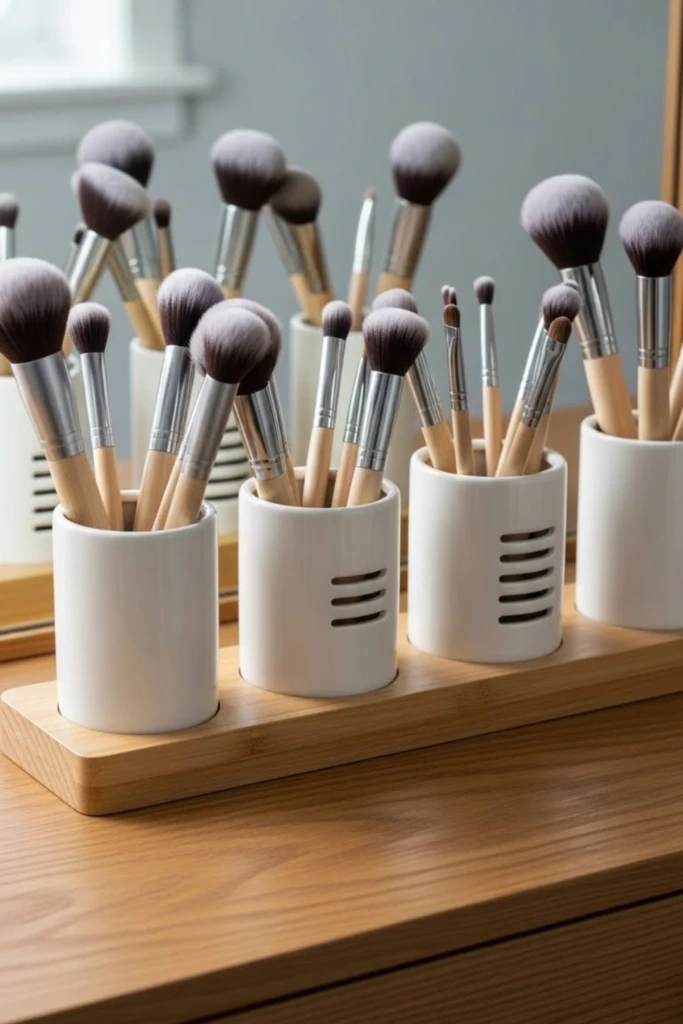
Clean makeup brushes should have their own storage area, separate from brushes waiting to be washed. This makes it easier to maintain a consistent cleaning routine and reduces the chance of mixing used tools with clean ones.
After washing brushes, reshape the bristles and allow them to dry completely before storing them. A ventilated holder is useful for dry brushes, while a clean, protected drawer can keep them away from dust.
Clean brushes and sponges according to their use and the manufacturer's care guidance. Regular maintenance helps remove accumulated makeup and oils while keeping your tools in better condition.
20. Seasonal Rotation Box
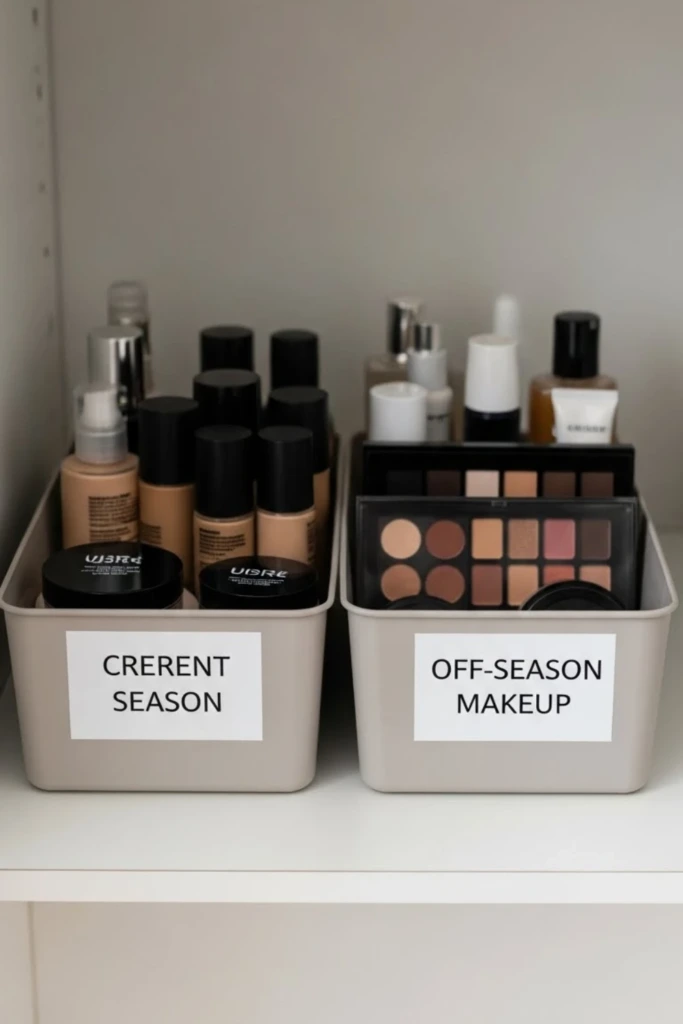
Some makeup products are used mainly during particular seasons, holidays, or special occasions. Storing these items separately prevents them from crowding the products you reach for every day.
Use a small, labeled container for occasional-use shades, themed palettes, or other products you plan to bring back into rotation. Keep the container in a cool, dry location that follows the storage requirements on the packaging.
Review your collection every few months and bring relevant products back into your everyday setup. Before rotating items in, check their condition and discard anything that has expired or changed in smell, texture, or appearance.
21. Labelled Category Bins
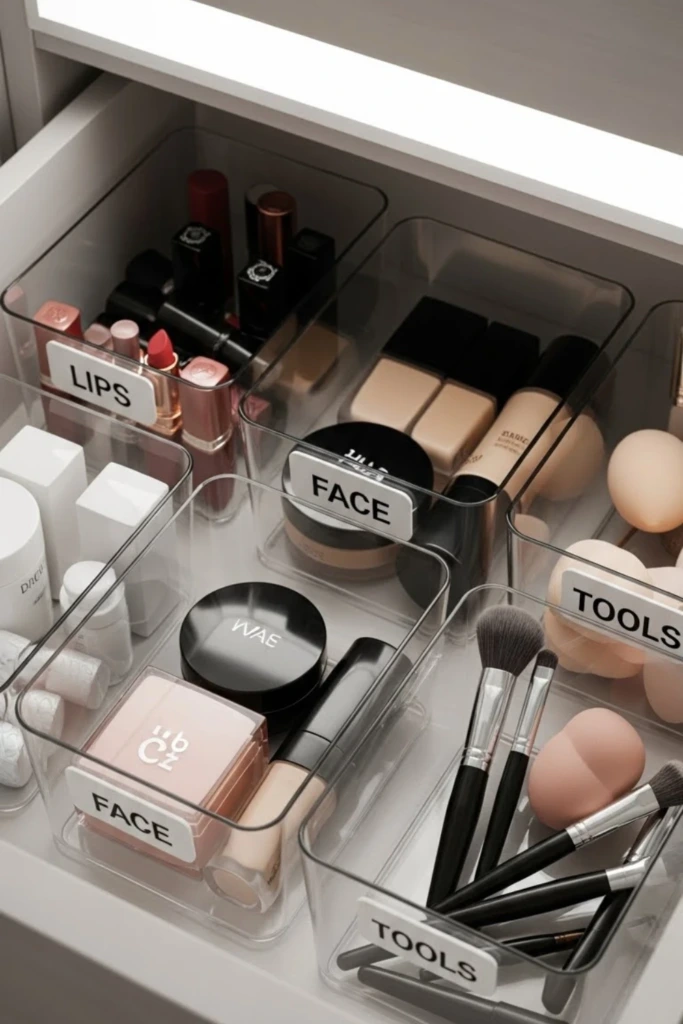
Labeled bins offer a simple solution for collections that are stored on shelves, inside cabinets, or in larger drawers. They make it clear where each type of product belongs, even when several categories share the same storage area.
Assign each container a specific purpose, such as face makeup, lip products, eye cosmetics, brushes, or backups. Use short labels that are easy to read, and choose bins that fit your shelves without leaving them difficult to access.
Transparent containers make identification even easier, but opaque bins can work well when labeled clearly. The most important part is returning products to the correct container after each use.
22. Rotation Tray System
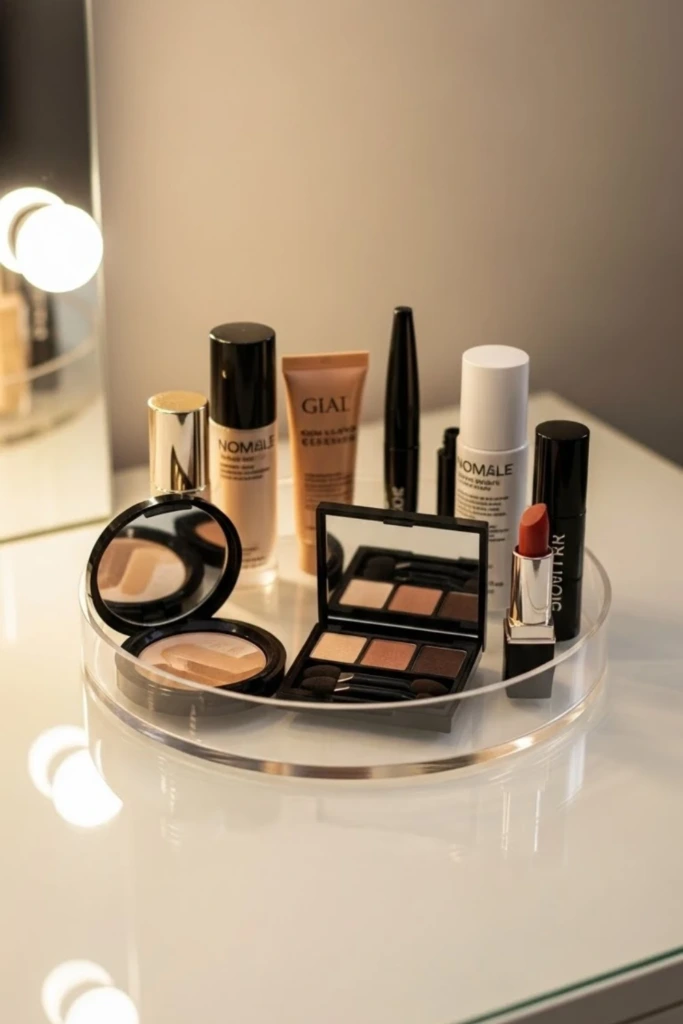
Keeping your entire collection on display can make a vanity feel crowded and encourage you to overlook products. A rotation tray offers a more focused alternative by giving your current favorites a dedicated place.
Choose a shallow tray and select a manageable group of products for the week. You might include your regular complexion essentials, a few lip colors, mascara, and the tools you use most frequently.
At the end of the week, review the selection and swap items according to your plans or preferences. Return unused products to their proper storage locations, and clean the tray periodically to keep the station fresh and tidy.
Is it better to store makeup in drawers or containers?
Both options can work well, depending on your collection and available space. Drawers are useful for keeping products out of sight and limiting dust exposure, while open containers provide convenient access to everyday essentials.
If you have a small vanity, a combination of the two may be the most practical approach. Use drawers for backups, palettes, and less frequently used items, then reserve a countertop organizer for the products you use every morning.
Whatever storage method you choose, keep cosmetics away from excessive heat, direct sunlight, and unnecessary moisture. Make sure containers are easy to clean and do not trap damp brushes or sponges.
What is the best way to set your makeup?
The best arrangement is one that matches your daily routine and makes products easy to locate. Begin by grouping cosmetics into categories, then position them in the order you typically apply them.
Keep frequently used items near your mirror, organize smaller products in divided trays, and move duplicates or occasional-use cosmetics to secondary storage. If you have limited space, focus on displaying only your current essentials.
A useful makeup setup does not need expensive organizers or a large dressing table. Consistent placement, regular cleaning, and occasional decluttering will help keep the system functional over time.