29 Baby Organization Ideas for 2026
Keeping baby essentials organized can feel like a never-ending task. Between tiny clothes, diapers, feeding supplies, toys, and bath products, even a spacious nursery can become cluttered surprisingly quickly.
The good news is that creating an organized baby space doesn't require expensive furniture or a complete nursery makeover. A few thoughtful storage solutions can make everyday routines easier while helping you use the space you already have.
Whether you're preparing for a newborn or trying to manage a growing collection of baby supplies, these 29 baby organization ideas will help you create a practical, comfortable, and clutter-free environment.
What’s the Smartest Way to Organize a Baby Changing Station?
An efficient baby changing station starts with keeping frequently used supplies close to where you need them.
Arrange diapers, wipes, diaper cream, and clean clothing in separate containers or compartments. Store everyday essentials within an adult's reach so you never have to leave your baby unattended on the changing surface.
Keep additional supplies in nearby drawers, and place a diaper disposal bin beside the station for convenient cleanup.
Choose washable organizers that are easy to maintain. Most importantly, keep the changing surface itself clear of unnecessary objects.
A simple arrangement based on your daily routine will usually work better than an elaborate storage system.
1. Double Rods
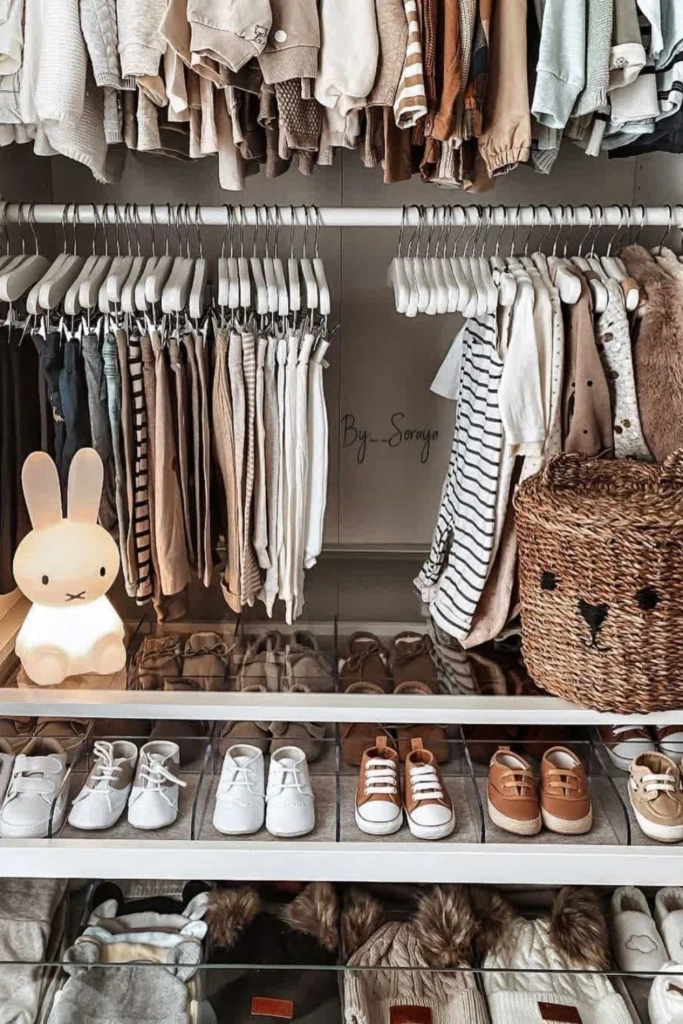
Baby clothes are much shorter than adult clothing, which means traditional closets often waste valuable vertical space.
Installing a second hanging rod creates two practical storage levels without requiring additional furniture.
Use the lower rod for everyday onesies, rompers, and frequently worn outfits. Reserve the upper rod for jackets, seasonal clothing, or items your baby will grow into.
You can also arrange clothes by size to make wardrobe changes easier as your little one grows.
Slim hangers help maximize hanging space, while closet dividers make it simple to identify different clothing categories.
This arrangement is especially useful for small nurseries with limited storage.
2. Drawer Zones
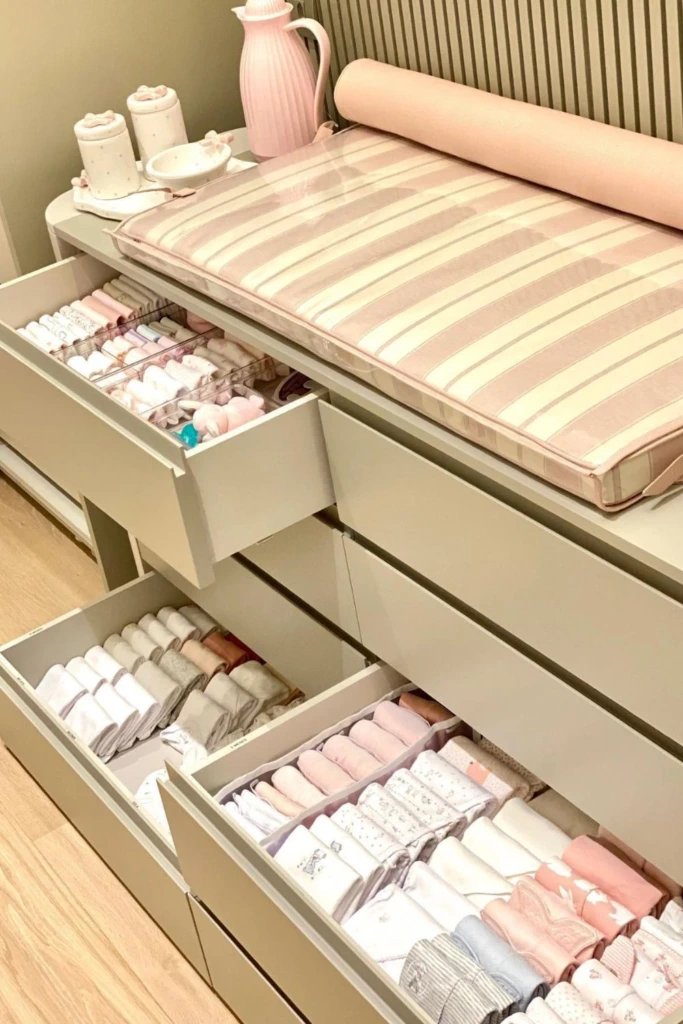
Baby dresser drawers can become disorganized when socks, pajamas, bibs, and clothing are stored together without separation.
Creating designated drawer zones gives each category a consistent place.
Use adjustable dividers or small fabric organizers to separate onesies, leggings, sleepwear, and accessories.
For example, dedicate one section to everyday outfits and another to bedtime clothing. Keep socks and mittens in smaller compartments so they don't disappear beneath larger items.
Arrange frequently used clothing in the easiest-to-reach drawers.
This simple organization method also makes putting away clean laundry much faster.
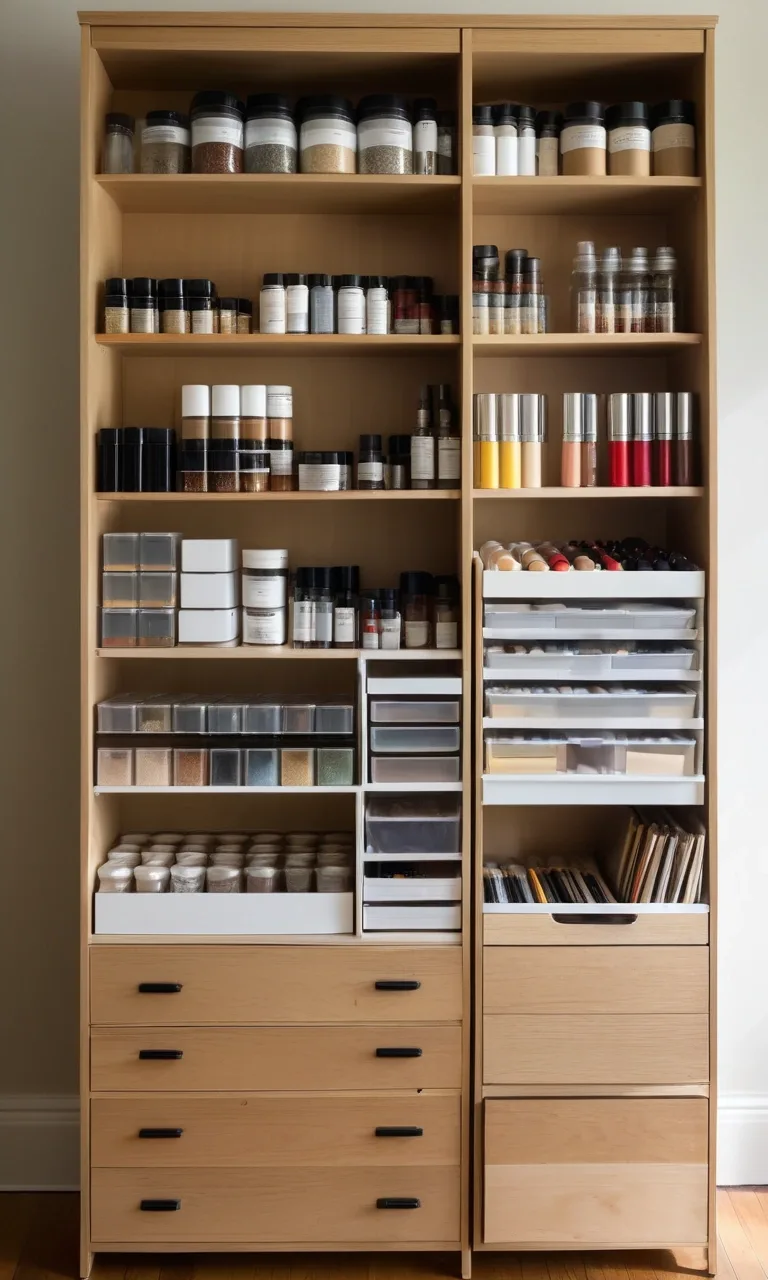
3. Clear Trays
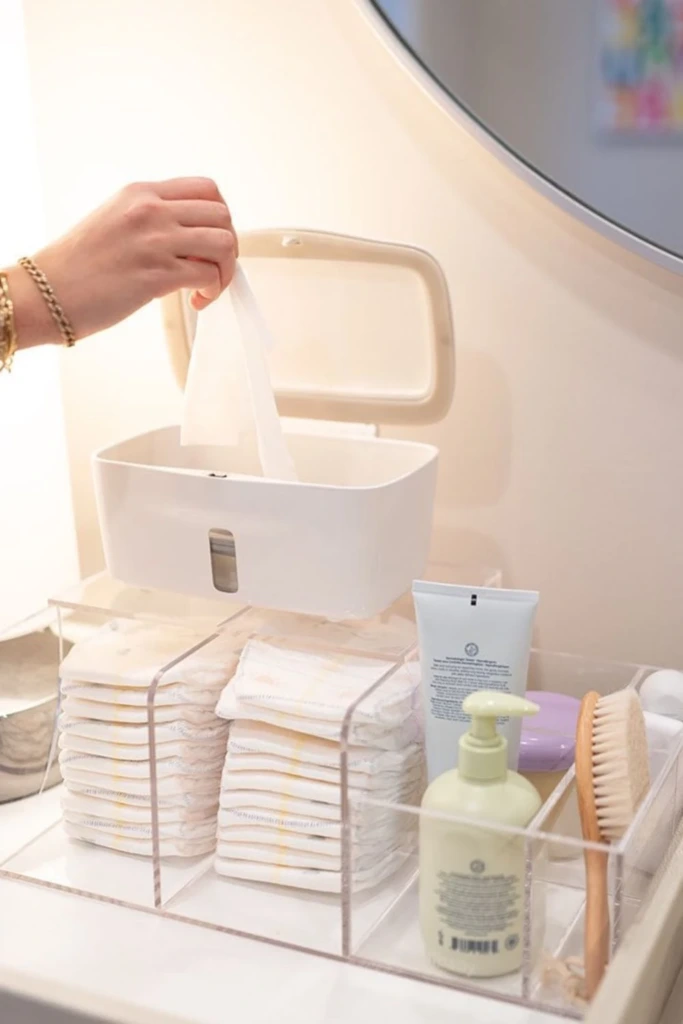
Transparent trays are a practical solution for organizing baby care products on dressers, shelves, and changing stations.
Because their contents remain visible, you can quickly identify supplies without opening multiple containers.
Use separate trays for diapers, wipes, lotions, and grooming accessories.
Choose shallow trays for smaller products and slightly deeper containers for bulkier essentials.
Washable plastic or acrylic options are particularly convenient for areas where spills are common.
Avoid overcrowding each tray. Leaving enough space between products makes everything easier to remove and return.
Keep creams and other potentially harmful products secured away from your baby's reach.
4. Micro Sections
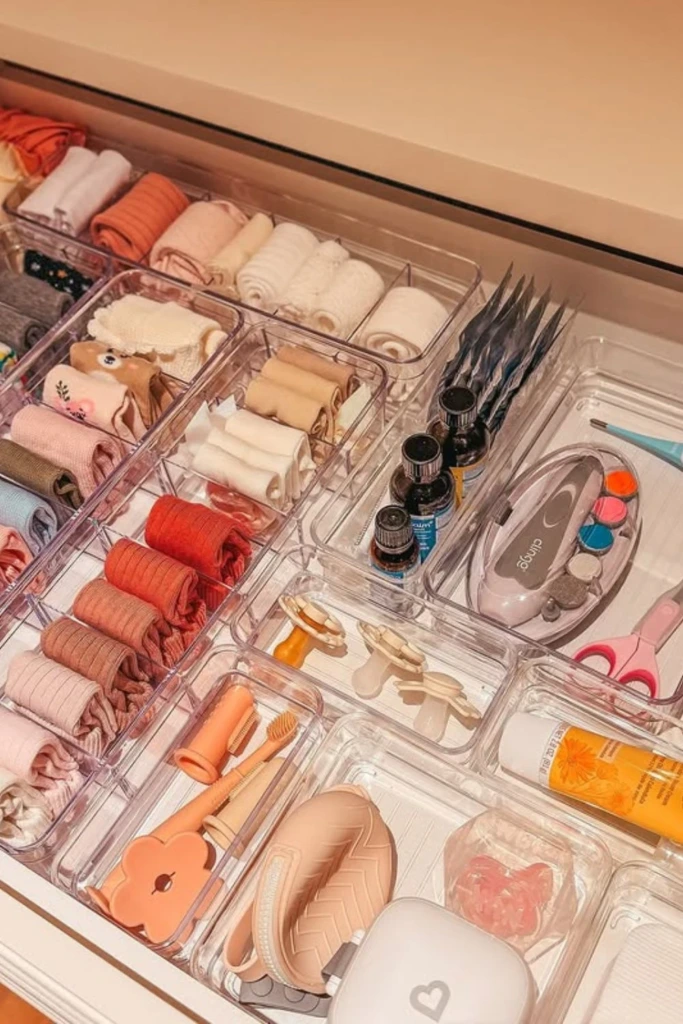
Tiny baby accessories can be surprisingly difficult to organize because they easily become mixed together.
Small compartment organizers provide an effective way to separate these items.
Use individual sections for socks, soft hair accessories, mittens, bibs, and other small clothing pieces.
For grooming supplies, create a separate adult-accessible compartment for nail clippers, thermometers, and similar tools.
You can also use removable dividers that adjust as your storage needs change.
The advantage of smaller sections is that every item has a defined location, reducing the need to search through an entire drawer.
5. Vertical Folds
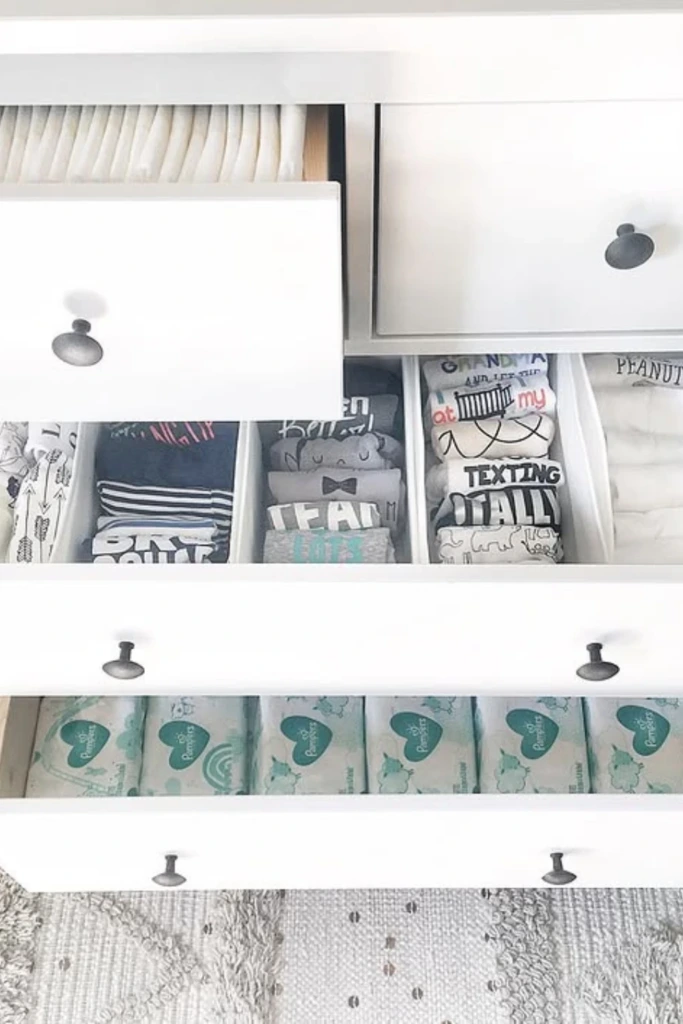
Traditional clothing stacks often become messy when you remove something from the bottom.
Vertical folding offers a more convenient alternative for baby clothing.
Fold onesies, pajamas, pants, and shirts into compact rectangles, then position them upright inside dresser drawers.
This allows you to see several outfits at once without disturbing the rest of the drawer.
Use dividers to prevent folded clothing from falling sideways.
You can arrange pieces by clothing type, size, or frequency of use.
Vertical folding is particularly helpful for newborn wardrobes because so many small garments can fit into a single drawer.
6. Closet Zones
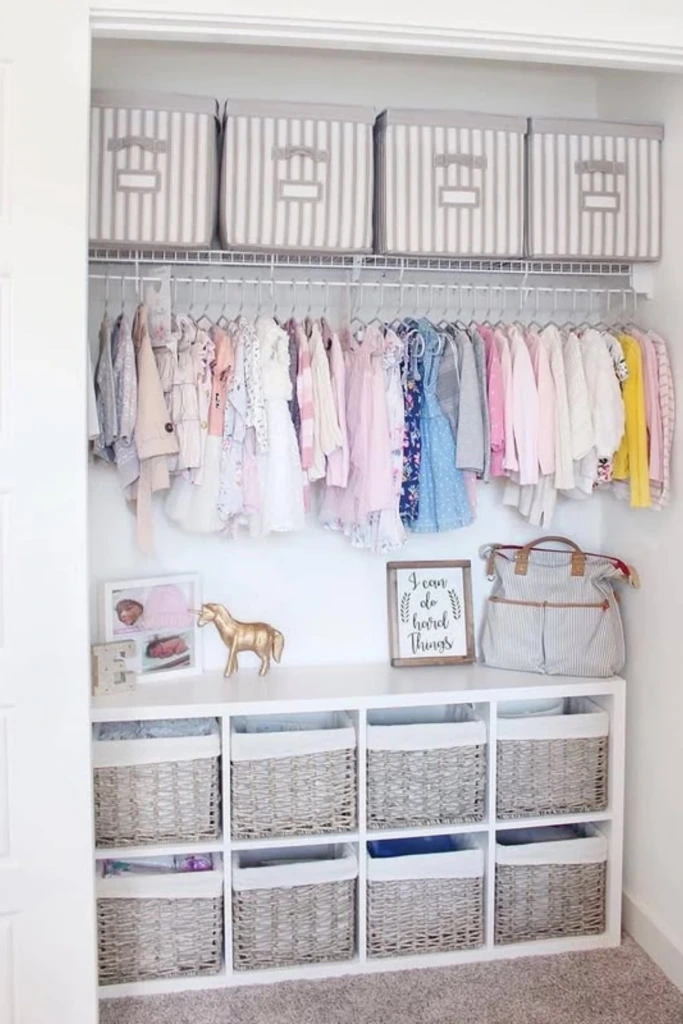
A well-organized baby closet should make it easy to distinguish current clothing from items intended for future use.
Divide the closet into clearly defined sections based on clothing type and size.
Keep everyday outfits in the most accessible area. Place special-occasion clothing and seasonal garments farther to the side.
Use upper shelves for labeled storage bins containing extra blankets, larger clothing sizes, or out-of-season items.
Small baskets can hold shoes, hats, and accessories that don't need hangers.
Review these zones regularly because babies outgrow clothing quickly.
An organized closet makes it easier to recognize what your baby already owns before purchasing additional outfits.
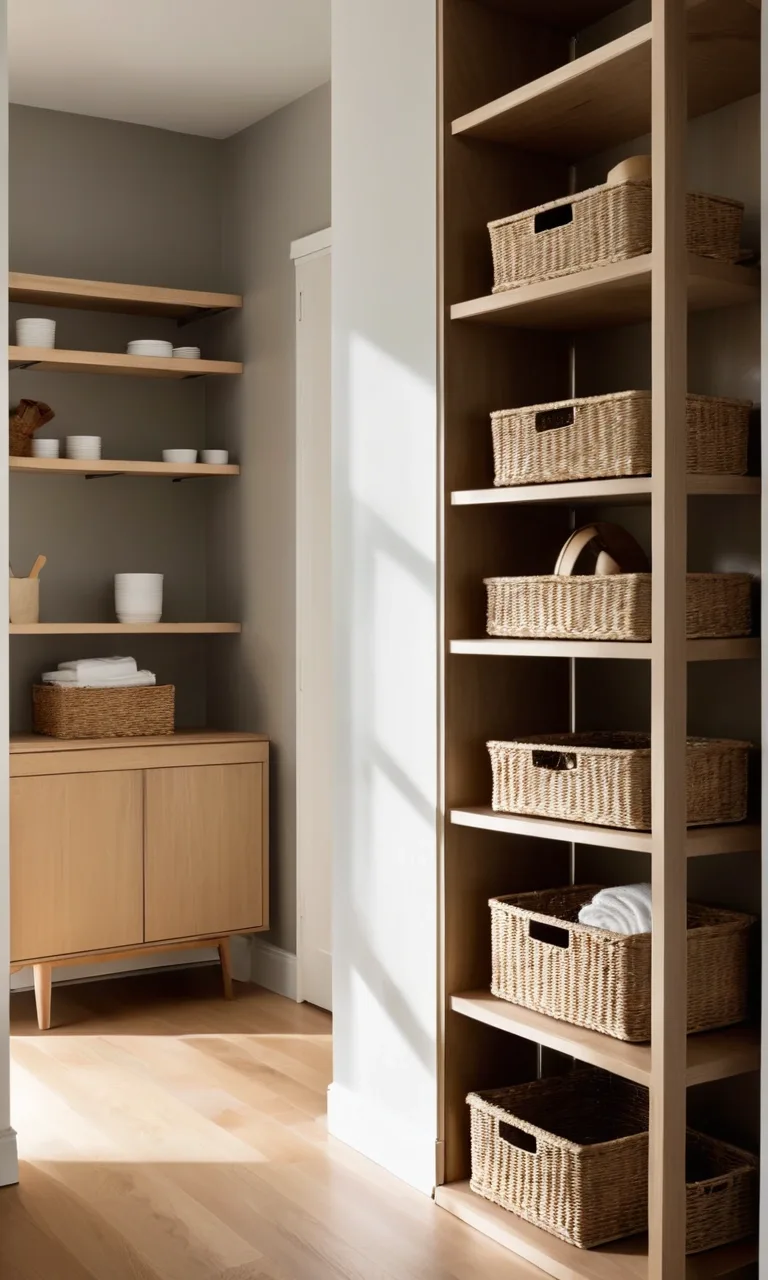
7. Grab Baskets
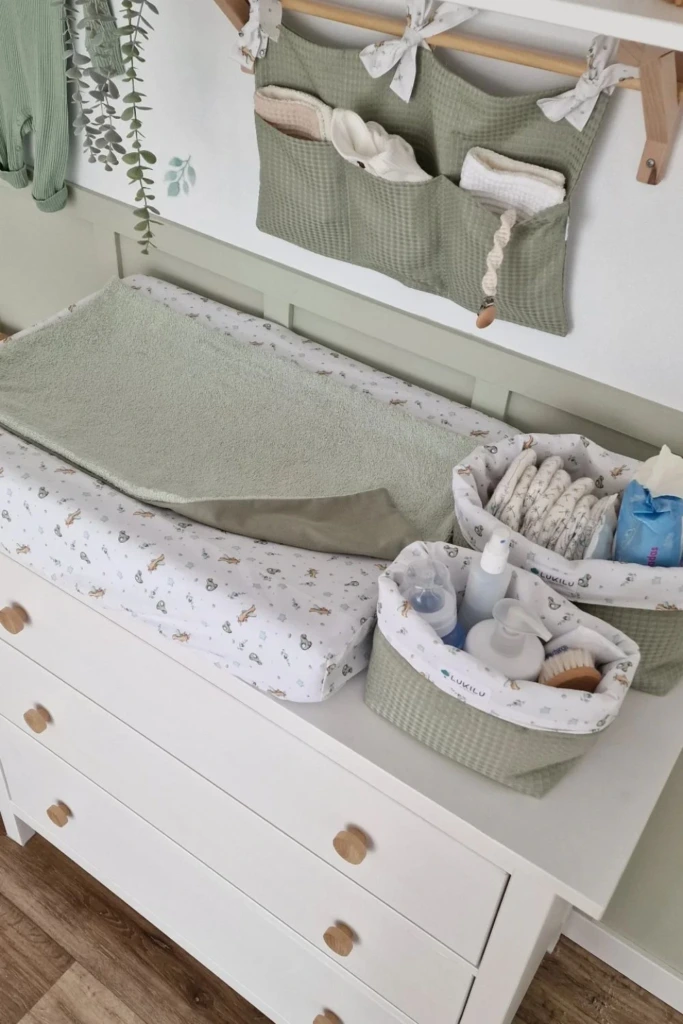
Open storage baskets are ideal for supplies you reach for repeatedly throughout the day.
Instead of scattering products across the nursery, group related items into lightweight baskets.
One basket might contain diapers and wipes, while another holds clean burp cloths and spare clothing.
Choose containers with smooth edges and comfortable handles if you plan to move them between rooms.
Fabric baskets are especially useful inside drawers and cabinets because they are lightweight and flexible.
Position everyday baskets where adults can reach them easily without placing loose supplies inside the crib or other sleep spaces.
8. Basket Sorting
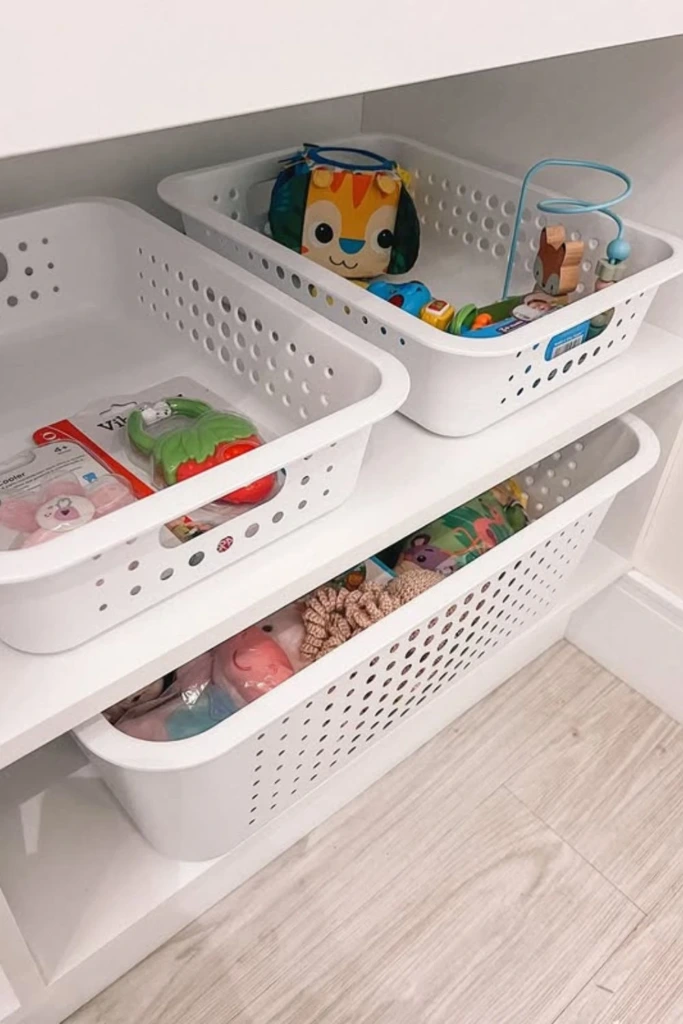
Baby toys can quickly spread across the living room, bedroom, and nursery.
Sorting them into separate baskets makes cleanup easier and helps prevent smaller toys from getting lost.
Create simple categories such as soft toys, rattles, teething toys, and age-appropriate activity items.
Choose lightweight baskets that are easy to lift and clean.
For older babies who are beginning to explore independently, low storage shelves can make supervised playtime more accessible.
You can also rotate a selection of toys every few weeks, keeping the remaining items in storage.
Toy rotation reduces visible clutter and allows children to rediscover toys they haven't used recently.
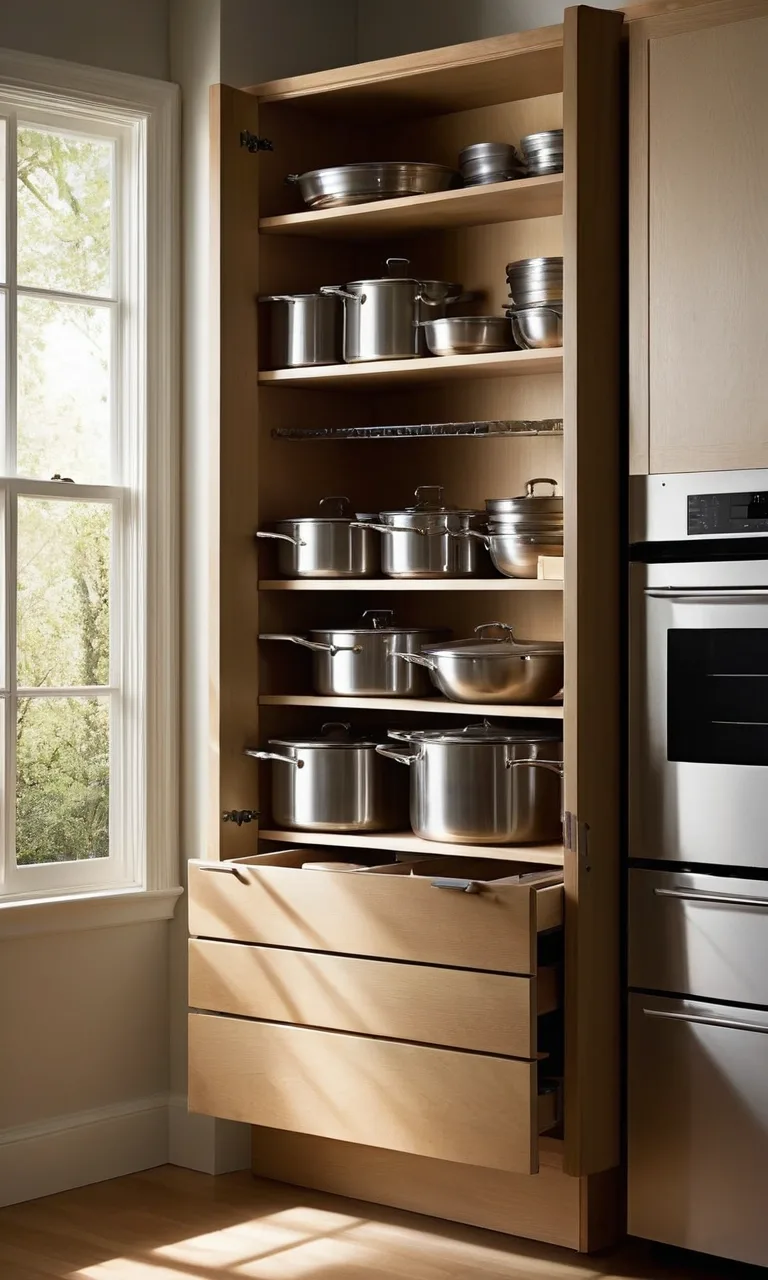
9. Bottle Drawer
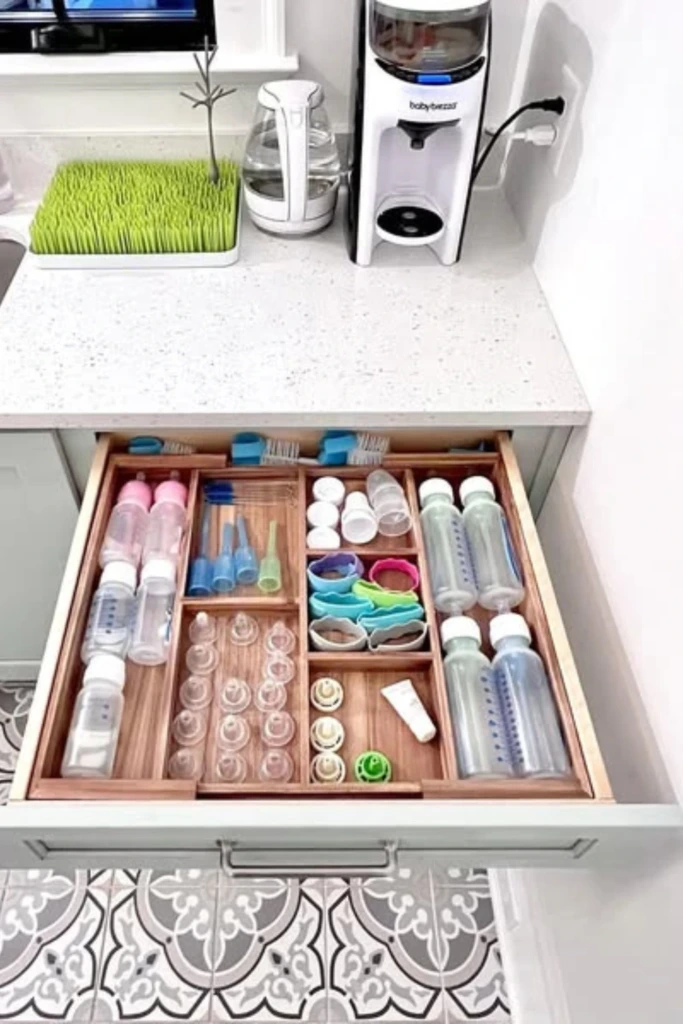
Baby bottles come with several small components that can easily become separated.
A dedicated kitchen drawer provides a convenient storage location for clean, completely dry bottles and their accessories.
Use drawer organizers to separate bottle bodies, nipples, collars, and protective caps.
Choose dividers that fit the drawer properly so items don't slide around when it opens.
Keep the drawer close to your bottle preparation area to simplify feeding routines.
Before storing bottles, follow the manufacturer's cleaning and sanitizing instructions and allow all parts to dry thoroughly.
Avoid closing damp components inside airtight containers, where trapped moisture can encourage microbial growth.
10. Display Shelves
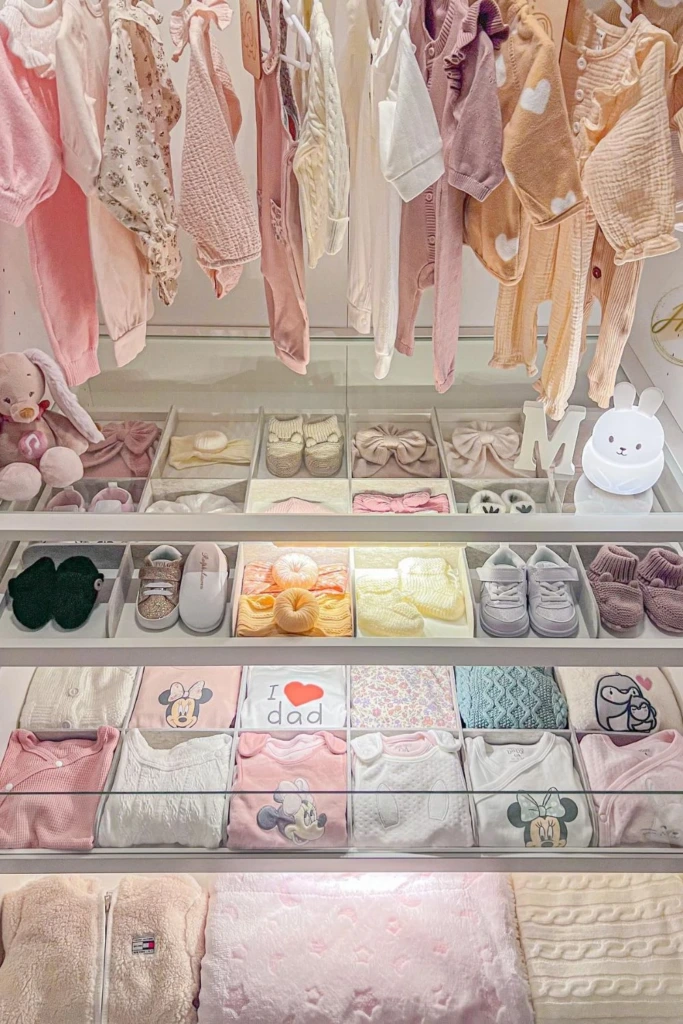
Open shelves can make baby clothing easier to find while adding useful storage to the nursery.
Install sturdy shelving inside a closet or use a compact shelving unit for folded outfits and accessories.
Arrange clothing in small, manageable groups rather than creating tall stacks.
Decorative baskets can conceal items that don't look tidy when displayed individually.
Keep frequently used supplies at a comfortable height for adults.
For safety, securely anchor shelving units and keep heavy or breakable objects away from areas your baby can reach.
Avoid installing shelves above a crib or changing surface where falling items could cause injury.
11. Meal Drawer
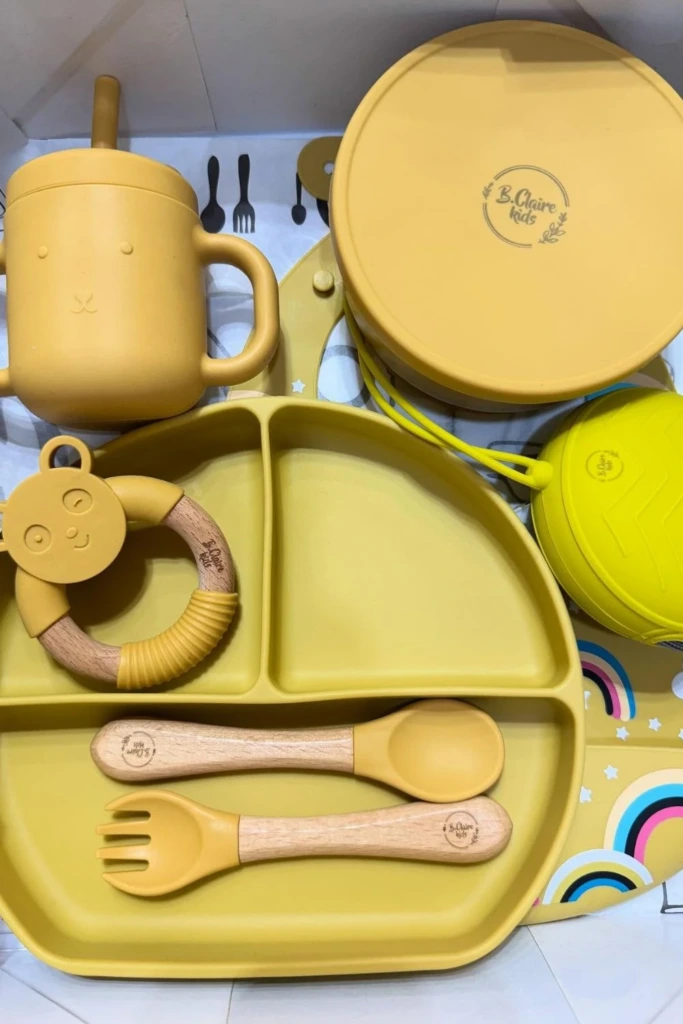
Once your baby begins eating solid foods, feeding accessories can quickly occupy a surprising amount of kitchen space.
Dedicate one drawer to baby plates, bowls, spoons, cups, and reusable food containers.
Use small organizers to keep utensils separate from larger dishes.
Stack compatible bowls and plates to save room, and store matching container lids together.
Choose a drawer near the high chair or food preparation area to make mealtimes more convenient.
Only store clean, completely dry feeding accessories.
As your baby becomes more independent, you can gradually adjust the arrangement to accommodate toddler-friendly dishes and utensils.
12. Rolling Cart
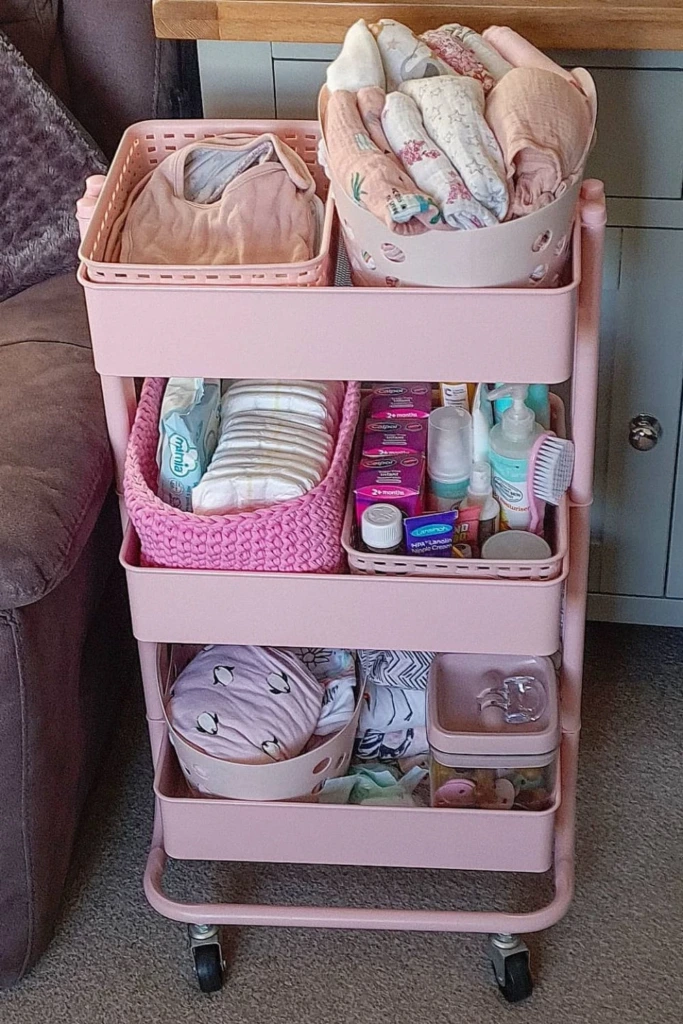
A rolling storage cart can serve as a flexible organization station for homes where baby care happens in several rooms.
Choose a sturdy cart with raised shelf edges and locking wheels.
Use the upper level for supplies you need most often, such as diapers, wipes, and burp cloths.
The middle shelf can hold spare outfits and changing essentials, while the bottom shelf stores additional supplies.
Small bins help prevent items from shifting when the cart moves.
Always lock the wheels when the cart is stationary, and keep it away from your baby's sleep space.
A mobile cart is particularly useful in smaller homes where a separate changing table isn't practical.
13. Crib Organizer
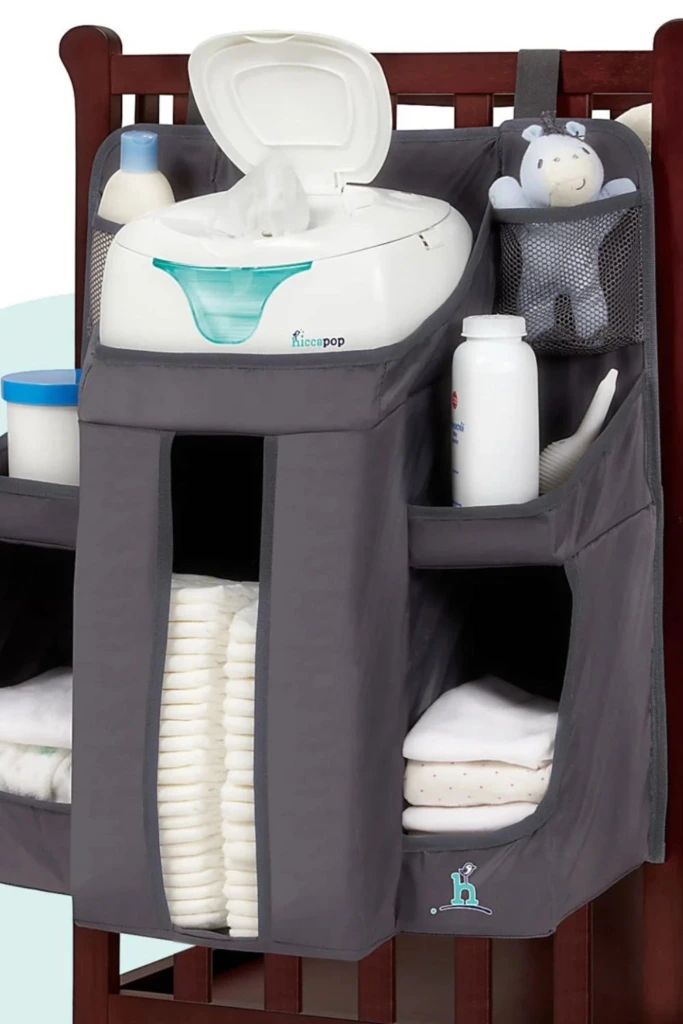
Keeping nighttime essentials organized can make evening routines easier, but crib safety should always come first.
Rather than attaching a pocket organizer to the crib, choose a wall-mounted organizer or bedside storage unit positioned outside your baby's reach.
Use the compartments for diapers, wipes, clean sleepwear, and other supplies needed during nighttime care.
A narrow storage unit can fit beside a dresser or changing station without taking up much floor space.
Keep the crib free from hanging organizers, loose accessories, pillows, and other objects that could create suffocation or entanglement hazards.
A clear, uncluttered sleep space is more important than having supplies attached directly to the crib.
14. Wall Rails
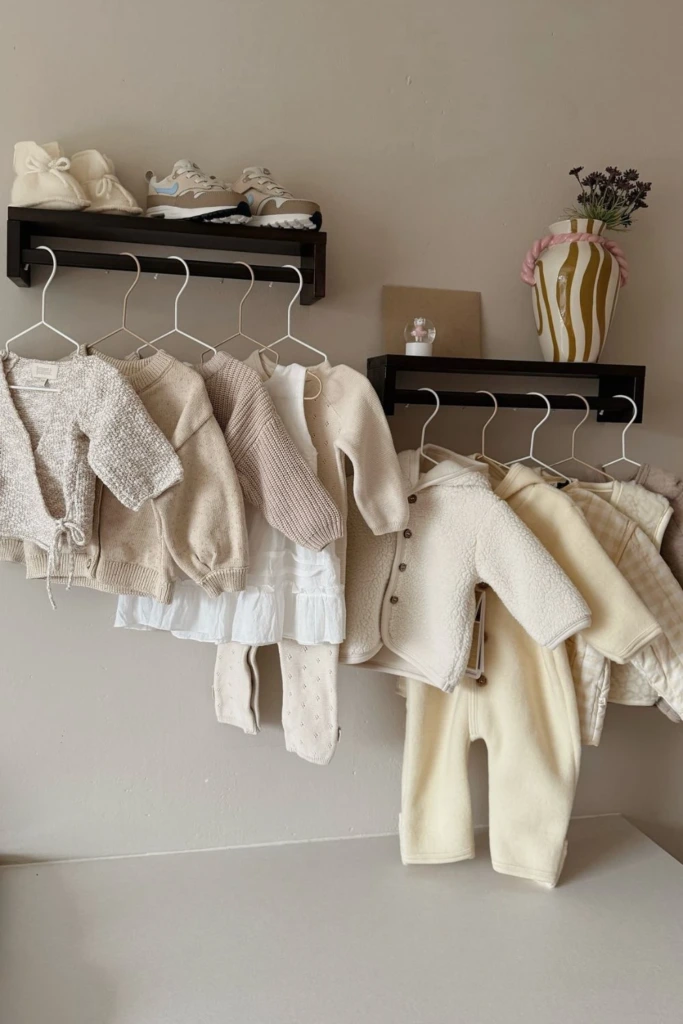
Wall-mounted clothing rails offer an attractive storage solution when nursery closet space is limited.
Install a sturdy rail on an appropriate wall to display frequently worn outfits.
Small hangers work well for rompers, jackets, dresses, and matching clothing sets.
You can add a shelf above the rail for lightweight storage baskets, provided everything is securely mounted.
Consider using separate rails for different clothing sizes or seasons.
Position rails away from the crib and other areas where your baby might pull on hanging garments.
This idea works especially well in compact nurseries where a full-size wardrobe would occupy too much floor space.
15. Bottle Station
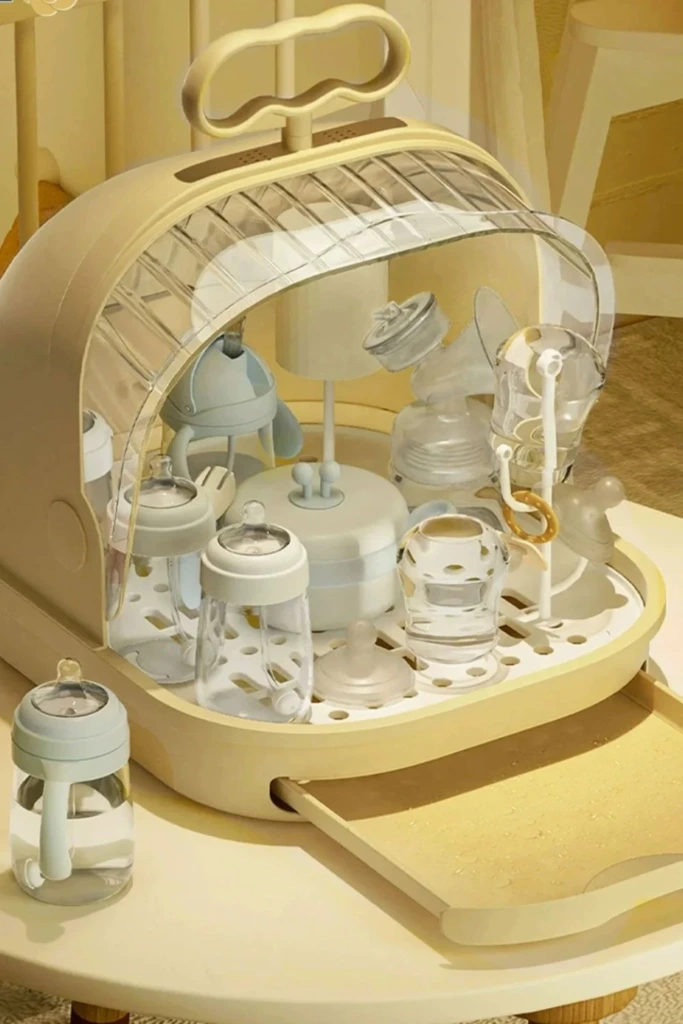
A designated bottle-cleaning area can help keep kitchen counters more organized.
Choose a washable drying rack with enough room for bottles, nipples, collars, and other removable parts.
Position it on a clean surface away from food scraps and dirty dishes.
Use a separate basin or designated cleaning area when recommended for your baby's feeding equipment.
After washing and sanitizing as appropriate, allow components to air-dry completely before storing them.
Avoid drying the inside of bottles with a used kitchen towel, which may introduce germs.
A consistent cleaning and drying station makes it easier to maintain an orderly feeding routine.
16. Outfit Prep
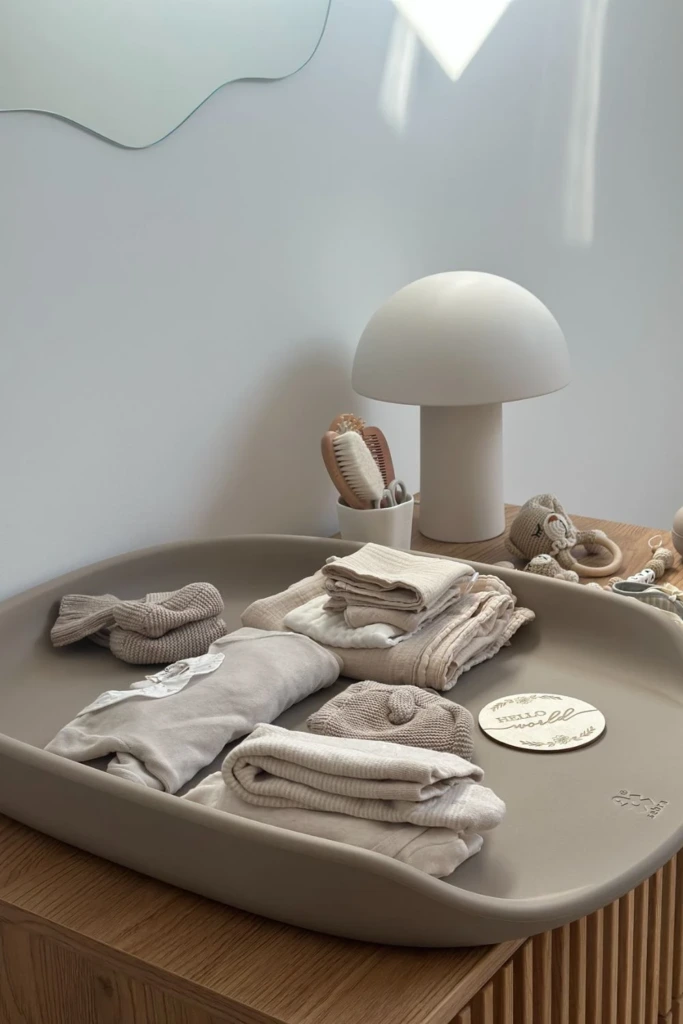
Preparing baby outfits ahead of time can simplify mornings, particularly when you have appointments or daycare drop-offs.
Choose a small basket or drawer section for clothing your baby will wear the following day.
Include a onesie, bottoms, socks, and any additional layers appropriate for the weather.
You can also prepare several outfits at once using separate labeled compartments.
For busy households, organizing clothing by day can reduce last-minute decisions.
Keep an extra outfit nearby for unexpected spills or diaper leaks.
This small habit makes daily dressing routines more predictable and helps prevent clothing from being scattered around the nursery.
17. Clear Stacks
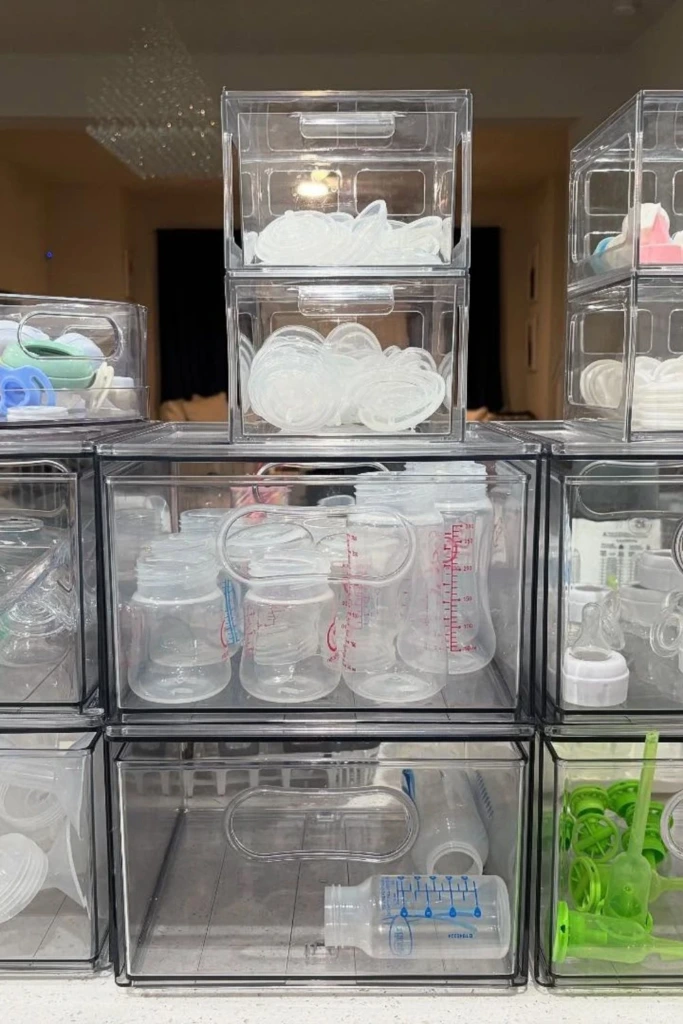
Stackable transparent containers are useful for storing small baby supplies without occupying an entire cabinet.
Choose containers with drawers or removable lids so you can access lower sections without dismantling the stack.
Use individual compartments for bottle accessories, pacifier cases, feeding supplies, or clean breast pump components.
Label each container to make returning items easier.
Avoid stacking heavy containers too high, and ensure storage units cannot tip over.
For feeding equipment, make sure all components are thoroughly dry before placing them into enclosed storage.
Clear containers work particularly well in cabinets because they let you check supplies without opening every box.
18. Bag Kits
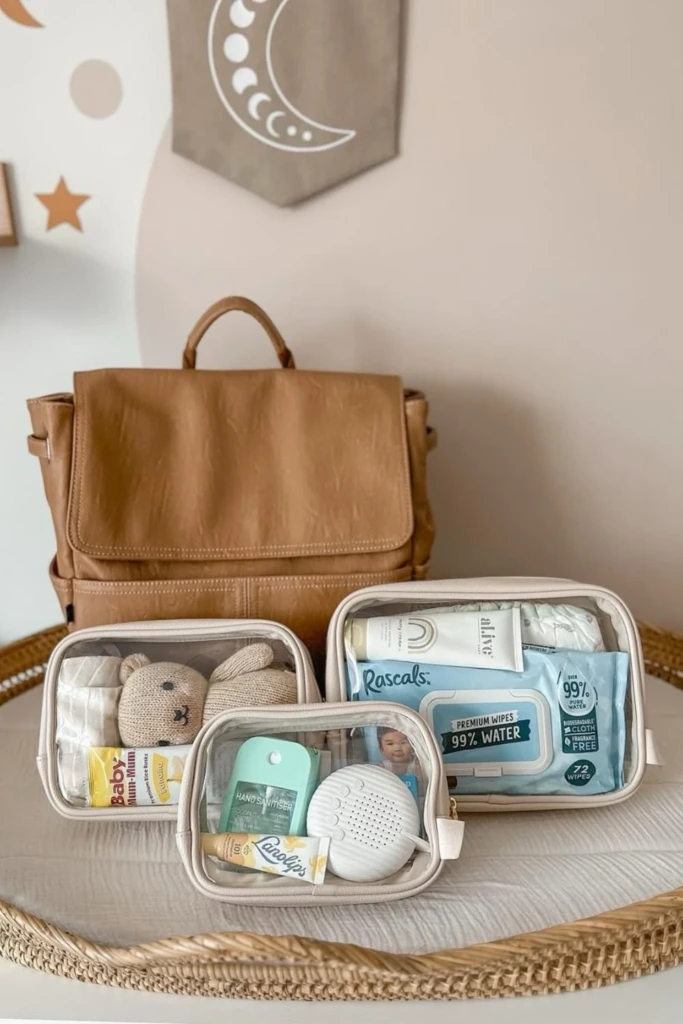
A diaper bag becomes much easier to manage when essentials are organized into separate pouches.
Create a changing kit containing diapers, wipes, a portable changing mat, and spare clothes.
Use another pouch for feeding accessories, and a third for small toys or comfort items.
Water-resistant bags are helpful for storing soiled clothing until you return home.
Mesh or transparent pouches make it easier to identify contents.
Keep medications, sanitizer, and other potentially harmful products securely stored away from children.
Check your diaper bag after each outing and replace anything you've used.
This prevents the frustration of discovering missing supplies when you're already away from home.
19. Bib Rack
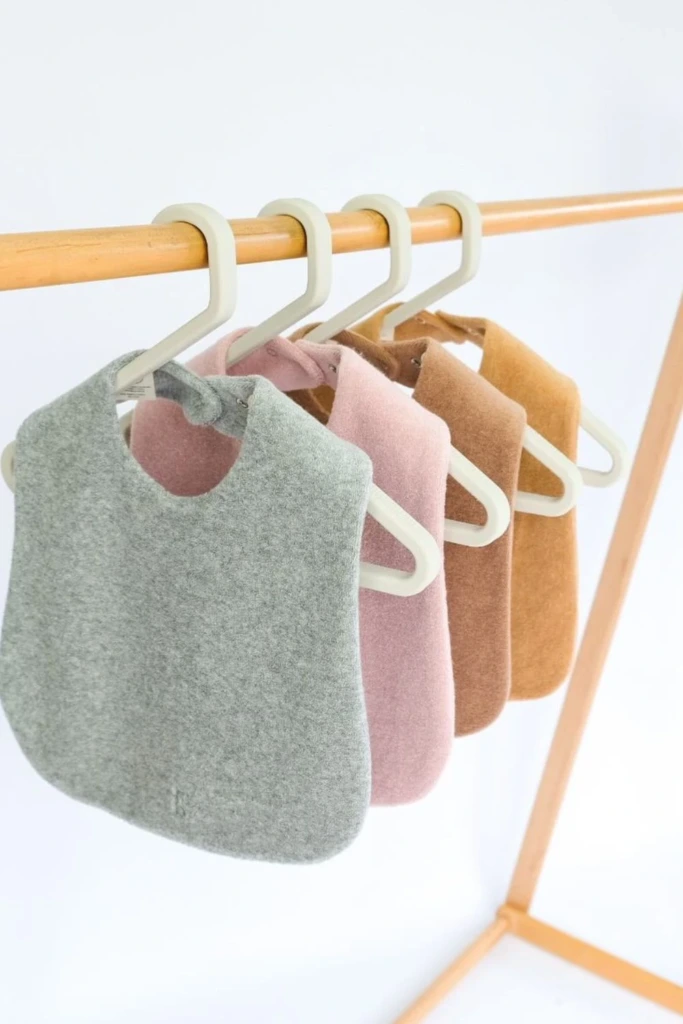
Bibs are used frequently, yet they often end up buried in kitchen drawers or laundry baskets.
A dedicated rack or set of hooks provides a convenient place to organize clean bibs.
Install the rack near your feeding supplies, but outside your baby's reach.
Separate everyday feeding bibs from decorative or special-occasion styles.
Wash used bibs promptly, and allow reusable waterproof bibs to dry according to their care instructions.
Avoid storing damp fabric bibs in tightly packed containers.
A small hanging organizer can also work well inside a kitchen cabinet door.
This approach keeps feeding accessories accessible without cluttering your countertops.
20. Corner Closet
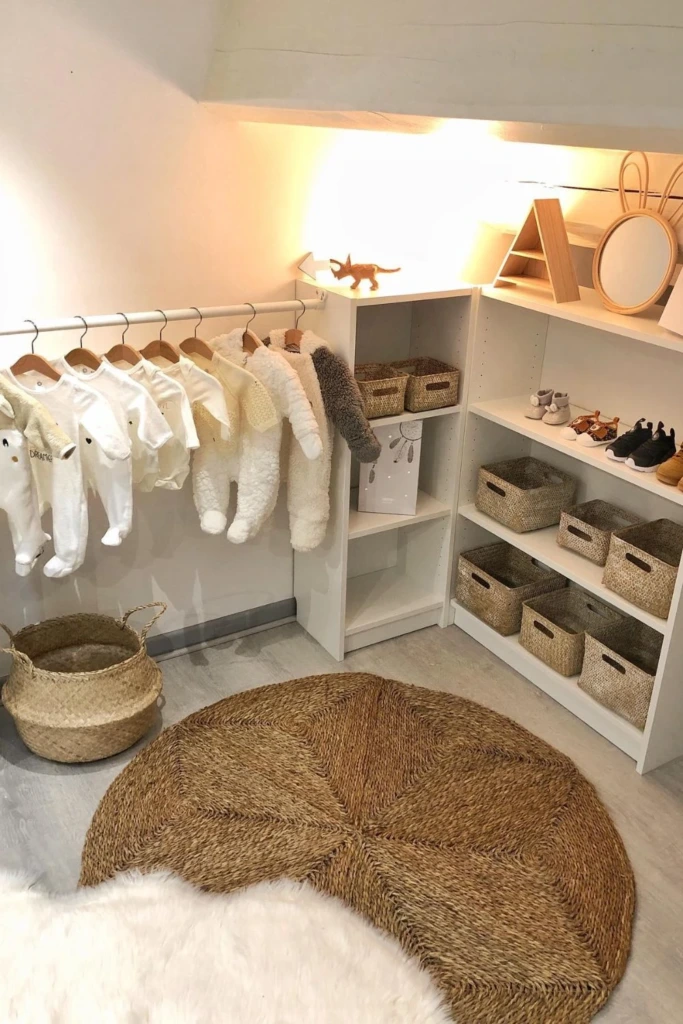
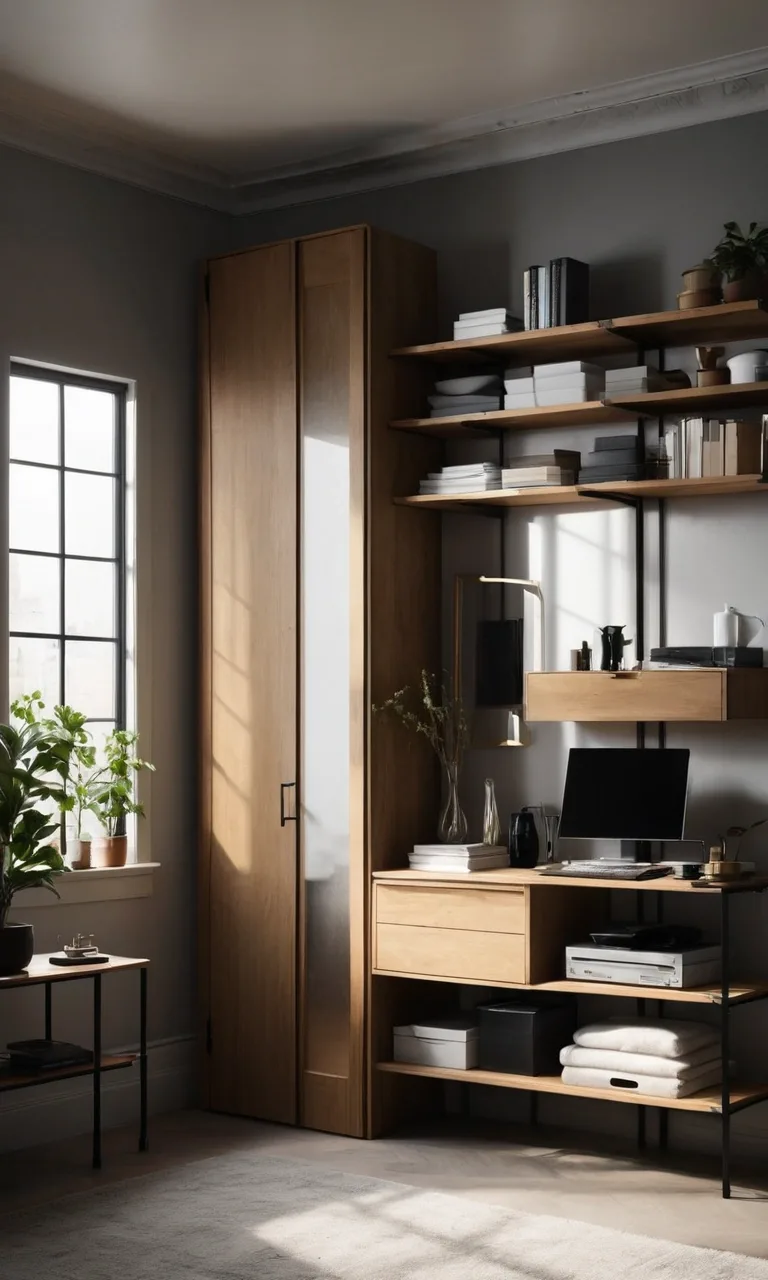
An unused nursery corner can become a functional clothing storage area with a little planning.
A narrow wardrobe, corner shelving unit, or wall-mounted rail can provide additional storage without dominating the room.
Use the hanging area for everyday outfits and nearby baskets for folded clothing.
Lower shelves can accommodate shoes and accessories, while higher compartments hold items used less frequently.
Choose furniture that fits the available space rather than forcing a large unit into a small corner.
Anchor freestanding furniture securely to prevent tipping.
Corner storage is particularly helpful in apartments or bedrooms where a traditional closet is unavailable.
21. Pacifier Case
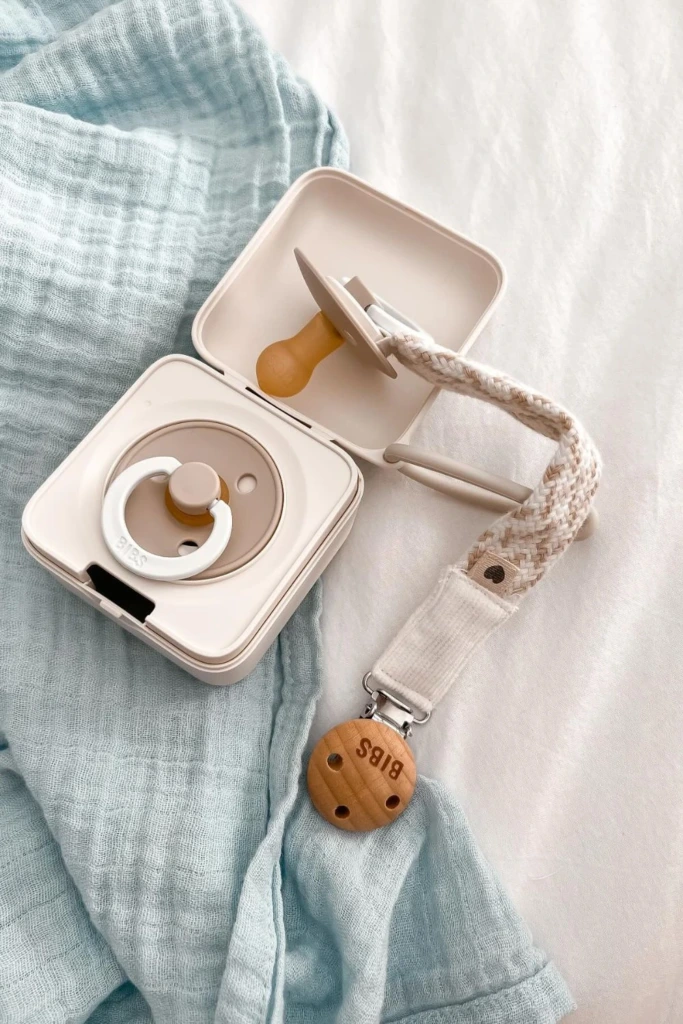
Pacifiers can easily collect dirt when placed loosely inside diaper bags or stroller pockets.
A clean, protective case provides a designated place to store them between uses.
Choose a case that is easy to open, washable, and large enough to hold the pacifier without squeezing it.
Keep a spare clean pacifier in a separate container when traveling.
Clean and sanitize pacifiers according to age-appropriate guidance and manufacturer instructions.
If using a pacifier clip, follow its safety instructions and never attach it to a crib, blanket, or sleeping baby's clothing.
Never use long cords or homemade strings to secure pacifiers because they can create a strangulation hazard.
22. Bow Dividers
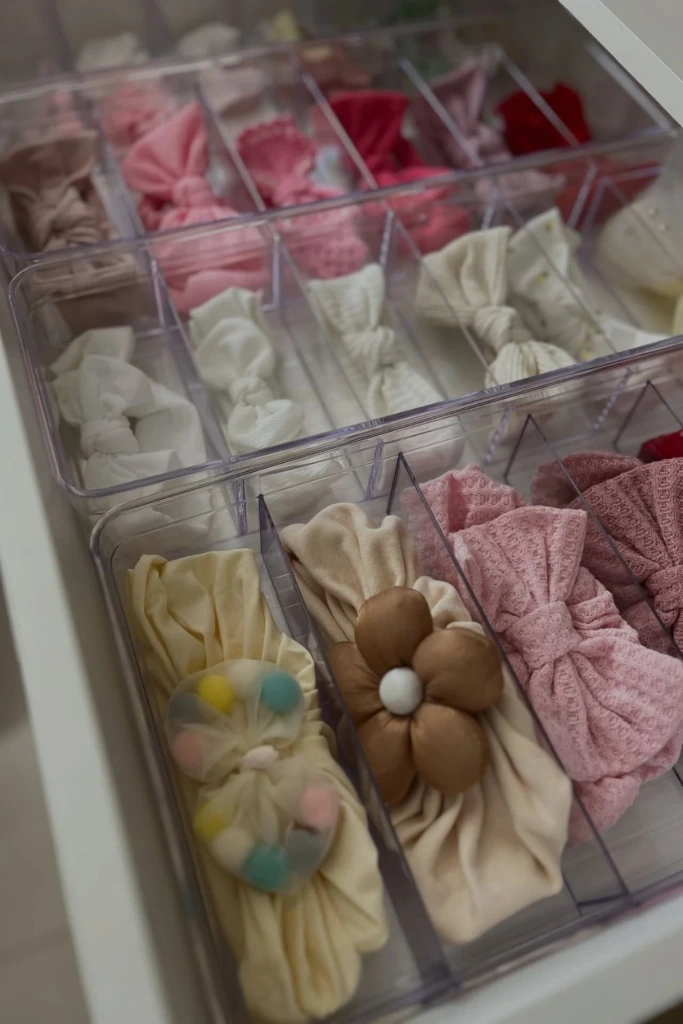
Baby bows, soft headbands, and hair clips are easy to misplace because of their small size.
Drawer dividers help keep these accessories neatly separated.
Arrange them by style, color, or size, depending on how frequently you use them.
Soft headbands can be loosely folded into individual compartments, while clips can be placed in small trays.
Transparent organizers make it easy to view the collection without searching.
Keep hair accessories out of your baby's reach, especially small clips that could become choking hazards.
Remove headbands and similar accessories before naps or nighttime sleep.
23. Feeding Cabinets
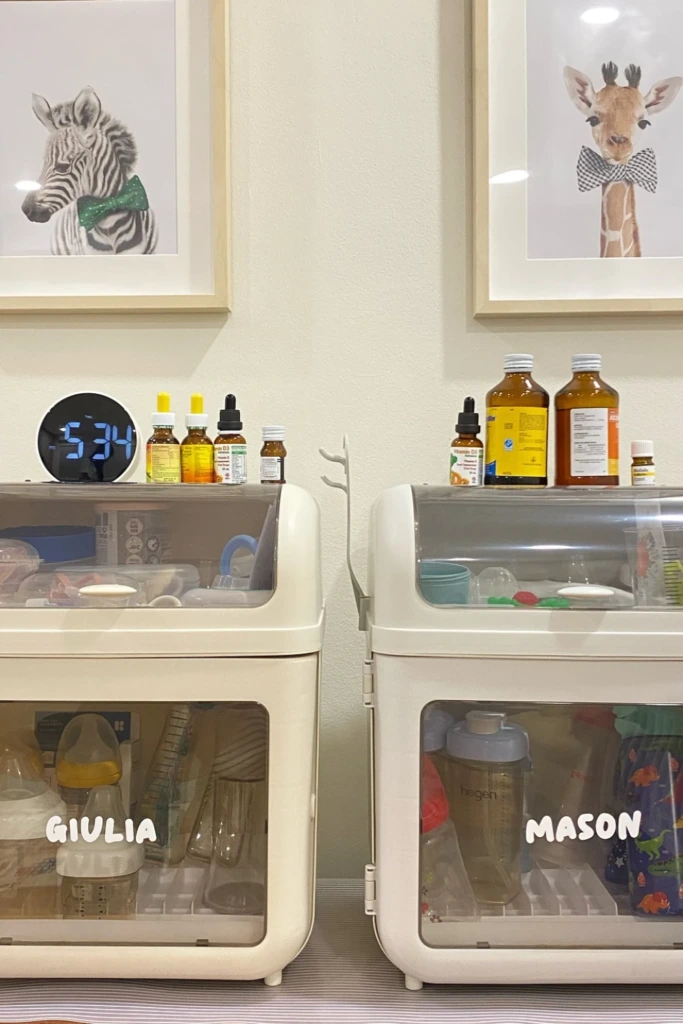
A dedicated feeding cabinet can keep baby bottles, cups, and preparation accessories separate from everyday kitchen items.
Choose a cabinet near the sink or food preparation counter for convenience.
Arrange frequently used bottles on an accessible shelf and store less frequently used accessories in labeled containers.
Keep clean feeding equipment separate from dirty dishes and cleaning products.
If the cabinet has doors, ensure bottles and components are fully dry before putting them away.
For households with multiple children, separate labeled containers can help prevent accessories from getting mixed up.
Keep medications and supplements in secure storage rather than leaving them accessible on the cabinet surface.
24. Cabinet Baskets
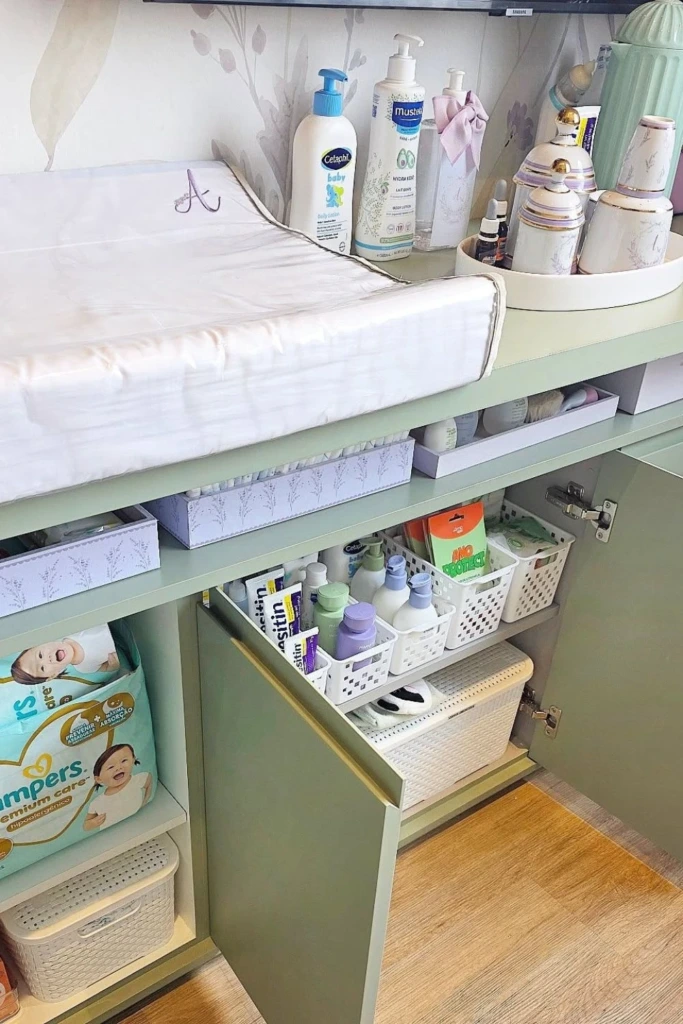
Deep cabinets can become difficult to manage when baby products are stacked without a clear system.
Pull-out baskets allow you to organize supplies by category and access items toward the back.
Use one basket for diaper refills, another for unopened wipes, and a separate container for clean towels or extra clothing.
Label baskets clearly so other caregivers can follow the same system.
Choose containers that slide smoothly and fit comfortably within the cabinet.
Avoid overfilling them, as crowded baskets make it harder to locate supplies.
Keep potentially hazardous products in locked or otherwise child-resistant storage.
25. Color Sections
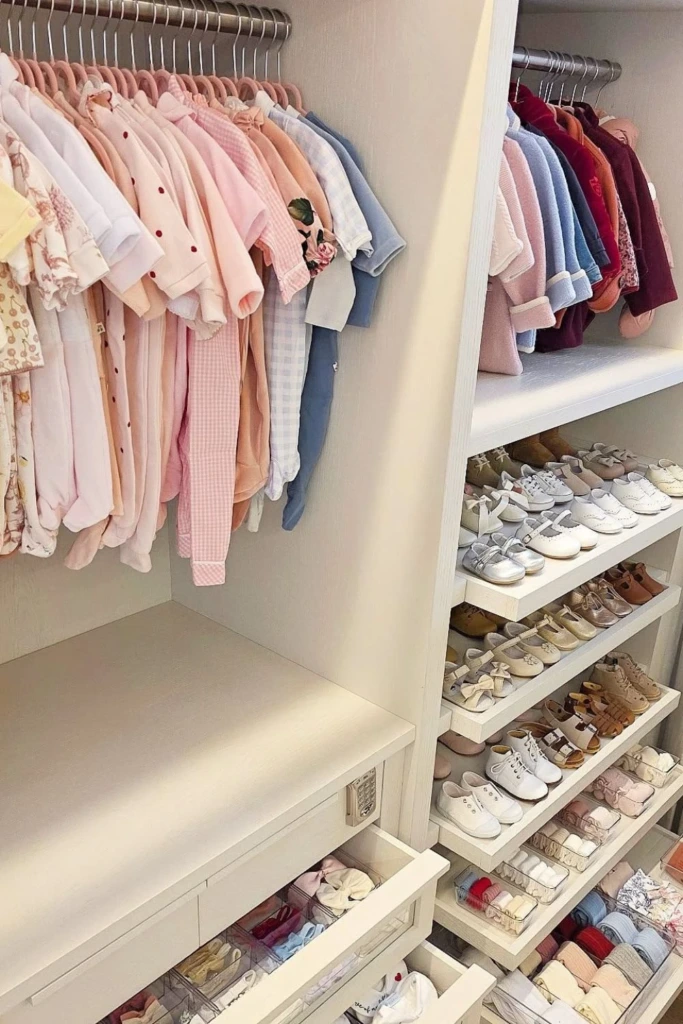
Organizing baby clothes by color can make a wardrobe easier to scan while creating a visually coordinated appearance.
Start by separating clothing according to size and type.
Within those groups, arrange similar shades together.
For example, place neutral-colored onesies in one section and brighter outfits in another.
This makes matching clothing easier, especially when preparing outfits for special occasions.
Use consistent hangers to keep the wardrobe looking orderly.
However, don't prioritize color over practicality. Clothes that fit your baby and are worn most often should remain the easiest to access.
26. Door Storage
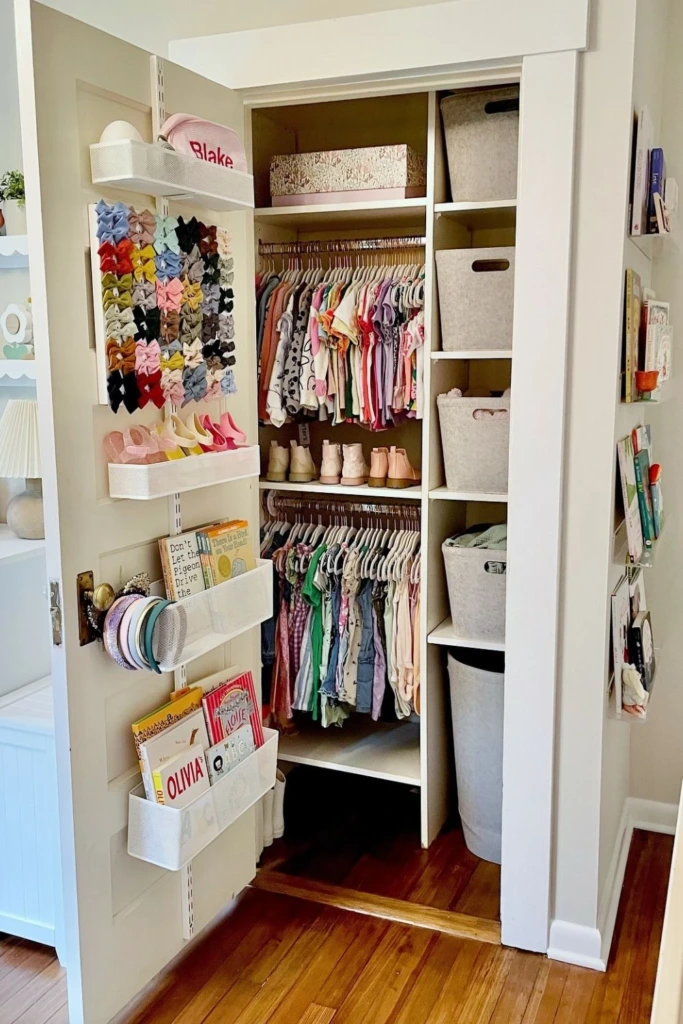
The back of a nursery closet door can provide useful storage without taking up additional floor space.
Install a lightweight over-the-door organizer for soft accessories, spare bibs, socks, or other small items.
Clear pockets are convenient because their contents remain visible.
Choose an organizer that fits securely and doesn't interfere with the door closing.
Avoid placing heavy objects in hanging pockets.
Check that the organizer and its contents remain outside your baby's reach, especially as your child begins standing and exploring.
Door storage is particularly effective for small nurseries with limited drawer space.
27. Towel Hooks
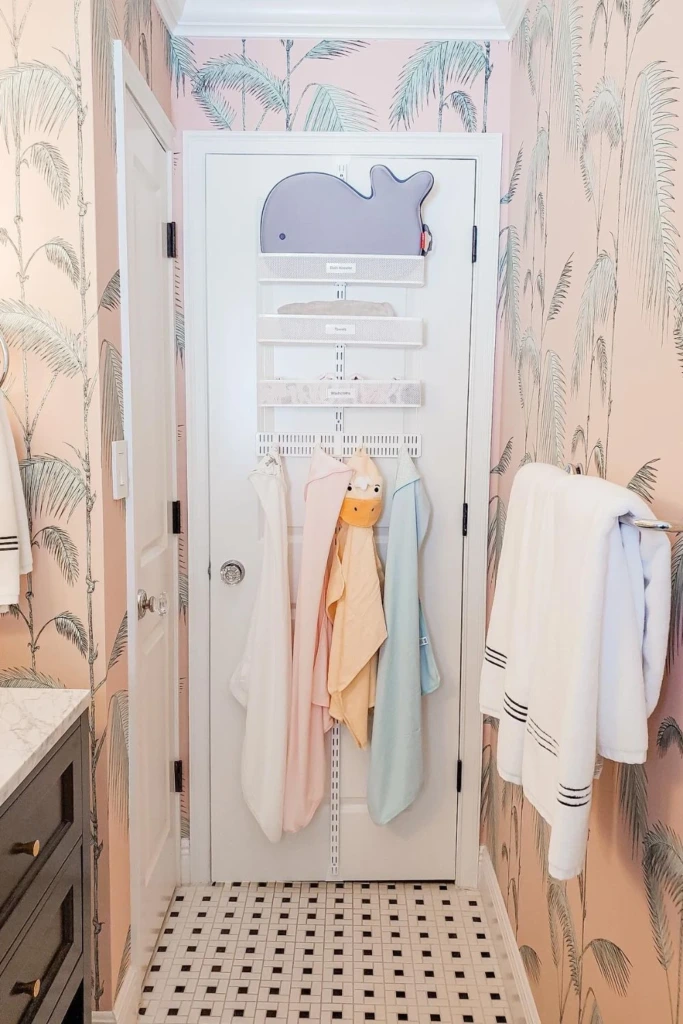
Baby towels and washcloths need a dedicated drying area to prevent them from collecting in damp piles.
Install sturdy hooks or a towel rack on the bathroom wall or behind the door.
Use separate hooks for hooded towels and washcloths.
Space them far enough apart to encourage airflow and allow fabrics to dry.
Keep bath products in secure cabinets or high storage areas rather than within your baby's reach.
Hooks should be positioned where adults can access towels easily without leaving a baby unattended in the bath.
A simple towel organization system can help keep the bathroom tidy between bathing routines.
28. Diaper Bowl
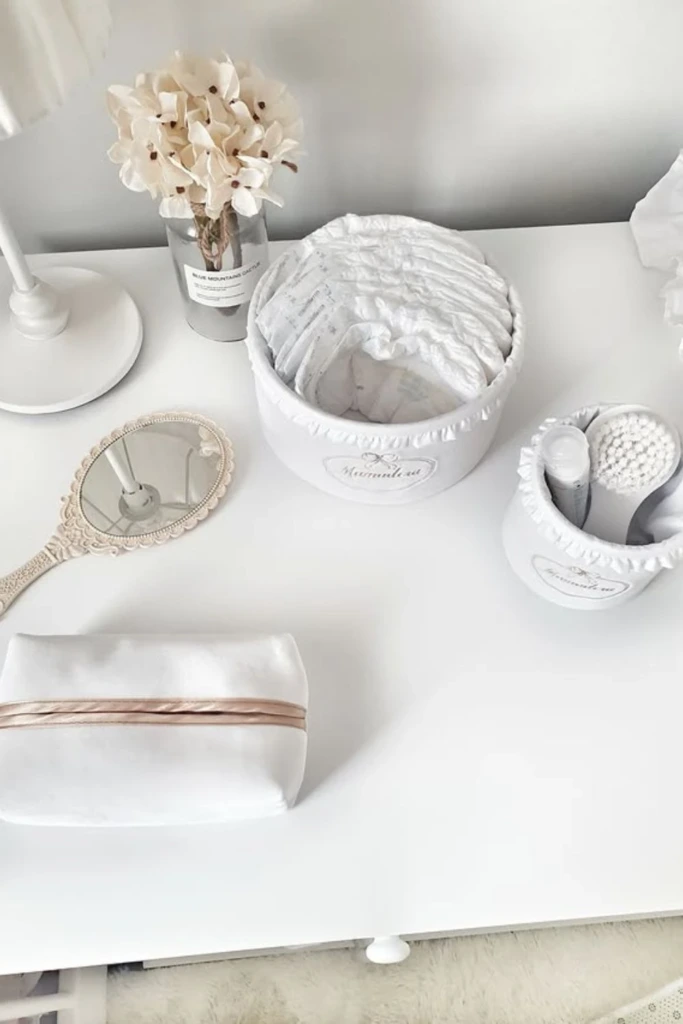
A shallow decorative container can provide convenient storage for a small supply of clean diapers.
Choose a wide, stable container with smooth edges that is easy to wipe clean.
Arrange several diapers upright so you can remove one without disturbing the others.
Keep the container on a nearby shelf or dresser rather than on the changing surface itself.
Store the remaining diaper supply in a closed cabinet or drawer.
Avoid using fragile glass bowls or containers that could tip or break.
This simple setup is useful when you want diapers readily available without leaving an entire package open on the dresser.
29. Caddy Basket
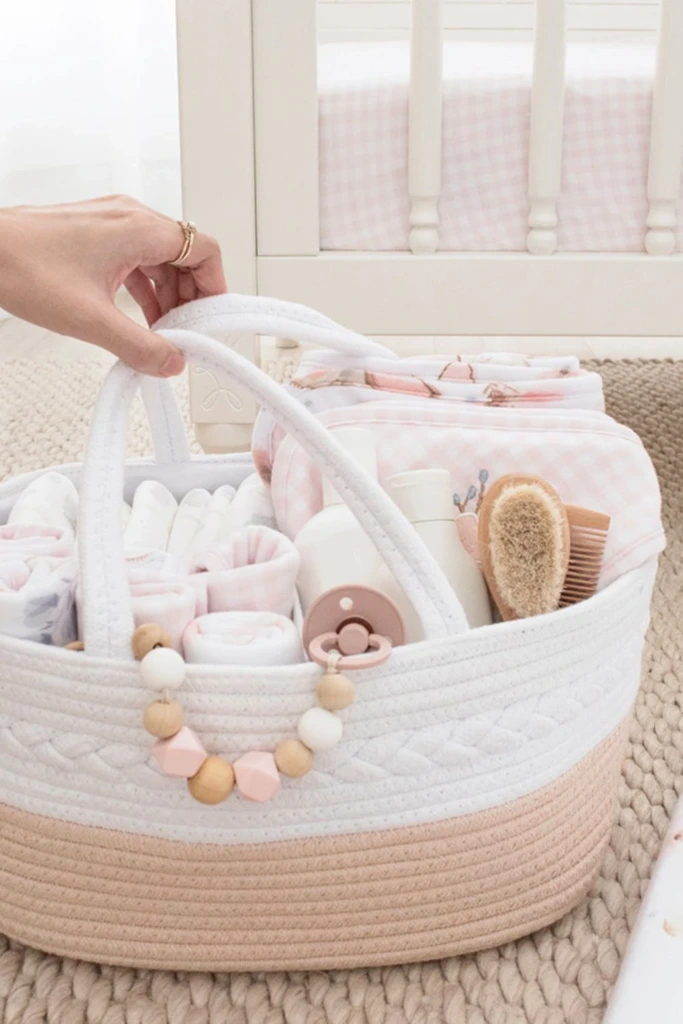
A portable baby caddy is one of the most versatile organization tools for everyday care.
Choose a basket with sturdy handles and several compartments.
Fill it with diapers, wipes, a clean onesie, burp cloths, and other frequently needed supplies.
Keep diaper cream and grooming products in secure compartments away from your baby's access.
Move the caddy between rooms as needed, placing it on a stable surface where it cannot be pulled down.
You can also prepare a smaller version for the living room or another frequently used area.
Check the contents each evening and replenish supplies before they run out.
A well-stocked caddy reduces unnecessary trips around the house and makes daily baby care more convenient.
How do you keep a baby changing station organized every day?
The easiest way to maintain an organized changing station is to create a simple routine and avoid storing unnecessary items there.
Keep a small supply of diapers, wipes, clean clothing, and changing essentials nearby. Use trays or baskets to separate categories and return products to their designated places after each use.
Store extra supplies in a nearby drawer or cabinet instead of crowding the changing surface.
Spend a minute each evening checking diaper quantities, replacing wipes, and removing empty packaging.
Clean the changing pad regularly according to its manufacturer's instructions.
Most importantly, always keep one hand on your baby when using an elevated changing surface, and never leave your baby unattended.
What should always be within reach at a baby changing station?
A practical baby changing station should have the supplies needed for a complete diaper change within an adult's reach.
These typically include clean diapers, baby wipes, diaper rash cream when needed, a changing pad, and an extra outfit for unexpected messes.
A nearby diaper pail or lined trash bin can make disposal more convenient.
You may also want clean burp cloths or a small towel for occasional spills.
Keep all supplies positioned so you can reach them without stepping away from your baby. Store creams, medications, and small grooming tools where your baby cannot access them.
The best baby organization ideas are the ones that make your routines simpler and your home safer. Start with the areas that create the most daily clutter, introduce a few practical storage solutions, and adjust them as your baby's needs change.