22 Junk Drawer Organization Ideas for 2026
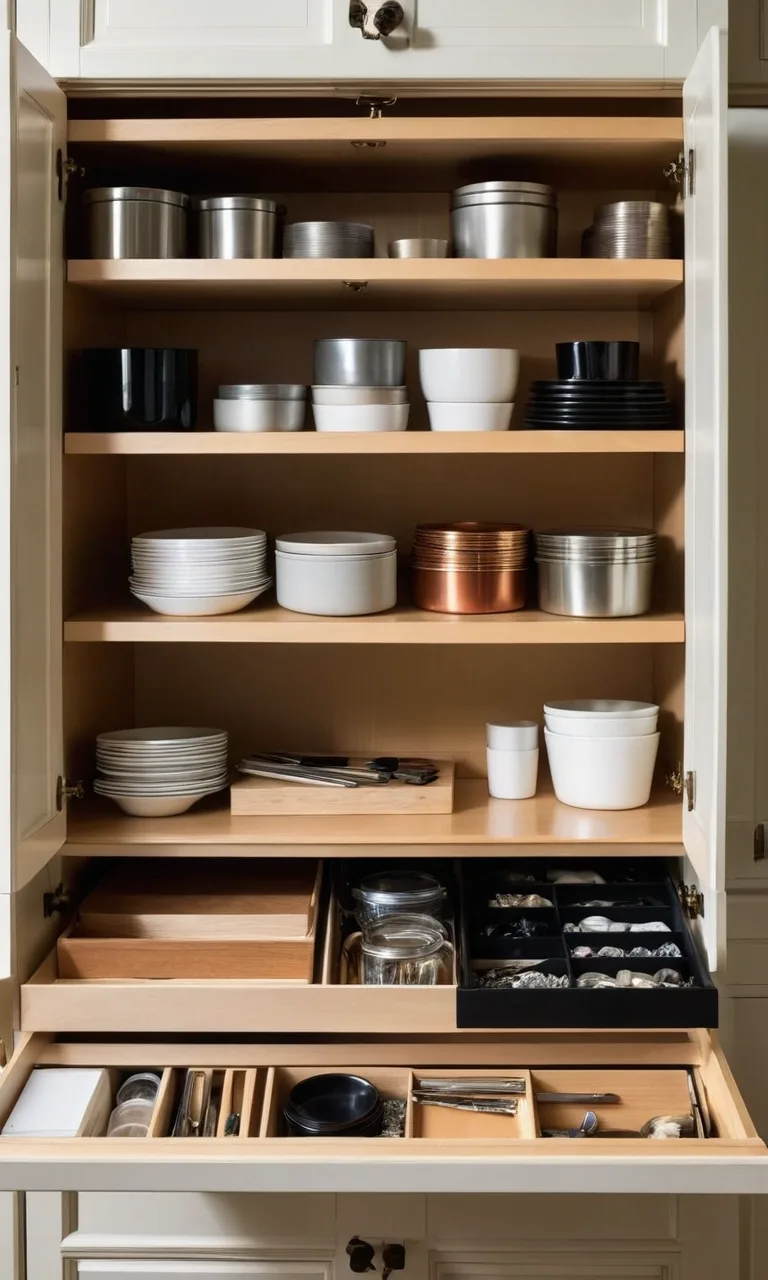
A junk drawer can become one of the most frustrating places in your home when everyday essentials disappear beneath loose batteries, tangled cords, pens, and miscellaneous objects. The good news is that you don't need a large budget or a complicated storage system to make it useful again.
With a few practical changes, even a small drawer can hold everything you need without becoming overcrowded. The secret is to decide what belongs there, arrange items according to how you use them, and create a simple system that everyone in your household can maintain.
These 22 junk drawer organization ideas will help you turn an untidy space into a convenient storage area that saves time and makes everyday tasks easier.
How to Organize the Junk Drawer?
Start by emptying the entire drawer onto a table or countertop. Remove rubbish, discard broken items, and move anything that belongs somewhere else. Check batteries and other supplies before deciding whether they are worth keeping.
Next, group the remaining belongings into categories, such as writing supplies, small tools, charging accessories, and household essentials. Measure the drawer before purchasing organizers so that every container fits comfortably.
Choose dividers or small bins that suit the items you own. Place frequently used belongings toward the front and reserve less accessible areas for occasional necessities. Leave a little empty space so new items don't immediately create clutter.
Finally, make a habit of returning things to their assigned sections. A short cleanup every few weeks can help preserve the arrangement without requiring another complete reorganization.
1. Zone by Function
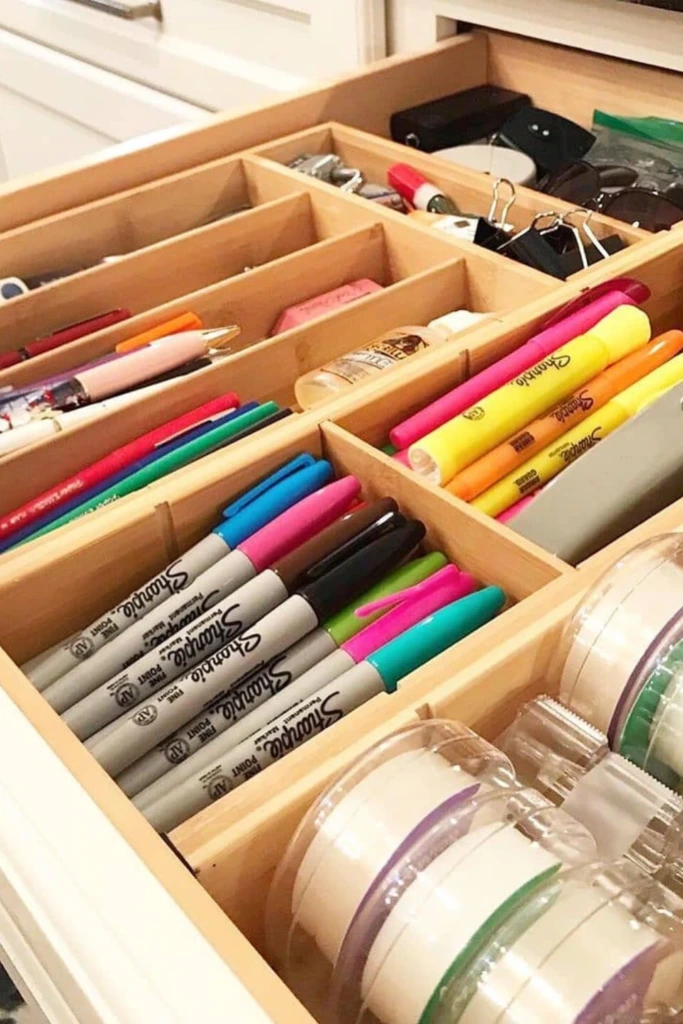
Give each section of the drawer a specific job. One compartment might hold pens and markers, another can accommodate scissors and tape, and a third can store small measuring tools or household accessories.
Adjustable wooden dividers are particularly useful because they can be arranged around your belongings instead of forcing everything into fixed-size spaces. This approach works well for drawers used regularly in kitchens, home offices, or utility areas.
Keep each category together and avoid filling compartments beyond their capacity. When everything has a designated place, finding and returning items becomes much easier.
2. Clear Modular Trays
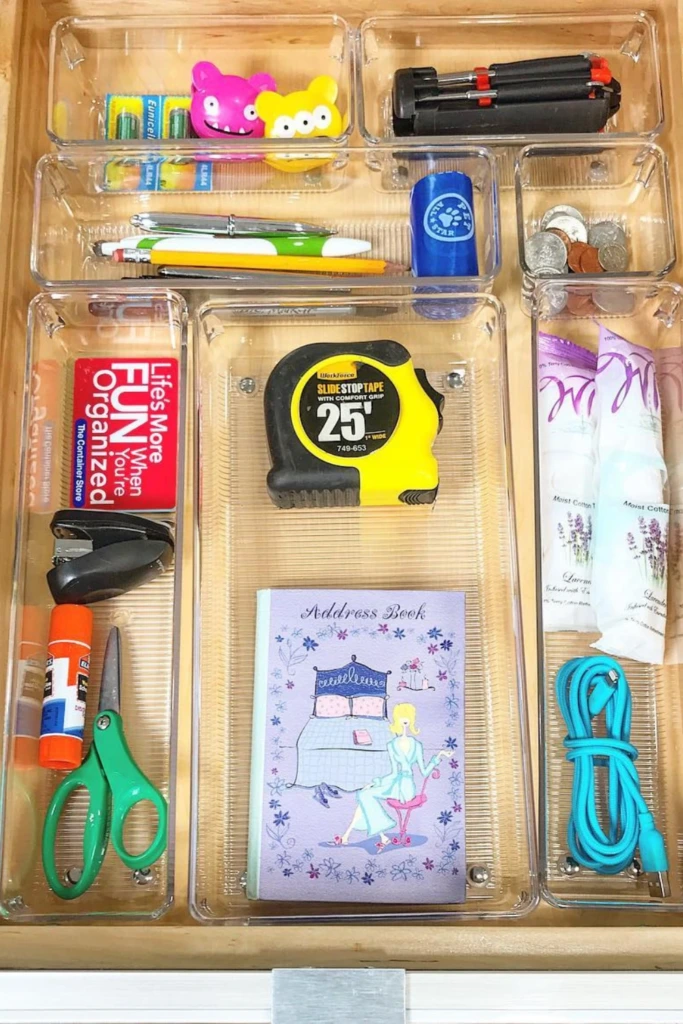
Transparent organizers make it possible to see the contents of your drawer without opening several boxes or moving items around. They're especially helpful when you keep numerous small supplies in a deep drawer.
Combine containers of different sizes to accommodate everything from paper clips and rubber bands to tape rolls and spare keys. Select trays with raised edges to prevent small objects from sliding into neighboring sections.
Before buying a complete organizer set, measure the drawer's interior dimensions. A combination of well-fitting trays is often more useful than a perfectly symmetrical arrangement that wastes valuable space.
3. Everyday Tool Zones
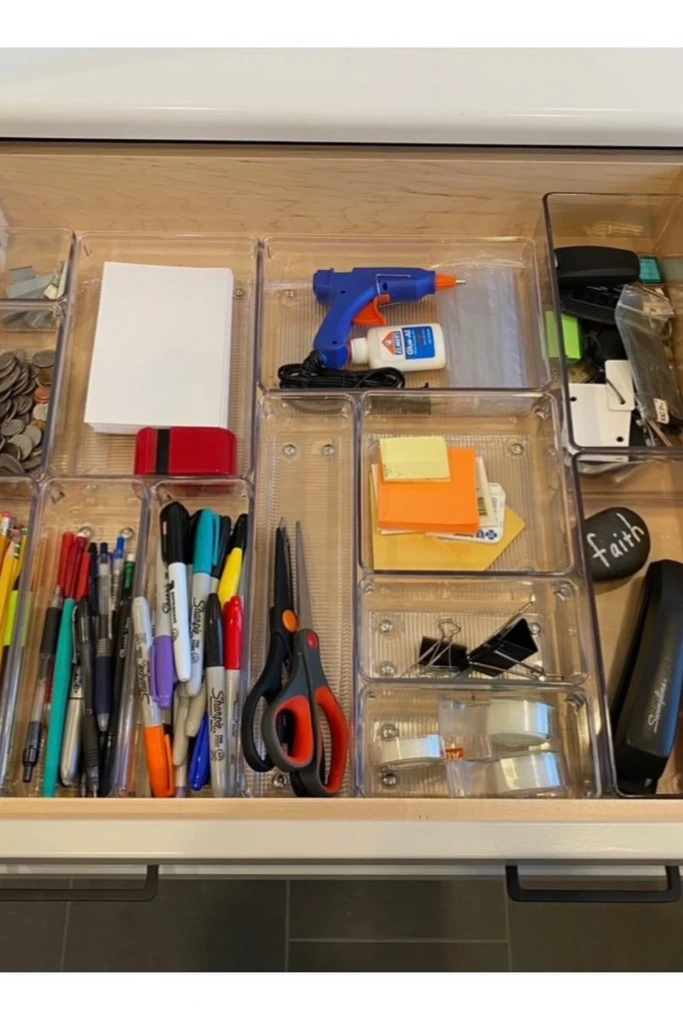
If your junk drawer doubles as a place for household tools, organize it around the jobs you perform most frequently. Keep a small screwdriver, measuring tape, scissors, and other commonly used tools together.
Use longer compartments for bulky objects and shallow sections for tiny accessories, such as screws or spare hooks. Keep sharp tools safely contained so they cannot catch on other belongings.
Reserve the easiest-to-reach area for the tools you use regularly. Equipment needed only occasionally can occupy the back of the drawer or a separate storage location.
4. Contained Categories
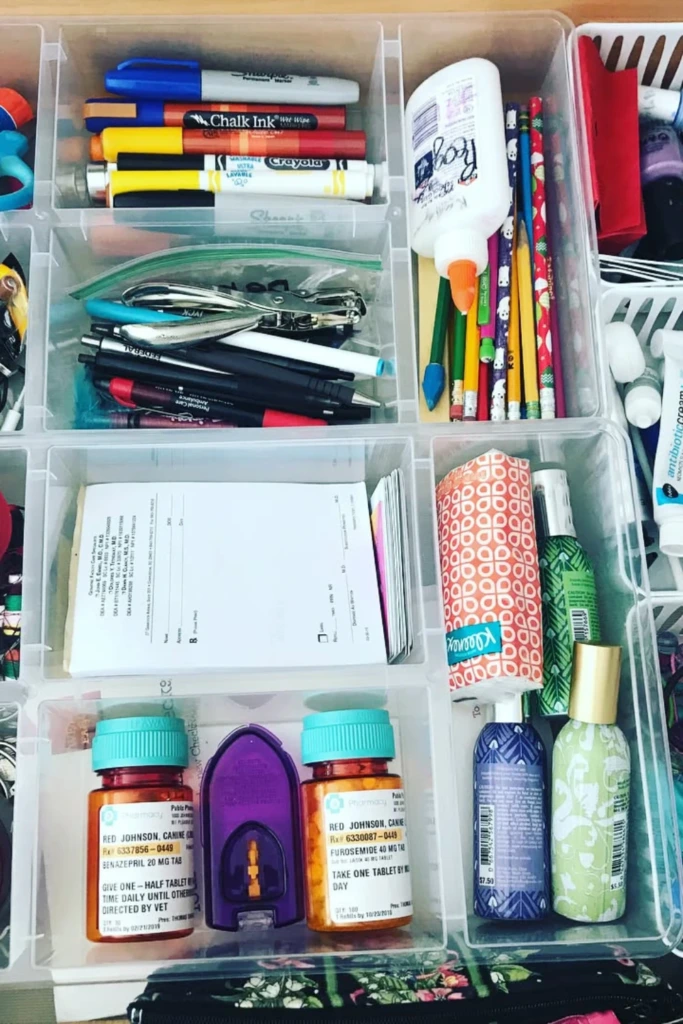
Small objects quickly become mixed together when they have no physical boundaries. Separate them into individual containers so that batteries, clips, fasteners, and miscellaneous accessories remain in their own spaces.
Uniform bins can create a tidy appearance, but their dimensions should match the contents. A container that's too large encourages unnecessary accumulation, while one that's too small makes retrieving items inconvenient.
Set reasonable limits for every category. If a compartment becomes full, remove duplicates or relocate excess supplies instead of allowing objects to spill into neighboring sections.
5. Dedicated Item Lanes
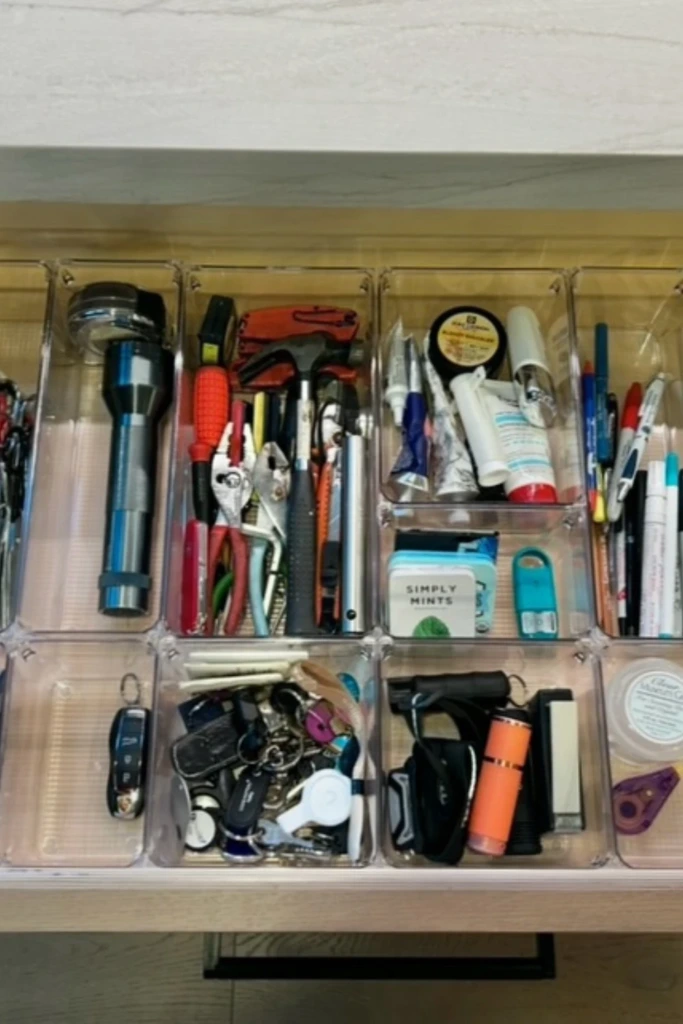
Long, narrow organizers are useful for keeping items aligned rather than scattered across the drawer. They work particularly well for rulers, pens, small flashlights, scissors, and other elongated objects.
Arrange containers in rows running from the front to the back of the drawer. Give each row a clear purpose, and use deeper compartments only where the contents require additional room.
This arrangement makes it easier to see what you have at a glance. It also reduces the chance of small items becoming trapped underneath larger objects.
6. Micro-Section Precision
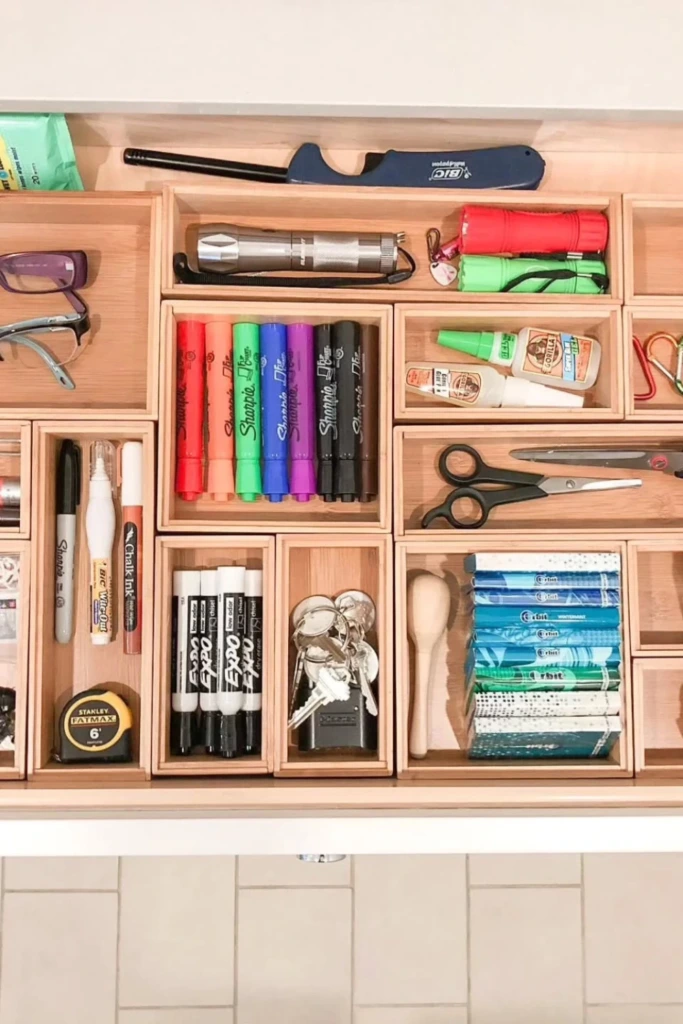
When a drawer contains many tiny belongings, creating smaller compartments can make a noticeable difference. Interlocking dividers allow you to customize the layout for items such as thumbtacks, pushpins, spare screws, and paper clips.
Match the size of each section to its contents rather than dividing the drawer into identical spaces unnecessarily. Frequently used supplies should remain accessible, while backup items can occupy separate compartments.
This method is especially effective for shallow drawers where stacking is impractical. Keep similar objects together and avoid creating so many tiny sections that putting things away becomes a chore.
7. Vertical Packet Storage
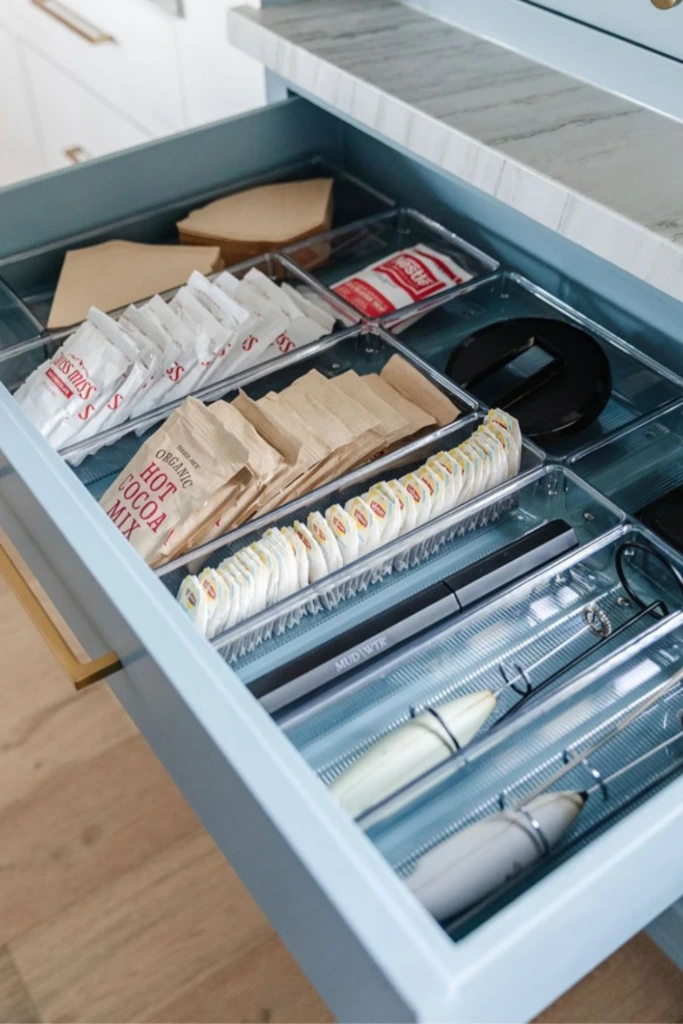
Flat packets, instruction leaflets, small envelopes, and adhesive strips can disappear easily when piled on top of one another. Storing suitable items upright makes them easier to identify and retrieve.
Use narrow dividers, compact file-style containers, or adjustable partitions to keep packets standing in separate groups. Place labels on the sections if several types look similar.
Vertical storage is most useful when the drawer has enough height to accommodate the packets without bending them. Keep paper products away from moisture and avoid forcing oversized packages into tight spaces.
8. Cord Control Zones
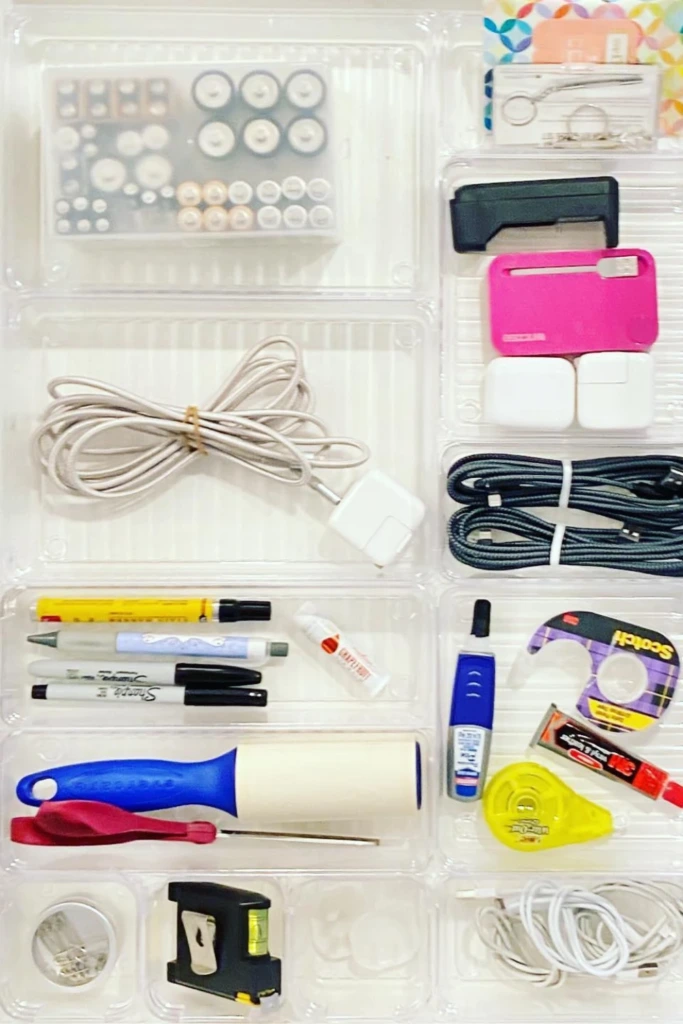
Charging cables, spare cords, and electronic accessories can quickly become tangled when stored loosely. Give cables their own section and group them according to connector type or intended use.
Coil each cord loosely before securing it with a reusable cable tie or hook-and-loop strap. Store the bundles in a shallow compartment so you can identify the correct cable without disturbing the others.
Keep adapters and matching accessories nearby when appropriate. Labeling less familiar cables can also prevent confusion and reduce the temptation to keep buying replacements for items you already own.
9. Front-Load Essentials
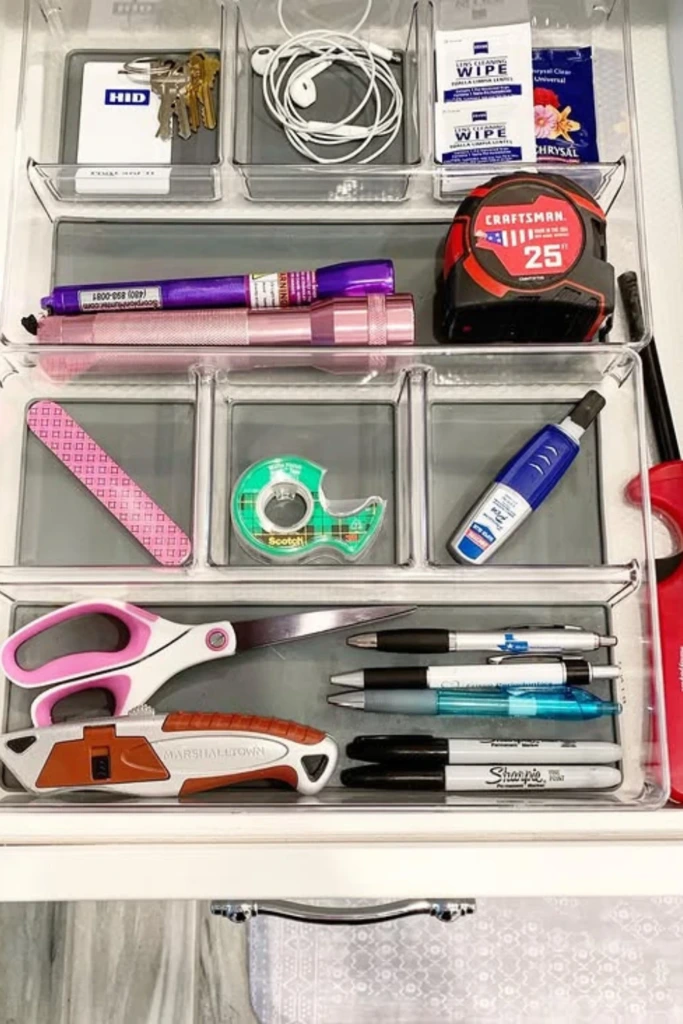
The items you reach for most often should be positioned where your hand naturally goes first. Pens, scissors, tape, a small flashlight, or frequently used household tools are good candidates.
Place these belongings in shallow compartments near the front edge. Move spare supplies and rarely used accessories toward the back, where they won't interfere with everyday tasks.
Think about how you actually use the drawer rather than arranging everything solely for appearance. A practical layout should reduce the number of movements needed to retrieve an item and put it away again.
10. Mixed-Use Balance
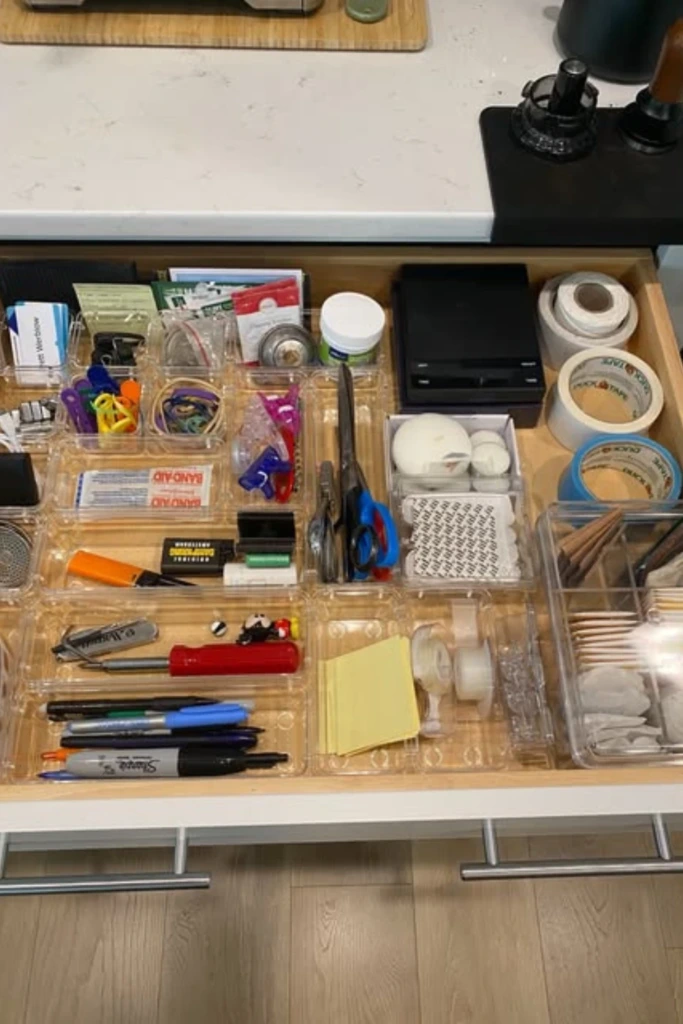
Sometimes a junk drawer genuinely needs to accommodate several kinds of belongings. Instead of forcing everything into one category, divide the available space into clearly defined groups.
For example, one area could hold stationery, another could contain small tools, and a third might be reserved for everyday household necessities. Separate containers help maintain boundaries between these different uses.
Make sure each category has enough room without taking over the entire drawer. If one group continually pushes into another, consider relocating some belongings or creating a separate storage area for them.
11. Portable Bin Grouping
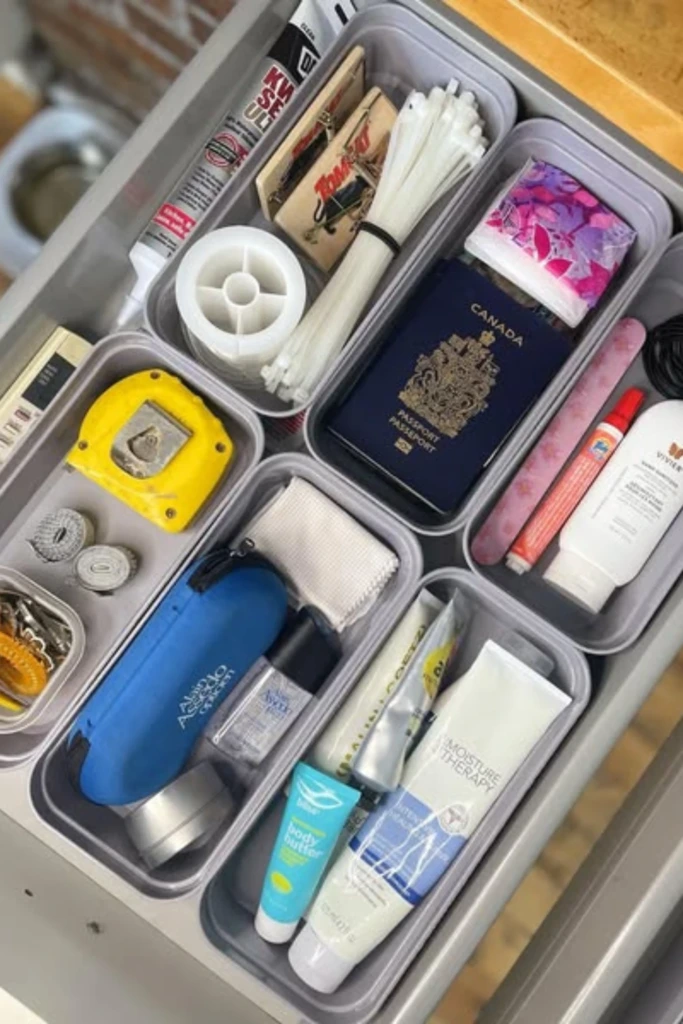
Lift-out containers are convenient when you frequently need to use several related items together. Small bins can hold travel accessories, sewing supplies, stationery, or personal essentials that occasionally need to be carried elsewhere.
Choose lightweight containers with comfortable edges and dimensions that fit inside the drawer. Group related objects together so you can remove a single bin without disturbing the rest of the arrangement.
This approach also simplifies cleaning. You can lift out the containers, wipe the drawer, and return everything to its original position without sorting through loose belongings.
12. Flat-Lay Visibility
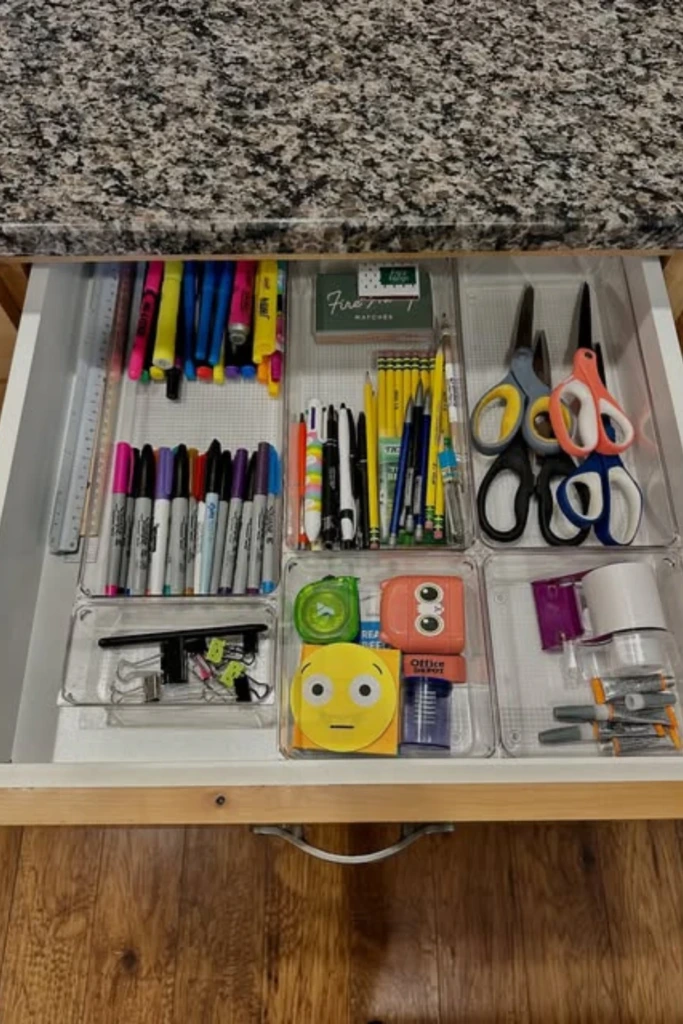
A single layer of neatly arranged objects makes a drawer easier to navigate. Shallow trays help prevent small supplies from disappearing beneath larger items and allow you to see what is available immediately.
Lay suitable items flat and give them enough room to be removed without shifting neighboring belongings. Transparent containers can improve visibility further, particularly when storing small accessories.
Avoid piling items on top of one another unless the contents are designed to stack safely. If the drawer becomes crowded, remove unnecessary duplicates instead of adding another layer.
13. Personal Item Dock
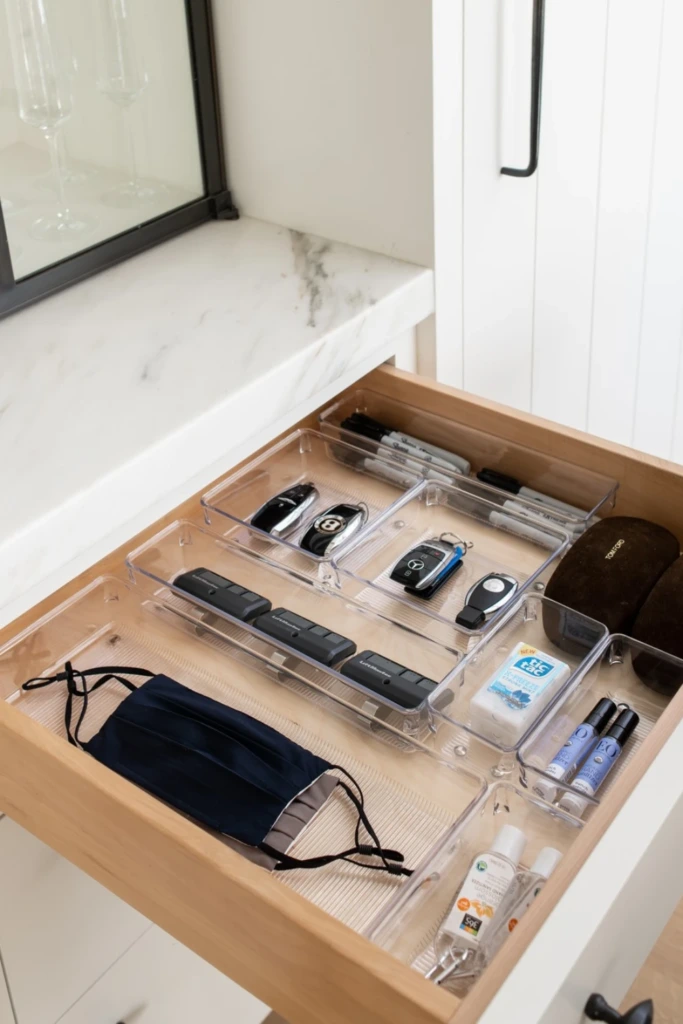
An entryway or kitchen drawer often becomes a temporary home for keys, spare change, wallets, sunglasses, and other everyday essentials. A dedicated personal-item section can prevent these belongings from spreading throughout the drawer.
Use small trays to separate keys from coins and other loose objects. Keep frequently used items near the front so they can be collected quickly when leaving home.
Limit this area to belongings that genuinely need to be stored there. Receipts, unrelated packaging, and miscellaneous household supplies should have their own destinations rather than gradually taking over the space.
14. Grid-Based Control
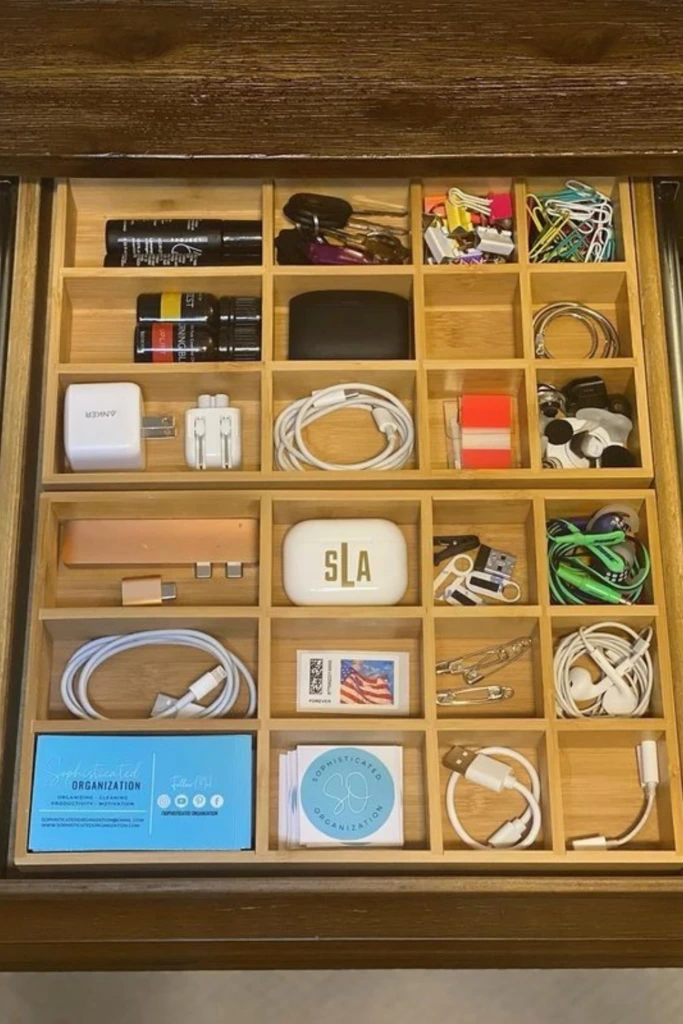
A grid organizer creates a structured layout with individual compartments for different objects. It's useful when a drawer contains many small items that otherwise tend to mix together.
Choose an insert with sections that suit your belongings, or combine adjustable dividers to create a similar arrangement. Assign one category to each compartment and return items to their designated spaces after use.
The physical boundaries make overcrowding easier to recognize. When a section fills up, you can decide whether to remove extras or relocate less important supplies before clutter spreads.
15. Color-Coded Sorting
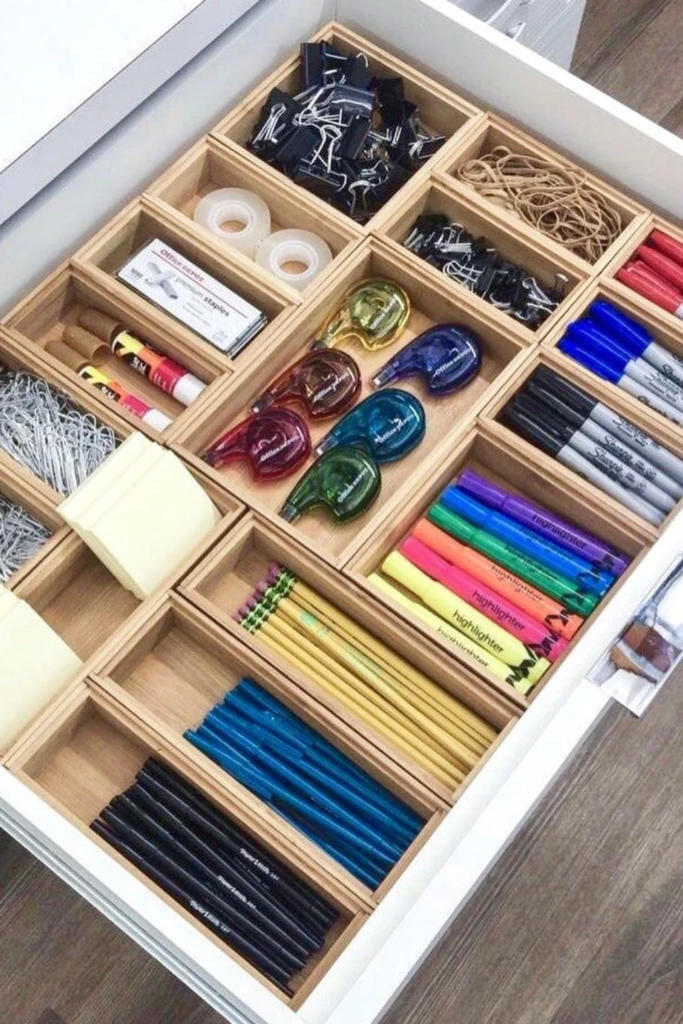
Color can provide an additional visual cue when several categories share one drawer. You might group similar items by color within their assigned compartments or use colored labels to identify different sections.
For example, one label color could represent electronic accessories while another identifies office supplies. This can be especially helpful in busy households where multiple people use the same storage area.
Keep the system simple and consistent. Color coding should make objects easier to locate, not introduce an elaborate arrangement that becomes difficult to maintain.
16. Split-Purpose Drawers
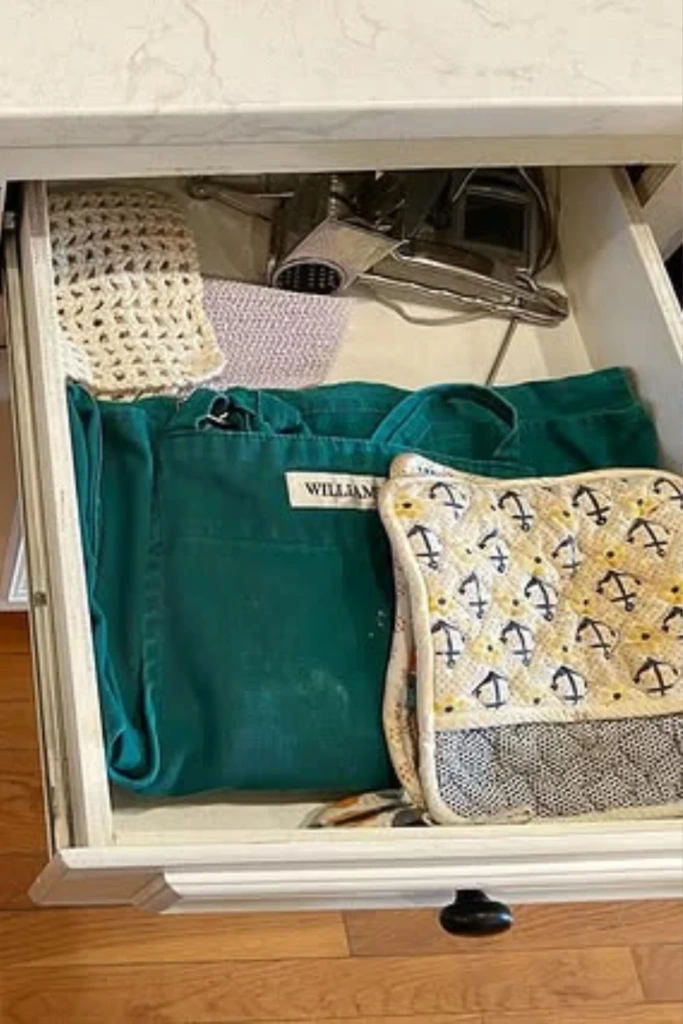
If one drawer is constantly overflowing, the problem may be that it serves too many purposes. Moving some categories into a second drawer can create a more practical arrangement without requiring additional organizers.
For instance, keep frequently used stationery and small tools in one drawer while moving bulky accessories or backup supplies elsewhere. In a kitchen, everyday gadgets can remain separate from less frequently used household items.
Use the available space according to the size and frequency of use of each category. You don't need to fill every compartment completely; a little breathing room makes both drawers easier to manage.
17. Battery Sorting Station
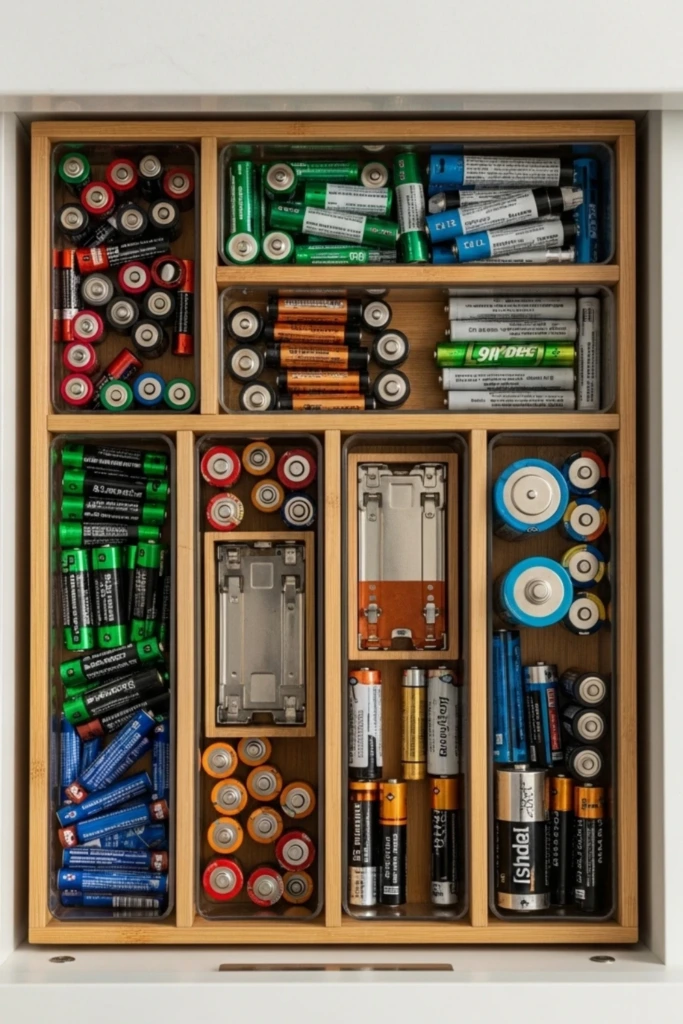
Spare batteries are easier to manage when they have a designated storage area. Use a purpose-built battery organizer or a divided container that keeps different sizes separated and prevents loose batteries from rolling around.
Keep unused batteries in their original packaging when practical, and store them in a cool, dry location away from metal objects. Avoid mixing loose batteries with keys, coins, screws, or other conductive items that could bridge their terminals.
Check the manufacturer's storage guidance, and keep batteries away from children and pets. Separate depleted batteries from usable ones and take them to an appropriate battery recycling or disposal facility.
18. Vertical Tool Stand
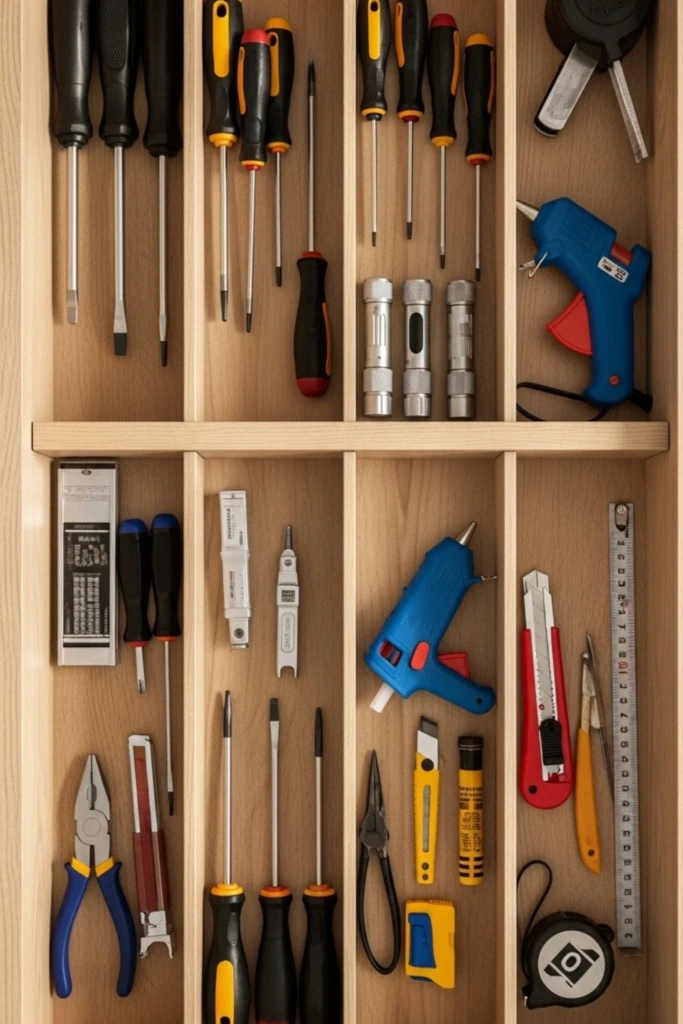
Long tools can consume much of a drawer's surface area when placed horizontally. If the drawer is deep enough, narrow compartments or suitable tool holders can keep selected items upright and separated.
Small screwdrivers, compact flashlights, and similar tools may fit this arrangement. Ensure that handles remain accessible and that sharp tips are protected from accidental contact.
Not every drawer is tall enough for vertical storage, so measure the interior before choosing a holder. If upright placement makes the drawer difficult to close, use a horizontal organizer instead.
19. Drop-Zone Rule
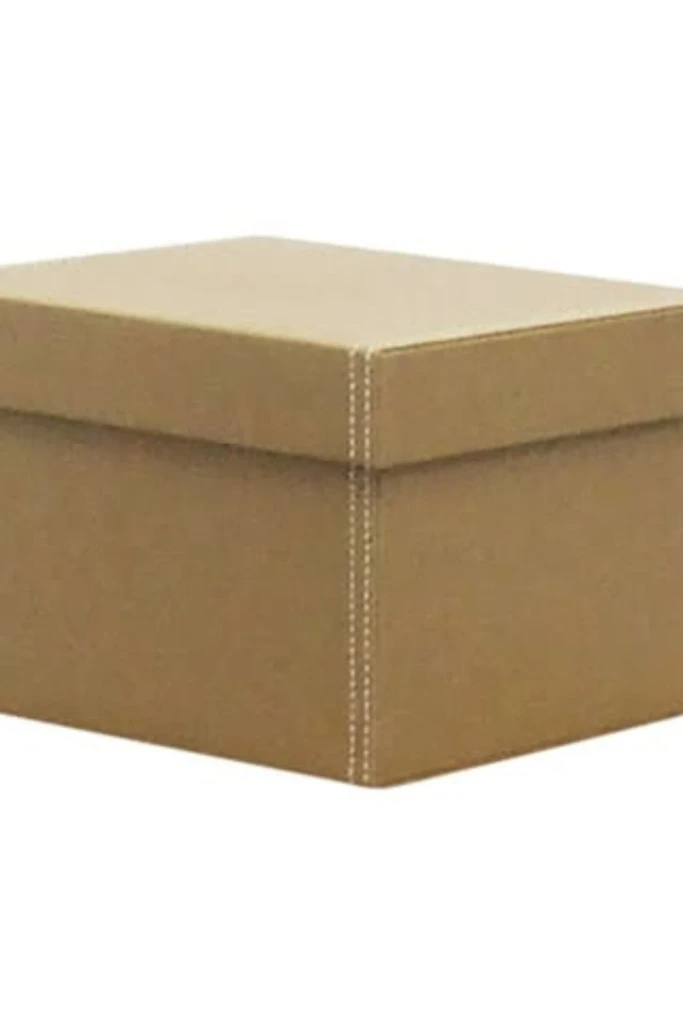
A designated drop zone provides a temporary place for objects that need sorting later. This can be helpful for small items that enter the house throughout the day but don't immediately have an obvious destination.
Limit the drop zone to one small compartment rather than allowing the entire drawer to become a collection point. Set a regular time to review its contents and move each item to its proper home.
A weekly check is often enough to prevent temporary storage from becoming permanent clutter. If something repeatedly lands in the drawer, decide whether it deserves a permanent place there or belongs elsewhere.
20. Seasonal Rotation System
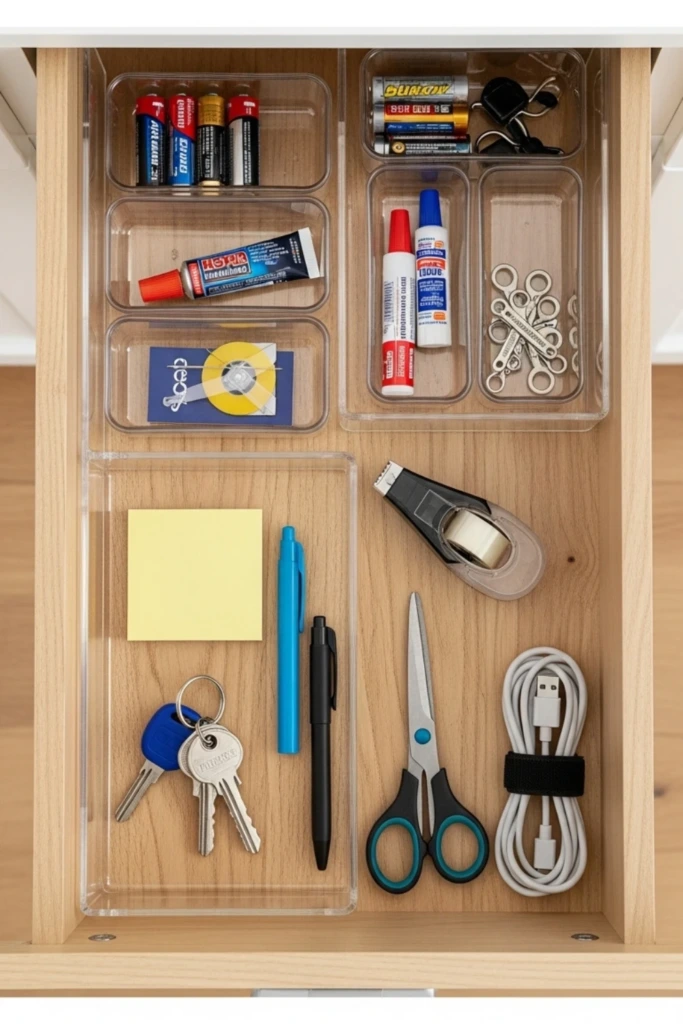
Some household supplies are useful only during particular times of the year. Holiday accessories, seasonal repair items, and occasional-use gadgets can take up valuable room if they remain in the main drawer all year.
Keep everyday essentials accessible and move seasonal belongings into clearly labeled storage boxes when they're not needed. If certain items must stay in the drawer, reserve a less convenient section for them.
Review the arrangement as your needs change throughout the year. Rotating occasional-use supplies helps preserve space for the objects you reach for regularly without losing track of the items you need later.
21. One-In-One-Out Rule
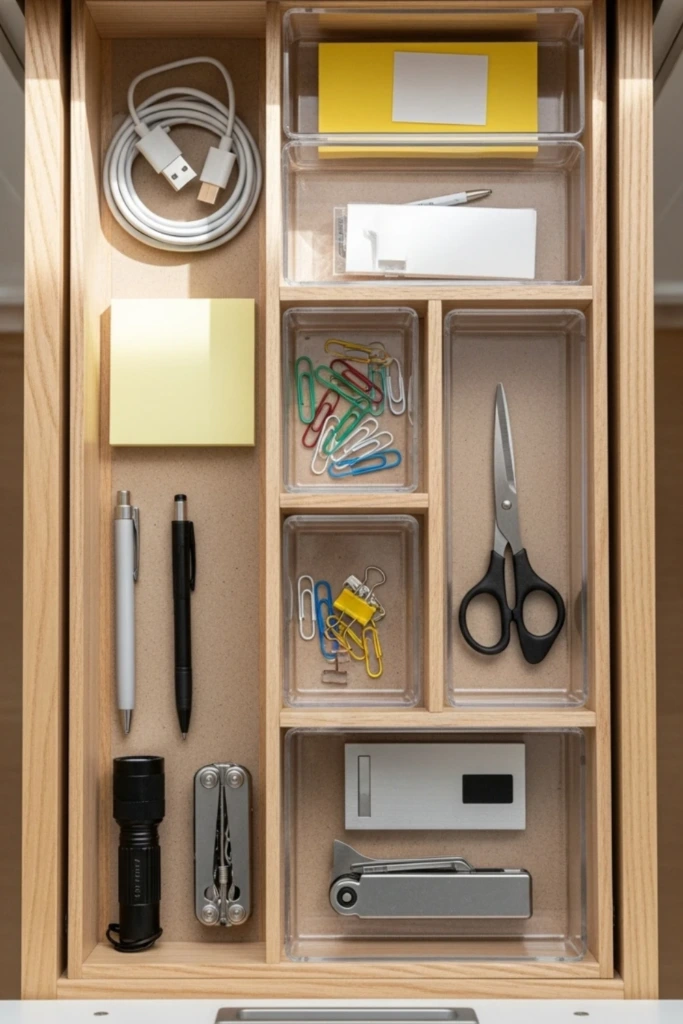
A drawer can become overcrowded even when its original organization is excellent. The one-in-one-out rule helps control this problem by encouraging you to remove an unnecessary item whenever you add another belonging from the same category.
For example, when replacing an old pen with a new one, discard or recycle the old pen if it no longer works. If you add another tool, consider whether an existing duplicate is still useful.
Apply the rule sensibly rather than discarding necessary supplies automatically. The goal is to maintain a manageable amount of belongings and prevent the drawer from gradually exceeding its available space.
22. Drawer Purpose Labeling
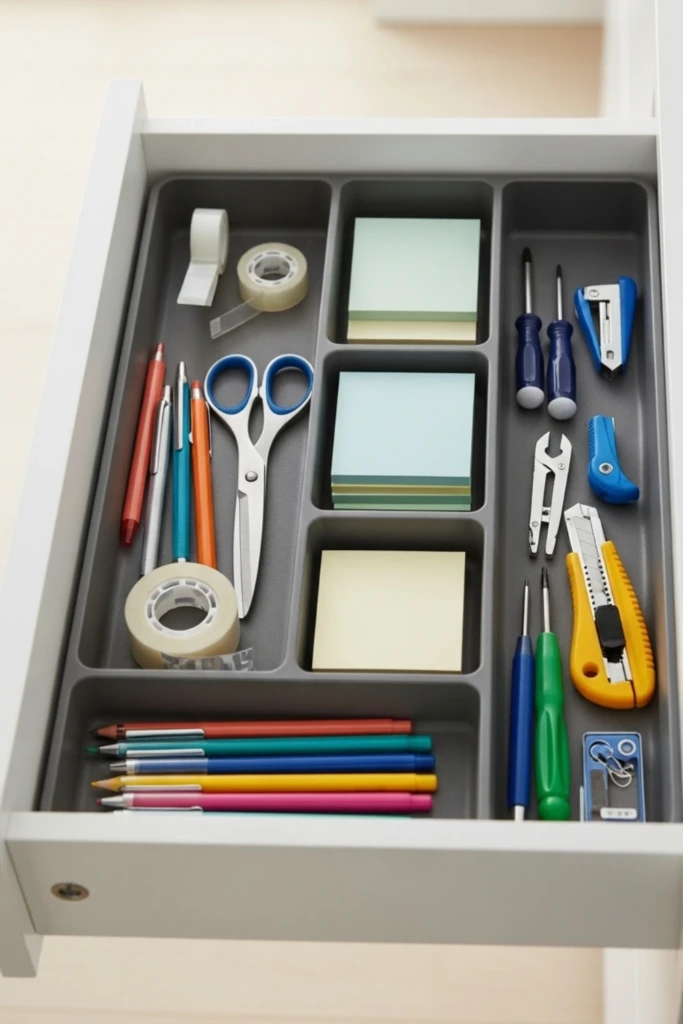
A clear purpose helps everyone understand what should and shouldn't go inside a shared drawer. Decide whether it will hold household tools, office supplies, daily essentials, or a carefully limited combination of categories.
Use small labels on the drawer or inside individual organizer compartments if they make the system easier to follow. Labels are particularly useful when several family members put items away.
Keep the purpose realistic and consistent with your household's needs. When something doesn't fit the drawer's intended role, move it to an appropriate location instead of making an exception every time.
What is the best way to organize your drawers?
The most effective approach is to begin by deciding what each drawer should store. Empty it, remove unnecessary belongings, and group the remaining items into categories before purchasing organizers.
Use dividers or small containers to keep related objects together, and position frequently used items where they're easy to reach. Choose storage solutions that fit the drawer's measurements and leave enough room to remove belongings comfortably.
Avoid overcomplicating the arrangement. A straightforward system that matches your daily habits will generally be easier to maintain than one designed only to look attractive.
How do you keep a junk drawer from getting messy again?
Give every category a designated place and return items after using them. Set reasonable limits for each section, and avoid putting unrelated belongings into the drawer simply because space is available.
A quick weekly or monthly review can help you remove rubbish, relocate misplaced objects, and identify compartments that are becoming overcrowded. Keep a small amount of unused space available for occasional additions.
Most importantly, make the organization system convenient enough for everyone to follow. When putting something away takes only a few seconds, maintaining a tidy junk drawer becomes a natural part of everyday life.