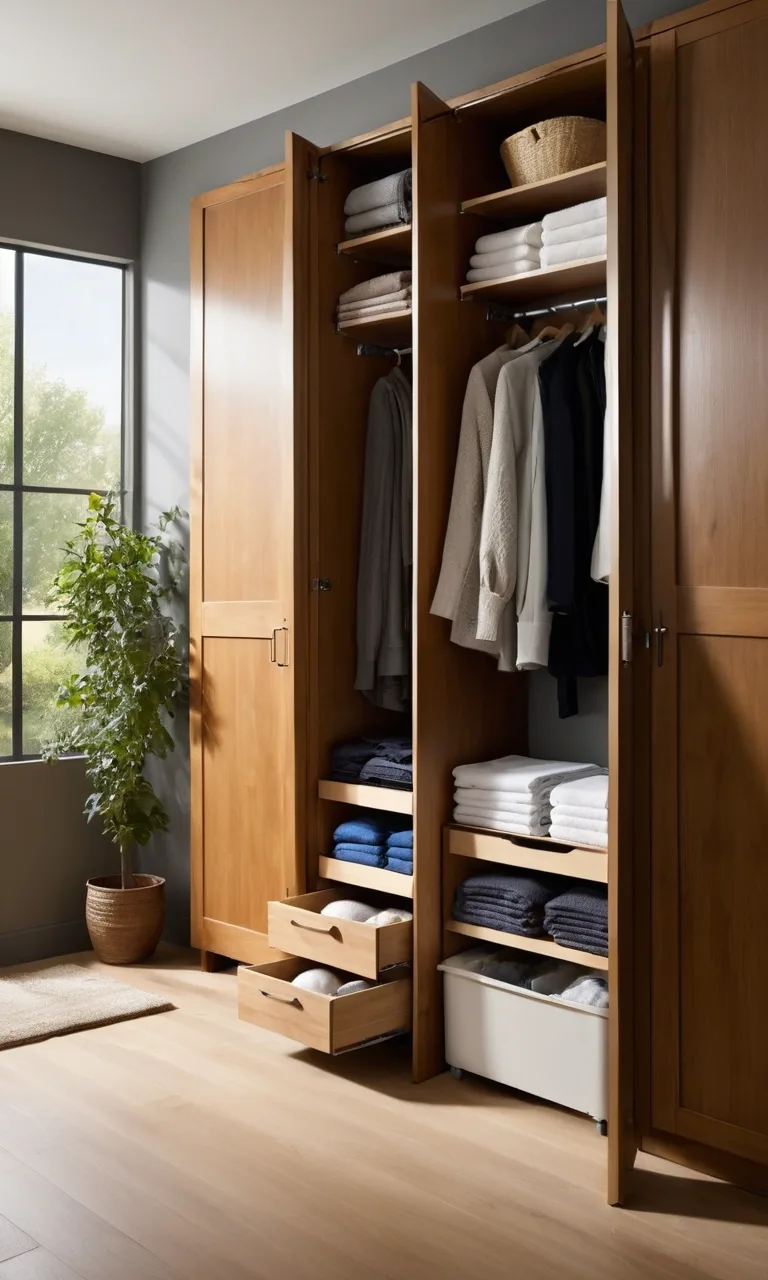
26 Laundry Room Organization Ideas for 2026
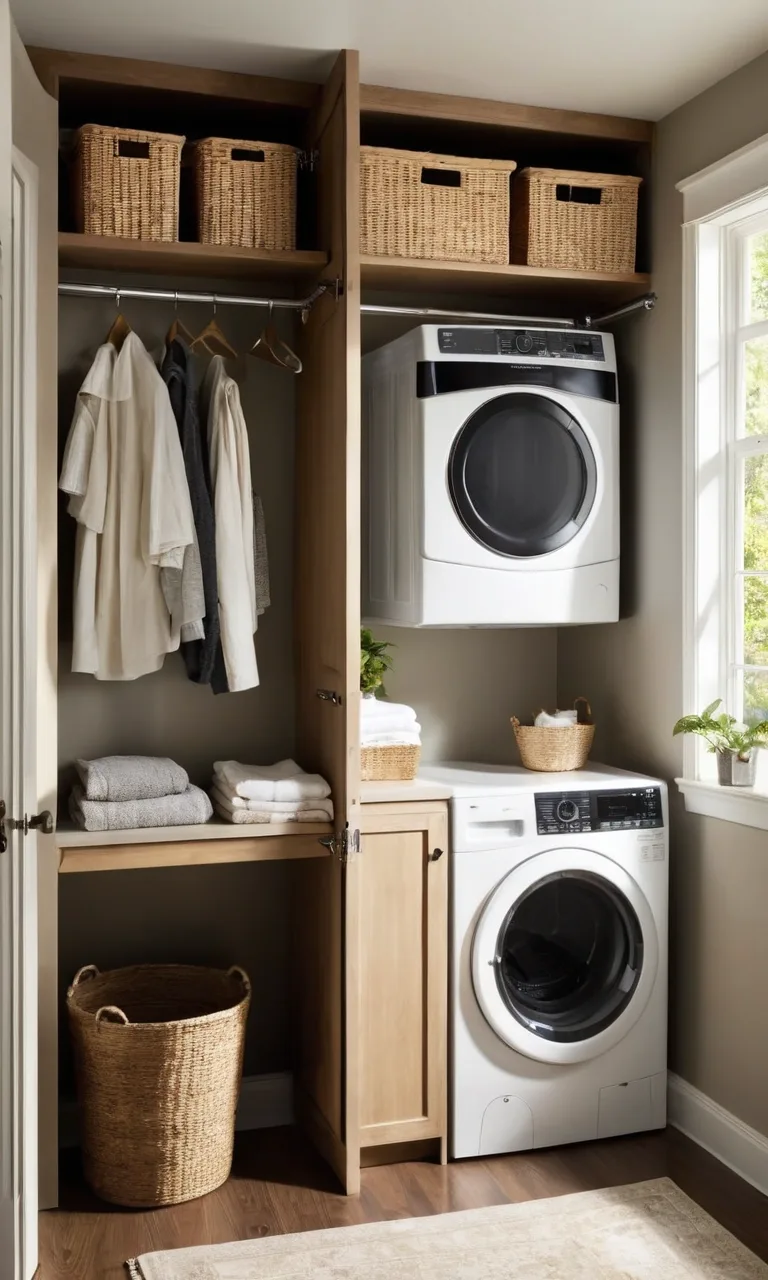
A laundry room should make household chores easier, not add to the mess. Yet detergent bottles, overflowing baskets, cleaning products, and clothes waiting to be folded can quickly take over the space.
The good news is that you don't need a large room or an expensive renovation to create an organized laundry area. With practical storage solutions and a thoughtful layout, even a small laundry corner can become efficient and attractive.
Whether you're working with a separate utility room, a laundry closet, or a compact apartment setup, these 25 laundry room organization ideas will help you reduce clutter, improve storage, and make everyday laundry tasks more manageable.
1. Maximizing Small Laundry Rooms
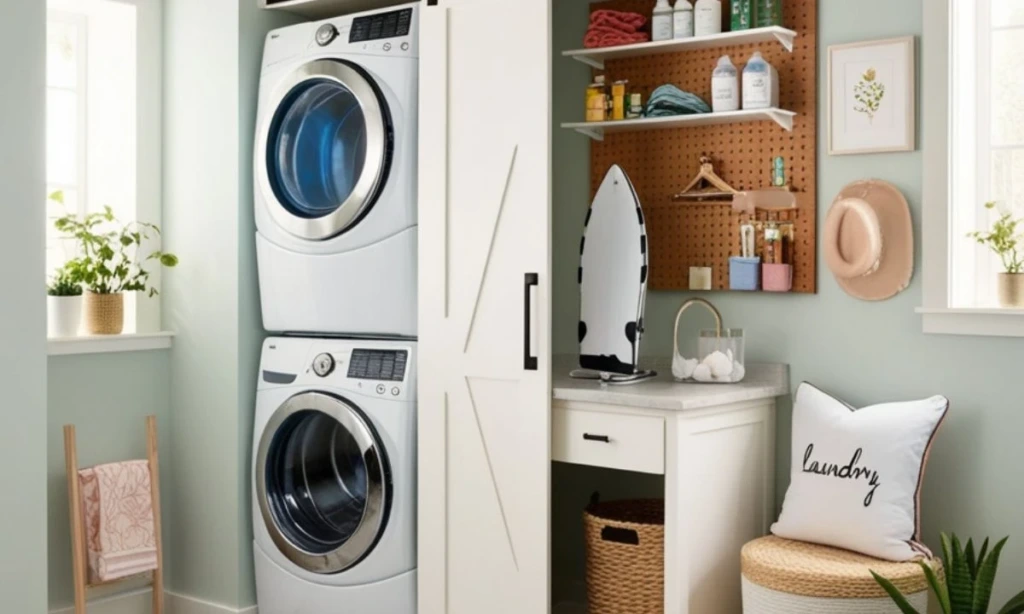
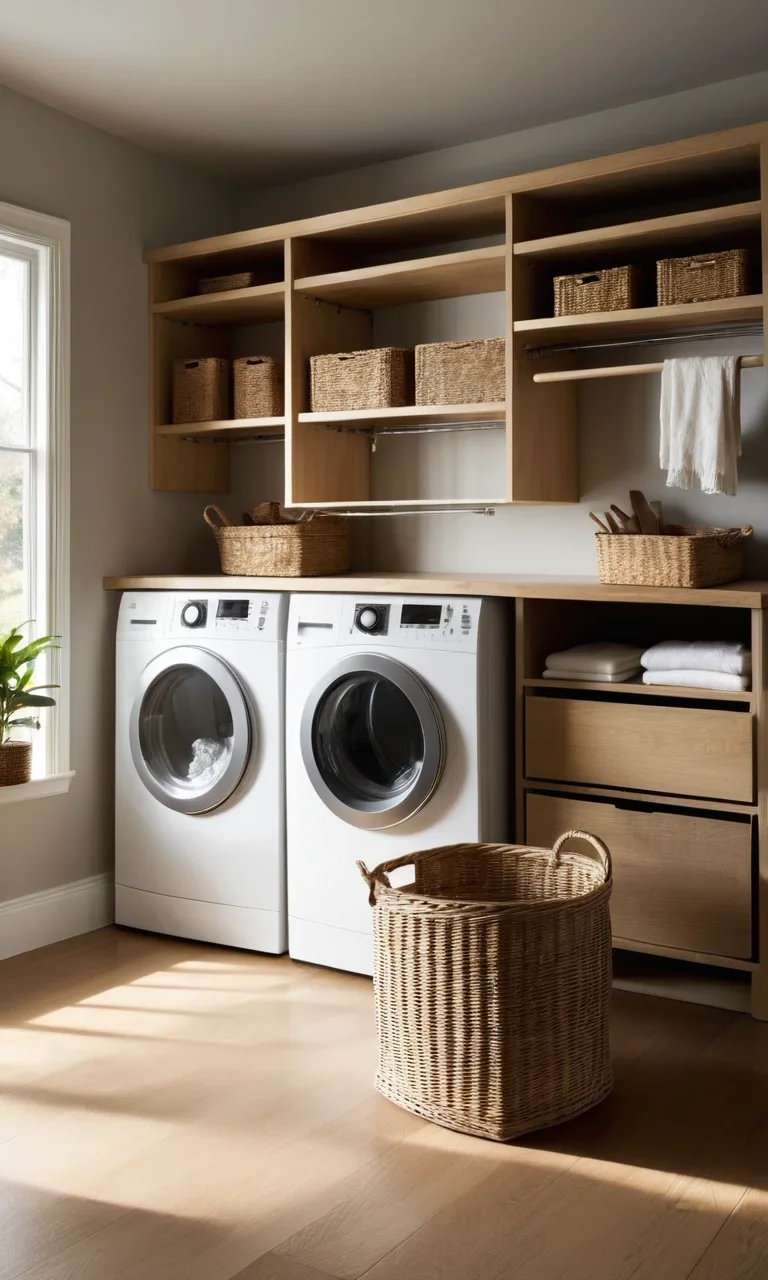
Small laundry rooms benefit from storage solutions that use available wall space without restricting movement. Installing shelves above the washer and dryer creates convenient storage for detergent, fabric softener, and frequently used supplies.
Choose slim storage carts for narrow spaces between appliances and cabinets. Wall hooks, collapsible drying racks, and hanging organizers can also provide useful storage without occupying valuable floor space.
If your appliances are front-loading models, consider adding a sturdy countertop above them for folding clothes. Make sure the installation allows adequate ventilation and access for maintenance.
Keeping only essential laundry products nearby prevents overcrowding. Store occasional-use supplies elsewhere, and use labeled containers to make everything easier to find.
2. Labeled Bins
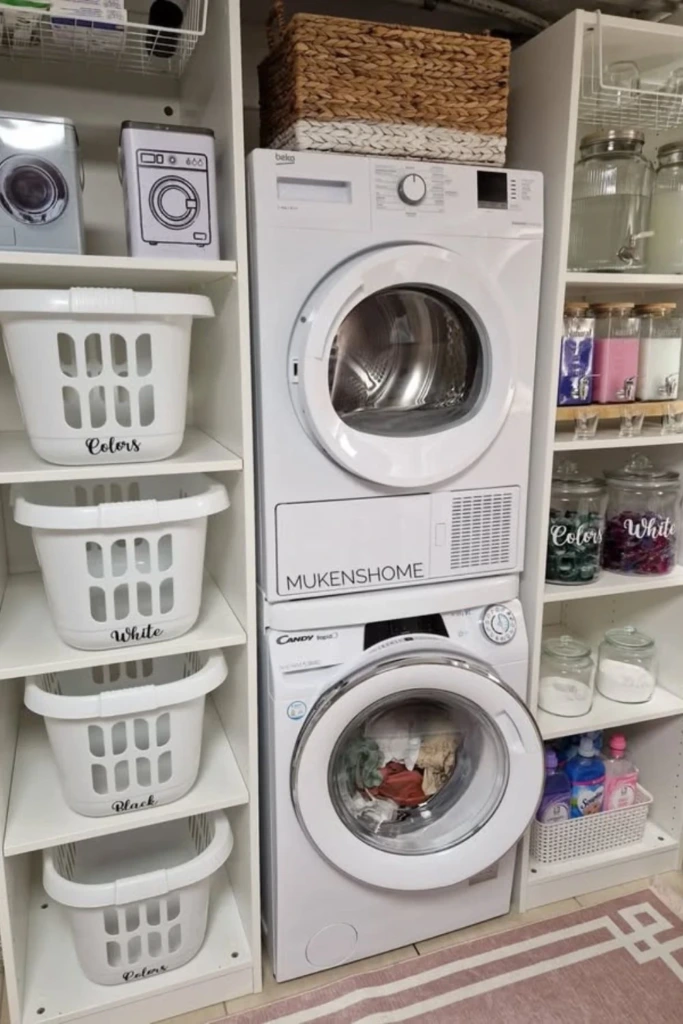
Labeled storage bins make it easier to separate laundry and maintain an organized routine. Assign different containers for whites, dark clothing, delicate fabrics, and items requiring special treatment.
Choose lightweight baskets that fit comfortably on shelves or inside cabinets. Clear labels help everyone in the household return items to their designated places.
For additional convenience, keep smaller containers for dryer balls, clothespins, and reusable laundry accessories. Store detergents and laundry pods in their original child-resistant packaging, safely away from children and pets.
3. Pull-Out Shelves
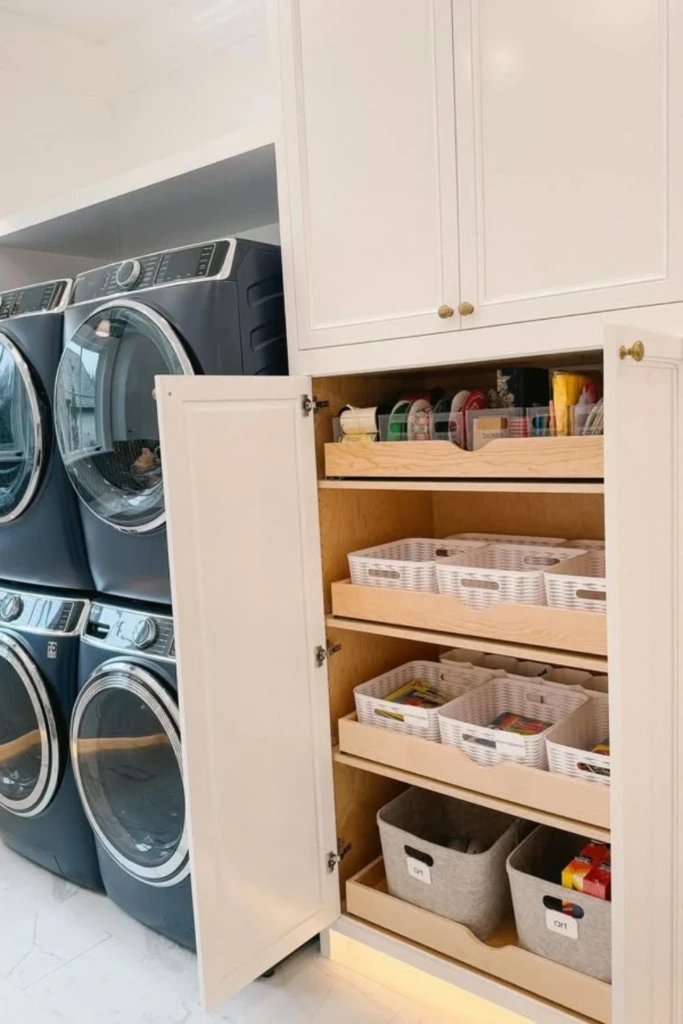
Pull-out shelves are particularly useful in deep cabinets where supplies often disappear behind other items.
Sliding organizers allow you to reach products stored at the back without removing everything in front. They're ideal for stain removers, cleaning cloths, extra sponges, and household supplies.
Install sturdy drawer runners suited to the weight of your stored items. Adjustable dividers can further improve organization by keeping different categories separated.
4. Sink Zone Storage
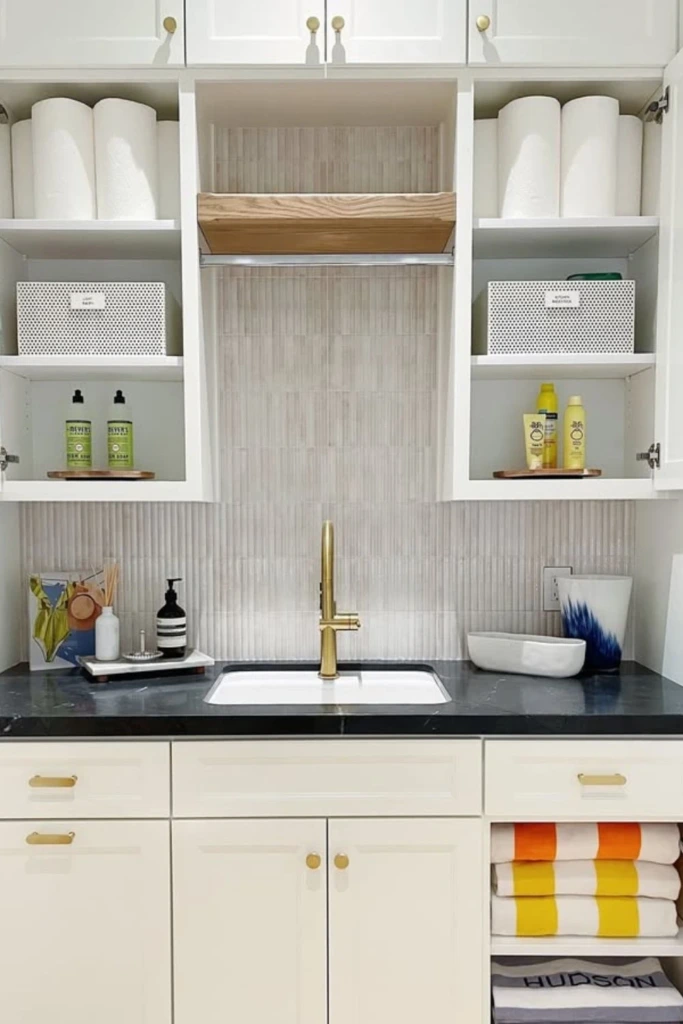
A laundry sink is useful for handwashing delicate clothing, treating stains, and cleaning household items. Keeping the surrounding area organized makes these tasks much easier.
Install moisture-resistant shelves above the sink for frequently used supplies. A small tray can hold scrub brushes, cleaning gloves, and stain-treatment products.
Use waterproof containers beneath the sink to protect stored items from occasional splashes. Leave plumbing connections accessible and avoid placing electrical appliances near water.
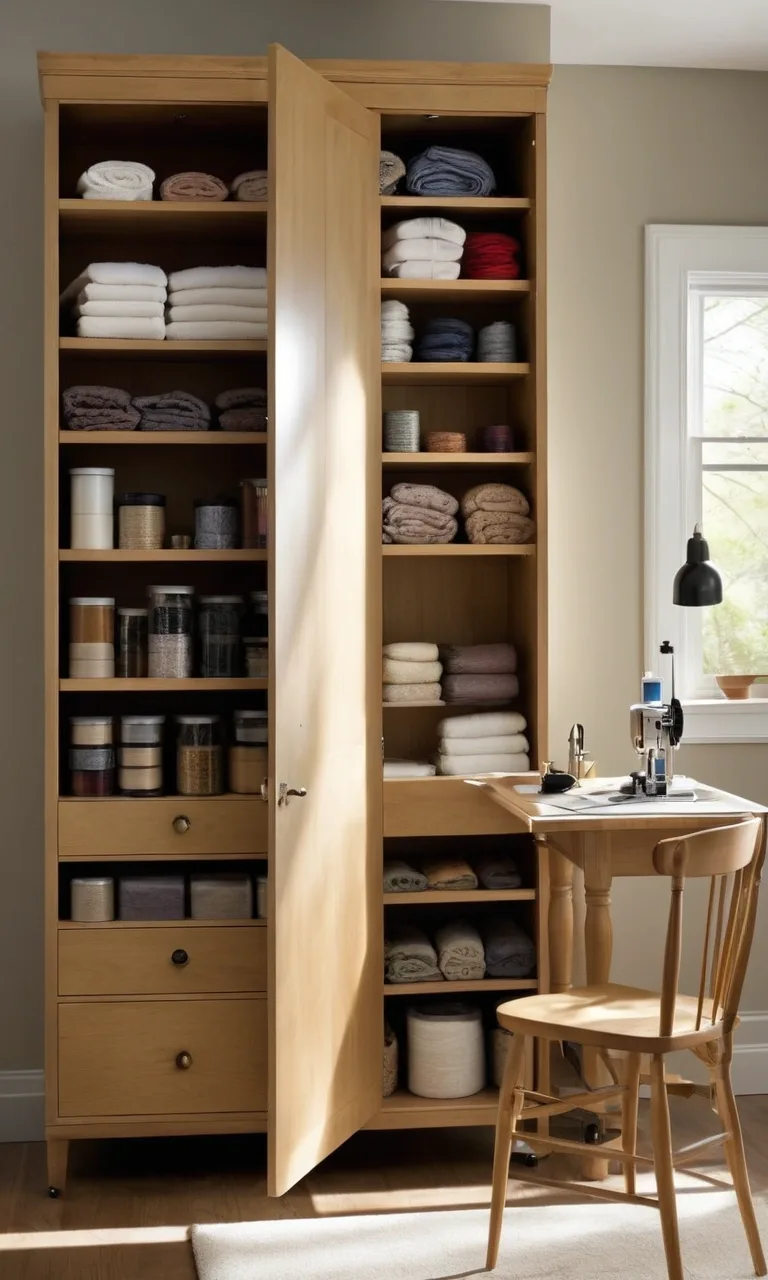
5. Categorized Cabinets
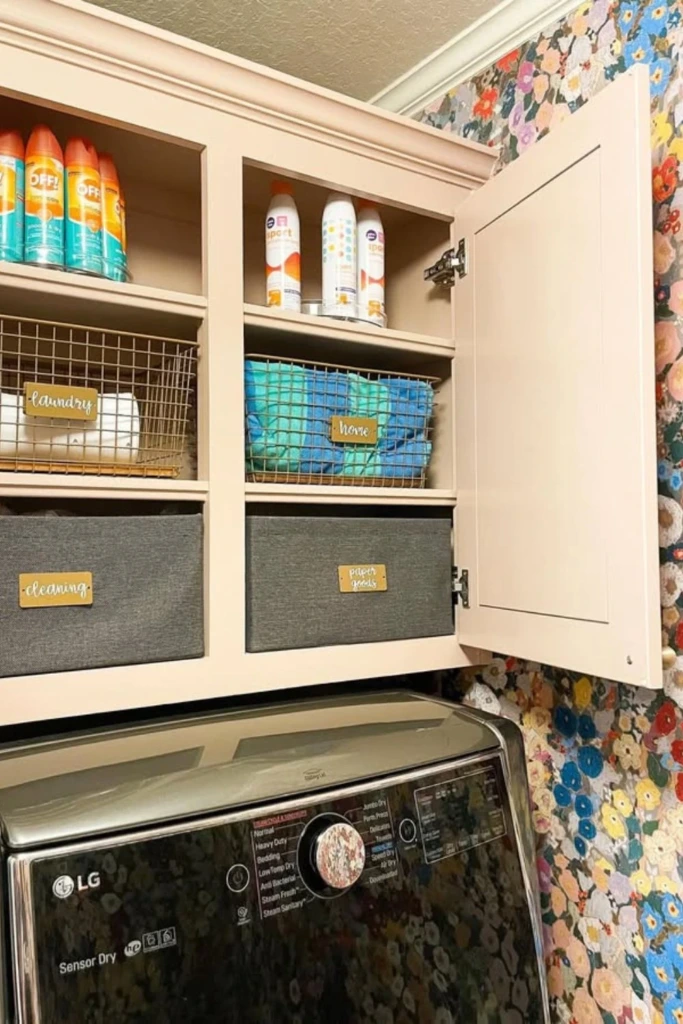
Organizing cabinets by purpose prevents laundry supplies from becoming mixed with unrelated household items.
Dedicate separate sections to washing products, cleaning accessories, spare towels, and paper supplies. Frequently used items should occupy easy-to-reach shelves, while less-used products can go higher.
Matching baskets create a consistent appearance, but practicality matters more than decoration. Choose containers that fit the cabinet dimensions and are easy to remove.
6. Wall-Mount Rack
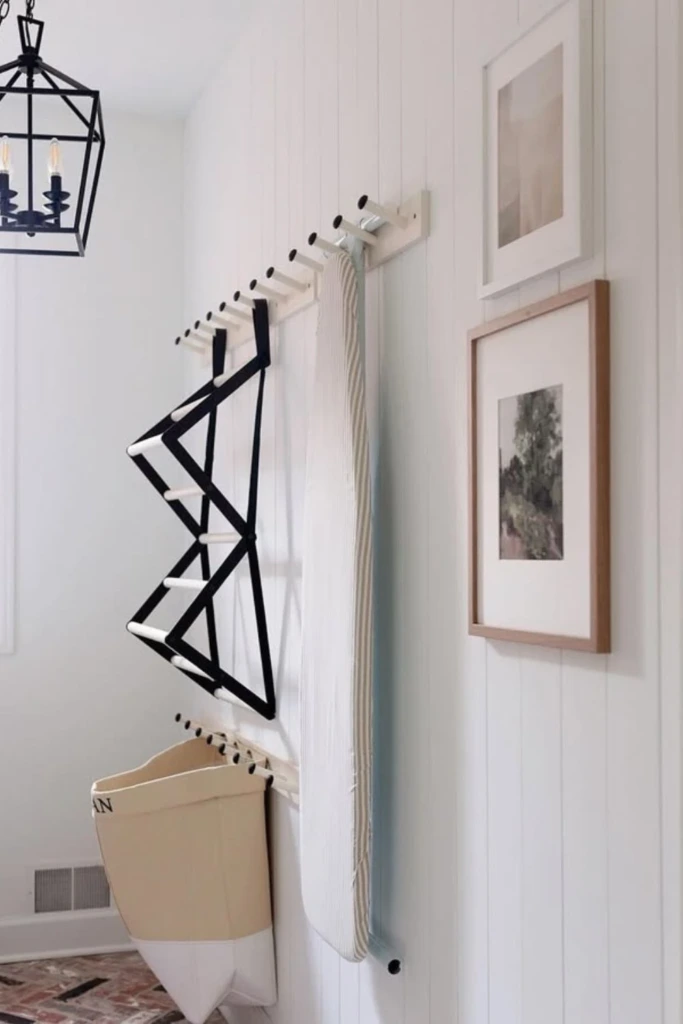
A wall-mounted rack provides convenient storage without taking up floor space.
Choose a design with hooks for laundry bags, a holder for the ironing board, and a folding section for air-drying clothes. This arrangement works especially well in narrow laundry rooms.
Secure the rack to suitable wall supports and check its weight capacity before hanging heavy items. A simple wall system can keep several laundry essentials organized in one accessible location.
7. Pull-Down Ceiling Rack
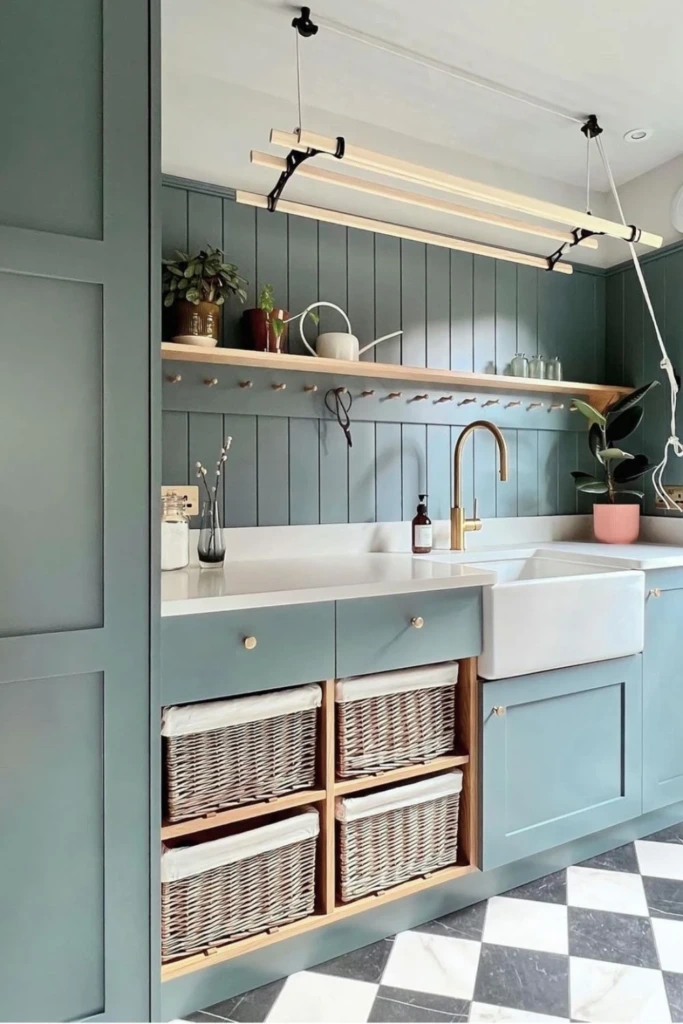
A pull-down ceiling rack makes use of overhead space that would otherwise remain empty.
These racks can be lowered when clothes need drying and raised afterward to keep the room open. They're particularly helpful for lightweight garments and delicate fabrics that shouldn't go into a tumble dryer.
Position the rack where it won't interfere with cabinet doors, lighting, or ventilation. Ensure the ceiling mounting is secure and the mechanism is easy to operate.
8. Countertop Efficiency
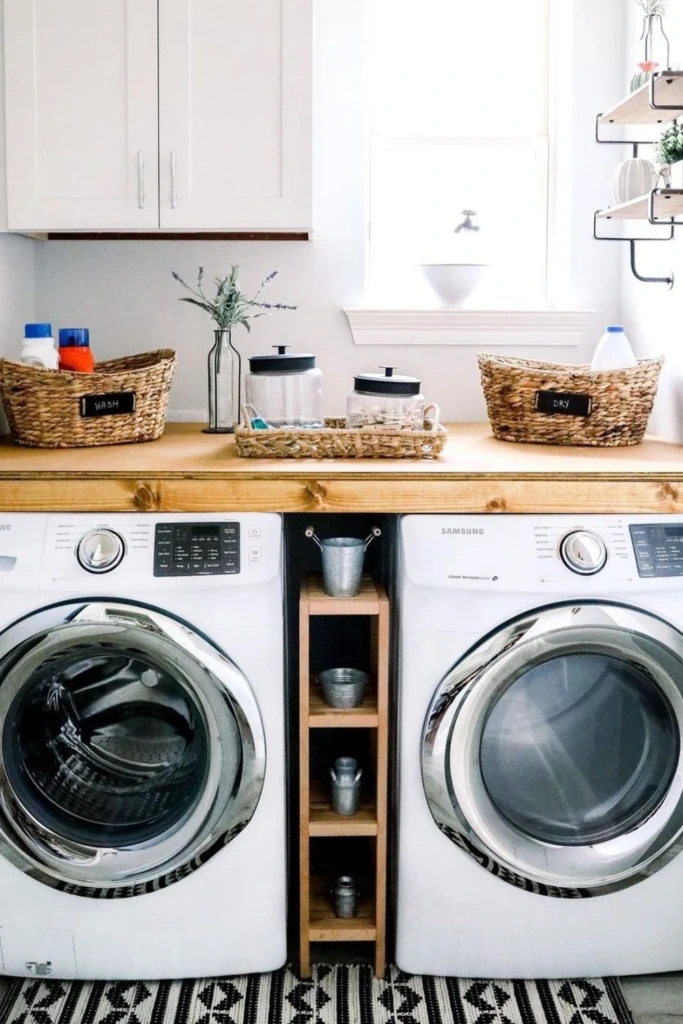
A dedicated folding surface can significantly improve the laundry workflow.
For front-loading machines, a properly supported countertop creates a convenient area for sorting clothes, folding towels, and preparing laundry loads.
Keep the surface mostly clear by storing detergents in nearby cabinets or baskets. A small container for unmatched socks and another for items found in pockets can prevent clutter from accumulating.
Choose a durable, easy-to-clean material that can handle occasional moisture.
9. Colorful Bins
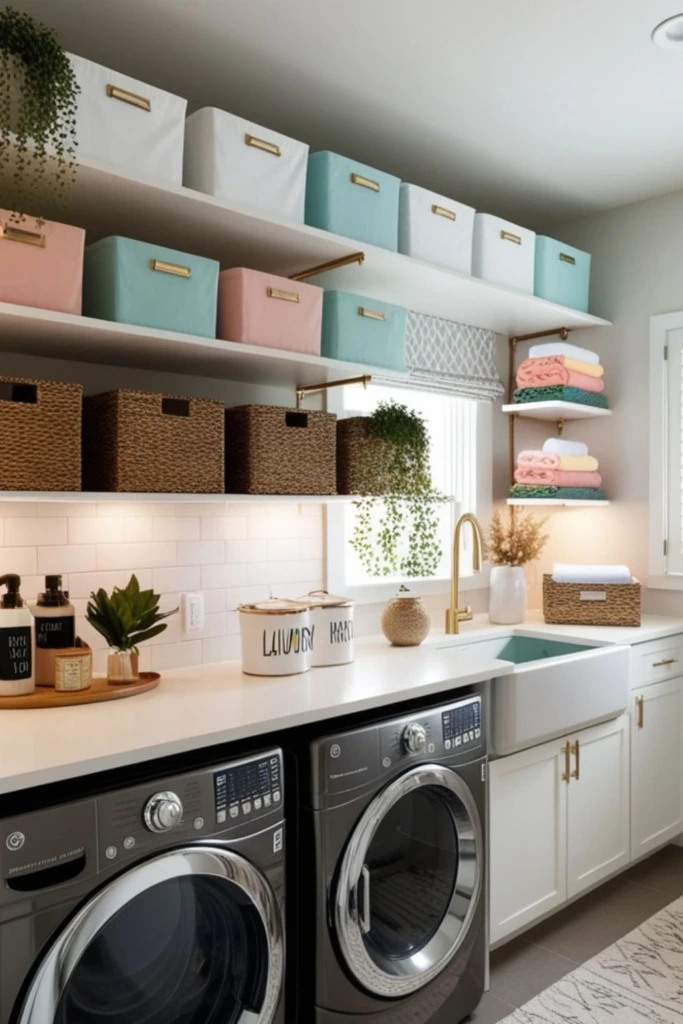
Colorful storage bins can make laundry organization both practical and visually appealing.
Assign a different color to each category, such as towels, cleaning cloths, spare linens, or laundry accessories. This system makes it easier to identify the correct container without checking every label.
Fabric bins work well for dry textiles, while washable plastic containers are better suited to areas where spills might occur.
Use a coordinated color palette to keep the space cheerful without making it feel visually crowded.
10. Rolling Cart Setup
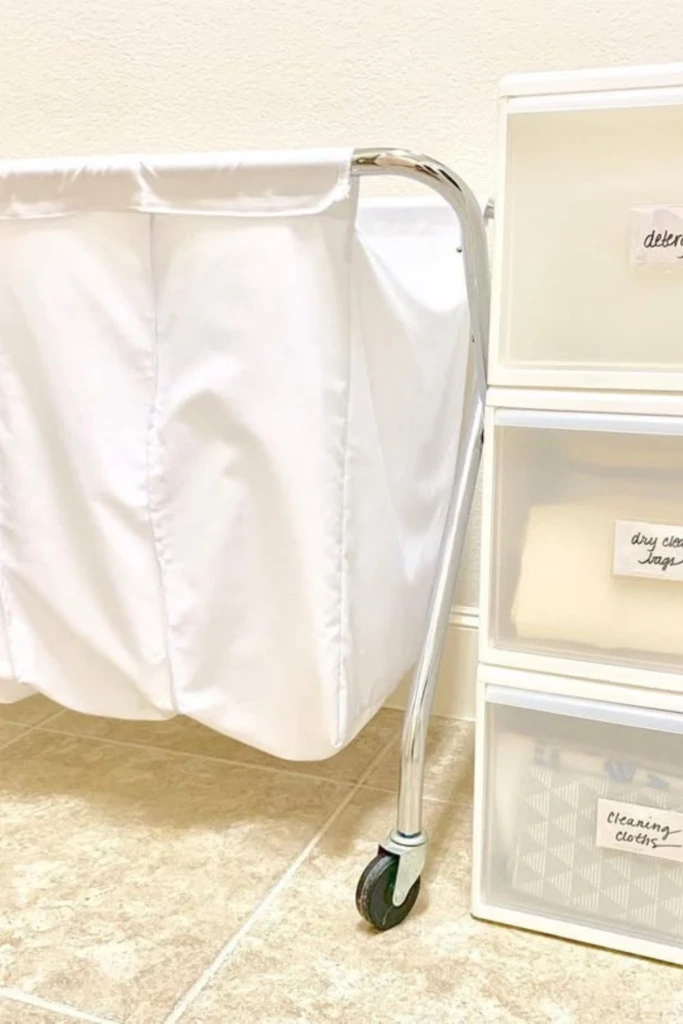
A rolling storage cart is an excellent option when permanent cabinets aren't practical.
A narrow cart with multiple tiers can hold laundry accessories, stain-treatment products, and cleaning tools. Wheels make it easy to move the cart when cleaning behind appliances.
Measure the available gap before purchasing, especially if the cart will sit between a washer and a wall.
Choose a model with locking wheels for stability and keep heavier supplies on the bottom shelf.
11. Rotating Shelves
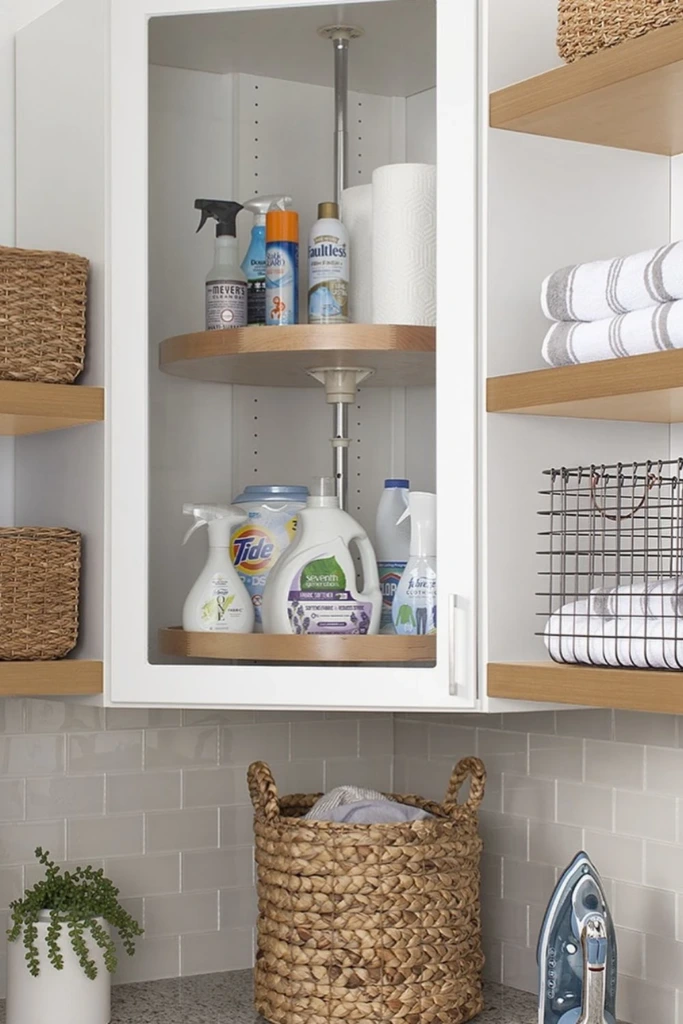
Rotating shelf organizers help make awkward cabinet corners and deep storage spaces more accessible.
A turntable organizer allows you to bring items from the back to the front with a simple rotation. It's especially convenient for smaller bottles, lint rollers, and cleaning accessories.
Select a model with raised edges to prevent items from falling during movement.
For taller cabinets, use separate rotating trays on different shelves to create organized storage zones.
12. Dual Hamper Style
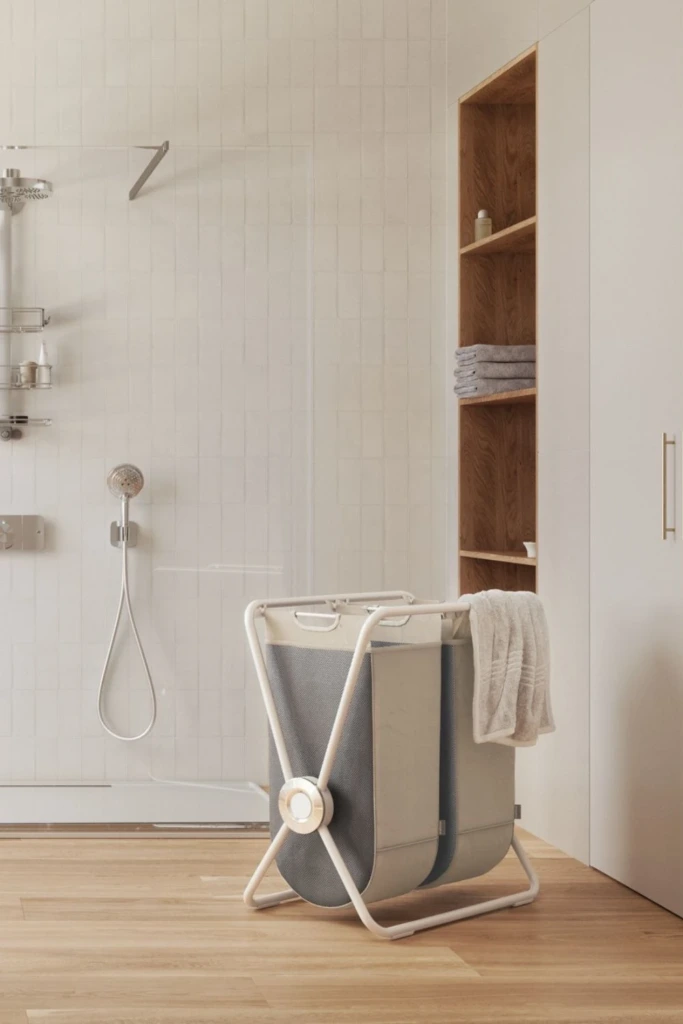
A two-section laundry hamper allows clothes to be sorted as they're collected.
Use one compartment for light clothing and another for darker items, or separate everyday garments from delicate fabrics.
Look for removable washable liners, sturdy handles, and a frame that fits the available floor space.
A dual hamper is especially useful in shared laundry areas because it reduces the amount of sorting required before starting a wash.
13. Utility Drawer System
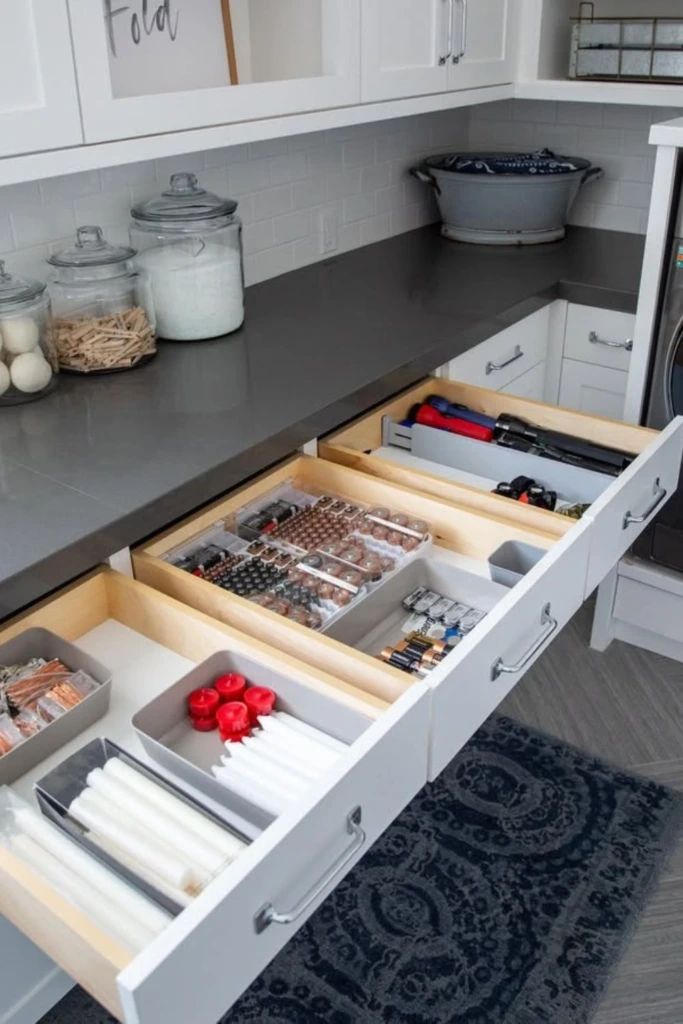
Utility drawers can turn the laundry room into a convenient storage area for small household essentials.
Use drawer dividers to organize sewing supplies, spare buttons, lint brushes, measuring tapes, and other frequently needed items.
Give each drawer a specific purpose rather than filling it with miscellaneous objects. Shallow organizers prevent smaller accessories from getting buried underneath larger ones.
Keep batteries, sharp tools, and other potentially hazardous items securely stored away from children.
14. Open Shelf Aesthetic
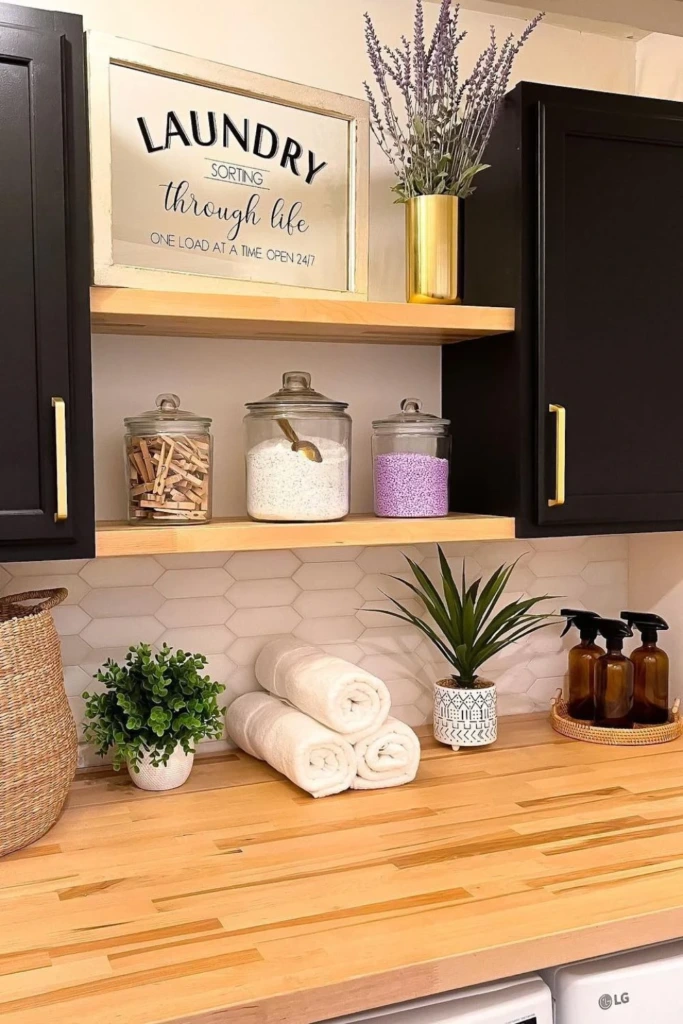
Open shelving creates accessible storage while giving the laundry room a lighter, more spacious appearance.
Wooden shelves can add warmth, particularly when paired with neutral cabinets or simple wall finishes.
Arrange folded towels, empty laundry baskets, and decorative accessories neatly. Use baskets to conceal smaller items that would otherwise make the shelves look cluttered.
Avoid overcrowding the shelves. Leaving some open space makes the arrangement easier to maintain and keeps everyday supplies within reach.
15. Slide-Out Stations
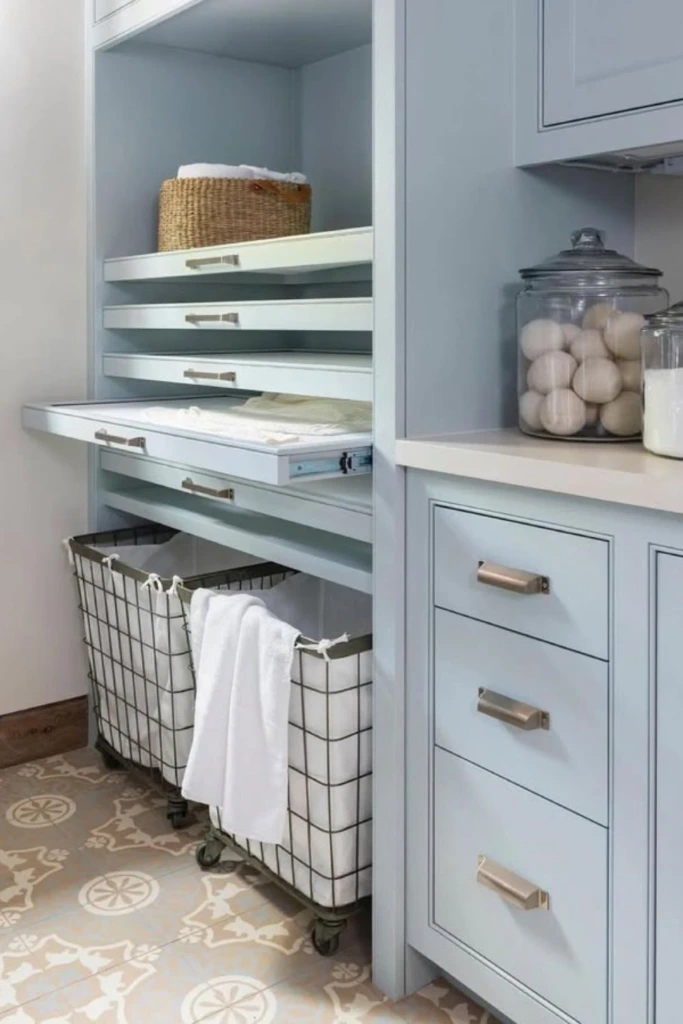
Slide-out work surfaces offer extra functionality without requiring a permanently large countertop.
A retractable shelf can provide temporary space for folding small garments, sorting laundry, or organizing supplies before a wash.
When the task is complete, the shelf slides back into the cabinet, restoring the available walking area.
Choose hardware designed for the expected load and avoid placing heavy appliances on a lightweight pull-out surface.
16. All-Blue Cabinetry
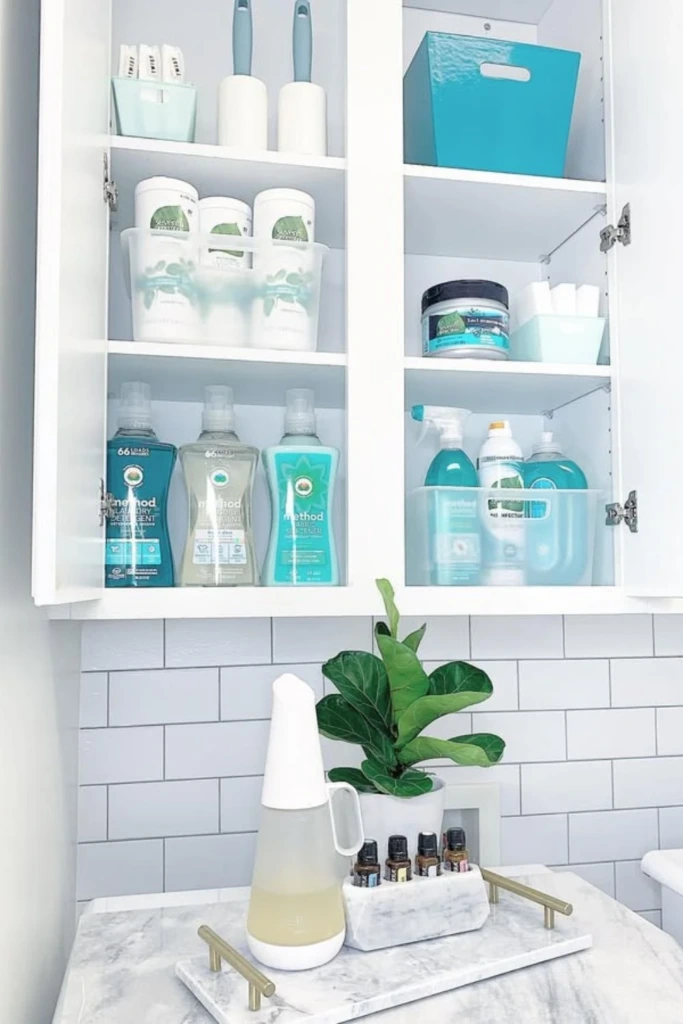
Blue cabinetry can give a laundry room a fresh, coordinated appearance while providing concealed storage.
Soft blue shades work well in smaller rooms, while deeper navy finishes can create contrast against white appliances and light countertops.
Inside the cabinets, use clear organizers or matching blue bins to separate cleaning supplies, spare cloths, and laundry accessories.
Combining attractive cabinet finishes with practical internal organization creates a space that feels intentional rather than simply decorative.
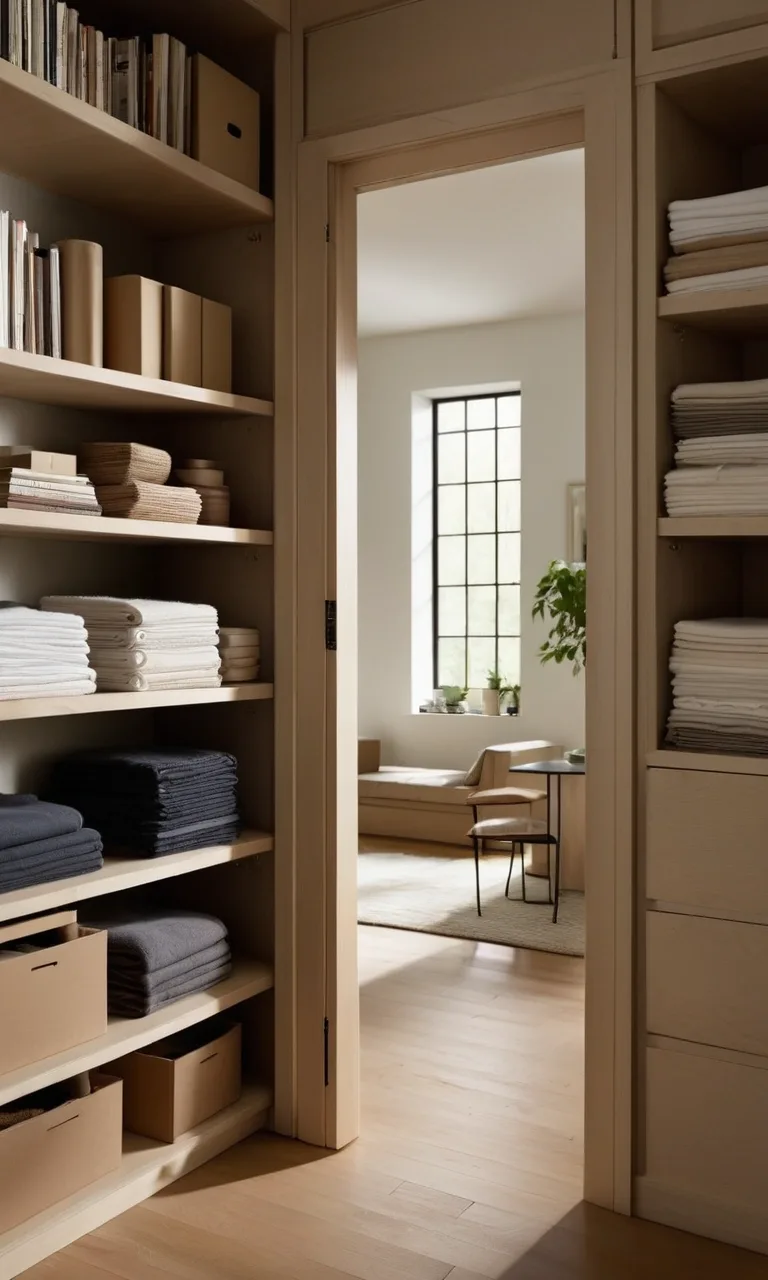
17. Full Shelf Wall
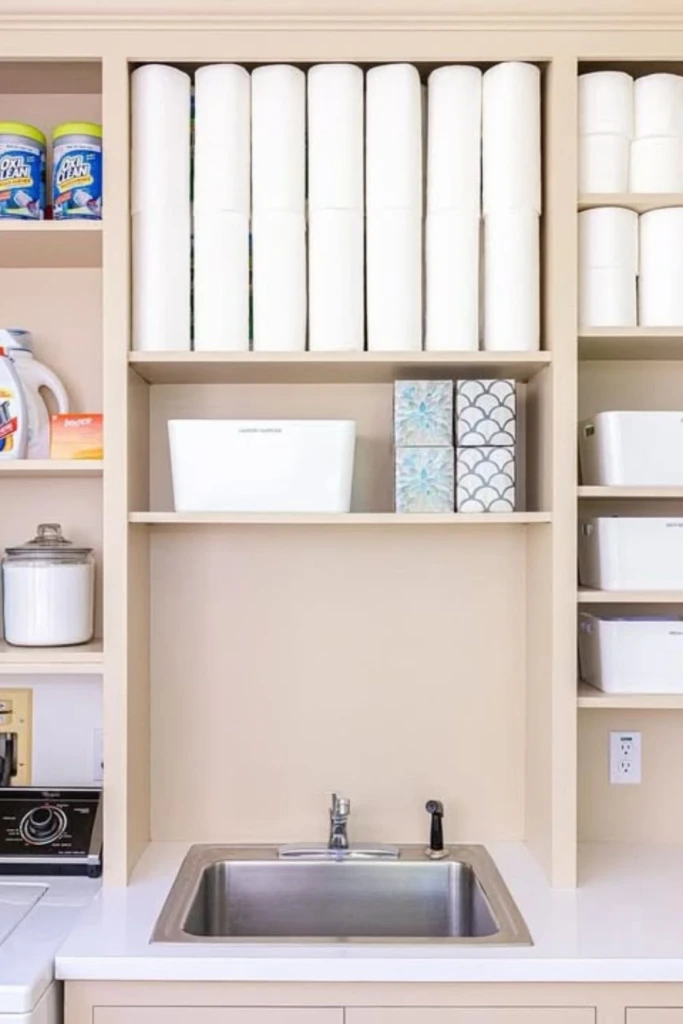
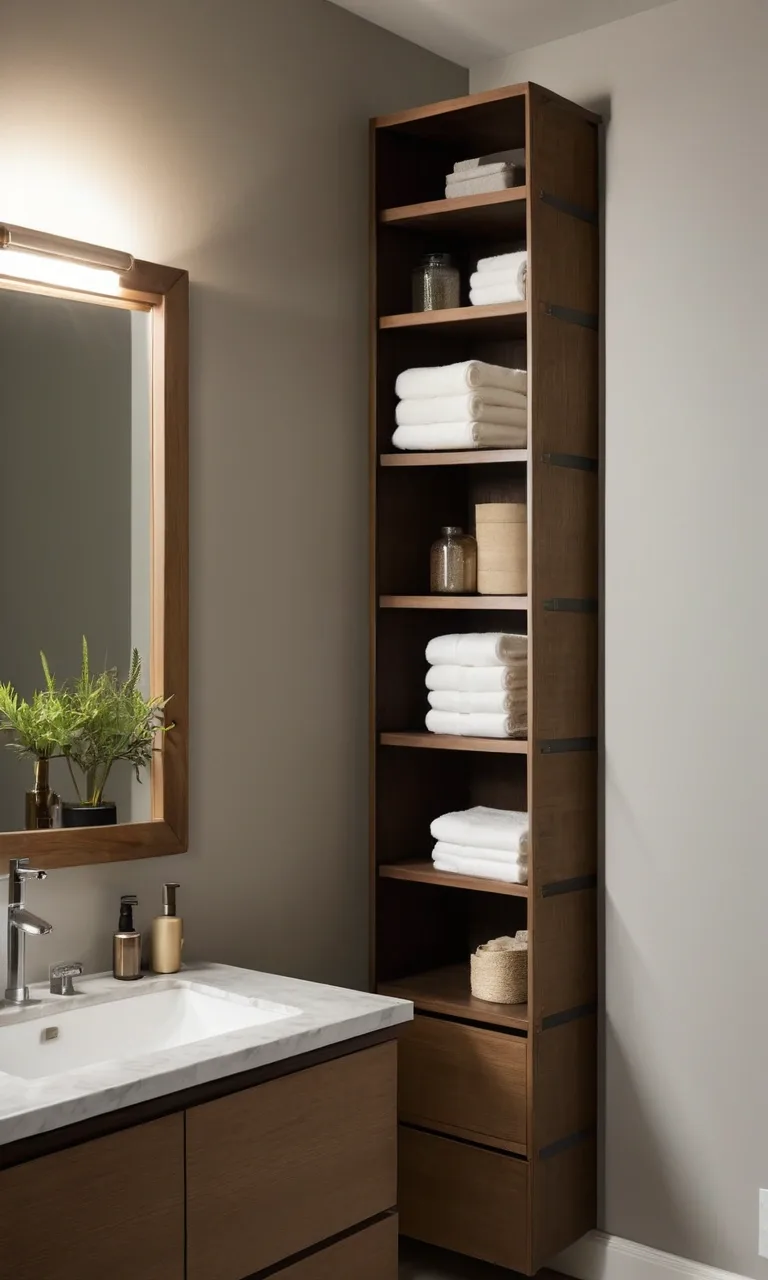
A full wall of shelving is ideal for laundry rooms that also serve as household supply closets.
Floor-to-ceiling storage provides room for extra towels, cleaning equipment, paper products, and bulk household essentials.
Keep frequently used supplies between waist and shoulder height. Store heavier items on lower shelves and lightweight seasonal products above.
Use labeled baskets to prevent small objects from spreading across the shelves. Secure tall shelving units properly to reduce the risk of tipping.
18. Lidded Wicker Hamper
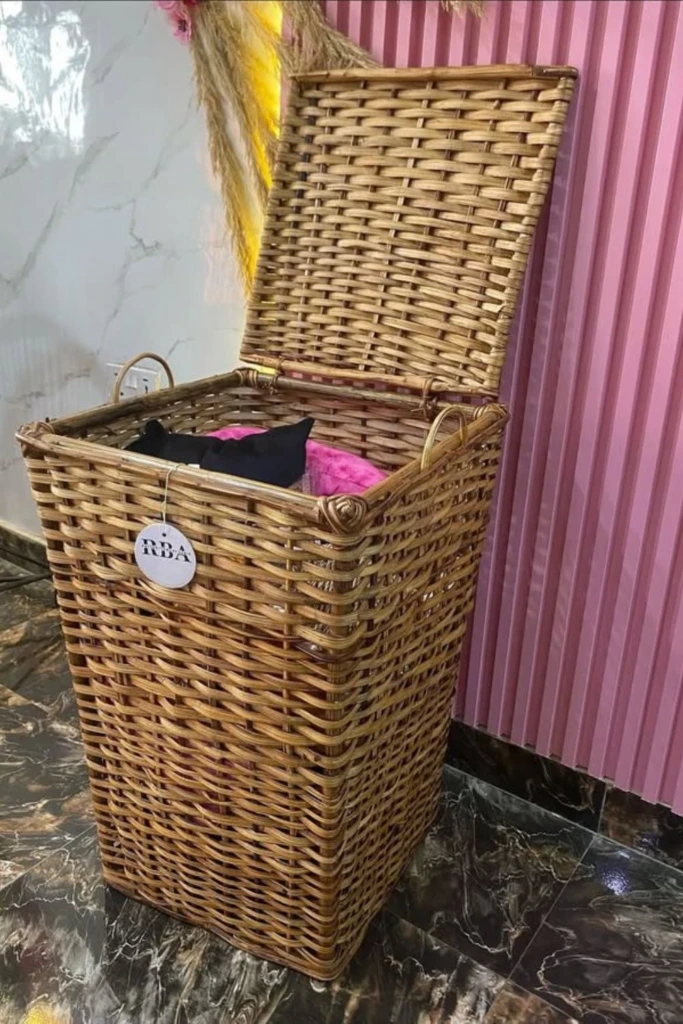
A wicker hamper with a lid offers an attractive way to keep dirty laundry out of sight.
Its woven texture can soften the appearance of a room filled with appliances, cabinets, and hard surfaces.
Choose a hamper with ventilation and a removable liner that can be washed regularly. Handles make it easier to carry laundry between rooms.
A tall, narrow design works particularly well in compact spaces where a wide basket would obstruct movement.
19. Ceiling Drying Rack
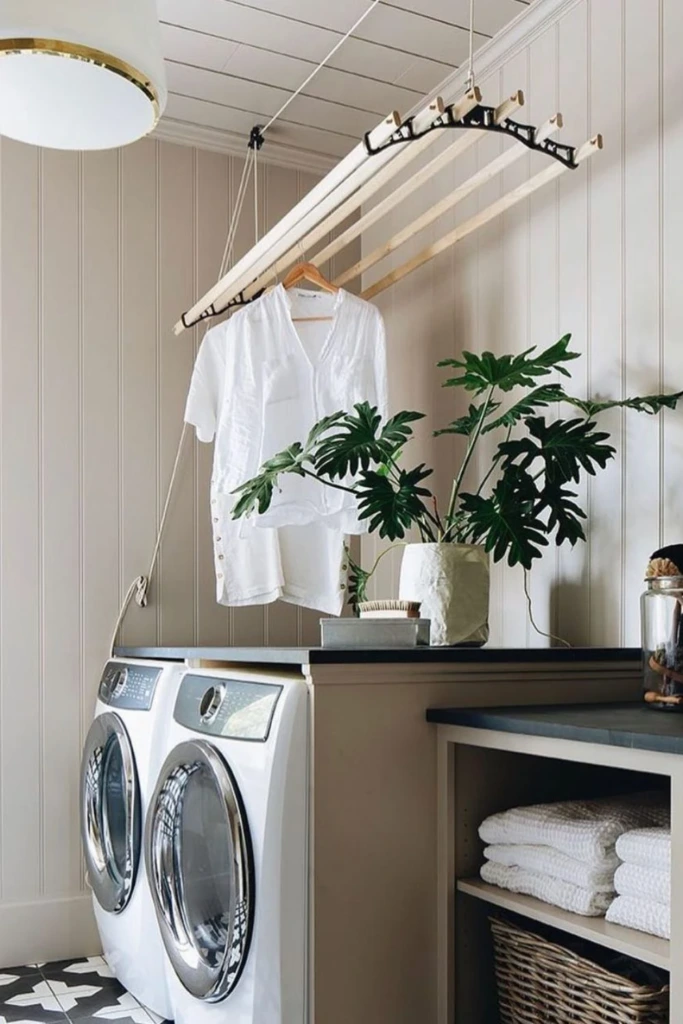
A ceiling-mounted drying rack provides a practical alternative to bulky freestanding clothes airers.
Pulley-operated designs can be lowered for loading clothes and raised to make better use of vertical space.
This setup is useful for drying lightweight shirts, towels, and garments that require gentle care.
Install the rack according to the manufacturer's instructions, maintain sufficient airflow, and avoid exceeding the recommended weight limit. Good ventilation helps clothes dry efficiently and reduces moisture buildup.
20. Built-In Drawers
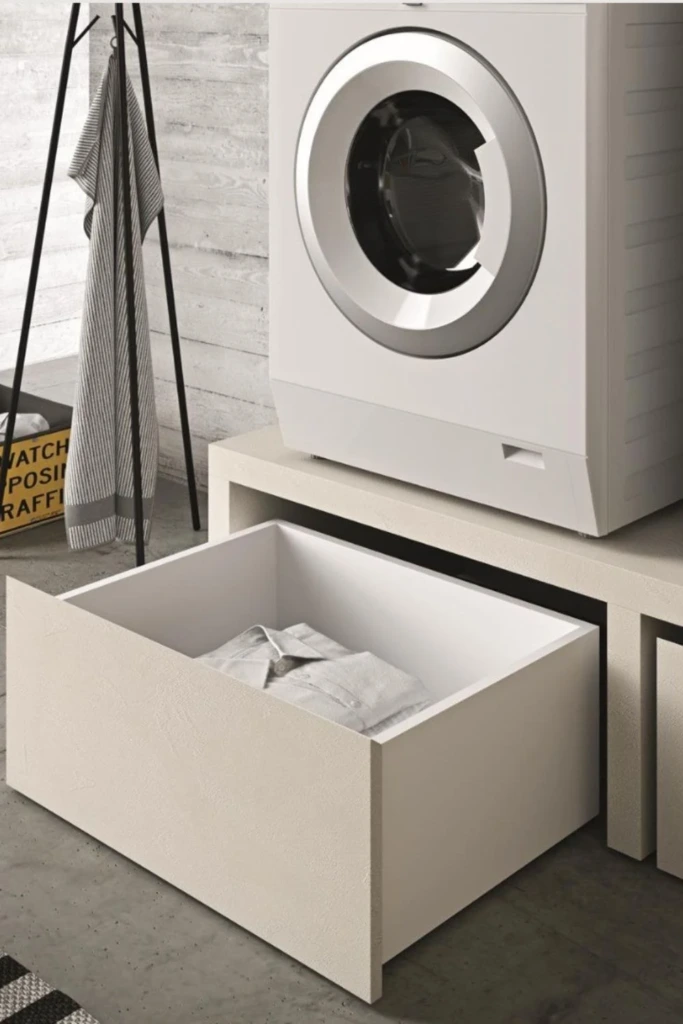
Built-in drawers beneath laundry appliances can provide convenient storage while raising front-loading machines to a more comfortable working height.
These drawers are useful for storing laundry bags, cleaning cloths, and accessories that don't need to remain on display.
Choose appliance-compatible pedestals or properly engineered supports rather than placing machines on ordinary furniture.
Internal dividers help keep the drawers organized, while full-extension runners make it easier to access stored items.
21. Pegboard Wall
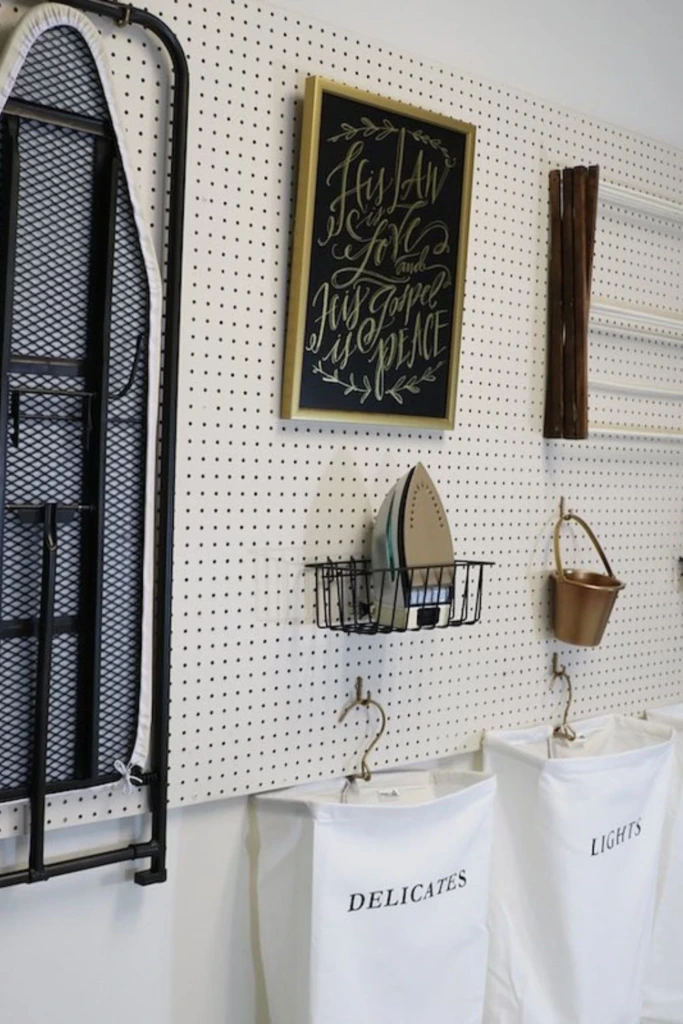
A pegboard transforms an unused wall into flexible storage for laundry tools and accessories.
Attach hooks, small baskets, and holders to accommodate lint brushes, cleaning gloves, hangers, and lightweight supplies.
One major advantage is that the layout can change whenever your storage needs change.
Position frequently used items at a comfortable height and use suitable anchors to secure the board. Keep heavier objects on dedicated supports rather than small pegboard hooks.
22. Multipurpose Pegboard
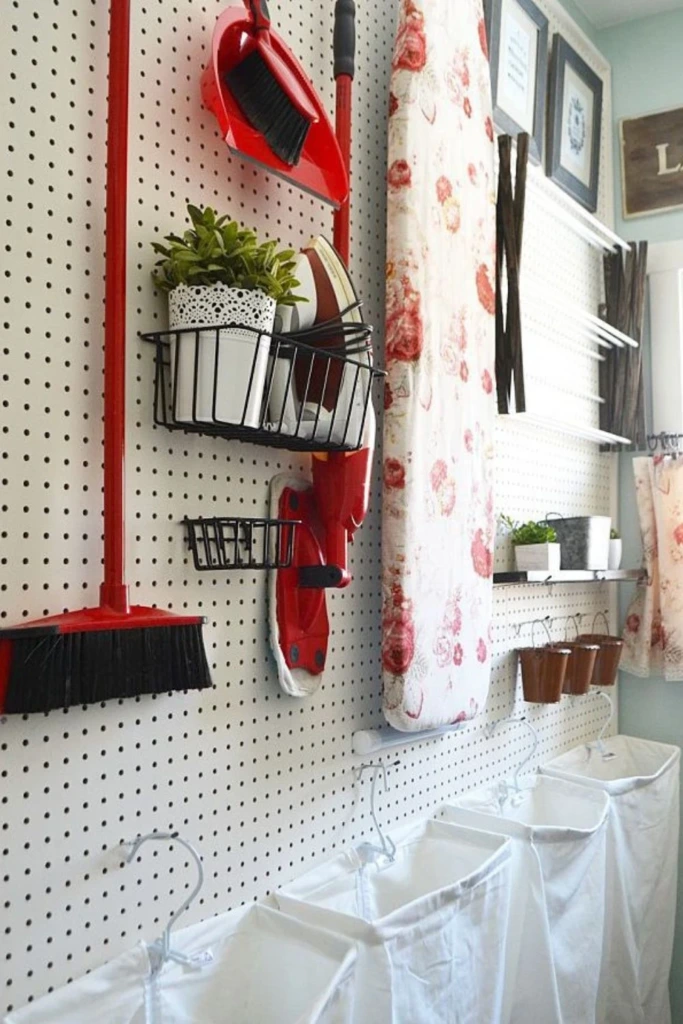
A multipurpose pegboard can organize laundry essentials alongside general household tools.
Divide the board into functional sections. One area might hold garment-care accessories, another cleaning tools, and another small storage containers.
Add hanging baskets for reusable cloths or empty laundry bags. A small decorative plant can provide a finishing touch without interfering with storage.
This arrangement works particularly well in utility rooms that handle several household tasks.
23. Slide-Out Dryer Rack
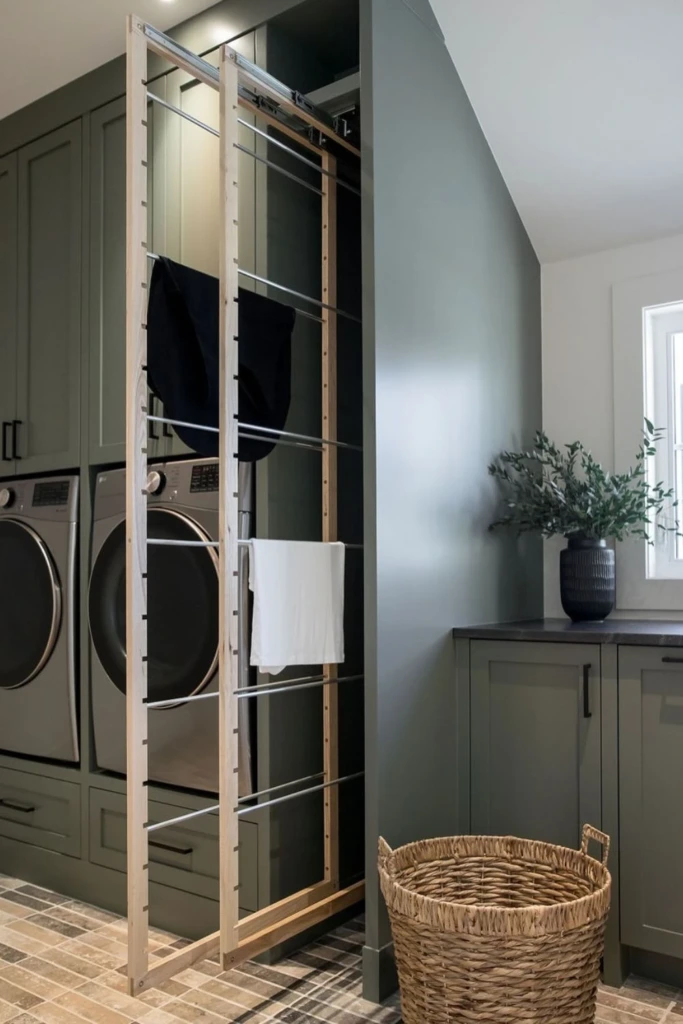
A slide-out drying rack provides concealed space for air-drying clothes.
Installed inside a cabinet, the rack extends when needed and slides away once garments are dry.
It's especially useful for delicate clothing, small towels, and items that should remain flat or hang without being stretched.
Allow sufficient space between garments for airflow, and avoid closing damp clothes inside an unventilated cabinet. Moisture-resistant materials make the system easier to maintain.
24. Hidden Sink Nook
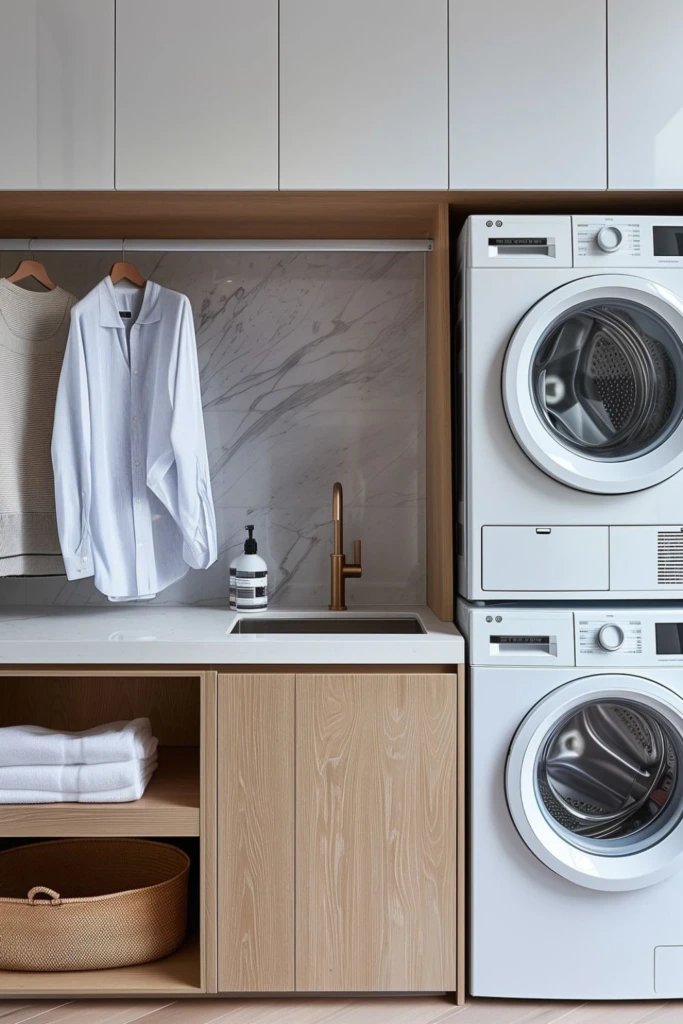
A compact sink nook can make a small laundry room more functional without dominating the layout.
Position a utility sink beside stacked appliances or within a narrow cabinet arrangement, depending on the available plumbing and space.
Install a short hanging rod above the sink for drip-drying small garments, provided it won't obstruct access.
Open shelves or a cabinet beneath the sink can hold towels and cleaning accessories. Choose finishes that tolerate humidity and are easy to wipe clean.
25. Compact Wall Rack
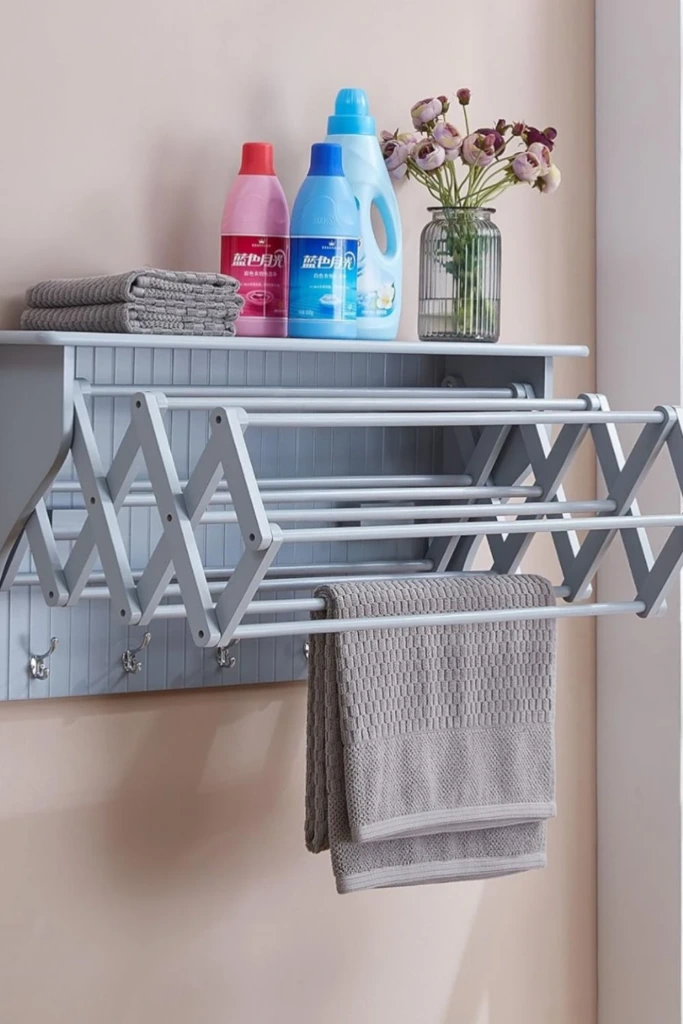
A compact wall rack combines several storage functions within a small footprint.
Look for a design featuring a folding drying section, an upper shelf, and hooks for lightweight accessories.
This type of organizer is particularly useful in apartments, laundry closets, and narrow utility spaces.
Install it where the drying section can open fully without blocking doors or walkways. When folded, the rack keeps the area tidy and allows more freedom of movement.
26. Pull-Out Iron Board
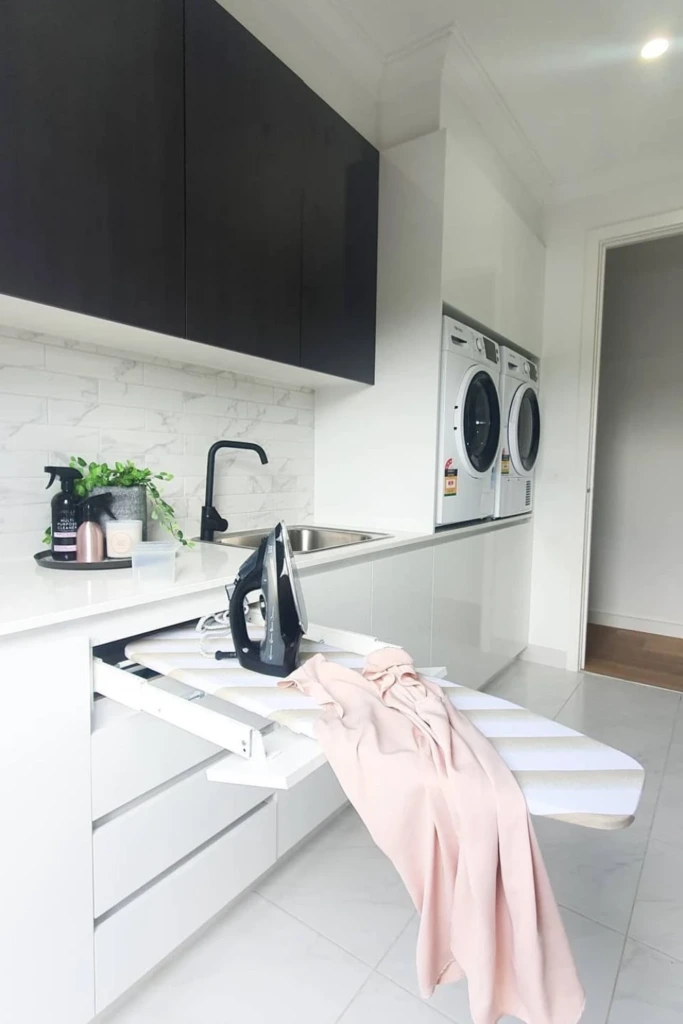
A pull-out ironing board is a practical choice for households that iron regularly but lack space for a traditional freestanding board.
Built-in models can be installed inside a cabinet or beneath a suitable countertop. The board extends when required and folds away afterward.
Choose a heat-resistant design with sturdy supports and sufficient clearance for comfortable ironing.
Keep the iron on a safe, heat-resistant surface during use, and allow it to cool completely before storing it.
A concealed ironing station helps maintain a clean, uncluttered laundry room while keeping an essential garment-care tool readily available.