21 Lazy Susan Organization Ideas for 2026
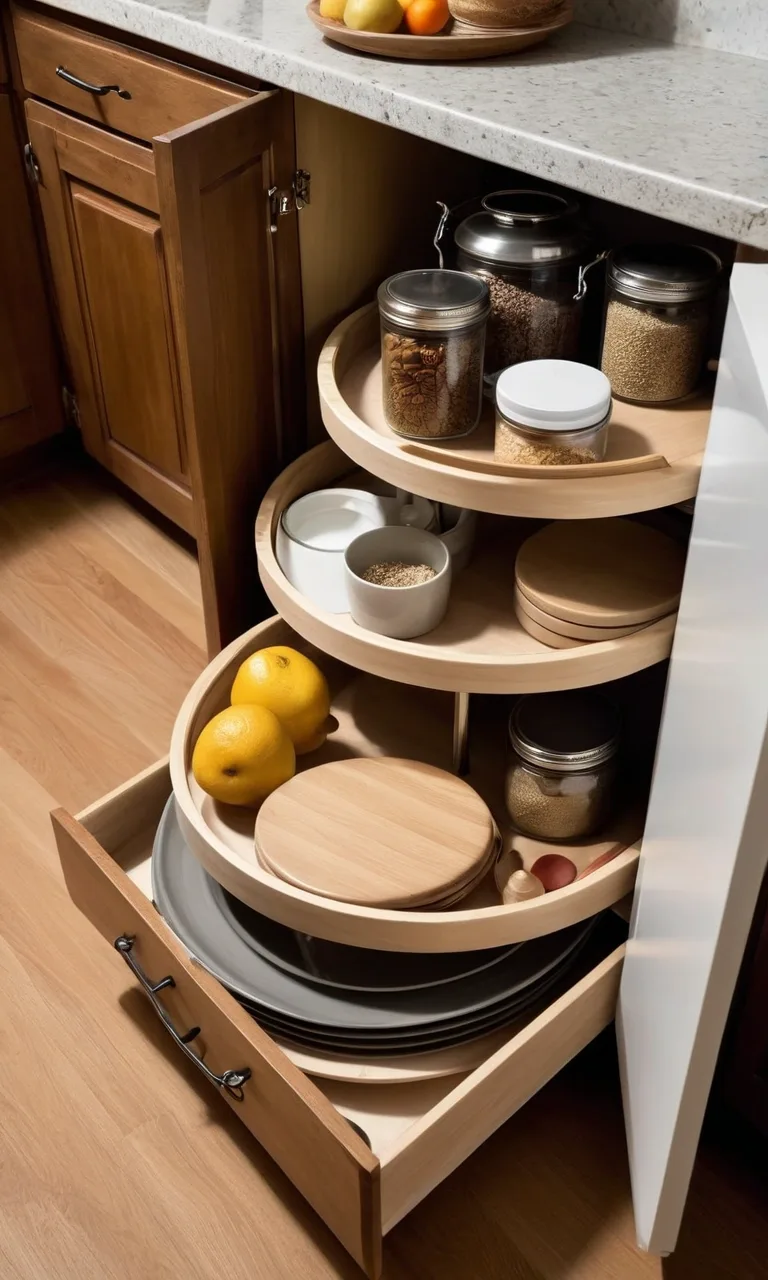
A cluttered cabinet can make even a well-organized kitchen feel frustrating. Bottles get pushed behind other containers, small jars disappear from sight, and reaching for a frequently used ingredient becomes an unnecessary chore. A Lazy Susan offers a simple way to make storage more accessible without adding extra shelves or expanding your cabinets.
These rotating organizers are useful in more places than the kitchen. They can keep refrigerator shelves tidy, create a convenient skincare station, organize craft supplies, and make awkward corner cabinets easier to use. With the right tray and a thoughtful arrangement, you can turn unused space into practical storage.
Whether you have a small apartment kitchen or a spacious pantry, these Lazy Susan organization ideas can help you create a system that looks neat and works for your everyday routine.
How Do You Organize a Deep Cabinet With a Lazy Susan?
Start by removing everything from the cabinet and checking which items you actually use. Discard expired products, wipe down the shelves, and group the remaining items into categories such as cooking oils, sauces, spices, and baking ingredients.
Choose a rotating tray that fits comfortably inside the cabinet, leaving enough clearance for it to turn without hitting the walls or nearby containers. Place frequently used products where they are easy to reach, and arrange similar items together so you can find what you need quickly.
For taller bottles, check that they remain stable as the tray rotates. Smaller jars benefit from divided sections or raised edges that prevent them from sliding. If the cabinet is especially deep, a two-tier organizer can provide additional storage while keeping the contents visible.
The goal is to create a setup that requires minimal effort to maintain. When every category has a designated place, putting items away becomes just as easy as finding them.
1. Hidden Milk
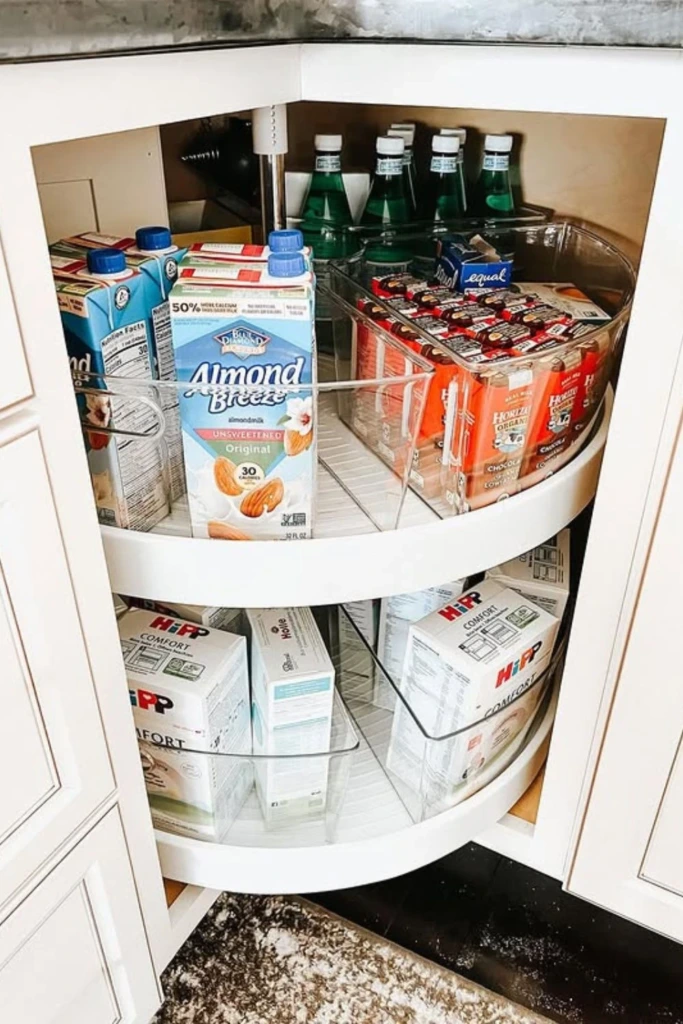
Refrigerator corners can become forgotten storage areas, particularly when milk cartons and juice bottles are lined up behind other groceries. A rotating organizer makes these drinks easier to see and retrieve.
Arrange frequently used beverages around the tray, leaving enough room between containers for smooth movement. Small drink cartons can sit together in a lightweight, washable bin, while taller bottles should remain upright and stable.
If you choose a tiered design, reserve the lower level for shorter containers and use the upper level only for items that fit securely. Keep perishable drinks refrigerated according to their packaging instructions, and avoid overcrowding the tray.
This arrangement is especially useful for households that regularly stock several types of milk, plant-based drinks, and juice. Instead of moving multiple cartons to find one, you can rotate the organizer and select what you need.
2. Tiered Storage
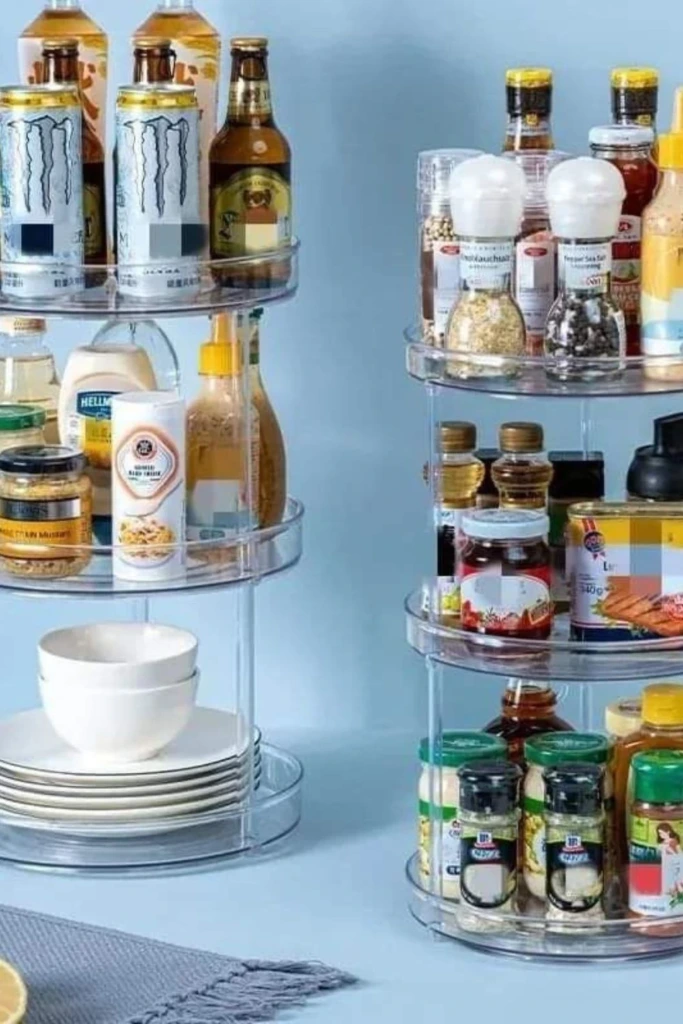
When counter space is limited, a tiered Lazy Susan helps you make better use of the available vertical room. Rather than spreading sauces, seasonings, and condiments across the countertop, you can group them on separate levels.
Place taller bottles on a level with enough clearance and keep frequently used condiments within easy reach. Shorter jars work well on the lower tier when they remain visible and accessible. Before arranging everything, check the height between shelves to ensure that bottles do not interfere with one another.
A tiered turntable can work on a kitchen counter, inside a pantry, or in a cabinet with sufficient height. Choose a washable material for areas where oil or sauce spills are common.
The advantage is straightforward: more items stay organized within one compact footprint, and rotating the tray lets you reach products that would otherwise sit behind other containers.
3. Fridge Spinner
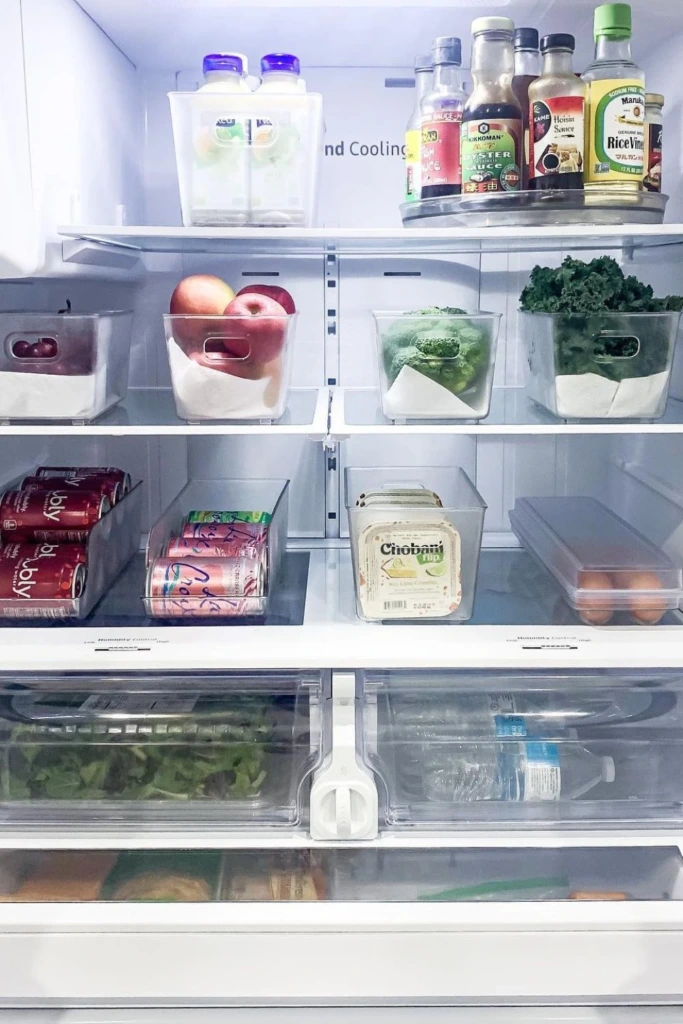
Condiment bottles often collect at the back of refrigerator shelves, making it difficult to see what you already have. A refrigerator-safe Lazy Susan can turn that crowded section into a convenient rotating station.
Group salad dressings, sauces, marinades, and other refrigerated condiments according to how you use them. Keep taller containers upright and make sure their lids are secure before placing them on the tray.
A clear turntable makes it easier to identify products at a glance, while a raised rim can help contain small drips. Check the organizer's dimensions before purchasing, since refrigerator shelves and door compartments vary considerably in size.
For easier cleaning, remove the tray periodically and wash it according to the manufacturer's instructions. Wipe up spills promptly, and keep foods that require refrigeration at the appropriate temperature.
This setup is particularly helpful when several family members use the same refrigerator and need to find condiments without rearranging the entire shelf.
4. Beauty Spinner
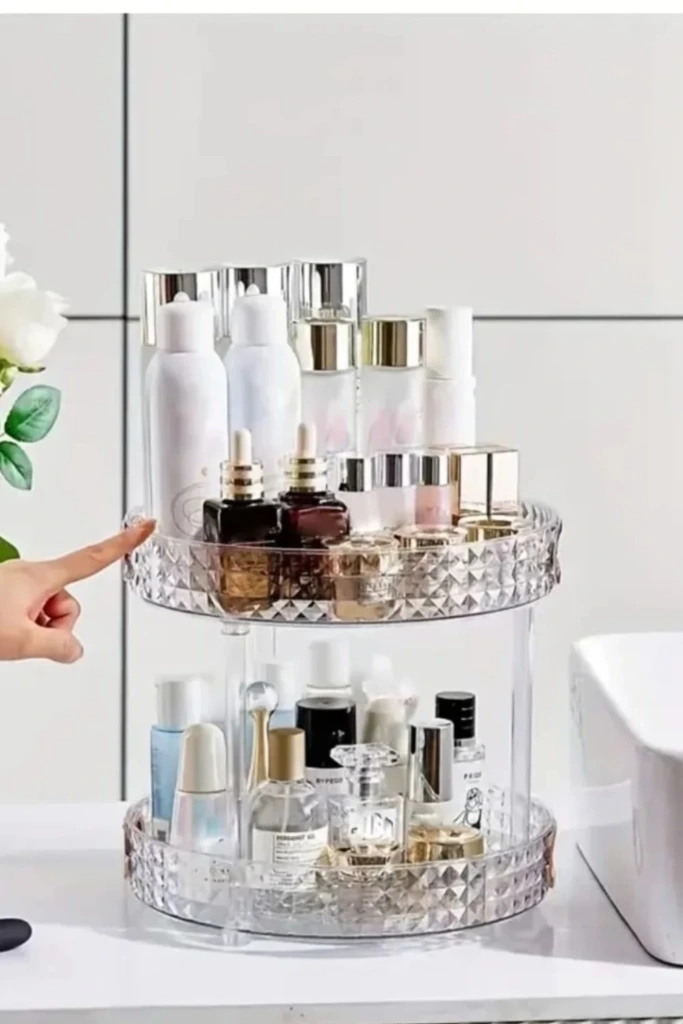
Skincare products and makeup can quickly take over a bathroom counter. A rotating beauty organizer keeps everyday essentials together while making smaller containers easier to locate.
Use separate sections for skincare, cosmetics, fragrances, and hair products. Taller bottles can stand toward the center if the organizer is stable, while smaller jars and compact items can be arranged around the edges.
Clear acrylic is a popular option because it allows you to see the contents without opening drawers or moving containers. If your collection includes brushes, cotton pads, or small accessories, use removable cups or dividers to prevent them from mixing together.
Position the organizer somewhere convenient but away from excessive moisture and direct sunlight when product labels recommend those precautions. Keep the tray clean and avoid placing heavy glass bottles where they could tip during rotation.
A well-arranged beauty spinner can make morning routines smoother and prevent frequently used products from getting buried behind less-used items.
5. Cooking Hub
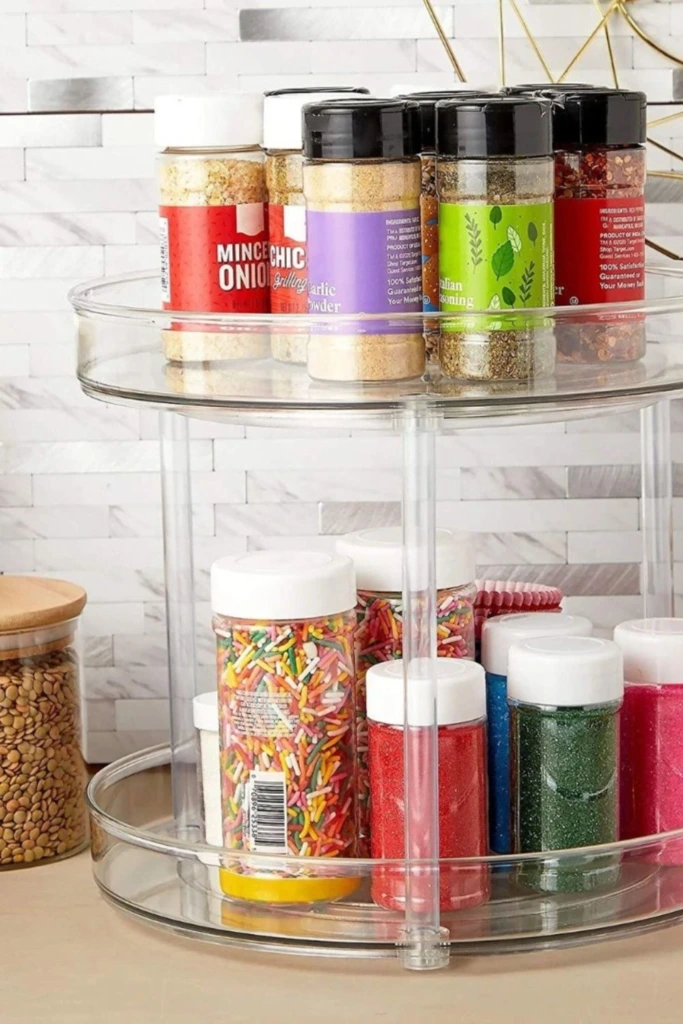
Create a compact cooking station by grouping the ingredients you reach for most often on a divided Lazy Susan. Salt, pepper, cooking oil, commonly used spices, and everyday seasonings can all have a designated place.
Divided compartments help separate small jars from larger bottles, reducing the chance of containers knocking into one another. Keep frequently used seasonings toward the front or outer edge so they are easy to grab.
Choose a tray with a sturdy base and enough room for the containers you plan to store. Place it on a cool, stable section of the counter rather than directly beside a hot burner, where heat and grease can affect both the organizer and its contents.
This arrangement works well for people who cook regularly and want essential ingredients close at hand. It also makes cleanup easier because the bottles and jars can be moved together when the countertop needs wiping.
6. Yogurt Station
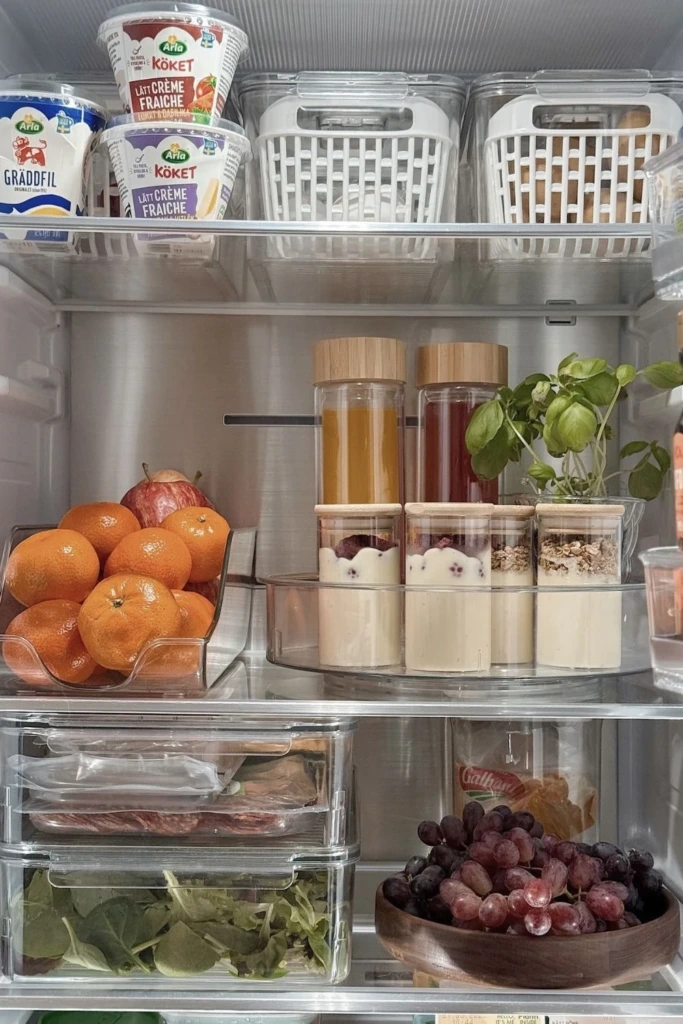
A dedicated yogurt station can make breakfast and snack time easier, especially in a busy household. Yogurt cups, pudding containers, and other individually packaged treats are simple to arrange on a rotating tray.
Group similar items together and place smaller containers around the outer edge so their labels remain visible. If you keep fruit toppings or other accompaniments nearby, store them separately when necessary to prevent spills and cross-contamination.
A refrigerator-safe turntable with a non-slip surface is a practical choice. Make sure it has enough space for the containers without forcing them together, and keep all refrigerated snacks within the recommended temperature range.
This setup is convenient for families because everyone can see the available options without moving several packages around. It can also help you notice which items need to be used before their expiration dates.
7. Corner Plates
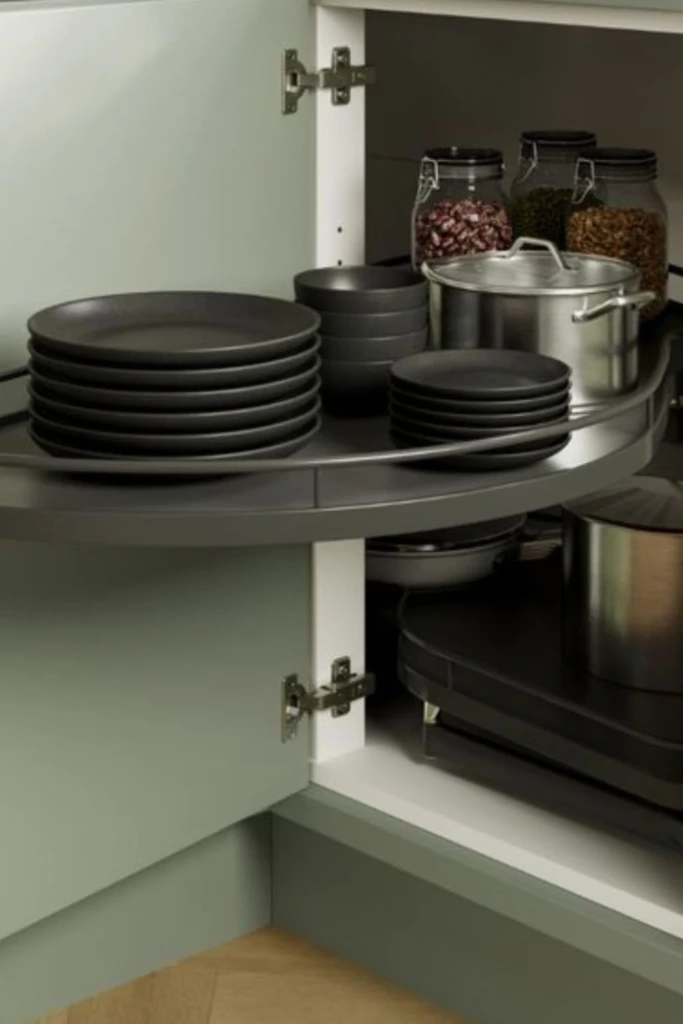
Deep corner cabinets can be awkward places to store dishes because plates and bowls at the back are difficult to reach. A built-in Lazy Susan makes the space more practical by bringing different sections of the cabinet toward you.
Arrange stacks of plates and bowls evenly around the rotating shelf. Keep the stacks modest in height and place heavier pieces where the tray can support them securely. Avoid loading one side significantly more than the other, as an uneven arrangement can make rotation difficult.
If your cabinet has multiple levels, distribute dishes according to their weight and frequency of use. Everyday dinnerware can occupy the most accessible level, while serving bowls or occasional-use dishes can go elsewhere.
Check the organizer's weight limit before storing ceramic or stoneware dishes. A properly fitted system can make corner storage easier to navigate while reducing the need to reach deep into the cabinet.
8. Snack Tray
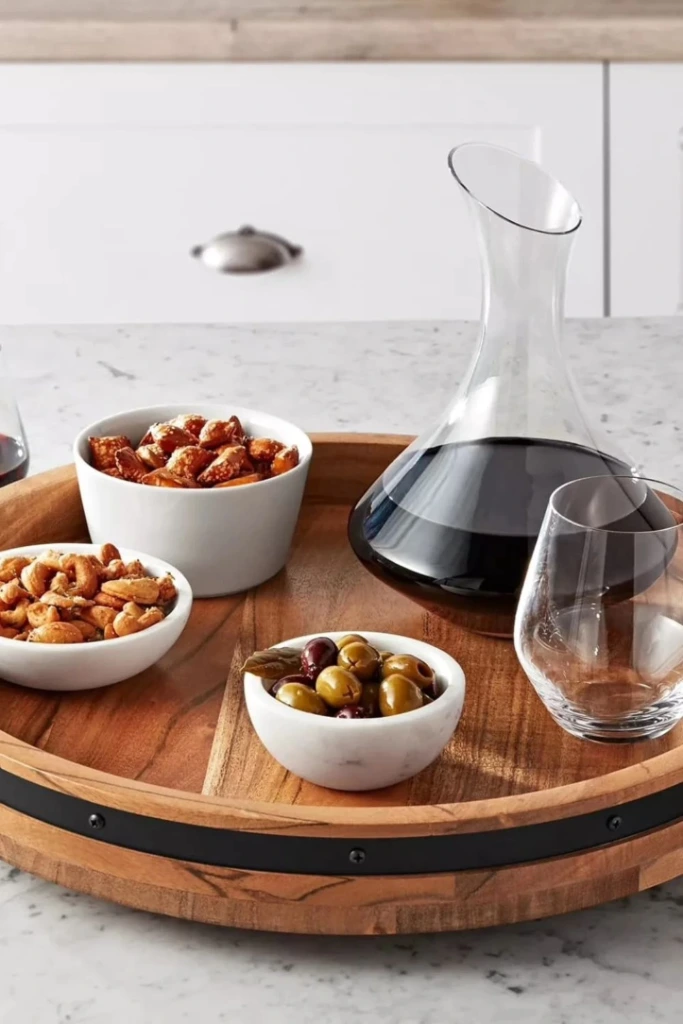
A wooden Lazy Susan can double as a convenient serving tray for family gatherings, casual dinners, and parties. Instead of passing several bowls around the table, place popular snacks on one rotating platform.
Use small bowls for nuts, crackers, olives, dried fruit, or other finger foods. Keeping each snack in its own container helps separate flavors and makes the arrangement look more intentional.
Leave enough space between bowls so guests can reach them comfortably without knocking anything over. Drinks and heavy glassware are usually better placed on a separate, stable surface, particularly if the tray is crowded.
This idea works especially well on a dining table or kitchen island where people sit on different sides. Guests can rotate the tray to reach their preferred snack, making serving more convenient without taking up additional table space.
After use, clean the tray according to its material and dry wooden surfaces thoroughly before storing them.
9. Oil Access
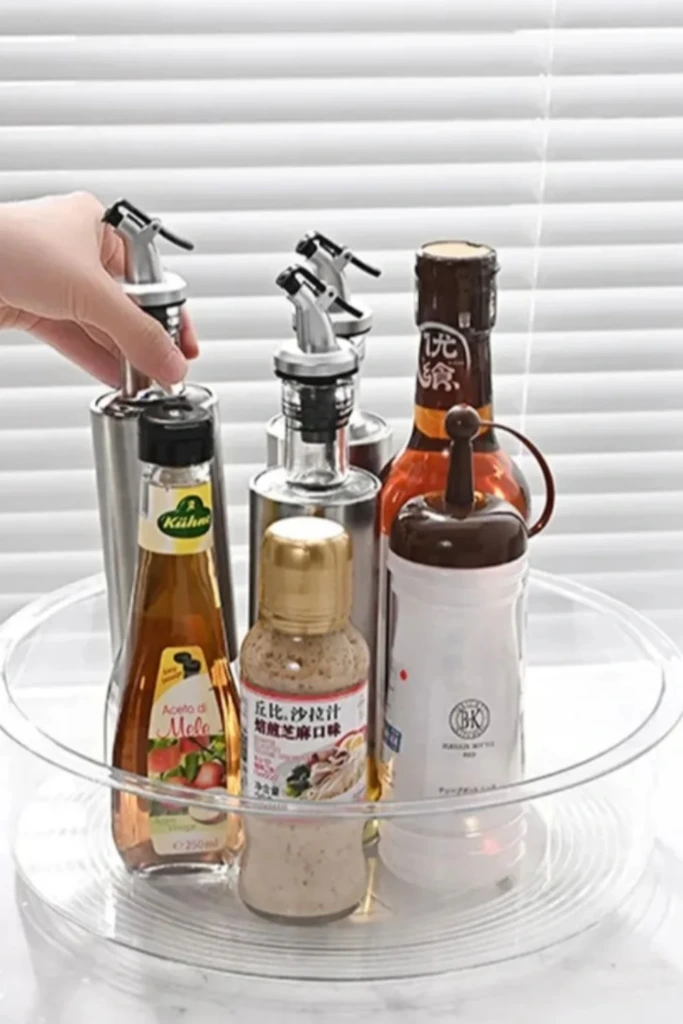
Cooking oils and sauces are easier to manage when they stay in one dedicated location. A Lazy Susan provides a compact station where olive oil, vinegar, soy sauce, and other commonly used liquids remain accessible.
Arrange bottles with their labels facing outward whenever possible. Smaller containers can sit near the edge, while taller bottles should be positioned where they remain stable during rotation. Choose a tray with a raised rim to help contain minor drips.
A washable plastic, metal, or sealed surface is often practical for this purpose because cooking oils can leave residue. Clean the tray regularly and check bottle caps for leaks before returning them to storage.
Place the organizer on a stable countertop away from direct heat. Oils can deteriorate when exposed to excessive heat or light, so a cool, shaded storage location may be preferable depending on the product.
With a dedicated oil station, you can quickly locate the right ingredient while keeping the surrounding work surface less cluttered.
10. Pan Storage
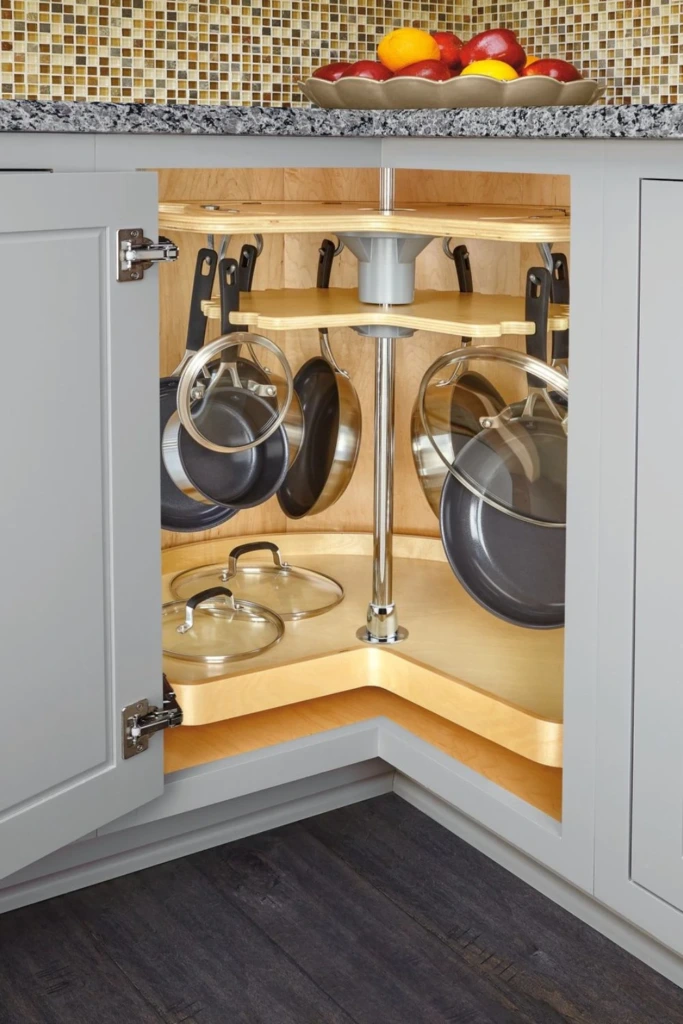
Pots and pans can be challenging to organize in deep cabinets, especially when heavy cookware is stacked in several layers. A suitable rotating cabinet system can improve access and reduce the need to lift everything just to reach one pan.
If your organizer includes hooks, use them only for cookware that fits securely and stays within the system's weight limit. Flat pans may also be easier to store vertically in a separate rack, while lids can be arranged in a dedicated holder.
Distribute the weight evenly and make sure the rotating mechanism moves smoothly before loading the cabinet completely. Heavy items should be stored at a comfortable height whenever possible to reduce lifting strain.
This solution is most effective when the organizer is designed specifically for cookware rather than adapted from a lightweight countertop turntable. The right system can make a difficult corner cabinet more useful and keep frequently used pans within reach.
11. Pantry Zones
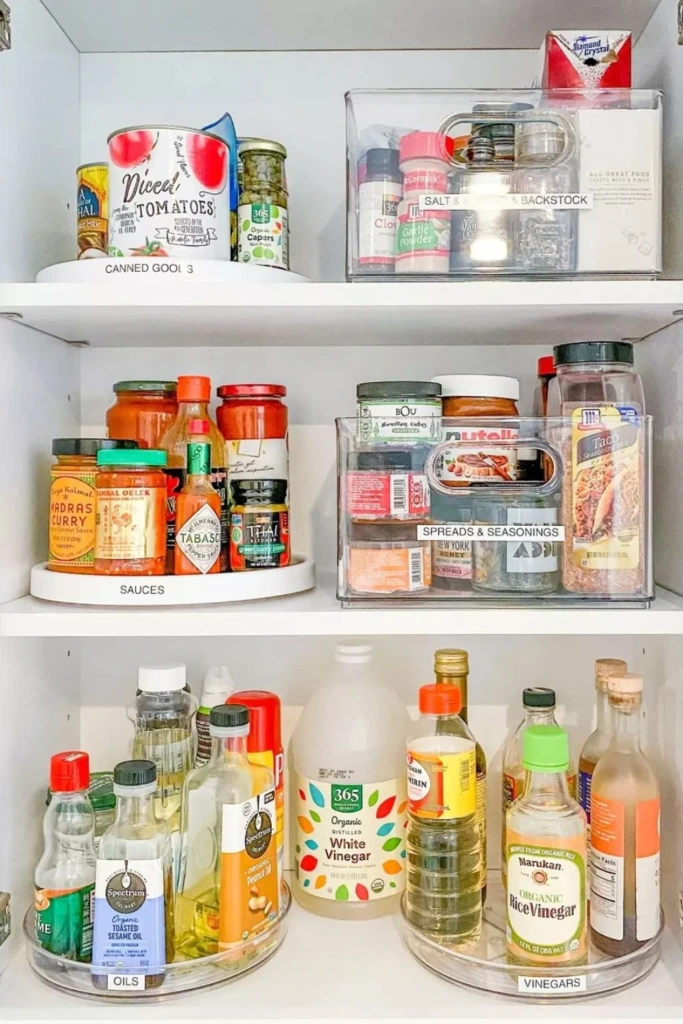
A well-organized pantry becomes easier to maintain when each group of ingredients has its own space. Lazy Susans are particularly useful for small bottles and jars that tend to disappear behind larger packages.
Dedicate one tray to sauces, another to oils, and a separate one to vinegars, dressings, or specialty condiments. The exact categories should reflect what you cook with most often rather than forcing you to follow a rigid system.
Add simple labels to trays or shelf edges if several people share the pantry. Before returning groceries, check what is already available to avoid buying duplicates.
Clear organizers make it easier to inspect the contents, while raised edges help prevent bottles from slipping off as the tray turns. Keep heavier containers stable and avoid overloading the rotating base.
This approach is useful in both large pantries and small kitchen cabinets because it creates recognizable zones without requiring a complete shelving makeover.
12. Craft Station
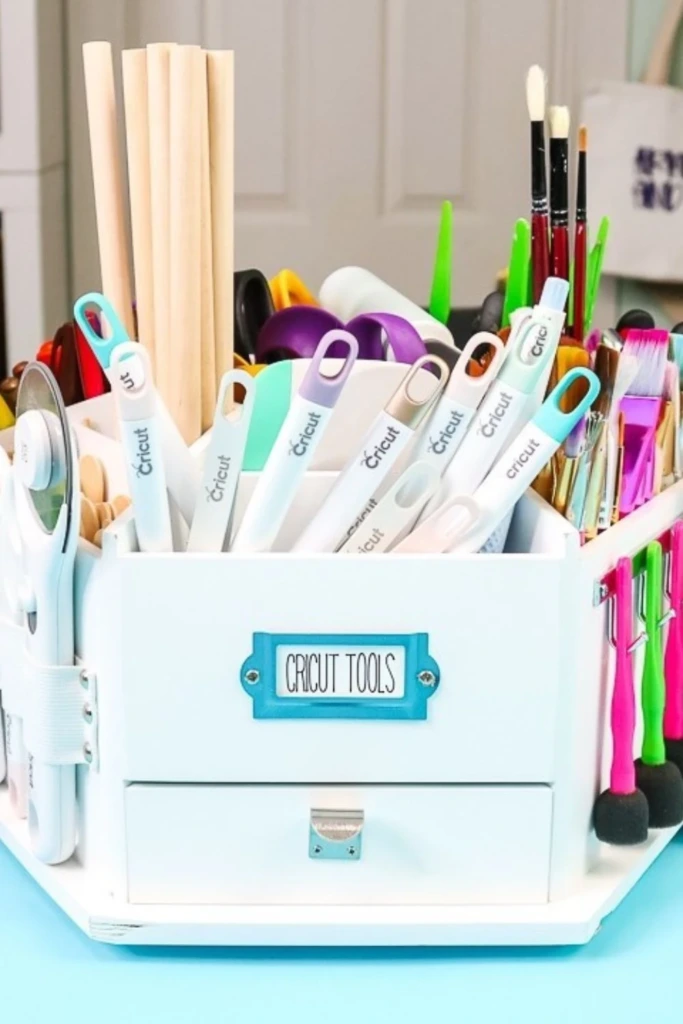
Craft supplies are often small, varied, and easy to misplace. A rotating organizer keeps frequently used tools visible while taking up relatively little desk space.
Use separate compartments for markers, scissors, paintbrushes, glue sticks, and other materials. Keep longer tools upright in deeper sections and place small accessories in cups or containers that prevent them from spilling.
A multi-section Lazy Susan is particularly useful for projects that require several supplies at once. Instead of opening multiple drawers, you can rotate the organizer to reach the tools you need.
For households with children, store sharp tools, adhesives, and other potentially hazardous materials in secure locations appropriate for their age. Choose a sturdy organizer that will not tip easily when a compartment is full.
This setup works well on art desks, sewing tables, and home-office workspaces. Returning each tool to its designated section after a project helps keep the work surface ready for the next activity.
13. Sauce Carousel
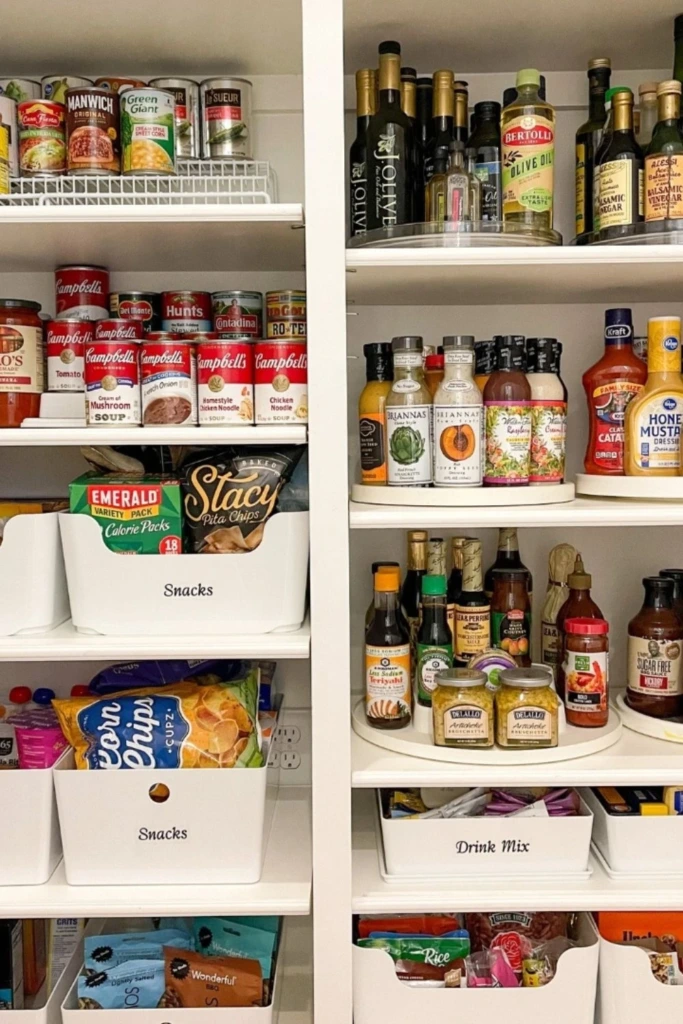
Sauce bottles often become difficult to distinguish when they are lined up behind one another. A Lazy Susan creates a rotating section where marinades, dressings, cooking sauces, and condiments can be viewed together.
Start by grouping products according to their purpose. Keep frequently used sauces together, and separate unopened backups from the bottles you use every day.
Arrange containers according to their height and stability, making sure the labels remain easy to read. Leave enough space for the bottles to move without colliding when you rotate the tray.
If the sauces require refrigeration after opening, store them in the refrigerator rather than the pantry. For shelf-stable products, follow the storage directions on the packaging.
A dedicated sauce carousel is especially useful when you cook a variety of meals and keep several condiments on hand. It also makes it easier to spot nearly empty bottles before you begin preparing dinner.
14. Corner Pantry
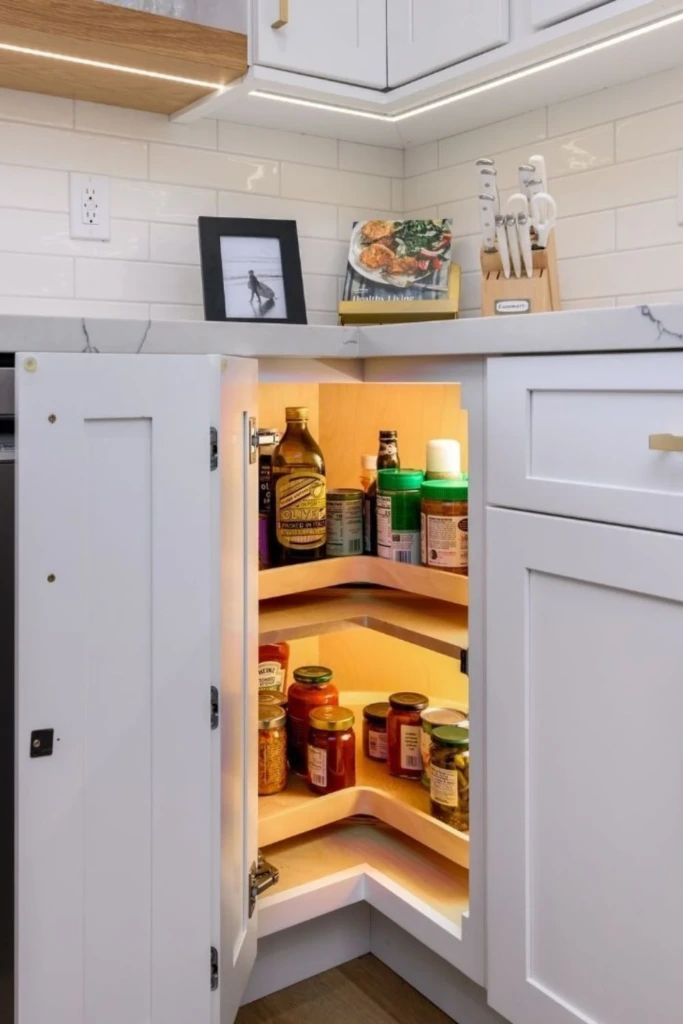
An awkward corner cabinet can become valuable storage space when fitted with a properly sized rotating organizer. Rather than pushing ingredients into the back and forgetting about them, you can bring each section into view with a simple turn.
Use the tray for products that fit securely, such as jars, cooking sauces, canned goods, and pantry staples. Arrange taller bottles toward the center when this improves stability, and keep smaller containers around the perimeter where they are easy to identify.
If the cabinet is especially dark, improved lighting can help you read labels and check stock. Battery-powered cabinet lights may be useful where electrical installation is impractical, provided they are suitable for the location.
Before installing a built-in Lazy Susan, measure the cabinet carefully and check the dimensions of its door opening, shelves, and internal supports.
This arrangement makes better use of an otherwise difficult space while helping you keep everyday ingredients organized and accessible.
15. Dairy Spin
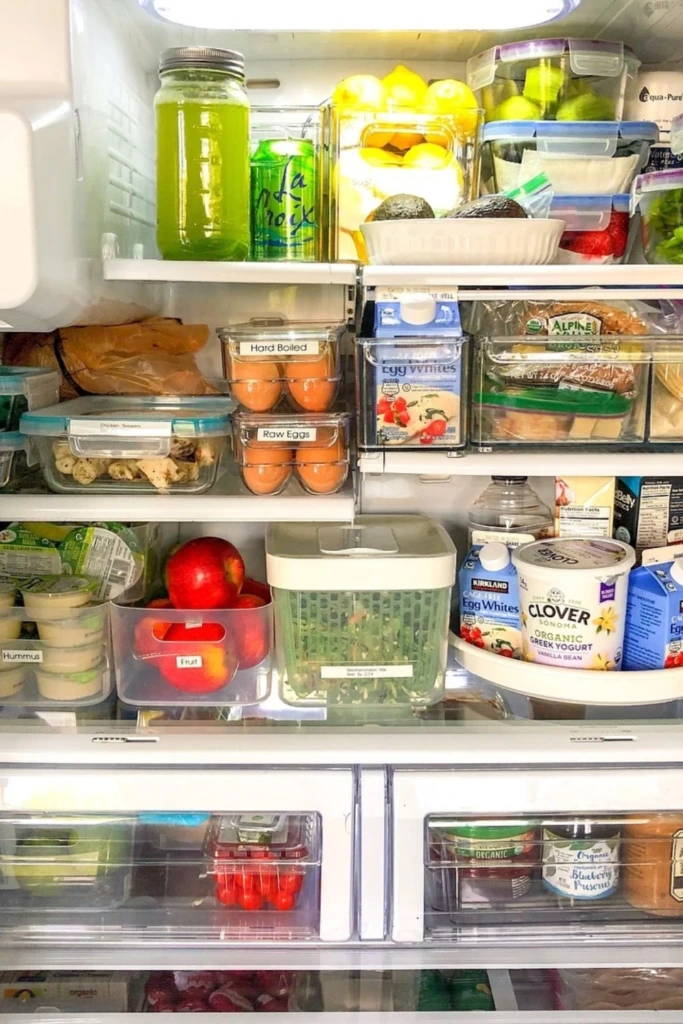
A rotating dairy station can help keep frequently used refrigerated products together. Yogurt tubs, small milk cartons, cream containers, and appropriately packaged cheese can be easier to locate when they share a designated area.
Choose a food-safe, refrigerator-compatible organizer that fits the shelf and leaves enough room for air to circulate. Place stable containers around the tray, taking care not to crowd or stack items in a way that could cause them to fall.
Separate products that may leak, and keep raw foods away from ready-to-eat items. A tray with a raised edge can help contain small spills, but it should not replace regular refrigerator cleaning.
This system is most useful for households that buy similar dairy products each week. Keeping them in one place makes it easier to check supplies, rotate older items to the front, and reduce the likelihood of forgotten packages.
Always follow the product's refrigeration instructions and use refrigerated foods within their recommended storage periods.
16. Appliance Corner
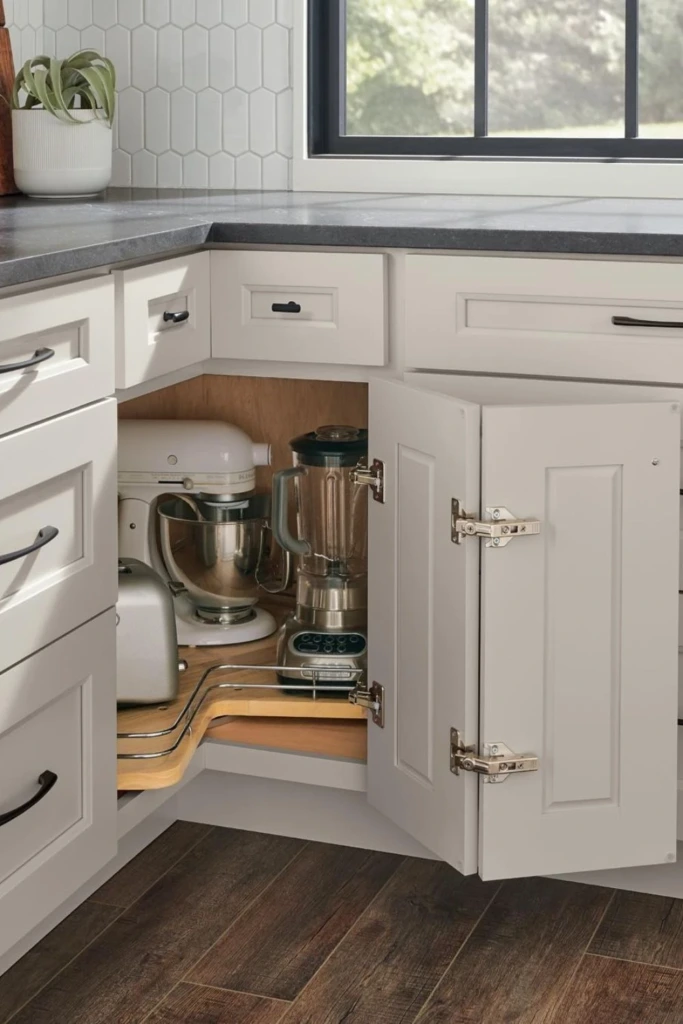
Small kitchen appliances can occupy a surprising amount of space, particularly when they are stored in deep corner cabinets. A heavy-duty rotating shelf may make it easier to access equipment without repeatedly pulling it across the cabinet floor.
Before choosing a system, check the combined weight of the appliance and any attachments you plan to store with it. The organizer must be designed to support that load and should rotate without excessive resistance.
Position heavy equipment on a stable surface, keeping the weight balanced. Smaller accessories can be stored in labeled containers nearby so that blades, attachments, and other components do not become separated from their appliances.
Always unplug appliances before storing them, and allow heated components to cool completely. Make sure cords cannot catch in the rotating mechanism.
This idea is best for appliances that are used regularly but do not need to remain on the counter. A properly rated organizer can improve accessibility while freeing up valuable preparation space.
17. Pot Carousel
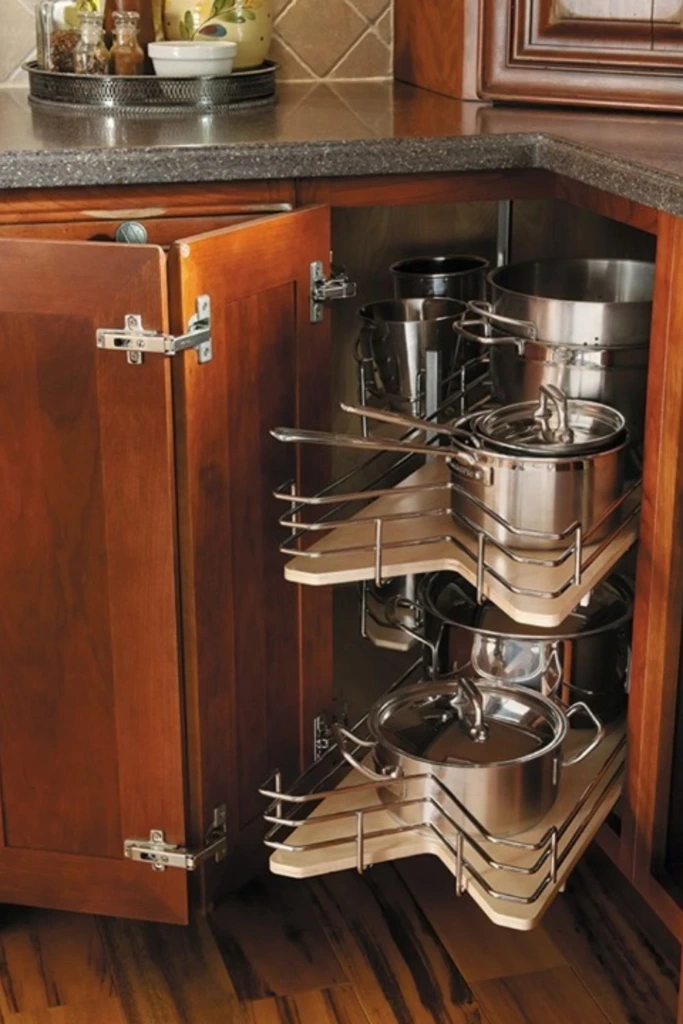
A pot carousel is designed to make cookware easier to access in deep or corner cabinets. Its rotating shelves bring different pots, pans, and lids toward the cabinet opening rather than leaving everything buried in a stack.
Look for a cabinet-specific model with sturdy shelves and retaining rails. Arrange heavier cookware on the level recommended by the manufacturer, and distribute items evenly to keep the mechanism balanced.
Smaller pans, lids, and lightweight accessories can occupy separate sections when the shelf dimensions allow. Avoid placing items where their handles interfere with rotation or prevent the cabinet door from closing.
Before purchasing, confirm the organizer's weight capacity and measure the available cabinet height and width. Some systems require professional installation or specific cabinet configurations.
This setup can be particularly helpful for people who cook frequently and want to retrieve cookware without lifting several heavy pieces out of the way.
18. Herb Station
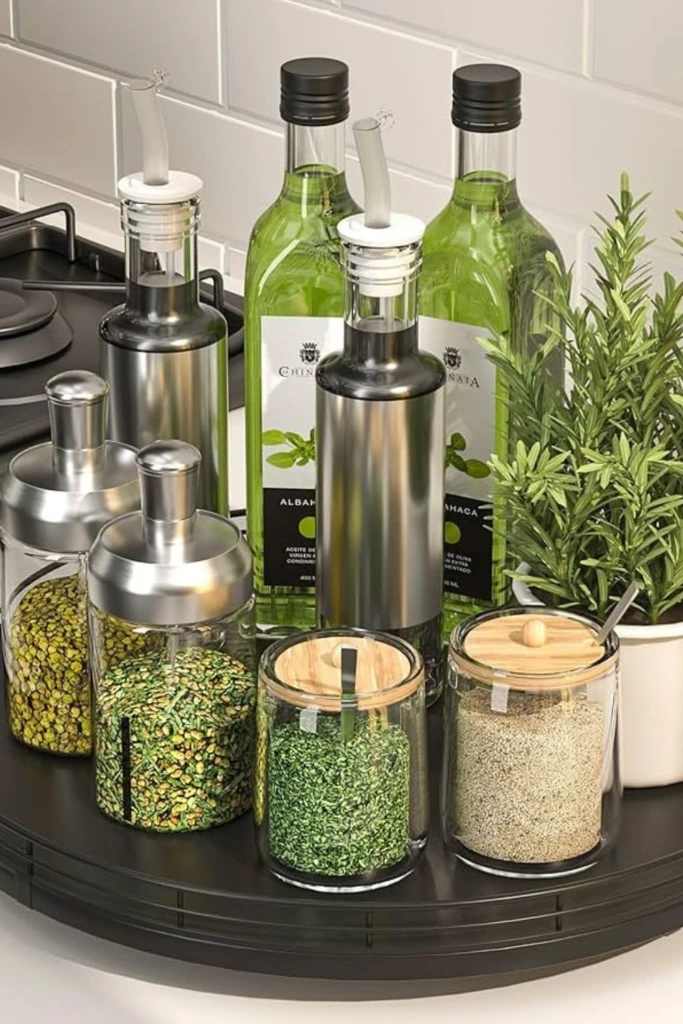
Create a compact herb station by bringing your most-used seasonings and cooking essentials together on a rotating tray. Small spice jars, dried herbs, seasoning blends, and a bottle of cooking oil can share the same organizer when there is enough room.
Group seasonings by cuisine or cooking style, such as everyday basics, baking spices, or ingredients for Mediterranean dishes. Use labels that remain visible when the tray turns so you can identify each container quickly.
If you want to include fresh herb plants, give them a separate section or use a tray that can handle occasional watering spills. Plants need appropriate light and care, so a position near the cooking area is not necessarily suitable if it becomes too hot.
Keep dry seasonings away from steam and moisture, and store oils according to their packaging instructions. Regularly clean the organizer to prevent residue from accumulating around the containers.
This arrangement is useful for home cooks who want their favorite seasonings close at hand without spreading jars across the entire countertop.
19. Spice Circle
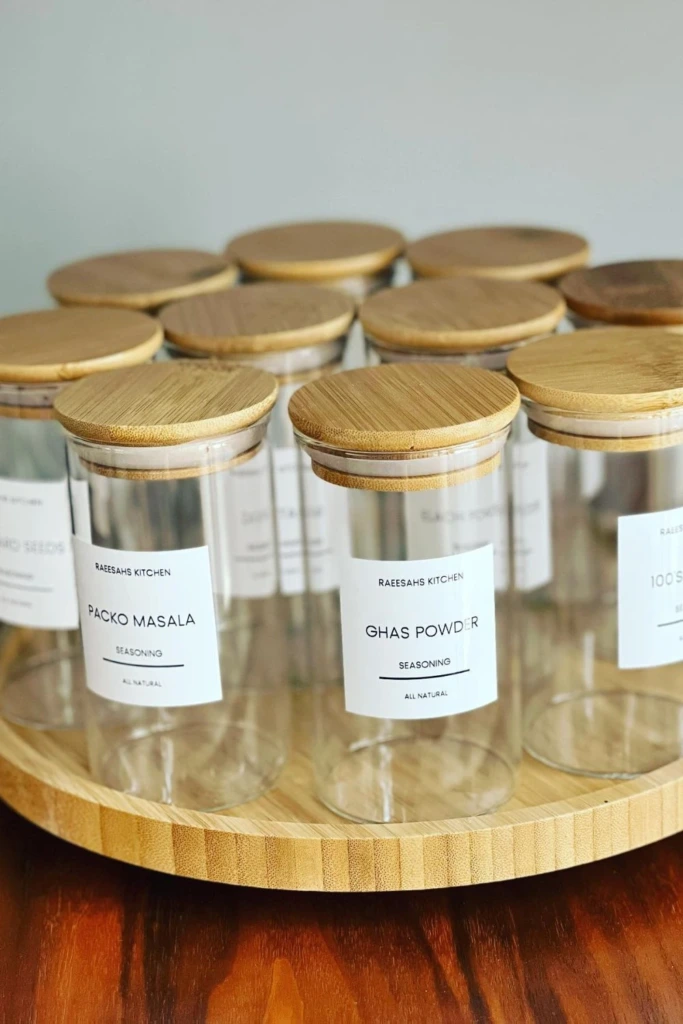
Small spice jars are easy to lose behind larger containers, especially when they are arranged in several rows. A Lazy Susan creates a circular storage system that makes the entire collection easier to inspect.
If you use matching containers, choose jars with secure lids and clear, readable labels. Arrange the spices you reach for most often around the outer edge, leaving less frequently used varieties in the remaining spaces.
Before transferring spices into new containers, make sure the jars are clean and completely dry. Label each one with the spice name and, when helpful, the purchase or refill date.
A shallow organizer can work well for a single layer of jars, while a tiered design may suit a larger collection. Avoid stacking containers where they could fall during rotation.
This setup is particularly helpful in narrow cupboards where conventional rows hide the jars at the back. A quick turn gives you a better view of the available spices and helps you avoid buying duplicates.
20. Oil Cabinet
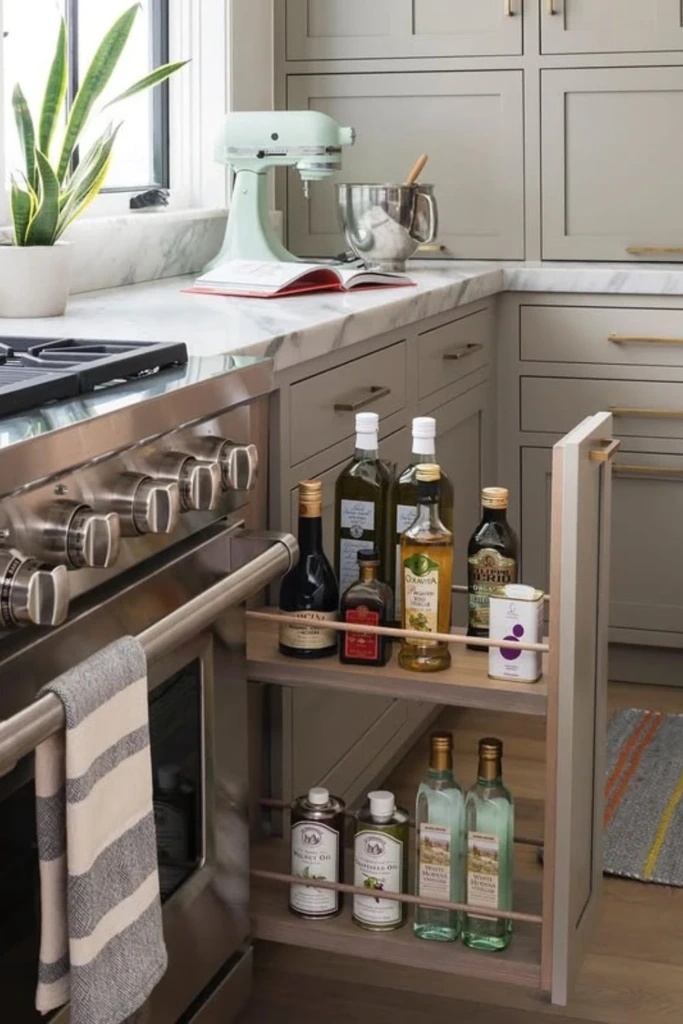
If cooking oils are scattered between the countertop and pantry, a dedicated cabinet organizer can give them a consistent home. A pull-out or rotating system can be especially useful when the cabinet is deep and difficult to access.
Group olive oil, specialty oils, vinegar, and other suitable shelf-stable liquids according to how you use them. Keep bottles upright and check that their heights fit comfortably beneath the cabinet shelves.
A pull-out unit can bring the contents closer to you, while a rotating tray makes it easier to reach bottles stored at the back. Choose a system that suits the cabinet's dimensions and the weight of the full collection.
Because oil spills can leave slippery residue, select a tray that is easy to clean. Wipe away drips promptly and check caps regularly for leaks.
For best storage results, follow the manufacturer's guidance for each oil and protect products from excessive heat and light where recommended. A dedicated oil cabinet keeps the cooking area tidier and makes your ingredients easier to find.
21. Pot Corner
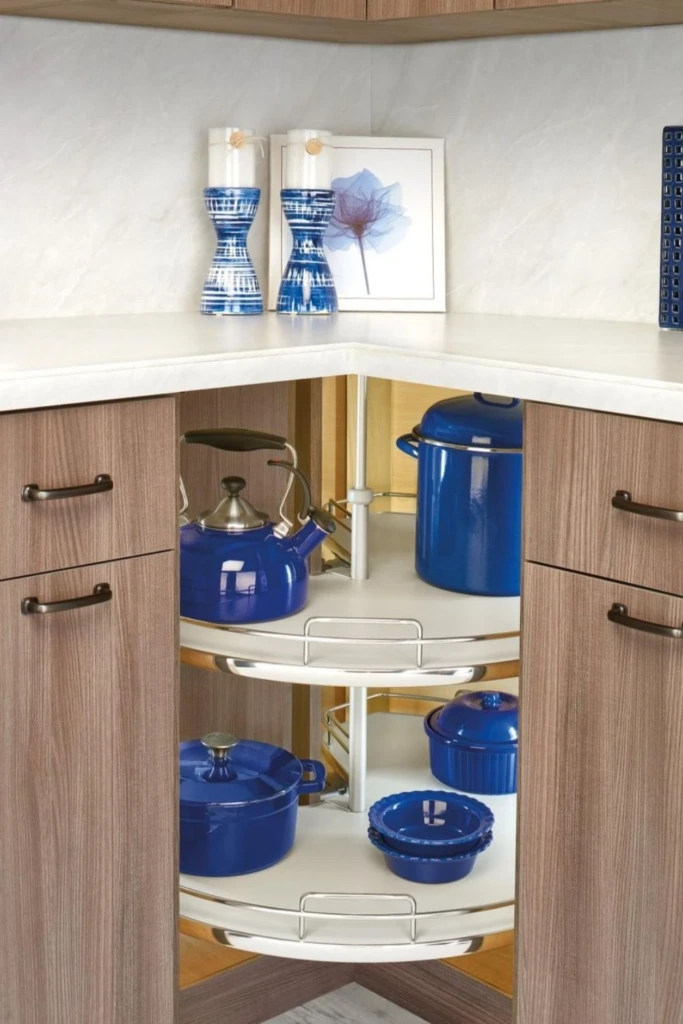
Large pots and pans can make corner cabinets difficult to use, especially when their handles overlap or their shapes prevent stable stacking. A two-tier Lazy Susan offers an alternative by separating cookware across rotating shelves.
Arrange cookware according to size and weight, ensuring that every piece sits securely within the tray. Use the lower level for heavier items when appropriate for the organizer's design, and keep lighter saucepans or baking dishes on the other level.
Leave enough space between pots and their handles so the shelves can rotate freely. If a particular pan is too heavy or bulky for the system, store it elsewhere rather than forcing it into the arrangement.
A rotating cabinet organizer works best when it is correctly sized and rated for the cookware it will hold. Measure the cabinet carefully before installation, and check the mechanism periodically for signs of wear or obstruction.
With a sensible layout, corner storage becomes easier to navigate, and you can retrieve the cookware you need without moving every other pot in the cabinet.
What size Lazy Susan works best for deep cabinets?
The right size depends on the cabinet's internal dimensions, the items you plan to store, and the space needed for the tray to rotate freely.
Measure the usable width and depth of the cabinet, accounting for hinges, door frames, shelf supports, and any obstructions. For a freestanding turntable, leave enough clearance around the edges to prevent containers from striking the cabinet walls. The manufacturer's recommended clearance should take priority over a general measurement rule.
Many kitchen organizers fall within the 12- to 18-inch diameter range, but larger or smaller options may be appropriate depending on the cabinet. For corner cabinets, check the specific measurements and installation requirements of the rotating system rather than relying on diameter alone.
Also consider the height of bottles and jars if you want to use a tiered model. The best Lazy Susan is one that fits comfortably, rotates smoothly, and holds your items without becoming overcrowded.
How do you keep items from falling off the Lazy Susan?
Start by choosing an organizer that is appropriate for the weight and size of the items you intend to store. Raised edges, nonslip surfaces, and divided compartments can help prevent containers from sliding when the tray turns.
Arrange bottles and jars with enough space between them to avoid collisions. Keep lids tightly closed, store containers upright, and distribute the weight evenly across the surface. Avoid placing unusually heavy items on a lightweight plastic turntable that was designed for small jars.
For tall bottles, check that they remain stable during rotation. If the organizer wobbles, catches, or tips, remove some of the contents and check whether the tray is level or overloaded.
Finally, rotate the tray gently rather than giving it a forceful spin. A correctly sized organizer, balanced arrangement, and suitable surface will help keep everything secure and make daily use easier.