26 Behind The Door Organization Ideas for 2026
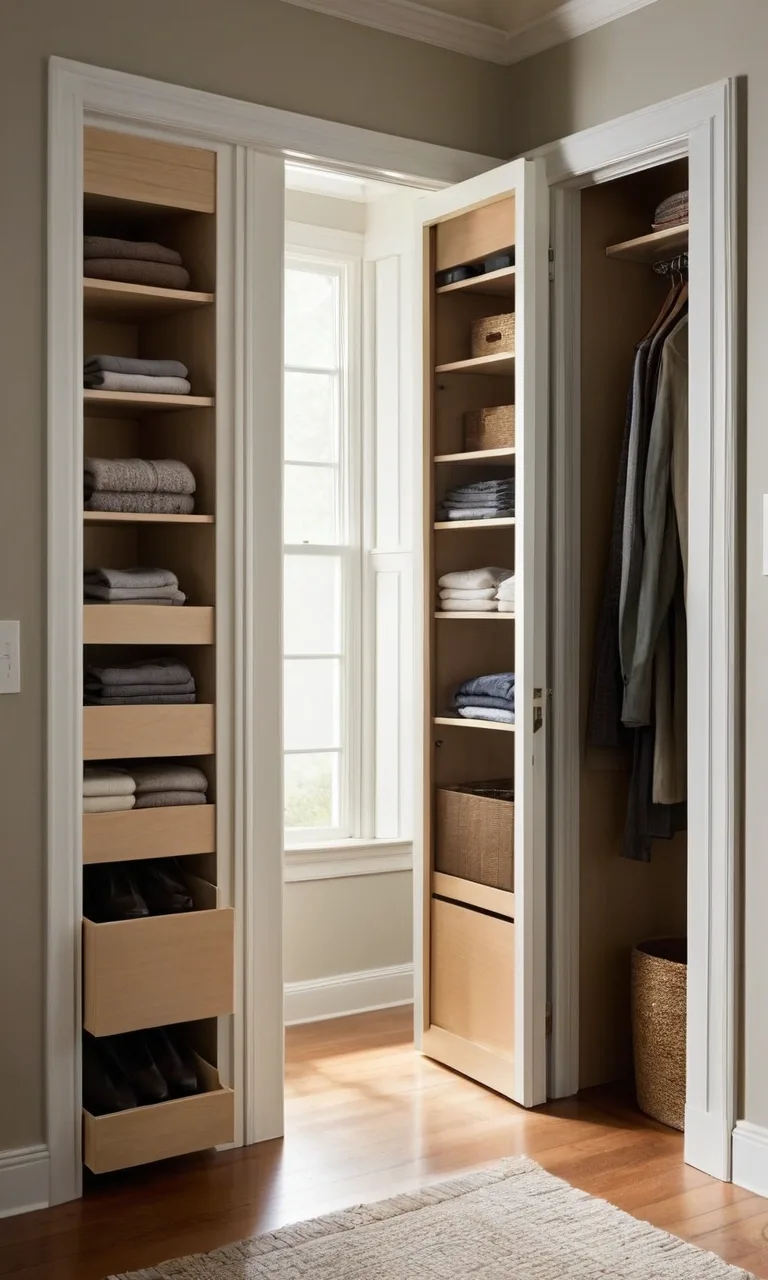
Finding enough storage in a small home can be challenging when closets, drawers, and shelves are already full. Everyday belongings such as handbags, shoes, towels, and accessories can quickly make a room feel crowded. Yet one useful storage area often goes unnoticed: the back of a door.
With a few carefully chosen organizers, this overlooked surface can hold many of the things you use regularly. It can help clear floors, reduce clutter, and make frequently needed items easier to find without adding bulky furniture.
Whether you're organizing a bedroom, bathroom, pantry, laundry room, or entryway, these 26 behind-the-door organization ideas offer practical ways to make better use of your existing space.
How Do You Organize a Door When You Have a Small Room?
Start by identifying the belongings that regularly end up on chairs, countertops, or the floor. Bags, scarves, shoes, cleaning supplies, and small accessories are often good candidates for door storage.
Choose an organizer that suits the items you want to store. Hooks work well for lightweight belongings, while hanging pockets are useful for small accessories. Wire baskets and narrow shelves provide more structure for toiletries, pantry goods, and household supplies.
Before installing anything, check the door's thickness, available clearance, and weight capacity. Make sure the organizer won't interfere with the handle, nearby furniture, or the door's movement. Group similar items together so you can find them quickly and return them to the correct place.
1. Pegboard Wall
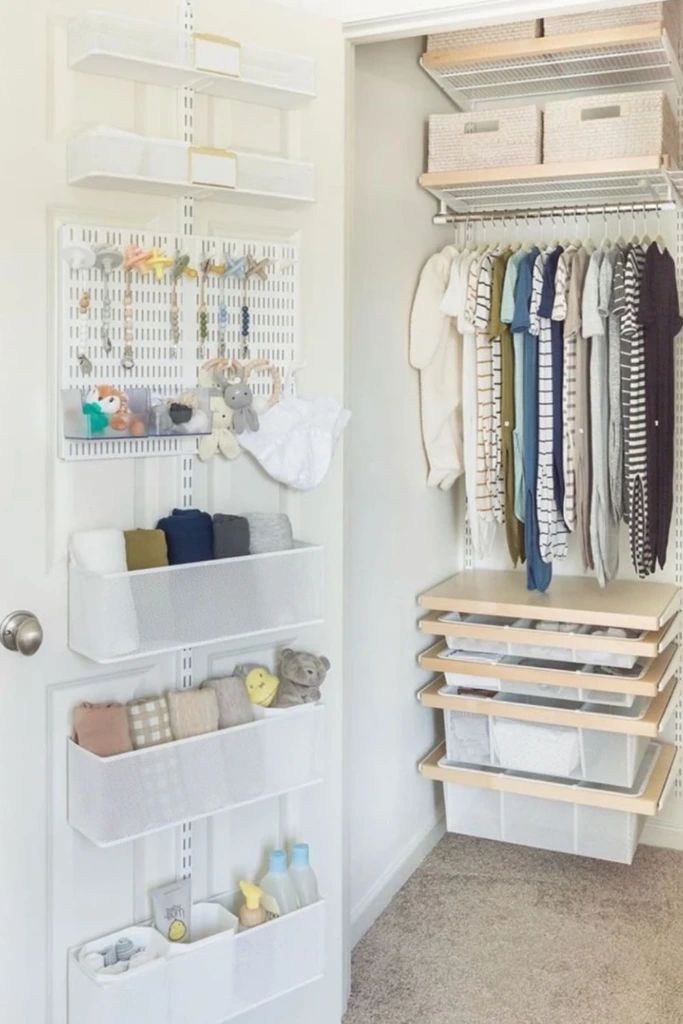
A pegboard transforms an otherwise unused door into a customizable storage station. Add movable hooks, small containers, and lightweight baskets to accommodate accessories such as hair clips, jewelry, craft tools, or keys.
One of its biggest advantages is flexibility. You can rearrange the hooks whenever your storage needs change, making it useful for bedrooms, craft areas, and nurseries. Keep frequently used items within easy reach and reserve higher sections for belongings you don't need as often.
For a neat appearance, arrange similar objects together and avoid overcrowding the board. Choose a secure mounting method suitable for the door and the combined weight of the items.
2. Toy Baskets
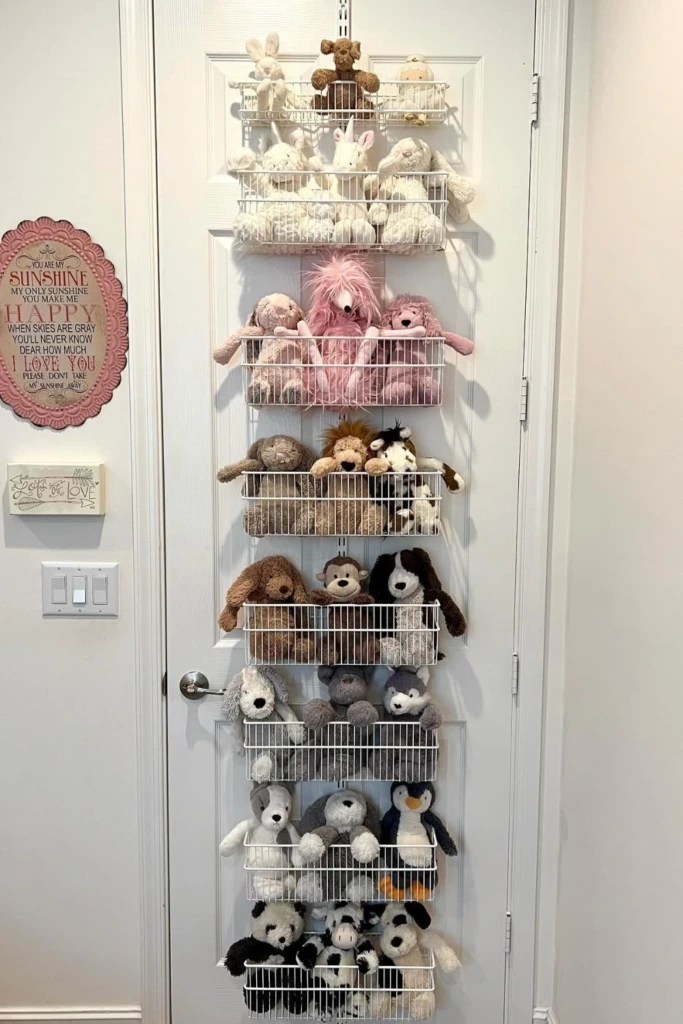
Soft toys can quickly take over a child's bedroom, especially when floor space is limited. A series of shallow baskets attached to the back of a door creates a dedicated home for stuffed animals without requiring another toy shelf.
Choose baskets with enough depth to hold toys securely while allowing children to see what's inside. Placing favorite toys in the lower baskets makes independent play and cleanup easier.
Open wire baskets are convenient because their contents remain visible, while fabric baskets provide a softer look. Secure the storage system properly and avoid placing heavy objects overhead, particularly in children's rooms.
3. Cleaning Grid
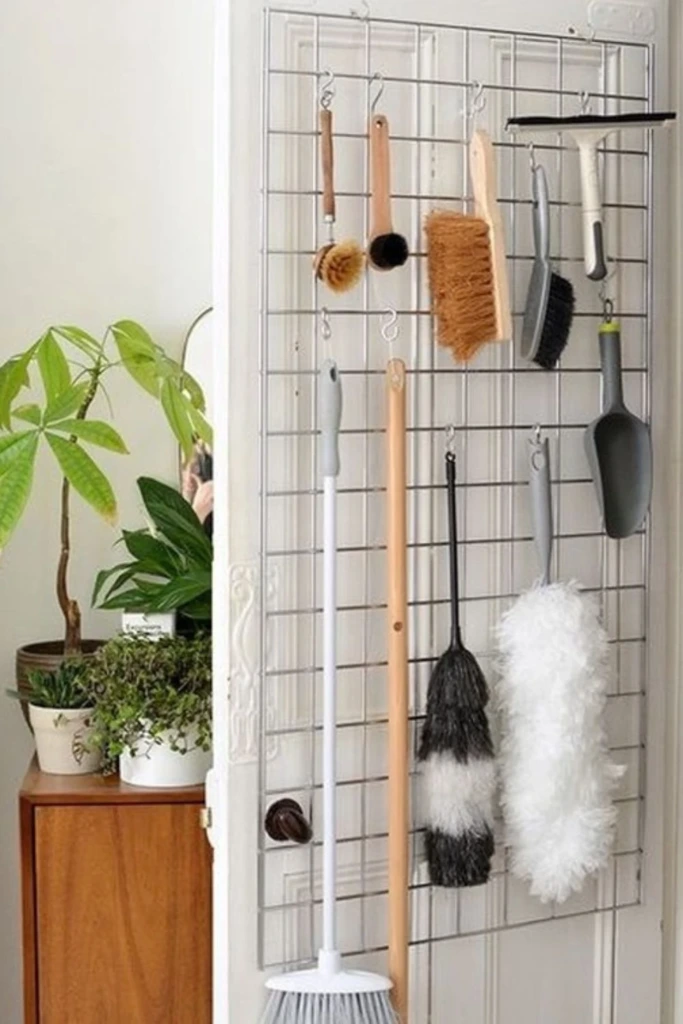
Cleaning tools are easier to manage when each item has a designated hanging spot. A sturdy metal grid mounted behind a utility or laundry room door can accommodate brushes, dusters, scrubbers, and other lightweight equipment.
Attach compatible hooks to the grid and arrange the tools according to their size and frequency of use. Longer tools may need dedicated holders rather than ordinary small hooks, so check their dimensions before installing the system.
This arrangement helps prevent equipment from leaning against walls or becoming tangled together. It also makes it easier to notice when a tool needs replacing or cleaning.
4. Door Baskets
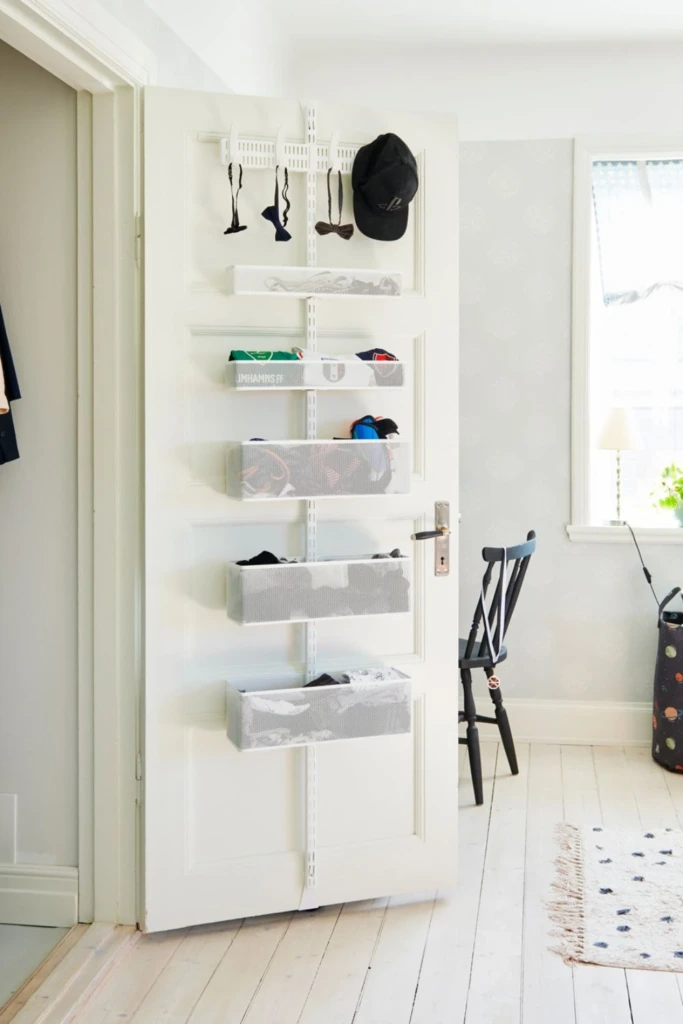
A vertical arrangement of wire baskets can serve as extra storage for small everyday belongings. Depending on the location, the baskets might hold folded socks, belts, sunglasses, hats, or lightweight accessories.
Install baskets at different heights to create separate categories. For example, keep frequently used items in the middle section and less frequently needed belongings near the top.
This setup is particularly useful in bedrooms, entryways, and children's rooms. If you select a system with adjustable rails, you can change the spacing to accommodate different items over time.
5. Gift Wrap
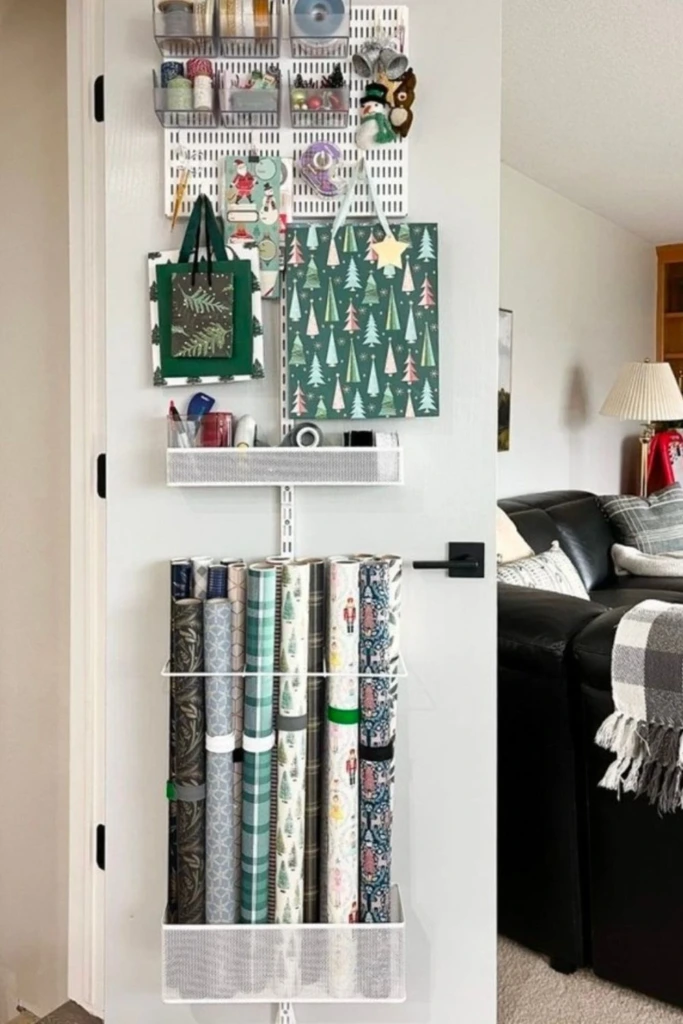
Wrapping paper, ribbons, tape, and gift tags are much easier to manage when they share one storage area. A door-mounted organizer can turn a craft closet into a compact gift-wrapping station.
Use a tall compartment or suitable rack for paper rolls, smaller baskets for ribbon and tape, and hooks for scissors or reusable gift bags. Keeping rolls upright helps prevent unnecessary bending, while separate containers stop smaller supplies from becoming mixed together.
Before choosing a rack, measure your longest wrapping paper rolls and check that the door can accommodate the organizer without catching against nearby walls.
6. Towel Hooks
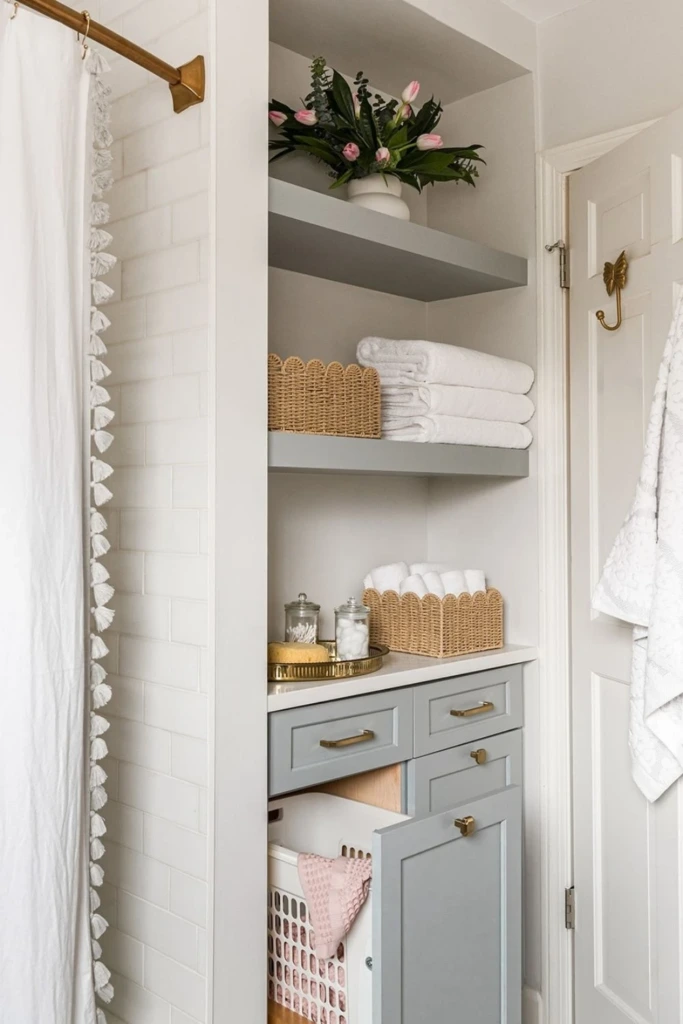
The back of a bathroom door can provide convenient hanging space for bath towels, hand towels, and robes. This is especially helpful when the bathroom has limited wall space around the shower or sink.
Choose hooks that allow towels to hang freely rather than bunching together. If several people share the bathroom, arrange hooks at different heights to make them easier for everyone to use.
Good ventilation is important because damp towels need room to dry. Avoid overcrowding the hooks, and choose rust-resistant hardware that can withstand the bathroom's moisture.
7. Supply Station
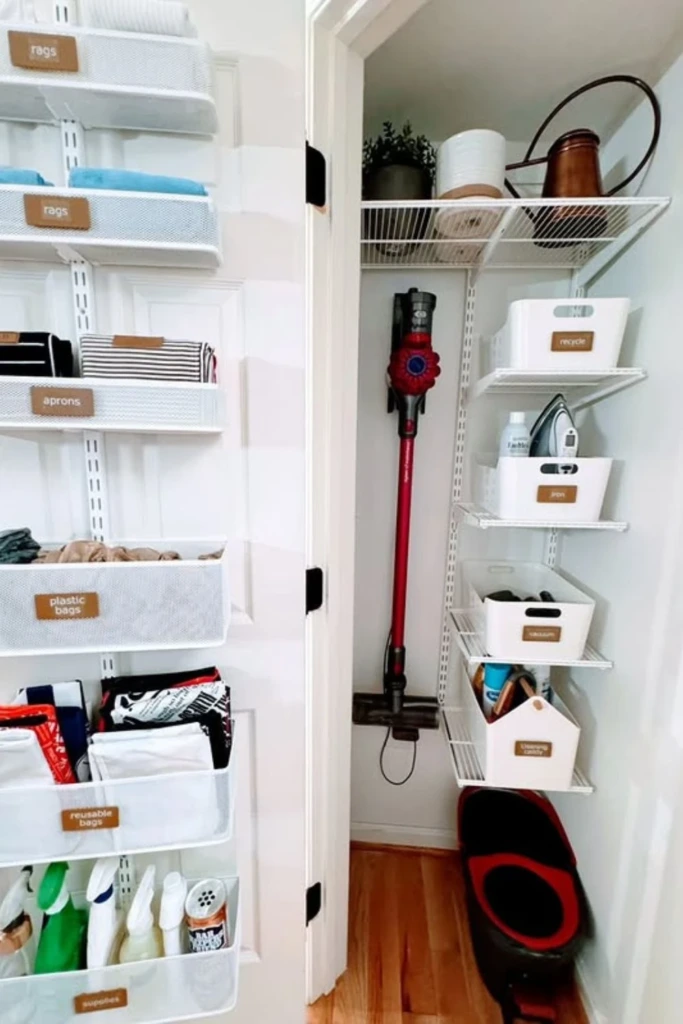
A utility closet becomes more manageable when household supplies are separated into clear categories. Door-mounted baskets can hold microfiber cloths, spare bags, cleaning accessories, aprons, and other frequently used items.
Labels help everyone in the household identify the correct basket and return belongings after use. Keep small supplies together and reserve the main closet shelves for larger equipment, such as a vacuum cleaner or storage containers.
For the best results, place heavier items in secure, appropriately rated storage and keep frequently used supplies at a comfortable height. This creates an organized station that remains practical during everyday chores.
8. Pantry Door
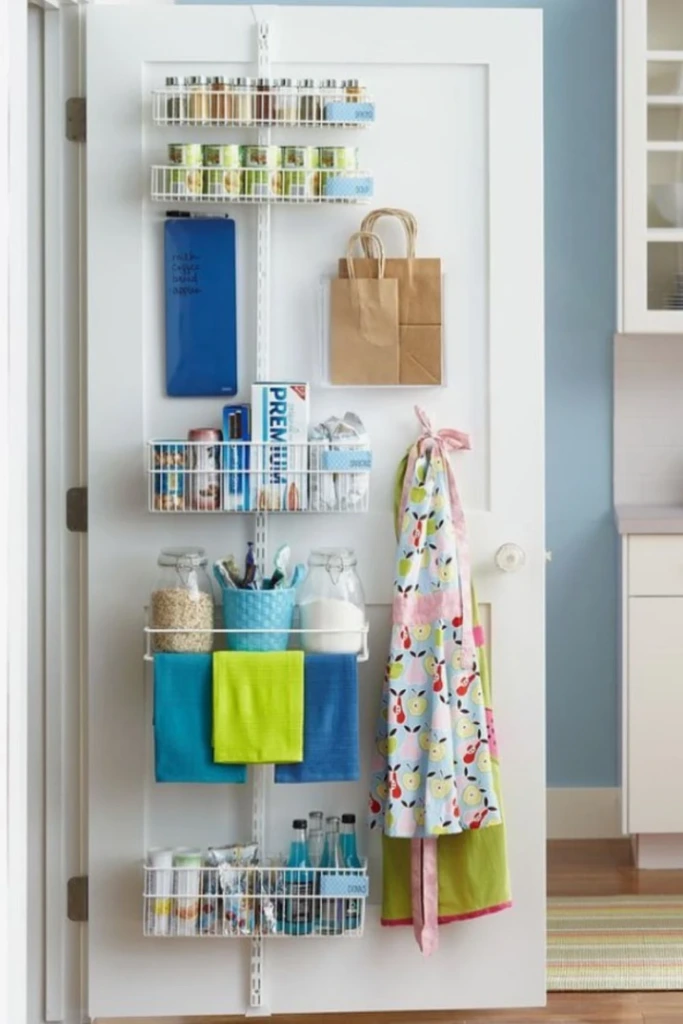
A pantry door can provide extra room for spices, snack packets, small jars, and other kitchen essentials. Narrow baskets or purpose-built door racks are particularly helpful when cabinet shelves are already crowded.
Arrange items by category so that baking ingredients, snacks, and cooking seasonings each have a designated section. Keep heavier containers on lower shelves and use the upper sections for lightweight products.
Check the organizer's weight limit and make sure jars and bottles cannot fall when the door moves. Leave enough clearance between the stored items and the pantry shelves so the door closes properly.
This solution works best for compact products that are easy to reach. Large cans, heavy glass containers, and bulky packages may be better stored on fixed pantry shelves.
9. Book Display
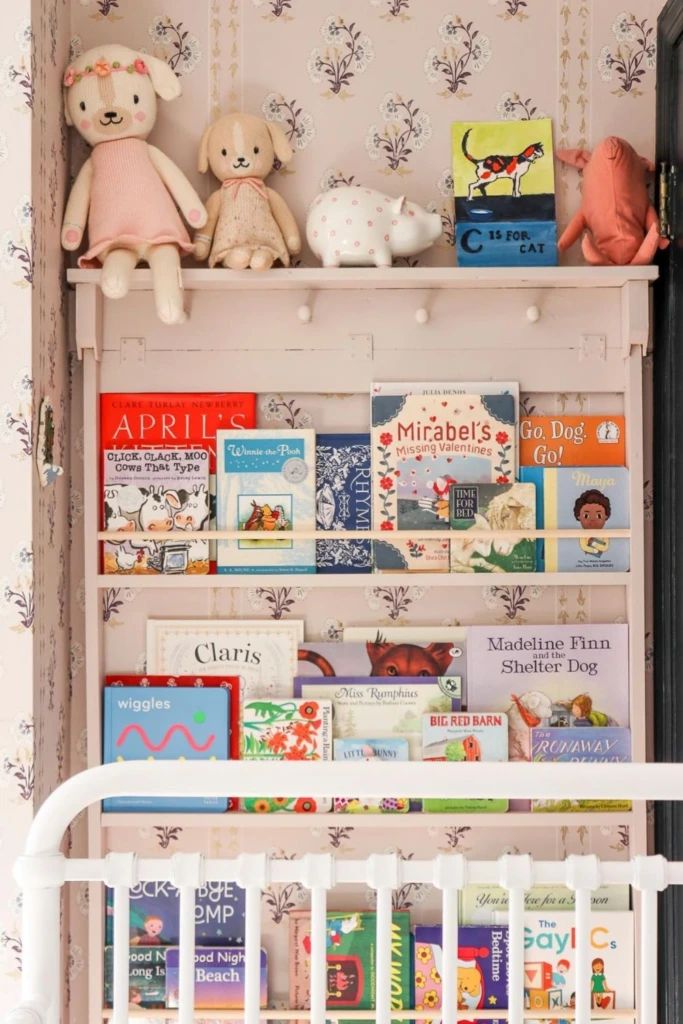
Create a small reading corner by installing narrow book-display rails on the back of a bedroom or playroom door. Front-facing shelves allow children to recognize their favorite covers without searching through a crowded bookcase.
Choose shallow rails with a secure front lip to keep books from slipping when the door opens or closes. Place lighter books on higher shelves and frequently read bedtime stories at a child-friendly height.
Rotating the displayed titles occasionally can renew children's interest in reading without requiring additional storage. Always secure shelves properly and avoid installing them where they could create a safety hazard.
10. Basket Rack
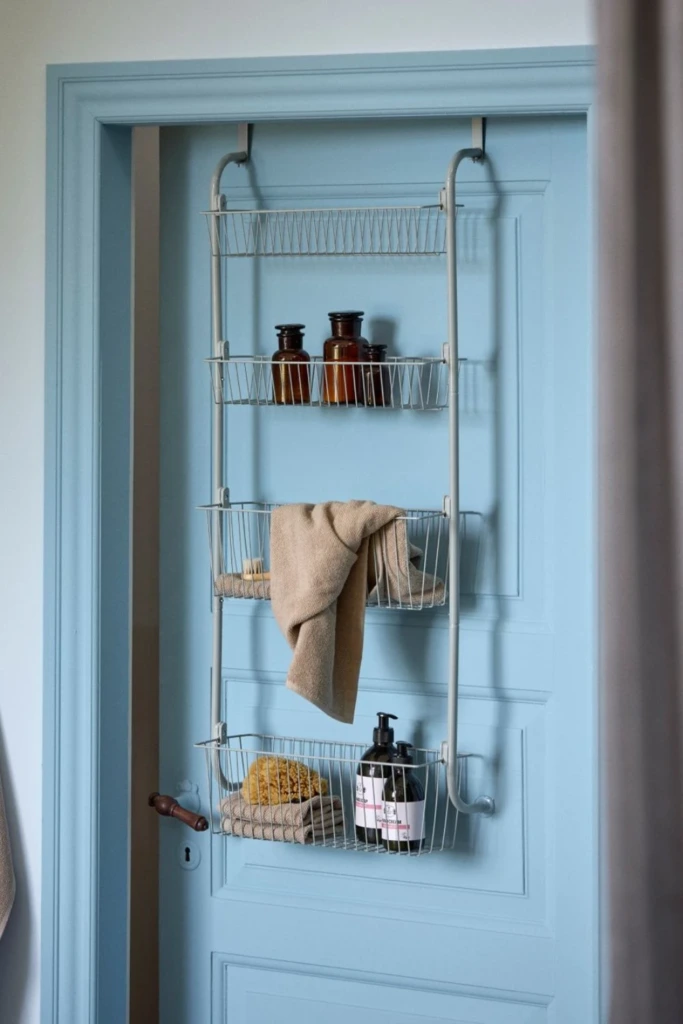
A tall over-the-door basket rack can provide useful storage in bathrooms, laundry rooms, and guest bathrooms. Its multiple compartments create separate spaces for toiletries, washcloths, skincare products, and other everyday necessities.
Use one basket for frequently used products and another for spare supplies. Open baskets make it easy to see what's available, while removable containers can help keep smaller items grouped together.
Measure the door before buying a rack, paying attention to its thickness and the space available behind it. Check the product's load rating and ensure the organizer doesn't interfere with the door handle or nearby fixtures.
11. Drying Rack
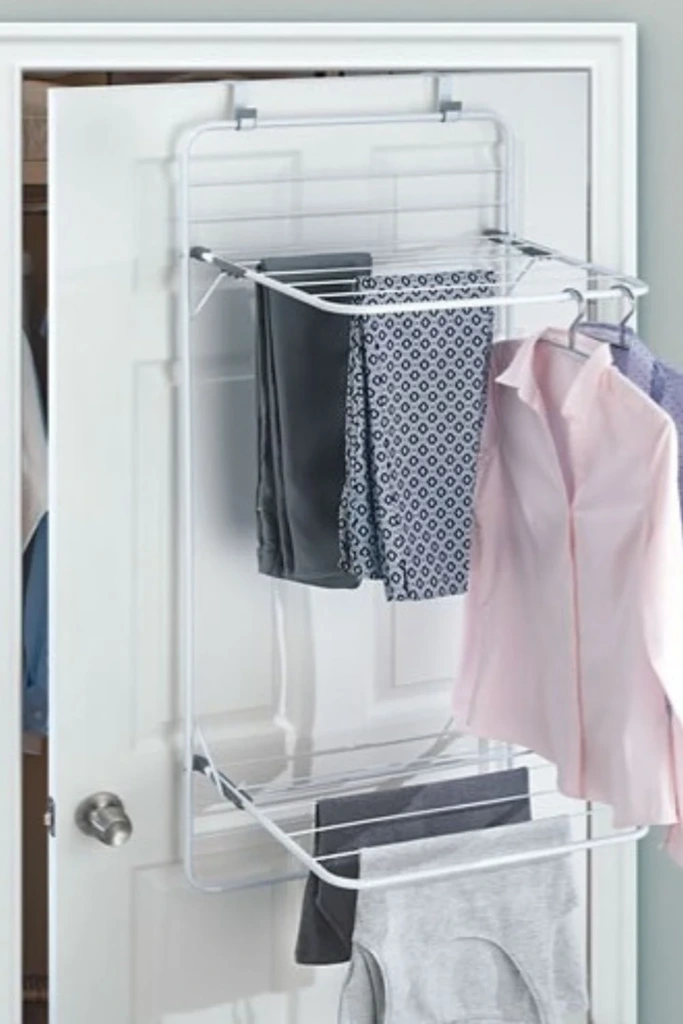
An over-the-door drying rack provides an alternative to a bulky freestanding clothes dryer. Depending on the design, its bars can hold lightweight garments, damp towels, delicate laundry, or clothing that needs to air-dry.
This option is useful in apartments, compact laundry rooms, and homes without much outdoor drying space. A foldable model is especially convenient because it can be collapsed when not in use.
Place wet garments so air can circulate between them, and avoid loading the rack beyond its stated capacity. Make sure the door, hinges, and floor area can safely accommodate the added weight and any dripping water.
12. Closet Baskets
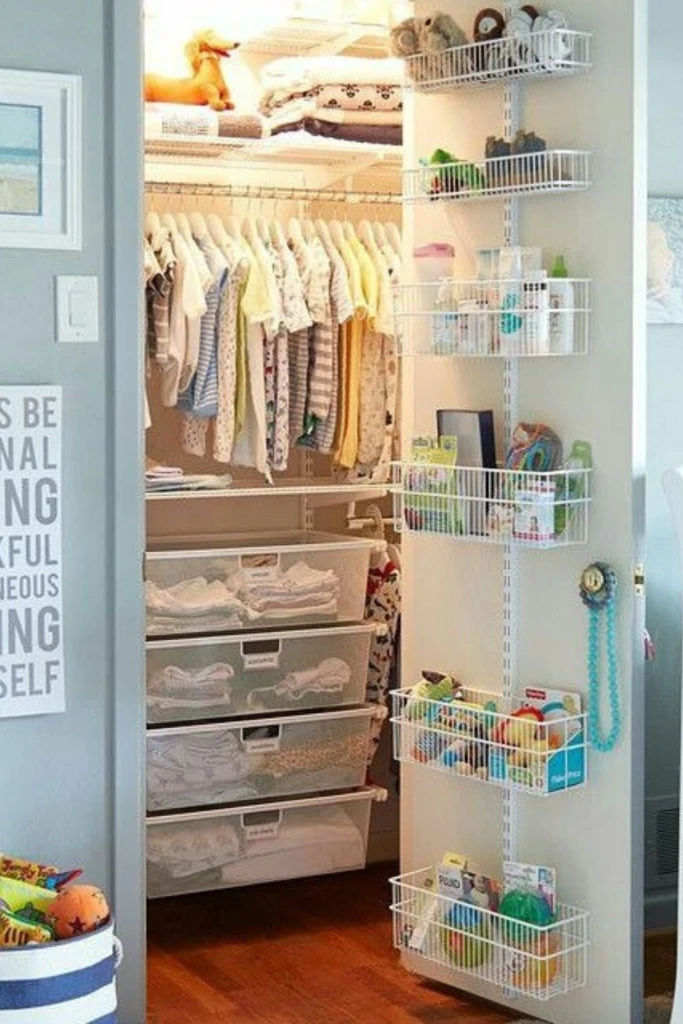
Make a crowded closet more functional by adding a vertical basket system to the inside of its door. These baskets can store folded baby clothes, diapers, accessories, small toys, and other items that tend to accumulate on shelves.
Separate the contents by purpose rather than mixing everything together. For example, one basket can hold daily essentials, while another contains spare clothing or less frequently used accessories.
Choose baskets that fit within the available clearance and won't collide with hanging garments. This setup is particularly useful in nursery closets, where keeping commonly used supplies accessible can simplify daily routines.
13. Cleaner Bins
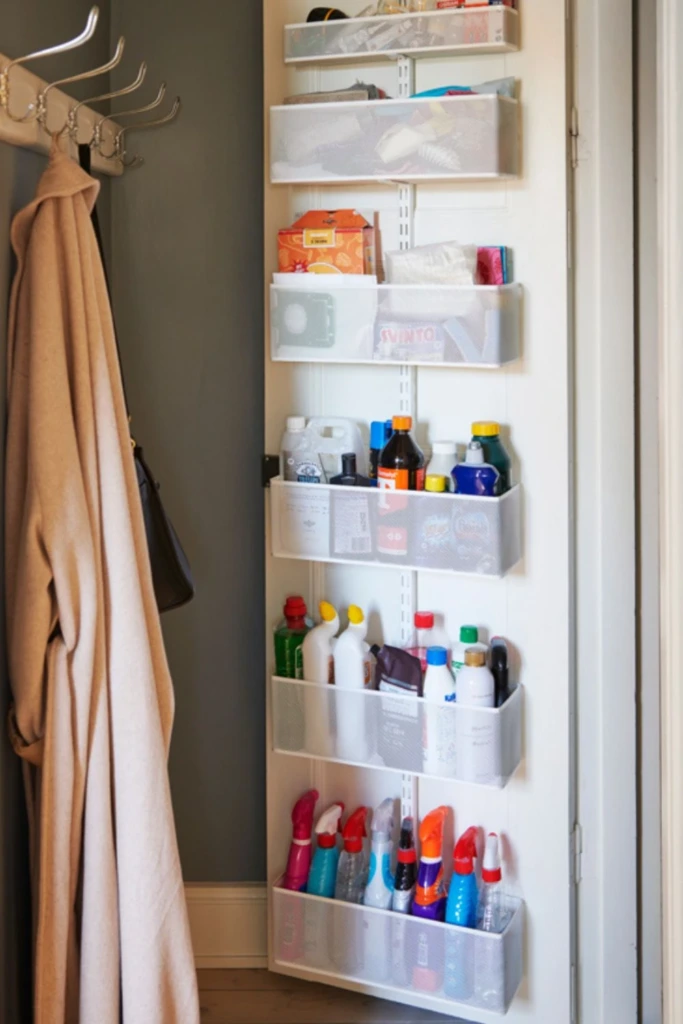
Cleaning products often become difficult to locate when bottles, wipes, sponges, and detergents share a crowded cabinet. A door-mounted bin system gives these supplies a more structured arrangement.
Use appropriately sized compartments for bottles and smaller cleaning accessories. Keep products in their original labeled containers, and follow their storage instructions rather than transferring chemicals into unmarked bottles.
Households with children or pets should pay particular attention to safety. Cleaning chemicals must remain securely stored and inaccessible to children, even when the organizer is mounted high on a door. Never store incompatible chemicals together if their containers could leak or spill.
14. Entry Hooks
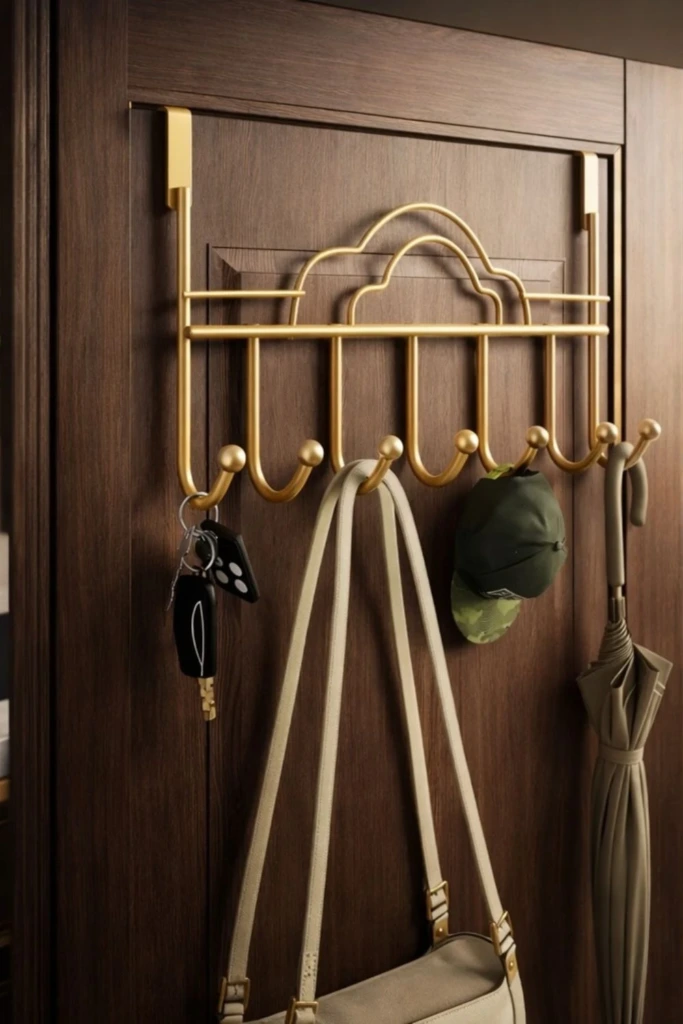
An entryway hook rack gives everyday belongings a predictable place to go as soon as you arrive home. Bags, jackets, caps, umbrellas, and lightweight accessories can hang neatly instead of collecting on chairs or tables.
Choose a rack with enough hooks for everyone who uses the space. If several family members share the entryway, assigning each person a hook makes it easier to maintain the arrangement.
Sturdy metal hooks are useful for heavier belongings, but their capacity depends on the rack and its installation. Keep heavy bags within the manufacturer's weight limits and make sure the organizer doesn't prevent the door from opening fully.
15. Pocket Organizer
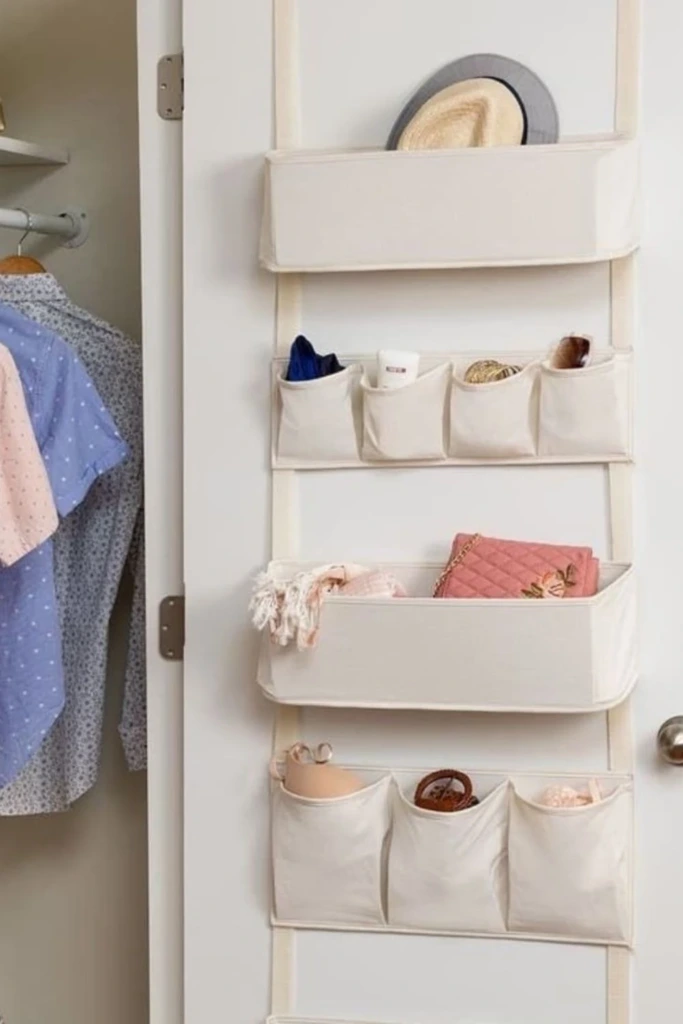
A fabric pocket organizer makes good use of narrow spaces behind bedroom or closet doors. Its individual compartments can hold scarves, sunglasses, hair accessories, folded socks, small wallets, and other lightweight belongings.
Assign each pocket a specific purpose so that items remain easy to locate. Transparent pockets are useful when visibility matters, while fabric designs offer a softer appearance and can protect delicate accessories from scratches.
Before filling the organizer, check the pockets' dimensions and weight limits. Avoid putting heavy objects into sections designed for lightweight items, and position frequently used belongings where they are easiest to reach.
16. Shoe Rack
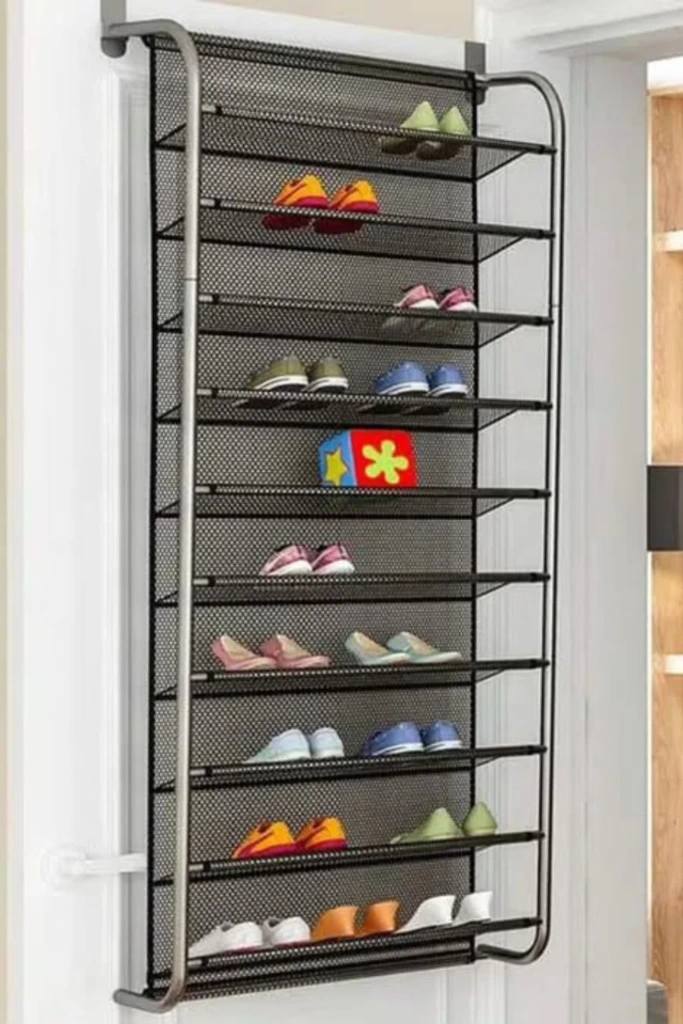
Shoes scattered across a bedroom or entryway can make even a spacious room feel untidy. A vertical over-the-door shoe rack offers an alternative to storing every pair on the floor.
Select a model that accommodates your shoe sizes and styles. Mesh shelves allow airflow, while solid shelves can provide a more defined surface for certain footwear. Keep frequently worn pairs at accessible heights and place less-used shoes farther up or down.
Measure carefully before purchasing, particularly if the door opens toward a wall or furniture. Ensure the loaded rack leaves enough clearance for the door to move without scraping nearby surfaces.
17. Door Hooks
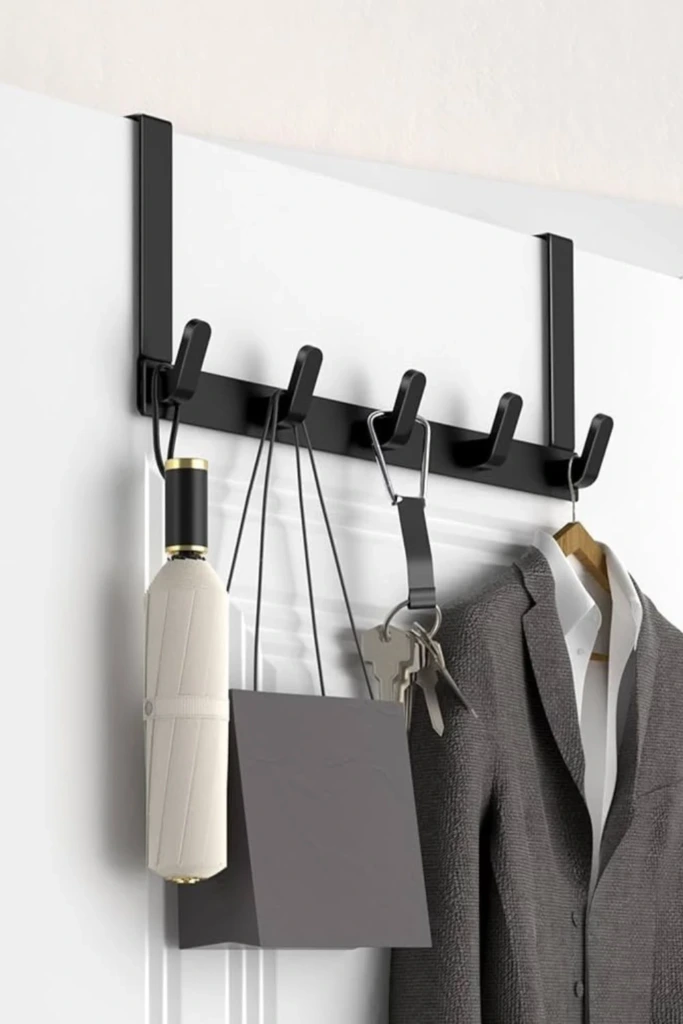
A simple row of hooks can provide practical storage for the belongings you reach for every day. Install an appropriate over-the-door hook bar on a bedroom, closet, or entryway door to accommodate light jackets, tote bags, hats, and other everyday accessories.
This solution is convenient for renters or anyone who wants to avoid drilling into walls. Padded hooks can also help reduce scratches on the door's finish.
Choose the number and spacing of hooks according to your needs. Avoid piling several heavy items onto a single hook, and verify that the rack is suitable for your door's thickness and construction.
18. Supply Shelves
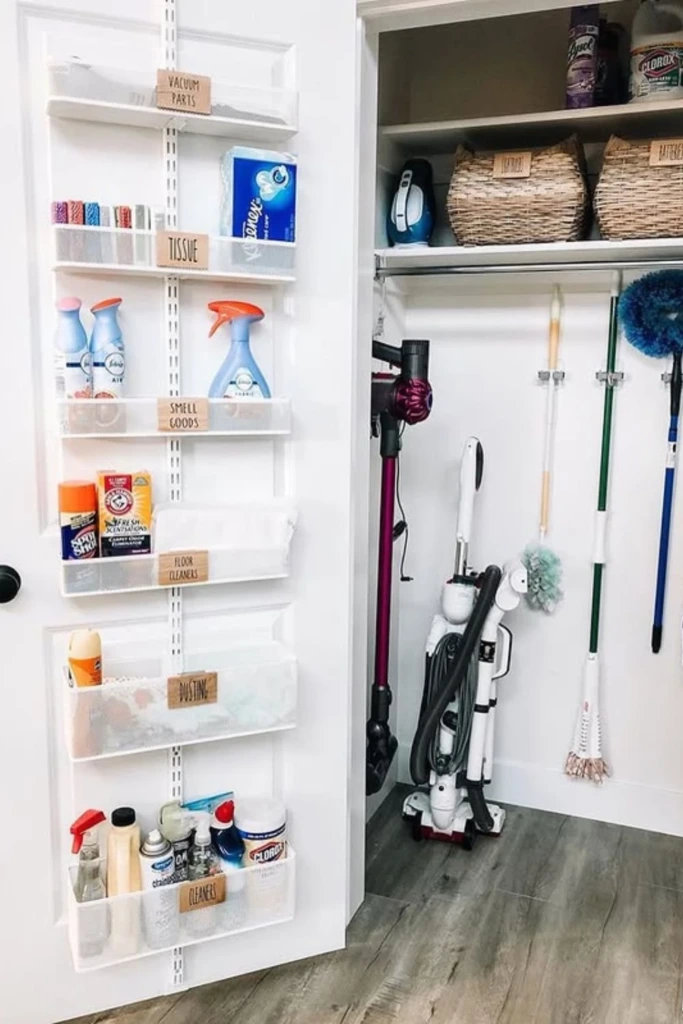
Narrow shelves fitted behind a utility closet door can hold smaller household necessities without taking up the main shelving area. Depending on their size, they may accommodate tissues, wipes, spare toiletries, light cleaning products, and small storage containers.
Arrange supplies according to how often you use them. Frequently needed items belong at a convenient height, while lightweight backup products can occupy less accessible shelves.
Labels can make the system even easier to maintain, especially when multiple people use the same closet. Choose shelves deep enough to hold their contents securely but shallow enough to preserve the door's clearance.
19. Craft Station
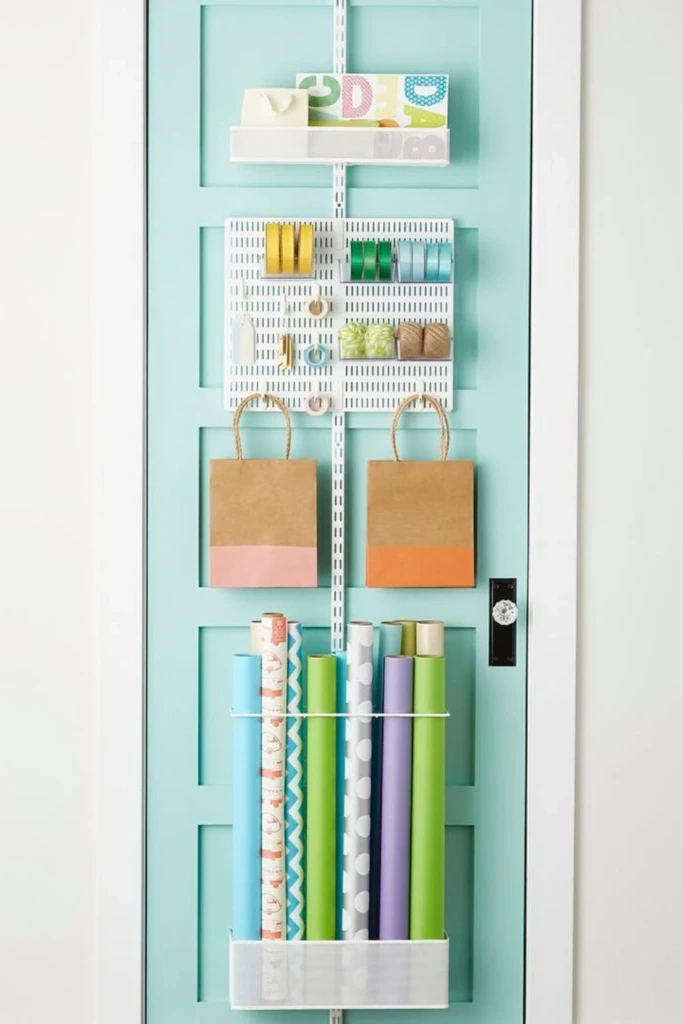
A dedicated craft station helps keep creative projects from spreading across the entire room. Combine a pegboard, small bins, hooks, and a lower basket to organize items such as scissors, tape, ribbons, thread, and gift bags.
Use hooks for tools that need to remain visible, and reserve containers for small supplies that could otherwise become lost. A tall compartment can hold wrapping paper or other long materials, provided the door has sufficient clearance.
This arrangement works well in home offices, sewing spaces, and craft closets. Keep sharp tools securely positioned and store potentially hazardous supplies out of children's reach.
20. Slim Shelves
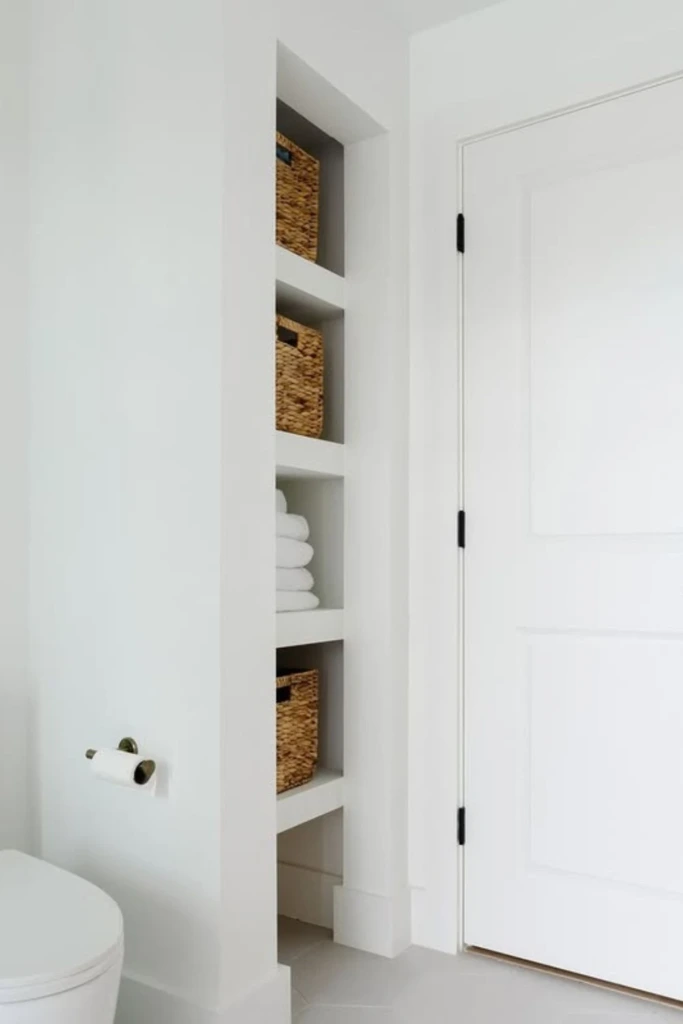
The narrow area beside a bathroom door can sometimes accommodate a slim shelving unit or recessed storage column. Depending on the layout, these shelves may hold toilet paper, folded towels, toiletries, and small baskets.
Shallow shelving is particularly useful in compact bathrooms because it adds storage without extending too far into the walkway. Woven baskets can conceal small items, while open shelves keep frequently needed supplies visible.
Before installing recessed shelving, check the wall's structure and the location of electrical wiring and plumbing. Recessing shelves requires suitable wall depth, so a narrow freestanding unit may be a better choice in some homes.
21. Bag Hooks
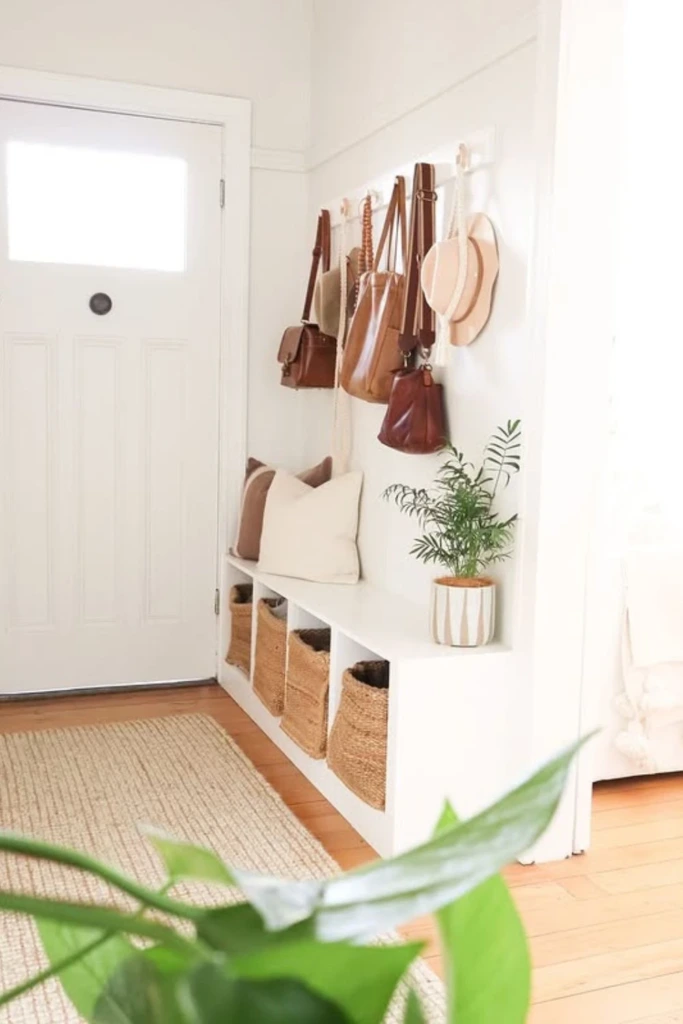
Give handbags, backpacks, and shoulder bags a dedicated place near the entrance. A row of sturdy hooks beside the door keeps bags off the floor and makes them easy to collect when leaving home.
Choose hooks according to the weight of the bags you carry. Heavier backpacks may require secure wall-mounted hardware attached to a suitable support rather than lightweight adhesive hooks.
For a more complete entryway arrangement, combine the hooks with a small bench or a basket for shoes and other accessories. Keep the area around the door clear enough for comfortable movement.
22. Pocket Storage
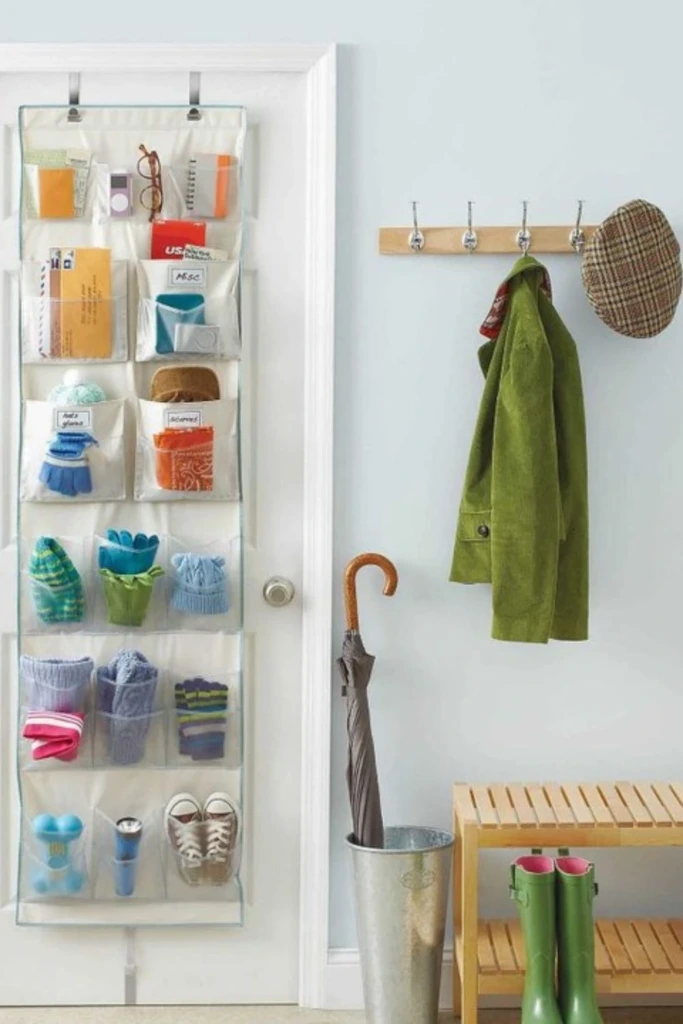
A hanging pocket organizer can help keep seasonal accessories and small essentials together. Use separate compartments for gloves, scarves, hats, sunglasses, mail, or items that family members need before heading out.
Clear pockets make it easier to identify the contents at a glance, while fabric options can give the space a tidier appearance. Families can assign individual sections to each person to reduce confusion during busy mornings.
Avoid overfilling the pockets, as excessive weight may strain the organizer or its hanging hardware. Review the contents occasionally and remove items that are no longer needed.
23. Shoe Pockets
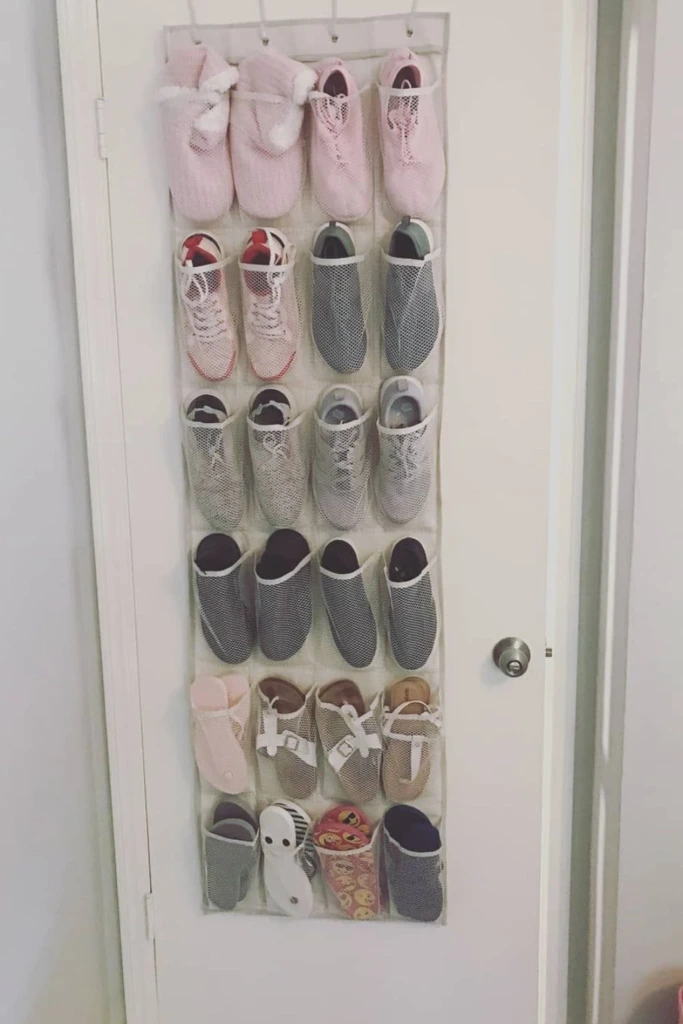
A hanging shoe-pocket organizer is another option for households that need more footwear storage but lack floor space. Individual compartments separate pairs and help prevent shoes from becoming scattered around the room.
Mesh or breathable fabric pockets are useful for everyday casual footwear because they allow more air circulation than tightly closed containers. Before storing shoes, remove loose dirt and allow wet footwear to dry.
Although these organizers are often marketed for shoes, some compartments can also accommodate lightweight accessories. Follow the organizer's weight recommendations and avoid placing heavy shoes in pockets that are too small or weak for them.
24. Cleaner Rack
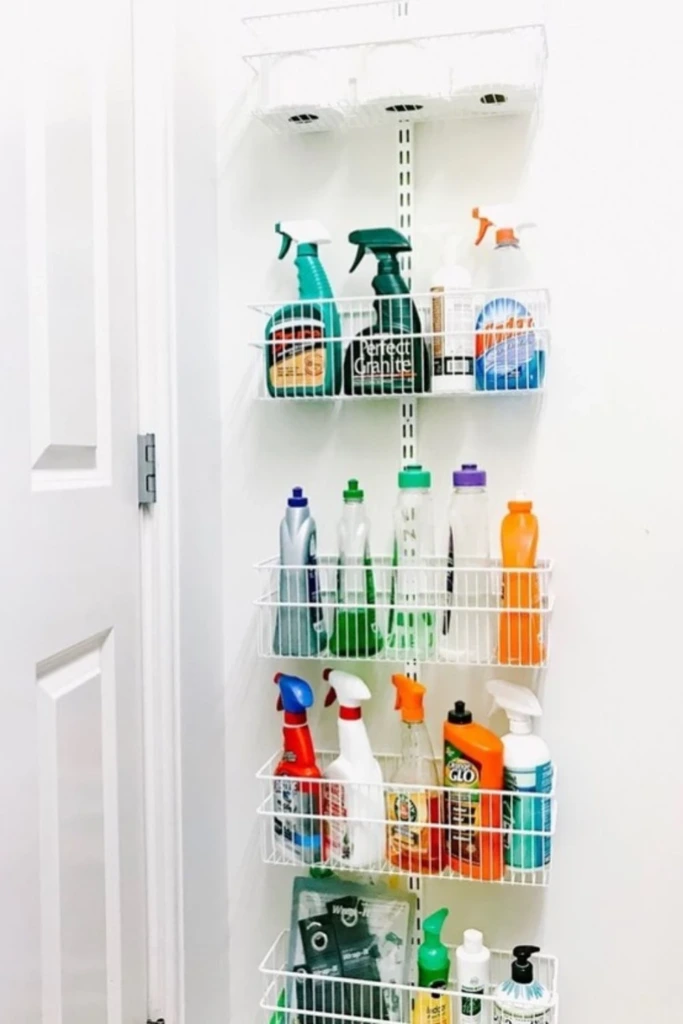
A vertical cleaning rack can make a utility closet easier to navigate by separating sprays, detergents, wipes, sponges, and other household cleaning supplies.
Choose baskets or shelves that are compatible with the sizes of your bottles. Position products so their labels remain visible, and place heavier containers in secure lower compartments whenever possible.
Keep chemicals in their original packaging and follow the manufacturer's storage guidance. The organizer should be installed securely enough to withstand regular door movement without allowing bottles to tip over or spill.
By moving suitable supplies into a dedicated storage area, you can also free up the closet's main shelves for larger equipment and bulkier household items.
25. Accessory Wall
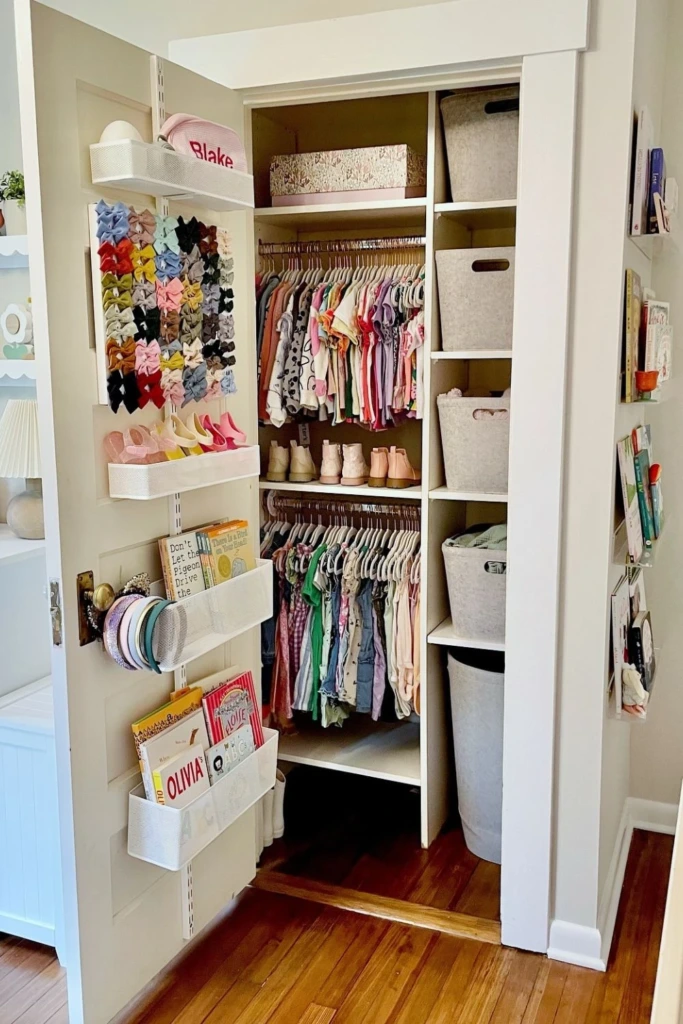
The inside of a closet door can become a convenient display and storage area for small accessories. A pegboard, hanging strip, or compact set of hooks can organize hairbands, bows, ribbons, clips, and other items that are easily misplaced.
Add a few shallow containers beneath the hooks for smaller accessories or lightweight craft materials. Keeping similar items together makes it easier to choose what you need and return it afterward.
This idea works particularly well in children's bedrooms and dressing areas. Make sure the accessories are arranged within easy reach, and keep small items that could pose a choking hazard away from young children.
26. Shoe Tower
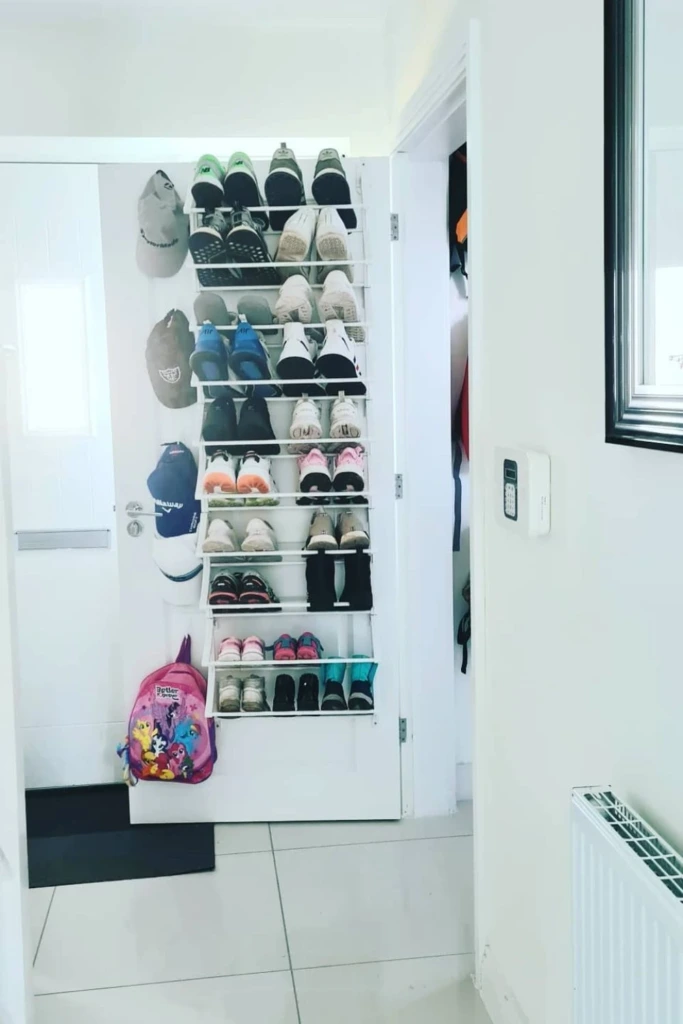
A tall shoe tower uses vertical space to keep frequently worn footwear together. Each level can accommodate a pair or two, depending on the rack's dimensions and the type of shoes being stored.
Place everyday sneakers and sandals on convenient shelves, with less frequently worn footwear on the remaining levels. Some systems also include side hooks for lightweight accessories such as caps or small bags.
Before selecting a tower, check its overall depth and the available space behind the door. A fully loaded rack can be heavy, so confirm that its mounting system and the door itself can support the intended load.
For busy households, this setup can make it easier to keep common footwear organized without adding a large shoe cabinet to the entryway.
Will behind-the-door organizers damage the door?
Most lightweight over-the-door organizers can be installed without drilling, but they may still scratch the finish or place stress on the door if they don't fit correctly. Padded hooks and protective coatings can help reduce surface damage.
Check the door's thickness and the organizer's mounting requirements before purchasing. Make sure the hardware doesn't press against the door frame, interfere with the hinges, or prevent the door from closing completely.
For heavier storage systems, use a mounting method designed for the door's construction and intended load. Avoid assuming that every hollow-core door can safely support a heavy rack simply because it fits over the top.
What types of doors work best for behind-the-door storage?
Standard hinged interior doors often provide useful space for hanging organizers, particularly when they have enough clearance from nearby walls and furniture. Solid-core doors may be suitable for heavier installations when the mounting method is appropriate.
Lightweight fabric pockets and slim hook racks are generally better options for doors that cannot support much additional weight. Sliding doors require different solutions because conventional over-the-door hooks may obstruct their movement or fail to fit securely.
Always check the organizer's specifications against your door's thickness, construction, and available clearance. The best option is one that stores your belongings safely while allowing the door to open and close without obstruction.