16 Goat Pen Ideas DIY for 2026
Creating a comfortable and secure home for your goats doesn't have to involve expensive materials or complicated construction. With thoughtful planning, you can build a practical enclosure that provides protection, room to move, and convenient access for daily care.
The best DIY goat pen ideas combine durable fencing, reliable shelter, proper drainage, and enough space for goats to behave naturally. Whether you have a small backyard homestead or several acres of farmland, the right design can make feeding, cleaning, and managing your animals much easier.
From traditional wooden enclosures to portable shelters and customizable stalls, these 16 goat pen ideas offer practical inspiration for different budgets, climates, and herd sizes.
How Big Should a Goat Pen Be for One or More Goats?
The amount of space your goats need depends on their breed, age, activity level, and how much time they spend inside the enclosure.
As a general planning guideline, allow approximately 20–25 square feet of covered housing space per adult goat, with considerably more room in the outdoor exercise area. Larger breeds, pregnant does, and goats kept in confinement for extended periods may require additional space.
Goats are social animals and should generally live with compatible companions rather than being housed alone.
When planning your enclosure, consider these important factors:
Herd size: Provide enough room for every goat to move, rest, and eat without excessive competition.
Outdoor access: Include a spacious exercise yard or pasture whenever possible.
Feeding areas: Leave sufficient space around hay racks and water containers.
Shelter: Ensure every goat can find protection from rain, wind, and extreme temperatures.
Future expansion: Design the enclosure so you can add sections if your herd grows.
A larger, well-organized pen generally makes maintenance easier while helping reduce crowding and conflicts between animals.
Can You Build a Goat Pen Using Pallets or Scrap Wood?
Reclaimed lumber and wooden pallets can be useful materials for constructing an affordable goat enclosure. However, their suitability depends on the condition, strength, and safety of the wood.
Choose clean, structurally sound pallets that have not been contaminated with chemicals or hazardous substances. Remove protruding nails, splinters, and damaged boards before construction.
For a stronger enclosure, attach reclaimed boards to properly anchored posts rather than relying on pallets alone for structural support.
Combining wooden framing with livestock fencing is another practical approach. The wood provides stability, while suitable wire panels help prevent escapes and improve visibility.
Avoid large gaps where goats could trap their heads or legs. Because goats frequently climb and push against barriers, every section should be securely fastened and regularly inspected.
1. Barn Pen
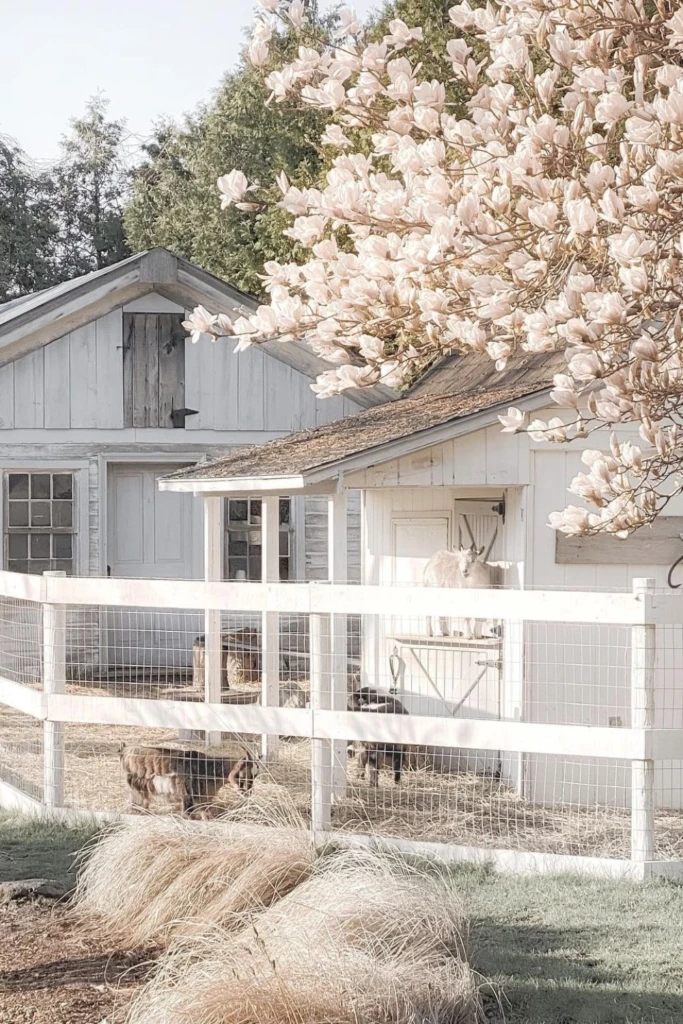
A barn-style goat pen is an excellent choice for homesteaders who want permanent housing with an attached outdoor area.
This design typically features a wooden shelter connected to a fenced exercise yard. The covered section provides a dry resting place, while the outdoor enclosure allows goats to explore and enjoy fresh air.
Start by selecting elevated ground with good drainage. Install sturdy corner posts, build a weather-resistant shelter, and surround the outdoor area with secure livestock fencing.
A wide entrance between the barn and yard allows goats to move freely between both spaces.
For easier maintenance, position the feeding station where you can refill hay without walking through the entire enclosure. A separate access gate also makes cleaning and bedding replacement more convenient.
2. Stall Layout
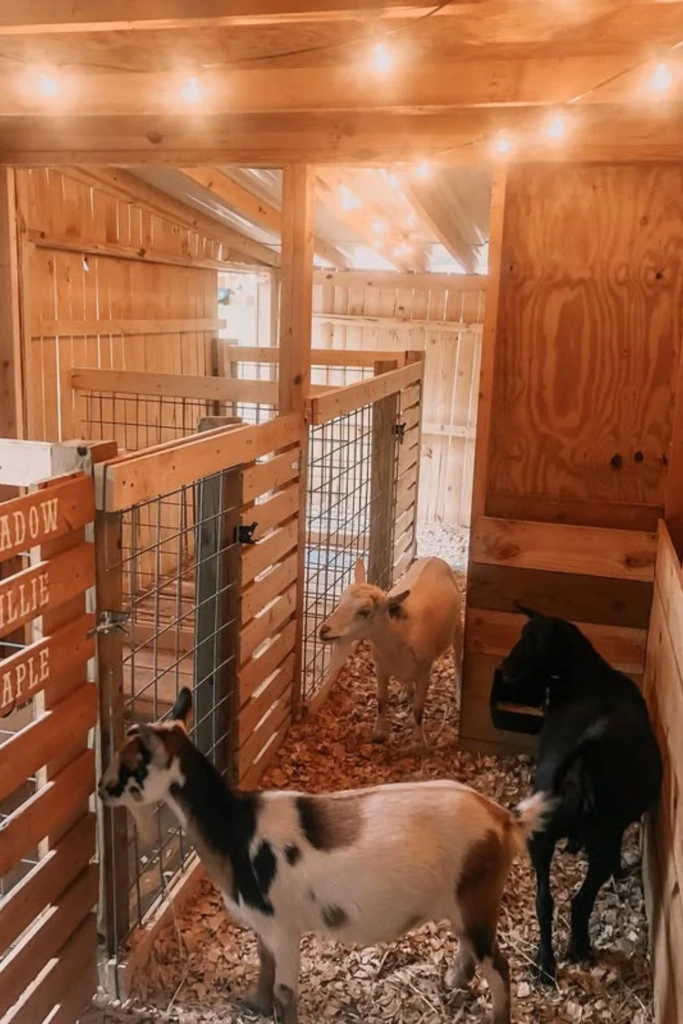
A stall-based arrangement is particularly useful for goat owners who need to manage several animals within one barn.
Individual stalls can accommodate different feeding requirements, temporary separation, kidding, or veterinary care. This arrangement is especially helpful when managing goats of different sizes or temperaments.
Build the partitions using solid wooden framing and appropriately sized livestock panels. Make sure the walls are tall and strong enough to prevent goats from jumping over or pushing through them.
Each stall should have a secure gate that opens easily for routine care.
Provide suitable ventilation, dry bedding, and access to clean water. If the stalls are intended for extended occupancy, include sufficient exercise space and opportunities for social contact.
3. Modular Stalls
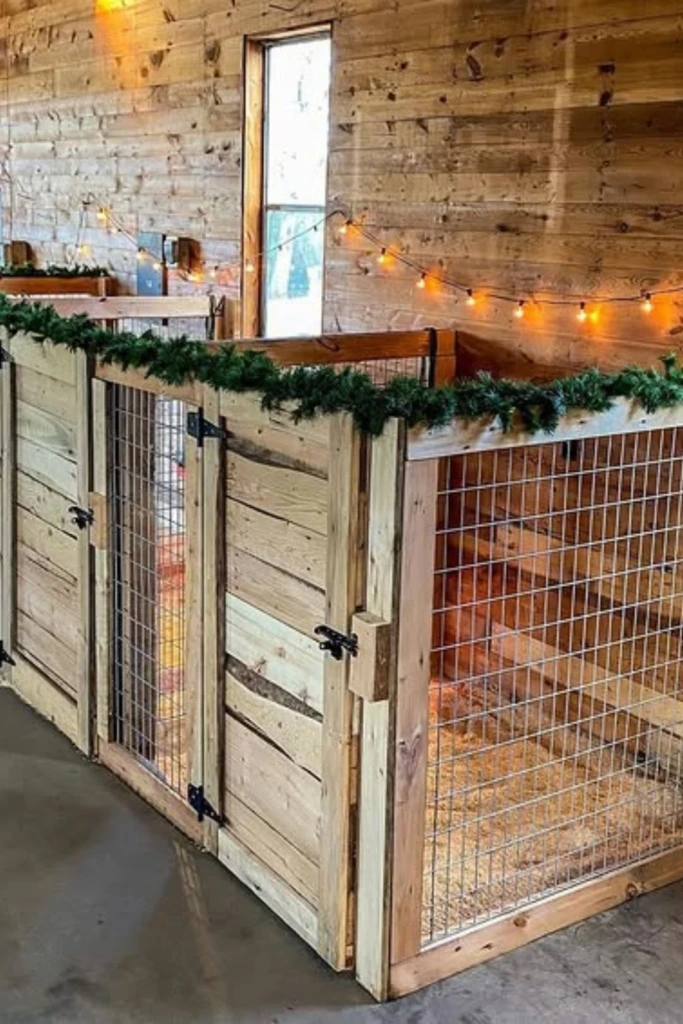
Modular goat stalls offer flexibility for farms where housing requirements change throughout the year.
Instead of constructing permanent interior walls, use removable livestock panels to create adjustable sections inside a barn or covered enclosure.
This allows you to enlarge a shared area, create temporary kidding spaces, or separate animals when necessary.
Begin with a sturdy perimeter structure, then install panels using secure brackets or livestock-rated connectors. Choose hardware that can be adjusted without leaving sharp edges or exposed fasteners.
One major advantage of this design is that it can adapt as your herd changes.
Modular partitions are also convenient for cleaning because sections can be opened or removed to improve access.
4. Field Shelter
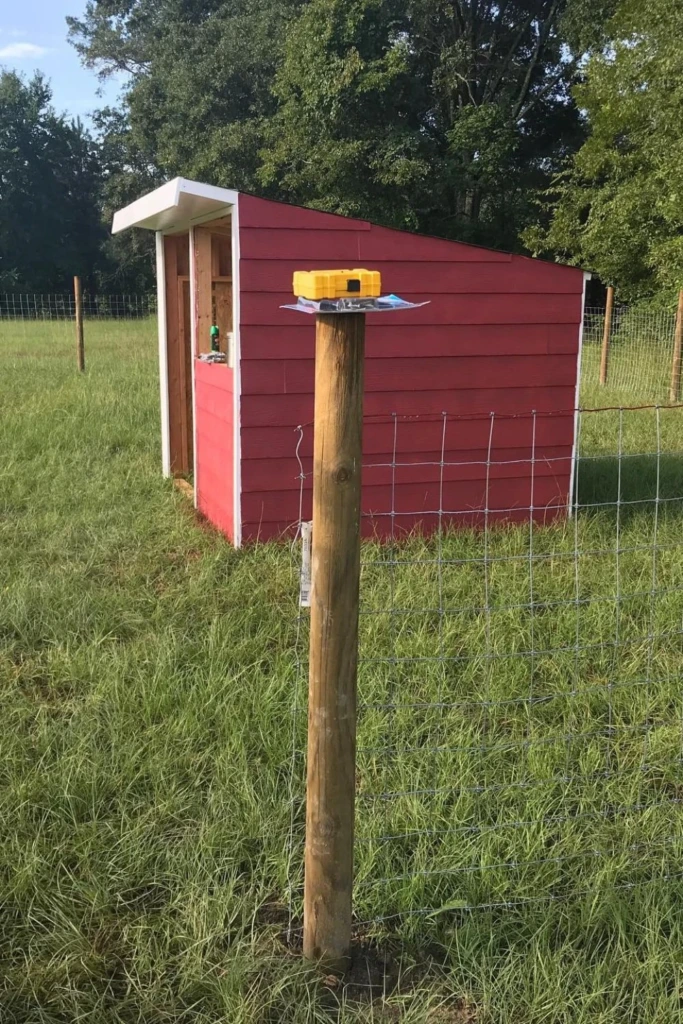
A field shelter provides essential weather protection for goats that spend much of their time grazing outdoors.
A simple three-sided structure with a sloping roof is often sufficient, provided it is properly oriented and large enough for the animals using it.
Choose a location that remains relatively dry during heavy rain. Position the solid walls to reduce exposure to prevailing winds while keeping the entrance accessible.
Use treated lumber where appropriate for ground-contact structural components, durable exterior siding, and roofing materials suitable for your local climate. Prevent goats from chewing treated surfaces.
Extend the roof beyond the walls to help direct rainwater away from the resting area.
The shelter should also have adequate airflow to prevent moisture accumulation. Avoid placing hay directly on damp ground, and provide clean bedding when conditions require it.
5. Raised Shelter
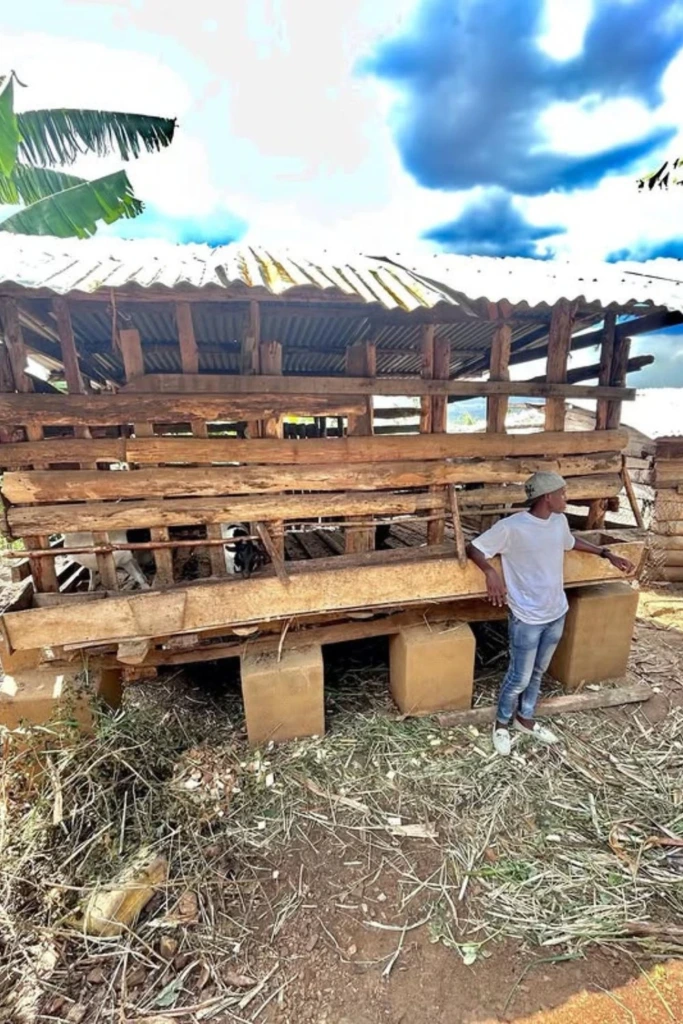
A raised goat shelter can be useful in areas where frequent rainfall causes wet ground and muddy resting spaces.
This design uses a supported platform to elevate the sleeping area above surrounding soil.
Construct a solid foundation using properly anchored posts, suitable footings, or a structurally engineered raised frame. Install a strong floor that can safely support the combined weight of the goats and bedding.
The platform should have a non-slip surface, with gaps small enough to prevent hoof injuries.
Add a gently sloped ramp with secure footing if the entrance is above ground level. Low elevations are generally easier and safer for young or older goats.
A raised structure can improve drainage beneath the shelter, but it still requires regular cleaning and proper ventilation.
Avoid unstable stacks of blocks or loose supports that could shift when goats jump or climb.
6. Barrel Shelter
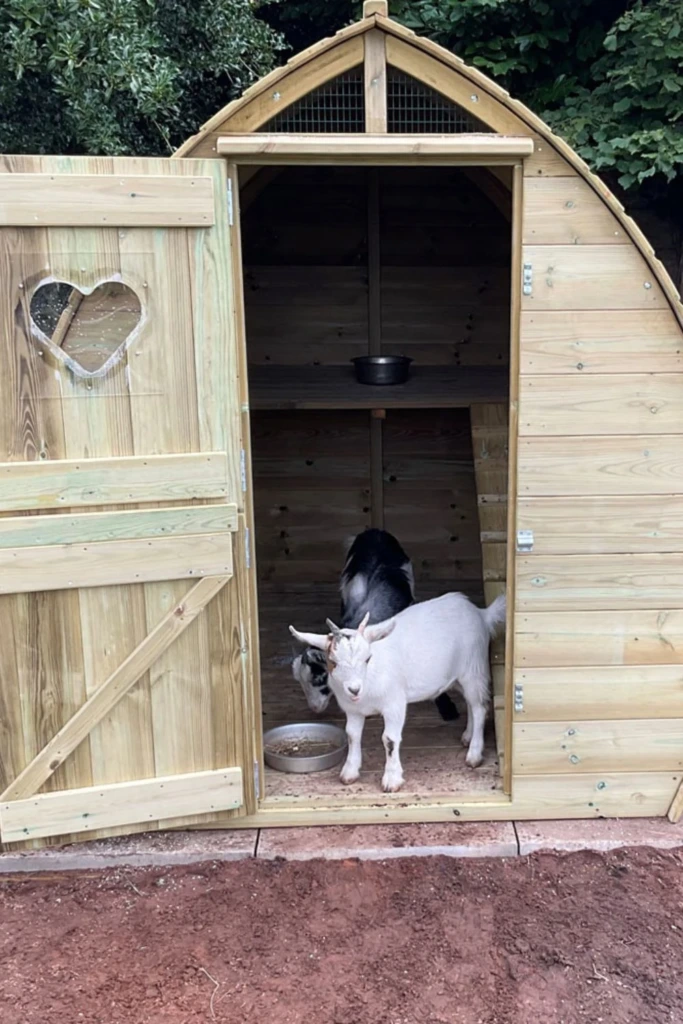
A barrel-inspired shelter offers a compact alternative to conventional rectangular goat housing.
Its rounded roof can help shed rain and create an enclosed resting area without requiring a complicated roof frame.
For a DIY version, build a curved structure using suitable framing materials and weather-resistant exterior panels. Secure the finished shelter to a stable base so it cannot roll, tip, or move during strong winds.
The entrance should be large enough for goats to walk through comfortably without scraping their backs or horns.
Although this design can work for small breeds, miniature goats, or as an additional resting spot, it must provide adequate interior height, ventilation, and floor space.
Avoid repurposing containers that previously held hazardous substances. Large enclosed barrels may also become dangerously hot without proper ventilation and shade.
7. Play Pen
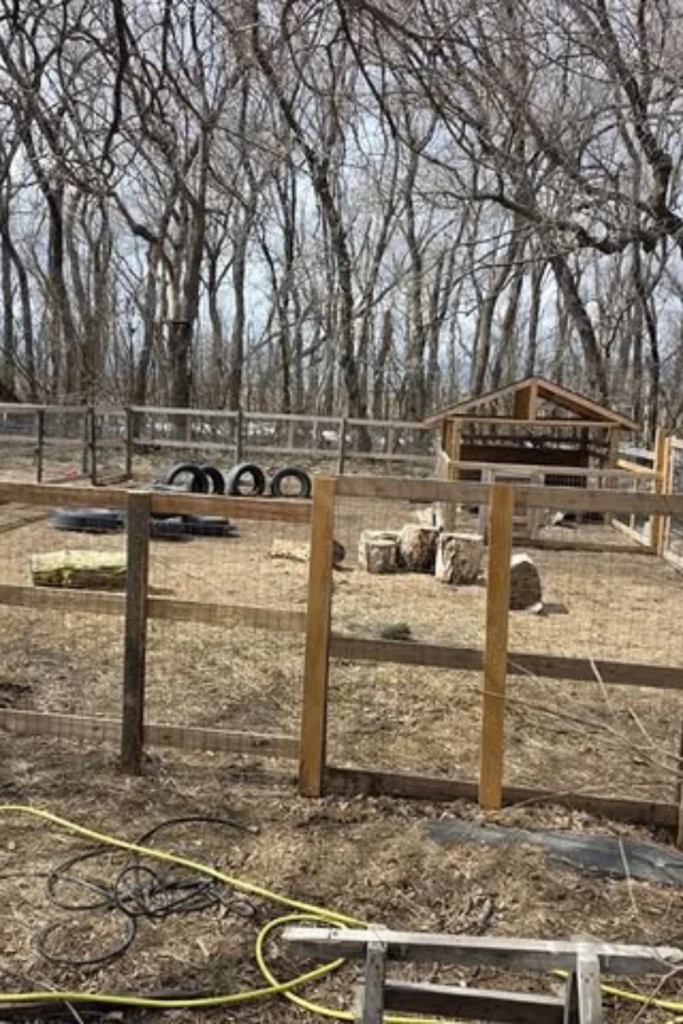
Goats are naturally curious animals that enjoy climbing, exploring, and interacting with their surroundings.
A play-focused enclosure gives them opportunities for physical activity while helping reduce boredom.
Begin with a spacious, securely fenced area. Add sturdy wooden platforms, large logs, low climbing structures, or purpose-built ramps.
Arrange the features at different heights to encourage movement without creating dangerous jumping distances.
Every structure should be stable enough to withstand goats climbing, rubbing, and jumping on it.
Keep climbing equipment away from perimeter fencing so animals cannot use it to escape.
Avoid loose tires or other objects that could trap heads, legs, or horns. Provide shaded resting areas and maintain clear walking paths between the different activities.
A thoughtfully designed play pen can be a valuable addition to a goat's daily environment.
8. Half Shelter
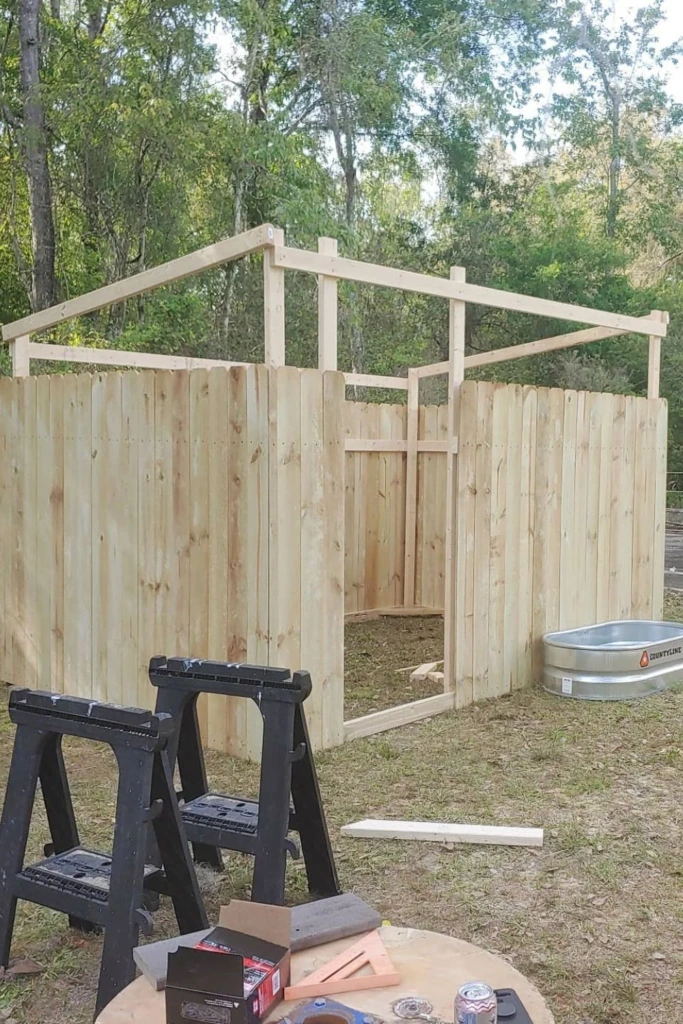
A partially enclosed shelter offers a simple housing option for goats in regions with relatively mild weather.
This design usually includes solid lower walls, an open upper section, and, ideally, a roof that protects the resting area from rain and direct sunlight.
Build a strong frame using wooden posts and horizontal supports. Attach solid panels to the sides most exposed to wind.
Leave suitable openings near the roofline to maintain ventilation without directing cold drafts onto resting animals.
A roof is important even in warm climates because goats need reliable protection from prolonged rain and intense sun.
This type of shelter can also be expanded over time. You might begin with a basic covered structure and later add removable wind panels or additional siding.
9. Shade Zone
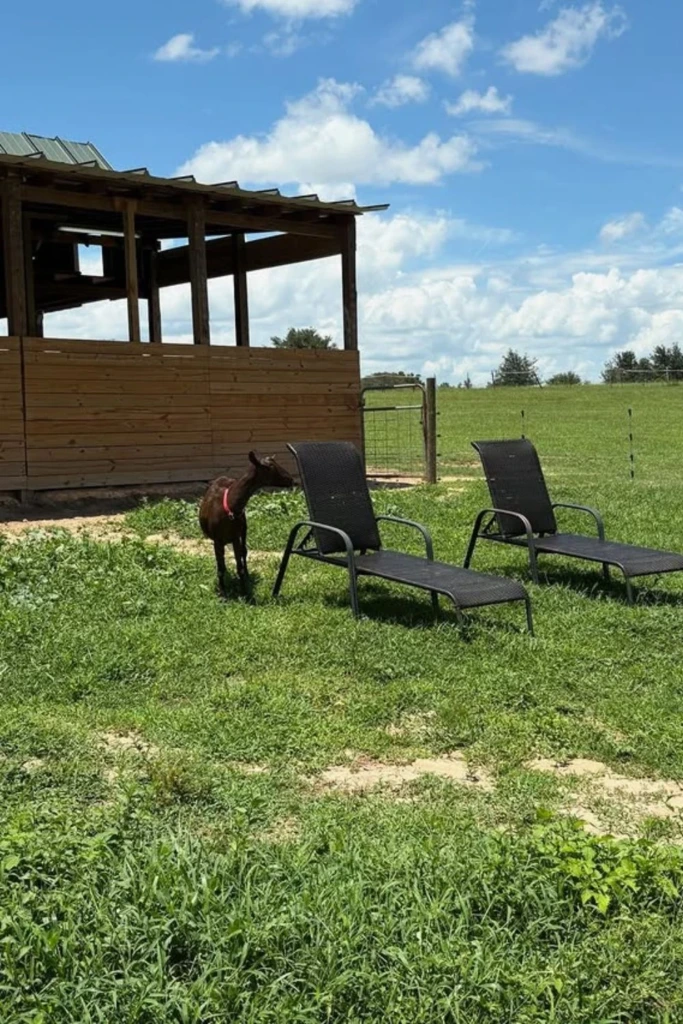
A dedicated shade area is particularly important for goats living in hot, sunny environments.
While trees can provide natural shade, a purpose-built structure offers more predictable coverage throughout the day.
Install a sturdy roof supported by well-anchored posts. Use roofing materials that block sunlight and are suitable for outdoor livestock housing.
Keep the sides open where possible to encourage airflow.
Place the shade structure on well-drained ground and provide enough covered space for all goats to rest without crowding.
You can also add low, stable resting platforms to keep animals away from damp soil.
Make sure drinking water is available nearby, but position containers where spills will not create persistent mud.
A shade zone should complement a weatherproof shelter rather than replace protection from cold, wind, and heavy rain.
10. Mobile Shelter
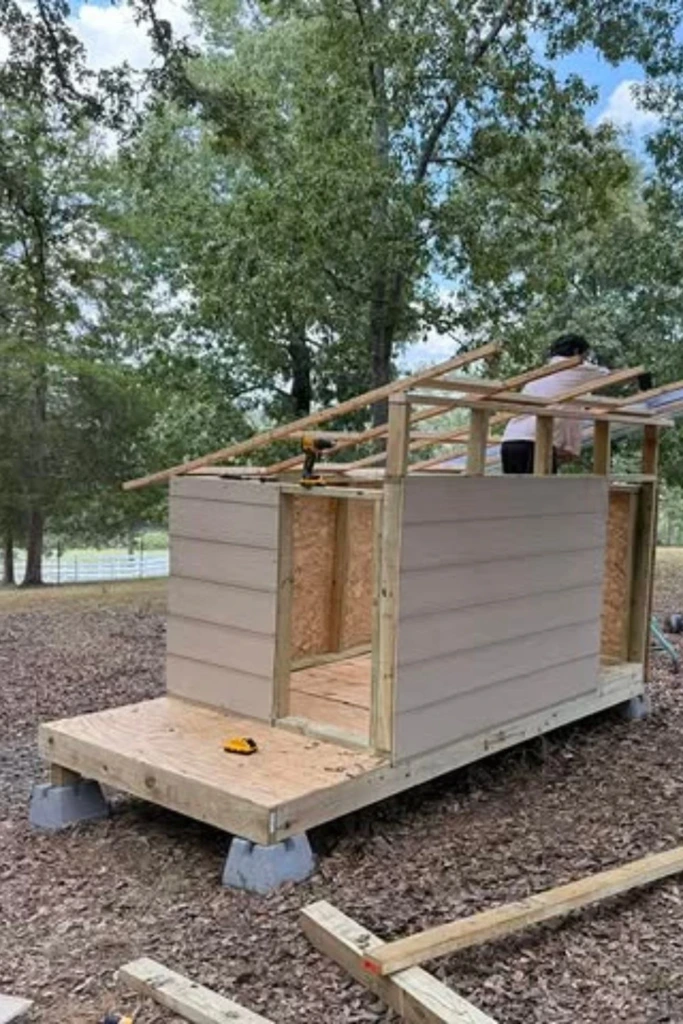
A portable goat shelter is a practical option for farms that rotate animals between grazing areas.
Instead of building several permanent structures, you can move one shelter to different sections of pasture as needed.
Construct the shelter on durable skids or a properly designed mobile frame. Use lightweight but strong materials to keep the structure manageable without sacrificing stability.
A sloped roof, solid windward wall, and adequate ventilation provide basic weather protection.
The shelter should be securely anchored whenever it is in use, particularly in windy locations.
Before moving it, ensure the goats are safely contained elsewhere and the route is free of obstacles.
Portable shelters work best when combined with reliable rotational fencing and a dependable water supply.
11. Feed-First Pen
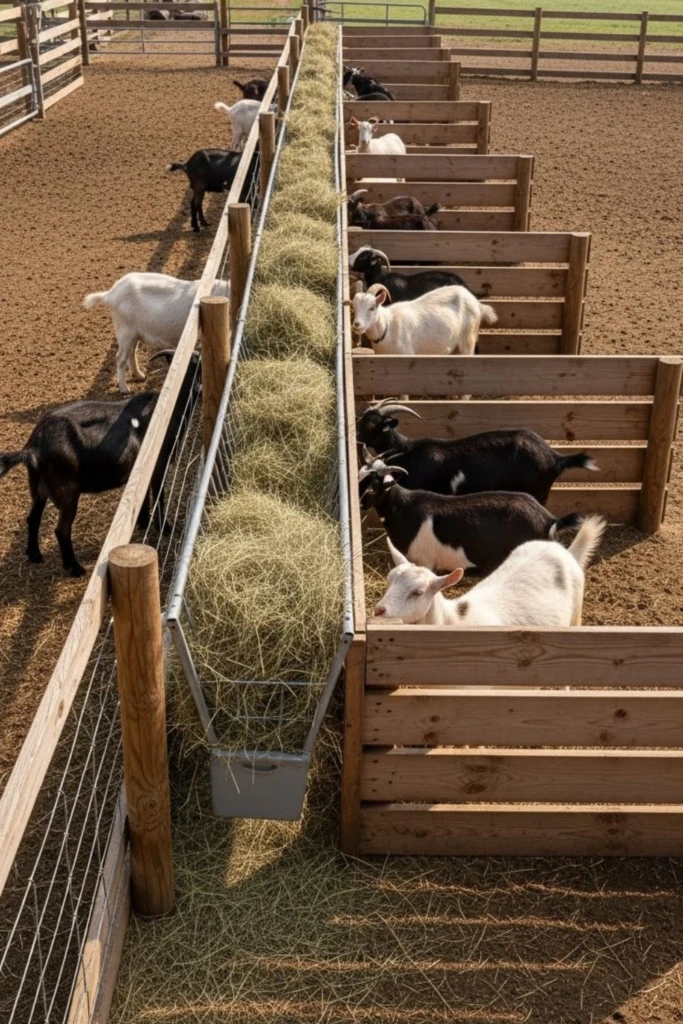
A feeding-focused goat pen is designed to make mealtimes more organized and reduce competition around food.
The main feature is a conveniently positioned feeding area with sufficient access for the entire herd.
Install a long hay feeder along a sturdy fence or barn wall. Provide multiple feeding positions so less dominant goats can eat without being pushed away.
For larger groups, consider adding separate feeding stations at different locations.
Use livestock-safe feeder designs that minimize hay waste while preventing goats from getting their heads or horns trapped.
Position feeders at an appropriate height for the animals and keep the surrounding ground dry.
A service walkway outside the enclosure can make refilling hay and cleaning containers easier without allowing goats to crowd the gate.
12. Dry-Core Pen
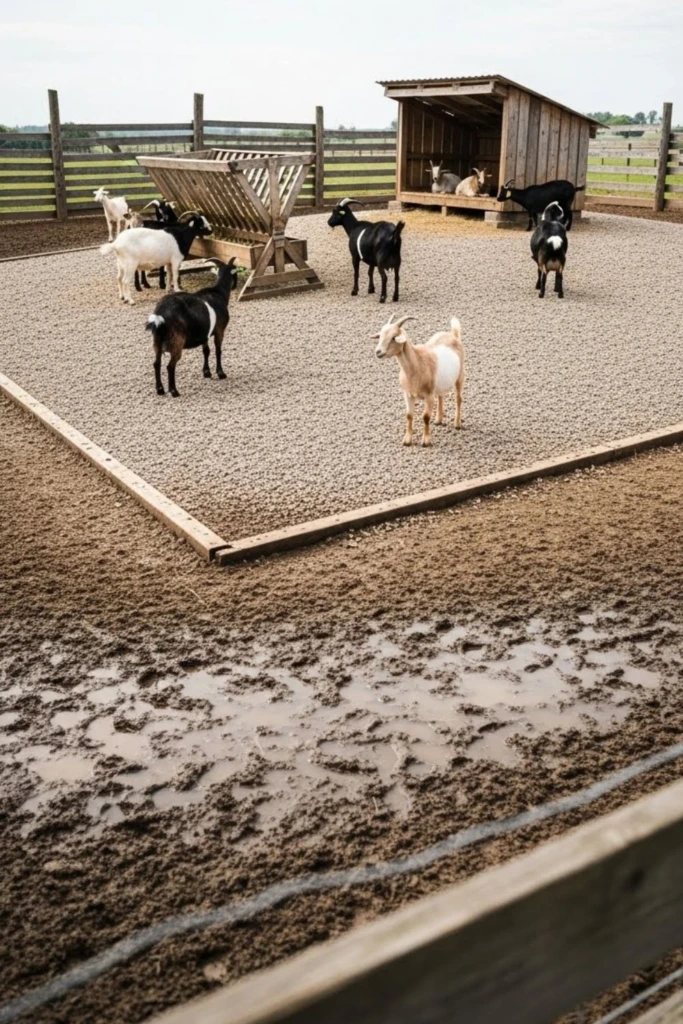
A dry-core pen prioritizes drainage to help maintain healthier footing during wet weather.
This approach is especially valuable in areas with heavy rainfall, clay soil, or recurring mud problems.
Start by identifying the natural direction of water runoff. Grade the enclosure gently so surface water moves away from shelters, feeding areas, and frequently used pathways.
In high-traffic locations, install suitable compacted aggregate over a properly prepared base. Geotextile fabric may help separate gravel from soft soil where appropriate.
Avoid leaving sharp stones exposed where they could injure hooves.
Place feeders and water stations on firm, well-drained surfaces and redirect roof runoff away from the pen.
Regular manure removal remains essential because even well-drained enclosures can become muddy when organic waste accumulates.
For persistent drainage problems, a properly designed drainage system may be necessary.
13. Quiet Corner Pen
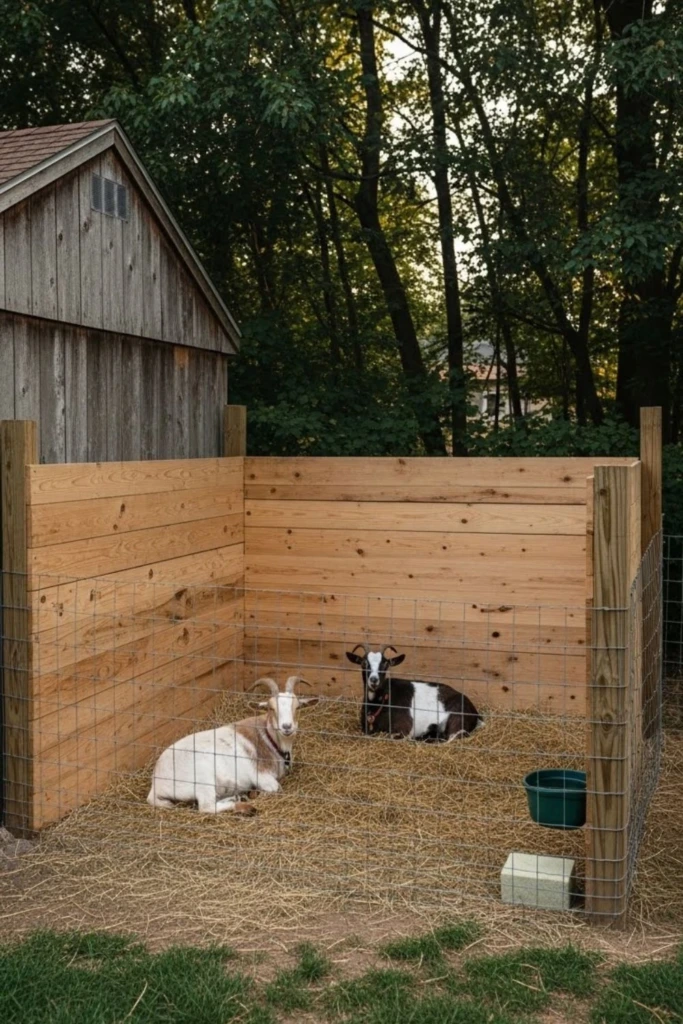
A quiet corner pen provides a more sheltered environment for goats that need reduced disturbance.
This arrangement can be useful for newly introduced animals, pregnant does approaching kidding, or goats requiring temporary observation.
Choose a location away from busy entrances, barking dogs, machinery, and other frequent disturbances.
Install solid panels along the sides facing the most activity while maintaining adequate airflow through the remaining sections.
Include a dry resting area, easy access to food and water, and secure fencing.
Avoid creating an isolated space where a goat cannot see or hear other goats unless temporary separation is medically necessary.
The goal is to reduce unnecessary stress while maintaining appropriate social contact and supervision.
14. Split-Use Pen
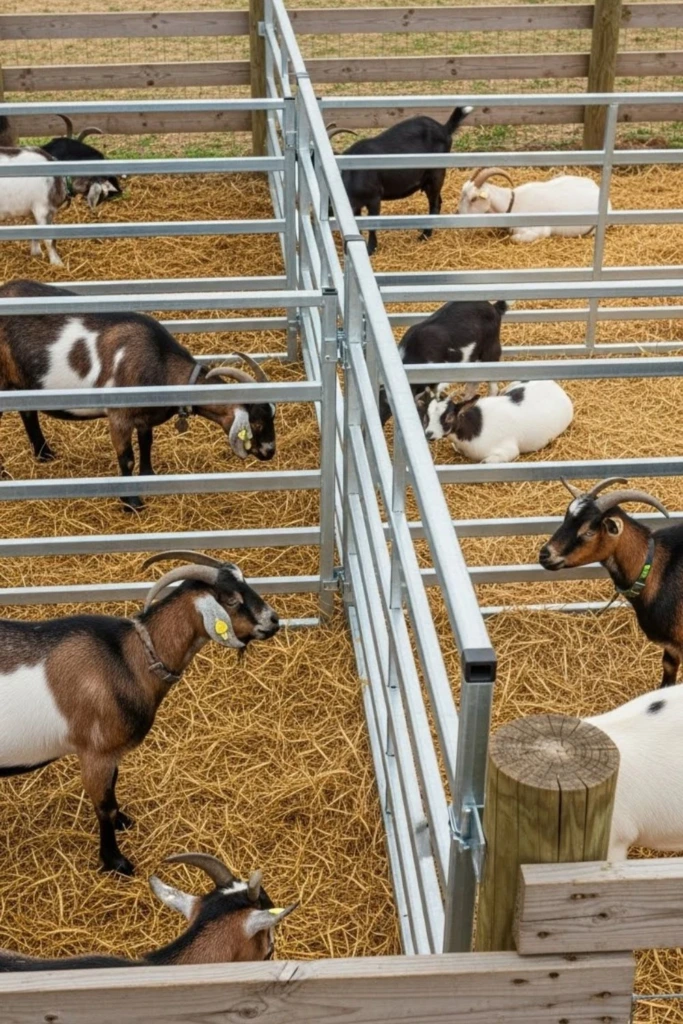
A split-use enclosure allows one large pen to serve multiple purposes.
The design includes a removable or hinged internal divider that can separate the space into two smaller sections.
During normal conditions, the divider remains open, giving goats access to the entire enclosure.
When needed, it can be closed to create a separate feeding area, temporary holding space, or kidding section.
Construct the divider using a strong livestock panel mounted within a secure frame.
Install latches that goats cannot easily manipulate, and ensure the divider has no sharp edges or dangerous gaps.
Each section should have independent access to water, appropriate shelter, and sufficient space whenever animals are separated.
This arrangement is especially useful for smaller farms where constructing additional permanent pens may not be practical.
15. Wind-Channel Pen
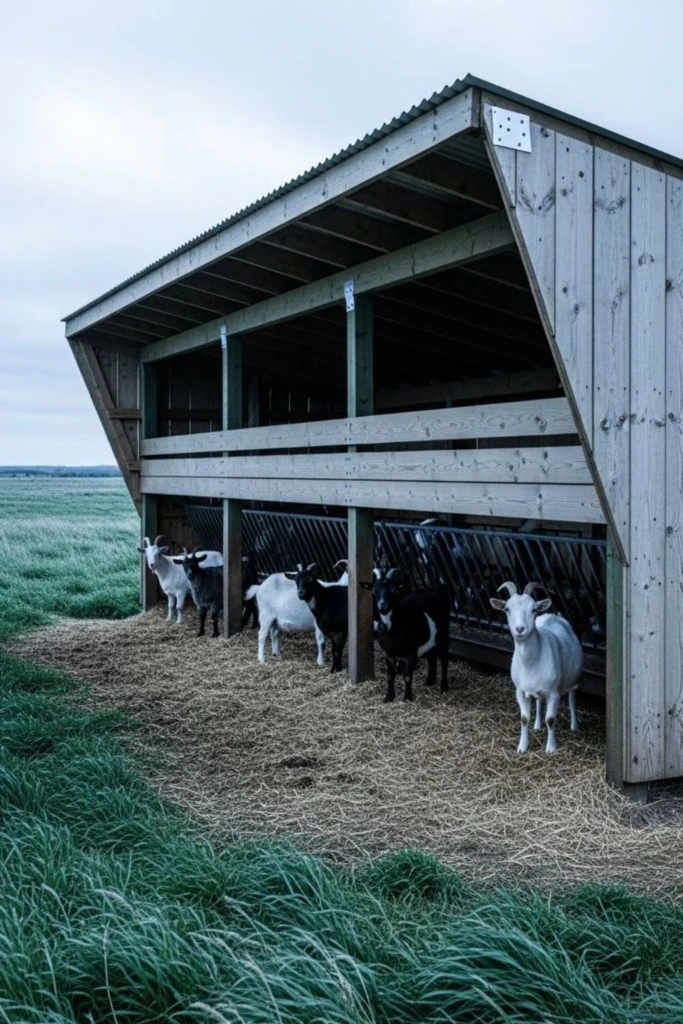
A wind-conscious goat pen helps protect animals from uncomfortable drafts while maintaining fresh air circulation.
This is particularly important in cold or exposed locations.
Begin by observing the prevailing wind direction on your property. Position solid shelter walls to block the strongest winds, leaving protected openings for entry and ventilation.
Use sturdy siding and properly secured roof panels to withstand local weather conditions.
High ventilation openings can allow moist air to escape without creating strong drafts at animal level.
Avoid sealing the shelter completely. Poor ventilation can cause humidity and ammonia from manure to accumulate, potentially contributing to respiratory problems.
A combination of wind protection, dry bedding, and controlled airflow creates a more comfortable environment during colder months.
16. Routine Path Pen
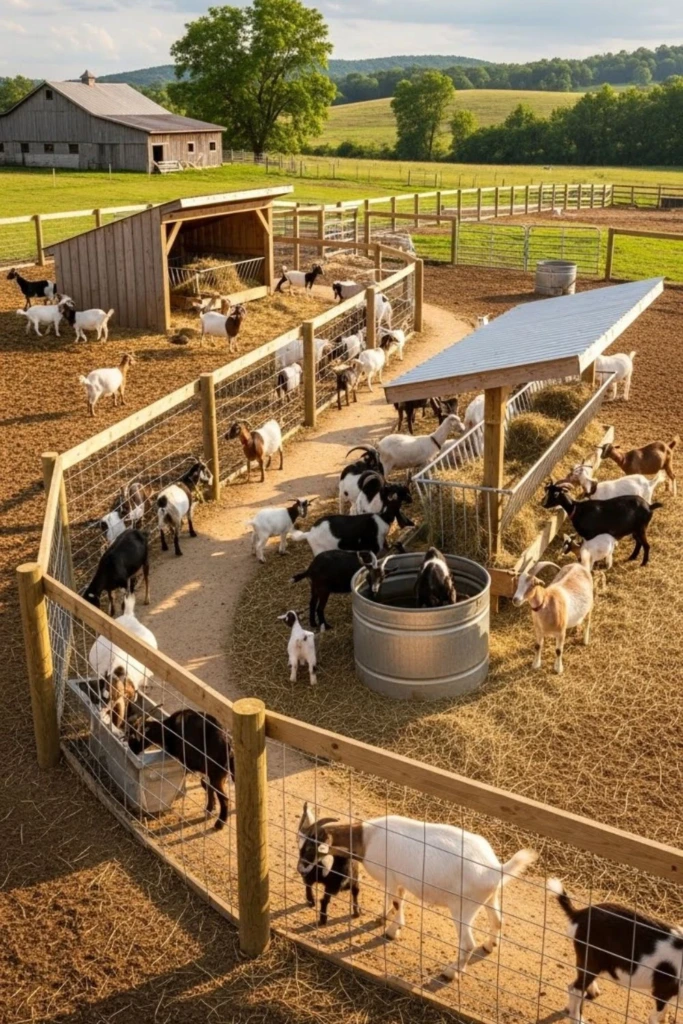
A routine-path enclosure organizes the goat pen around everyday activities such as eating, drinking, resting, and moving outdoors.
The objective is to create clear routes between important areas while minimizing congestion.
Start by positioning the shelter, feeding stations, and water containers in accessible locations.
Use short fence sections or gates to guide movement where necessary, but avoid narrow passages where dominant goats could block others.
Keep frequently used paths firm and well-drained to reduce mud buildup.
Provide enough room around gates and feeding areas for multiple goats to pass comfortably.
This layout can also simplify daily chores by creating convenient access points for cleaning, feeding, and checking animals.
A practical routine-path design works particularly well in larger enclosures where thoughtful organization can save time.
Can goats stay in the same pen all year, or do they need changes by season?
Goats can remain in the same properly designed enclosure throughout the year, but their housing should be adjusted as weather conditions change.
During summer, provide reliable shade, continuous access to fresh water, and sufficient ventilation. In very hot climates, avoid overcrowding and monitor animals for signs of heat stress.
During colder months, focus on dry bedding, protection from prevailing winds, and adequate ventilation to prevent excessive moisture.
Rainy seasons may require improved drainage, additional bedding, or relocating feeders away from muddy areas.
Inspect fencing, gates, roofs, and drainage systems regularly. Seasonal maintenance can help keep the enclosure functional without requiring a complete redesign.
Why do goats keep testing fences even when the pen looks secure?
Goats are naturally inquisitive and often investigate fences by leaning, rubbing, climbing, or attempting to reach vegetation on the other side.
However, repeated escape attempts can also indicate problems with the enclosure.
Insufficient space, limited enrichment, competition for food, social separation, or access to attractive plants outside the fence may encourage this behavior.
First, inspect the fencing for weak posts, loose connections, and openings large enough for goats to squeeze through.
Then evaluate the animals' environment. Provide appropriate climbing opportunities, adequate feeding space, companionship, and room to exercise.
Remember that even well-cared-for goats may challenge fences, so strong construction remains essential.
A successful DIY goat pen should be safe, comfortable, easy to maintain, and suited to your animals' needs. Whether you choose a traditional barn enclosure, modular stalls, a portable shelter, or a spacious play area, prioritize secure fencing, reliable weather protection, clean water, good drainage, and sufficient living space.
With the right materials and a practical layout, you can create a durable goat enclosure that supports healthy animals and makes everyday farm management easier.