21 DIY Sand Box For Kids in 2026
A homemade sandbox can turn an ordinary backyard, patio, or playroom into a place where children can build, explore, and invent their own adventures. With a little planning, you can create a play space that encourages creativity, develops coordination, and gives kids a fun way to experience different textures.
Building a sandbox also lets you customize its size, appearance, and features to suit your family. From simple wooden frames to imaginative play stations with slides, canopies, and storage, there are plenty of ways to make sand play more exciting without investing in an expensive commercial setup.
These DIY sandbox ideas offer inspiration for different ages, available spaces, and play styles, whether you prefer a traditional outdoor design or a compact sensory station indoors.
1. Adding Fun Features

A few thoughtful additions can make a homemade sandbox more comfortable, organized, and engaging. Built-in benches provide convenient seating, while a securely installed shade canopy helps reduce direct sun exposure during outdoor play.
Storage is another worthwhile feature. Small bins, shelves, or hooks can keep buckets, scoops, and toy vehicles together instead of scattered around the yard. For children who enjoy drawing and storytelling, a chalkboard panel can add another creative activity without taking up much room.
You can also create separate areas for sand and water play, allowing children to experiment with pouring, measuring, and building. Whatever features you choose, prioritize smooth edges, stable construction, easy cleaning, and age-appropriate materials. A well-designed sandbox should be enjoyable for children and manageable for adults.
2. Slide Sandpit
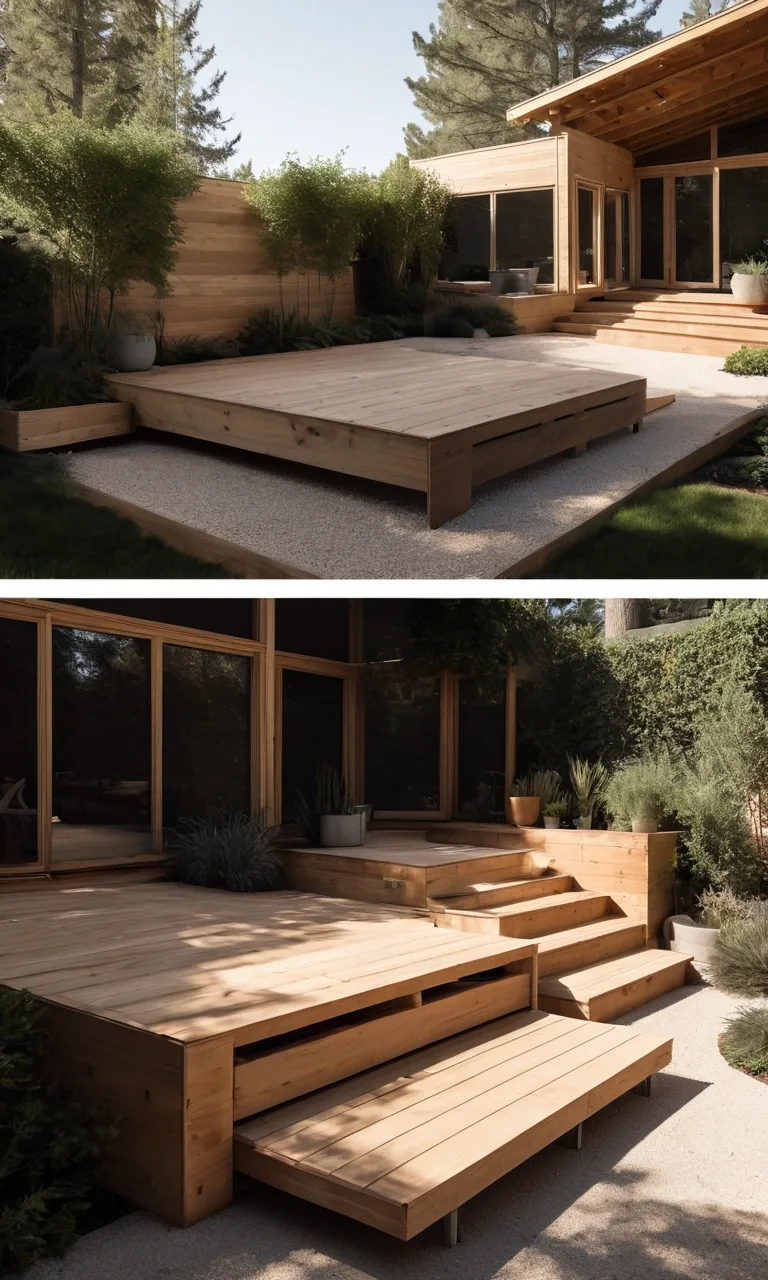
Combine a sandbox with a small wooden slide to create a backyard play area with multiple activities. Children can climb up, slide down, and move straight into imaginative sand play, making the setup more engaging than a standalone digging box.
A gentle slope may help accommodate the layout, provided the ground is stable and the slide is installed according to its safety requirements. Wooden stepping features can add visual appeal, but they should be securely anchored and designed to minimize tripping hazards.
Use a sturdy sandbox frame with enough room for children to play comfortably. Keep the slide's landing area clear, and choose a suitable impact-absorbing surface wherever the play equipment requires it.
3. Wall Playbox
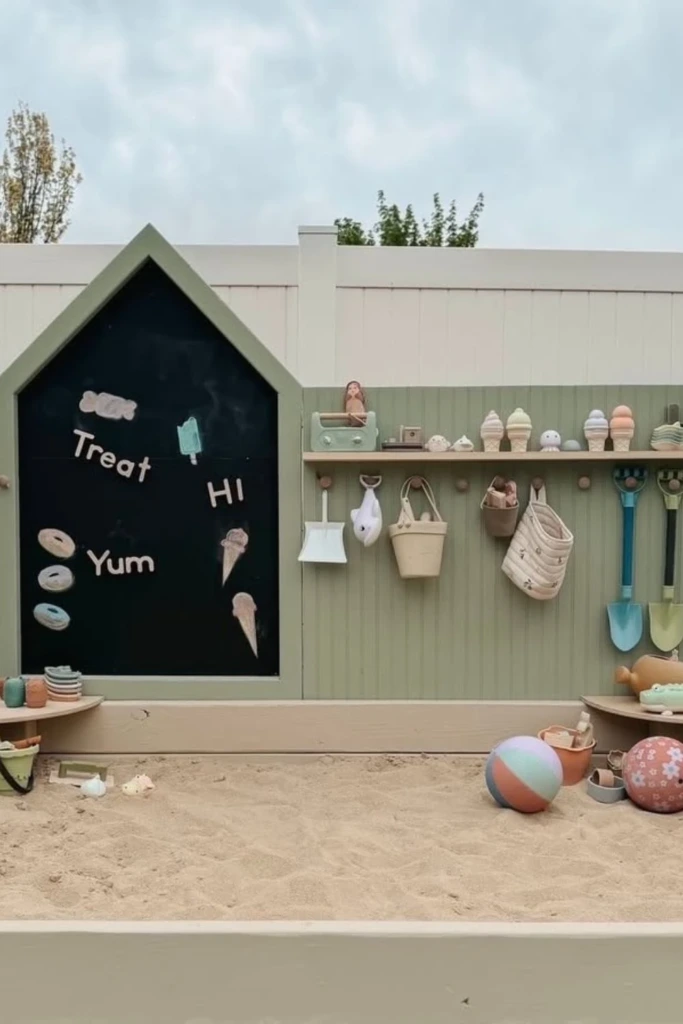
A wall-mounted play station can turn a basic sandbox into an organized space for creative activities. Add a child-height chalkboard panel so little artists can draw pictures, practice letters, or create imaginary menus for pretend shops.
A nearby rail with secure hooks and a few shelves can hold lightweight buckets, toy spades, and other play accessories. Choosing cheerful colors or a house-shaped backdrop can make the area feel like a miniature outdoor workshop.
This design works especially well in smaller gardens where every inch matters. Make sure shelves and hooks are firmly attached, avoid sharp hardware, and position accessories where children can reach them without climbing.
4. Covered Dig Zone
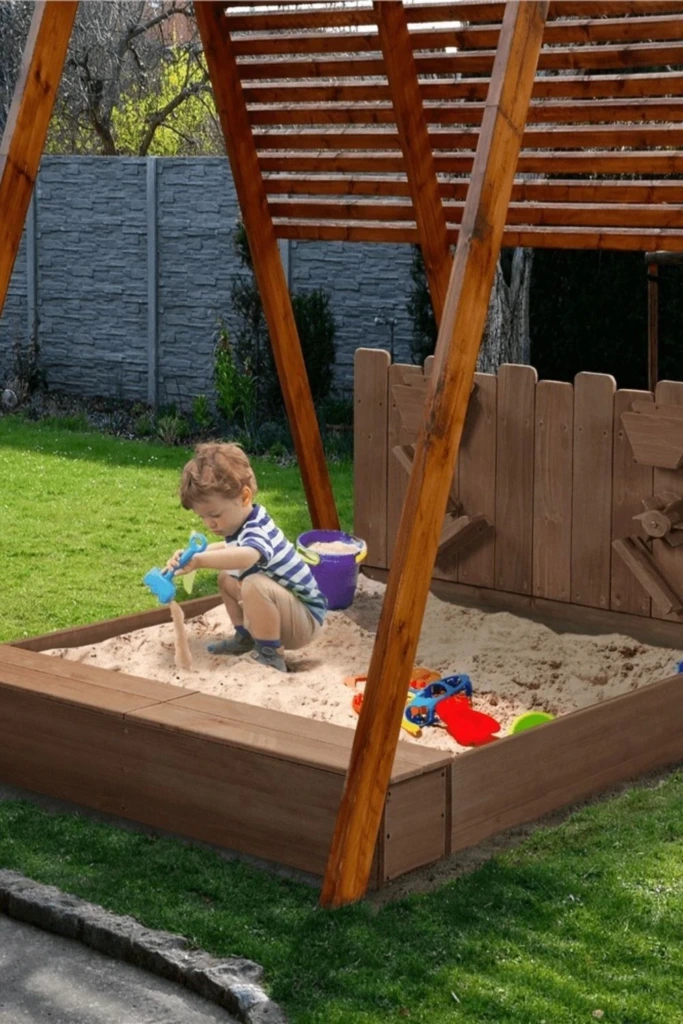
A sandbox with a canopy offers children a more comfortable place to dig and build during sunny weather. An A-frame shelter made from suitable outdoor materials can provide shade while giving the play area a distinctive garden-inspired appearance.
For an additional activity, install a sturdy sensory panel nearby with simple tracks or channels through which children can move sand using scoops and small containers. Watching materials travel along different paths encourages experimentation and problem-solving.
Choose a canopy designed for outdoor conditions, secure it properly, and check that the structure remains stable in changing weather. Shade helps with sun protection but does not replace sunscreen, suitable clothing, hydration, or adult supervision.
5. Dino Mud Pit
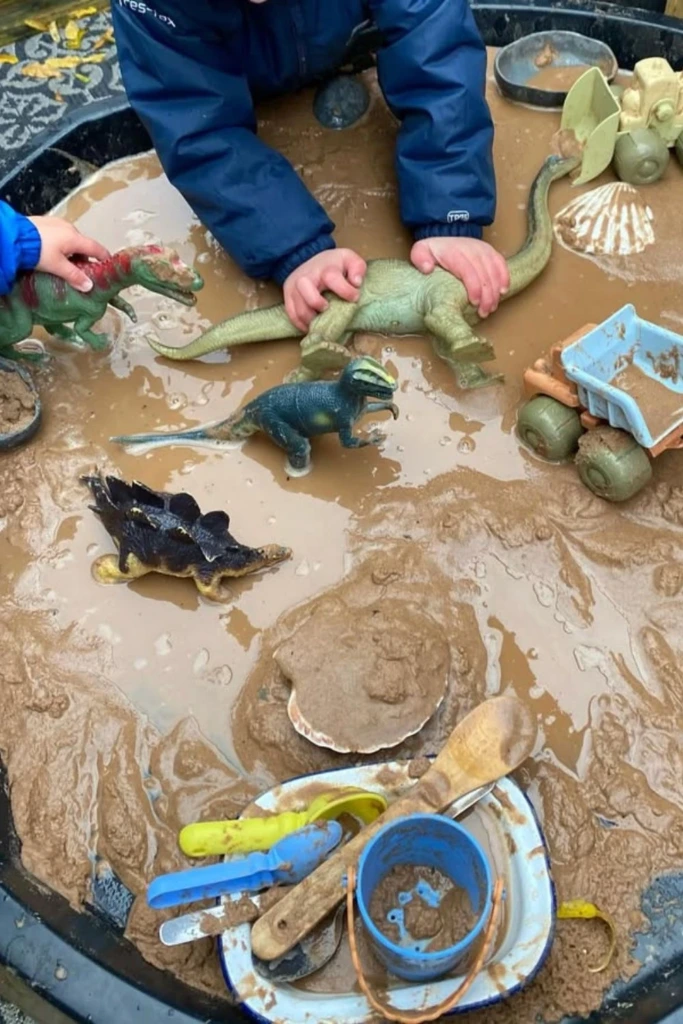
Turn a corner of the yard into a prehistoric landscape filled with sand, toy dinosaurs, small construction vehicles, and digging tools. Children can create dinosaur footprints, excavate pretend fossils, and invent stories about creatures living in their own miniature world.
You can designate one section for dry sand and another for supervised mud play, using separate containers if you want to keep the materials distinct. Add large shells, stones that are too big to swallow, or sturdy toy trees to create different habitats.
This type of activity encourages sensory exploration, imaginative storytelling, and hand coordination. Choose age-appropriate toys without detachable choking hazards, and use clean play sand and safe soil rather than potentially contaminated materials.
6. Indoor Sensory Box
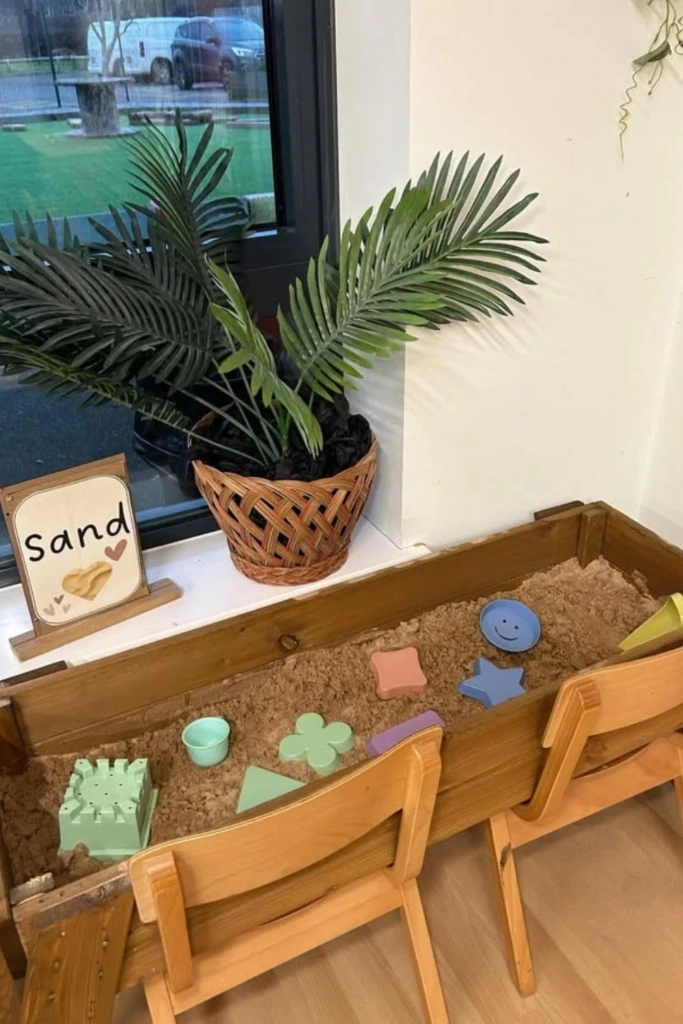
An indoor sand tray offers a practical alternative when outdoor space is limited or the weather makes garden play difficult. A shallow wooden tray with raised edges can hold a manageable amount of play sand while keeping the activity contained.
Provide molds, scoops, and simple shape-making tools so children can create stars, flowers, patterns, or miniature landscapes. Position the tray in a well-lit area with a washable mat underneath to make cleanup easier.
For a comfortable setup, use a child-sized table or stable low stand and keep the surrounding area free from clutter. Indoor sand play requires close supervision, particularly with toddlers, and children should never be allowed to throw sand or put it in their mouths.
7. Monster Truck Track
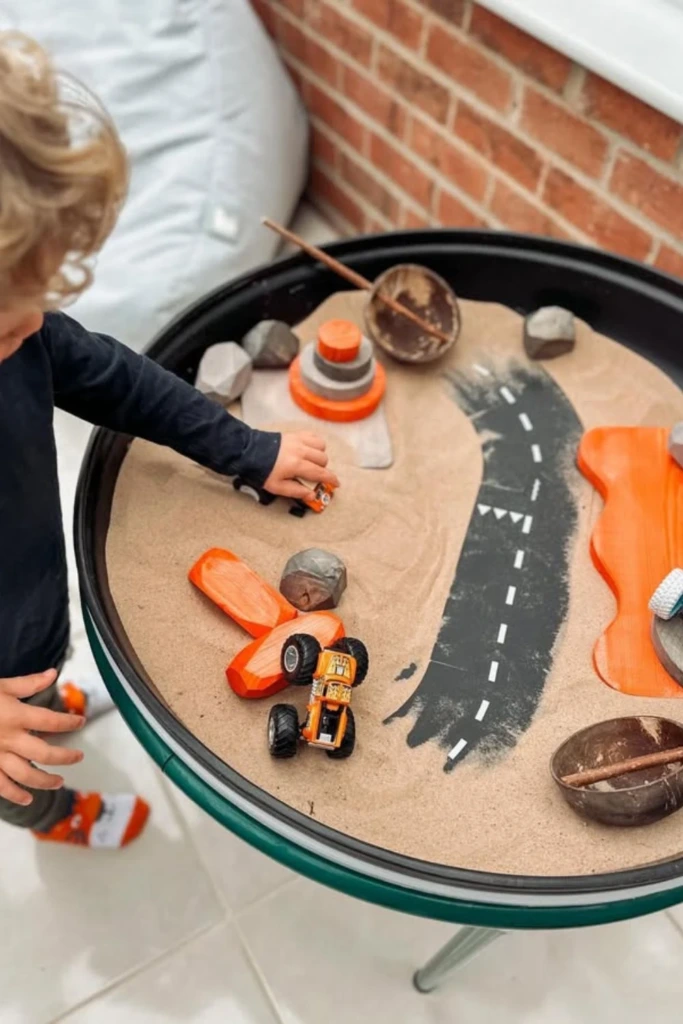
Create a miniature construction and racing area by combining sand with a simple toy vehicle course. Shape low hills and ramps, add a few sturdy barriers, and use toy trucks to let children experiment with different routes.
For a tabletop version, use a shallow tray with enough depth for small tracks and digging zones. Painted road markings on suitable removable panels can provide extra detail without permanently complicating the sandbox.
Children can build bridges, transport pretend construction materials, and test how vehicles move over different surfaces. Keep ramps low and stable, and use washable, child-safe paints that are fully cured before the play area is used.
8. Suitcase Sand Pit
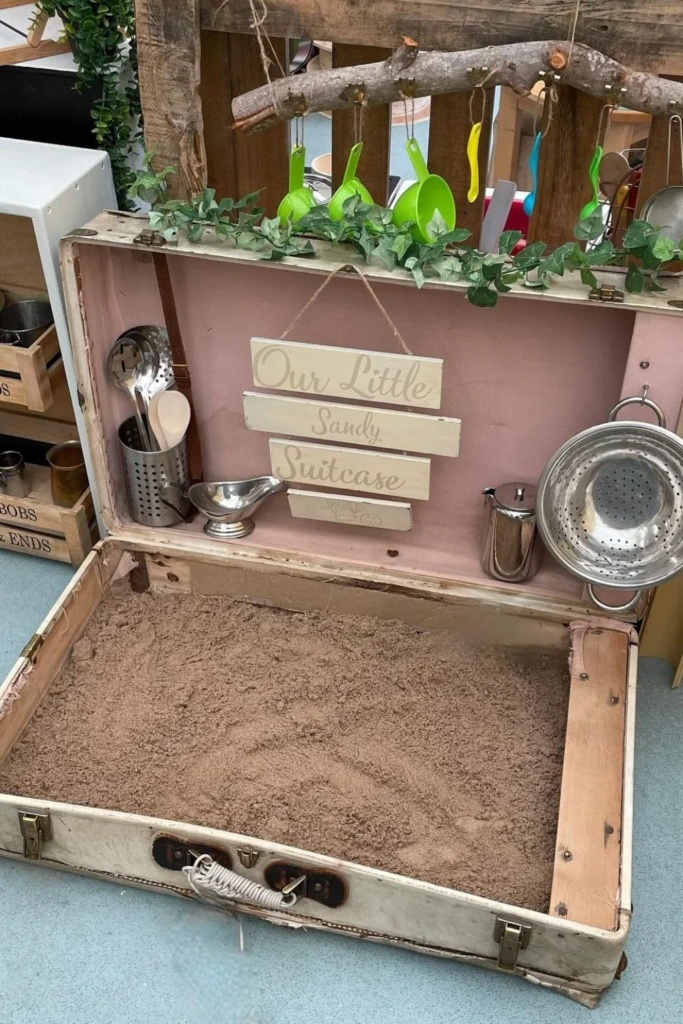
An old, sturdy suitcase can become a portable sensory station for families who need a compact play option. Remove loose components, inspect the interior, and use a clean, shallow insert to hold play sand.
Decorate the outside with a pretend café theme, travel-inspired labels, or colorful illustrations. Children can scoop sand into toy cups, arrange miniature dishes, and create imaginary bakery treats without needing a permanent outdoor installation.
The suitcase should sit on a stable surface and remain open securely during play. Avoid damaged hinges, exposed metal edges, and heavy lids that could fall on little fingers. A removable insert also makes cleaning and storing the sand easier.
9. Seaside Adventure Box
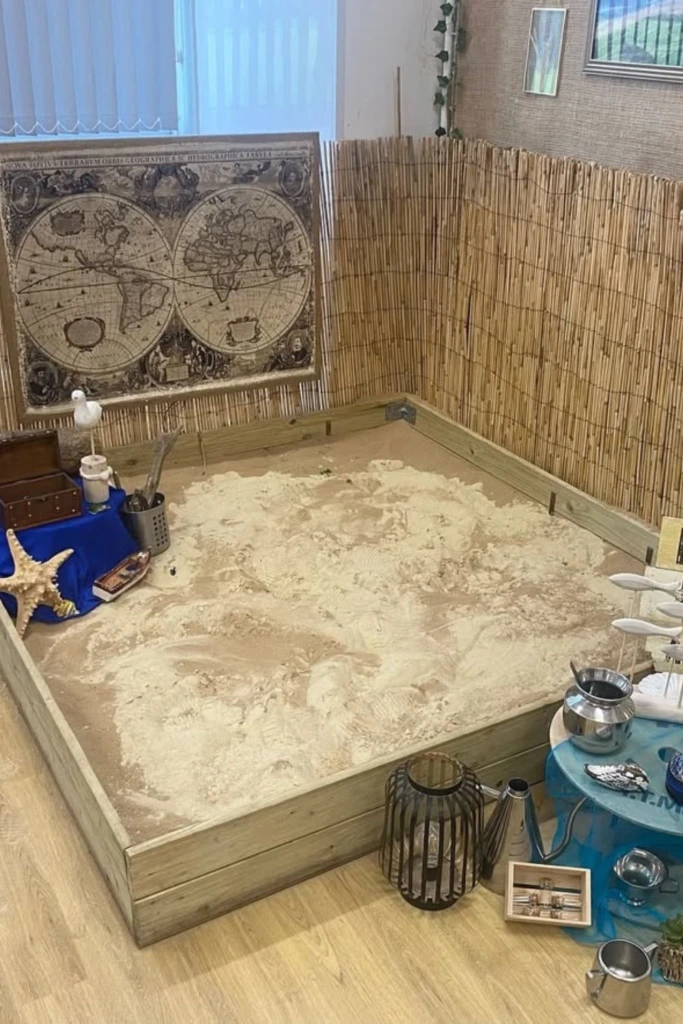
Bring the feeling of a beach into a small play area with a nautical-themed sandbox. Use blue and sandy colors, miniature boats, toy sea creatures, and simple ocean illustrations to inspire stories about islands, shipwrecks, and hidden treasure.
A lightweight decorative fence or backdrop can help define the space, while picture cards featuring marine animals provide ideas for imaginative games. Children might search for buried toy treasures, build islands, or create routes for their pretend boats.
This theme can work indoors or outside, depending on the size of the container. Keep decorations securely attached, avoid sharp shells and small loose objects for young children, and use lighting only when it is safely installed and appropriate for the setting.
10. Cottage Underpit
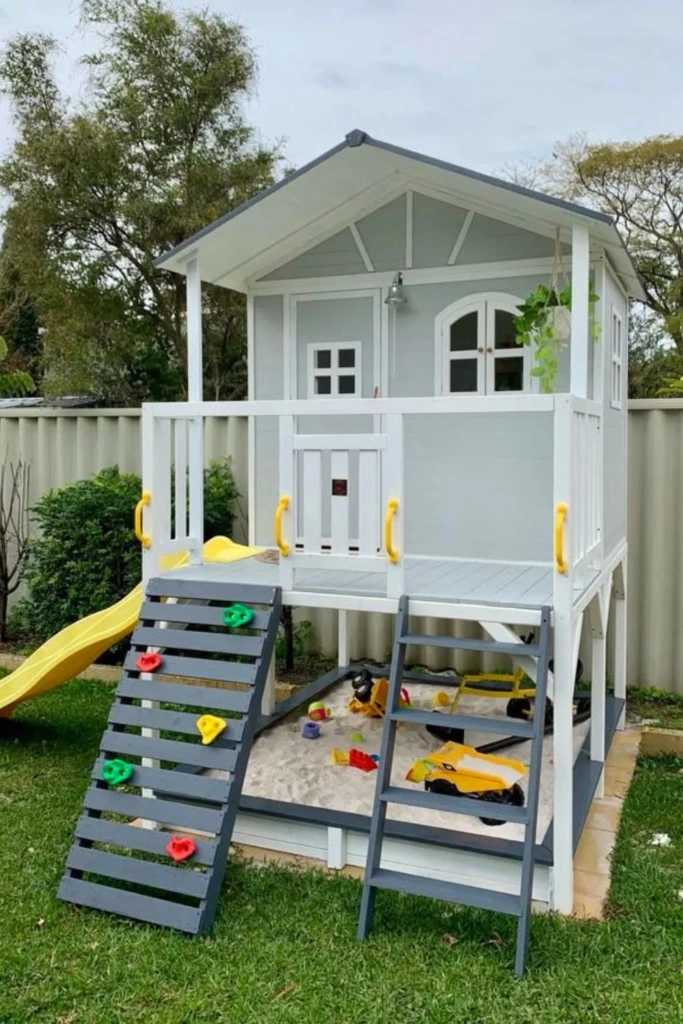
If your backyard already has an elevated playhouse, the area beneath it may offer an opportunity for a shaded sandbox. This arrangement makes use of otherwise unused space and gives children another activity to enjoy alongside climbing and pretend play.
Create a clearly defined sand area with a durable frame, and provide toy diggers, buckets, and construction vehicles. The surrounding playhouse might include a slide or climbing feature, provided the equipment is appropriately designed and installed.
Before building underneath an existing structure, check its load-bearing supports, drainage, headroom, and manufacturer guidance. The sandbox should not interfere with the structure's stability or create a hazard beneath elevated equipment. Keep the play area easy to inspect and supervise.
11. Backyard Classic
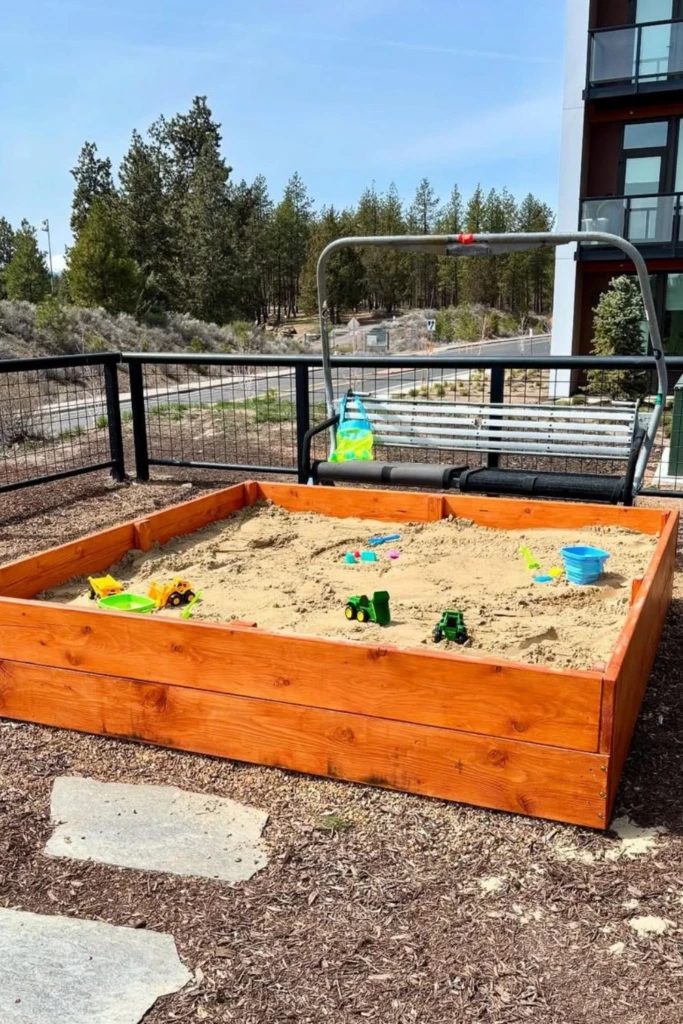
A traditional timber sandbox is a straightforward project for families who prefer a timeless outdoor design. Build a square or rectangular frame using suitable untreated or child-safe outdoor lumber, then secure the corners and smooth all exposed surfaces.
Choose a level, well-drained location that allows adults to supervise easily from a nearby seating area. A breathable ground barrier can help separate the sand from the soil while allowing drainage, provided it is installed appropriately for the site.
Fill the enclosure with sand intended for children's play, leaving enough room at the top to prevent excessive spilling. Add buckets, shovels, and toy tractors for simple, open-ended fun. A fitted cover is especially useful for keeping out leaves, animal waste, and other unwanted debris when the sandbox is not being used.
12. Nature Suitcase Kit
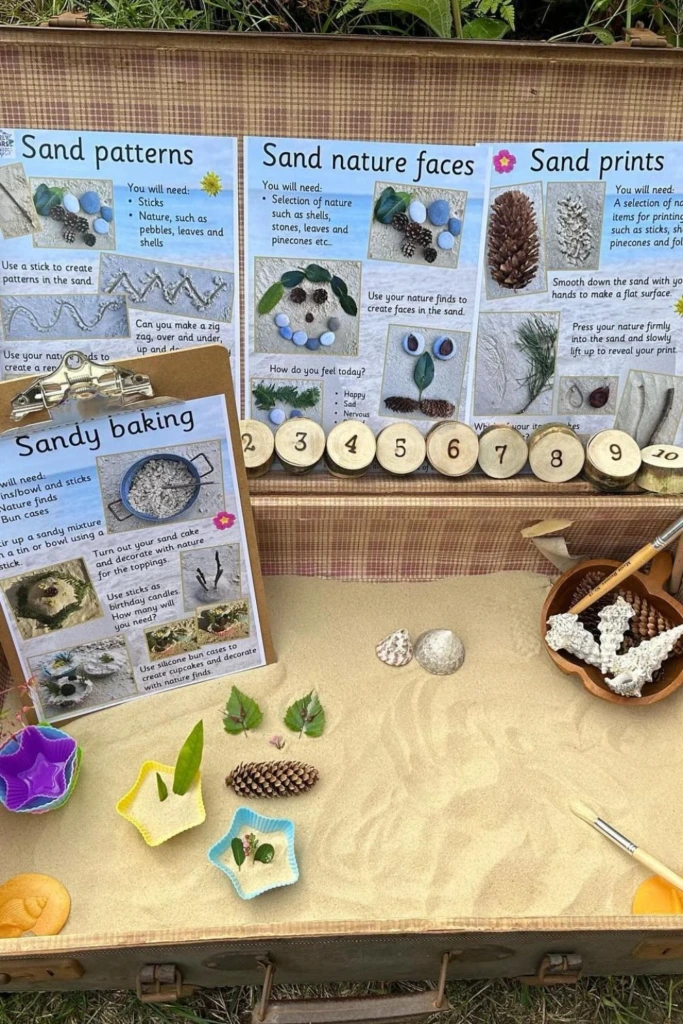
A nature-inspired sensory kit can turn a small suitcase or storage case into a portable activity station. Fill a removable tray with clean play sand, then provide picture cards that suggest patterns, tracks, and simple nature-themed challenges.
Children can press large leaves into the sand, make impressions with textured tools, and compare the shapes they create. Supervised activities can also involve identifying natural objects or sorting items by texture and appearance.
Choose materials carefully: real pinecones, small stones, and shells may be unsuitable for young children because of choking, splintering, or sharp-edge risks. Large, clean, age-appropriate natural objects or safe artificial alternatives can provide a similar experience. Pack everything into the case after play to make storage and transport easier.
13. Sailboat Sandbox
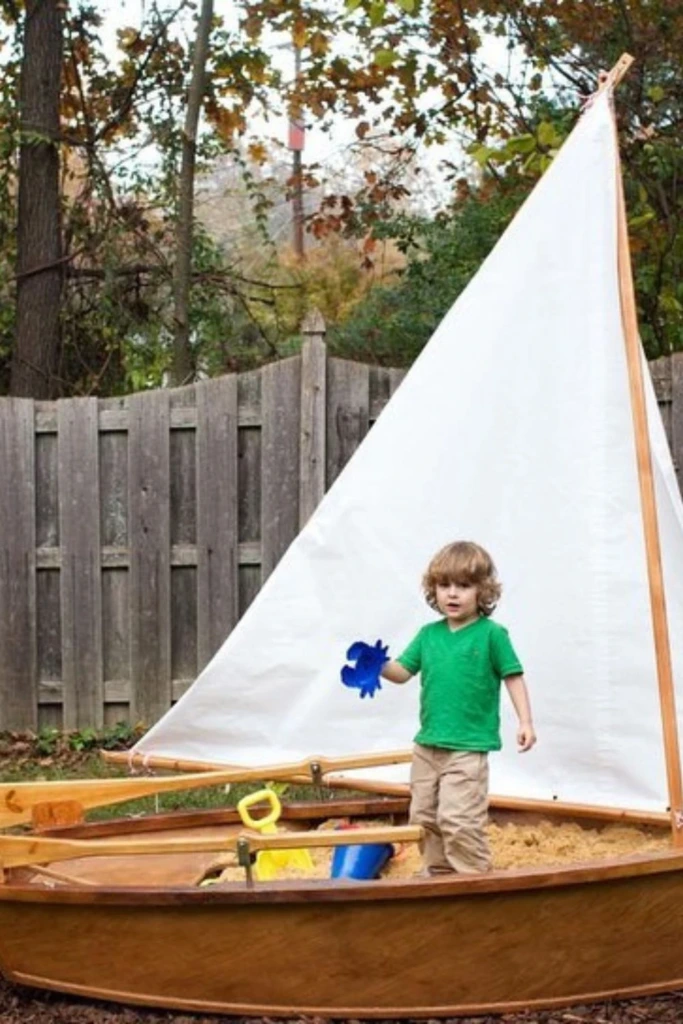
A sailboat-shaped sandbox can become an eye-catching feature in a garden and a starting point for imaginative adventures. Build the enclosure in a boat-inspired outline, using appropriately treated or untreated suitable timber and smooth, rounded edges.
A decorative mast and canvas sail can complete the nautical appearance, but the design should remain stable and avoid creating climbing, entanglement, or tipping hazards. Keep the sand area spacious enough for children to scoop, mold, and build comfortably.
Kids can pretend to be captains, explorers, or pirates searching for buried treasure. Add toy boats and simple navigation games to extend the theme. For a safer build, use securely fastened components and make sure decorative sails cannot become loose in strong winds.
14. Play Café Box
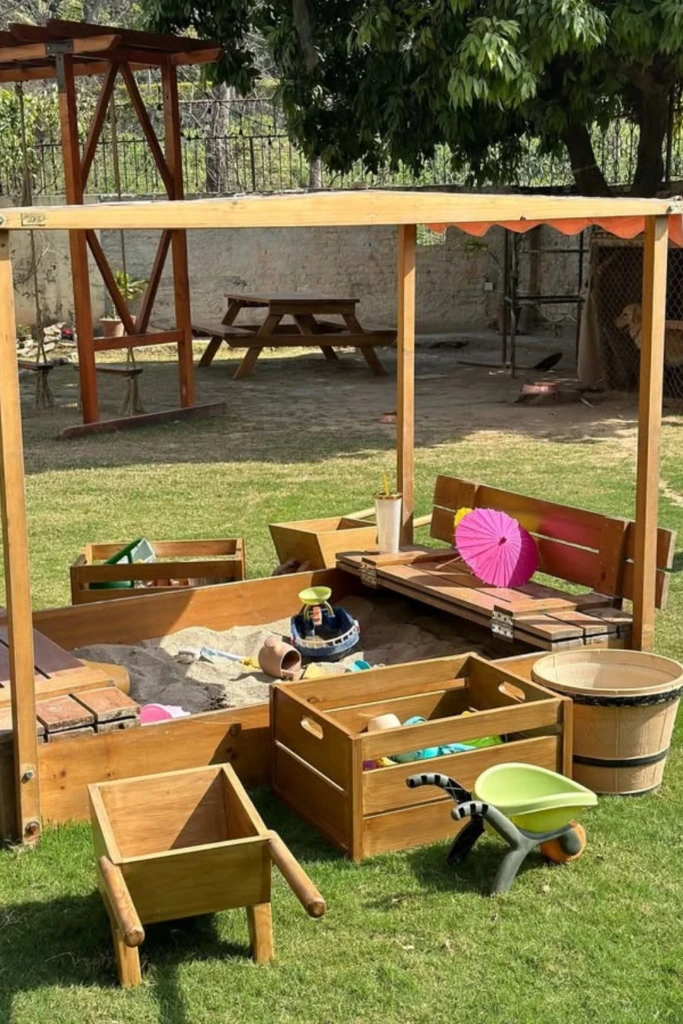
Transform a sandbox into a pretend café where children can serve imaginary pastries, prepare sandy desserts, and take turns playing customer and shopkeeper. A broad side ledge can function as a serving counter, while small storage compartments keep toy cups, scoops, and buckets close by.
Attached benches may provide convenient seating if they are sturdy, properly secured, and sized for the children who will use them. A suitable canopy can add shade and give the station the appearance of a tiny garden café.
This idea encourages conversation, cooperation, counting, and imaginative role-play. Keep play utensils separate from real food-preparation equipment, and never allow children to eat sand or pretend treats made from sandbox materials.
15. Roadwork Table
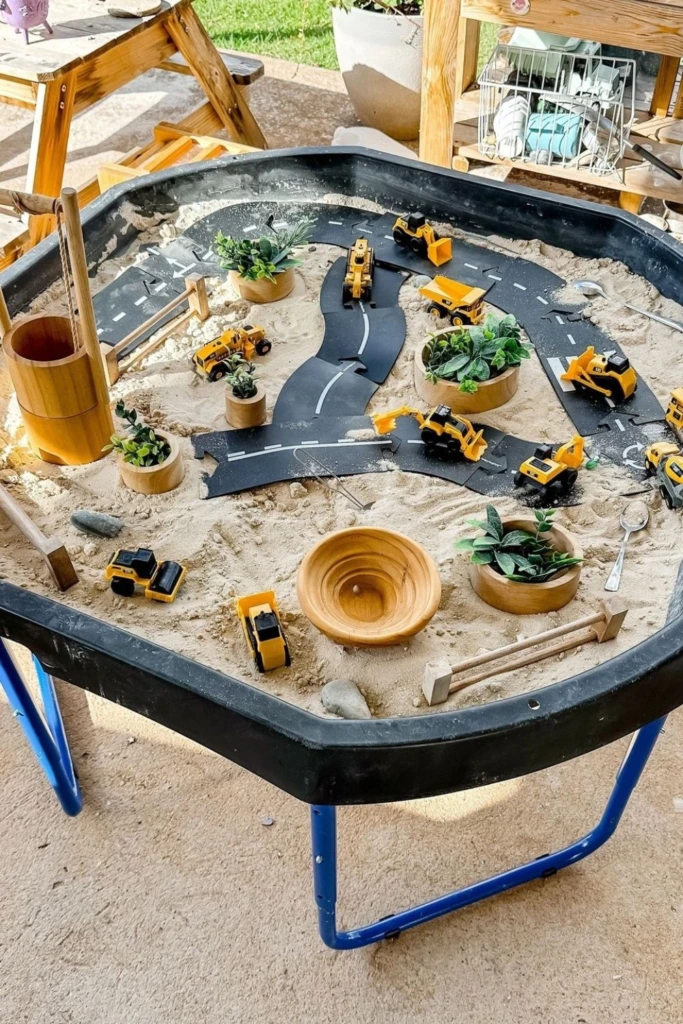
A raised sand table can provide a comfortable play surface for children who enjoy construction-themed activities. Use a stable frame with a shallow, easy-to-clean tray and fill it with enough sand for digging, shaping, and moving miniature vehicles.
Arrange toy trucks, small traffic signs, and child-safe landscape accessories to create a miniature roadwork site. Children can design routes, transport pretend building materials, and explore how different shapes affect the movement of vehicles through sand.
The raised design can help keep play contained, especially on patios or in small yards. However, table height should suit the child's age and reach, and the structure must resist tipping when children lean against it. Round off edges, secure the legs, and make sure the tray cannot slide out during use.
16. Canopy Seat Box
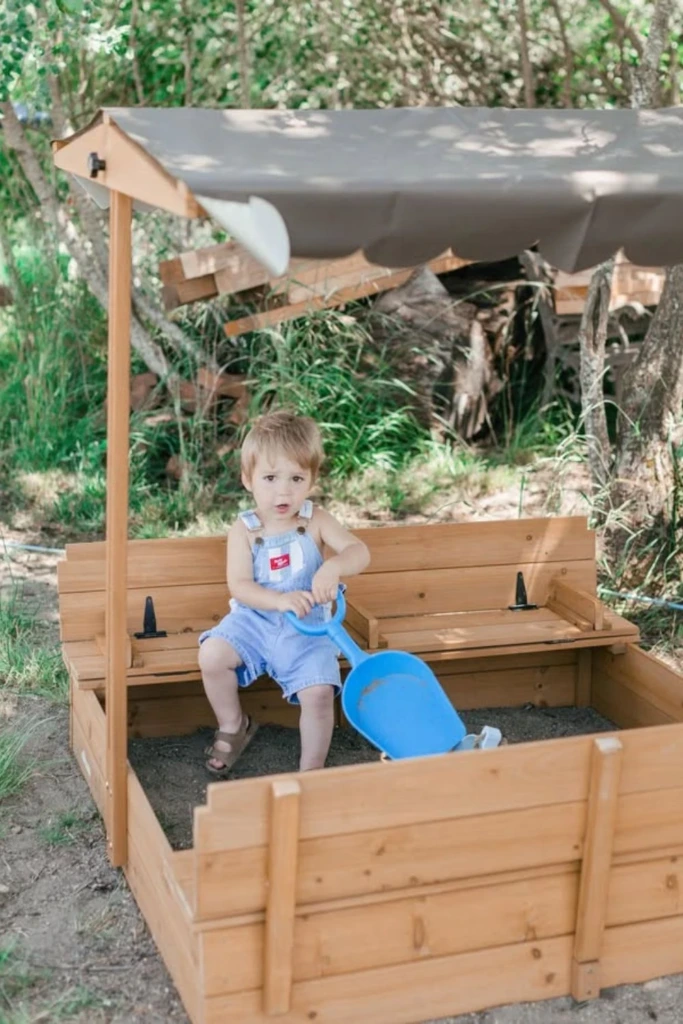
A sandbox with built-in seating and overhead shade combines comfort with practical outdoor play. A square or rectangular enclosure can include bench-style edges, giving children a convenient place to sit while digging or building.
A properly secured canvas canopy provides shade and can make the area feel like a small outdoor retreat. Choose weather-resistant materials that are appropriate for children's spaces, and ensure the shelter has adequate clearance and no accessible cords or dangling components.
A fitted cover for the sandbox itself is also important because a shade canopy does not keep animals, leaves, or rain out of the sand. Keep the enclosure clean, inspect its joints regularly, and provide enough open space for adults to supervise play.
17. Number Sorting Box
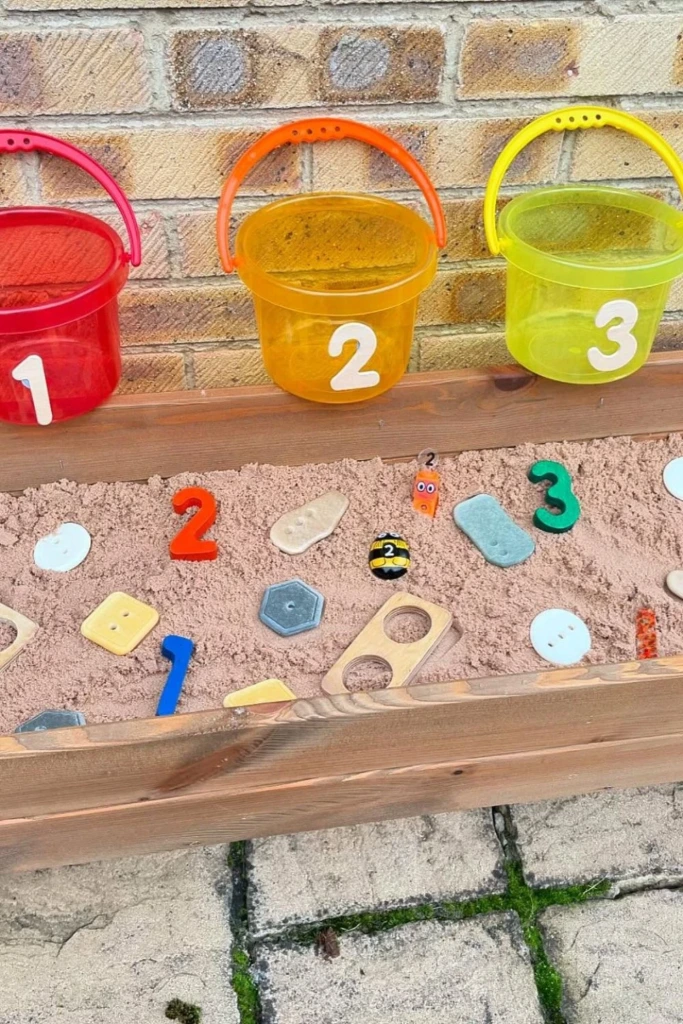
Combine sand play with early mathematics by hiding large, age-appropriate counting objects in a shallow sandbox. Place numbered containers around the edge and invite children to find the objects, count them, and sort them into matching groups.
For younger learners, start with a small range of numbers and simple tasks, such as collecting three objects or finding a container labeled with a particular numeral. Older children can explore addition, subtraction, patterns, and comparisons using larger quantities.
This hands-on approach makes early learning feel like a game rather than a formal lesson. Use large counters that cannot be swallowed, supervise younger children closely, and check that all objects are collected before covering the sandbox.
18. Monster Truck Track
A second truck-themed sandbox can focus on creating a more elaborate off-road course. Shape the sand into gentle curves, low mounds, and shallow channels so toy monster trucks can travel through different sections of the track.
You can add colored markers, sturdy toy barriers, and removable bridges to change the layout whenever children want a new challenge. Encourage them to design their own routes and predict which vehicles will move most easily over each surface.
This version works well as a dedicated racing area in a backyard or a large sensory tray indoors. Keep obstacles stable, avoid steep ramps that encourage unsafe launching, and leave enough space for children to reach every part of the course without climbing into an unstable container.
19. Under Loft Pit
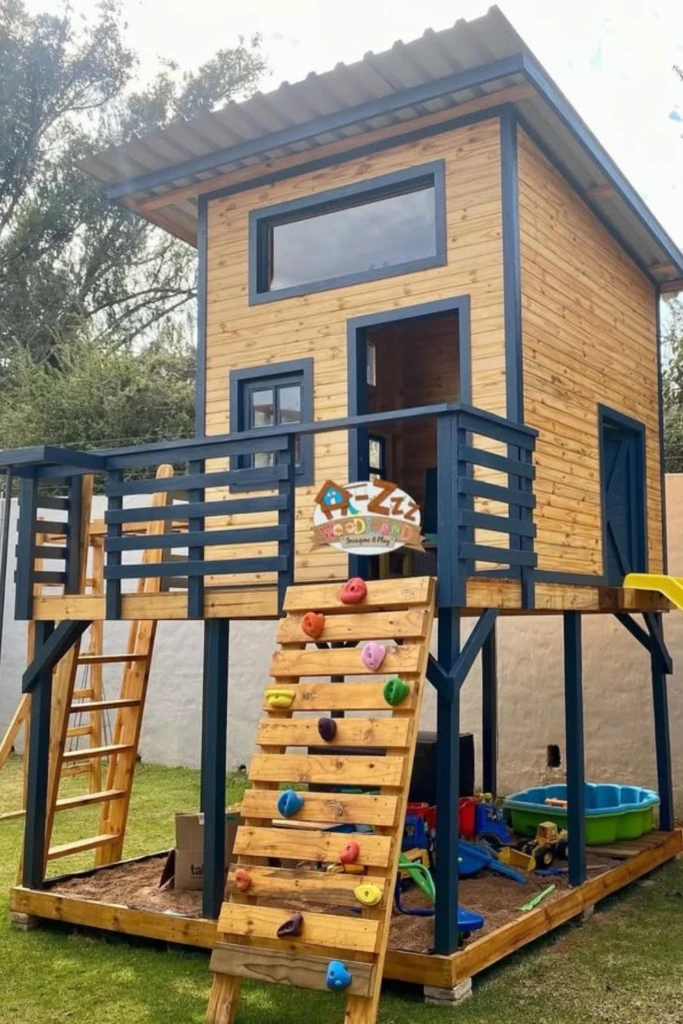
A sandbox positioned beneath a properly designed play loft can make efficient use of a small backyard. The upper level may provide space for a playhouse or other suitable equipment, while the lower area becomes a dedicated place for digging and building.
A climbing wall, ladder, or slide can be incorporated into the overall layout only when the equipment is engineered for that purpose and installed according to its instructions. The sandbox should not sit in a fall zone unless the entire setup has been designed with the required safety clearances and protective surfacing.
Use a durable frame, provide adequate drainage, and ensure the shaded area remains visible to supervising adults. Check for low headroom, exposed fasteners, overhead hazards, and areas where children could become trapped.
20. Covered Combo Box
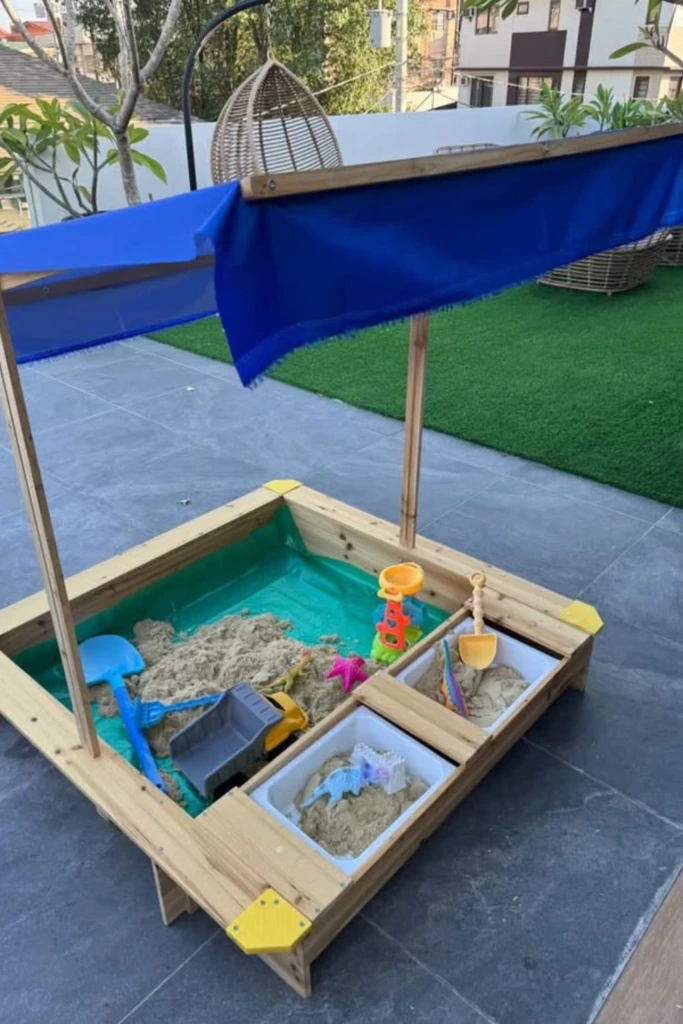
A covered sandbox with built-in storage offers a practical solution for families who want to keep play equipment organized. Fit a secure, weather-appropriate cover over the sand area and add separate bins for scoops, molds, toy vehicles, and other accessories.
If you want to include both wet and dry play, use clearly separated containers rather than mixing water throughout the main sand supply. This makes it easier to manage moisture, clean the equipment, and restore the sandbox after use.
Choose a cover that can be removed safely and secured against wind without creating a finger-trapping hazard. Storage compartments should be accessible without climbing, and the sandbox should be checked regularly for standing water, contamination, or damaged materials.
21. Water & Sand Station
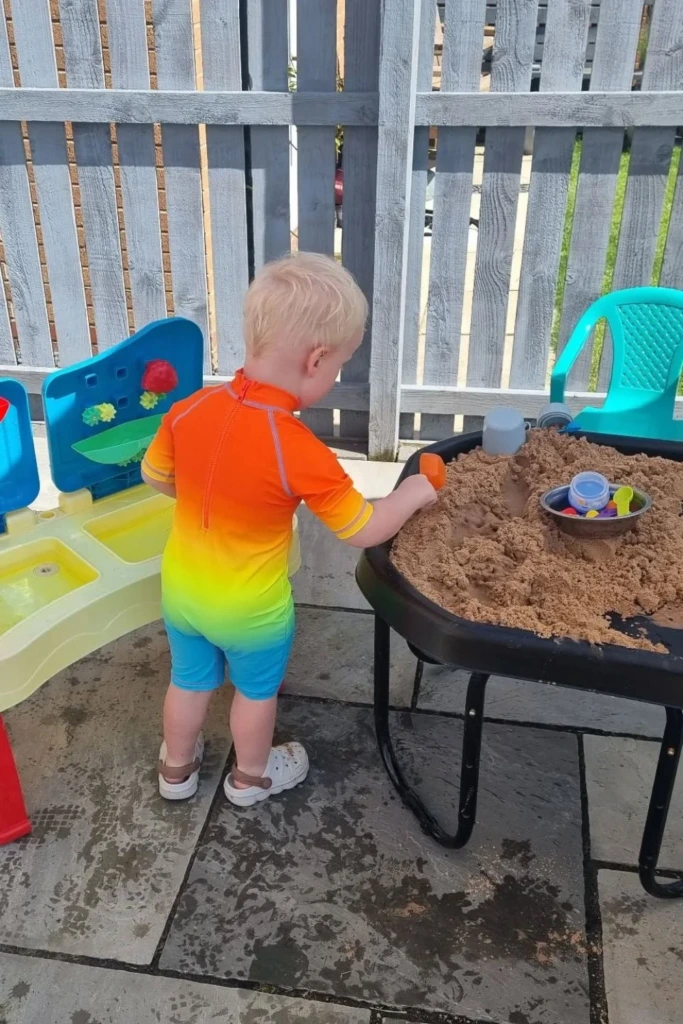
A combined water-and-sand station gives children opportunities to scoop, pour, build, and compare different textures. Place a shallow sand tray beside a stable water table so the two activities remain separate but easy to use together.
Children can fill containers, create channels, experiment with wet and dry sand, and build small landscapes. For a toddler-friendly version, choose a low station with rounded edges and enough room for children to reach the materials comfortably.
This design suits patios, preschool activity areas, and smaller gardens where a large sandbox would be impractical. Use clean water, empty the water container after play, and supervise continuously around even shallow water. Keep the sand covered between sessions, clean the trays regularly, and replace contaminated or persistently damp sand when necessary.