29 DIY Outdoor Bench Ideas for 2026
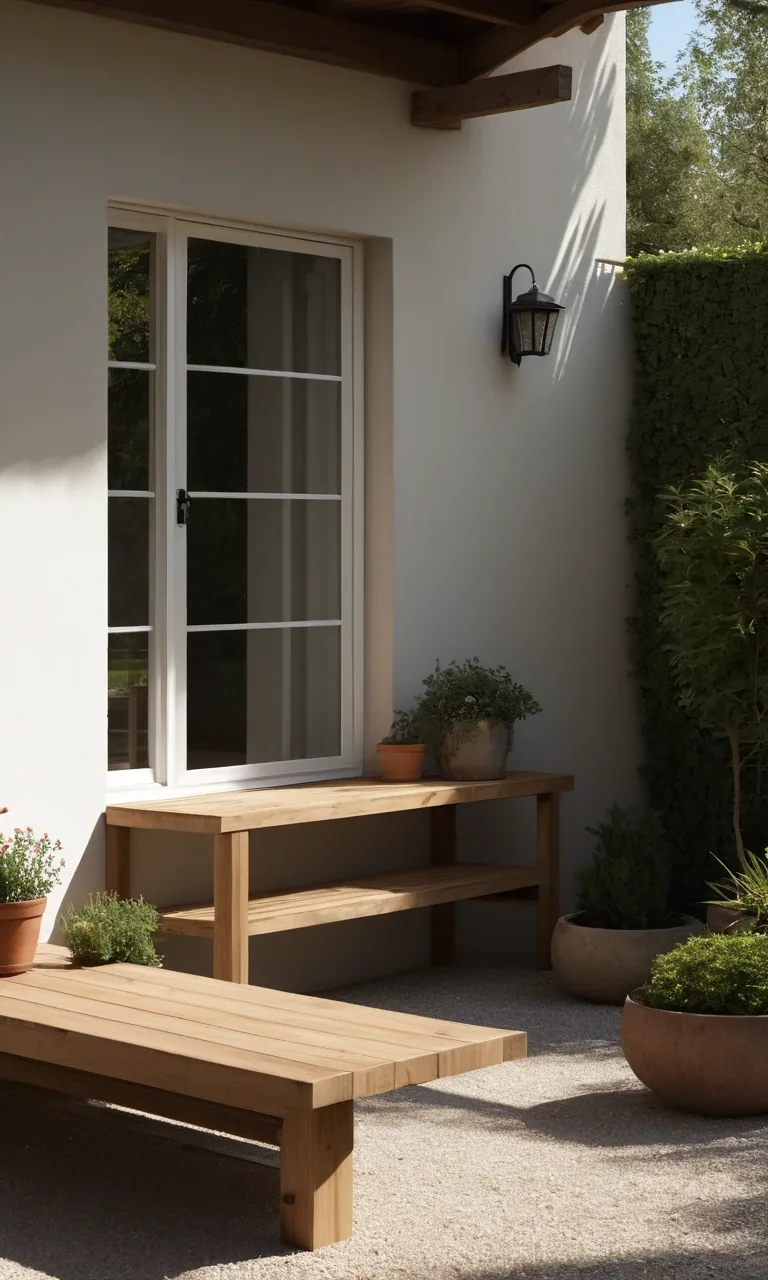
A well-designed outdoor bench can make a patio, porch, or garden feel more inviting without requiring a major renovation. Building one yourself also gives you the freedom to choose the dimensions, materials, colors, and features that work best for your space. From simple timber seats to imaginative designs that incorporate planters, stone, or reclaimed materials, there are options for nearly every skill level and budget.
Before starting, consider where the bench will sit, how many people it needs to accommodate, and how much exposure it will receive to rain and sunlight. Pressure-treated lumber, naturally durable wood, and suitable outdoor finishes can help extend its useful life. A stable foundation, smooth edges, and secure fasteners are equally important for a comfortable and reliable result.
Whether you want a quiet reading spot beneath a tree or additional seating for outdoor gatherings, these DIY outdoor bench ideas offer inspiration for creating something practical and personal.
1. Creative Functional Features
An outdoor bench can do more than provide a place to sit. Thoughtful additions can help you organize your garden, make better use of limited space, and create a distinctive focal point.
Consider incorporating a storage compartment beneath the seat for garden accessories or outdoor cushions. If you enjoy gardening, built-in planters can bring flowers and greenery closer to your seating area. For smaller patios, a corner bench can provide more seating without taking up the space required by several separate chairs.
Material selection matters, too. Choose timber or composite boards intended for outdoor use, along with corrosion-resistant screws and brackets. Slatted seats allow rainwater to drain more easily than solid surfaces, while a suitable exterior finish helps protect wood against moisture and ultraviolet exposure. Before adding cushions, lighting, or storage, make sure the underlying structure is strong enough for its intended use.
2. Wavy Planter Bench
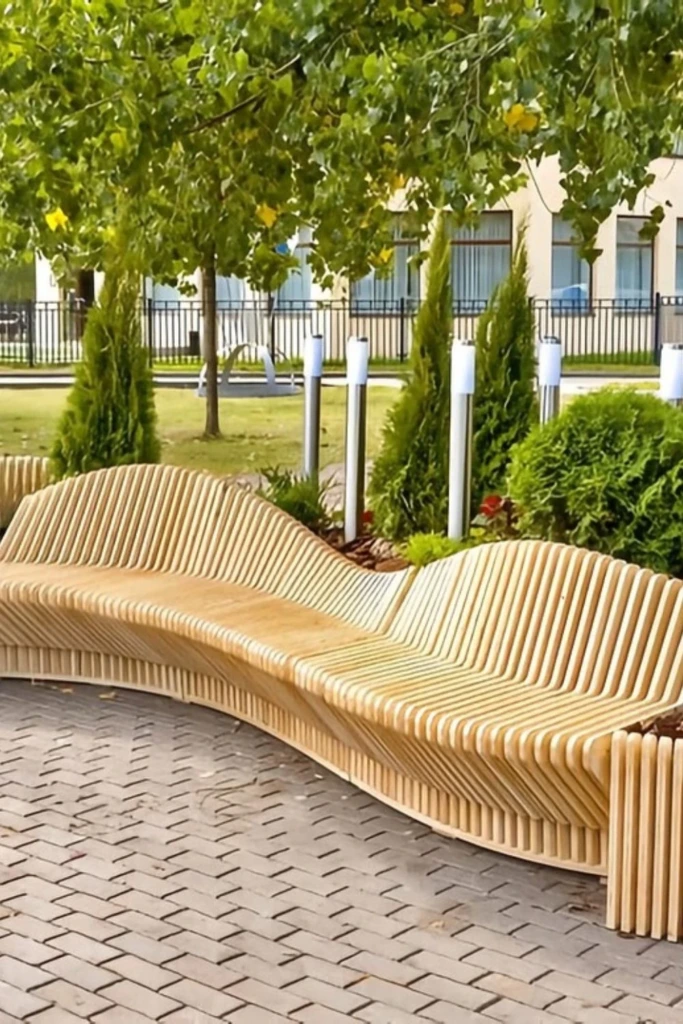
A curved wooden bench with integrated planters creates an eye-catching combination of seating and landscaping. Its flowing shape softens the straight lines commonly found in patios and paved garden areas, while planted sections introduce color and texture.
Use carefully cut timber slats to form the curved seat, supported by a sturdy frame. Weather-resistant wood is a practical choice, particularly when the bench will remain outdoors throughout the year. Place the finished design near mature trees or ornamental grasses to create a natural-looking retreat. Make sure the planter sections have adequate drainage and that the roots of nearby trees have sufficient room to grow.
3. Patriotic Porch Bench
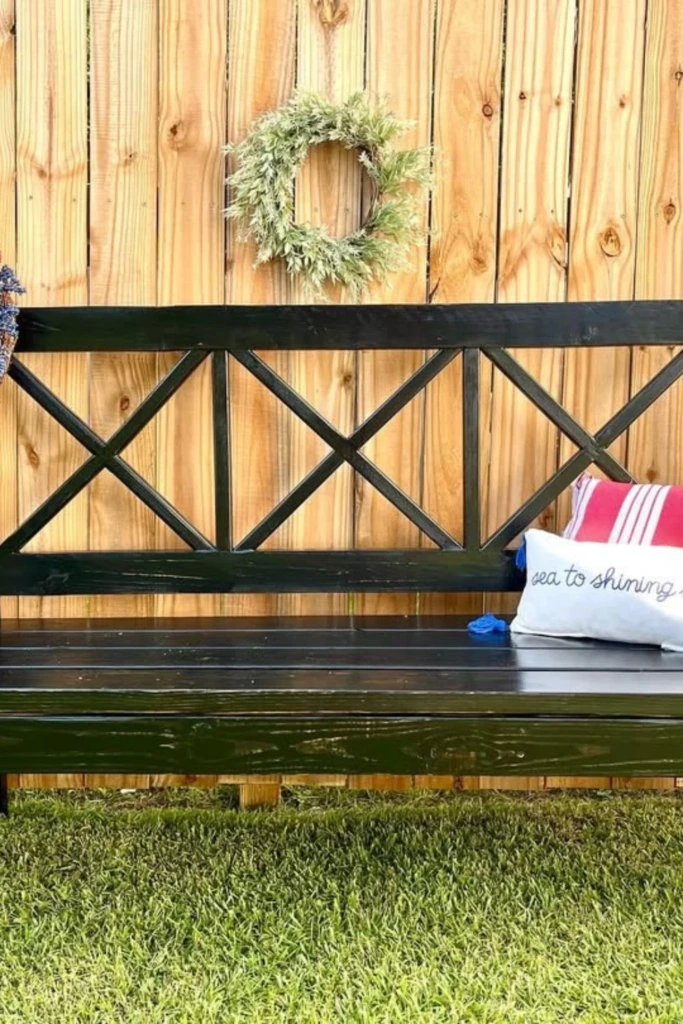
A traditional porch bench can become a seasonal decoration with a few simple design choices. A dark-painted wooden frame provides a classic foundation, while a decorative cross-back adds character and visual interest.
Build the seat with durable lumber, secure the joints properly, and apply an exterior paint or stain suitable for the chosen material. Red, white, and blue cushions or a themed wreath can complete the look for patriotic celebrations. Outside holiday periods, neutral pillows and understated accessories keep the bench useful throughout the year.
This style works especially well on covered porches, where the finish and decorative elements receive some protection from the weather.
4. Wagon Wheel Bench
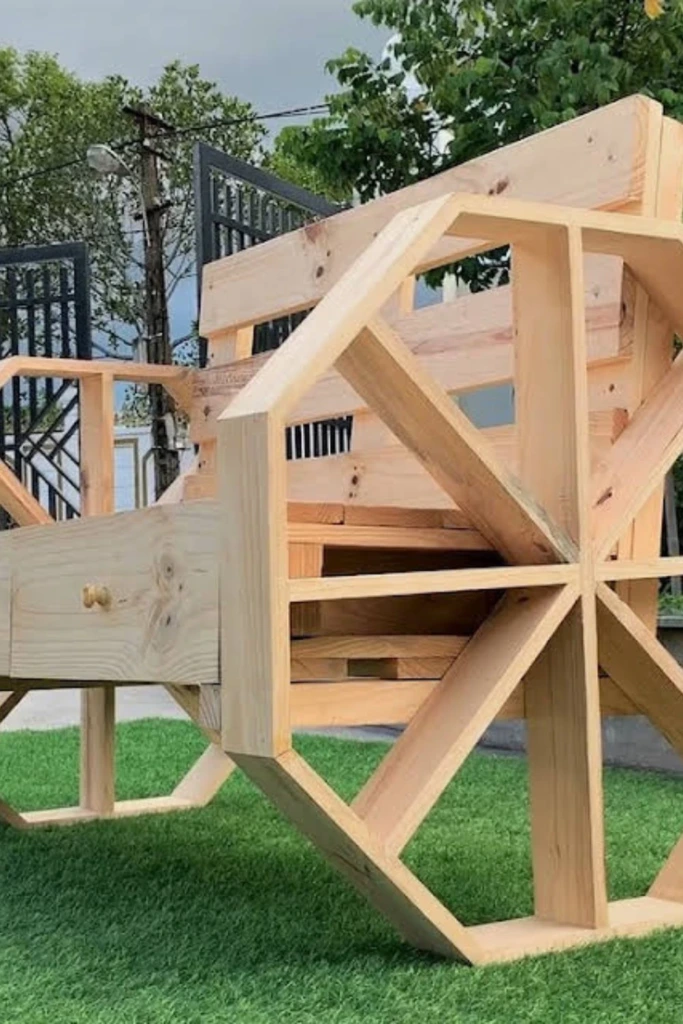
For a rustic outdoor feature, consider a bench with wagon-wheel-inspired sides. The circular supports give the piece a farmhouse appearance, while solid timber boards provide a substantial seating surface.
You can build the sides from carefully joined wooden components or adapt suitable reclaimed decorative wheels. Box-shaped armrests or small side compartments can make the design more functional. Keep the frame balanced and ensure that the wheels are firmly secured rather than relying on decorative joints alone.
A natural wood finish emphasizes the grain and handcrafted appearance. Position the bench beside a garden path, near a fire-pit seating area where permitted, or in a country-style yard.
5. Corner Slatted Bench
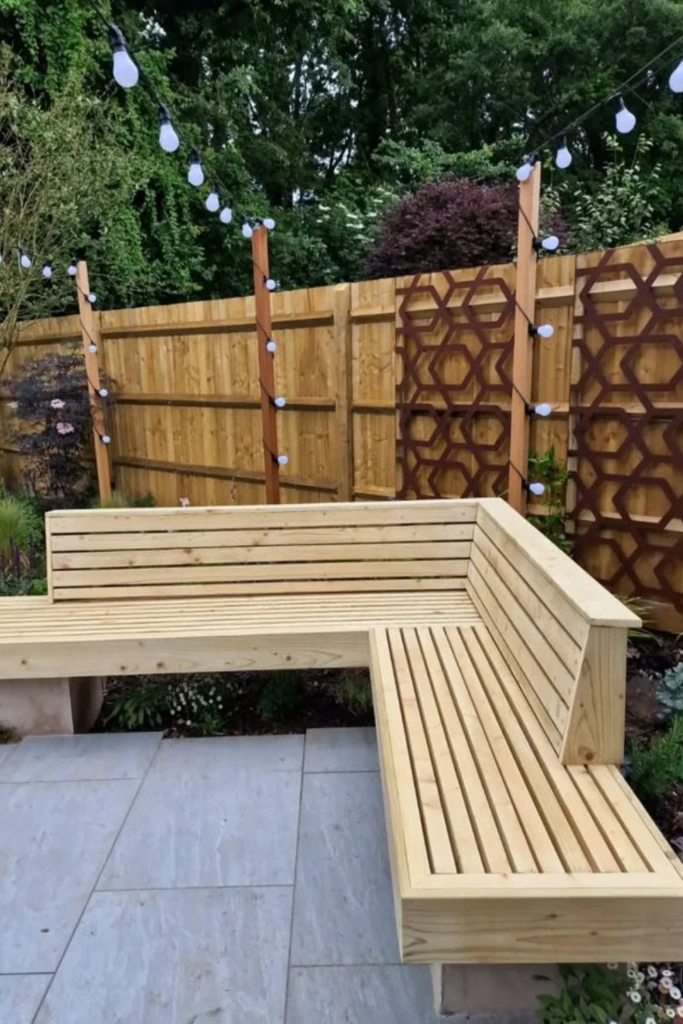
An L-shaped slatted bench is a useful solution for patios where floor space is limited. By fitting into a corner, it can accommodate several people while leaving the middle of the area available for a table or planters.
Construct the frame from straight, accurately measured lumber and attach evenly spaced boards to create the seat and backrest. Pre-cut timber can simplify assembly, although you should still check every measurement before fastening the pieces together.
Place the bench against a fence, along a wall, or beside a raised flower bed. Add outdoor cushions for extra comfort, making sure they can be removed and stored during wet weather. A simple natural finish suits traditional gardens, while a darker stain complements contemporary outdoor spaces.
6. Curved Book Bench
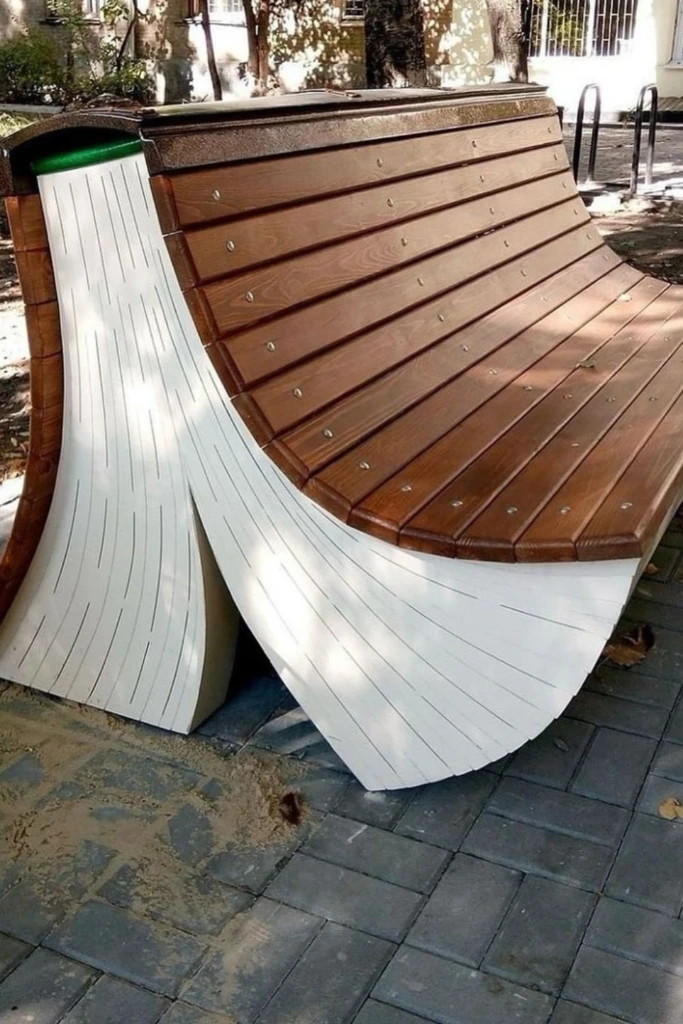
A book-inspired bench turns ordinary garden seating into a sculptural feature. Its curved wooden surfaces can suggest the shape of open pages, making it especially suitable for a reading garden, library courtyard, or creative public space.
The design generally requires more careful woodworking than a basic rectangular bench. Plan the curved side panels first, then determine how the seat slats will attach securely to the supporting structure. Contrasting light and dark timber can help emphasize the book-like form.
Because curved pieces need accurate cutting and strong connections, prepare a full-size template before working with the final materials. Once complete, pair the bench with shade, surrounding plants, or a small reading area to create a comfortable place to pause.
7. Minimal Curve Bench
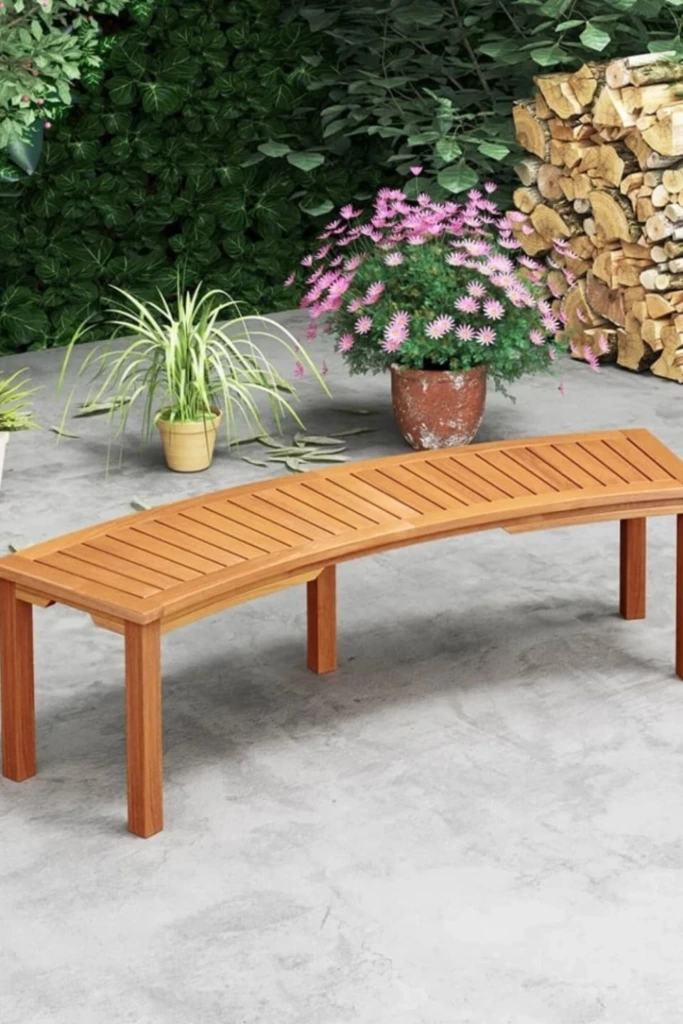
A gently arched bench offers a clean, contemporary look without elaborate decoration. Its restrained silhouette makes it suitable for small gardens, wooden decks, and modern patios.
Use evenly spaced slats across a carefully shaped frame to produce a subtle curve. The gaps between the boards encourage water to drain and help the seat dry after rainfall. Sand the edges thoroughly so the finished surface feels smooth against clothing and skin.
Choose timber rated for outdoor conditions and finish it with an appropriate protective product. A warm wood tone can soften a minimalist landscape, while a darker finish creates contrast against pale paving or light-colored walls.
8. Urban Steel Bench
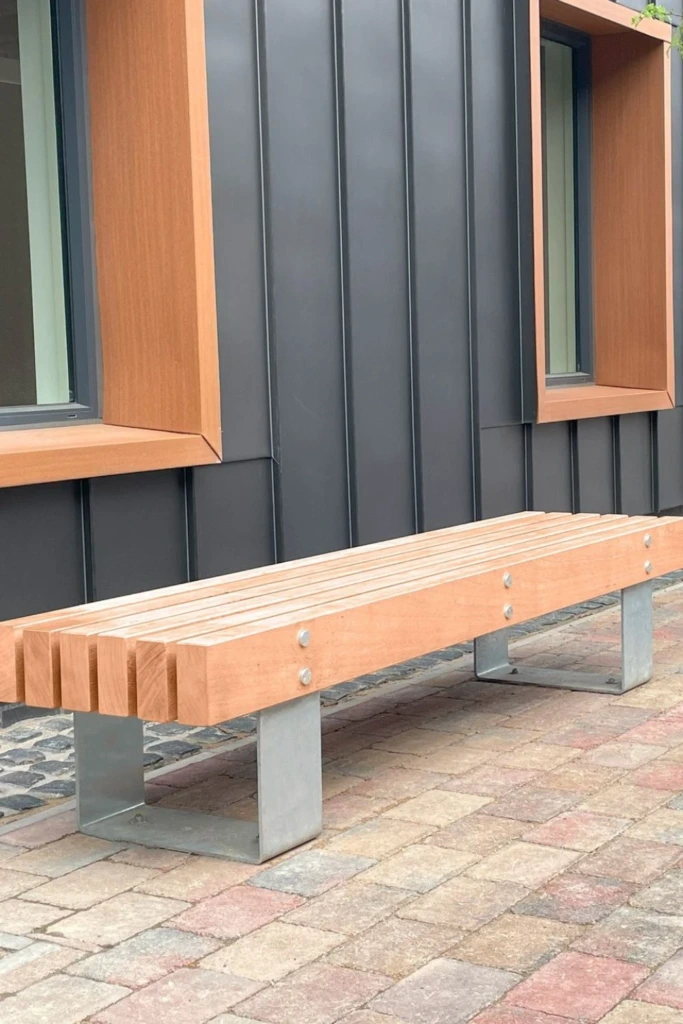
Combining timber seating with a steel frame creates a bench that fits industrial and contemporary outdoor designs. The wood introduces warmth, while the metal structure provides a crisp architectural outline.
Use straight wooden boards for the seat and back, supported by a properly designed steel base. Exposed bolts can become part of the visual style, provided they are correctly sized and securely installed. Outdoor-rated metal finishes help reduce corrosion, and compatible fasteners prevent premature deterioration where different materials meet.
This design works well in modern courtyards, landscaped walkways, and urban gardens. If you are fabricating the steel frame yourself, make sure the joints and supports are appropriate for the expected load.
9. Pallet Tree Set
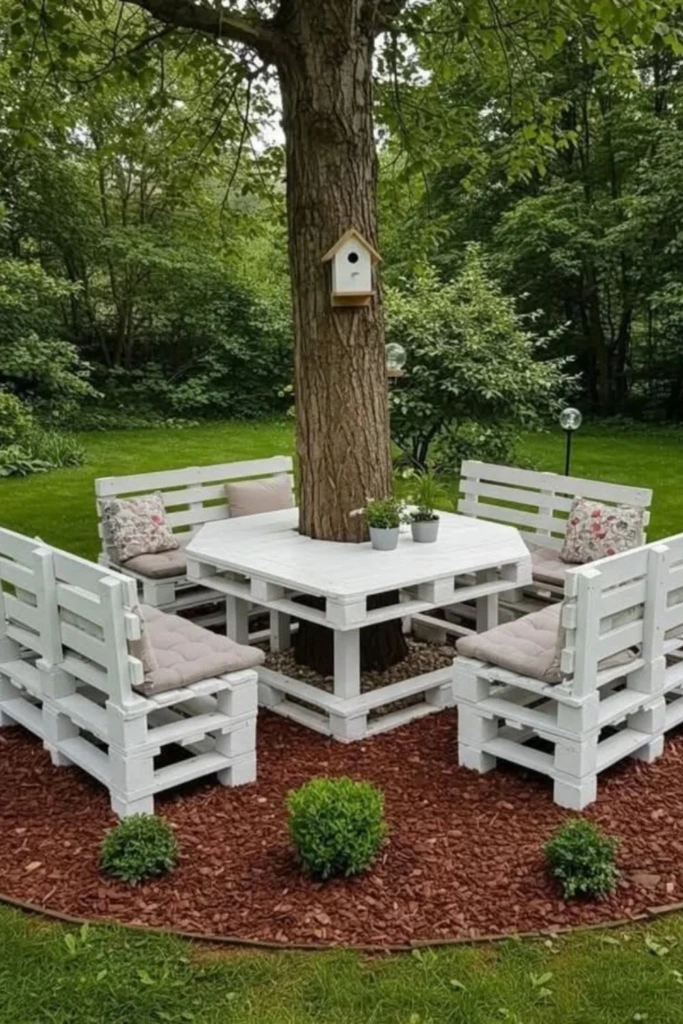
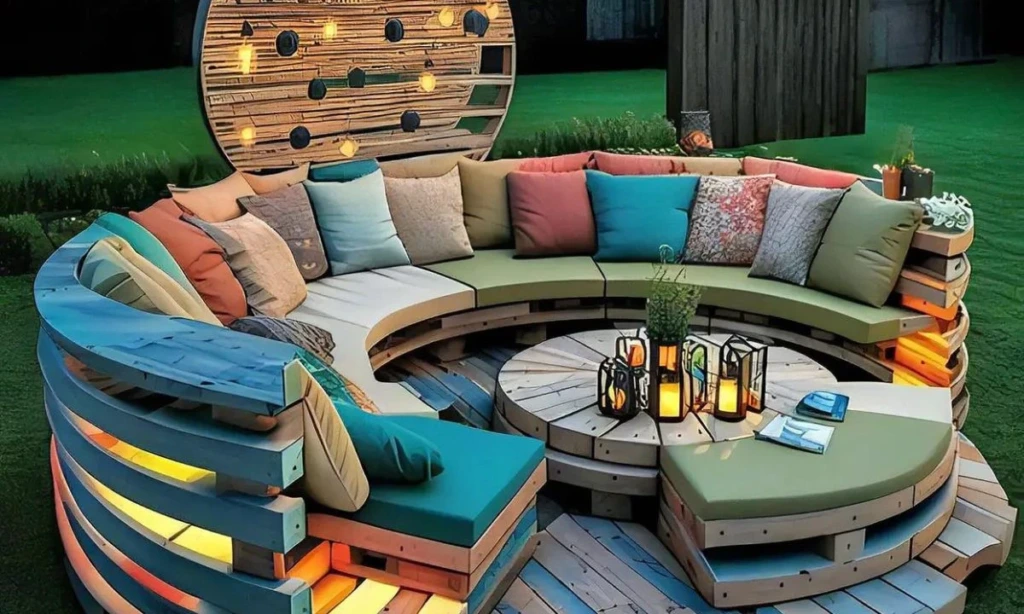
A circular seating arrangement around a tree can turn an overlooked patch of lawn into a welcoming gathering place. Reclaimed pallets may provide useful material for the bench, while a central table creates a convenient surface for drinks or outdoor meals.
First, confirm that any reused pallets are suitable for furniture and free from contamination, chemical spills, and serious damage. Disassemble them carefully, remove unsuitable nails, and sand the usable boards. Arrange the seat sections around the tree without attaching anything directly to the trunk.
Painted timber gives the arrangement a fresh appearance, and outdoor cushions can make the seating more inviting. Leave enough space for the tree to grow, keep the structure level, and avoid compacting soil around the roots. A segmented design is often easier to maintain than a single rigid ring.
10. Rustic Pallet Seat
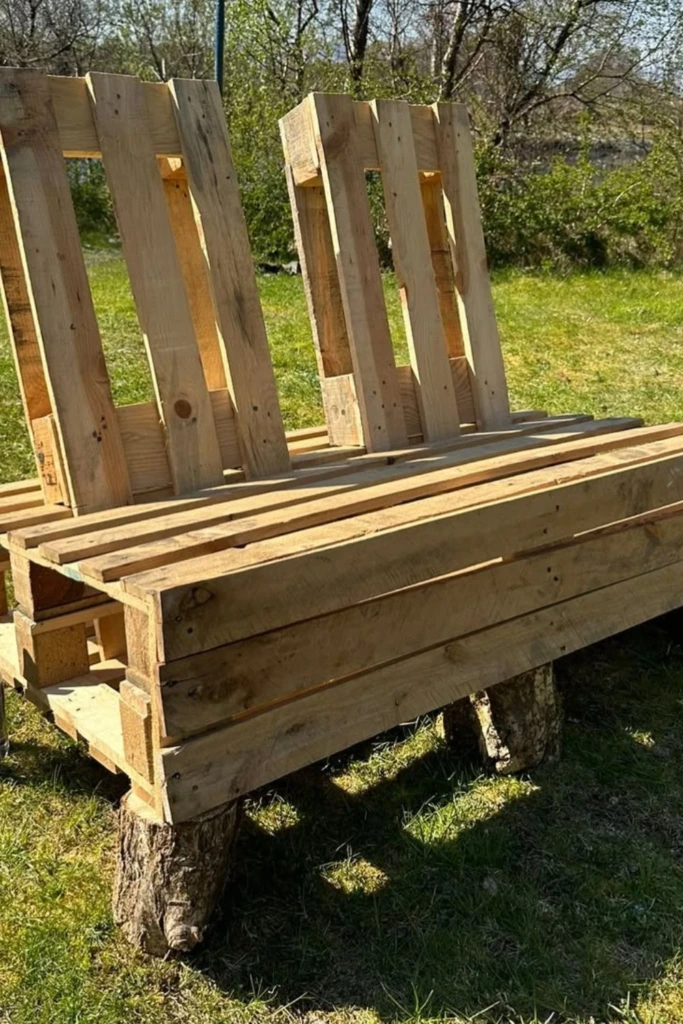
A pallet bench with chunky wooden legs creates an informal seat that suits rustic gardens, campsites, and outdoor workspaces. Its straightforward construction makes it an approachable project for people who are comfortable using basic hand tools.
Use sound pallet boards for the seat and backrest, adding substantial supports to keep the frame from wobbling. Inspect every board for splinters, cracks, protruding nails, and signs of decay before assembly. Reclaimed wood can be left in a natural-looking finish or protected with an exterior wood treatment.
For a more comfortable result, slightly angle the backrest and smooth all contact surfaces. Place the bench on firm, level ground rather than directly on damp soil, which can accelerate deterioration of the legs.
11. Concrete Modern Bench
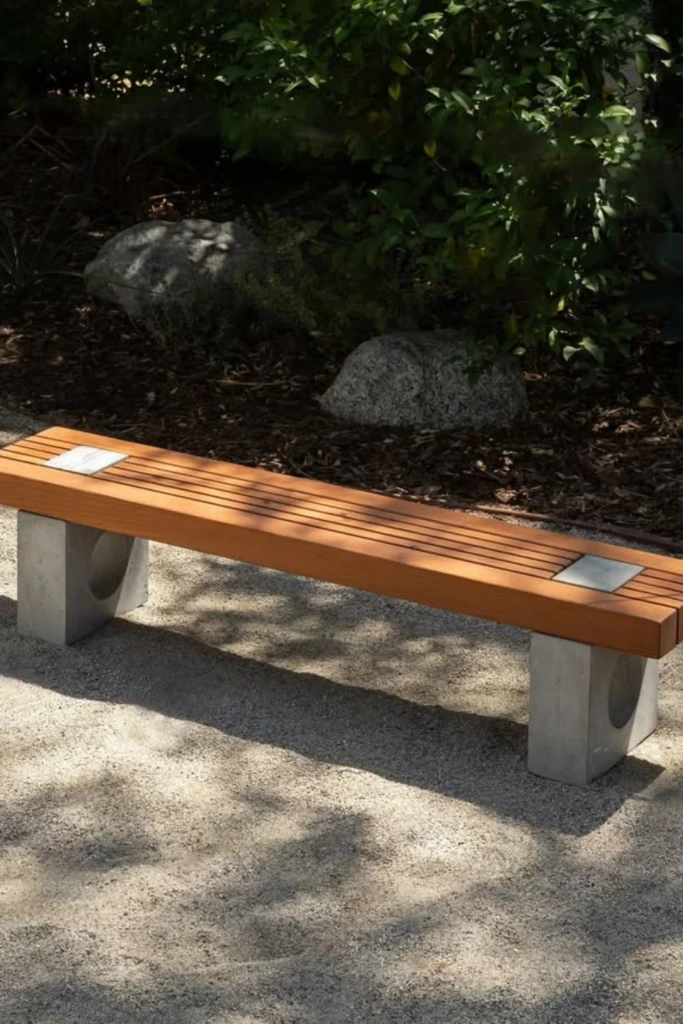
A combination of concrete supports and wooden slats creates a sturdy bench with a minimalist appearance. The contrast between smooth timber and solid geometric bases works particularly well in contemporary gardens and paved outdoor areas.
Concrete blocks or purpose-made supports can carry the seat boards, provided they are stable and suitable for the intended load. Arrange the wooden slats with small, consistent gaps to allow drainage and ventilation. Where necessary, use secure connectors to prevent the boards from shifting.
The design can require relatively little maintenance, but its longevity depends on the quality of the materials and the local climate. Keep the wood separated from standing water, and position the supports on a stable surface that will not settle unevenly.
12. Cinder Block Bench
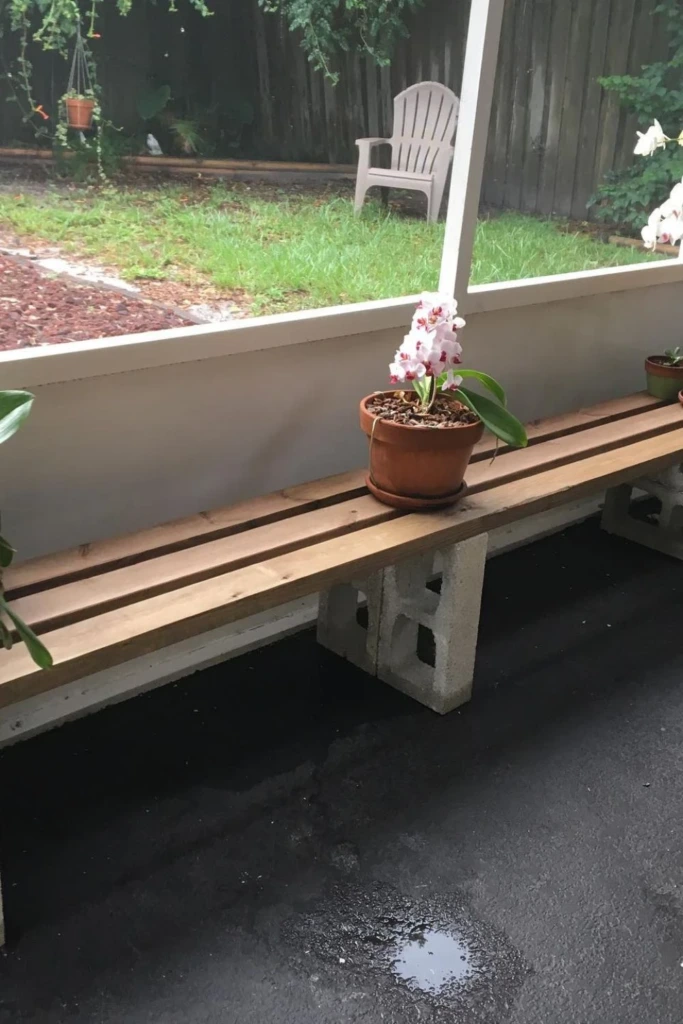
For a straightforward, budget-conscious project, use concrete masonry blocks as the base and sturdy wooden boards as the seating surface. This approach reduces the amount of cutting required and can work well in compact patios or casual garden seating areas.
Arrange the blocks on level ground, checking that the supporting surfaces align before placing the boards. Secure the seat where appropriate so it cannot slide when someone sits down or gets up. Avoid relying on a loose stack of blocks if children, pets, or frequent visitors will use the bench.
The openings in some blocks can hold lightweight decorative pots, provided drainage and stability are considered. Paint the blocks or leave them in their natural finish for a simple industrial look. Sand and seal the wooden seat for a more polished result.
13. Headboard Bench

An old wooden headboard can become the starting point for a distinctive garden bench. Repurposing furniture parts adds character and gives an otherwise unwanted item a second life.
Choose a headboard with a sound frame and inspect it for loose joints, rot, or insect damage. Depending on its shape, it can serve as the backrest, while a separate timber base and legs provide the necessary support. A matching footboard may also supply useful components for the arms or front frame.
Painted white wood creates a farmhouse appearance, whereas a darker seat adds contrast. You can include a small painted motif or decorative lettering, but prioritize a durable exterior finish and secure construction over ornamentation.
14. Lit Corner Bench
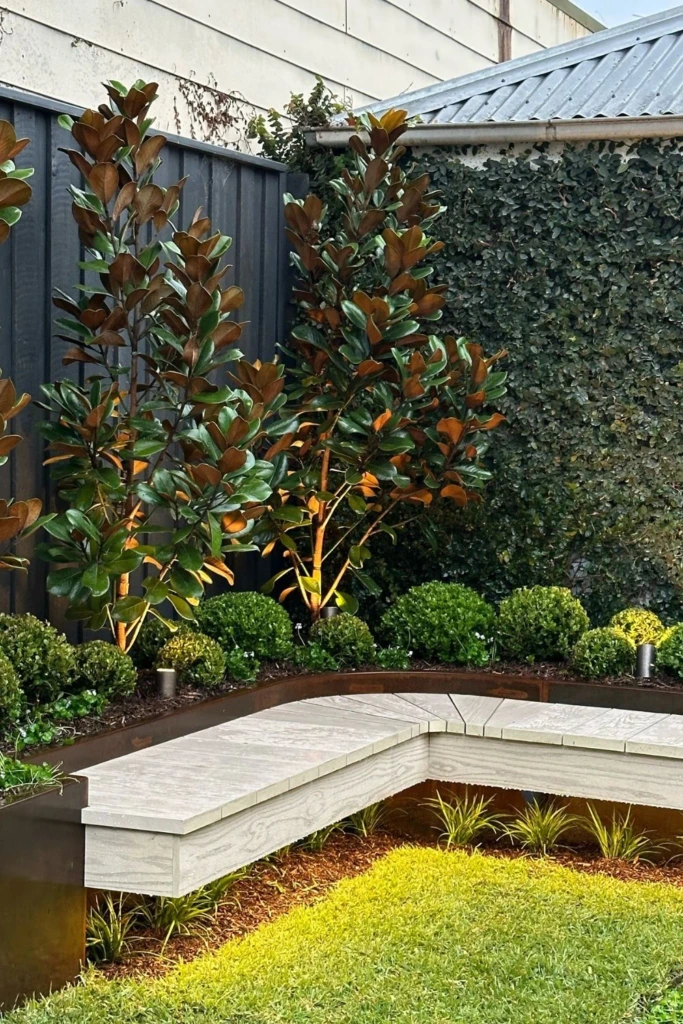
A built-in corner bench with discreet lighting can transform a backyard into a comfortable evening gathering space. Pairing the seat with raised planters gives the arrangement a finished, integrated appearance.
Build an L-shaped frame with adequate support beneath every seating section. If you want the bench to appear to float, use a properly engineered mounting system rather than relying on a few concealed fasteners. Plan the wiring and light placement before closing any cavities.
Choose outdoor-rated LED fixtures and weatherproof electrical components. Keep connections protected from moisture and follow local electrical requirements, using a qualified electrician when needed. Soft lighting beneath the seat can highlight the structure without overwhelming the surrounding garden. Low-maintenance shrubs or carefully positioned ornamental plants complete the setting.
15. Mossy Garden Bench
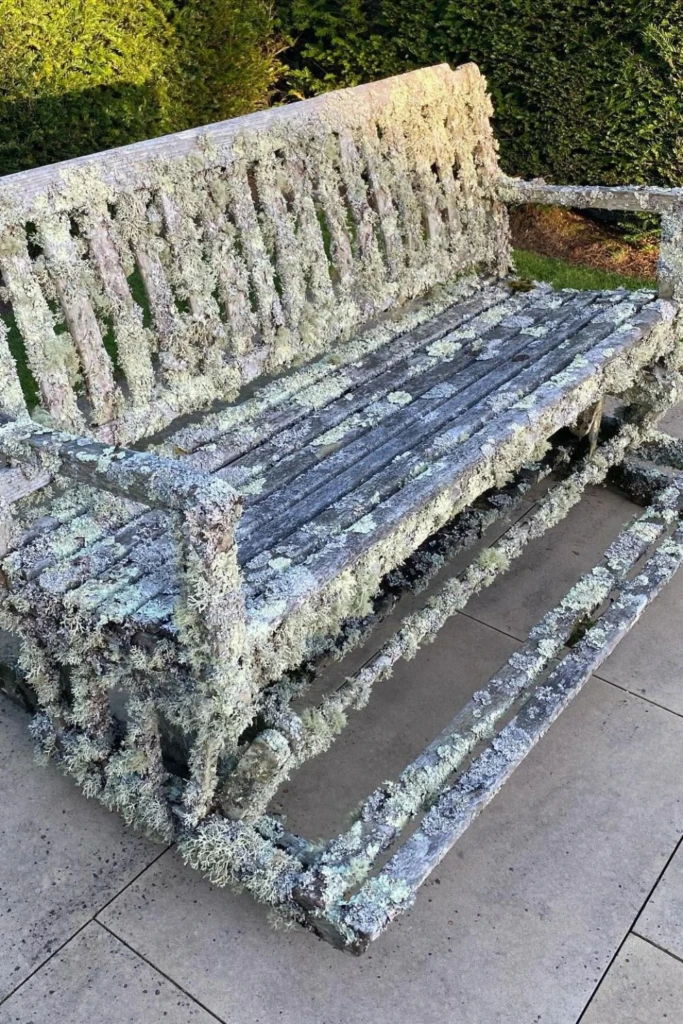
Not every garden bench needs to be functional seating. An old, weathered bench covered with moss can serve as an unusual decorative sculpture in a shaded garden.
Choose a location where moss can establish naturally, such as a damp, sheltered corner away from intense direct sunlight. Existing moss and lichen can contribute to the aged appearance, while nearby ferns and shade-loving plants help create an established landscape.
Treat the piece as a decorative feature rather than a usable seat if the wood or frame is fragile. Avoid encouraging moss on a bench that needs to remain clean and safe for regular use. A deliberately aged finish can create a similar effect without compromising the structure of a functional seat.
16. Solid Pine Bench
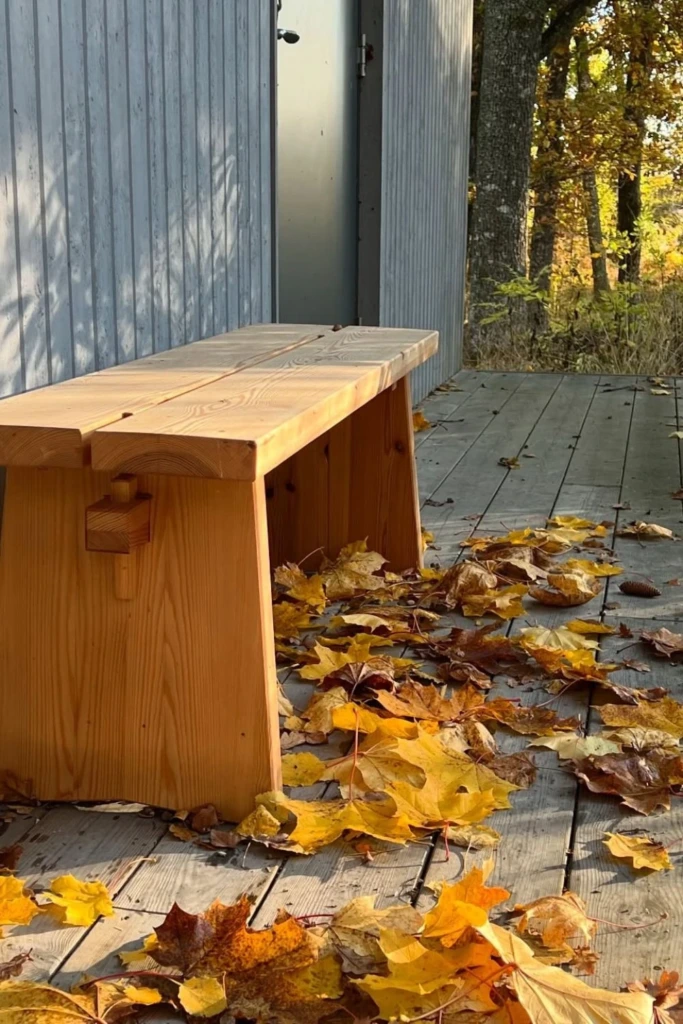
A solid pine bench is a practical choice for anyone who prefers simple woodworking and natural materials. Thick boards, a broad seat, and slightly angled legs give it a sturdy appearance that complements decks, patios, and informal garden settings.
Select sound pine boards and assemble them with exterior-rated screws or suitable joinery. Pine is relatively easy to cut and shape, although untreated timber is vulnerable to moisture and decay when left outdoors. Apply an appropriate exterior preservative or protective finish and maintain it as needed.
Keep the design uncomplicated by using straight cuts and a balanced frame. Rounded corners and smooth edges make the bench more comfortable, while a light-colored finish preserves the wood's natural appearance.
17. Clip-On Bench
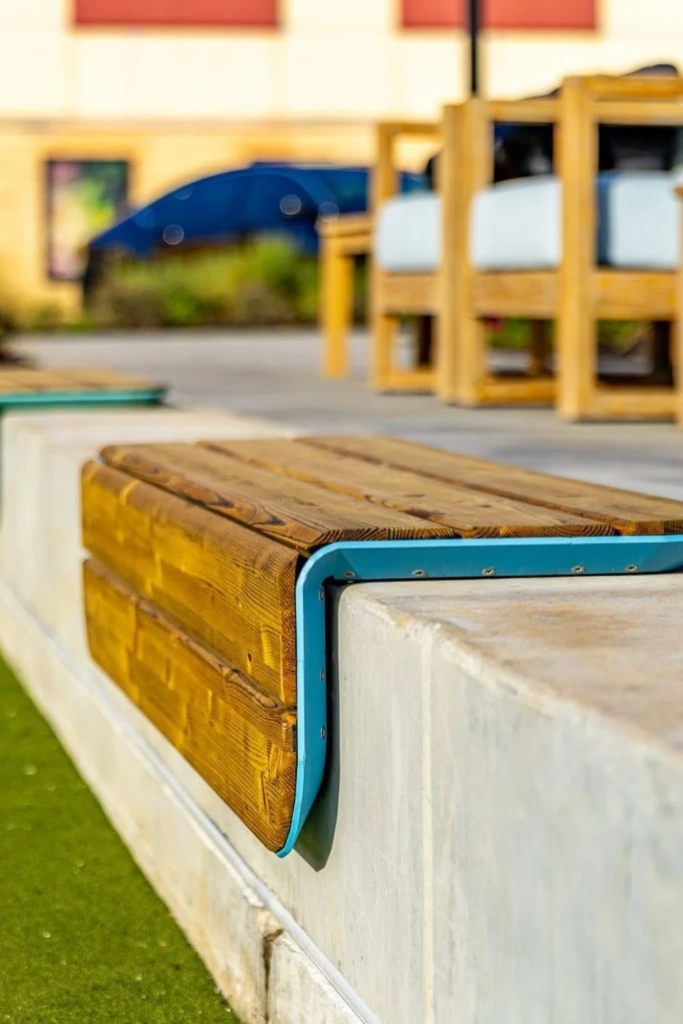
A wall-mounted or clip-on bench can create useful seating in places where a freestanding structure would occupy too much space. The idea uses wooden boards supported by brackets attached to a suitable wall or low masonry edge.
Before building, confirm that the supporting wall can safely carry the combined weight of the bench and its occupants. Select brackets and anchors designed for the wall material and expected load. Decorative metal supports can add color, but they must also provide adequate structural strength.
This arrangement is especially useful for narrow patios, small courtyards, and outdoor areas beside sturdy retaining walls. Measure the available depth carefully and make sure the finished seat offers enough room to sit comfortably without obstructing walkways.
18. Lattice Display Bench
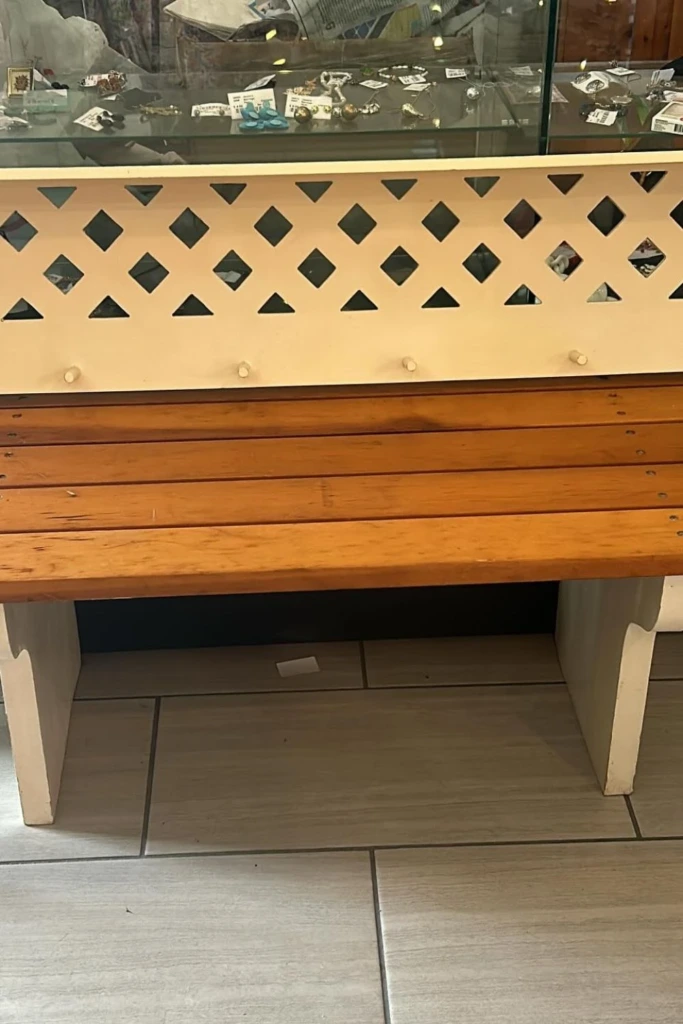
A bench with a lattice backrest and built-in storage brings decorative detail to a small outdoor area. The open pattern provides visual interest, while shelves, hooks, or enclosed compartments can help organize gardening supplies and accessories.
Start with a stable wooden frame and add the lattice as a securely supported back panel. Pre-cut slats can save time, but check their dimensions before assembly to keep the pattern consistent. If you include storage, make sure rainwater can escape and that the compartment has enough ventilation to prevent moisture from becoming trapped.
A pale-painted frame paired with natural wood slats creates a balanced look. This style is suitable for a porch, potting area, or covered outdoor workspace where the extra storage is genuinely useful.
19. Tropical Curve Bench
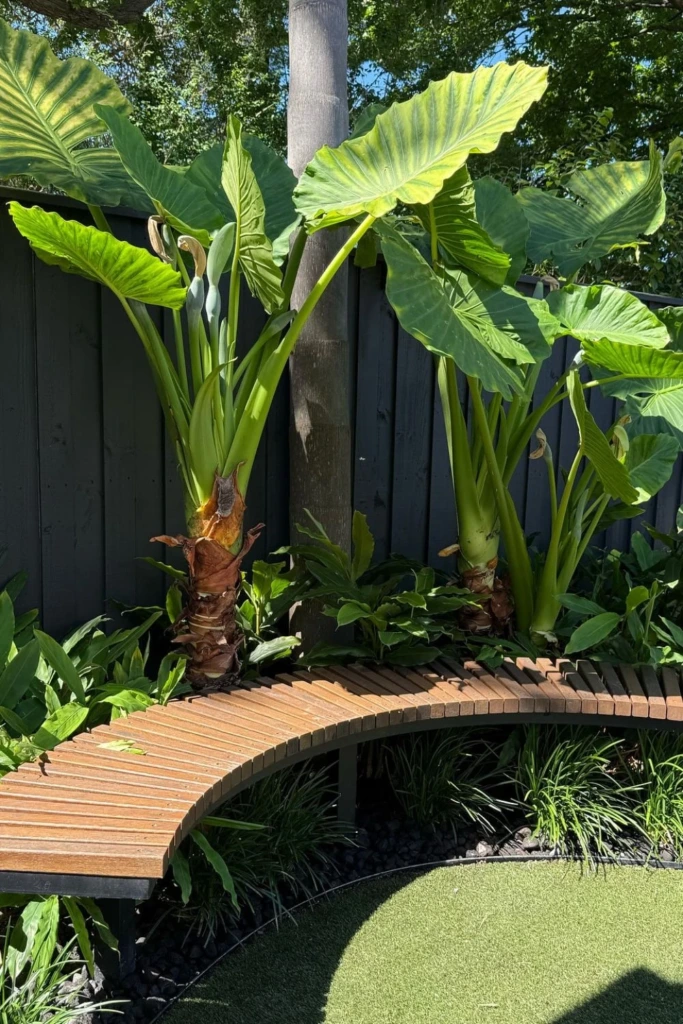
A curved bench surrounded by tropical foliage can make an unused garden corner feel like a secluded retreat. Slim wooden slats and dark metal legs create a lighter appearance than a bulky solid-wood structure.
Plan the curve around the available space, allowing enough clearance for nearby plants to grow without crowding the seat. A curved frame may require templates or carefully cut supports to keep the slats evenly aligned. Use outdoor-rated materials for both the timber and metal components.
Position the bench where it offers a pleasant view of greenery and, if possible, some protection from harsh afternoon sun. The result can be a peaceful place to relax without requiring a large patio or extensive landscaping.
20. Floral Iron Bench
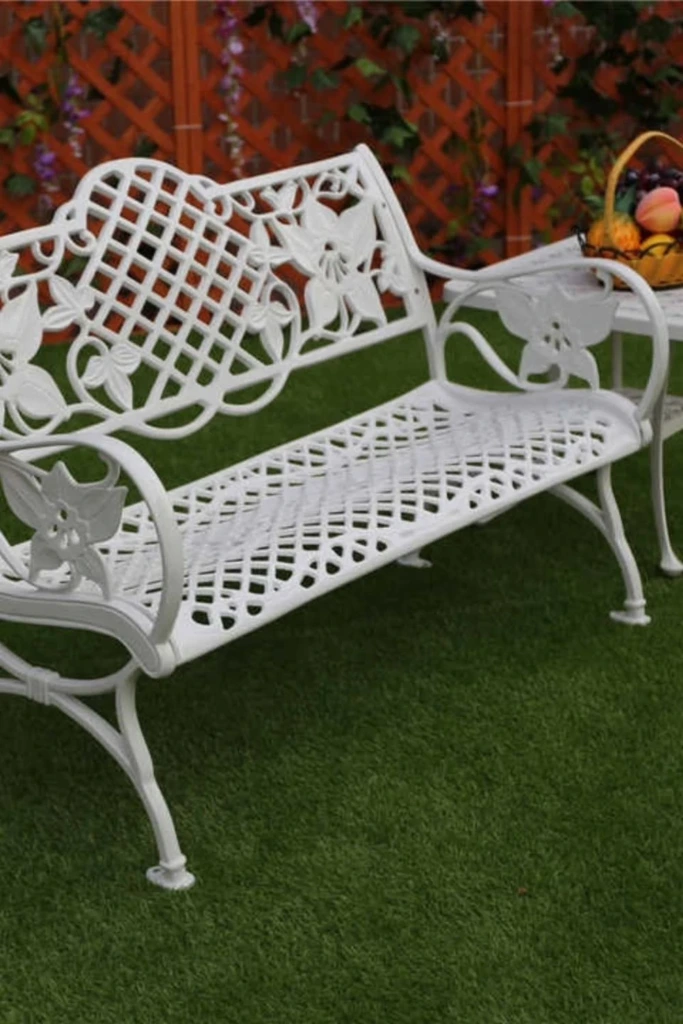
An ornate iron bench adds vintage charm to a garden, especially when paired with flowering plants and decorative pathways. Curved arms, scrolling details, and a patterned backrest make the furniture itself part of the landscape design.
You can restore an existing metal bench or build a simpler wooden seat around a decorative iron frame. Check older metalwork for corrosion, loose connections, and sharp edges before use. Remove loose rust and apply a compatible metal primer and exterior coating where needed.
White or muted pastel finishes suit romantic gardens, while darker colors create a more traditional appearance. A nearby side table provides space for a drink or small planter, helping the bench become a useful destination rather than a purely decorative object.
21. Gabion Base Bench
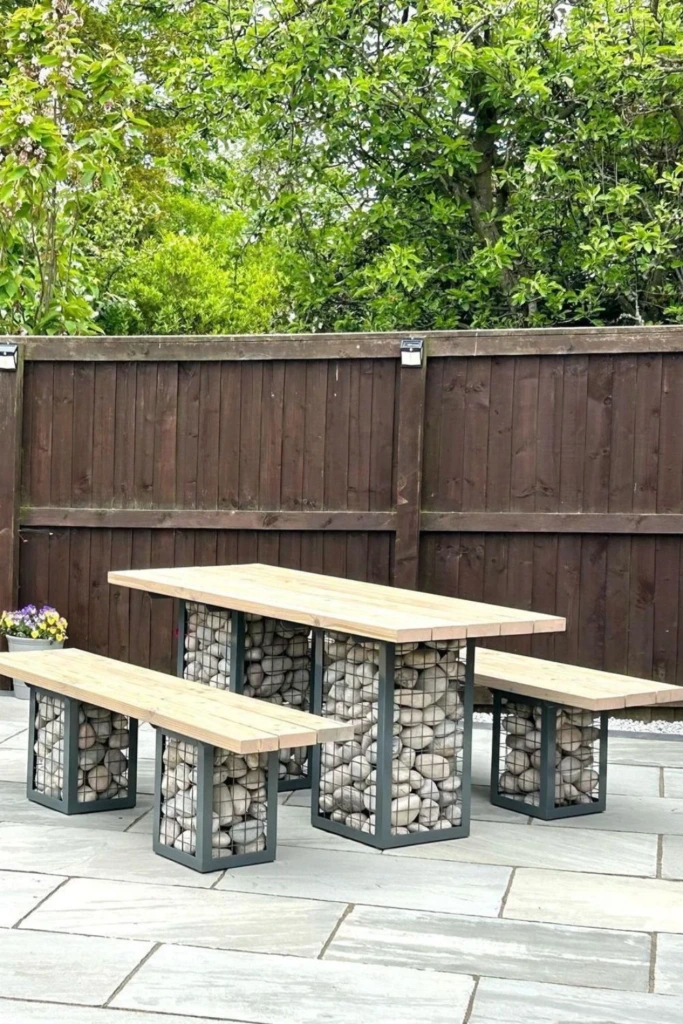
A gabion-style bench uses stone-filled mesh cages as its supports, topped with a wooden seat. The combination of rough stone and warm timber creates a distinctive feature that fits naturalistic and contemporary outdoor designs.
Use mesh cages intended for the purpose and select a suitable stone size that will remain securely contained. Prepare a stable, well-drained base, then fill the cages evenly so the supports do not bulge or become unbalanced. Install a properly supported timber seat across the top, using suitable connectors to prevent movement.
This design can be especially effective beside gravel paths, outdoor dining areas, or modern garden walls. Choose durable wood and leave sufficient gaps for drainage, since water trapped around the seat can shorten its service life.
22. Raw Stone Bench
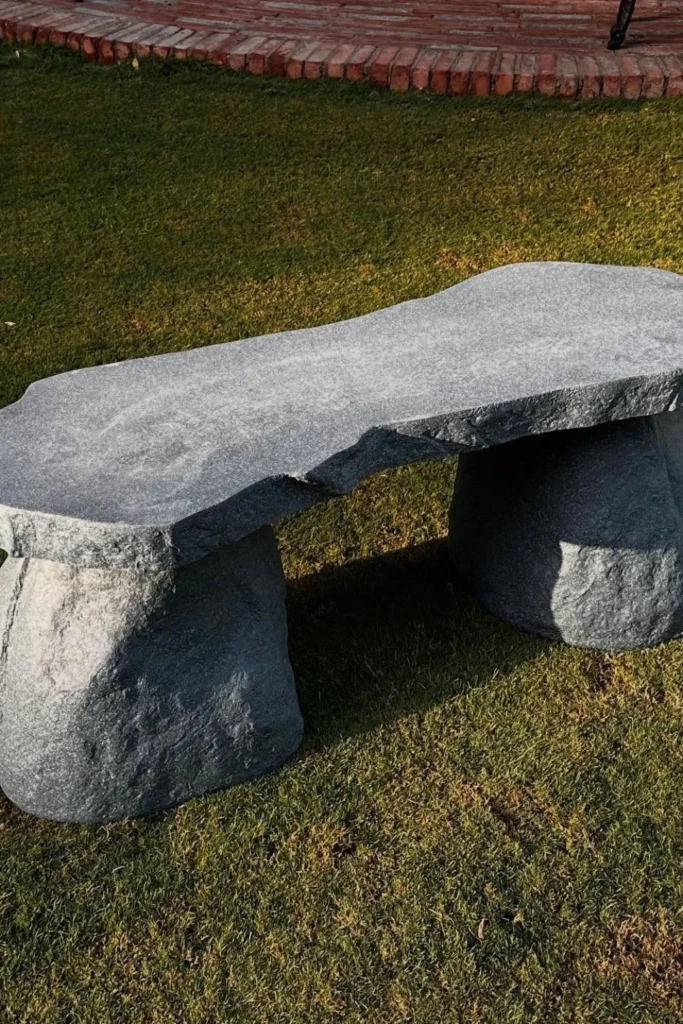
A bench made from natural stone offers a sculptural alternative to conventional timber furniture. Its irregular texture and earthy appearance blend naturally into lawns, rock gardens, and landscapes with a rustic character.
Large stone pieces can be extremely heavy, so moving and positioning them requires appropriate equipment and care. Choose a stable location with a firm base, and avoid placing the bench where uneven ground could cause it to shift or tip. A broad, reasonably level seating surface improves usability without removing the stone's natural character.
Stone generally requires less routine finishing than wood, although the surface can become uncomfortable in extreme temperatures. A small wooden seat insert or a removable cushion can make the feature more inviting while preserving its natural appearance.
23. Daybed Style Bench
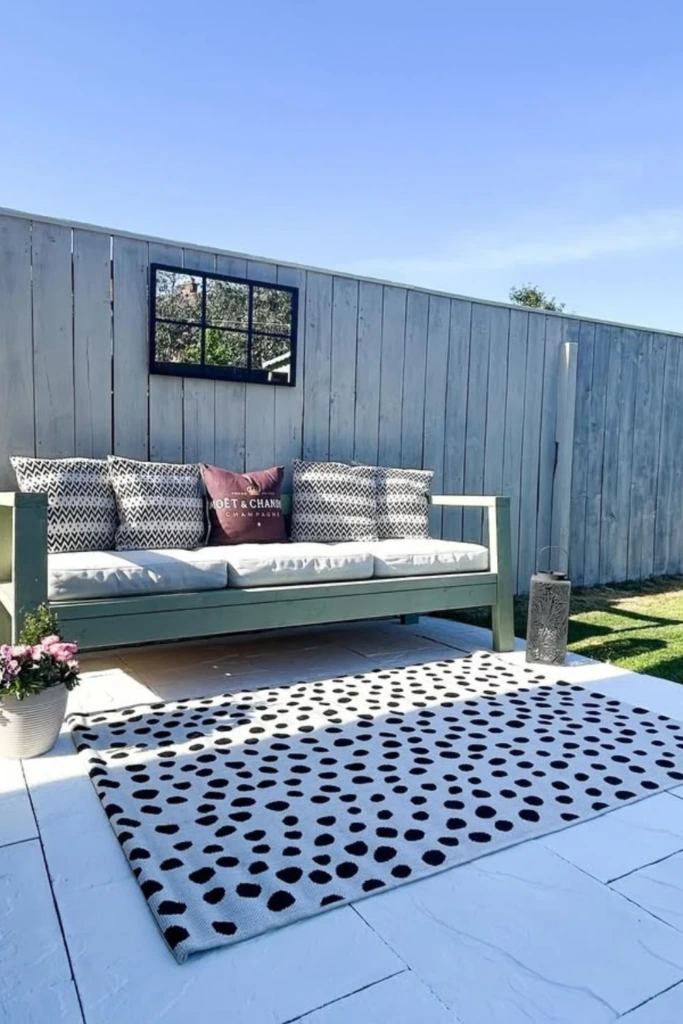
A daybed-style outdoor bench provides room to stretch out rather than simply sit upright. Its longer frame and generous cushions make it a good fit for a covered patio, sheltered deck, or quiet corner of the garden.
Build the base with strong supports and check the manufacturer's guidance for any prefabricated outdoor frame you use. A broad mattress-style cushion and coordinating pillows create a relaxed lounging area. Select fabrics designed for outdoor use, and store the cushions somewhere dry when the weather turns wet.
A small outdoor rug and a decorative mirror on a suitable sheltered wall can make the space feel more like an outdoor living room. Keep the layout open enough to move around easily and ensure the bench remains stable under the expected load.
24. Circular Tree Bench
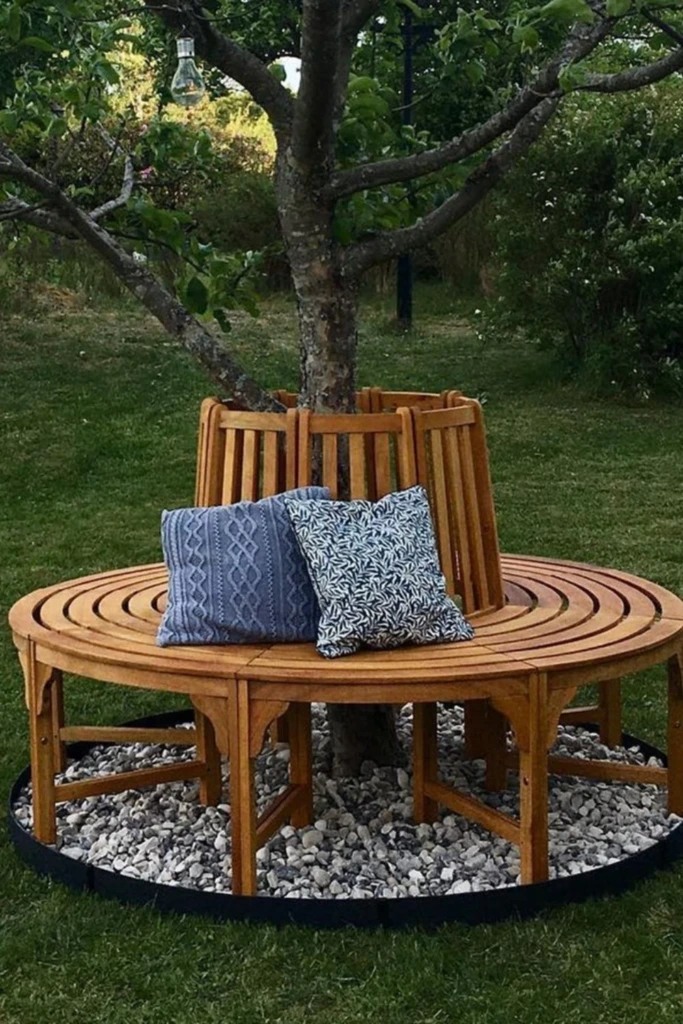
A circular bench around a tree makes efficient use of shaded space and gives several people a shared place to sit. It can also serve as a focal point in a larger lawn or landscaped courtyard.
Construct the bench from separate sections that fit around the tree without fastening anything to the trunk. Use accurately cut boards and secure supports so that every section remains stable. Leave generous room for trunk expansion and future root growth; the bench should never press against the bark as the tree matures.
A natural wood finish complements most garden settings, while removable cushions add comfort for longer gatherings. Avoid digging deeply around established roots when preparing the supports, and keep the surrounding ground well drained.
25. Angled Support Bench
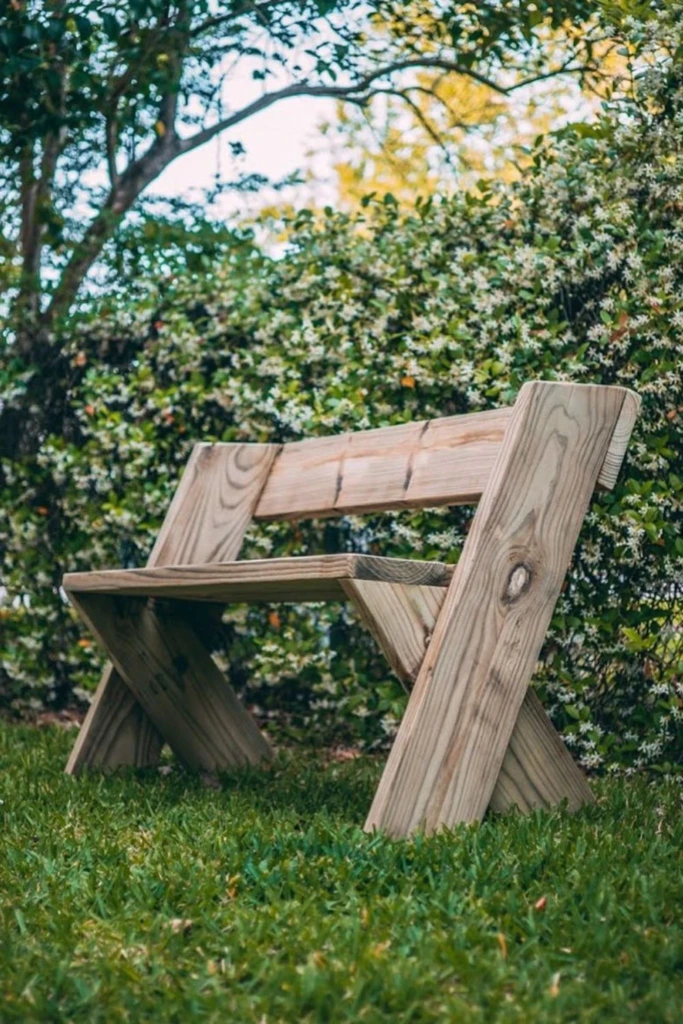
A bench with angled legs and cross-braced supports offers a handmade look while helping resist sideways movement. Its straightforward geometry suits front yards, patios, and garden paths.
Choose timber dimensions that can safely support the intended seating load. Cut the legs at consistent angles, then use securely fastened braces to keep the frame square and stable. A wide seat provides room to sit comfortably, while a slightly softened edge makes the finished piece more inviting.
A clear outdoor wood finish highlights the grain, whereas an opaque stain can coordinate the bench with fencing or nearby furniture. Check the bench on a level surface before use, and adjust the feet or supports if it rocks.
26. Patriotic Slat Bench
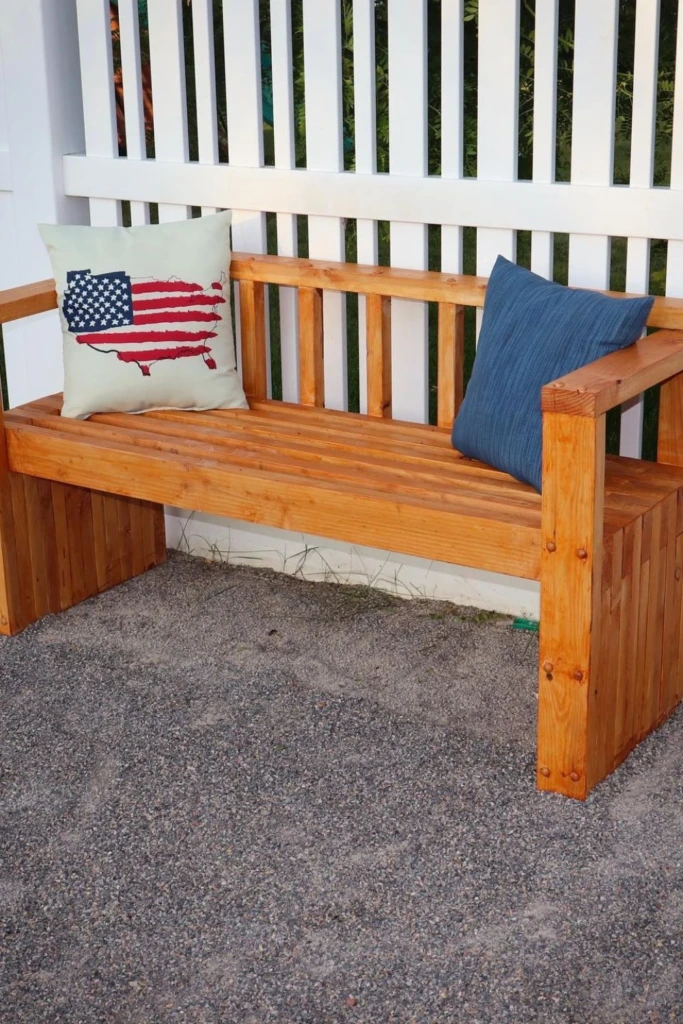
A traditional slatted bench with substantial armrests is easy to adapt to different outdoor decorating styles. The natural timber provides a timeless base, while seasonal cushions or small decorative accessories can give it a patriotic theme.
Build the seat with evenly spaced boards and use sturdy arm supports to prevent the frame from loosening with regular use. Exterior-grade fasteners and a suitable wood finish help protect the structure from weather exposure.
Place the bench on a porch, beside a garden fence, or near an outdoor dining area. When a holiday passes, simply replace the themed pillows with neutral cushions or a different seasonal color scheme. This keeps the furniture useful year-round without requiring a new paint job.
27. Victorian Iron Bench
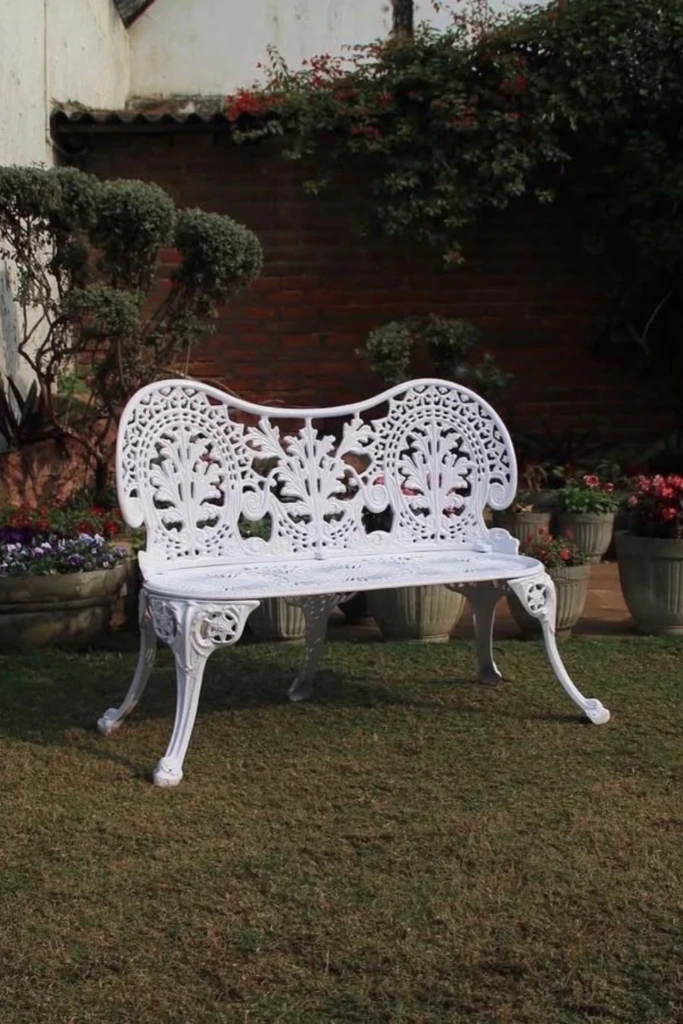
A Victorian-inspired iron bench brings elaborate detail to gardens designed around traditional architecture, flowering borders, or winding pathways. Its curved frame and decorative backrest provide an elegant contrast to simple planting arrangements.
An existing cast-iron bench can often be refreshed with careful cleaning and a suitable protective coating. Inspect the legs, joints, and mounting points before use, paying attention to corrosion that may affect structural strength. Replace damaged hardware and repair unstable components before adding decorative finishes.
A white or softly colored coating emphasizes the ornate design, while darker metalwork creates a more dramatic effect. Place the bench where it frames a garden view or sits beside climbing flowers, allowing enough space for visitors to approach and sit comfortably.
28. Slanted Arm Bench
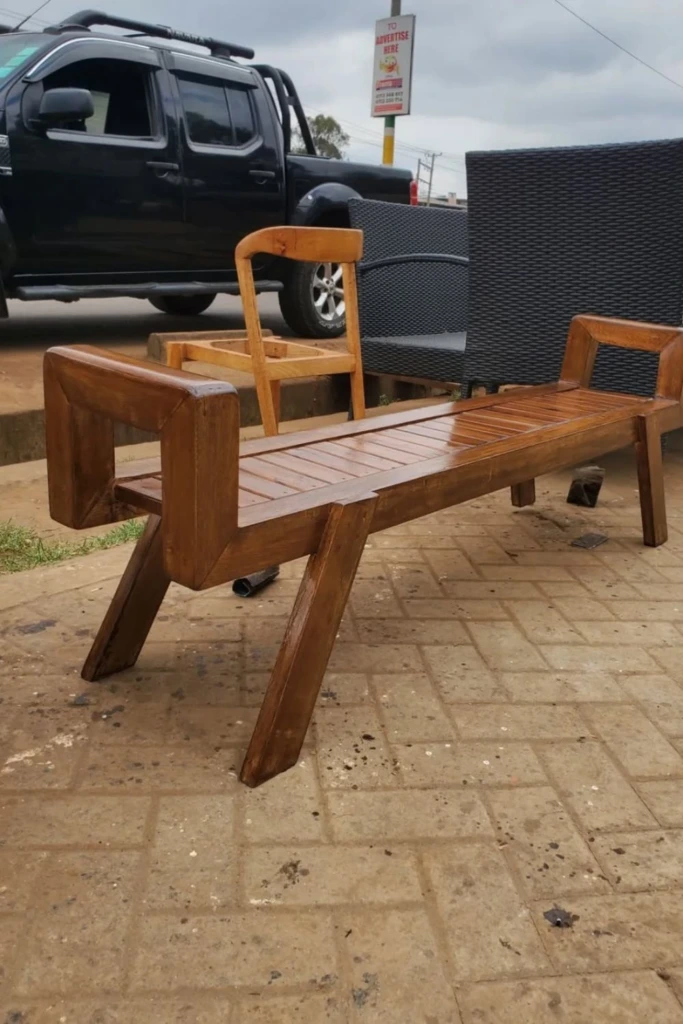
A bench with angled legs and geometric armrests suits mid-century-inspired patios and contemporary entryways. Its simple lines allow the natural wood grain to stand out without relying on ornate decoration.
Build the frame from accurately cut timber and make sure the armrests connect securely to the supporting structure. The legs should be positioned to provide a balanced footprint, while the seat boards should be spaced for drainage. Sand the edges and apply a protective exterior finish appropriate for the wood species.
Rich wood tones pair well with concrete paving, minimalist planters, and metal outdoor accessories. This design also works near a café entrance or garden studio, provided the dimensions and construction are appropriate for the expected use.
29. Brick Base Bench
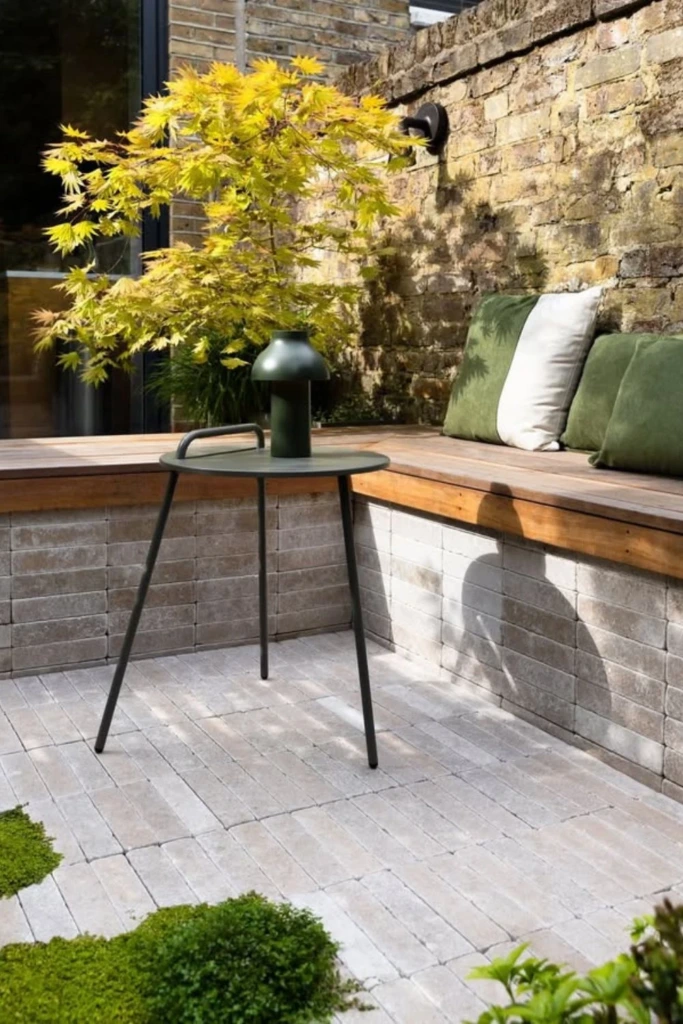
A bench supported by stacked or mortared brick combines traditional masonry with the warmth of a wooden seat. It can become a permanent seating feature in a courtyard, compact garden, or paved patio.
Decide whether you want a freestanding arrangement or a fixed masonry structure before construction. Prepare a stable base, use suitable masonry materials, and make sure the supports are level. If the bench will be permanent or exposed to severe weather, proper foundations and drainage become especially important.
A thick timber slab creates a comfortable contrast against the textured brickwork. Seal the wood with an exterior product and consider removable cushions for additional comfort. Because a brick-base bench is less portable than a lightweight timber design, plan its position carefully before building.