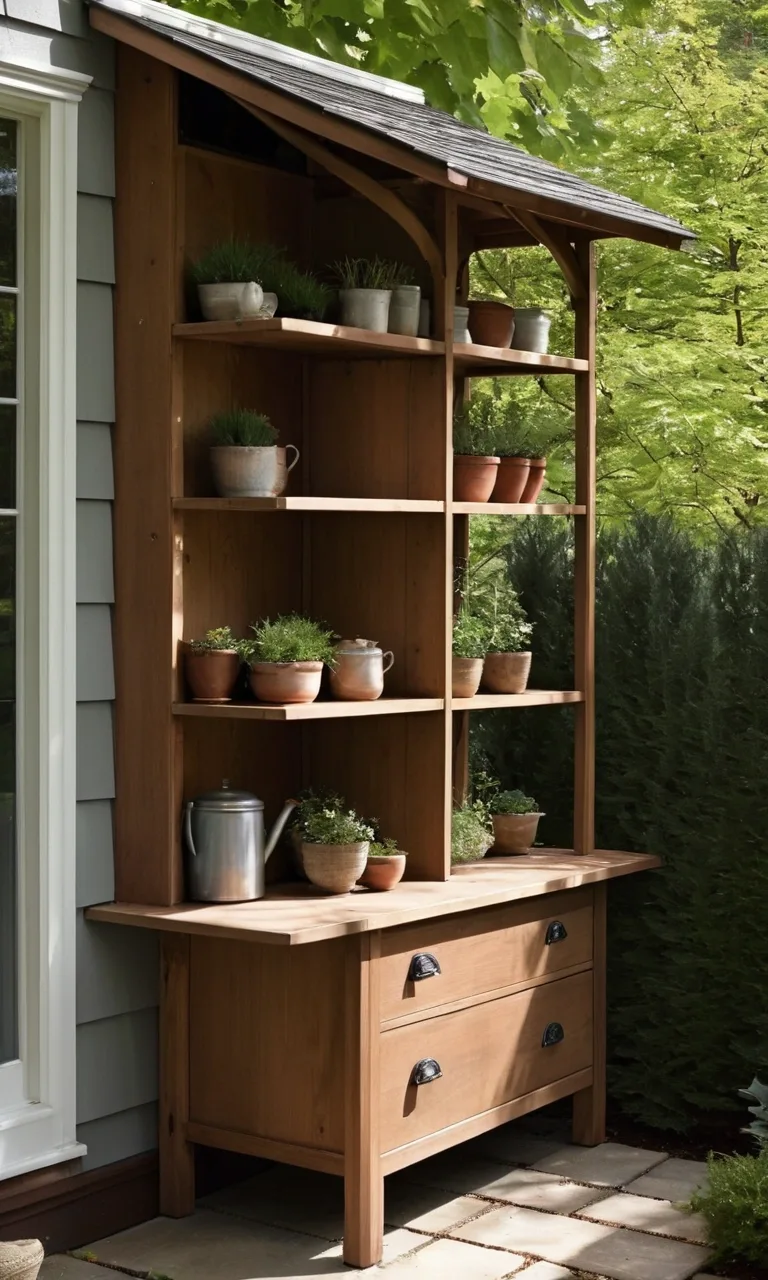
23 DIY Plant Stand Ideas for 2026
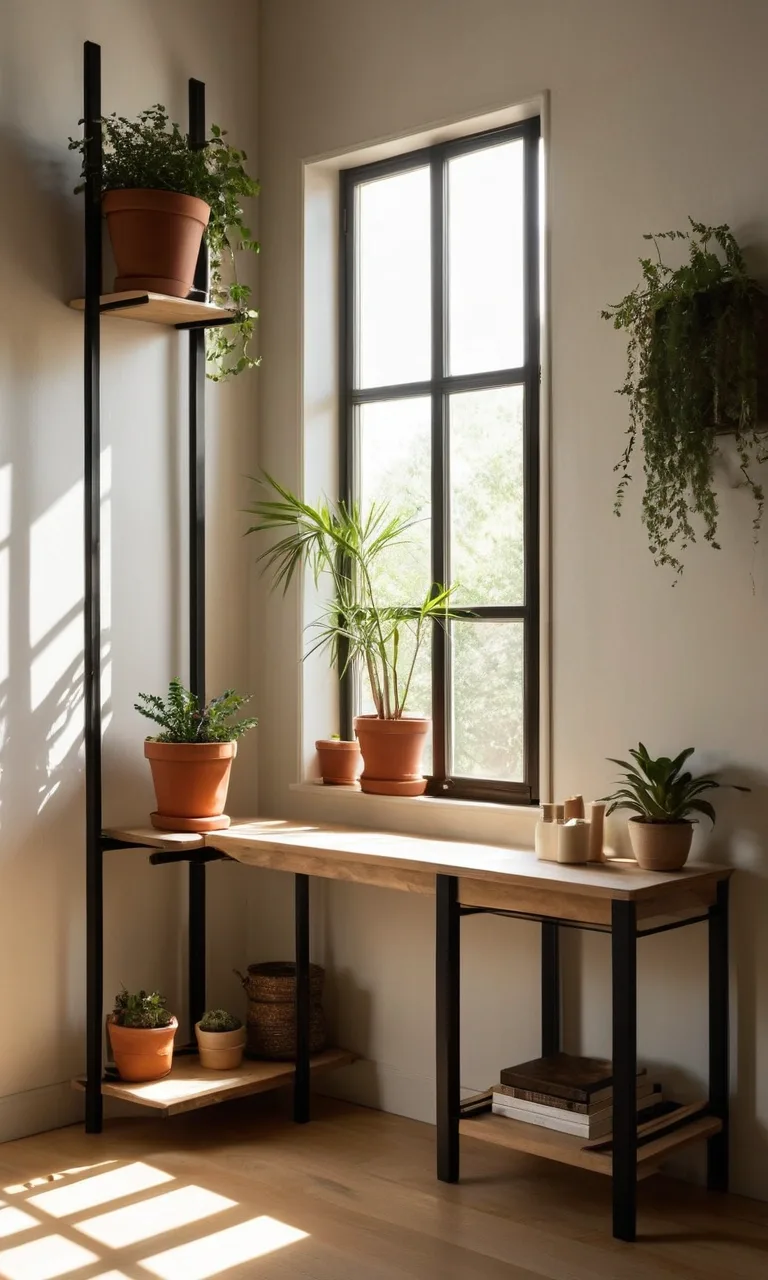
Houseplants can make a home feel more welcoming, but finding enough room for every pot can become a challenge as your collection grows. A thoughtfully designed plant stand helps you organize your greenery, introduce different heights, and make better use of available space.
Building your own plant stand is also a great way to personalize your home without spending a fortune. With a few basic materials, you can create anything from a minimalist wooden holder to a multi-level outdoor display. Repurposed furniture, recycled containers, and leftover timber can all become useful additions to your plant collection.
Whether you are decorating a small apartment, refreshing a balcony, or creating a dedicated garden corner, these DIY plant stand ideas offer plenty of inspiration for different spaces, budgets, and skill levels.
1. Before You Build a DIY Plant Stand

Before starting your project, consider where the finished stand will go and what it needs to support. An indoor plant holder may prioritize appearance and compact dimensions, while an outdoor version needs to withstand rain, sunlight, humidity, and temperature changes.
Measure your available space carefully, particularly if the stand will sit beside furniture or in a narrow walkway. Think about how much light each plant receives, too. Raising pots can improve their exposure, but closely stacked foliage may shade plants positioned below.
Weight is another important consideration. Soil becomes heavier when wet, and large ceramic containers can put considerable pressure on shelves and joints. Choose materials and fasteners that can safely support the full load.
For hanging designs, secure the hardware to an appropriate structural support rather than relying on a weak surface. Sand rough wood, protect metal against rust when necessary, and allow adequate drainage to prevent water damage. Planning these details in advance makes the finished project safer, more durable, and easier to maintain.
2. Clean Wooden Plant Stands
A straightforward wooden plant stand is a versatile choice for almost any interior. Its uncomplicated shape keeps the focus on the plant while lifting the pot to a more noticeable height.
You can construct one using four sturdy legs and a square or rectangular top frame. Sand the timber thoroughly, then apply a clear protective finish, wood stain, or paint to suit your decor.
For a more interesting arrangement, make several stands at different heights. Grouping them beside a window, sofa, or empty corner creates a layered display without requiring a large piece of furniture.
3. Create a Hanging Plant Corner
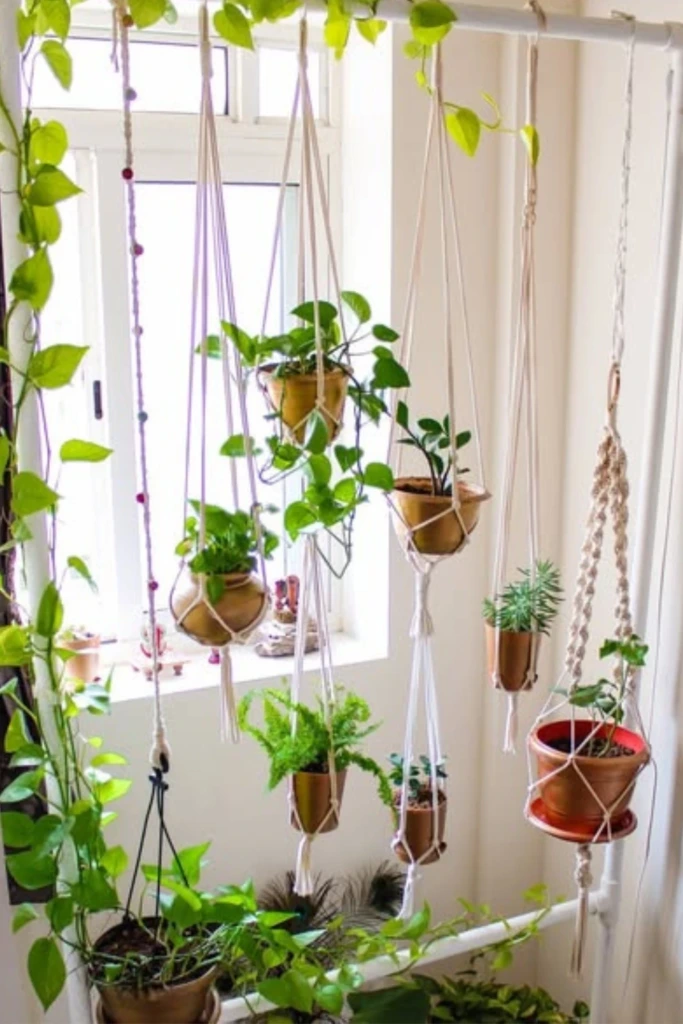
Make use of unused vertical space by turning a corner into a hanging garden. Suspended planters can accommodate several small houseplants while leaving the floor clear for other furniture.
Install suitable ceiling or wall supports, then hang pots at varying heights to create a relaxed, cascading arrangement. Trailing plants are particularly attractive in this setup because their foliage softens the lines of the hangers.
Macramé holders offer a decorative, handmade appearance, while simple rope or metal supports provide a cleaner look. Make sure every anchor is suitable for the combined weight of the container, plant, and damp soil before hanging anything overhead.
4. Build a Full Garden Plant Station
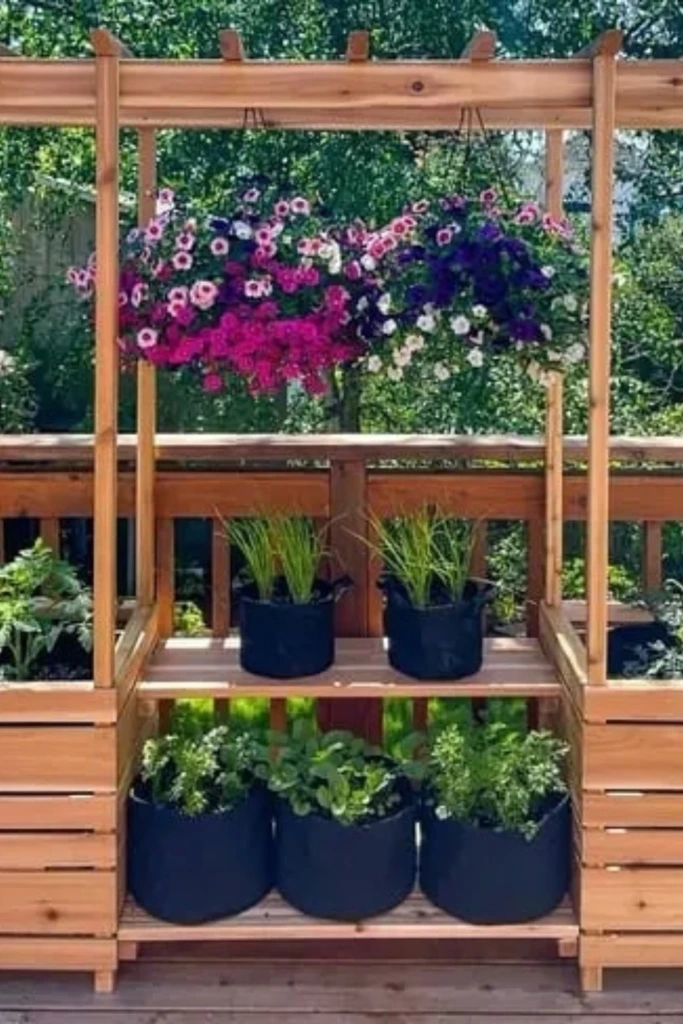
A dedicated garden station is ideal when you have more plants than a small shelf can accommodate. Instead of scattering containers around the patio, you can organize them within one larger structure.
Build a frame with an overhead beam, several shelves, and lower spaces for larger pots. The upper section can support hanging baskets, while the shelves hold herbs, flowering plants, and smaller containers.
This design works particularly well against an outdoor wall or along the edge of a patio. Use weather-appropriate timber and corrosion-resistant hardware to help the structure withstand outdoor conditions.
You can also combine the station with matching planter boxes to create a coordinated garden display.
5. Make a Long Bench Plant Display
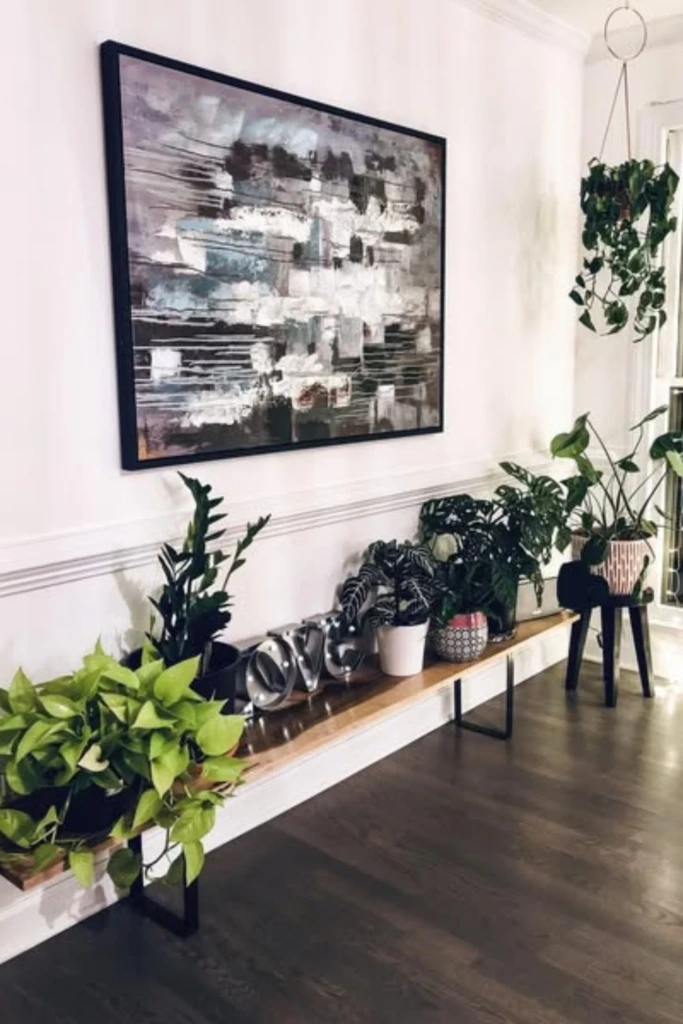
A long wooden bench offers a practical way to bring multiple plants together. Its extended surface creates a unified display, making a large collection look more organized than individual pots placed randomly around a room.
For a basic version, attach strong legs to a suitable timber plank and reinforce the frame where needed. Choose a length that fits your space while leaving enough room to walk around comfortably.
Arrange taller plants toward the back or at the ends, filling the gaps with smaller pots and trailing varieties. The area beneath the bench can hold gardening baskets or decorative containers, provided they do not interfere with stability.
Before using the bench, check that it can support the combined weight of all the plants, particularly after watering.
6. Try a Slim Metal Plant Stand
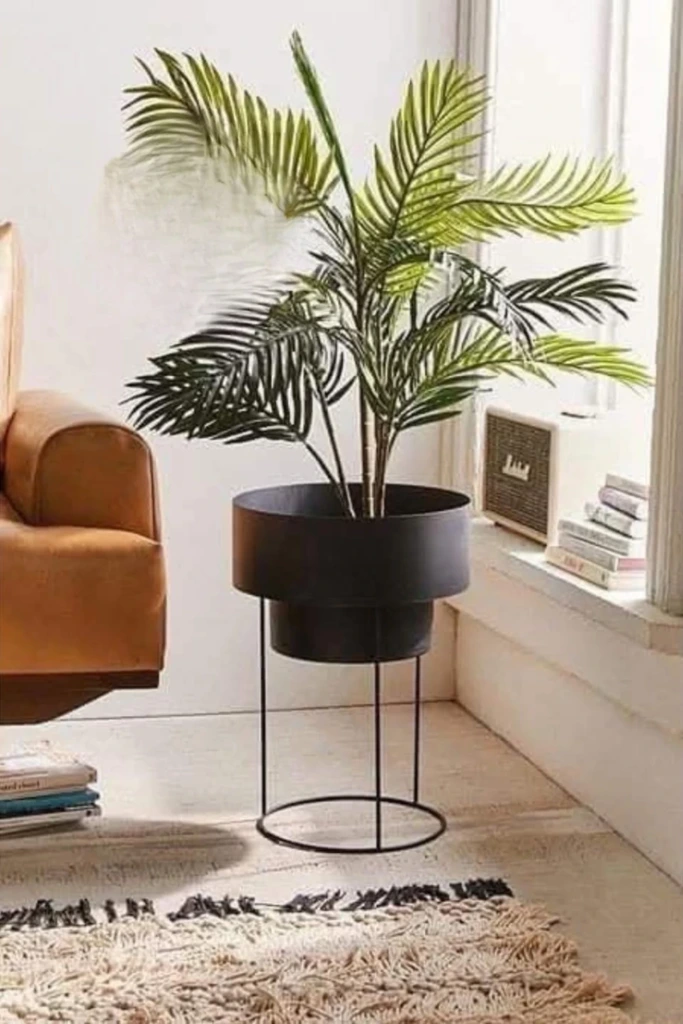
A narrow metal stand is a good option for contemporary interiors where bulky furniture would look out of place. Its open frame occupies little visual space, allowing the plant to become the main attraction.
A simple design might feature three or four metal legs with a circular platform for the pot. Powder-coated metal can provide a modern finish, while darker tones often complement minimalist furniture.
Place the stand beside an armchair, near a bright window, or in a small corner that needs a decorative accent. If you plan to build the frame yourself, use appropriate metalworking techniques or adapt a ready-made frame rather than attempting unfamiliar welding work without proper equipment.
7. Add a Plant Stand Behind the Sofa
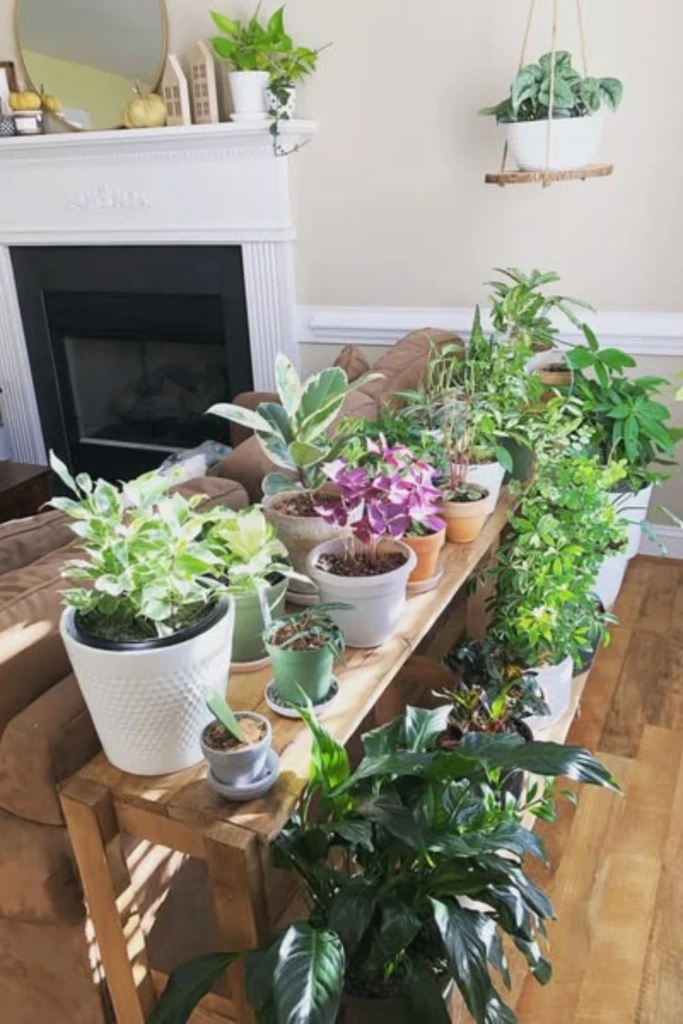
The space behind a sofa can become a useful display area with a narrow console-style plant stand. This arrangement introduces greenery into the room without taking up additional floor space elsewhere.
Build a long, shallow tabletop with sturdy legs, making sure its dimensions fit comfortably behind the sofa. A simple timber finish works well in many homes, while painted wood can coordinate with existing furniture.
Use a mixture of plant sizes to create a natural arrangement. Keep taller foliage positioned so it does not unnecessarily block daylight or obstruct the view across the room.
This design is especially useful in living rooms where the sofa sits near a window and the surrounding floor area is limited.
8. Make a Playful Log Plant Stand
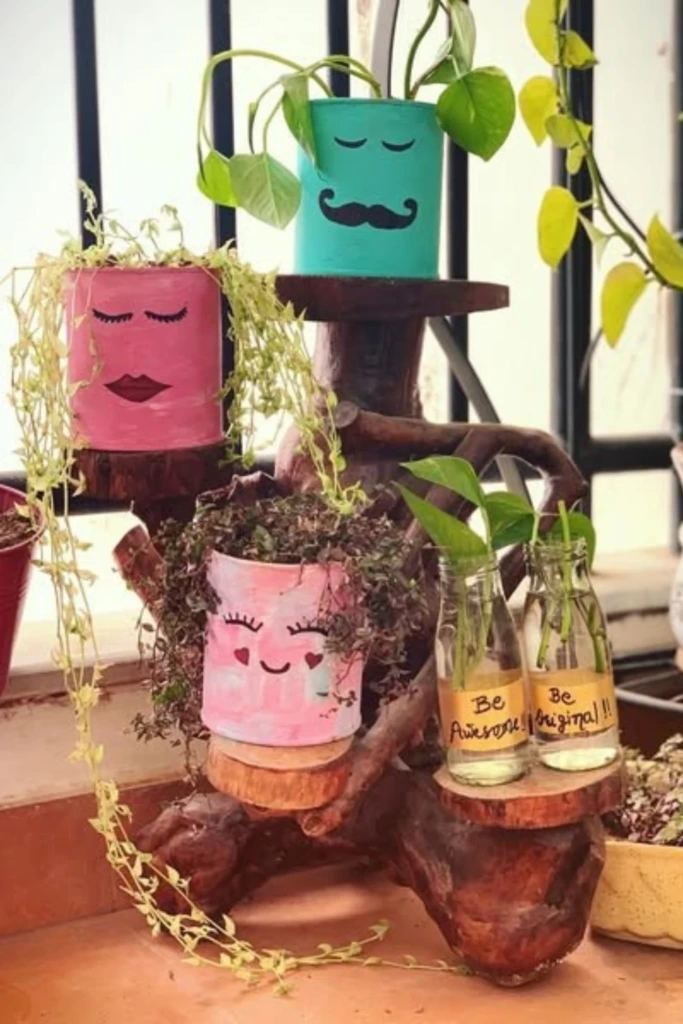
For a rustic display with plenty of character, use natural wood pieces to create a small plant stand. A thick branch, a compact log, or several wood slices can form an interesting structure that looks different from conventional furniture.
Arrange small platforms at staggered heights, securing each one firmly to the supporting structure. This approach works best for lightweight pots containing succulents, small herbs, or compact decorative plants.
You can preserve the wood's natural grain or add paint to selected sections for a more colorful result. Recycled tins can also serve as lightweight outer containers when their edges are safely finished.
Because irregular wood may be less stable than manufactured furniture, test the stand carefully and avoid placing heavy pots on narrow or uneven platforms.
9. Create a Wicker Planter Stand
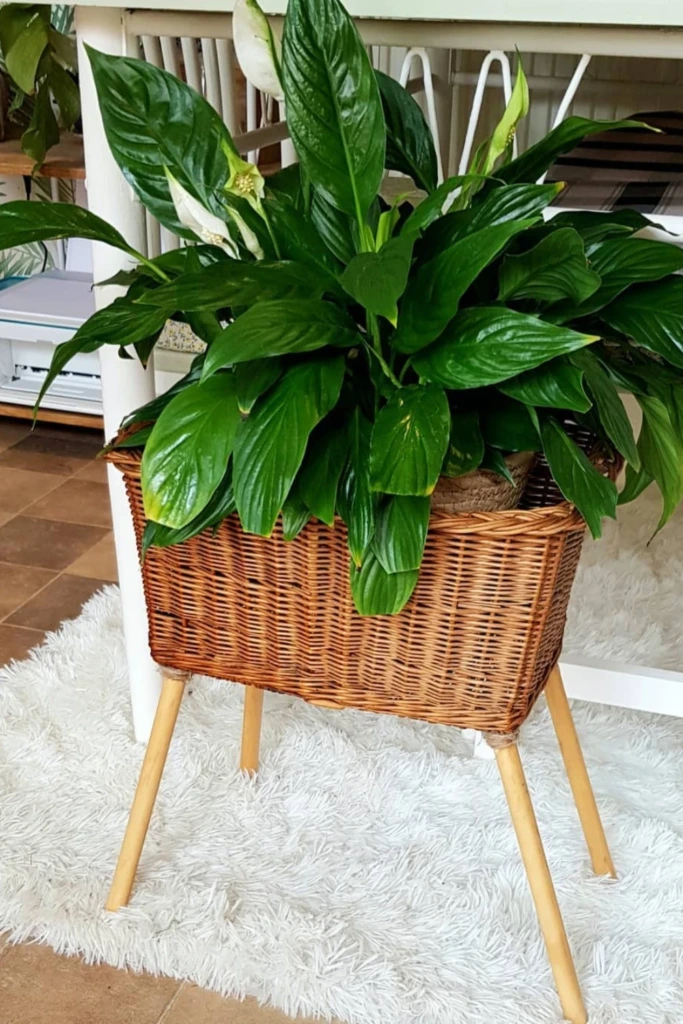
A woven basket supported by wooden legs offers a softer alternative to a traditional plant stand. The combination brings natural textures into the room and works particularly well with relaxed, neutral, or bohemian decor.
Choose a basket large enough to hold the plant's nursery pot or a suitable inner container. Attach stable legs or place the basket within a purpose-built frame that distributes the weight evenly.
Protect the woven material from excess moisture with an appropriate waterproof liner or removable inner pot. Always ensure that drainage water can be managed without soaking the basket or damaging the floor.
This style looks attractive beside a bed, near a living room window, or in a quiet corner that needs a little greenery.
10. Build a Modern Tiered Plant Stand
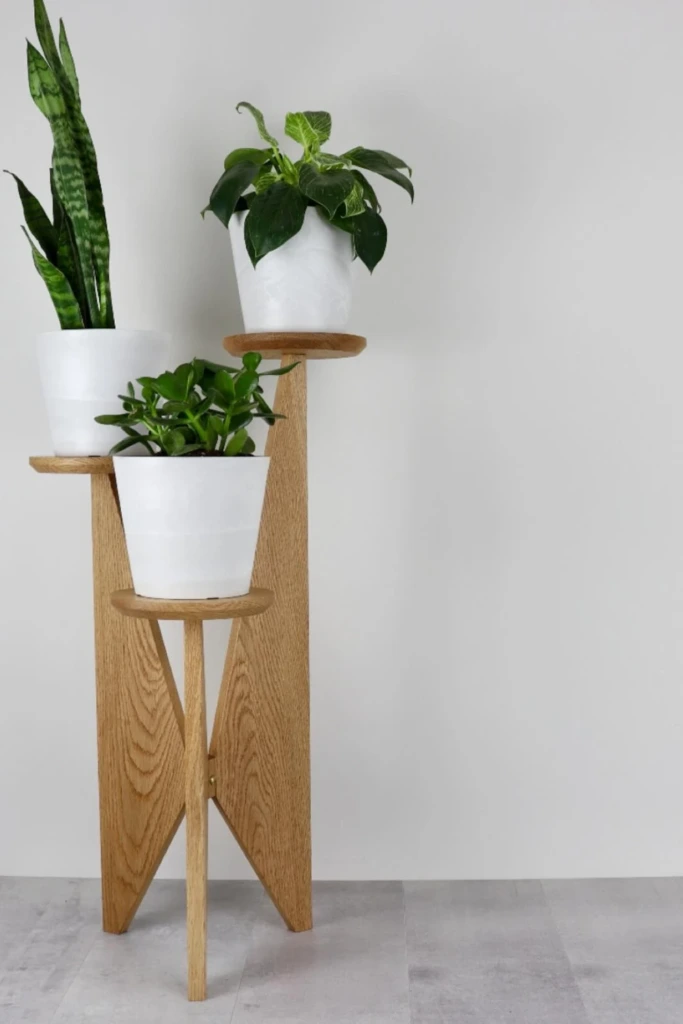
A tiered stand lets you display several plants within a relatively small footprint. By placing pots at different heights, you can create a fuller arrangement without covering a large area of floor space.
For a contemporary design, attach rounded or circular shelves to a sturdy central support. Position each platform at a different height and allow enough room for the foliage to spread as the plants mature.
Before assembling the stand, arrange your empty pots on the proposed shelves. This helps you determine the spacing needed for different container sizes and prevents taller plants from blocking smaller ones.
Finish the structure with a clear wood coating or a color that complements the room. Keep heavier containers on the strongest, lowest levels whenever possible.
11. Stack Hexagon Plant Shelves
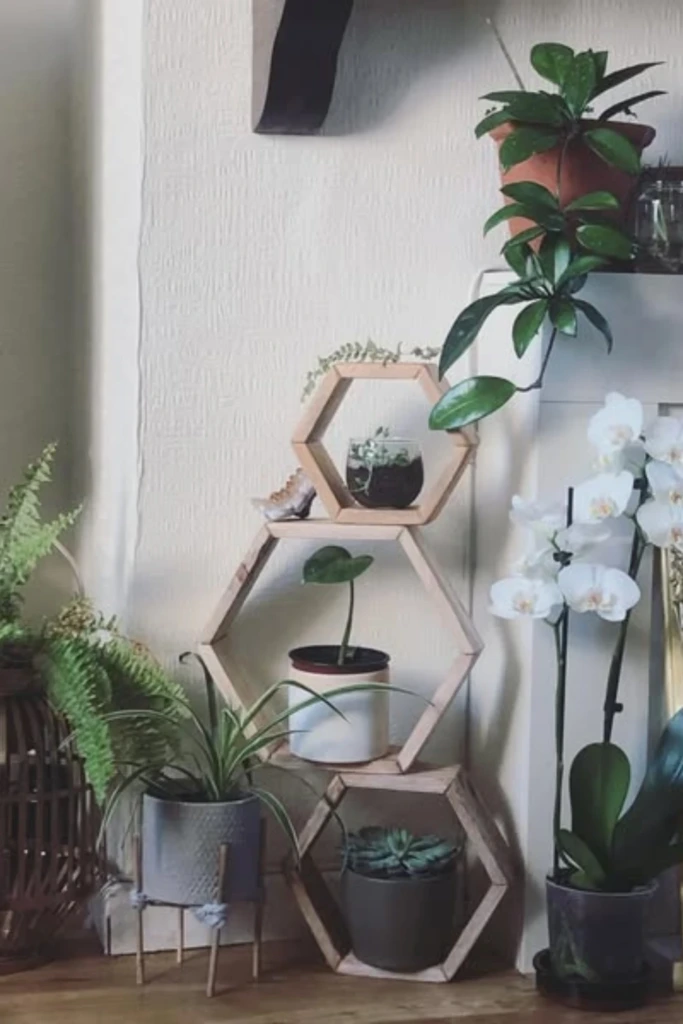
Geometric shelving can transform a plain wall into a decorative plant display. Wooden hexagon frames offer an alternative to conventional rectangular shelves and give smaller plants an interesting backdrop.
Build or assemble several hexagonal units and arrange them vertically or in an asymmetrical pattern. Some compartments can hold plants, while others remain empty to keep the overall design from looking crowded.
Choose compact pots that fit securely within the frames. If the shelves are wall-mounted, use suitable fixings for the wall material and account for the added weight of the plants and wet soil.
This idea combines practical storage with wall decor, making it particularly useful in rooms where floor space is limited.
12. Make a Spiral Staircase Plant Stand
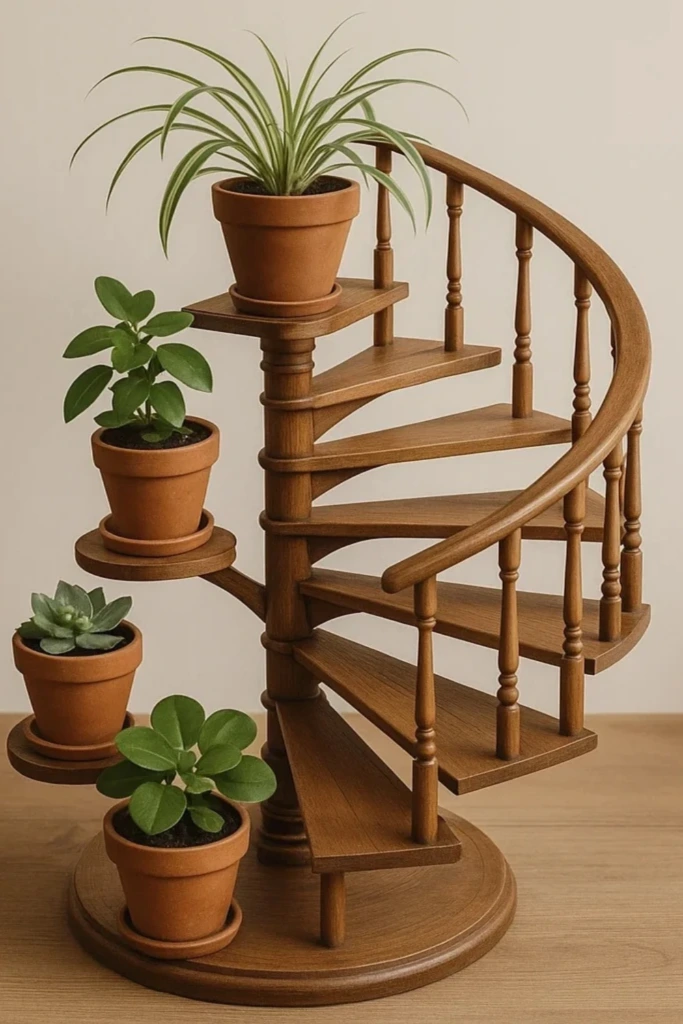
A miniature staircase-inspired plant stand creates a distinctive display for anyone who enjoys unusual DIY projects. Its stepped platforms allow several small pots to rise gradually around a central support.
You can construct the design from timber pieces, creating a stable base and carefully spaced steps. The exact shape can be simple or elaborate, depending on your woodworking experience.
Compact plants work best because large containers may hide the staircase effect. Try small succulents, miniature foliage plants, or other varieties that remain manageable as they grow.
Position the finished stand near a suitable light source and make sure its base is level. Because this design has several projecting platforms, secure every joint carefully to prevent wobbling.
13. Use Lightweight Metal Plant Stands
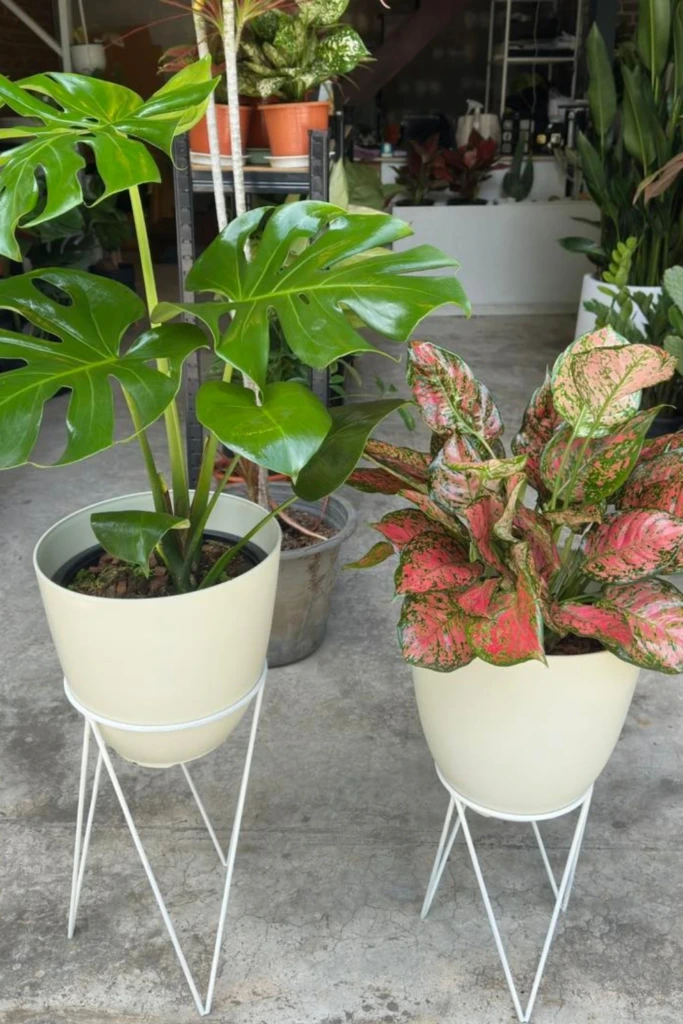
Lightweight metal stands are useful when you want to introduce height without making a room feel crowded. Their open construction allows more of the surrounding floor to remain visible.
A tripod-style frame is a straightforward option, with three legs supporting a small platform for a single pot. This shape can work well in entryways, on patios, or beside indoor furniture.
Although a slender appearance can be attractive, the frame still needs sufficient strength and a stable base. Choose dimensions that keep the center of gravity low enough to reduce the chance of tipping.
For outdoor use, select a finish designed to resist corrosion. Check the joints and protective coating periodically, especially if the stand is exposed to rain.
14. Repurpose a Small Wooden Table
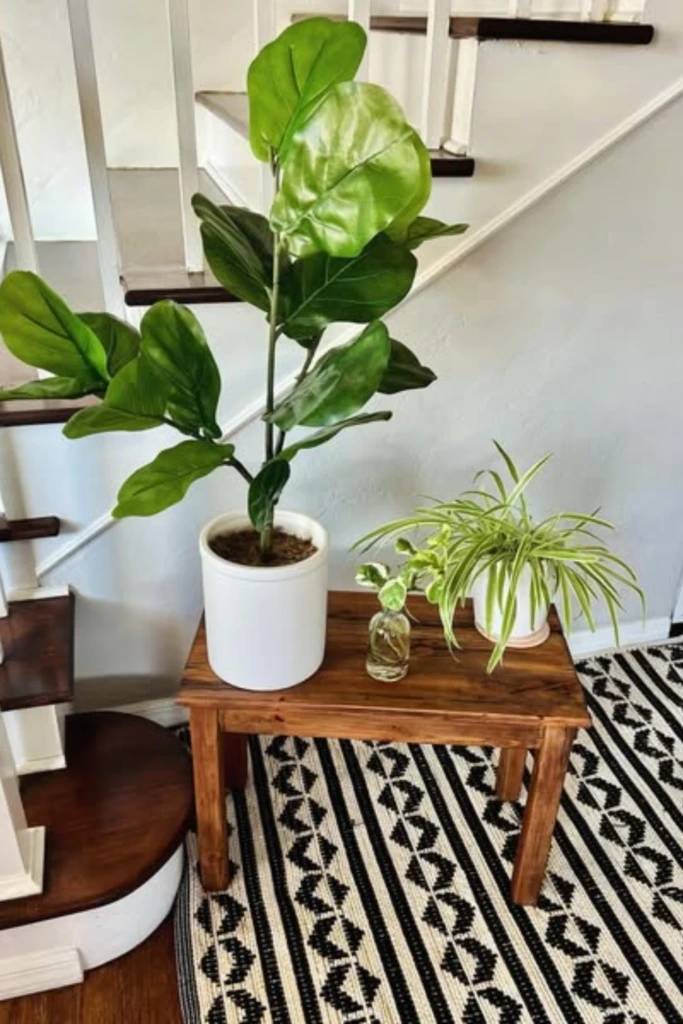
An old side table can become a plant stand with very little construction. Repurposing furniture is an economical way to create a useful display while giving an overlooked item a new purpose.
Start by checking that the table is structurally sound. Sand away loose paint or rough surfaces, repair minor damage, and apply a fresh finish if needed.
Arrange plants of different heights across the tabletop rather than lining up identical pots. A compact upright plant can balance a trailing variety, while decorative containers help tie the arrangement together.
Thrift-store furniture and unused household tables are excellent candidates for this project. If the table will remain outdoors, make sure its materials and finish are suitable for exposure to moisture and sunlight.
15. Build a Garden Potting Table
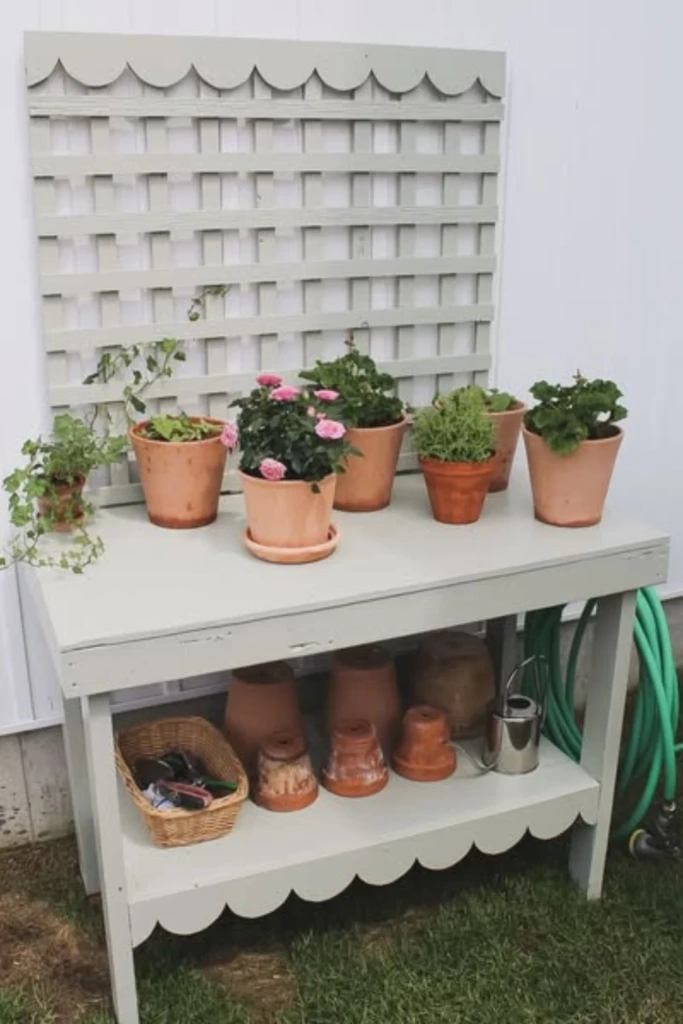
A potting table combines plant storage with a convenient workspace for everyday gardening tasks. It is especially useful if you frequently repot plants, prepare seedlings, or organize gardening supplies.
A practical design includes a broad worktop, a lower storage shelf, and optional hooks or a lattice panel for lightweight tools. Keep frequently used items within easy reach and reserve the strongest areas for heavier pots and containers.
When the table is not being used for gardening work, its upper surface can display finished plants or seasonal arrangements.
Choose materials that are easy to clean and appropriate for outdoor conditions. A stable frame and comfortable working height will make the table more useful over time.
16. Add a Tall Porch Plant Stand
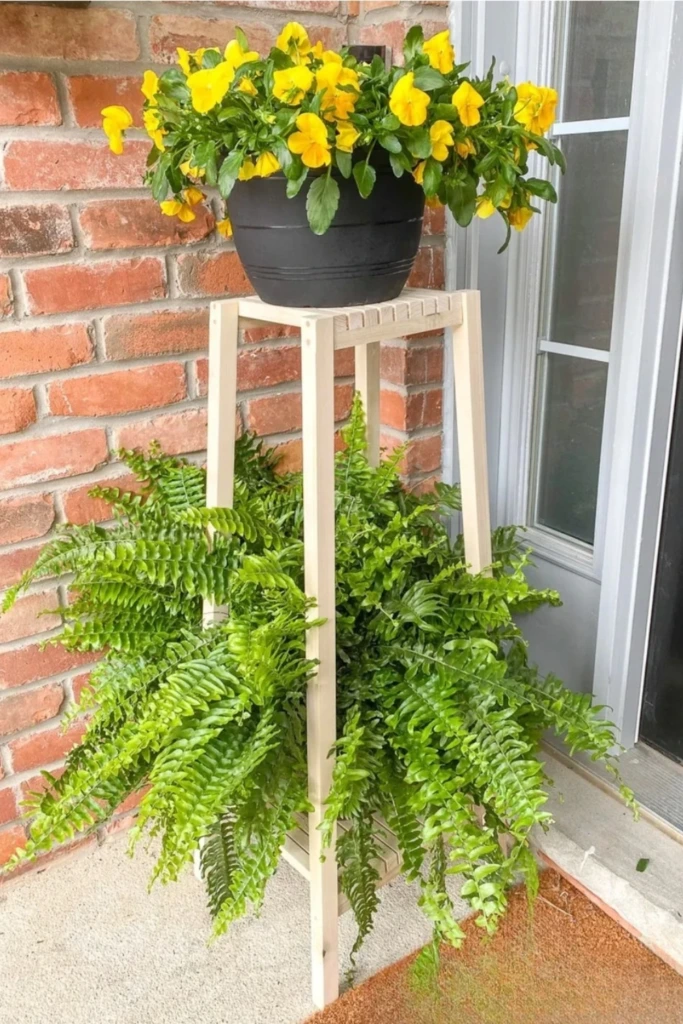
A tall plant stand adds another visual level to a porch or balcony. Raising a planter toward eye height can make an entrance feel more welcoming and help break up a display dominated by floor-level pots.
You can build one with four sturdy legs connected by cross supports and a slatted platform. Adjust the height and width to suit the available space and the size of the container.
The lower area can accommodate another pot, creating a layered arrangement without needing a separate stand. Make sure the upper platform is wide enough to support the planter securely.
For outdoor placement, use weather-resistant fasteners and a suitable protective finish. If the area is exposed to strong wind, choose a stable design and avoid placing a top-heavy pot where it could fall.
17. Turn Bottles Into Colorful Planters
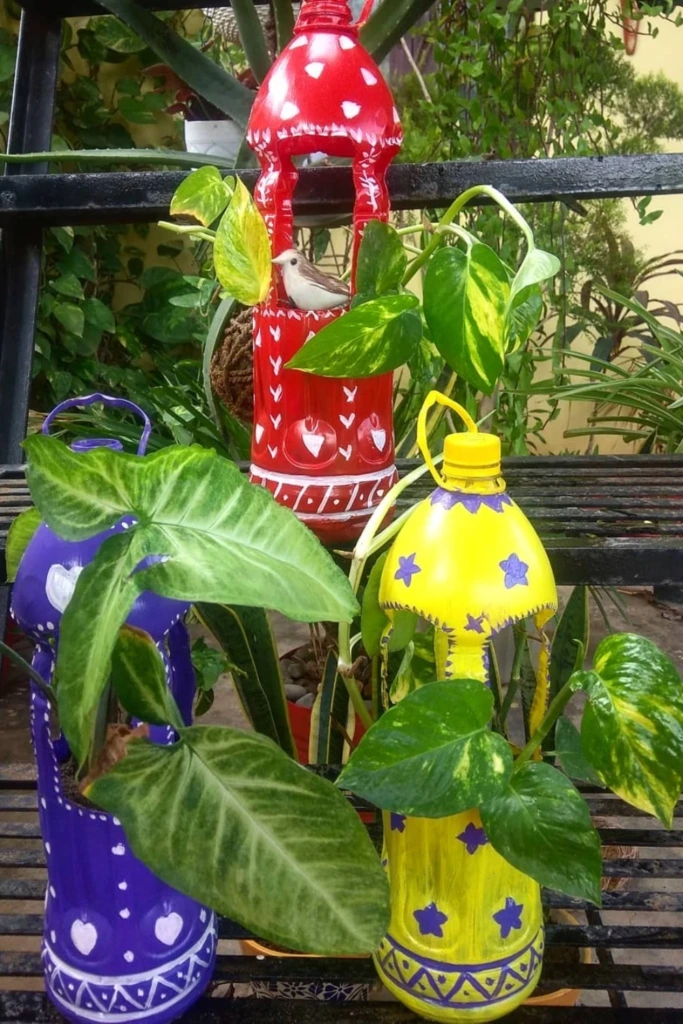
Recycled plastic bottles can become inexpensive mini planters for a cheerful balcony or garden display. Although they are not traditional plant stands, they can be arranged on an existing shelf or simple frame to create a colorful collection.
Clean the bottles thoroughly, cut them into suitable shapes, and decorate the outside with paint intended for the material. Add drainage openings appropriate for the plants you intend to grow.
Lightweight plants are usually the easiest choice for these containers. Herbs, small flowering varieties, and compact foliage plants can all work well when their growing requirements are met.
Smooth or safely cover cut edges before handling the finished planters. Grouping several bottles in coordinated colors creates a playful display while making use of materials that might otherwise be discarded.
18. Build a Simple Tiered Outdoor Stand
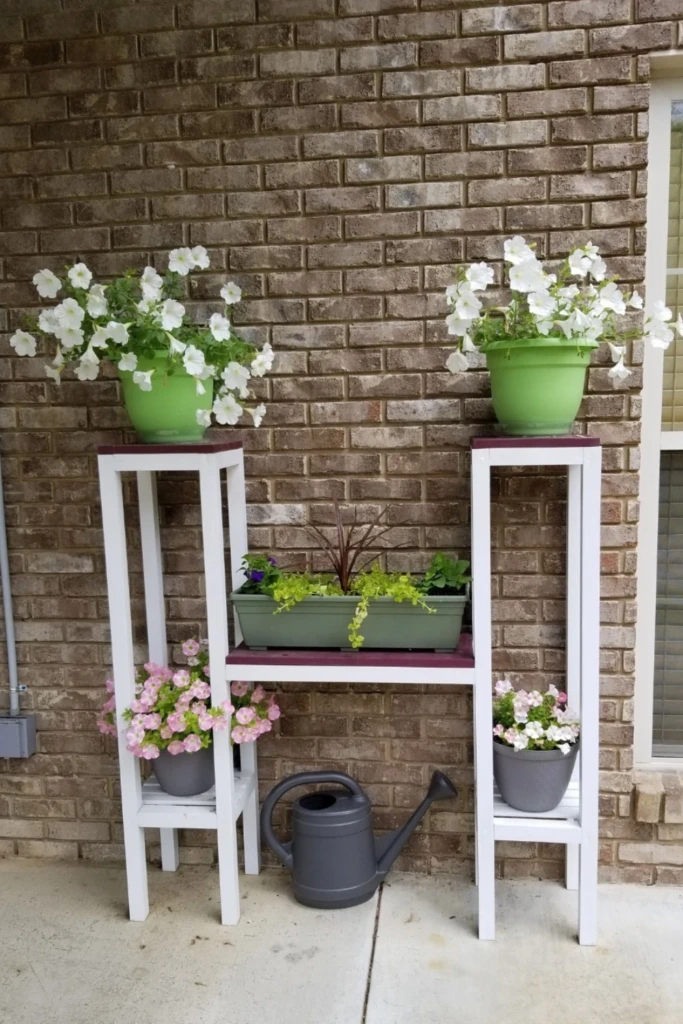
A multi-level wooden stand offers a practical compromise between a single-pot holder and a large garden station. Its vertical arrangement provides space for several containers without requiring a wide footprint.
Build a stable frame with two or more shelves, leaving enough clearance for each plant to grow. Place larger and heavier pots on the lower levels, where they are less likely to make the structure top-heavy.
Smaller containers, compact flowering plants, and trailing varieties can occupy the upper shelves. Position the stand against a porch or patio wall if that arrangement provides suitable light and does not obstruct access.
Paint or stain the wood to coordinate with your outdoor furniture. Use weather-resistant materials and inspect the joints regularly to keep the stand in good condition.
19. Make a Hanging Shelf Plant Display
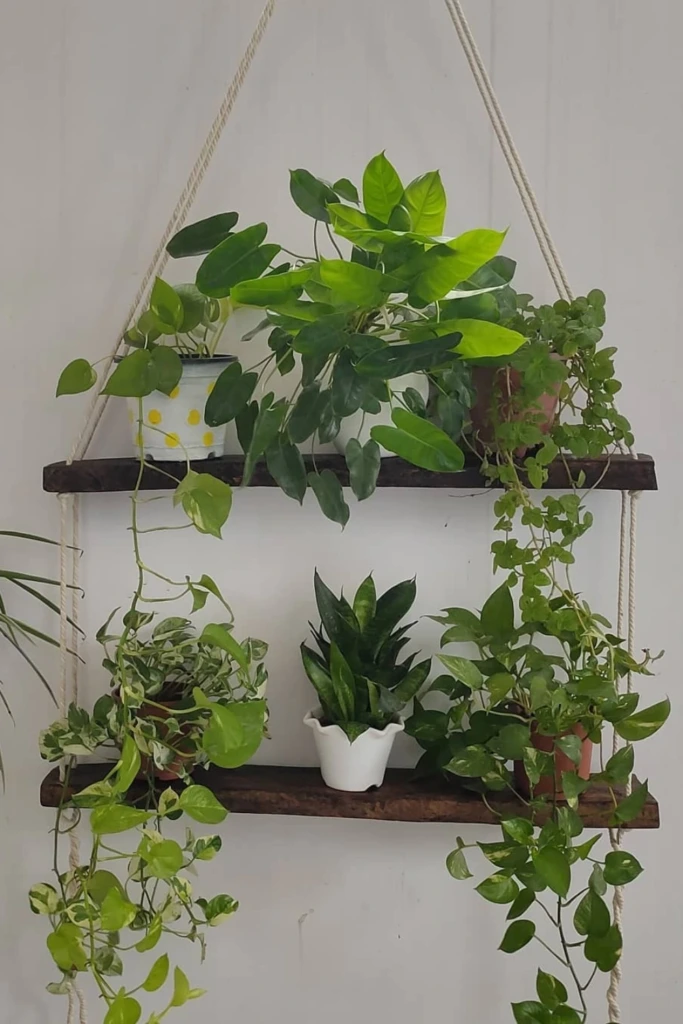
Suspended wooden shelves offer another way to display plants without using valuable floor space. A pair of boards supported by strong rope can create a simple arrangement for small containers and trailing foliage.
Choose shelf boards that are thick enough to carry the expected load, then attach the supporting ropes securely. Make sure the shelves hang level and remain stable when pots are added or removed.
Leave adequate space between levels so plants can grow without pressing against the shelf above. Position the pots to distribute weight evenly and avoid placing heavy containers near the edges.
The hanging points are especially important. Use hardware suited to the ceiling or supporting structure, and account for the total weight of the shelves, containers, wet soil, and plants.
20. Build a Simple Hanging Plant Frame
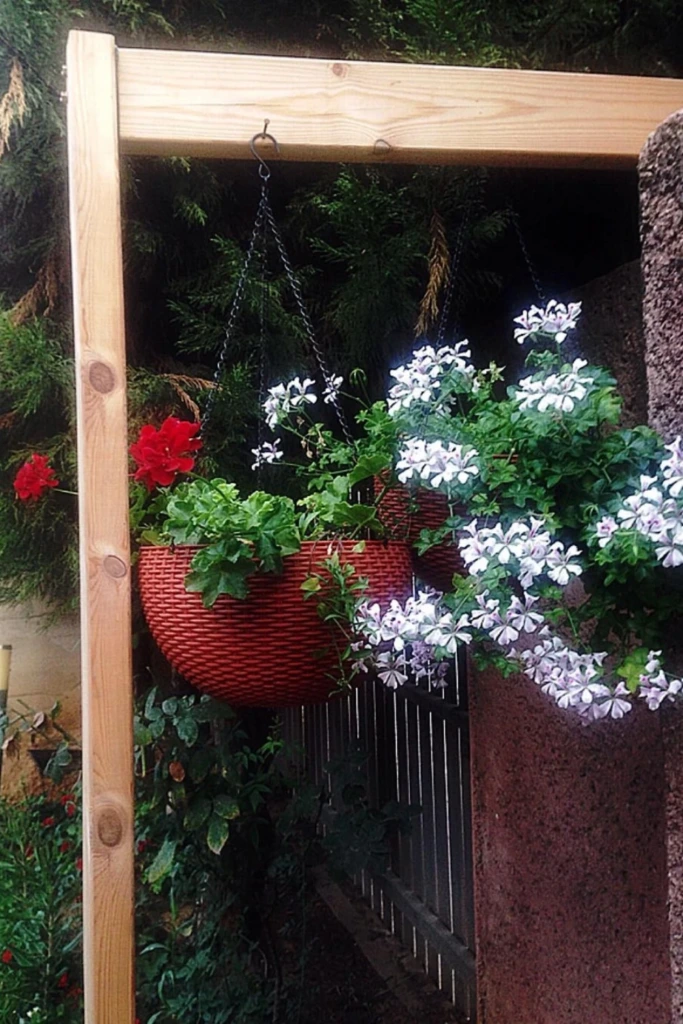
A freestanding hanging frame is a useful solution when your patio or garden lacks a suitable beam or tree branch for hanging baskets.
Construct a sturdy upright frame with a horizontal crossbar that can accommodate several hanging containers. A simple U-shaped design keeps the arrangement visually clean while giving the plants their own dedicated display area.
Space the hooks far enough apart that the baskets can hang freely without striking one another. Choose hooks and structural supports rated for the fully loaded baskets, including the additional weight after watering.
You can grow flowering plants for seasonal color or trailing foliage for a softer appearance. Place the frame where the plants receive appropriate light and where watering will not create a slippery walking surface.
21. Make a Vertical Crate Plant Wall
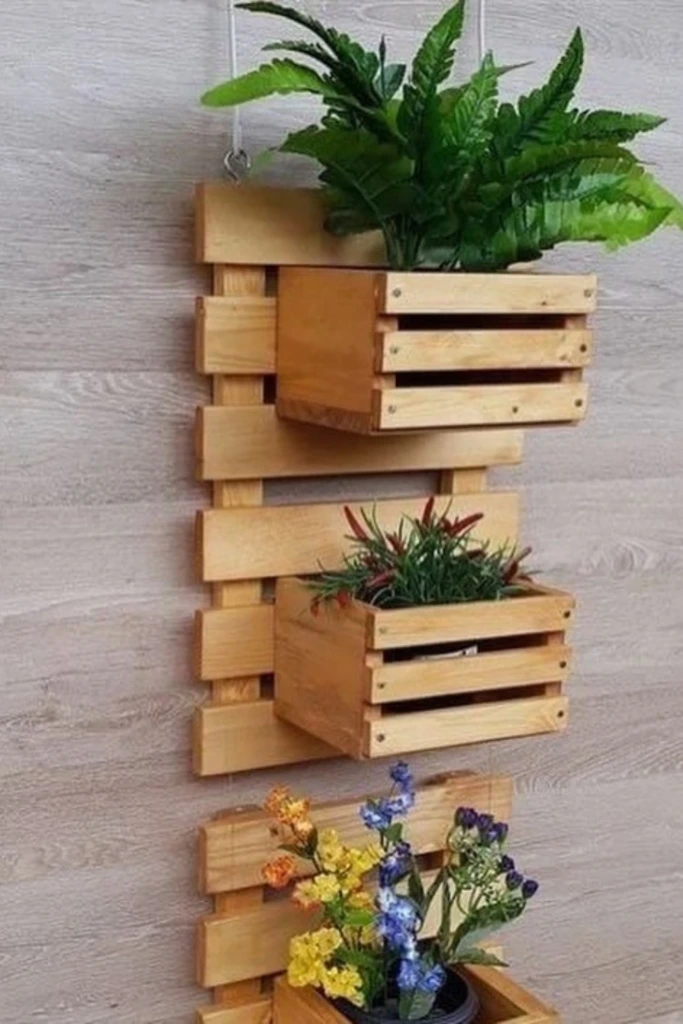
A vertical crate display turns an empty wall into a growing area. Small wooden boxes attached to a secure frame provide individual spaces for different plants while making efficient use of limited floor space.
Arrange the crates at staggered heights to create a more dynamic appearance. Smaller containers are often easier to manage in the upper sections, while heavier pots can sit closer to the base.
This design can work on a balcony, patio, or suitable indoor wall. Before filling the boxes, plan how excess water will drain and protect the surrounding surface against moisture.
Use appropriate fixings for the wall or supporting frame, and avoid overloading individual crates. With thoughtful plant selection, a vertical arrangement can combine practical organization with an attractive living feature.
22. Turn a Pallet Into a Colorful Plant Stand
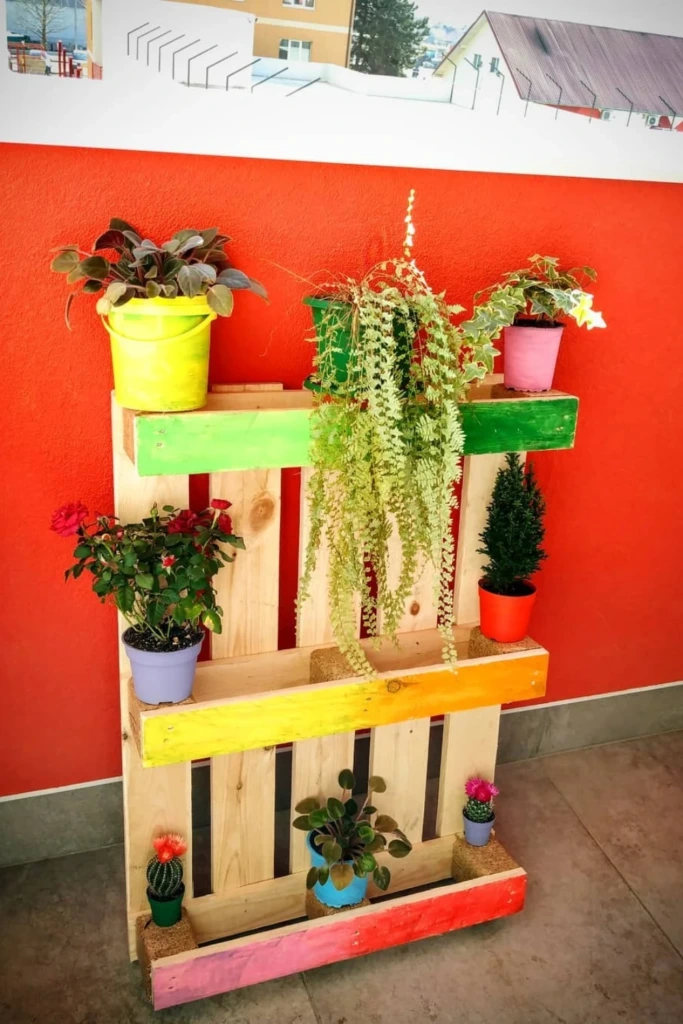
An old wooden pallet can become a vertical plant display with a little preparation. Its existing slats provide a framework for positioning small pots, attaching planter holders, or creating narrow planting spaces.
Begin by inspecting the pallet for damage, protruding nails, and signs of contamination. Choose a pallet that is suitable for reuse, then sand rough areas and apply an appropriate finish.
Secure the pallet upright or mount it to a properly supported structure before adding plants. Small containers can fit between the slats, while trailing foliage softens the straight lines of the wood.
You can paint the entire pallet one color for a coordinated appearance or use several shades for a more playful design. If it will remain outdoors, protect the timber with a suitable exterior finish and allow it to dry fully before introducing plants.
23. How to Choose the Right DIY Plant Stand
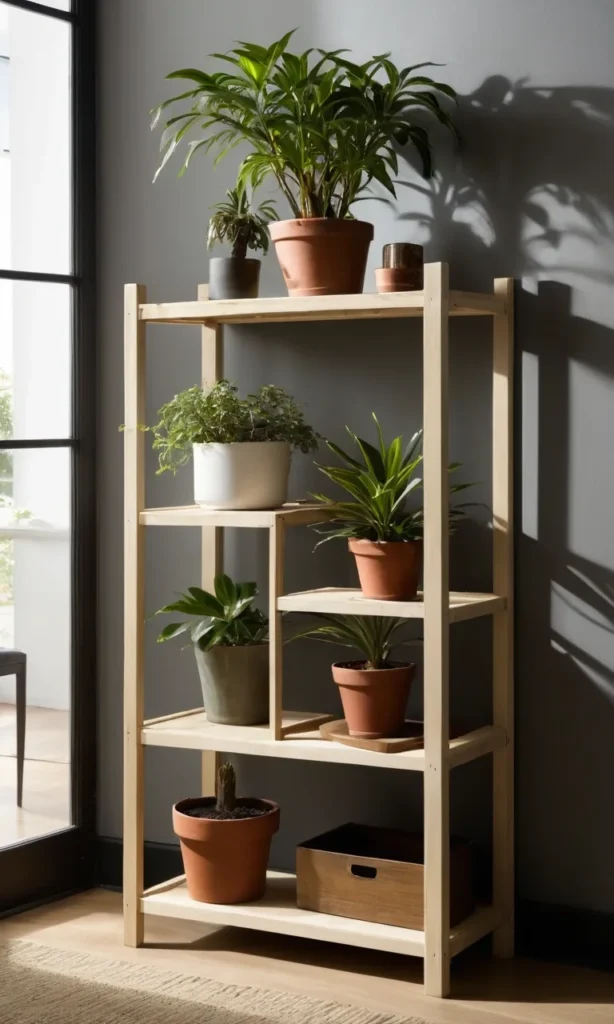
The best plant stand is one that suits your available space, the size of your collection, and the growing needs of your plants.
If floor space is limited, consider hanging planters, suspended shelves, geometric wall displays, or a compact tiered stand. These designs make use of vertical areas while keeping walkways relatively clear.
For a single statement plant, a simple wooden holder, wicker basket stand, or slim metal frame may be all you need. A long bench or garden station makes more sense if you have many containers to organize, while a potting table is particularly useful for people who regularly work with soil and seedlings.
Outdoor displays require extra attention to weather resistance and stability. Choose suitable materials, protect exposed surfaces, and ensure that the stand remains secure when pots become wet and heavy.
Think about plant growth before deciding on shelf spacing or container placement. Different varieties need different amounts of light and room, so a beautiful arrangement should never come at the expense of their growing conditions.
You do not need expensive materials or advanced woodworking skills to create an attractive display. Start with a design that solves a practical problem, adapt the dimensions to your home, and use finishes that complement your surroundings. With the right approach, a DIY plant stand can make your greenery easier to care for while adding character to your space.