22 DIY Solar Garden Lights Ideas for 2026
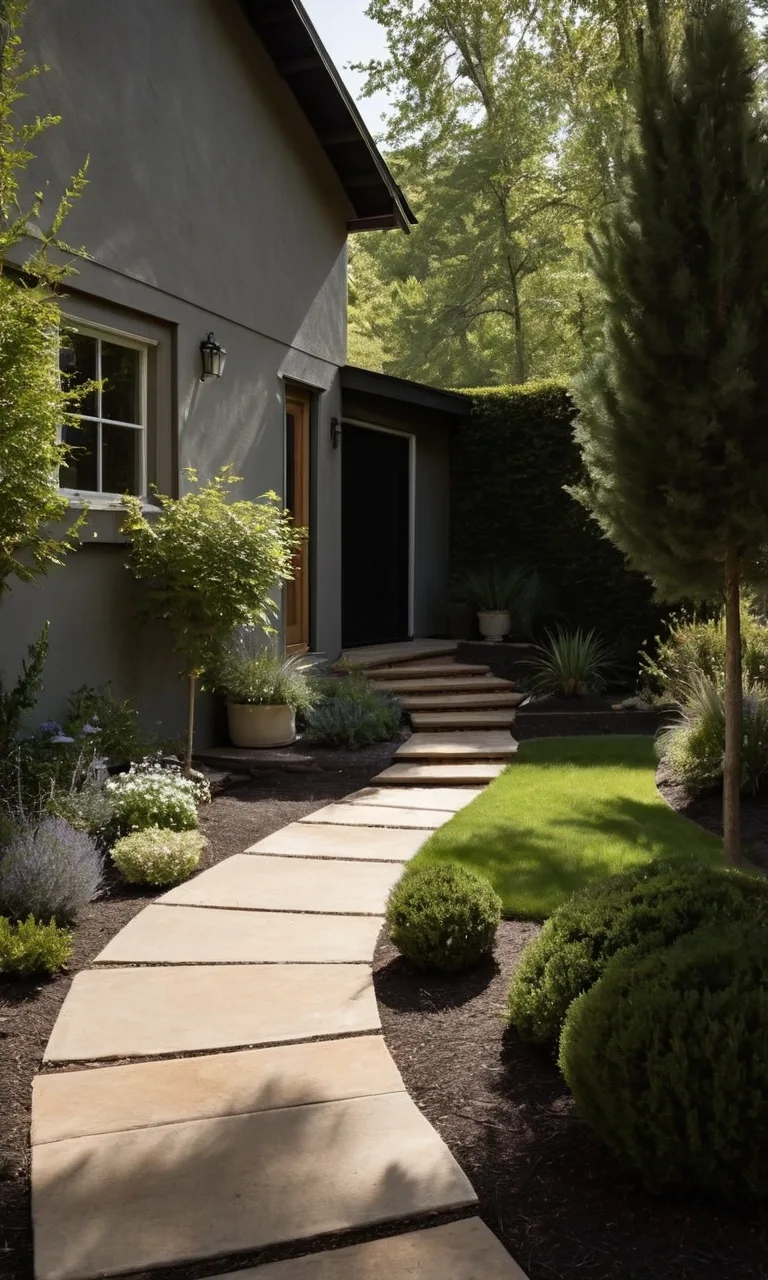
Solar garden lighting is a simple way to make an outdoor space more inviting without adding much to your electricity bill. With thoughtful placement and a few creative materials, you can illuminate walkways, highlight plants, and create a relaxing atmosphere for evening gatherings.
The best part is that you don't need to build every light from scratch. You can repurpose glass jars, old lanterns, planters, and other outdoor decorations with solar-powered lighting components. Before starting, consider how much brightness you need, where sunlight reaches your garden, and whether the fixtures can withstand rain and changing temperatures.
These ideas will help you plan a garden lighting arrangement that balances appearance, practicality, and energy efficiency.
How to make solar powered garden lights?
Making solar-powered garden lights starts with understanding how the components work together. A solar panel converts sunlight into electricity, a rechargeable battery stores that energy, and an LED produces light after dark. A suitable charging circuit and light sensor help the system operate automatically.
For a straightforward project, purchase a small solar garden light and adapt its appearance using a decorative enclosure, planter, jar, or outdoor-safe lantern. This approach is often easier than assembling an electrical system from individual components.
If you prefer to build your own setup, choose a solar panel and rechargeable battery that are compatible with the lighting circuit. The panel must receive sufficient daylight, while the battery needs enough capacity to power the LEDs throughout the evening. Keep the electronics protected from moisture and use components designed for outdoor conditions.
A few practical considerations can make a significant difference:
Place solar panels where they receive several hours of direct sunlight.
Clean the panel regularly to remove dust, leaves, and other obstructions.
Use rechargeable batteries compatible with the manufacturer's charging specifications.
Choose warm-white LEDs for a comfortable atmosphere or brighter neutral-white LEDs where visibility matters.
Test the lights before permanently installing them, particularly during cloudy weather.
Good planning helps prevent common problems such as dim illumination, short operating times, and batteries that fail to charge properly.
1. Recessed Path Lighting
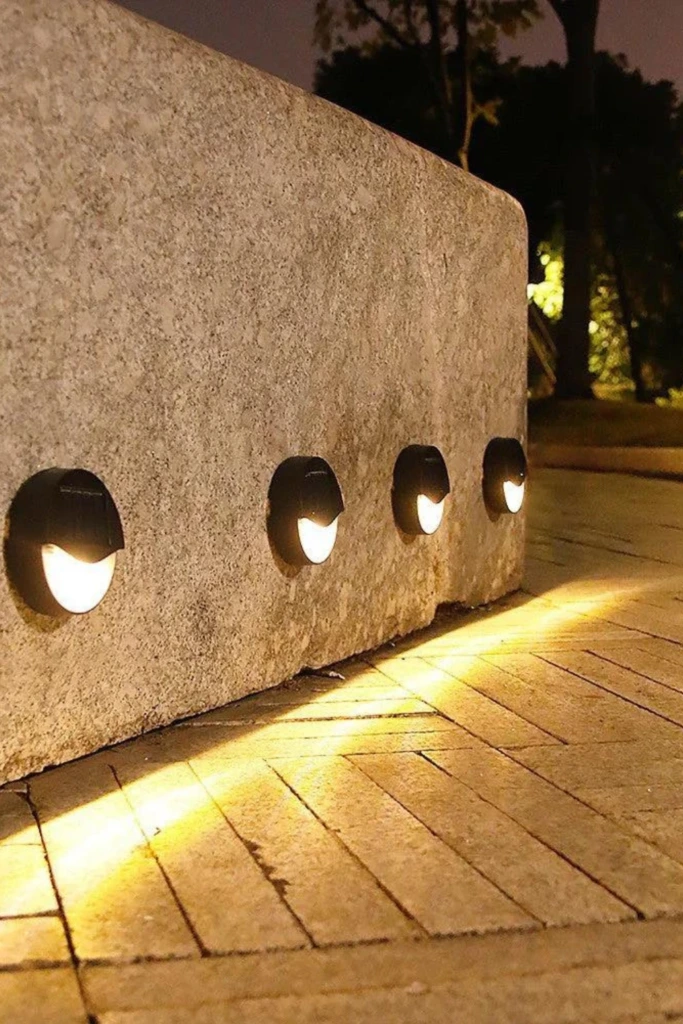
Recessed solar lighting offers a neat solution for garden paths, raised beds, and low retaining walls. Because the fixtures sit flush with the surrounding surface, they provide illumination without making the landscape look crowded.
You can install compact solar fixtures in suitable wall recesses or choose purpose-built recessed lights for outdoor use. Position the beam toward the walking surface rather than directly into people's eyes.
This style works particularly well in contemporary gardens where clean lines and understated details are important. Check that the selected fixtures are suitable for their installation position and that their solar panels can still receive adequate sunlight.
2. Fence Wall Wash
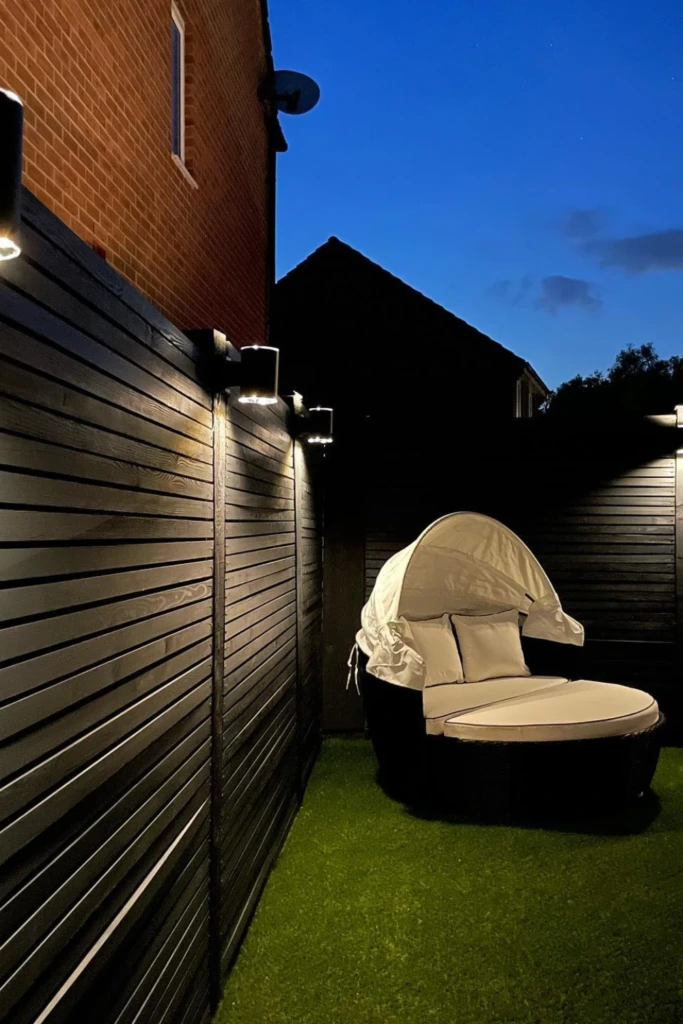
Turn an ordinary garden fence into an attractive nighttime feature with solar wall lights. Instead of creating isolated bright spots, arrange fixtures at consistent intervals to spread light across the fence and surrounding planting.
Wall-washing lighting is especially effective behind outdoor seating areas, where it creates a gentle background glow without requiring powerful overhead fixtures.
Choose weather-resistant lights with diffused covers for softer illumination. Before attaching them, check the fence's construction and make sure each fixture receives enough daylight to charge reliably.
3. Solar String Canop
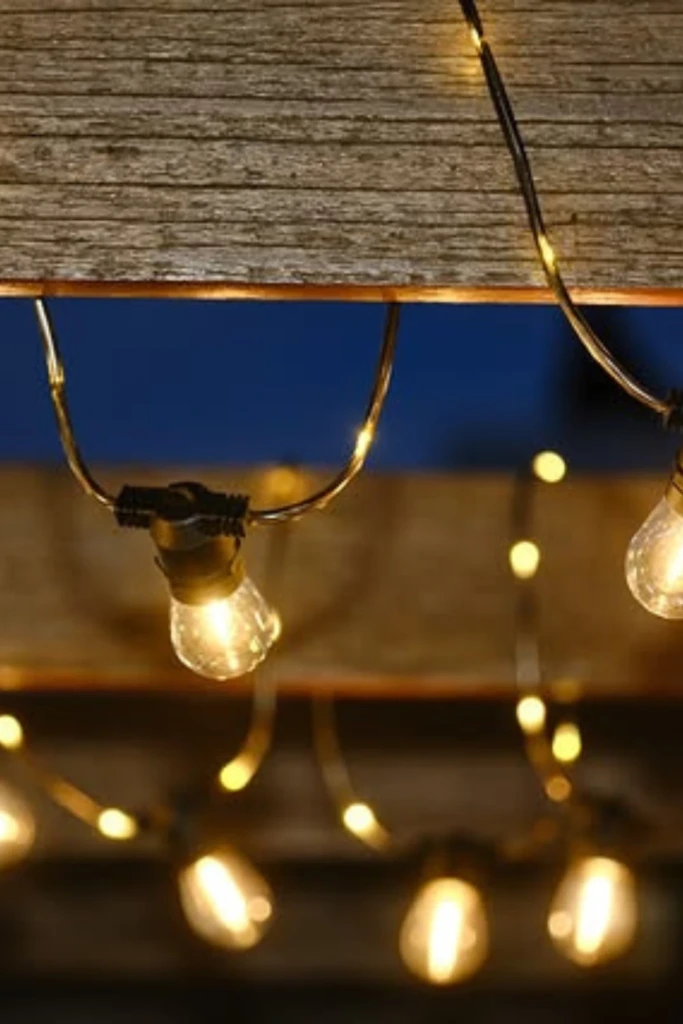
A canopy of solar string lights can make a patio feel like an outdoor living room. Hang the lights above a dining table, across a pergola, or around a sheltered seating area to create a welcoming setting after sunset.
Warm-white bulbs are a popular choice because they produce a relaxed atmosphere without making the space feel overly bright. For a layered appearance, use several gently draped strands rather than pulling every line tightly.
Secure the strings to suitable supports, leave room for movement in windy conditions, and position the solar panel where it can collect sunlight. Outdoor-rated lights are essential for installations exposed to rain.
4. Solar Globe Accents
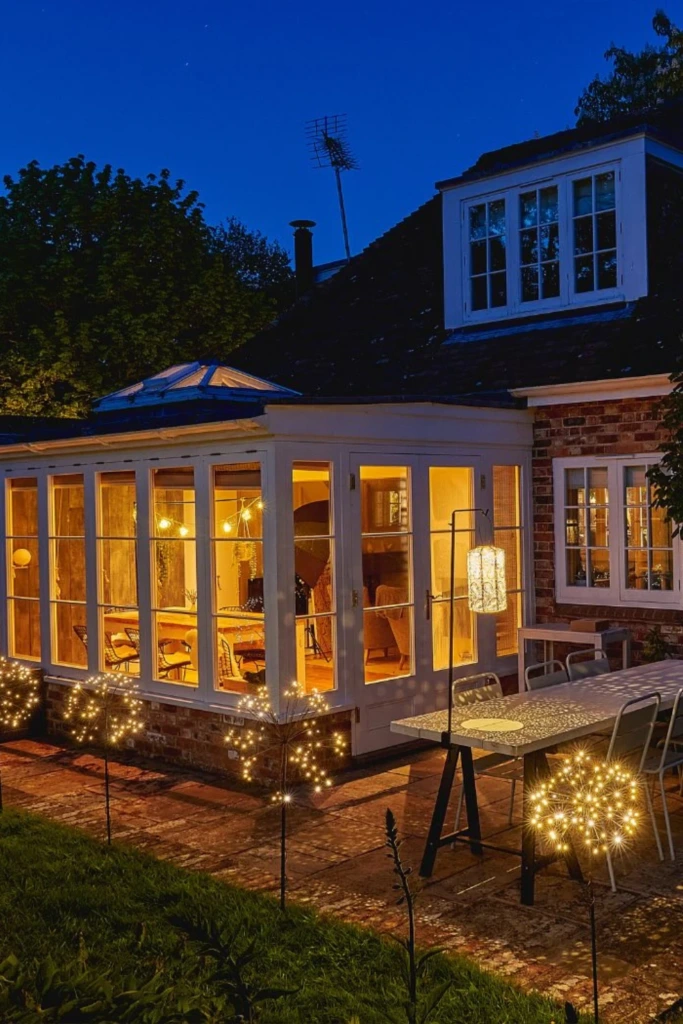
Globe-shaped solar lights combine decorative appeal with practical outdoor illumination. Their rounded forms work beautifully beside patios, around garden borders, and near outdoor dining areas.
Arrange several globes along the edge of a seating space or mix different sizes for a more interesting display. Frosted or diffused finishes can soften the light and help create an even glow.
For the best result, leave enough space between each globe so the arrangement looks intentional. Choose models with stable bases and weather-resistant construction if they will remain outdoors year-round.
5. Layered Patio Lighting

Combining several lighting styles can make a patio more useful and visually appealing. Instead of relying on one bright source, assign each type of light a specific purpose.
For example, string lights can provide overhead ambience, small stake lights can define walking routes, and decorative lanterns can illuminate the seating area. A few accent lights near plants can complete the arrangement.
Keep the brightest fixtures near places where people need clear visibility, while using softer lights for decoration. This layered approach makes the space feel balanced and avoids unnecessary glare.
6. Firefly Garden Lights
Firefly-style solar lights imitate the delicate appearance of tiny lights floating among plants. Their flexible stems or slender stakes make them especially attractive in flower beds, ornamental grasses, and cottage-style gardens.
Place groups of lights at different heights to create a natural-looking pattern. Warm LEDs generally complement flowers and foliage without overwhelming their colors.
For an organic effect, avoid arranging every fixture in a perfectly straight line. Scatter them throughout the planting area while keeping the stakes accessible for maintenance.
If you want this appearance without assembling individual components, ready-made solar firefly lights are another convenient option. Look for models with replaceable batteries or accessible charging components to simplify upkeep.
7. Hanging Solar Bulbs
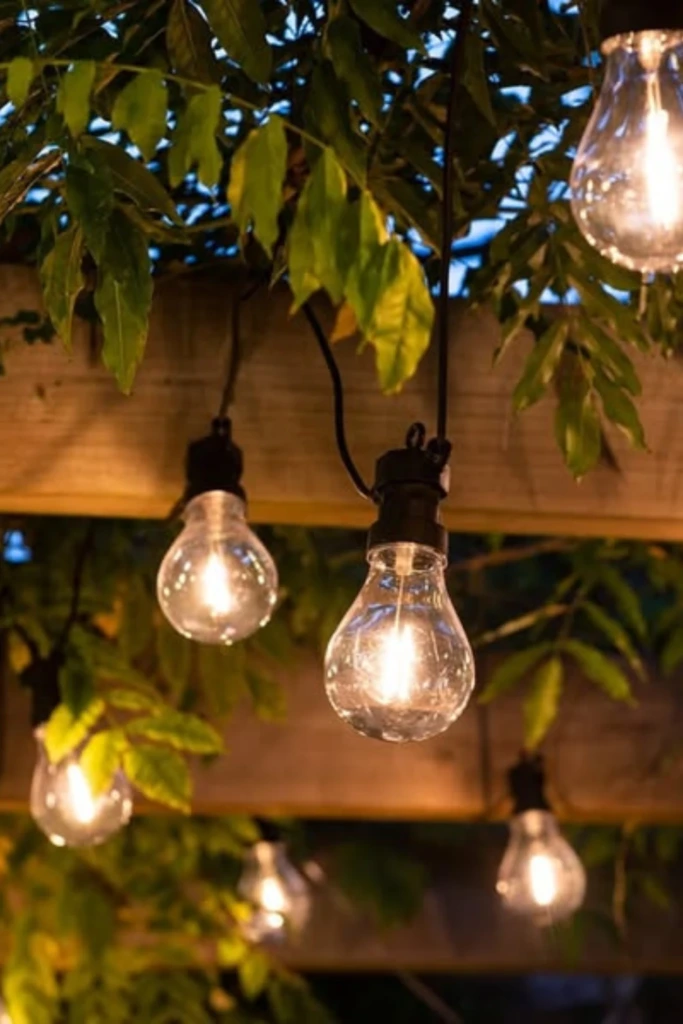
Individual hanging solar bulbs provide decorative lighting beneath pergolas, along covered patios, and around sturdy tree-supported structures where installation is appropriate.
Unlike densely packed strings, spaced bulbs create distinct points of light and allow more of the surrounding garden to remain visible. This works well in rustic, minimalist, and contemporary outdoor settings.
Hang the bulbs at a consistent functional height, taking care to leave sufficient headroom around walkways. Use suitable mounting hardware and avoid fastening fixtures to weak branches or unstable structures.
A mix of hanging bulbs and low-level garden lights can make the area more comfortable after dark.
8. Café String Lighting
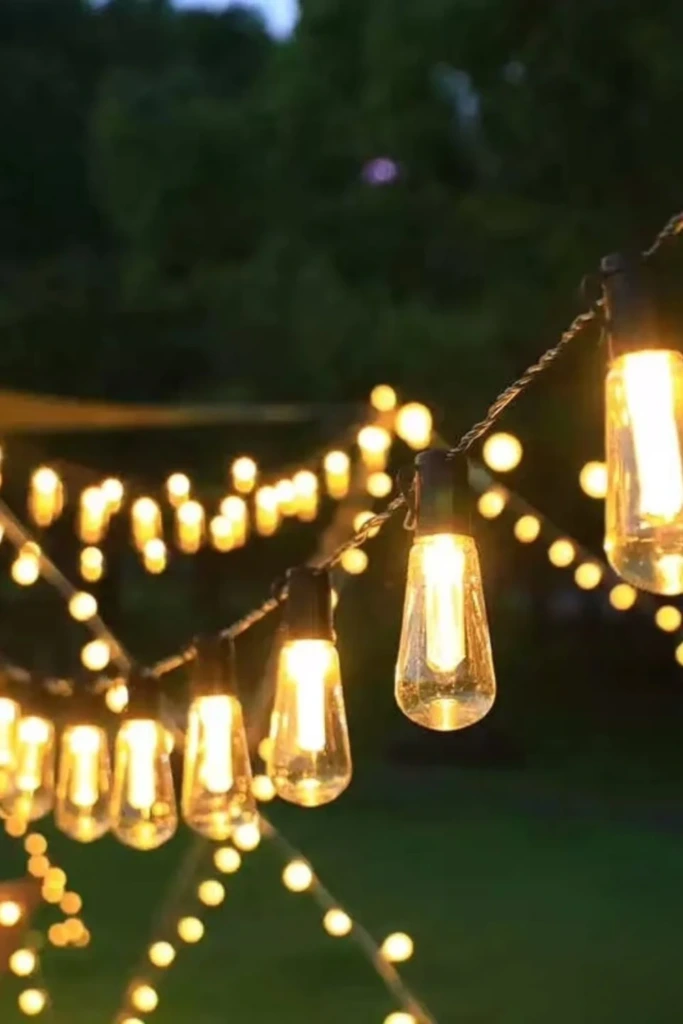
Café-style string lighting brings a festive, restaurant-inspired atmosphere to a backyard. The exposed bulbs create a decorative ceiling of light above dining tables, outdoor kitchens, and entertaining areas.
Run the strings between suitable posts, walls, or pergola beams, allowing a gentle curve if the product design permits it. The arrangement can define an outdoor dining zone without adding permanent walls or bulky structures.
For a polished look, plan the attachment points before hanging the lights and use appropriate tension supports when required. Choose outdoor-rated products and avoid relying on the electrical cable itself to bear excessive weight.
9. Solar Lantern Clusters
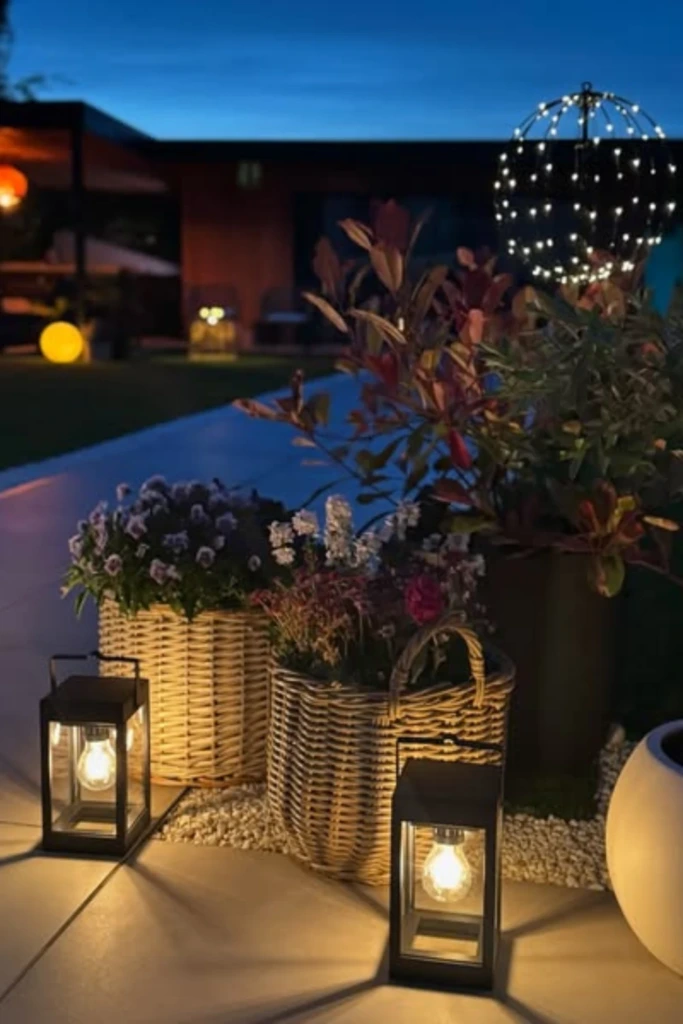
Grouping solar lanterns together creates a decorative focal point without requiring complicated installation. Place a few lanterns beside an outdoor sofa, around a large planter, or near the entrance to a patio.
Mixing heights and lantern shapes adds depth, while similar finishes help the collection feel coordinated. Metal frames, woven-look housings, and frosted panels can all work depending on your garden's style.
Keep lanterns on stable surfaces and choose outdoor-rated designs that can handle exposure to moisture. If the lanterns are purely decorative, softer LEDs may be sufficient; entrances and frequently used paths may need brighter dedicated lights.
10. Glowing Floor Orbs
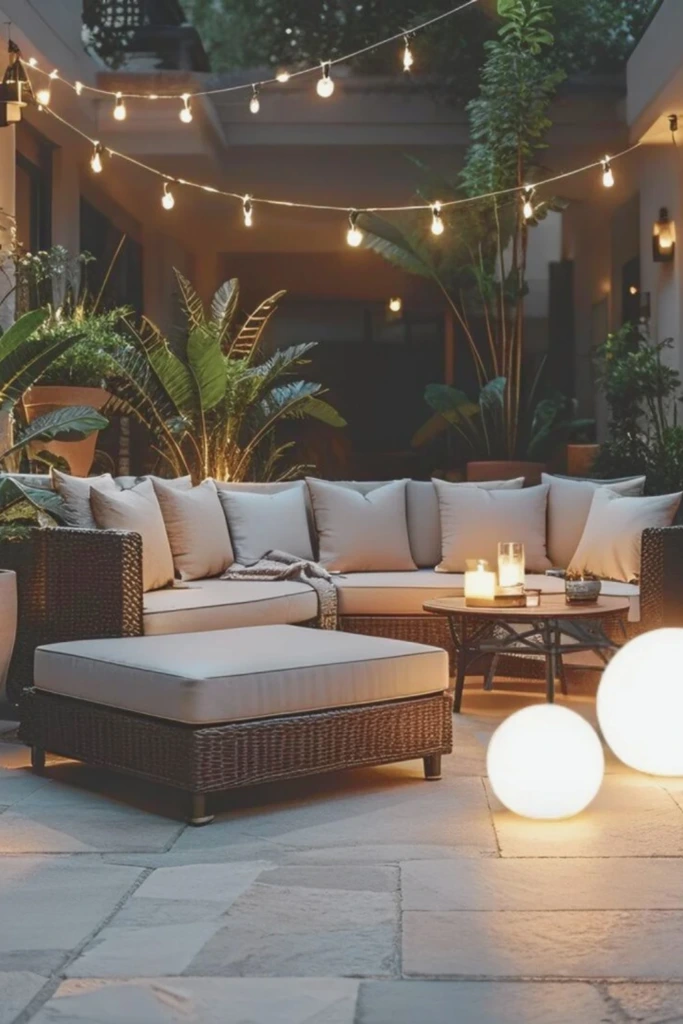
Illuminated garden orbs bring a sculptural element to patios and outdoor seating areas. Their smooth shapes look attractive during the day and become glowing decorative features at night.
Place one or two beside lounge furniture or group several spheres near a garden feature. Different diameters can create a more dynamic arrangement, particularly in open spaces with simple landscaping.
Select outdoor-rated globes with stable bases and diffused lighting. Avoid placing them where people are likely to trip over them, and ensure their solar panels are not permanently shaded by furniture or nearby plants.
11. Poolside Lantern Glow
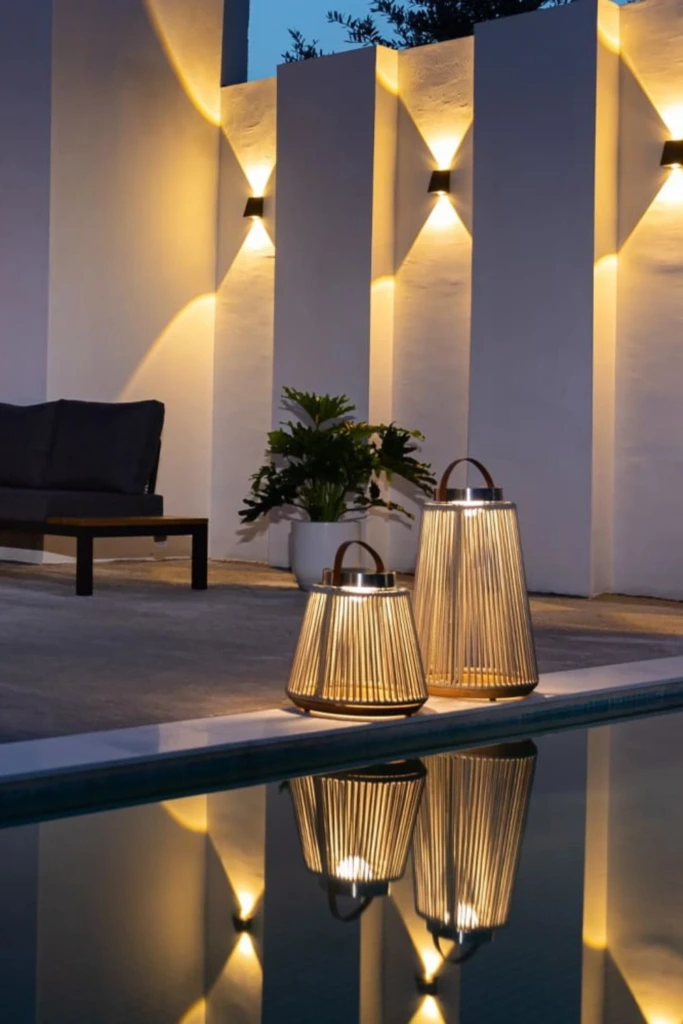
Solar lanterns can create an elegant atmosphere around a swimming pool or contemporary outdoor lounge. Low-level illumination adds visual interest while allowing reflections from the water to become part of the design.
Choose enclosed fixtures with appropriate outdoor weather protection and place them in stable locations away from pool edges and busy walking routes. Lighting should improve visibility rather than create distracting reflections or glare.
Poolside electrical safety deserves particular attention. Use only products explicitly suitable for their intended location, follow the manufacturer's distance and installation requirements, and never place ordinary garden lights in the water.
12. Backyard String Glow
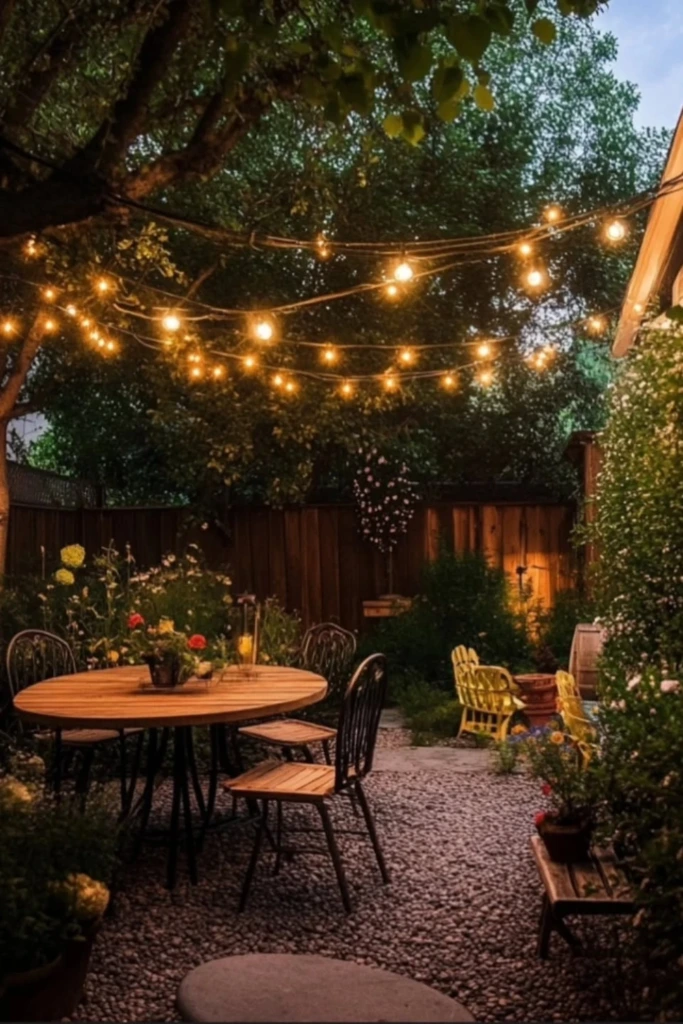
String lights can make a backyard feel intimate by creating a warm canopy above a dining or conversation area. They are particularly useful when you want to distinguish an outdoor gathering space from the rest of the garden.
Attach the strings between secure mounting points and use a gentle curve to avoid a rigid, overly formal appearance. If the area is large, divide it into smaller sections instead of running one excessively long string.
Check the product's supported string length and battery performance before installation. A conveniently positioned solar panel and a timer, if provided, can also help manage charging and operating time.
13. Pergola Path Lighting
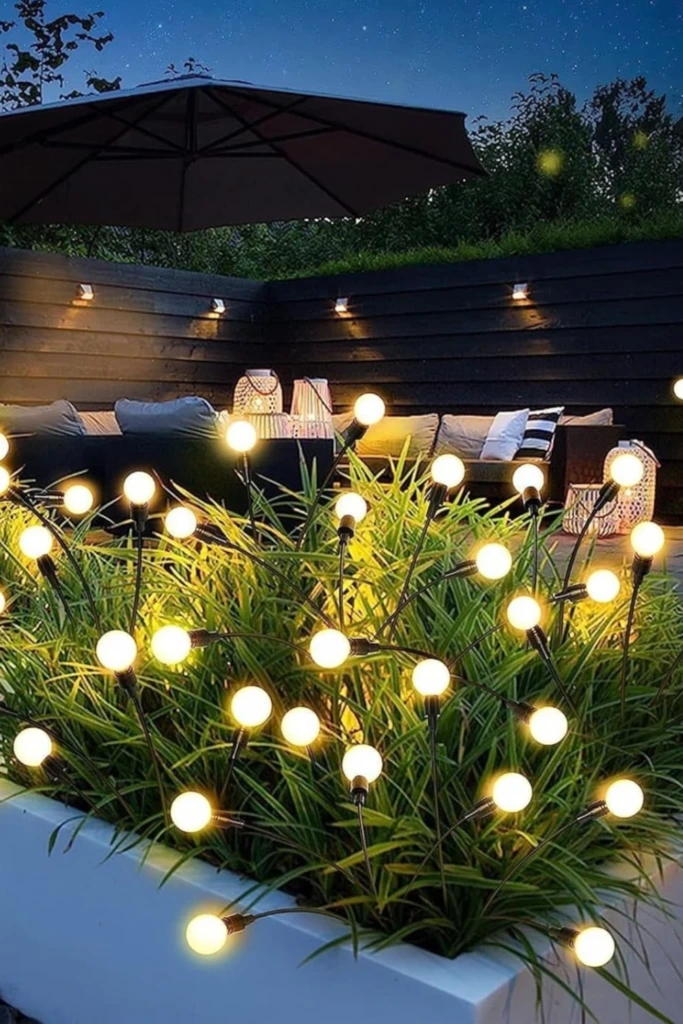
Pairing pergola lighting with illuminated walkways creates a clear visual connection between an outdoor seating area and the rest of the garden.
Use hanging or mounted fixtures to brighten the pergola, then position small solar stakes along the adjacent path. The overhead lights provide ambience, while the lower fixtures help people navigate the space.
Maintain a clear route by placing stakes outside the main walking line. Make sure the solar panels receive sufficient sunlight and avoid overly bright fixtures that could compete with the pergola's softer lighting.
14. Pathway Globe Lights
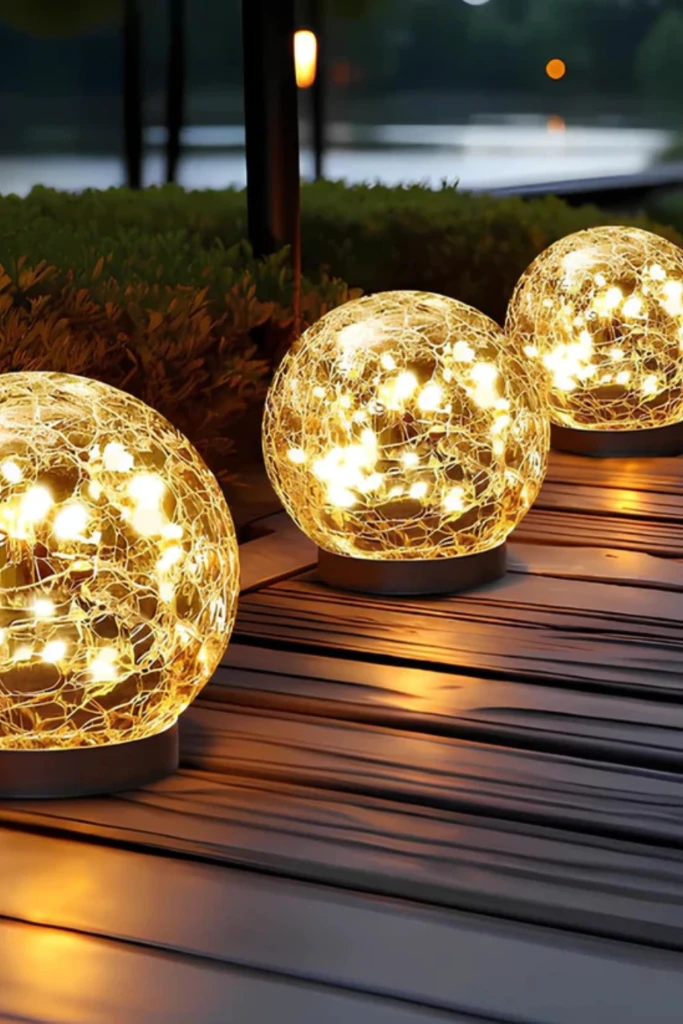
Globe-shaped pathway lights are an attractive alternative to conventional stake lamps. Their rounded silhouettes add a decorative element while marking the route through a garden or along a deck.
Space the globes evenly along the path to establish a consistent rhythm. For curved walkways, follow the shape of the route rather than arranging every fixture in a straight line.
Choose a brightness level that makes the path easy to recognize without flooding the surrounding plants with light. Check the height and stability of each fixture, particularly in gardens where children or pets regularly play.
15. Solar Step Markers
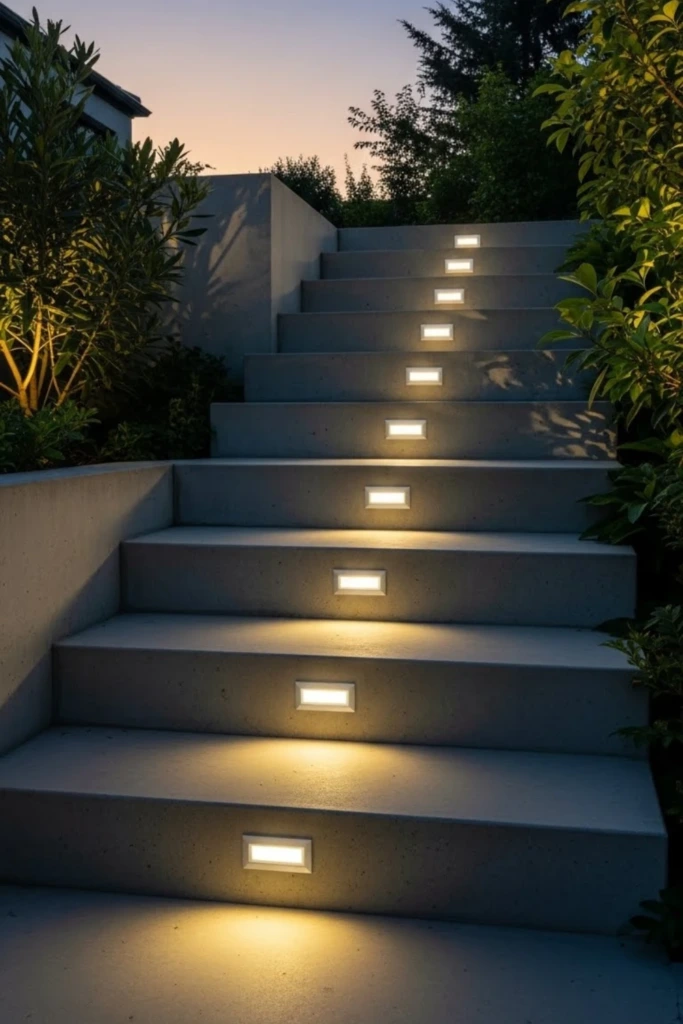
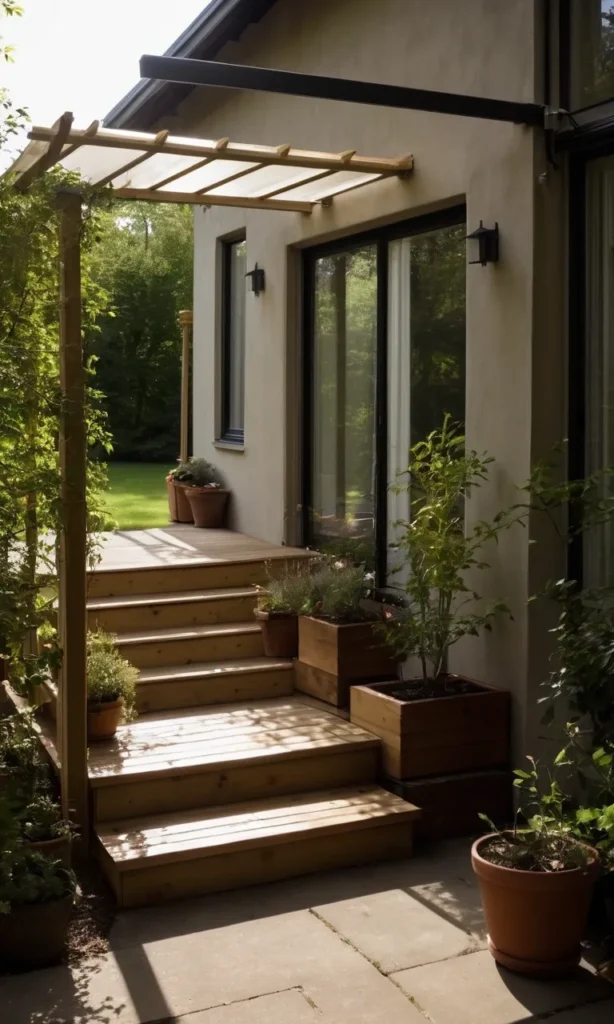
Solar step markers can improve visibility around outdoor stairs, raised patios, and changes in garden elevation. Their compact design allows them to blend into the architecture instead of becoming prominent decorative objects.
Install suitable fixtures along the sides of steps or on risers where the product's mounting instructions allow. Aim the light downward so each tread is easier to distinguish.
Consistent placement is more useful than excessive brightness. For stairs used frequently at night, select dependable fixtures and consider additional lighting where shadows could conceal the edges of a step.
16. Planter Edge Lighting
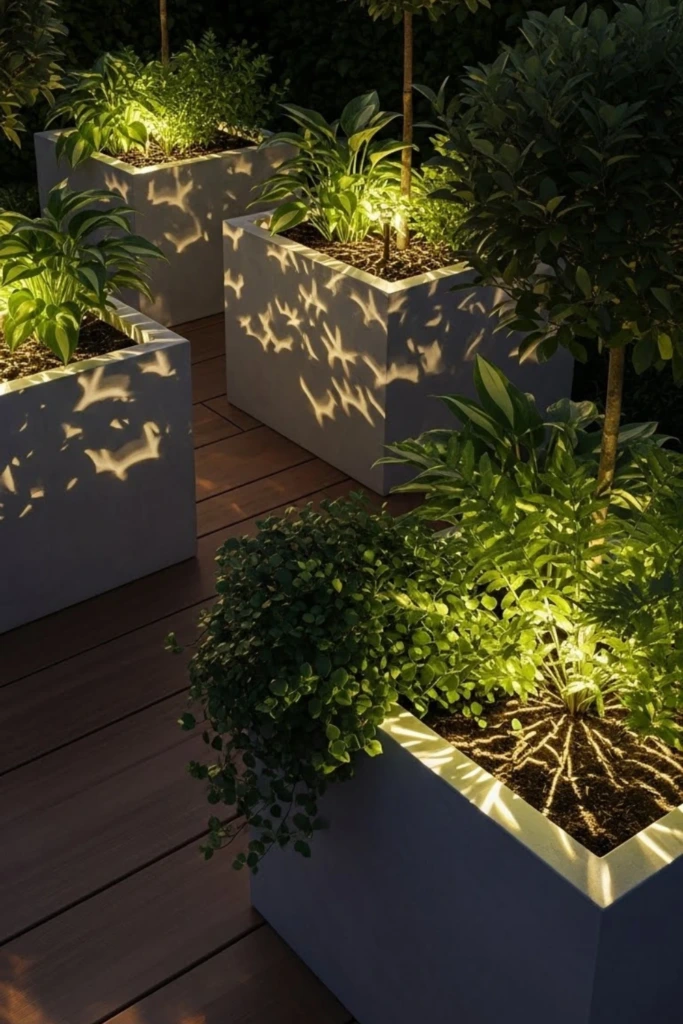
Planter lighting is a creative way to highlight container gardens without adding visible lamp posts. Small solar fixtures or suitable low-voltage LED strips can illuminate the foliage and surrounding surfaces.
For a subtle effect, position the lighting beneath a planter rim or along an exterior edge where the light can reflect off the container and nearby plants. This technique works especially well on balconies, compact patios, and rooftop gardens.
Use only lighting products rated for outdoor use and follow their installation instructions. Keep batteries and electronic connections protected from moisture, and avoid obstructing drainage holes or creating conditions that keep plant roots excessively wet.
17. Solar Bollard Lines
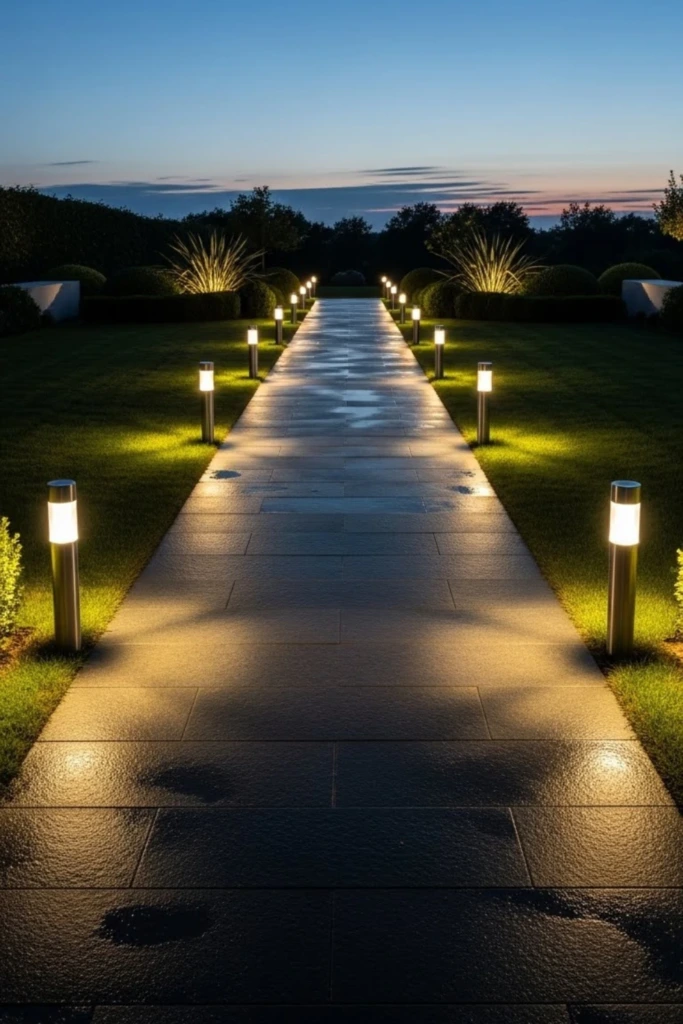
Short solar bollard lights give garden paths a structured, architectural appearance. Their upright shapes make them suitable for lawns, driveways, walkways, and the boundaries of outdoor seating areas.
Install the fixtures in a consistent pattern so the illuminated route looks organized. The distance between lights should reflect their beam width, brightness, and the amount of guidance needed along the path.
Choose durable housings that resist weather and corrosion. If the ground is frequently disturbed by gardening, use secure mounting methods and keep the fixtures clear of mowing routes and other maintenance equipment.
18. Tree Uplight Glow
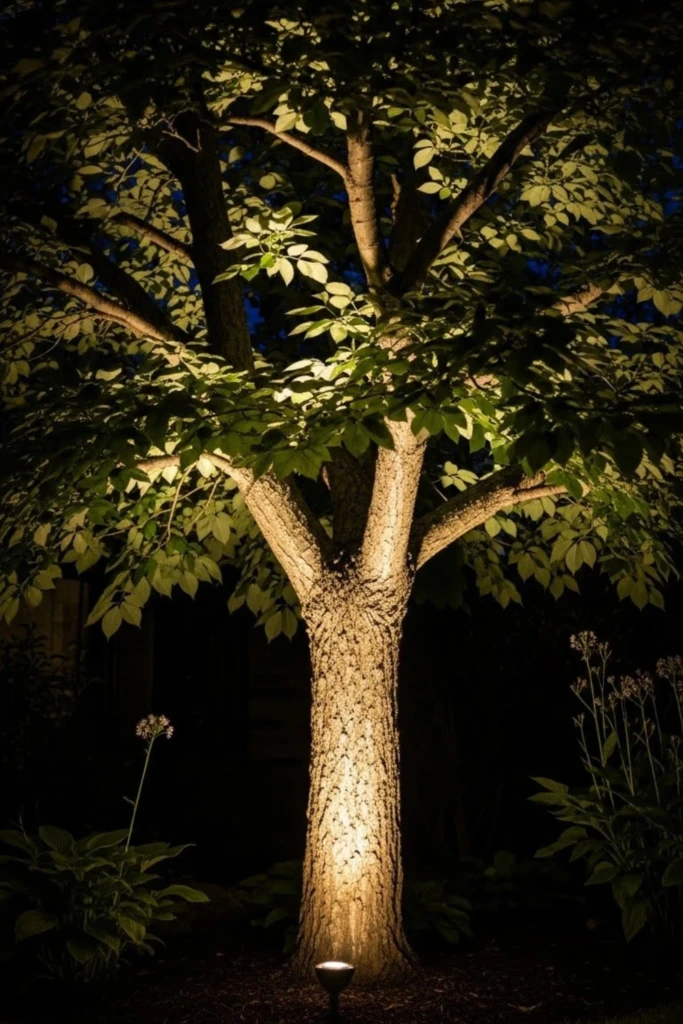
Uplighting draws attention to a tree's trunk, branching structure, or distinctive foliage. A small solar spotlight placed near the base can transform an ordinary tree into a nighttime focal point.
Angle the beam toward the trunk or canopy to emphasize texture and shape. A narrow beam creates a concentrated effect, while a wider beam spreads illumination across more of the tree.
Place the solar panel in an area with sufficient sunlight and keep it clear of fallen leaves. Avoid shining the light directly into neighboring windows, and consider using a lower intensity to limit unnecessary light spill into the surrounding environment.
19. Railing Accent Lights
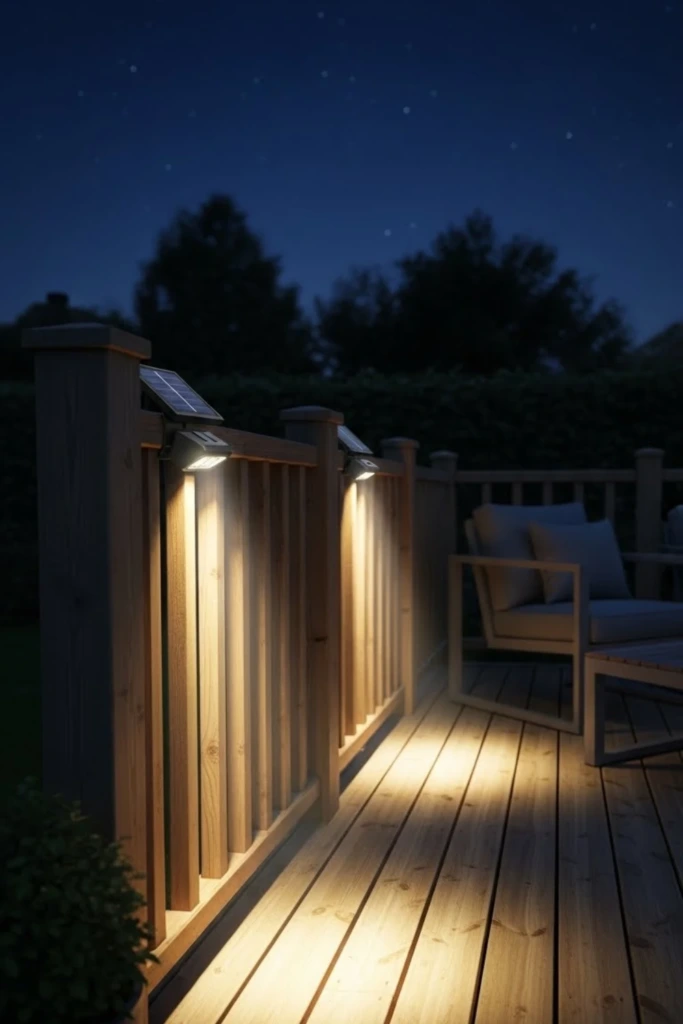
Small solar lights attached to railings are useful for balconies, decks, and compact outdoor spaces where floor-mounted fixtures would get in the way.
Mount suitable lights beneath the handrail or along the inside edge to direct illumination onto the floor. This placement keeps the fixtures relatively unobtrusive while helping define the boundaries of the space.
Check that the mounting method does not weaken the railing or interfere with its normal use. For balconies that receive limited direct sunlight, look for models with a separate solar panel that can be positioned in a sunnier location.
20. Rock Bed Illumination

Rock gardens and gravel beds can look especially striking when illuminated with discreet solar fixtures. The light catches the textures of stones, highlights nearby plants, and creates visual depth without introducing large decorative lamps.
Use compact ground-level lights designed for outdoor installation, positioning them between rocks where they will not be easily kicked or covered. Aim the light across the stone surfaces to emphasize their texture.
Avoid burying solar panels or placing sensitive electronic components beneath gravel unless the manufacturer specifically permits it. Periodically remove debris and check that the fixtures remain exposed enough to collect light and drain water properly.
How many solar panels do I need to run a grow light?
The number of solar panels required depends on the grow light's power consumption, daily operating time, local sunlight conditions, and the amount of energy lost during charging and conversion.
For example, a 100-watt grow light running for 8 hours uses 800 watt-hours of electricity per day. A solar system must generate enough energy to cover that demand, recharge the battery, and account for cloudy conditions and system losses.
The panel's rated wattage alone does not determine whether the system will be adequate. A 200-watt panel receiving four equivalent full-sun hours would theoretically generate 800 watt-hours before accounting for losses, so it would not reliably meet an 800-watt-hour daily requirement.
A practical system generally needs:
Solar panels: Sized according to daily energy demand and available sunlight.
Battery storage: Large enough to supply the light during the required operating period.
Charge controller: Matched to the panel and battery chemistry.
Compatible power equipment: An appropriate driver or inverter, depending on the grow light's electrical requirements.
For reliable operation, allow additional capacity for cloudy days and battery aging. Calculate the daily watt-hour requirement first, then size the panels and storage around local solar conditions.
How to charge solar lights if there is no sun?
Solar garden lights depend on sunlight to recharge their batteries, so prolonged cloudy weather or several days of heavy shade can reduce their operating time. Some panels still produce a small amount of electricity in diffuse daylight, but charging will generally be slower than in direct sunshine.
If a light stops working, begin by cleaning its solar panel and moving it to a sunnier location. Check the switch, battery condition, and charging instructions before replacing any components.
When sunlight is unavailable for an extended period, manual charging may be possible if the light is designed to support it. Some models include a USB charging port, while others have replaceable rechargeable batteries that can be charged separately using a compatible charger.
Never assume that an ordinary solar light can safely accept USB power or that its battery can be removed. Follow the manufacturer's instructions, use the specified charging method, and never substitute disposable batteries for rechargeable cells in a system that charges its batteries internally.
You may like to read!
12 DIY Acrylic Paint Storage Ideas
26 DIY Christmas Ornaments Ideas
19 DIY Lamp Shade Ideas
23 DIY Backyard Wedding On A Budget
21. Love this idea? Save it for later.
Save your favorite solar garden lighting ideas so you can refer to them when you're ready to update your outdoor space. You can also share the inspiration with someone planning a garden makeover, patio refresh, or DIY landscaping project.
22. Hi, I’m Jenny
I enjoy exploring practical ways to make everyday spaces more attractive, organized, and comfortable. DIY projects are a great opportunity to combine creativity with useful improvements, whether you're refreshing a small balcony or transforming an entire backyard.
Found something useful?
Keep these ideas handy for your next outdoor project. Saving your favorite designs makes it easier to compare lighting styles, plan fixture placement, and choose an approach that suits your garden, available sunlight, and budget.