21 Trash Can Storage Kitchen Ideas for 2026
A kitchen can look beautifully organized and still feel cluttered because of one everyday item: the trash can. Leaving it in the middle of the floor can interrupt the room’s layout, take up valuable space, and make even a tidy kitchen feel less polished.
Fortunately, you don’t need a major renovation to create a cleaner, more functional setup. With thoughtful placement, space-saving containers, and clever cabinet designs, you can keep waste accessible without letting it dominate your kitchen.
Whether you have a compact apartment kitchen or a spacious cooking area, these 21 kitchen trash can storage ideas offer practical ways to improve organization, simplify cleanup, and make better use of the space you already have.
How Can You Hide a Trash Can in Your Kitchen Without Losing Space?
The easiest way to conceal a kitchen trash can is to take advantage of areas that already exist. The space beneath a countertop, inside a cabinet, beside the refrigerator, or along the edge of an island can often accommodate a bin without disrupting movement around the room.
Built-in storage is particularly useful when you want the trash can completely out of sight. A pull-out container near the sink keeps food scraps and packaging within easy reach while preserving a clean appearance. If cabinet space is limited, a narrow bin or a wall-mounted container may be a better choice.
Before choosing a solution, measure the available width, depth, and height. Consider how cabinet doors open, where people walk, and how easily you can remove a full garbage bag. The best arrangement balances accessibility, hygiene, and efficient use of space.
1. Tilt Cabinet
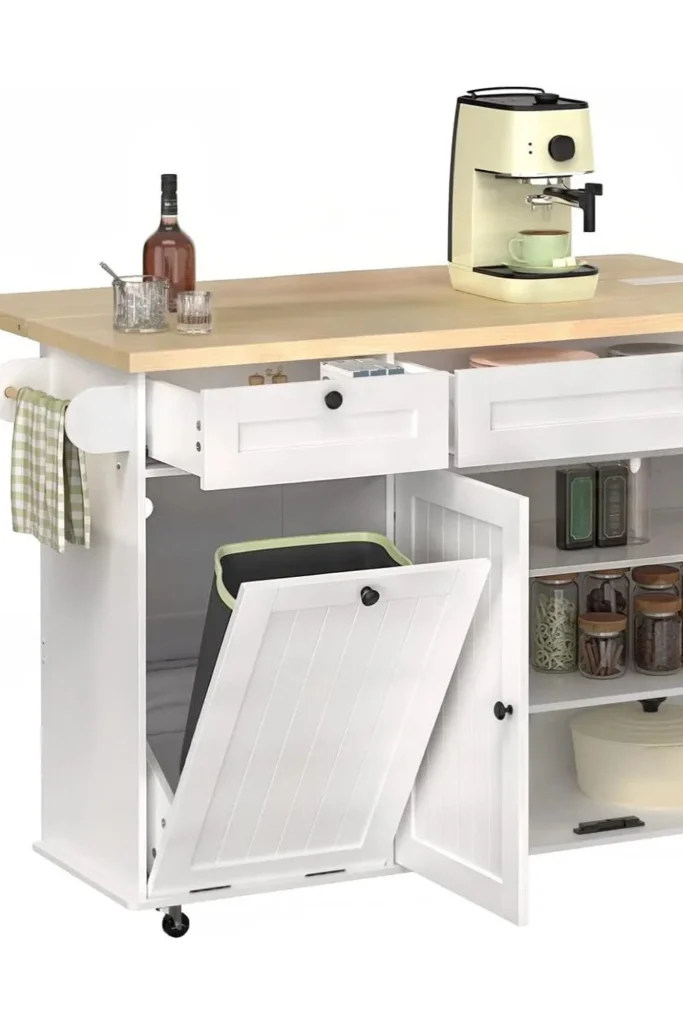
A tilt-out cabinet offers a discreet way to store a trash can without leaving it exposed on the floor. The container sits behind a hinged front panel that tilts forward when you need to dispose of something.
This design works particularly well in small kitchens, rental apartments, and homes where visual clutter is a concern. A freestanding unit can fit against an unused wall, while a custom-built version can coordinate with existing cabinetry.
Choose a cabinet that accommodates your bin comfortably and allows the lid to open without obstruction. Position it close to your primary food preparation area so that clearing scraps becomes part of your normal cooking routine.
2. Slim Placement
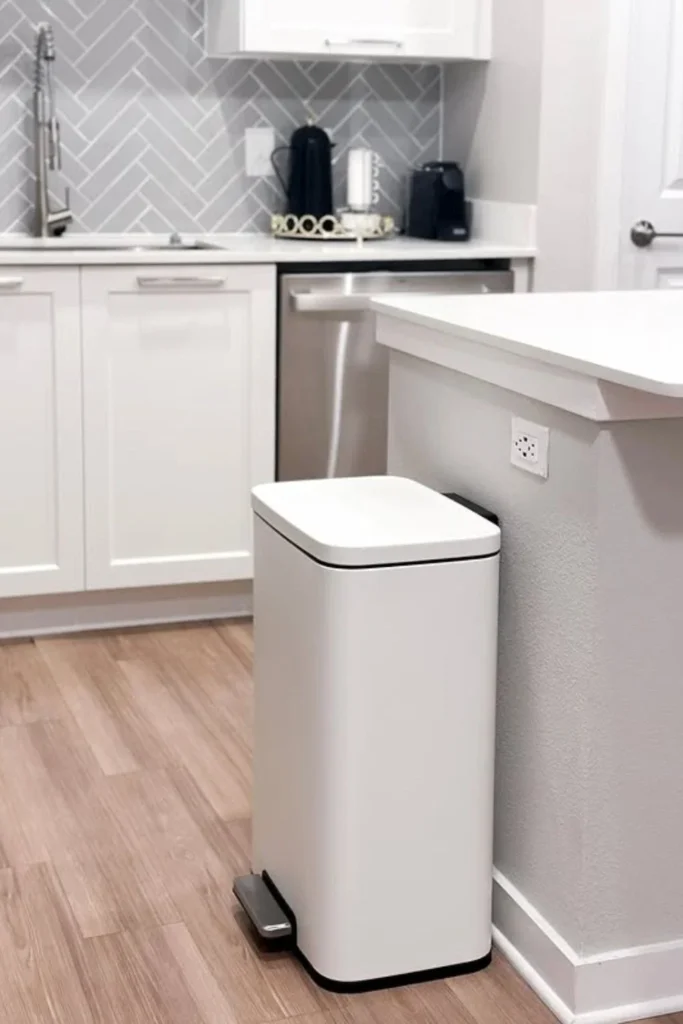
Narrow spaces beside a refrigerator, pantry, or kitchen island can provide an ideal home for a slim trash can. Instead of allowing an ordinary wide container to block a walkway, choose a taller model with a smaller footprint.
This approach is especially helpful when there is insufficient room for a built-in cabinet or pull-out system. A rectangular bin can often fit more neatly against a wall than a rounded design.
Measure the gap carefully before buying a container, including the clearance needed to open its lid and remove the liner. Keeping the bin aligned with nearby cabinets will help the arrangement look intentional rather than improvised.
3. Pull Drawer
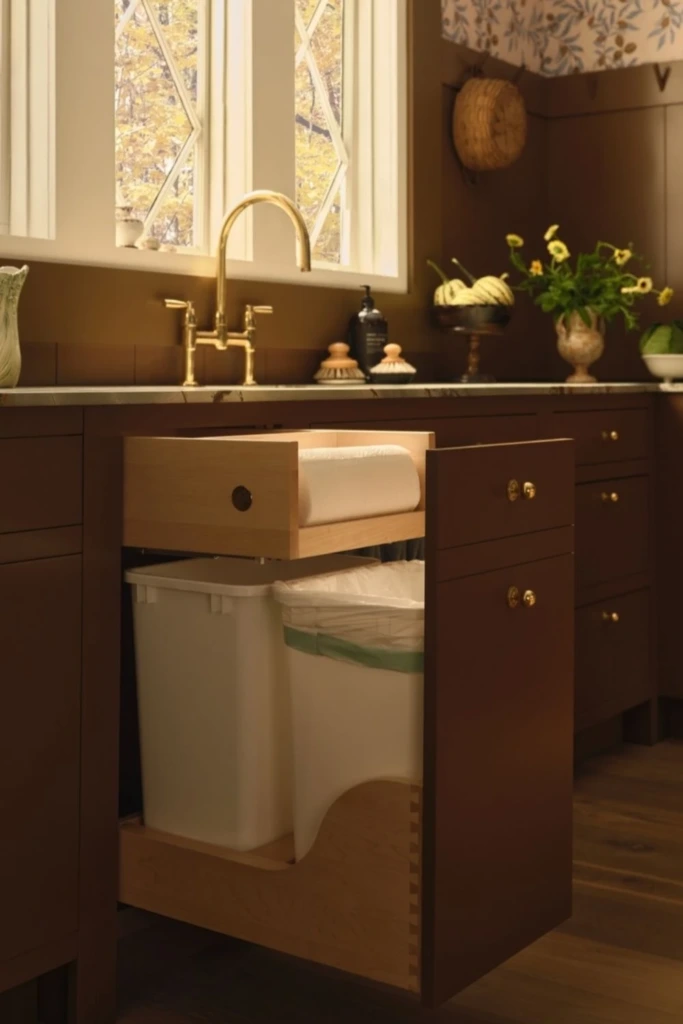
A pull-out trash drawer keeps waste hidden inside a base cabinet while making disposal quick and convenient. Simply open the drawer, drop in the waste, and slide the unit closed when finished.
The system is particularly practical beneath a countertop near the sink, where food scraps and used packaging tend to accumulate. It also leaves the floor clear, making the kitchen easier to navigate and clean.
You can install a compatible pull-out frame inside an existing cabinet or select a purpose-built unit. For additional convenience, use a shallow drawer above the bin to store spare liners, cleaning cloths, or paper towels.
4. Dual Stack
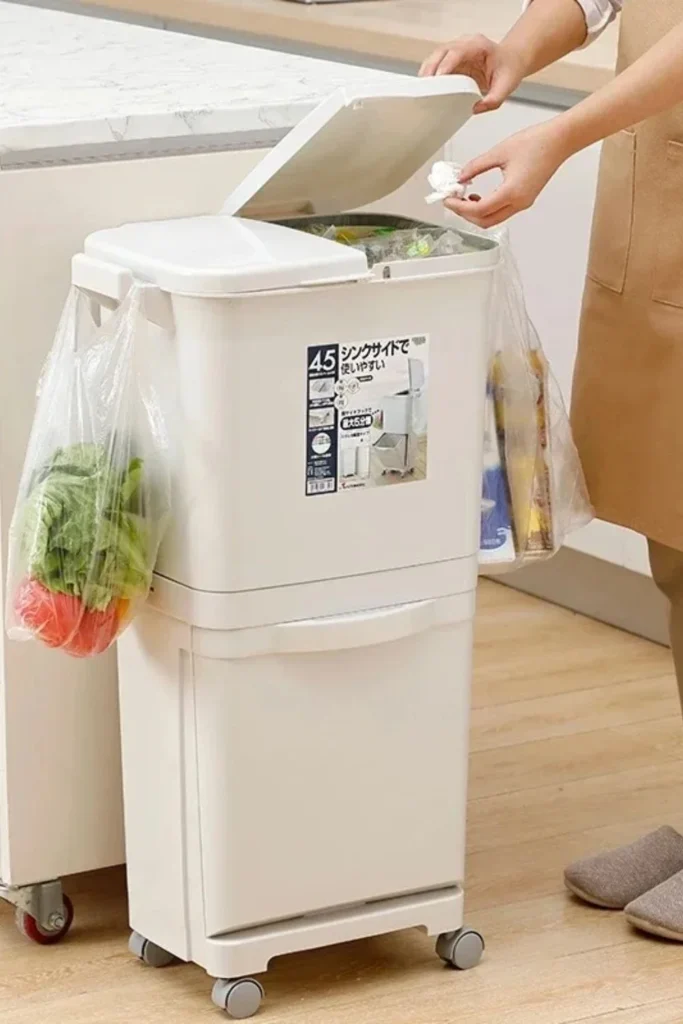
When a kitchen needs separate containers for rubbish and recycling, a vertically arranged bin system can save considerable floor space. Two compartments are positioned one above the other, keeping different waste streams organized within a compact footprint.
This arrangement is useful for smaller homes where two full-size containers would crowd the room. Some models include wheels or removable buckets, making it easier to access the compartments and empty them when necessary.
Check that both sections are large enough for your household's needs. If you generate a lot of recyclable packaging, make sure the upper or lower compartment can accommodate it without requiring constant emptying.
5. Double Bin
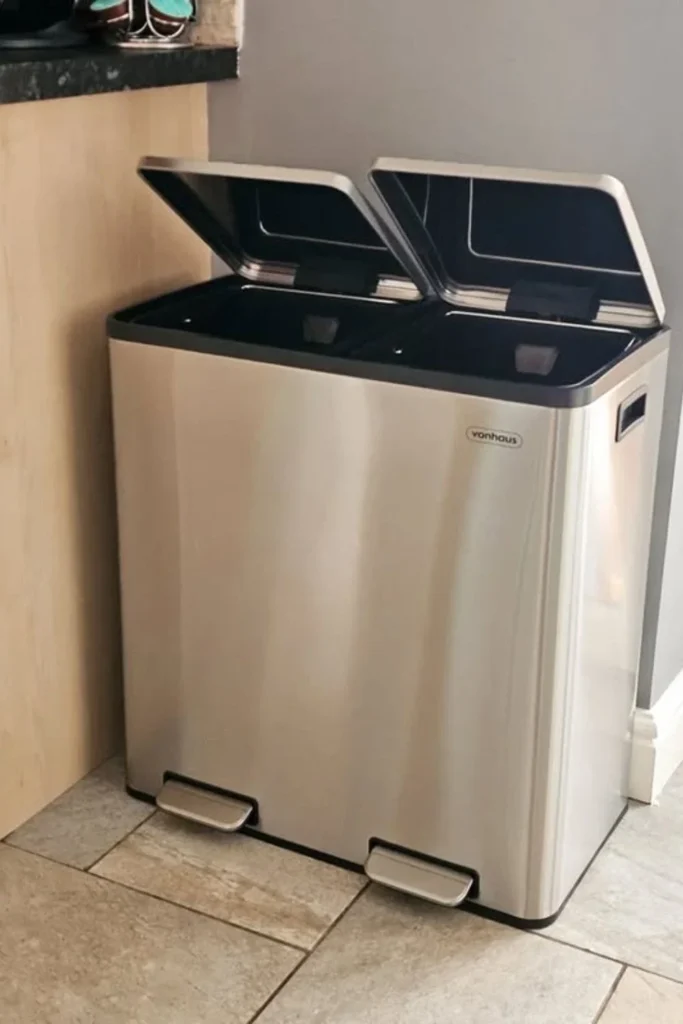
A side-by-side dual-compartment trash can is a straightforward solution for households that prefer visible but organized waste storage. One section can hold general rubbish while the other collects suitable recyclable materials.
Having two clearly separated compartments reduces confusion and makes sorting part of your everyday kitchen routine. Models with independent lids and foot pedals can also improve convenience, particularly when your hands are occupied during meal preparation.
Choose a finish that complements your appliances, cabinet hardware, or other kitchen accessories. Stainless steel, matte black, and neutral-colored designs can help the unit blend naturally into the surrounding space.
6. Hidden Combo
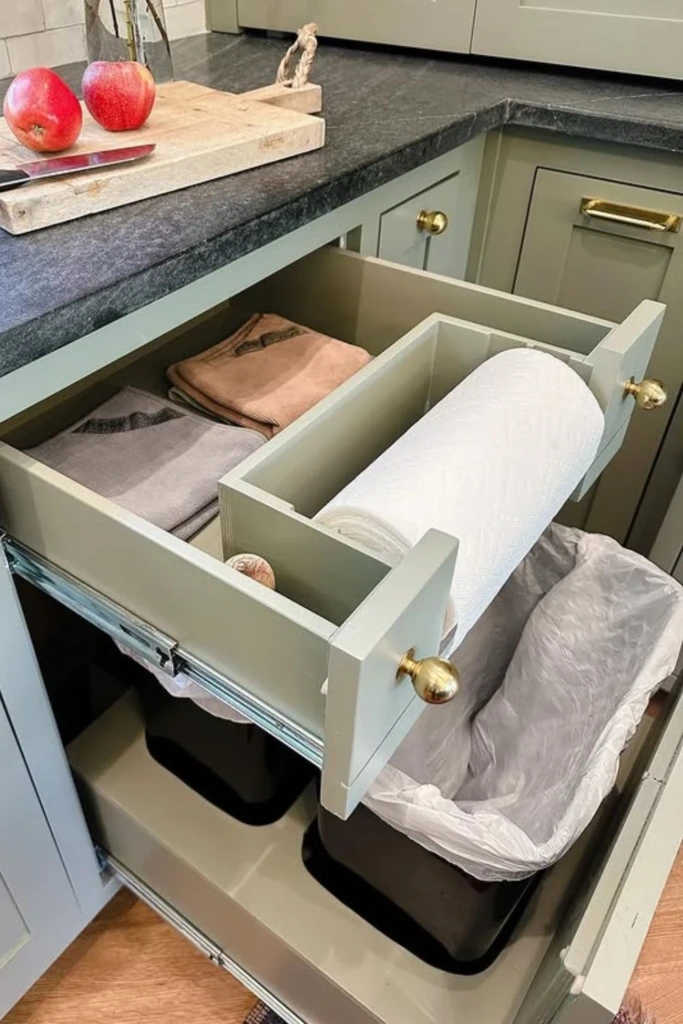
Combine waste storage with everyday cleaning supplies to create a compact kitchen organization station. A cabinet with a pull-out trash can and a separate drawer for bin liners or paper towels keeps frequently used essentials together.
This setup eliminates the need to search through multiple cupboards while cooking. You can dispose of scraps, replace a liner, and wipe the counter without leaving your main work area.
A practical arrangement includes a sturdy pull-out frame below and a shallow storage drawer above. Keep the drawer limited to items you use regularly so that the cabinet remains easy to organize and maintain.
7. Island Edge
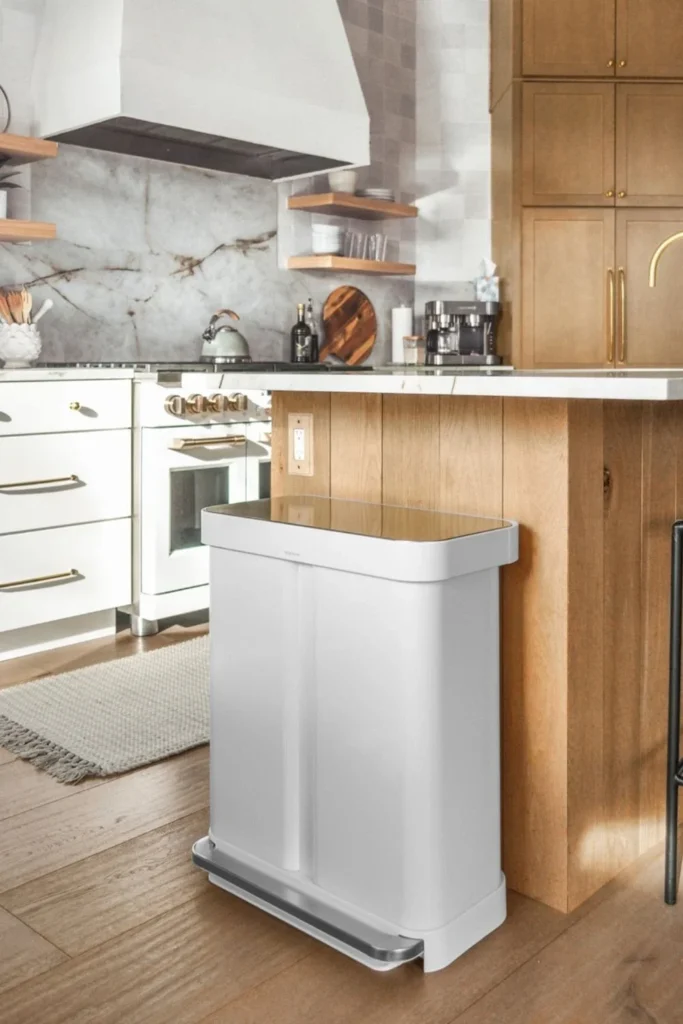
The side of a kitchen island can provide a convenient location for a trash can, especially when the island doubles as a food preparation surface. Placing the bin against the island panel keeps it close to the action without putting it in the middle of the floor.
This idea works well in open-plan kitchens where a completely concealed bin may not be practical. A compact container can remain accessible while preserving the room's overall appearance.
Choose a bin with a finish that coordinates with the island or nearby cabinetry. Make sure it doesn't interfere with stools, cabinet doors, or the main walking route around the island.
8. Corner Tuck
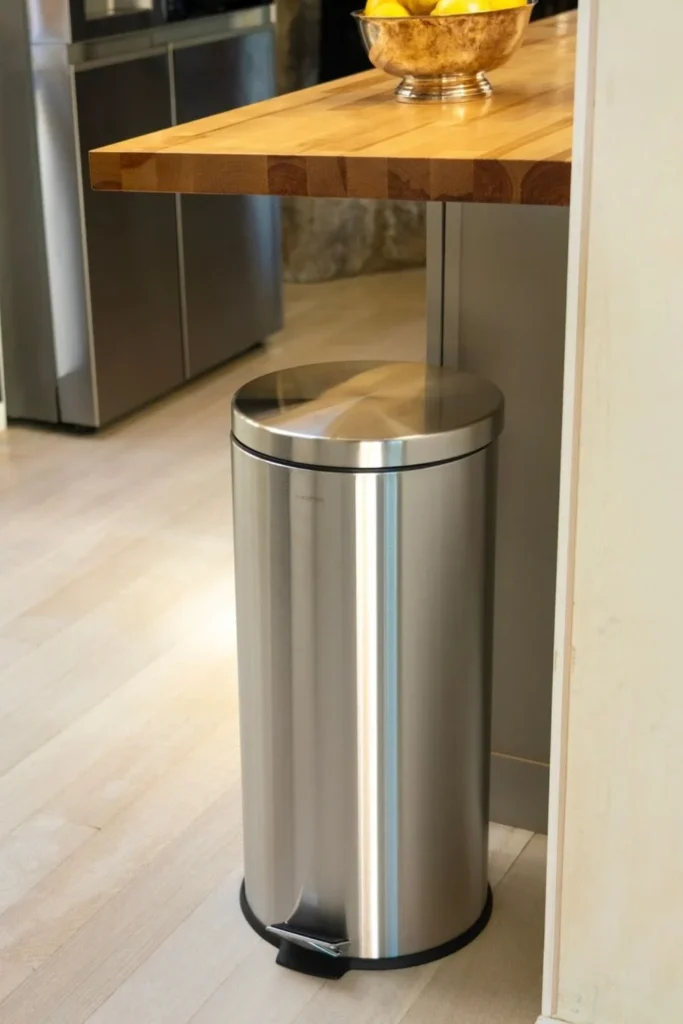
An unused corner can be a surprisingly effective place for a kitchen trash can. Positioning the container beside a wall, cabinet, or countertop moves it away from busy pathways while keeping it within reach.
This option is easy to implement because it rarely requires installation or changes to existing cabinetry. It is particularly useful in kitchens where the sink and preparation areas are close to a corner.
A narrow rectangular bin or a compact round container can work well, depending on the shape of the available space. Leave enough room to open the lid and pull out a full bag without moving other furniture.
9. Wall Mount
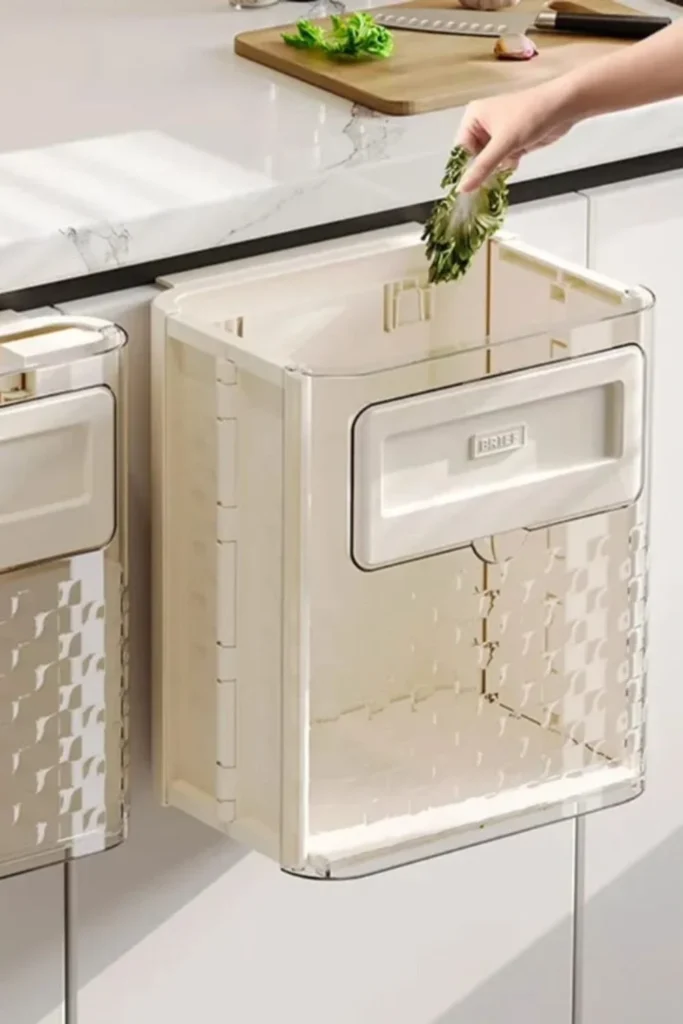
A wall-mounted waste container frees up the floor and keeps small amounts of kitchen waste close to where they are produced. It can be attached to a suitable cabinet side or another appropriate surface, depending on the mounting system.
This solution is useful for collecting vegetable trimmings, coffee grounds, and other scraps during food preparation. A removable container also makes emptying and cleaning more convenient.
Before installing one, check the manufacturer's weight limits and mounting requirements. Use a secure attachment appropriate for the surface, and position the container where it won't interfere with drawers, doors, or normal kitchen movement.
10. Cabinet Hook
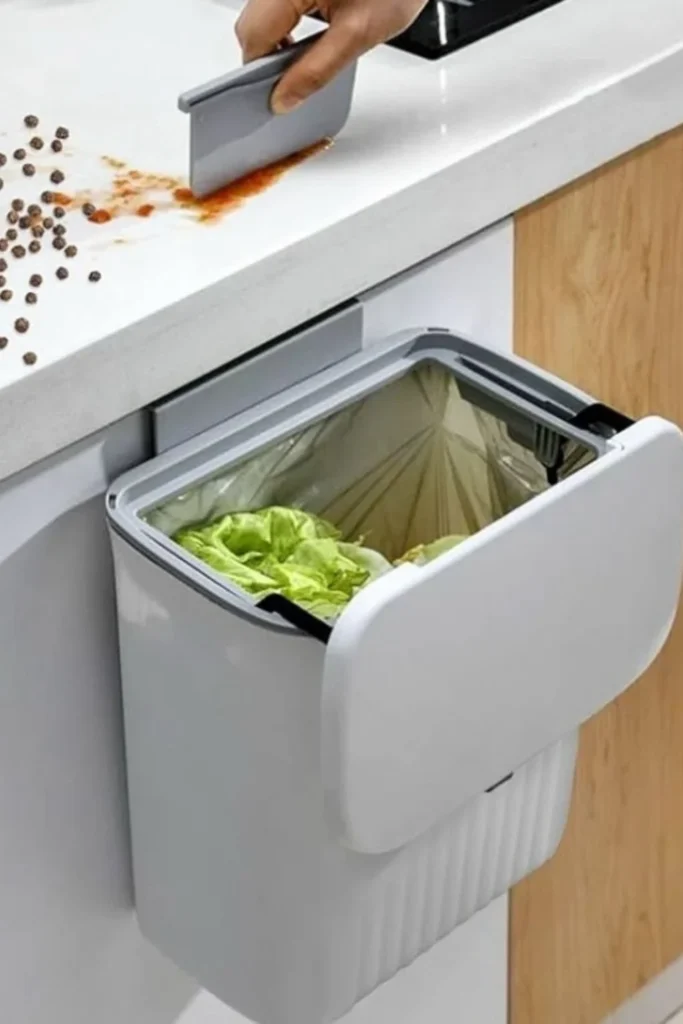
A hanging trash bin offers a quick, flexible option for kitchens with limited space. The container hooks over a suitable cabinet door, allowing you to collect scraps directly from the countertop while preparing food.
Because the bin can be removed when it isn't needed, it works particularly well in compact kitchens and temporary cooking setups. It also reduces the need to bend down or walk across the room repeatedly.
Choose a model designed to fit your cabinet thickness and door clearance. Check that the door can close properly when the container is removed, and clean the mounting area regularly to prevent food residue from accumulating.
11. Cabinet Slide
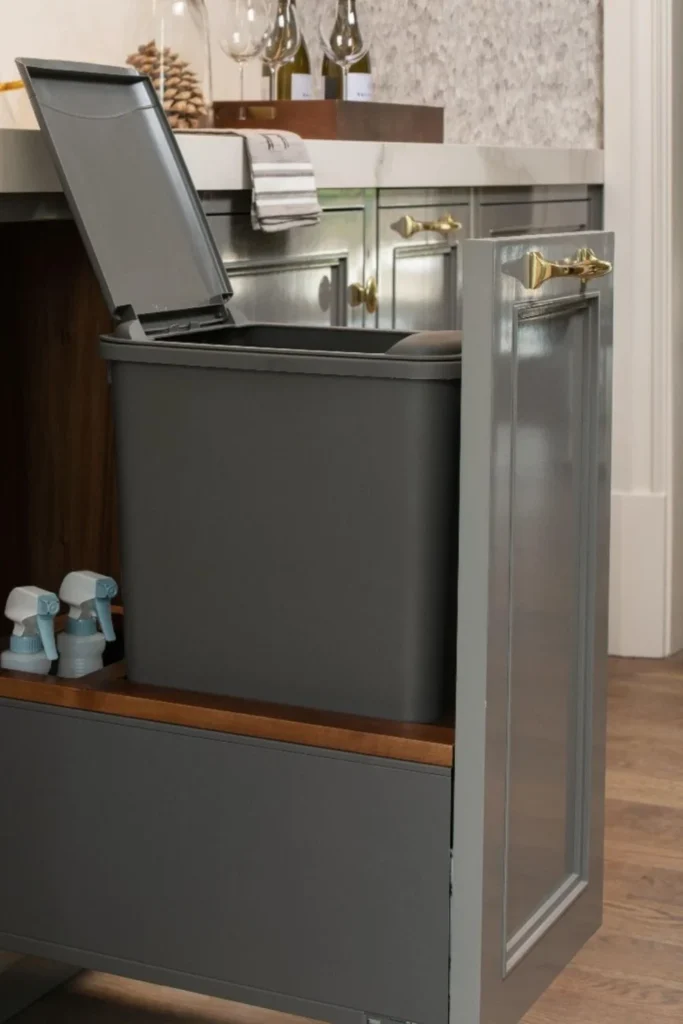
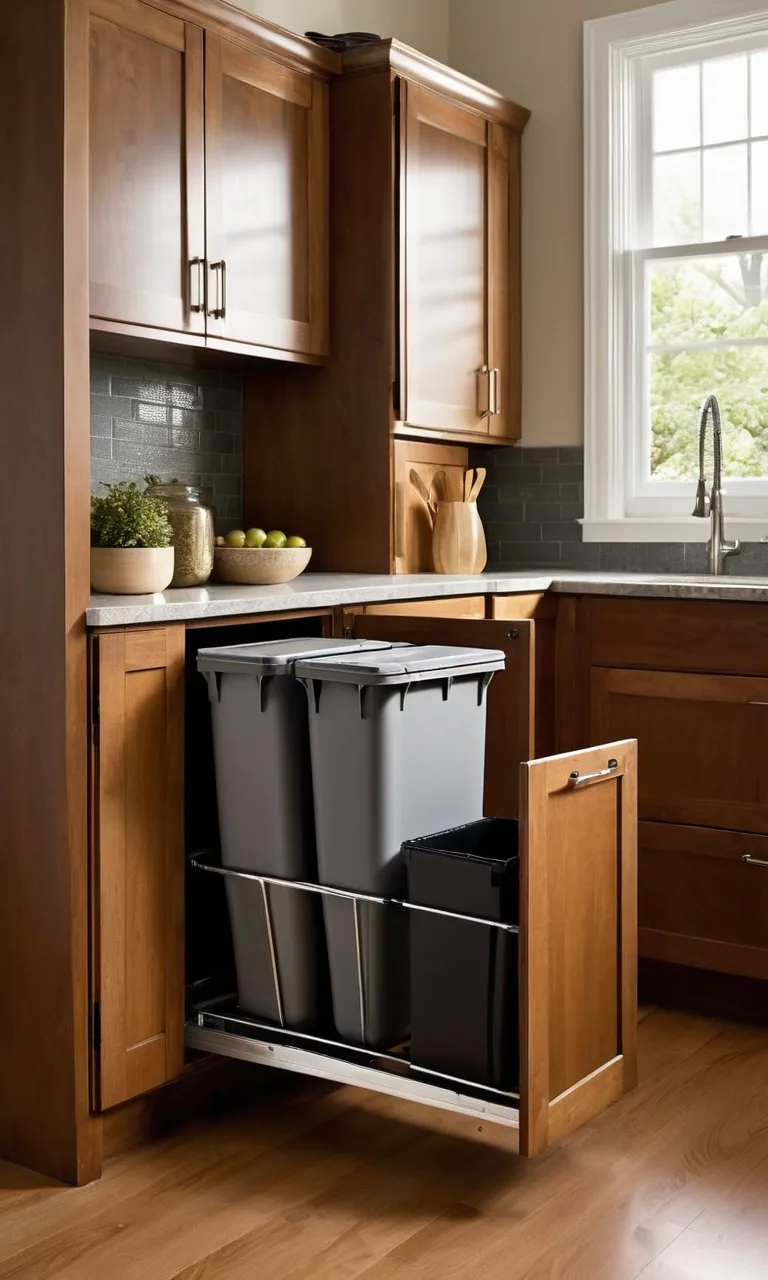
A sliding cabinet trash system conceals the bin inside a base cupboard and brings it forward when needed. This arrangement creates a streamlined appearance while keeping the container conveniently positioned near the sink or preparation counter.
The bin travels along a fitted frame or track, so you don't have to lift it out of the cupboard every time you dispose of waste. Some systems also accommodate more than one container for recycling and general rubbish.
Measure the cabinet's interior carefully before choosing a mechanism. Account for plumbing, hinges, drawer hardware, and the clearance required to remove the bin for cleaning.
12. Sorting Drawer
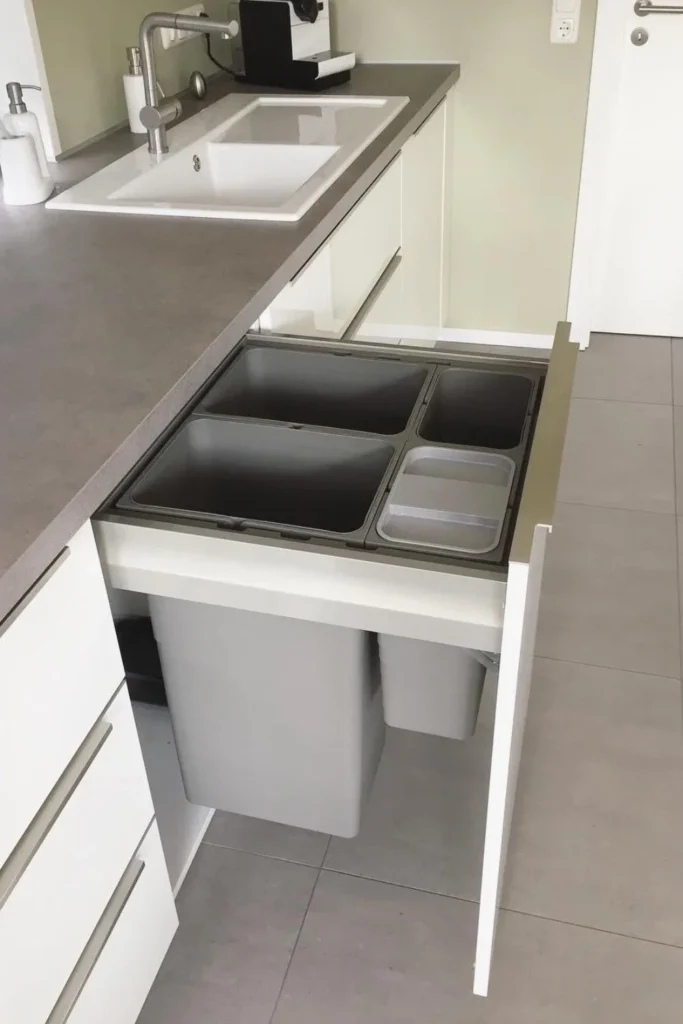
A dedicated sorting drawer makes it easier to separate different kinds of household waste without leaving multiple containers around the kitchen. Removable bins or divided compartments can accommodate general rubbish, recyclable packaging, and other locally accepted waste categories.
Keeping everything behind a cabinet front preserves a tidy appearance and makes the system simple to use during meal preparation. It is especially convenient when installed near the sink or main work surface.
Select a drawer frame that fits your cabinet dimensions and supports the weight of the filled containers. Labeling the compartments can help everyone in the household sort waste correctly.
13. Color Blend
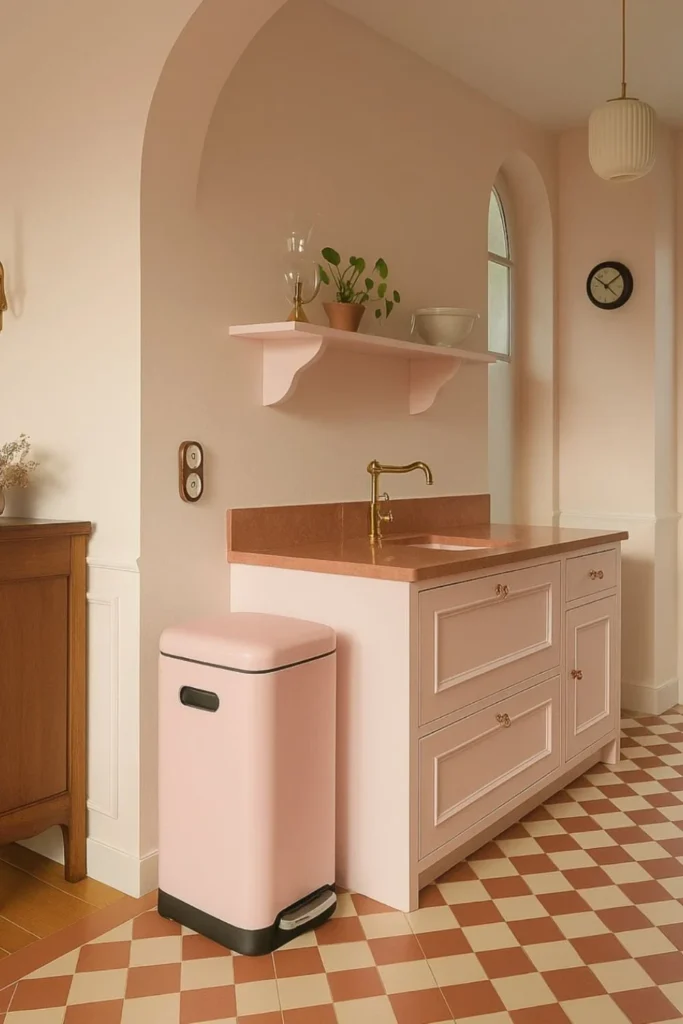
Sometimes the simplest way to make a trash can less noticeable is to choose one that complements the kitchen's color scheme. A container that matches nearby cabinets, walls, or appliances can feel like a natural part of the room.
This approach works especially well in kitchens where the bin needs to remain visible for easy access. Neutral shades, understated finishes, and simple shapes tend to integrate more easily with different decorating styles.
Think about the surrounding materials before choosing a color. A dark container may blend into darker cabinetry, while a white or stainless-steel model may suit a brighter kitchen. The goal is to create visual harmony without sacrificing capacity or usability.
14. Island Hide
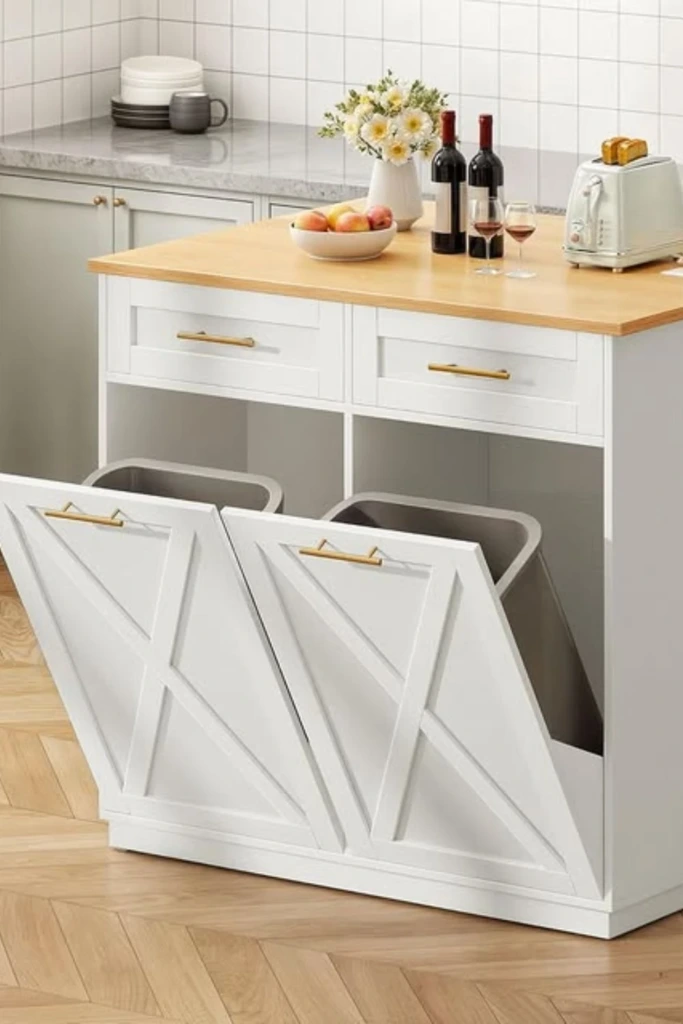
A kitchen island can provide concealed storage for waste if its cabinetry has sufficient depth. A tilt-out panel or a purpose-built pull-out section allows the trash can to remain hidden while keeping it close to the main preparation surface.
This is an effective option for open-plan kitchens, where a visible bin can interrupt an otherwise uncluttered design. Integrating the container into the island also helps preserve floor space along the walls.
Choose a cabinet system that accommodates the size and weight of your bin. If you want to separate rubbish and recycling, consider a unit with two removable compartments and enough clearance for easy emptying.
15. Vertical Stack
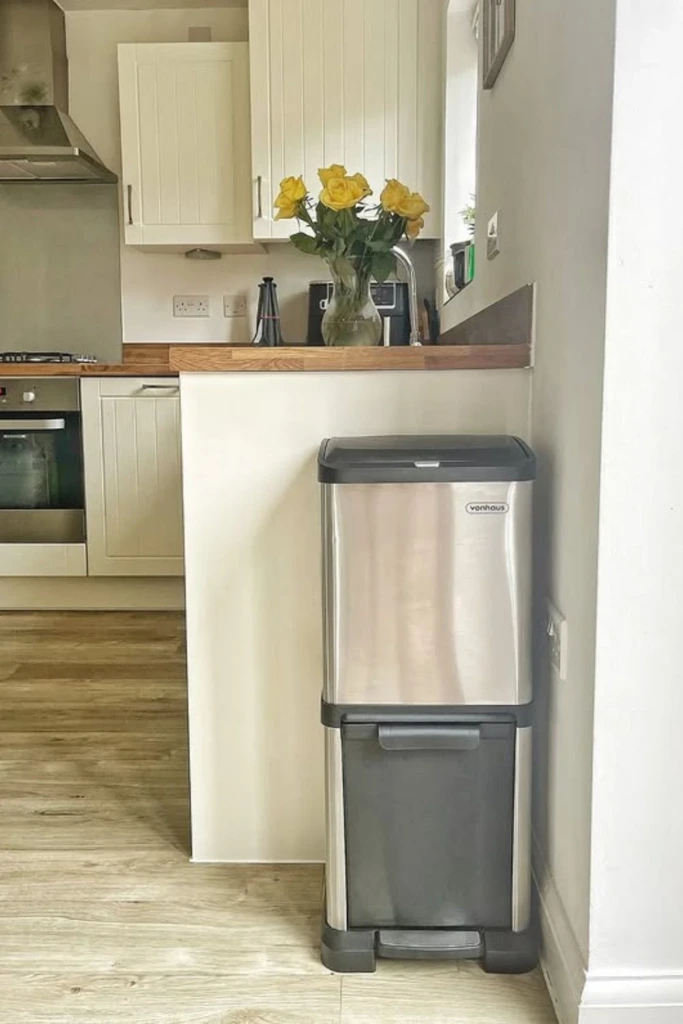
A tall, vertically organized bin system can replace multiple containers scattered across the kitchen. Separate compartments allow you to collect general waste and recyclables while keeping the overall footprint relatively small.
This design is particularly helpful in narrow kitchens or homes where every section of floor space matters. Position the unit against a wall or beside a cabinet to keep it out of the main traffic area.
Look for a stable model with accessible compartments and sufficient capacity for your household. If the system is tall, make sure the upper section is easy to reach and that removing a full bag won't be awkward.
16. Side Pair
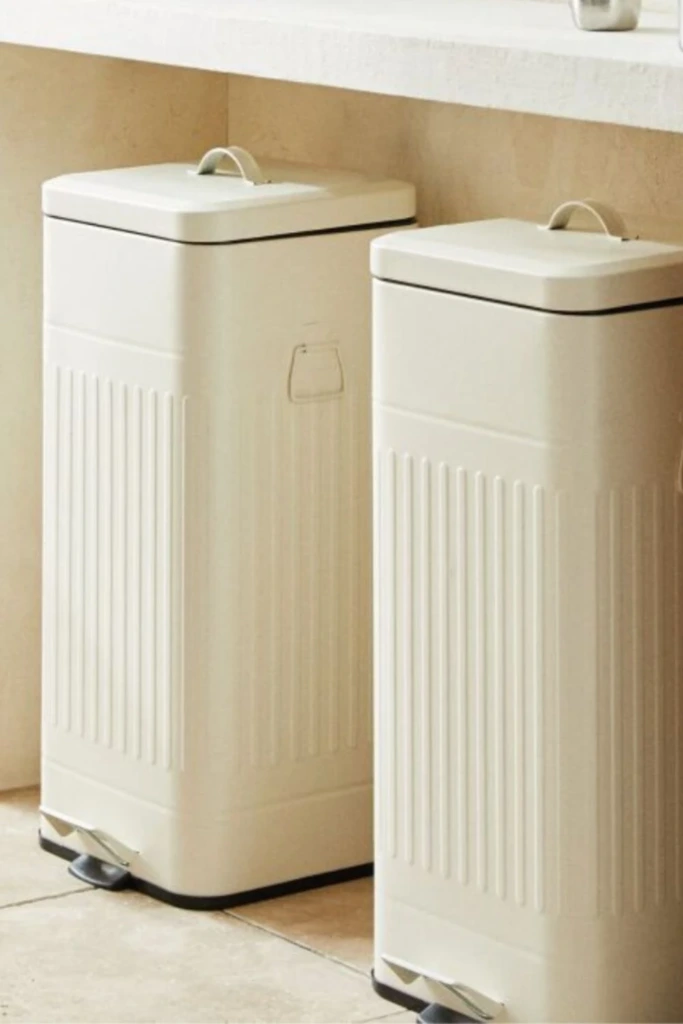
Two matching trash cans placed together can create an organized waste-sorting station without requiring a built-in cabinet. Assign one container to general waste and the other to recycling, then keep both in the same designated location.
This arrangement works well when you have enough room along a wall, beside a pantry, or beneath an appropriate countertop overhang. Matching containers help the area look coordinated rather than cluttered.
Choose bins with similar dimensions and easy-to-clean surfaces. If you prefer a minimal appearance, select understated colors and keep the containers aligned rather than allowing them to drift into different parts of the kitchen.
17. Island Side
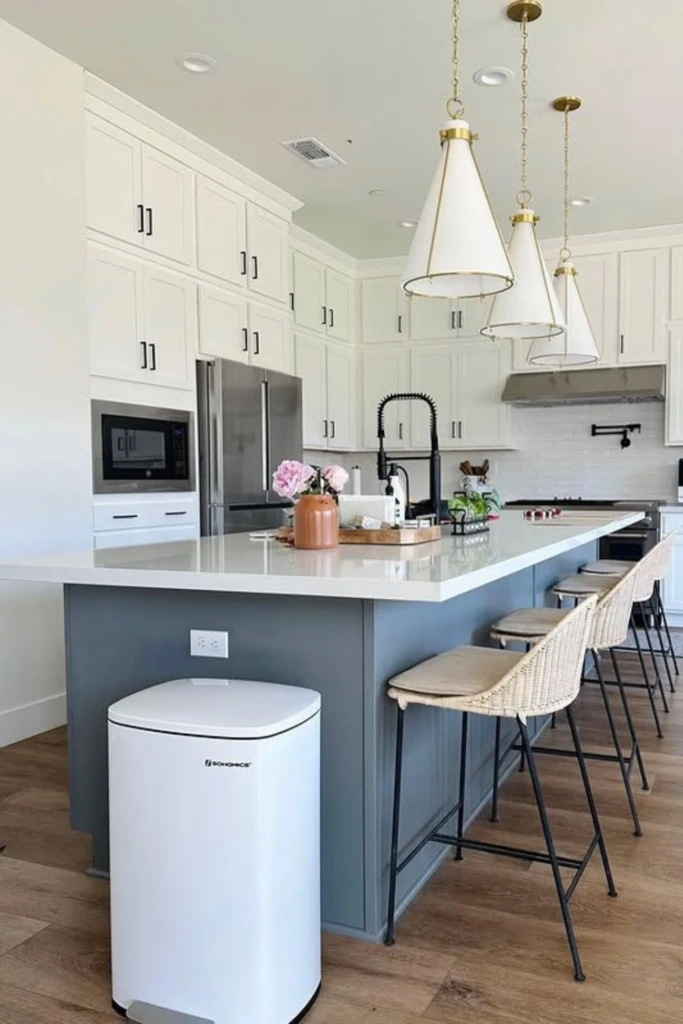
The side of a kitchen island can accommodate a trash can without sacrificing the central preparation area. Positioning it near the working side of the island makes it easy to discard scraps while keeping the container away from seating and serving spaces.
This layout is most effective when the island has enough clearance for people to move comfortably around it. A compact bin with a simple silhouette can remain accessible without drawing too much attention.
Consider the location of stools, drawers, and cabinet doors before settling on a position. Keeping the bin aligned with the island's edge will help maintain a neat appearance and prevent it from becoming an obstacle.
18. Prep Station
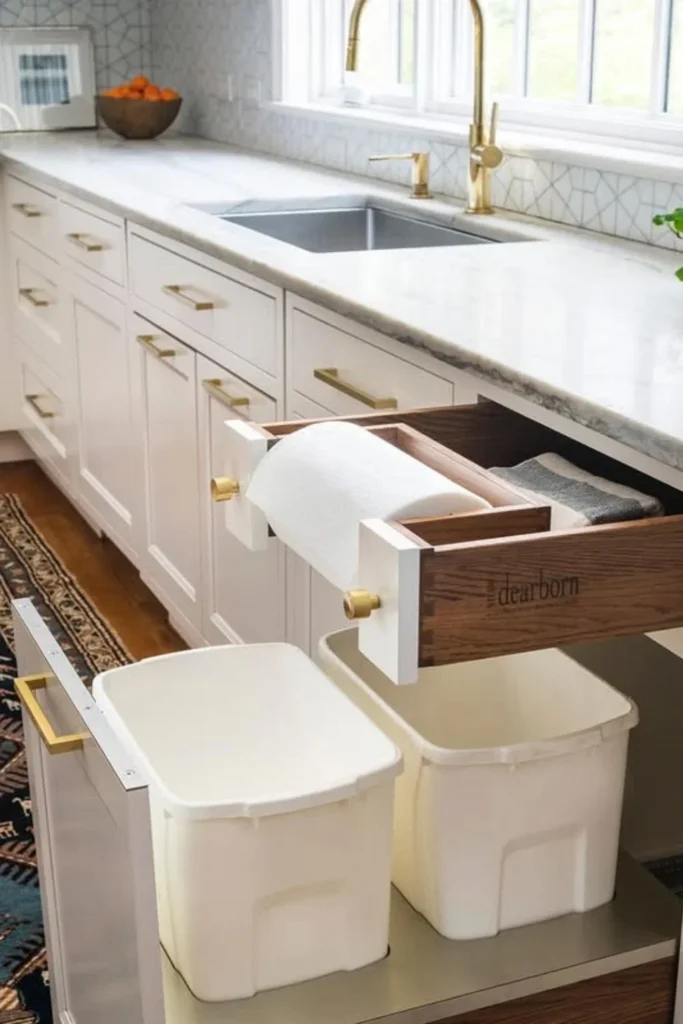
A dedicated preparation station brings waste disposal and everyday cleanup supplies together in one convenient location. A pull-out trash bin beneath the counter, paired with a shallow drawer for liners or paper towels, makes the entire process more efficient.
As you chop vegetables, open packaging, or wipe down the work surface, everything you need remains close at hand. This reduces unnecessary trips across the kitchen and helps prevent scraps from accumulating on the counter.
For a custom setup, choose a pull-out mechanism suited to your cabinet and add a separate storage drawer above it. Keep the supplies organized so the station remains practical during busy cooking sessions.
19. Corner Pull
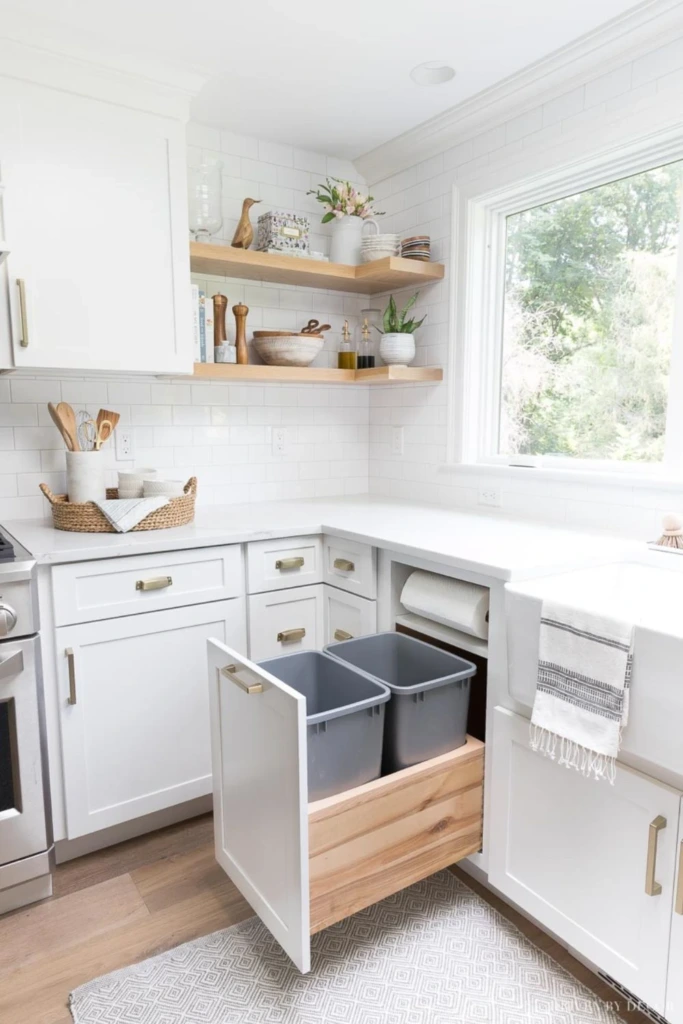
A corner cabinet can become useful hidden trash storage when fitted with a suitable pull-out mechanism. Instead of leaving a bin in the open or filling the cabinet with rarely used items, you can dedicate the space to waste collection.
When the system is closed, the kitchen maintains a clean appearance. Pulling it forward provides access to the containers without requiring you to reach deep into the cabinet.
This solution is particularly useful in L-shaped kitchens with an existing corner unit. Measure the cabinet opening and interior carefully, since corner layouts can have unusual dimensions that affect which pull-out systems will fit.
20. Corner Bin
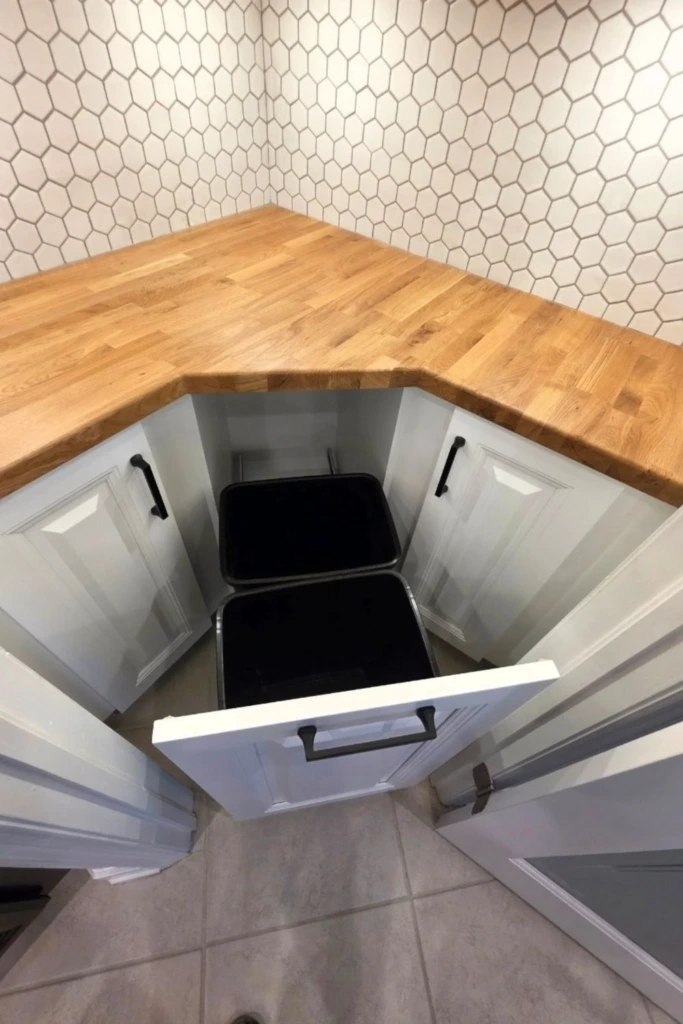
If your kitchen has a corner cabinet that isn't being used efficiently, consider converting it into a dedicated bin compartment. The cabinet keeps waste out of sight while making better use of an area that might otherwise remain difficult to organize.
A simple arrangement can use removable containers behind a standard cabinet door. For easier access, you can add a compatible sliding frame or pull-out base.
This idea is well suited to smaller kitchens where storage space is limited. Make sure the bins can be removed easily for emptying and that the cabinet interior can be cleaned without difficulty.
21. Drawer Base
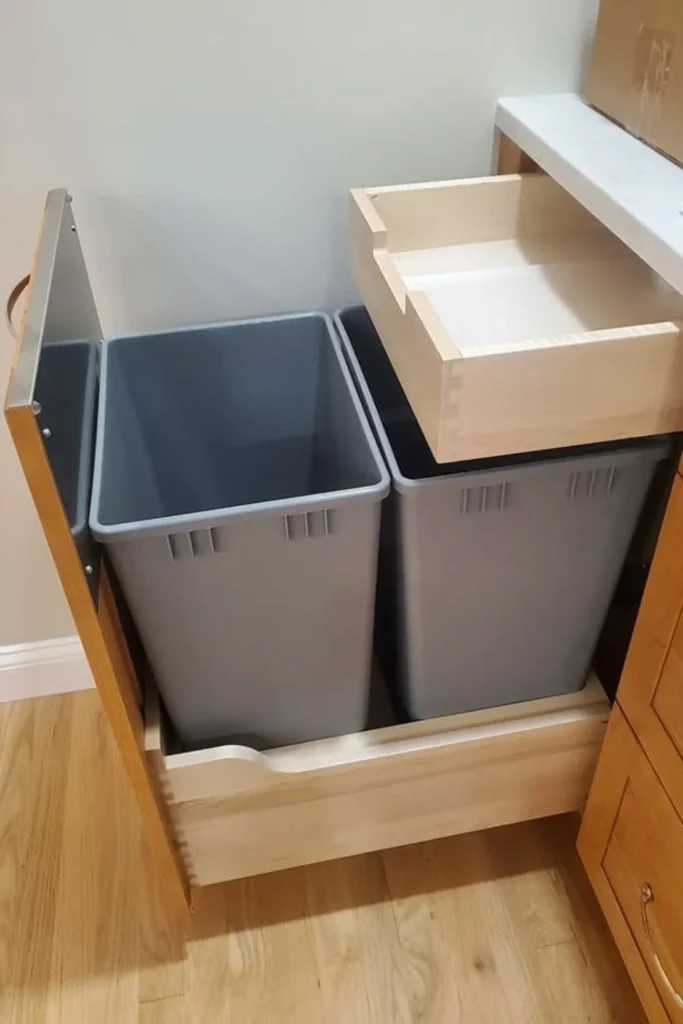
A base cabinet with both a trash compartment and an upper storage drawer creates a practical all-in-one cleanup station. The lower section holds the waste container, while the drawer provides space for bin liners, disposable gloves, cleaning cloths, or other small essentials.
Keeping these items together makes routine kitchen cleanup easier and reduces the need to search through separate cupboards. The arrangement also helps maintain a tidy floor and uncluttered counters.
Choose a cabinet design that supports the combined load and allows both sections to operate independently. Store only frequently used supplies in the upper drawer to preserve usable space and keep everything easy to reach.
Where should a trash can go in a kitchen for the best workflow?
The most convenient location is usually near the sink or primary food preparation area. These are the places where you are most likely to discard vegetable scraps, food packaging, and paper towels while cooking.
A pull-out bin beneath the counter is an excellent option if you have suitable cabinet space. It keeps waste accessible without leaving the container permanently visible.
If built-in storage isn't possible, place a compact bin beside the preparation counter or along the island's working side. The important thing is to keep it within easy reach without blocking walkways, cabinet doors, or appliance access.
What is the best trash can solution for a small kitchen?
For most small kitchens, a pull-out cabinet bin, a tilt-out unit, or a slim container offers a good balance between accessibility and space efficiency. These options reduce the amount of floor area occupied by waste storage while keeping the bin close to where you cook.
If your cabinets are already full, look for a narrow rectangular container that fits beside the refrigerator or pantry. A cabinet-hanging bin can also provide temporary waste collection during food preparation.
Measure your available space before choosing a model, and consider how frequently you'll need to empty it. A smaller container may fit better, but it should still have enough capacity for your household's daily waste.
Jenny
Hi, I'm Jenny, the founder of Fizzy Flare. My team and I create practical content designed to make everyday life easier, from home organization and DIY projects to printables, self-care, and simple living. I've been blogging since 2021, and our goal is to share approachable ideas that help readers make their homes and routines more manageable.