26 Desk Organization Ideas for 2026
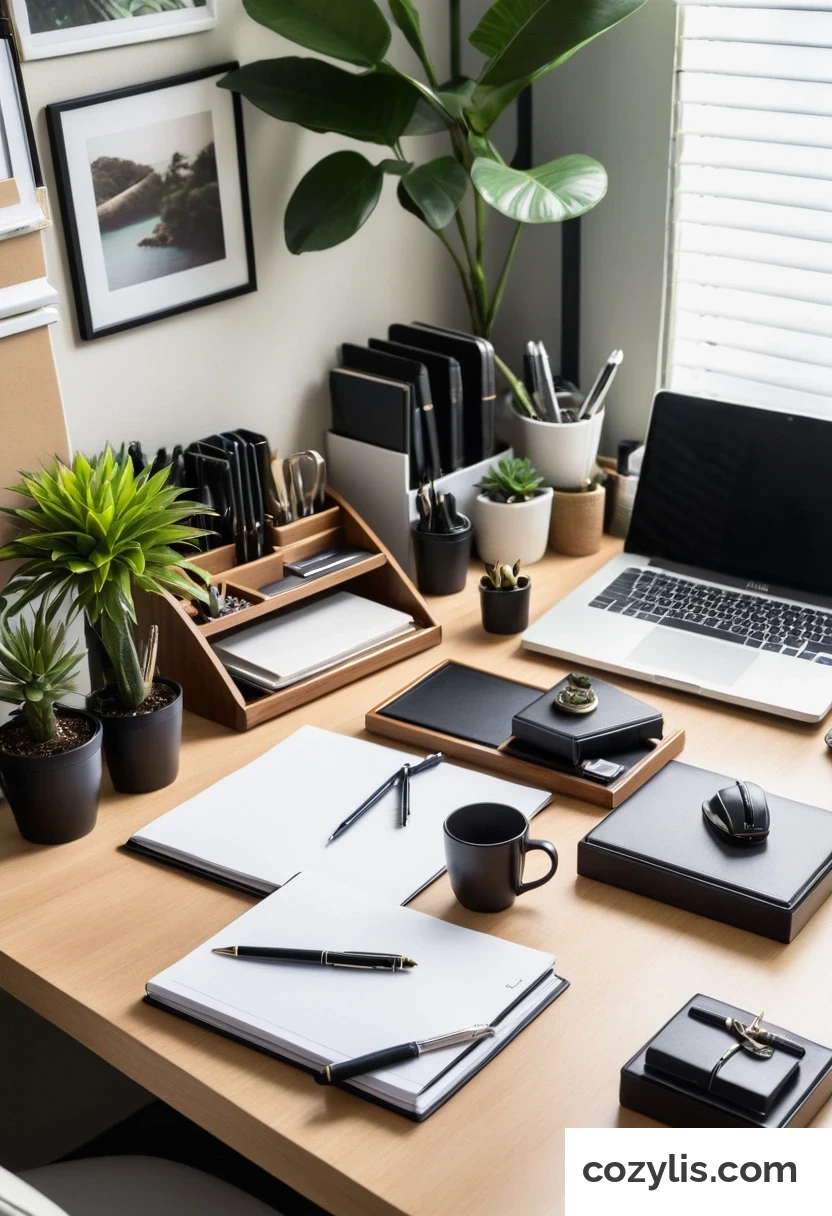
Looking for desk organization ideas? This guide pulls together the best options, with practical tips to help you choose what fits your space and budget. A well-organized desk can completely change how you approach your daily routine. Whether you're working from home, studying for exams, managing creative projects, or simply catching up on emails, a thoughtfully arranged workspace makes it easier to concentrate and stay productive.
In 2026, desk organization is about more than keeping supplies in drawers. Warm textures, calming colors, practical storage, and personalized decorations are transforming ordinary workstations into comfortable spaces that support both creativity and focus.
These 26 desk organization ideas offer inspiration for every style, from minimalist arrangements and nature-inspired setups to cozy, colorful workspaces. Each approach combines useful storage solutions with attractive design details to help you create a desk that feels inviting without becoming cluttered.
26 Desk Organization Ideas That Keep Your Workspace Calm and Focused in 2026
The most effective desk setup balances appearance with everyday functionality. Instead of filling your workspace with decorative accessories, choose items that serve a purpose and complement your preferred style.
Consider how frequently you use your laptop, notebooks, stationery, and other essentials. Keeping regularly used items within easy reach while storing occasional supplies elsewhere can make your desk feel more spacious.
The following ideas explore different ways to organize your workspace while maintaining a comfortable atmosphere that suits your personality and working habits.
1. Soft Tech Sanctuary
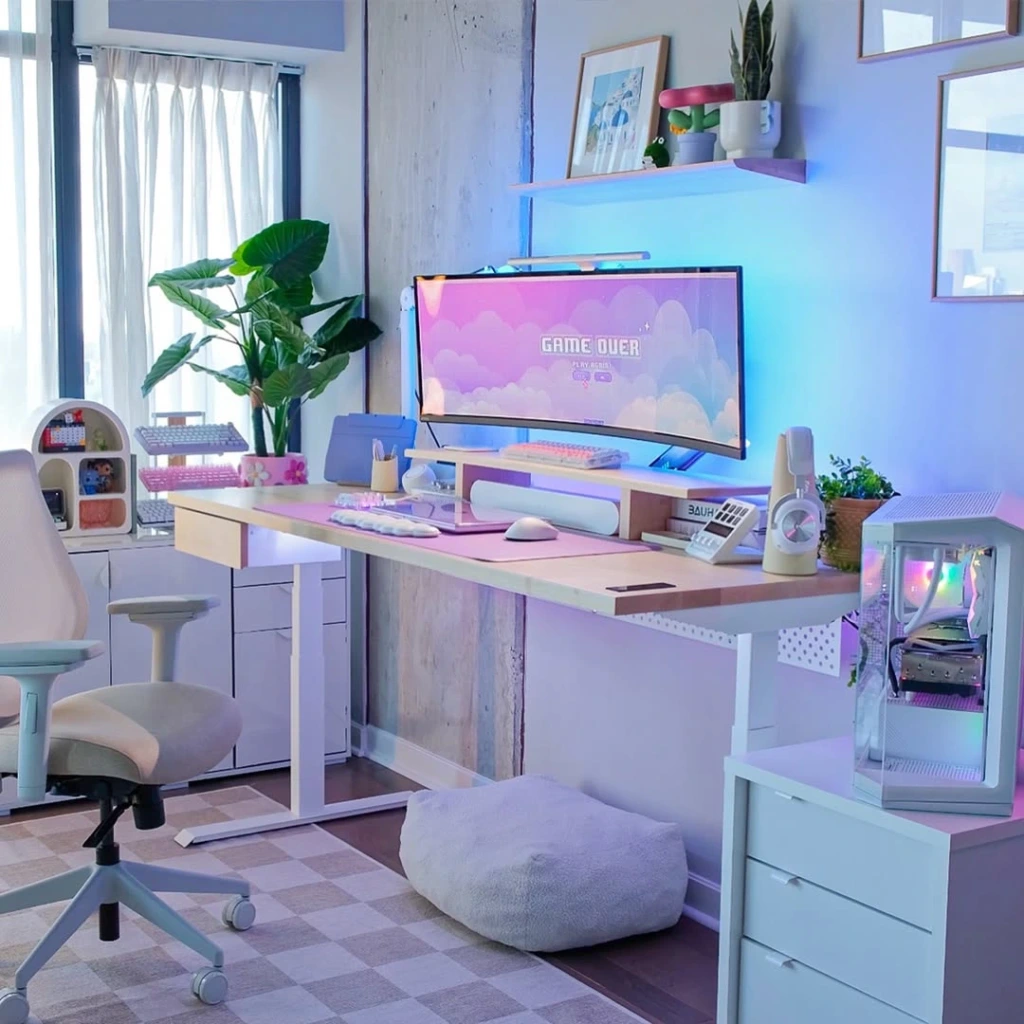
A soft tech sanctuary combines modern equipment with gentle colors and comfortable materials. Instead of creating a workspace dominated by dark electronics and visible cables, this approach uses muted tones to make technology feel less overwhelming.
Start with a spacious desk surface in white, light oak, or a soft beige finish. Add a neutral desk mat that accommodates your keyboard and mouse while protecting the tabletop. A monitor stand can raise your screen to a more comfortable viewing height and provide room underneath for small accessories.
Keep charging cables together using adhesive cable clips or an under-desk cable tray. Wireless accessories can also reduce visual clutter, although they still need a designated charging spot.
Complete the arrangement with a compact desk lamp, a ceramic pen holder, and one small decorative item. The result is a technology-friendly workspace that remains peaceful and easy to maintain.
2. Minimal, But Make It Warm
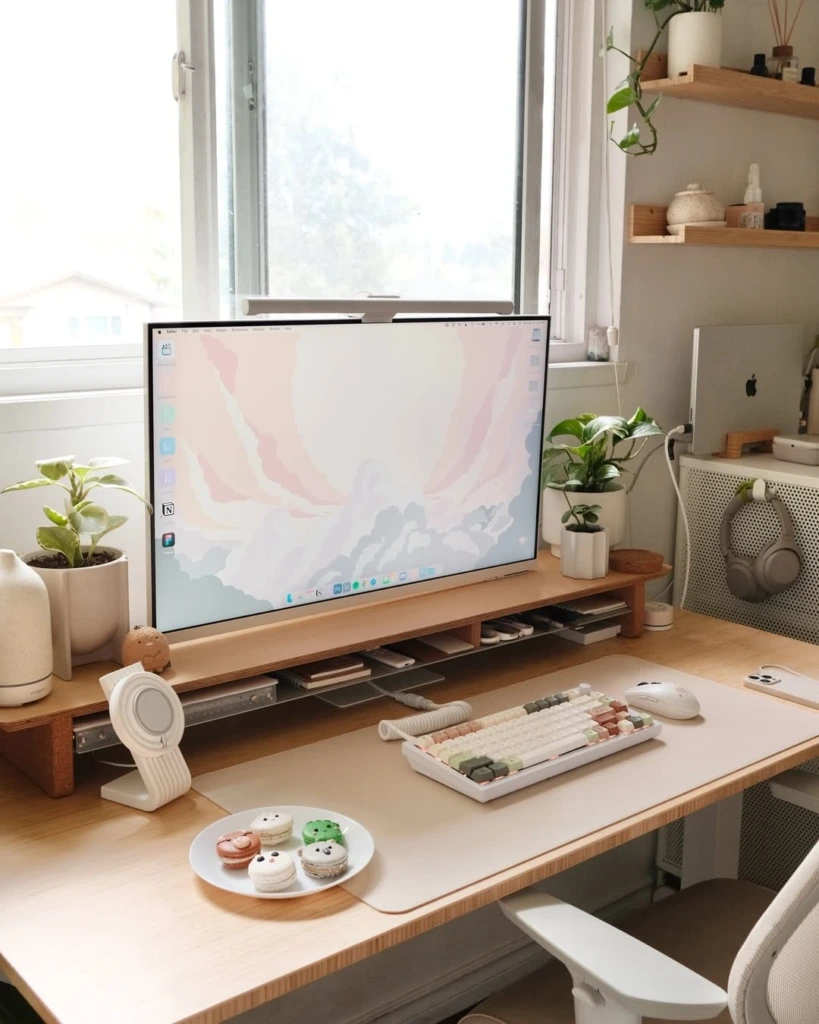
Minimalist desk organization doesn't have to feel cold or impersonal. Natural wood, soft lighting, and carefully chosen accessories can bring warmth to a simple workspace without sacrificing its clean appearance.
Choose a desk with a smooth wooden surface and limit visible accessories to the items you use every day. A small wooden organizer can hold pens, sticky notes, and charging essentials while keeping everything contained.
Use drawers or covered storage boxes for extra stationery, documents, and electronic accessories. This prevents small objects from gradually spreading across your work area.
Introduce warmth through a linen desk mat, a warm-white lamp, or a small indoor plant. Maintaining some empty desk space is equally important because it provides room for writing, reading, and completing tasks comfortably.
3. Romantic Productivity
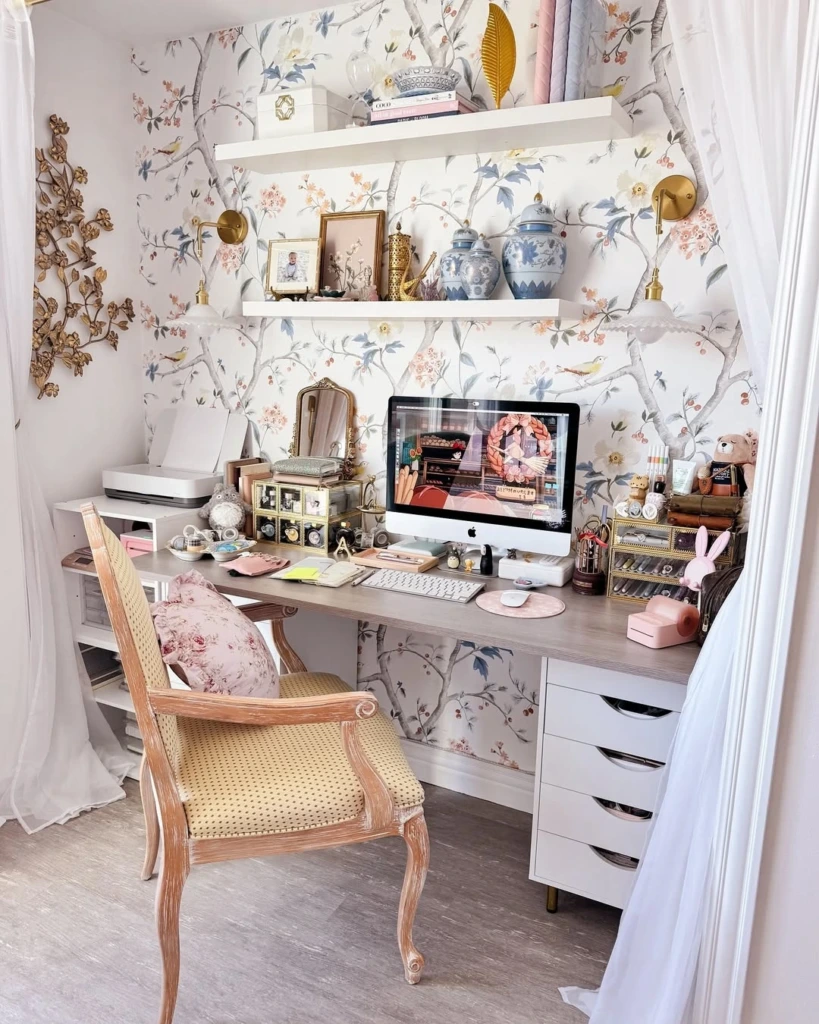
A romantic-inspired desk brings delicate details and elegant organization together. Soft pinks, creamy whites, floral patterns, and subtle metallic accents create a charming environment that still supports productive work.
Begin with a light-colored desk and organize your stationery using matching trays or decorative containers. A glass pen cup, small jewelry-style dish, or gold-toned paperclip holder can make ordinary supplies look intentional.
Keep notebooks and planners stacked neatly or arranged vertically in a compact file organizer. Choose a decorative desk lamp that provides adequate task lighting rather than relying on ambient lighting alone.
Fresh flowers or a small arrangement of dried stems can add personality without taking over the surface. The key is to keep decorations grouped in one area so your main working space stays open and functional.
4. Calm Cottage Coding
A cottage-inspired workspace offers a comfortable alternative to highly technical desk setups. Natural materials, vintage details, and practical computer accessories work together to create a cozy environment for long working sessions.
A wooden desk provides the foundation, while woven baskets and small storage boxes help manage cables, adapters, and miscellaneous supplies. Choose containers with lids when you want to keep the surface visually tidy.
Place your monitor on a sturdy riser and store frequently used notebooks underneath if there is enough clearance. A soft desk mat can make the keyboard area more comfortable while introducing texture.
Decorate with a small framed print, a ceramic mug for pens, or a low-maintenance plant. Avoid positioning bulky decorations near ventilation openings or electronic equipment.
This arrangement works particularly well for programmers, writers, and remote workers who want a functional workstation with a welcoming, home-inspired atmosphere.
5. Green-Filled Focus Zone
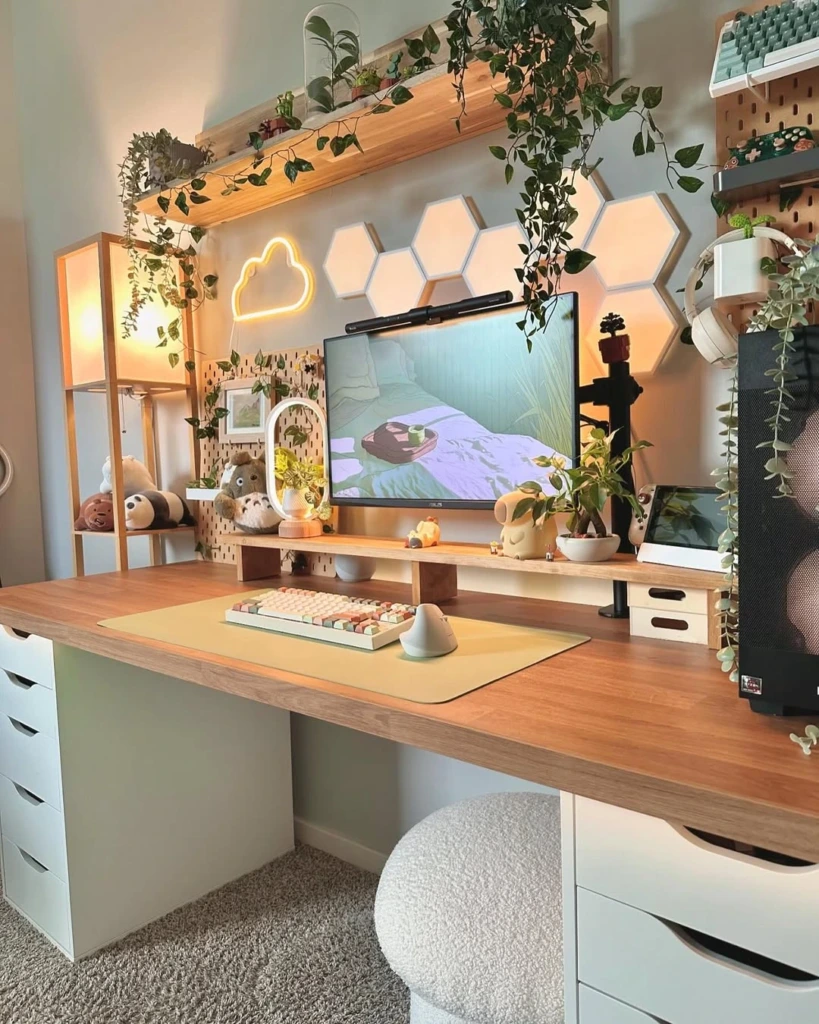
Plants can make a desk feel fresher and more connected to nature. A green-filled workspace uses greenery as its main decorative feature while keeping organization simple and practical.
Start by selecting plants suited to your available light. Pothos, snake plants, and certain philodendrons are popular indoor options, although their care requirements differ.
Position smaller plants on shelves or in corners where they won't interfere with your keyboard, documents, or monitor. Use waterproof saucers to protect wooden surfaces from moisture.
Pair the greenery with natural storage materials such as bamboo trays, wooden pencil cups, or neutral fabric bins. These accessories complement the plants without creating unnecessary visual competition.
Keep watering supplies away from electronics and avoid overcrowding the desktop. A few healthy, well-placed plants usually create a better arrangement than numerous pots competing for limited working space.
6. Cozy Layers, Clean Lines
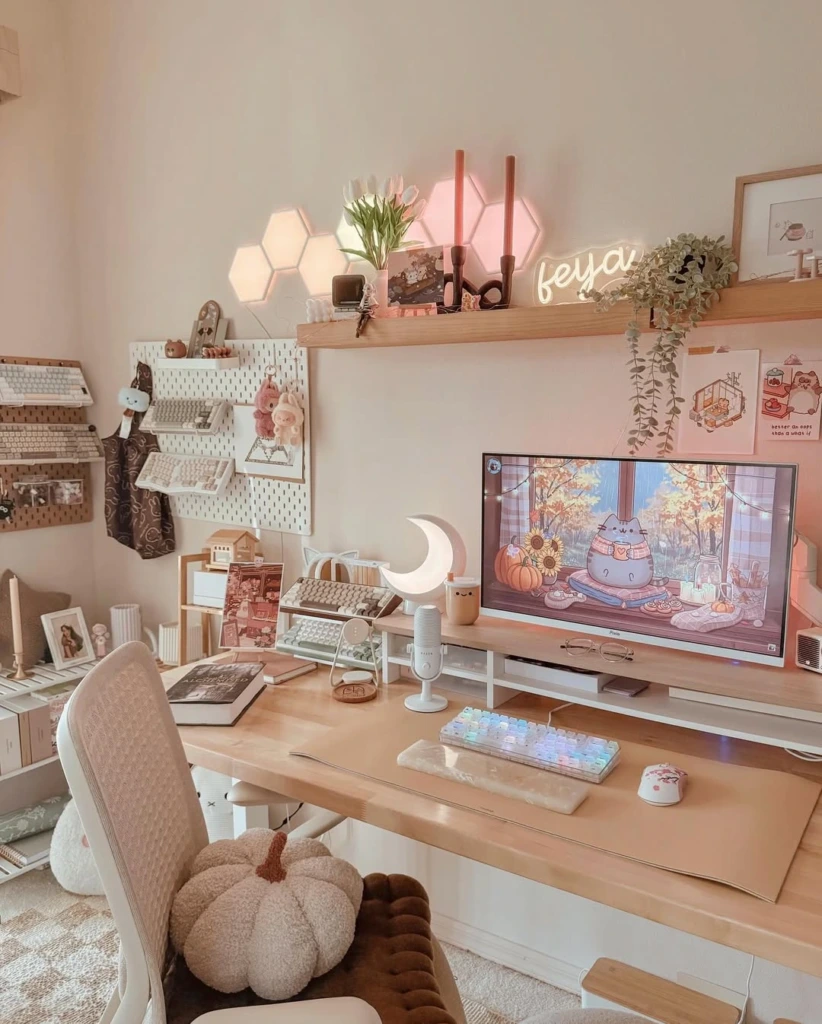
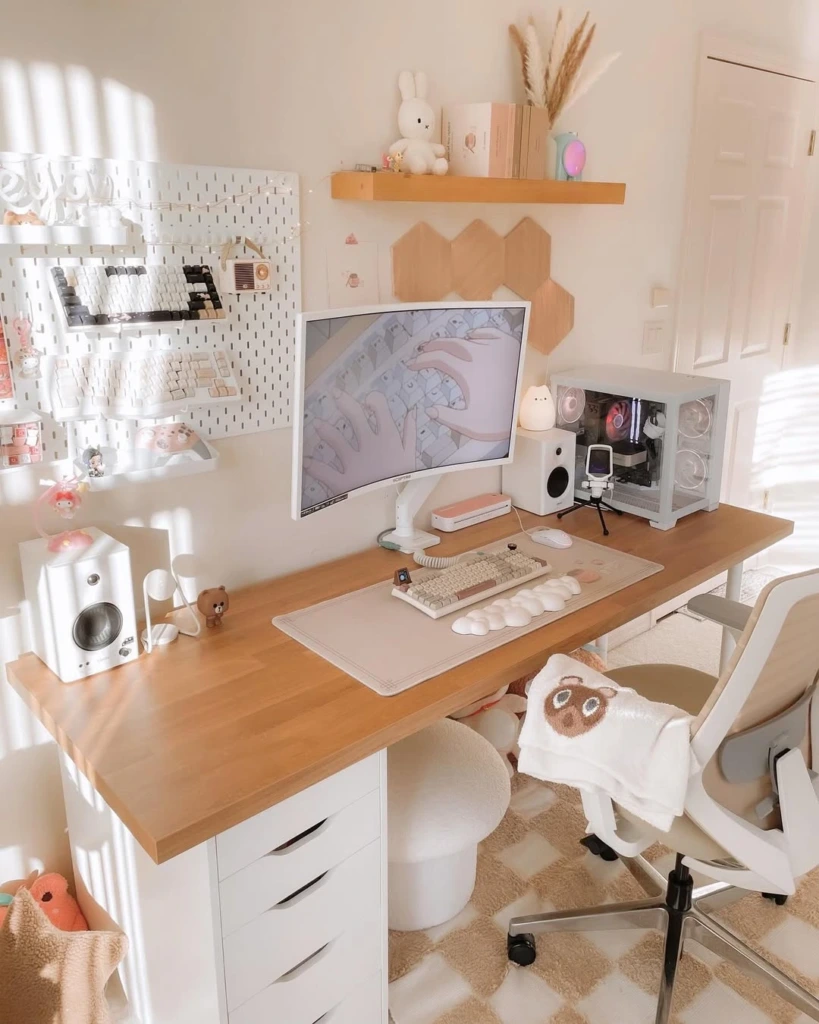
Combining soft textures with structured furniture creates a desk that feels comfortable without appearing messy. This approach works especially well in bedrooms, shared living areas, and compact home offices.
Choose a desk with a simple silhouette and introduce texture through a fabric desk mat, upholstered chair, or small woven storage basket.
Use rectangular trays to group stationery and other small essentials. Their defined edges help maintain a clean appearance even when several objects are stored together.
A slim desk lamp and vertical document holder can provide functionality without occupying excessive surface area. If you enjoy keeping a blanket nearby, place it over the back of your chair rather than leaving it on the desk.
The contrast between cozy materials and organized lines makes the workspace feel inviting while preserving the structure needed for everyday tasks.
7. Soft Autumn Desk Dreams
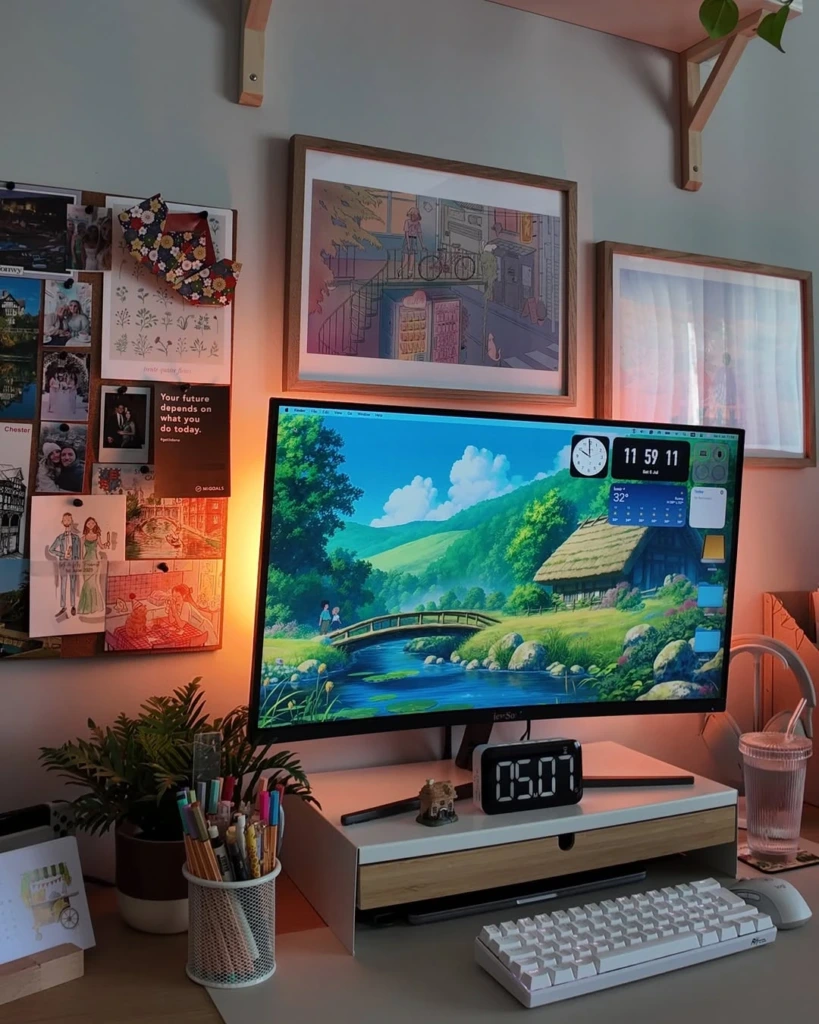
An autumn-inspired desk introduces warm colors and natural textures that feel comfortable throughout the year. Rust, caramel, muted orange, cream, and walnut tones can create a welcoming atmosphere without requiring seasonal decorations.
Begin with a warm wood desk or add a brown desk mat to an existing surface. Use small wooden containers to organize writing tools and office accessories.
A corkboard above the desk can hold reminders, calendars, and inspiration without taking up valuable tabletop space. Keep pinned materials arranged in clear sections so important notes remain easy to find.
Add a warm-toned lamp and a small ceramic vase for visual interest. Dried botanical arrangements can reinforce the seasonal palette while requiring little maintenance.
For a balanced result, limit decorative items to one corner and reserve the center of the desk for your primary work.
8. Creative Calm, Perfectly Styled
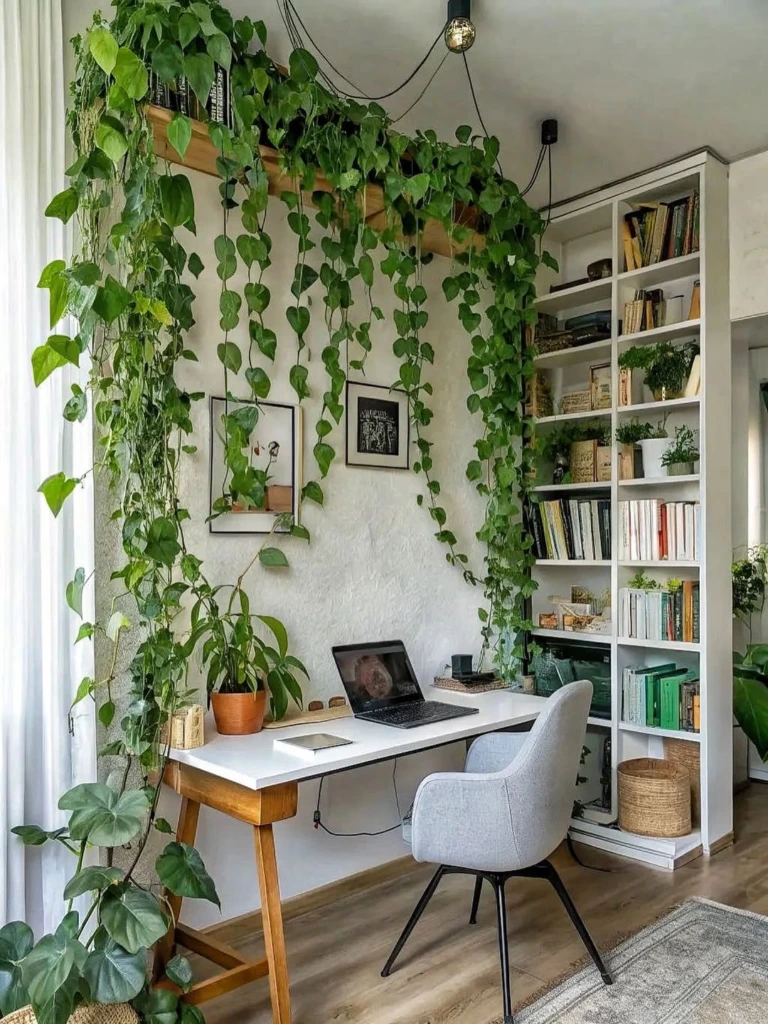
Creative workspaces often need room for multiple tools, materials, and ongoing projects. A calm, styled arrangement makes these supplies accessible without allowing them to overwhelm the desk.
Divide your workspace into practical zones. Keep the center clear for active projects, position frequently used tools to one side, and reserve shelves or drawers for additional materials.
Clear containers work well for markers, brushes, scissors, and other supplies because their contents are easy to identify. Matching labels can make storage even more efficient.
Install a pegboard or wall-mounted organizer if your desk has limited space. This allows you to display creative tools while keeping the working surface open.
Choose a restrained color palette for storage accessories, then let your artwork, notebooks, or inspiration board provide the visual personality.
9. Soft Glow Productivity
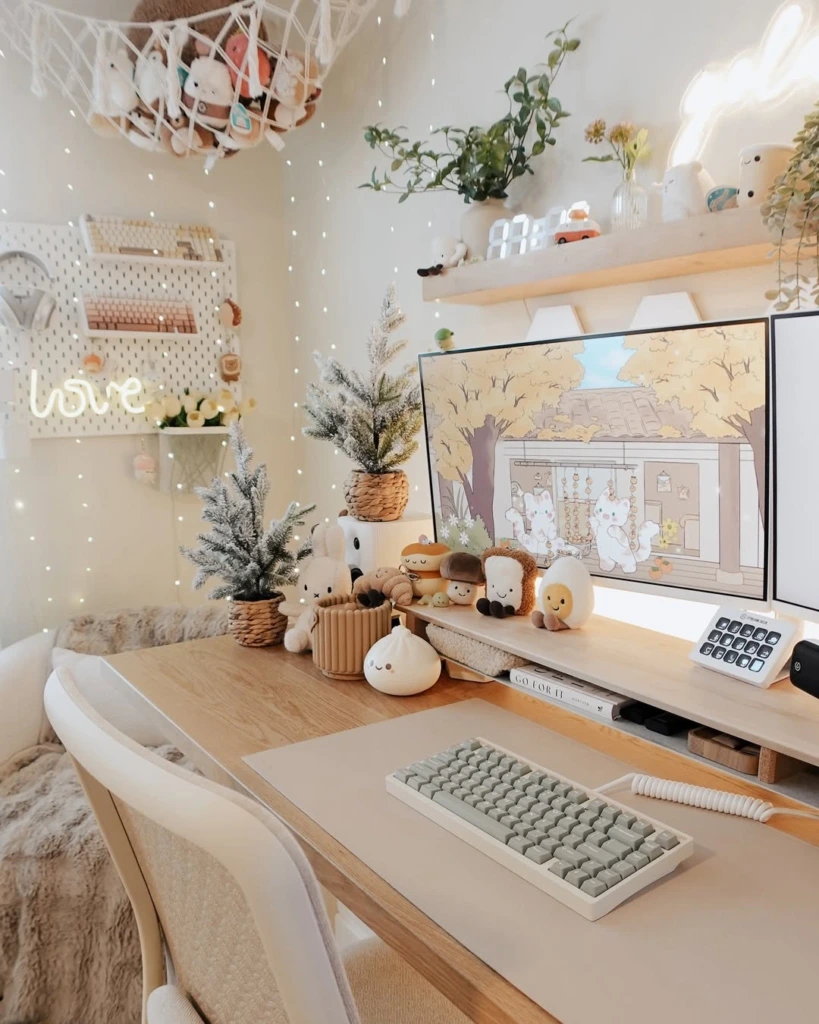
Lighting plays an important role in creating a comfortable desk environment. A soft-glow workspace combines practical task lighting with gentle background illumination for a welcoming atmosphere.
Place an adjustable desk lamp where it illuminates your work without creating distracting reflections on your monitor. If you use your computer frequently, indirect lighting behind the screen may help reduce the contrast between a bright display and a dark room.
Choose warm or neutral lighting according to your activities and personal preference. Reading printed documents may require brighter illumination than casual computer use.
Keep lighting cables secured behind the desk using clips or a cable management sleeve. Small accessories such as a pen holder and notebook tray can maintain order around the lamp.
Avoid placing multiple decorative lights across the desktop. One effective task light and a carefully positioned ambient source are often sufficient.
10. Clean & Timeless Work Core
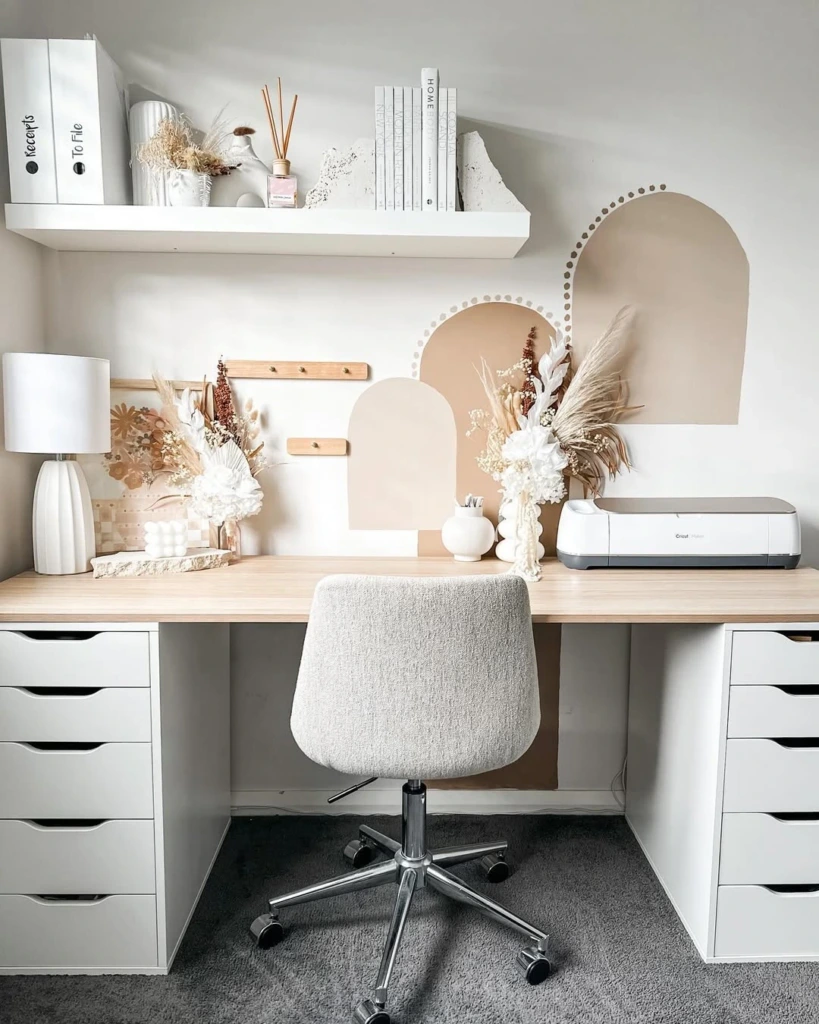
A timeless desk arrangement focuses on durable materials, dependable storage, and a professional appearance that won't feel outdated when design trends change.
Choose a desk in a classic finish such as oak, walnut, white, or matte black. Pair it with a comfortable chair and a practical desk lamp.
A simple desktop organizer can hold pens, paperclips, and sticky notes, while a vertical file holder keeps active documents accessible. Store older paperwork in labeled folders or a filing drawer.
Use a monitor stand if necessary to improve screen positioning and create additional storage space. Keep charging equipment and power cables away from the main working area.
This style is particularly suitable for professional home offices because it prioritizes organization, comfort, and everyday efficiency over decorative trends.
11. Soft Memory Desk
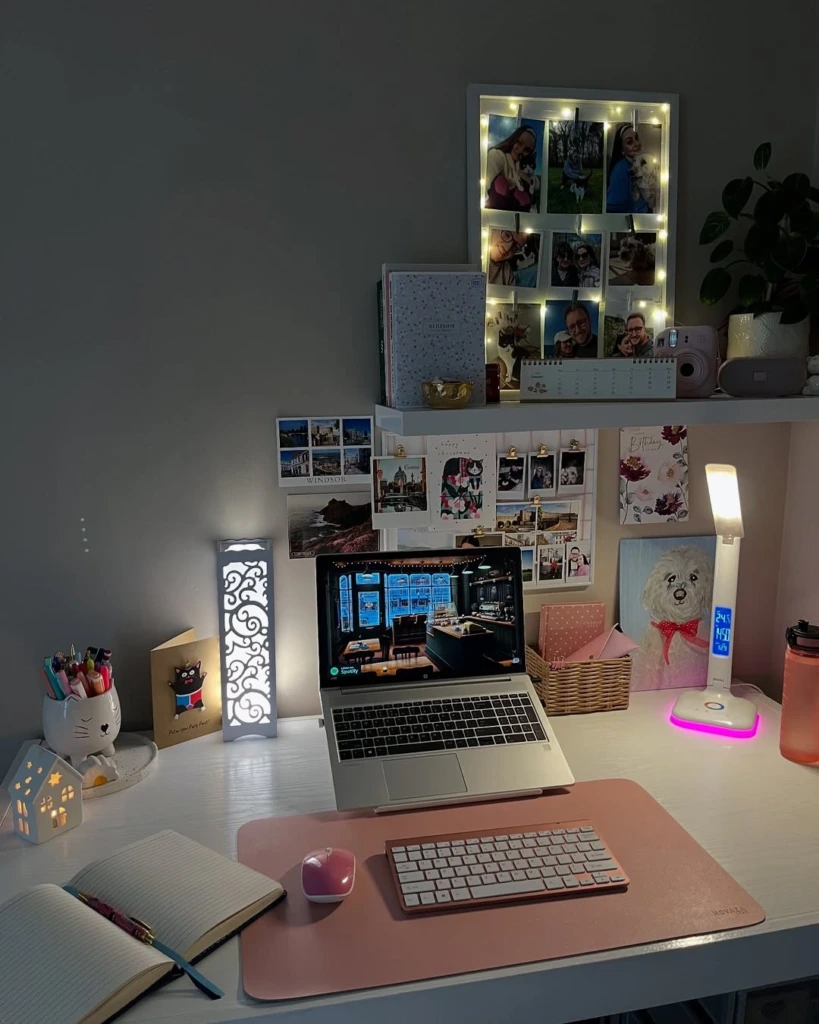
A memory-inspired workspace makes room for meaningful photographs, keepsakes, and personal objects without turning the desk into a crowded display.
Choose a few items that genuinely make you happy, such as a framed family photograph, a travel souvenir, or a handwritten note. Arrange them together on a small shelf or decorative tray.
Use matching storage boxes for supplies that don't need to remain visible. This creates a clear distinction between personal decorations and functional work essentials.
A compact photo display or wall-mounted memory board can provide additional room for sentimental items while protecting your working surface.
Keep the number of visible keepsakes manageable and rotate them occasionally. This allows your workspace to reflect your experiences while remaining organized and practical.
12. Heritage Meets Home Office
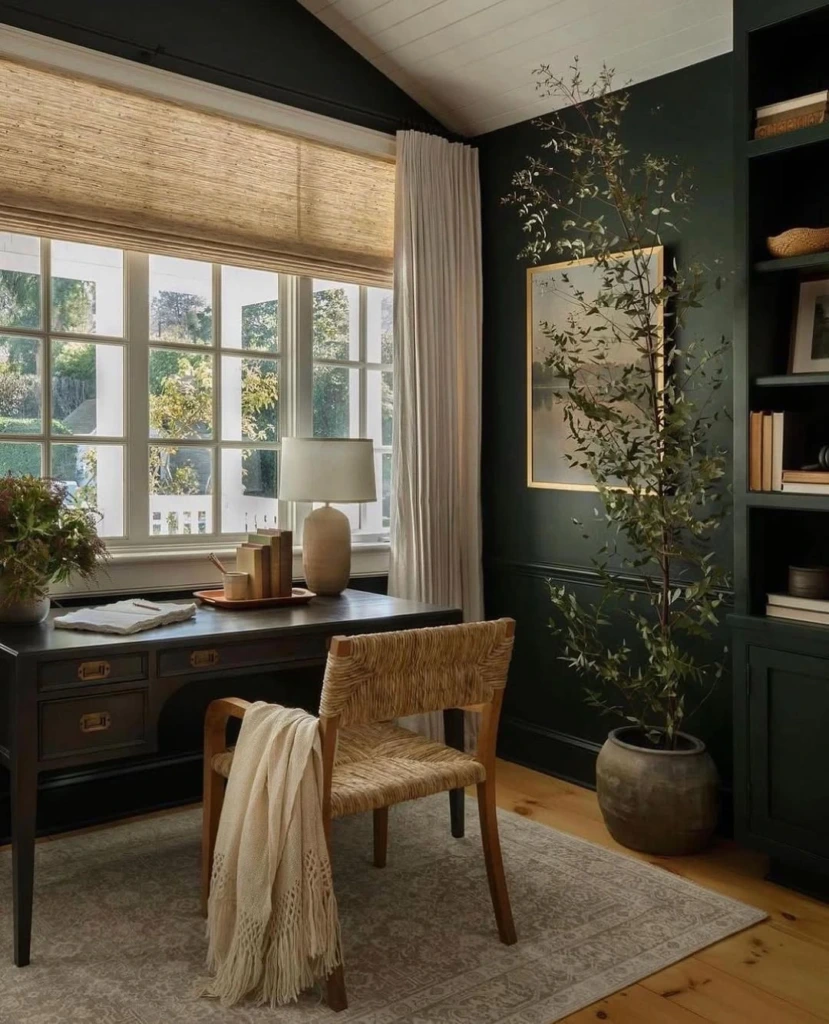
A heritage-inspired home office combines traditional furniture details with modern organizational solutions. Rich wood finishes, classic stationery accessories, and structured storage create a sophisticated workspace.
Start with a wooden desk or introduce traditional character through a leather-look desk mat and brass-toned accessories.
Use a sturdy letter tray for incoming documents and a separate folder for paperwork requiring attention. A wooden desktop drawer unit can hold smaller supplies while maintaining the classic appearance.
A traditional adjustable desk lamp provides both visual character and useful lighting. Framed artwork or a vintage-style clock can complete the arrangement.
Modern necessities, including chargers, USB hubs, and computer accessories, should have designated storage spaces. This keeps the traditional look intact without compromising functionality.
13. Gentle Pastel Focus
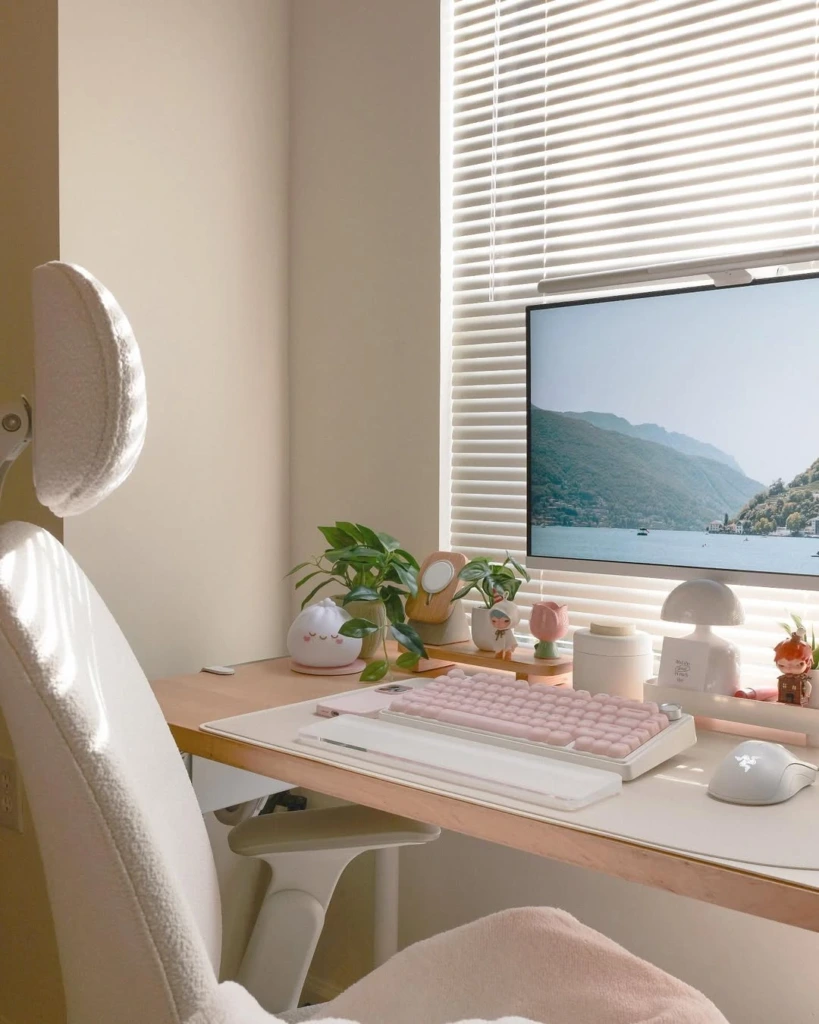
Pastel colors offer a cheerful way to organize a workspace without relying on bold or distracting decorations. Soft lavender, sage green, powder blue, peach, and pale pink work especially well with white or light wood furniture.
Choose two or three coordinating colors rather than introducing every pastel shade at once. Use these colors consistently across your stationery holders, desk mat, notebooks, and storage containers.
Small stackable drawers can organize sticky notes, clips, charging accessories, and other everyday items. Labeling each compartment makes it easier to maintain the arrangement.
Keep larger objects, such as your monitor and keyboard, visually simple so the pastel accessories remain the main design feature.
This setup is ideal for students, planners, and anyone who enjoys a bright workspace with a gentle, coordinated appearance.
14. Clean Lines, Quiet Confidence
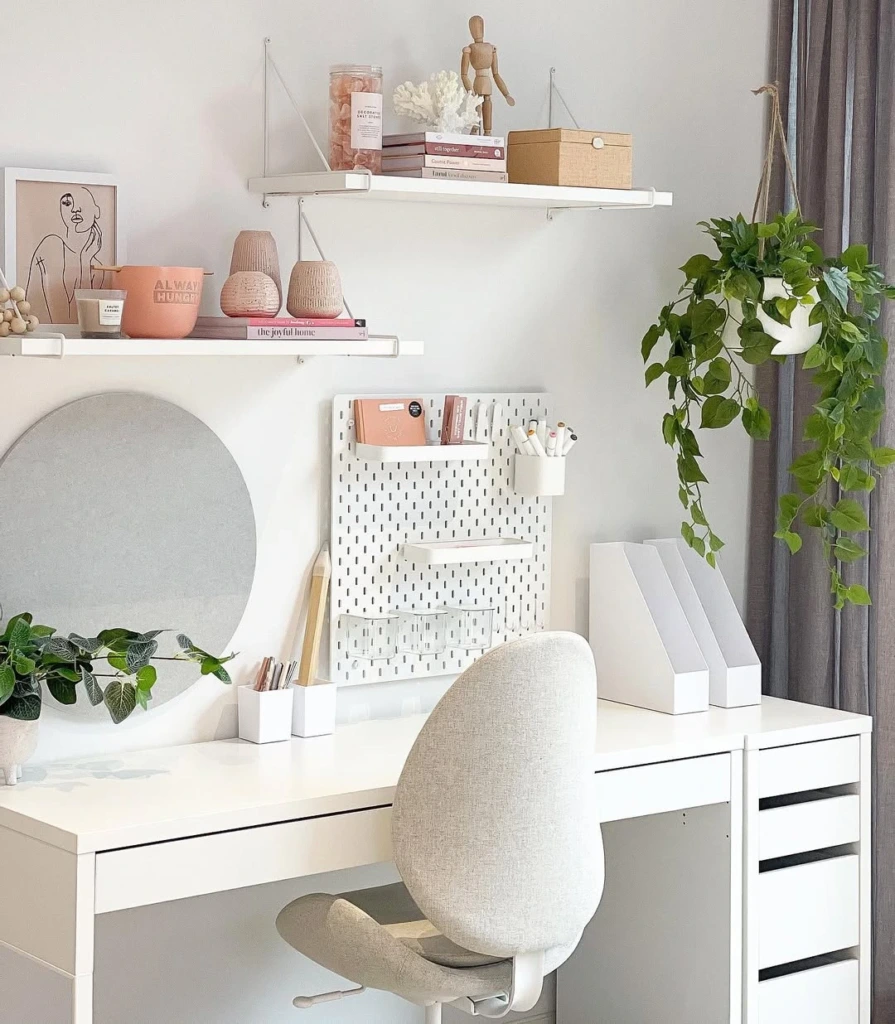
A workspace built around clean lines creates a sense of order through symmetry, simple shapes, and purposeful storage. It suits people who prefer a modern environment with minimal visual distractions.
Choose furniture with straight edges and avoid excessive decorative detailing. Position your monitor centrally and place frequently used accessories within comfortable reach.
A slim desk organizer can keep stationery grouped without disrupting the overall layout. Use a narrow document holder or vertical file rack to prevent papers from spreading across the surface.
Store cables in an under-desk tray and keep power strips secured away from foot traffic. A single framed print or small plant can soften the arrangement without making it feel crowded.
The result is a focused workspace where every object has a clear purpose and location.
15. Everyday Minimal with Warmth
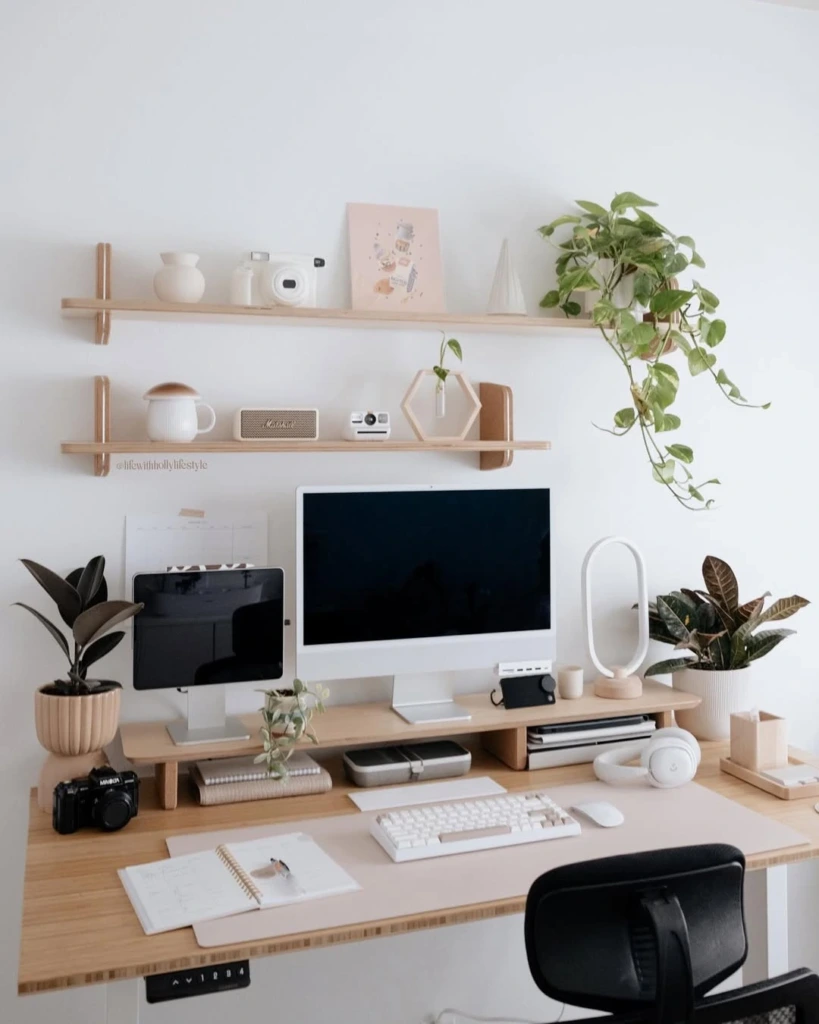
Everyday minimalism is about making organization realistic and sustainable. Rather than aiming for a perfectly empty desk, focus on keeping the essentials accessible and removing items that interfere with your routine.
Start by identifying what you use during a typical workday. Your computer, notebook, favorite pen, and water bottle may deserve permanent places, while occasional supplies can stay in drawers.
Choose warm neutral colors and practical materials such as wood, felt, and ceramic. These details help a simple arrangement feel comfortable rather than overly formal.
A small catchall tray can collect frequently used accessories, preventing them from spreading across the desk. Empty and reorganize it regularly so it doesn't become a storage spot for forgotten objects.
This approach is especially effective for busy households because it is easy to reset after a long day.
16. Soft Neutrals, Styled Calm
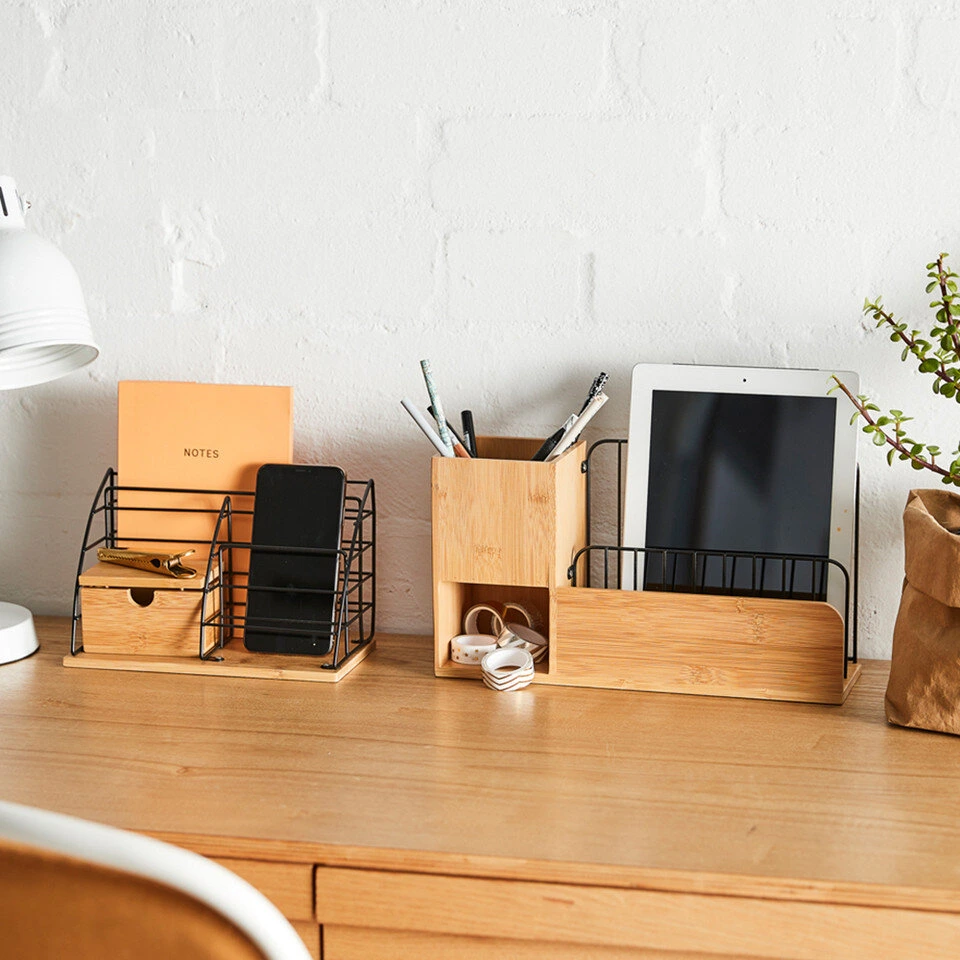
Neutral desk organization relies on subtle differences in color and texture to create an attractive workspace. Shades of ivory, beige, taupe, cream, and light gray can make a small desk feel visually consistent.
Begin with a neutral desk mat and select storage accessories in complementary tones. Fabric-covered boxes, ceramic pen holders, and light wooden trays can introduce variety without overwhelming the arrangement.
Keep paper documents in matching folders or a compact file organizer. Store extra office supplies in closed containers to maintain a clean appearance.
Introduce a little contrast through a dark monitor, black lamp, or natural greenery. Without contrast, an entirely neutral setup can appear flat.
This style works particularly well in multipurpose rooms where the desk needs to blend naturally with surrounding furniture.
17. Sunlit Work Ritual
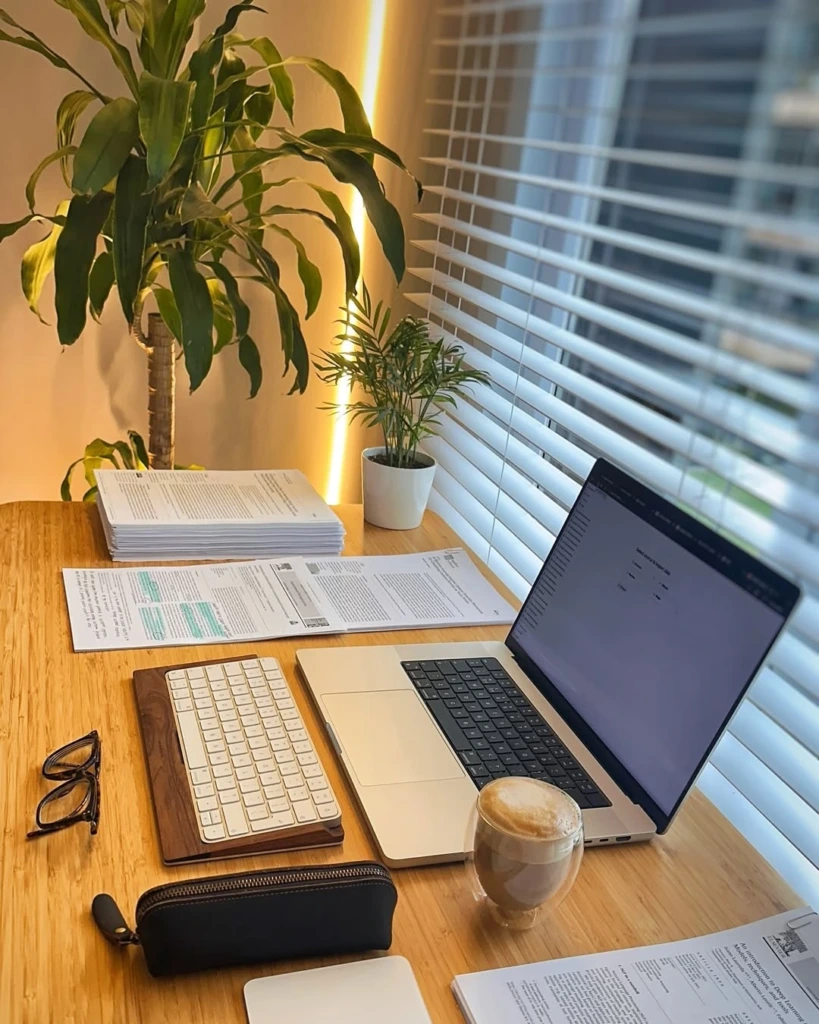
A desk positioned near natural light can create a pleasant environment for morning planning, reading, and creative tasks. Thoughtful organization helps you enjoy the brightness while minimizing glare and distractions.
Place the desk near a window when possible, ideally with the window to the side of your monitor rather than directly behind or in front of it.
Keep the windowsill and surrounding desk area relatively clear so natural light can reach the workspace. A small plant or simple vase can provide decoration without blocking the view.
Use a compact notebook stand or tray to organize daily planning materials. Keep pens and other frequently used tools in a single container.
Adjustable blinds or curtains can help manage harsh sunlight during different times of day. With the right positioning, this setup supports a comfortable routine while maintaining an airy appearance.
18. Soft-Tech Studio Feel
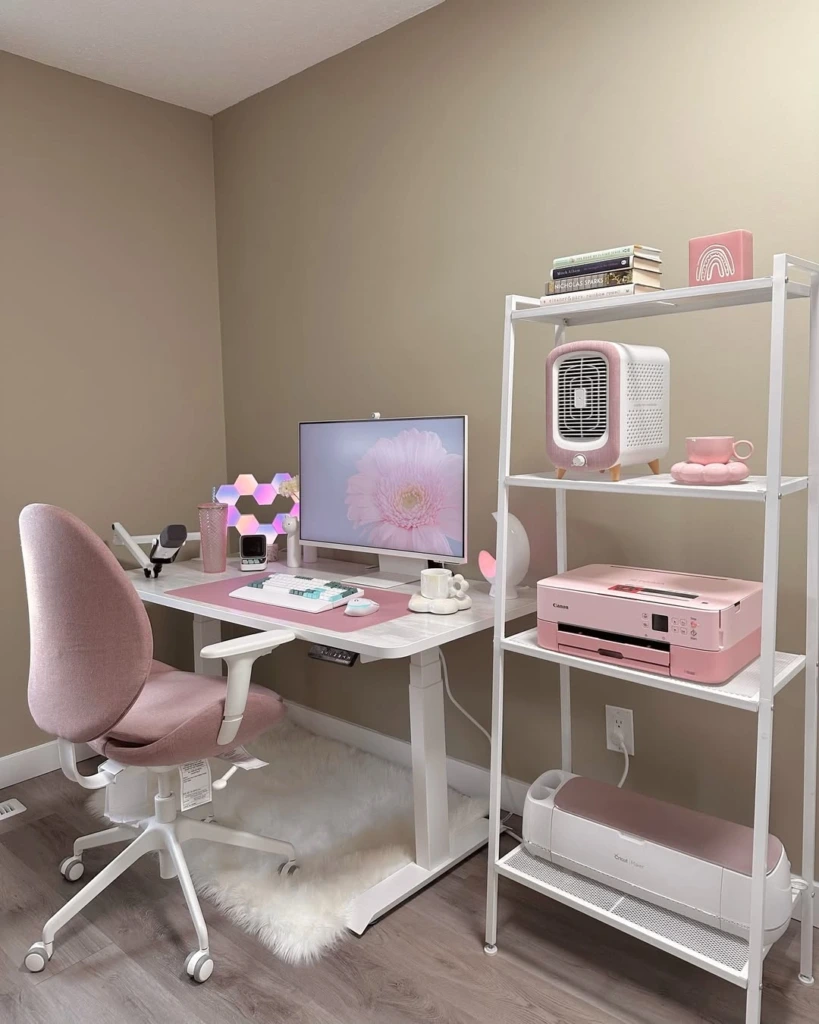
A soft-tech studio blends digital equipment with creative workspace organization. It is particularly useful for designers, content creators, editors, and people who use several electronic devices.
Begin by organizing your primary equipment around your most frequent tasks. Position the monitor, keyboard, drawing tablet, or laptop so each item can be reached comfortably.
Use an under-desk cable tray and labeled cable ties to manage power cords and device connections. Keep portable drives, adapters, and memory cards in a dedicated organizer.
A monitor arm may free additional desk space if the desk and arm are compatible. Floating shelves can provide room for headphones, speakers, and decorative accessories.
Choose soft neutral colors to balance the technical equipment. A simple desk mat and warm lighting can make the studio feel less industrial while preserving its professional functionality.
19. Pure Minimal Balance
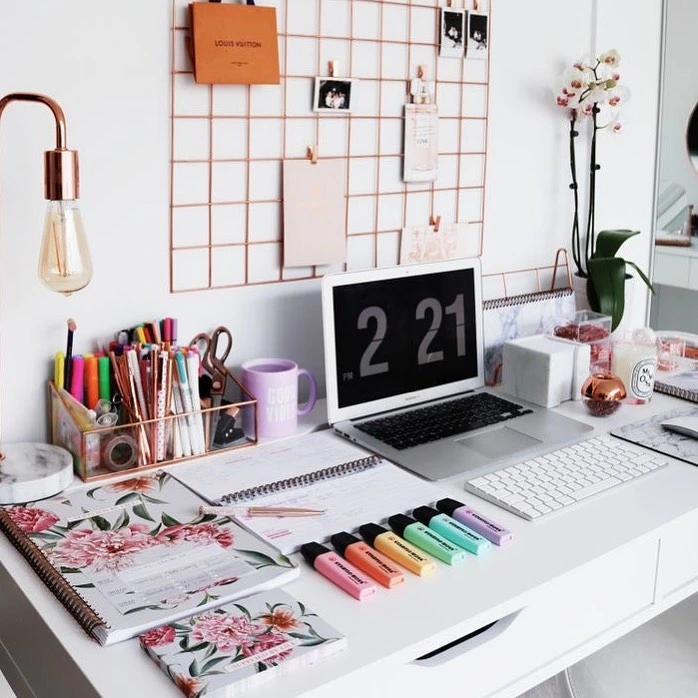
Pure minimal organization emphasizes open space, carefully selected essentials, and consistent maintenance. The goal is not to eliminate everything from your desk but to ensure each visible object earns its place.
Begin by clearing the surface completely and returning only the equipment required for your daily tasks. Consider whether every accessory needs to remain within reach.
Use hidden drawers, a compact storage cabinet, or an under-desk organizer for additional supplies. Keep similar items together so they are easy to locate.
A single pen holder, one notebook, and a practical lamp may be enough for a simple setup. If you need additional storage, prioritize vertical solutions over spreading containers across the tabletop.
Spend a few minutes at the end of each workday returning items to their designated places. This habit helps preserve the balanced appearance over time.
20. Collected Creative Archive
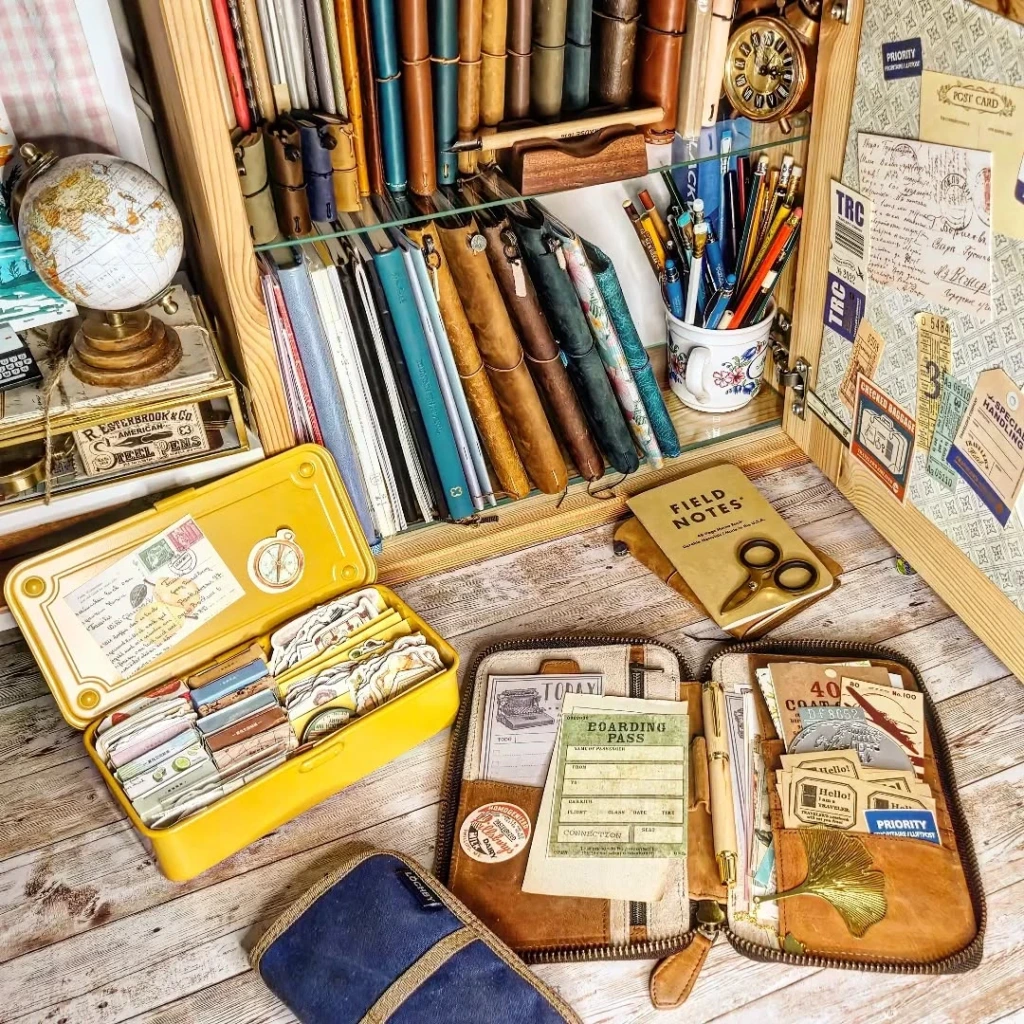
A collected creative archive is ideal for people who work with sketches, printed references, journals, photographs, or other physical materials. It celebrates creative collections while giving them an organized structure.
Use labeled folders, magazine files, or shallow drawers to separate different projects. Arrange materials by category, date, or frequency of use depending on your workflow.
A wall-mounted pinboard can display current inspiration without covering the desk. Replace outdated references regularly to prevent the board from becoming overcrowded.
Small containers can hold art tools, paper clips, and other accessories. Choose sturdy storage that can accommodate the weight and dimensions of your materials.
Keep active projects within reach and archive completed work elsewhere. This allows the desk to remain useful for current tasks while preserving important creative resources.
21. Timeless Oak Calm
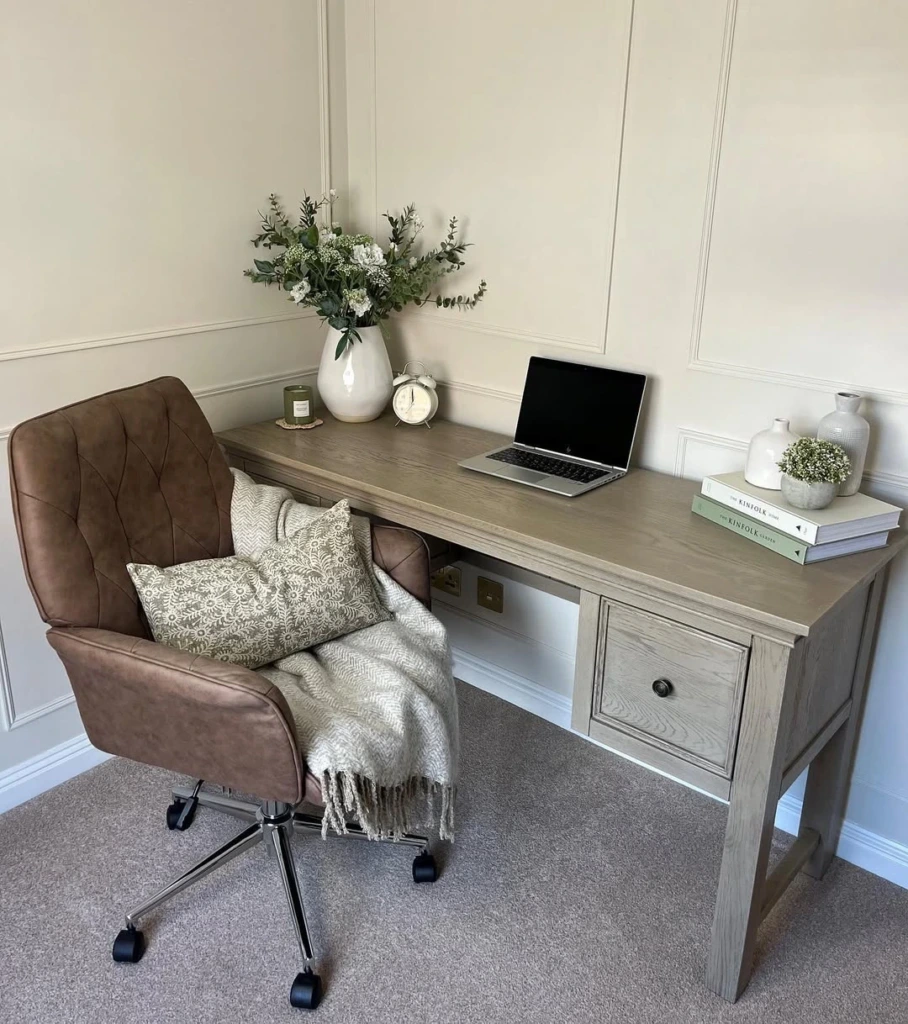
Oak furniture brings natural character to a workspace while providing a versatile foundation for different organization styles. Its warm appearance pairs easily with neutral accessories, modern technology, and simple decorations.
Choose an oak desk or incorporate the material through a monitor riser, drawer organizer, or small shelf.
Maintain a coordinated look by selecting accessories with similar wood tones or complementary neutral finishes. A felt desk mat can protect the surface and provide a comfortable area for writing.
Use drawers for stationery and small electronic items. If your desk lacks built-in storage, a matching mobile drawer unit can offer extra capacity without changing the overall style.
Avoid overcrowding the desktop with wooden decorations. Allowing the natural grain to remain visible is part of what makes this arrangement appealing.
22. Drawer-Level Perfection
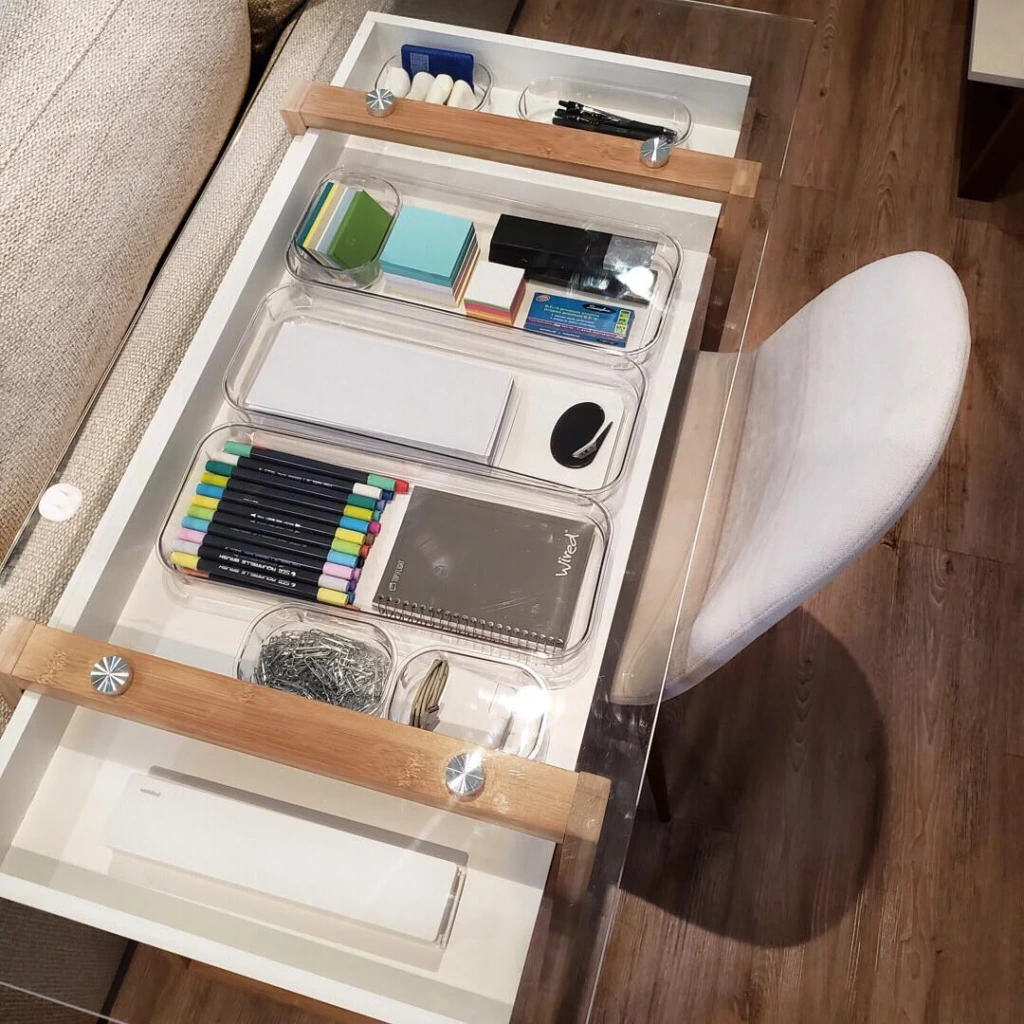
Desk drawers often become cluttered because small objects are stored together without a clear system. Drawer-level organization focuses on making every compartment useful, accessible, and easy to maintain.
Start by emptying each drawer and sorting the contents into categories. Separate writing supplies, paper products, electronics, and miscellaneous accessories.
Measure the drawer interiors before purchasing organizers. Adjustable dividers or modular trays can help accommodate different item sizes without wasting space.
Place frequently used supplies near the front and reserve deeper sections for occasional items. Keep bulky objects in larger compartments rather than forcing them into narrow organizers.
A simple layout works well for most drawers:
- Front compartments: pens, clips, sticky notes, and other quick-access essentials.
- Back compartments: spare cables, refills, and less frequently used supplies.
Consider using non-slip drawer liners to prevent trays from shifting. Review the contents occasionally and remove dried-out pens, unnecessary duplicates, and unused accessories.
An organized drawer system keeps the desktop cleaner because every small item has a designated storage location.
23. Practical Meets Playful
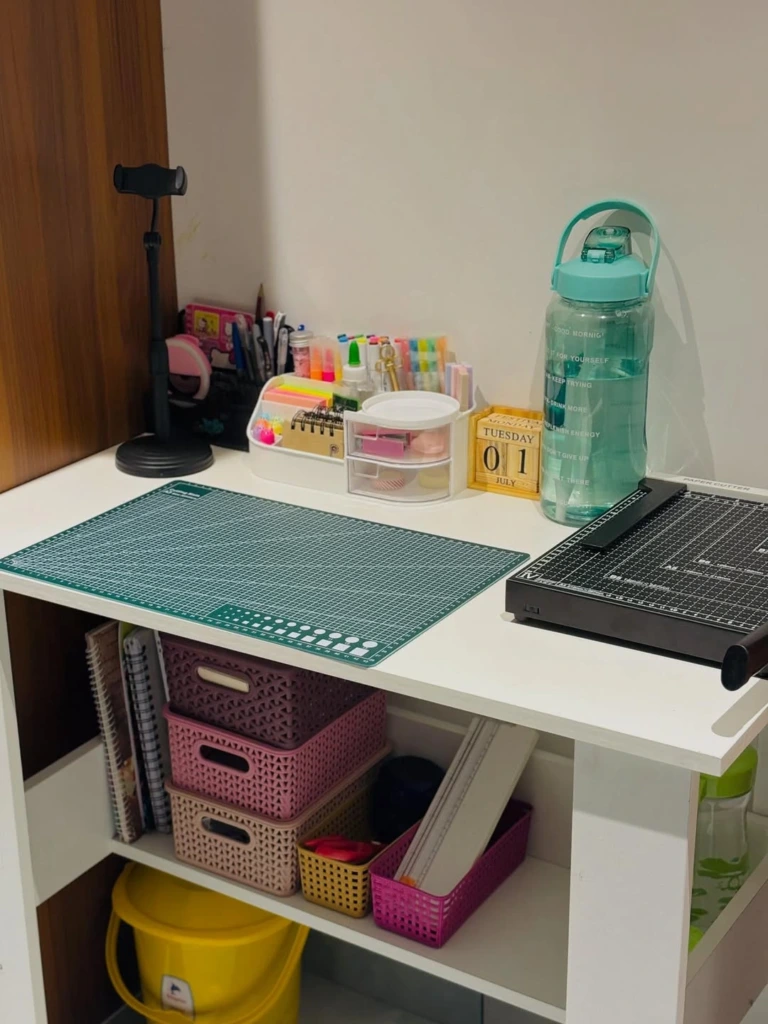
A playful desk can encourage creativity while remaining efficient. Bright accents, unusual accessories, and cheerful stationery add personality without requiring a complicated setup.
Start with a functional foundation, including a clear working area, reliable lighting, and enough storage for your essentials.
Introduce color through a patterned desk mat, decorative pen holder, or vibrant notebook collection. Choose a limited palette so the arrangement feels coordinated rather than chaotic.
Use small containers to group colorful stationery and accessories. A pegboard can display supplies in an attractive arrangement while keeping the desk surface free.
Keep novelty decorations away from your primary work zone. The most successful playful workspaces use personality as an accent while allowing organization to remain the priority.
24. Pretty Planner Energy
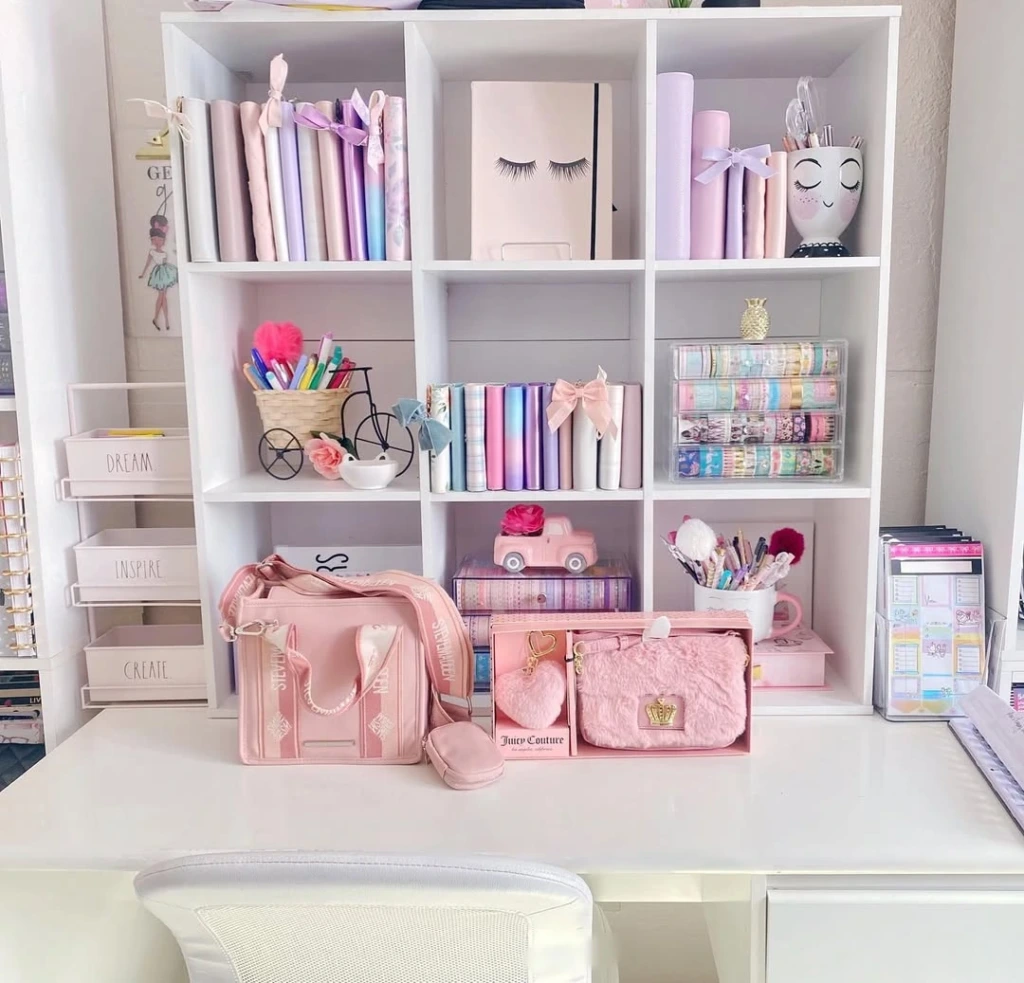
A planner-focused desk is designed for people who enjoy scheduling, journaling, goal setting, and keeping track of daily responsibilities. The arrangement makes planning supplies easy to access while maintaining a polished appearance.
Dedicate one area of the desk to your planner, calendar, and favorite writing tools. A small vertical organizer can hold notebooks without requiring a large amount of surface space.
Separate stickers, sticky notes, washi tape, and other planning accessories into labeled containers. Clear drawers are particularly useful when you want to identify supplies quickly.
A desktop calendar or wall-mounted schedule can provide an overview of upcoming commitments. Avoid displaying too many overlapping calendars, as this can make information harder to manage.
Choose coordinating stationery and a comfortable writing surface to create an enjoyable planning routine. Keep your most frequently used planner within easy reach so it becomes a natural part of your day.
25. Polished Workday Balance
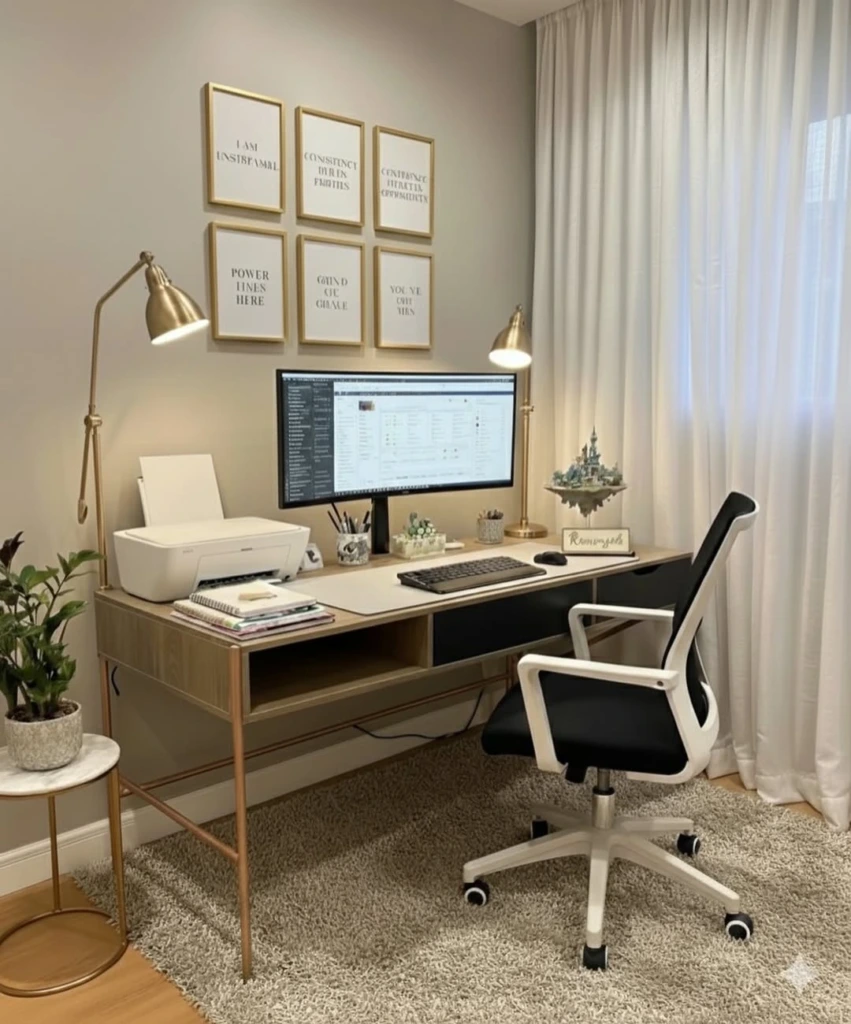
A polished desk setup supports professional responsibilities while maintaining a comfortable, attractive appearance. It works well for video meetings, administrative tasks, and regular computer-based work.
Position your monitor and keyboard to support a comfortable posture, with the screen approximately at eye level and your arms relaxed while typing.
Keep meeting essentials, such as headphones, a notebook, and a pen, in a dedicated location. Use a document tray to separate paperwork that needs attention from completed materials.
Choose storage accessories in coordinated finishes, such as matte black, natural wood, or brushed metal. A compact lamp and one understated decorative object can complete the arrangement.
If your desk appears in video calls, organize the visible background as carefully as the working surface. Shelves, books, and a small plant can create a professional setting without excessive decoration.
The overall goal is a workspace that looks composed while remaining practical during a busy workday.
26. Soft Pink Dream Desk
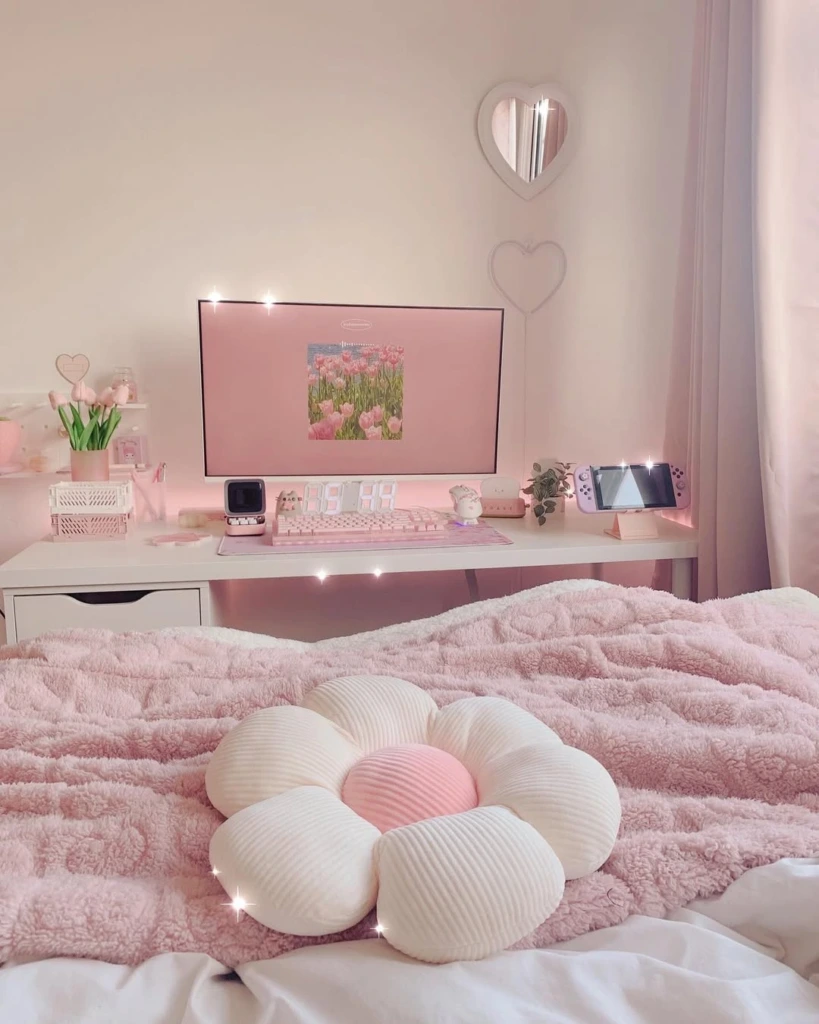
A soft pink desk creates a gentle, cheerful atmosphere through coordinated colors, delicate accessories, and practical storage. It is a popular aesthetic choice for study corners, creative workspaces, and home offices.
Start with a white or light wood desk and introduce pink through a desk mat, stationery organizer, or keyboard accessories. Choose muted blush or dusty rose shades for a softer appearance.
Use matching containers to store pens, notebooks, and small electronic accessories. A compact drawer organizer can keep extra supplies hidden while preserving the coordinated color scheme.
Pair pink accents with cream, white, beige, or subtle gold tones to create balance. A small lamp with adjustable brightness can provide useful lighting without disrupting the aesthetic.
Finish with a simple framed print, a small plant, or one decorative object. Keep the main working area clear so the setup remains functional rather than purely decorative.
Related Ideas You Might Love
- Garage Storage Ideas
- Built in Storage Ideas
- Party Theme Ideas
- Home Office Organization Ideas to Create a More Productive Workspace
Conclusion
The best desk organization ideas for 2026 combine personal style with practical storage and comfortable working conditions. Whether you prefer warm minimalism, soft pastels, natural greenery, or a technology-focused studio, an organized desk should make your daily routine easier.
Start with the essentials, give every item a designated place, and choose decorations that genuinely improve your workspace. Small changes, such as adding drawer dividers, managing cables, or improving lighting, can make a noticeable difference without requiring an expensive makeover.
A beautiful desk is most valuable when it remains easy to use. By creating a system that matches your habits and maintaining it consistently, you can enjoy a workspace that feels calm, organized, and ready for whatever the day brings.