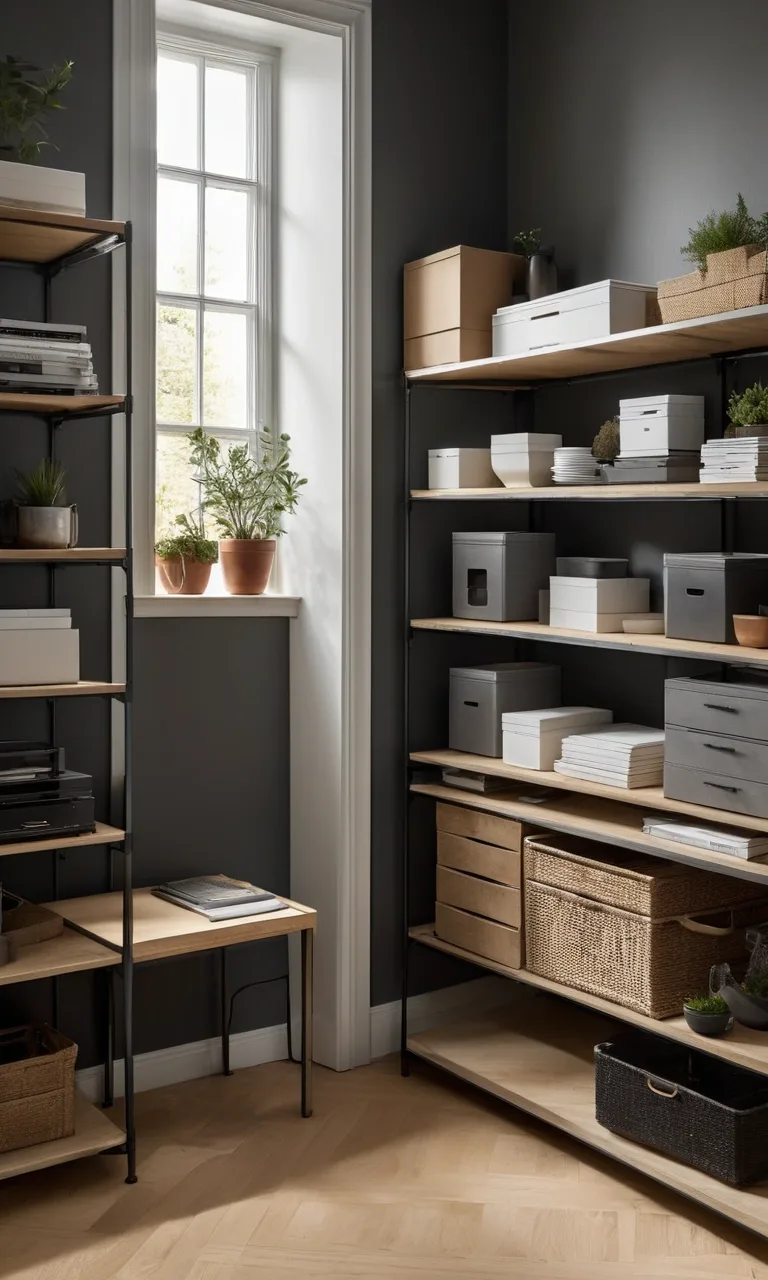
15 Car Seat Organization Ideas for 2026

A cluttered car can make even a short drive feel stressful. Between scattered toys, forgotten snacks, tangled charging cables, and misplaced essentials, the backseat quickly becomes a collection of things nobody knows where to put.
Fortunately, keeping your vehicle organized doesn't require a complete makeover or expensive accessories. A few well-chosen storage solutions can make everyday travel more comfortable while keeping frequently used items easy to find.
Whether you're managing school drop-offs, preparing for family road trips, or simply trying to maintain a cleaner interior, these 15 car seat organization ideas will help you create a practical, tidy space.
What Are Budget-Friendly Hacks for Keeping Car Seats and Surrounding Areas Organized?
Affordable car organization begins with making better use of the storage space you already have. Instead of purchasing several accessories at once, identify which items regularly create clutter and choose storage solutions that address those problems.
Small fabric pouches work well for tissues, wipes, and charging cables. Reusable zippered bags can separate children's activities, while compact containers help keep smaller belongings together.
Seatback organizers are another economical option because they take advantage of vertical space without occupying passenger seats. Choose designs with secure attachments and pockets suited to the items you carry most often.
For everyday maintenance, keep a small, secured trash container in an accessible location and empty it regularly. Remove unnecessary belongings at the end of each week so your storage areas remain useful rather than becoming overcrowded.
Most importantly, avoid placing loose containers or heavy objects where they could move during sudden braking. A tidy car should also be a safe one.
1. Backseat Command Center
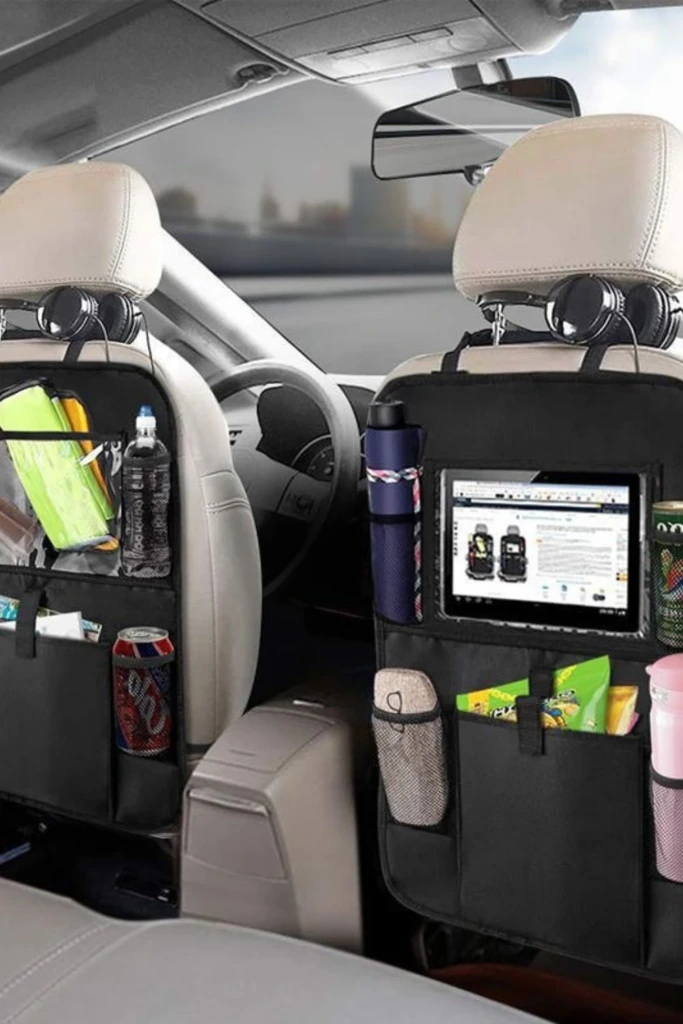
A backseat command center creates a dedicated location for the belongings passengers use throughout a journey. Rather than spreading essentials across the seats, organize them in a single, accessible storage panel.
Choose a seatback organizer featuring several pocket sizes. Reserve larger compartments for lightweight books or activity materials, and use smaller sections for tissues, wipes, and travel accessories.
Arrange items according to how frequently they're needed. Everyday essentials should be easy to reach, while less frequently used supplies can occupy lower compartments.
This setup is especially helpful for families who spend considerable time traveling between school, appointments, and activities. Just ensure the organizer is compatible with your vehicle and doesn't interfere with safety equipment.
2. Everyday Essentials Pocket
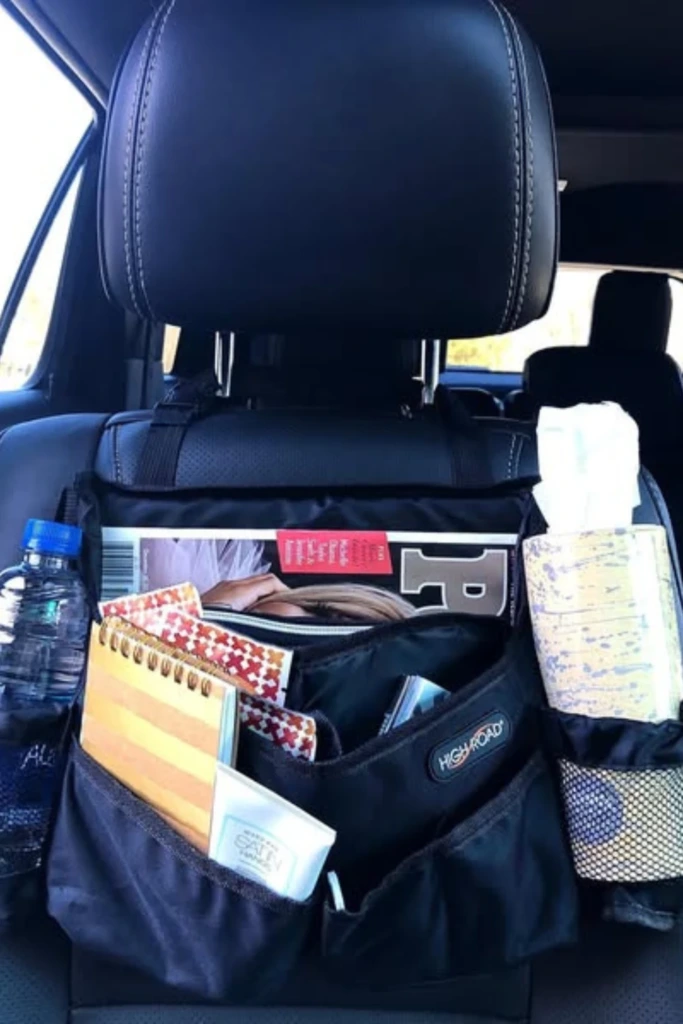
Sometimes, one compact storage pocket is all you need to keep your vehicle looking neat.
An everyday essentials organizer works particularly well for people who prefer carrying only a few useful items. A slim fabric holder attached securely to the back of a front seat can accommodate tissues, cleaning wipes, a small notebook, and other lightweight necessities.
Consider assigning separate compartments to personal care supplies and entertainment accessories. This makes finding items easier without searching through an oversized bag.
Choose washable or wipe-clean materials if children regularly use the backseat. Keeping the organizer lightly stocked also helps it maintain its shape and prevents unnecessary bulk.
3. Structured Leather Storage
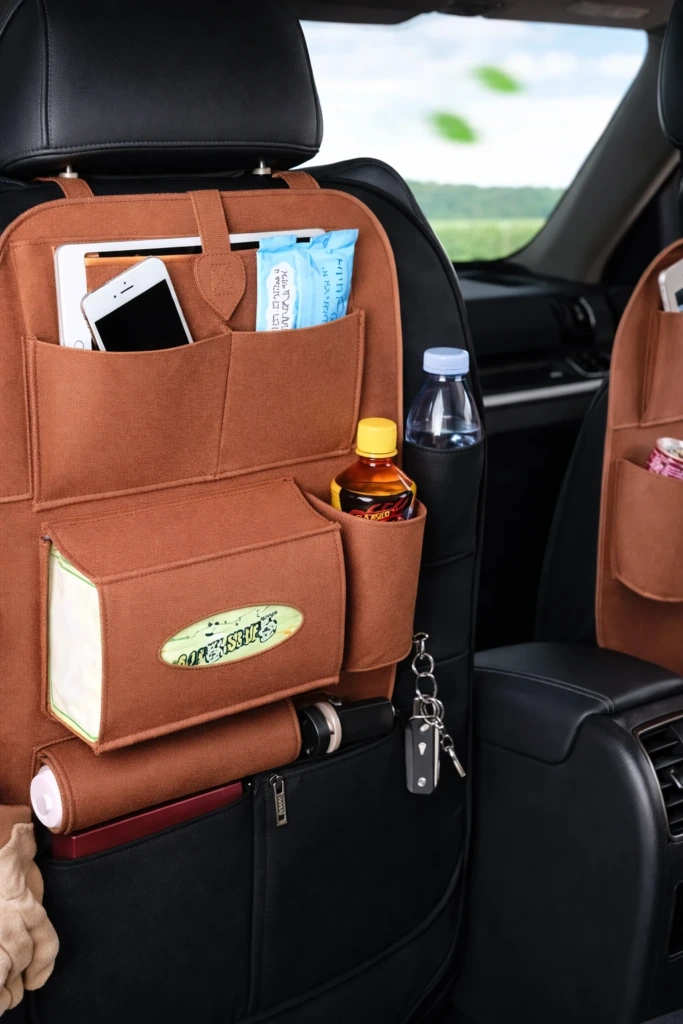
Leather-style organizers combine practical storage with a more refined interior appearance. Their structured compartments are particularly useful when you want belongings to remain separated and the storage panel to retain a neat shape.
Look for a design with reinforced stitching, secure closures, and appropriately sized pockets. A combination of narrow compartments and wider storage sections can accommodate different everyday accessories.
Brown, tan, or black finishes can complement many vehicle interiors, creating a coordinated appearance.
For easier maintenance, choose a surface that can be cleaned with a damp cloth. Avoid overfilling the pockets, and check that the organizer's straps and positioning are suitable for the vehicle's seats and safety systems.
4. Clean Leather Setup
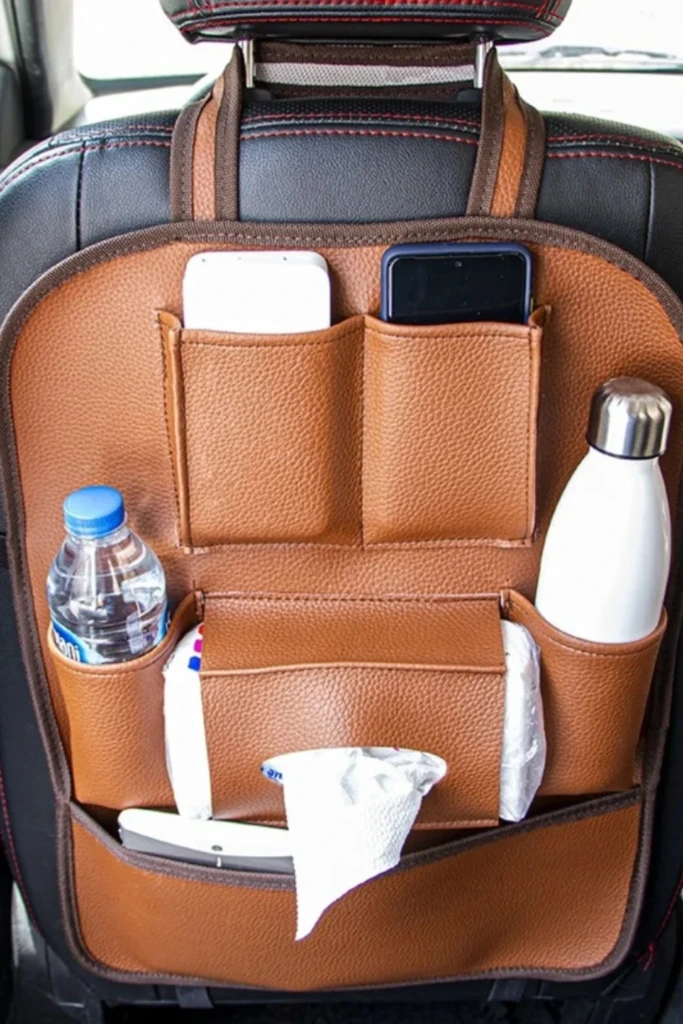
A streamlined leather organizer offers an effective solution for drivers who dislike bulky accessories.
Instead of choosing a large panel with numerous compartments, select a compact design that holds only the essentials. A few neatly arranged pockets can provide enough room for tissues, a small pack of wipes, and lightweight personal belongings.
Position items so they remain contained without protruding into passenger space. Keeping the pockets partly empty makes them easier to use and prevents the organizer from becoming distorted.
For a consistent interior style, match the organizer with your existing upholstery or select a complementary neutral color.
The result is an understated storage arrangement that supports everyday convenience without dominating the backseat.
5. Cozy Knit Organizer
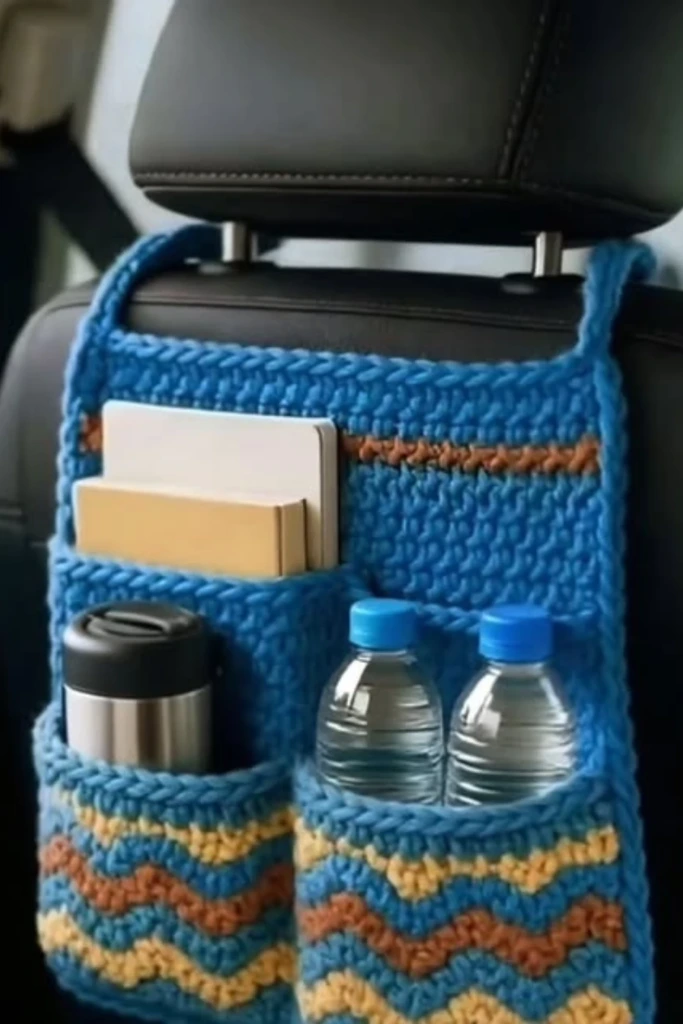
A knitted organizer can bring a softer, handmade appearance to your car while providing storage for lightweight accessories.
Fabric pockets made from thick yarn or woven materials are suitable for items such as small notebooks, soft toys, and tissues. Their flexible construction can be useful when you want storage that feels less rigid than plastic or leather.
Choose a tightly woven design with secure stitching so the pockets maintain their shape during regular use.
Because knitted materials may stretch under weight, avoid filling them with heavy bottles or electronic devices. It's also important to use a mounting method approved for your vehicle rather than relying on decorative ties alone.
Neutral shades create a subtle appearance, while patterned fabrics can add a little personality to an otherwise simple interior.
6. Fold-Down Tray Setup
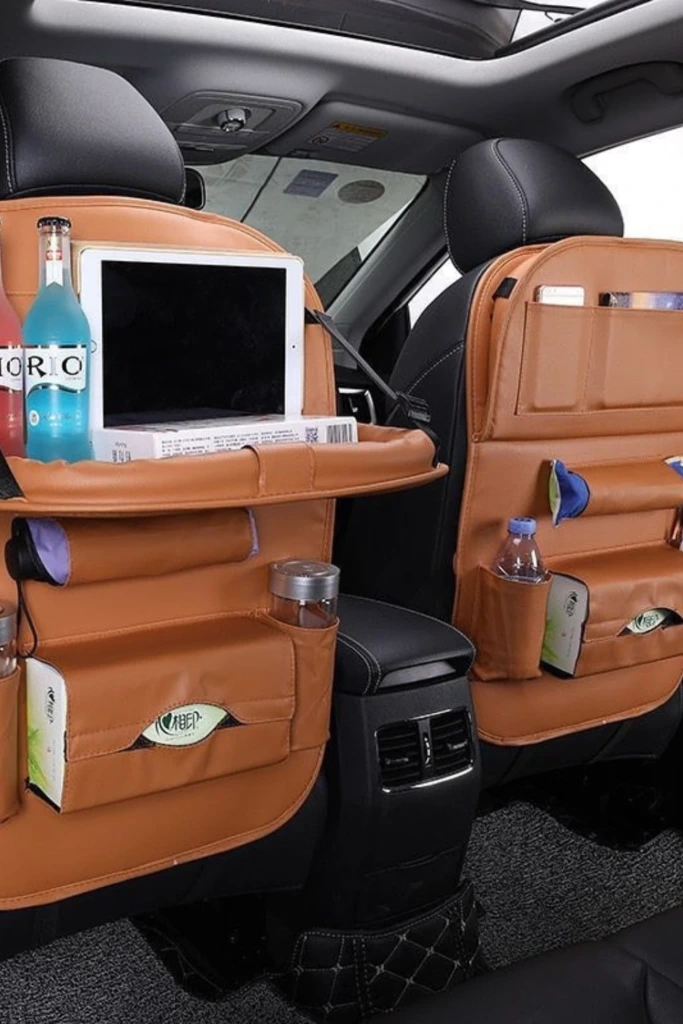
A fold-down tray organizer can provide a convenient surface for backseat passengers when the vehicle is parked.
These accessories often combine a folding panel with storage pockets for lightweight travel items. When folded away, they occupy relatively little space, making them appealing for vehicles with limited room.
For families, a tray may be useful for organizing coloring supplies or small activities during stationary breaks. Adults can also use one to arrange personal belongings while waiting in a parked car.
Select a model designed for your vehicle, with secure mounting hardware and a stable folding mechanism.
Avoid using a rigid, protruding tray while the vehicle is moving unless the product and vehicle manufacturers explicitly confirm that configuration is safe. Hard surfaces can create additional injury risks during a collision.
7. Travel-Ready Setup
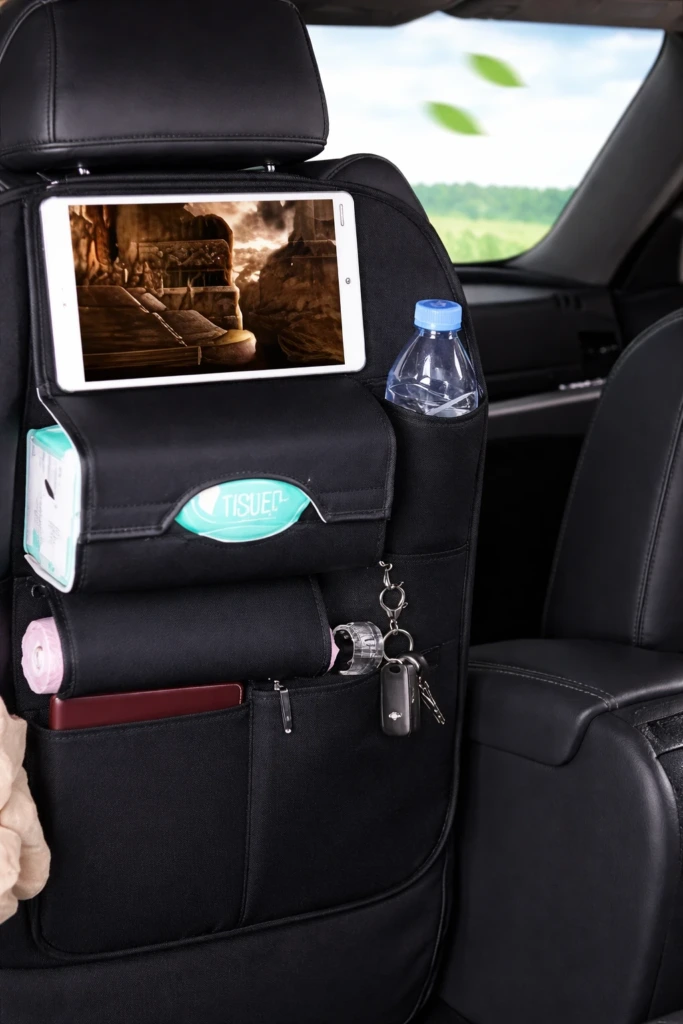
Long journeys become easier when frequently needed supplies are packed thoughtfully before departure.
A travel-ready seatback organizer can accommodate activity books, headphones, wipes, and other small essentials without requiring passengers to search through luggage.
Create separate areas for entertainment, personal care, and snacks. Zippered compartments are particularly useful for preventing small accessories from escaping when the vehicle turns.
Keep spare charging cables neatly coiled and place electronic devices in securely mounted holders specifically designed for in-vehicle use.
Avoid hanging bags or accessories from headrests unless the vehicle and accessory manufacturers permit it. Also keep the footwell and seat belt areas unobstructed.
A well-planned setup reduces unnecessary searching and makes rest stops and arrivals more manageable.
8. Kid-Friendly Station
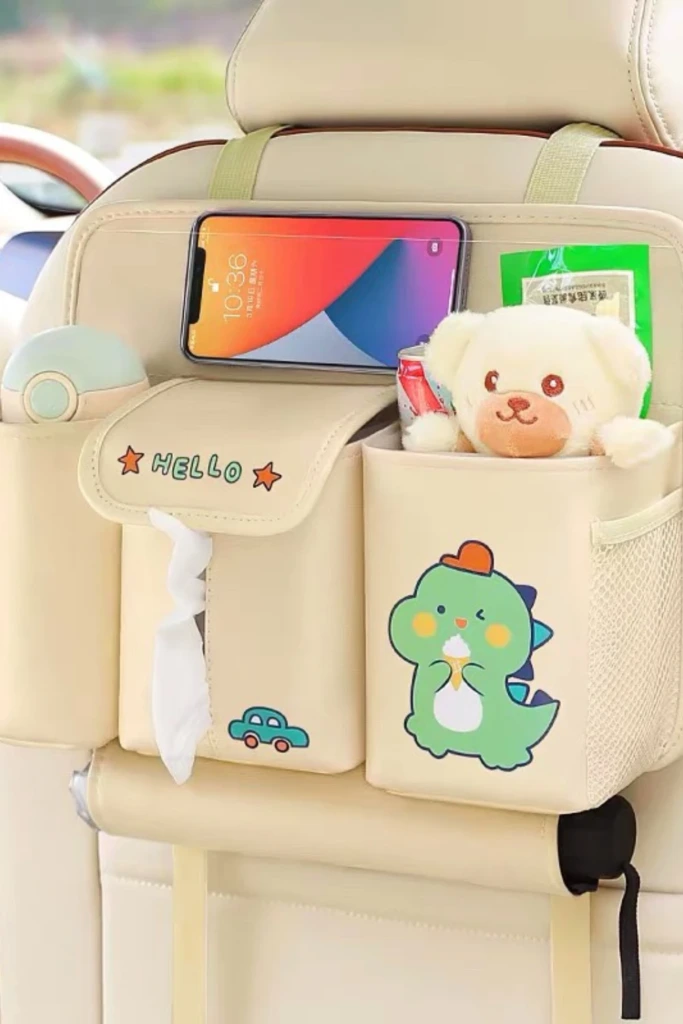
Giving children their own designated storage area can encourage better organization habits during family trips.
Choose a lightweight organizer with simple compartments that children can recognize and use. One pocket might contain a soft toy, another a small book, and another a pack of tissues.
For younger passengers, focus on soft, age-appropriate belongings without small detachable parts. Keep heavier objects and hard accessories out of reach during travel.
Colorful designs can make the storage area more inviting, but practicality matters more than decoration. Look for durable materials that tolerate spills and frequent cleaning.
Make tidying up part of the arrival routine. Children can return their belongings to their assigned pockets once the vehicle is safely parked.
Always ensure the arrangement doesn't affect the child's car seat, harness, or recommended seating position.
9. Mobile Work Station
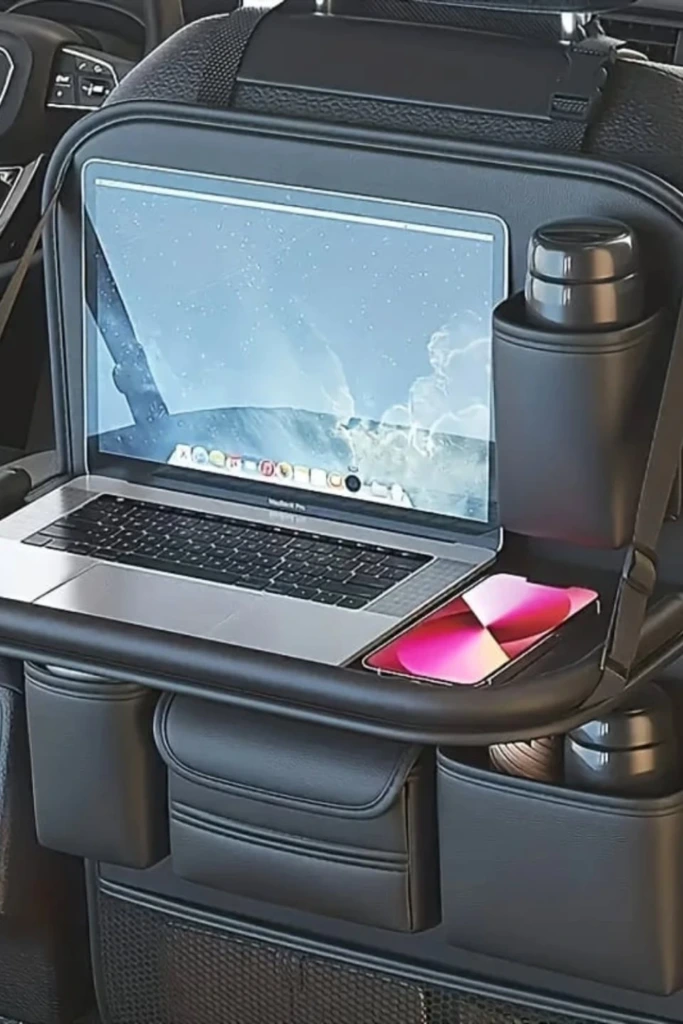
Professionals who frequently travel between appointments may benefit from keeping work essentials organized in their vehicle.
A compact organizer can hold notebooks, pens, charging cables, and small office accessories. Divided compartments make it easier to locate supplies without rummaging through a briefcase.
If you occasionally need to work from your vehicle, consider a portable desk surface intended for use only while parked.
Keep laptops and other heavy electronics secured in appropriate storage areas during driving rather than leaving them on trays or passenger seats.
A dark, understated organizer often blends well with professional vehicle interiors. Choose a model that's easy to remove or fold away when passengers need the space.
With a simple system, your vehicle can remain ready for work-related stops without becoming cluttered with office supplies.
10. Minimal Felt Storage
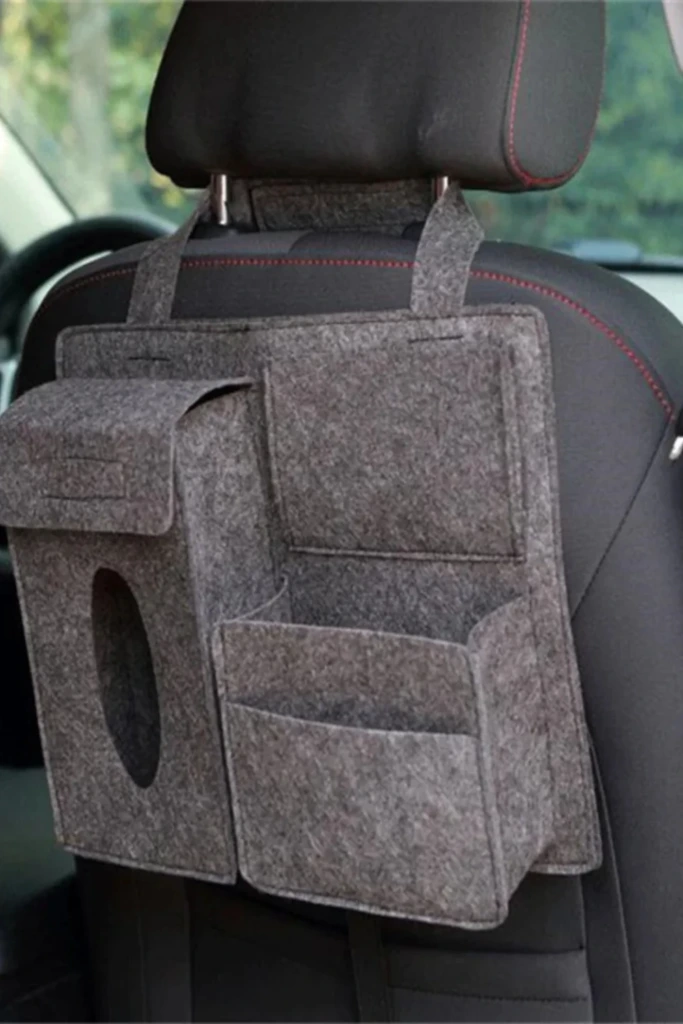
Felt organizers are an attractive choice for anyone who prefers soft materials and uncomplicated storage.
Their lightweight construction makes them suitable for tissues, paper items, and other small accessories. Felt also offers a muted appearance that can blend naturally with many car interiors.
Choose an organizer with reinforced seams and securely attached pockets. Thin, unsupported felt may lose its shape when overloaded.
Gray, charcoal, and beige shades are versatile options, particularly when paired with dark upholstery.
For maintenance, remove dust regularly and follow the manufacturer's cleaning instructions. Some felt materials can shrink or become misshapen when washed incorrectly.
Keep the contents minimal to preserve the organizer's appearance and prevent unnecessary strain on its mounting points.
11. Seat Caddy Box
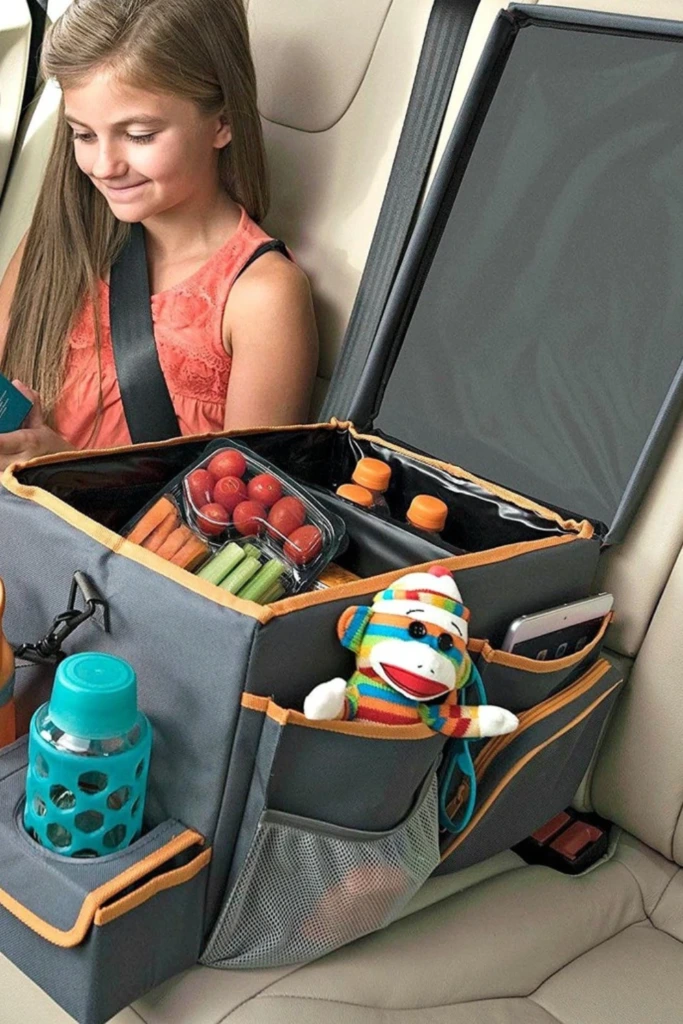
A seat caddy box offers divided storage for items that might otherwise end up scattered around the cabin.
Many designs feature several compartments, making it easier to separate snacks, activity supplies, tissues, and small personal belongings.
A caddy with a firm base can be especially useful when preparing supplies for multiple passengers. Choose one with washable lining or removable inserts if food and drinks will be stored inside.
However, a loose box placed on a passenger seat can become dangerous during sudden stops. Use only a storage system that can be properly secured according to the manufacturer's instructions, without interfering with seat belts or child restraints.
For additional convenience, consider keeping a packed caddy in the trunk and bringing out the necessary items during stops.
This approach makes supplies easier to manage without sacrificing passenger safety.
12. Tablet View Pocket
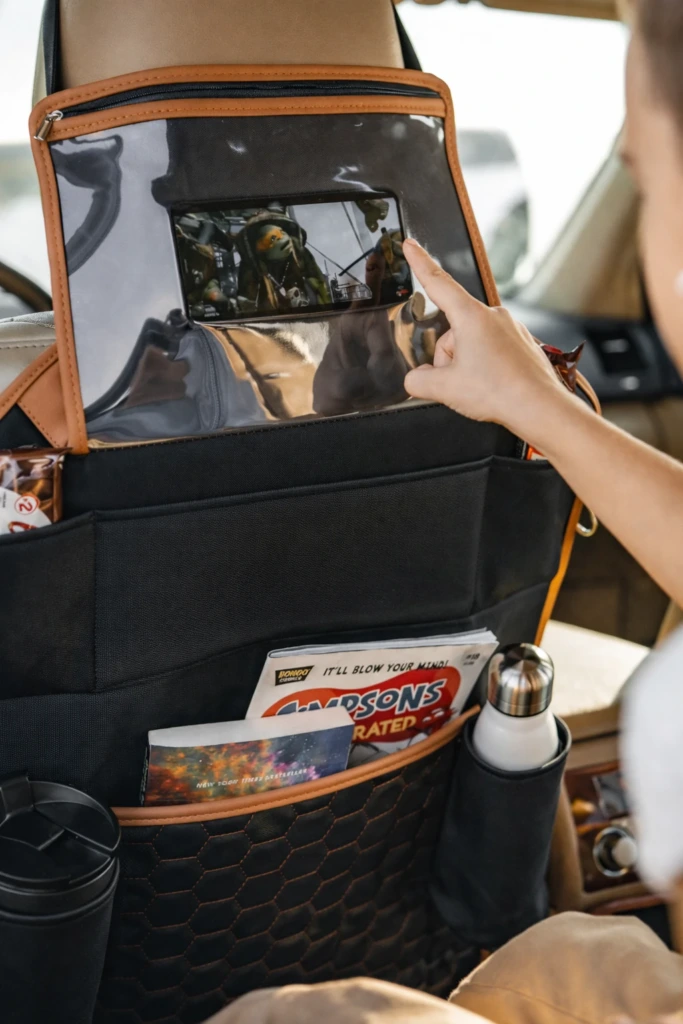
A tablet storage pocket can help keep electronic devices organized and protected from scratches.
Some seatback organizers include transparent sleeves designed to accommodate tablets. These allow passengers to view the screen without holding the device continuously.
Before choosing one, confirm that the sleeve fits your tablet and is intended for use in a moving vehicle. A secure, crash-tested or manufacturer-approved mounting solution is preferable to a loosely suspended screen.
Check whether the material creates glare or obstructs ventilation around the device. Excessive heat can affect electronics, especially in vehicles parked in direct sunlight.
Keep charging cables away from seat belt mechanisms and avoid leaving devices inside a hot parked car.
For younger children, prioritize age-appropriate screen use and a setup that doesn't interfere with their restraint system.
13. Dual Seat Organizer
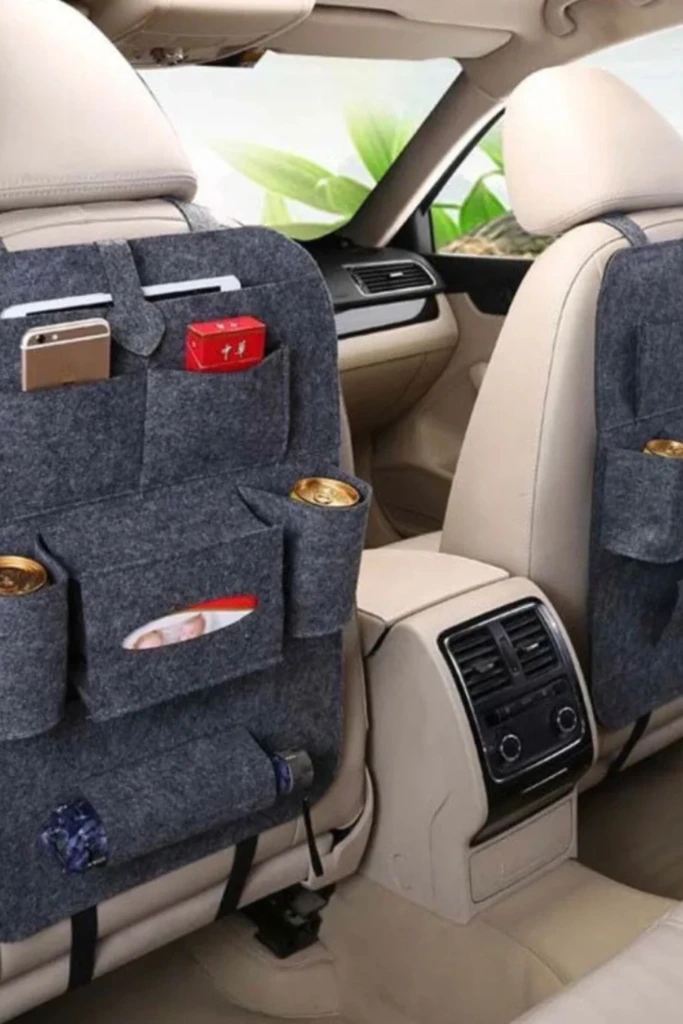
Installing organizers behind both front seats can help divide storage between passengers and reduce shared clutter.
This arrangement works particularly well for families with two children who regularly travel together. Each passenger can have designated compartments for personal belongings and lightweight entertainment items.
Matching organizers also create a balanced appearance, making the interior look more coordinated.
Consider assigning similar pocket layouts to both sides so everyone knows where their belongings belong.
Avoid filling the organizers simply because additional space is available. Excess weight can strain mounting straps and increase the risk of items becoming loose.
Check both installations regularly to ensure they remain secure and don't interfere with front-seat adjustment, airbags, or passenger movement.
14. Sleek Black Panels
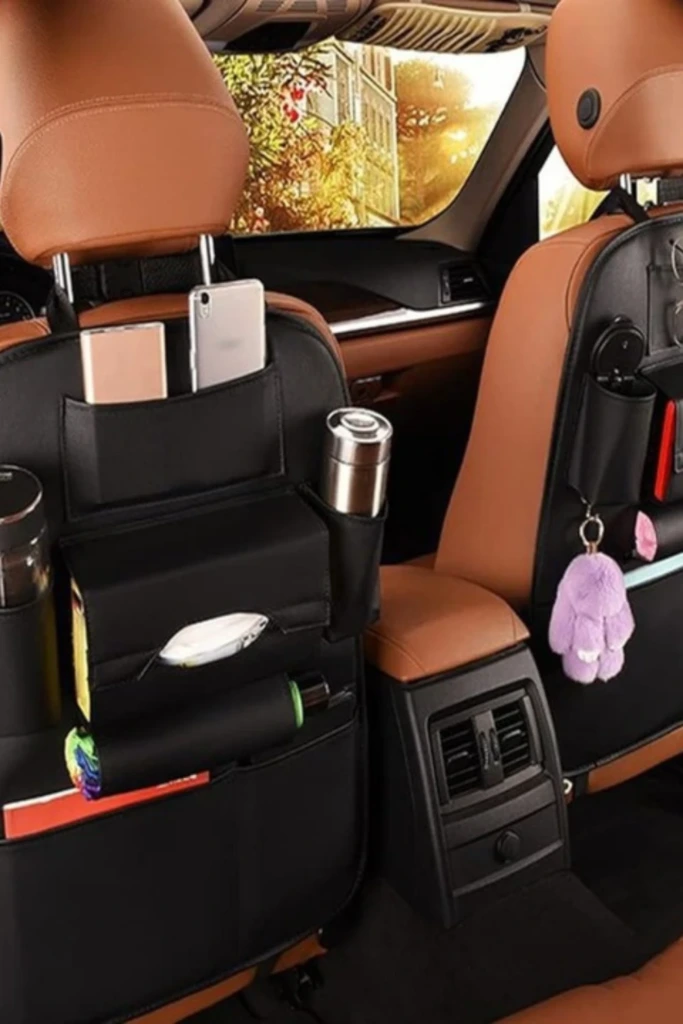
Black panel organizers provide a subtle storage solution that complements a wide variety of car interiors.
Their clean appearance makes them particularly appealing to drivers who want useful compartments without bright colors or prominent patterns.
Choose a slim design with well-positioned pockets rather than an oversized organizer. Small sections can accommodate tissues, cards, and lightweight travel accessories while preserving legroom.
Materials such as synthetic leather or durable coated fabric are generally easy to wipe clean, making them practical for everyday use.
For a coordinated appearance, consider black hardware and simple stitching. Avoid unnecessary hanging decorations that could move around during travel.
A compact black organizer can make the backseat feel more orderly while keeping essential items accessible.
15. Multi-Zone Storage Wall
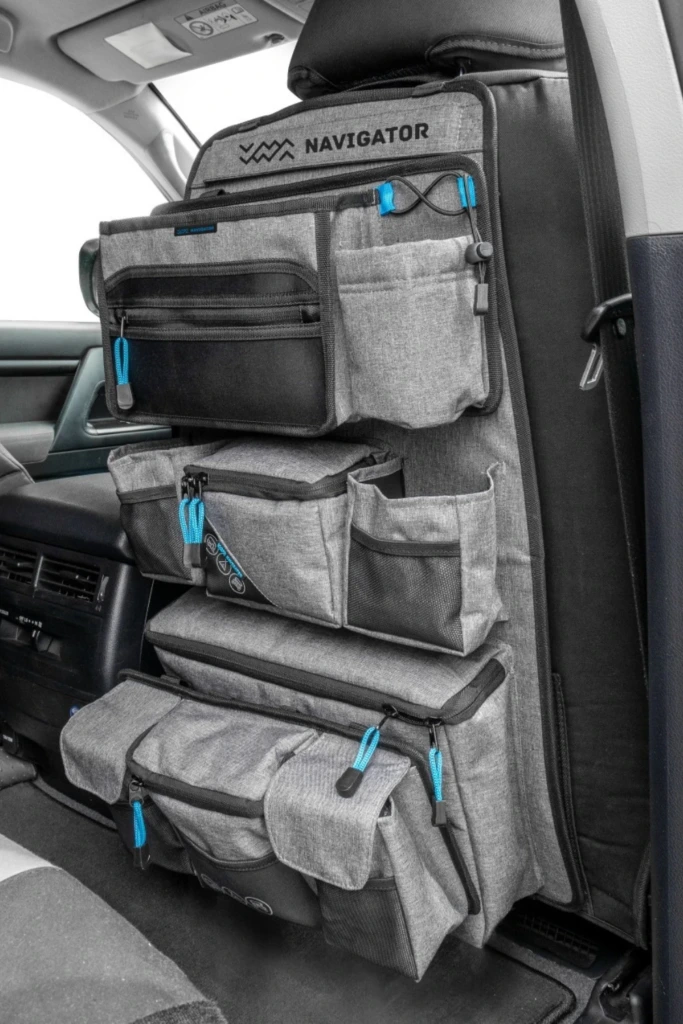
A multi-zone organizer is designed for people who need to manage several categories of belongings in one place.
Rather than using identical pockets throughout, these organizers typically feature compartments of different shapes and sizes.
You can create a simple storage system by dedicating upper sections to lightweight frequently used items, middle pockets to cleaning supplies, and lower compartments to soft travel accessories.
Zippered sections are particularly helpful for keeping smaller objects together. Mesh pockets also allow passengers to identify their contents without opening them.
This arrangement can be useful in larger family vehicles where passengers regularly carry books, personal care products, and travel necessities.
Avoid using every available pocket if doing so makes the organizer heavy or difficult to secure. The goal is to improve accessibility while maintaining a safe, uncluttered cabin.
How Do I Keep Organizers From Sagging?
The best way to prevent sagging is to choose an organizer with strong stitching, adjustable straps, and a design suited to the weight of its contents.
Start by following the manufacturer's installation instructions. Tighten approved mounting points evenly so the organizer rests securely against the seat.
Distribute lightweight items throughout the compartments rather than concentrating everything in one section. Remove unnecessary belongings and avoid storing heavy bottles or electronic equipment in unsupported pockets.
If the material has stretched or the straps no longer hold securely, consider replacing the organizer.
Always check the vehicle manual before attaching accessories to headrests or seats, particularly those containing airbags or other integrated safety features.
Are Seatback Organizers Safe to Use?
Seatback organizers can be convenient, but their safety depends on the product design, installation method, vehicle compatibility, and items stored inside.
An organizer should never interfere with seat belts, airbags, headrest functions, seat adjustment, or child restraint installation.
Avoid placing sharp, heavy, or breakable objects in pockets where they could become hazardous during a collision. Keep storage accessories away from a child's harness and follow the car seat manufacturer's instructions.
Not every organizer is appropriate for every vehicle, especially those with seat-mounted airbags or specialized headrest designs.
Choose products specifically intended for automotive use, follow the manufacturer's guidance, and inspect attachments periodically.
With thoughtful storage choices and regular upkeep, you can maintain a cleaner, more comfortable vehicle while keeping safety at the center of your organization system.