22 Outdoor Firewood Storage Ideas for 2026
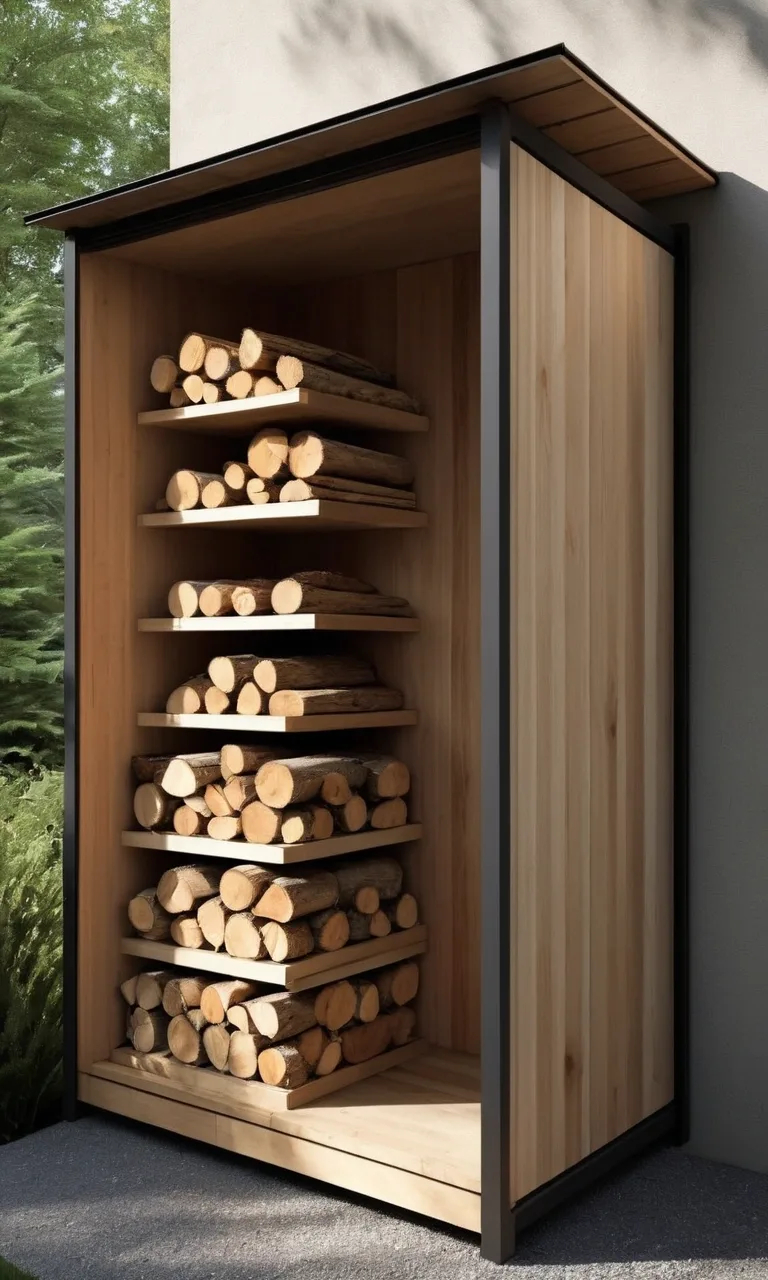
Keeping firewood outdoors is easier when every log has a designated place. The right storage setup protects your supply from rain, snow, ground moisture, and pests while making it simple to grab wood for a fireplace, fire pit, grill, or outdoor pizza oven. Whether you have a spacious backyard or a narrow patio, you can find a solution that combines practical storage with attractive outdoor design.
From simple DIY racks to contemporary steel structures, these outdoor firewood storage ideas offer inspiration for different spaces, budgets, and weather conditions.
1. Creative DIY Storage Solutions

DIY firewood storage allows you to build a setup that fits your available space without spending a fortune on a ready-made unit. You can repurpose sturdy pallets, reclaimed lumber, concrete blocks, metal pipes, or leftover construction materials to create a useful wood rack.
For a basic design, place two parallel supports on a level surface and add a raised base to keep logs away from damp soil. Secure the structure properly, leaving open sides for airflow. A small sloped roof or waterproof cover can help shield the top of the pile from precipitation.
Before building, consider how much firewood you typically use, the length of your logs, and the conditions in your yard. A homemade rack should be strong enough to carry the weight of stacked wood without tipping or leaning. Sand rough timber, protect suitable exterior wood with an appropriate finish, and inspect fasteners periodically. A well-planned DIY project can provide reliable storage while matching the style of your outdoor space.
2. Firewood Storage Outdoor Ideas
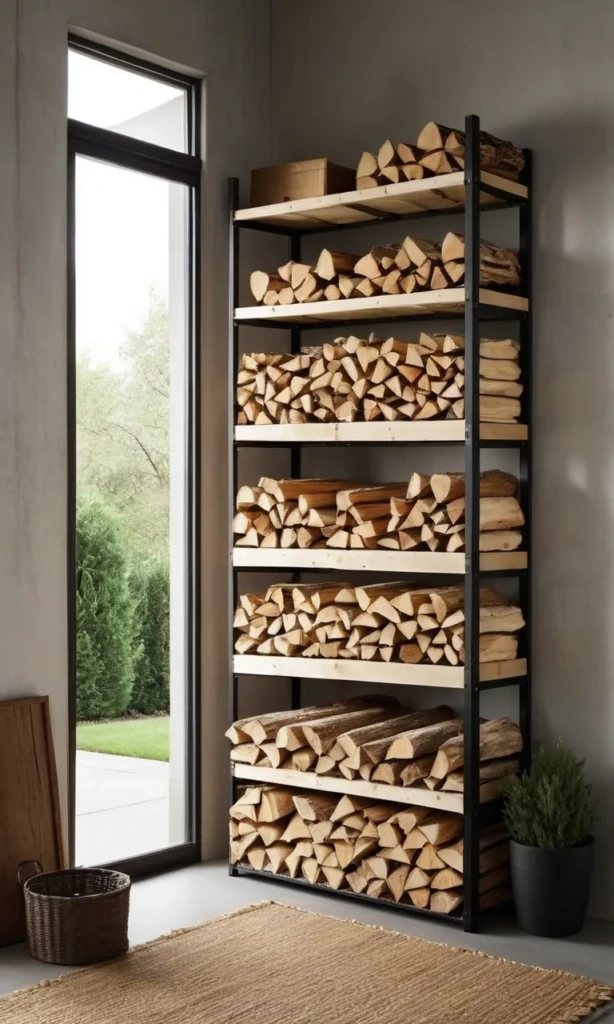
Outdoor firewood storage can be as simple as a small open rack beside a fire pit or as substantial as a covered shed that holds an entire season's supply. The best option depends on your climate, available ground space, and how frequently you burn wood.
Choose a location with good drainage rather than placing logs directly on grass or bare soil. A raised platform helps reduce moisture transfer, while an open-sided structure encourages air circulation. Position the stack somewhere convenient but away from exterior doors, busy walkways, and potential ignition sources.
If rain is common, cover the top of the stack while leaving the sides open. In snowy areas, look for a design with a sturdy roof and enough clearance to access the wood safely. For smaller properties, vertical racks and narrow wall-mounted designs can make use of otherwise wasted space.
It is also helpful to separate freshly cut wood from seasoned logs. Fresh wood needs time and proper conditions to dry, so avoid sealing damp logs inside an airtight enclosure. Keep your supply organized by wood type, age, or intended use, making it easier to select properly seasoned fuel whenever you need it.
3. Modern Steel Set
A modern steel storage set brings a clean, architectural appearance to a contemporary patio or landscaped garden. These arrangements often combine a firewood rack with matching accessories, such as a fireplace tool holder, a small stand, or a designated area for kindling.
Powder-coated steel is a popular choice because its finish can help resist corrosion and complement outdoor furniture. Black, charcoal, and muted metallic tones work particularly well with stone paving, concrete, and minimalist garden designs.
When choosing a steel set, pay attention to the quality of the coating, the thickness of the frame, and the weight it can safely support. Drainage openings and an elevated base are useful features, especially in wet climates. Keep the logs loosely arranged so air can move between them.
Although metal racks are generally durable, their lifespan depends on material quality and maintenance. Check for chipped coatings, damaged joints, and early signs of rust. A well-built steel set offers a practical storage solution that looks intentional rather than like an ordinary pile of logs.
4. Double Bay Shed
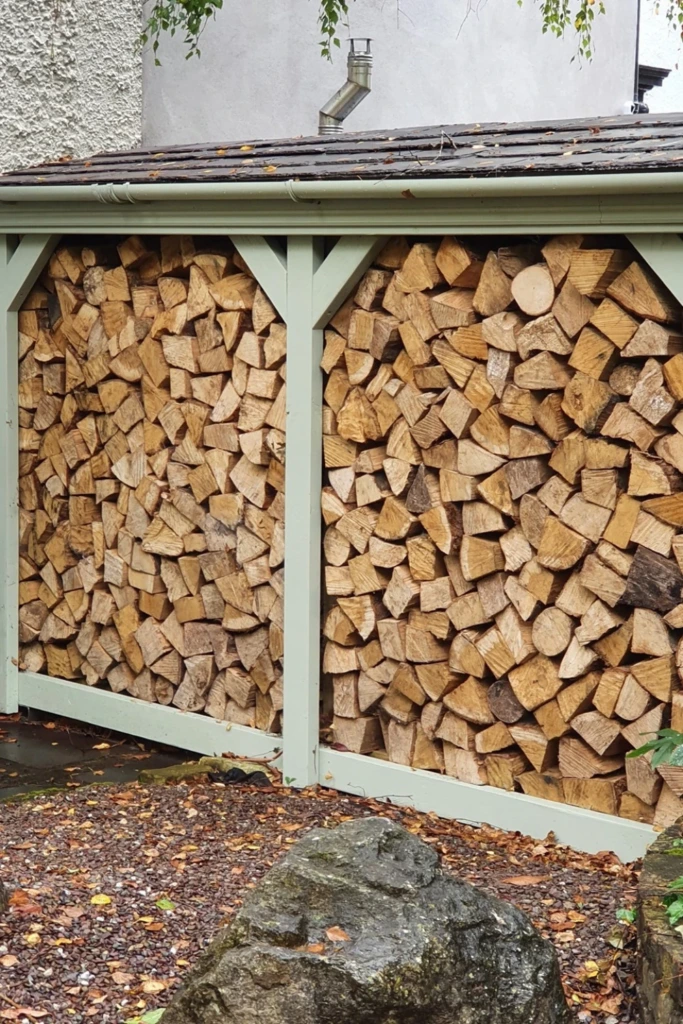
A double bay firewood shed is a practical choice for households that burn wood regularly throughout the colder months. Its two separate compartments allow you to organize different quantities or types of firewood without mixing everything into one large stack.
For example, one bay can hold seasoned logs ready for use, while the other stores wood that needs additional drying time. You could also dedicate a smaller section to kindling and thinner pieces for starting fires.
A shed with a raised floor and a sloping roof helps protect the supply from ground moisture and rain. Open or partially open sides allow ventilation, which is essential when wood still needs to dry. If the structure has solid walls, include appropriately placed openings that encourage airflow.
Choose a location with enough room to load and unload logs comfortably. The foundation should be level, stable, and capable of supporting the combined weight of the structure and its contents. For a long-lasting result, use weather-suitable materials and anchor the shed securely against wind.
5. Round Wall Rack
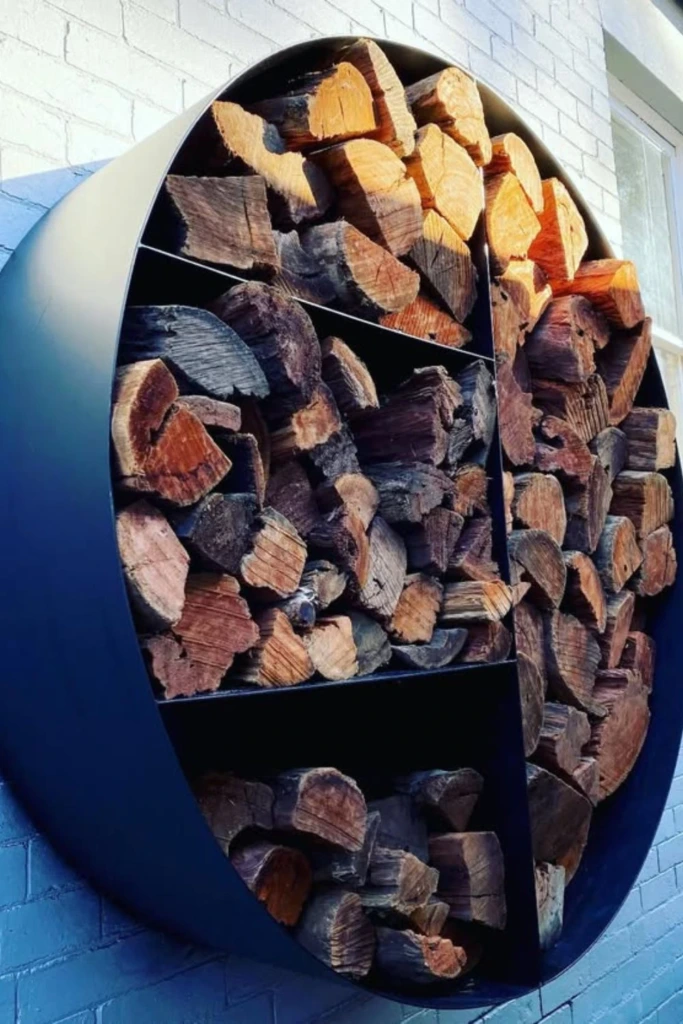
A round wall rack turns ordinary firewood storage into a decorative feature. Its circular outline creates a striking contrast with the straight edges of stacked logs, making it suitable for patios, outdoor seating areas, and modern garden walls.
You can achieve the look with a freestanding circular metal frame or a properly supported wall-mounted design. Arrange the logs neatly within the ring, keeping their ends visible to create a textured pattern of natural wood tones.
The main consideration is weight. A fully loaded circular rack can become extremely heavy, so a freestanding version needs a broad, stable base. If mounting it to a wall, use fixings and structural support appropriate for the wall material and the intended load. Decorative garden walls may not be strong enough for this purpose.
Leave enough room between the logs for air circulation, and position the rack where rainwater can drain away. While a round rack may hold less wood than a rectangular shed, it is an attractive option for maintaining a small supply close to an outdoor fireplace or fire pit.
6. Rustic Divider Rack
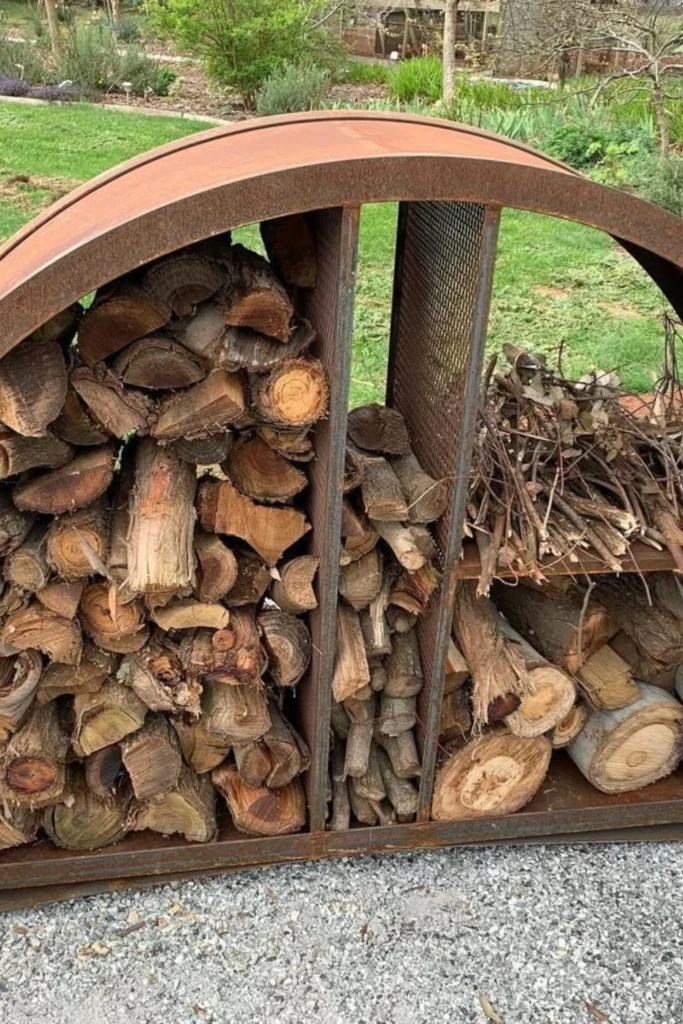
A rustic divider rack combines firewood storage with a useful way to define different areas of a backyard. Positioned between a dining patio and a seating area, it can provide a subtle visual boundary without completely blocking the view.
Reclaimed timber, weathered-looking boards, and simple metal supports help create a natural appearance. Arrange the logs in tidy rows so their cut ends contribute to the design. You can also divide the rack into sections for full-size logs, smaller pieces, and kindling.
For safety, the structure should remain stable even when one section is nearly empty. Secure the frame, distribute the weight evenly, and avoid stacking logs higher than the design allows. If people will walk past both sides, keep the edges smooth and the surrounding path clear.
A divider rack works best when it offers some openness rather than functioning as a solid wall. Airflow helps the wood dry, and the open arrangement keeps the space from feeling crowded. This design is particularly useful in gardens where storage needs to serve a practical purpose while contributing to the overall layout.
7. Bench Storage Combo
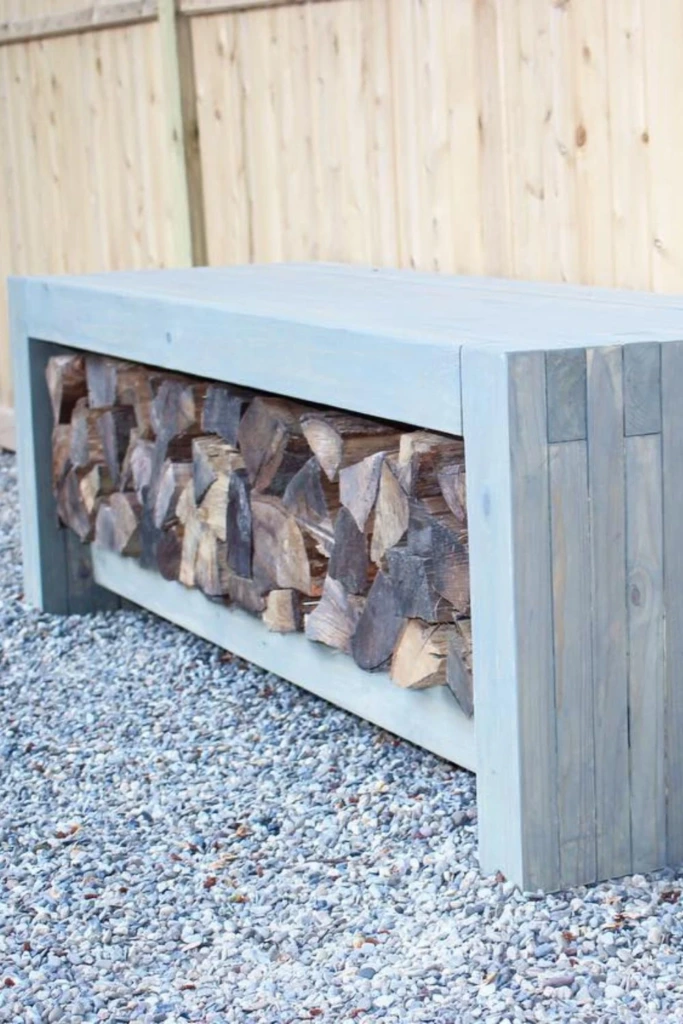
A bench-and-storage combination makes good use of limited outdoor space by bringing seating and firewood organization together. It can sit beside a fire pit, along the edge of a patio, or near an outdoor entertaining area.
The simplest design uses an open compartment beneath a sturdy bench seat. Logs remain visible and accessible, while the seating surface provides a convenient place to rest. You can build the frame from exterior-grade timber or choose a metal structure with a separate seat.
Because firewood is heavy, the bench must be engineered to support people safely without relying on the stacked logs for structural strength. Keep the seating frame independent of the wood pile, and ensure that the base stays level on the ground.
An open-sided compartment is generally more suitable for drying than a sealed box. If you want to store cushions or outdoor accessories as well, use a separate weather-resistant compartment rather than placing them directly against damp firewood.
This dual-purpose design is ideal for compact patios where every piece of furniture needs to earn its place. It also keeps a modest supply of logs close to the fire without requiring a separate storage structure.
8. Compact Fire Tower
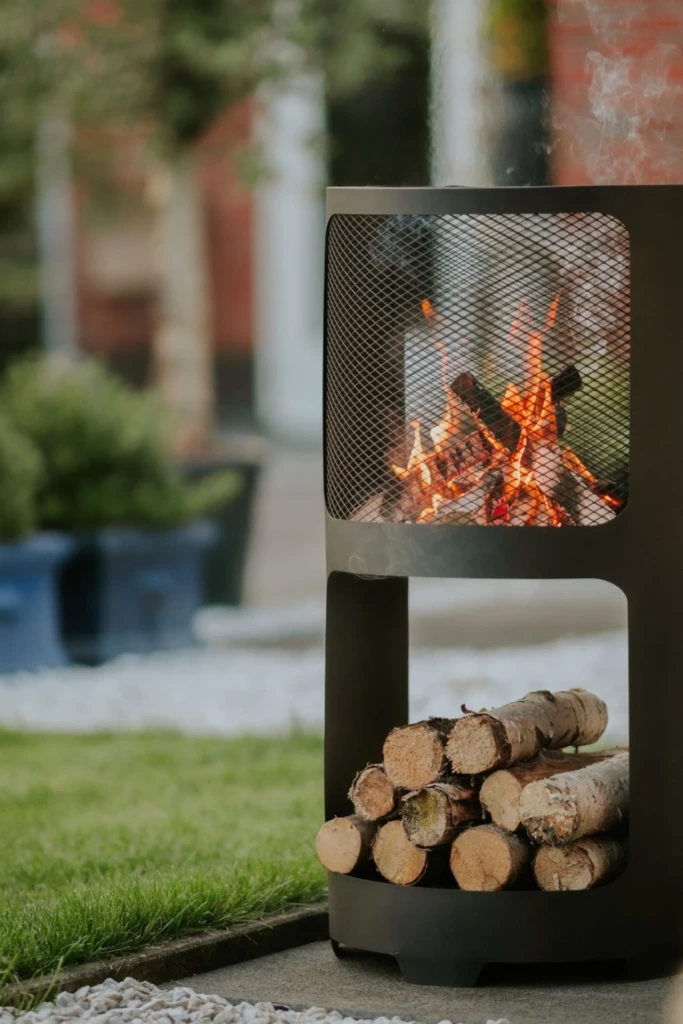
A compact fire tower stores logs vertically within a narrow footprint, making it a good fit for smaller gardens, balconies with suitable load-bearing capacity, and paved outdoor areas.
The tower typically uses a tall metal frame with a stable base and open sides. Firewood is stacked in horizontal layers, allowing you to store a useful quantity without spreading across the ground. Some versions include a small cover that protects the top of the stack from rain.
Stability is especially important with a tall design. Place the tower on firm, level ground and follow the manufacturer's loading instructions. Avoid unevenly distributing the wood or adding logs above the recommended height.
A narrow rack can be convenient beside an outdoor stove or fire pit, but keep it far enough from flames and hot surfaces to prevent accidental ignition. If the tower is intended for drying newly split wood, make sure air can move freely through the stack.
Its vertical profile offers a neat, space-conscious way to store firewood while adding a simple modern accent to an outdoor setting.
9. Tall Steel Box
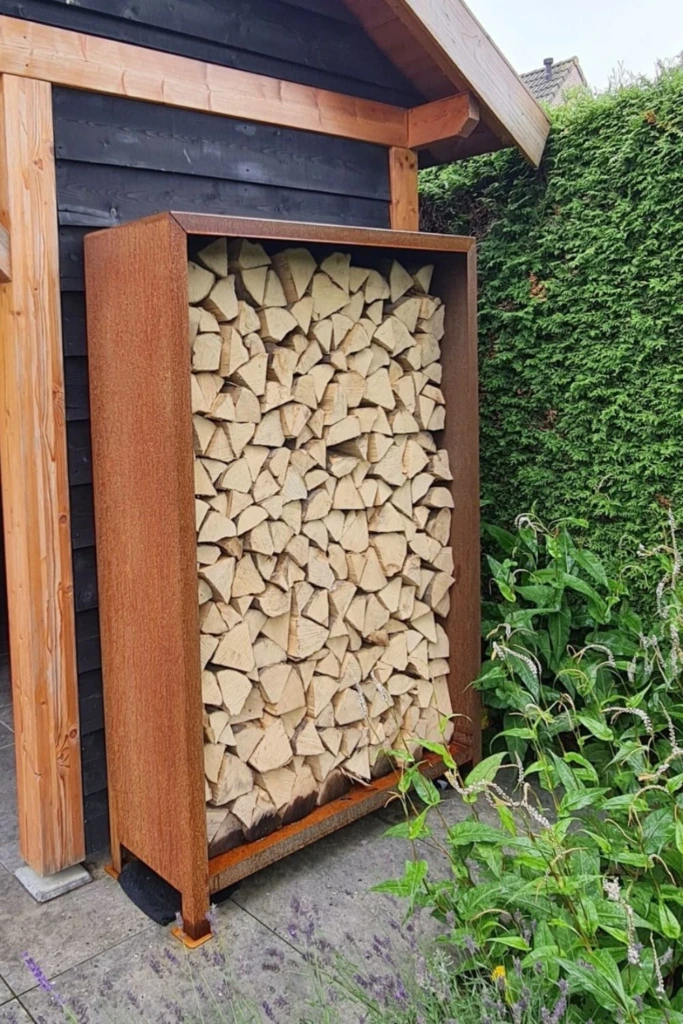
A tall steel box provides enclosed-looking storage without necessarily sealing the firewood away from the elements. Its upright rectangular form suits contemporary patios and can make a small stack appear tidy and organized.
For outdoor use, choose a purpose-built firewood holder with drainage and ventilation rather than a completely airtight metal container. Moisture trapped inside can slow drying and encourage mold. Open sides, slotted panels, or ventilation gaps are therefore valuable features.
A weather-resistant finish can help protect the metal, while a raised bottom reduces direct contact with wet paving. Some designs feature a roof or overhanging top that sheds rain away from the logs.
Tall units need particular attention to balance. Keep heavier pieces toward the bottom, avoid overloading the rack, and anchor it if the manufacturer recommends doing so. Place it on a stable surface where it cannot obstruct doors or walkways.
This style is especially useful when you want a structured, minimalist appearance and need to store a moderate quantity of wood in a relatively small area.
10. Grid Frame Rack
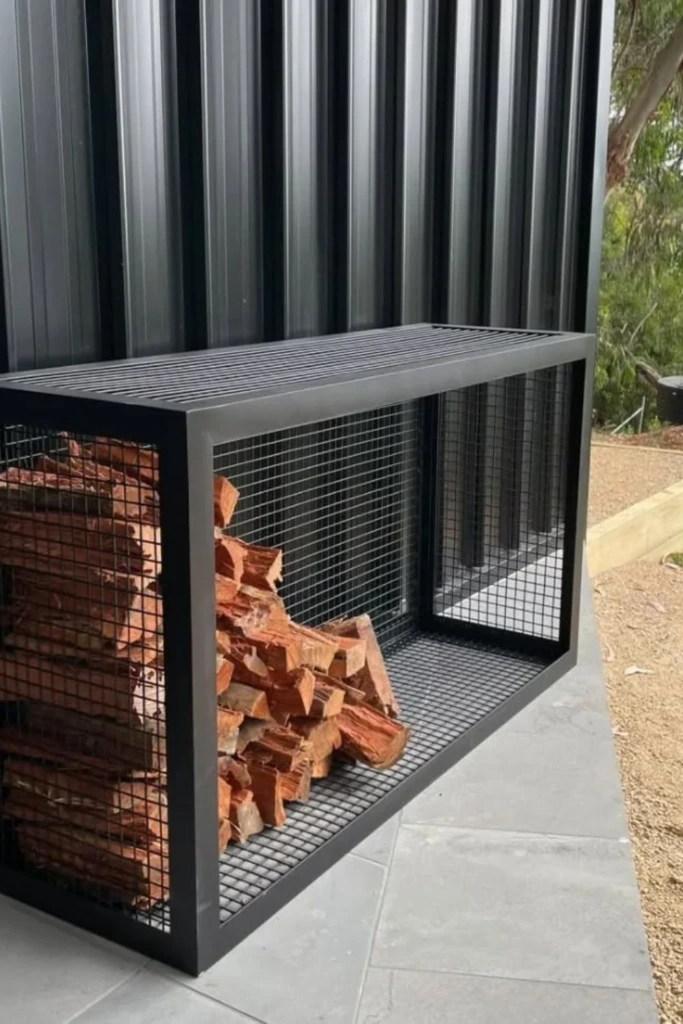
A grid frame rack uses a framework of intersecting metal bars or timber supports to create an orderly storage area. The open pattern gives the structure a lightweight appearance while providing defined boundaries for stacked logs.
Depending on the design, the rack may have several compartments or a single large opening. Multiple sections can be useful for separating different log lengths, kindling, and seasoned wood. A modular frame can also be expanded when storage requirements increase.
The supports should be spaced to prevent logs from slipping through the openings. Check that the frame is rated for the expected weight, particularly if it will hold a full winter's supply.
For better protection, place the rack on a raised base and add a roof or top cover where necessary. Leave the sides largely open to encourage airflow. In wet conditions, inspect metal connections for corrosion and timber components for deterioration.
A grid frame is a versatile choice for people who prefer an organized appearance but do not want the bulk of a traditional enclosed woodshed.
11. Slimline Wall Stack
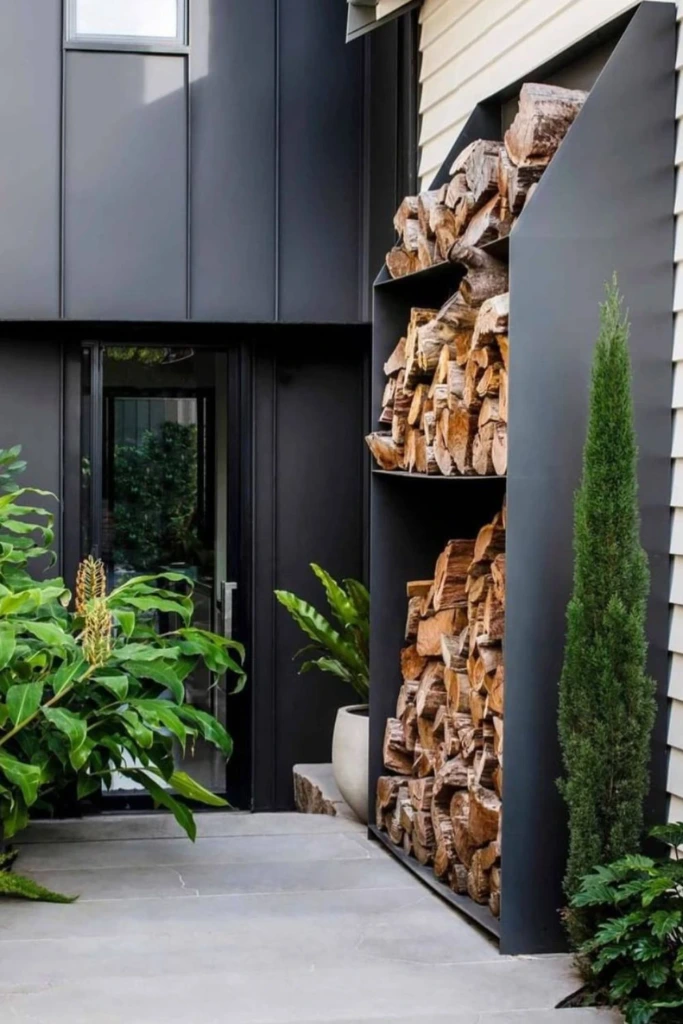
A slimline wall stack is designed for properties where there is little room for a freestanding firewood shed. It places the logs in a narrow rack alongside a suitable exterior wall, fence, or outbuilding.
The main benefit is efficient use of space. Instead of allowing wood to spread across a patio, the rack keeps it in a compact row. A slim profile can also make it easier to maintain a clear route through the garden.
Avoid stacking logs directly against siding or wooden fencing. Moisture, insects, and restricted airflow can damage the structure and prevent the firewood from drying effectively. Use a separate frame that maintains a gap between the logs and the wall, and follow any relevant building or fire-safety requirements.
A raised base helps keep the bottom row dry, while a cover over the top offers protection from precipitation. Keep the stack at a manageable height and secure the rack so it cannot tip outward.
This design is best for storing a smaller working supply near the house or outdoor fireplace, rather than replacing a larger seasonal storage area.
12. Divided Drum Rack
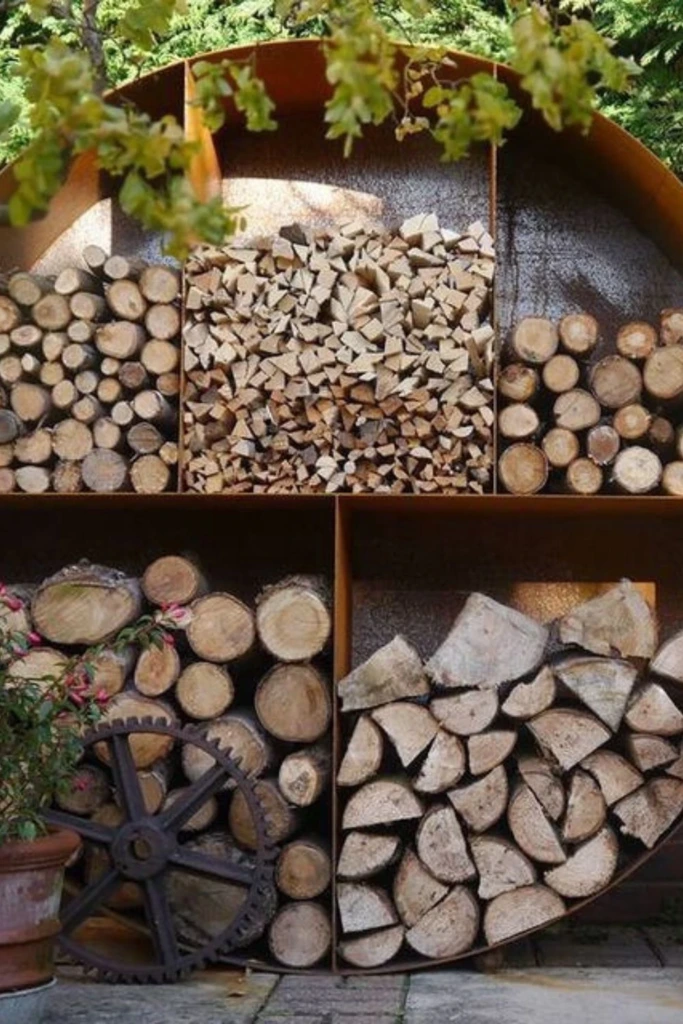
A divided drum rack uses a sturdy circular or barrel-inspired frame to hold firewood in separate sections. The rounded outer shape gives the rack a distinctive industrial or rustic look, while internal dividers help prevent the stack from becoming disorganized.
You can create a similar design using a purpose-built metal holder or a suitable reclaimed drum that has been safely prepared for reuse. Never use a container that may have held flammable residues or hazardous chemicals unless its suitability and safe preparation can be established.
Internal partitions make it possible to sort logs by size or separate kindling from larger pieces. Openings in the structure should allow moisture to drain and air to circulate freely.
Because the shape may concentrate weight in a small area, check that the bottom support is strong and level. Avoid placing a heavy rack on soft soil, where it could sink or become unstable. A protective top cover can help reduce rain exposure without enclosing the sides.
A divided drum rack works well as a compact feature near a fire pit or outdoor cooking area, combining unusual styling with straightforward organization.
13. Mobile Log Cart
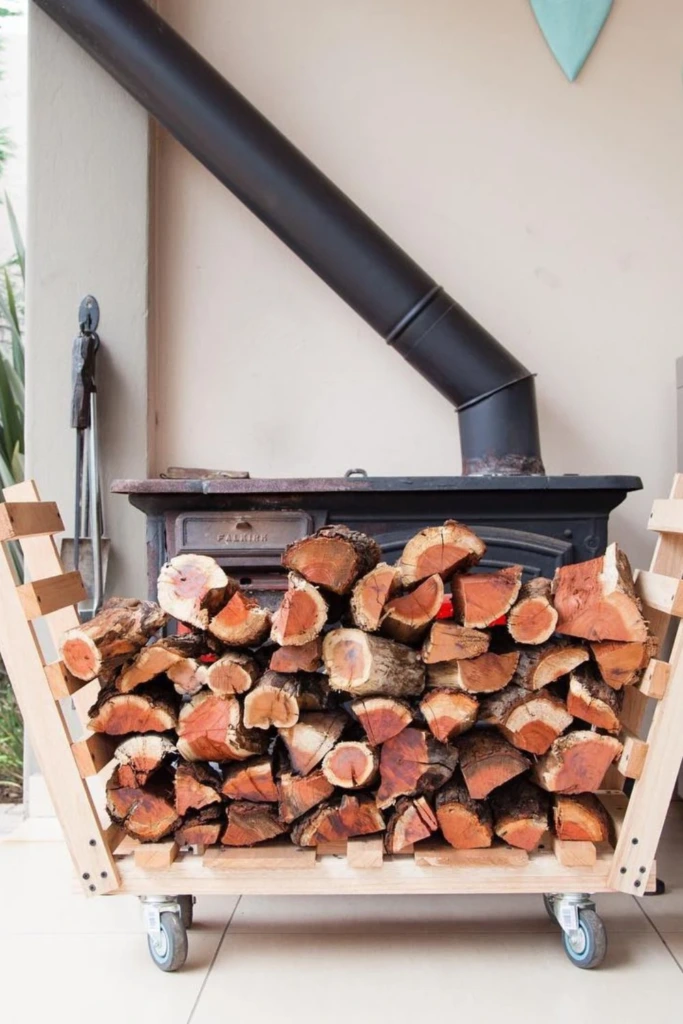
A mobile log cart makes it easier to transport firewood from a main storage area to the place where it will be burned. Rather than carrying several armfuls of logs, you can load the cart once and move the supply along a suitable path.
Look for a frame with a useful load capacity, a balanced center of gravity, and wheels suited to the surface. Larger wheels generally handle uneven paving and compacted ground better than small indoor-style casters. Handles should provide a comfortable grip without forcing you to lean excessively.
Some carts are designed for moving wood and are not intended for permanent outdoor storage. If you plan to leave yours outside, choose weather-resistant materials and protect it from standing water. A separate covered rack is often better for storing the main supply over long periods.
Distribute logs evenly and secure the load if necessary before moving the cart. Avoid overfilling it, especially on slopes or rough terrain.
A mobile log cart is particularly convenient for people who keep their bulk firewood at the back of the garden but regularly use a fireplace, fire pit, or outdoor oven closer to the house.
14. Grill Companion Rack
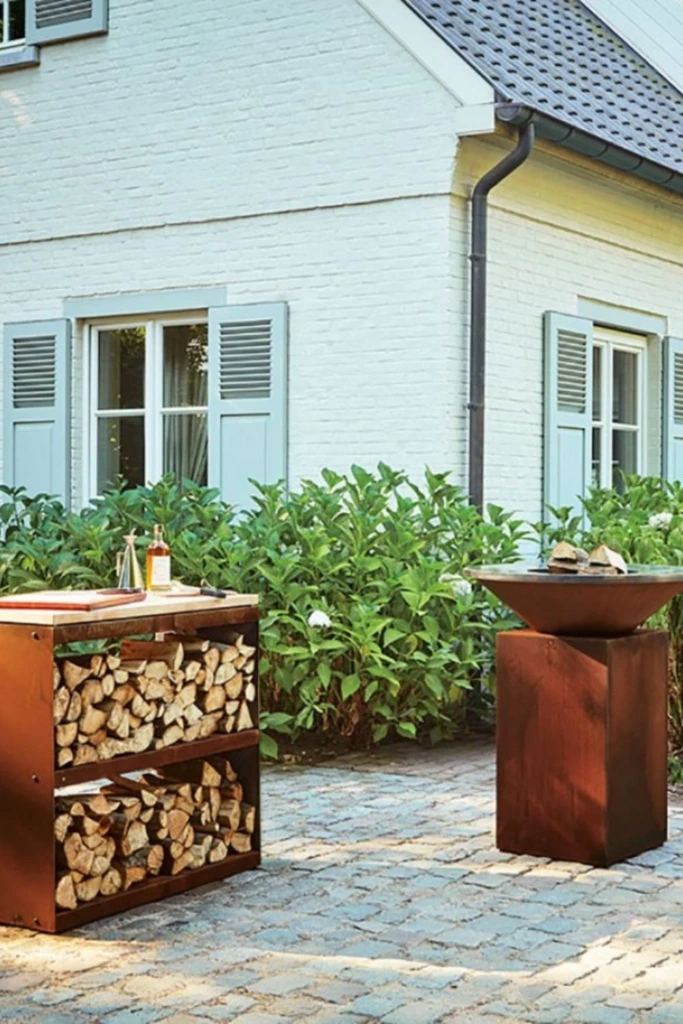
A grill companion rack keeps a practical quantity of firewood near an outdoor cooking station. It is useful for wood-fired grills, smokers designed for wood fuel, and other appliances that require logs or split wood during cooking.
Choose a rack with enough capacity for a typical cooking session without taking up valuable preparation space. An open metal frame is easy to inspect, while a raised base helps protect the wood from moisture.
Store only the fuel appropriate for your appliance. Different grills and smokers have different fuel requirements, so check the manufacturer's guidance before choosing wood types or sizes.
Position the rack outside the appliance's required clearance zone. Dry wood should remain separated from direct heat, sparks, and grease buildup. Keep kindling, fire starters, and tools organized in suitable containers rather than mixing them loosely with the logs.
A small, dedicated rack helps keep the cooking area tidy and makes it easier to replenish fuel when needed. For households that grill frequently, this can be more convenient than repeatedly walking to a distant woodshed.
15. Pizza Oven Bay
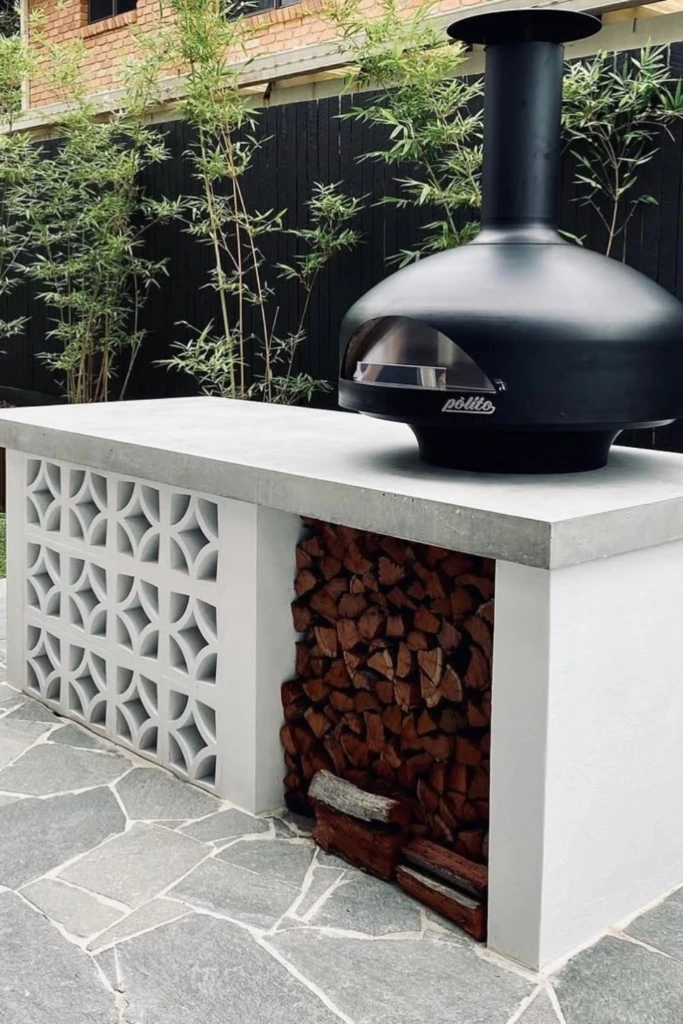
A pizza oven bay provides a designated place for storing the small logs commonly used with wood-fired outdoor ovens. Since oven fuel is often added gradually during heating and cooking, keeping it within easy reach can simplify the entire process.
A compact bay beneath or beside an outdoor oven stand can be an efficient arrangement, provided the storage area is designed for the oven's weight and operating conditions. It should remain outside the appliance's specified heat-clearance zone and must not interfere with ventilation or access to controls.
Use a raised, well-drained base and keep the wood loosely stacked. A roof or top cover can reduce exposure to rain, but the sides should remain open enough to support drying. Store only properly seasoned fuel in the working bay and keep the larger reserve elsewhere if space is limited.
Pay attention to log dimensions because oven openings and fireboxes can accommodate only certain sizes. Splitting wood to the appropriate length and thickness makes handling easier and can improve fire management.
A dedicated pizza oven bay keeps fuel organized and close at hand while helping maintain a cleaner, more functional outdoor cooking station.
16. Backwoods Racks
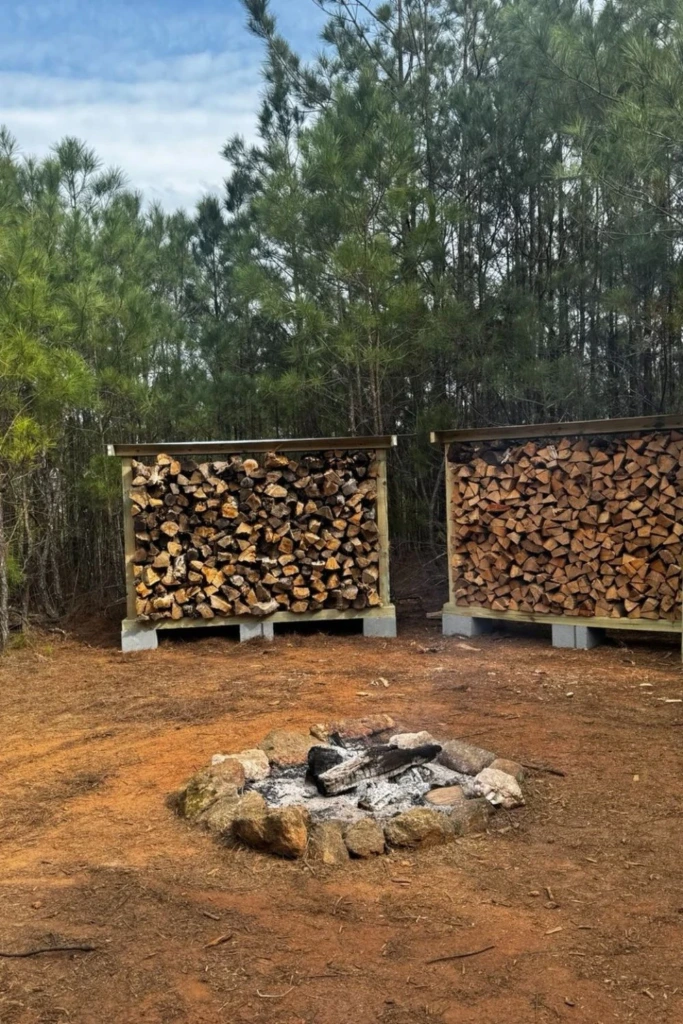
Backwoods racks are suited to rustic properties, woodland cabins, hunting retreats, and large gardens where appearance is less important than practical, durable storage. Their simple construction often relies on heavy-duty timber, metal rails, or straightforward support frames.
The key is to create a strong platform that keeps firewood off the ground. In wooded areas, soil can remain damp for long periods, and leaves or vegetation may trap moisture around the bottom of the stack. A raised rack reduces direct contact with the ground and makes it easier to inspect the surrounding area.
Position the rack where water drains naturally rather than collecting beneath it. If the site receives frequent rain, add a sturdy roof or cover while leaving the sides open for ventilation.
Avoid building a pile directly against trees or structures, and keep the surrounding area clear enough to discourage pests and allow routine maintenance. Large supplies should be stacked in stable, manageable sections instead of one excessively tall pile.
A simple backwoods rack can provide reliable storage for substantial quantities of firewood without requiring elaborate construction or decorative features.
17. Snow-Ready Shed
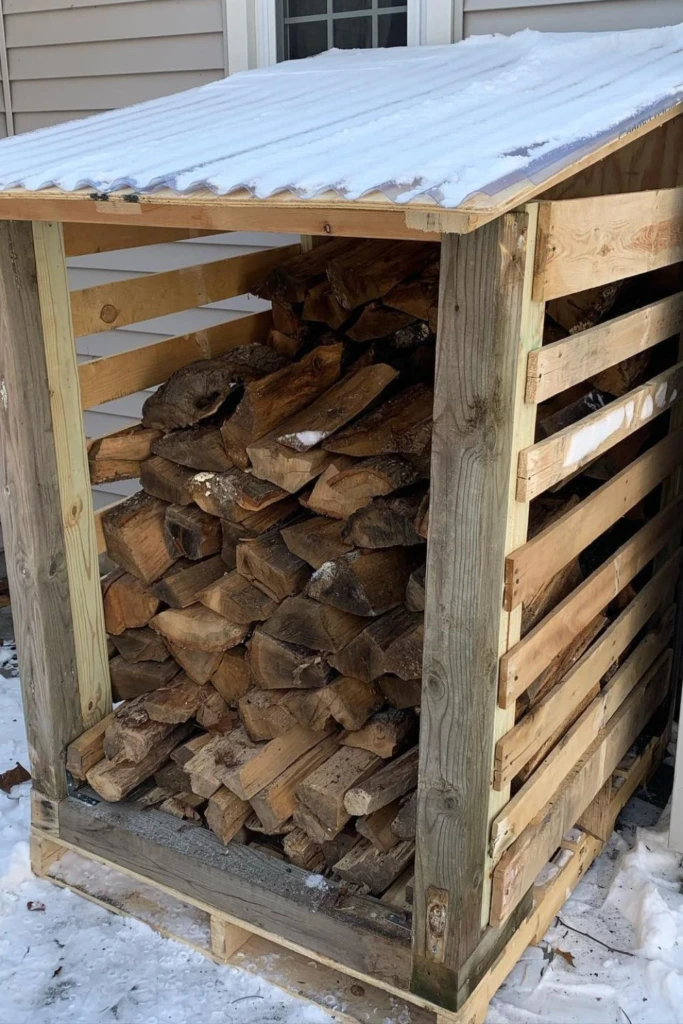
A snow-ready firewood shed is designed to handle winter conditions while keeping logs accessible when temperatures fall. It is especially useful in regions where snow accumulation, freezing rain, and repeated freeze-thaw cycles can make ordinary outdoor storage inconvenient.
Start with a solid foundation that raises the wood above snowmelt and wet ground. The roof should be pitched to shed snow and water, with structural support appropriate for the expected local snow load. In areas with heavy snowfall, a purpose-built structure designed for those conditions is preferable to an improvised lightweight shelter.
Leave enough clearance around the entrance to access logs safely after snowfall. Roof overhangs can help protect the front of the stack, while open sides encourage airflow during milder weather.
Use a suitable weather-resistant finish on exposed timber and check the roof, fasteners, and supports before winter begins. Do not allow snow to accumulate beyond the structure's design limits.
A snow-ready shed also benefits from thoughtful organization. Store the driest wood in the most accessible section, keep pathways clear, and avoid stacking logs where falling snow or ice could dislodge them.
18. Hex Frame Stack
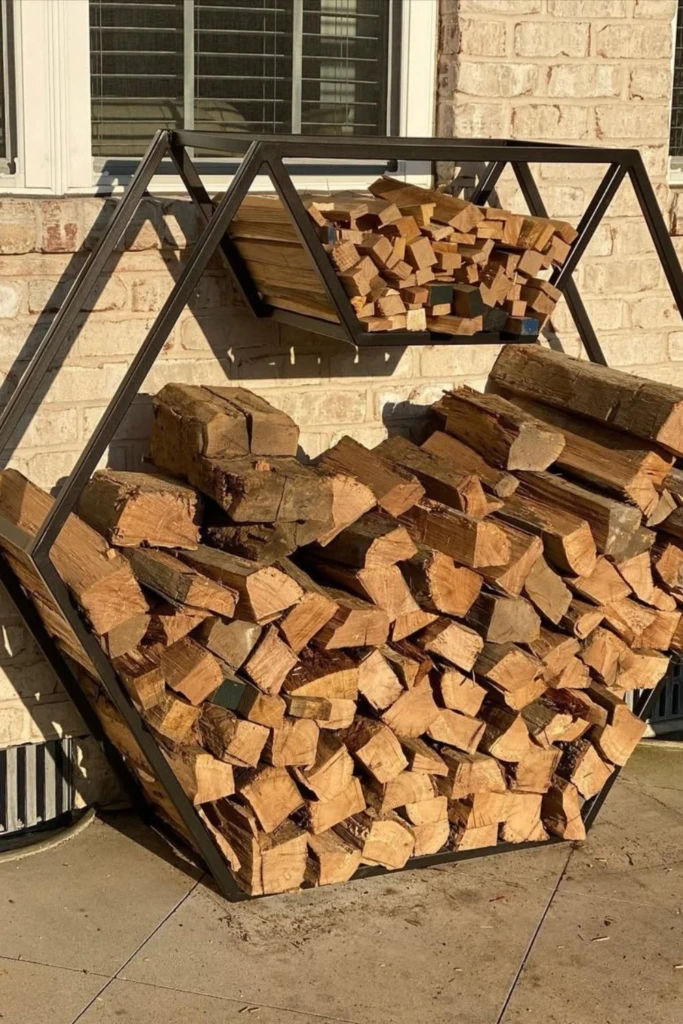
A hex frame stack introduces geometric style to outdoor firewood storage. Its six-sided outline can serve as a decorative garden feature while providing a defined area for stacking logs.
The design may use a freestanding metal frame or a carefully constructed timber structure. Depending on the dimensions, the interior can hold a modest supply of firewood for a nearby fire pit or outdoor fireplace.
For a practical result, choose a frame with sufficient depth to keep logs from protruding dangerously. The base should be stable, and the frame must be strong enough to support the full load. Hexagonal shapes can be visually appealing, but irregular loading may place uneven pressure on the sides.
Stack the wood in a balanced arrangement and leave gaps for ventilation. If the rack sits in an exposed location, consider a suitable top cover and secure the frame against wind.
A hexagonal rack is a good option for homeowners who want storage to double as a design feature. Its distinctive silhouette can complement contemporary landscaping, gravel courtyards, and simple outdoor seating areas.
19. Decorated Shed Rack
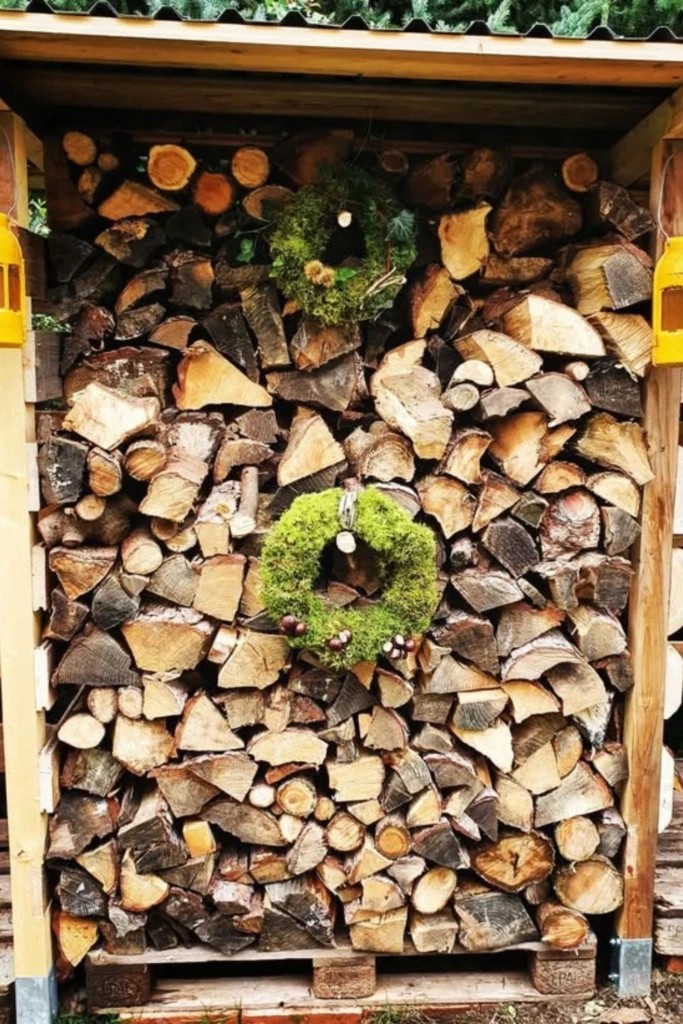
A decorated shed rack brings a little personality to a functional firewood storage area. Instead of hiding the structure at the back of the garden, you can make it an intentional part of the outdoor design.
Painted trim, coordinated roofing, decorative timber details, and matching hardware can help the shed complement nearby fences, garden furniture, or exterior finishes. A small sign identifying the wood type or seasoning date can also add character while making the supply easier to manage.
Keep decoration secondary to the structure's main purpose. Use exterior-rated finishes, avoid materials that trap moisture around the logs, and make sure decorative panels do not block necessary airflow. Any lighting or electrical accessories should be suitable for outdoor conditions and installed safely away from combustible materials.
A decorated shed rack should still have a raised floor, effective drainage, and a roof that sheds water. If the wood is still drying, open sides are usually more useful than decorative solid panels.
This approach works well when the storage area is visible from a patio or garden path. With a few coordinated details, even a straightforward rack can look like a deliberate part of the landscape.
20. Cabin-Style Shelter
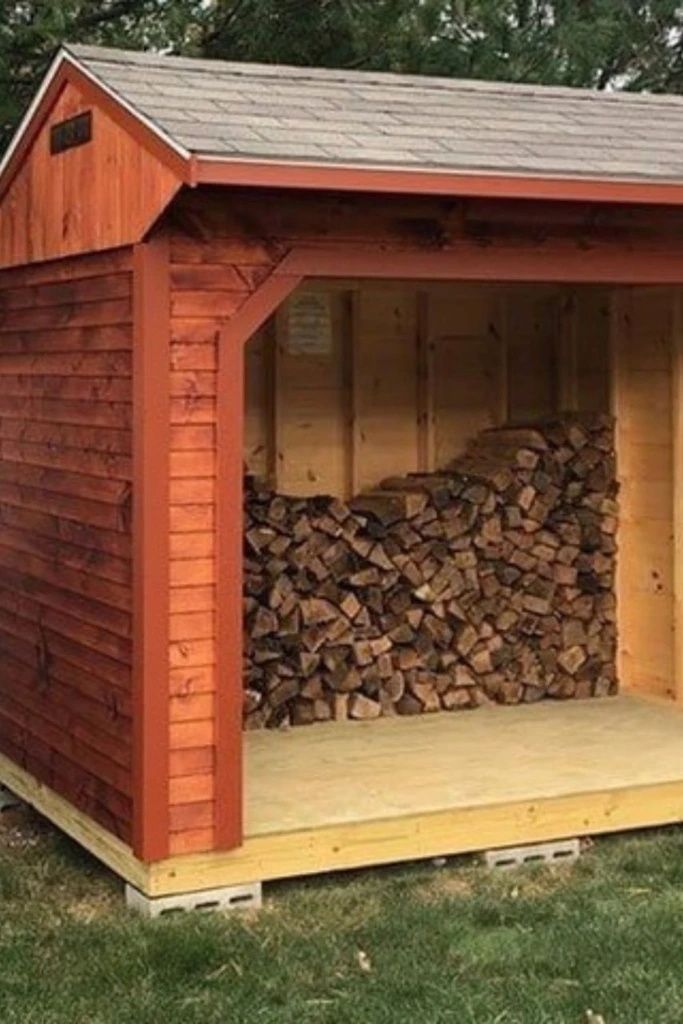
A cabin-style firewood shelter adds a traditional woodland look to a backyard or rural property. Its pitched roof, timber frame, and simple exterior details can complement log cabins, cottages, and gardens with natural materials.
The shelter can be built in different sizes, from a compact structure holding a few rows of logs to a larger woodshed for seasonal supplies. The most important features are a sturdy base, a roof that directs rain away from the stack, and enough open space for air to circulate.
Weather-resistant lumber is a practical choice for the frame, while roofing should suit the local climate. In snowy areas, make sure the structure is designed to carry the expected roof load.
Avoid turning the shelter into a completely sealed wooden box. If the wood needs to dry, ventilation is essential. A covered top with open sides often offers a better balance between weather protection and airflow.
You can organize the interior into separate sections for seasoned logs, freshly split wood, and kindling. Place the shelter on well-drained ground and keep vegetation trimmed around its perimeter.
A cabin-style shelter is a particularly attractive solution for people who want generous storage capacity without sacrificing the traditional character of their outdoor space.
21. Octagonal Statement Rack
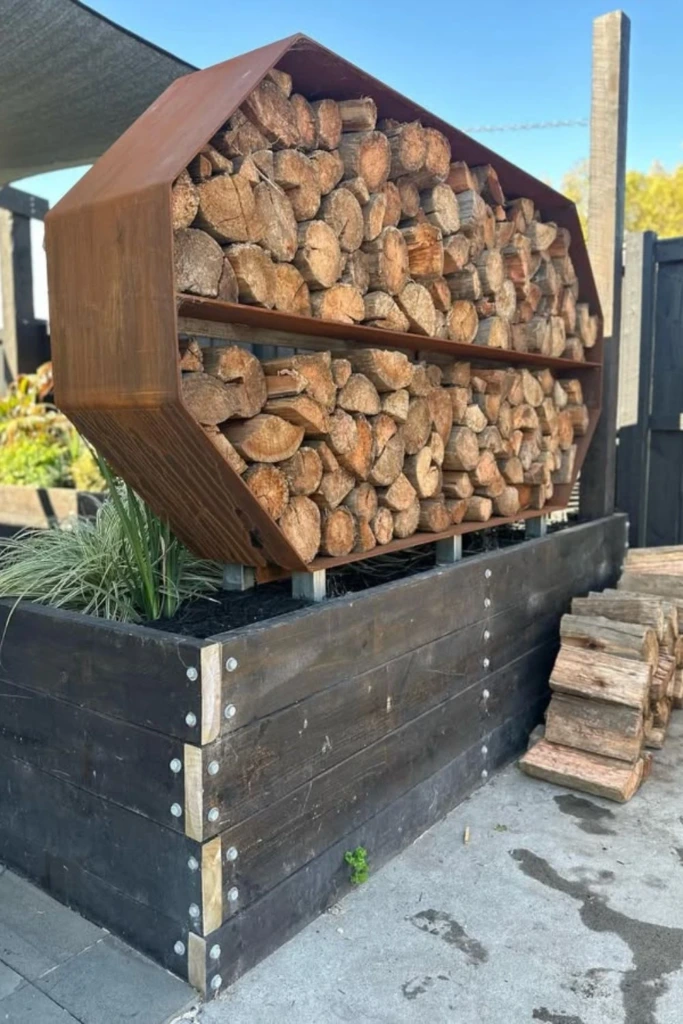
An octagonal statement rack makes firewood storage a prominent feature of the garden rather than an item tucked away for convenience. Its eight-sided outline creates a sculptural shape that can work well in contemporary courtyards and landscaped outdoor living areas.
A metal frame offers a clean, modern appearance, while timber can produce a warmer, more natural effect. The interior may be divided into sections or left open for a continuous stack, depending on the intended capacity.
Because the design has multiple angled sides, check how logs will sit against the frame. Supports must prevent pieces from slipping out, and the base should distribute the load evenly. A broad footprint and properly engineered joints are especially important when the rack is fully loaded.
For everyday use, make sure the opening is wide enough to retrieve logs comfortably. Position the rack on firm ground and allow room around it for access and maintenance.
A cover can protect the top row from rain, but it should not prevent the stack from ventilating. When properly designed, an octagonal rack combines substantial storage with an unusual architectural form that can become a focal point of the backyard.
22. Grill Wall Reserve
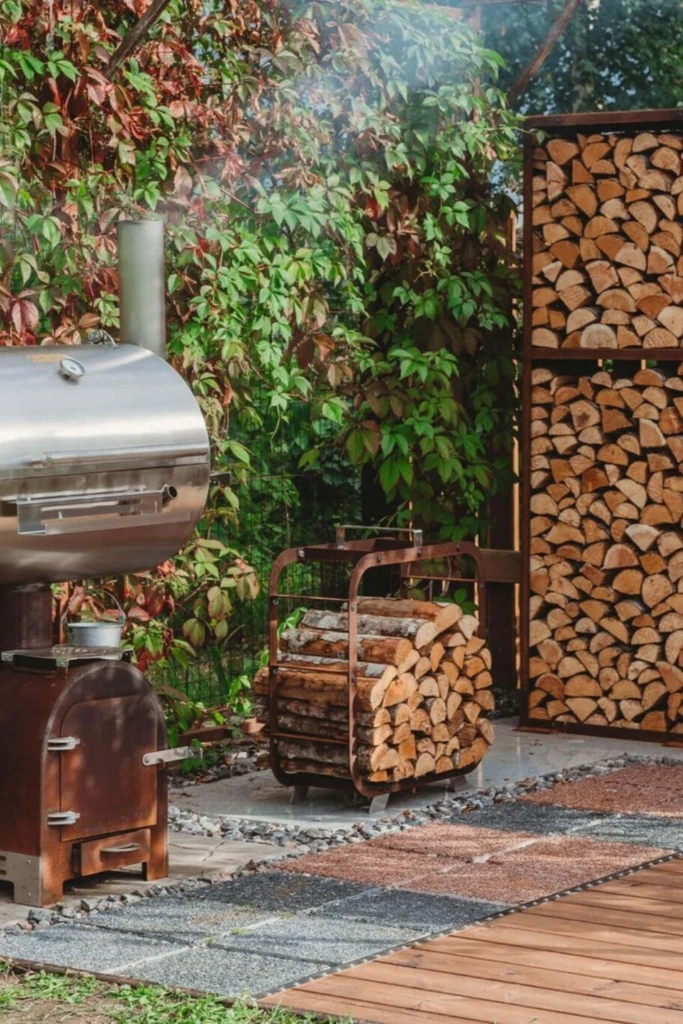
A grill wall reserve creates a dedicated supply of firewood beside an outdoor cooking area. It can take the form of a long, low rack, a narrow vertical unit, or a row of connected compartments that follow the edge of a patio.
The main advantage is convenience. Logs are easy to reach during cooking, and a defined storage area helps prevent loose pieces from accumulating around the grill. If the reserve has separate sections, you can organize wood by size and keep smaller pieces ready for quick replenishment.
Choose a rack with a durable frame and a raised base. If it sits near a fence or exterior wall, leave enough space for ventilation and maintenance. Do not position it where heat, sparks, or hot grease could ignite the stored wood. Always follow the grill manufacturer's clearance recommendations.
For a tidy appearance, keep the stack below the rack's safe capacity and place a suitable cover over the top when rain is expected. Leave the sides open where possible so moisture can escape.
A grill wall reserve is particularly useful for people who cook outdoors often and want fuel stored neatly in one accessible location without taking up the central patio area.
Final Thoughts
The best outdoor firewood storage solution combines weather protection, good airflow, stable construction, and easy access. A compact tower or slimline rack can suit a small patio, while a double bay shed or cabin-style shelter may be better for storing a full season's supply.
Whatever design you choose, raise the logs above damp ground, protect the top from rain and snow, and allow air to circulate through the stack. Keep firewood away from ignition sources and maintain a clear route to your fireplace, fire pit, grill, or pizza oven. With a little planning, your outdoor wood storage can stay organized, protect your fuel, and complement the rest of your garden.