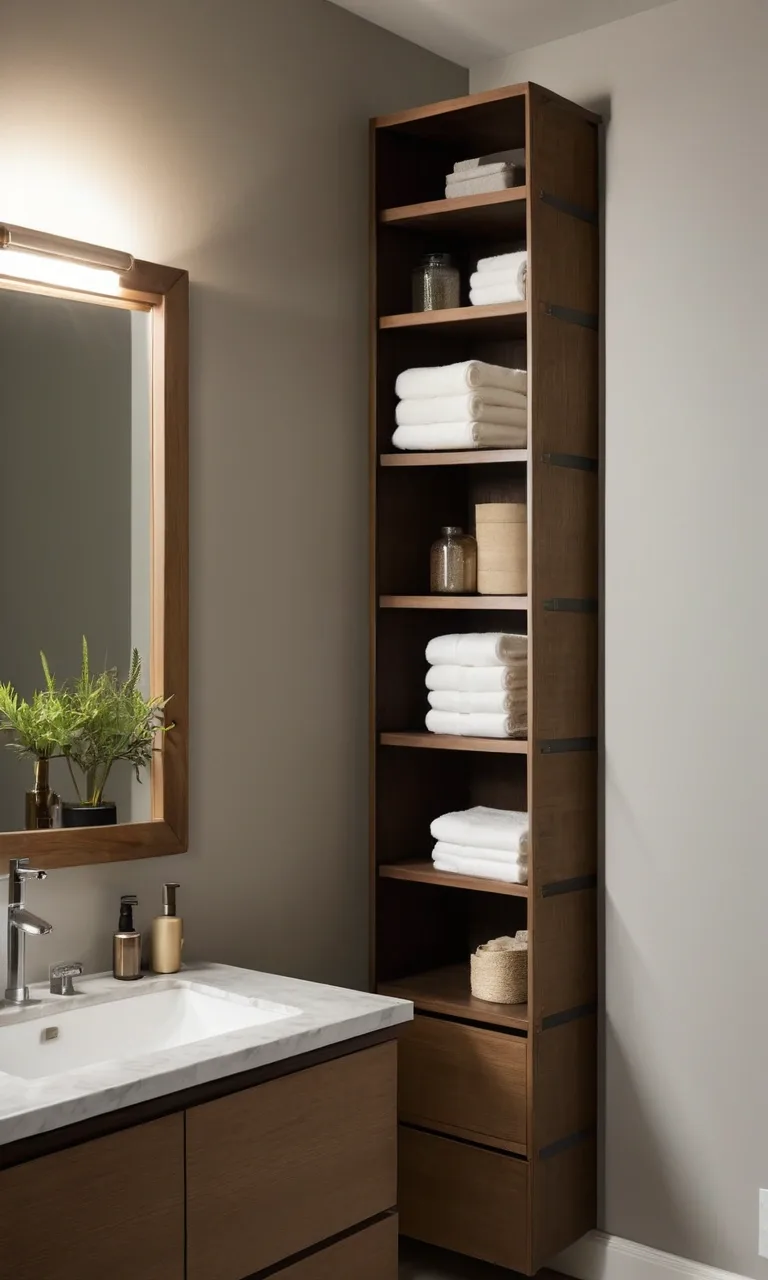
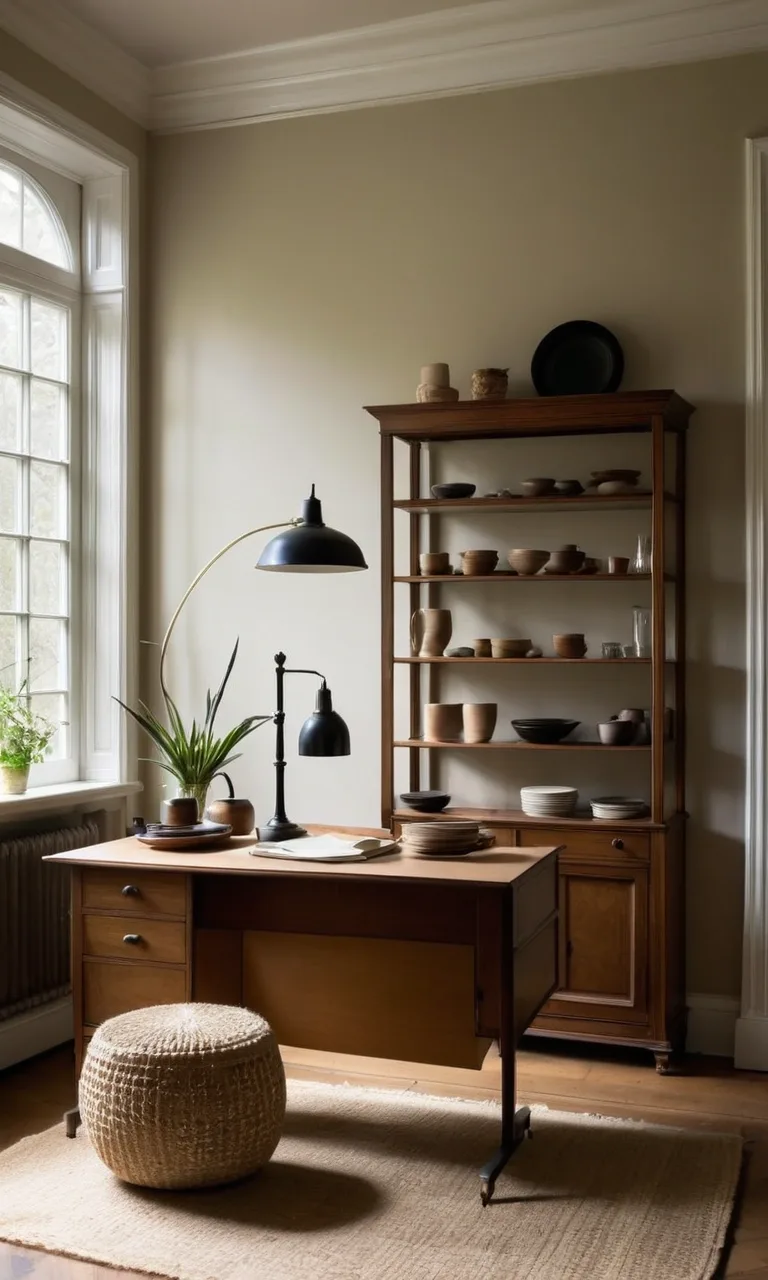
21 Basket Organization Ideas for 2026
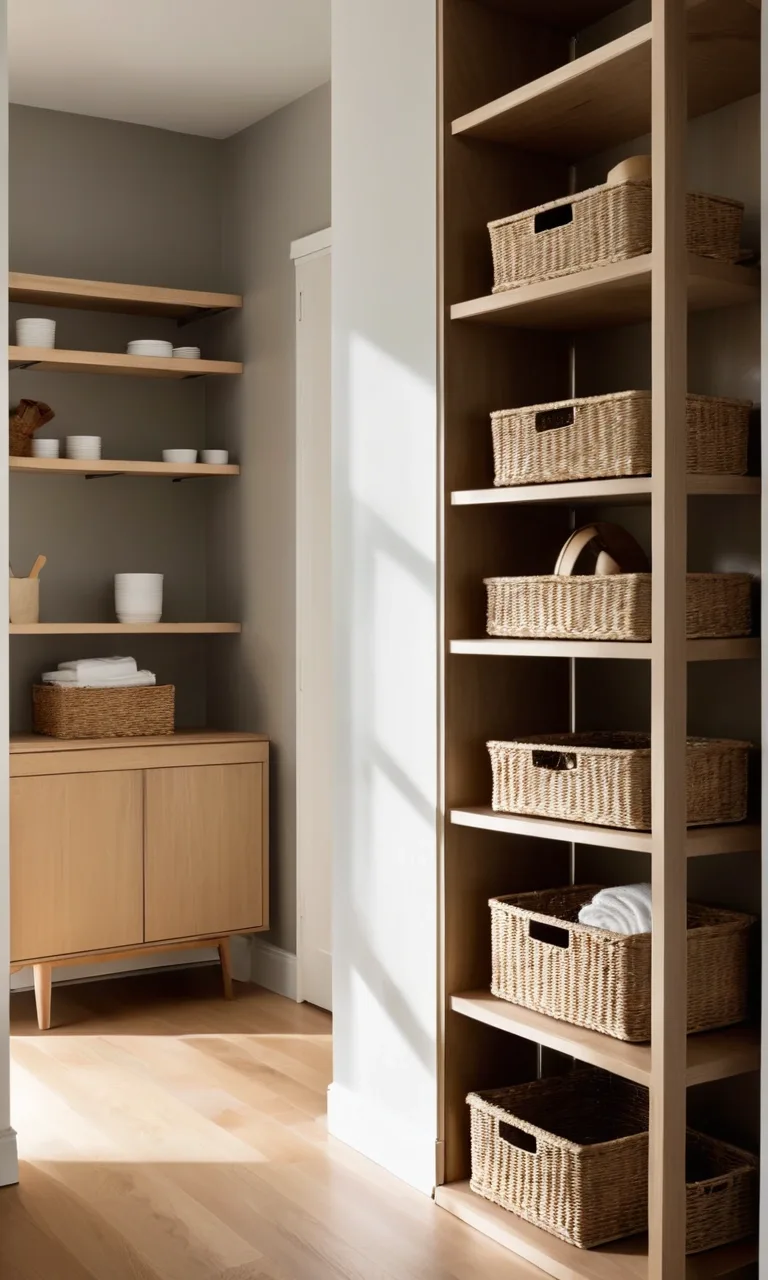
Keeping a home organized can be challenging when everyday belongings seem to accumulate in every corner. Toiletries crowd bathroom counters, snacks fill kitchen shelves, and small accessories disappear into drawers. Even a tidy room can feel messy when there is no designated place for these items.
Baskets offer a practical way to bring order to your home without investing in expensive cabinets or bulky furniture. They help group similar belongings, make frequently used items easier to find, and turn unused corners into functional storage areas.
The key is to choose baskets that suit your needs, fit your available space, and make everyday routines simpler. From organizing pantry essentials to managing laundry and children's toys, these basket organization ideas can help you create a home that feels more spacious and manageable.
What Are the Best Basket Organization Ideas for Small Spaces?
In a small home, effective storage depends on making the most of every available surface. Baskets are particularly useful because they can fit inside cupboards, sit on shelves, slide beneath furniture, or stack vertically.
Start by identifying the areas where clutter collects most frequently. You might need separate containers for personal care products, kitchen supplies, clothing accessories, or household cleaning materials. Giving each basket a specific purpose prevents unrelated items from getting mixed together.
Choose open baskets when you need quick access to everyday essentials and covered designs when you want to conceal visual clutter. Stackable options work well in cupboards, while narrow baskets can make use of otherwise neglected spaces.
Before buying new containers, measure the shelves or cabinets where you plan to place them. A well-fitted basket system makes better use of limited space and is easier to maintain over time.
1. Shelf Baskets
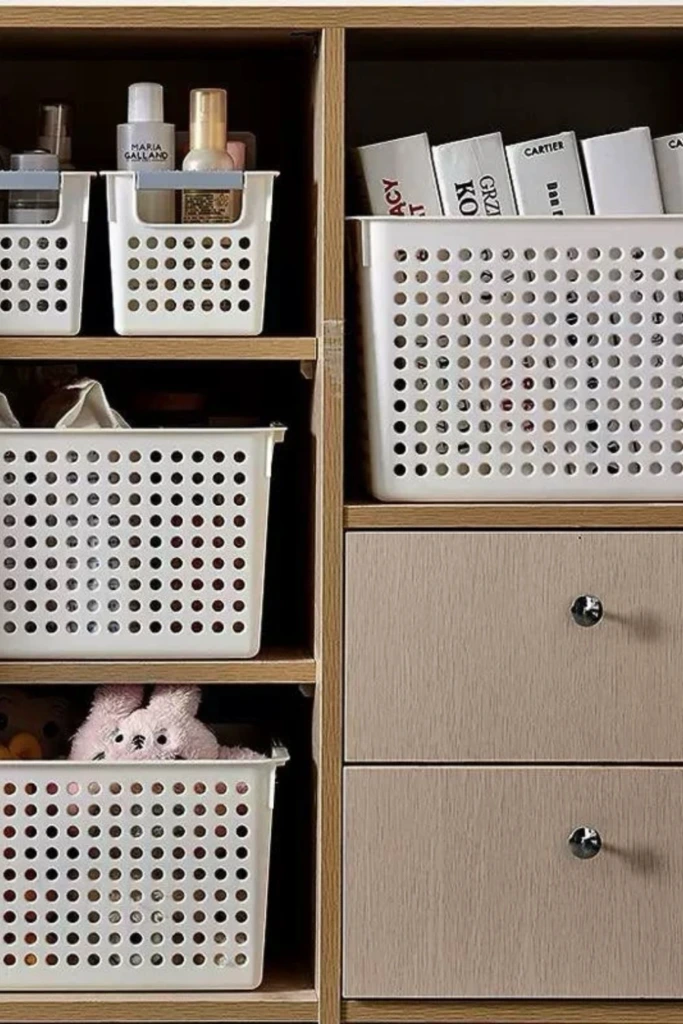
Shelf baskets turn scattered belongings into neatly arranged groups without requiring additional furniture. They are especially helpful for open shelving in bedrooms, bathrooms, kitchens, and closets.
Plastic baskets with perforated sides are a practical choice for everyday storage because they are lightweight and allow you to see or identify their contents quickly. Use smaller containers for cosmetics, skincare products, or personal accessories, and reserve deeper baskets for spare towels, toys, or household supplies.
Arrange the baskets according to how frequently you use their contents. Keep daily essentials on accessible shelves and move occasional-use items to higher or lower levels.
For a more cohesive appearance, select baskets that fit the depth and width of your shelving unit. Matching designs create a cleaner visual effect, while handles make it easier to pull containers forward whenever you need something.
2. Labeled Baskets
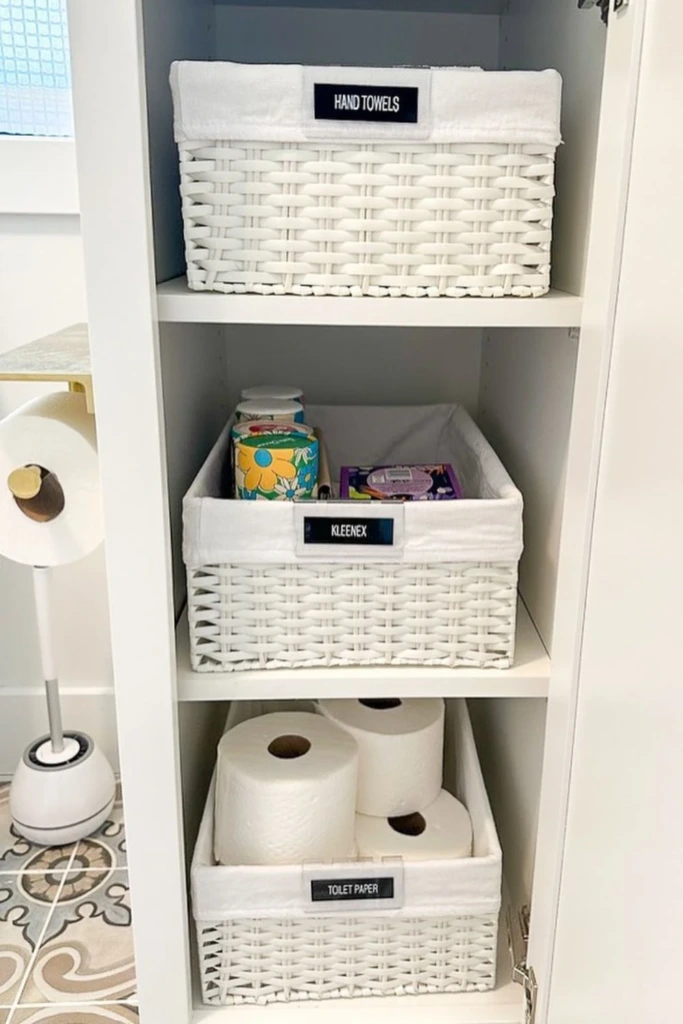
Labels make a basket organization system easier to understand and maintain, especially when several family members share the same storage space.
In a bathroom cabinet, for example, you could dedicate individual baskets to hand towels, facial tissues, toiletries, and backup hygiene products. This prevents small items from spreading across shelves and makes restocking simpler.
Use adhesive labels, clip-on tags, or small chalkboard labels depending on the basket material. Choose wording that clearly identifies the contents rather than using vague descriptions.
Soft fabric-lined or woven baskets work particularly well for towels and other clean linens. For convenience, position frequently used products at eye level and keep extra supplies in less accessible areas.
A good labeling system should make putting things away just as easy as taking them out. Keep categories simple so the arrangement remains practical rather than becoming another task to manage.
3. Closet Zones
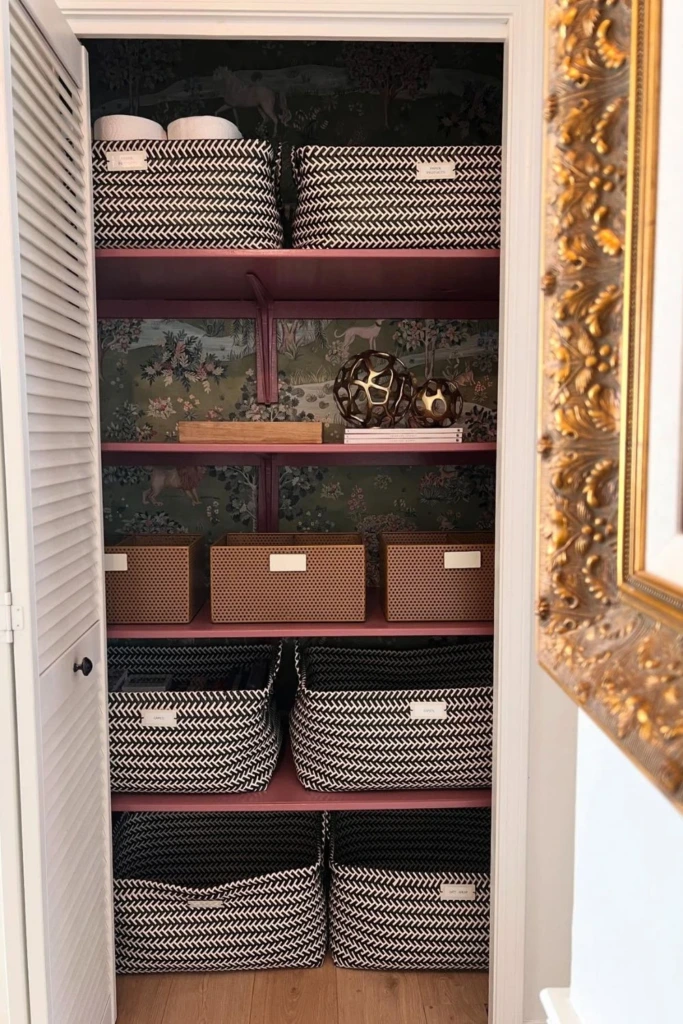
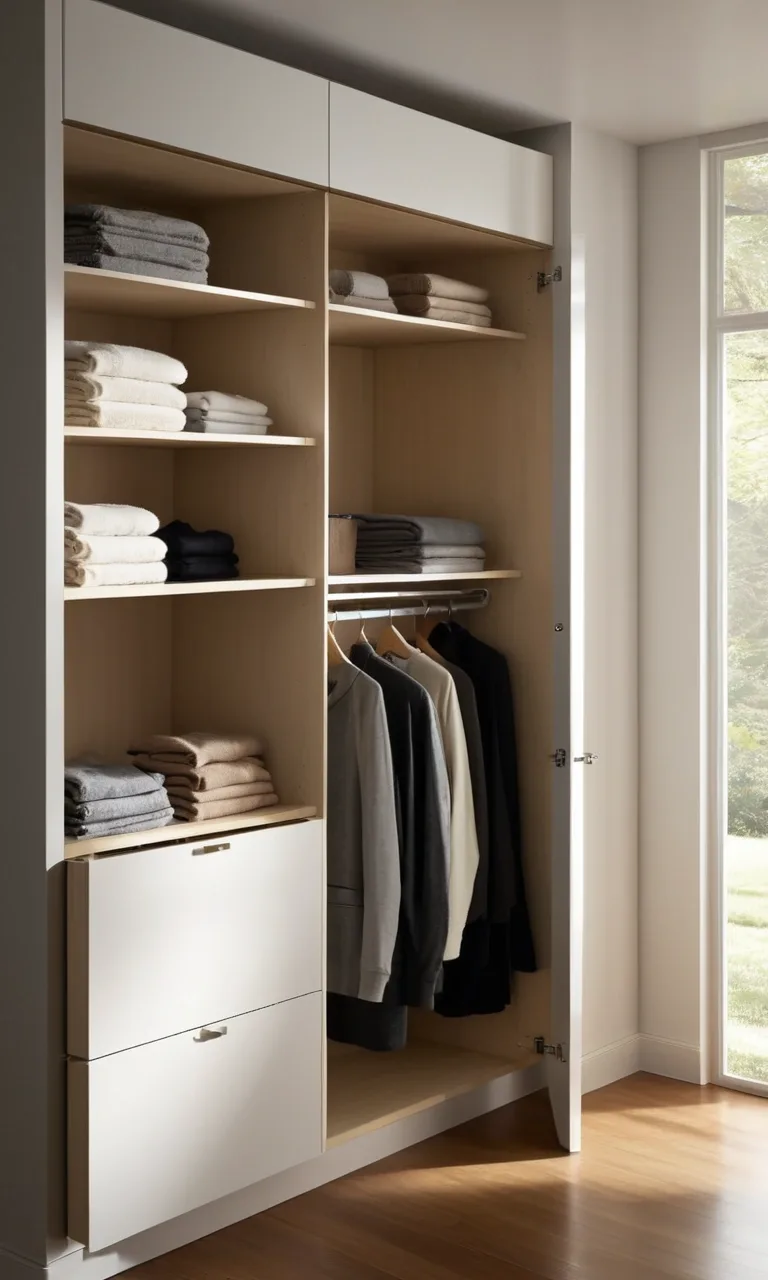
An organized closet works best when every section has a defined purpose. Instead of placing baskets wherever space happens to be available, divide the closet into categories based on the belongings you store.
Large baskets are suitable for bulky blankets, winter clothing, spare bedding, and seasonal accessories. Medium-sized containers can hold everyday garments, belts, scarves, or workout accessories. Smaller baskets are useful for socks and other items that tend to get lost among larger belongings.
Place heavier containers on sturdy, lower shelves and keep frequently used items within easy reach. Use labels to identify each category, particularly when several baskets look alike.
For a coordinated appearance, choose a consistent color palette or repeat the same basket style throughout the closet. You can still use different sizes to accommodate your storage needs without making the shelves appear crowded.
This arrangement makes seasonal changes, laundry routines, and daily dressing easier because you know where everything belongs.
4. Produce Baskets
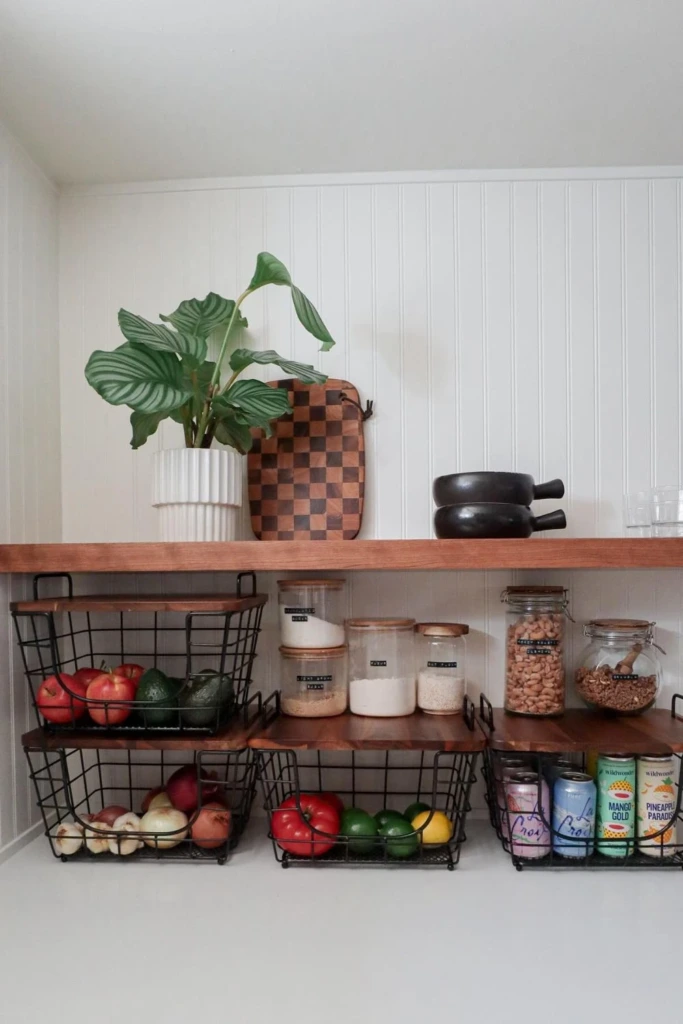
Fresh produce can quickly take over kitchen counters when fruits and vegetables do not have designated storage areas. A tiered produce basket creates separate spaces while using vertical room instead of spreading everything across the countertop.
Wire baskets are useful for suitable produce that benefits from airflow, including onions and potatoes. Keep different types of produce separate and follow appropriate storage recommendations for each item, since not every fruit or vegetable should be stored under the same conditions.
Place heavier items on lower levels to improve stability and reserve upper baskets for lighter produce. A tiered stand can also accommodate fruit bowls, garlic, or other frequently used ingredients, depending on the basket design.
Choose a sturdy model that fits comfortably on your counter and allows you to remove items without disturbing everything around them.
Remember that good organization is not just about appearance. Check stored produce regularly, remove spoiled items promptly, and avoid overcrowding baskets so you can see what needs to be used.
5. Vertical Storage
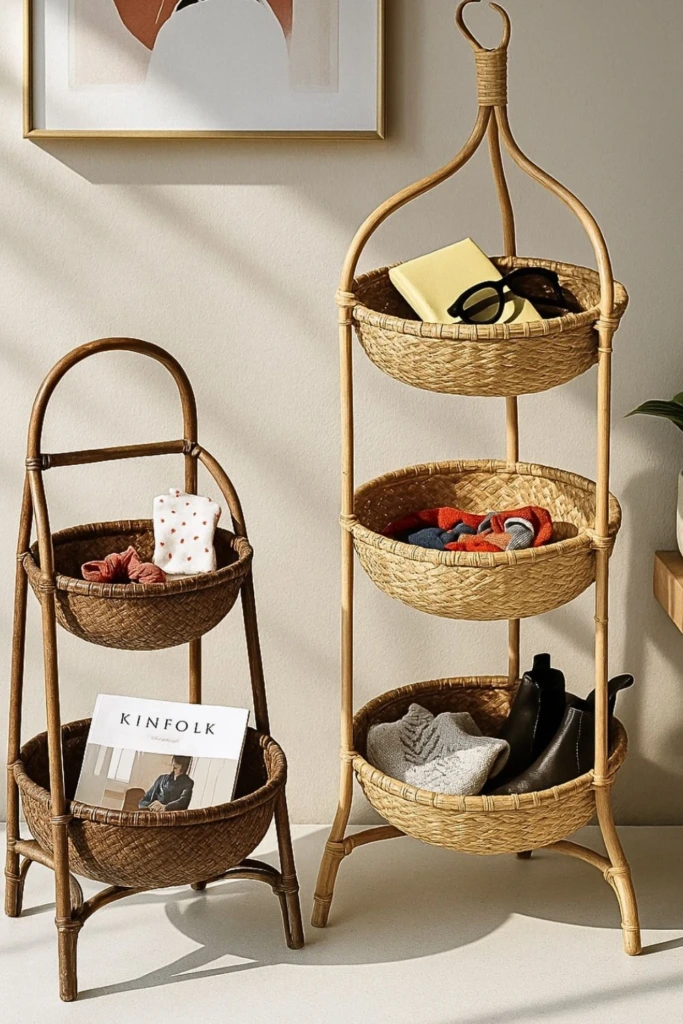
When floor space is limited, vertical basket storage can provide additional capacity without making a room feel smaller. A freestanding tiered unit allows you to organize belongings at several heights within a relatively compact footprint.
Use an entryway basket stand for gloves, hats, reusable shopping bags, and other items you reach for before leaving home. In a bedroom, it can hold folded clothing, accessories, or lightweight blankets. A living room unit might accommodate magazines, small toys, and everyday essentials.
Assign a different category to each level to prevent the stand from becoming a collection point for miscellaneous belongings. Put heavier items on the bottom and lighter objects on the upper shelves.
Woven baskets are an attractive option for spaces where storage remains visible, while plastic or metal designs may suit utility areas better.
Before stacking containers, check that the arrangement is stable and that the unit can safely support the combined weight. A secure, well-planned vertical system provides extra storage without sacrificing too much usable floor area.
6. Basket Display
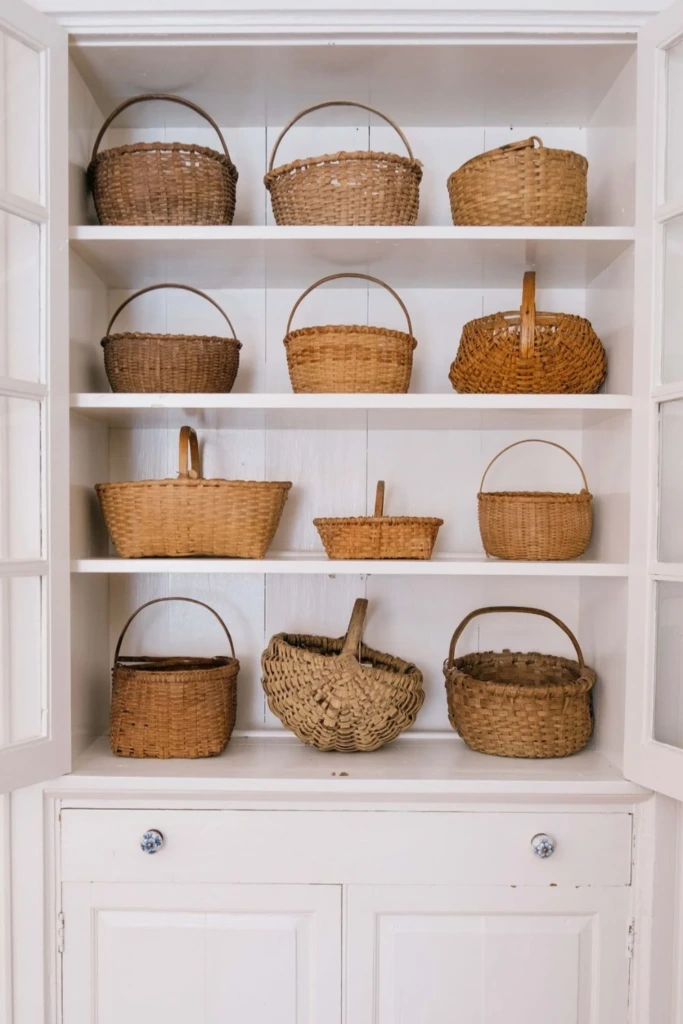
Baskets can serve as both storage containers and decorative accents when arranged thoughtfully on open shelves.
Start with a collection of baskets in complementary materials, colors, or finishes. You can combine different sizes, but make sure each container has enough room to hold its intended belongings without overflowing.
Use larger baskets on lower shelves for folded throws, extra linens, or seasonal clothing. Medium containers can hold books, craft materials, or accessories, while smaller baskets work well for lightweight items used occasionally.
Handles are especially useful when baskets sit deep inside shelving units. They allow you to retrieve stored belongings without having to move several containers.
For an attractive display, leave a little open space between baskets rather than filling every shelf completely. You can also combine woven storage with a few decorative objects, provided the arrangement does not interfere with accessibility.
The result is a shelving system that looks intentional while keeping practical household items close at hand.
7. Category Baskets
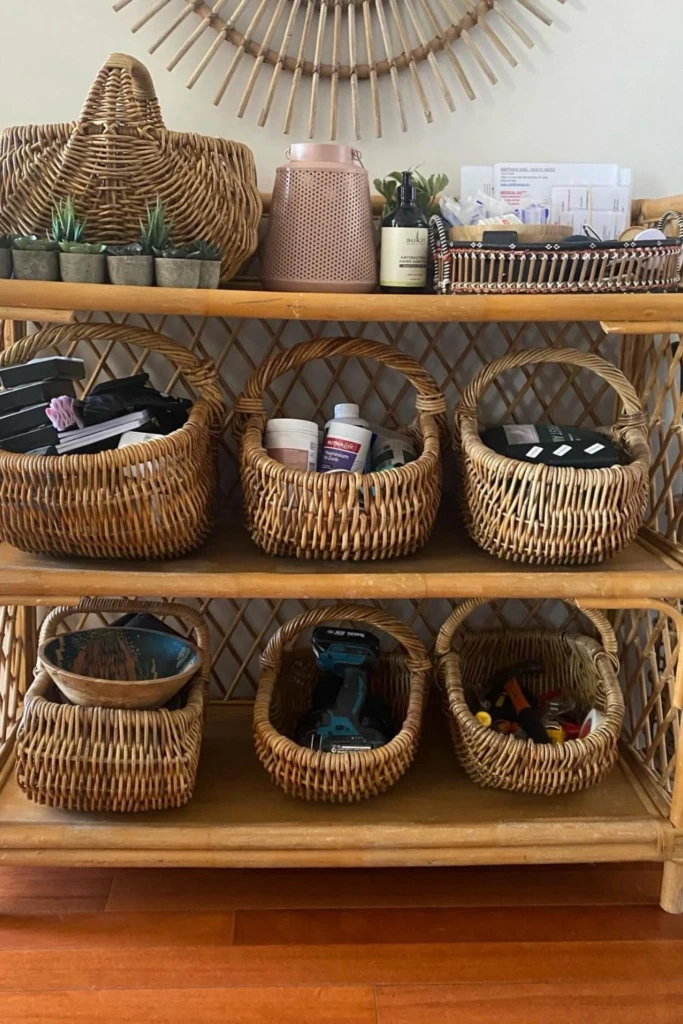
Category baskets make everyday organization easier by giving similar belongings a shared home. Instead of storing miscellaneous items together, assign each basket to one clearly defined group.
In a home office, separate containers might hold pens, notebooks, charging accessories, and paperwork supplies. In a bathroom, you could organize skincare products, hair accessories, and grooming tools. A craft area might benefit from individual baskets for yarn, scissors, paints, and small tools.
Choose containers according to the size and weight of the items they will hold. Shallow baskets are convenient for small accessories because you can see their contents, while deeper designs work better for larger supplies.
Place frequently used categories on accessible shelves and reserve higher storage areas for things you rarely need.
Using similarly sized baskets can make shelves look balanced, although mixing dimensions is perfectly reasonable when it improves functionality. The goal is to reduce searching time and make returning belongings to their proper places an effortless habit.
8. Laundry Sorter
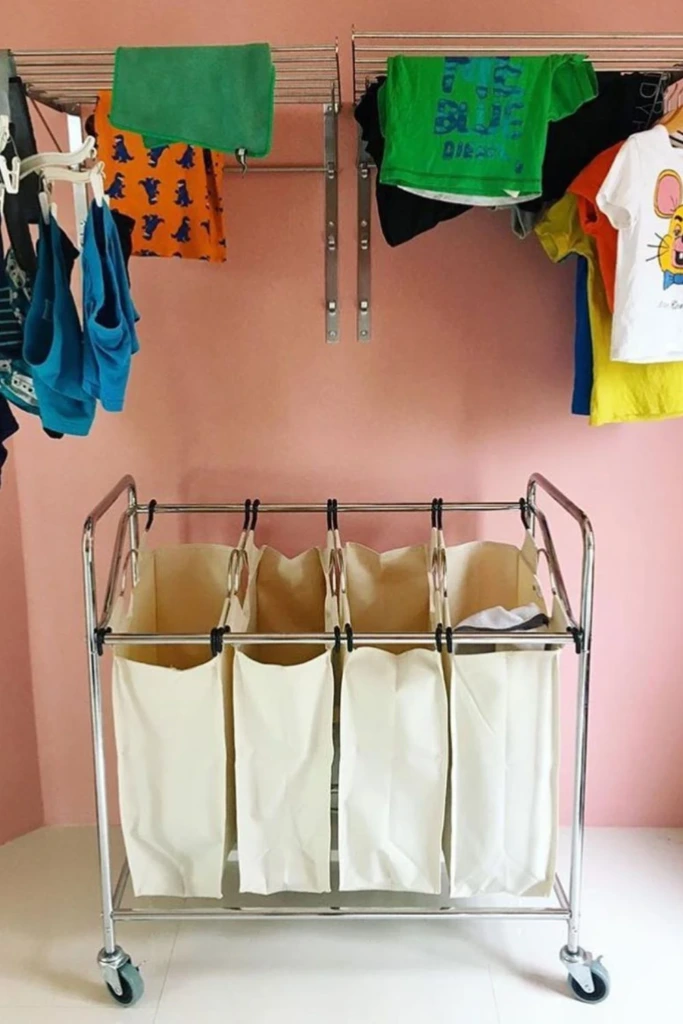
Sorting laundry becomes easier when clothes are separated before washing day. A divided laundry basket allows you to organize garments as they come off, rather than sorting a large mixed pile later.
Choose a sorter with two or more compartments for categories such as light-colored clothing, dark garments, delicate fabrics, or towels. Adjust the categories to match your household's laundry habits instead of creating unnecessary divisions.
A model with removable fabric bags makes carrying clothes to the washing machine more convenient. If your laundry area is shared or located away from bedrooms, a wheeled frame can save effort when transporting heavier loads.
Ventilated materials are useful because they encourage airflow around stored clothing. However, damp garments should not remain packed inside a hamper for extended periods, as moisture can encourage unpleasant odors and mildew.
Position the sorter somewhere accessible, such as a laundry room, bathroom, or bedroom corner. When everyone knows which compartment to use, laundry preparation becomes a simpler part of the daily routine.
9. Cube Baskets
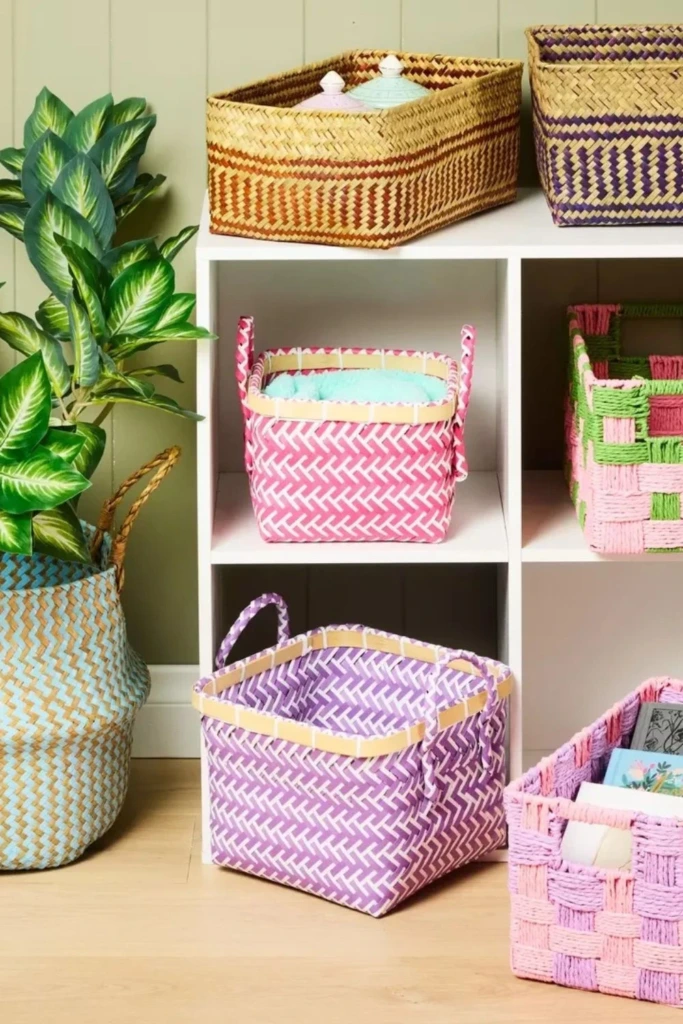
Cube storage organizers become much more useful when their open compartments contain baskets that keep belongings grouped together.
Measure each cube before selecting containers, allowing enough clearance to slide them in and out comfortably. Fabric baskets provide a lightweight option for bedrooms and living rooms, while woven designs offer a more decorative finish.
Use separate baskets for books, children's accessories, craft supplies, electronic accessories, or household paperwork. Smaller belongings stay contained instead of spreading across the shelves.
Handles make a noticeable difference because each basket functions like a removable drawer. You can take a container to another room, retrieve what you need, and return it without disturbing the rest of the unit.
For a tidy appearance, coordinate basket colors with your furniture or choose neutral shades that blend into the room. If the organizer holds items for multiple people, add simple labels to identify each category.
Cube baskets are particularly useful in rentals and compact homes because they improve existing shelving without requiring permanent alterations.
10. Toy Baskets
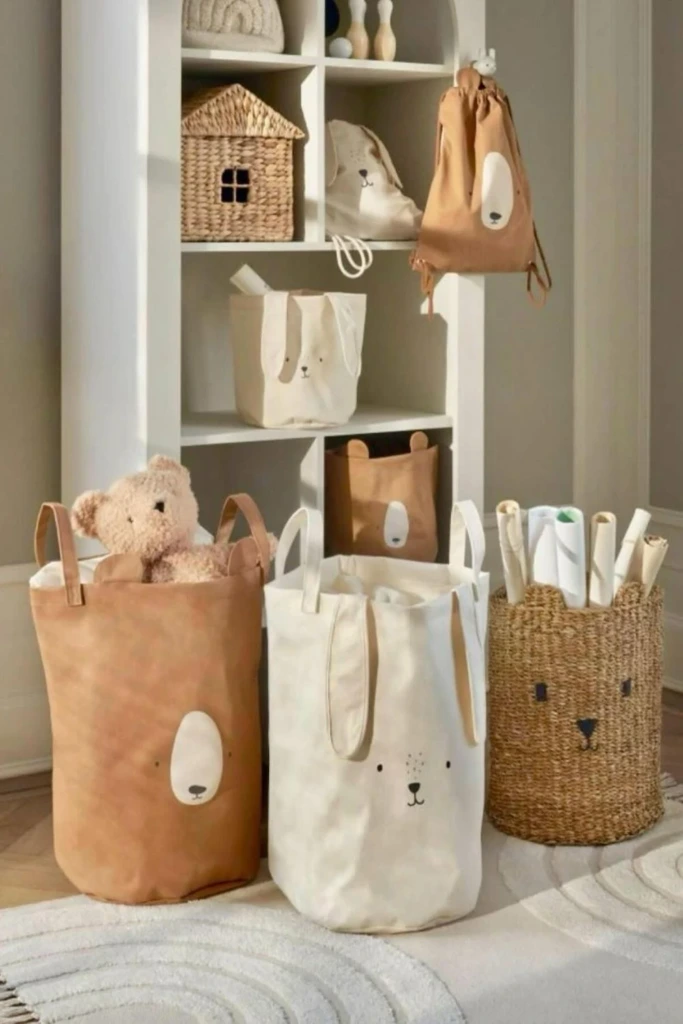
Children's toys are easier to manage when cleanup does not require placing every object in a precisely arranged box. Large baskets provide an accessible landing place for toys that are used frequently throughout the day.
Choose soft fabric or flexible woven baskets for lightweight stuffed animals, dress-up accessories, and other suitable toys. For heavier blocks or larger play equipment, select sturdy containers designed to support their weight.
You can organize baskets by toy type, such as building blocks, dolls, art materials, and plush animals. If your child is young, use picture labels or simple illustrations to make each category easier to recognize.
Place everyday toys in low, accessible containers so children can retrieve and put away their belongings independently. Less frequently used toys can stay on higher shelves, provided they remain safely accessible to an adult.
Avoid filling baskets beyond their capacity, since overflowing containers are difficult to use and can become tipping hazards. Also, keep small parts away from children who may put them in their mouths.
With an uncomplicated system, tidying the playroom becomes a manageable activity rather than a lengthy chore.
11. Pantry Baskets
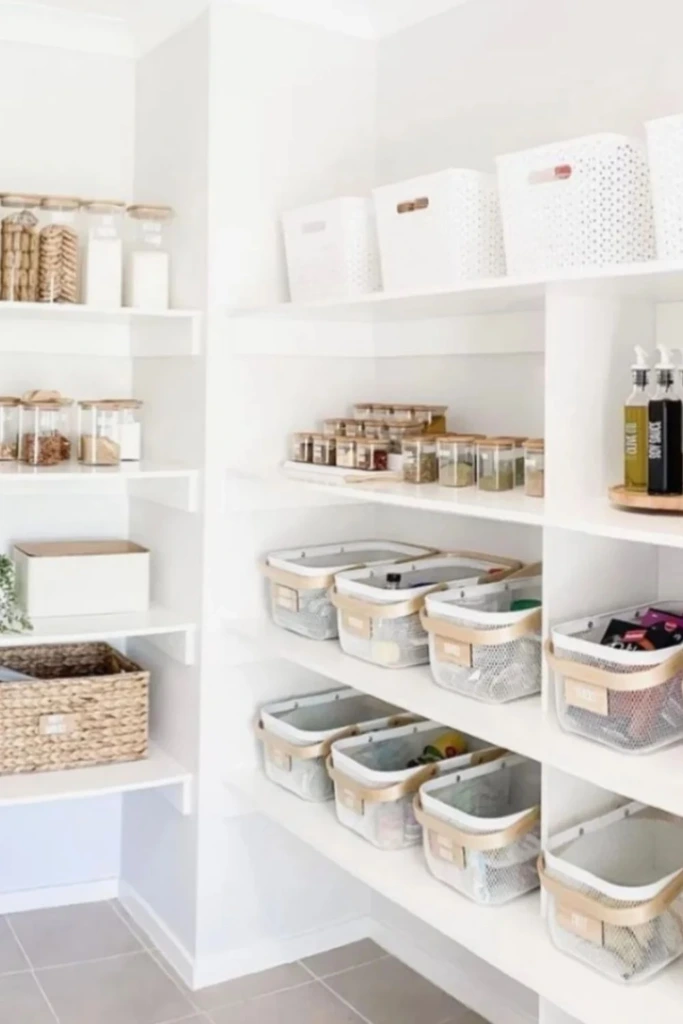
A well-organized pantry helps you find ingredients quickly, keep track of supplies, and reduce the chance of forgetting food at the back of a shelf.
Begin by grouping similar products together. One basket might hold snack packets, another could contain baking ingredients, and a third could store breakfast items. Separate categories according to your cooking habits and the amount of space available.
Clear plastic or mesh baskets make it easier to identify packaged goods without removing everything from the shelf. If you prefer an attractive, coordinated look, opaque baskets can also work, provided you label them clearly.
Choose containers that fit the shelf dimensions and can be pulled forward without catching on neighboring items. Keep heavier products on lower shelves and frequently used ingredients at a comfortable height.
For food safety, store dry goods in appropriate sealed containers when necessary, and keep cleaning products separate from food. Check expiration dates and rotate older supplies toward the front.
A practical pantry basket system makes meal preparation more efficient because ingredients are easier to locate and inventory.
12. Pull Baskets
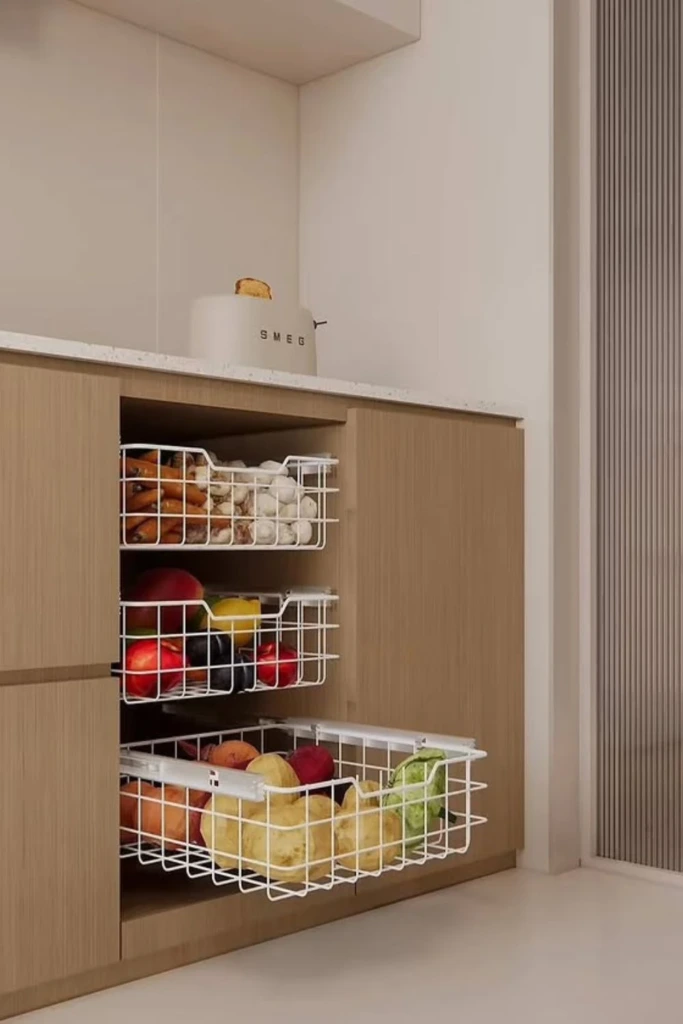
Deep cabinets often waste valuable space when items are pushed toward the back and become difficult to reach. Pull-out baskets help solve this problem by bringing stored belongings forward.
Sliding wire baskets can be installed inside suitable cupboards to create drawer-like storage. Depending on their construction and placement, they can hold kitchen accessories, pantry packages, cleaning supplies, or other household essentials.
For produce storage, choose ventilated baskets and use them only for items suited to the location and storage conditions. Keep different produce types separated, and place heavier items on lower levels when the unit is designed for stacking.
Before installing a pull-out system, measure the cabinet's interior width, depth, and height. Check that plumbing, hinges, and cabinet doors will not interfere with the sliding mechanism.
Make sure the mounting hardware and cabinet structure can support the expected load. A properly fitted system makes deep storage more accessible and reduces the need to move several items just to reach one at the back.
13. Wall Baskets
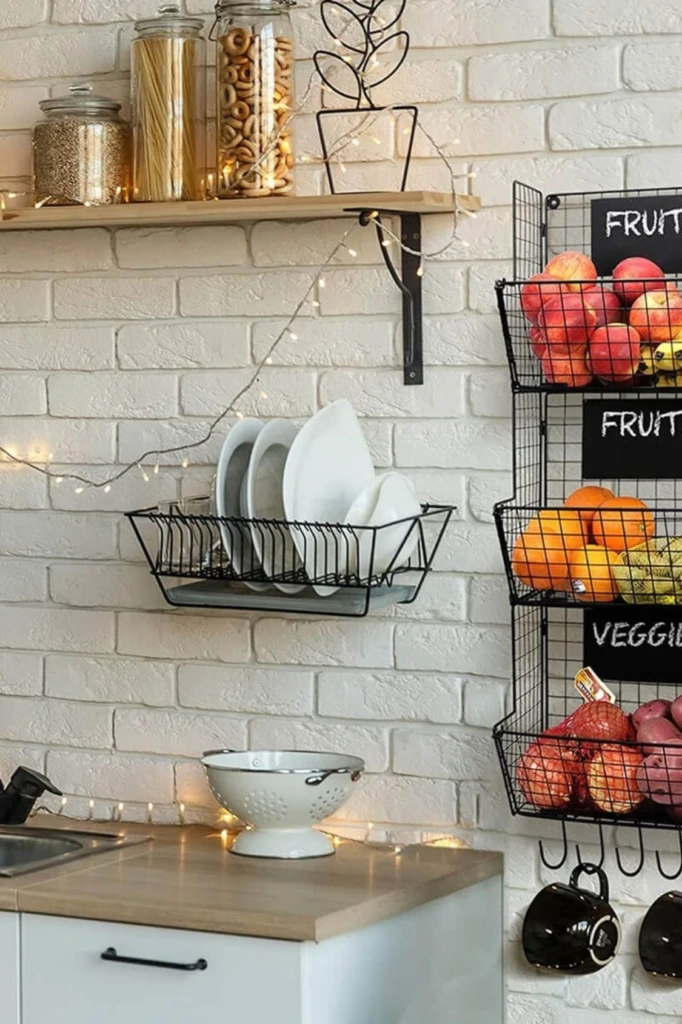
Wall-mounted baskets are a useful solution when counters and floors offer little room for additional storage. By moving suitable items onto a wall, you can free up valuable working surfaces while keeping essentials within reach.
In a kitchen, a vertical basket arrangement can hold selected produce, lightweight pantry goods, or frequently used accessories. In other rooms, wall baskets can organize mail, small household items, craft supplies, or bathroom essentials.
Choose a design that matches the items you intend to store. Open metal baskets provide visibility and airflow, while fabric or woven wall pockets are better suited to lightweight, dry belongings.
Install the baskets at practical heights and use appropriate anchors for the wall material. Confirm that the mounting system can safely support the combined weight, particularly when storing heavier items.
You can label individual levels to keep categories separate and prevent the arrangement from turning into another catch-all area.
Wall storage works best when it improves access without obstructing movement, work surfaces, or frequently used fixtures.
14. Bedside Baskets
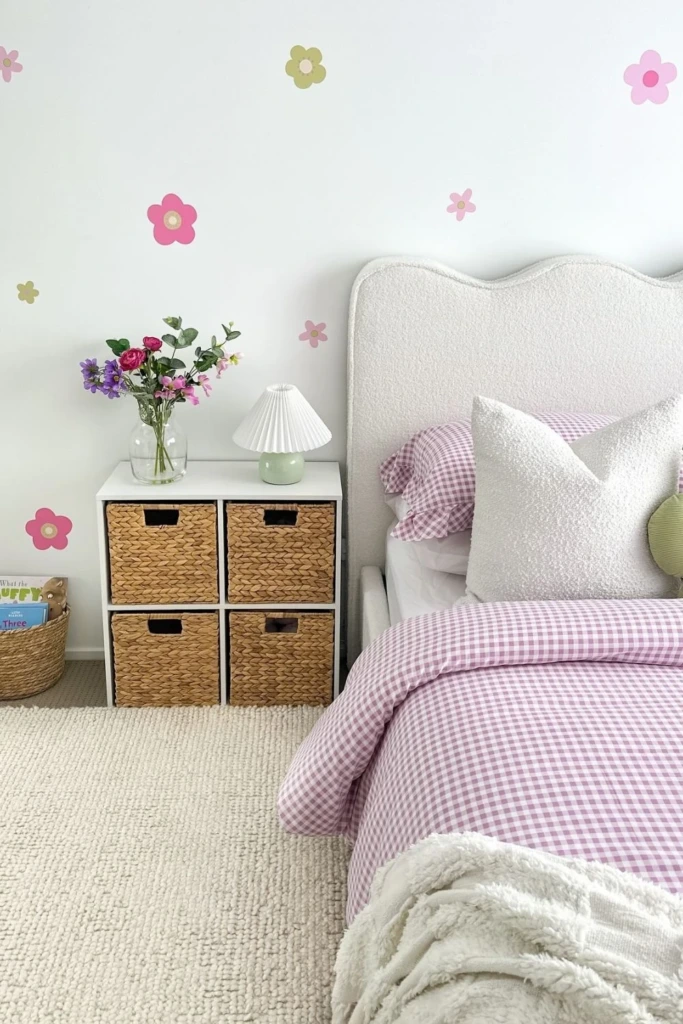
Bedside areas often collect books, charging cables, notebooks, glasses, and small personal belongings. A compact basket system keeps these essentials together without covering the entire nightstand.
If you have a cube organizer or a small shelf beside the bed, place baskets inside the available compartments. Use one for reading materials, another for personal accessories, and a third for items such as spare charging cables or stationery.
Choose a basket size that allows you to retrieve belongings easily, even when the room is dim. Soft fabric and woven materials can introduce texture and warmth, while plastic containers may be more practical for items that require frequent cleaning.
Keep anything you use every night close to the bed, but avoid filling the baskets with objects that belong elsewhere. Review their contents regularly to prevent unnecessary clutter from accumulating.
In a child's bedroom, low baskets can hold suitable bedtime books or soft toys, making it easier to maintain an orderly space.
A small amount of dedicated bedside storage can make the room feel calmer and help establish a more relaxing nighttime routine.
15. Pantry Layers
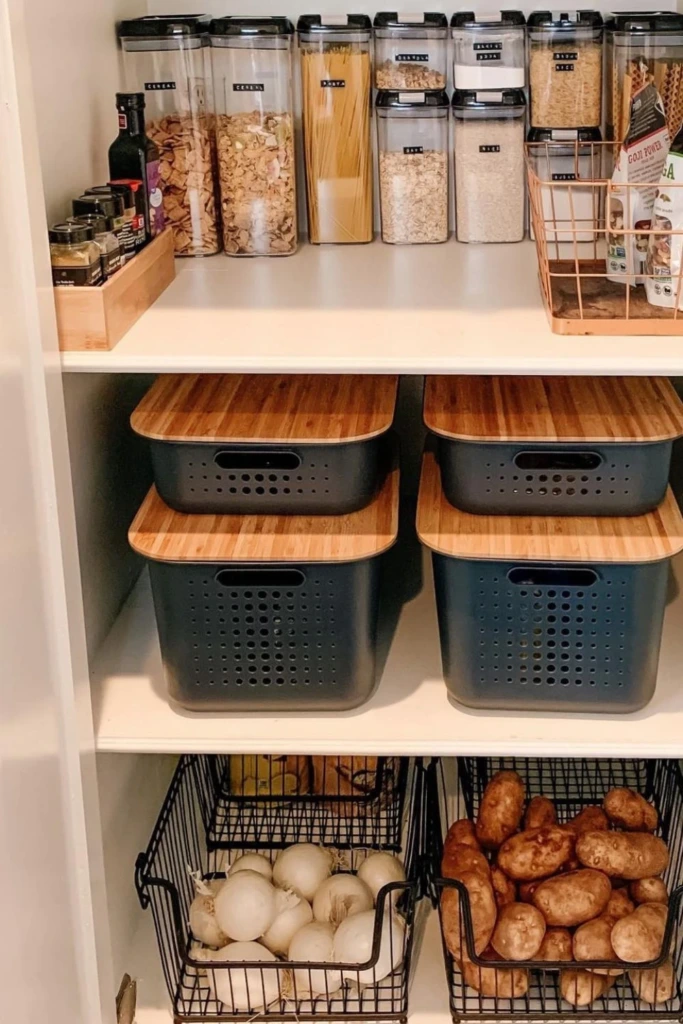
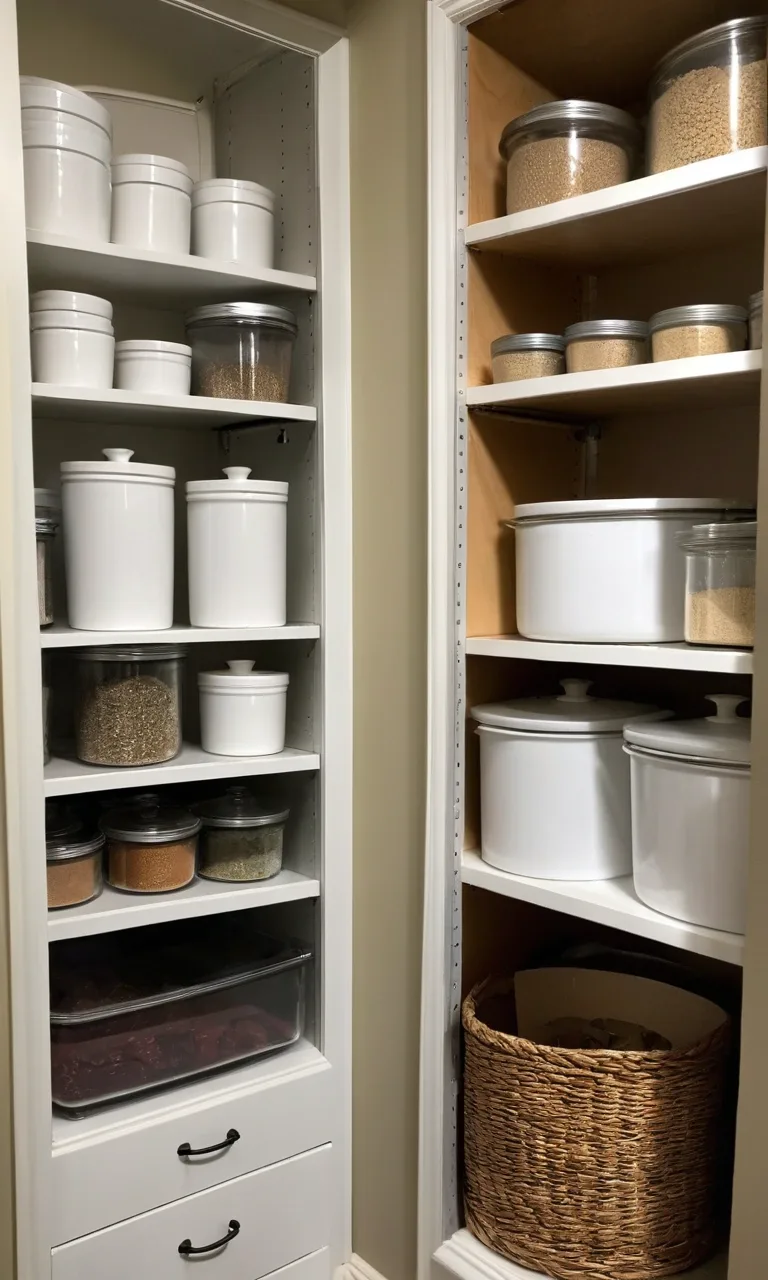
Combining different storage containers creates a more functional pantry because not every food item needs the same type of basket.
Start by placing suitable dry ingredients, such as rice, pasta, cereal, and flour, in food-safe airtight containers when protection from moisture and pests is important. Clear containers make it easier to identify contents and monitor remaining quantities.
Use baskets on the middle shelves to group packaged snacks, baking supplies, breakfast foods, or seasoning packets. Labels help you distinguish categories without opening several containers.
Lower shelves can accommodate sturdy bins for appropriate produce or heavier food packages. Ventilated baskets may suit certain vegetables, while other ingredients require cooler, darker, or more controlled storage conditions.
Arrange the shelves according to your routine. Ingredients used daily should be easy to reach, while occasional baking supplies or backup products can occupy less accessible areas.
Leave enough room to remove containers comfortably and avoid stacking items so high that packages become difficult to retrieve.
By combining airtight storage, labeled baskets, and suitable bins, you can make the pantry easier to navigate without replacing the entire cabinet system.
16. Drawer Laundry
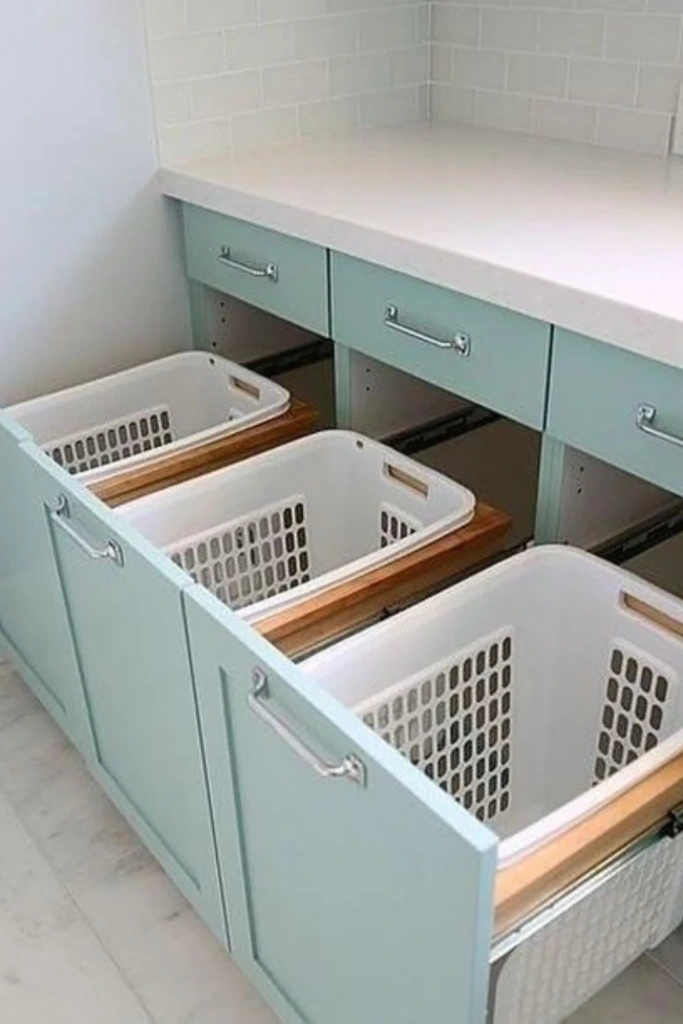
A laundry cabinet with pull-out baskets can provide a convenient sorting station for households that prefer to keep clothes out of sight.
Install compatible sliding compartments beneath a countertop or inside a suitable cabinet. Assign each basket a category, such as dark garments, light-colored clothing, towels, or delicates.
Ventilated plastic baskets or removable fabric bags can work well, depending on the design. Good airflow is particularly important when clothing is not completely dry before being placed in the hamper.
The sliding mechanism allows you to access individual loads without moving the entire collection of laundry. Removable baskets can also make transportation to the washing machine easier.
Measure the cabinet carefully and verify that the rails, basket dimensions, and available clearance are compatible. A properly installed unit should move smoothly and remain stable when loaded.
If your household produces a large amount of laundry, choose compartment sizes that reflect the actual volume of each category. This prevents one section from overflowing while another remains nearly empty.
With a consistent sorting routine, laundry day starts with clothes already separated into manageable loads.
17. Bathroom Tower
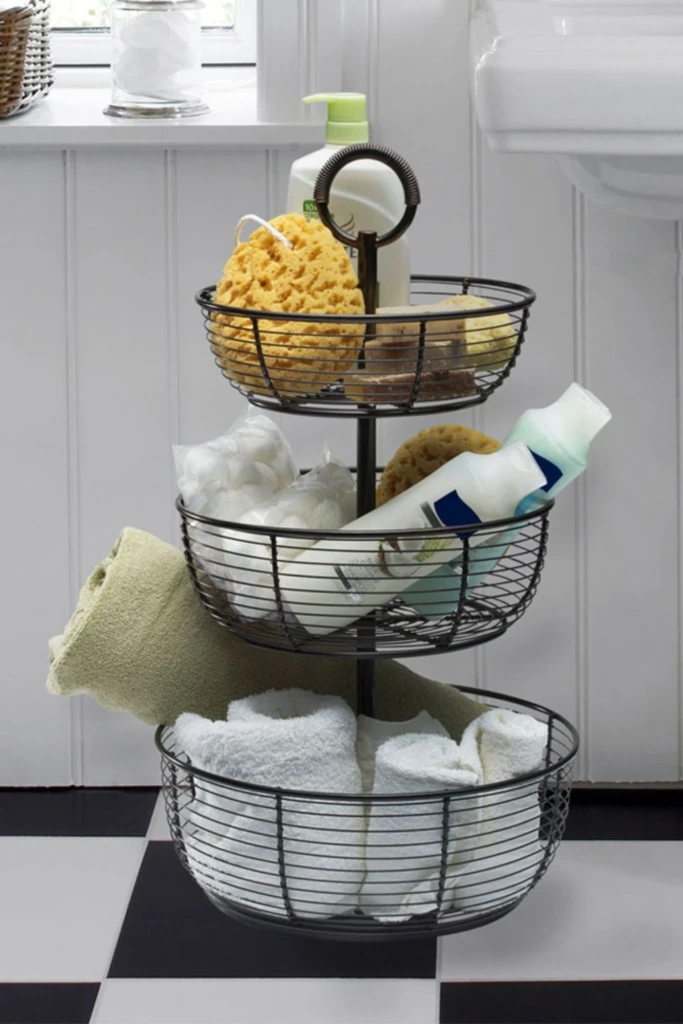
A tiered basket tower provides extra bathroom storage without taking up the space required for additional cabinets or wall shelves.
Use the upper level for frequently used items such as hand towels, soap, or daily skincare products. The middle basket can hold cotton pads, grooming accessories, and other small essentials, while the bottom level can accommodate spare washcloths or suitable larger items.
Metal or plastic baskets are often practical in bathrooms because they are relatively easy to clean. Open designs can also encourage airflow, although moisture-resistant materials are important in damp environments.
Position the tower on a stable, level surface where it will not interfere with doors, walkways, or access to the sink and shower. Keep heavy containers near the bottom to improve stability.
If you store toiletries in open baskets, consider grouping smaller products in washable trays so that spills are easier to clean. Keep medicines and potentially hazardous products securely out of children's reach.
A well-arranged basket tower turns an unused corner into useful storage while helping bathroom counters remain clear.
18. Produce Zones
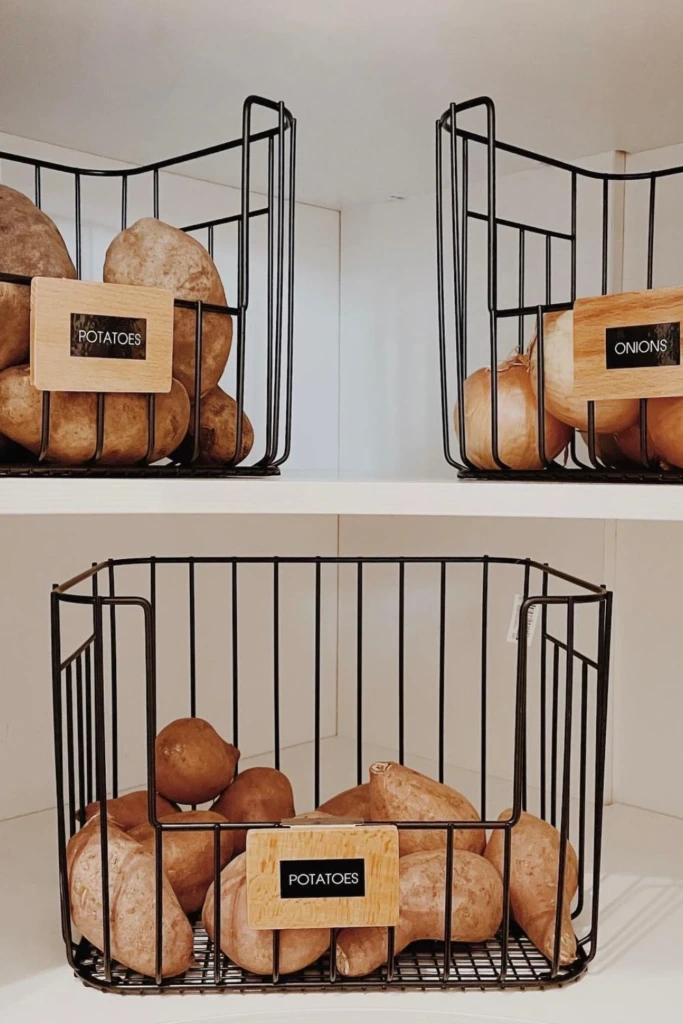
Separating fruits and vegetables into dedicated storage areas helps you monitor supplies and makes ingredients easier to find when preparing meals.
Use individual baskets for suitable produce categories, such as potatoes, onions, garlic, and other root vegetables. Wide, shallow baskets are especially useful because their contents remain visible instead of becoming buried beneath heavier items.
Ventilated wire baskets can be appropriate for produce that benefits from airflow. However, different fruits and vegetables have different storage requirements, so avoid treating all produce as interchangeable. Some items need refrigeration, while others should be kept away from direct sunlight or certain ripening fruits.
Arrange the baskets according to how you cook. Frequently used ingredients can sit near the preparation area, while backup supplies belong in a suitable pantry location.
Inspect the contents regularly and remove spoiled produce before it affects nearby items. Avoid overfilling baskets, since crowded storage makes it harder to notice changes in freshness.
Creating separate produce zones gives each ingredient a recognizable home and helps you use groceries more efficiently.
19. Carry Baskets
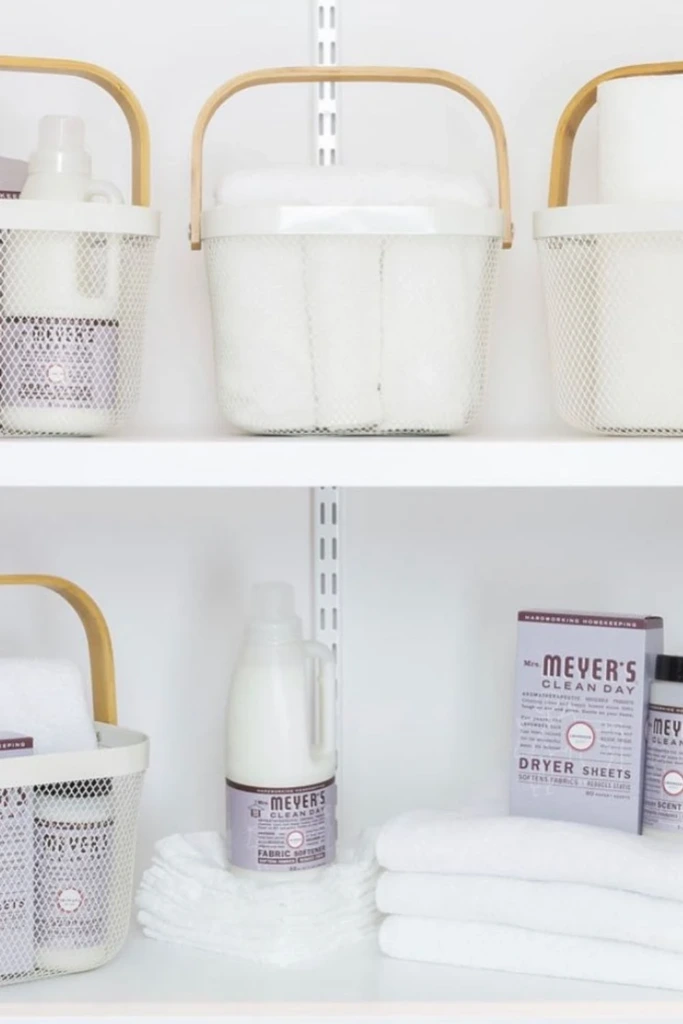
Portable baskets make household cleaning easier by keeping related supplies together in ready-to-carry kits.
Instead of storing every bottle and cloth separately throughout the house, prepare dedicated baskets for bathroom cleaning, laundry tasks, and general household maintenance. Each container should hold only the products and tools needed for its assigned job.
Metal mesh or sturdy plastic baskets with comfortable handles are useful options. Open sides make it easy to identify supplies and notice when something needs replacing.
Choose a size that remains manageable when filled. Heavy cleaning products can quickly make a large basket uncomfortable to carry, so distribute supplies sensibly.
Keep cleaning chemicals in their original labeled containers, follow their safety instructions, and never mix incompatible products. If children or pets live in your home, store cleaning supplies securely whenever the baskets are not in use.
After finishing a task, return the basket to its designated storage area and replenish anything that has run out.
A portable cleaning kit reduces repeated trips between rooms and makes it easier to begin chores without searching through multiple cupboards.
20. Stack Crates
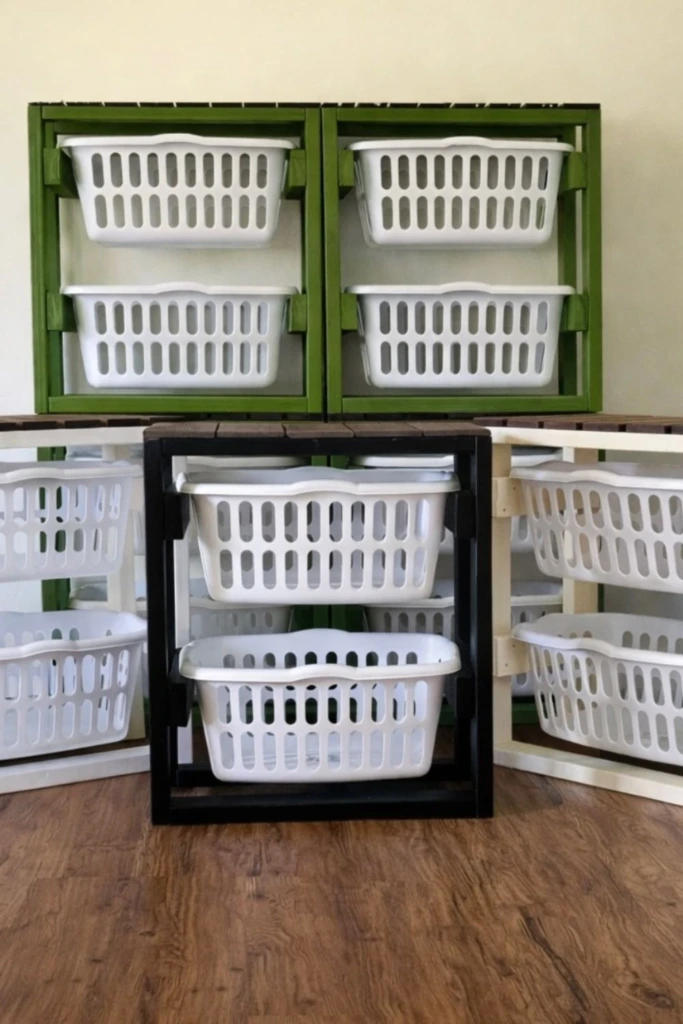
Stackable crates provide flexible storage when traditional shelves or cabinets are impractical. They are particularly useful in small apartments, laundry rooms, craft spaces, and utility areas.
A crate-style frame can hold removable baskets or smaller containers, allowing you to organize belongings across several levels. Depending on the design, you can store toys, craft materials, folded clothing, pantry supplies, or household accessories.
Choose crates that are specifically designed to stack securely. Not every basket or wooden box can safely support another loaded container, so check the manufacturer's guidance before building a tall arrangement.
Use the lower levels for heavier belongings and keep frequently accessed items within comfortable reach. Containers that slide out or lift away make it easier to retrieve supplies without dismantling the entire setup.
Wooden crates can provide a rustic appearance, while plastic versions may be easier to clean in utility spaces. Select a material that suits the environment and the weight of the contents.
Measure the available floor area before assembling the unit, and avoid blocking walkways or ventilation. A stable crate system can expand your storage capacity while remaining adaptable as your needs change.
21. Cabinet Baskets
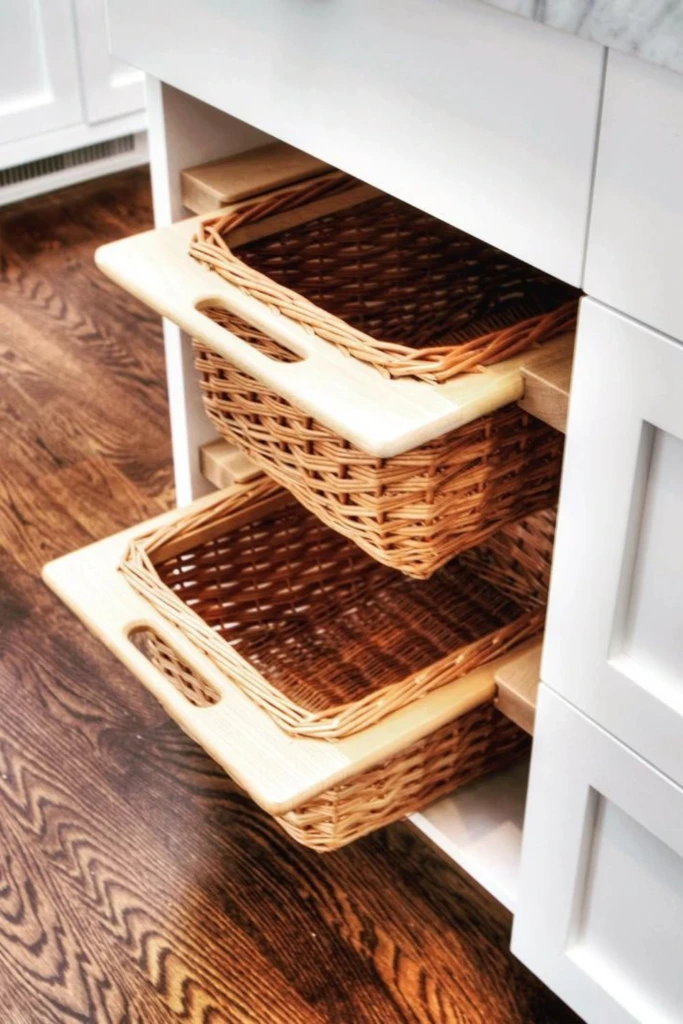
Deep kitchen cabinets can become difficult to manage when smaller items disappear behind larger containers. Pull-out basket drawers make better use of this space by bringing stored belongings closer to you.
A sliding tray fitted with a basket can hold kitchen linens, packaged foods, baking accessories, or other suitable household items. Separate baskets by category so you can retrieve what you need without disturbing unrelated belongings.
Woven baskets offer a natural decorative finish, while metal and plastic alternatives may be easier to clean in areas exposed to spills.
Before purchasing a cabinet basket system, measure the internal dimensions and check for obstructions such as hinges, pipes, and door frames. Select a sliding mechanism that is compatible with the cabinet construction and intended load.
Use the available depth efficiently, but avoid packing containers so tightly that they cannot slide smoothly. Heavier items should be placed on storage systems designed to support their weight.
This approach can make existing cabinetry more functional without requiring a complete kitchen renovation. With clearly defined categories and accessible pull-out storage, even deep cupboards become easier to use.
How many baskets should you use in a small space without creating more clutter?
The right number depends on the amount of storage you need, the available space, and how many categories of belongings you want to separate.
A practical starting point is to assign one basket to each meaningful category rather than buying a separate container for every individual product. For example, you might use one basket for skincare, another for hair accessories, and a third for spare toiletries.
Begin with the areas that create the most frustration and add containers only when they solve a specific problem. Measure your shelves before purchasing baskets, and avoid filling every available surface simply because additional containers are available.
It is also worth reviewing what you already own. Removing unused items and relocating belongings that do not belong in a particular area may eliminate the need for extra storage altogether.
The best basket system is one you can maintain easily. If you struggle to remember where things belong or baskets repeatedly overflow, simplify the categories rather than adding more containers.
What type of basket works best for everyday organization?
The most suitable basket depends on the items you plan to store, the environment, and how frequently you need access to the contents.
Wire baskets: Useful for suitable produce, pantry organization, and utility storage because their open construction allows visibility and airflow.
Woven baskets: A good choice for living rooms, bedrooms, and open shelving where you want storage to complement the decor.
Plastic baskets: Practical for bathrooms, laundry areas, cupboards, and general household organization because many designs are lightweight and easy to wipe clean.
Fabric baskets: Ideal for lightweight clothing, accessories, toys, and items stored in cube organizers.
Lidded baskets: Helpful for concealing visual clutter and protecting appropriate belongings from dust.
Stackable baskets: Useful when vertical space is limited, provided the containers are designed to stack safely.
Before choosing a basket, consider its dimensions, load capacity, ventilation, cleaning requirements, and accessibility. A beautiful container will not be particularly useful if it is difficult to reach or unsuitable for its contents.
For the best results, prioritize function first and appearance second. When baskets match your actual storage needs, they help keep everyday belongings organized without adding unnecessary complexity to your home.