27 DIY Fruit Tray Ideas for 2026
A beautifully arranged fruit tray can turn everyday produce into a colorful centerpiece for birthdays, holiday gatherings, summer picnics, brunches, and family celebrations. With a little creativity, fresh fruit can become flowers, rainbows, festive characters, and eye-catching geometric patterns without requiring expensive equipment or advanced carving skills.
These 25 DIY fruit tray ideas offer inspiration for different occasions, presentation styles, and skill levels. Choose seasonal fruit, combine contrasting colors, and arrange everything on a platter, wooden board, tiered stand, or serving tray to create a display that looks as good as it tastes.
1. Creative Garnishes & Extras
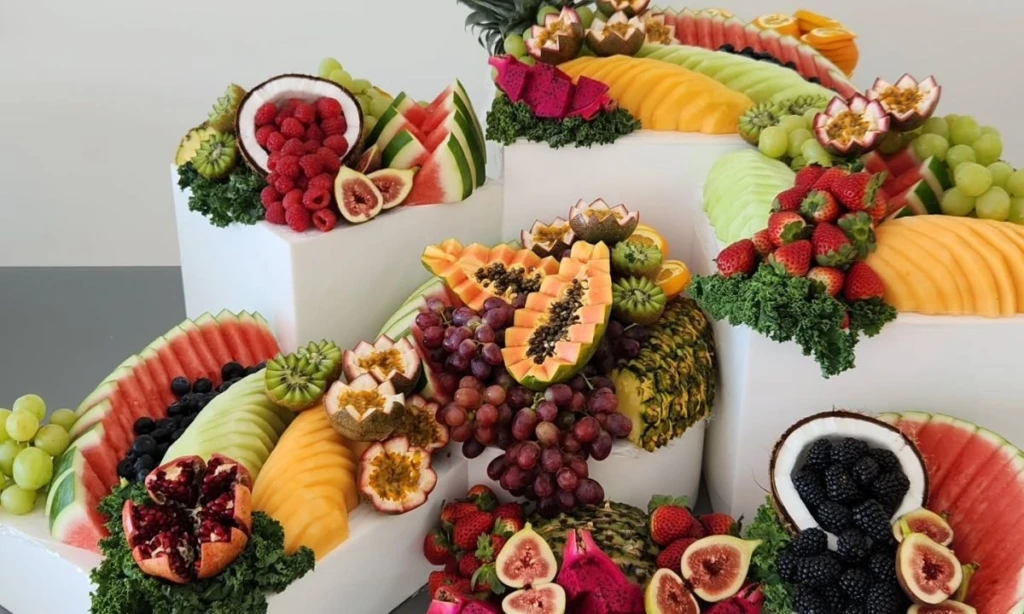
Small decorative touches can make a homemade fruit tray feel more polished and inviting. Fresh mint leaves add a refreshing green accent, while edible flowers bring a delicate touch to spring and summer arrangements. Thin citrus slices, whole berries, and neatly cut kiwi rounds also create attractive finishing details.
For a playful presentation, use cookie cutters to shape watermelon, pineapple, or cantaloupe into stars, hearts, and flowers. Bamboo skewers can hold alternating fruit pieces for easy serving, and small bowls are useful for dips such as yogurt, honey-lime sauce, or melted chocolate.
Keep garnishes practical as well as decorative. Wash fruit thoroughly, dry it before arranging, and add delicate herbs or flowers shortly before serving. If you are preparing the tray in advance, refrigerate cut fruit in covered containers and assemble the display closer to serving time.
2. DIY Fruit Tray Ideas
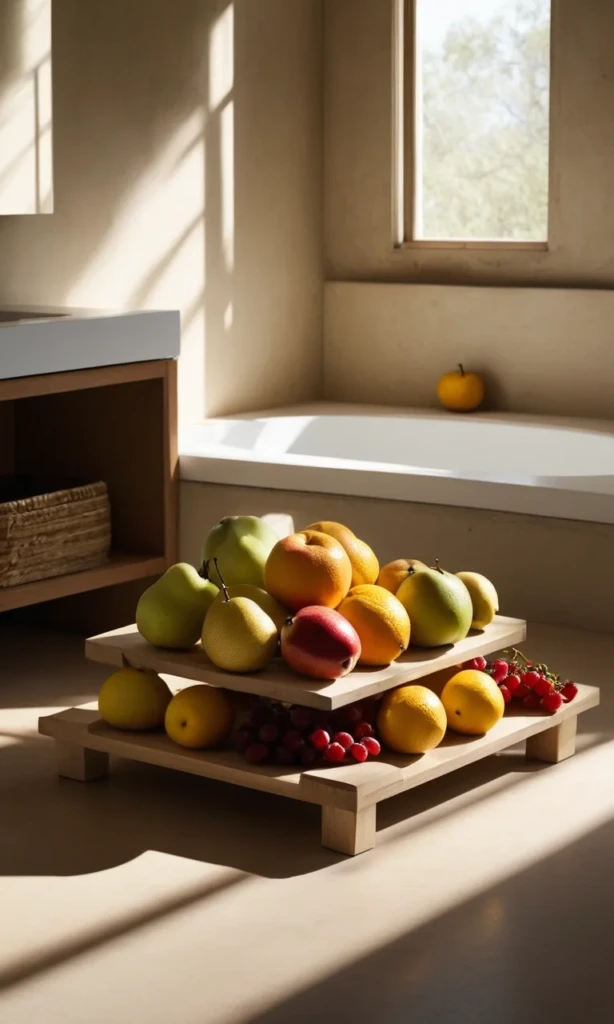
Creating an impressive fruit tray starts with choosing a theme. You might organize fruit by color, arrange it into recognizable shapes, build a layered display, or use a distinctive serving vessel to give the presentation more character.
Start with a selection of fruits that offer different textures, flavors, and colors. Strawberries, grapes, blueberries, pineapple, melon, kiwi, oranges, and mango are useful choices for many designs. Include both sweet and slightly tart options so guests can enjoy a balanced assortment.
Before arranging anything, consider the size of your serving surface and the number of people you need to feed. Leave enough space for guests to pick up individual pieces without disturbing the entire display. For larger gatherings, several smaller trays can be easier to serve than one oversized platter.
The following ideas range from simple arrangements suitable for beginners to creative centerpieces that require a little extra preparation.
3. Grape Wreath
A grape wreath makes a charming centerpiece for holiday parties, autumn gatherings, or an elegant brunch. Its circular shape creates a natural frame, while the rich colors of green, red, and purple grapes give the arrangement plenty of visual interest.
Begin by placing a small bowl in the center of a large round platter as a guide. Arrange grape clusters around the bowl, alternating colors to create a layered wreath effect. Fill any noticeable gaps with blueberries, small strawberries, or pieces of kiwi.
Fresh rosemary or mint can add greenery around the edges. For a festive finish, tuck in a few orange slices or arrange small fruit stars along the wreath.
Remove the center bowl when the arrangement is complete. The open space can remain decorative or hold a small container of fruit dip. Keep the fruit chilled until serving, especially if the tray will sit out during a party.
4. Rainbow Stack
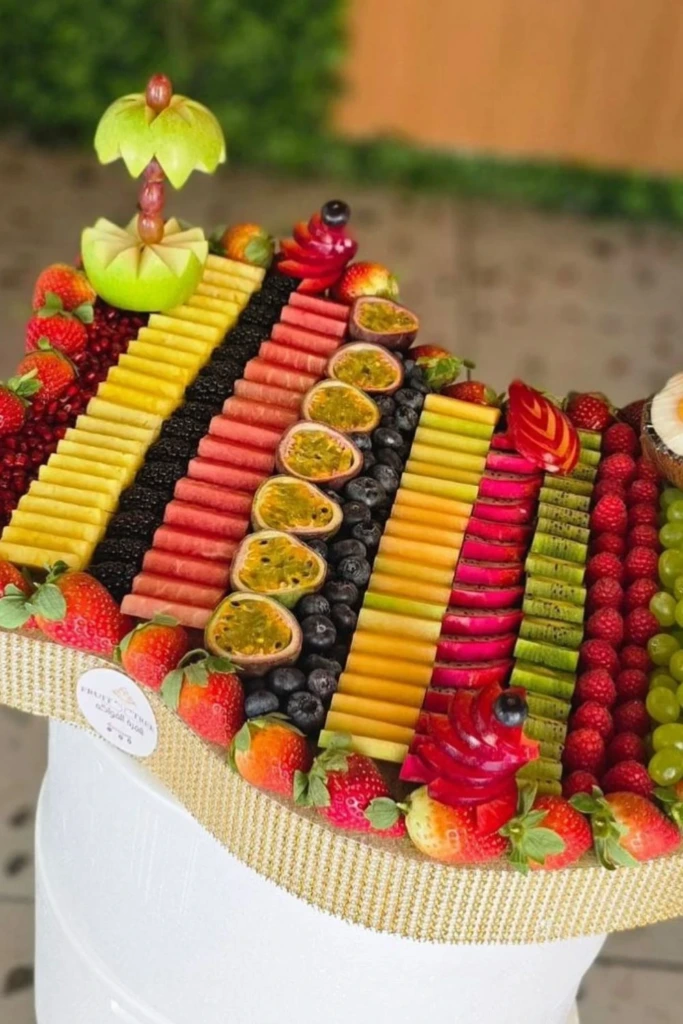
A rainbow fruit tray is a cheerful option for children's parties, classroom celebrations, baby showers, and colorful summer events. The idea is simple: arrange fruit in curved rows that follow the colors of a rainbow.
Use strawberries or watermelon for red, orange segments for orange, pineapple for yellow, green grapes or kiwi for green, blueberries for blue, and purple grapes for violet. Depending on what is available, raspberries and blackberries can help fill out the darker shades.
Place the fruit in broad arcs on a large platter, beginning at one edge and working inward. Keep each color grouped together so the rainbow remains easy to recognize. A few marshmallows or a small bowl of yogurt at either end can represent fluffy clouds if you want a playful, dessert-inspired presentation.
For a healthier, fruit-only version, skip the sweets and use extra pieces of white-fleshed fruit to create a soft contrast. Choose ripe but firm produce so the rows hold their shape throughout the event.
5. Layered Boat
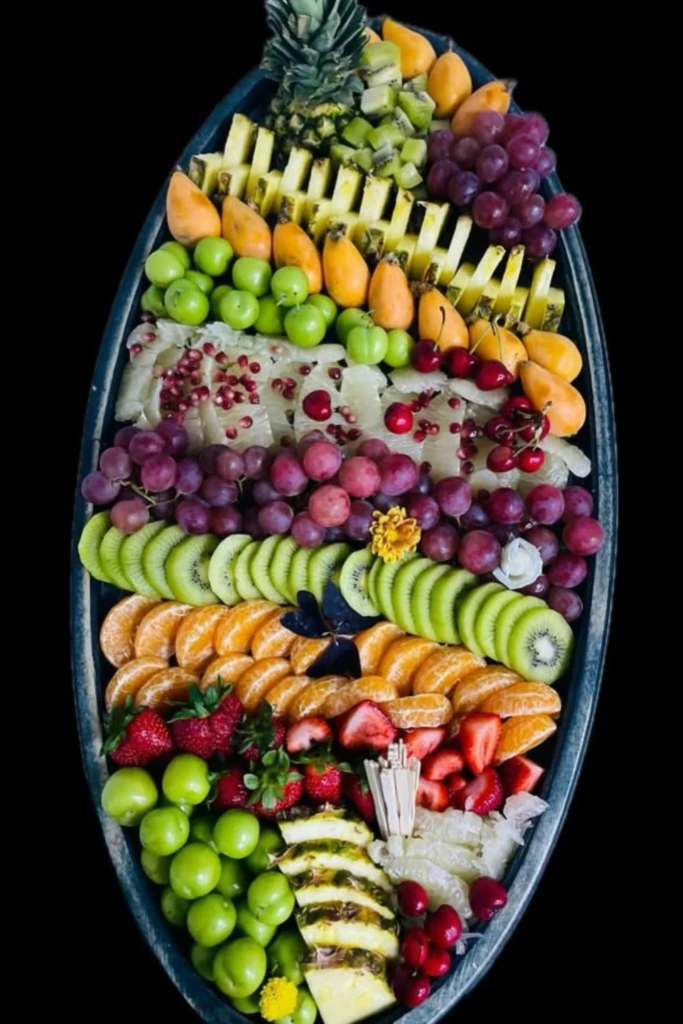
A fruit boat creates a dramatic presentation by using a hollowed pineapple, watermelon, or cantaloupe as the serving vessel. It works particularly well for tropical-themed parties, outdoor lunches, and summer celebrations.
To make a pineapple boat, cut the fruit lengthwise while keeping the leafy crown attached to one side if possible. Carefully remove the flesh, leaving enough of the outer shell to retain its shape. Cut the removed pineapple into bite-sized pieces and combine it with mango, grapes, kiwi, and berries.
Spoon the mixture back into the hollowed shell, arranging some larger pieces near the top for color. For a watermelon boat, you can use the rind as a container and shape part of it into a simple handle or wave-like edge.
Place the finished boat on a stable platter to catch any juice. Chill it before serving, and avoid carving the shell so thinly that it becomes difficult to move safely.
6. Blooming Garden
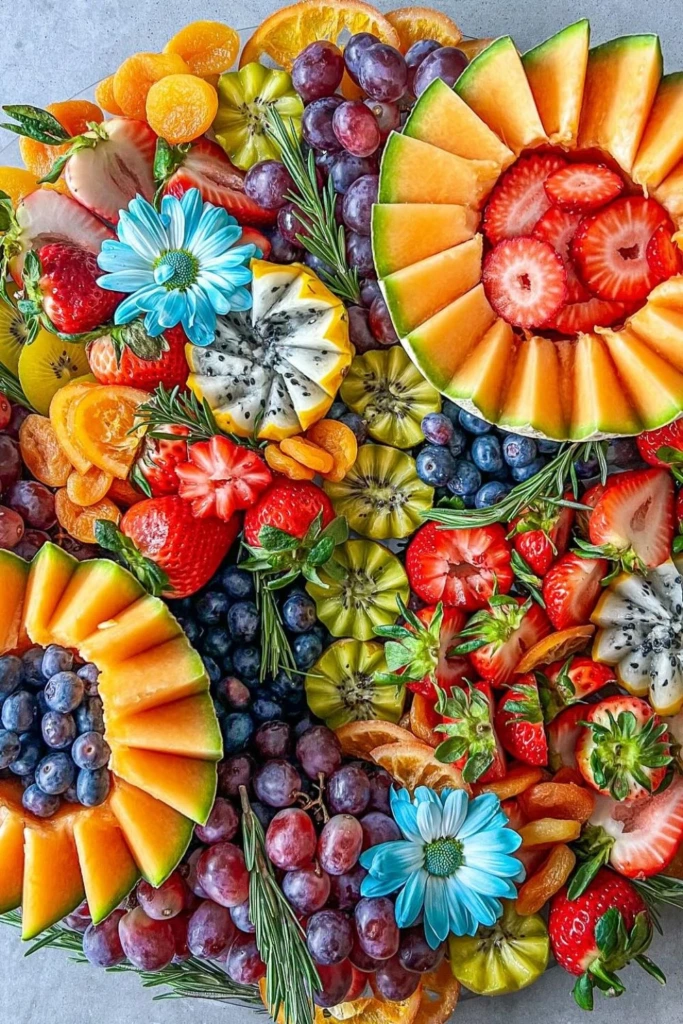
Turn a flat serving board into a miniature fruit garden by arranging fresh produce in flower shapes. This design is suitable for spring brunches, Mother's Day, garden parties, and birthday celebrations.
Create flowers from round slices of kiwi, strawberries, or pineapple. Place a blueberry or grape in the middle of each flower to form the center, then surround it with additional fruit pieces as petals. Long cucumber-free fruit strips, such as thin mango slices, can serve as decorative stems, while mint leaves create the appearance of foliage.
Mix different flower sizes to make the board look more natural rather than overly symmetrical. Leave small spaces between the arrangements so the individual shapes remain recognizable.
A rectangular wooden board works especially well because it resembles a garden bed. For an easy finishing touch, place a few small bowls of yogurt dip near the edge without covering the main design.
7. Santa Platter
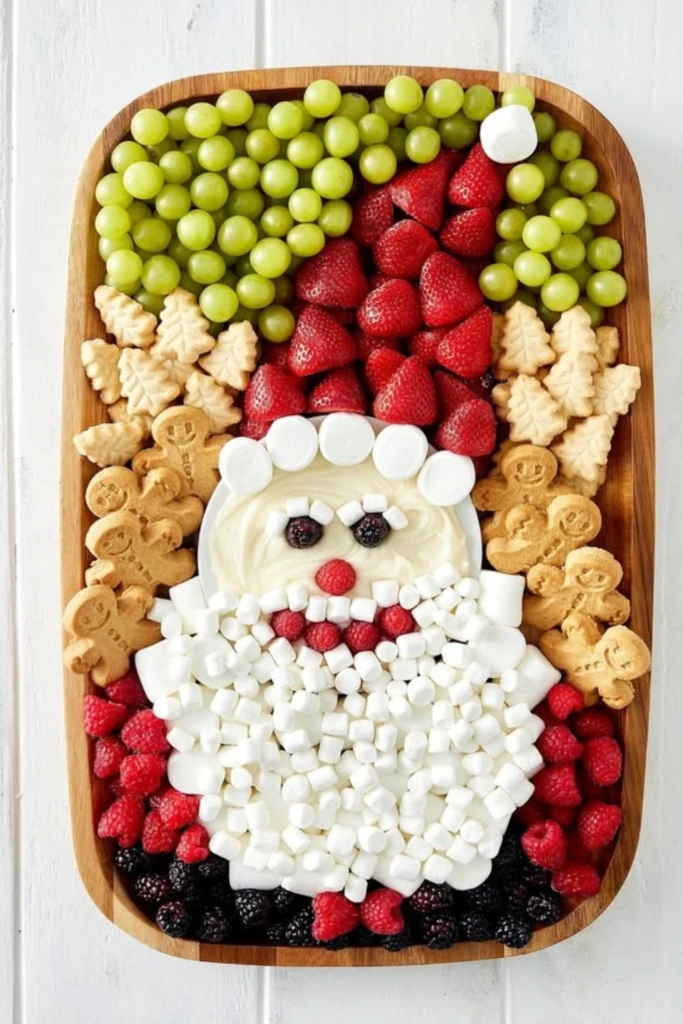
A Santa fruit platter brings a festive touch to Christmas gatherings while offering guests a colorful snack. Strawberries, bananas, blueberries, and small pieces of apple or melon can create the familiar red-and-white character.
Arrange strawberry halves across the top of a platter to form Santa's hat. Use banana slices or pieces of another pale fruit for the face and beard, then add blueberries for the eyes. A small strawberry tip or red grape can serve as the nose.
Build the beard with overlapping banana slices, creating a rounded outline around the lower half of the face. If desired, use small pieces of apple or melon to form the hat's fluffy trim and pom-pom.
Prepare the banana portions close to serving time because they can brown when exposed to air. A little lemon juice may slow discoloration, although it can add a noticeable citrus flavor. Keep the finished platter refrigerated until the celebration begins.
8. Cartoon Slice
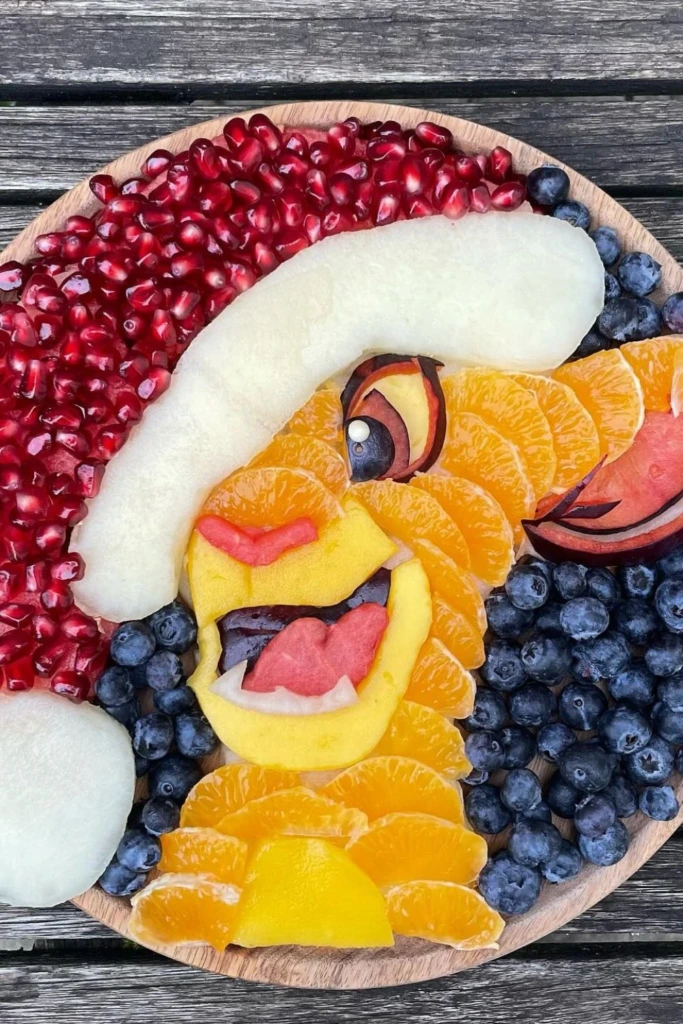
A cartoon-inspired fruit tray lets you transform ordinary fruit into a playful character or recognizable shape. It is an excellent choice for themed birthday parties, children's gatherings, or anyone who enjoys creative food presentation.
Choose a simple design that can be made with the fruits you already have. A watermelon wedge can become a smiling face, while pineapple rings, grape clusters, and strawberry slices can form eyes, cheeks, or decorative features.
Use a large platter as the background and arrange the main fruit shape first. Add the smaller pieces gradually, keeping the facial features or outline clear. If you want a more detailed character, use small cookie cutters to create matching shapes from melon or pineapple.
Avoid relying on tiny loose pieces that are likely to shift when guests serve themselves. Larger fruit shapes are easier to recognize and maintain. You can also provide toothpicks alongside the platter so guests can pick up individual portions without disturbing the design.
9. Floral Burst
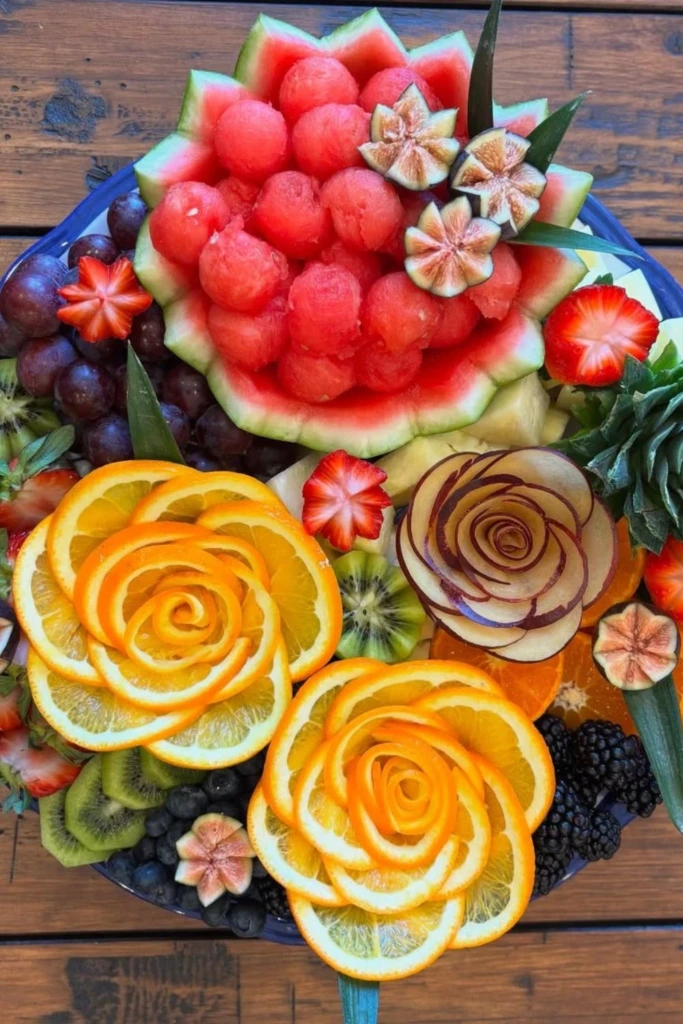
A floral burst arrangement features several fruit flowers radiating outward from a central point. Its balanced composition makes it suitable for celebrations where you want the tray to look decorative without requiring elaborate carving.
Begin with a large round platter and choose a central fruit shape, such as a pineapple ring filled with blueberries. Arrange strawberry slices, kiwi rounds, and melon wedges around it in repeating patterns. Let the pieces fan outward like petals, using contrasting colors to separate each section.
For example, pink strawberries pair well with green kiwi, while golden pineapple creates a bright contrast against purple grapes. Blueberries can fill small gaps and reinforce the central design.
Keep the flower sections similar in size for a tidy, coordinated appearance. Alternatively, vary their shapes and dimensions for a more relaxed arrangement. Add fresh mint leaves at the outer edges just before serving to give the platter a finished, garden-inspired look.
10. Berry Tower
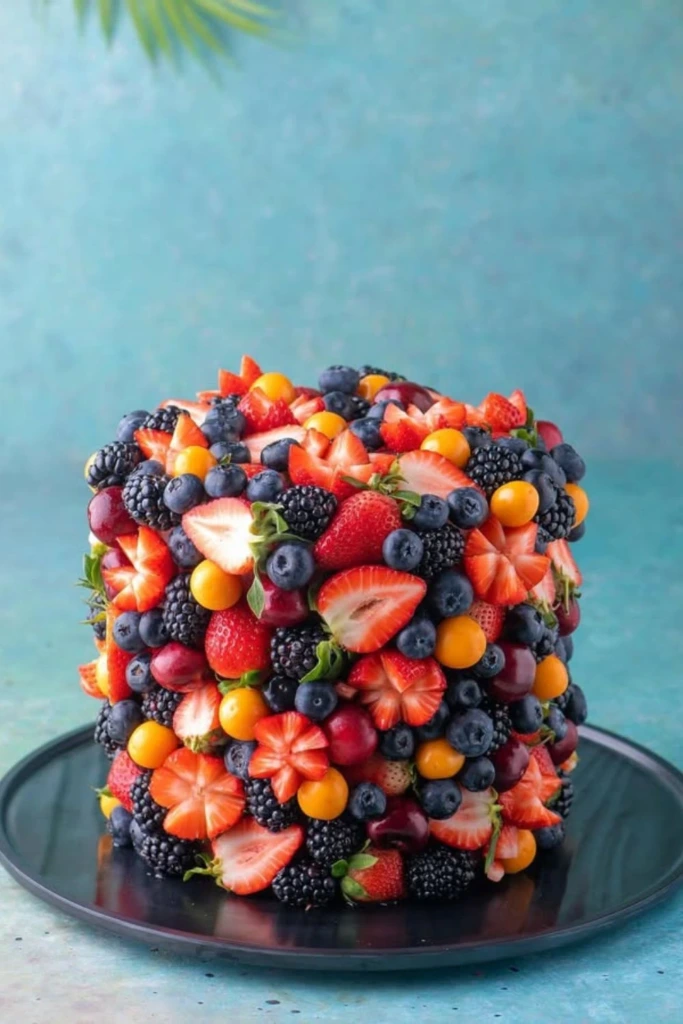
A berry tower adds height to a fruit display and works beautifully for dessert tables, bridal showers, brunches, and special occasions. Strawberries, blueberries, raspberries, and blackberries provide a naturally rich palette of red, purple, and blue.
You can create a simple tower using a tiered serving stand, placing different berries on each level. Alternatively, arrange strawberry halves and clusters of smaller berries around a stable, food-safe central support designed for serving displays.
If you prefer a completely edible structure, stack firm strawberry halves in a shallow pyramid on a wide plate. Add blueberries between the layers to introduce darker colors and help fill small spaces.
The base should be broad enough to support the fruit without tipping. Avoid stacking berries too high, since their weight and moisture can make the arrangement unstable. For easier serving, reserve some berries in a small bowl beside the tower so guests can refill their plates without pulling apart the centerpiece.
11. Tropical Spread
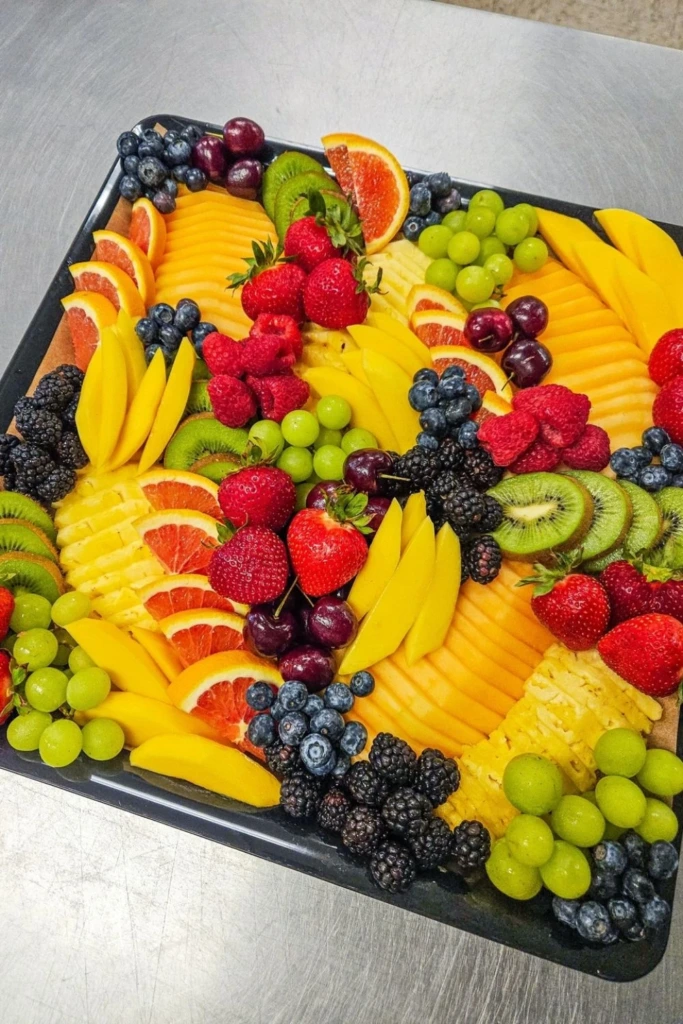
A tropical fruit tray captures the bright colors and refreshing flavors associated with warm-weather gatherings. It is ideal for pool parties, outdoor dinners, summer birthdays, and beach-inspired celebrations.
Build the assortment around pineapple, mango, papaya, kiwi, watermelon, and fresh coconut pieces. Add grapes or berries to provide contrasting colors and a little variety in texture. If fresh passion fruit is available, serve the pulp in a small bowl as an optional topping.
Arrange the fruit in broad sections across a platter, grouping similar colors together. A hollowed pineapple or coconut shell can serve as a decorative container for smaller fruit pieces, while banana leaves placed beneath a serving board can reinforce the tropical theme.
Finish with lime wedges and a few mint leaves for a fresh appearance. If the tray will be served outdoors, keep it shaded and chilled whenever possible, and replenish smaller portions rather than leaving the entire assortment in the heat for an extended period.
12. Watermelon Cups
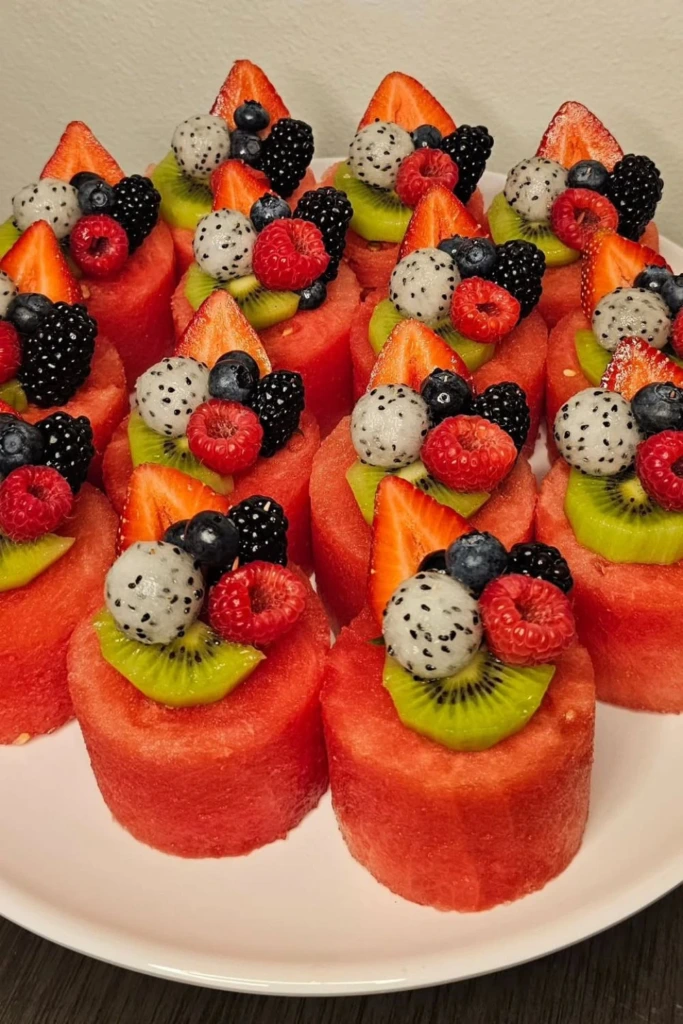
Watermelon cups are individual fruit servings made by using small watermelon pieces or the hollowed fruit itself as edible-looking containers. They are convenient for picnics, children's parties, and events where guests benefit from easy-to-hold portions.
For a simple version, cut seedless watermelon into thick cubes and scoop a shallow hollow into the top of each piece. Fill the openings with blueberries, diced pineapple, grapes, or small melon balls. Arrange the finished cups on a chilled tray.
You can also use small watermelon wedges as the base and place a mixture of fruit on top. A decorative cocktail pick can hold the pieces together, provided the guests can safely use it.
For larger gatherings, prepare several cups at once and arrange them in neat rows. Choose firm watermelon that holds its shape, and avoid making the cups too small to fill comfortably.
Keep the portions refrigerated until serving. Their individual size makes them especially practical when you want guests to enjoy fresh fruit without needing to cut or scoop anything at the table.
13. Butterfly Tray
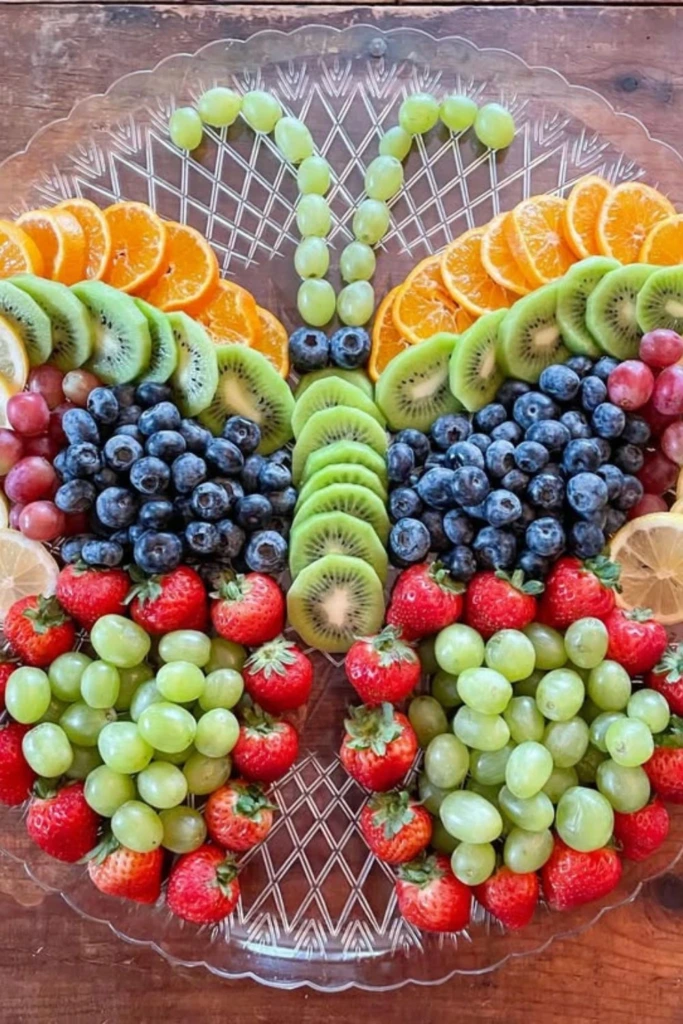
A butterfly fruit tray adds a whimsical element to spring celebrations, garden parties, and children's birthdays. Its symmetrical shape is easy to build using colorful fruit pieces and a few simple decorative details.
Choose a large oval platter and mark an imaginary centerline. Arrange strawberry halves, orange segments, and pineapple pieces on both sides to create matching wings. Blueberries, grapes, or kiwi slices can provide contrasting spots across the wings.
For the butterfly's body, place a straight line of grapes or elongated pieces of fruit down the center. Two thin strips of apple or melon can suggest antennae, while mint leaves placed near the top create a delicate finishing detail.
Perfect symmetry is not essential, but keeping the two sides visually balanced helps the butterfly shape stand out. Use larger pieces near the outer edges and smaller pieces closer to the body.
This design works best on a platter with enough room for broad wings. If you are preparing it for children, keep the fruit pieces appropriately sized for the age group and supervise younger children during serving.
14. Flower Patch
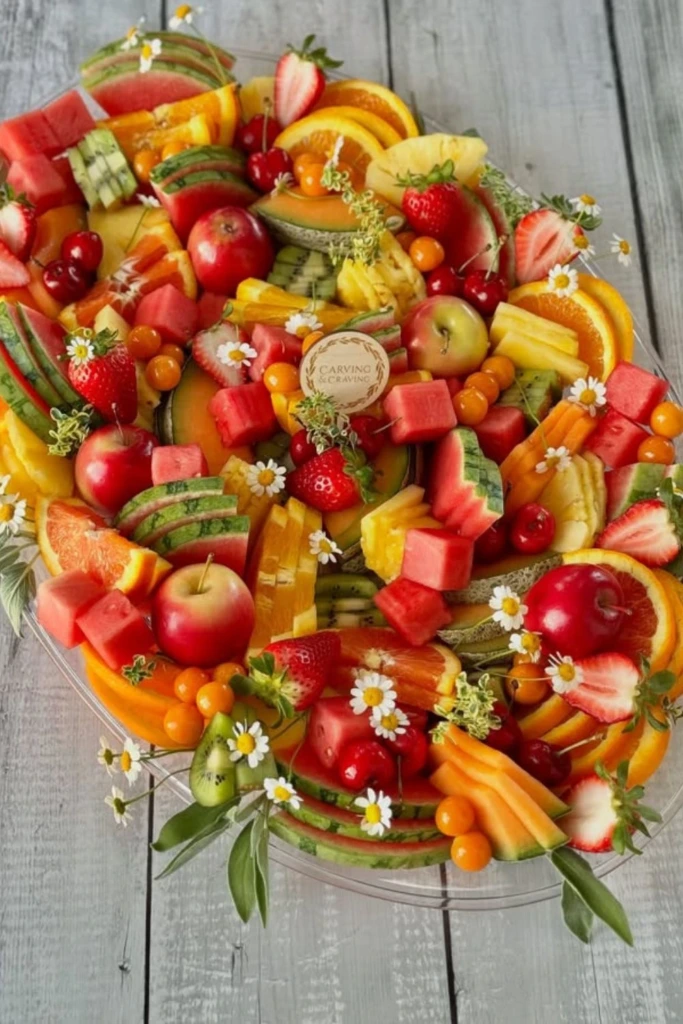
A flower patch fruit tray resembles a collection of small blossoms growing across a colorful garden. Unlike a single large floral design, this arrangement uses multiple flowers spread across the serving surface.
Start by creating individual blossoms from pineapple rings, strawberry slices, kiwi rounds, or cantaloupe pieces. Place a blueberry, raspberry, or grape in the middle of each flower. Arrange the blossoms at different angles to make the platter feel lively and informal.
Fill the spaces between the flowers with green grapes, small kiwi pieces, or fresh mint leaves. These additions create a leafy background and help the flower shapes stand out.
A rectangular tray provides plenty of room for a garden-like layout, while a round plate creates a compact flower patch. You can use a mixture of large and small blossoms to suit the size of the platter.
For a coordinated party table, repeat the same flower shapes in different colors rather than introducing too many unrelated designs. This creates a cohesive look while still offering a variety of fruit flavors.
15. Garden Luxe
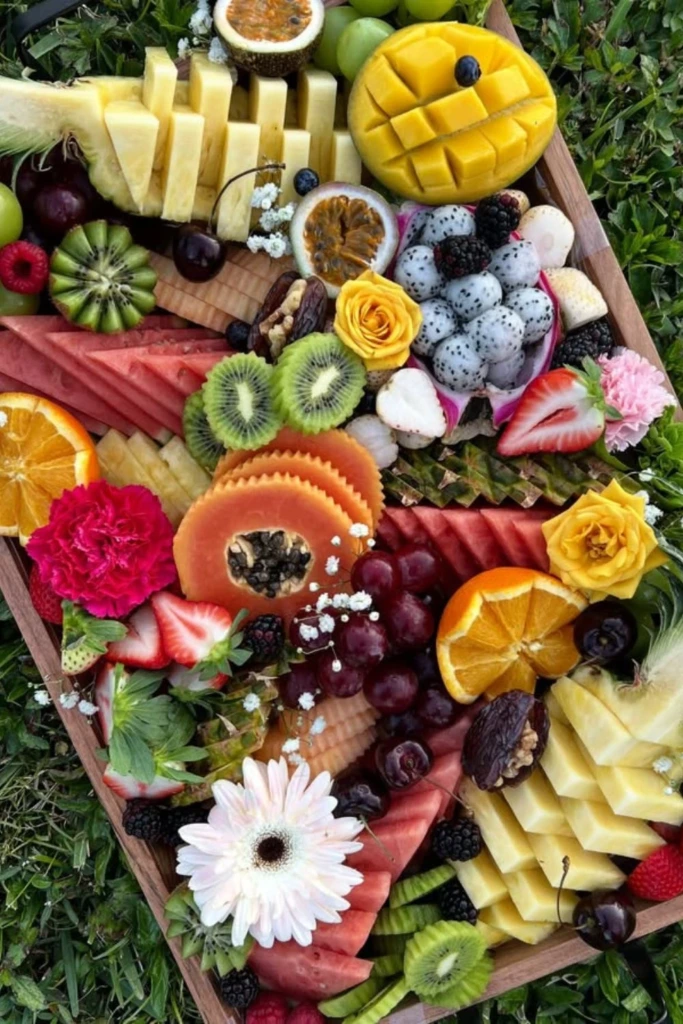
A garden luxe fruit tray combines fresh produce with a refined, carefully arranged presentation. It is a good option for weddings, engagement parties, elegant brunches, and celebrations where the food doubles as table decor.
Select fruit with complementary colors and clean shapes, such as green grapes, dark berries, strawberries, kiwi, figs, and thin slices of pear. Arrange the pieces in flowing sections on a wooden board, marble-style platter, or large ceramic serving dish.
Instead of filling every inch of the surface, leave a little breathing room between groups. Place larger fruit pieces first, then use smaller berries to soften the edges and create transitions between colors.
Fresh mint, rosemary, or food-safe edible flowers can provide a restrained decorative accent. Keep the garnish minimal so it does not overwhelm the fruit itself.
For a polished finish, serve a complementary dip in a small ceramic bowl and use matching serving utensils. The goal is to create a display that feels intentional and sophisticated while remaining practical for guests to enjoy.
16. Watermelon Cake
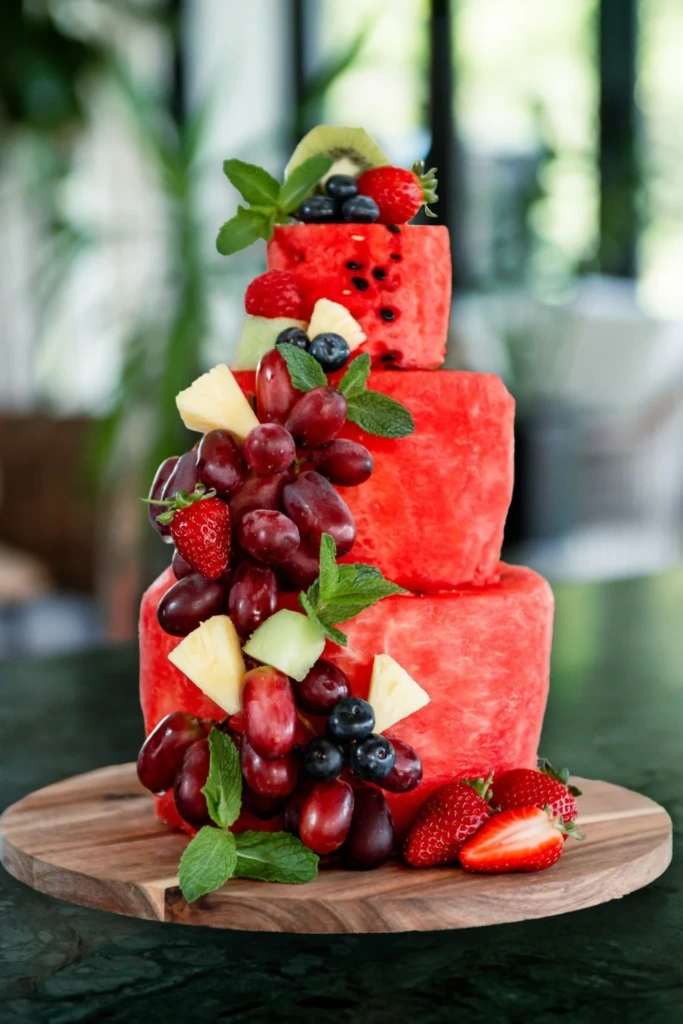
A watermelon cake is a refreshing centerpiece that resembles a traditional layer cake but uses fresh fruit instead of baked sponge. It works well for summer birthdays, outdoor celebrations, and lighter dessert tables.
Choose a large, firm watermelon and cut away the rind to form a rounded cylinder. Trim the sides carefully to create an even surface, then cut the cylinder into thick horizontal layers if you want a tiered appearance. Smaller pieces of watermelon can form a second level on top.
Arrange strawberries, blueberries, kiwi slices, and pineapple pieces around the sides or across the top. For a more elaborate look, secure larger decorations with toothpicks where appropriate, removing them before serving if necessary.
A single large watermelon cylinder is often easier to manage than several stacked layers. If you build multiple tiers, make each upper layer smaller and keep the structure low enough to remain stable.
Refrigerate the cake before serving and use a sharp knife to cut portions. Because watermelon releases liquid as it sits, assemble the decoration relatively close to serving time for the cleanest appearance.
17. Picnic Crate
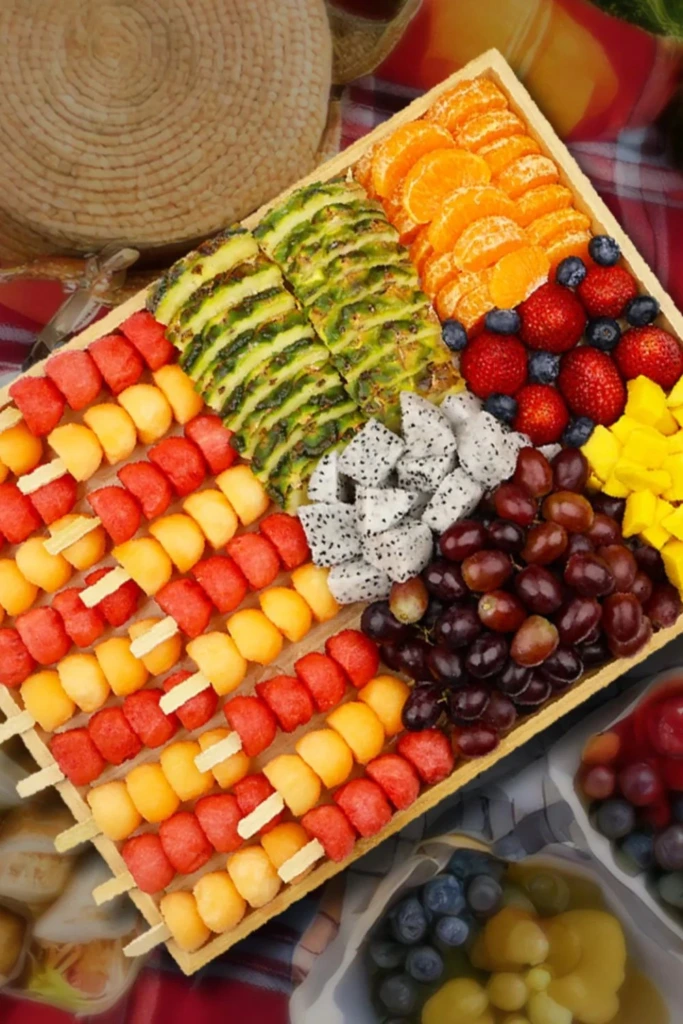
A picnic crate fruit tray brings a rustic touch to outdoor gatherings, park lunches, family reunions, and casual celebrations. A shallow wooden-style serving crate can make the arrangement look like a miniature market basket filled with fresh produce.
Use a clean, food-safe crate or line a suitable decorative container with a washable food-safe insert or food-grade liner. Arrange fruit in small groups, placing larger items such as orange halves and pineapple chunks at the bottom and smaller berries near the top.
Strawberries, grapes, apple slices, melon cubes, and blueberries are practical choices because they provide a mix of colors and are relatively easy to portion. Small paper cups or food-safe bowls can separate wet fruit from drier pieces.
Keep the crate shallow enough that guests can reach the fruit without digging through several layers. Avoid using untreated decorative wood in direct contact with cut fruit unless it is suitable for food service.
For an outdoor picnic, transport the fruit in a chilled container and transfer it to the serving crate when you arrive. This helps preserve freshness and keeps the presentation looking appealing.
18. Citrus Board
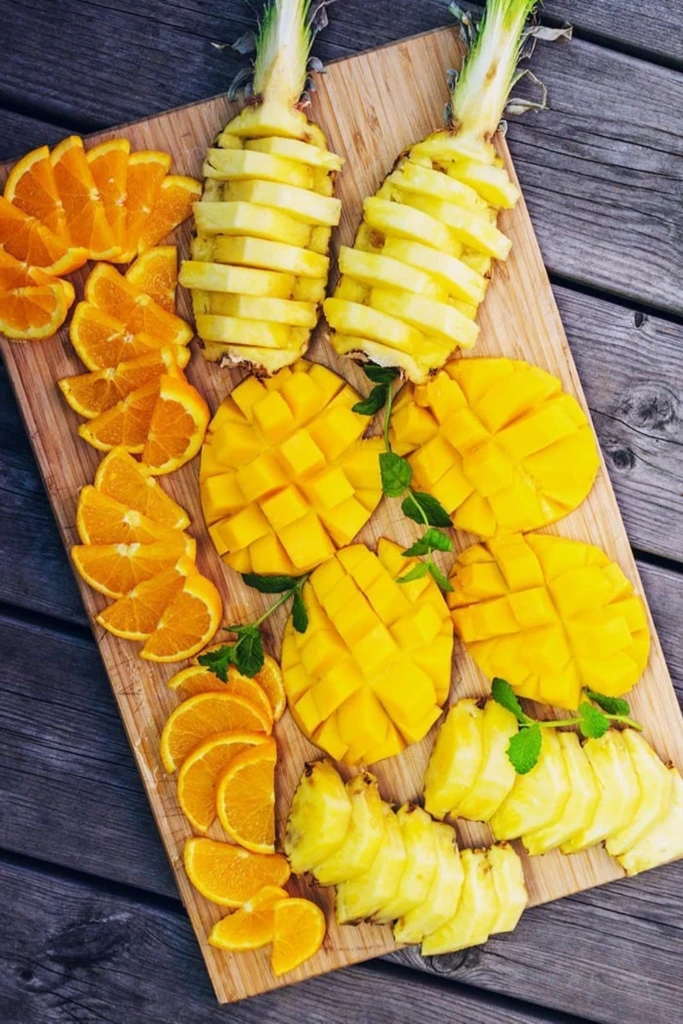
A citrus board is a vibrant arrangement built around oranges, mandarins, grapefruit, lemons, and limes. The different shades of yellow, orange, pink, and green create a striking display that works well for brunches, summer lunches, and Mediterranean-inspired gatherings.
Slice the fruit into rounds, half-moons, and small wedges. Arrange the pieces in overlapping rows or curved bands, alternating colors so the board has a balanced appearance. Whole mandarins and small orange segments can fill gaps between the larger slices.
For a broader fruit assortment, add strawberries, grapes, pineapple, or kiwi. These additions introduce sweetness and create contrast against the bright citrus colors.
If you are using grapefruit or lemon, consider serving them alongside sweeter fruits because their sharper flavors may not appeal to everyone. A small bowl of honey-yogurt dip can provide an alternative for guests who prefer a milder accompaniment.
Remove visible seeds before arranging the slices, and use a board that can contain the juice. Chill the finished display until serving, especially when the fruit has been cut into thin pieces.
19. Crown Pineapple
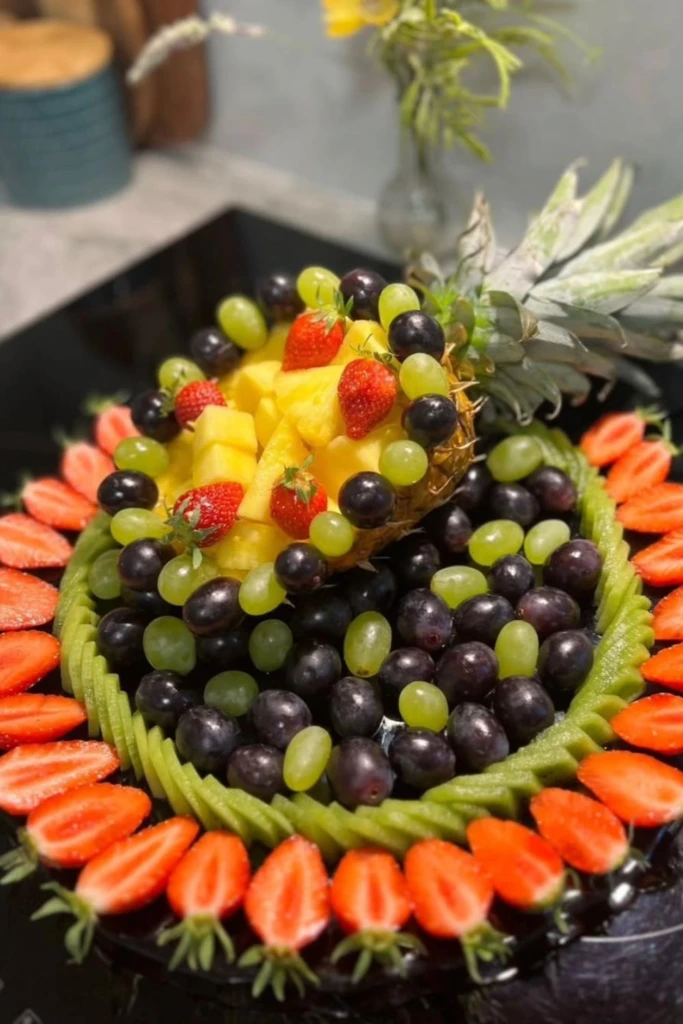
A crown pineapple tray uses the distinctive leafy top of a pineapple as a natural decorative feature. Its tropical appearance makes it especially suitable for summer parties, themed dinners, and festive fruit displays.
Select a pineapple with fresh-looking green leaves and a firm body. Cut away the crown with a small amount of fruit attached, then set it aside while you prepare the rest of the arrangement. You can leave the pineapple whole as a centerpiece or hollow it out to create a serving bowl.
If you use the fruit as a bowl, remove the flesh carefully and cut it into bite-sized chunks. Combine the pineapple with mango, strawberries, grapes, kiwi, and melon before returning the mixture to the shell.
Place the crown at the back of the tray or use it as the focal point of a surrounding fruit arrangement. The leafy shape adds height without requiring extra decorations.
Make sure the pineapple sits securely on the platter. If necessary, trim a small amount from its base to create a stable surface, taking care not to compromise the serving vessel.
20. Garden Bloom
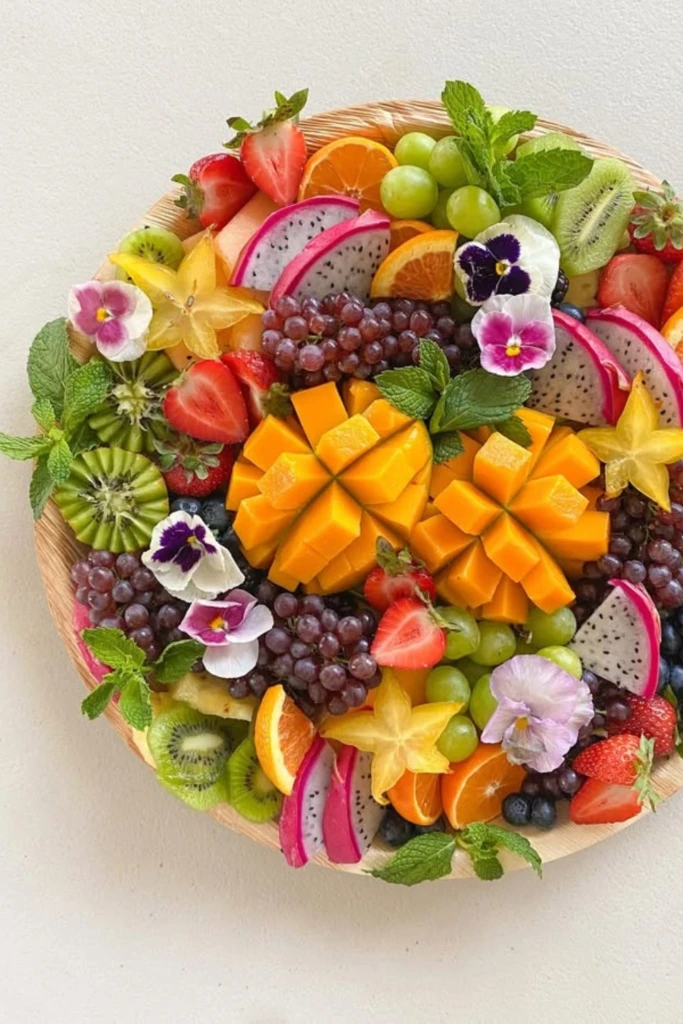
A garden bloom tray focuses on one prominent fruit flower surrounded by smaller colorful pieces. This creates a centerpiece that feels organized without requiring the time needed for a full garden-themed display.
Choose a large round platter and place a pineapple flower or watermelon blossom near the center. Surround it with strawberry petals, kiwi slices, grapes, and blueberries, gradually extending the arrangement toward the edges.
For the main bloom, cut pineapple into a thick round slice and shape the outer edge into simple petals with a knife or cookie cutter. Place a cluster of berries in the middle to form the flower's center.
Use green grapes and mint leaves to suggest foliage around the blossom. You can also create a second, smaller flower near the edge to balance the composition.
This style is easy to customize for different seasons. Bright citrus and berries suit summer gatherings, while grapes, pears, and apples can create a softer palette for autumn events. Choose fruits that are firm enough to retain their shape and arrange the most delicate pieces last.
21. Watermelon Rows
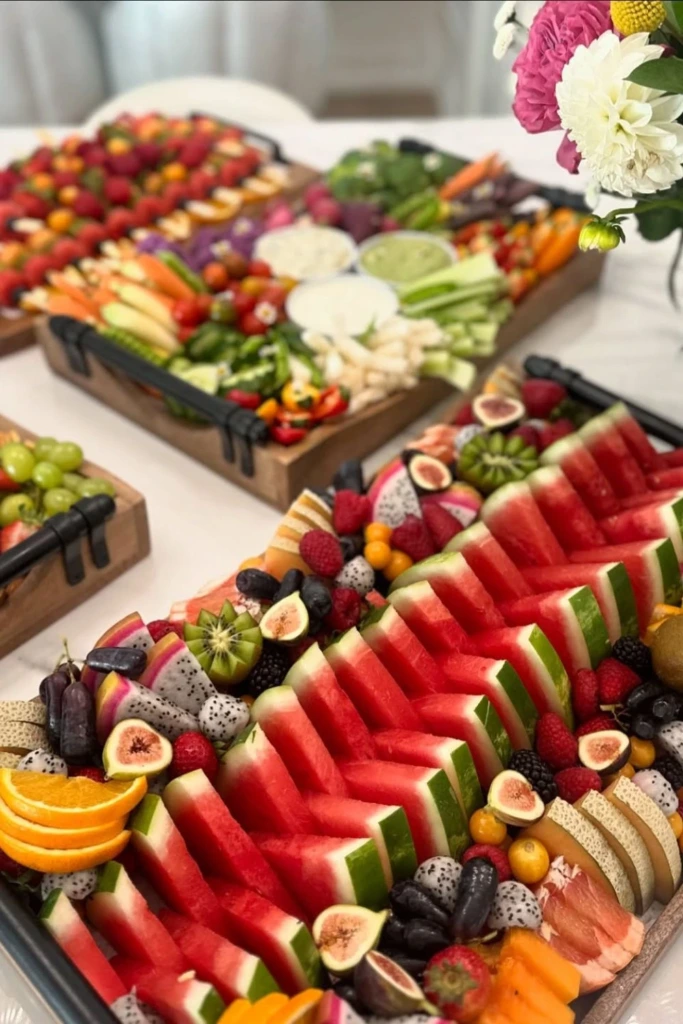
Watermelon rows offer a clean, modern presentation that is easy to prepare for large groups. The design relies on repeating shapes and orderly placement rather than elaborate carving.
Cut seedless watermelon into uniform rectangles, triangles, or thick sticks. Arrange the pieces in straight lines across a rectangular tray, keeping the edges aligned. Between the watermelon rows, add contrasting strips of pineapple, kiwi, cantaloupe, or green grapes.
You can also alternate watermelon wedges with rows of blueberries and strawberries to create a striped effect. For a more colorful board, use different shapes in separate sections while keeping each section consistent.
Uniform cuts make the tray easier to serve because guests can quickly estimate portion sizes. A sharp knife and chilled watermelon will help you produce cleaner pieces with less juice on the platter.
Pat excess moisture from the cut surfaces before arranging the fruit, and use a tray with a slight lip to contain any liquid that collects during serving.
22. Rose Bouquet
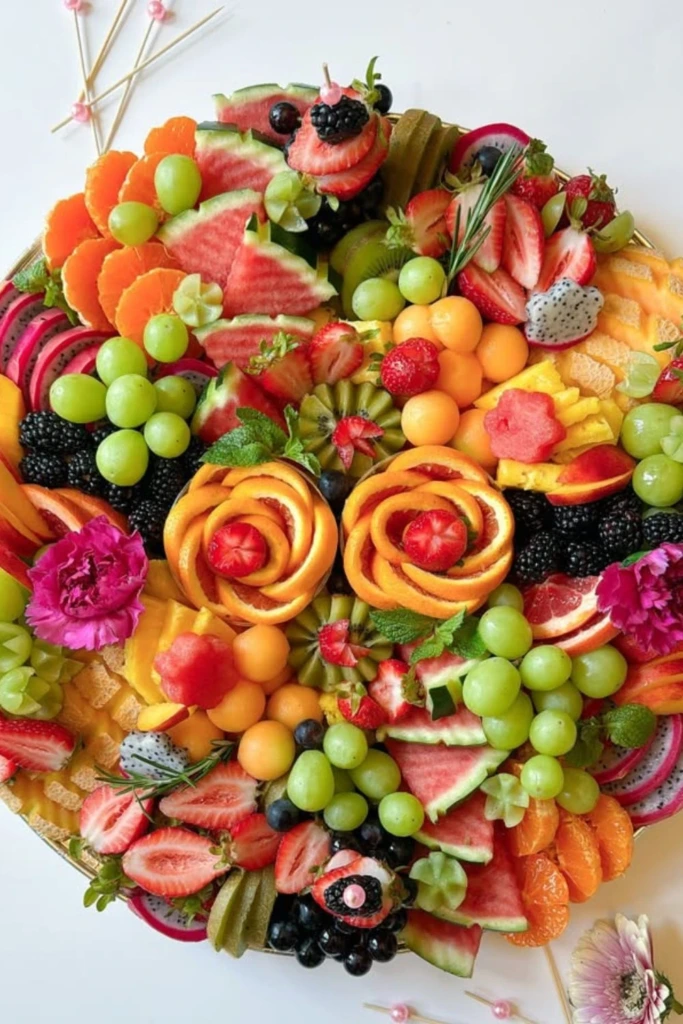
A rose bouquet fruit tray transforms thin fruit slices into flower-like spirals. It is an attractive choice for romantic dinners, anniversaries, bridal showers, and Mother's Day celebrations.
Strawberries, apple slices, and thinly sliced peaches can all be arranged into rose-inspired shapes. For apple roses, cut the fruit into very thin slices and soften them briefly in warm water with a little lemon juice so they bend without breaking.
Overlap the slices along a line, then roll them carefully from one end to form a spiral. Arrange each finished rose in a small section of the platter and surround it with grapes, blueberries, or mint leaves.
Strawberries can be sliced lengthwise and layered in a similar fashion to create simple rose shapes without much preparation. Keep the pieces close together so the petals retain their form.
For a bouquet-style presentation, arrange several fruit roses in a cluster and add green fruit or herbs around the base. Prepare delicate shapes close to serving time, since thin slices can dry out or lose their structure if left exposed for too long.
23. Citrus Burst
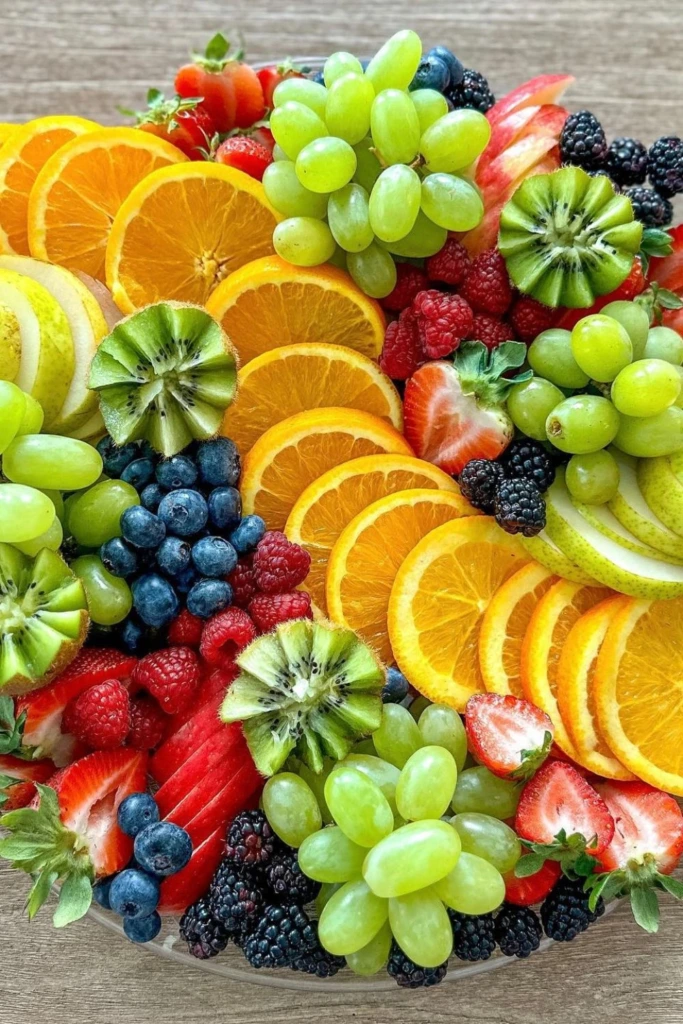
A citrus burst tray uses bright fruit colors and radiating arrangements to create an energetic centerpiece. It is ideal for summer celebrations, brunch tables, and gatherings where a fresh, lively presentation is desired.
Start with a central cluster of orange segments or a thick orange round. Arrange slices of mandarin, grapefruit, lemon, and lime around the center in outward-facing lines, like rays of sunshine.
Introduce strawberries, pineapple, and kiwi between the citrus sections to add variety and balance the tart flavors. Blueberries can be used as small accents around the outer edge.
For a more dramatic display, alternate full citrus rounds with half-moons and wedges. This creates variation without making the arrangement look cluttered.
Taste the fruit before assembling the board so you can balance sweeter and sharper varieties. If you expect guests to prefer mild flavors, use more mandarins and oranges and offer lemon or grapefruit separately.
Serve the tray chilled, and remove any seeds that could interfere with eating. A shallow platter with a raised rim is particularly useful for catching citrus juice.
24. Exotic Medley
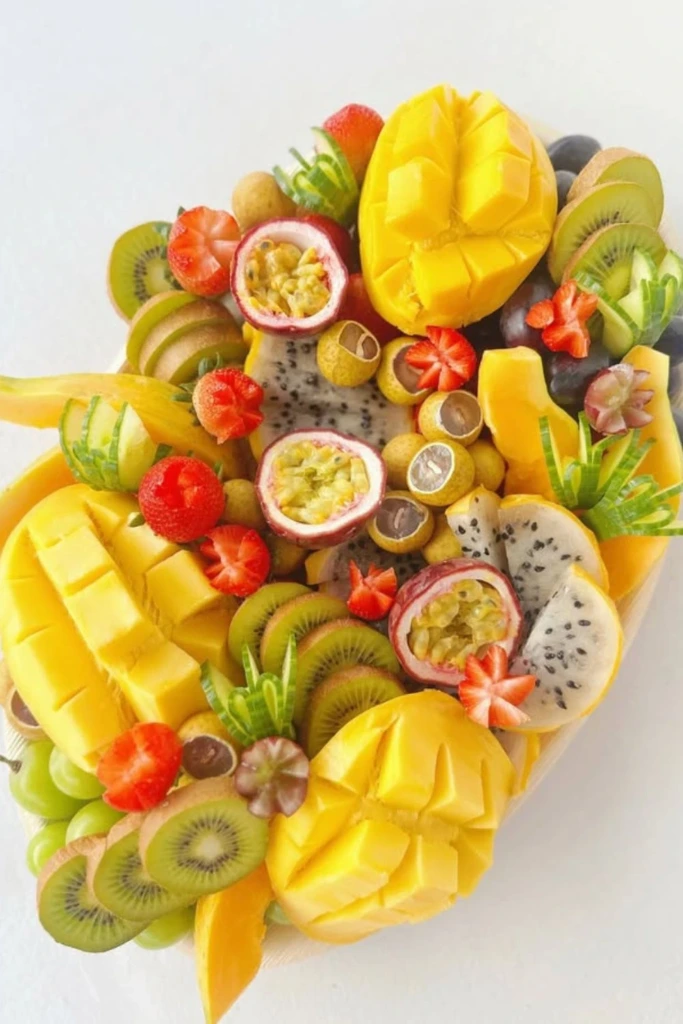
An exotic medley brings together tropical and less common fruits for a colorful, adventurous serving platter. It is an excellent option for themed dinners, festive buffets, and gatherings where you want guests to discover new flavors.
Depending on seasonal availability, choose mango, papaya, dragon fruit, passion fruit, star fruit, fresh figs, pineapple, kiwi, and rambutan. Combine these with familiar favorites such as strawberries and grapes to make the tray approachable for everyone.
Arrange the fruit by color and texture. White-fleshed dragon fruit can contrast with bright mango, while star fruit slices provide distinctive shapes that stand out among rounded berries and cubes.
Cut tougher-skinned fruits into manageable pieces and remove inedible skins, seeds, or pits as appropriate. For passion fruit, serve the pulp in a small bowl rather than allowing it to spread across the platter.
Avoid adding so many varieties that the individual flavors become difficult to distinguish. A thoughtfully selected assortment of five to eight fruits can create a beautiful display while keeping preparation manageable.
25. Tiered Bowls
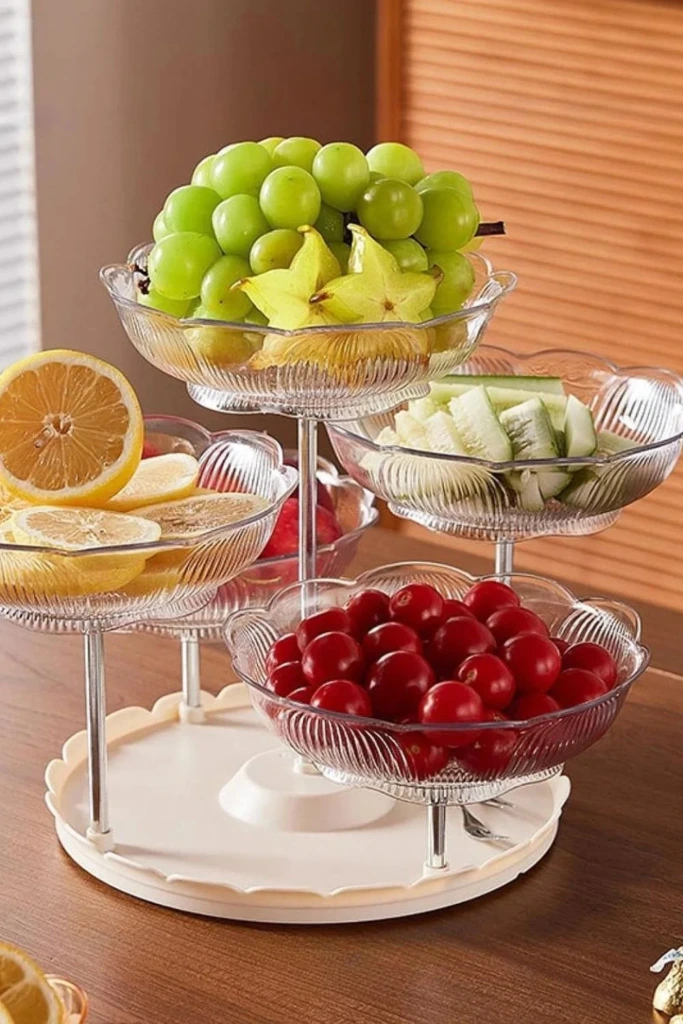
Tiered bowls provide a space-saving way to present fruit at parties, brunches, and buffet tables. By arranging different fruits at several heights, you can create a centerpiece without needing an especially large serving surface.
Choose a stable, food-safe tiered stand with bowls or shallow dishes that are easy to remove and clean. Place larger fruit pieces, such as pineapple chunks and melon cubes, in the bottom tier. Reserve smaller berries, grapes, and mandarin segments for the upper levels.
Separate juicy fruit from delicate berries when possible to prevent the lower sections from becoming wet. Small bowls also make it easy to offer different combinations or keep particularly tart fruits apart from sweeter selections.
For a cohesive appearance, repeat the same color on different levels rather than assigning every fruit to a completely separate tier. A few matching green, red, and golden accents can help the entire display feel coordinated.
Keep the structure balanced and avoid overfilling the bowls. Refrigerate cut fruit before assembly, and replenish the tiers with fresh portions during longer events instead of allowing the display to sit out for extended periods.
26. Starburst Carving
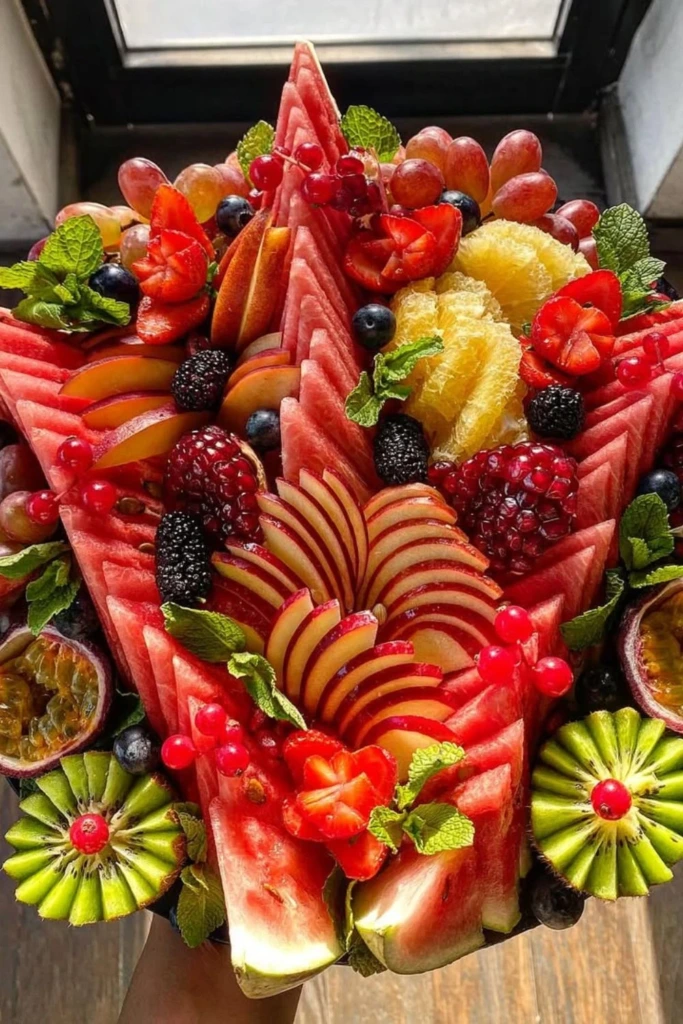
Starburst carving creates a fruit tray with a central shape and pointed sections radiating outward. It offers a dramatic appearance for celebrations while allowing you to use ordinary fruit rather than specialized carving supplies.
Watermelon and pineapple are particularly useful because their firm flesh can be cut into defined shapes. Use a star-shaped cookie cutter to make pineapple or melon stars, then arrange them in a circular pattern around the center of a large platter.
Fill the spaces between the points with grapes, strawberries, blueberries, or kiwi pieces. For a simpler design, arrange long fruit wedges like sunbeams, alternating colors to make the pattern more noticeable.
If you want to carve a larger star directly into watermelon, sketch the outline first and use a sharp knife to cut slowly along the marked lines. Keep the shape broad enough that it remains stable when moved to the platter.
Avoid overly thin points, which can break during handling. Arrange the finished pieces on a flat surface and chill them before serving to help the starburst maintain its crisp appearance.
27. Bloom Cross
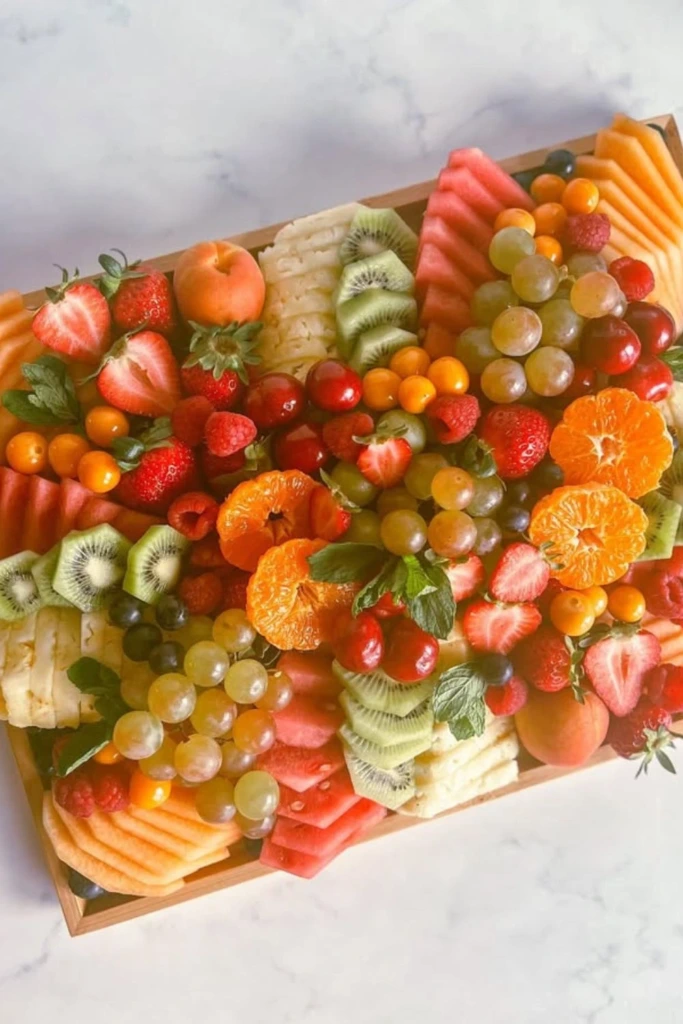
A bloom cross combines a cross-shaped arrangement with floral fruit decorations, making it a distinctive option for religious celebrations, spring gatherings, or themed family events.
Choose a large rectangular platter and create the main cross using rows of pineapple chunks, watermelon cubes, or green grapes. Build the vertical section first, then add a shorter horizontal section near the upper portion. Keep the outline clear so the intended shape remains recognizable.
Decorate the center and ends with fruit flowers made from pineapple rings, strawberry slices, or kiwi rounds. Small blueberries can form the centers of the blossoms, while mint leaves provide a simple leafy accent.
For a more subtle version, use one fruit color for the cross and arrange contrasting berries around it as a border. This creates a balanced design without making the platter overly busy.
Use a platter with enough space to accommodate the shape, and avoid stacking fruit too high. If the tray is being prepared for a particular celebration, consider the event's traditions and preferences when choosing decorative details.
Final Thoughts
DIY fruit trays are an easy way to make fresh produce more exciting, whether you are hosting a holiday gathering, planning a summer picnic, or preparing a simple family snack. From rainbow arrangements and fruit flowers to watermelon cakes and tiered displays, there are plenty of ways to create a presentation that suits your occasion.
Start with fruit that is fresh, ripe, and easy to handle, then choose a design that matches your available time and serving space. Pay attention to color, keep the portions convenient, and add garnishes only when they improve the overall presentation. Most importantly, prepare the tray with freshness and food safety in mind so your guests can enjoy a beautiful display that tastes just as good as it looks.