18 Hat Organizations Ideas for 2026

A collection of hats can quickly take over your closet, bedroom, or entryway when there isn't a dedicated place to store them. From everyday baseball caps to delicate straw hats and stylish wide-brimmed designs, different styles require different storage solutions.
The right hat organization ideas can help you reclaim valuable space while keeping your accessories clean, visible, and ready to wear. Thoughtful storage also reduces unnecessary bending, crushing, and dust buildup, helping your favorite hats stay in good condition.
Whether you're working with a small closet or want to turn your collection into decorative wall art, these 20 practical ideas offer creative ways to organize hats without sacrificing style.
1. Closet & Wardrobe Hacks
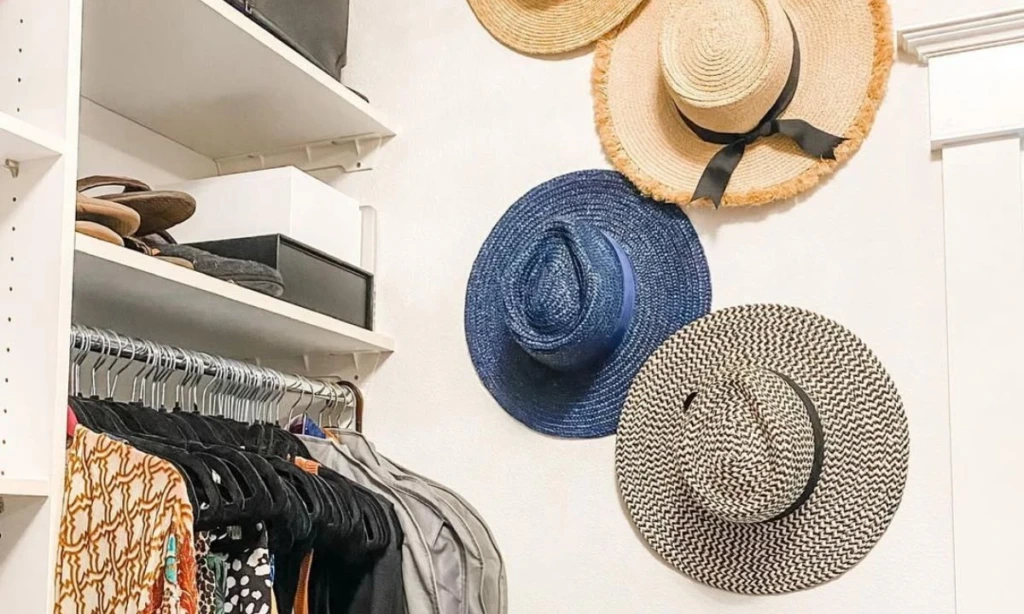
An organized wardrobe begins with making better use of the space you already have. Instead of allowing hats to pile up on crowded shelves, consider the empty areas behind doors, along closet walls, and above hanging clothes.
Wall hooks, adjustable shelving, hanging organizers, and divided compartments can accommodate different hat styles without requiring a complete closet makeover. Keeping frequently worn accessories at eye level makes daily routines easier, while seasonal pieces can be stored in protective containers.
Before selecting an organizer, sort your collection by size, material, and frequency of use. Structured hats generally need more support than soft caps or foldable fabric styles. Choosing storage that suits each hat's construction will make your wardrobe easier to maintain.
2. Double Rod Rack
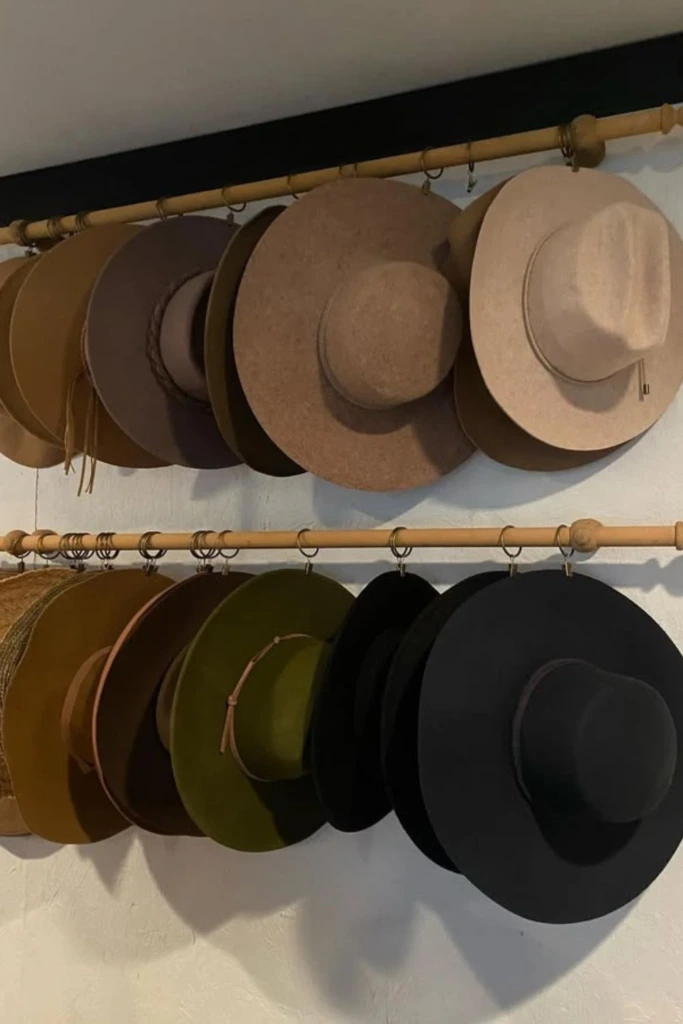
A double rod rack is an excellent option for displaying multiple hats while keeping valuable floor space available. Install two horizontal rails on an empty wall, leaving enough distance between them for hats to hang comfortably.
Use suitable hooks, wide clips, or hanging loops to arrange your collection across both levels. The upper rod can accommodate less frequently worn hats, while the lower one keeps everyday favorites within easy reach.
For a coordinated appearance, choose wooden or metal rods that complement your room's existing hardware. Avoid tightly clipping delicate brims, particularly those made from straw or felt, since prolonged pressure can leave marks.
3. Hanging Rope Line
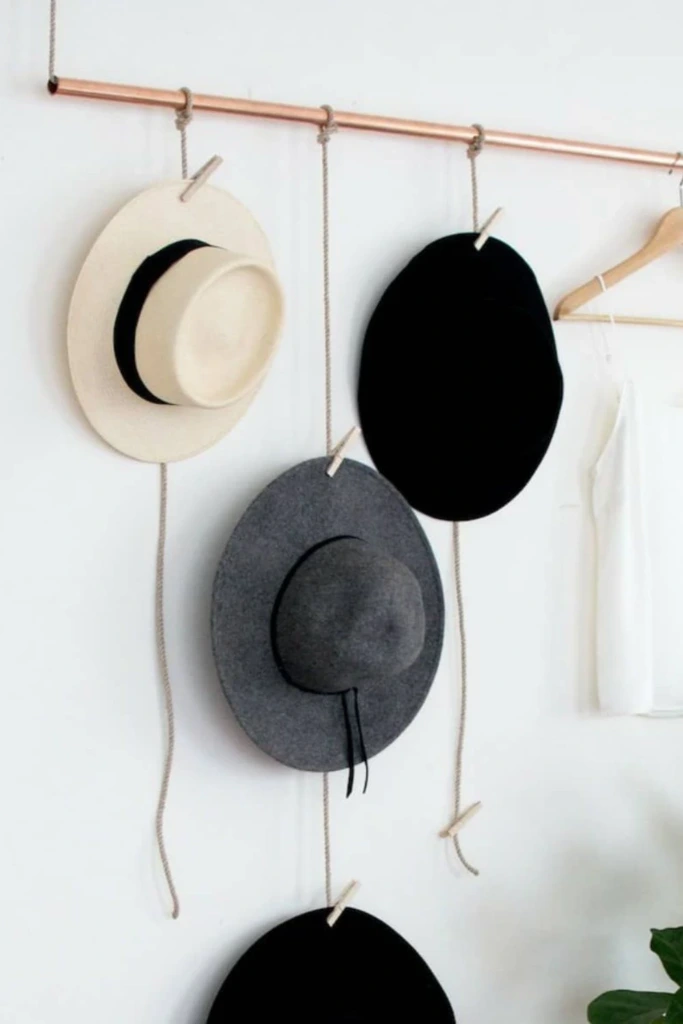
A hanging rope organizer introduces a relaxed, handmade appearance to bedrooms, dressing areas, and compact apartments. It requires minimal materials and can be customized to fit narrow sections of wall.
Secure a wooden or metal bar horizontally, then attach several lengths of sturdy cotton rope. Add gentle clips or loops at different heights to create individual hanging positions for your hats.
This arrangement works particularly well for lightweight caps and casual accessories. Leave enough distance between hats to prevent them from overlapping excessively, and ensure the entire fixture is securely anchored before filling it.
4. Hat Display Stands
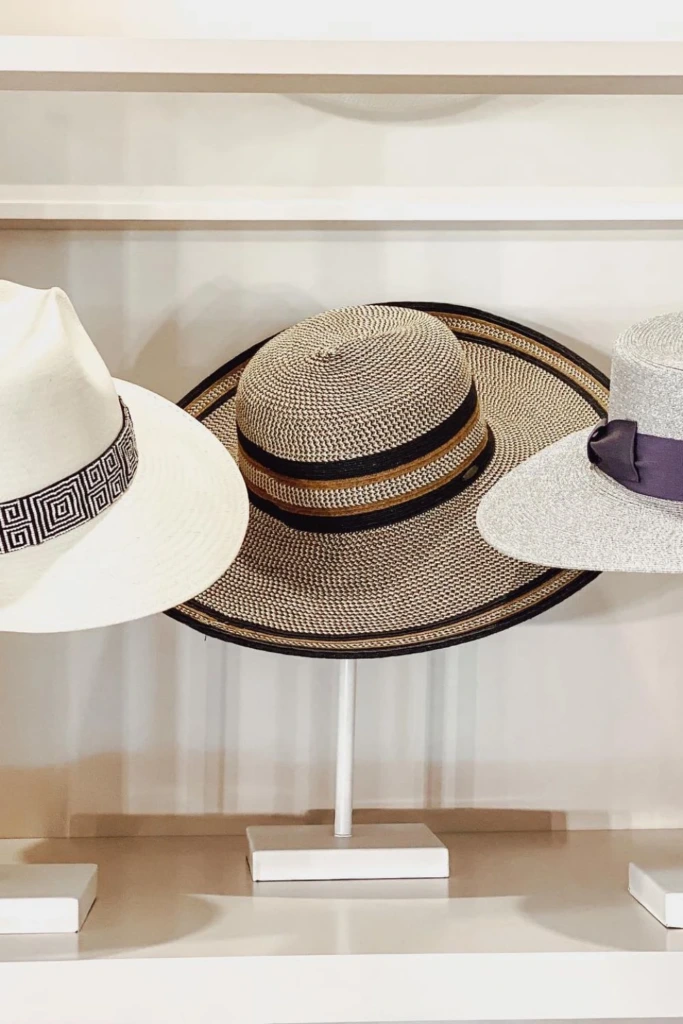
Individual display stands are ideal for hats that deserve special attention. They provide a dedicated resting place for structured crowns, making them useful for fedoras, decorative hats, and other pieces that can lose their shape when stacked.
Position a few stands on a dresser, wardrobe shelf, or open bookcase. Different stand heights can create an attractive arrangement without making the surface look crowded.
Choose supports with smooth, rounded tops that fit the hat's interior without stretching it. For expensive or delicate pieces, keep the stands away from direct sunlight and excessive humidity to help preserve their appearance.
5. Sectioned Storage Box
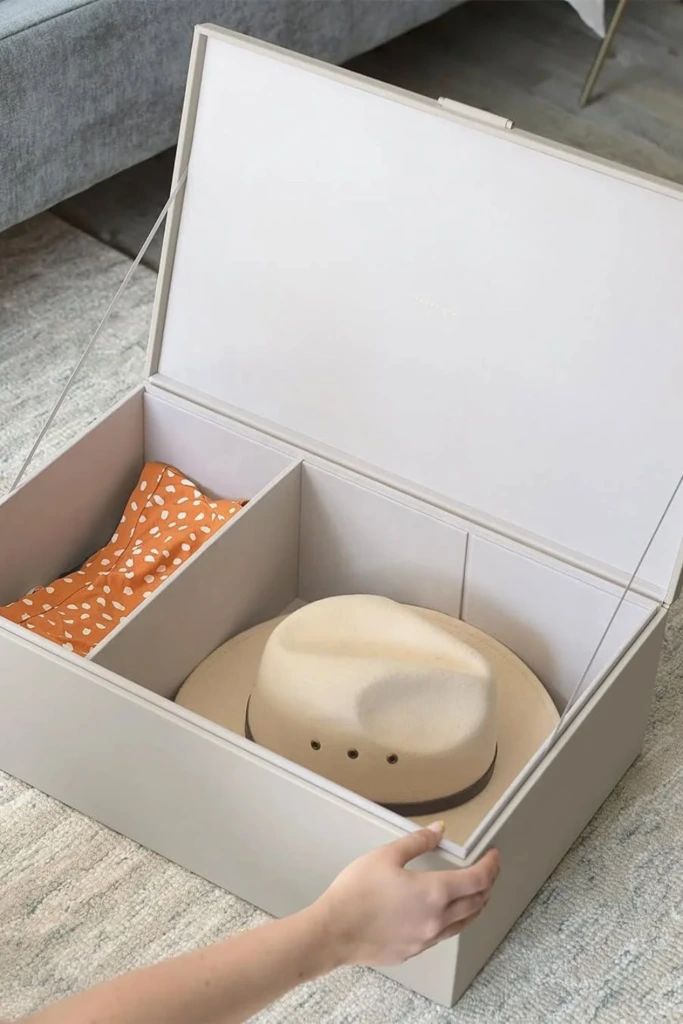
A compartmentalized storage box makes it easier to separate hats that aren't worn every day. Rather than mixing several accessories in one large container, individual sections provide designated spaces and reduce unnecessary handling.
Look for a box with adjustable dividers so you can accommodate different sizes. Soft baseball caps may fit into compact compartments, while structured hats need larger spaces that won't compress their crowns or brims.
Place the container on a closet shelf or beneath the bed, provided the storage area stays dry. A breathable fabric box is convenient for many everyday hats, while delicate pieces may benefit from more rigid protection.
6. Side Wall Mount
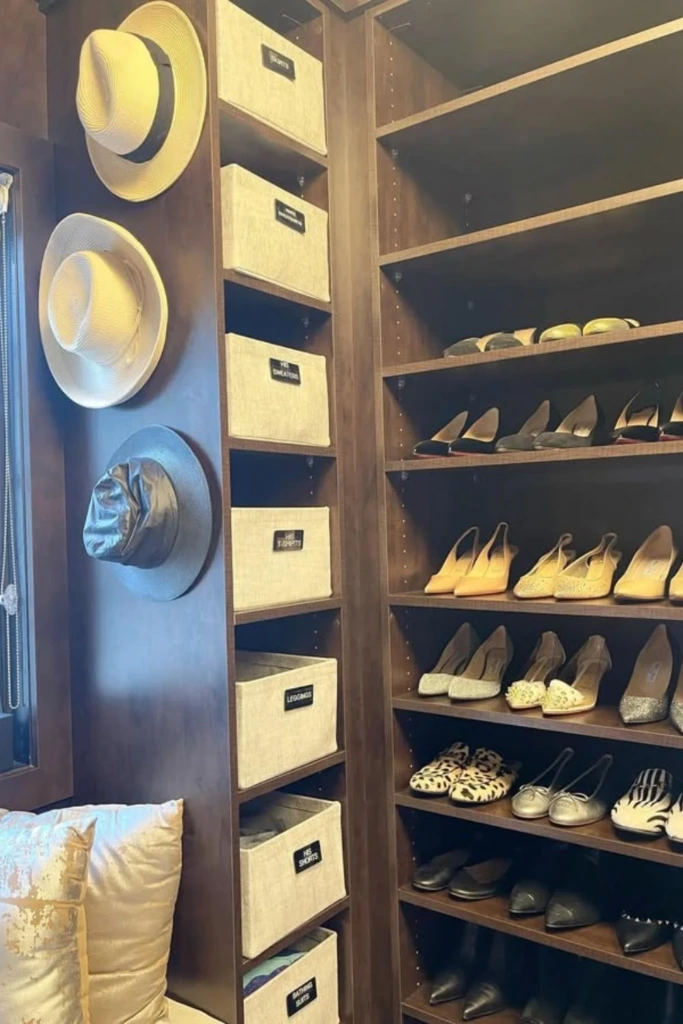
The narrow wall beside a wardrobe or bedroom doorway can become a surprisingly useful storage location. A vertical row of hooks transforms this overlooked space into an accessible organizer.
Install several smooth, appropriately sized hooks with enough separation for each hat. Arrange them according to how often you wear the accessories, placing daily favorites at a comfortable height.
This solution is especially helpful in rooms without extra shelving. For delicate hats, select wide, rounded supports instead of sharp hooks that could create dents or place excessive pressure on one area.
7. Gallery Wall Display
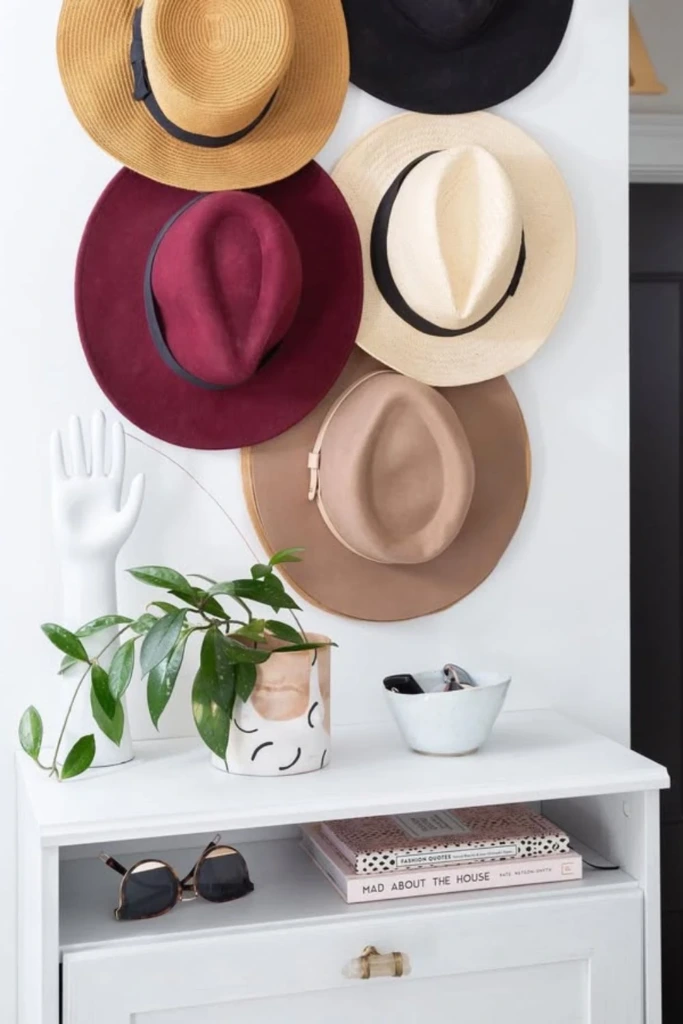
A hat gallery wall combines practical storage with personalized decoration. Instead of hiding your collection inside a wardrobe, arrange selected hats across a blank wall as part of the room's design.
Begin by laying the hats on the floor to experiment with spacing. You can create a balanced arrangement using similar colors or mix different textures for a more relaxed look.
Once you're satisfied with the layout, install individual hooks or supports that suit each hat's construction. Keep the arrangement away from strong sunlight, which can fade certain fabrics over time.
This approach is particularly appealing for collections featuring straw hats, felt designs, and distinctive statement pieces.
8. Car Ceiling Strap
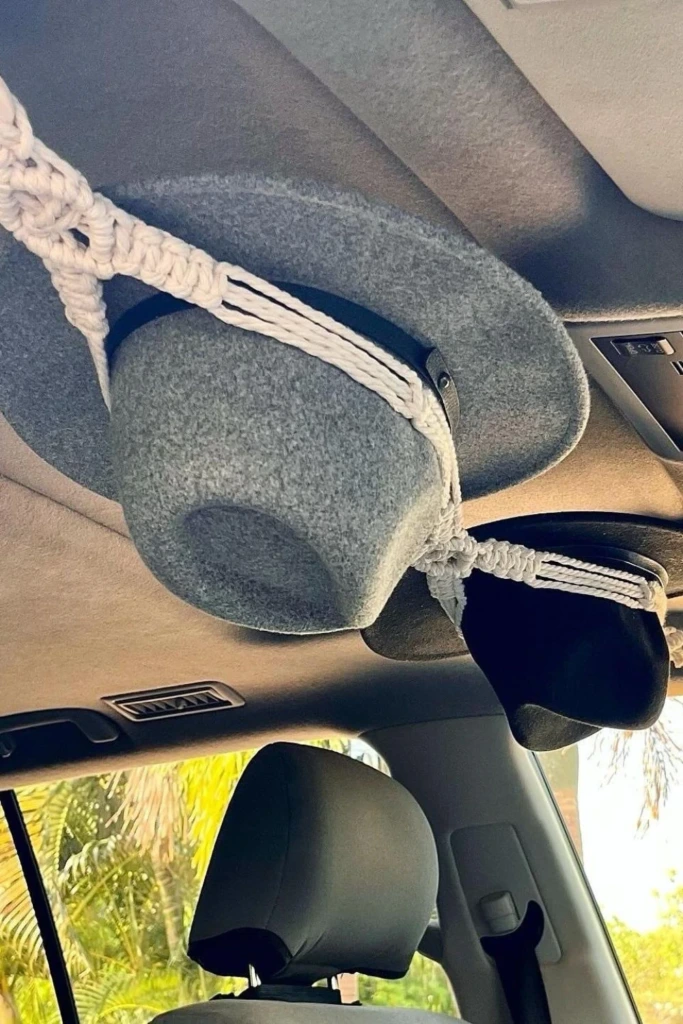
A car ceiling strap can provide temporary storage for lightweight hats during road trips, outdoor activities, and vacations. It helps prevent accessories from being crushed beneath luggage or left on vehicle seats.
Choose a purpose-designed holder that attaches securely to appropriate interior mounting points. The straps should support hats gently without pulling tightly against their crowns or brims.
Safety is especially important with this setup. Never position hanging hats where they could obstruct the driver's view, interfere with airbags, block access to safety equipment, or become loose during sudden braking.
For larger hats, a secured travel case in the luggage area is generally a safer alternative.
9. Kids Room Rack
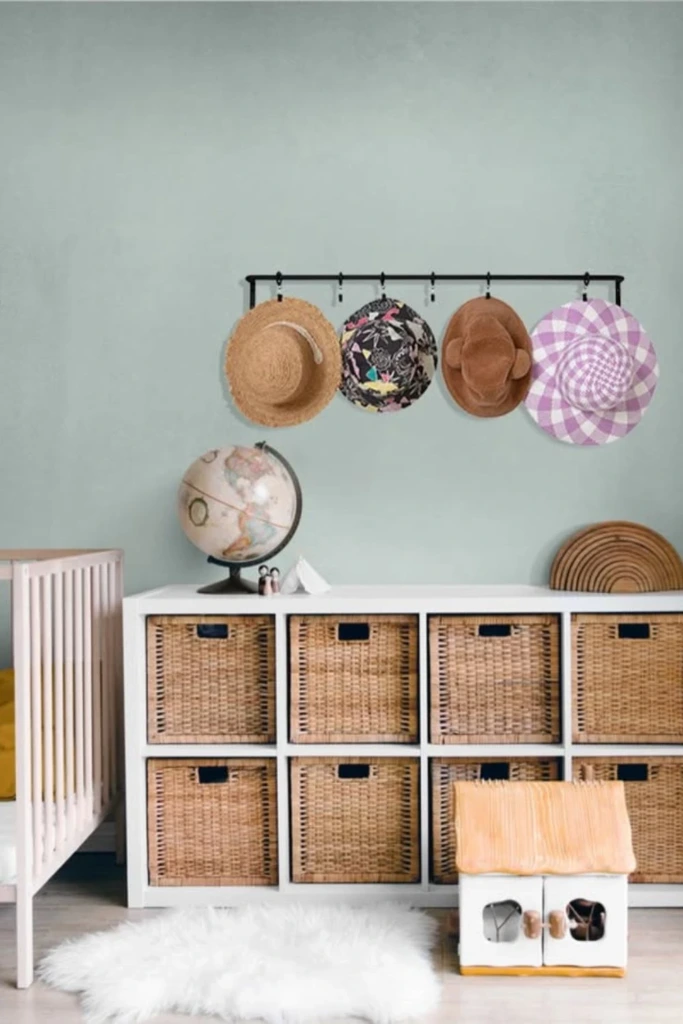
A child-friendly hat rack encourages independence by giving children an easy place to return their accessories after use.
Install a short rail with rounded hooks at a height appropriate for the child's age and reach. Position it near a storage bench, cubby unit, or wardrobe so hats, jackets, and backpacks can stay together.
Use cheerful colors or simple picture labels to help younger children recognize where their belongings belong. A separate hook for school caps, winter hats, and outdoor sun hats can make getting ready much easier.
Secure the rack firmly to the wall and avoid protruding or sharp hardware in play areas.
10. Closet Side Panel
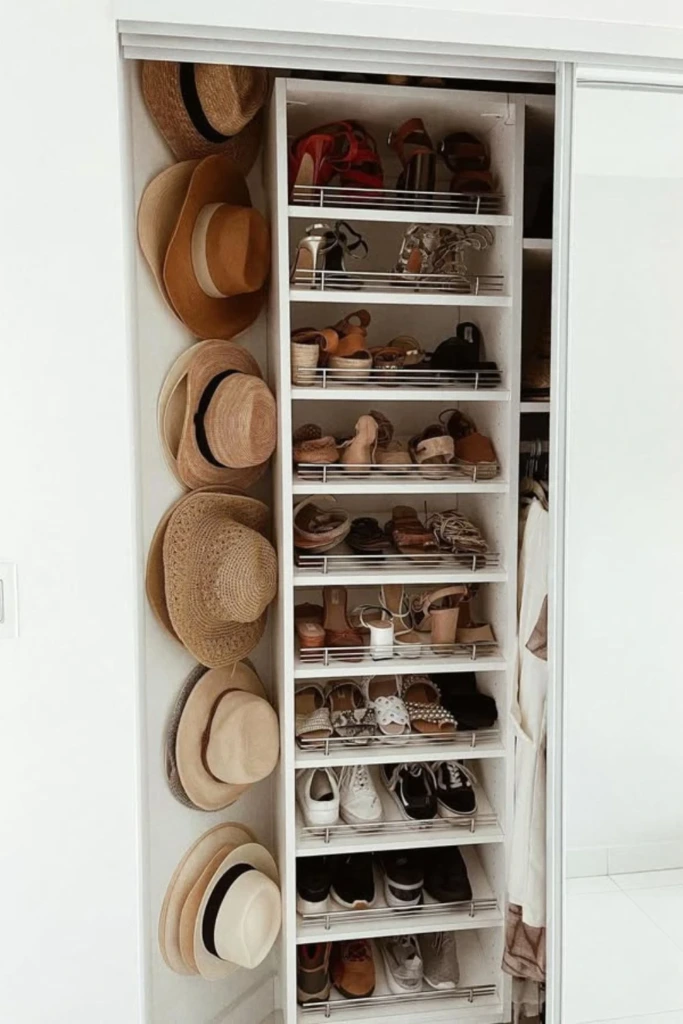
The side panel of a closet often remains unused, even when the main shelves and hanging rods are completely full. This narrow surface can accommodate a compact vertical hat organizer.
Attach a series of low-profile hooks, small shelves, or purpose-built holders along the panel. Arrange hats individually to prevent them from becoming tangled with nearby clothing.
This method is useful for shared wardrobes because it establishes a dedicated accessory zone without taking away significant hanging space.
Before installing anything, check that the closet doors and drawers can open fully without catching on the hats.
11. Stacked Shelf Cubby
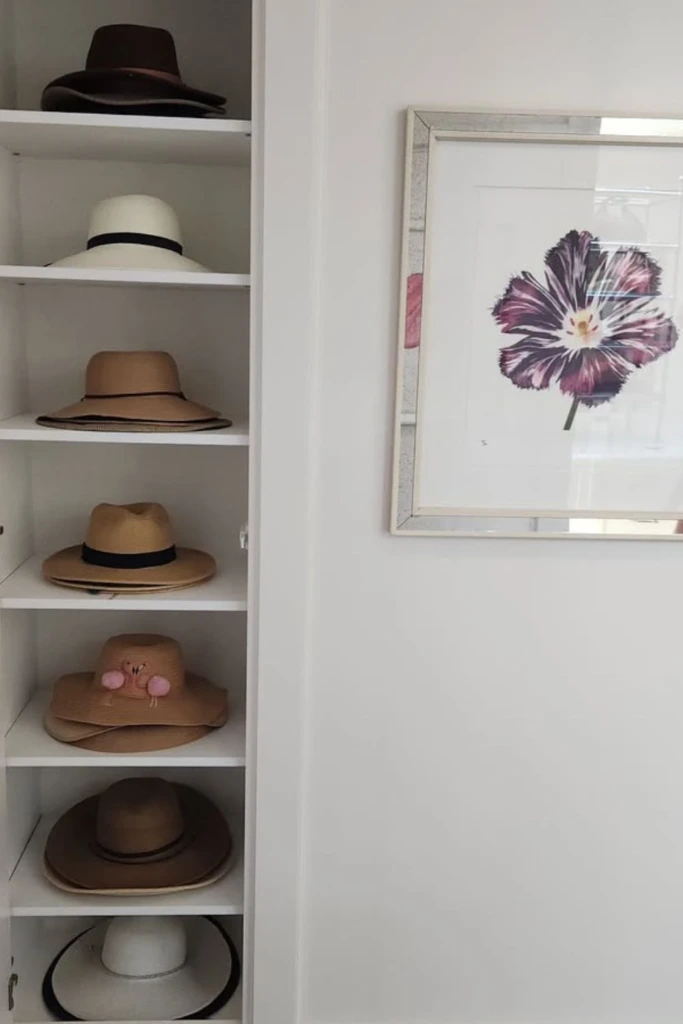
Open cubbies provide structured storage for people who prefer their accessories neatly separated and clearly visible. Each compartment can accommodate a hat or a small group of compatible items.
A modular shelving unit is particularly practical because it allows you to select compartment sizes based on your collection. Reserve larger cubbies for wide-brimmed hats and smaller ones for soft caps or knit beanies.
Organizing by season, color, or style makes selecting a hat quicker. You can also add discreet labels if several family members share the same storage unit.
Avoid placing heavy items above delicate hats, and keep enough open space around structured crowns to prevent distortion.
12. Cabinet Wall Display
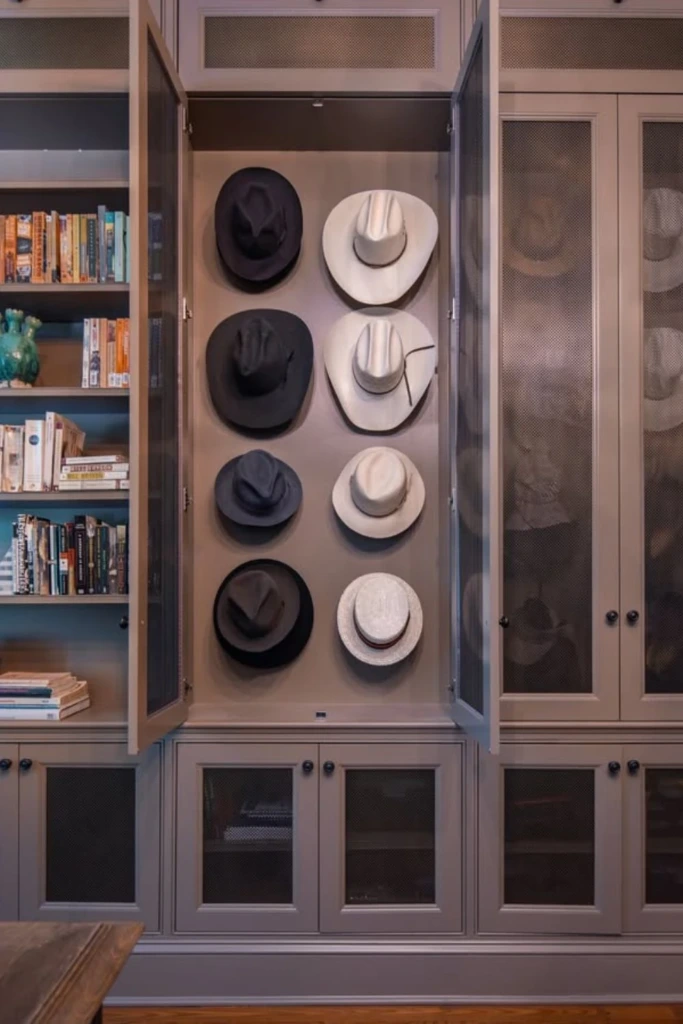
A cabinet wall display offers an organized way to store hats while keeping the room visually uncluttered. It is particularly useful when you want your accessories protected behind closed doors.
Install shallow hooks, supportive pegs, or a fitted organizing panel inside a cabinet. Arrange the hats in evenly spaced rows so that each item can be removed without disturbing the others.
For deeper cabinets, a combination of small shelves and wall-mounted holders can accommodate different shapes.
Check the available door clearance before installing hardware. Ensure that delicate brims don't become trapped when the cabinet closes, and keep the interior clean and dry.
13. Vintage Entry Rack
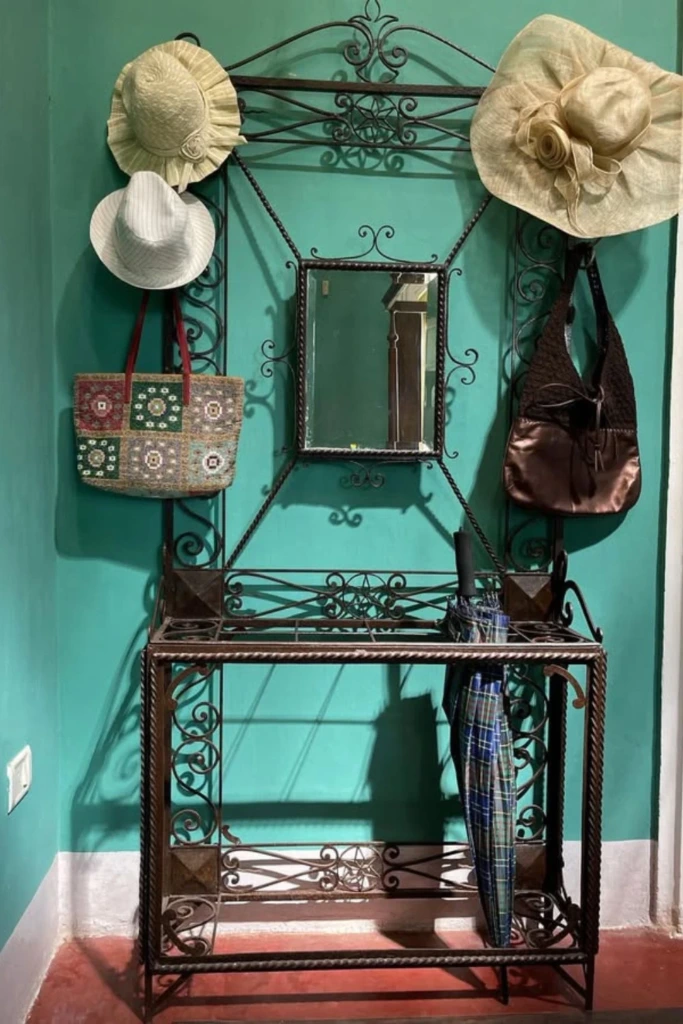
A vintage-style entry rack brings character to the area where hats are most frequently needed. Its hooks can also hold lightweight scarves, handbags, and other everyday accessories.
Look for a sturdy metal or wooden rack with smooth edges and enough space between hooks. Antique finishes, curved detailing, and weathered wood can complement farmhouse, traditional, or eclectic interiors.
Position the rack near the front door so hats are easy to grab before leaving home. Keep the arrangement practical by limiting each hook to items it can comfortably support.
If using a genuine antique, inspect the mounting points and hardware carefully before hanging valuable accessories.
14. Braided Loop Hanger
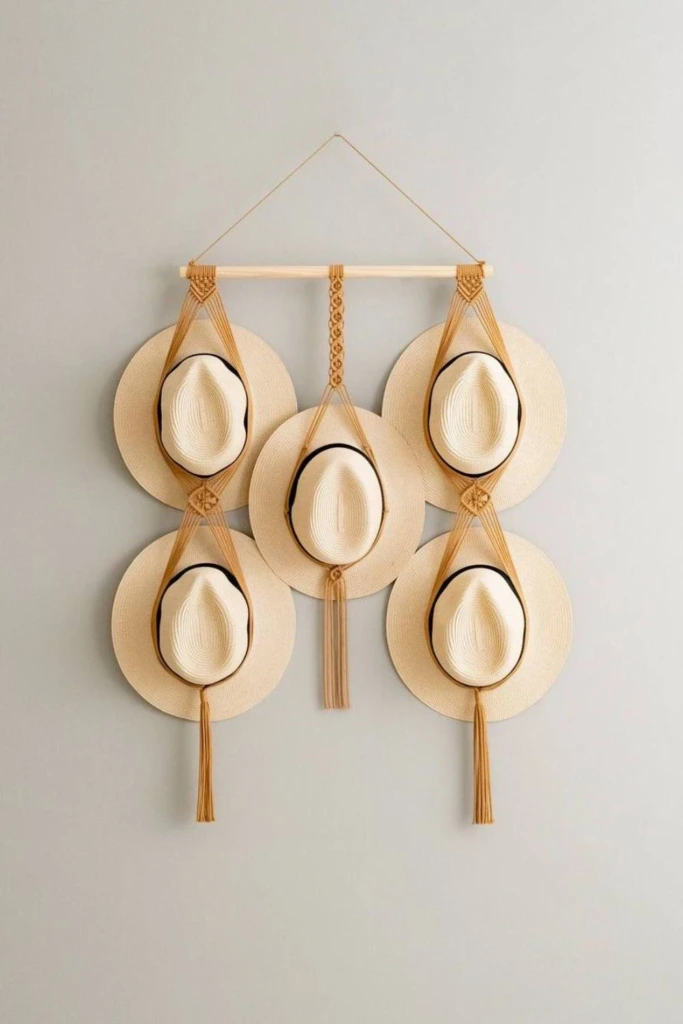
A braided loop hanger offers a creative alternative to ordinary wall hooks. Its woven design adds texture while providing a series of hanging points for lightweight hats.
You can create one using sturdy braided cord or leather straps attached to a wooden dowel. Form evenly spaced loops along the hanging length, ensuring each loop is large enough to hold its intended accessory securely.
This style looks particularly attractive in bedrooms with natural materials, warm colors, or bohemian-inspired decoration.
For structured hats, use loops that support the accessory without pinching or deforming the brim. Softer caps and hats with built-in hanging loops are usually better suited to this type of organizer.
15. Outdoor Peg Wall
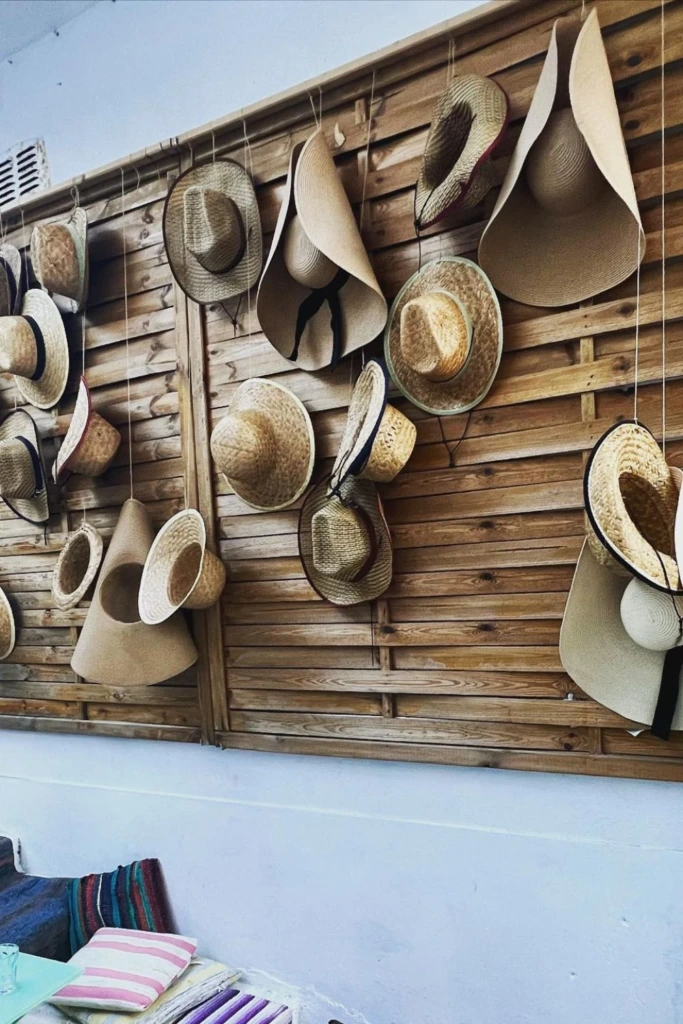
An outdoor peg wall creates a convenient place for sun hats near a patio, garden entrance, or covered porch. It keeps accessories available for gardening, relaxing outdoors, and other activities.
Mount a weather-resistant wooden panel or slatted board on a sheltered wall, then attach sturdy pegs at comfortable intervals. The open design allows hats to air out after use.
Choose materials suitable for outdoor conditions and position the organizer away from direct rainfall. Although ventilation can help damp hats dry, prolonged exposure to sunlight and moisture may damage certain materials.
For long-term storage, move hats indoors once they're completely dry.
16. Freestanding Grid Frame
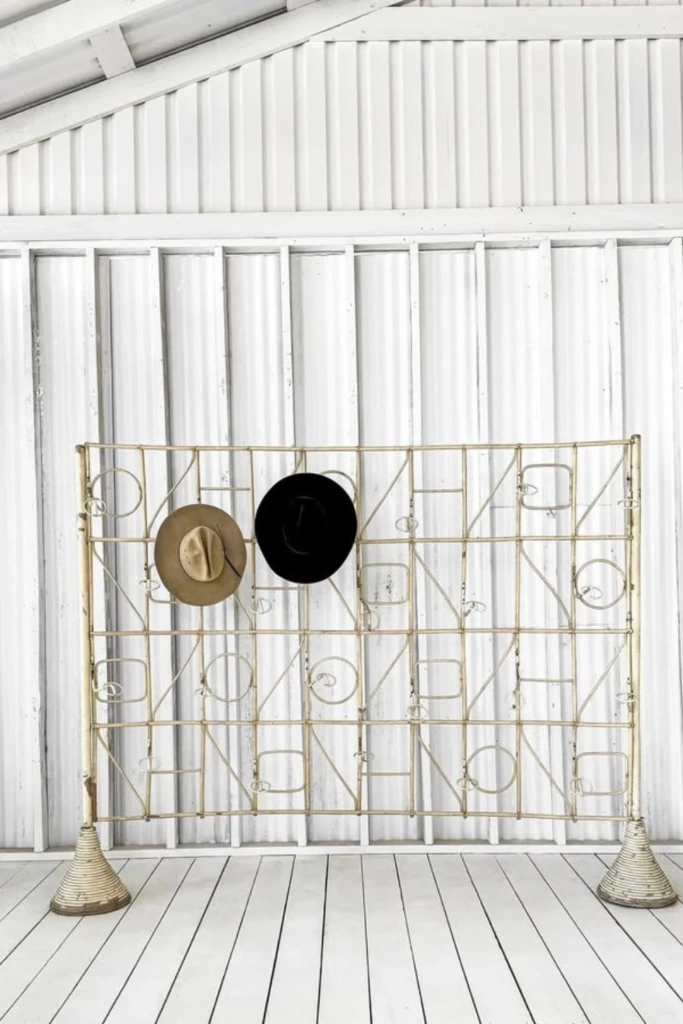
A freestanding grid frame provides flexible storage without requiring a permanent wall-mounted arrangement. Adjustable hooks and accessories make it easy to change the layout as your collection grows.
Select a stable metal frame with a base appropriate for its height and weight. Add hooks at different levels to accommodate caps, bucket hats, and other accessories.
This setup works well in dressing rooms, spacious bedrooms, or walk-in closets. You can also attach small baskets for hat-care supplies or lightweight accessories.
For safety, avoid overloading the upper sections, and anchor tall frames where required by the manufacturer's instructions.
17. Stairway Gallery Wall
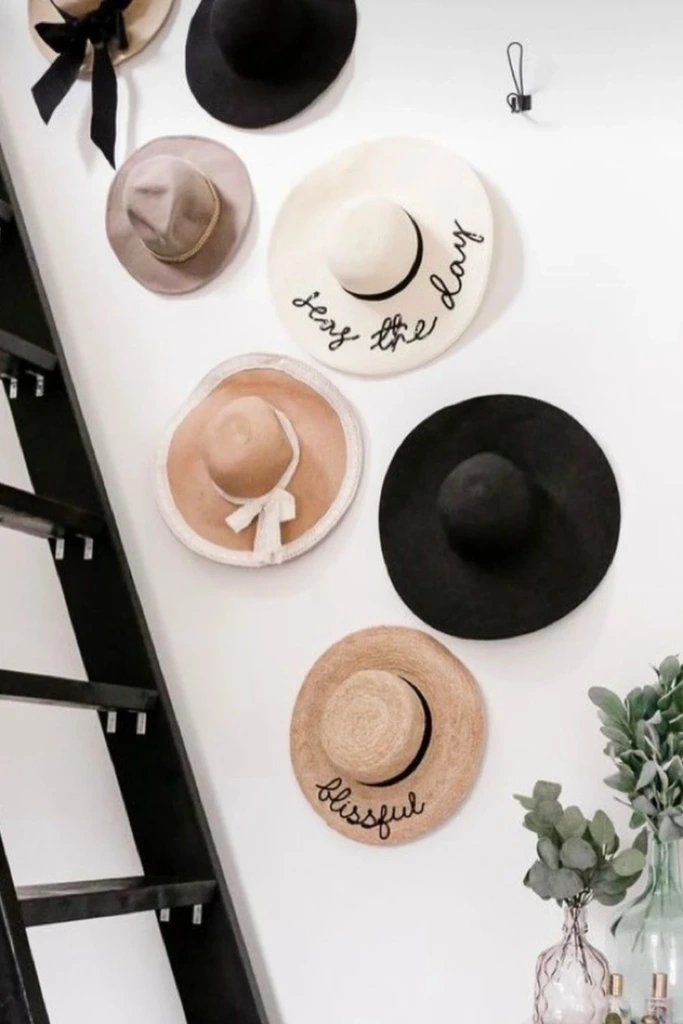
An unused staircase wall can become an attractive display area for a collection of hats. The natural slope of the stairs creates an opportunity for a flowing arrangement that follows the architecture.
Plan the layout before mounting the hooks, using paper templates to visualize the position of each hat. A combination of different brim sizes can create interest without making the display appear overly crowded.
Keep hats well outside the walking clearance of the staircase so nobody brushes against them while moving up or down.
This approach works best for decorative or occasionally worn hats, since frequently reaching across stairs can be inconvenient and unsafe.
18. Ladder Rack
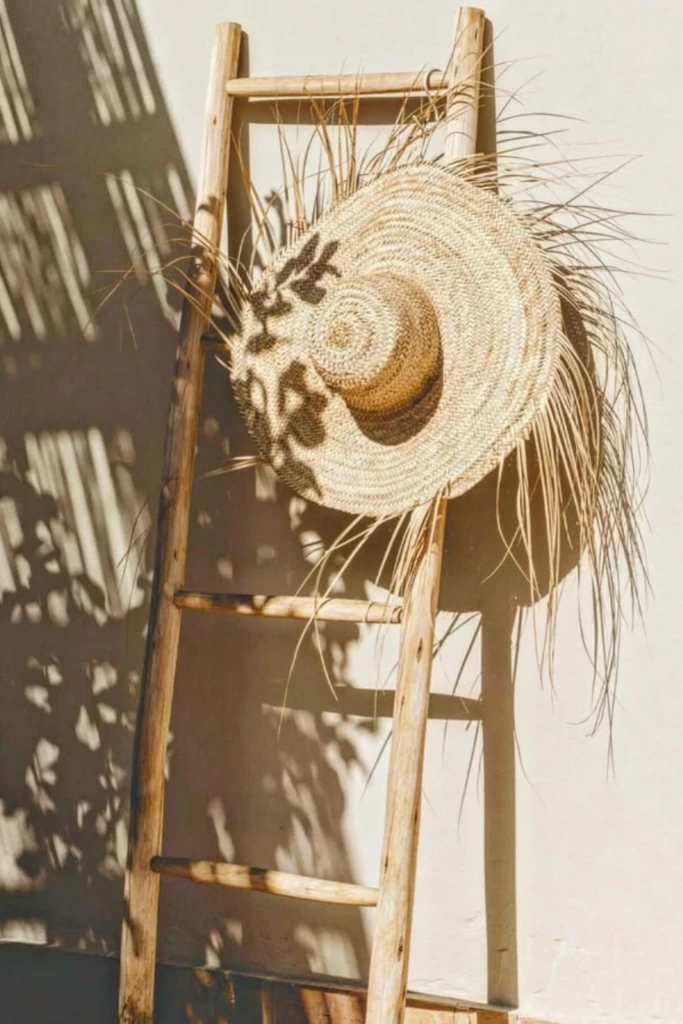
A decorative ladder offers a simple way to organize hats while introducing a natural, casual element to the room. Its multiple rungs provide several levels of storage without occupying much floor space.
Choose a sturdy wooden ladder with smooth surfaces, then lean or mount it securely according to its design. Add removable hooks or soft hanging loops to individual rungs rather than forcing structured hats over narrow wooden edges.
The upper sections