
22 Outdoor Toy Storage Ideas for 2026
This post contains affiliate links. As an Amazon Associate, Cozylis earns from qualifying purchases at no extra cost to you.
Outdoor toys make backyard playtime more exciting, but without a proper storage system, balls, water guns, sand toys, and ride-on toys can quickly take over your patio or garden. The right setup keeps everything organized, protects toys from harsh weather, and makes cleanup easier for children and adults alike.
Whether you have a spacious backyard, a small deck, or a poolside play area, these outdoor toy storage ideas offer practical ways to create a tidier space without sacrificing fun.
Jump to section (24)
- Our Top Picks
- Poolside Storage Solutions
- Outdoor Toy Storage Ideas
- Lift-Top Chest
- Rolling Toy Carts
- Wooden Ball Rack
- Hanging Basket Wall
- Textured Black Chest
- Rope Handle Crate
- Hanging Metal Baskets
- Mini Toy Shed
- Numbered Lock Boxes
- Clear Bin Cabinet
- Labeled Metal Buckets
- Cubbie Shelf Wall
- Wood-Topped Toy Chest
- Water Play Cabinet
- Playhouse Cubby Zone
- Rustic Deck Box
- Slatted Toy Bin
- Mesh Toy Crate
- Roll-Up Toy Shed
- Low Utility Shed
- Final Thoughts
Our Top Picks


1. Poolside Storage Solutions
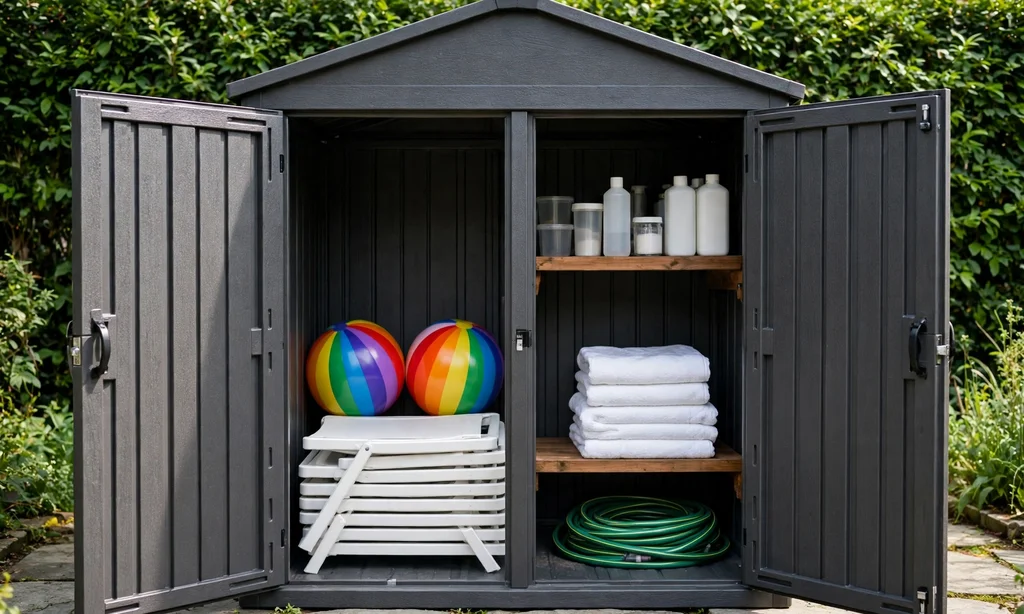
Pool areas often collect a surprising number of accessories, from inflatable rings and diving toys to water blasters and pool noodles. A dedicated storage spot keeps these items accessible while helping prevent clutter around the swimming area.
Weather-resistant cabinets, ventilated bins, and outdoor storage benches are useful choices for poolside organization. Look for materials that can handle splashes, sunlight, and humidity. Mesh baskets work well for toys that need to drain, while enclosed containers provide better protection for dry accessories.
Position storage away from pool edges and walking paths to reduce tripping hazards. Wet toys should be allowed to drain and dry before being placed in enclosed storage. Keep pool chemicals in a separate, secured location rather than storing them alongside children’s toys.
2. Outdoor Toy Storage Ideas
A good outdoor toy storage system should match the toys you own, the available space, and the amount of weather protection you need. Small accessories benefit from divided containers, while larger items such as scooters, trucks, and inflatable toys need wider storage areas.
Consider grouping toys by activity. Keep sand toys together, place balls in a separate basket, and reserve another container for water-play accessories. This simple arrangement makes it easier for children to find what they want and return items after playing.
Choose storage that is easy to access without being difficult to secure. Rounded edges, stable shelving, and lightweight containers with manageable lids are helpful features for family spaces. If your storage will stay outdoors throughout the year, prioritize UV-resistant, rust-resistant, and water-resistant materials.
3. Lift-Top Chest
A lift-top chest is a practical option for storing a variety of outdoor toys in one place. Its spacious interior can hold pool accessories, plush outdoor play equipment, chalk, and larger toys that would otherwise scatter across the yard.
Choose a model made for outdoor use, with a durable finish and a lid that opens smoothly. A lid-support mechanism can make opening easier, but it should be designed to reduce the risk of fingers getting trapped. Avoid heavy lids that children cannot safely manage.
A storage chest with a flat top can also double as a convenient surface for setting down small items. However, it should not be treated as a seat unless the manufacturer specifically designs it for seating. Keep the chest positioned on a level surface and check that its contents remain dry after rain.
4. Rolling Toy Carts
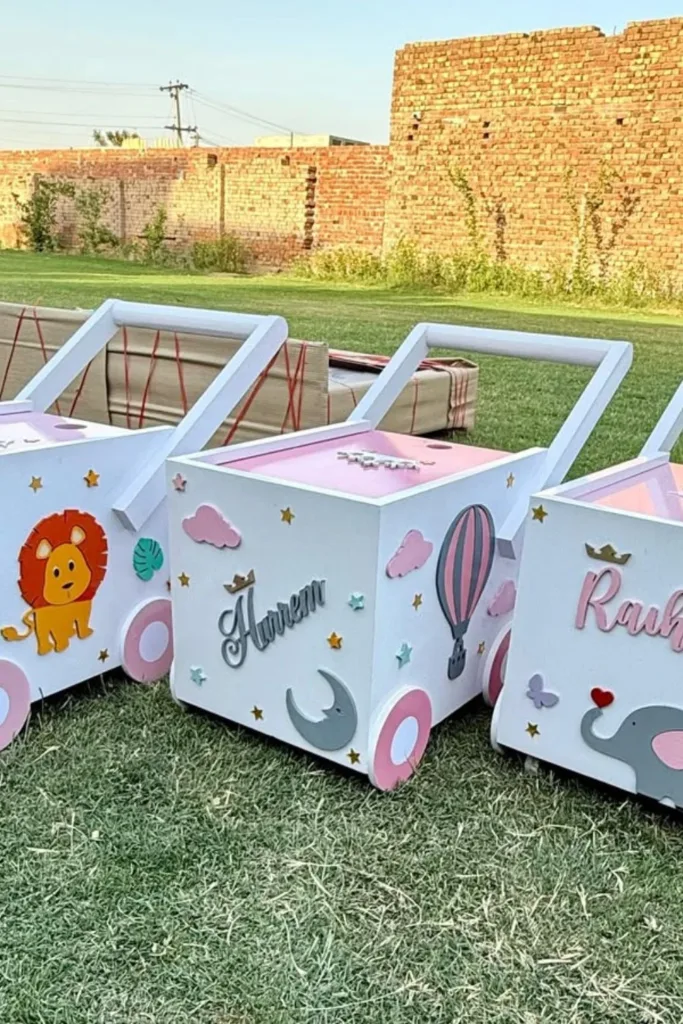
Rolling toy carts make cleanup easier when toys are spread across a patio, lawn, or play area. Instead of carrying several containers back and forth, you can collect everything in one cart and move it to a storage corner.
Choose a cart with sturdy wheels that suit your outdoor surface. Larger wheels are generally more practical on grass or uneven paving, while smaller swivel casters work well on smooth decks. Raised sides help prevent balls and smaller toys from falling out during transport.
Multiple compartments can separate outdoor art supplies, sports equipment, and water toys. For wet items, select a cart with drainage or removable baskets that can dry independently. Locking wheels are useful when the cart is parked on a slight slope, and keeping heavy objects low improves stability.
5. Wooden Ball Rack

A wooden ball rack provides a dedicated home for basketballs, soccer balls, playground balls, and other round toys. Rather than leaving them scattered around the yard, you can arrange them vertically or in individual compartments for a neat, easy-to-use display.
Build or purchase a rack with openings sized for the balls you own. Wide gaps make it easier to retrieve equipment, while retaining bars help prevent balls from rolling out. Sanded edges and a stable base are important, particularly when children will be using the rack independently.
Outdoor wood should be properly sealed or treated for the conditions in your area. Place the rack under a covered patio when possible, and avoid allowing water to collect around its base. A simple wooden design can complement garden furniture while keeping sports equipment organized and visible.
6. Hanging Basket Wall
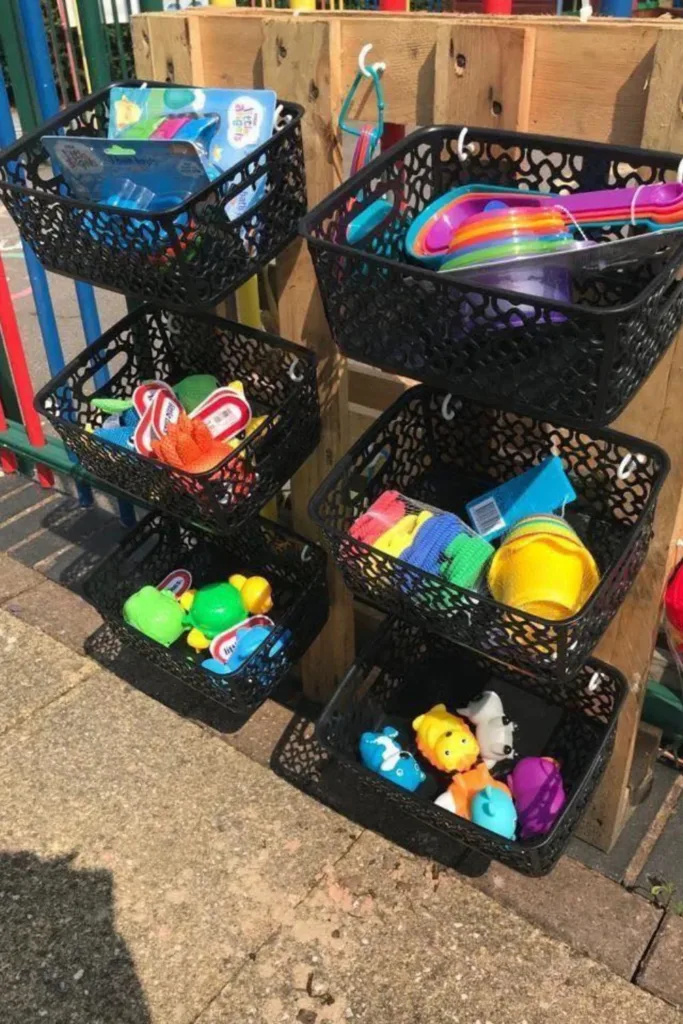
A hanging basket wall turns an unused fence section or exterior wall into a useful storage area. Attach several baskets at different heights to hold lightweight toys such as bubble bottles, chalk, sand molds, and small plastic accessories.
Wire baskets provide ventilation, which is helpful when toys are damp after outdoor play. Plastic baskets are another option if you want something lightweight and easy to wash. Select rust-resistant hardware and make sure the mounting surface can support the combined weight of the baskets and their contents.
Place frequently used items within children’s reach, reserving higher baskets for adult supplies or less commonly used accessories. Avoid overcrowding the baskets, as toys can become difficult to retrieve and may fall out. Keep the arrangement away from sharp corners, gates, and narrow walkways.
7. Textured Black Chest
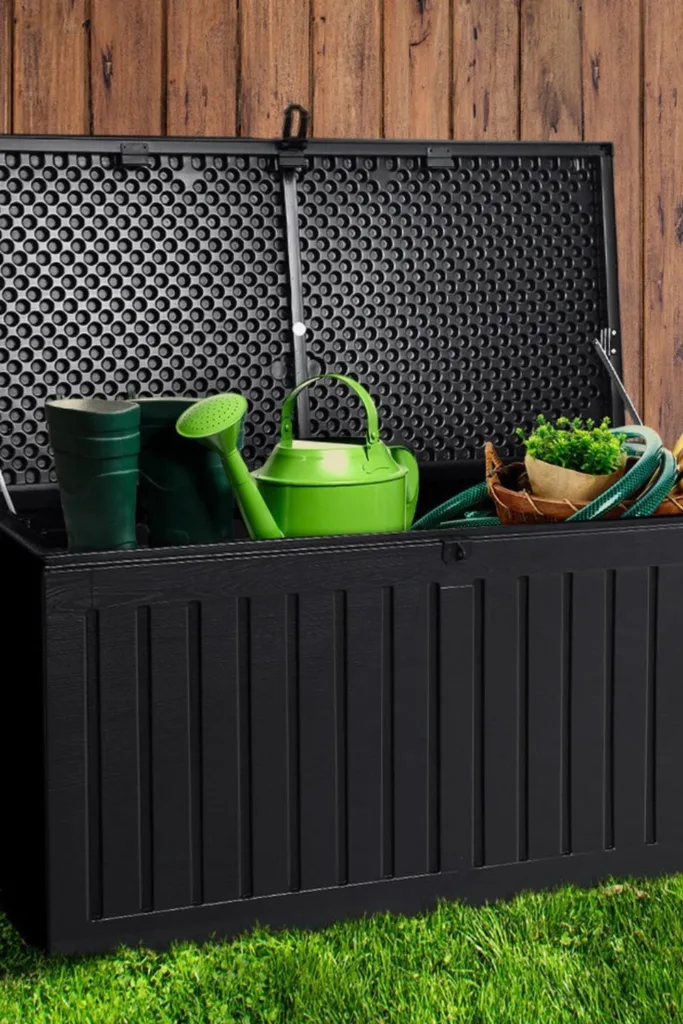
A textured black storage chest offers a modern look while concealing toys that might otherwise make a patio feel untidy. Its dark finish works especially well with contemporary outdoor furniture, neutral paving, and metal garden accessories.
Choose a chest manufactured for exterior conditions rather than an indoor container that may deteriorate in sunlight or moisture. A textured finish can disguise minor marks, while a sturdy construction helps the unit withstand everyday use.
Inside, use smaller bins to divide the space into categories such as balls, water toys, and outdoor games. This prevents everything from becoming one large pile. Because dark surfaces can absorb considerable heat in direct sunlight, consider placing the chest in a shaded location, particularly if it will hold plastic toys or items children handle frequently.
8. Rope Handle Crate
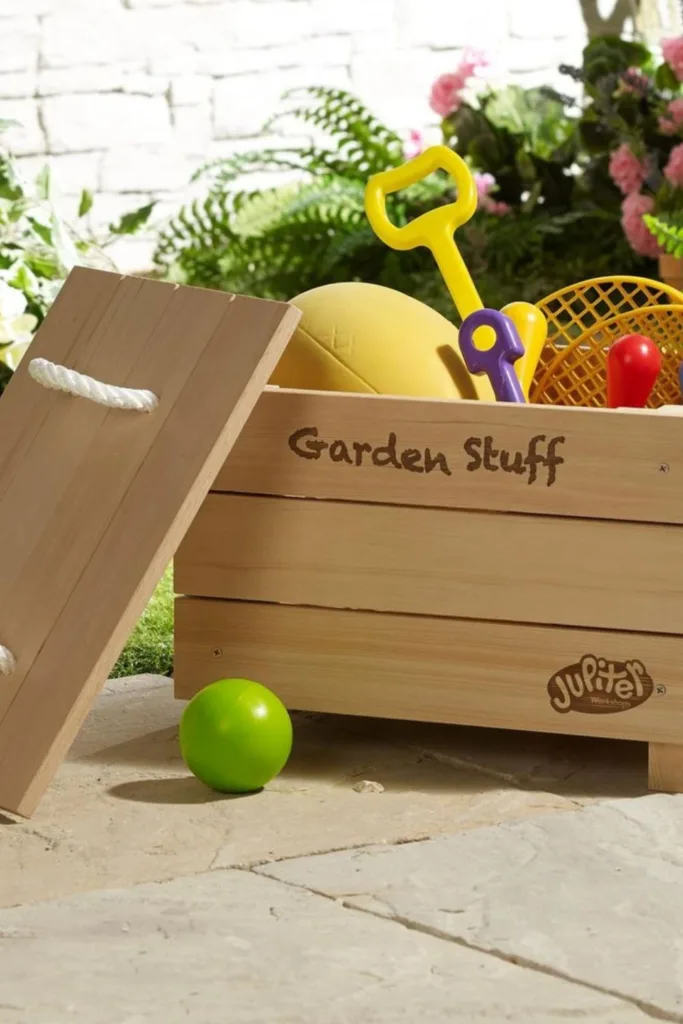
Rope handle crates combine simple storage with a relaxed, beach-inspired appearance. They are useful for collecting small outdoor toys, gardening play accessories, soft balls, and other lightweight items that children carry between the house and backyard.
Look for a crate with a durable plastic or treated wooden body and securely attached handles. Rope handles make lifting more comfortable, but they should be checked regularly for fraying or loose fittings. Keep the load light enough for children to carry without straining.
A removable liner can help contain sand and small pieces, while drainage holes allow water to escape from suitable outdoor crates. If you prefer natural materials, remember that untreated wood and ordinary rope may deteriorate when repeatedly exposed to rain. Store the crate under cover or bring it indoors during prolonged wet weather.
9. Hanging Metal Baskets

Hanging metal baskets offer a compact way to organize outdoor toys when floor space is limited. They can be installed on a suitable fence, sturdy wall, or purpose-built rack to keep smaller accessories off the ground.
Use corrosion-resistant metal, such as properly coated steel or aluminum, for better durability outdoors. Baskets with open sides allow airflow, making them useful for items that need to dry after play. Add removable containers inside if you want to prevent small toys from slipping through the openings.
Arrange baskets according to how often each group of toys is used. Keep everyday items at an accessible height and avoid placing heavy objects overhead. Before installation, confirm that the brackets and mounting surface are strong enough to support the loaded baskets, especially if children may pull on them.
10. Mini Toy Shed
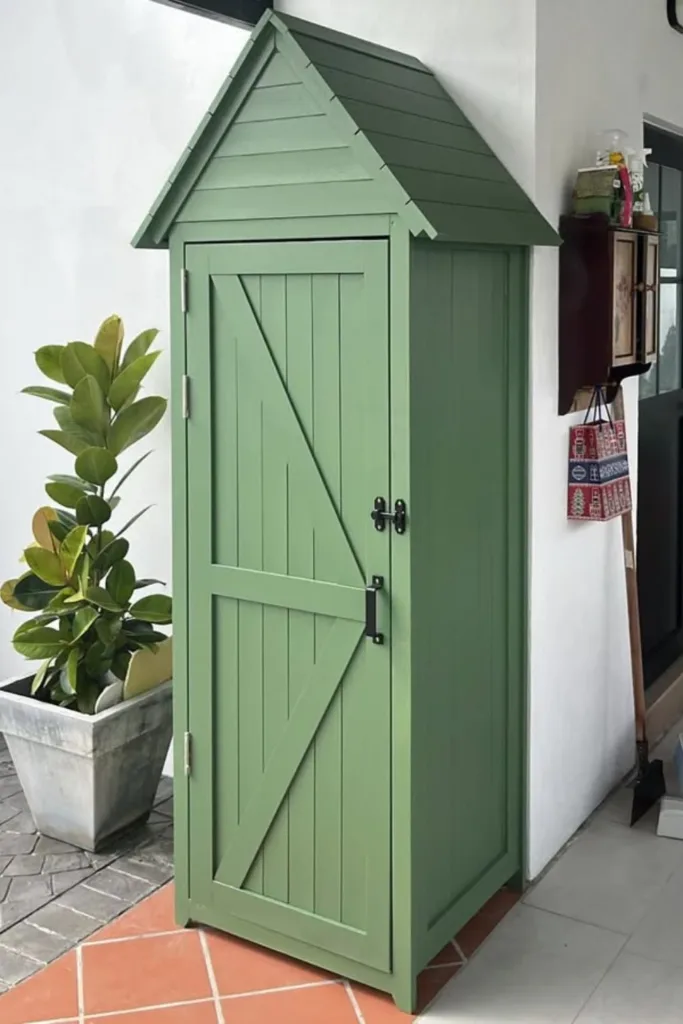
A mini toy shed creates a dedicated storage area for larger outdoor play equipment. It can accommodate scooters, ride-on toys, gardening sets, sports gear, and bulky items that do not fit comfortably inside a deck box.
Choose a shed size that allows children to retrieve toys without having to move everything else. Double doors or a wide opening can make larger equipment easier to store. Plastic sheds are often lightweight and easy to clean, while wooden versions can be customized to match fences, garden furniture, or a playhouse.
A level, well-drained base helps protect the structure and its contents. Secure the shed according to the manufacturer’s instructions, especially in windy locations. Keep the interior ventilated, and avoid storing wet toys in a tightly closed space for long periods. Place the shed where it is convenient to reach without blocking paths or outdoor seating.
11. Numbered Lock Boxes
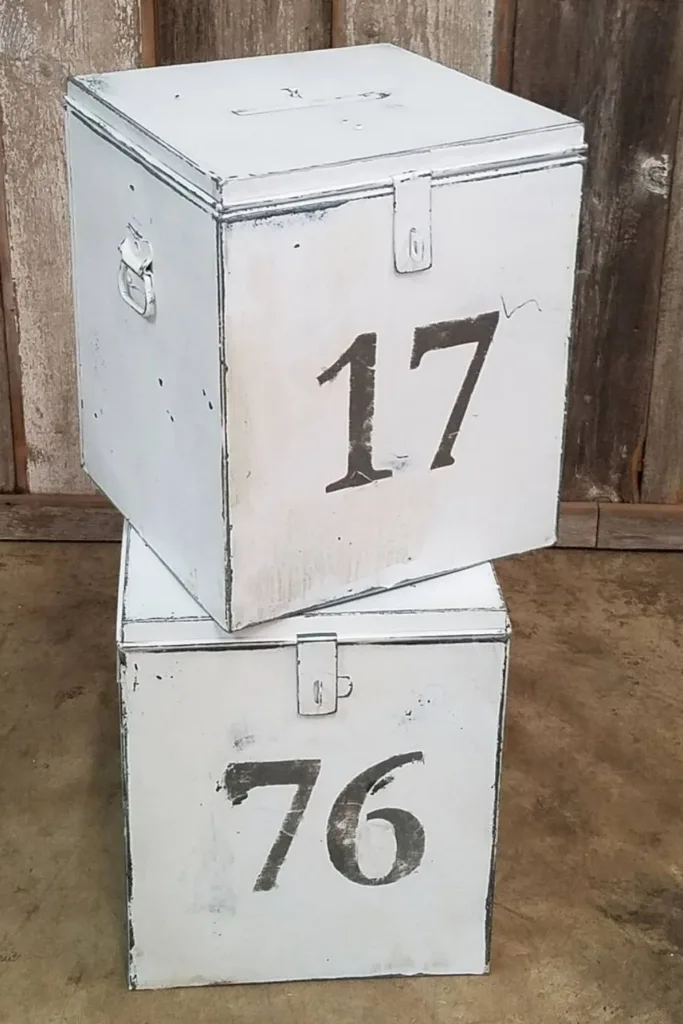
Numbered lock boxes can simplify toy organization when several children share a backyard or when toys need to be separated by age group or activity. Assigning a number to each box creates a consistent system without requiring elaborate labels.
For example, one box can hold sports equipment, another can contain sand toys, and a third can store water-play accessories. Matching the numbers to a simple picture chart makes the arrangement easier for younger children to understand.
Select containers that can withstand outdoor exposure and have closures that are simple to operate safely. If a lock is necessary, choose a child-appropriate system and keep any key or combination management practical for caregivers. These boxes are useful for organizing belongings, but they should not be used to lock children inside or trap anyone in an enclosed space.
12. Clear Bin Cabinet
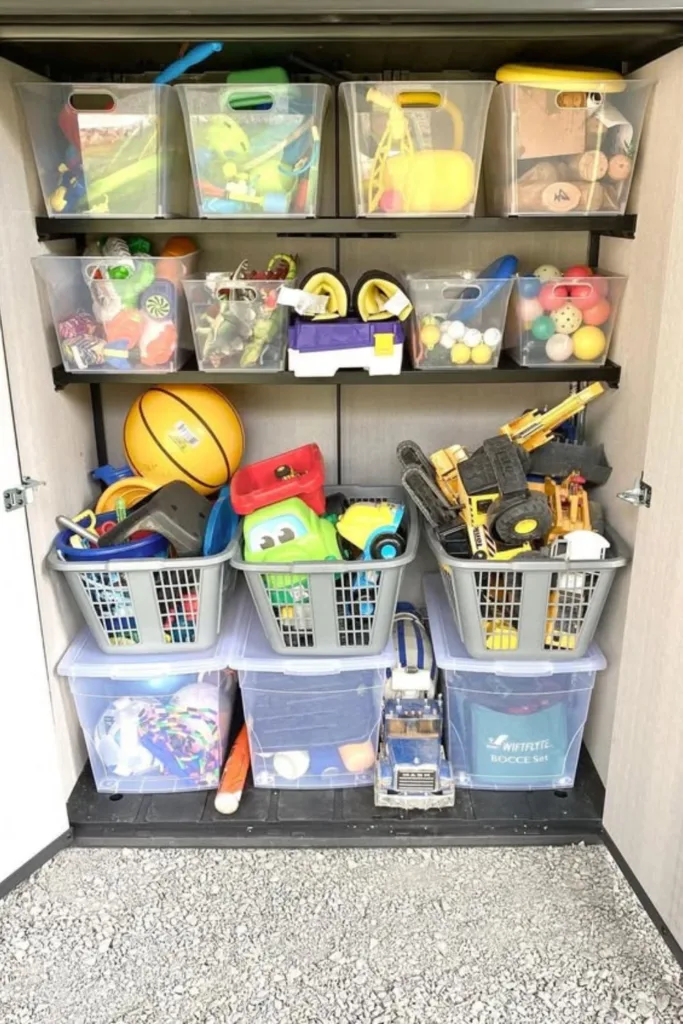
A clear bin cabinet makes it easy to see what is available without opening every container. It is particularly helpful for collections of small toys, including toy cars, building pieces designed for outdoor use, water accessories, and gardening play tools.
Use bins that fit securely inside the cabinet and are large enough to hold their contents without overflowing. Transparent containers speed up cleanup because children can identify where items belong. If you prefer a cleaner appearance, choose a cabinet with doors that conceal the bins while keeping the contents visible through the plastic.
For outdoor placement, select a cabinet specifically rated for exterior use. Many indoor plastic drawer units can warp, fade, or allow rainwater inside. Keep the cabinet on a level surface, anchor tall units where required, and place heavier containers on lower shelves to improve stability.
13. Labeled Metal Buckets
Metal buckets provide a straightforward way to separate outdoor toys into manageable groups. Use one for sidewalk chalk and bubbles, another for sand molds, and a larger bucket for balls or garden play accessories.
Labels help everyone follow the same system. Waterproof tags, weather-resistant stickers, or simple painted symbols can identify each category. Picture labels are especially useful for young children who are still learning to read.
Choose buckets with smooth rims, sturdy handles, and a finish that resists rust. Avoid containers with sharp edges or loose handles. Drainage holes may be useful for wet toys, but buckets holding small accessories should be emptied and dried regularly to prevent water from collecting inside.
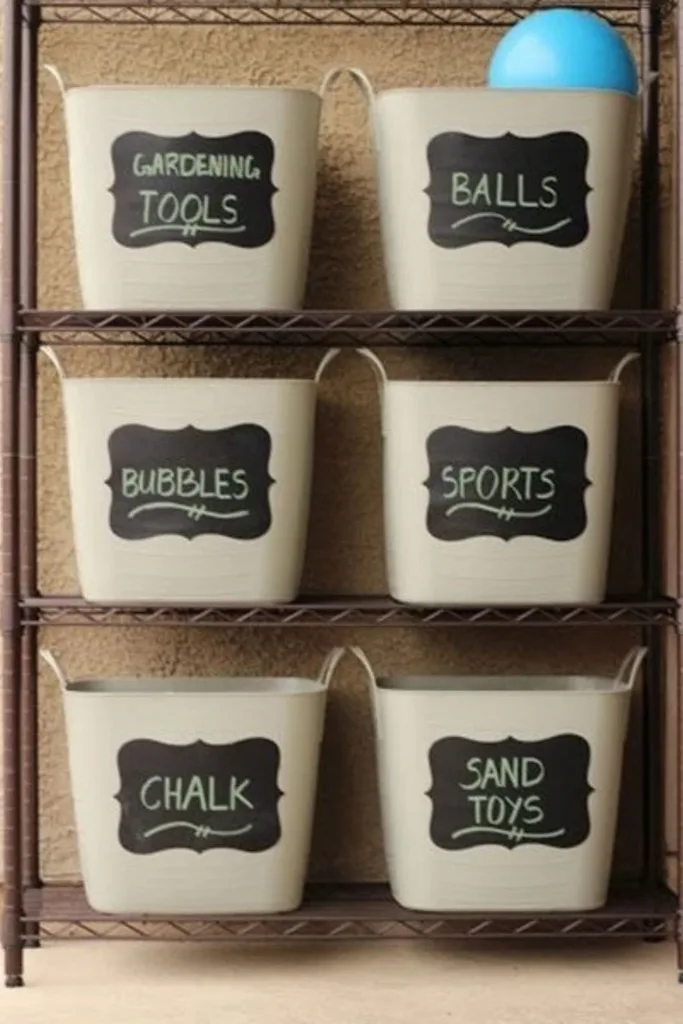
For a coordinated look, use buckets in matching colors or arrange them on a low shelf near the play area. Keep heavy buckets at ground level so children can lift them comfortably.
14. Cubbie Shelf Wall
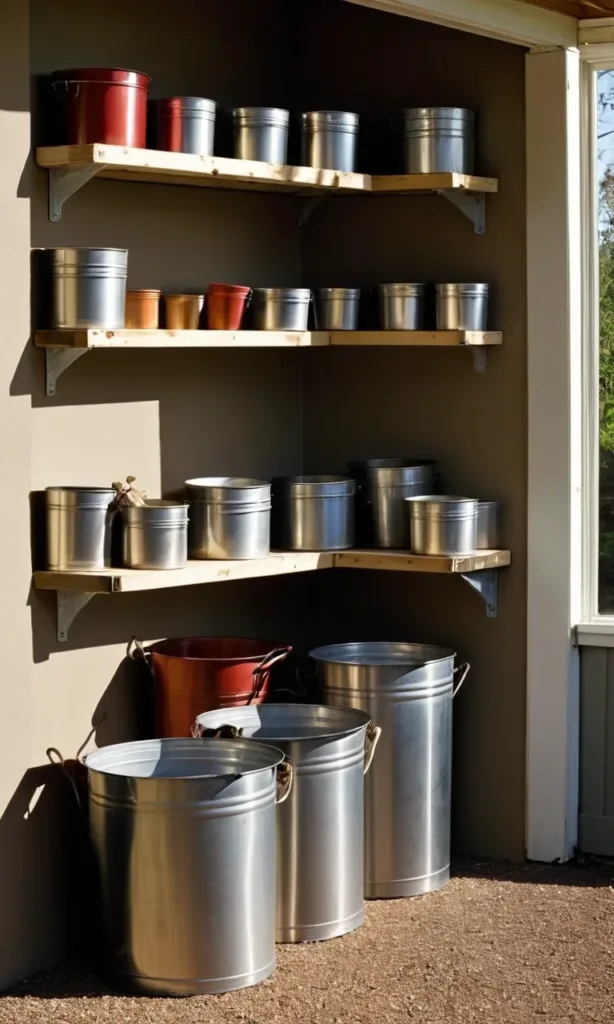
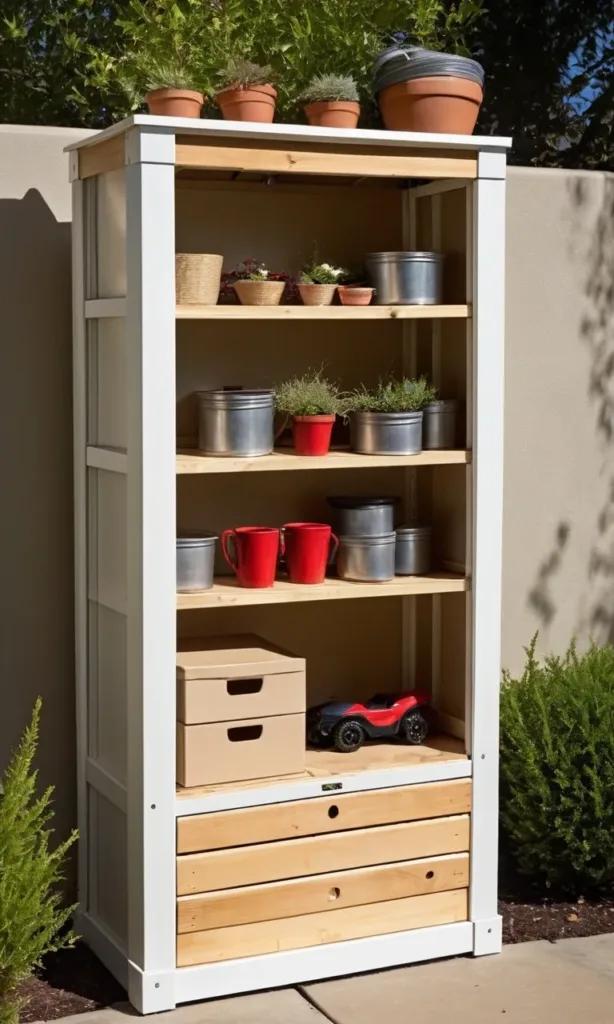
A cubbie shelf wall creates individual spaces for different types of outdoor toys. Each compartment can hold a basket, a collection of balls, a small watering can, or a set of play accessories.
This arrangement works well along a covered patio or inside a garden play zone because every category has a defined place. It also makes cleanup easier: children can return toys to the appropriate cubby rather than placing everything in one container.
Choose shelving with a stable frame, smooth edges, and materials suitable for the location. Outdoor-rated plastic, sealed wood, and corrosion-resistant metal are all worth considering. Keep the shelf low enough for children to reach the compartments they use most frequently, and secure taller units against tipping.
If rain can reach the shelf, use removable baskets that can be brought indoors. Leave enough room between items for ventilation, and avoid overloading individual compartments.
15. Wood-Topped Toy Chest

A wood-topped toy chest combines enclosed storage with a natural outdoor finish. It can hold toys while adding warmth to a deck or patio, especially when paired with wooden planters, benches, or fencing.
The chest’s base should be made from weather-resistant materials, while the top needs a finish that can tolerate outdoor conditions. Proper sealing helps reduce moisture damage, but even treated wood benefits from regular inspection and maintenance.
Organize the interior with smaller containers to keep chalk, toy vehicles, balls, and pool accessories separate. A broad top may be convenient for placing lightweight items temporarily, but do not use it for seating unless the chest is specifically designed for that purpose.
Look for a secure, well-supported lid and a construction that resists warping. Position the unit away from standing water, and check its hinges and fasteners periodically to keep it functioning smoothly.
16. Water Play Cabinet

A water play cabinet keeps accessories for splash games, water tables, and summer activities together in one convenient location. It can hold watering cans, plastic cups, water wheels, small buckets, and other toys that children use outdoors.
Choose a cabinet with water-resistant construction and ventilation. Shelves or removable baskets make it easier to separate clean, dry items from toys that have just been used. A cabinet with a drain-friendly lower section is especially useful if the contents often become wet.
After playtime, empty toys of standing water and let them dry before closing the cabinet. This reduces unpleasant odors and helps discourage insects from breeding in collected water. Keep any cleaning products, pool treatments, and other hazardous substances in a separate locked storage area.
A compact cabinet beside a water table or under a covered patio can make summer play more organized without taking up too much room.
17. Playhouse Cubby Zone
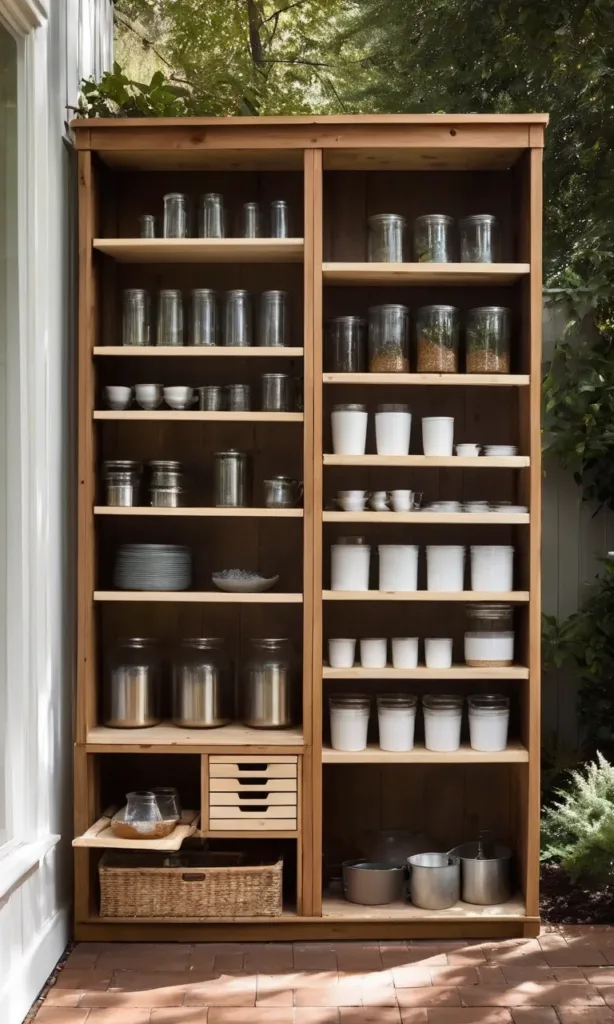
A playhouse cubby zone combines imaginative play with practical organization. If your backyard already has a playhouse, add small shelves, open compartments, or low baskets to give children a place for toy food, dress-up accessories, plastic tools, and pretend gardening equipment.
Each cubby can represent a different activity. One might be a pretend kitchen cupboard, another a shop display, and another a home for outdoor art supplies. This makes storage part of the play experience rather than a chore at the end of the day.
Use sturdy materials with smooth edges and child-friendly finishes. Secure shelves firmly and avoid installing heavy objects above seating or play areas. Make sure the playhouse has enough ventilation and that storage does not obstruct entrances or exits.
A few clearly defined compartments are usually more effective than filling the entire structure with shelves. Leave room for children to move around and enjoy the space.
18. Rustic Deck Box
A rustic deck box offers enclosed storage with a weathered, natural appearance. Its wood-look finish or traditional construction complements gardens, timber decks, and outdoor furniture with a farmhouse or cottage-inspired style.
Use the box for larger toys, outdoor games, pool floats that have been dried, and accessories that need protection from dust and light rain. Before purchasing, check the internal dimensions so bulky toys will fit without being forced into the space.
Look for an outdoor-rated model with a water-resistant design and a lid that opens safely. A raised base can help reduce contact with damp paving, while a secure closure keeps the contents contained when the box is not in use.
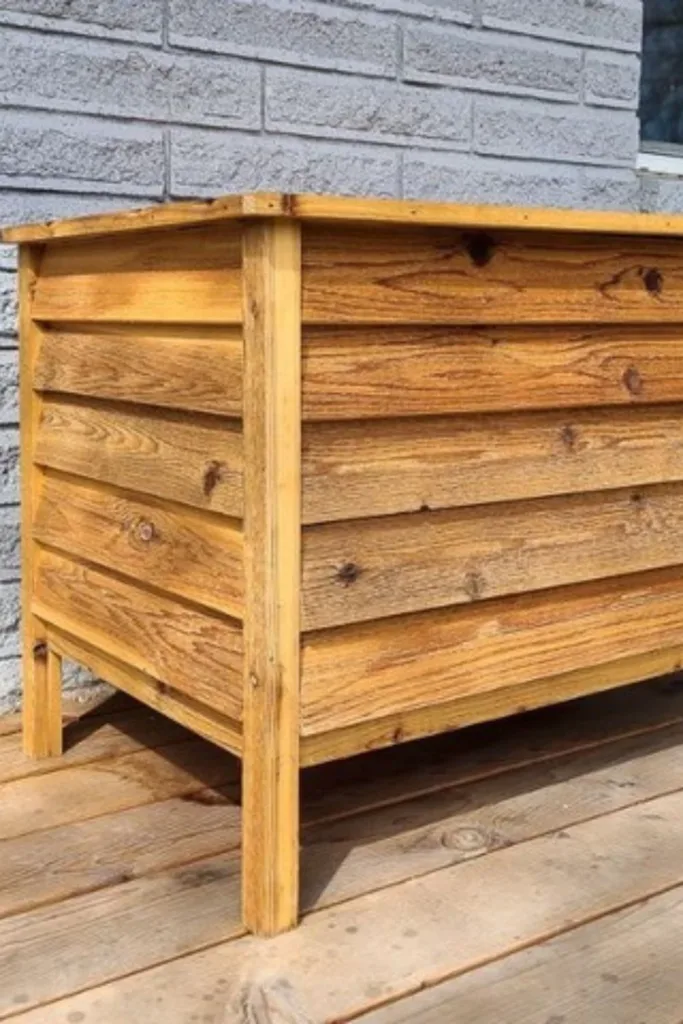
Arrange smaller items in separate bags or bins to make the interior easier to manage. If the box is exposed to the elements, inspect the seals, hinges, and finish regularly. Even weather-resistant storage should not be assumed to be completely waterproof unless the manufacturer explicitly states that it is.
19. Slatted Toy Bin
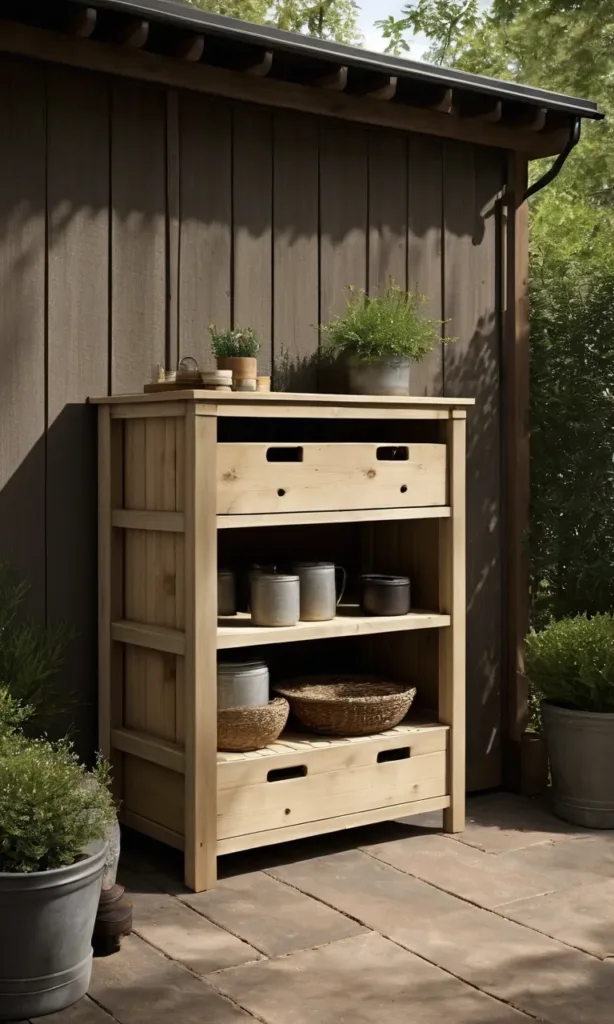
A slatted toy bin provides a simple, open storage solution for outdoor play equipment. The gaps between the slats allow air to circulate, making the design useful for balls, larger plastic toys, and accessories that need to dry after use.
Wooden slatted bins can blend naturally into garden settings, while plastic or composite alternatives may require less maintenance. Choose a design with gaps small enough to contain the items you plan to store and edges that will not snag clothing or scratch hands.
This type of bin works best for toys that are easy to identify and retrieve. Small pieces may fall through the openings, so keep them in a separate container inside the bin or use a removable liner.
If you choose wood, use an appropriate outdoor finish and inspect the slats for splinters or loose fasteners. Place the bin on a stable, well-drained surface and avoid positioning it where rainwater regularly collects.
20. Mesh Toy Crate
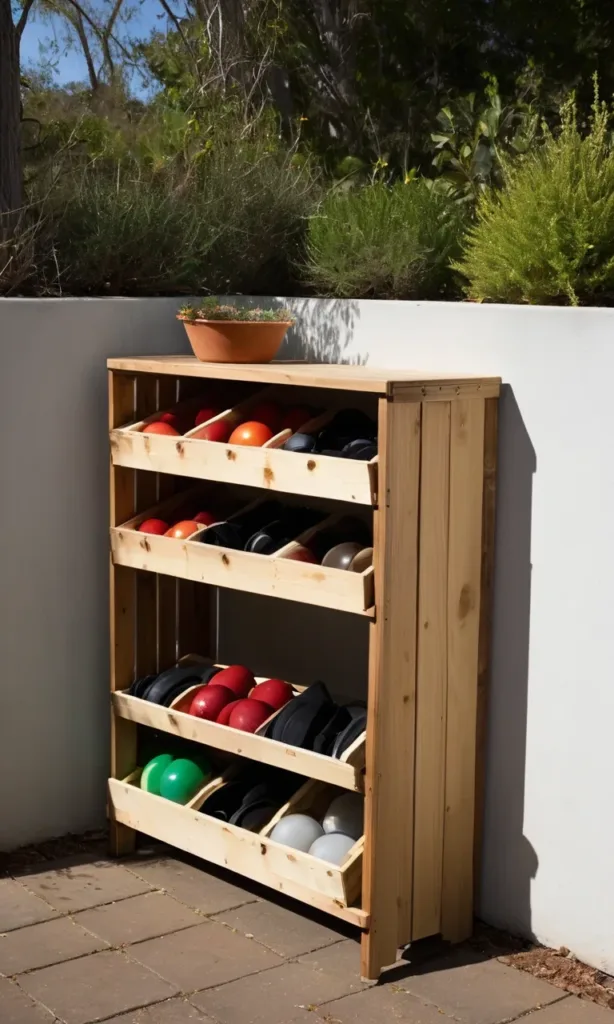
A mesh toy crate is ideal for pool toys, beach accessories, and other equipment that often comes back wet. Its open construction allows air to move around the contents, helping toys dry more efficiently than they would in a sealed container.
Choose mesh with openings small enough to retain your toys and a frame strong enough to support the expected load. Reinforced corners and comfortable handles are useful if the crate needs to be carried between the pool, garden, and storage area.
Separate toys by type to prevent smaller accessories from disappearing beneath larger items. A removable divider or a couple of smaller mesh bags can help organize diving toys, water squirters, and floating accessories.
After use, empty the crate of debris and allow it to dry fully. Avoid overloading it with heavy equipment, and store it under cover when possible to extend its lifespan. Mesh storage is especially practical when drainage and ventilation matter more than keeping every item completely dry.
21. Roll-Up Toy Shed
A roll-up toy shed offers a flexible storage option for families who need a covered area but do not have room for a permanent structure. Depending on the design, it may use a flexible cover, a lightweight frame, or a roll-up opening that provides easy access to stored toys.
These shelters can accommodate larger items such as scooters, ride-on toys, sports equipment, and bulky outdoor games. The wide opening makes it easier to move items in and out without navigating narrow cabinet doors.
Choose a model with a sturdy frame, secure anchoring, and materials designed for outdoor exposure. A roll-up cover should fasten securely when not in use, especially in windy weather. Check whether the shelter provides ventilation and whether rain can enter through the sides or opening.
This option is best for equipment that does not require a completely sealed environment. Keep small accessories in lidded containers inside the shelter, and inspect the cover and fasteners regularly for wear.
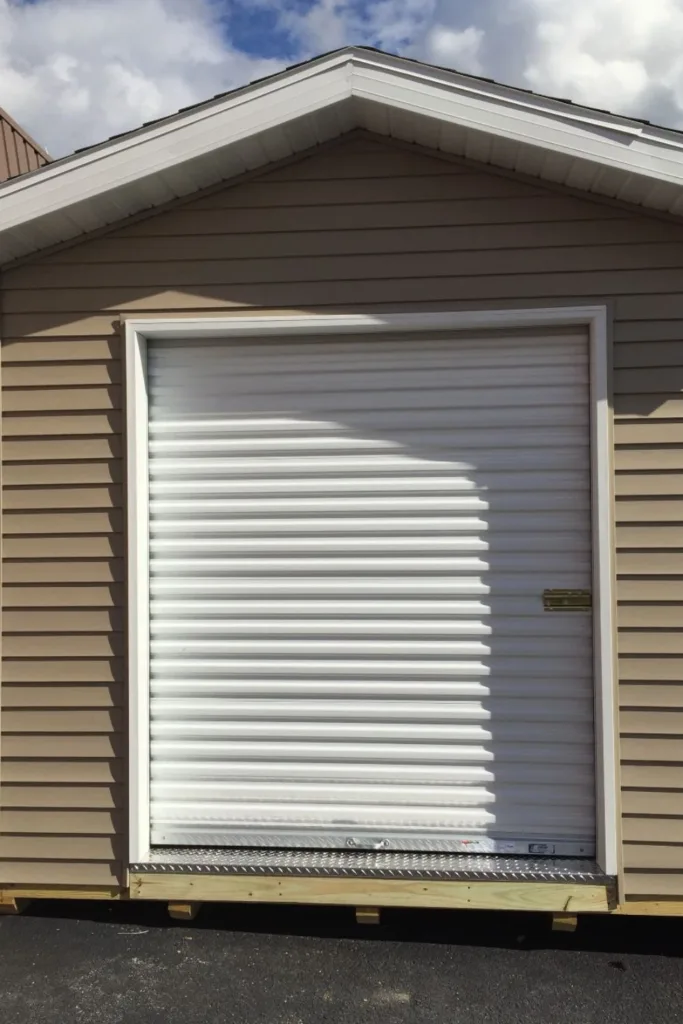
22. Low Utility Shed
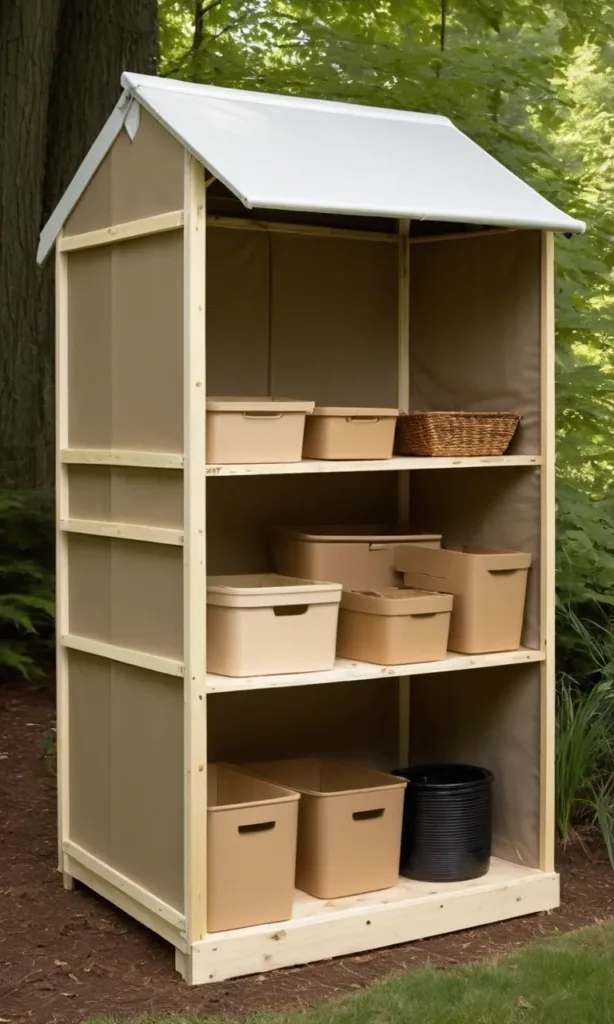
A low utility shed is a practical choice for storing toys and outdoor equipment in a compact, unobtrusive structure. Its reduced height can help it sit discreetly along a fence or beside a garden without dominating the landscape.
Use the interior for items such as balls, toy trucks, gardening play sets, and outdoor games. Adjustable shelving or stackable bins can make the most of the available space, while hooks may provide a convenient place for lightweight accessories.
Before choosing a shed, measure the largest items you intend to store and confirm that the door opening will accommodate them. A low roof can limit vertical storage, so prioritize equipment that fits comfortably rather than forcing bulky objects inside.
Select weather-resistant construction, provide a level base, and secure the shed according to the manufacturer’s recommendations. Keep the interior dry and ventilated, and avoid storing hazardous products alongside children’s toys. A well-organized utility shed can serve as a dedicated play-equipment station while keeping the rest of the backyard clear.
Final Thoughts
The best outdoor toy storage system is one that suits your space, protects your belongings, and makes cleanup simple enough to become part of the daily routine. From hanging baskets and mesh crates to deck boxes and compact sheds, there are options for almost every backyard and budget.
Start by sorting toys into categories, removing broken or unused items, and deciding which accessories need ventilation or protection from rain. Then choose a few storage solutions that are easy to reach and maintain. With clearly defined places for everything, your outdoor area can stay organized and ready for the next round of fun.



One Comment