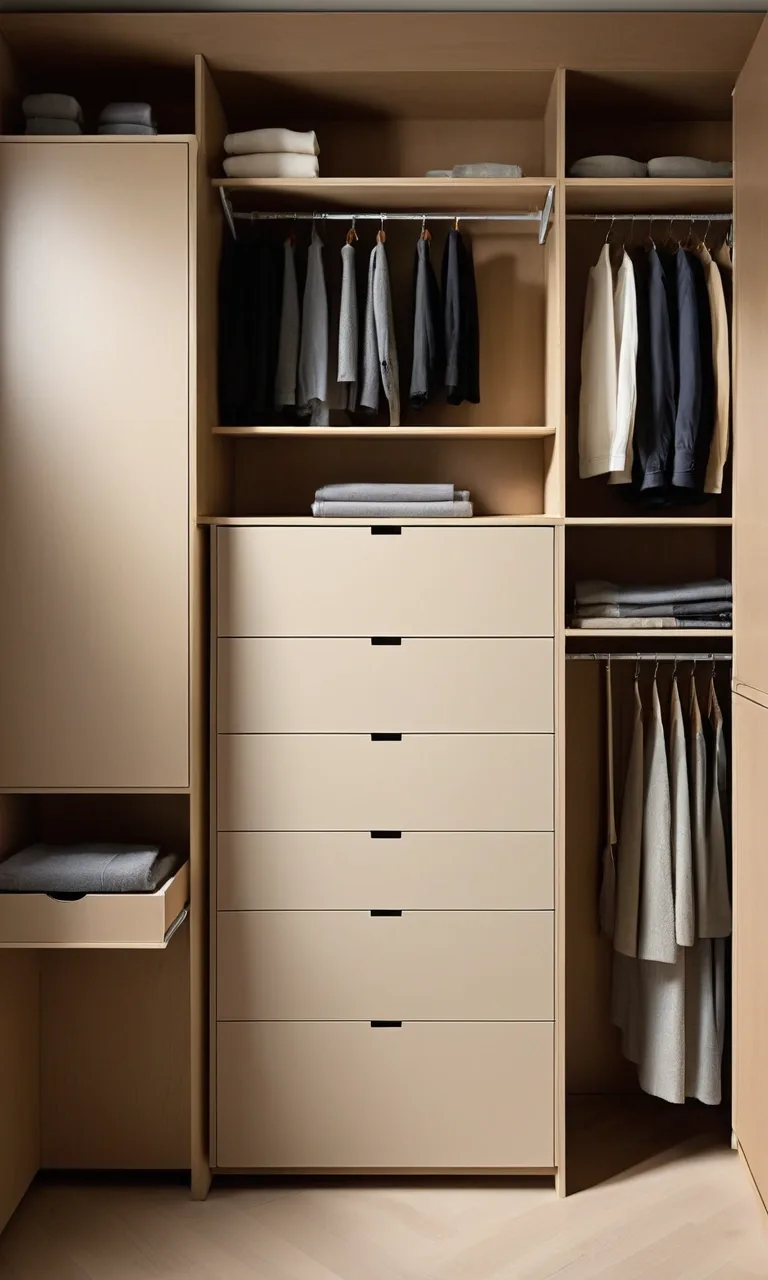
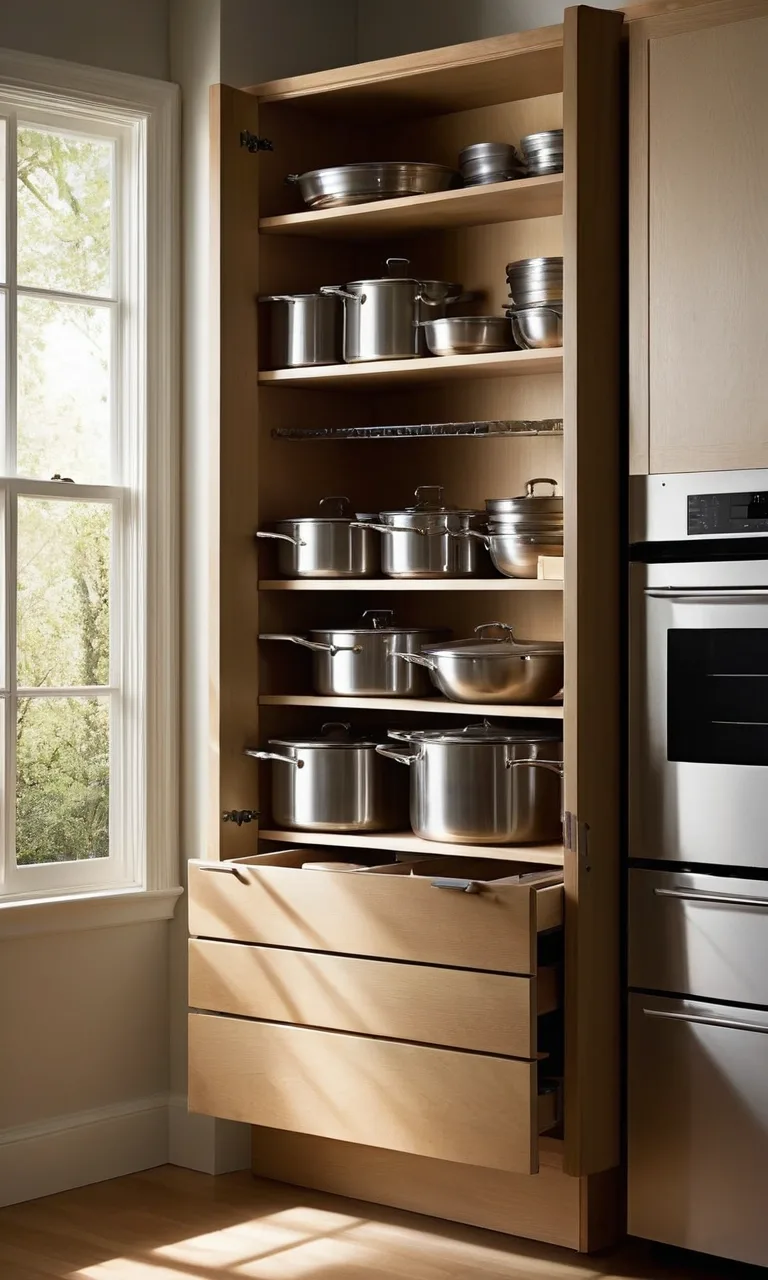
20 Baby Bottle Organization Ideas for 2026
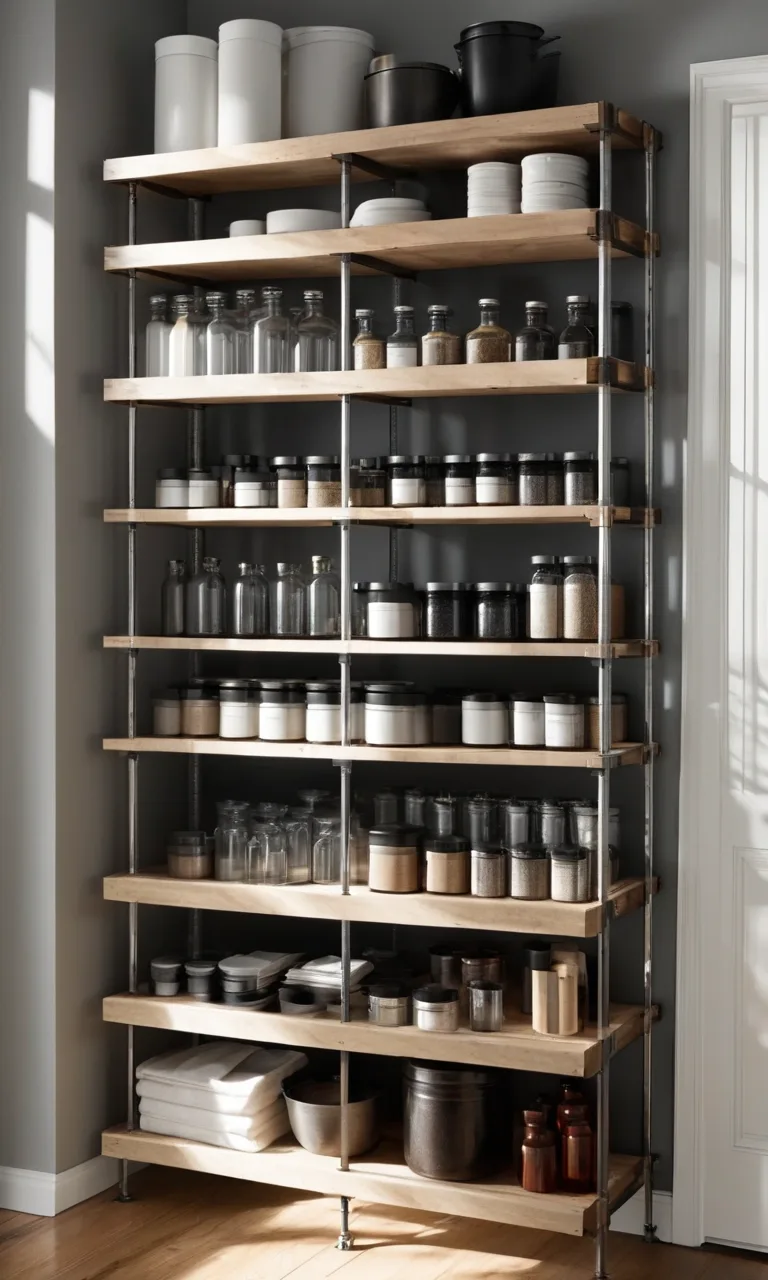
Keeping baby bottles organized can make everyday feeding routines much easier, especially when you're managing frequent washes, nighttime feedings, and a growing collection of bottle accessories.
Without a proper storage system, bottles, nipples, caps, and cleaning supplies can quickly take over kitchen counters and drawers. Fortunately, you don't need a large nursery or expensive organizers to keep everything under control.
These 20 baby bottle organization ideas offer practical ways to create a cleaner, more convenient feeding setup. Whether you're working with limited cabinet space or need a dedicated bottle station, you'll find solutions that fit your home and daily routine.
Where Should I Store Baby Bottles for Quick Nighttime Access?
The most convenient place to keep baby bottles for nighttime feeding is somewhere close to your usual feeding area. A bedside organizer, nursery shelf, or small rolling cart can help you access essential supplies without searching through the kitchen.
Keep a few clean, dry, empty bottles in a covered container, along with their matching nipples and caps. If you use formula, a separate compartment for unopened supplies and clean measuring accessories can make preparation more convenient.
Prepared formula and expressed breast milk require proper temperature-controlled storage. Keep them refrigerated according to safe storage guidelines rather than leaving filled bottles beside your bed overnight.
A well-planned nighttime feeding area should be simple, uncluttered, and easy to maintain. The goal is to have everything you need within reach while keeping feeding equipment clean and safely stored.
1. Rolling Bottle Station
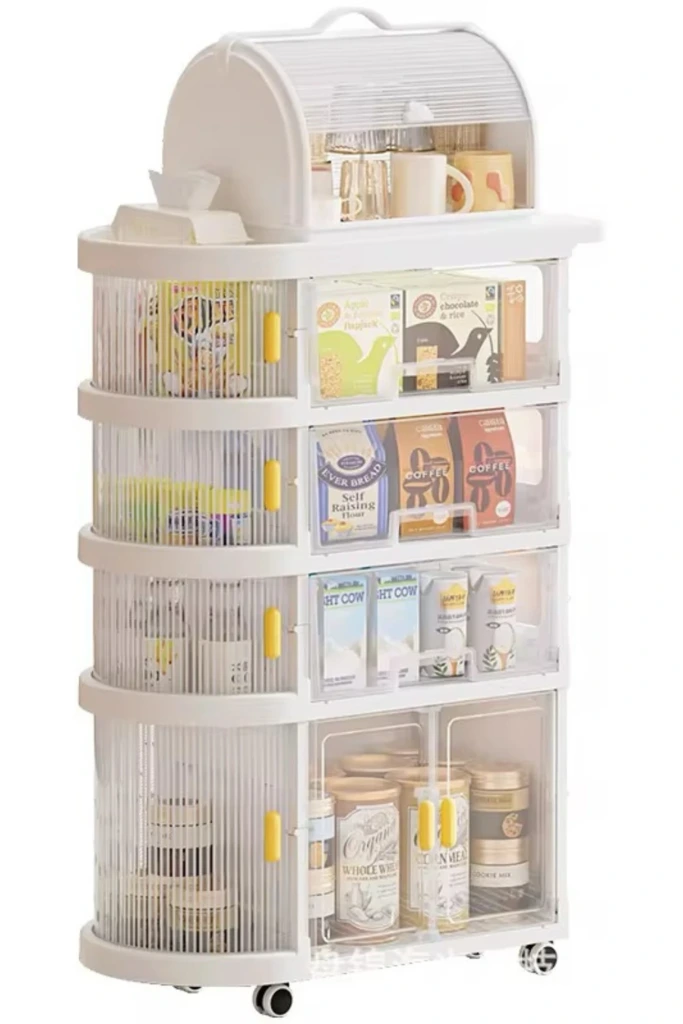
A rolling utility cart is an excellent solution for families who prepare bottles in different areas of the home. Its movable design allows you to keep feeding essentials together and reposition them whenever necessary.
Choose a cart with two or three shelves and enough space for bottles, clean accessories, and burp cloths. Use the upper shelf for frequently needed items, while the lower shelves can accommodate extra supplies and storage containers.
Small removable bins help prevent bottle nipples, rings, and caps from getting mixed together.
Position the cart somewhere stable and away from curious toddlers. With a little organization, a basic rolling cart can become a convenient feeding station without requiring permanent storage changes.
2. Countertop Prep Hub
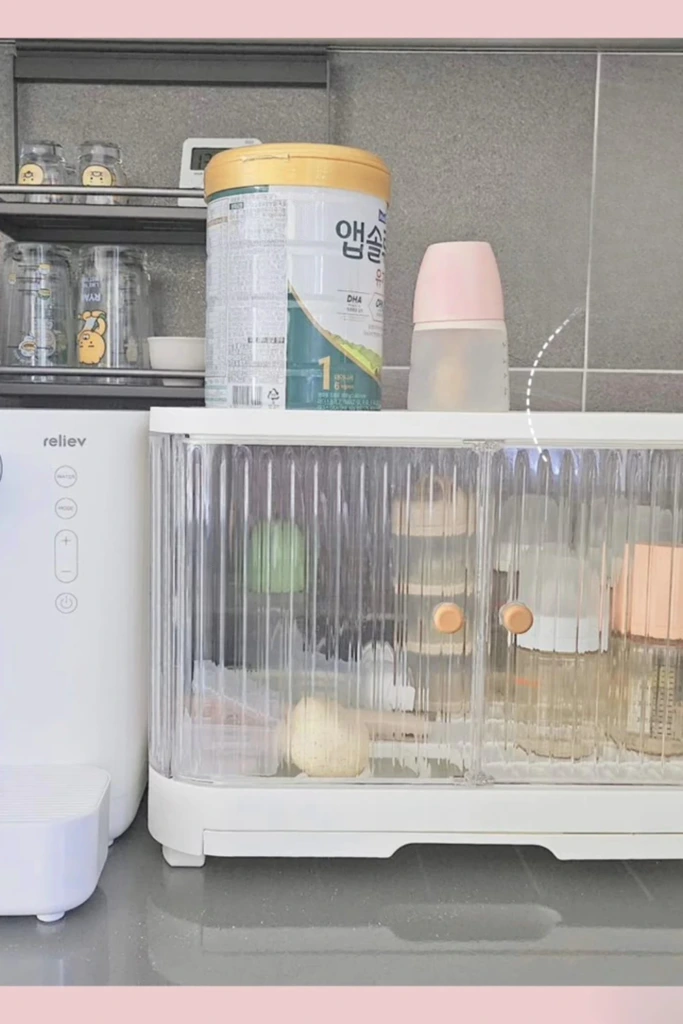
Creating a dedicated bottle preparation area on your kitchen counter helps establish a more efficient feeding routine.
Choose a section of the counter near a clean water source and keep the necessary equipment together. A compact organizer can hold dry bottles, clean caps, and other feeding accessories.
Place your bottle warmer or formula preparation equipment nearby if you use one, following its manufacturer's safety instructions.
Avoid overcrowding the space with unnecessary products. A washable tray underneath your supplies can also help contain minor spills and make cleaning easier.
This arrangement works particularly well for parents who prefer preparing all feeds in the kitchen.
3. Drying Cart Corner
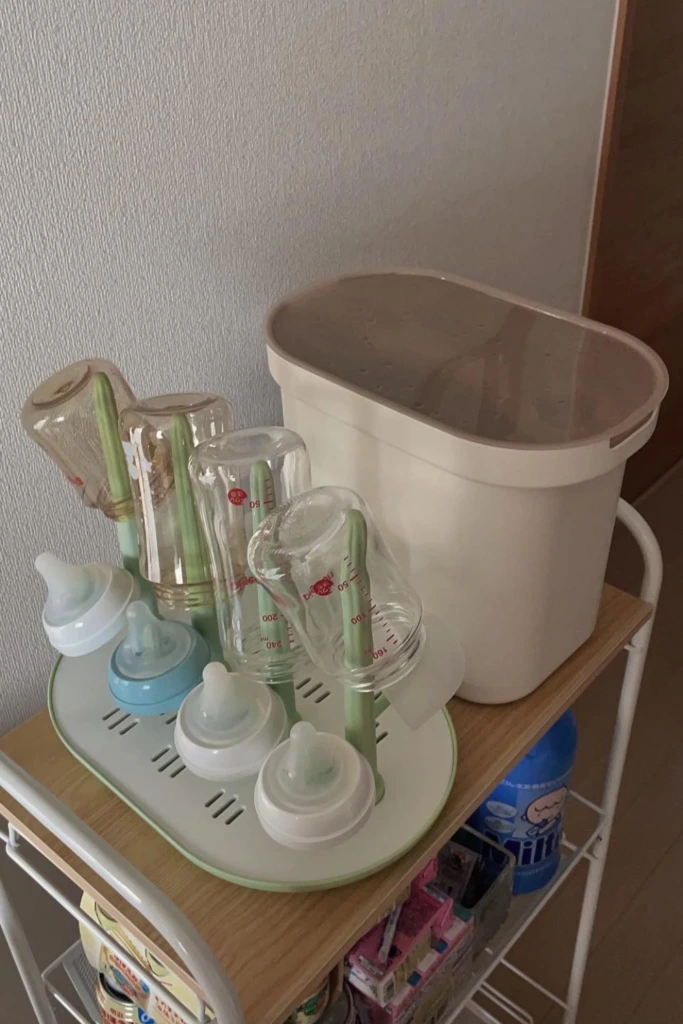
A dedicated drying cart provides additional space for freshly washed baby bottles without occupying your main kitchen counters.
Place a bottle drying rack on the upper surface and use the remaining shelves for clean storage containers, spare bottle parts, and washing supplies.
The drying area should have good airflow, allowing bottles and accessories to dry thoroughly before storage. Keep wet items separate from clean, dry equipment to reduce the chance of contamination.
Choose a location away from cooking splashes, household chemicals, and heavy foot traffic.
This setup is especially helpful in smaller kitchens where permanent counter space is limited.
4. Drawer-Style Organizer
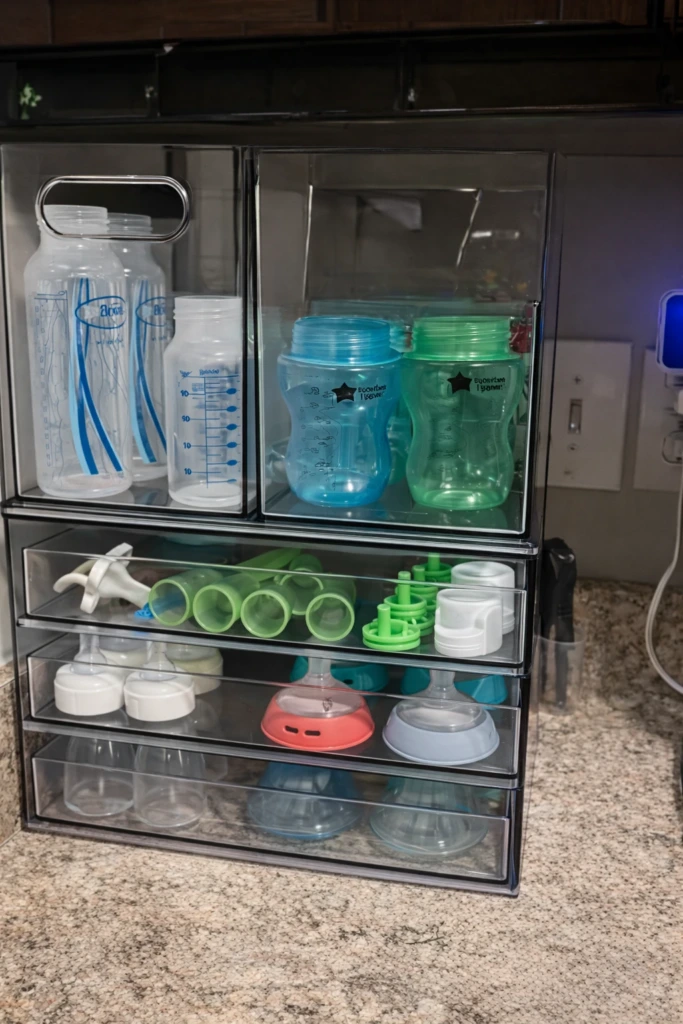
A drawer-style organizer offers a tidy way to store different baby bottle components in separate compartments.
Choose a unit with drawers deep enough for your bottles and smaller sections for nipples, collars, sealing discs, and caps.
Assign each drawer a specific purpose so that every item has a predictable storage location. Transparent drawers are particularly useful because you can identify their contents without opening each one.
Make sure bottles and accessories are completely dry before placing them inside.
This method keeps smaller components from disappearing into larger cabinets and makes it easier to maintain an organized feeding area.
5. Vertical Wall Rack
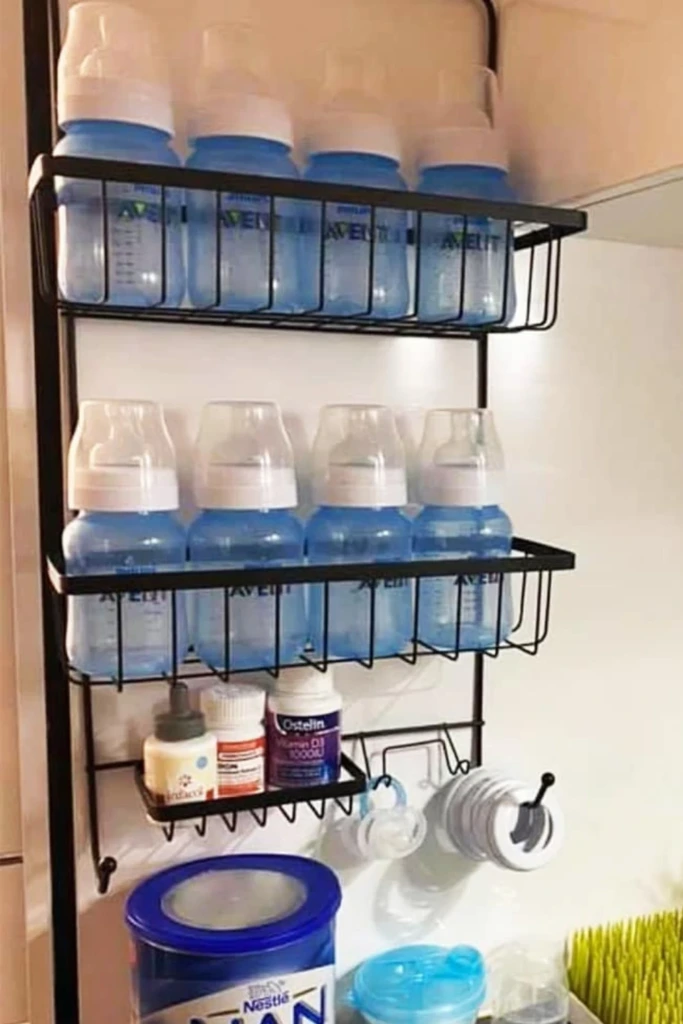
When counter space is limited, wall-mounted storage can provide a practical alternative.
A sturdy vertical rack can hold clean, dry baby bottles, lightweight containers, and selected feeding accessories without taking up valuable worktop space.
Install the rack securely and choose a position that is easy for adults to reach but inaccessible to young children.
Consider adding small baskets or holders for bottle caps and other lightweight pieces. Avoid placing heavy appliances or fragile containers on racks that aren't designed to support them.
Vertical storage works particularly well in compact kitchens, where making use of unused wall space can noticeably improve organization.
6. Clear Stack Bins
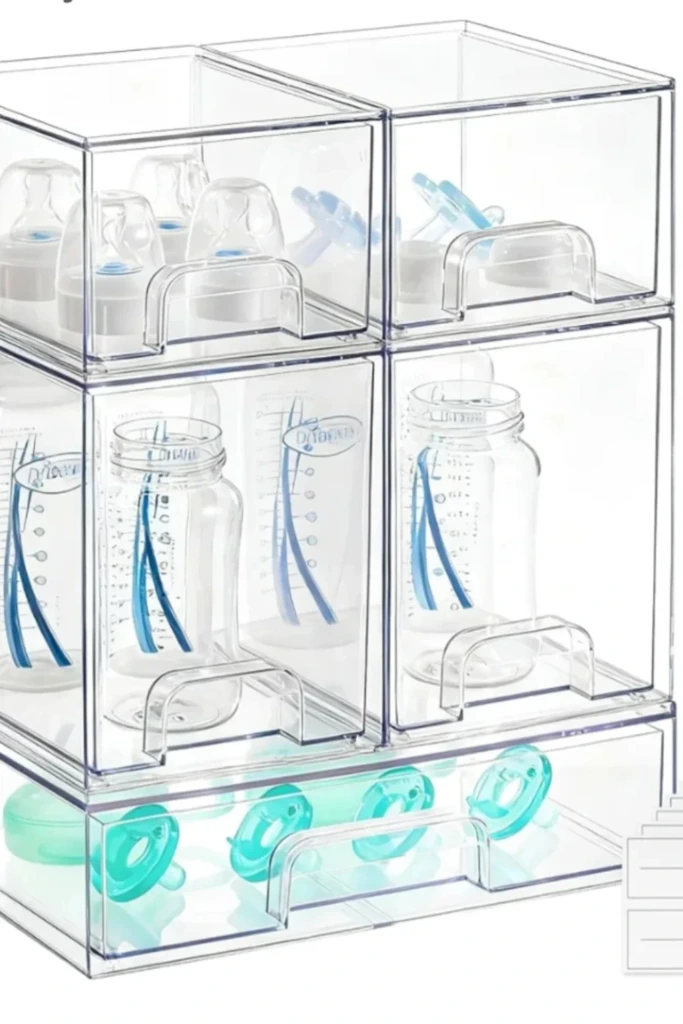
Clear stackable bins make it easier to organize baby bottle supplies inside cabinets or on pantry shelves.
Use larger containers for bottles and smaller ones for nipples, caps, and replacement parts. Transparent sides let you identify what you need without pulling out every container.
Choose bins with flat, stable bases that stack securely. If you frequently access the lower containers, consider designs with front openings or removable drawers.
Adding simple labels can make the system even more efficient, especially when several family members help with feeding.
Keep the bins clean and store only thoroughly dried equipment inside closed containers.
7. Minimal Drying Rack
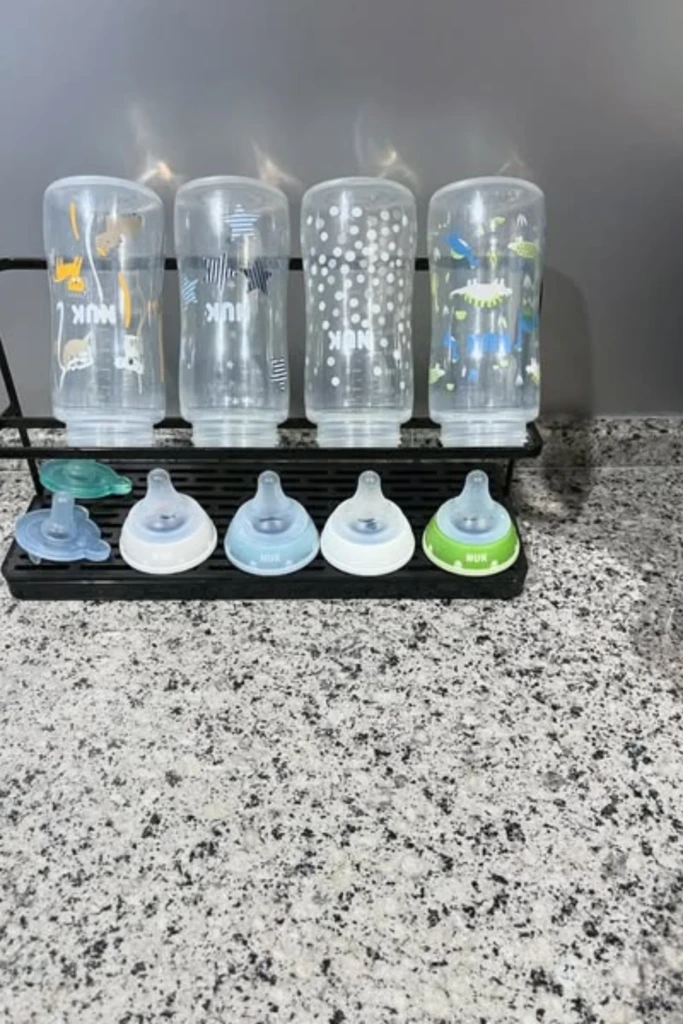
A compact drying rack is ideal for parents who want to keep their bottle-cleaning setup simple.
Look for a rack designed specifically for baby feeding equipment, with enough space to separate bottles from nipples and smaller accessories.
Position it on a clean surface where water can drain properly. Avoid placing freshly washed components directly onto dish towels that may remain damp.
Allow everything to air-dry thoroughly before transferring it to storage. Avoid rubbing bottle interiors with a kitchen towel, which can introduce germs.
A small rack also encourages you to wash and put away bottles regularly rather than allowing large piles to accumulate.
8. Compact Drawer Tower
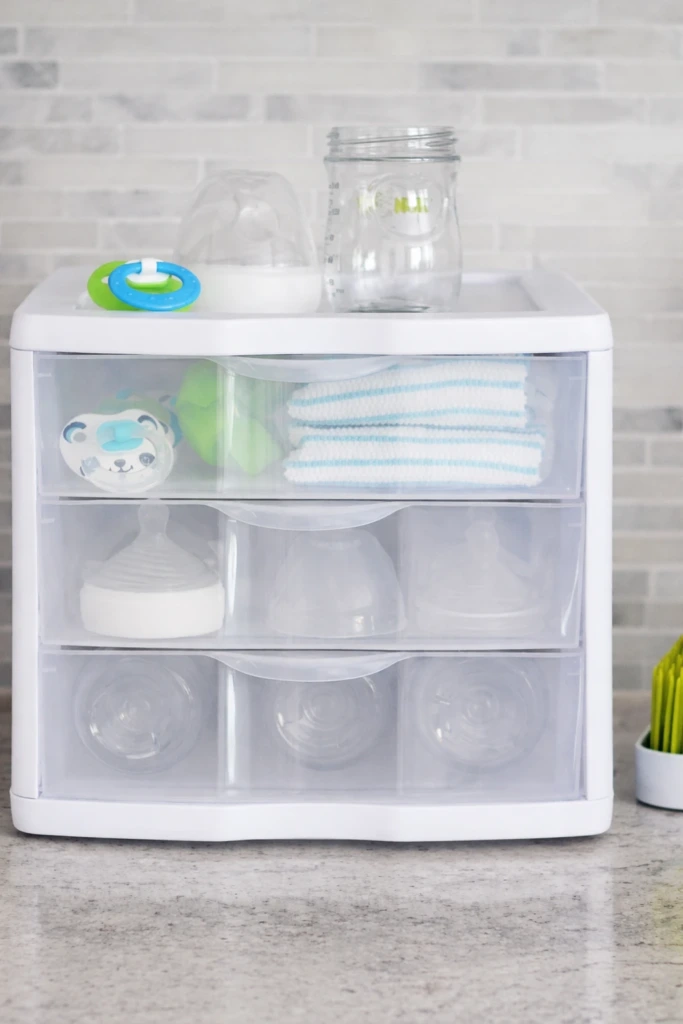
A narrow drawer tower can provide useful storage in kitchens where cabinets are already full.
Choose a countertop model with several shallow compartments for small bottle accessories and deeper sections for larger items.
You might dedicate one drawer to clean nipples, another to bottle caps, and a third to extra feeding supplies.
Keeping components sorted by type makes it easier to find matching pieces, particularly when you own bottles from multiple brands.
Select a stable organizer made from materials that are easy to wipe clean. A compact tower can keep supplies accessible while maintaining a neat countertop appearance.
9. Full Bottle Station
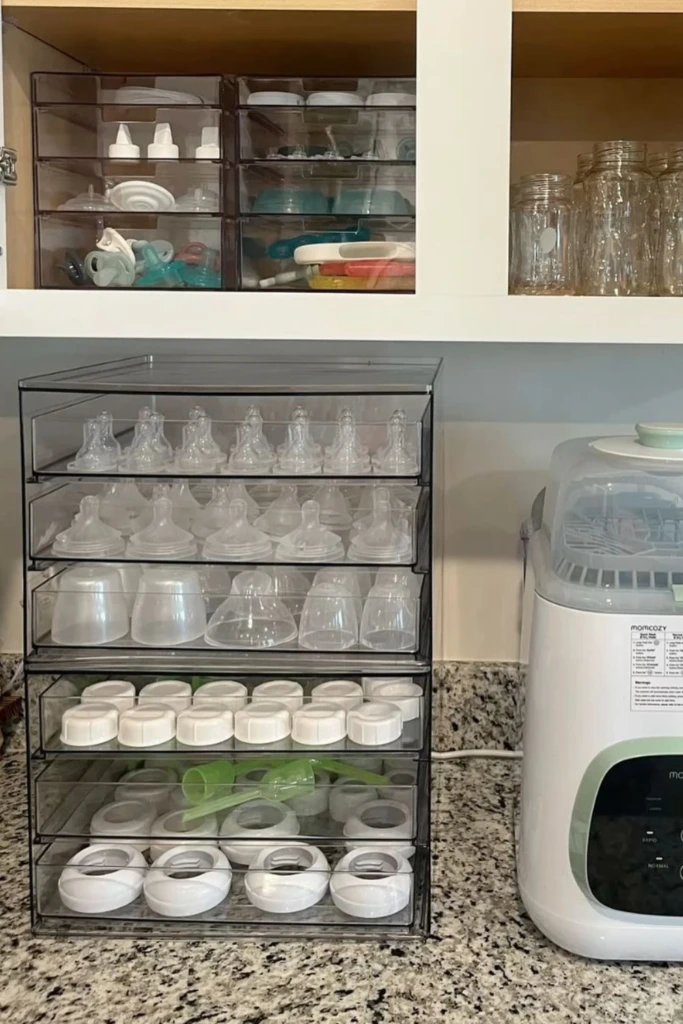
A complete baby bottle station brings washing, drying, preparation, and storage into one organized area.
Start by choosing a kitchen counter or cabinet section with enough room for your essential equipment. Add a drying rack, clean bottle storage, and compartments for frequently used accessories.
If you use formula, reserve a dry space for its container and preparation supplies. Keep cleaning products away from anything used to prepare feeds.
Arrange items according to how often you use them, placing everyday supplies within easy reach and backups in higher or lower storage areas.
A dedicated station can reduce unnecessary movement around the kitchen and make daily bottle preparation more consistent.
10. Labeled Dual Cabinets
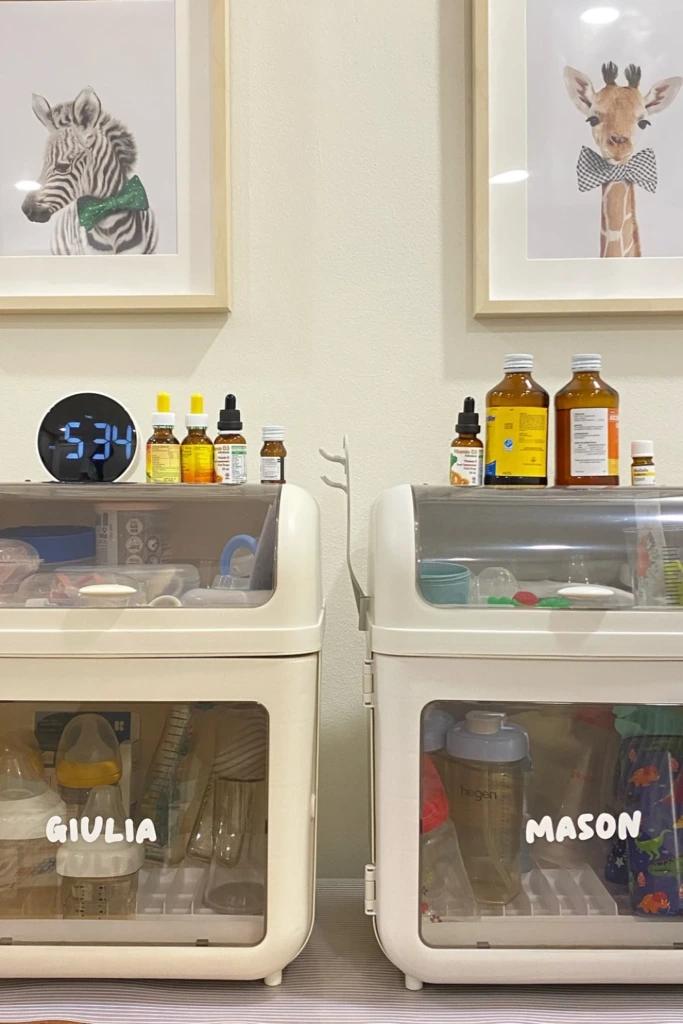
Separate storage cabinets are especially useful for families with twins or children who use different bottles and feeding accessories.
Assign one cabinet or clearly marked section to each child. Use labels to identify bottle sizes, nipple types, and any specialized feeding equipment.
This arrangement helps prevent accidental mix-ups and makes it easier for caregivers to follow each child's feeding routine.
Choose enclosed cabinets that protect clean, dry supplies from dust while remaining easy to access.
You can also use contrasting labels or colored storage bins to distinguish each child's equipment without relying on memory.
11. Cabinet Side Stack
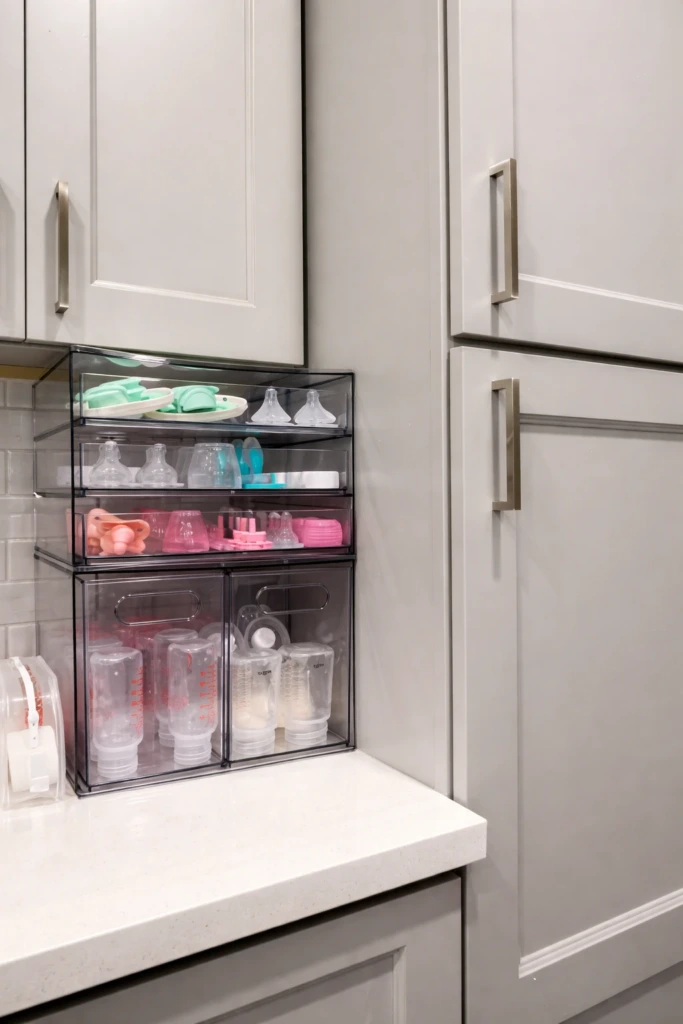
The narrow space beside a kitchen cabinet can sometimes accommodate a slim storage organizer.
A vertical stack of small bins or shelves can hold bottles, clean accessories, and extra feeding supplies without interfering with the main preparation area.
Measure the available space before purchasing an organizer, and choose one that fits securely without blocking cabinet doors or walkways.
Keep heavier items on lower shelves and lightweight accessories toward the top.
This approach is particularly effective in small kitchens where conventional cabinets are already packed with cookware and food storage containers.
12. Flow-Labeled Shelf
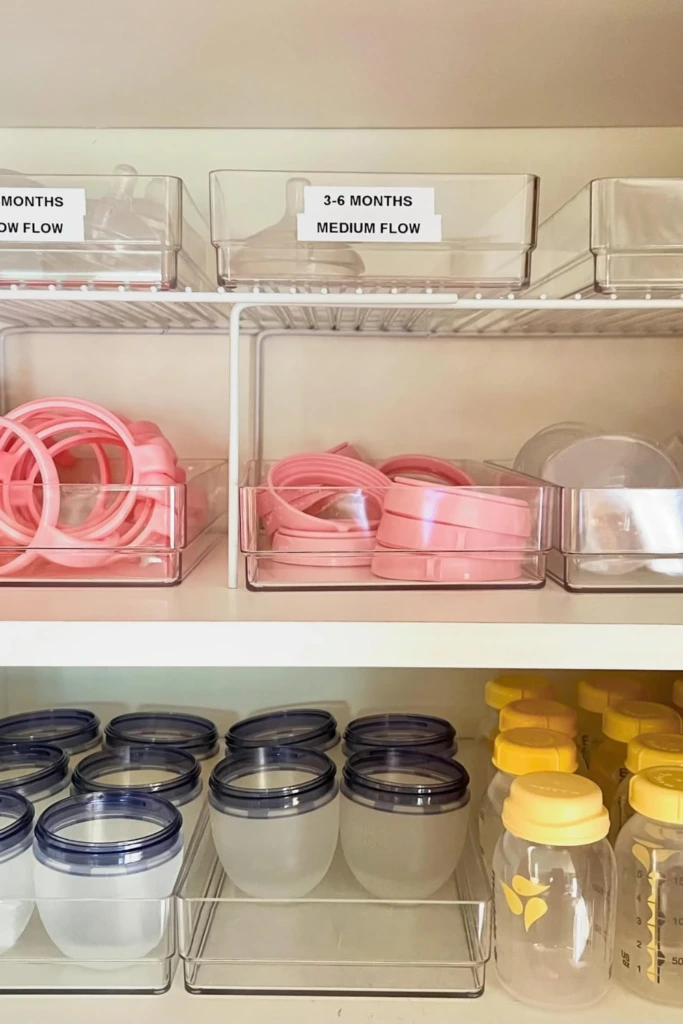
As babies grow, their feeding needs may change, and families sometimes accumulate nipples with different flow rates.
A labeled shelf helps keep these options organized and prevents different nipple types from becoming mixed together.
Use individual containers for each flow category and label them according to the manufacturer's markings. Store matching bottle components nearby to simplify assembly.
Check nipples regularly for wear, damage, or changes in condition, and replace them according to the manufacturer's recommendations.
Remember that nipple flow should be selected based on your baby's feeding abilities and needs, rather than age labels alone.
13. Labeled Cabinet Zones
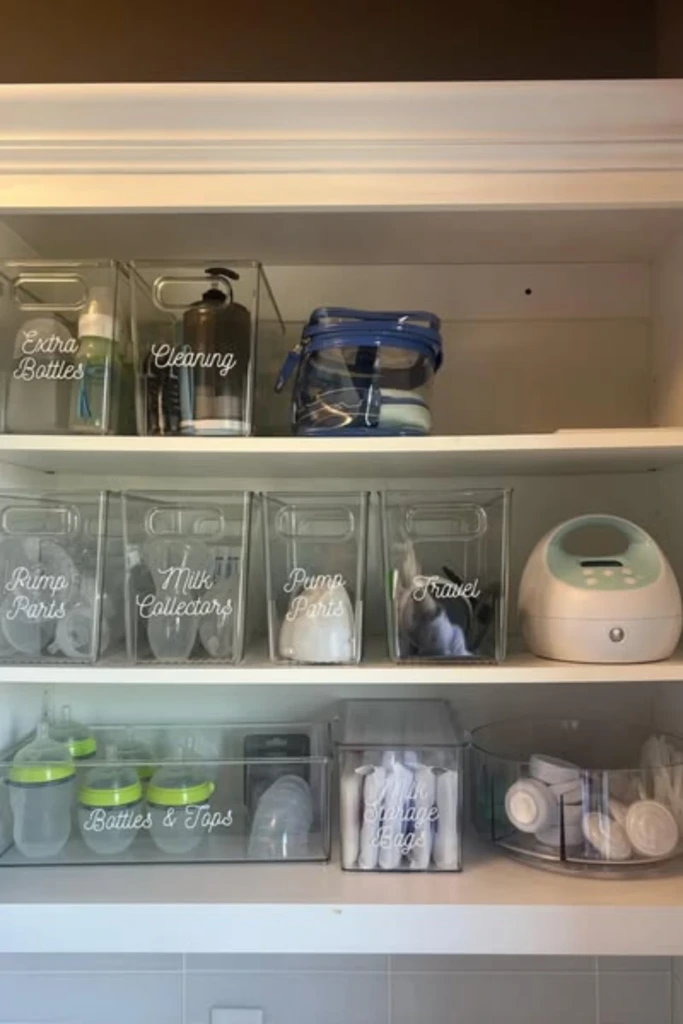
Dividing a kitchen cabinet into clearly defined storage zones is a simple way to manage baby feeding supplies.
Instead of placing everything together, create separate areas for bottles, nipples, pumping equipment, milk storage accessories, and spare parts.
Use removable bins to keep categories separated and add labels that are easy to read.
Position frequently used items on accessible shelves and store occasional-use supplies farther back.
This system also makes it easier to recognize when you're running low on clean bottles or replacement components.
A few inexpensive containers can transform an ordinary cabinet into a practical feeding supply organizer.
14. Covered Counter Case
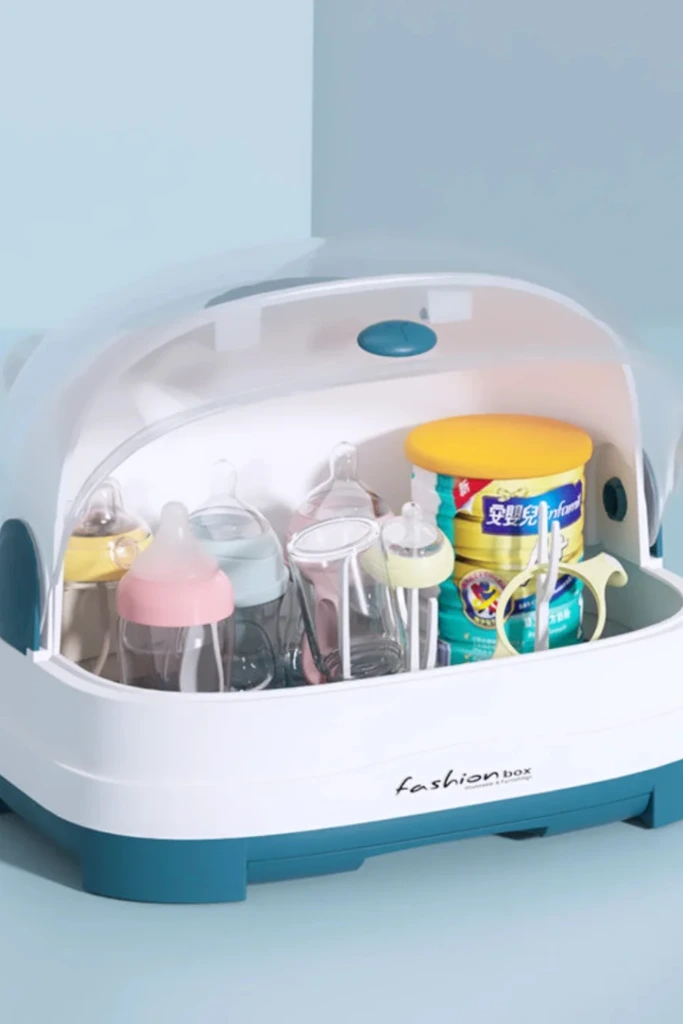
A covered countertop storage case offers a convenient place to keep clean baby bottles protected between uses.
Choose a food-safe container with enough room for bottles to stand without being tightly packed together.
Make sure every component is completely dry before closing the lid, since trapped moisture can encourage microbial growth.
Transparent cases are helpful because you can see how many clean bottles remain without opening the container.
Place the case away from cooking areas, sinks, and other locations where splashes or contamination are likely.
This option is particularly useful for families who want easy access to bottles without leaving them exposed on open shelves.
15. Open Air Rack
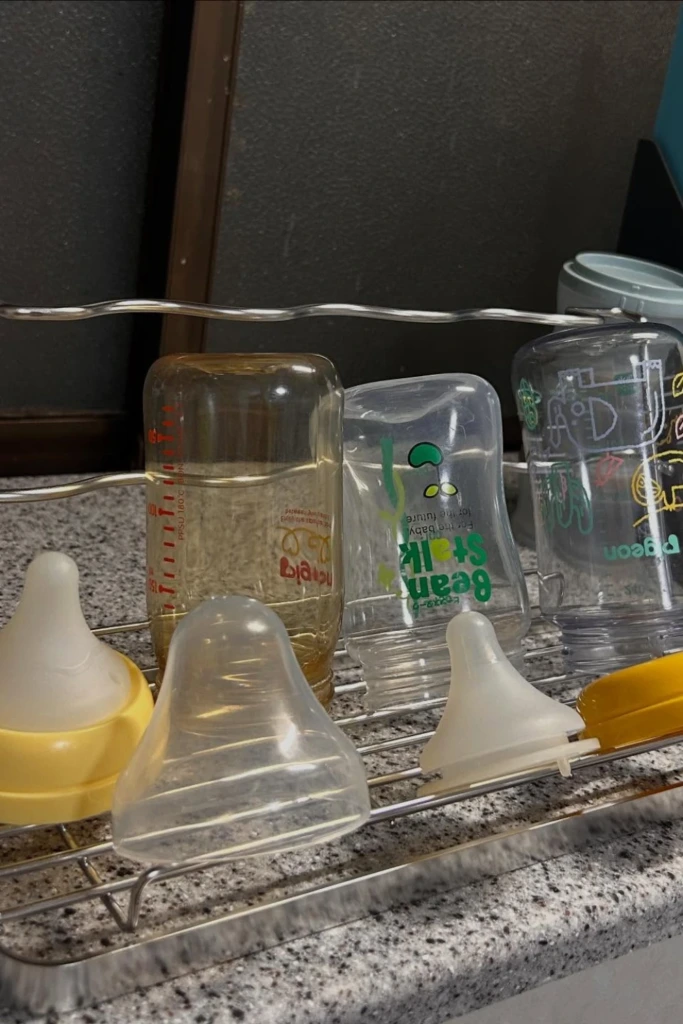
An open-air bottle rack provides a straightforward way to dry freshly washed feeding equipment.
Choose a design with individual supports that allow air to circulate around bottles, nipples, and other components.
Place it in a clean, well-ventilated area away from food preparation messes and dirty dishes.
Avoid stacking wet accessories together, as this can slow drying and leave moisture trapped between pieces.
Once everything is dry, transfer the bottles to a clean, protected storage area if they won't be used immediately.
An open rack is affordable, easy to maintain, and suitable for families who prefer a minimal organization system.
16. Nursery Drying Tray
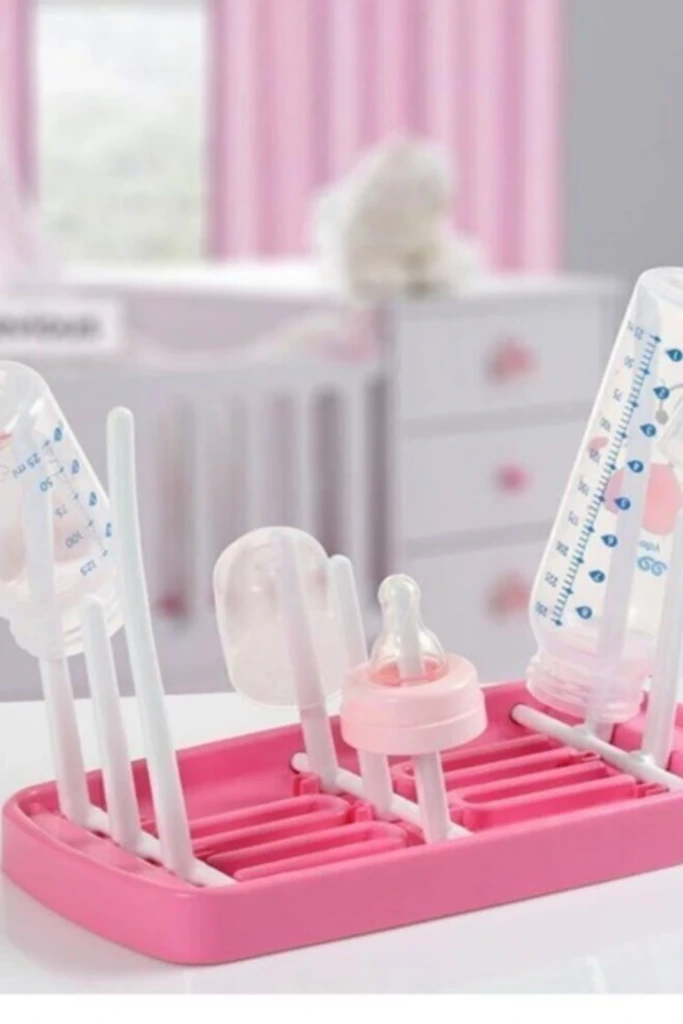
A small nursery tray can serve as an organized holding area for clean, dry feeding supplies, particularly in homes where the nursery is separate from the kitchen.
Choose a washable tray with raised edges and place it on a stable shelf or dresser away from the baby's reach.
If you need to dry freshly washed bottles, use a dedicated drying rack in a clean, well-ventilated location rather than placing wet parts directly onto a solid tray.
Bottle washing should still take place in an appropriate clean washing area using safe cleaning practices.
This arrangement can help keep nursery feeding essentials organized without creating unnecessary clutter around the changing or sleeping area.
17. Grab-and-Go Basket
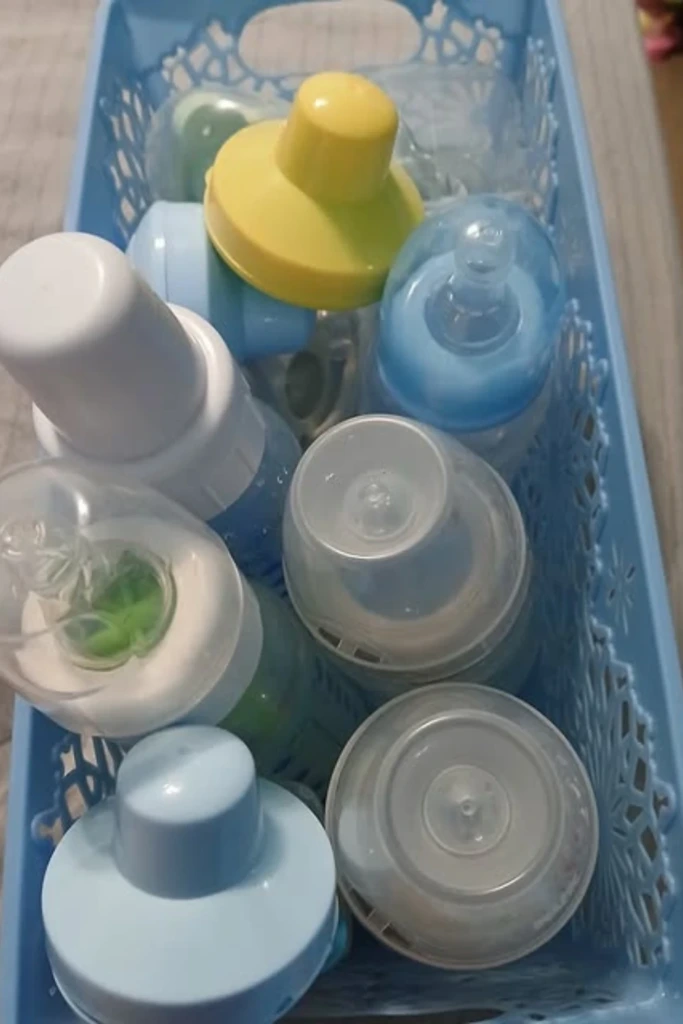
A portable basket makes it easy to carry clean baby bottles and feeding accessories from one room to another.
Choose a lightweight basket with comfortable handles and enough space for the bottles you regularly use.
Keep clean, dry, empty bottles together with their matching caps. A separate small container can hold spare nipples and other accessories.
Avoid mixing used bottles with clean equipment inside the same basket.
A basket is especially useful for families who feed their baby in several locations throughout the day and want a simple storage solution that requires minimal setup.
18. Portable Bottle Box
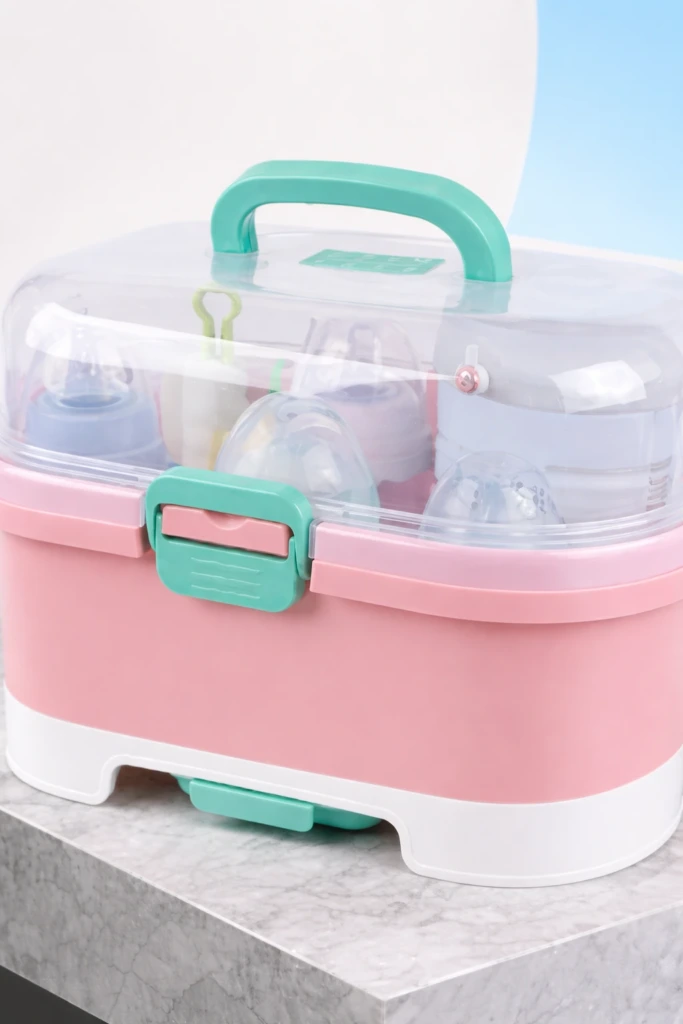
A portable bottle box offers more enclosed storage than an open basket, making it useful for travel and moving feeding supplies around the house.
Look for a sturdy, easy-to-clean container with a secure lid and internal compartments.
Store clean, dry bottles in the main section and place smaller accessories in separate compartments to prevent them from getting lost.
For outings, remember that a regular storage box does not keep milk or prepared formula at a safe temperature. Use an appropriate insulated cooler with ice packs when refrigeration is required.
A well-organized portable box can make outings easier by keeping essential feeding equipment together.
19. Simple Shelf System
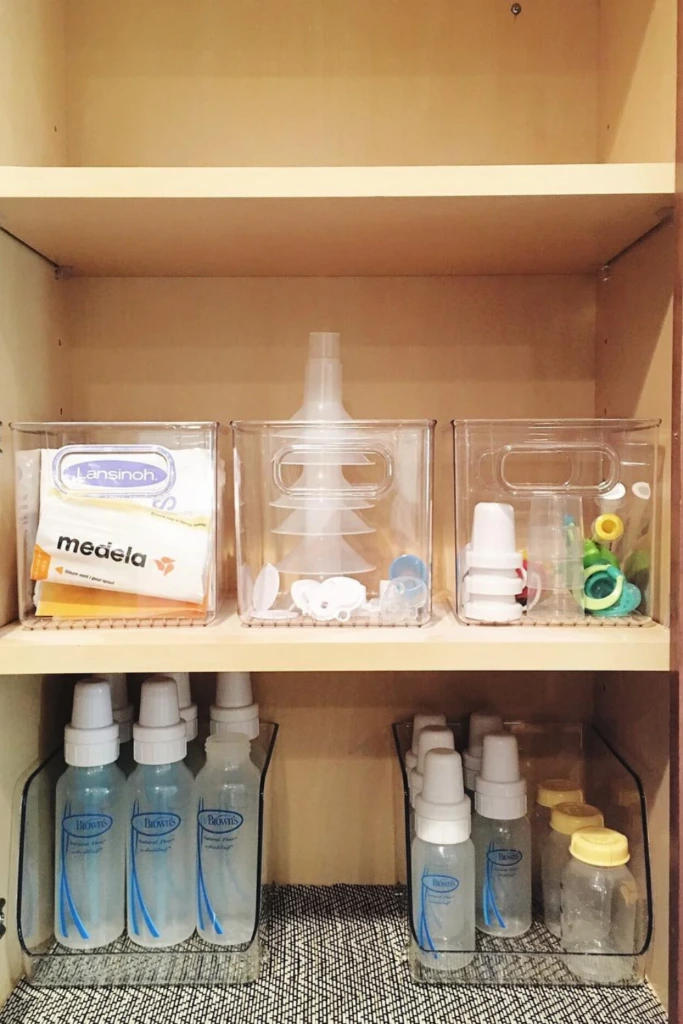
You don't need specialized furniture to create effective baby bottle storage. An ordinary cabinet shelf can work just as well with a few appropriately sized organizers.
Use shallow bins for small components and larger containers for bottles and pumping equipment.
Arrange items by category and keep everyday essentials toward the front of the shelf.
Adding a washable shelf liner can make cleaning easier and help prevent containers from sliding.
Avoid filling every available inch of space. Leaving a little room between containers makes it easier to remove items without disturbing the rest of the shelf.
This budget-friendly approach is suitable for almost any kitchen layout.
20. Organized Prep Drawer
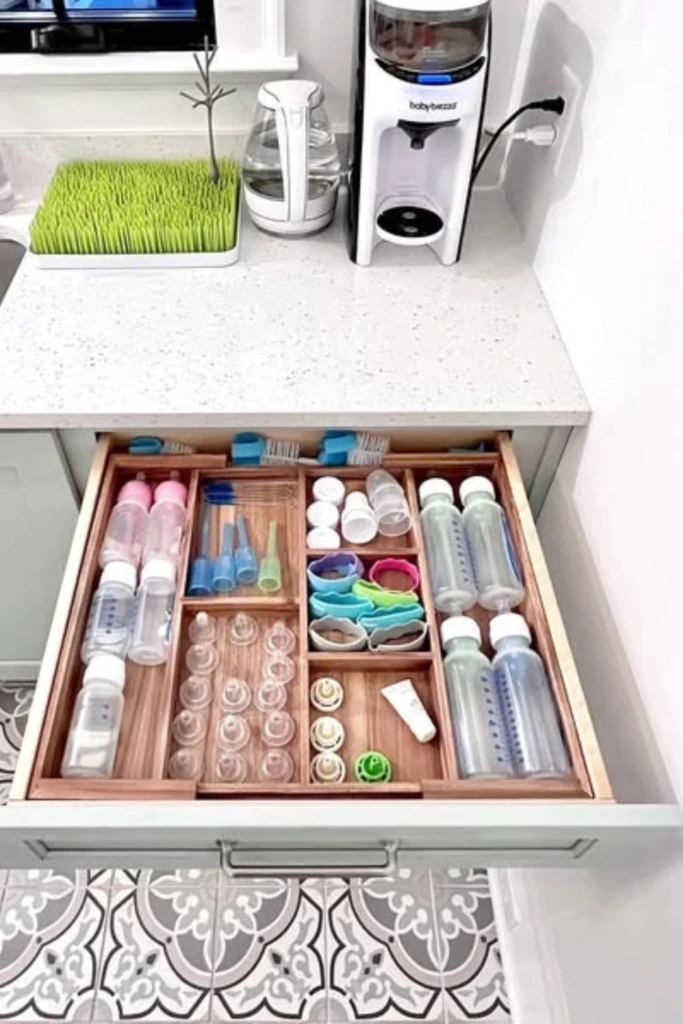
A dedicated preparation drawer keeps bottle accessories neatly stored beneath your main feeding area.
Use adjustable dividers to create individual sections for nipples, rings, caps, measuring accessories, and other small supplies.
If the drawer is deep enough, you can also store clean bottles upright in a suitable organizer that prevents them from tipping over.
Keep the drawer dry and clean, and avoid storing feeding equipment alongside household chemicals or unrelated kitchen items.
A drawer-based system is particularly helpful for maintaining clear countertops while ensuring frequently used accessories remain easy to find.
How many bottles should you keep ready for night feeds?
The number depends on your baby's age, feeding frequency, and how often you prefer washing bottles.
For many families, keeping two or three clean, dry, empty bottles available is a convenient starting point. Babies who feed more frequently may require additional bottles.
Prepare each feed using safe handling practices. Refrigerate prepared formula promptly if it won't be used immediately, and follow recommended storage limits for formula and expressed breast milk.
Keeping a manageable number of bottles in rotation also makes cleaning and organization easier.
Can you store clean bottles in the bedroom safely?
Yes, clean baby bottles can be stored in a bedroom as long as they have been properly washed, thoroughly dried, and protected from contamination.
A clean, covered container or enclosed drawer is generally a practical option. Keep bottles away from dusty surfaces, pets, and areas where they might be knocked over.
Empty bottles and prepared milk should be treated differently. Expressed breast milk and prepared formula need to be stored according to their specific food-safety requirements.
For the most reliable routine, keep empty feeding equipment organized near your feeding area while storing milk safely until it's needed.
A good baby bottle organization system doesn't have to be complicated or expensive. Whether you choose a rolling cart, clear storage bins, or a dedicated kitchen drawer, the most effective solution is one that fits your space, keeps clean equipment protected, and makes daily feeding routines easier to manage.