19 Headphone Storage Ideas for 2026
Headphones are easy to misplace, and leaving them on a desk or tossing them into a drawer can lead to tangled cords, scratched surfaces, and unnecessary clutter. A simple storage solution keeps your headphones protected, easy to find, and ready whenever you need them. Whether you own bulky over-ear headphones, wireless earbuds, or wired gaming headsets, these headphone storage ideas offer practical ways to organize your collection without sacrificing style or space.
What Is The Best Way To Organize Headphones At Home?
The best headphone storage method depends on the type of headphones you own, how frequently you use them, and how much room you have available. A dedicated stand works well for headphones you use every day, while a drawer organizer or protective case is better for keeping them out of sight. Wall-mounted options are especially useful when desk space is limited.
Start by grouping your headphones according to their purpose, such as work, gaming, exercise, and travel. Keep frequently used pairs within easy reach and store occasional-use pairs in labeled containers. For wired models, loosely coil the cable and secure it with a reusable strap. Wireless headphones should be stored away from moisture, excessive heat, and direct sunlight.
Choose a solution that protects the ear cushions, prevents unnecessary pressure on the headband, and makes putting your headphones away just as convenient as taking them out.
1. Wall Baskets
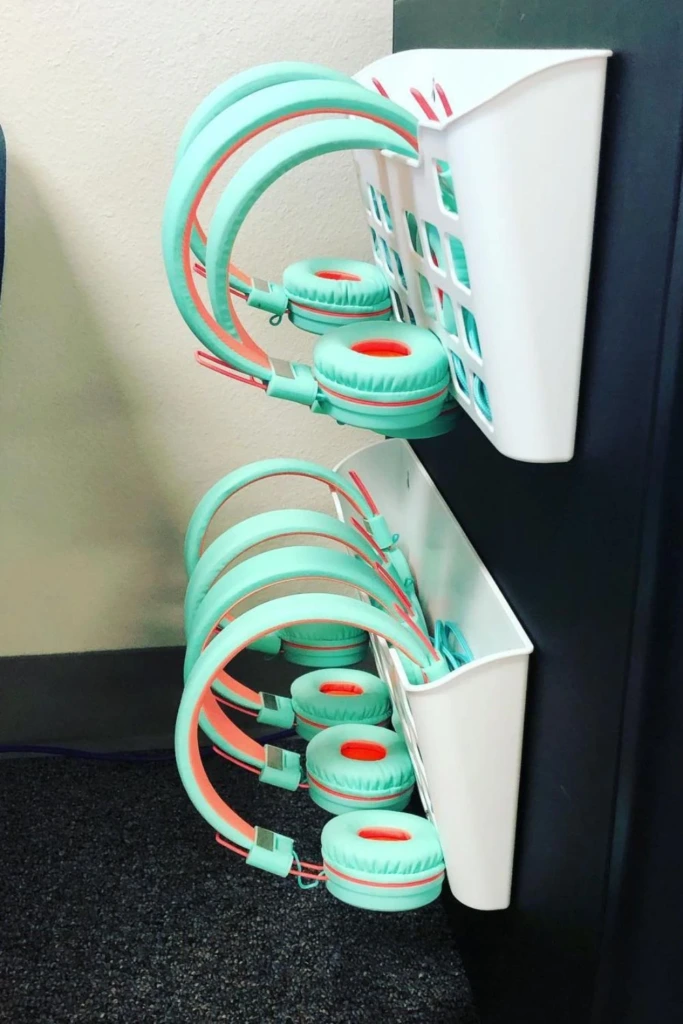
Wall baskets turn unused vertical space into convenient headphone storage. Mount a small wire basket or fabric organizer beside your desk, near your entertainment area, or close to your bedroom workstation. Depending on the basket's shape, it can hold several headphones along with charging cables, adapters, and other small accessories.
Choose a basket with smooth edges to prevent scratches, and make sure its openings are small enough to support the items you intend to store. A lined basket is particularly useful for protecting delicate finishes.
For a tidy appearance, assign a specific section to each headphone pair and use small cable ties to keep cords from becoming tangled. Before installation, confirm that the mounting hardware can safely support the basket and its contents.
2. Headphone Stand
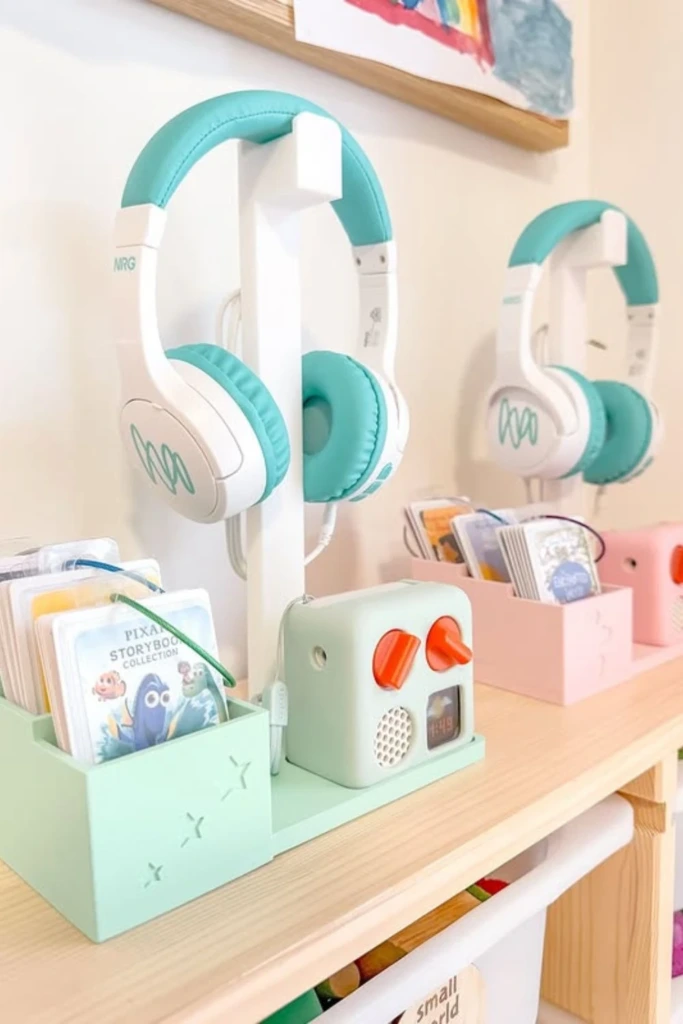
A headphone stand is a straightforward way to keep your favorite pair accessible while maintaining an organized desk. It lifts headphones off the work surface, giving you more room for your keyboard, notebook, and other everyday essentials.
Stands are available in plastic, metal, wood, and acrylic, so you can select one that complements your workspace. Some models include a weighted base for stability, while others feature USB ports or cable-management channels.
Look for a stand with a broad, smooth support that distributes pressure across the headband rather than concentrating it on one small point. Avoid designs with narrow edges that could leave marks or deform padded headbands over time. If you use a wireless headset, a stand with a separate charging feature may offer additional convenience, provided it is compatible with your model.
3. Pocket Organizer
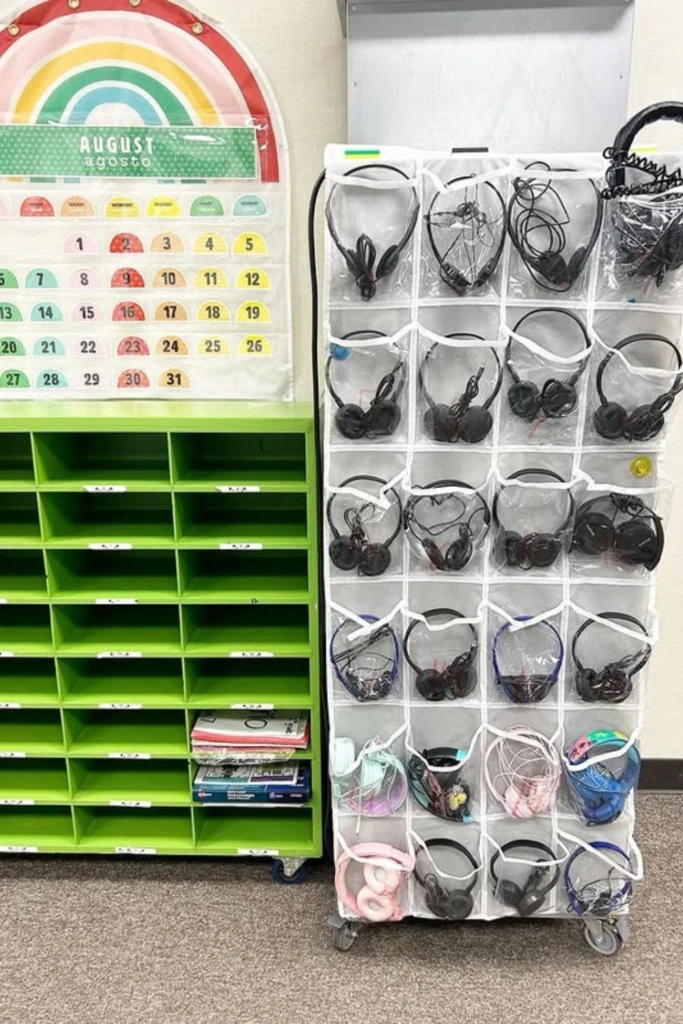
A pocket organizer offers compact storage for people who prefer keeping headphones and accessories together. Hanging organizers with multiple compartments can be attached to a closet rod, a door, or another suitable surface, depending on their design.
Give each headphone pair its own pocket to prevent ear cups from rubbing against one another. Smaller compartments can hold charging cables, adapters, earbuds, and replacement ear tips.
Transparent pockets make it easy to identify what you need without searching through every compartment. Fabric versions provide a softer storage environment, while reinforced pockets are useful for heavier headphones. Check the pocket dimensions before buying, especially if you have oversized gaming headsets.
This approach is particularly helpful in shared bedrooms, dorm rooms, and small home offices where keeping accessories together saves valuable space.
4. Bin Storage
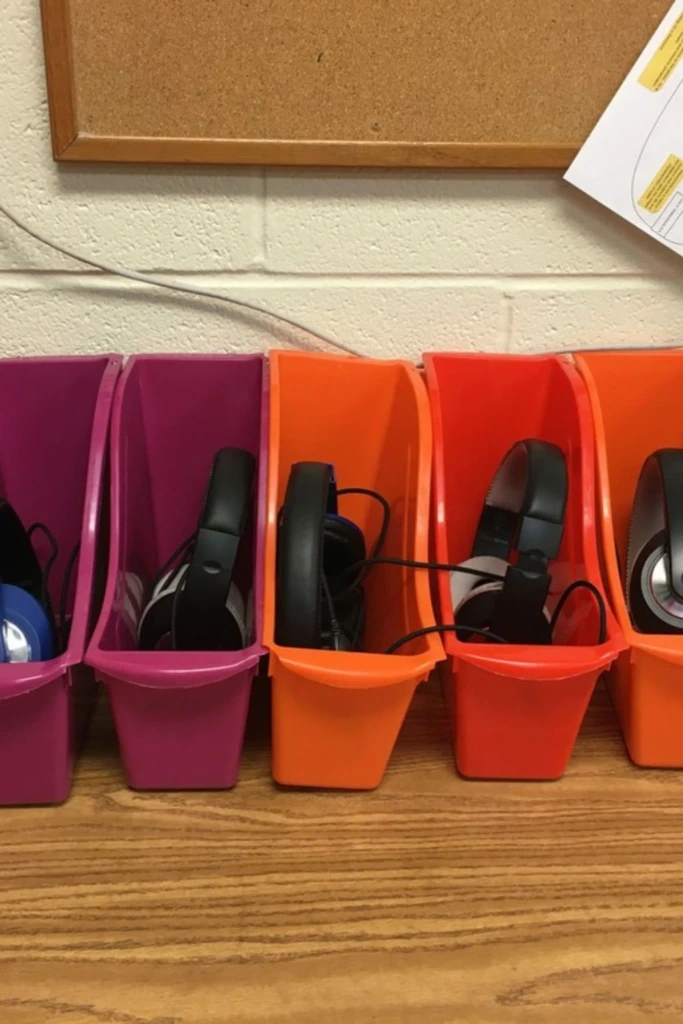
Storage bins are ideal for organizing multiple headphone pairs or accessories that do not need to remain on display. Place a few bins inside a desk drawer, on a closet shelf, or in a cabinet to create separate categories for everyday headphones, travel accessories, and spare cables.
Choose bins with enough depth to accommodate your headphones without forcing the ear cups or headband into an awkward position. Soft-sided containers can help reduce surface scratches, while rigid bins offer more protection against objects pressing down from above.
For better organization, use removable dividers to separate individual pairs and label each container clearly. Keep wired headphones loosely coiled and avoid piling heavy accessories on top of delicate headsets.
If you store headphones for long periods, select a clean, dry location and avoid airtight containers when moisture may be present.
5. Desk Hook
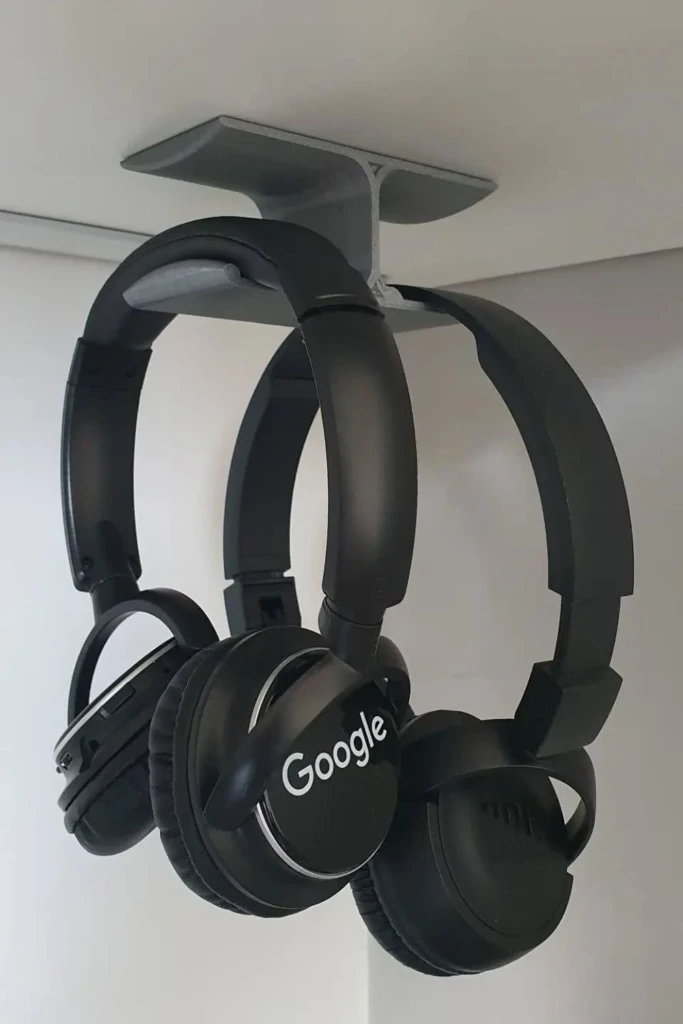
A desk hook provides a convenient place to hang headphones without adding another bulky accessory to your workspace. Depending on your desk, you can use an adhesive hook, a screw-mounted hook, or a clamp-style holder that attaches to the edge.
Position the hook where you can reach it comfortably without bumping into it while typing or moving your chair. Make sure the hook has a smooth, rounded contact surface and enough room for the headband to sit securely.
Adhesive hooks work best on compatible, clean surfaces and should only carry the weight specified by the manufacturer. A clamp-mounted option may be more suitable for heavier gaming headsets or desks where adhesive mounting is unreliable.
If your headphones have a cable, route it away from chair wheels and walking paths. This small addition helps keep the desk clear and reduces the risk of accidental damage.
6. Cat Stand
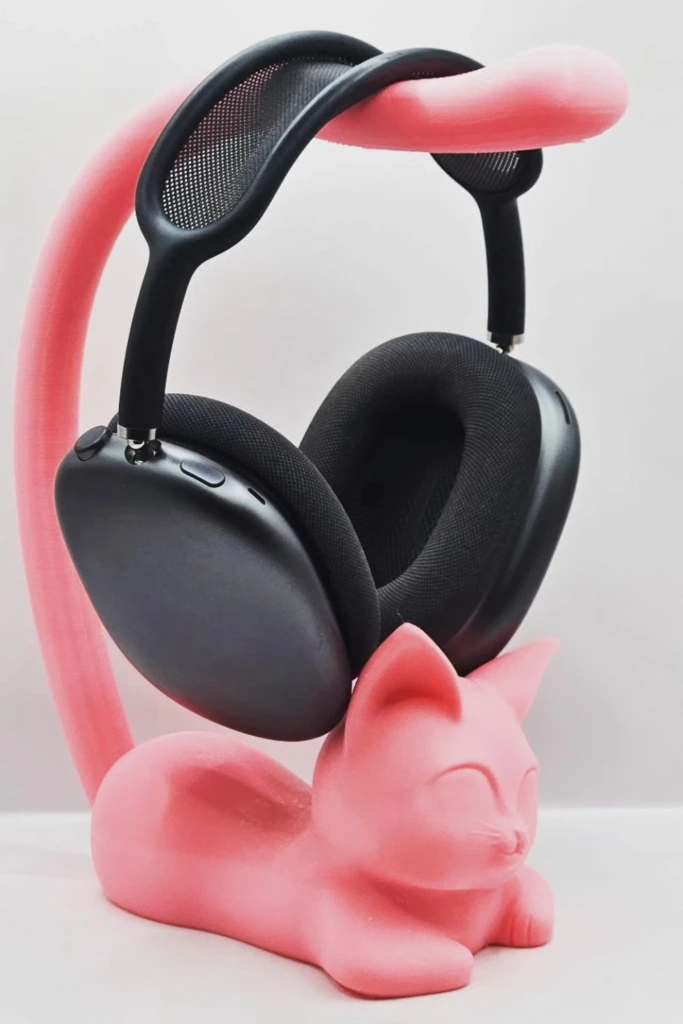
A cat-shaped headphone stand combines playful decor with everyday organization. Its sculpted silhouette can add personality to a gaming setup, bedroom desk, or creative workspace while providing a designated resting place for your headphones.
These stands come in different materials, including wood, resin, acrylic, and molded plastic. Choose a design with a stable base and a broad support surface that fits your headset comfortably.
Pay attention to the shape of the top support. Decorative ears or pointed features should not place concentrated pressure on the headband or stretch it beyond its normal position. A smooth, rounded design is generally preferable for long-term storage.
You can coordinate the stand with your desk accessories or choose a contrasting color to make it a decorative focal point. Keep it away from the edge of the desk, especially if the stand is lightweight.
7. Wood Stand
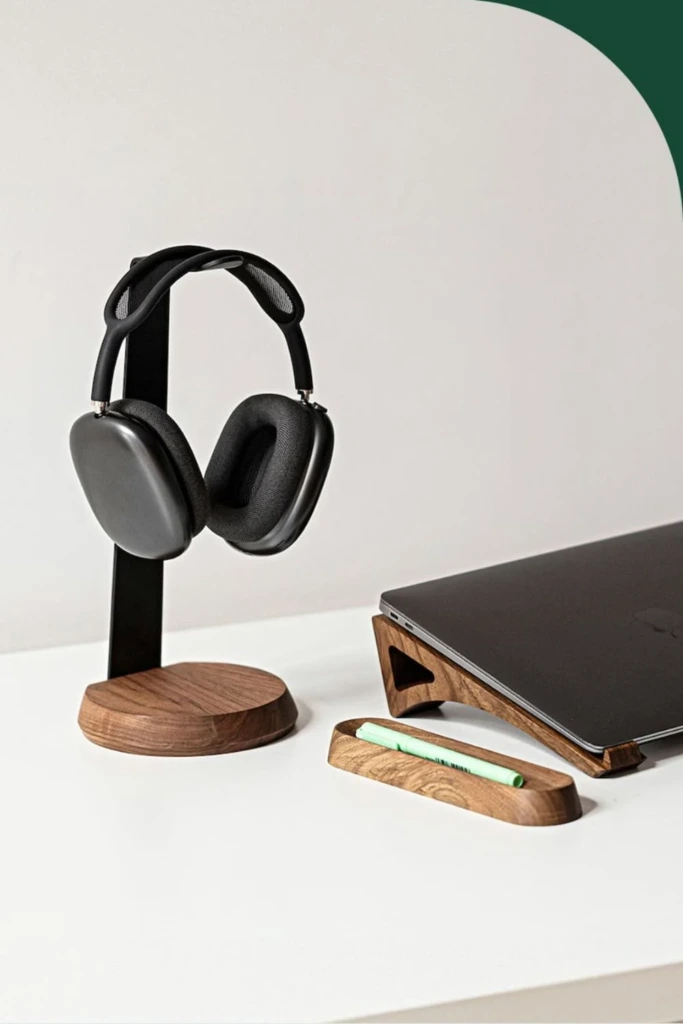
A wooden headphone stand offers a warm, timeless look that works well in both modern and traditional interiors. Natural grain, simple geometric shapes, and polished finishes make wood an attractive alternative to plastic or metal holders.
A freestanding wooden stand can sit beside a computer monitor, on a bedside table, or near a music system. Some designs include a small base tray for storing charging cables, USB adapters, or wireless earbuds.
When selecting a wooden model, check that the supporting arm is wide and smoothly finished. The base should be heavy enough to prevent tipping when headphones are removed. Felt pads underneath can protect furniture from scratches and help keep the stand from sliding.
Keep wooden stands away from damp areas and wipe them with a soft, dry cloth. With occasional care, a well-made stand can serve as both a functional accessory and a lasting part of your workspace.
8. Travel Case
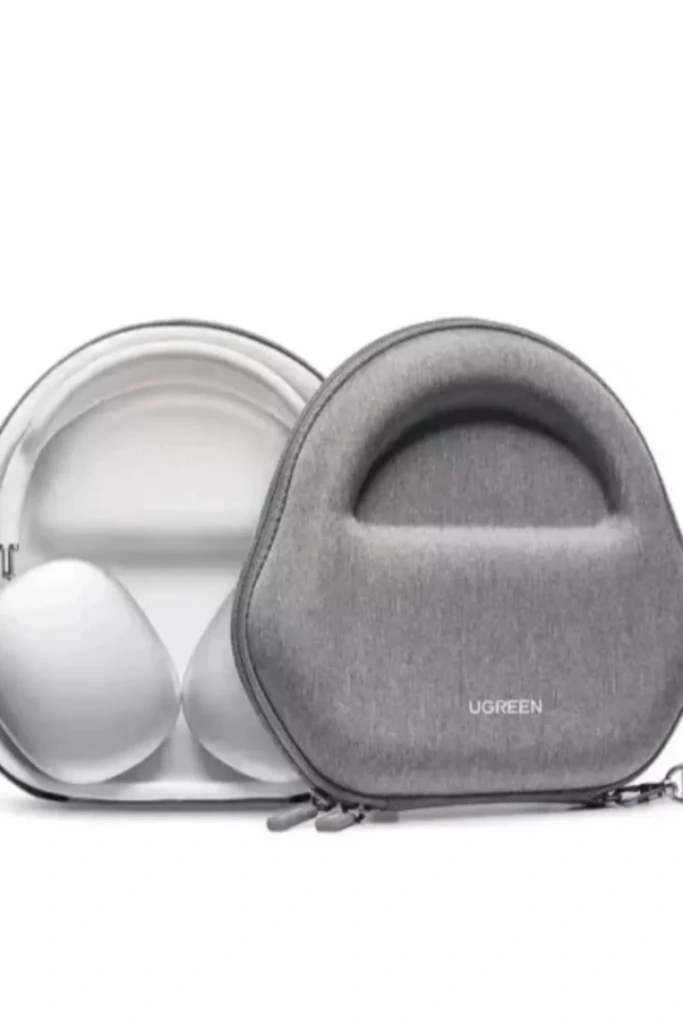
A travel case is one of the most practical options for protecting headphones while commuting, traveling, or carrying them between work and home. Unlike open stands, cases shield headphones from dust, scratches, and contact with other objects inside a bag.
For over-ear headphones, choose a case that matches the headset's dimensions and accommodates its folding mechanism, if applicable. A hard-shell case provides additional resistance against crushing, while a padded soft case is lighter and easier to pack.
Look for separate compartments for charging cables, adapters, and small accessories. Keep those items from pressing directly against the ear cushions or delicate controls.
Wireless earbuds should be stored in their charging case whenever possible. For larger wireless headphones, check whether the manufacturer recommends a particular folding position before packing them away.
Before closing the case, make sure the headphones are dry and the cable is not trapped in the zipper. This simple habit helps preserve the equipment and makes travel organization easier.
9. Fabric Pockets

Fabric pockets provide a soft, space-efficient way to store headphones without adding hard plastic containers to your room. They can be attached to an organizer panel, placed inside a drawer, or incorporated into a hanging storage system.
Cotton, canvas, felt, and other soft materials are suitable choices when they are clean and properly maintained. Select pockets that are large enough to hold your headphones without squeezing the ear cups together.
Use separate compartments for different pairs to reduce contact between surfaces and keep cables from tangling. Small fabric pockets are also useful for storing adapters, audio splitters, and replacement ear tips.
If you sew, you can make a custom organizer with pocket sizes tailored to your equipment. Reinforced stitching and sturdy attachment points help the pockets support their contents.
Washable fabric is especially convenient, but check the care instructions and ensure everything is completely dry before returning headphones to storage.
10. Wall Mount
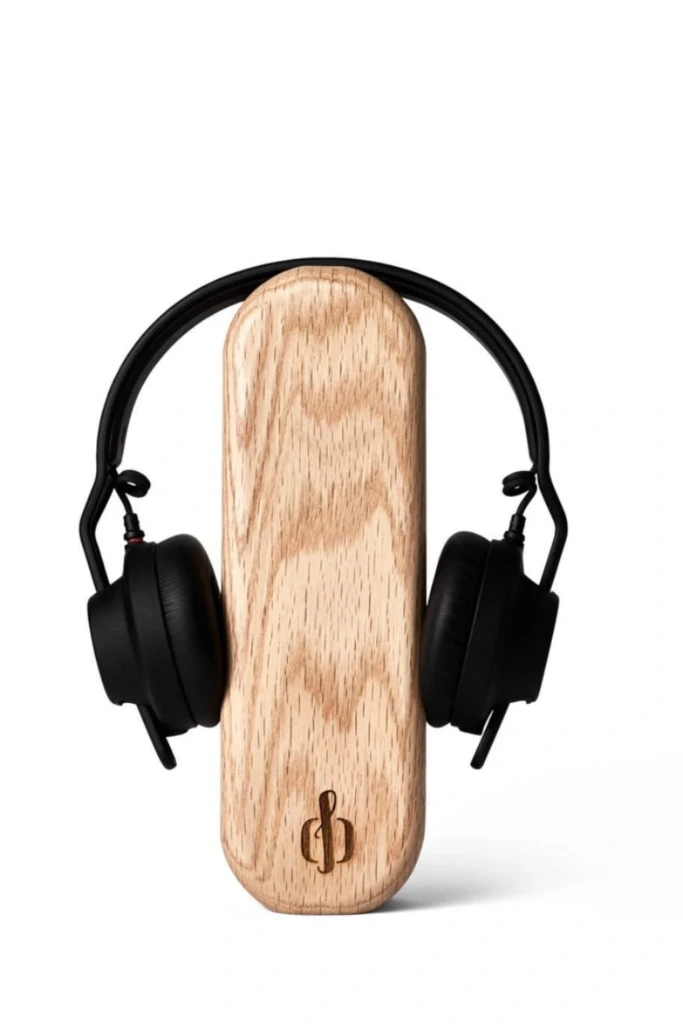
A dedicated wall mount can keep headphones off the desk and make an otherwise empty wall useful. It is a good choice for gaming stations, home recording spaces, and compact work areas where every inch of surface space matters.
Wall mounts come in single-headphone and multi-headphone designs. Some hold the headband from underneath, while others use a shaped cradle to support the headset. Select a model that fits the width of your headband and does not place excessive pressure on the ear cushions.
Install the mount at a convenient height and away from areas where people might bump into it. Use suitable hardware for the wall material, particularly if you are mounting several heavy headsets.
For a clean appearance, position the mount near your computer or audio equipment and route cables neatly along the wall using compatible cable clips. If you rent your home, removable mounting solutions may be preferable, provided they are rated for the weight involved.
11. Loop Stand
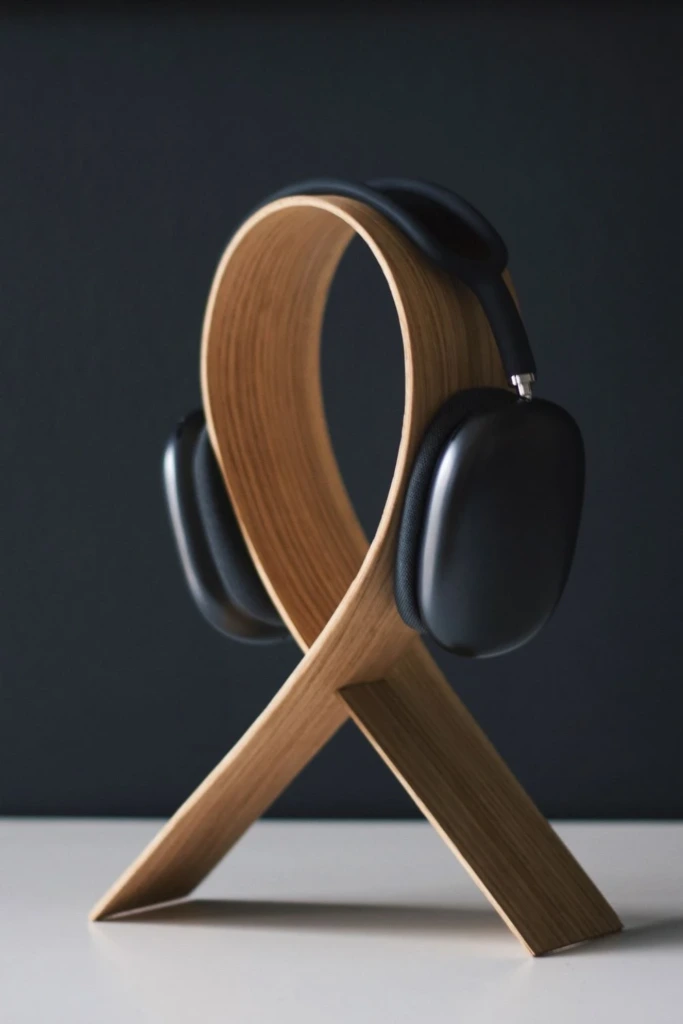
A loop stand offers a distinctive, minimalist way to display headphones. Its curved shape provides a resting point for the headband while keeping the ear cups suspended above the desk.
These stands are available in metal, acrylic, plastic, and wood. Their compact footprint makes them suitable for smaller desks, bedside tables, and shelves where a larger organizer would take up too much room.
When choosing a loop design, consider the width and curvature of the supporting section. A smooth, sufficiently broad loop helps distribute the headset's weight and reduces the chance of creating a pressure mark on padded materials.
A weighted base can improve stability, especially when the headphones are large or heavy. If you have several pairs, use individual stands or a multi-headphone design rather than stacking them on one another.
The simple silhouette also makes a loop stand an attractive option for anyone who wants their equipment to look organized without introducing unnecessary visual clutter.
12. Pegboard Wall
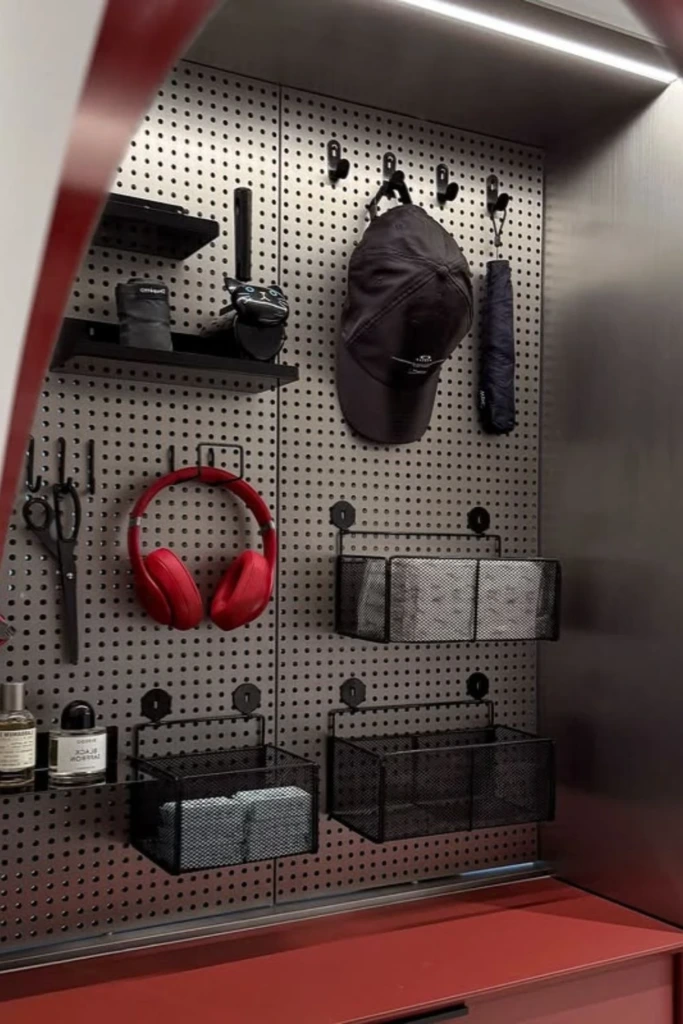
A pegboard wall gives you a flexible storage system that can change as your collection grows. Install a pegboard above a desk or along a suitable wall, then add hooks, small baskets, shelves, and cable holders to accommodate different accessories.
Use rounded hooks or purpose-built headphone holders instead of narrow metal pegs that might scratch the headband. Arrange frequently used headphones at a comfortable height and reserve smaller sections for charging leads, adapters, and earbuds.
One advantage of a pegboard is that its layout can be rearranged without replacing the entire organizer. You can also dedicate separate areas to gaming equipment, work headphones, and travel accessories.
Choose a board and mounting system rated for the intended load. Secure it properly to the wall, and leave enough space between holders so that the headphones do not touch one another.
For a coordinated look, select accessories in matching finishes or arrange the equipment by color. A well-planned pegboard can make an entire audio setup easier to manage.
13. Storage Basket
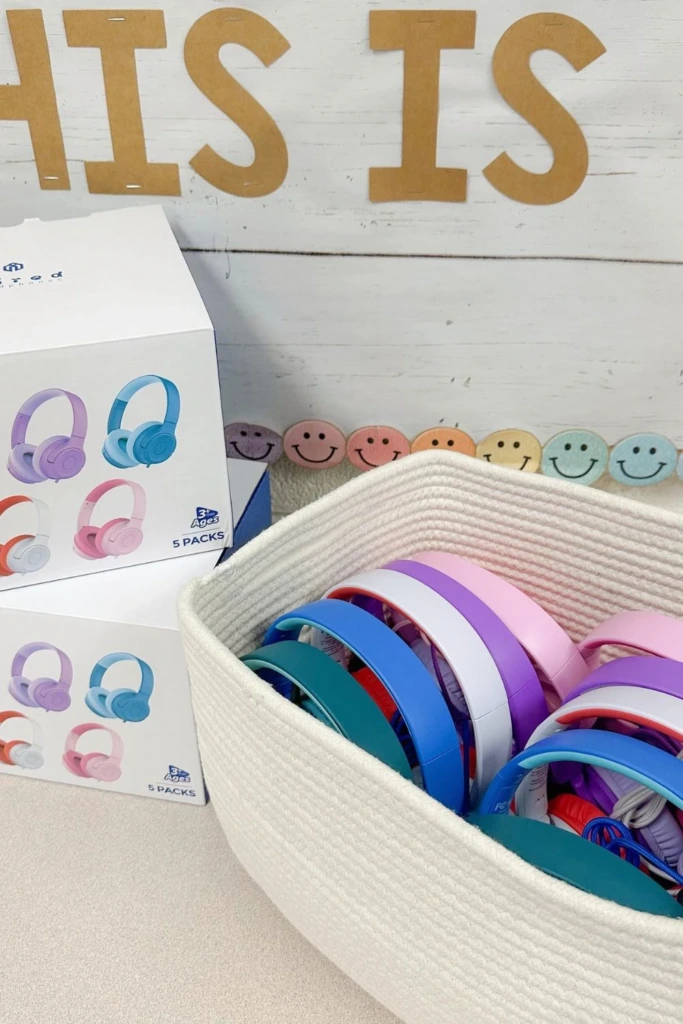
A storage basket is an easy solution for keeping headphones together when you do not want to mount anything or display each pair individually. Place a basket on a shelf, inside a cabinet, or beside your entertainment center.
Choose a basket that provides enough space for the headphones to rest naturally. Soft-lined or fabric baskets are helpful for preventing scratches, while sturdy woven or plastic options can work well for larger collections.
Avoid throwing all your headphones into one container without separation. Instead, use small dividers, individual pouches, or smaller containers within the basket to keep each pair organized.
You can also dedicate one basket to headphones and another to accessories such as charging cables, microphone attachments, and adapters. Labels make the categories easy to maintain, especially in shared spaces.
Keep the basket in a dry area and avoid placing heavy objects on top of it. The goal is to make storage simple without compromising the condition of your equipment.
14. Color Display
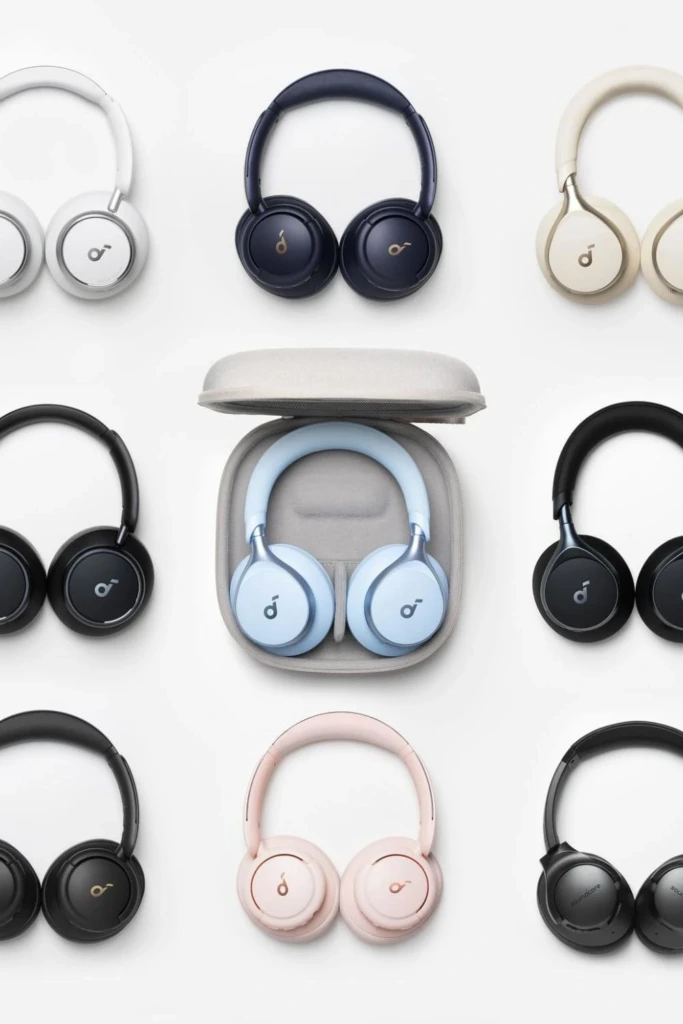
A color-coded headphone display turns organization into part of your room's decor. Arrange headphones by color, brand, or intended use on a row of stands or a set of coordinated wall holders.
For example, you might group black headphones with your computer equipment, bright-colored pairs with gaming accessories, and neutral designs near a bedroom workspace. If several people share a home, color can also help everyone identify their own equipment quickly.
Matching stands create a consistent appearance, while contrasting colors can make individual headphones stand out. You do not need expensive display accessories; simple holders in complementary shades can produce a polished result.
Keep practical considerations in mind when arranging the display. Leave enough space between headsets to prevent collisions, and make sure each holder supports its particular model properly.
For a cleaner finish, conceal excess cable length with reusable straps and route charging leads toward a nearby power source without stretching them. This approach combines easy identification with a more intentional-looking space.
15. Rack Holder
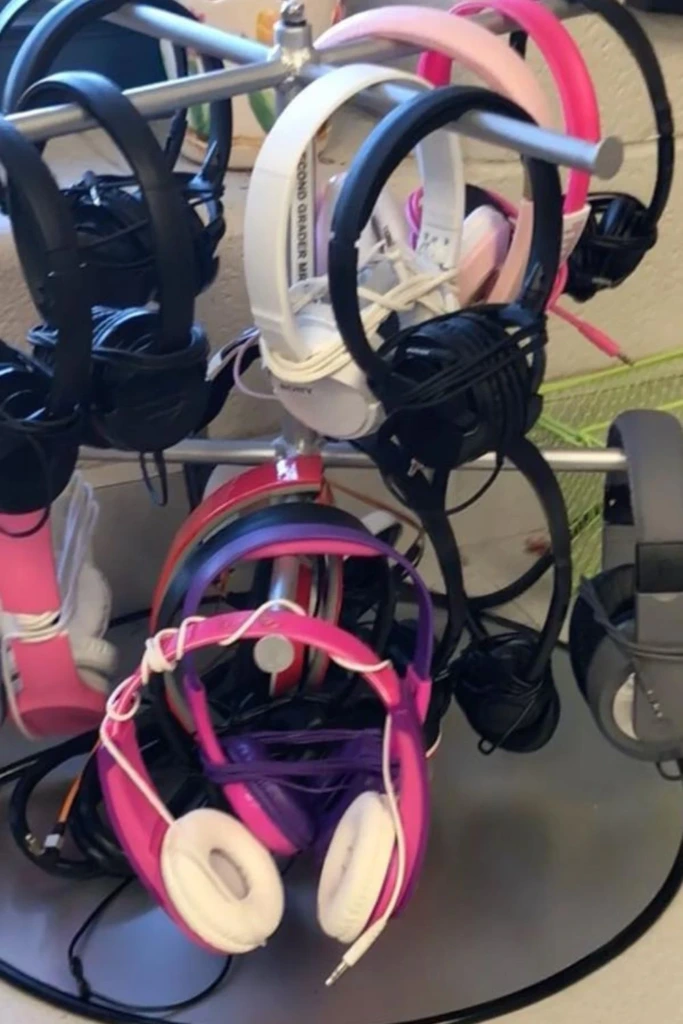
A headphone rack holder is useful when you need to organize several pairs in one location. Depending on its design, a rack may sit on a desk, attach to a wall, or fit inside a cabinet.
Multi-headphone racks are particularly convenient for families, gaming enthusiasts, music producers, and households with several people working or studying at home. Separate hanging positions reduce clutter and make it easier to select the right pair.
Check the spacing between the supports before buying. Large gaming headsets need more room than compact on-ear headphones, and closely positioned holders may cause ear cups to touch.
Look for rounded supports, a stable base, and durable construction. If the rack is intended for wall installation, use the correct mounting hardware and account for the combined weight of every headset.
You can improve the system by assigning a position to each person or activity and keeping charging cables organized nearby. A well-sized rack makes a growing collection easier to manage.
16. Clamp Hook
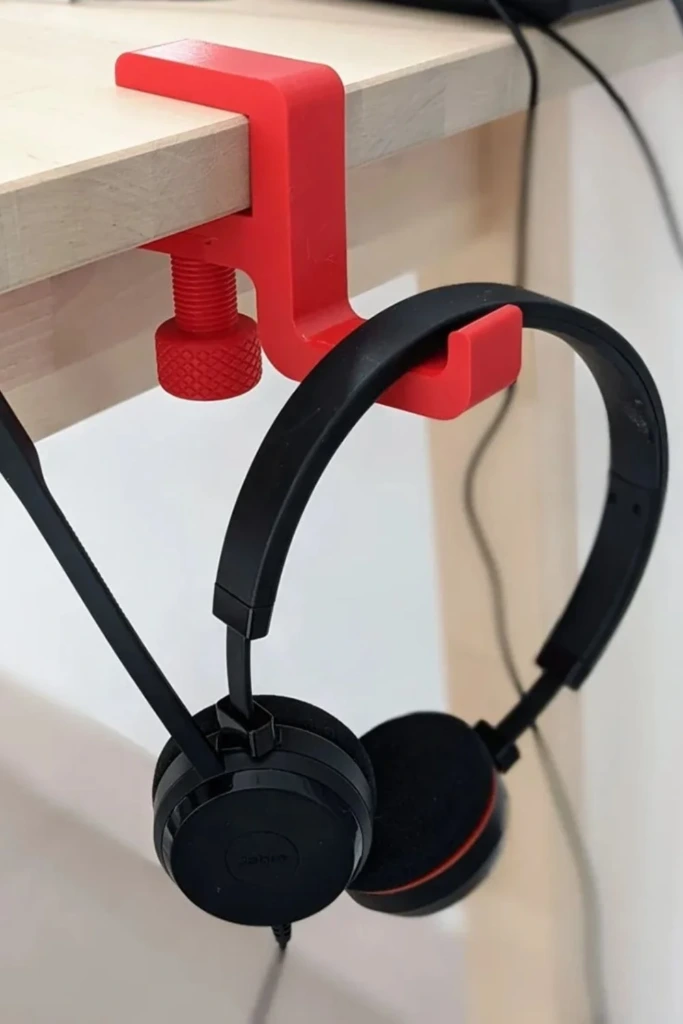
A clamp hook attaches to the edge of a desk, shelf, or suitable table without necessarily requiring drilling. This makes it a useful option for renters, temporary workstations, and people who frequently rearrange their furniture.
Most clamp-style headphone holders tighten around the furniture edge and provide a small arm or hook for hanging the headset. Some models also include a swivel mechanism, allowing the holder to move underneath the desk when it is not in use.
Before installation, check the maximum desk thickness and weight capacity. The clamp should fit securely without damaging the finish, so look for protective pads or add a suitable non-slip barrier if the design allows it.
Position the hook where it will not interfere with your legs, cables, or chair. A headset should hang securely without touching the floor or being struck by drawers.
This solution is especially practical for compact work areas because it uses the desk's edge rather than occupying valuable space on the surface.
17. Drawstring Pouch
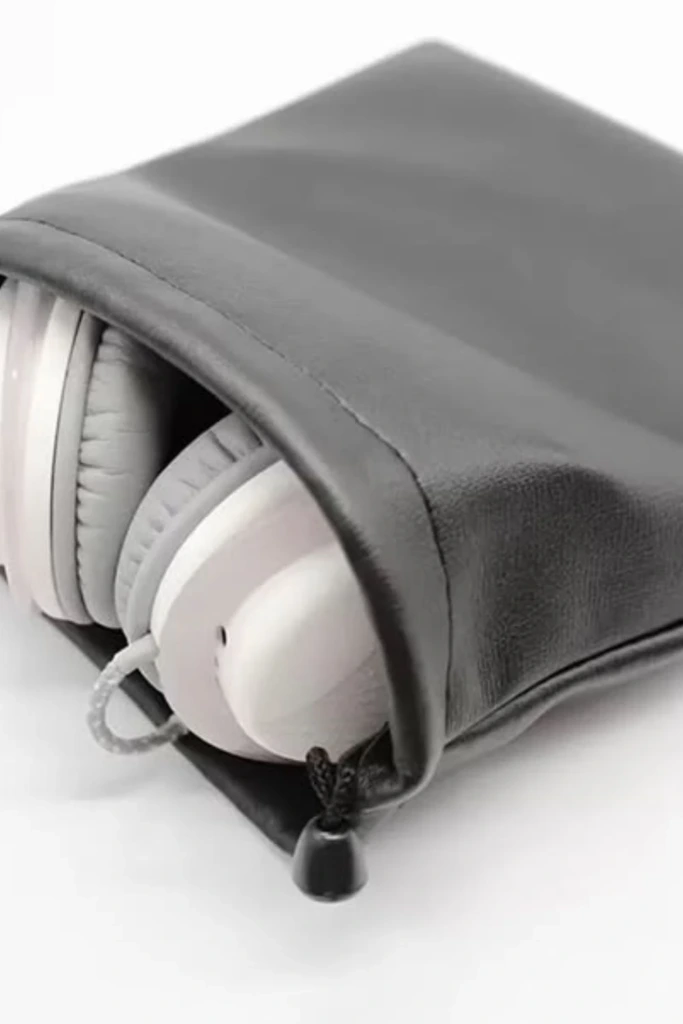
A drawstring pouch offers lightweight, portable storage for headphones and smaller audio accessories. It is easy to keep inside a backpack, handbag, suitcase, or desk drawer, making it useful for commuters and students.
Soft cotton, microfiber, or padded fabric pouches can help prevent dust buildup and surface scratches. For expensive headphones, consider a padded pouch or a more protective case if the equipment may be exposed to pressure inside a crowded bag.
Choose a pouch large enough for the headphones to fit without forcing the headband or folding the ear cups unnaturally. Before closing it, arrange any cable loosely and keep the drawstring away from delicate components.
A separate small pouch can hold charging cables, adapters, or wired earbuds. Using different colors makes it easier to distinguish accessories when packing.
Drawstring storage is convenient for everyday carrying, but it does not offer the same crush protection as a hard-shell case. Store it accordingly and avoid placing heavy items on top.
18. Bow Stand
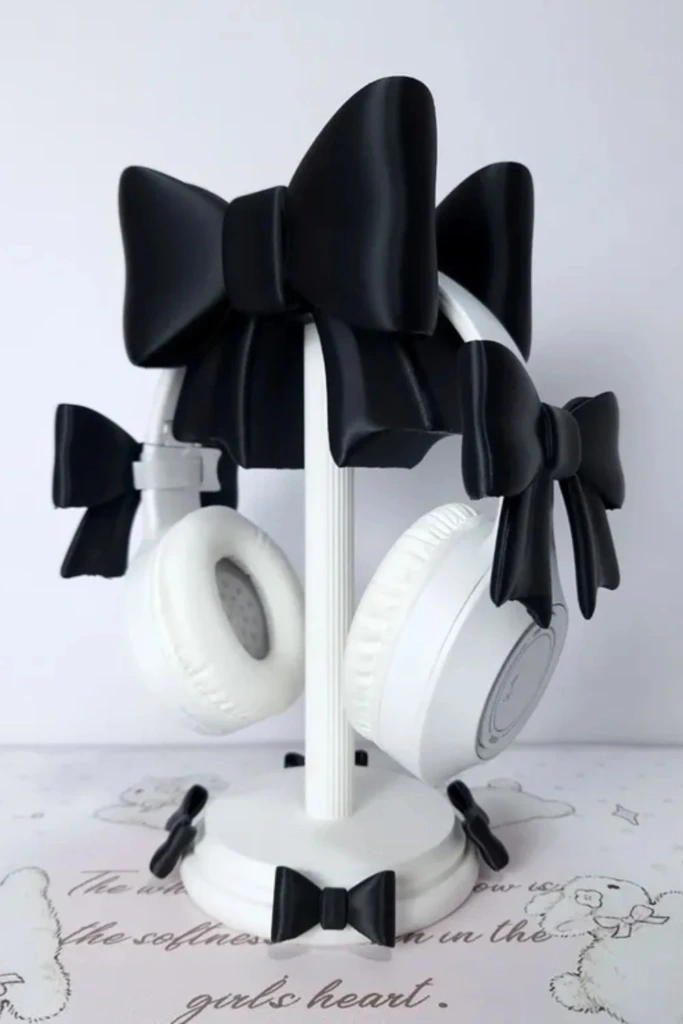
A bow-shaped headphone stand brings a decorative touch to a desk or dressing table. Its curved profile can complement elegant, playful, or contemporary interiors while offering a dedicated place to rest your headphones.
Bow stands are available in a variety of materials and finishes, including wood, metal, acrylic, and molded plastic. Some have a wide, sculpted top that supports the headband, while others emphasize the bow shape as a visual detail.
Prioritize the stand's actual support surface rather than appearance alone. A narrow decorative feature may not be suitable for a heavy headset, so check the dimensions and stability before purchasing.
A non-slip base helps prevent movement when headphones are removed, and protective pads can reduce the risk of scratching your furniture. Choose a color that complements nearby accessories for a coordinated setup.
This style works best when you want storage to serve a decorative purpose as well as a practical one. Keep the stand away from the edge of the desk to protect both the headphones and the display piece.
19. Cabinet Pockets
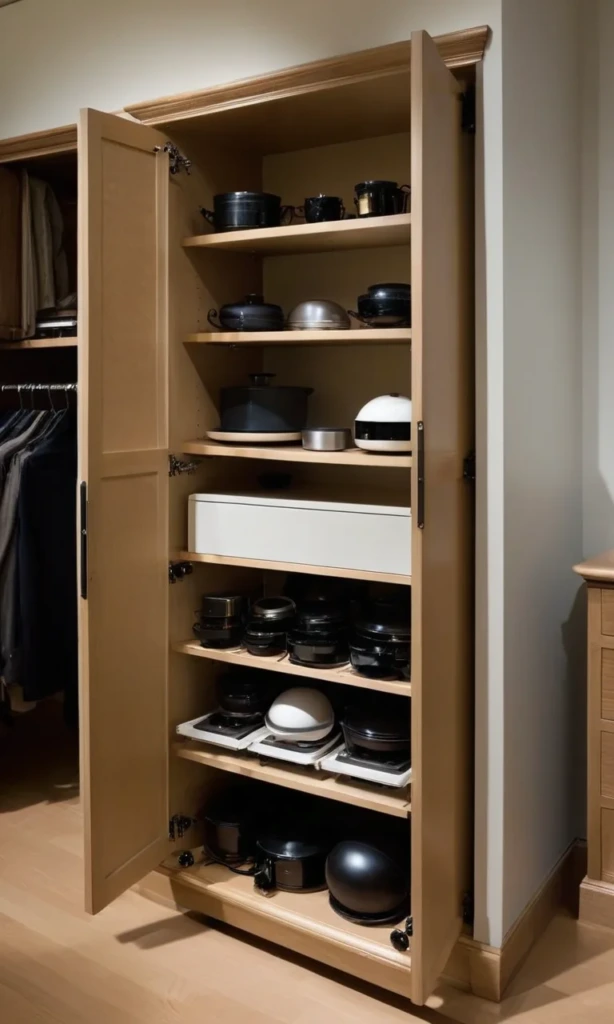
Cabinet pockets make use of the inside of a cupboard or storage cabinet, keeping headphones hidden when they are not needed. Hanging pocket organizers can be attached to a compatible door or installed inside a cabinet with suitable hardware.
This arrangement is helpful in shared living rooms, bedrooms, and offices where visible equipment might make the space feel cluttered. Assign individual pockets to different headphone pairs, then use smaller compartments for cables and adapters.
Before installing the organizer, measure the available space and check that the cabinet door can close without pressing against the contents. Avoid placing pockets where hinges or shelves could crush the headphones.
Fabric pockets are gentle on delicate finishes, while reinforced organizers may offer better support for heavier items. If the cabinet is used for other electronics, make sure it remains dry and adequately ventilated.
Keep frequently used headphones in the most accessible pocket and label less familiar accessories. This makes a hidden storage system easy to use without turning the cabinet into a miscellaneous-items drawer.
FAQs
Organizing headphones does not require an elaborate setup. The right choice depends on how you use your equipment, whether you need protection during travel, and how much storage space is available.
Open holders are convenient for everyday use, while enclosed cases and pouches are better for transporting equipment or protecting it from dust. For larger collections, dividing headphones into dedicated spaces can prevent tangling and make everything easier to find.
The following answers cover two common headphone storage questions and explain how to keep your equipment in good condition.
Should headphones be hung or stored flat?
Both methods can work well when the headphones are supported properly. Hanging headphones on a broad, smooth stand or hook keeps them accessible and frees up desk space. However, a narrow hook may concentrate pressure on the headband and potentially damage padding or leave marks over time.
Storing headphones flat can be a good alternative if the surface is clean, dry, and large enough to support the headset without compressing the ear cushions. Place them in a drawer, on a shelf, or inside a protective case when you want to keep them out of sight.
For long-term storage, avoid stacking heavy items on top of headphones or bending the headband beyond its normal shape. Follow the manufacturer's guidance if it specifies a preferred storage position.
As a general rule, use a properly designed stand for headphones you reach for daily and a padded case or suitable flat storage space for equipment you use less frequently or need to transport.
How can you keep headphone cables from getting tangled during storage?
The easiest way to prevent tangled headphone cables is to coil them loosely before putting them away. Make loops that are large enough to avoid sharp bends, and secure the coil with a reusable cable strap or soft hook-and-loop tie.
Avoid winding the cable tightly around the headphones, especially around the plug or where the cable enters an ear cup. Repeated bending at these connection points can contribute to wear and electrical problems.
Keep wired headphones in a separate pocket or compartment rather than mixing them with several loose charging leads. Small cable organizers, zippered pouches, and divided storage bins can help keep everything in place.
If you use a desk hook or wall holder, route the cable neatly so it does not hang where it can catch on furniture or pull against the connector. For wireless headphones, store charging cables separately and return earbuds to their charging case when appropriate.
A few seconds spent securing a cable after use can make your setup tidier and reduce the frustration of untangling it the next time you want to listen.
Final Thoughts
The best headphone storage solution is one that fits your space, protects your equipment, and makes everyday use more convenient. From simple desk hooks and wooden stands to wall-mounted racks, fabric pockets, and travel cases, there are options for almost every home and budget.
Start with one dedicated place for your most frequently used headphones, then add compartments or holders as your collection grows. Keep cables loosely secured, avoid unnecessary pressure on headbands and ear cushions, and store your equipment in a clean, dry environment. With a practical system in place, your headphones will be easier to find and your workspace will stay organized.