
30 Ice Breaker Games for Adults for 2026
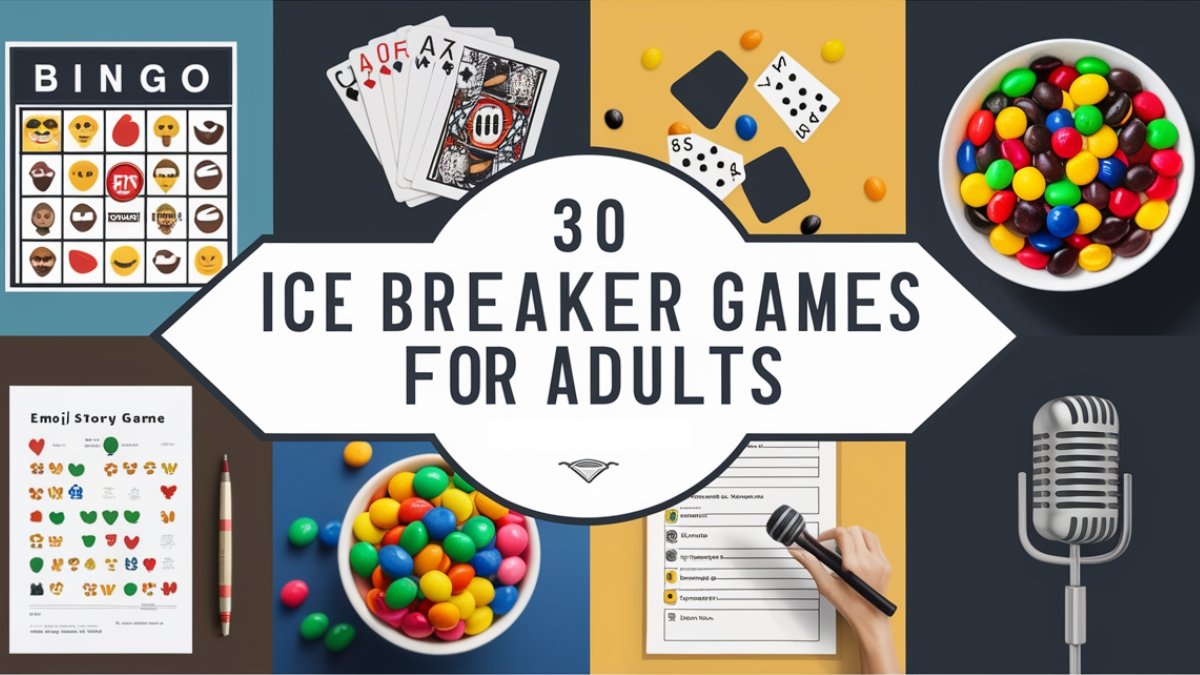
Starting conversations with unfamiliar people can sometimes feel awkward, especially at parties, workplace gatherings, workshops, or community events. Ice breaker games offer a simple way to remove that initial discomfort and encourage people to interact naturally. With the right activities, even a room full of strangers can become a welcoming space filled with laughter and meaningful conversations.
The best ice breaker games for adults combine entertainment with opportunities to discover shared interests, exchange experiences, and build connections. Whether you're organizing a small dinner party, a team-building session, or a large social event, these 30 creative activities can help everyone feel included and comfortable in 2026.
30 Ice Breaker Games for Adults
Ice breaker activities don't need complicated equipment or extensive preparation. Some involve teamwork and physical movement, while others focus on storytelling, creativity, and friendly competition. The following games work for different group sizes and can be adjusted to match the atmosphere of your gathering.
1. Two Truths and a Lie
Two Truths and a Lie is a classic conversation starter that encourages participants to reveal interesting details about themselves. Each person shares three statements, including two facts and one invented detail. The other players must determine which statement is false.
Encourage participants to choose unexpected facts rather than obvious information. Someone might mention an unusual childhood experience, a surprising talent, or an adventurous trip. The more believable the invented statement, the more entertaining the guessing becomes.
This activity works particularly well for new coworkers, social clubs, and small gatherings because it creates natural opportunities for follow-up questions.
2. Human Knot
The Human Knot is an interactive teamwork activity that challenges participants to solve a physical puzzle together. Players stand in a circle, reach toward different people, and hold hands to form a tangled arrangement.
Without releasing their hands, the group must communicate and coordinate movements to untangle themselves. Participants may need to step over arms, turn sideways, or carefully move around one another.
The challenge encourages cooperation, patience, and problem-solving. For comfort and accessibility, ask everyone for permission before beginning and provide a no-contact alternative for anyone who prefers not to participate physically.
3. Would You Rather

Would You Rather creates lively discussions by presenting participants with two unusual or challenging choices. Each person selects an option and explains the reasoning behind their decision.
Questions can range from silly situations to thoughtful personal preferences. For example, participants might choose between traveling anywhere for free or having unlimited access to their favorite entertainment.
The most enjoyable part often comes after the initial answers, when players discover how differently others approach the same situation.
This game requires no supplies and is suitable for dinner parties, virtual meetings, and casual social gatherings.
4. Sweet Stories
Sweet Stories combines a small treat with personal storytelling. Place individually wrapped candies in a bowl and invite participants to select a few pieces.
Assign a different conversation topic to each candy color. One color might represent favorite vacations, another childhood memories, and another personal achievements.
Participants share a short story for each color they selected. The candy adds a playful element while the prompts help people who might otherwise struggle to begin talking.
For larger groups, limit each participant to two or three stories. You can also substitute colored tokens for candy to accommodate dietary preferences.
5. The Marshmallow Challenge
The Marshmallow Challenge transforms ordinary materials into a creative team-building competition. Divide participants into small teams and provide each group with dry spaghetti, tape, string, and one marshmallow.
The objective is to construct the tallest freestanding structure capable of supporting the marshmallow at its highest point. Set a time limit of approximately 18 minutes to encourage quick decisions and collaboration.
Teams must experiment with different designs, distribute responsibilities, and adapt when their structures become unstable.
Beyond the competition, the activity demonstrates the importance of testing ideas, listening to teammates, and learning through experimentation.
6. Bucket List Bingo
Bucket List Bingo helps participants discover exciting experiences and future ambitions they may share. Prepare bingo cards featuring activities such as learning a new language, visiting another continent, writing a book, or trying an adventurous sport.
Instead of marking numbers, players move around the room looking for people who have completed or hope to complete the listed experiences.
When someone matches a square, they sign it. The first participant to complete a designated row or pattern wins.
This game encourages movement and creates interesting conversations about travel, personal goals, and memorable experiences.
7. Gossip Time
Gossip Time is a playful guessing activity built around harmless personal facts rather than actual rumors. Before the gathering, ask participants to submit one surprising but comfortable-to-share fact about themselves.
Collect the statements anonymously and read them aloud one at a time. The group then tries to identify the person connected to each fact.
For example, someone might reveal that they once appeared on television or accidentally attended the wrong wedding.
After the guesses, the person can explain the story behind the statement. Keep the activity positive by avoiding embarrassing, sensitive, or private information.
8. Pictionary Relay

Pictionary Relay combines drawing, guessing, and fast-paced teamwork. Divide participants into teams and give each group a drawing surface and a collection of words or phrases.
The first player draws a clue while teammates attempt to guess the answer. Once they succeed, the next player takes over with a new prompt.
Continue until the team completes its assigned collection of words or the time expires.
Choose categories suited to your audience, such as movies, everyday objects, travel destinations, or workplace situations. Artistic ability isn't necessary, making the activity enjoyable for participants with different skill levels.
9. Common Ground
Common Ground encourages people to move beyond surface-level introductions and discover meaningful similarities.
Divide participants into groups of four or five. Give each team several minutes to identify shared experiences, interests, or preferences that apply to everyone in their group.
Encourage specific discoveries rather than broad statements. For example, finding that everyone enjoys the same unusual food is more interesting than discovering that everyone likes weekends.
At the end, each team shares its most unexpected connection. The exercise helps participants recognize similarities that might otherwise remain unnoticed.
10. M&M Game
The M&M Game turns colorful chocolates into conversation prompts. Place a bowl of M&Ms on a table and assign a question category to each color.
For instance, red could represent favorite memories, yellow personal interests, green future goals, blue travel experiences, orange hidden talents, and brown funny stories.
Each participant chooses a few chocolates and answers the questions corresponding to their colors.
The activity offers an easy structure for conversations without making the atmosphere feel overly formal. For a food-free version, colored paper circles work equally well.
11. Hometown Map
Hometown Map is an engaging activity for groups with participants from different cities, regions, or countries.
Display a large map on a wall or table and invite everyone to mark their hometown using a pin, sticker, or handwritten label.
After placing their markers, participants share something memorable about where they grew up. They might describe a traditional dish, a famous landmark, a local celebration, or an interesting childhood experience.
This activity encourages cultural curiosity and gives people a chance to talk about places that shaped their identities.
A digital map can also make the activity suitable for online gatherings.
12. Memory Lane
Memory Lane encourages participants to revisit meaningful experiences and share personal stories.
Prepare prompts connected to different life stages, such as a favorite school memory, a memorable family celebration, an important lesson, or a moment of unexpected happiness.
Participants select a prompt and share a brief story with the group. Others can ask respectful follow-up questions or mention similar experiences.
The activity works especially well when the goal is to build deeper connections rather than create competition.
Choose positive, flexible prompts and allow participants to skip questions they prefer not to answer.
13. Skill Share

Skill Share allows adults to introduce themselves through something they know how to do.
Ask each participant to identify a useful, entertaining, or unusual skill they could demonstrate in approximately two minutes. Examples include simple drawing techniques, language phrases, organization tricks, or quick mental calculations.
Participants can present their skills individually or teach them in small groups.
The activity celebrates different abilities while giving everyone an opportunity to contribute. It can be particularly effective at workplace events because colleagues discover strengths beyond their usual professional responsibilities.
14. Snapshot Throwback
Snapshot Throwback uses old photographs to spark curiosity and conversation.
Before the event, invite participants to submit a childhood picture, an old vacation photograph, or another lighthearted image from their past.
Display the photographs without names and ask everyone to guess who appears in each one.
Once the identities are revealed, participants can explain where the picture was taken or share a memorable detail about that period of their lives.
This activity often produces laughter and nostalgia while helping participants learn about one another's backgrounds. Make photo sharing optional and obtain permission before displaying images.
15. Emoji Story
Emoji Story introduces a modern twist to traditional storytelling.
Provide each participant or team with a random sequence of emojis. Their challenge is to create a short, entertaining story that includes the objects, emotions, or situations represented by those symbols.
For example, a combination of an airplane, pizza, rain cloud, and trophy could inspire a story about a disastrous trip that ends with an unexpected victory.
Participants can read their stories aloud while others vote for the funniest or most imaginative interpretation.
This activity works well for both in-person gatherings and virtual meetings.
16. Act and React
Act and React is a lively improvisation game that encourages spontaneous creativity.
Prepare cards describing unusual situations, such as discovering a surprise gift, missing an important flight, meeting a famous celebrity, or receiving unexpected good news.
One participant selects a card and acts out an emotional reaction without explaining the situation. The remaining players attempt to identify what happened.
For an additional challenge, pair two participants and give them different reactions to the same scenario.
The game encourages expressive communication, quick thinking, and plenty of laughter.
17. Psychology Masks
Psychology Masks is a reflective activity that explores the difference between how people present themselves and how they sometimes feel internally.
Give each participant a paper mask template or a sheet of paper divided into two sections. On one side, they illustrate qualities others commonly associate with them. On the other, they represent interests, emotions, or personality traits that people may not immediately notice.
Participants can use drawings, symbols, or descriptive words.
Afterward, invite volunteers to explain their designs. The purpose is to encourage empathy and self-expression rather than analyze anyone's personality.
Because the activity can become personal, sharing should remain entirely voluntary. It is best suited to groups where participants already feel reasonably comfortable.
18. Ha, Ha

Ha, Ha is a simple laughter game that challenges participants to maintain a serious expression.
Arrange everyone in a circle. The first person says "Ha" while attempting to keep a straight face. The next person says "Ha, ha," and each subsequent player adds another "ha" to the sequence.
Anyone who laughs naturally or loses track of the pattern completes a lighthearted challenge or simply restarts the round.
The increasing repetition often makes the game surprisingly difficult.
It is an excellent choice for short breaks during meetings or social events because it requires no preparation and can quickly energize the room.
19. Beach Ball Toss
Beach Ball Toss encourages movement and conversation through a simple question-and-answer activity.
Write several ice breaker questions across the panels of an inflatable beach ball. Include topics such as favorite foods, dream destinations, memorable hobbies, and unusual experiences.
Participants stand or sit in a circle and gently toss the ball to one another.
When someone catches it, they answer the question closest to a predetermined finger, such as their right thumb, before passing the ball to another person.
This activity works especially well for outdoor gatherings, informal workshops, and larger groups. A soft ball makes the game safer and more accessible.
20. Three-Question Mingle
Three-Question Mingle helps participants meet several people without the pressure of extended conversations.
Prepare three engaging questions and ask everyone to find a partner. Each pair takes turns answering the questions within a short time limit.
After approximately three minutes, participants switch partners and repeat the process.
Questions might explore personal interests, favorite experiences, or skills someone would like to learn.
The structured rotation prevents people from remaining exclusively with familiar friends and helps newcomers become involved.
For large networking events, this game offers an efficient way to create numerous introductions in a limited period.
21. Mystery Sound
Mystery Sound challenges participants to identify everyday noises using only their hearing.
Before the event, collect short audio clips featuring recognizable sounds, such as keys jingling, a zipper opening, footsteps, pouring water, or a doorbell ringing.
Play each recording without revealing its source. Participants write down their guesses individually or discuss possibilities within teams.
Award points for correct answers and introduce more difficult sounds as the game progresses.
This activity encourages careful listening and collaboration. It also provides an entertaining alternative to traditional conversation-based ice breakers.
22. Zoom In, Zoom Out
Zoom In, Zoom Out is a visual guessing game that rewards observation and creative thinking.
Prepare close-up photographs of familiar objects, animals, foods, or landmarks. Begin by showing only a small section of each picture.
Participants guess what the image represents. If nobody identifies it correctly, gradually reveal more of the photograph until someone finds the answer.
You can organize the game into categories or award more points for guesses made with fewer clues.
The activity works well with a projector, television, or shared screen during an online meeting.
23. Simply Fun Icebreaker Games

Sometimes the most effective ice breakers are short, uncomplicated activities that require almost no explanation.
Quick games such as rock-paper-scissors tournaments, one-word introductions, silent birthday lineups, or rapid-fire trivia can help participants relax within minutes.
For a silent birthday lineup, ask everyone to arrange themselves according to their birth month and day without speaking. Participants must rely on gestures and nonverbal communication.
Another option is a one-word check-in, where everyone chooses a word describing their current mood and briefly explains it.
These activities are especially useful when you have limited time or want to energize a group before beginning a longer session.
24. Similarities and Differences
Similarities and Differences encourages participants to appreciate both shared experiences and individual perspectives.
Divide the group into pairs or small teams. Ask participants to identify three things they have in common and three ways their interests, habits, or experiences differ.
Encourage discoveries that go beyond obvious physical characteristics. Participants might compare hobbies, learning styles, travel preferences, or favorite ways to spend free time.
Afterward, invite each group to share its most surprising finding.
The exercise promotes thoughtful listening and demonstrates how different personalities can contribute valuable perspectives to a group.
25. Cultural Share
Cultural Share creates opportunities for participants to introduce traditions, customs, and experiences that matter to them.
Invite everyone to share something connected to their cultural background or a community they belong to. Contributions might include a traditional greeting, a favorite celebration, a meaningful family custom, or a popular dish.
Participants can bring photographs or small objects if they wish, although no special materials are necessary.
Encourage respectful questions and allow each person to decide how much information to share.
This activity is particularly valuable for diverse teams and community gatherings because it promotes understanding without treating anyone as a representative of an entire culture.
26. 10 Things in Common
10 Things in Common challenges small groups to discover ten shared characteristics within a set period.
Divide participants into teams of four to six and provide approximately ten minutes for discussion.
The objective is to identify ten specific facts that apply to every member of the team. These might include shared hobbies, favorite meals, preferred activities, or similar experiences.
To make the challenge more interesting, discourage overly general answers such as everyone enjoying holidays or having a favorite food.
Once time expires, teams present their lists. The group with the most unusual collection of genuine similarities can receive a small prize.
27. Who Did It?
Who Did It? is a mystery-style guessing game that introduces participants through surprising experiences.
Before starting, ask everyone to write down one unusual achievement, funny incident, or memorable adventure without including their name.
Collect the responses, shuffle them, and read each statement aloud.
Participants attempt to match each experience to the correct person. After the guesses, the individual reveals their identity and explains the story.
For example, someone might have rescued an animal, won an unexpected competition, or accidentally met a celebrity.
The game encourages curiosity and helps people remember one another through distinctive stories.
28. Special Snowflakes
Special Snowflakes celebrates individuality while helping participants discover the qualities that make them unique.
Give everyone a sheet of paper and ask them to create a paper snowflake by folding and cutting it. Participants can then write a few personal interests, strengths, or positive characteristics on their designs.
Display the completed snowflakes around the room and invite participants to explore them.
Each person can introduce their design and explain one characteristic they value about themselves.
Although the snowflakes may begin with the same basic materials, the finished patterns will differ, creating a visual reminder that every participant contributes something distinctive.
This activity is particularly suitable for creative workshops, retreats, and small community gatherings.
29. Group Playlist
Group Playlist uses music to encourage personal expression and discover shared tastes.
Ask every participant to suggest one song they enjoy and explain why they selected it. The choice might reflect a favorite memory, a meaningful experience, or simply a tune that improves their mood.
Combine the suggestions into a shared playlist and play short clips during the gathering.
Other participants can guess who selected each song before the contributor reveals their choice.
The finished playlist can become a memorable keepsake from the event. For workplace settings, establish appropriate content guidelines and respect different musical preferences.
30. Telephone Game
The Telephone Game demonstrates how easily information can change when passed between people.
Arrange participants in a line or circle. Quietly tell the first person a short sentence, preferably one containing unusual details.
That person whispers the message to the next participant, who passes along what they heard. Continue until the sentence reaches the final player.
The last participant announces the message aloud, and the original sentence is revealed for comparison.
The differences can be unexpectedly funny, especially when the starting sentence contains similar-sounding words.
Beyond entertainment, the game highlights the importance of careful listening and clear communication.
Related Ideas You Might Love
Ice breaker games for adults can turn unfamiliar gatherings into enjoyable experiences where conversations develop naturally. From creative challenges and storytelling activities to teamwork exercises and quick guessing games, each option offers a different way to encourage participation and strengthen connections.
Choose activities based on your group size, available time, accessibility needs, and the level of familiarity among participants. By keeping the atmosphere relaxed and participation comfortable, these 30 ice breaker games can help make your parties, meetings, workshops, and social events in 2026 more engaging and memorable.






One Comment