12 Pot Lid Storage Ideas for 2026
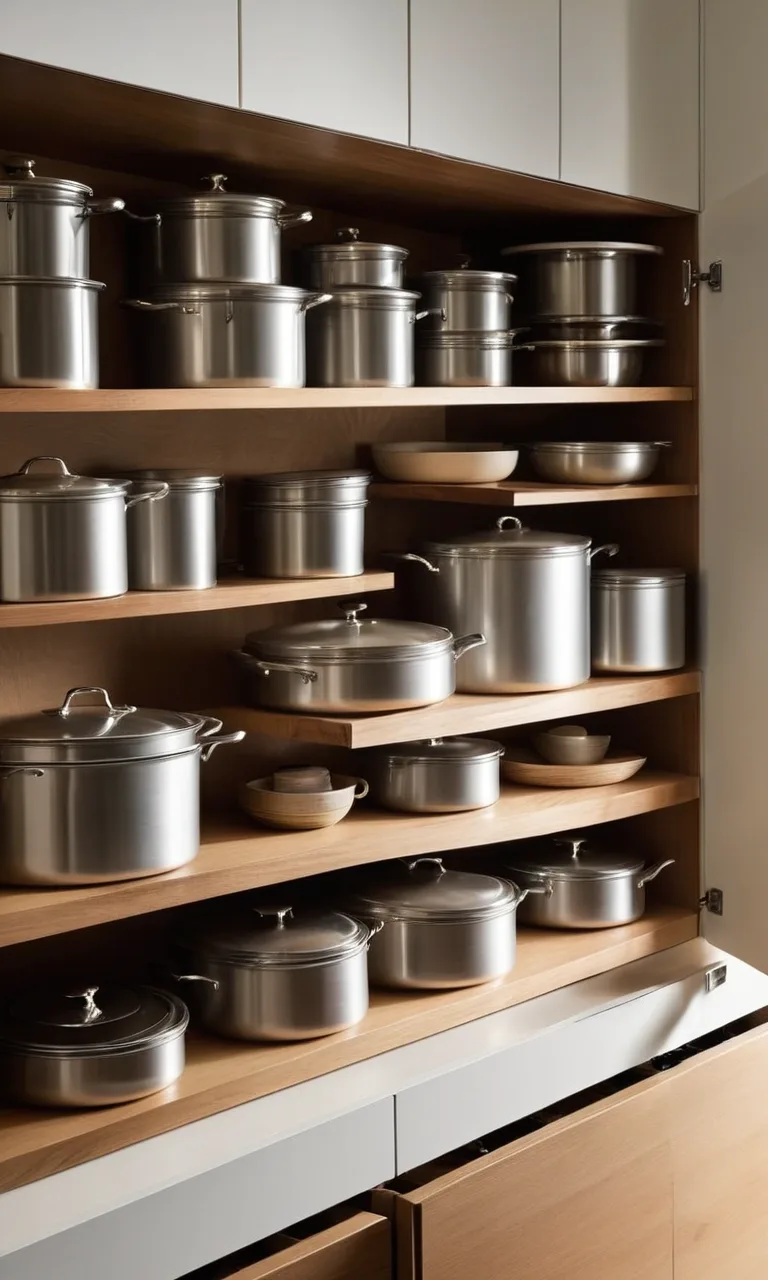
Pot lids are essential kitchen accessories, but they can quickly turn a neat cabinet into a cluttered mess. Their rounded shapes, different sizes, and protruding handles make them difficult to stack, and searching for the right lid while cooking can waste valuable time. With a practical storage system, you can keep every lid accessible, protect fragile glass covers, and make better use of your kitchen space.
Whether you have a spacious kitchen or a compact apartment, these pot lid storage ideas offer simple ways to organize your collection and maintain order over time.
How Can I Create a Pot Lid Storage System That Stays Organized Long-Term?
A reliable pot lid storage system starts with understanding what you own and how you use it. Before buying organizers, gather all your lids, match them with their corresponding pots, and remove any damaged or unnecessary pieces. Measure your cabinets and drawers to determine which storage options will fit comfortably.
Choose an arrangement that makes lids easy to identify and return after washing. Vertical racks are useful for keeping lids separated, while adjustable dividers accommodate collections with different diameters. If you cook frequently, place your most-used lids near the stove or in an easily accessible cabinet.
Consistency is what keeps the system working. Assign each lid a specific place, avoid overcrowding the organizer, and check occasionally for pieces that no longer fit your cookware. A simple arrangement that suits your daily routine is generally more effective than an elaborate setup that requires constant rearranging.
1. Adjustable Cabinet Racks
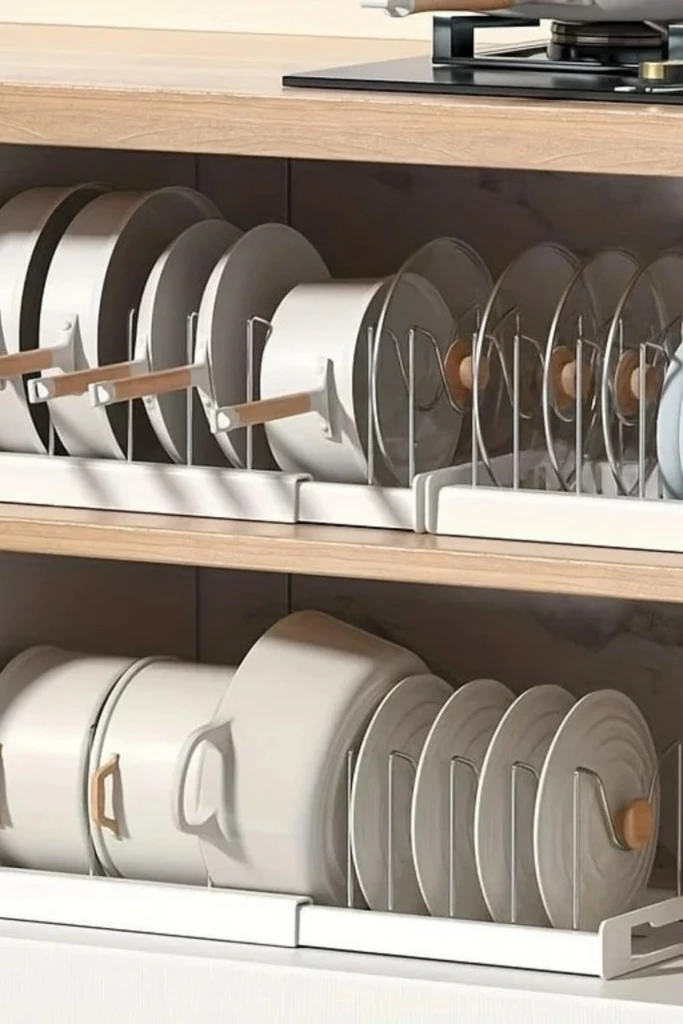
Adjustable cabinet racks are a versatile solution for kitchens with lids of different shapes and sizes. These organizers typically feature movable dividers that create individual compartments, allowing you to customize the spacing according to your collection.
Install the rack inside a cabinet and position each lid upright whenever the design permits. This makes it easier to remove one lid without disturbing the others. Wider sections can accommodate large stockpot covers, while narrower spaces work well for smaller saucepan lids.
One major advantage is flexibility. If you replace your cookware or add another lid, you can reposition the dividers rather than purchase a completely new organizer. Look for a sturdy rack with a stable base, smooth edges, and enough clearance for handles. Measure the cabinet depth and height before buying to avoid fitting problems.
2. Pull-Out Peg Panel
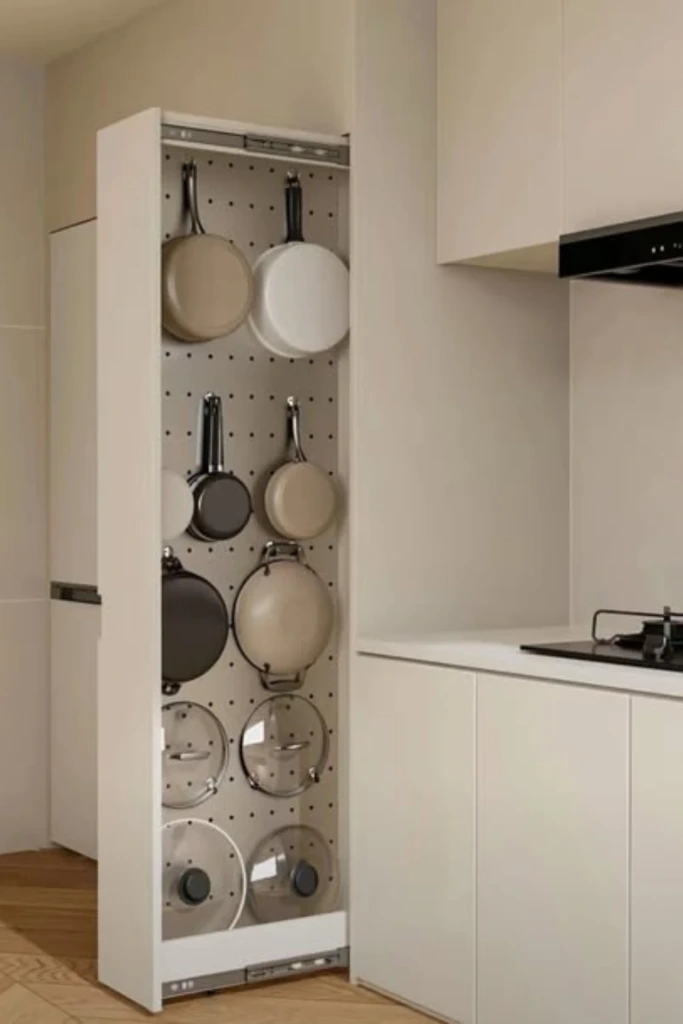
A pull-out peg panel offers customizable storage for kitchens where cabinet interiors are difficult to organize. It uses a sliding panel fitted with movable pegs or supports to hold cookware accessories in designated positions.
To use this system for pot lids, arrange the pegs so each lid has enough room to sit securely without leaning heavily against neighboring pieces. Adjust the spacing to suit different diameters, and leave extra clearance around raised handles.
The sliding mechanism allows you to access items at the back of a cabinet without reaching over everything in front. This can be especially helpful in deeper base cabinets where lids tend to disappear behind pots and pans.
Choose a panel designed to handle the combined weight of your lids, and confirm that the cabinet has sufficient depth for the sliding hardware. Keep the tracks clean and avoid overloading the panel, since excess weight can make it harder to pull out smoothly.
3. Cabinet Door Mount
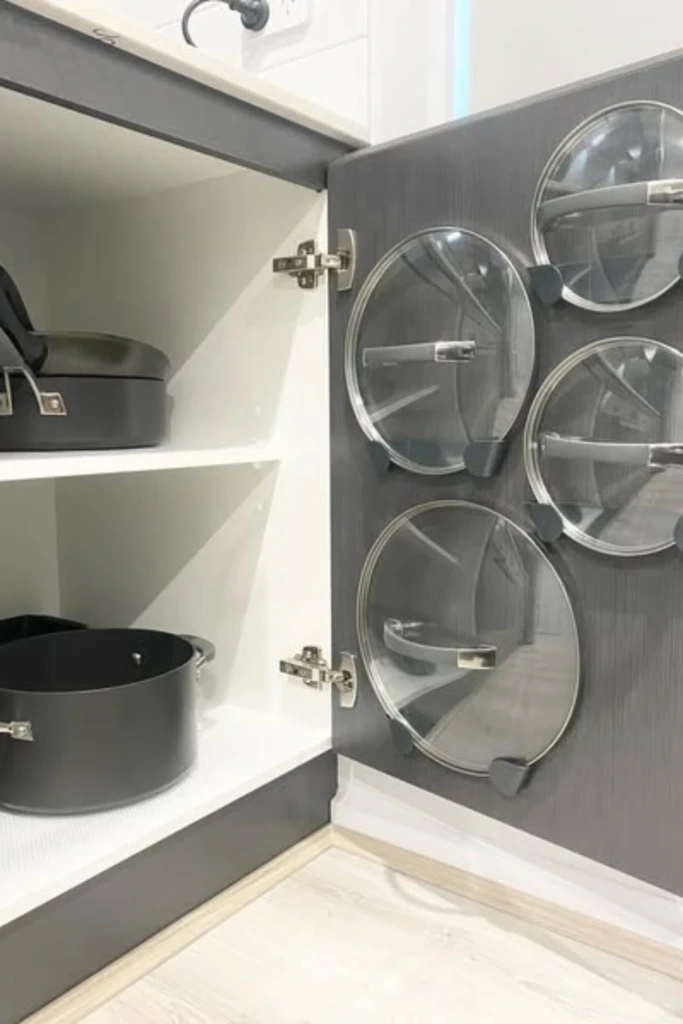
The inside of a cabinet door can provide valuable storage space that might otherwise go unused. A cabinet door-mounted lid holder keeps lids visible and accessible while freeing up shelves for pots, pans, and other kitchen essentials.
Depending on the design, the organizer may use hooks, rails, wire pockets, or individual holders to support lids. Before installation, measure the door and check the clearance between the door and the cabinet contents. A holder that extends too far inward may prevent the door from closing or interfere with shelves.
Choose a mounting method appropriate for the door material and the weight of the lids. Screw-mounted racks generally offer secure support when installed correctly, while adhesive options are better suited to lightweight items and surfaces compatible with the product.
Position the lids so they cannot slide out when the door opens or closes. Glass lids deserve particular attention because repeated movement can cause them to knock against one another or the cabinet frame.
4. Dual-Zone Storage
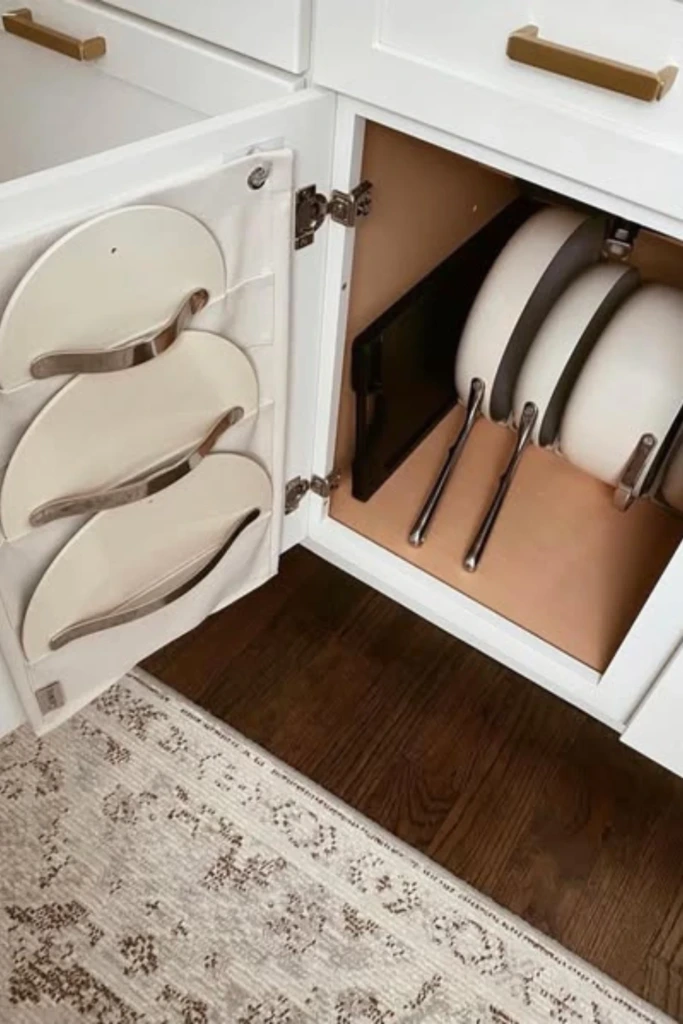
Dual-zone storage divides your pot lids into two convenient groups instead of keeping everything in one crowded location. This approach works well when you have a large cookware collection or use certain lids much more frequently than others.
For example, dedicate one cabinet section to everyday saucepan and frying-pan lids, then use a drawer or higher shelf for larger stockpot covers and occasional-use pieces. You could also separate glass lids from heavier metal ones to reduce the chance of accidental impacts.
The key is to establish a clear purpose for each zone. Store frequently used lids at a comfortable height and reserve less accessible areas for pieces you rarely need. If several people share the kitchen, make the arrangement easy to understand so everyone can return lids to the correct location.
Avoid creating too many categories, as excessive separation can make the system harder to maintain. Two well-planned zones are often enough to improve accessibility without complicating your kitchen routine.
5. Countertop Display Stand
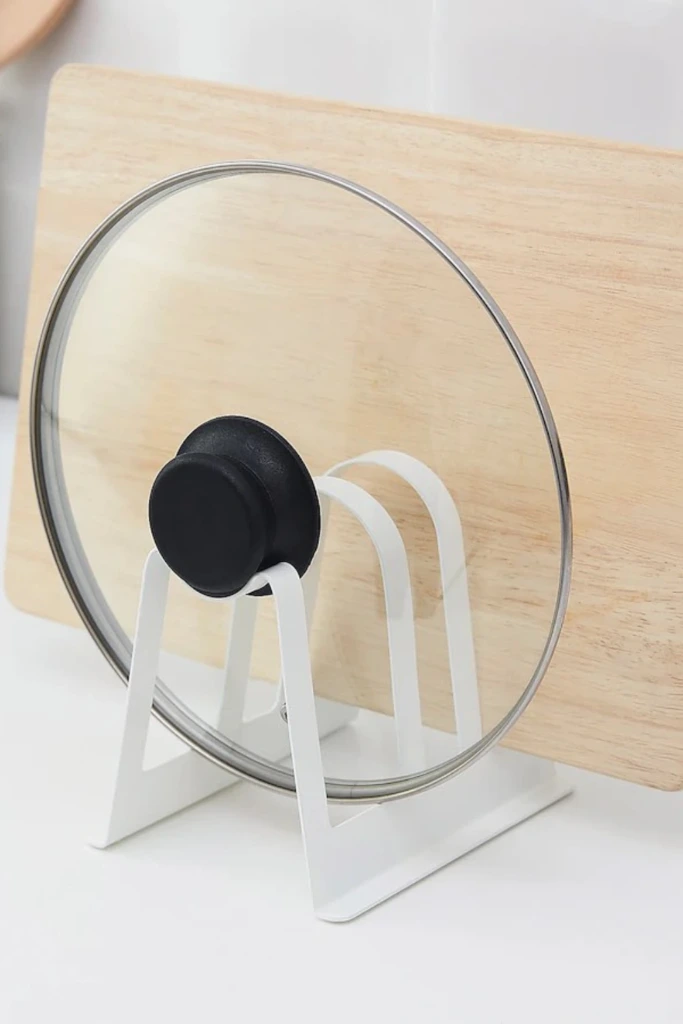
A countertop display stand is a practical option if you prefer keeping frequently used lids within arm's reach. It can sit beside the cooking area, on an open shelf, or in another convenient spot where it does not interfere with food preparation.
Choose a stand with individual slots that hold lids upright and prevent them from slipping into one another. A broad, stable base helps reduce tipping, especially when storing larger or heavier covers. Make sure the slots are wide enough for handles and that the stand can support the weight of your collection.
This arrangement is particularly useful in kitchens with limited cabinet space or for cooks who regularly switch between several pans. However, countertop storage uses visible surface area and exposes lids to grease, steam, and dust.
Keep the stand away from direct heat and splashing cooking oil. Clean it regularly, and avoid placing lids on it while they are still hot or wet. If counter space is limited, a compact model that holds only your everyday lids may be the better choice.
6. Deep Drawer Filing
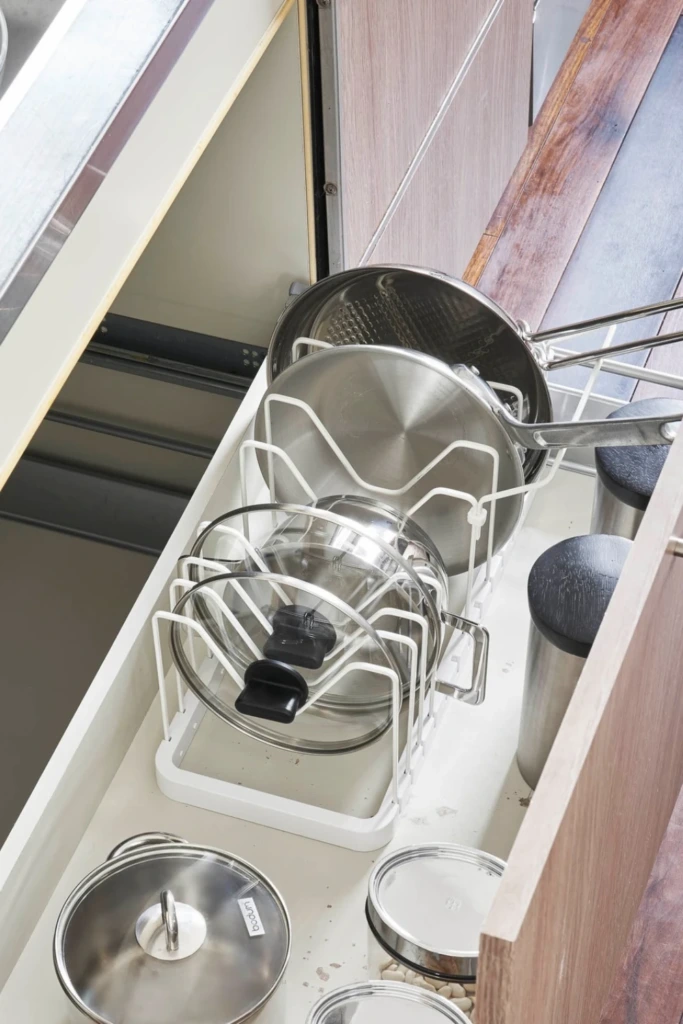
Deep drawers can make excellent storage spaces for pot lids when fitted with suitable dividers. Rather than piling the covers horizontally, arrange them vertically like files in a cabinet, with each lid occupying its own slot.
This filing method makes it easy to identify the size you need and remove it without lifting an entire stack. Adjustable dividers allow you to create wider compartments for large lids and narrower ones for smaller covers.
Start by measuring the drawer's internal height, width, and depth. Check that the tallest lid, including its handle, fits without catching on the drawer above. Add non-slip supports or a drawer liner if the lids tend to slide when the drawer opens and closes.
Keep heavier lids securely supported and leave enough room to grasp each handle comfortably. Avoid forcing oversized lids into narrow spaces, as this can scratch finishes or damage glass edges.
For the best results, arrange lids by size or cookware type and keep the most frequently used pieces toward the front of the drawer.
7. Vertical Door Rack
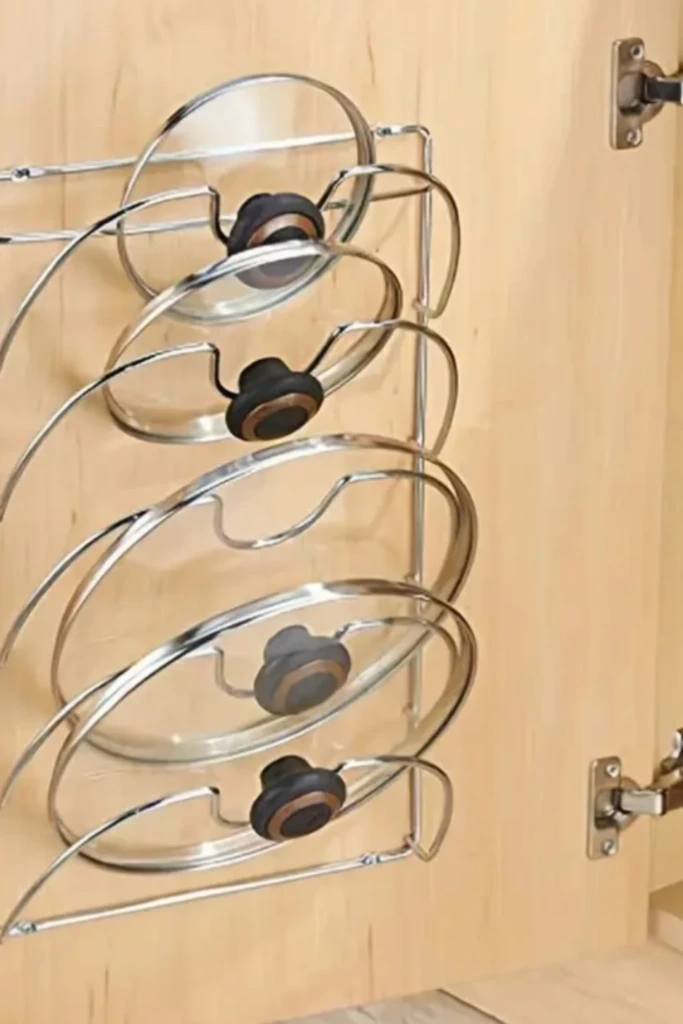
A vertical door rack stores lids upright using rails, curved supports, or wire compartments attached to a cabinet door or another suitable surface. It is a space-saving option for kitchens where shelves and drawers are already full.
The upright arrangement keeps lids separated, making it easier to find the correct cover without moving other cookware. It also uses height efficiently, which can be particularly beneficial in small kitchens.
Before installing a rack, check the door's strength, the available mounting area, and the clearance needed for handles. The rack should hold each lid firmly enough to prevent it from falling when the door moves.
For glass covers, look for smooth contact points and adequate spacing between neighboring lids. Avoid arrangements that allow glass edges to knock together whenever the cabinet opens.
A vertical rack works best when the lids fit the rack's intended dimensions. If your collection includes unusually large or heavy covers, confirm the manufacturer's weight limits before installation.
8. Heavy-Duty Drawer Rack
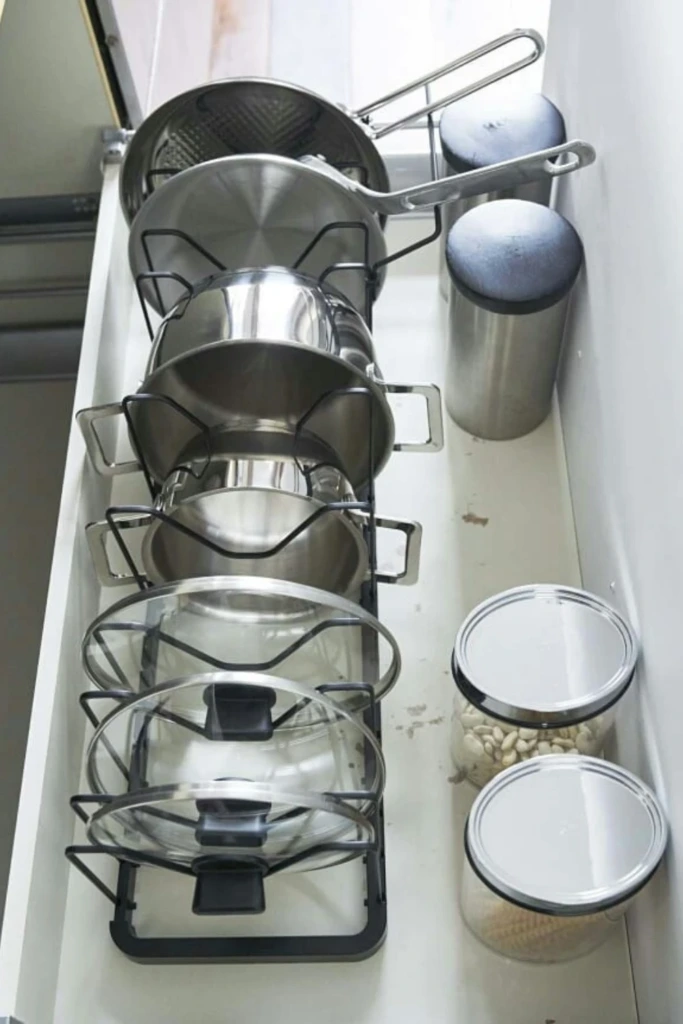
Heavy-duty drawer racks are designed for cookware accessories that need more substantial support. They can be especially useful for thick stainless-steel lids, oversized stockpot covers, and other pieces that may be too heavy for lightweight plastic organizers.
Look for a rack made from sturdy metal or another durable material, with a stable base and dividers that will not bend under normal use. A well-fitted organizer keeps lids separated while preventing them from sliding around as the drawer moves.
Check the drawer's weight capacity as well as the rack's dimensions. Even a strong organizer can cause problems if the drawer slides or cabinet structure cannot support the combined load.
Arrange lids so their weight is distributed evenly and handles remain easy to grasp. If the rack has adjustable dividers, set them close enough to keep lids upright without squeezing them tightly together.
For long-term performance, remove crumbs and moisture from the drawer, inspect the hardware occasionally, and replace any damaged supports before they become unstable.
9. Top Shelf Slot
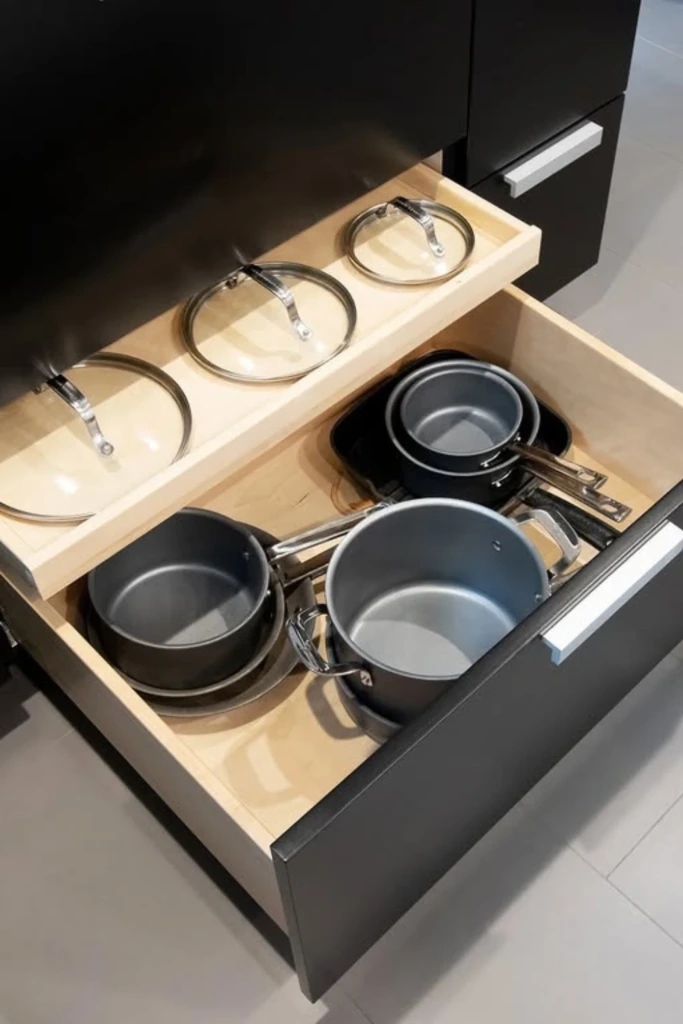
A top-shelf slot organizer can make use of vertical space inside a cabinet that has a tall upper section. Instead of stacking every lid flat, use a dedicated rack or divider system to create separate upright spaces on the shelf.
This arrangement helps keep lids visible and prevents a stack from becoming unstable when you remove a piece from the bottom. It is particularly useful for occasional-use lids that do not need to stay immediately beside the stove.
Choose a shelf that is strong enough to support the organizer and its contents. Large or heavy lids can become awkward to lift from high storage, so reserve upper shelves for lightweight covers whenever possible.
Keep the slots deep enough to support each lid securely, and ensure the organizer cannot slide toward the shelf edge. Leave room around the lids so you can remove them without catching their handles on neighboring items.
If reaching the shelf requires stretching or using a step stool, store everyday lids somewhere lower and more accessible.
10. Mixed Drawer Zones
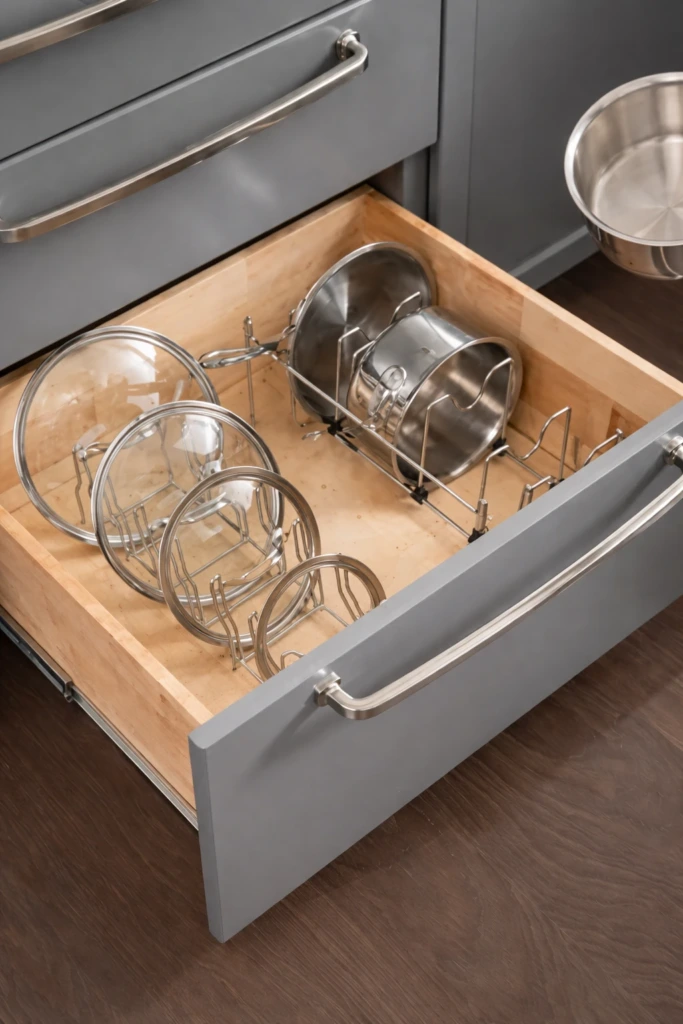
Mixed drawer zones combine pot lid storage with other kitchen accessories in a single organized drawer. This can be useful when your kitchen has limited dedicated storage and you need to make every compartment count.
Divide the drawer into clearly defined sections. One area might hold pot lids, another could store pan protectors or trivets, and a smaller section could accommodate heat-resistant accessories. Keep objects that are frequently used together near one another without allowing them to crowd the lids.
Use adjustable dividers to prevent lids from shifting into neighboring compartments. If the drawer contains glass covers, keep heavier utensils and metal accessories in a separate section to minimize accidental impacts.
Pay attention to drawer depth and the height of lid handles. The drawer should close fully without pressing against the stored items, and each lid should be removable without disturbing everything around it.
This system works best when each zone has a clear purpose. Review the arrangement whenever the contents change, and remove unnecessary accessories before the drawer becomes overcrowded.
11. Slim Divider Rack
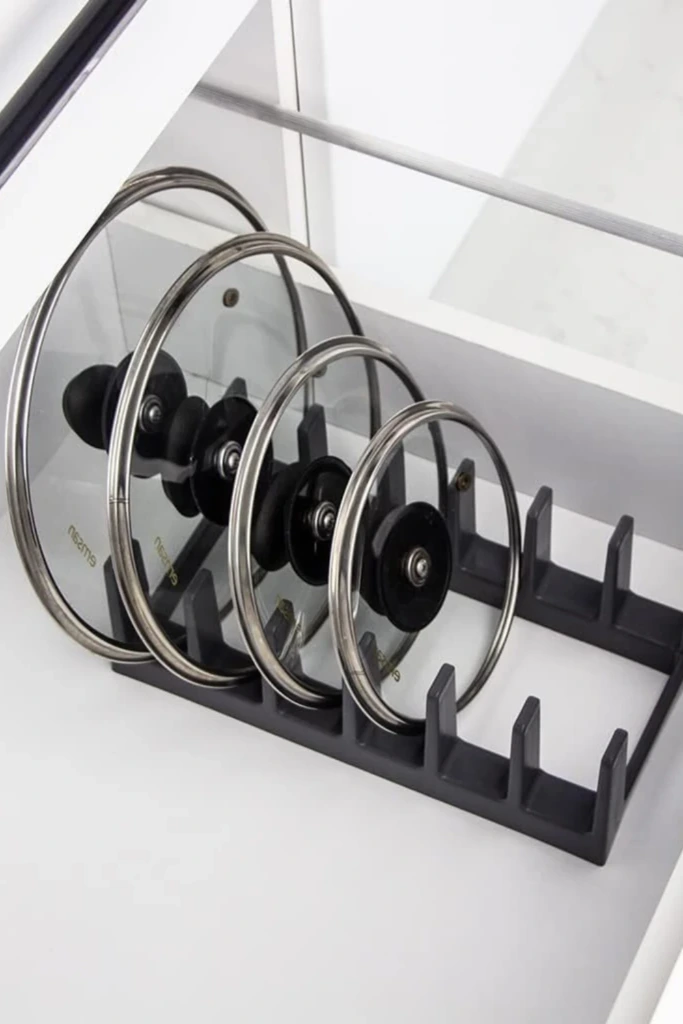
A slim divider rack is ideal for narrow cabinets, small drawers, or awkward gaps where a larger organizer would waste space. Its compact design creates separate positions for lids without requiring a bulky storage unit.
Look for a narrow rack with stable supports and enough room between dividers for the widest parts of your lids. Some designs fit inside cabinets, while others sit in drawers or on open shelves.
Measure carefully before purchasing. A rack that is too narrow may force lids together, while one that is too wide can make the surrounding space difficult to use efficiently.
For a small collection, a slim organizer may provide all the capacity you need. If you own many large covers, however, several lids may still overlap or become difficult to remove. In that case, consider combining a slim rack with another storage area.
Choose a material that is easy to wipe clean and resistant to moisture. Proper spacing and a secure base will help keep the arrangement neat through everyday use.
12. Wooden Slot Holders
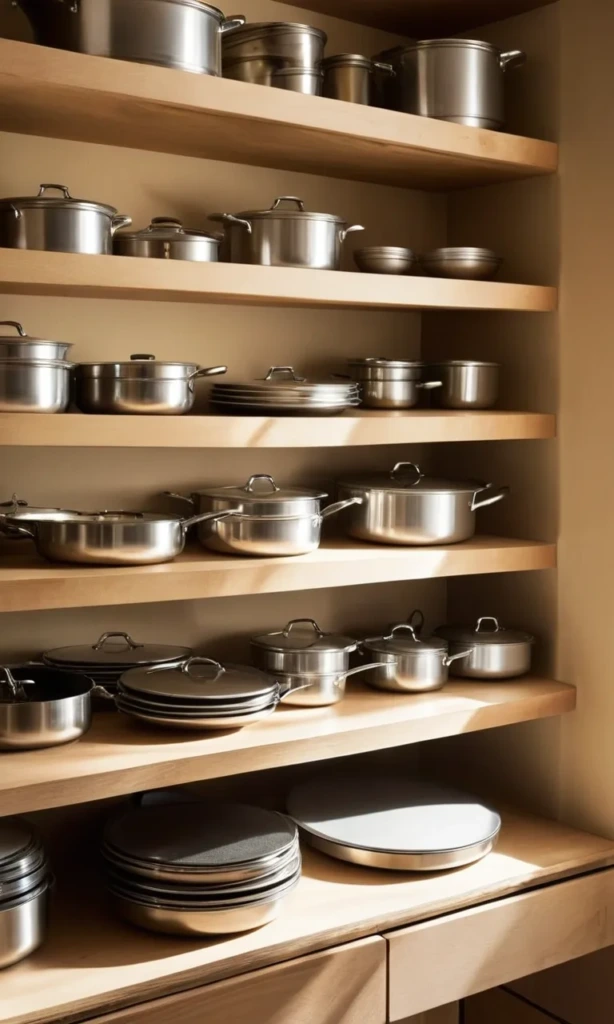
Wooden slot holders offer a warm, natural look while providing practical storage for pot lids. They generally use a series of grooves, rails, or wooden dividers to hold covers upright and separated.
These organizers can complement wooden cabinetry and open shelving, making them a good option for kitchens where storage is also part of the decor. A well-designed holder keeps lids easy to identify while reducing the need to stack them.
When choosing a wooden model, consider the spacing between slots, the stability of its base, and the finish of the wood. Smooth, rounded edges are preferable because they reduce the risk of scratching lids or catching on handles.
Wood can absorb moisture, so allow lids to dry before putting them away. Wipe up spills promptly and clean the holder according to the manufacturer's instructions. Avoid leaving it in persistently damp areas, where the material may swell or deteriorate.
If you enjoy DIY projects, you can create a custom wooden holder sized to fit a specific drawer or cabinet. Make sure the grooves are wide enough for your lids and that the finished structure is stable before loading it.
FAQs
Organizing pot lids becomes easier when you choose a storage method that suits your cookware, available space, and cooking habits. The following answers address two common questions about keeping lids accessible and protecting them from damage.
Should You Store Lids With Pots?
Storing lids with their corresponding pots can be convenient, especially when you have limited cabinet space and use each pair together regularly. Keeping matching pieces close together reduces the time spent searching for the right cover while cooking.
However, placing lids directly on pots is not always the most efficient approach. Handles can make stacked cookware unstable, and a collection of different pot sizes may not stack neatly. Repeated stacking can also cause scratches, particularly when metal lids or handles rub against cookware finishes.
A practical compromise is to keep pots and lids in the same general cabinet while storing the lids separately in a vertical rack or divided drawer. This preserves the convenience of keeping matching items nearby without creating an awkward stack.
If you prefer storing lids on their pots, make sure the arrangement is stable, the cabinet has enough height, and the lids cannot slide off when cookware is moved. For glass lids, avoid placing heavy items on top of them.
Ultimately, the best arrangement is the one that keeps cookware accessible, protects its finish, and fits comfortably within your available storage space.
What’s the Best Way to Store Glass Lids Safely?
Glass lids need a little extra care because their edges can chip or crack if they strike hard surfaces. The safest storage method keeps each lid supported, separated from neighboring covers, and protected from sudden movement.
A vertical rack with individual compartments is often an excellent choice. Select a model with smooth dividers, sufficient spacing, and a stable base. Place each lid securely in its own slot rather than allowing several glass covers to lean against one another.
If you store glass lids in a drawer, use padded dividers or compatible protective separators to cushion contact points. Make sure the drawer is deep enough for the handles and that the lids cannot slide when it opens or closes.
You can also use dedicated cookware protectors between stacked lids, provided the arrangement remains stable and the protectors cover the areas where the glass might touch. Avoid placing heavy metal cookware on top of glass covers.
Before storing a lid, check for cracks or chips, especially around the rim. Wash and dry it thoroughly, then place it gently in its designated space. Never store a hot glass lid where it may experience a sudden temperature change, and follow the cookware manufacturer's guidance for temperature handling.
Final Thoughts
A well-organized pot lid storage system can make everyday cooking more convenient while helping protect your cookware from unnecessary wear. Adjustable racks, drawer dividers, cabinet door holders, and wooden slot organizers each offer useful advantages, depending on your kitchen layout and the lids you own.
Start by measuring your available space, sorting your collection, and choosing an arrangement that keeps frequently used lids within easy reach. With secure supports, sensible spacing, and a consistent place for every lid, you can maintain a tidy kitchen without sacrificing valuable storage space.