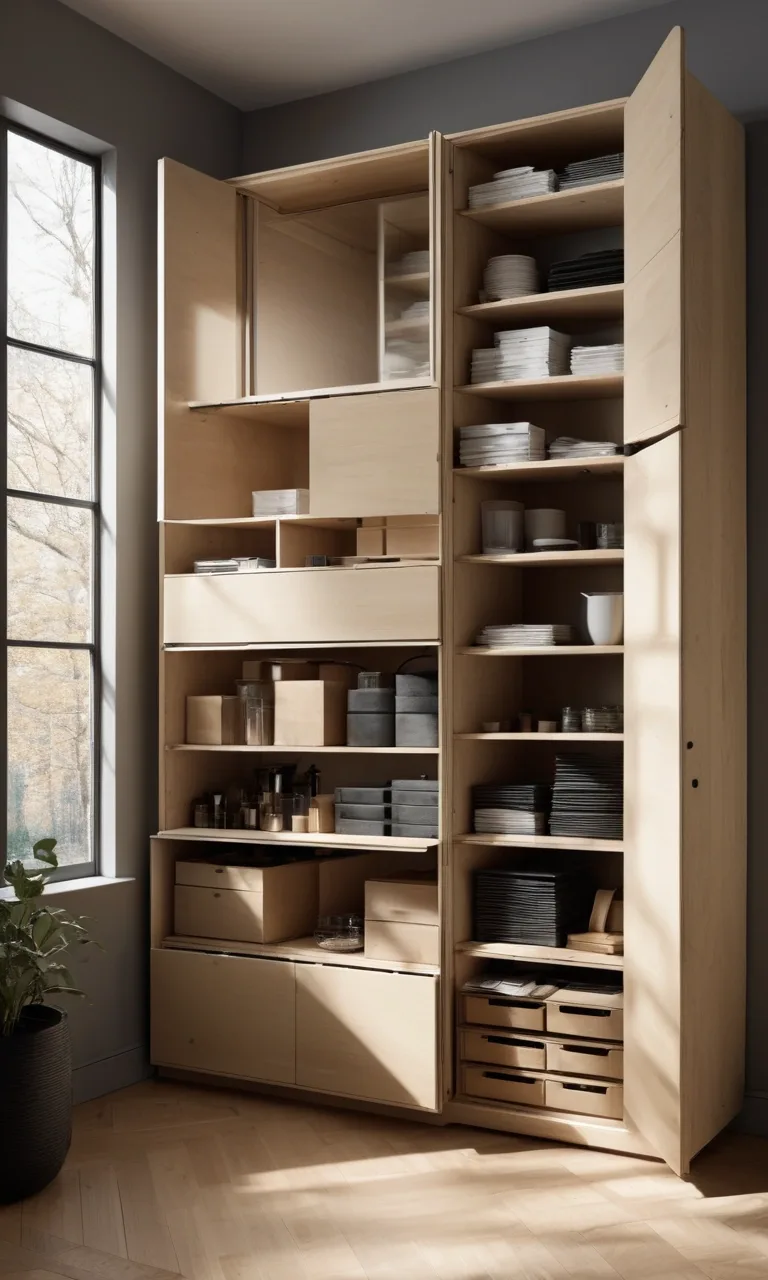
19 Jacket Storage Ideas for 2026
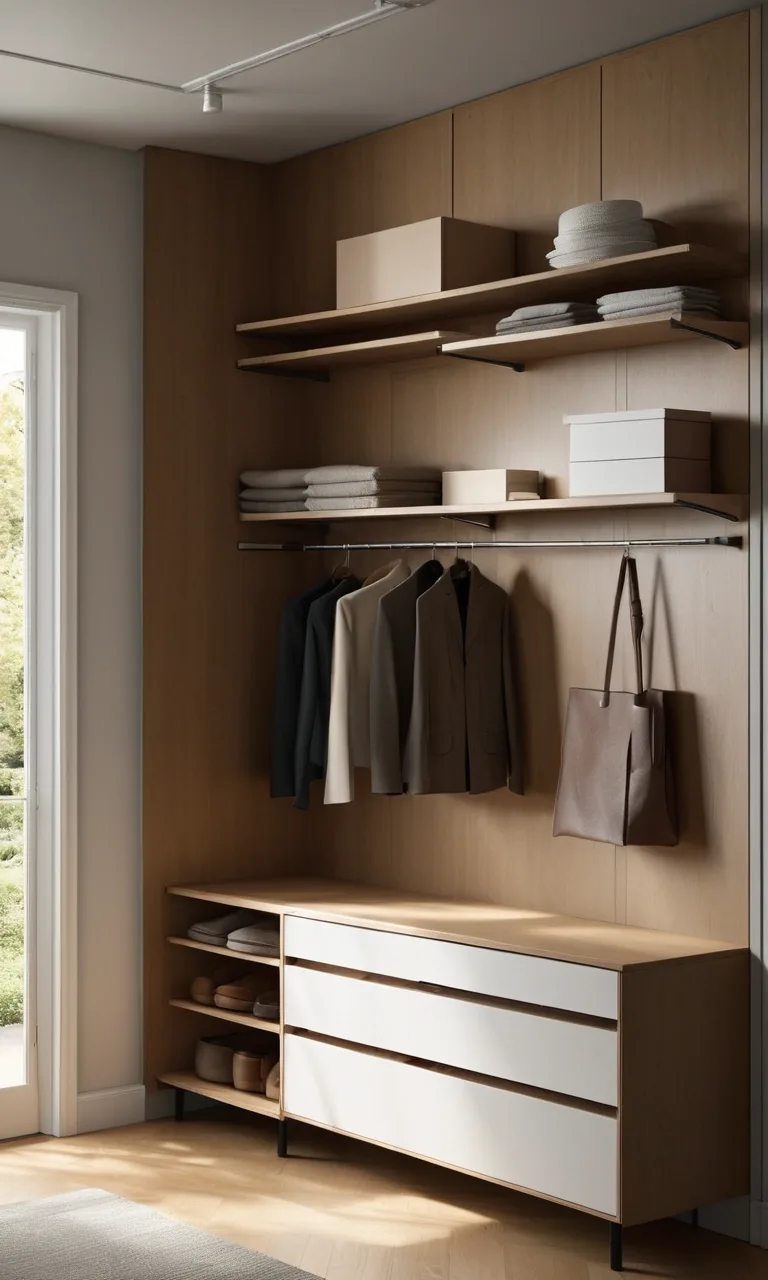
Jackets are essential for changing weather, but keeping them organized can be tricky when closets are crowded and entryways have limited space. From bulky winter coats to lightweight denim jackets, every type of outerwear needs a practical place to hang or fold. The right storage setup makes your home tidier, protects your clothing, and helps you find the jacket you need without searching through piles. These jacket storage ideas offer solutions for spacious closets, small apartments, busy entryways, and seasonal wardrobe changes.
How Can I Store Jackets Without Them Smelling Musty?
Musty odors usually develop when jackets are stored before they are completely dry or kept in damp, poorly ventilated spaces. Before putting away your outerwear, check every pocket, remove dirt, and clean each item according to its care label. Allow jackets to dry thoroughly, especially around cuffs, collars, linings, and pockets.
Choose a clean, dry closet with enough room for air to circulate between hanging garments. Avoid squeezing too many jackets onto one rail, as tightly packed clothing can trap moisture and odors. For long-term storage, use breathable garment bags or clean fabric storage containers rather than sealing damp clothing in airtight plastic.
If your closet tends to feel humid, consider using a moisture absorber suitable for enclosed spaces. Wash or air out jackets before bringing them back into regular use, and investigate any persistent musty smell rather than simply covering it with fragrance. Good ventilation and complete drying are the most reliable ways to keep stored jackets fresh.
1. Double Rod Layout
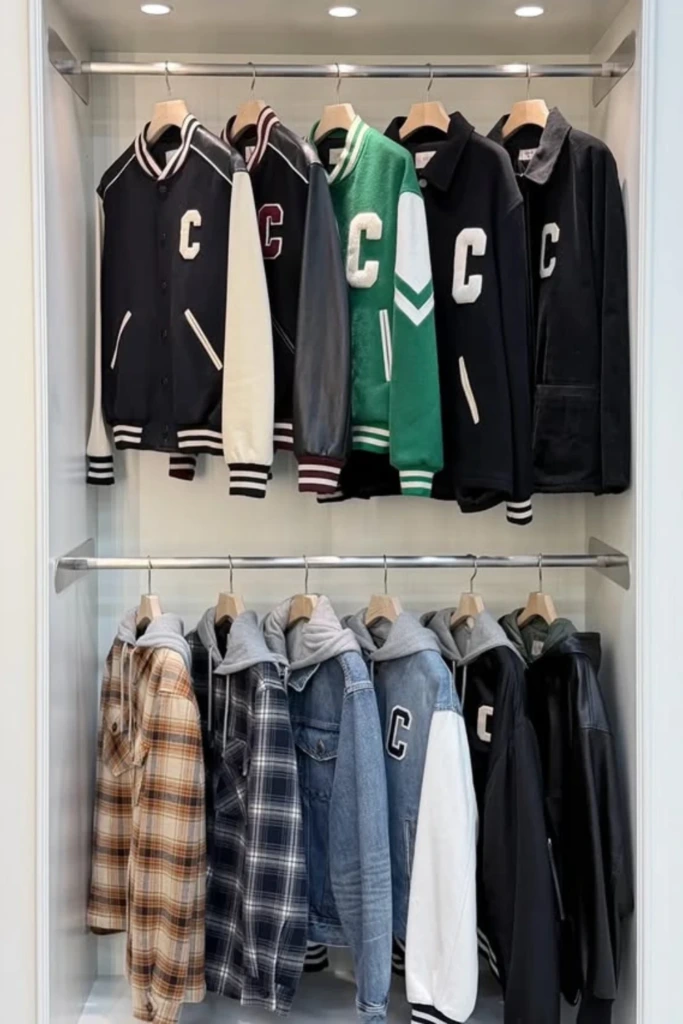
A double rod layout helps you use vertical closet space more effectively. Install one hanging rail above another to create separate levels for shorter jackets, lightweight coats, and other compact garments. This arrangement works particularly well in closets where the existing rail leaves a large amount of unused space below.
Place shorter jackets on the upper or lower rail according to your reach and available clearance. Keep longer coats on a separate full-height section so their hems do not drag or become creased. Before installing a second rail, check that the closet height allows enough room for hangers and sleeves.
Use matching hangers where possible to create a consistent appearance and make it easier to slide jackets along the rails. A double rod system is an excellent choice for households with several family members or anyone who wants to store everyday outerwear without expanding the closet.
2. Industrial Pipe Rack
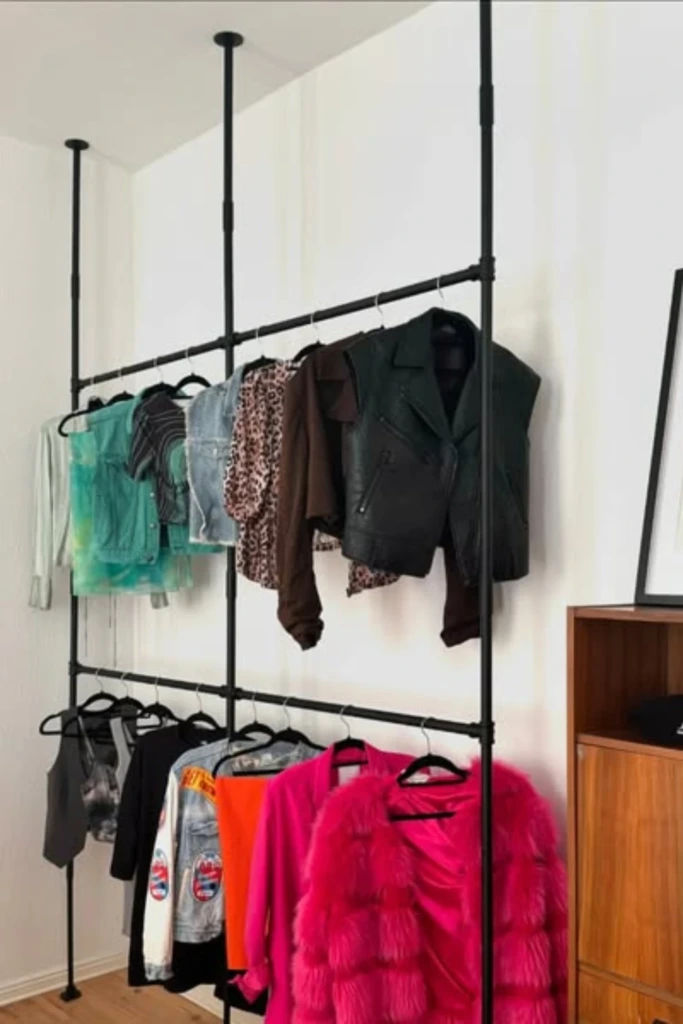
An industrial pipe rack offers a sturdy, practical way to display and organize jackets outside a traditional wardrobe. Made from metal pipes and compatible fittings, this style suits laundry rooms, entryways, spare bedrooms, and loft-inspired interiors.
Choose a pipe rack with a hanging bar long enough for your collection without overcrowding the hangers. You can build a simple freestanding version or attach a properly supported rack to the wall. Some designs also include a lower shelf for shoes, storage baskets, or accessories.
The main advantage is accessibility. Jackets remain visible, making it easier to select one quickly before leaving home. However, an open rack collects dust more readily than a closed closet, so it works best for frequently worn garments. Make sure wall-mounted hardware is secured to suitable structural support and that the rack can safely handle the combined weight of heavy winter coats.
3. Ladder Shelf Rack
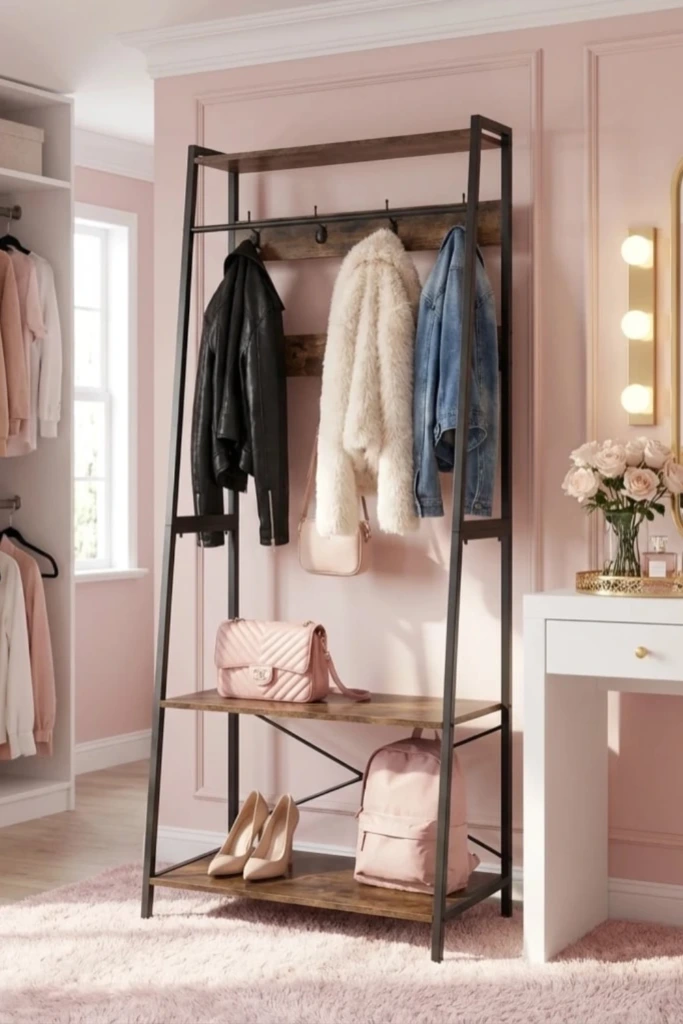
A ladder shelf rack combines hanging space with shelves for organizing outerwear and accessories. Its vertical design makes it useful in narrow entryways, bedrooms, or small apartments where a wide wardrobe would take up too much floor space.
Look for a model with a strong hanging bar and shelves that can support folded jackets, scarves, gloves, and hats. A lower shelf can hold a basket for smaller accessories, while the upper shelves are useful for items you do not need every day.
Keep heavier garments toward the center of the rack and distribute their weight evenly. If the ladder design leans against a wall, follow the manufacturer's instructions for positioning and securing it. This arrangement is particularly useful for people who prefer open storage and want their jackets to become part of the room's decor.
4. Labeled Bin System
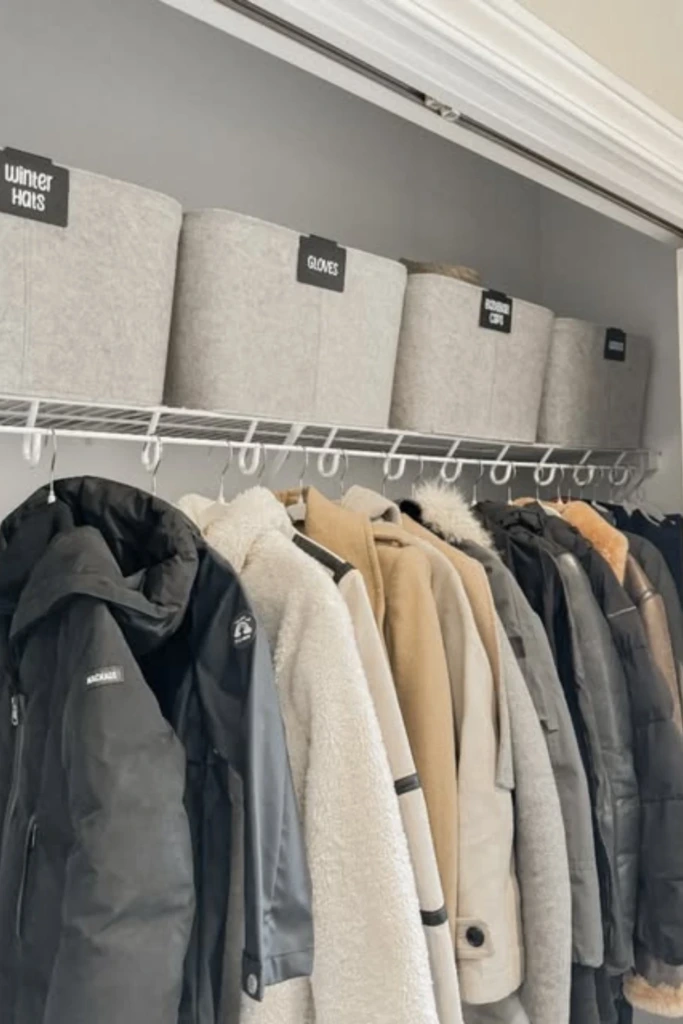
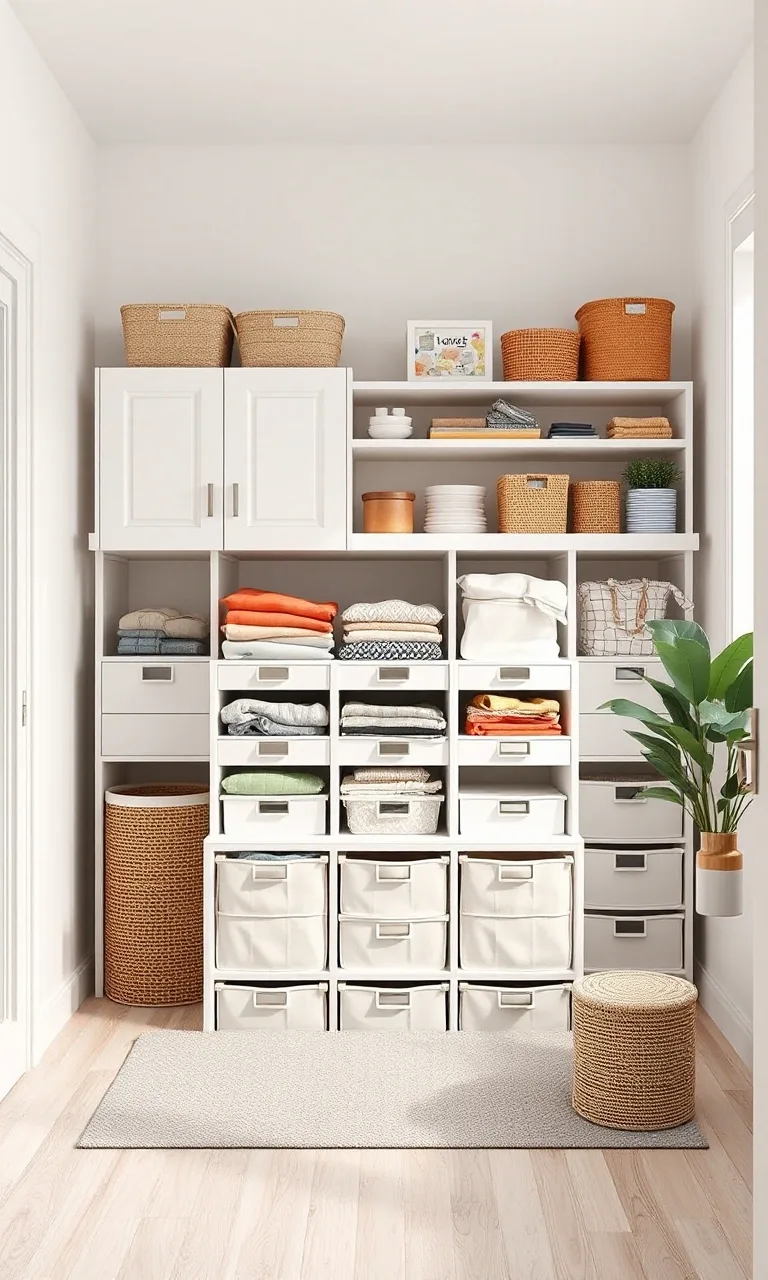
A labeled bin system makes jacket storage easier when you have several categories of outerwear or need to rotate clothing by season. Use sturdy containers to separate lightweight jackets, rainwear, children's coats, scarves, and other accessories.
Add clear labels to the front or top of each bin so you can identify the contents without opening every container. If the bins are opaque, labels become especially valuable. You can also mark containers by family member or size to make shared storage more manageable.
Store folded jackets only when their materials and construction allow it. Bulky padded jackets may take up less room in a suitable container, while structured blazers, leather jackets, and garments that wrinkle easily are generally better kept on hangers.
Choose bins that fit your shelves and avoid stacking them so high that retrieving the bottom container becomes difficult. A simple labeling system reduces clutter and helps everyone return jackets to the correct place.
5. Maxed Closet Rail
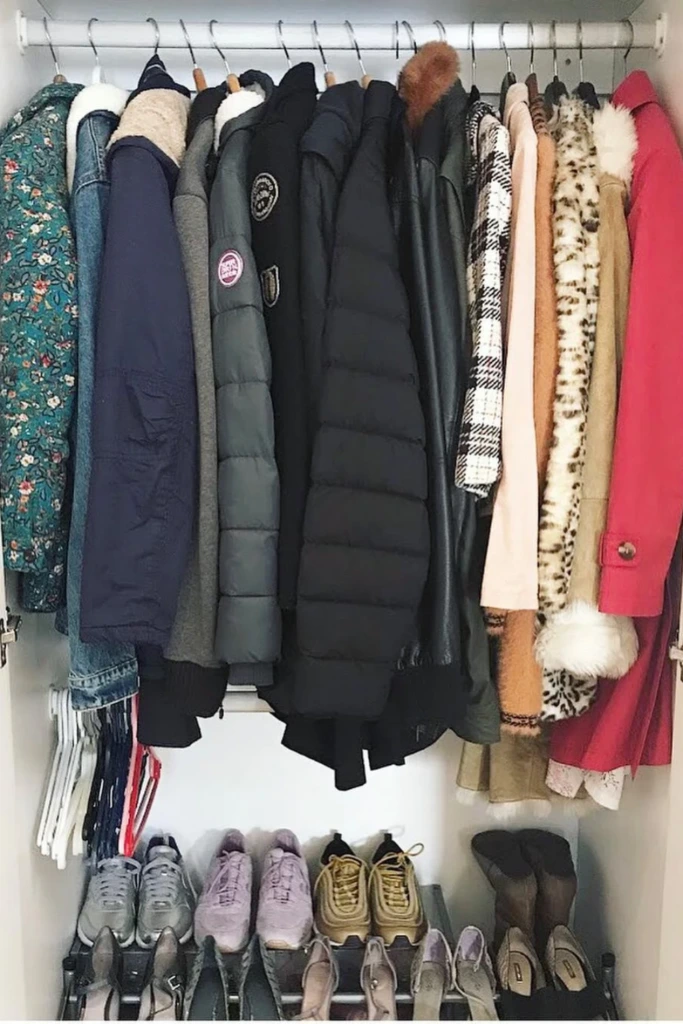
A maxed closet rail is designed to make the most of your existing hanging space. Instead of immediately buying another wardrobe, start by reviewing how the current rail is being used. Remove damaged hangers, relocate clothing you rarely wear, and arrange jackets according to length or frequency of use.
Slim, sturdy hangers can free up space compared with bulky wooden or padded designs. However, delicate fabrics, heavy coats, and garments with shaped shoulders may need specialized hangers to maintain their structure.
Organize everyday jackets near the front and move occasional or seasonal pieces toward the ends of the rail. Keep enough space between garments to find and remove them without pulling neighboring items off their hangers.
If the rail remains crowded, consider adding a second rail where the height permits or moving off-season jackets to another storage area. The goal is not simply to fit more clothing inside the closet but to make the available space easier to use.
6. Built-In Closet Zone
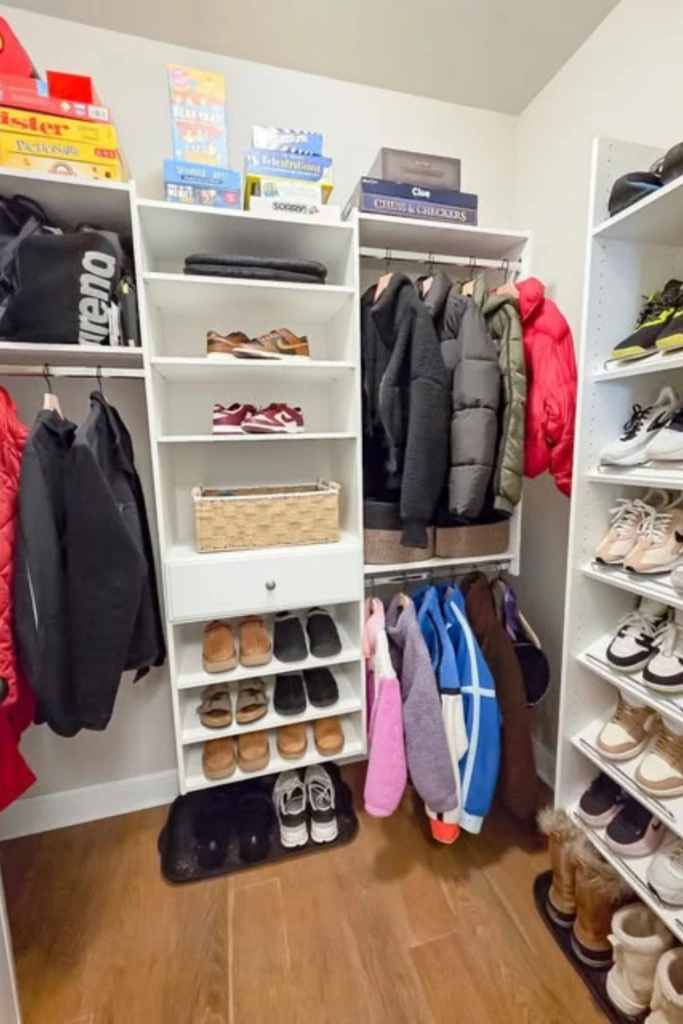
A built-in closet zone gives jackets a dedicated area within a larger wardrobe. This arrangement is useful for households that share closet space with shirts, trousers, dresses, shoes, and accessories.
Designate a specific section for outerwear, using a hanging rail for coats and jackets and nearby shelves for folded items. Add hooks or small drawers for scarves, gloves, and other accessories that tend to get misplaced. If space allows, include a high shelf for seasonal pieces that are not currently in use.
Adjust the hanging height to suit the longest garments in your collection. You can also divide the section into everyday, work, outdoor, and special-occasion jackets so that different types of clothing remain easy to locate.
Built-in storage creates a neat, coordinated appearance because every item has a designated place. Even without custom carpentry, you can achieve a similar effect with adjustable rails, shelf dividers, and matching storage baskets inside an existing closet.
7. Hidden Mudroom Nook
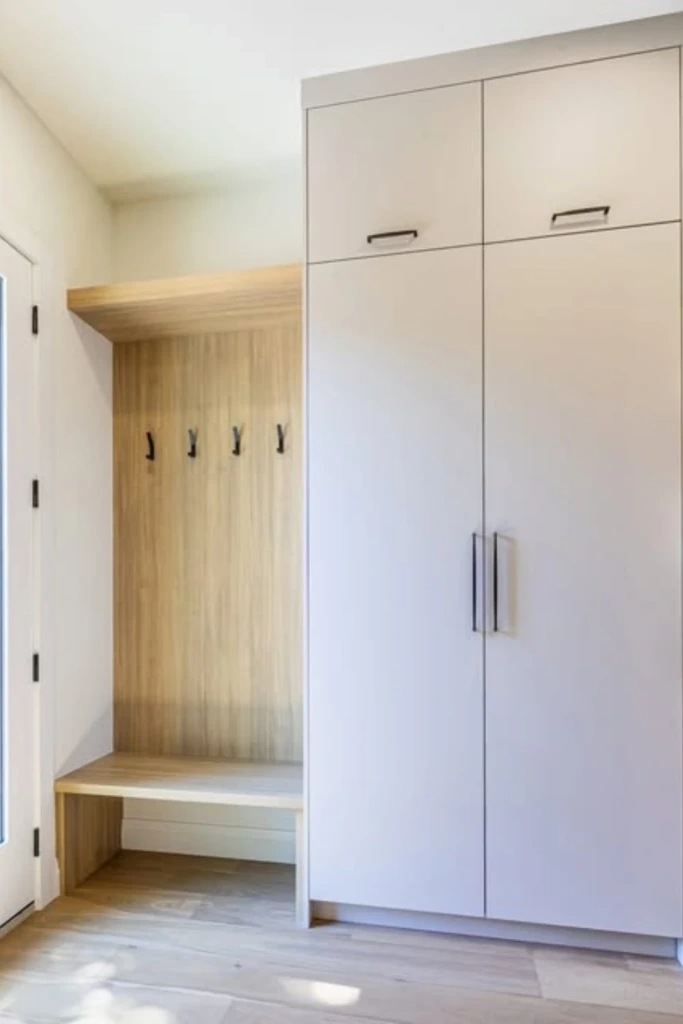
A hidden mudroom nook provides a discreet place to keep jackets near an entrance without leaving the entire area looking cluttered. It can be created inside a recessed wall space, behind a door, or within a small section of cabinetry near the main entry.
Install hooks or a short hanging rail for frequently used jackets. Add a shelf above for hats and bags, along with a bench or shoe tray below if the space permits. A cabinet door or curtain can conceal the arrangement when guests arrive or when you want a cleaner visual appearance.
Because jackets brought in from rain or snow may be damp, allow them to dry before closing them inside an enclosed nook. A washable floor mat and a separate place for wet outerwear can help protect surrounding surfaces.
This idea works especially well in homes without a full mudroom. A small, thoughtfully arranged recess can provide the convenience of an entryway wardrobe without requiring a separate room.
8. Wall Hook Grid
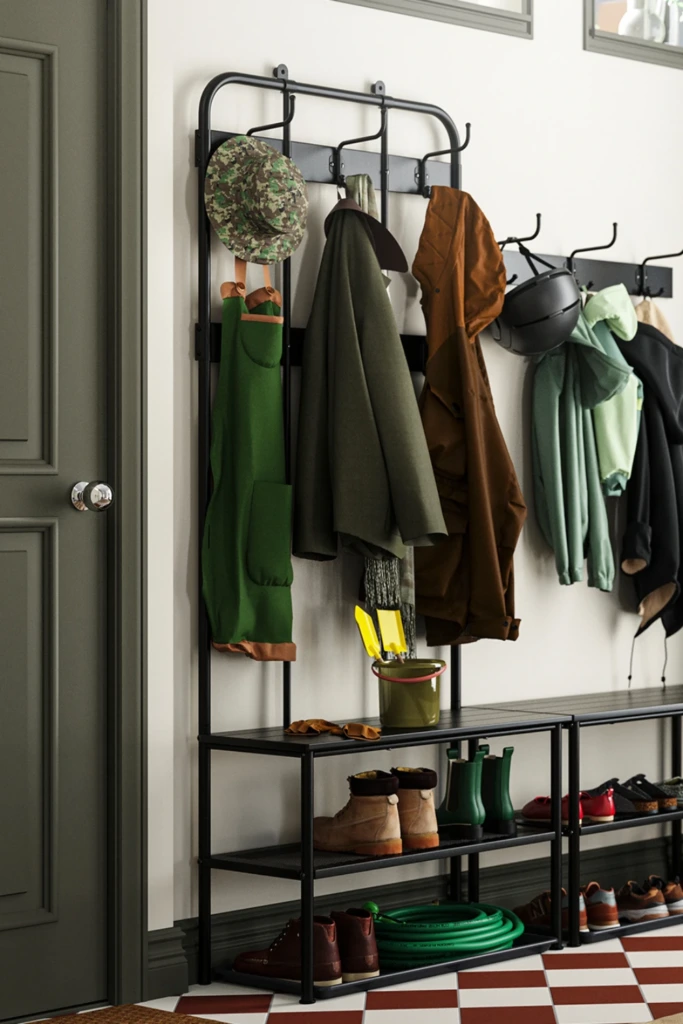
A wall hook grid creates an organized hanging area by arranging multiple hooks in a regular pattern. It is a useful option for family entryways, shared apartments, and rooms where jackets need to remain accessible throughout the day.
Choose a grid with enough space between hooks to prevent sleeves from overlapping excessively. You can assign individual rows or columns to family members, or reserve certain hooks for everyday jackets and others for guests.
Install the grid at a comfortable height and use hardware suited to the wall material and the weight of the garments. Heavy winter coats can place considerable strain on weak anchors, so secure the grid to appropriate structural support whenever necessary.
For a more organized setup, add a narrow shelf above the hooks for hats and small baskets below for gloves. A wall hook grid keeps outerwear off chairs and beds while using vertical space that might otherwise remain empty.
9. Clear Bin Storage
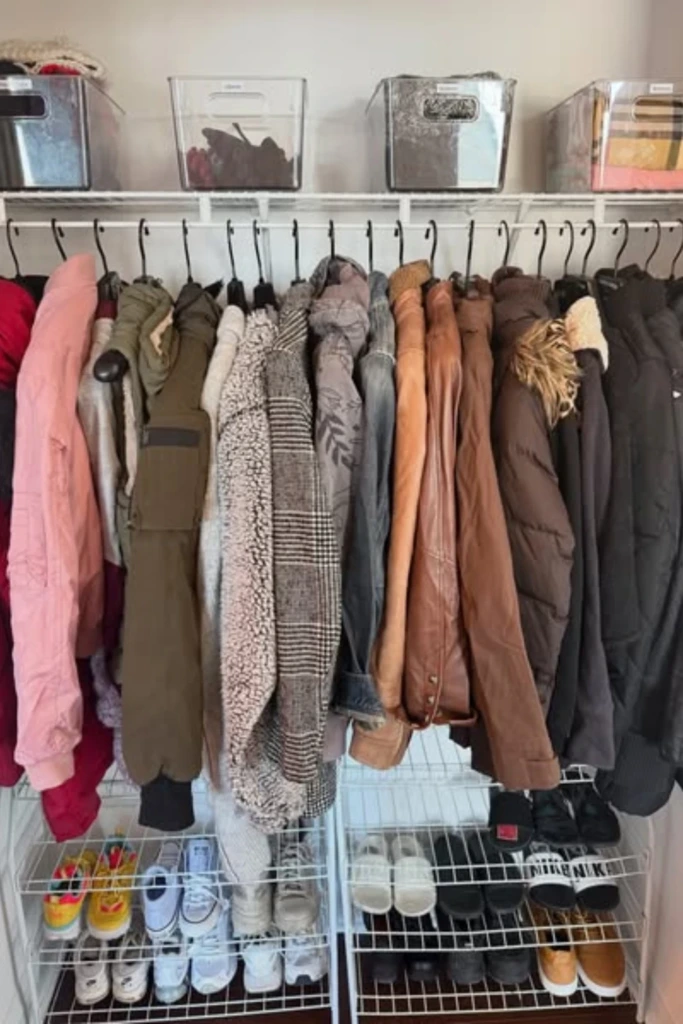
Clear bins make it easy to see which jackets are stored inside without opening every container. They are especially convenient for children's outerwear, lightweight seasonal jackets, and garments that do not require hanging.
Choose containers that are large enough to hold jackets without forcing them into tight bundles. Fold items neatly, following their natural seams where possible, and place similar garments together. Keep heavier pieces in manageable containers so they are not difficult to lift from a high shelf.
Use bins with secure lids when protection from dust is important. However, only pack jackets that are completely clean and dry, and avoid leaving containers in damp basements or hot areas where clothing may deteriorate.
If you are stacking multiple bins, place the most frequently used ones within easy reach. A small label on the front can identify the contents even when the bins are transparent. This method works well on wardrobe shelves, under suitable beds, or inside storage cupboards.
10. Panelled Entry Bench
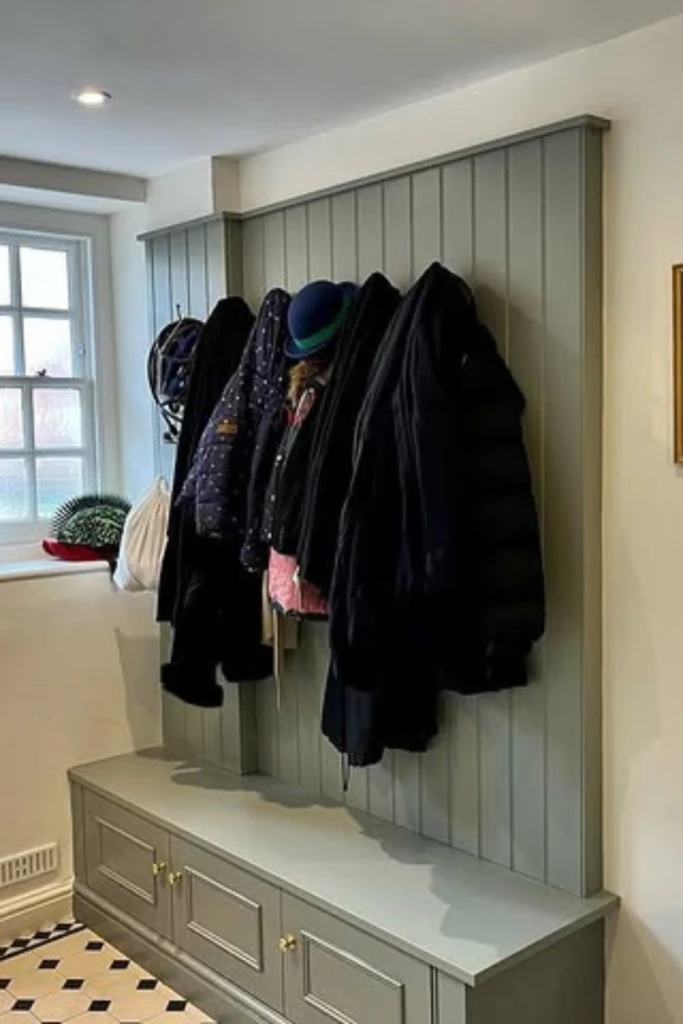
A panelled entry bench combines seating, jacket storage, and a finished decorative look in one piece of furniture. Its panelled front can complement traditional, farmhouse, or contemporary interiors, depending on the material and finish.
Choose a bench with a storage compartment, cubbies, or an open lower shelf. Keep everyday jackets on wall hooks above the bench and use the compartment below for accessories or folded outerwear. A separate basket can hold gloves, hats, and scarves so that smaller items do not disappear among larger garments.
The bench also provides a convenient place to sit while putting on shoes or adjusting outdoor gear. If it includes a lift-up seat, avoid packing it so tightly that opening the compartment becomes difficult.
Place a washable mat nearby to catch dirt and moisture from shoes. For households with children, assign each person a section or basket to encourage everyone to put their belongings away after returning home.
11. Open Utility Shelving
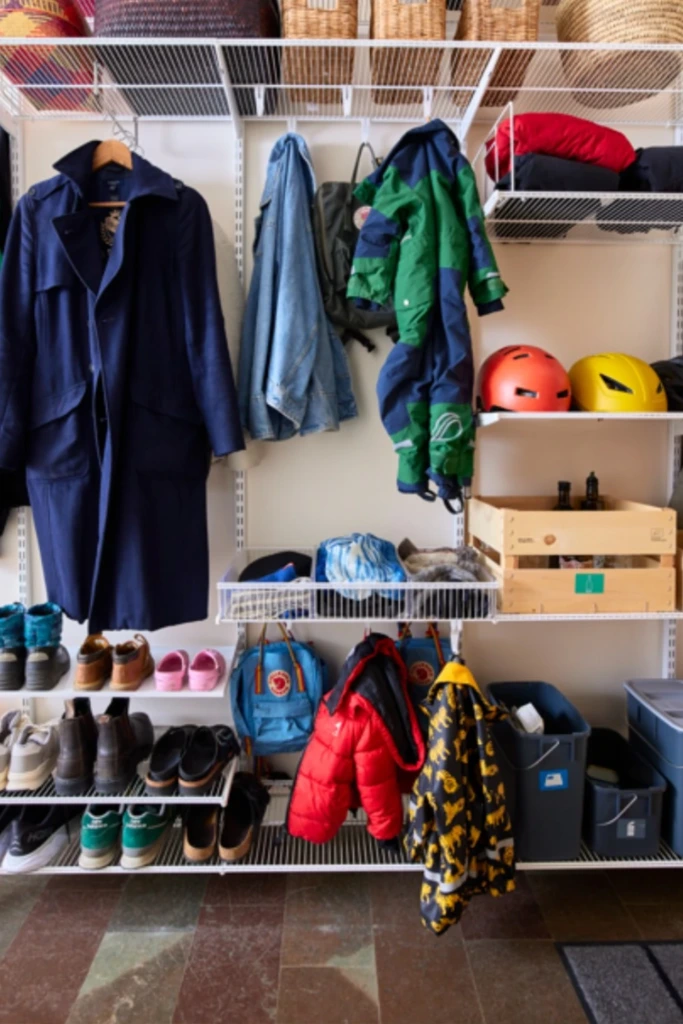
Open utility shelving provides flexible storage for jackets that can be folded or placed in containers. It is a practical option for laundry rooms, garages, spare rooms, and large closets where appearance is less important than accessibility.
Use strong shelves that can support the weight of folded clothing and storage bins. Arrange lightweight jackets and accessories on upper shelves, with heavier containers at a comfortable lower level. If you want to store jackets directly on the shelves, keep them in neat piles and avoid making stacks so tall that garments become difficult to retrieve.
Baskets or labeled boxes can help separate items by season, family member, or jacket type. For jackets that need to retain their shape, add a hanging rail nearby rather than forcing every garment into a folded arrangement.
Keep the shelving area clean and away from moisture, dust, and direct sunlight. If the shelves are located in a garage or utility room, enclosed containers or garment covers may offer additional protection against dirt and environmental changes.
12. Closet Nook Setup
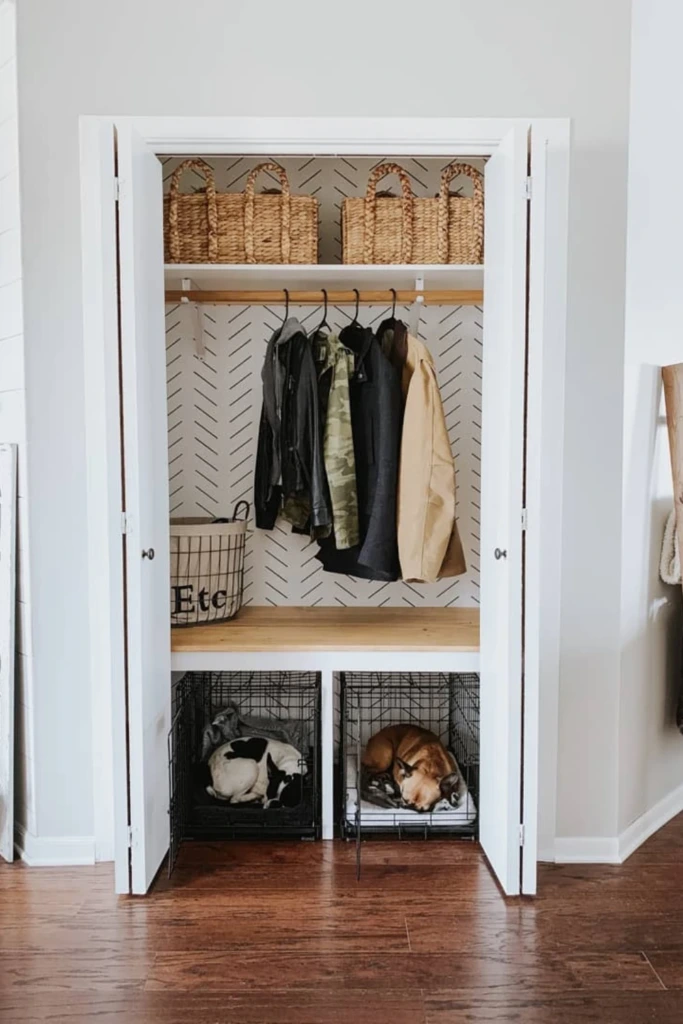
A closet nook setup turns a small or awkward section of a wardrobe into a dedicated jacket storage area. Instead of allowing this space to become a collection point for miscellaneous items, give it a clear purpose.
Install a short hanging rod if the nook has sufficient width and depth. Use the adjacent wall for hooks or a narrow organizer, and add a shelf above the rail for seasonal accessories. If hanging space is limited, a small set of cubbies can hold folded jackets and lightweight outerwear.
Measure the nook carefully before buying organizers. Sloped ceilings, recessed walls, and unusual corners may require adjustable fittings or compact storage units. Make sure the depth allows jackets to hang without catching on doors or rubbing against surrounding walls.
Keep your most frequently worn jackets at the front of the arrangement. With a few carefully chosen storage elements, even an overlooked corner can become a useful extension of your main wardrobe.
13. Freestanding Coat Stand
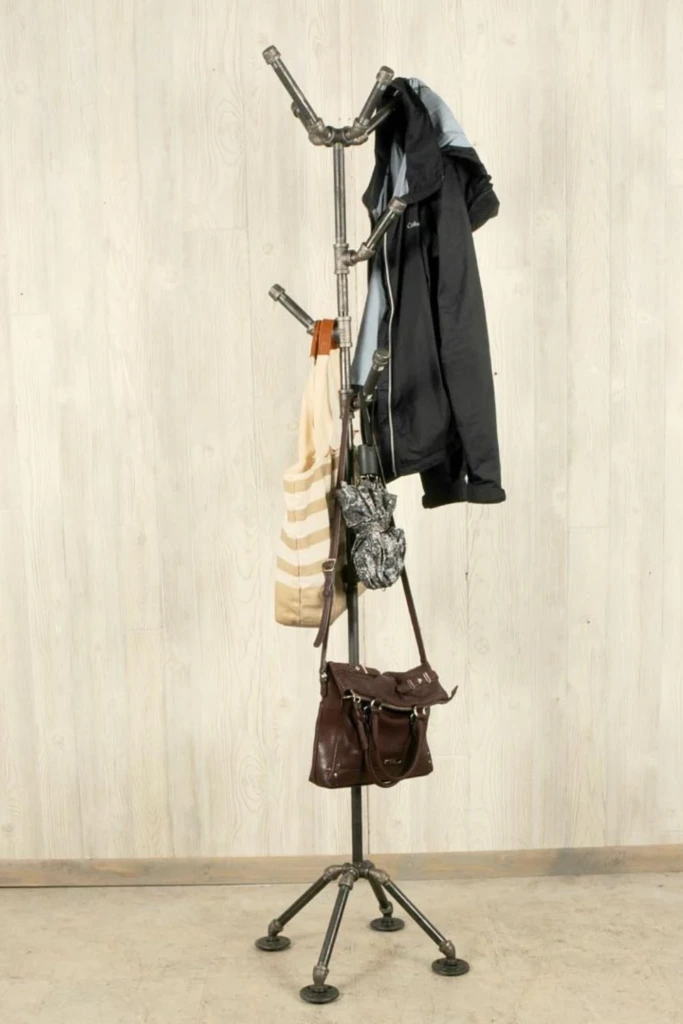
A freestanding coat stand offers immediate jacket storage without drilling holes or installing a permanent fixture. It is easy to move between an entryway, bedroom, office, or guest room as your needs change.
Select a stand with a stable base and enough hooks for the number of jackets you expect to hang. A model with different hook heights can accommodate adult coats, children's jackets, and bags. Some designs also include a lower section for umbrellas or a small base for accessories.
Avoid placing too many heavy garments on one side, as uneven weight can make a poorly balanced stand tip over. Keep the surrounding floor clear so that jackets do not become tangled with shoes or other belongings.
A coat stand is best for everyday outerwear rather than an entire seasonal wardrobe. If you use it near the entrance, periodically remove unused garments so the stand remains functional and does not become an overcrowded pile of coats.
14. Slim Wall Hooks
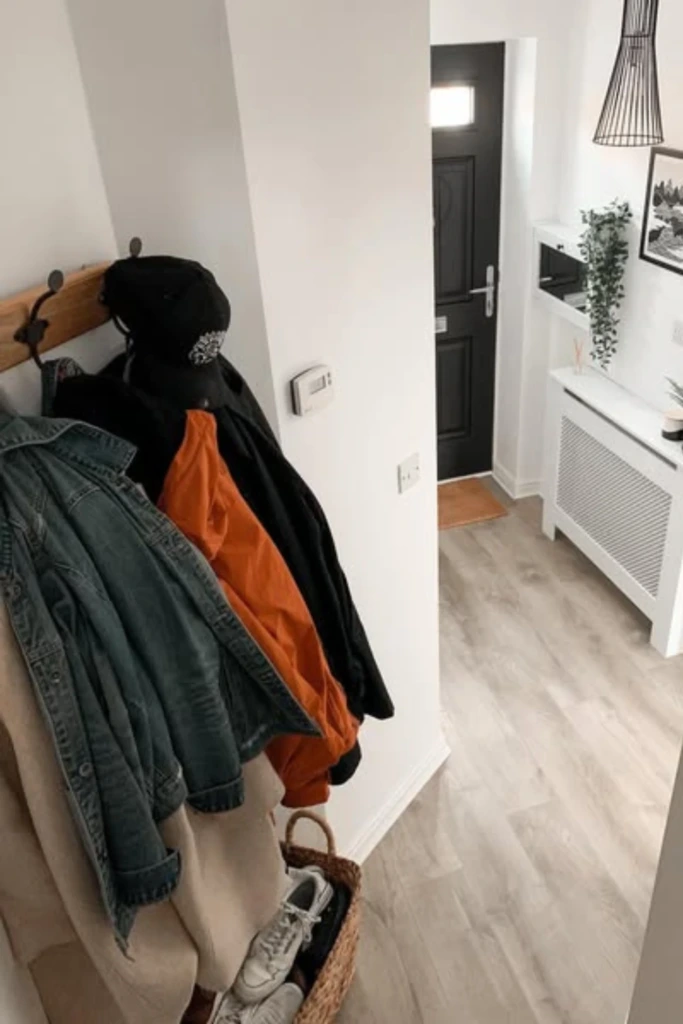
Slim wall hooks are a simple solution for storing jackets when there is little room for furniture. Their small profile makes them suitable for narrow hallways, the backs of doors, compact bedrooms, and spaces beside a wardrobe.
Install several hooks in a row or stagger them vertically to create separate hanging points. This can prevent jackets from bunching together and makes it easier for each person to find their own outerwear. For heavy coats, choose hooks with a suitable load rating and secure them properly to the wall.
Consider the hook shape before buying. Rounded ends are generally preferable for delicate fabrics because they are less likely to catch or damage the material. Hooks with a small ledge can also hold caps and other lightweight accessories.
Keep the installation away from areas where open doors, drawers, or passing people could catch on hanging sleeves. A few well-positioned hooks can make a noticeable difference without taking up valuable floor space.
15. Door Hook Solution
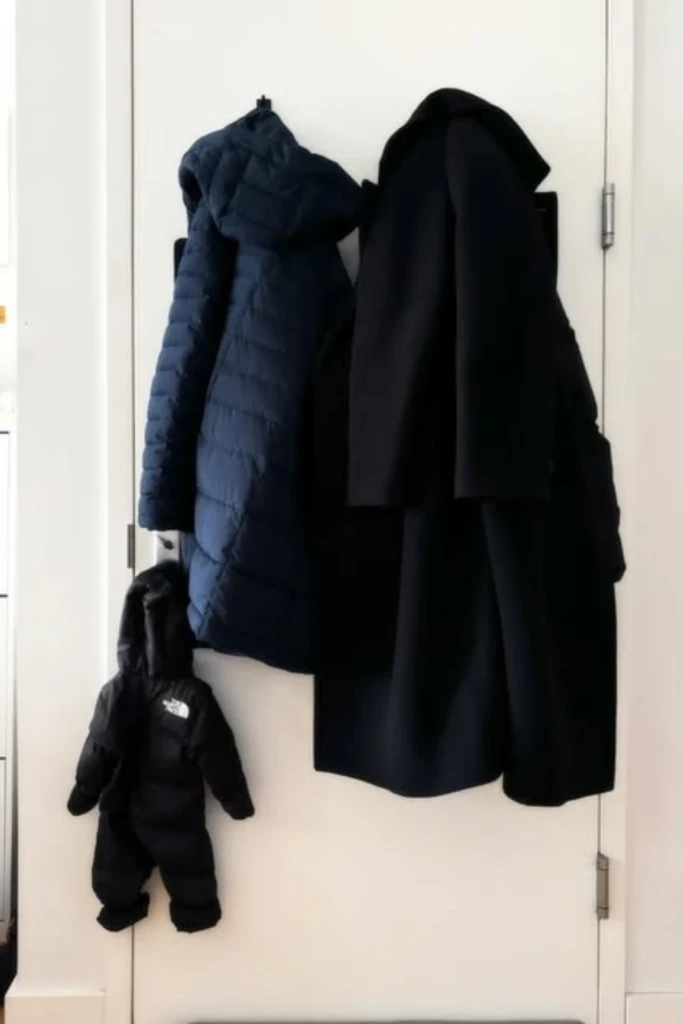
A door hook solution uses the back of a door to create additional hanging space. It is particularly helpful in rental properties, dorm rooms, and small homes where wall space is limited.
Over-door racks usually fit across the top edge of a door and provide several hooks for lightweight or moderately heavy outerwear. Before choosing one, check the door thickness and the clearance between the door and its frame. Some designs may prevent the door from closing properly if the fit is incorrect.
For a more permanent option, you can install suitable hooks directly onto the door, provided the material and construction support the hardware. Avoid overloading the rack, and make sure hanging jackets will not interfere with handles or nearby furniture.
Use the upper hooks for jackets and reserve lower hooks for scarves or lightweight bags. Since doors move frequently, check that garments are not trapped when the door closes. This approach adds convenient storage without requiring a dedicated closet.
16. Sectioned Closet System
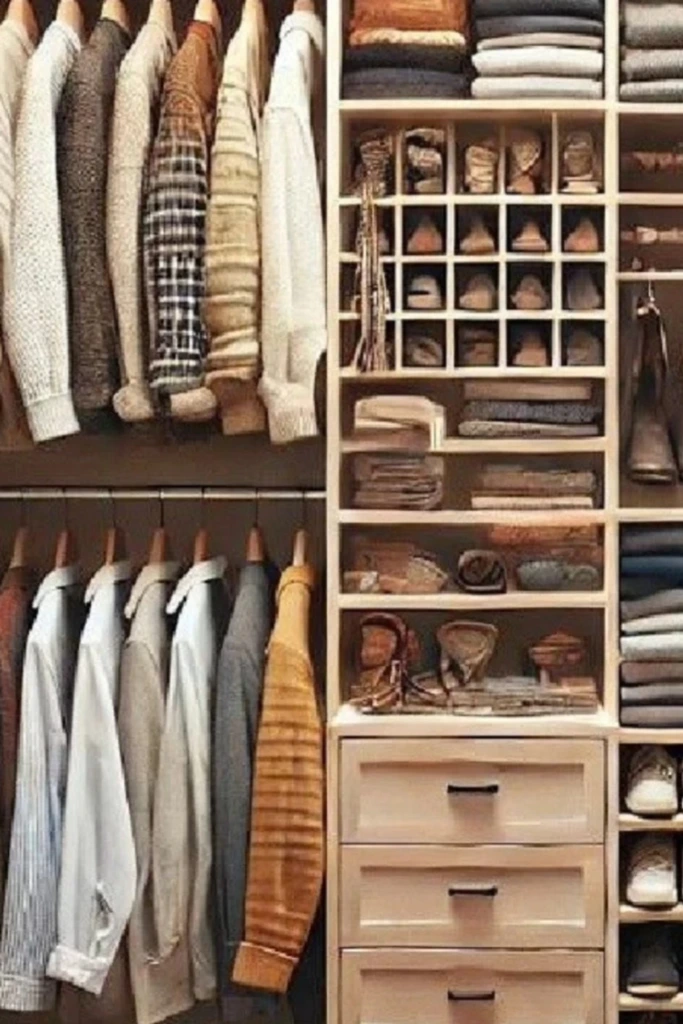
A sectioned closet system divides your storage into specific areas, making it easier to manage different types of jackets. Rather than arranging everything on one crowded rail, assign sections to everyday coats, formal outerwear, sports jackets, and seasonal pieces.
Use hanging rods for structured garments and shelves or bins for jackets that can be folded safely. Drawer dividers or small containers can hold gloves, hats, and other accessories that belong with particular coats.
Adjustable closet systems are useful because your storage needs may change throughout the year. You can raise or lower shelves, reposition hanging rails, and add extra organizers as your collection grows or shrinks.
For a shared closet, assign a separate section to each person. Within each section, arrange garments by frequency of use or type. This simple structure makes it easier to return jackets to their proper places and prevents one person's clothing from taking over the entire wardrobe.
17. Mini Mudroom Closet
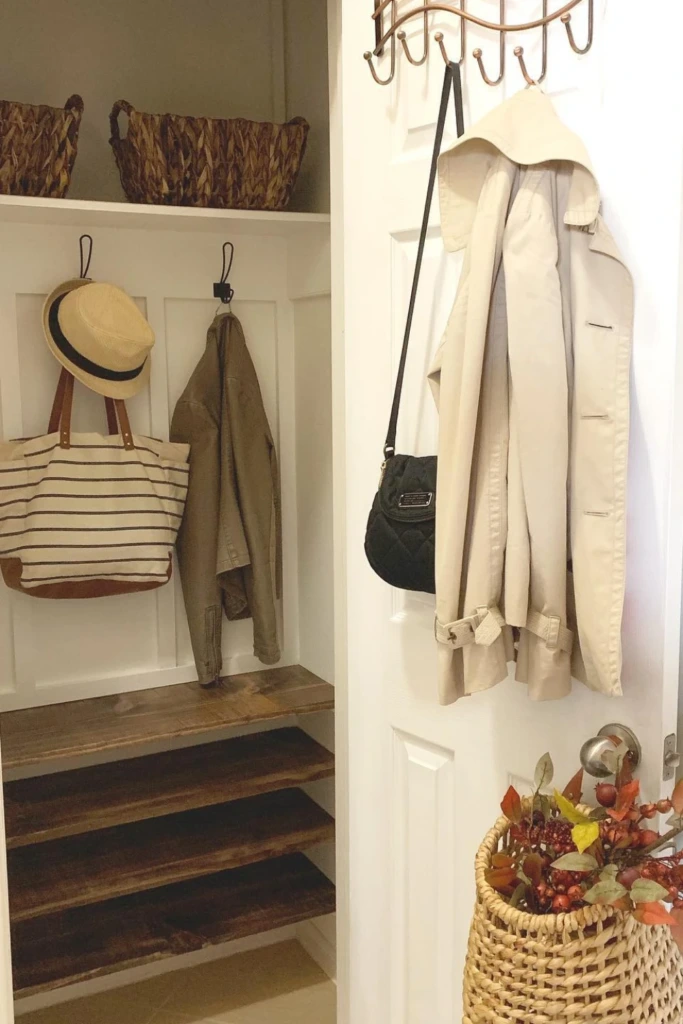
A mini mudroom closet brings the main functions of a mudroom into a small, enclosed space. It is ideal for homes that need a dedicated entrance storage area but do not have enough room for a separate mudroom.
Start with a hanging rail or a row of sturdy hooks for daily jackets. Add a top shelf for hats and seasonal accessories, and use the floor area for a shoe tray or compact basket. If the closet is wide enough, a narrow bench can provide a convenient place to sit while putting on footwear.
Keep wet jackets separate until they have dried completely. If the closet has limited airflow, leave the door open when practical or provide suitable ventilation to prevent trapped moisture and unpleasant odors.
Use baskets or labeled containers to organize each family member's belongings. The key is to keep the arrangement simple enough that everyone can use it easily, even during busy mornings when several people are preparing to leave at once.
18. Compact Entry Closet
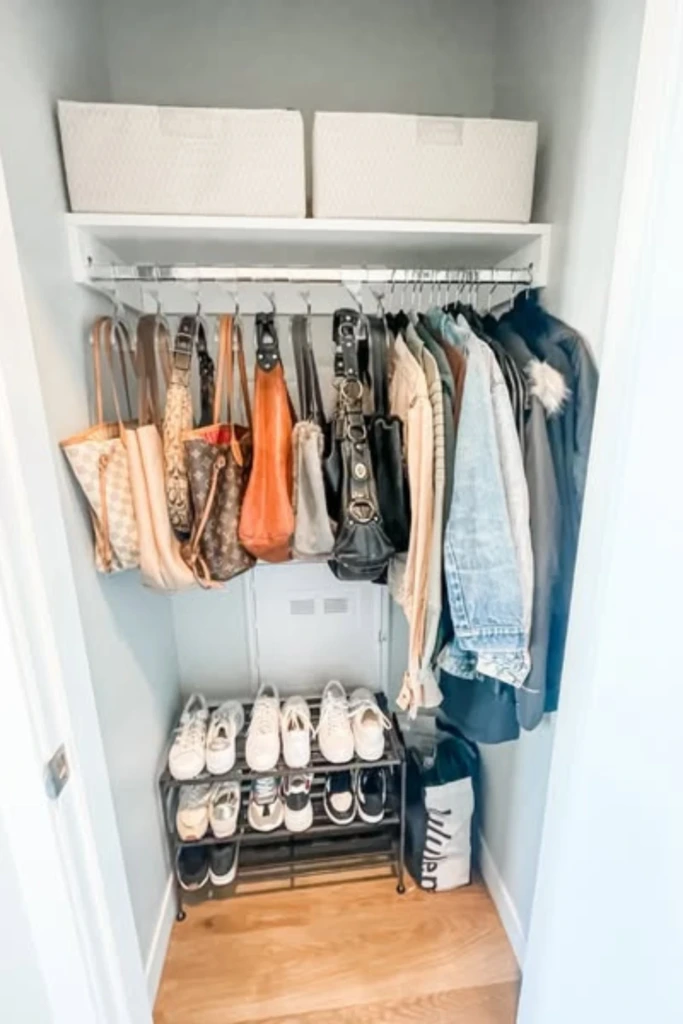
A compact entry closet helps keep jackets close to the front door without allowing outerwear to dominate the hallway. It is particularly valuable in apartments and smaller homes where every square foot matters.
Use the available height by installing a shelf above the hanging rail for less frequently used accessories. If the closet is tall enough, a second rail can accommodate shorter jackets. Slim hangers and a carefully edited collection of everyday coats can also improve the amount of usable space.
Avoid filling the closet with every jacket you own. Keep current-season pieces near the front and relocate off-season clothing to a separate storage area. This reduces congestion and makes it easier to put jackets away after use.
A small tray or basket near the bottom can collect gloves, hats, and scarves. If the closet floor is used for shoes, choose a compact rack that leaves enough room for garments to hang freely. Even a narrow closet can be effective when each section has a clear purpose.
19. Divided Hanging Zones
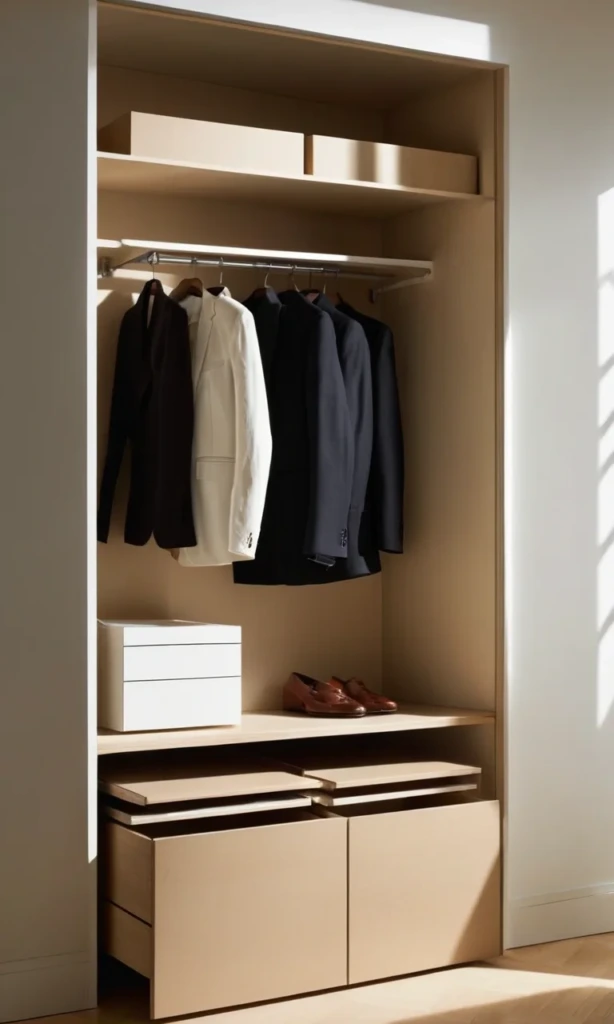
Divided hanging zones make a shared closet easier to navigate by separating jackets into practical categories. You might create sections for workwear, casual jackets, outdoor activities, special occasions, or different members of the household.
Use hanging dividers, shelf boundaries, or simple labels to distinguish each area. If the closet has enough width, leave a small gap between categories so you can quickly see where one group ends and another begins.
Place frequently worn jackets in the easiest-to-reach section. Store heavier winter coats where the rail and hangers can support them comfortably, and keep delicate or structured pieces on appropriate hangers. Seasonal dividers can also help you identify which items should be moved when the weather changes.
This method is particularly useful for people who own jackets made from different materials or need different outerwear for work, travel, and outdoor activities. Clear zones reduce unnecessary searching and make closet maintenance much easier.
FAQs
Jacket storage depends on the garment's material, the available space, and how long you intend to keep it stored. Everyday jackets benefit from convenient hanging areas, while seasonal outerwear may need a cleaner, more protected location. The following answers cover two common questions about storing jackets safely and efficiently.
Can I Store Jackets in Plastic Bins?
Yes, plastic bins can be a practical option for storing jackets, especially lightweight pieces and seasonal outerwear. They protect clothing from dust and help keep wardrobes, shelves, and storage rooms organized.
Before packing jackets, clean them according to their care labels and make sure they are completely dry. Choose a clean container large enough to hold the garments without compressing them excessively. If the jackets are made from materials that crease easily or have structured shoulders, hanging storage may be a better choice.
Clear bins make it easier to identify contents, while opaque containers can protect clothing from light. If you use containers with tight-fitting lids, only seal garments that are fully dry and keep the bins in a cool, dry location. Check stored clothing periodically for signs of moisture, odors, or pests.
For down-filled jackets, avoid excessive compression for long periods because it can reduce loft. Follow the manufacturer's storage guidance, and allow the jacket to regain its shape before wearing it again.
How Do I Store Winter Jackets Long-Term?
Start by cleaning winter jackets according to their care instructions. Remove dirt, food stains, and other residue before storage because leftover grime can attract pests or become harder to remove later. Make sure each jacket is completely dry before putting it away.
Choose the storage method based on the jacket's construction. Hang structured wool coats on sturdy, shaped hangers to help preserve their shoulders. Store leather and suede garments in breathable covers in a cool, dry place away from direct sunlight. Bulky down or synthetic insulated jackets should not remain tightly compressed for extended periods; use a roomy container or appropriate hanger according to the manufacturer's recommendations.
For jackets that can be folded, use clean storage bins or breathable fabric containers. Keep them away from damp basements, hot attics, and locations with large temperature or humidity fluctuations. Avoid packing them tightly into sealed bags unless the garment's care instructions specifically allow that method.
Store accessories such as gloves, scarves, and hats in labeled containers so they remain easy to find when colder weather returns. Inspect your winter clothing occasionally, and air it out before use at the start of the next season.
Final Thoughts
The best jacket storage solution is one that fits your space, protects your clothing, and makes everyday routines easier. Whether you choose a double closet rail, wall hooks, labeled bins, or a compact mudroom setup, focus on keeping garments clean, dry, and easy to access. With a little planning and a consistent organization system, you can keep your jackets in good condition and make better use of the space you already have.