19 Bike Storage Ideas for 2026
Finding a convenient place to keep a bicycle can be challenging, particularly when your home has limited storage space. A bike needs enough room to stand securely, remain accessible, and stay protected from accidental damage. Without a suitable arrangement, it can quickly become an obstacle in a hallway, garage, or living room.
The right storage setup makes everyday cycling easier while helping you maintain an organized home. Depending on your available space, you can mount a bike on the wall, suspend it from the ceiling, use a freestanding rack, or keep it inside a dedicated outdoor shelter.
These 18 bike storage ideas explore different ways to combine practicality, space efficiency, and attractive design. Whether you own one bicycle or need to organize several, you can find an option that fits your home and cycling routine.
1. Indoor Bike Storage Solutions
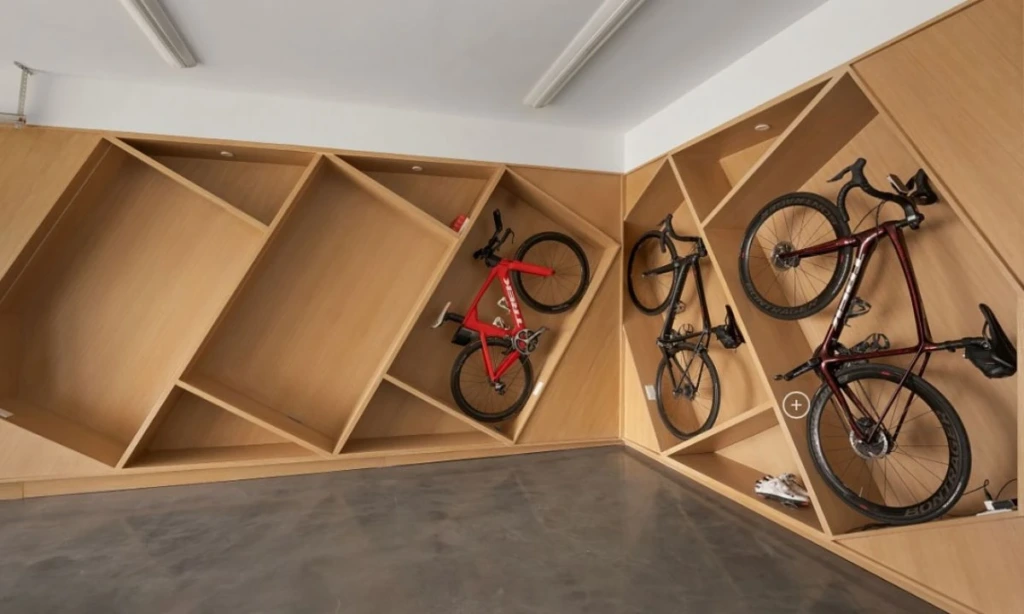
Storing a bicycle indoors helps protect it from rain, excessive sunlight, and some outdoor security risks. It also makes it easier to access your bike before commuting, exercising, or heading out for a weekend ride.
Wall-mounted racks are useful when floor space is limited. Depending on the design, they can hold a bike horizontally or vertically, allowing you to make better use of unused wall areas. A decorative wooden mount can even turn a well-maintained bicycle into an interesting feature in your interior.
Ceiling-mounted hooks and pulley systems offer another way to reclaim valuable floor space, particularly in garages with high ceilings. However, you should ensure that the ceiling structure and mounting hardware can safely support the bicycle's weight.
Freestanding racks are worth considering if you rent your home or prefer not to drill into walls. They can be repositioned when needed and are available in designs for individual bikes or larger collections. Before choosing a system, measure your available space and check that the rack suits your bicycle's frame, tire width, and weight.
2. Curved Frame Stand
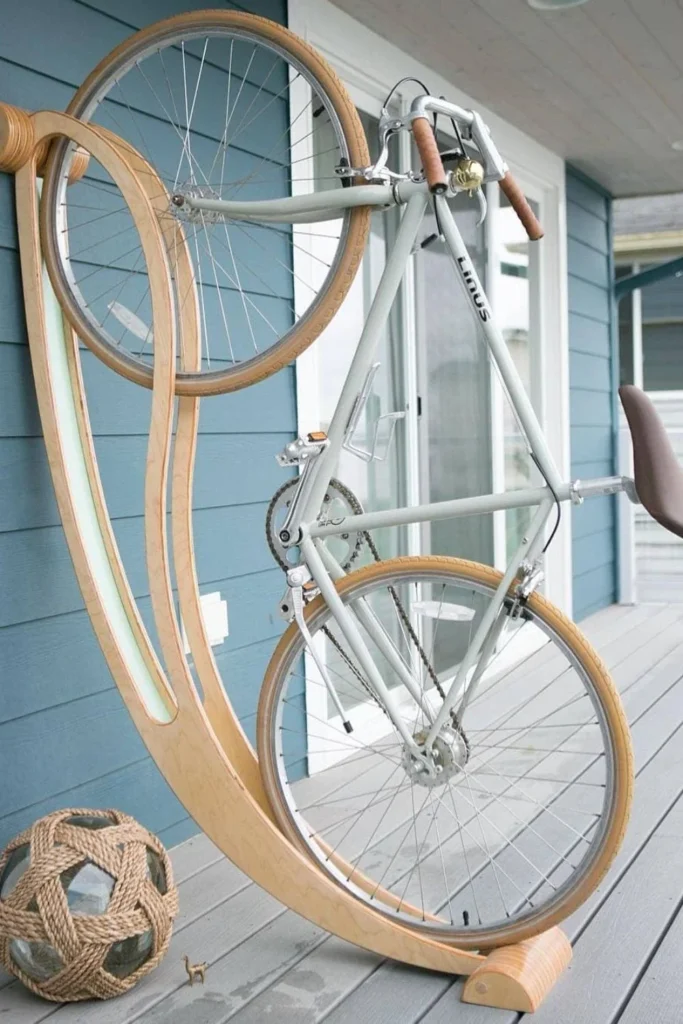
A curved wooden bike stand can make storage feel like part of your interior design rather than an afterthought. Its sculptural shape provides a distinctive place to position a bicycle while keeping the arrangement relatively compact.
This type of stand works well in an entryway, study, or living area where the bike remains visible. Natural wood can complement minimalist, contemporary, and Scandinavian-inspired interiors.
Choose a model designed to hold your particular bicycle securely, and check that its base will not slide or tip when you place the bike on it. Allow enough clearance around the handlebars and pedals so the bicycle does not interfere with nearby furniture or walkways.
3. Slim Wall Rack
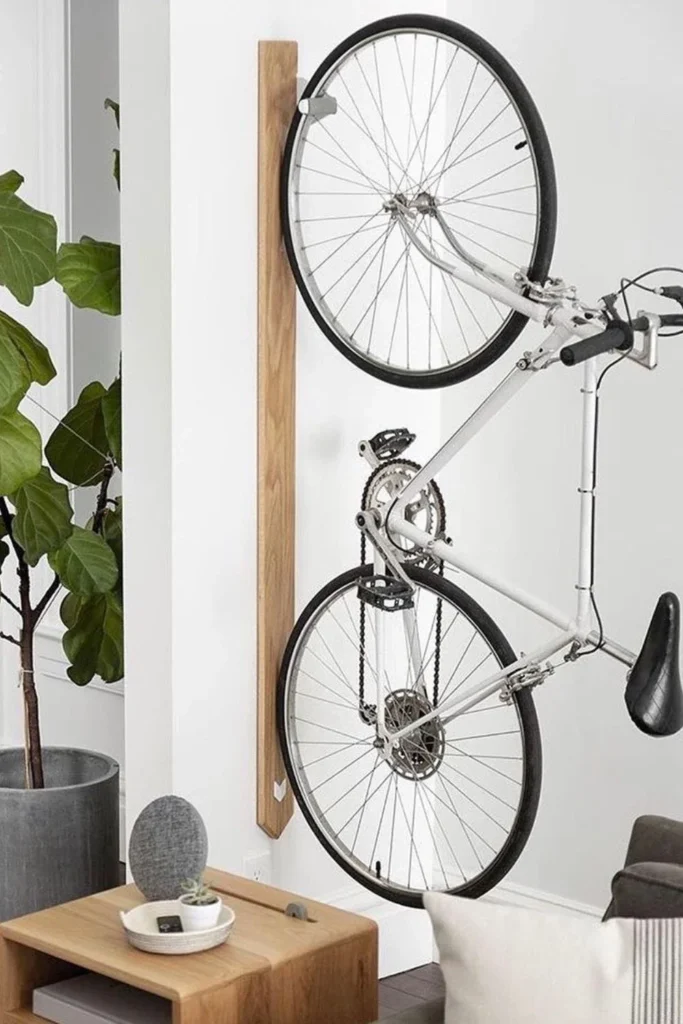
A narrow wall-mounted rack is a practical choice for apartments, compact rooms, and homes with limited floor space. By positioning the bicycle close to the wall, it creates a tidy appearance without requiring a large storage footprint.
Wooden racks are especially attractive because they introduce warmth into otherwise plain interiors. Some designs also include a small ledge for storing a helmet, gloves, or cycling accessories.
Measure the bicycle before installation, paying attention to its handlebars and pedals, which may extend farther into the room than expected. Secure the rack to suitable structural support and follow the manufacturer's installation instructions to ensure dependable holding strength.
4. Horizontal Wall Mount
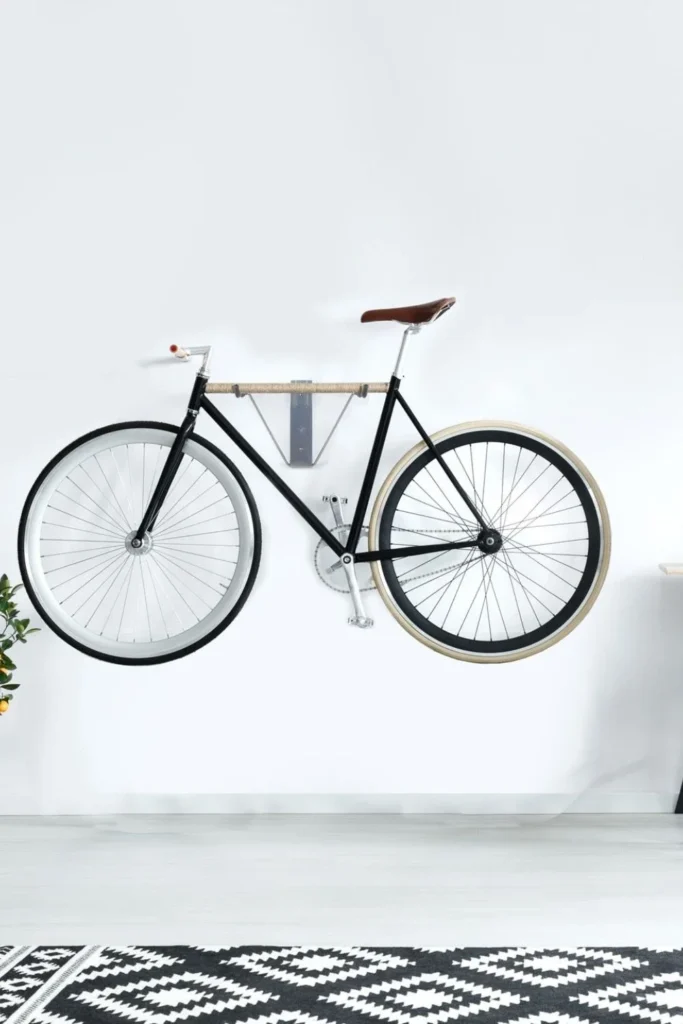
A horizontal wall mount holds a bicycle parallel to the wall, creating a clean display that can work well in modern homes, garages, and dedicated cycling rooms.
This arrangement is particularly useful when you have an uninterrupted section of wall and want the bicycle to remain easy to reach. Depending on the rack design, the bike may rest on its frame, top tube, or specially designed support arms.
Check that the mount is compatible with your bicycle's frame shape and finish. Some frames, including certain carbon-fiber models, require particular care when clamping or supporting them. Use a rack approved for your bike and avoid placing pressure on components that are not intended to bear the load.
5. Freestanding Vertical Dock
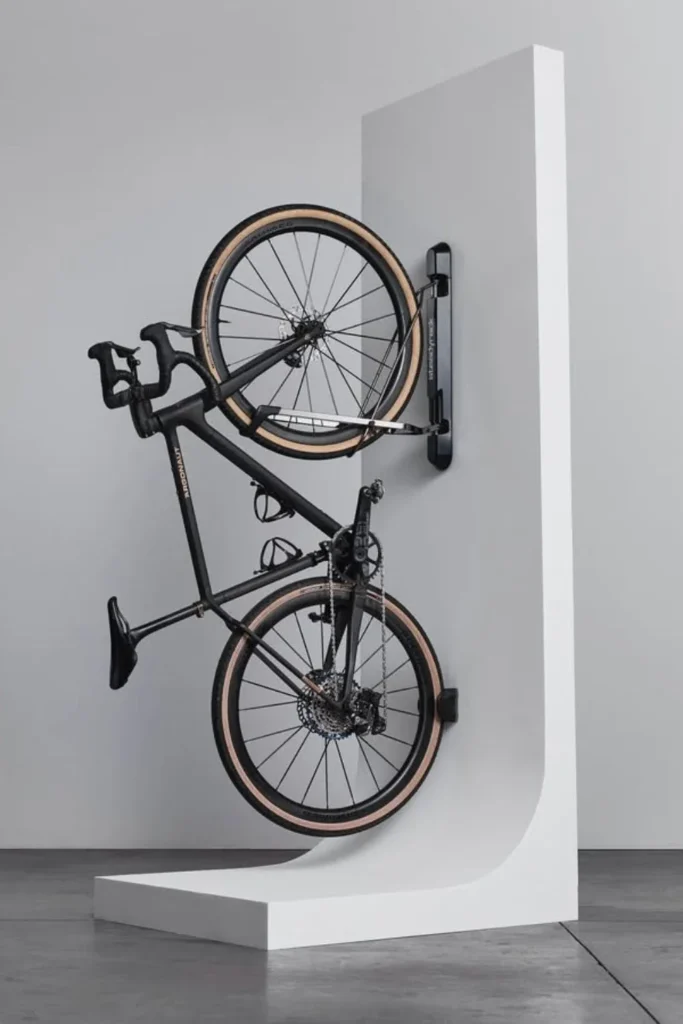
A freestanding vertical dock stores a bicycle upright without attaching the rack to a wall. This makes it appealing for renters, temporary arrangements, showrooms, and rooms where permanent installation is inconvenient.
The upright position can reduce the amount of wall width needed, although the bicycle may project farther into the room. A well-designed base keeps the bike balanced and makes it easier to maintain an organized storage area.
Before purchasing one, verify that it accommodates your wheel diameter, tire width, and bicycle weight. Position the dock on a level surface, and make sure the bike cannot easily fall into a doorway or walking path.
6. Ceiling Hook Rail
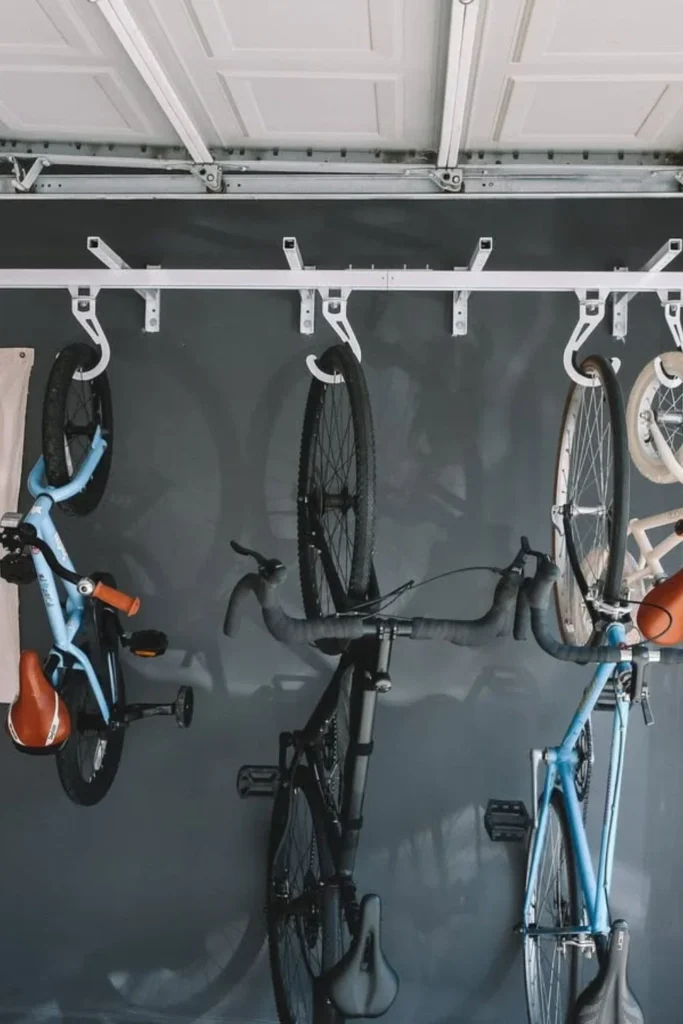
A ceiling-mounted hook rail allows several bicycles to hang from a shared track. It is a useful option for busy garages, family homes, and cycling enthusiasts who need to store multiple bikes without filling the floor with stands.
Depending on the hook arrangement, bicycles can hang vertically by a wheel, with their positions adjusted to make room for different sizes. Keeping bikes overhead also creates more room for workbenches, garden equipment, and other household items.
Installation requires careful planning. The rail must be attached to appropriate structural supports, and the hooks must be rated for the loads they carry. Leave sufficient clearance for lifting each bike into place, and avoid suspending a heavy bicycle overhead if you cannot raise and lower it safely.
7. Multi-Bike Frame
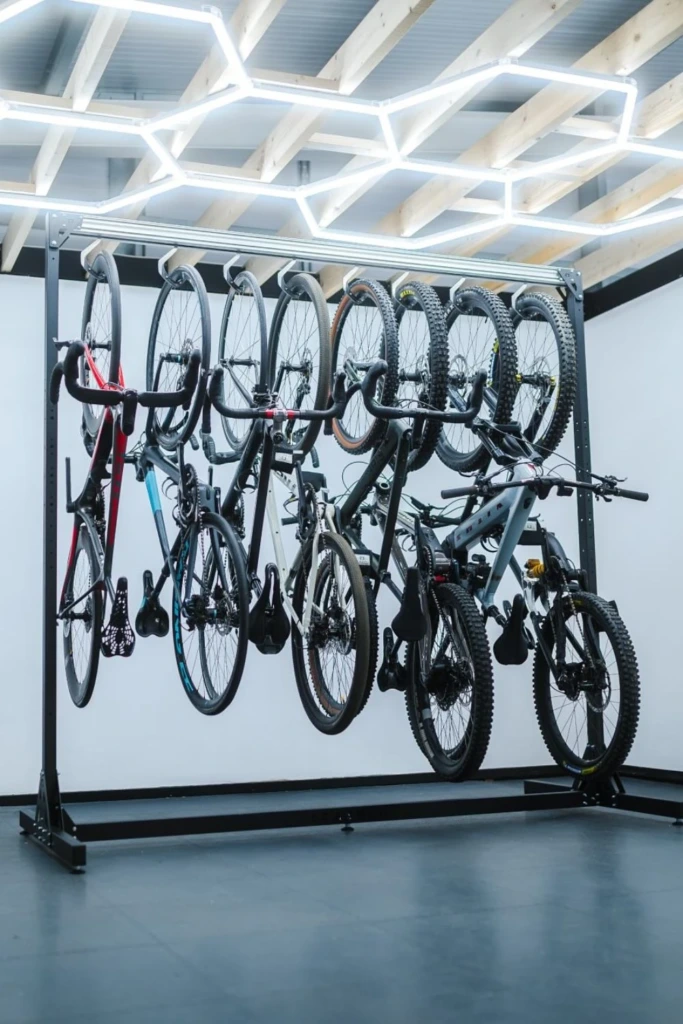
A multi-bike frame offers a centralized storage location for households with several bicycles. Rather than leaning bikes against one another, you can position each one in a designated space, making the collection easier to access and organize.
Freestanding models are useful in garages, workshops, and shared storage rooms. Depending on their configuration, they may hold bicycles by the wheels or provide individual supports for each frame.
Consider the total number of bikes you own, including children's bicycles and wider-tired models. Leave enough space between neighboring bikes to prevent handlebars, pedals, and frames from becoming tangled. A stable rack with a suitable weight capacity will help keep the arrangement secure during everyday use.
8. Corner Wall Arms
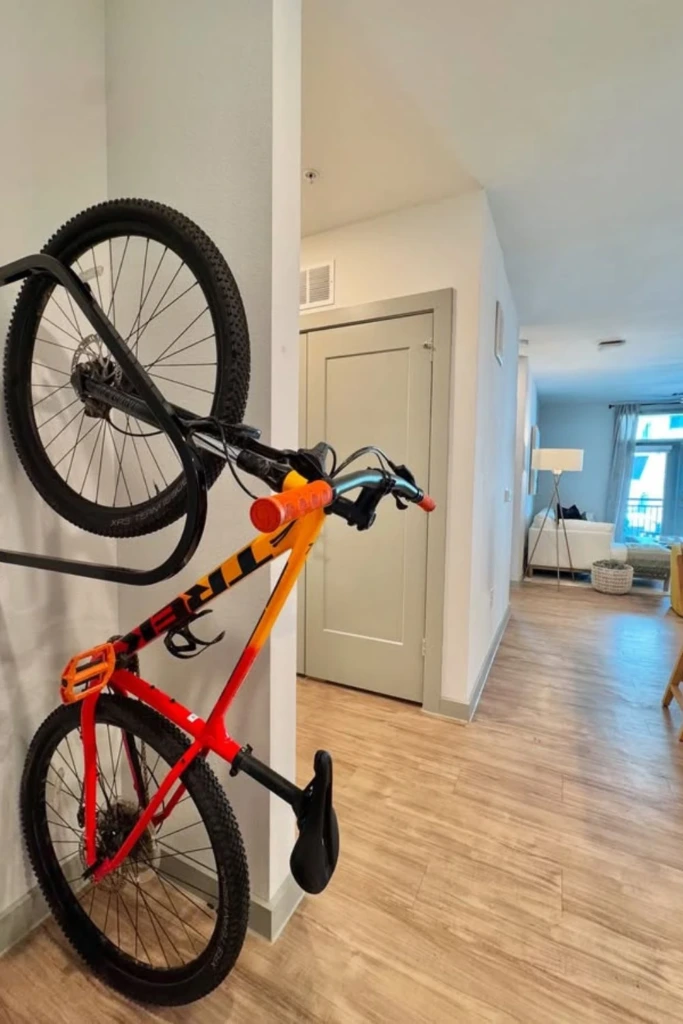
Unused corners can provide valuable storage space, especially in small apartments and narrow garages. Angled wall arms allow a bicycle to sit diagonally or vertically, helping you make use of an area that might otherwise remain empty.
This arrangement can be particularly effective when a full-length horizontal mount would interfere with furniture or storage cabinets. Depending on the design, the bicycle can be positioned close to the corner while remaining accessible.
Check the rack's mounting requirements and make sure the wall can support the bicycle's weight. Measure the bike's overall projection before installation, since handlebars and pedals can extend beyond the corner and obstruct nearby movement.
9. Dual-Purpose Rack
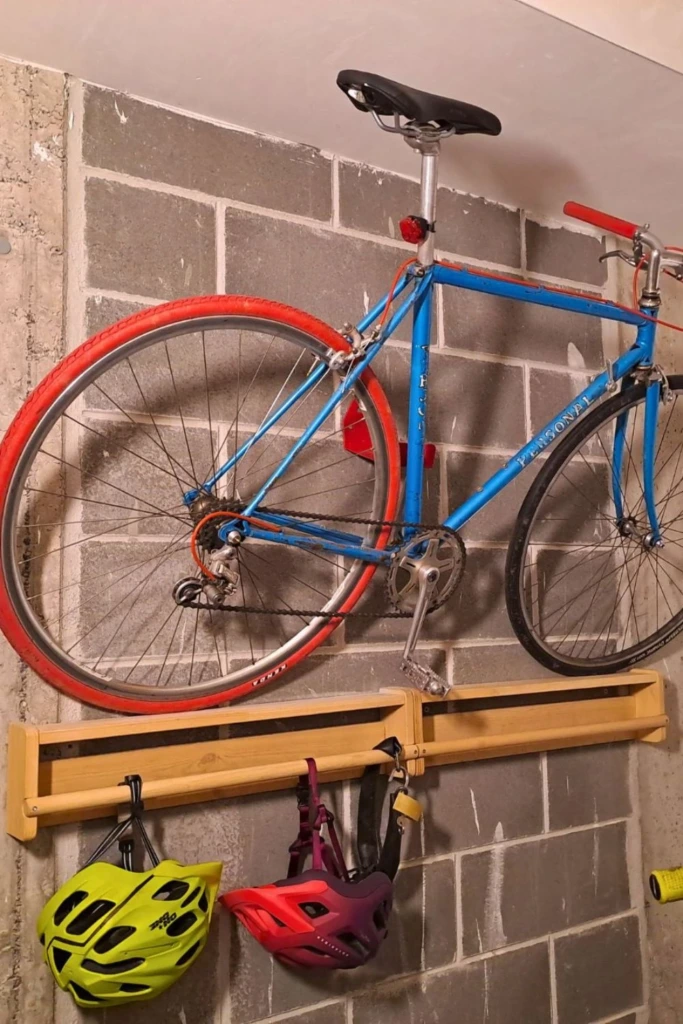
A dual-purpose bike rack combines bicycle storage with a shelf or accessory organizer. The main support holds the bike, while the additional surface provides space for a helmet, gloves, lock, or small cycling essentials.
This arrangement helps keep related items together, making it useful in garages, entryways, and compact homes. A wooden shelf can also soften the industrial appearance of a metal bracket and make the storage area feel more intentional.
Choose a design that supports your bike correctly and provides a separate, clearly rated surface for other items. Do not overload the shelf or place accessories where they could fall onto the bicycle. Keeping frequently used gear within easy reach makes the setup more convenient.
10. Floor-to-Ceiling Pole
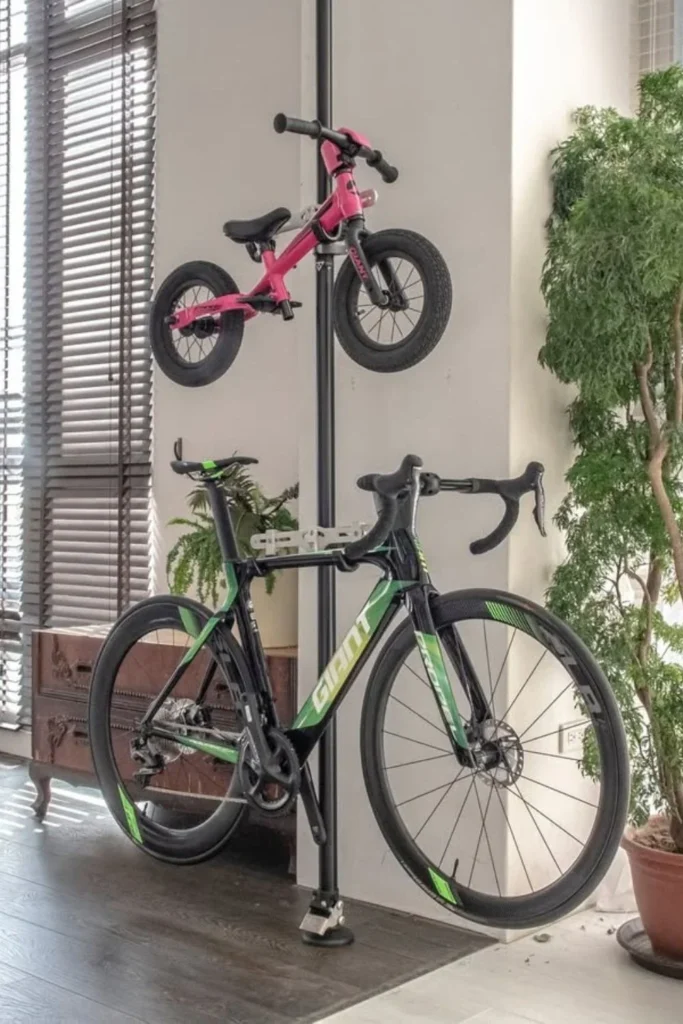
A floor-to-ceiling bike storage pole uses a tension-mounted vertical column to hold bicycles at different heights. It can be helpful in apartments or shared rooms where drilling into walls is not desirable.
Adjustable supports allow the bikes to be arranged vertically, reducing the wall width required for storage. The system can also be repositioned if your room layout changes, provided the ceiling and floor are suitable for the specific model.
Before installing the pole, check the required ceiling height, supported bicycle sizes, and maximum load. Follow the manufacturer's instructions for establishing proper tension, and inspect the installation regularly. Do not assume that every ceiling surface or lightweight suspended ceiling can safely accommodate this type of system.
11. Wood Panel Mount
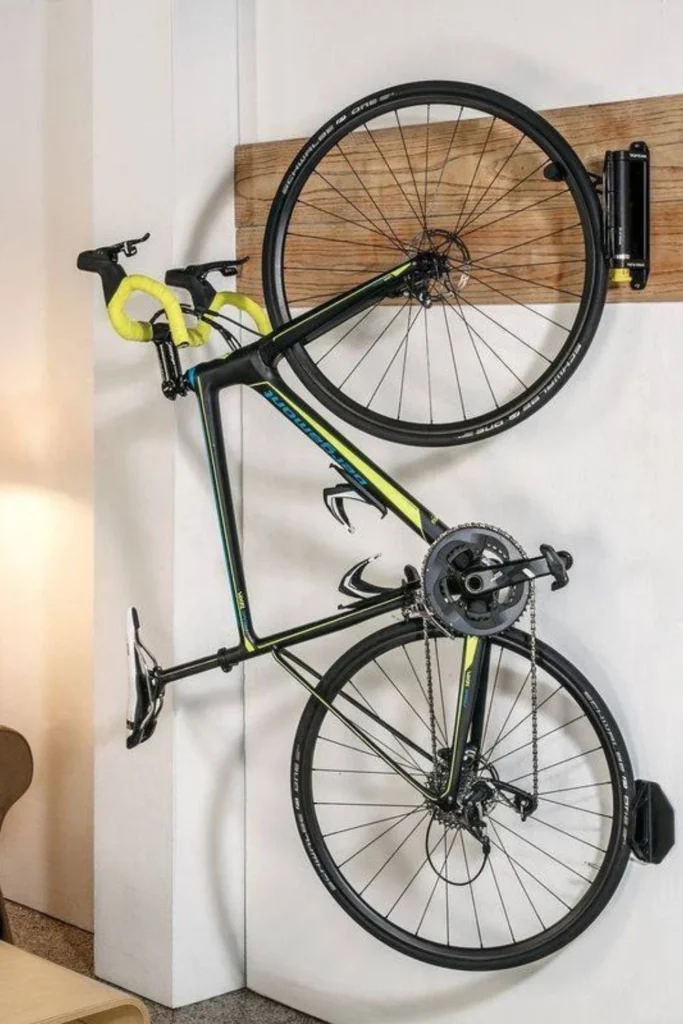
A wooden backboard provides a decorative foundation for a wall-mounted bicycle rack. It can distribute mounting points across a larger area when properly designed and secured, while adding a natural finish that works well with warm or rustic interiors.
The bicycle is commonly stored vertically, leaving room beneath or beside it for a pump, helmet, or small accessories. This approach can make good use of an entryway wall, hallway, or home office.
Choose a board and mounting system suitable for the bicycle's weight, and secure the assembly to appropriate structural support. A decorative panel alone does not guarantee strength. Keep the bike clear of nearby doors, furniture, and delicate wall finishes, and consider a protective surface where the tires may mark the wall.
12. Utility Rack Combo
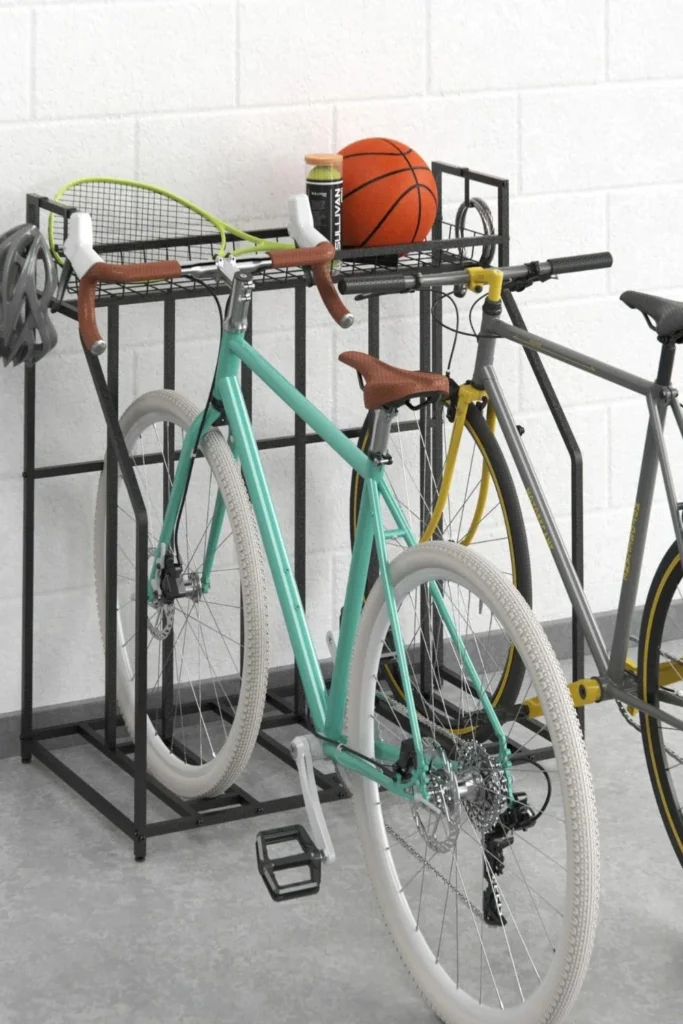
A utility rack combines bicycle parking with storage for tools, sports equipment, and riding accessories. It is a strong option for garages and mudrooms where several activities compete for the same space.
A metal grid or frame can provide designated bicycle positions, while upper shelves and hooks accommodate helmets, bags, pumps, and maintenance supplies. Grouping these items together makes it easier to find everything before a ride.
Plan the arrangement around the equipment you actually use. Heavier items should go on shelves designed to support them, while small accessories can hang from suitable hooks. Leave clear access to every bicycle and avoid blocking electrical panels, garage doors, or other essential household features.
13. Lockable Bike Shed
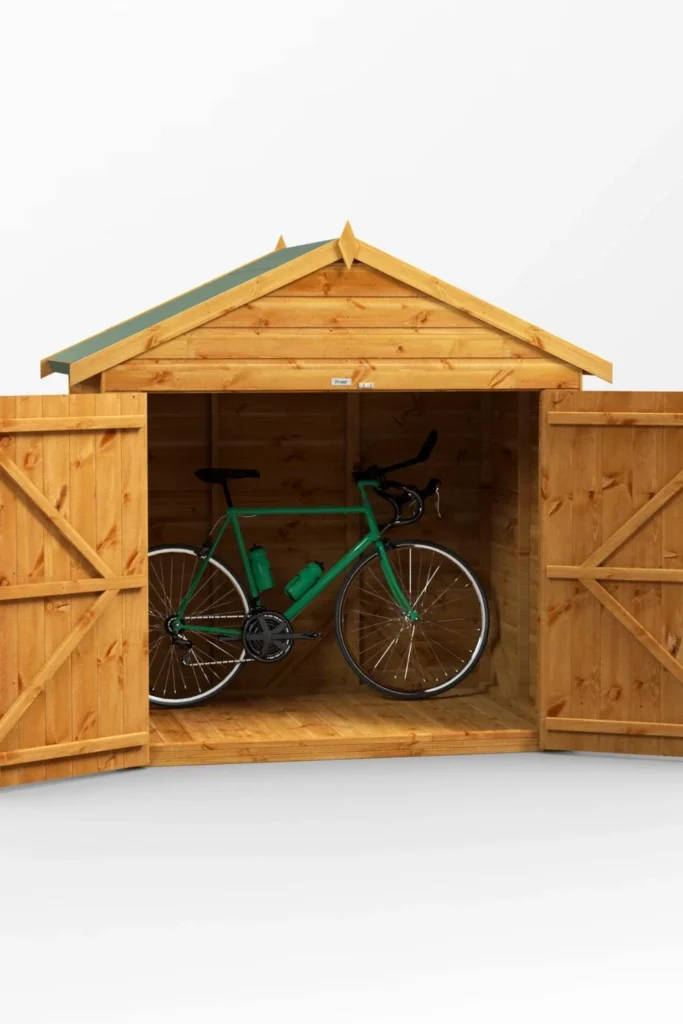
A lockable outdoor bike shed provides a dedicated place to store bicycles when indoor space is unavailable. It can be installed in a suitable backyard, beside a house, or in another permitted outdoor area.
Wooden sheds can blend into garden surroundings, while metal and resin alternatives may offer different maintenance and weather-resistance characteristics. Depending on the size, a shed can also accommodate helmets, locks, and a limited selection of cycling tools.
Look for a model with a secure locking arrangement, adequate ventilation, and protection against rain entering through the roof or door. Place it on a stable, well-drained base and anchor it when appropriate. A shed can discourage casual theft, but it is not automatically theft-proof; use a quality bicycle lock and secure the structure itself where possible.
14. Maintenance Stand
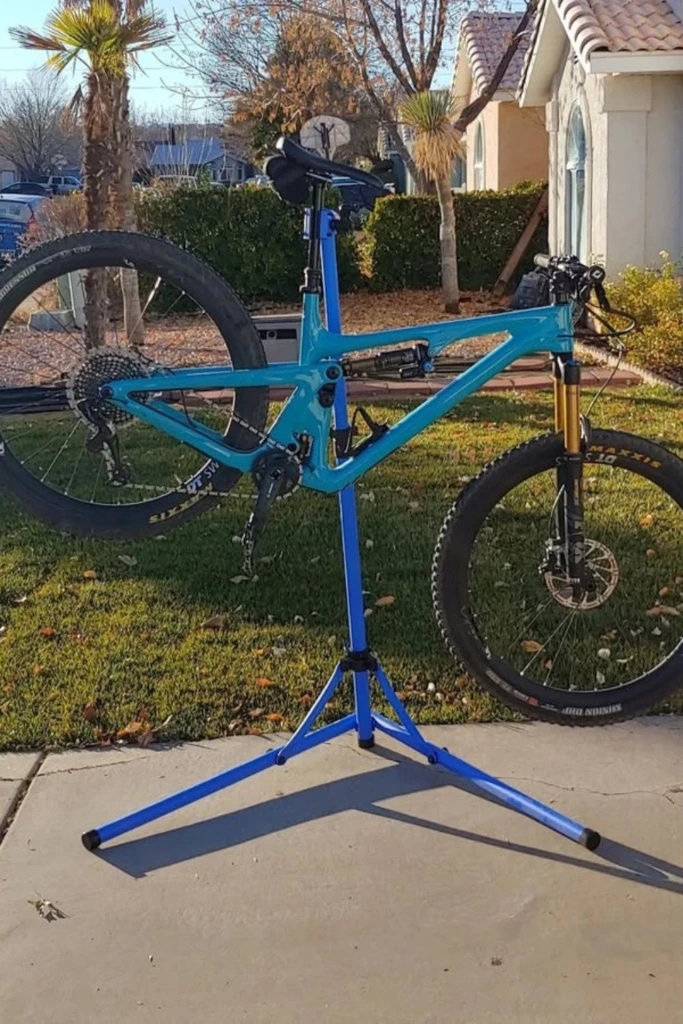
A bicycle maintenance stand is designed primarily to hold a bike at a convenient working height, making cleaning, adjustments, and repairs easier. Many portable models fold down when they are not in use, which can be useful in a small garage or workshop.
Depending on the design, the stand may support the bicycle by an approved frame contact point or the seatpost. This leaves the wheels accessible for tasks such as cleaning the drivetrain, adjusting brakes, and checking tire condition.
Although a repair stand can temporarily hold a bicycle between rides, it is not always the best choice for permanent storage. Confirm the stand's load rating and compatibility with your frame. Follow the manufacturer's guidance when clamping delicate materials, and keep the stand on a stable surface while working.
15. Luxury Bike Hutch
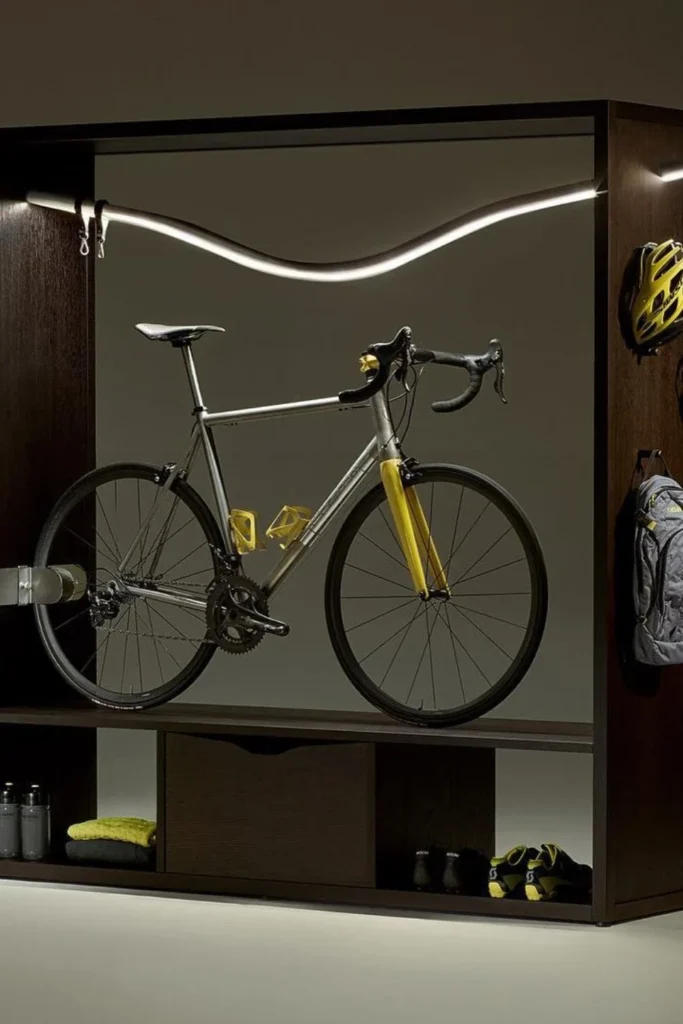
A custom bike hutch offers a more furniture-like approach to bicycle storage. Built from wood or other finished materials, it can conceal some of the visual clutter associated with cycling equipment while keeping the bicycle accessible.
A thoughtfully designed unit may include shelves, hooks, lighting, and dedicated spaces for helmets, shoes, and tools. This makes it suitable for a loft, modern apartment, or room where the bicycle forms part of the interior design.
The main consideration is size. A cabinet that looks attractive but makes it difficult to remove the bicycle will quickly become inconvenient. Measure the full bike, including the handlebars and pedals, and account for any accessories that remain attached. Provide adequate ventilation if damp equipment will be stored inside, and ensure that the unit offers sufficient structural support.
16. Ceiling Pulley Lift
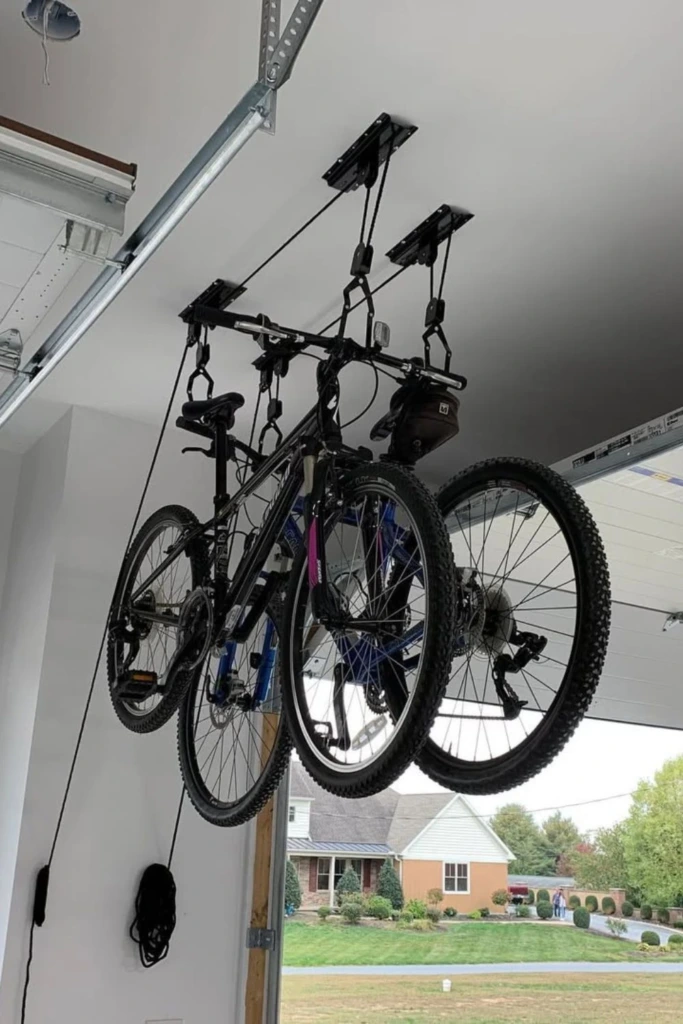
A ceiling pulley lift uses ropes and pulleys to raise a bicycle overhead, freeing the floor and walls for other purposes. It can be especially helpful in garages where bicycles compete with vehicles, tools, and seasonal equipment.
Many systems use separate supports for the bicycle and a locking or braking mechanism to help control movement. Once raised, the bike stays out of the way until you need it again.
The ceiling structure and lift rating are essential considerations. Install the system only on suitable structural supports and follow the manufacturer's requirements for load distribution. Make sure the lifting mechanism operates smoothly and that the bicycle cannot fall if the rope slips. Keep the area beneath the bike clear, and avoid using an overhead lift if you cannot safely raise or lower the bicycle.
17. Rolling Cube Cabinet
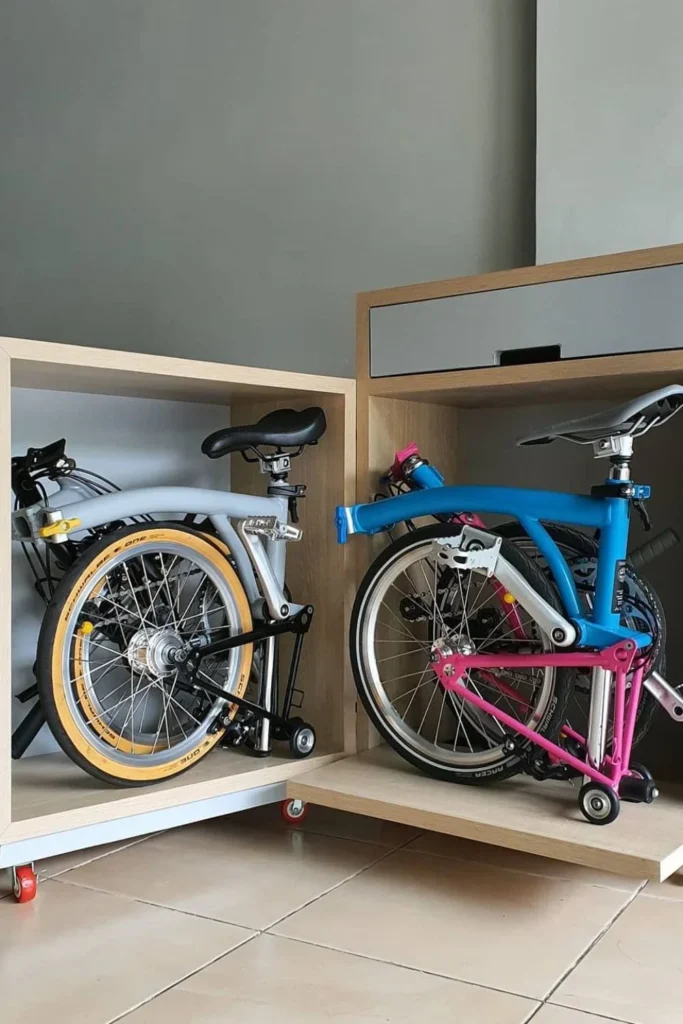
A rolling cube cabinet is a compact storage option for folding bicycles and smaller cycling accessories. Its enclosed design helps keep the bike out of sight, while wheels make it possible to move the unit when rearranging a room or cleaning the floor.
Depending on its construction, the cabinet may include drawers or separate compartments for helmets, locks, and other equipment. This can be particularly useful in apartments where storage furniture needs to perform more than one job.
Measure the folded bicycle carefully before choosing a cabinet. Some folding bikes still require considerable depth or height, even when collapsed. Make sure the cabinet can carry the combined weight of the bike and its contents, and use suitable locking casters or brakes when available. Avoid storing a wet bicycle in an unventilated enclosure, as trapped moisture can encourage corrosion.
18. Under-Bench Rack
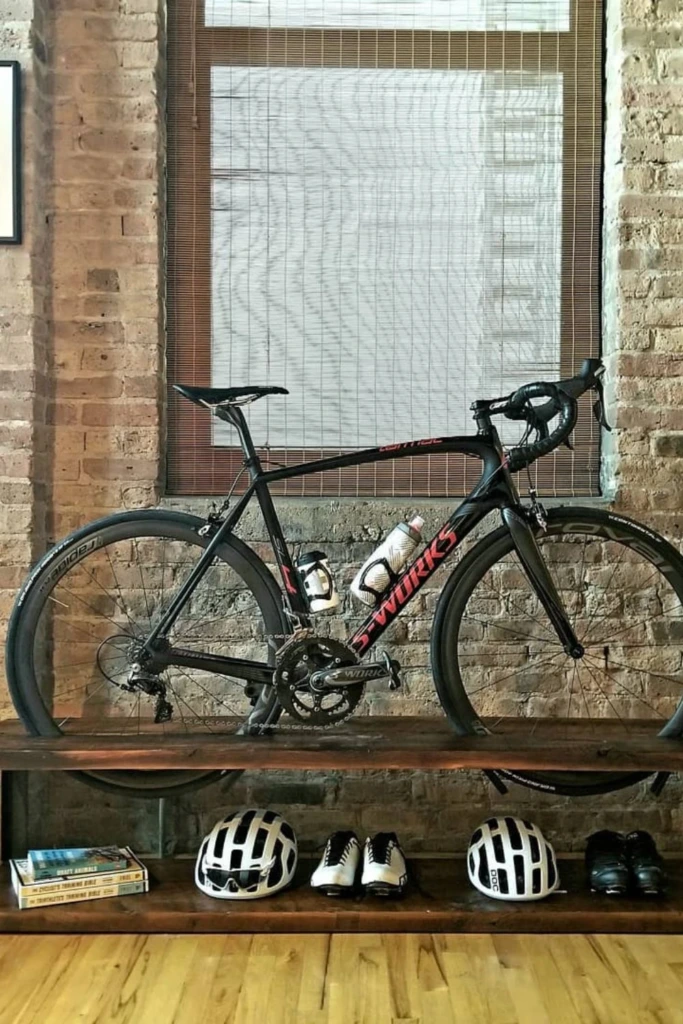
An under-bench rack makes use of the space beneath an entryway bench or garage workbench. It can provide a convenient storage location for a bicycle while keeping the upper surface available for sitting, placing bags, or organizing everyday essentials.
A bench with additional shelves or compartments can also accommodate helmets, shoes, locks, and small accessories. This creates a practical station for households where cycling equipment needs to stay close to the entrance.
Check that the bicycle fits comfortably underneath without obstructing the bench legs or reducing its stability. The bike should not interfere with anyone sitting down or standing up. If the bench incorporates a dedicated rack, verify that the bike support and the bench itself are designed for their respective loads.
19. Shelf Top Rack
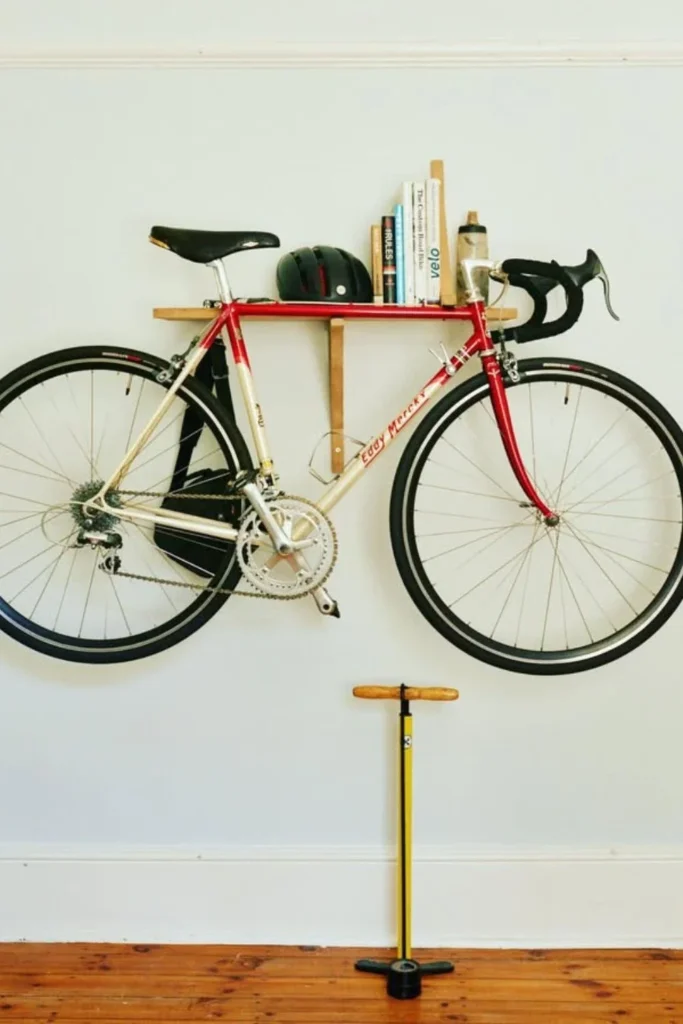
A shelf-top bike rack combines wall-mounted bicycle support with a useful upper ledge. The bicycle hangs beneath the shelf, while the top provides a place for lightweight accessories, books, decorative objects, or cycling essentials.
This arrangement works well in minimalist interiors, home offices, and compact apartments where every section of wall needs to serve a purpose. A coordinated finish can make the bike and shelf look like a single piece of furniture rather than separate storage equipment.
Choose a rack that matches your frame and provides adequate clearance for the wheels, handlebars, and pedals. Keep the shelf within its stated load limit, and avoid placing fragile objects directly above the bicycle. As with any wall-mounted system, secure the assembly to suitable structural support and confirm that the complete setup can safely carry the intended load.