27 LEGO Storage Ideas for an Organized Play Space
Keeping LEGO organized can make playtime more enjoyable and help prevent small bricks from spreading throughout the house. A good storage system makes it easier for children to find the pieces they need, protect their favorite creations, and clean up when they finish building.
The best approach depends on the size of your collection, the available space, and how your child likes to play. Some builders prefer sorting every piece by shape, while others work better with a few accessible containers. A practical setup should support creativity without making organization feel like another chore.
Before choosing a storage solution, consider whether you need space for loose bricks, completed sets, minifigures, instruction manuals, or unfinished projects. With the right combination of containers, drawers, shelves, and display areas, you can create a system that grows alongside your collection.
1. A Quick Place to Start

If you want to organize your LEGO collection without spending hours comparing different options, begin with a solution that matches your biggest storage challenge.
For a small collection: Divided Storage Tubs
For a serious LEGO collection: Rainbow Drawer Wall
For a small bedroom: Wall-Mounted Drawer Units
For quick clean-ups: Labeled Clear Bins
For younger children: Play Table with Bins
For minifigures: Wooden Minifigure Shelf
For LEGO that travels: Compartment Case
You can also combine two or three methods instead of relying on a single organizer. For example, use clear bins for everyday bricks, a small display shelf for favorite characters, and a separate container for unfinished builds. If you need to organize other toys, dedicated storage ideas for toy collections and miniature vehicles can help you create a consistent system throughout the room.
2. Drawer Cabinet Organizer
A drawer cabinet makes it easier to separate LEGO pieces into manageable groups. Transparent drawers are particularly helpful because children can identify the contents without opening every compartment.
Start with a few practical categories, such as standard bricks, flat plates, wheels, minifigures, and accessories. You can introduce more detailed divisions later if the collection becomes larger.
For younger children, use picture labels alongside words so they can recognize where each item belongs. Choose a cabinet with drawers that slide smoothly and are easy for your child to reach. A compact unit can fit beside a desk or under a suitable work surface.
3. Rainbow Drawer Tower
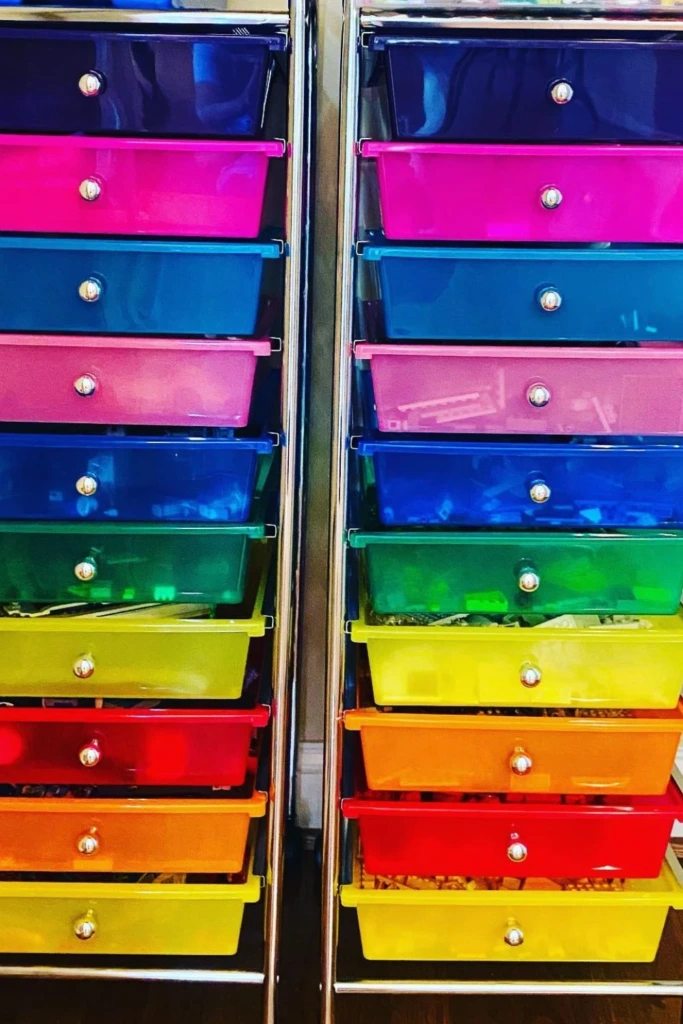
A rainbow drawer tower adds color to a playroom while providing plenty of storage in a relatively small footprint. Its vertical arrangement makes it useful for rooms where floor space is limited.
Assign each drawer a color category and place frequently used colors at an accessible height. This approach works especially well for children who enjoy free building and often select bricks based on their preferred colors.
However, color is not always the most useful way to organize every collection. If your child frequently searches for particular shapes, such as hinges or curved pieces, a separate drawer for those components may be more practical. Try the arrangement before sorting every brick to avoid creating a system that becomes difficult to maintain.
4. Labeled Clear Bins
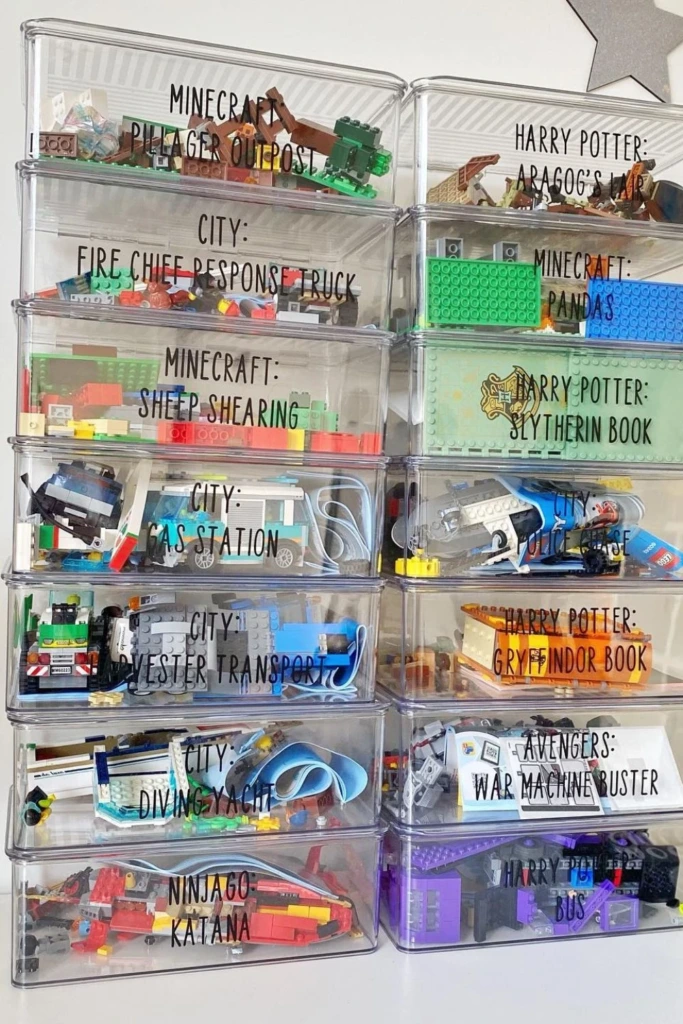
Clear storage bins offer an affordable, flexible way to keep LEGO organized without investing in specialized furniture. They can sit on shelves, fit inside cupboards, or slide beneath a table.
Their transparent sides allow children to see the contents quickly, while labels make returning pieces to the correct container easier. Begin with broad categories such as loose bricks, vehicles, minifigures, instruction books, and unfinished creations.
Choose different bin sizes according to what you plan to store. Small containers work well for accessories, while larger ones can accommodate general building pieces. Stackable designs can save space, provided they remain stable and are easy to access.
5. Play Table with Bins
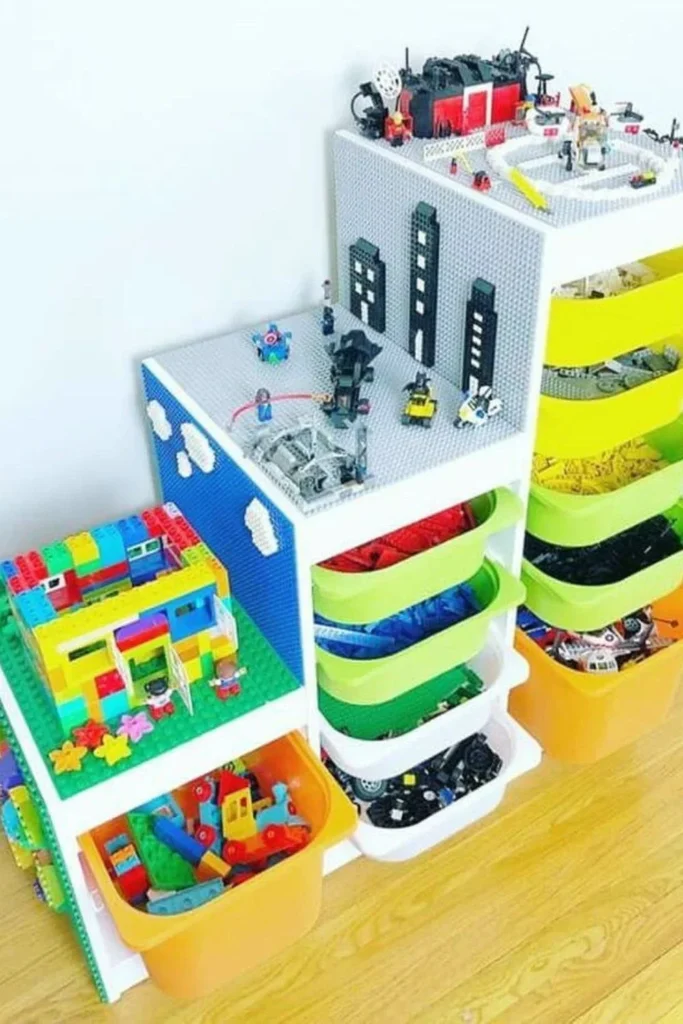
A dedicated LEGO play table combines a building surface with convenient storage underneath. Children can build, sort, and put away their materials without carrying pieces between several parts of the room.
Look for a table with removable bins that can be pulled out during play and returned when the activity is finished. Shallow containers are often easier to use because pieces remain visible rather than collecting in a deep pile.
You can also reserve one container for projects that are still in progress. This gives children a place to protect unfinished creations without needing to dismantle them at the end of every session.
For additional convenience, consider a tabletop with raised edges to reduce the number of bricks that fall onto the floor.
6. Divided Storage Tubs
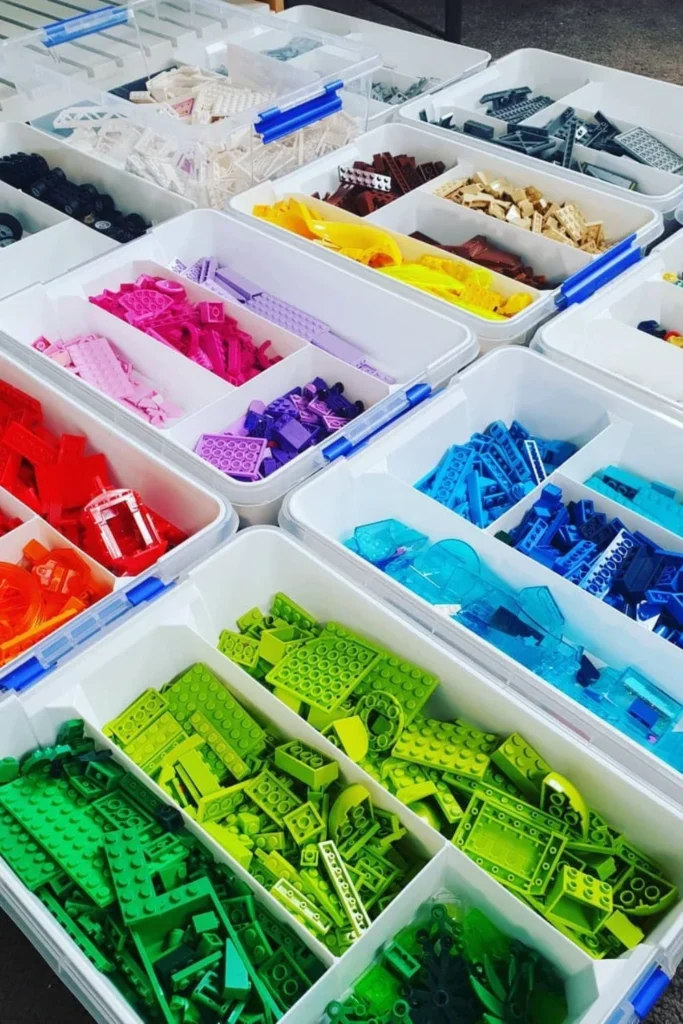
Divided storage tubs are ideal for smaller LEGO collections or children who need a portable organizer. Individual compartments can hold wheels, doors, minifigures, decorative elements, and other frequently used pieces.
Look for adjustable or removable dividers so the layout can change as the collection grows. Larger sections can accommodate bulky components, while smaller compartments keep accessories separated.
These tubs are also useful for taking a limited selection of LEGO to another room or on a trip. Choose a model with a secure lid to prevent pieces from spilling during transport.
Keep the categories simple enough for your child to remember. A few useful compartments are generally better than dozens of tiny sections that require considerable effort to maintain.
7. Stacked Clear Bins
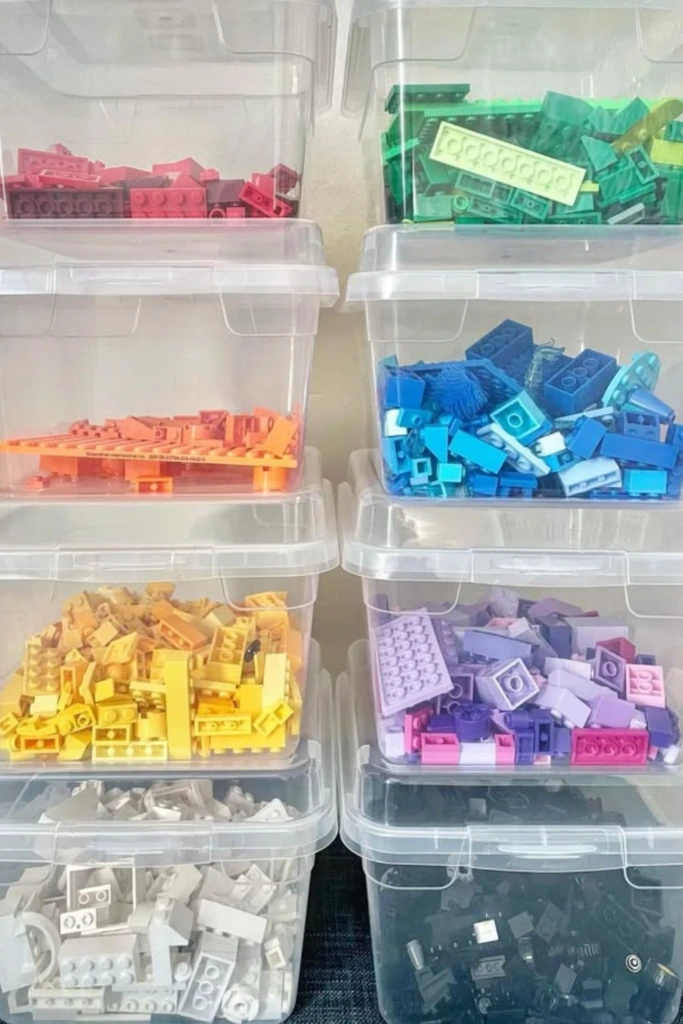
Stacking clear bins helps make the most of vertical storage space, particularly when you have several categories of LEGO but limited room for furniture.
You could dedicate one container to everyday bricks, another to instruction manuals, and a third to completed models or spare parts. Labels on the front make identification easier when several bins look similar.
Choose containers that fit together securely and avoid creating tall, unstable stacks. Store heavier bins toward the bottom and place frequently used items where your child can reach them safely.
For a more organized appearance, keep the containers together on a sturdy shelving unit rather than stacking them randomly around the room.
8. Play Table Storage
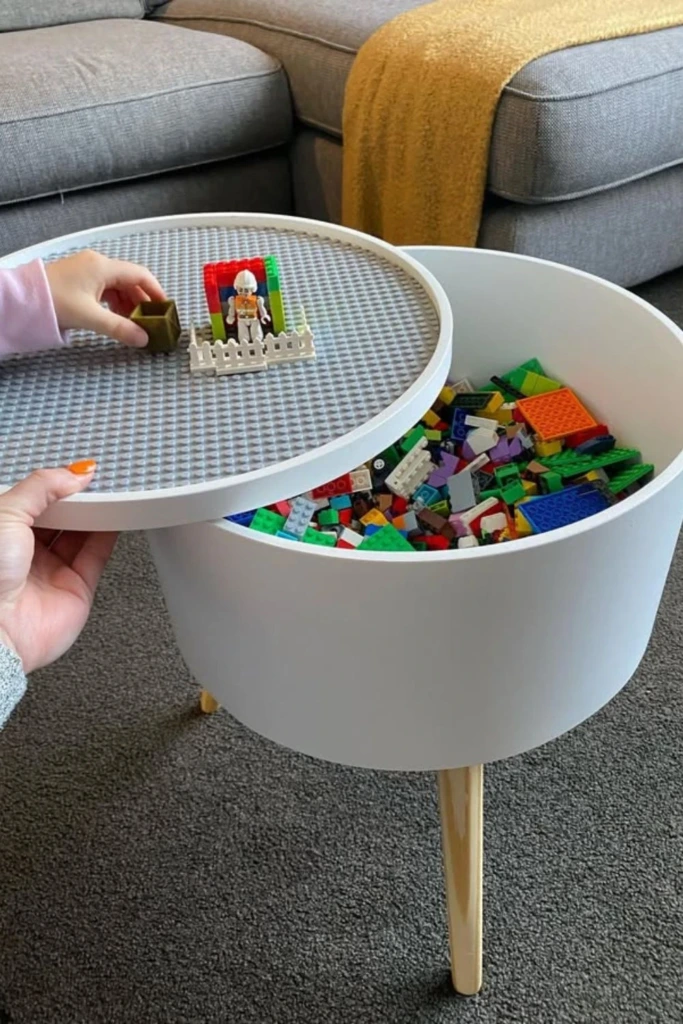
A simple table can become a practical LEGO station when paired with baskets, trays, or drawers underneath. This arrangement gives children a designated place to build without requiring a separate playroom.
Use the storage area for the pieces your child reaches for most often. Less frequently used components can go into labeled containers on a nearby shelf.
A removable building tray is particularly useful if the table also serves as a homework or craft area. The tray can hold loose pieces and an unfinished project, allowing the table to be cleared without disturbing the build.
If several children share the space, individual trays can help each child keep track of their own creations and favorite pieces.
9. Labeled Bin Shelving
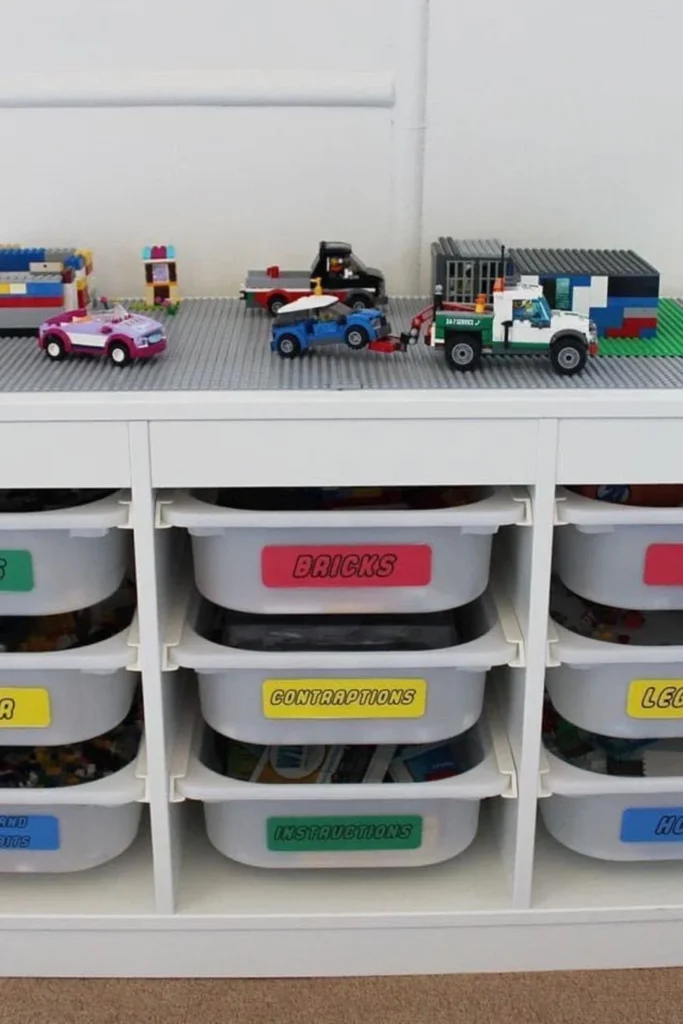
A shelving unit fitted with matching bins can accommodate a growing collection while keeping the room visually organized. This setup is especially useful when LEGO has become a regular part of family playtime.
Assign each bin a clear purpose and use labels that children can understand easily. Categories such as vehicles, figures, building plates, and general bricks are often sufficient to begin with.
Leave some room inside each container for future additions. Overfilled bins become difficult to close, and children may start leaving pieces wherever they can find space.
For added flexibility, choose shelves with adjustable heights so larger models and containers can fit as your storage needs change.
10. Magnetic Spice Jars
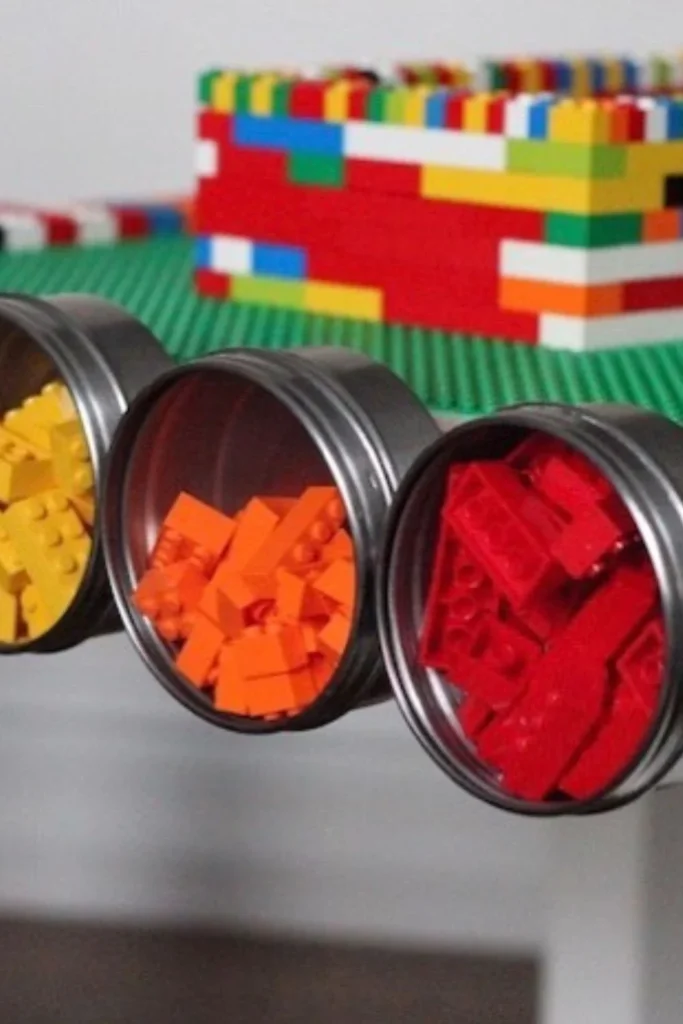
Small magnetic spice jars can provide a creative storage solution for tiny LEGO accessories. Their compact size makes them suitable for items such as miniature tools, flowers, decorative studs, and other small components.
Attach the jars to a compatible magnetic board or metal surface to create an organized display. Transparent containers make it easier to identify their contents, and removable jars allow children to take the pieces directly to their building area.
This method works best for older children, hobbyists, and adult LEGO enthusiasts who want quick access to small parts.
Because the jars contain small components, avoid placing them within reach of toddlers or children who may put pieces in their mouths. Keep the containers securely attached and use lids that close firmly.
11. Metal Drawer Cabinet
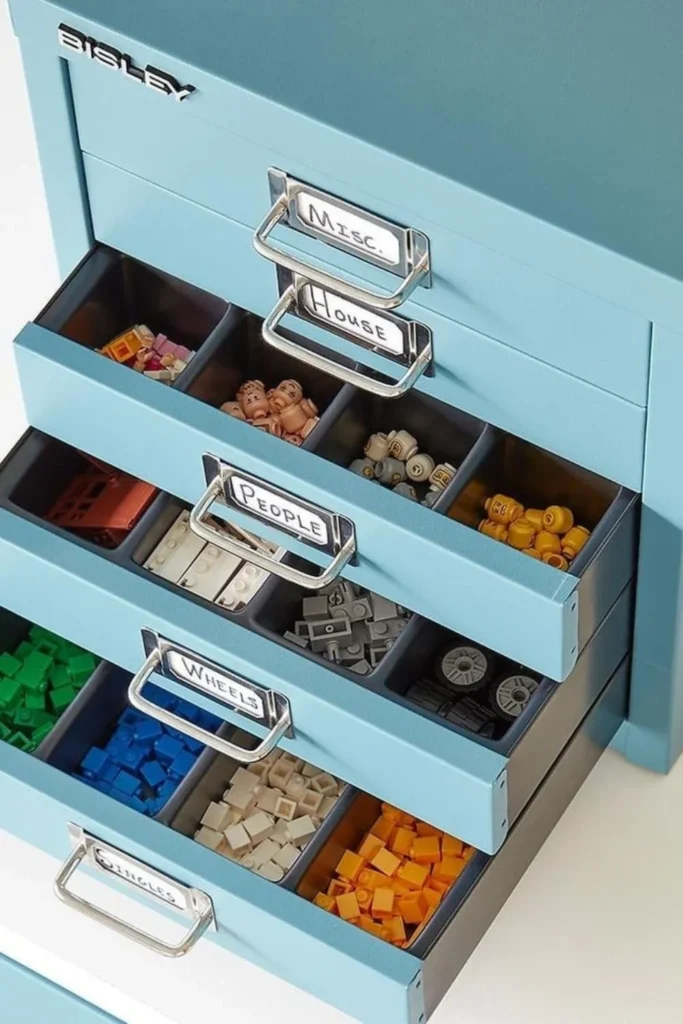
A metal parts cabinet is a useful option for builders who enjoy detailed organization. Its numerous small drawers can separate specialized components that would otherwise disappear among larger bricks.
Consider sorting technical elements such as pins, clips, hinges, connectors, and small mechanical parts into individual compartments. Arranging related pieces beside one another makes the cabinet easier to navigate.
You can label each drawer with a name, a photograph, or a sample component. Visual identification is particularly helpful when several parts look similar.
This storage style suits large collections and experienced builders who regularly search for specific pieces. For younger children or casual builders, a simpler container system may be easier to use.
12. Rainbow Drawer Wall
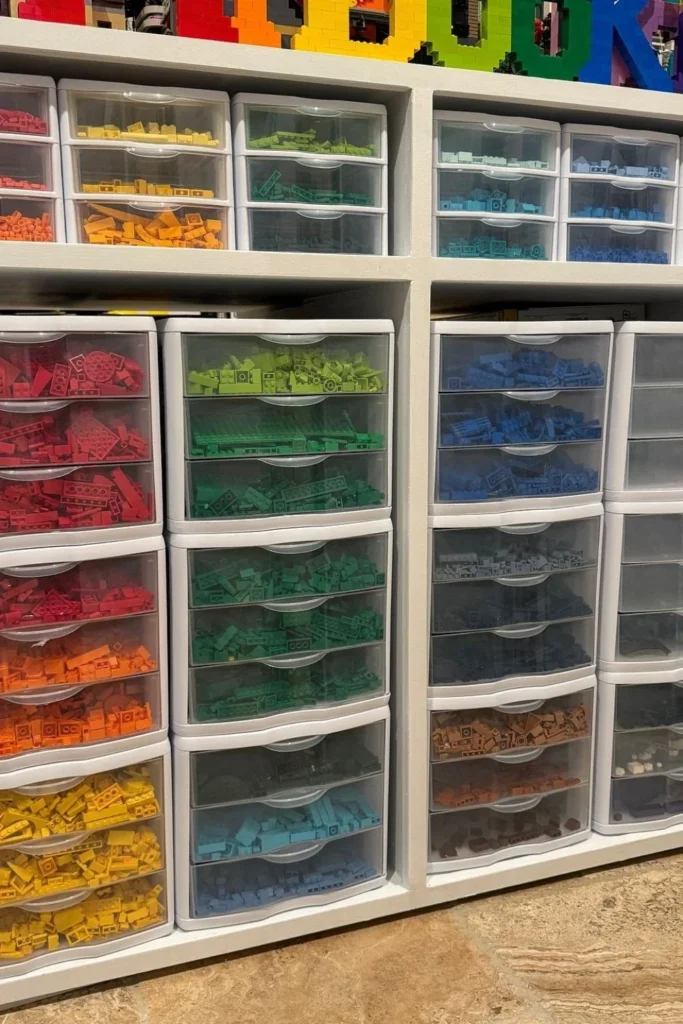
A rainbow drawer wall transforms several storage units into one large, coordinated LEGO organization area. It can hold an extensive collection while keeping individual categories accessible.
Arrange the drawers according to a consistent system, such as color, component type, or a combination of the two. Keeping the same arrangement across every unit helps family members find and return pieces without confusion.
Place the most frequently used drawers at comfortable heights and reserve higher sections for less commonly needed materials. Use a sturdy setup and secure tall furniture to the wall according to the manufacturer's instructions.
Although this arrangement can look impressive, its main advantage is functionality. A well-planned drawer wall allows builders to work with a large variety of pieces without spreading the entire collection across the floor.
13. Wall-Mounted Drawer Units
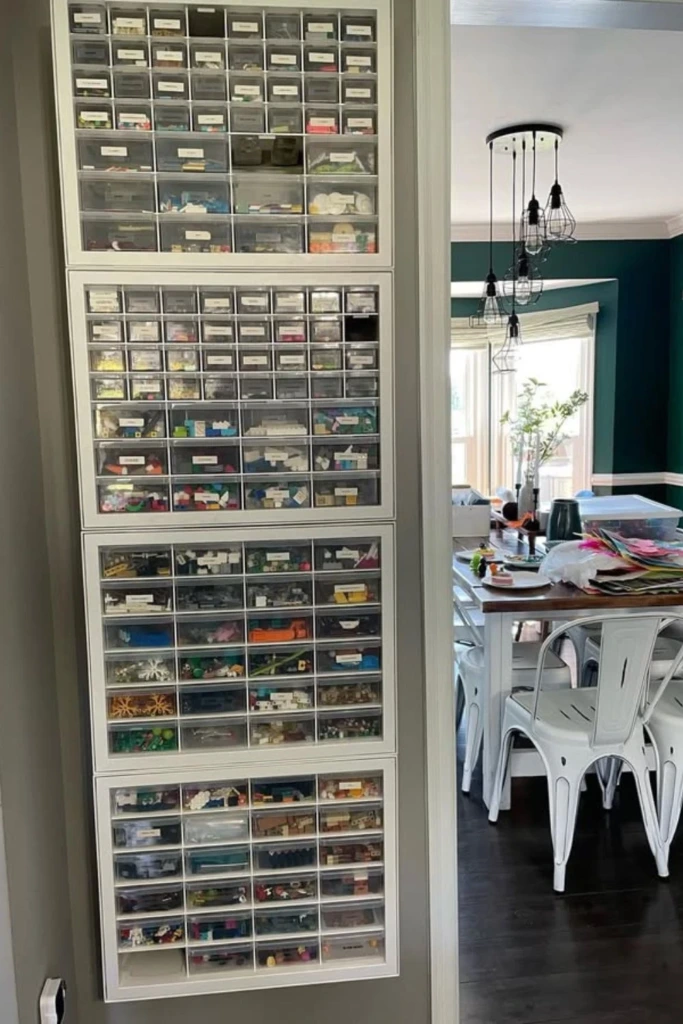
Wall-mounted drawers provide storage without occupying valuable floor space. They can fit above a desk, beside a building station, or along a wall that would otherwise remain unused.
Use the lower drawers for everyday bricks and frequently handled accessories. Higher compartments can hold spare components, specialized pieces, or items that are not needed during every building session.
Before installing the units, check the wall type, the manufacturer's mounting requirements, and the expected weight of the filled drawers. Proper fixings are essential because a large collection can become surprisingly heavy.
Keep small parts out of reach of very young children and avoid mounting frequently used storage so high that children must climb to access it.
14. Minifigure Baseplate Wall
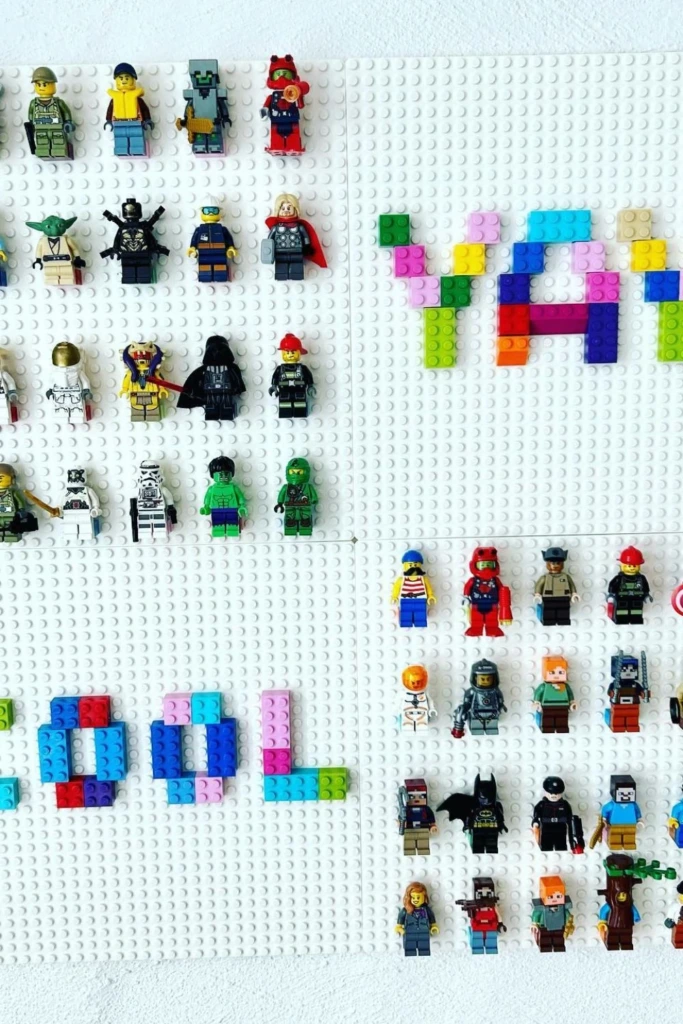
A minifigure baseplate wall provides a dedicated place to display LEGO characters instead of keeping every figure inside a mixed storage box.
Attach compatible baseplates to a suitable display surface and arrange the figures by theme, character type, or personal preference. Children can create scenes, build miniature collections, and rearrange their displays whenever they like.
This approach combines decoration with organization, making it especially appealing to children who enjoy collecting characters as much as building structures.
Keep a small labeled container nearby for accessories such as hats, tools, and other detachable pieces. Check that the baseplates are securely attached and positioned at a height that makes rearranging the figures comfortable.
15. Circular Tire Display
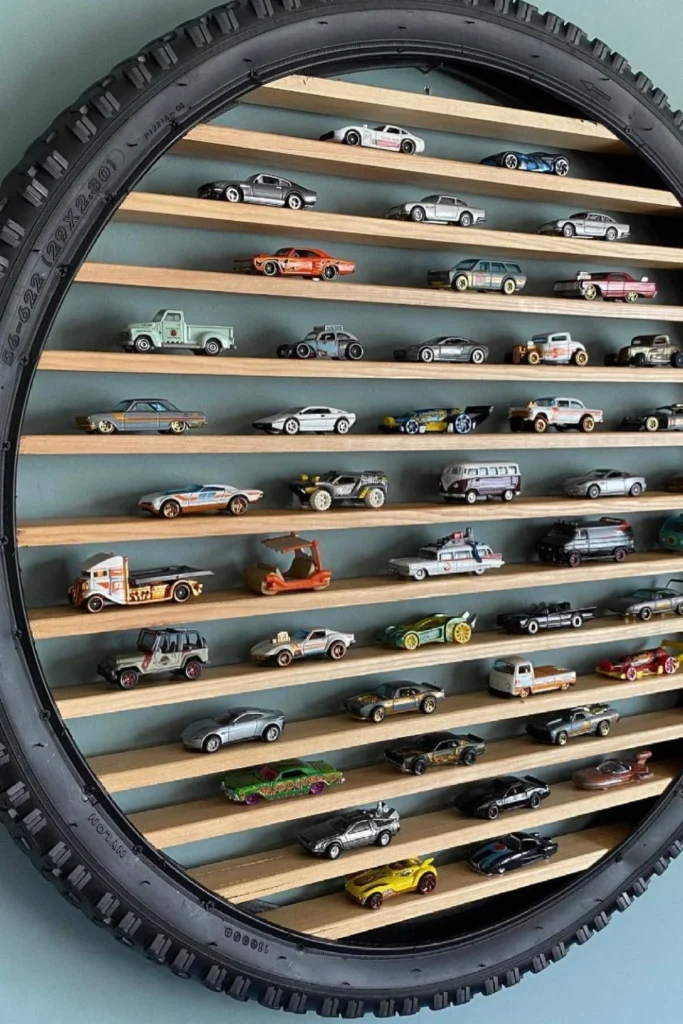
A circular tire display is an interesting way to organize wheels for children who enjoy building cars, trucks, and other vehicles.
Use a round board, shallow tray, or suitable frame to arrange wheels according to size or style. Keeping similar pairs together makes it easier to find the right components when constructing a vehicle.
The display does not need to include every wheel in the collection. Keep frequently used options visible and place duplicate or less commonly used pieces in a nearby drawer.
If you use a wall-mounted display, ensure the frame is secure and that the wheels cannot easily fall out. A tabletop version can be more practical for younger builders who regularly change their arrangements.
16. Grid Wall Display
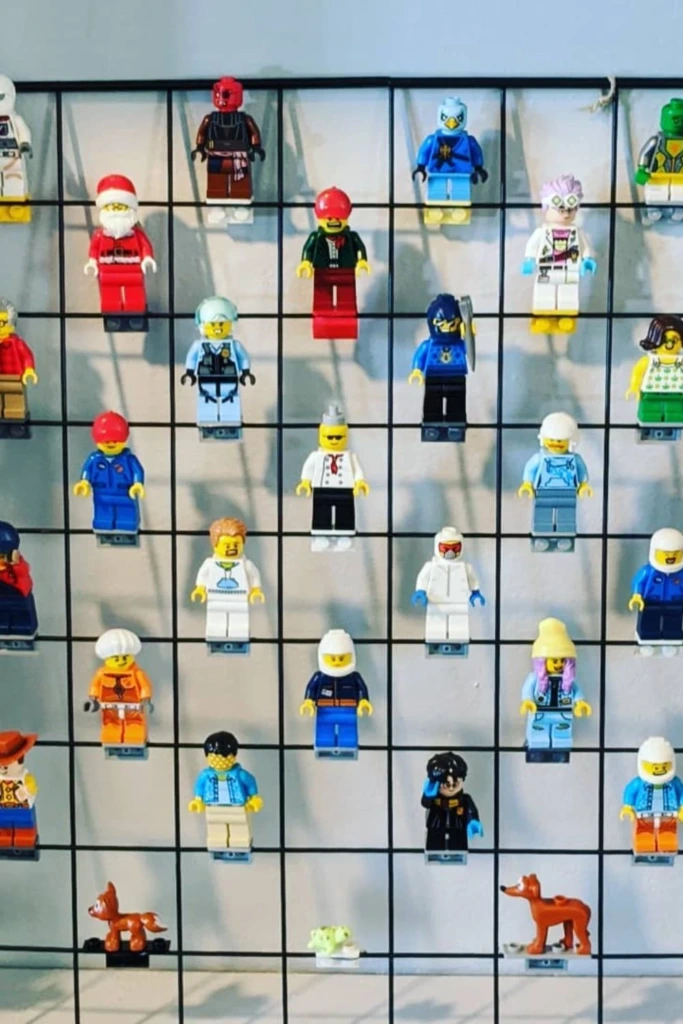
A wall grid offers a flexible way to combine different types of LEGO storage in one place. Depending on its design, you can attach compatible baskets, hooks, small shelves, and lightweight containers.
Use the grid for items that benefit from visibility, such as instruction booklets, minifigures, building plates, and frequently used accessories. You can rearrange the attachments as your child's interests and collection change.
This method is especially useful when you want to keep a building station organized without adding another large piece of furniture.
Check the grid's weight capacity and use compatible attachments that are secured properly. Heavy containers filled with loose bricks are better suited to sturdy shelves or low storage units.
17. Rolling Drawer Cart
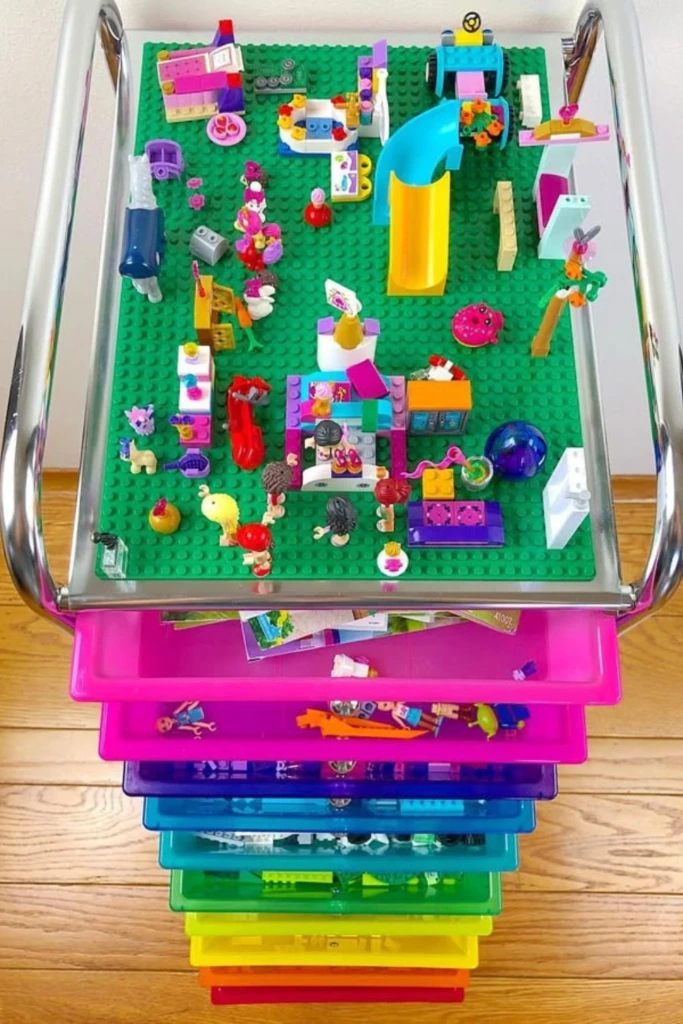
A rolling drawer cart makes it easy to move LEGO between rooms. It is useful for families whose children build in a bedroom one day and at the dining table or living room the next.
Choose a cart with enough drawers to separate the main categories and wheels that lock when the cart is stationary. Drawers should stay closed during movement so small pieces do not spill across the floor.
Store heavier items in the bottom drawers to improve stability. The top surface can hold a sorting tray, a small building project, or the pieces currently being used.
Before moving the cart, check that its drawers are shut and the route is clear. A well-designed cart can make portable storage much more convenient without requiring multiple organizers throughout the home.
18. Wooden Minifigure Shelf
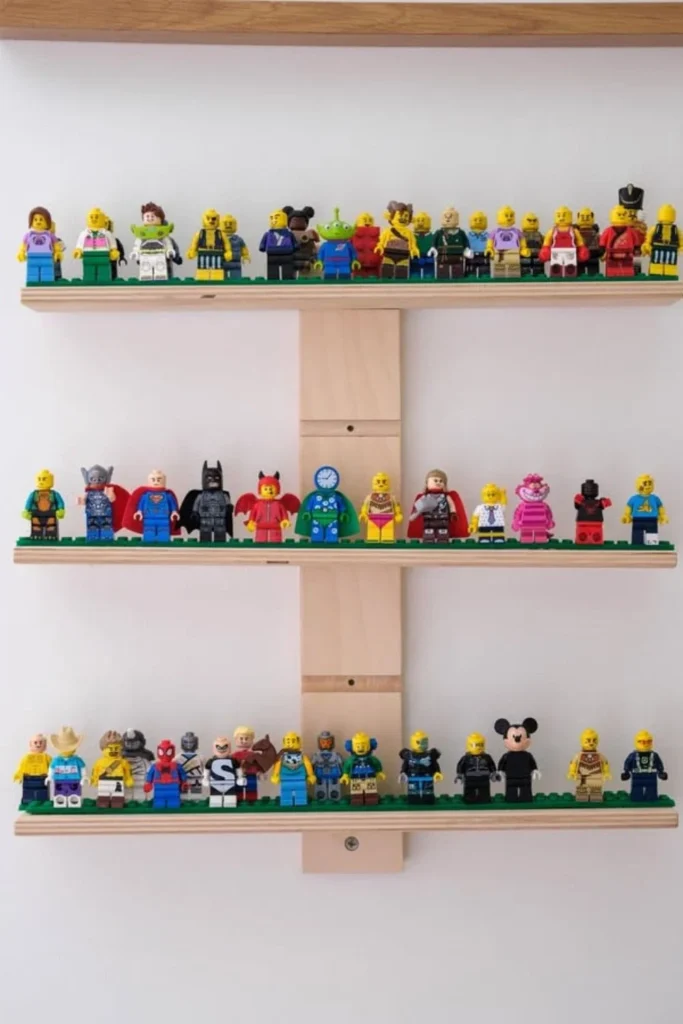
A narrow wooden shelf provides an attractive way to display favorite minifigures while freeing up space in storage drawers.
Arrange characters according to their themes, collections, colors, or individual personalities. You can dedicate separate sections to favorite characters or leave room for new additions.
For a more stable display, use compatible baseplates or suitable figure holders. This helps keep the figures upright when the shelf is bumped or when children move other items nearby.
Choose a shelf with enough depth to accommodate the figures securely, and mount it according to the manufacturer's instructions. Keep detachable accessories in a separate container so the display stays tidy.
A wooden finish can also blend naturally with bedroom furniture, making the storage feel like part of the room's decor.
19. Vintage Suitcase Storage
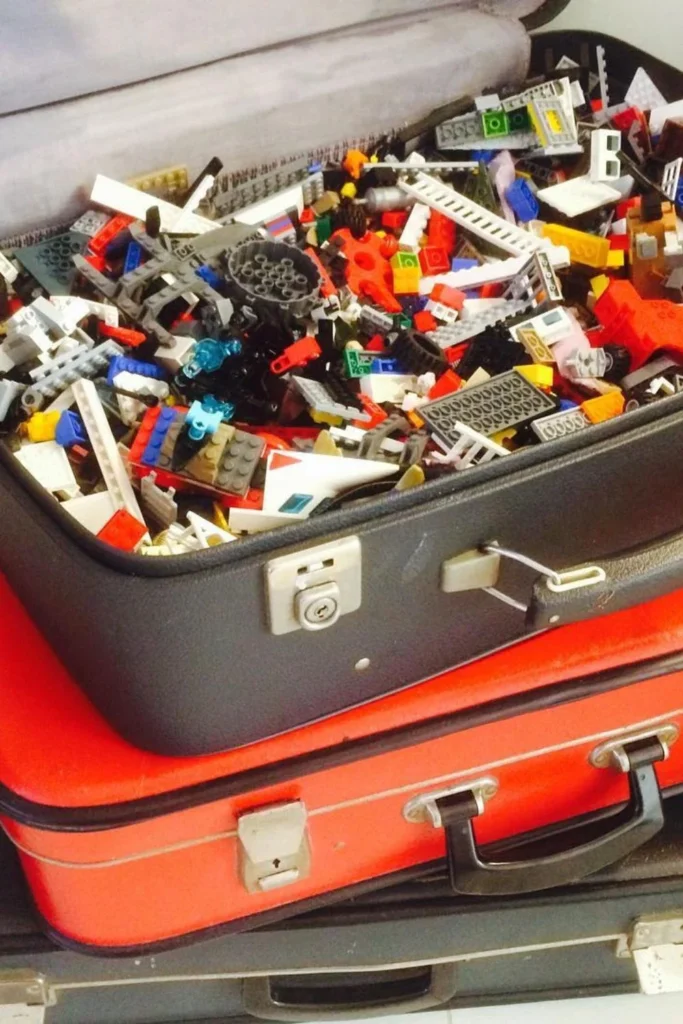
An old suitcase can become a distinctive storage container for LEGO, particularly if you prefer repurposing items instead of buying new organizers.
Place shallow trays or small boxes inside the suitcase to divide the contents. One section can hold loose bricks, another can accommodate minifigures, and a separate area can keep instructions or unfinished projects together.
The suitcase can be closed when playtime ends, helping keep the collection out of sight in a bedroom or shared living space.
Before using an older suitcase, inspect its lining, hinges, handles, and fasteners. Clean it thoroughly and make sure the lid stays open safely during use. A stable, lightweight suitcase with a secure closure is preferable to a damaged or heavy vintage model.
20. LEGO Brick Boxes
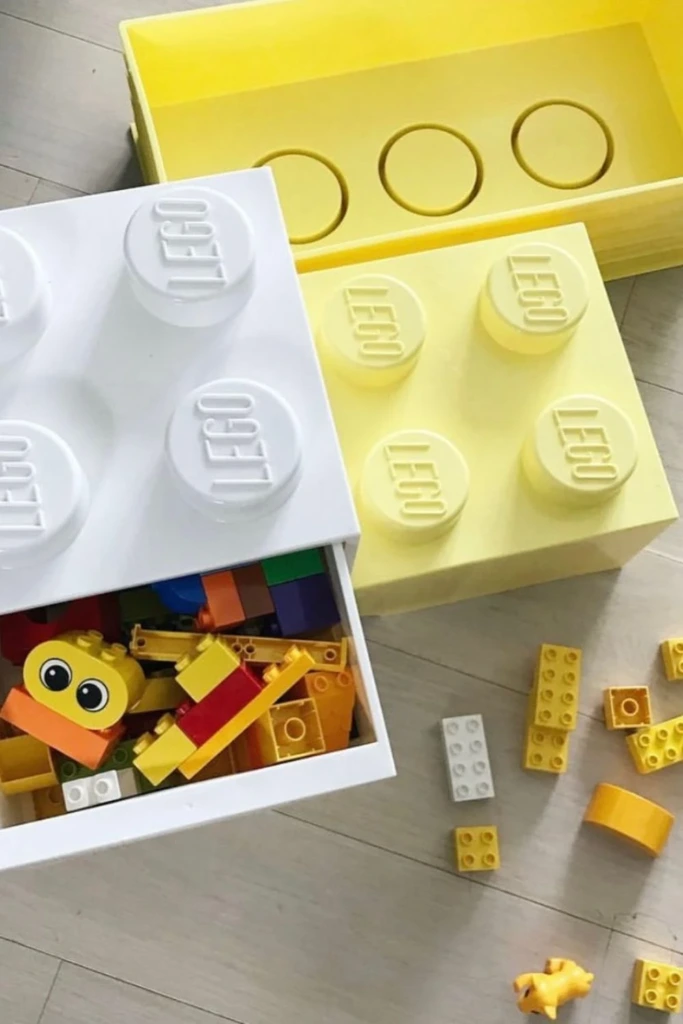
Oversized storage boxes shaped like LEGO bricks can make tidying up more appealing to children. Their playful appearance fits naturally into a building area and can encourage children to put away their materials.
Use these boxes for broad categories rather than trying to organize every small component individually. For example, one box could hold loose building bricks, another could store vehicles, and a third could contain unfinished projects.
Because some brick-shaped boxes are relatively deep, smaller containers can help separate accessories from the main collection. This prevents tiny pieces from getting buried beneath larger components.
Check the dimensions before purchasing to ensure the boxes fit your available shelf or floor space. A matching set can create a coordinated appearance, while different colors may help distinguish categories.
21. Divided Drawer Organizer
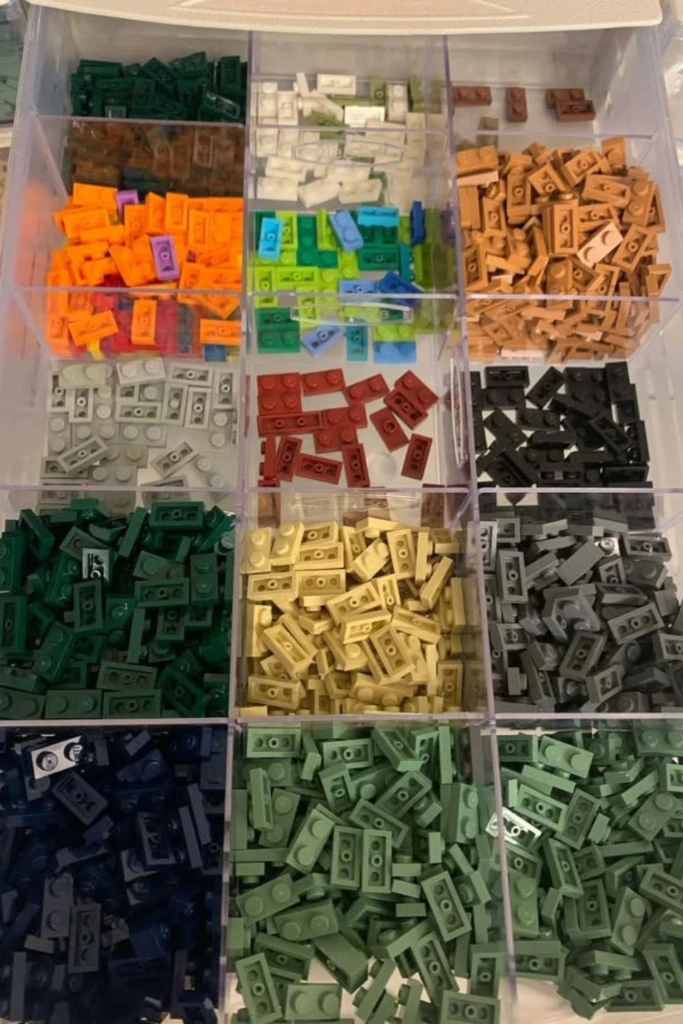
An existing desk or dresser drawer can become a useful LEGO storage area with the addition of a divided organizer insert.
Adjustable compartments allow you to create sections for standard bricks, flat plates, minifigures, wheels, and accessories. When the drawer closes, the collection stays out of sight, which is particularly helpful in shared bedrooms or multipurpose rooms.
Measure the drawer's interior width, depth, and height before choosing an insert. Make sure the dividers fit properly and leave enough clearance for the drawer to close without catching taller pieces.
This approach is often more economical than purchasing a dedicated storage cabinet because it makes use of furniture you already own.
22. Wooden Drawer Tower
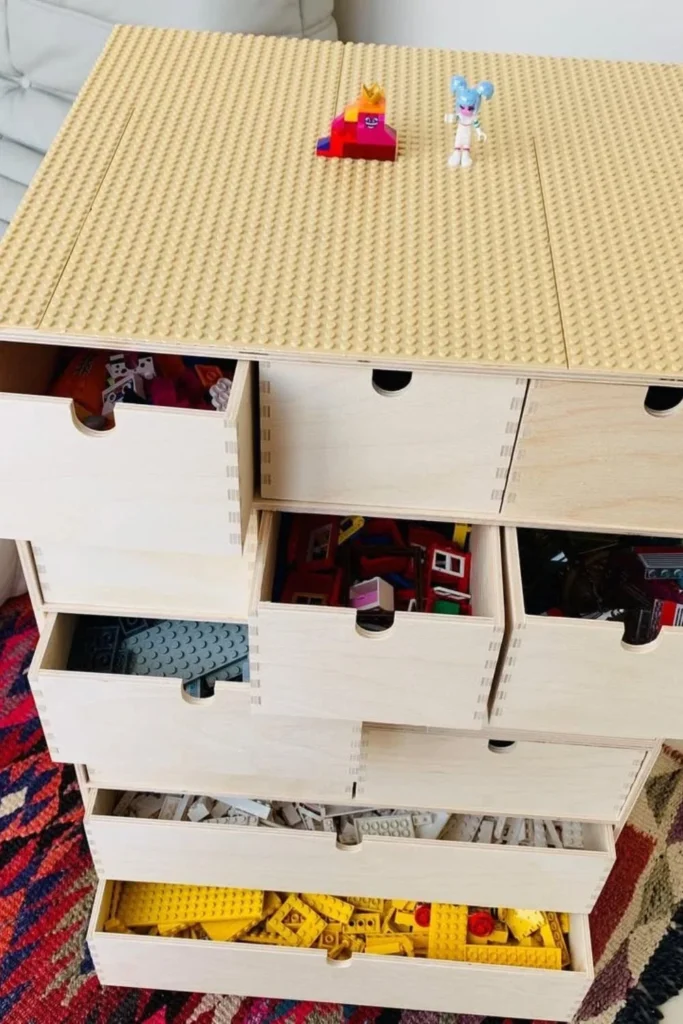
A wooden drawer tower offers a furniture-style alternative to colorful plastic organizers. Its neutral appearance can work well in bedrooms, family rooms, and other shared spaces.
Choose a unit with a mixture of drawer sizes so different types of LEGO can be stored conveniently. Deeper drawers are useful for loose bricks and larger components, while shallow compartments suit minifigures, flat plates, and smaller accessories.
Use subtle labels or small color markers to identify the contents without changing the appearance of the furniture.
Make sure the drawers open easily and that the unit is suitable for the weight of the collection. Secure tall furniture to the wall using appropriate hardware, particularly in rooms used by children.
23. Candy Bin Cabinet
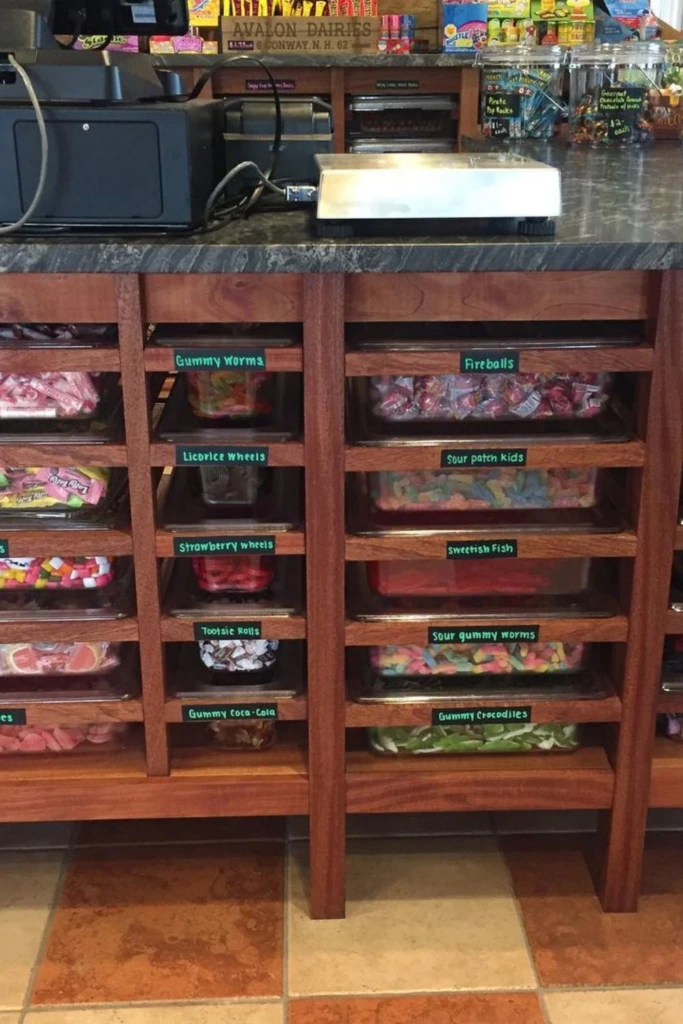
A cabinet with clear, tilt-out bins can make individual LEGO categories easy to see and access. This style of storage is useful for popular components that children often need while building.
Assign separate compartments to wheels, windows, doors, roof pieces, and other frequently used elements. Transparent fronts allow children to locate what they want before opening the container.
Place a shallow tray beneath the cabinet while sorting to catch any pieces that fall out. Avoid filling the bins beyond their recommended capacity, as overcrowding can prevent them from opening and closing smoothly.
If you are choosing a cabinet specifically for LEGO, check that its compartments are appropriately sized for the pieces and that the design is safe and easy for your child to operate.
24. Labeled Colour Drawers
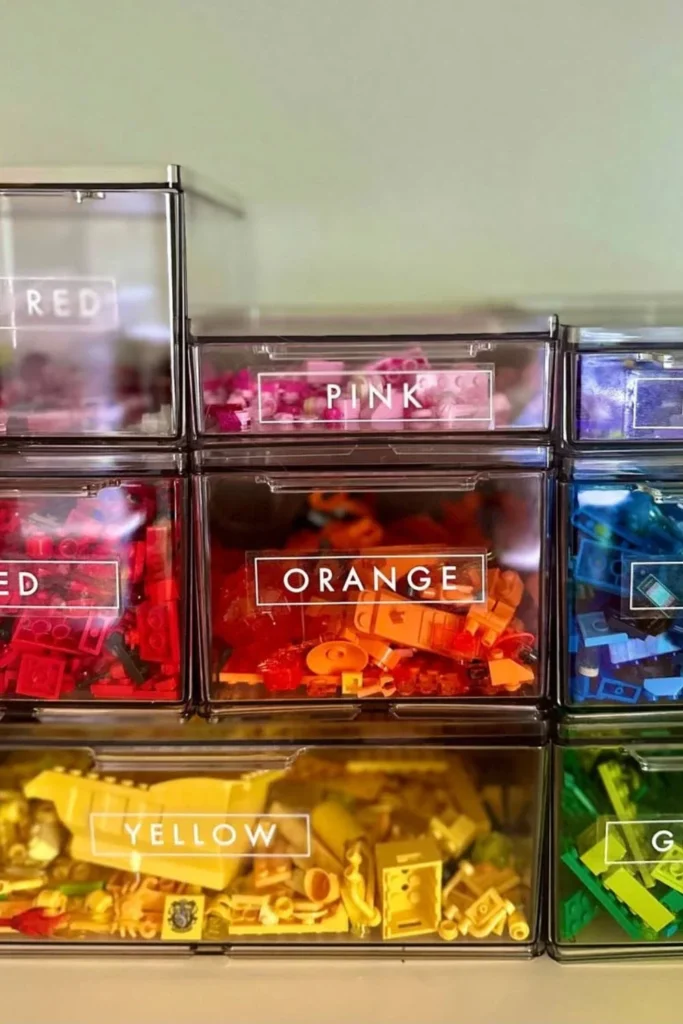
Color-coded drawers can make LEGO organization straightforward, especially for children who choose bricks based on the colors they need for a particular creation.
Create a consistent arrangement and use labels to distinguish similar shades. For example, separate drawers may be useful for light blue, dark blue, gray, and white pieces if those colors appear frequently in your builds.
This system is visually appealing and can simplify cleanup because children can quickly recognize the correct drawer.
However, color sorting is not ideal for every builder. Someone constructing detailed models may find it more useful to separate components by shape or function. You can combine both methods by using color categories for general bricks and dedicated compartments for specialized pieces.
25. Sectioned Display Box
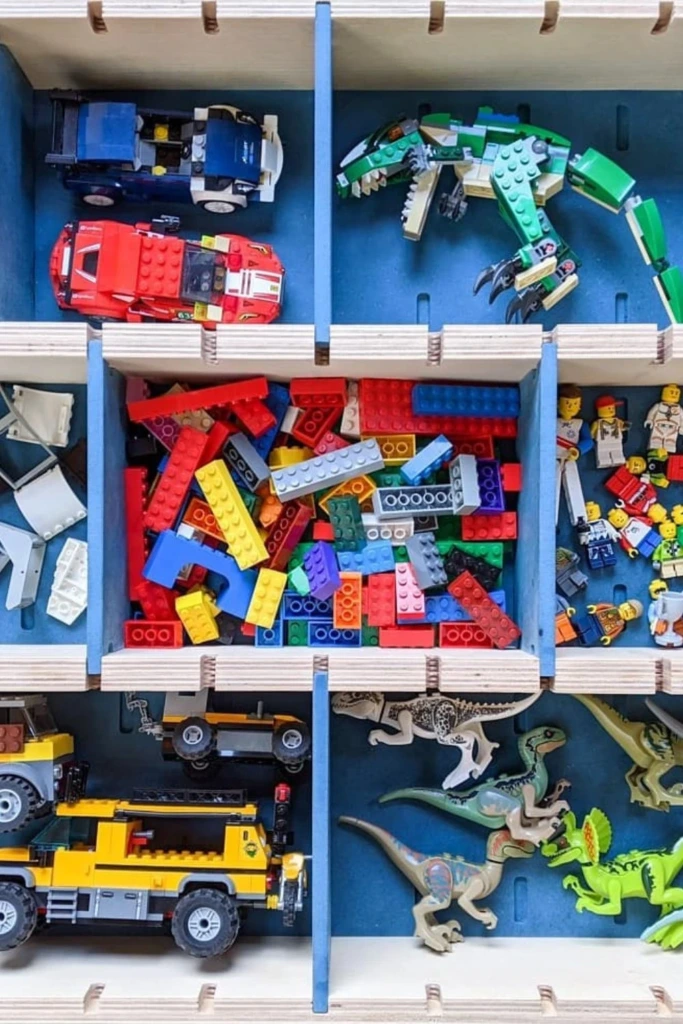
A sectioned display box is well suited to minifigures, collectible characters, and small accessories that deserve more attention than ordinary loose bricks.
Each compartment can showcase an individual figure or a small themed arrangement. A fitted cover helps reduce dust, while separate sections prevent the contents from becoming mixed together.
Choose a box with compartments deep enough to accommodate the figures and any accessories you want to display. Consider whether the cover opens easily and whether the box can be placed securely on a shelf or desk.
This type of organizer is best for selected items rather than an entire LEGO collection. Keeping the display focused helps maintain an attractive appearance and leaves room for future additions.
26. Compartment Case
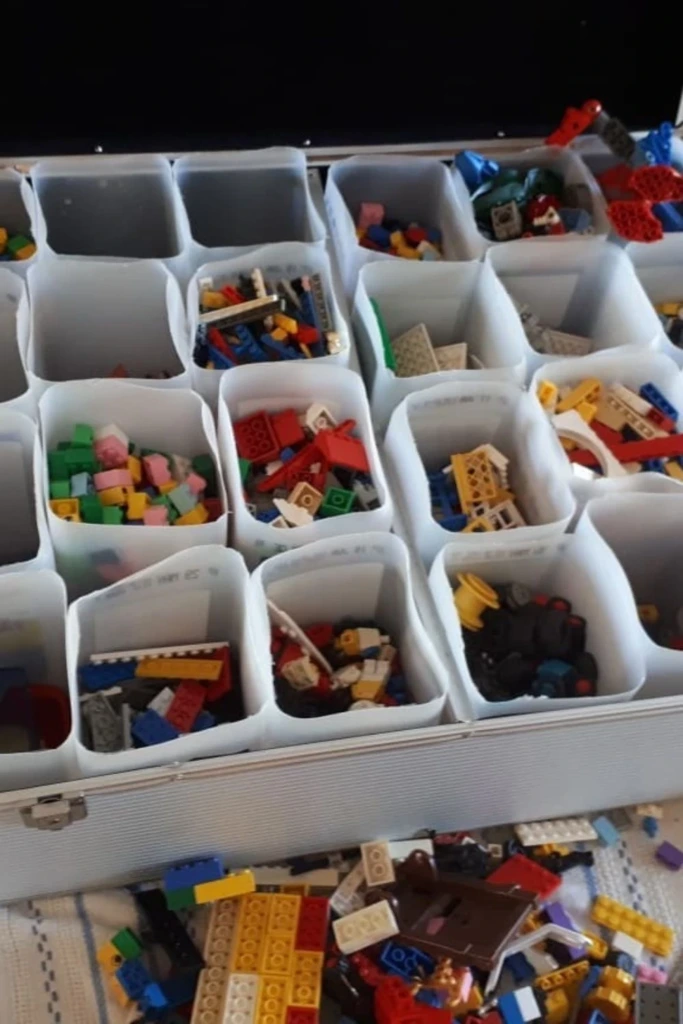
A compartment case is a convenient option for transporting LEGO between rooms, taking it on holiday, or bringing a small collection to a friend's house.
Choose a sturdy case with secure latches, a comfortable handle, and dividers that prevent pieces from moving between sections. Some cases are better suited to tiny accessories, while others have larger compartments for bricks and small builds.
Before carrying the case, close every compartment and check that the lid is firmly secured. A brief test shake can help reveal whether pieces are escaping between sections.
Compartment cases are also useful for keeping the parts of a favorite small set together after its original packaging has worn out. For travel, select a size that is easy to carry and provides enough room without becoming unnecessarily bulky.
Colour or Type: Which Way Should You Sort?
The most useful LEGO sorting method is the one that helps your child find pieces quickly and put them away without frustration. Color and component type are both effective options, but they suit different building habits.
Sorting by color is easy to understand and can be especially helpful for younger children or builders who create their own designs. Separating red, blue, green, yellow, and other colors makes it simple to find a particular shade.
Sorting by type groups similar components together, regardless of color. Bricks, plates, wheels, hinges, windows, and other parts each have their own place. This approach can be more efficient for children who build detailed models or follow instructions that require specific components.
You do not have to choose only one method. General bricks can be separated by color, while specialized pieces are stored by type. Minifigures and accessories can have their own dedicated compartments.
If you are unsure where to begin, create five or six broad categories and use the arrangement for a week. Pay attention to which containers your child uses most often and which categories cause confusion. Adjust the system based on actual play habits rather than trying to achieve a perfectly sorted collection immediately.
27. Before You Start Sorting Everything
Organizing an entire LEGO collection can take considerable time, especially when loose bricks, completed sets, accessories, and instruction books have accumulated over several years. Instead of emptying everything at once, work through the collection in manageable stages.
Begin by identifying the biggest problem. If loose pieces are covering the floor, start with a general storage bin. If your child constantly searches for minifigures, create a dedicated figure container or display shelf. If unfinished projects are being knocked over, establish a safe place where they can remain assembled.
Choose storage that your child can reach and operate independently. Containers should open easily, labels should be understandable, and frequently used pieces should not be hidden behind several other boxes.
It also helps to leave room for the collection to grow. A container that is already full offers little flexibility when new sets are added, so avoid filling every drawer and shelf to capacity.
For families with younger children, pay particular attention to small parts. Keep them securely stored and out of reach of children who may swallow them. Tall cabinets and shelving should also be installed securely to reduce the risk of tipping.
Most importantly, build cleanup into your child's regular play routine. A few minutes spent returning pieces to their containers can make the next building session easier and help the storage system remain useful over time.
You do not need a picture-perfect playroom to keep LEGO under control. Start with a practical arrangement, notice what works, and make small adjustments as your collection changes. Even if an occasional brick still ends up under the sofa, a well-planned storage system can make building more enjoyable and everyday cleanup considerably simpler.