25 Smart Fruit Storage Ideas to Keep Your Kitchen Organized in 2026
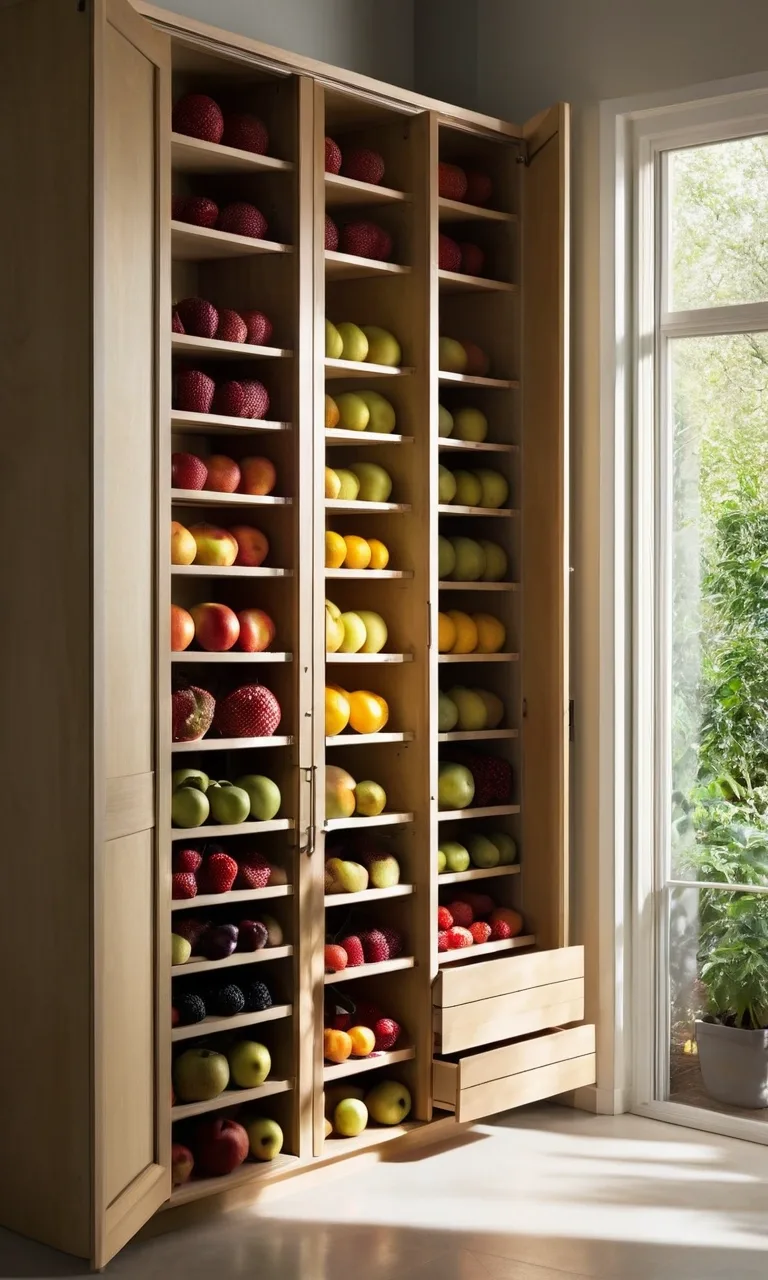
Fresh fruit can make your kitchen feel colorful and inviting, but storing it properly isn't always easy. Bananas crowd the countertop, apples roll around in drawers, and delicate berries can spoil before you get a chance to enjoy them.
The right storage setup makes a noticeable difference. It helps protect delicate produce, keeps frequently eaten fruit within reach, and prevents your kitchen from feeling cluttered.
Whether you have a spacious pantry or a tiny apartment kitchen, these 25 practical fruit storage ideas will help you organize your produce while making better use of available space.
What Is the Best Way to Store Fruit to Keep It Fresh?
The best fruit storage method depends on the type of fruit, its ripeness, and how quickly you plan to eat it.
Apples, berries, grapes, and cherries generally last longer in the refrigerator. Bananas, whole pineapples, and unripe mangoes are better kept at room temperature until they reach the desired ripeness.
Good airflow also matters. Avoid packing fruit tightly into deep containers, especially when moisture can accumulate.
Keep ethylene-producing fruits, such as apples and ripe bananas, away from produce that is sensitive to this natural ripening gas.
Choose containers that are easy to clean, check fruit regularly for damage, and refrigerate cut fruit promptly.
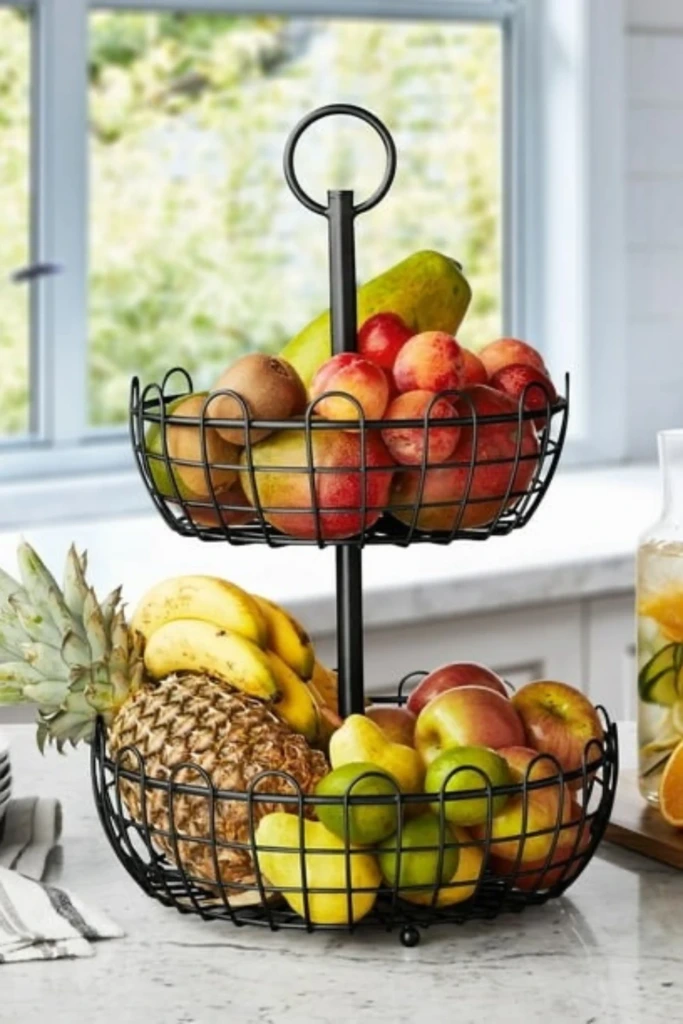
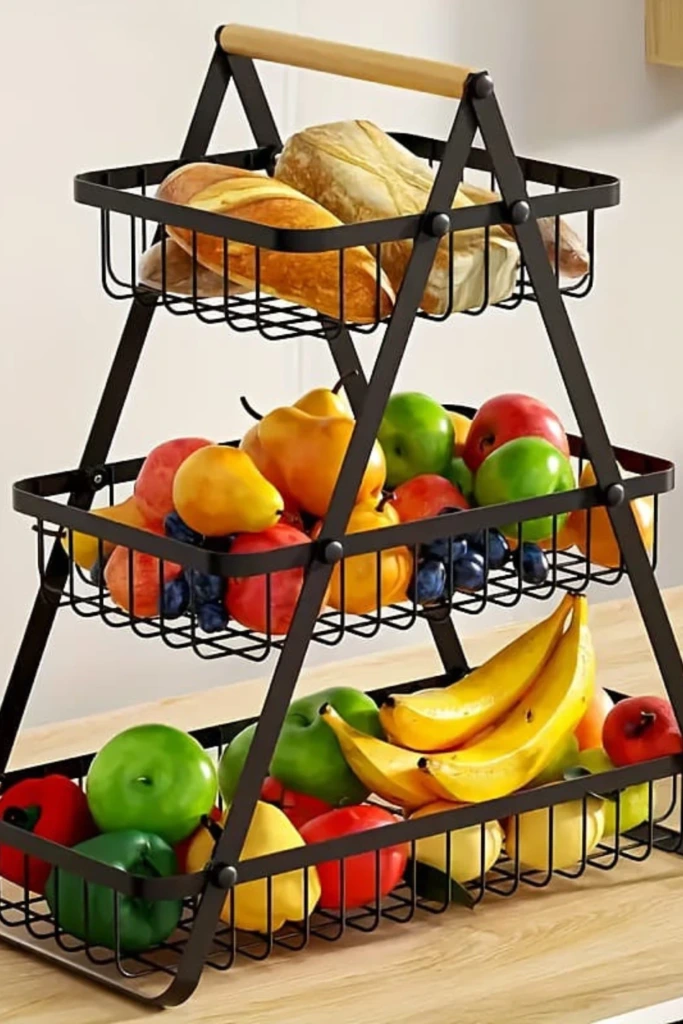
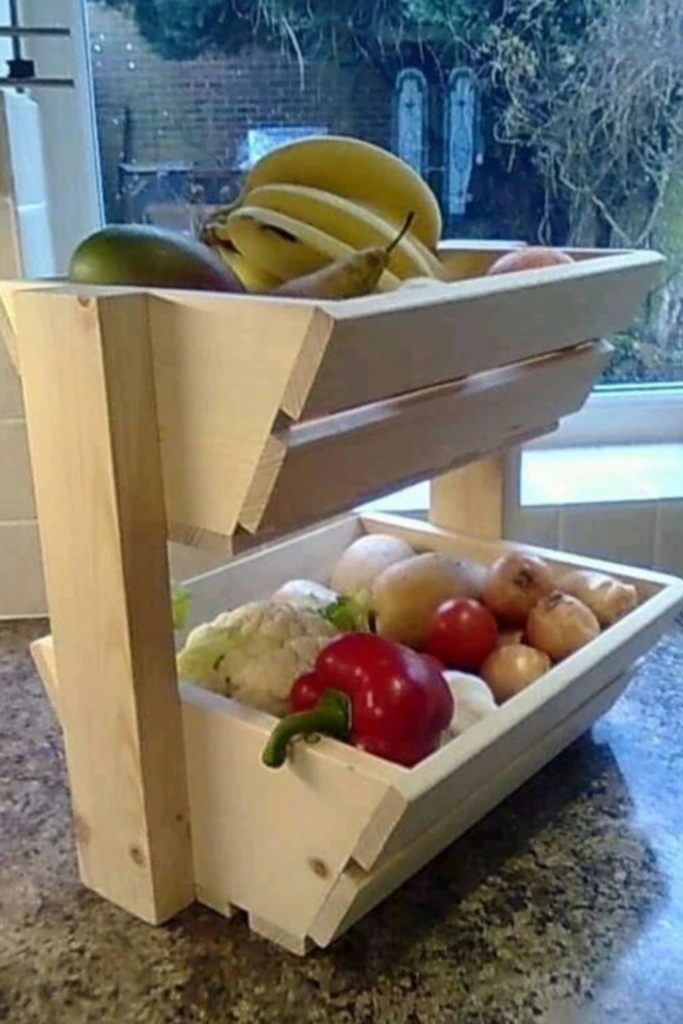
1. Tiered Fruit Basket

A tiered fruit basket is an excellent solution when countertop space is limited.
Its stacked design provides multiple storage levels without requiring a large footprint. Use separate tiers for bananas, oranges, and other fruits that can safely remain at room temperature.
Choose an open metal basket with enough spacing for air circulation. Avoid overfilling the tiers, as excessive weight can bruise softer fruit.
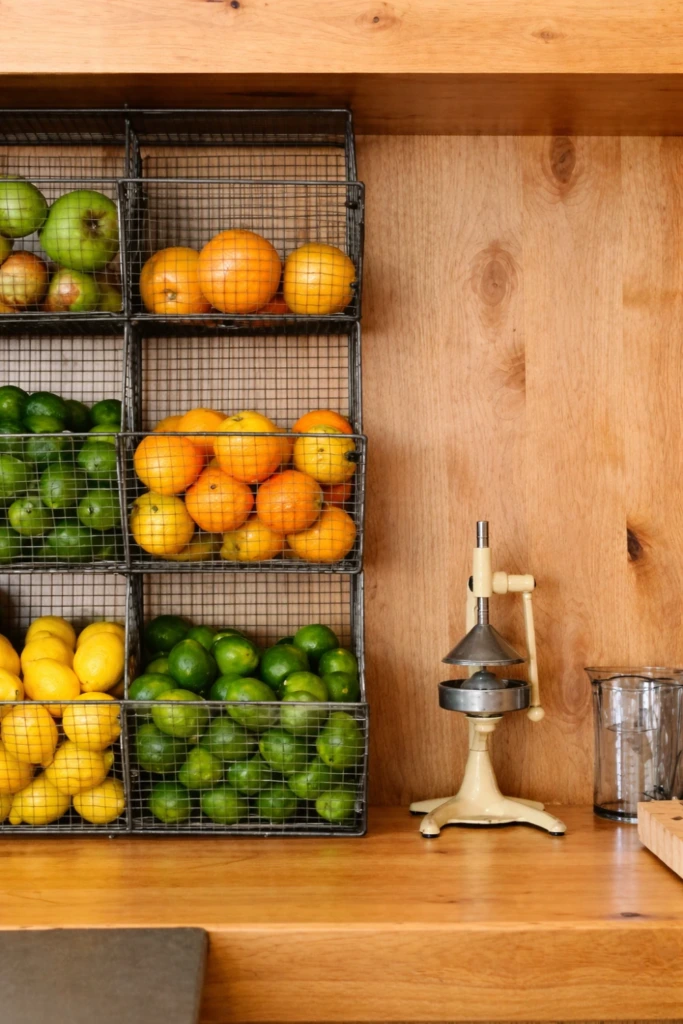
2. Wall-Mounted Fruit Baskets
Empty kitchen walls offer useful storage opportunities, especially in compact kitchens.
Mount shallow wire baskets near your food preparation area to hold citrus fruits and other room-temperature produce.
Choose sturdy brackets and install them securely. Keeping baskets at a comfortable height makes it easier to reach fruit and notice anything beginning to spoil.
3. Hanging Macrame Fruit Hammock
A macrame fruit hammock adds a relaxed, handmade touch to your kitchen while freeing up counter space.
Hang it beneath a sturdy shelf or cabinet, away from the stove and direct sunlight. It works particularly well for lightweight fruits such as mandarins and small apples.
Make sure the hammock supports the weight evenly and does not squeeze the fruit together.
4. Under-Cabinet Fruit Basket
The unused space beneath kitchen cabinets can become a convenient fruit storage area.
Install a hanging wire basket under a sturdy cabinet to hold oranges, lemons, or other firm produce.
This arrangement keeps fruit accessible without occupying valuable work surfaces. Check that the basket won't interfere with appliances or everyday kitchen activities.
5. Wooden Fruit Crates
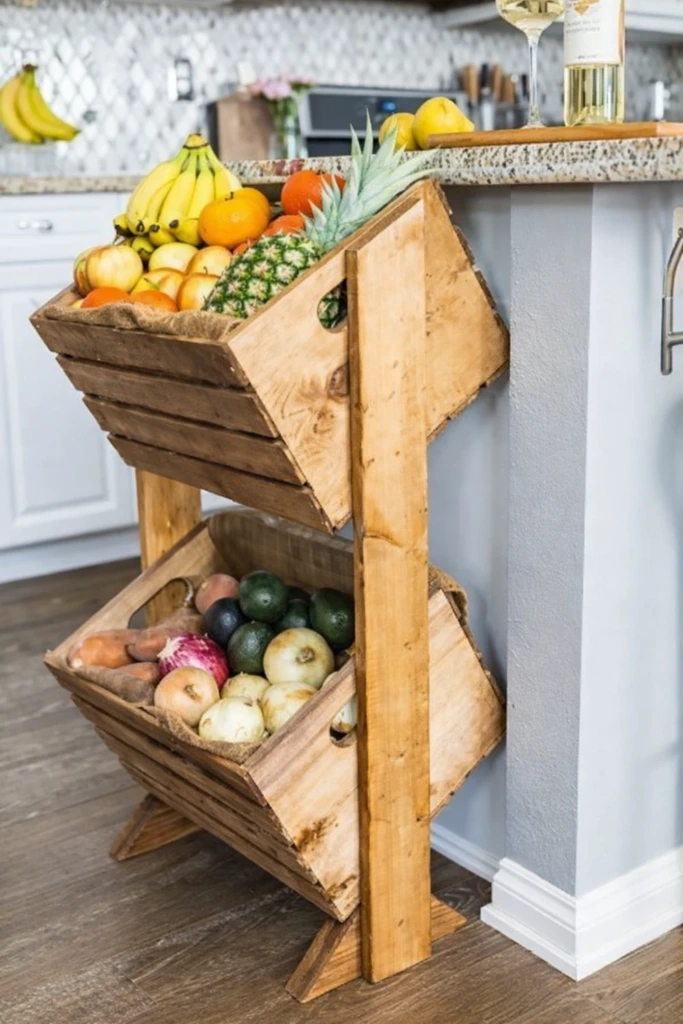
Wooden crates create a charming farmhouse-inspired storage display.
Place a few small crates on an open pantry shelf or kitchen counter to organize different types of fruit.
Use smooth, cleanable liners to prevent rough wood from damaging delicate skins. Leave enough room between fruits to avoid unnecessary pressure.
For easy maintenance, choose crates with removable liners rather than permanently attached fabric.
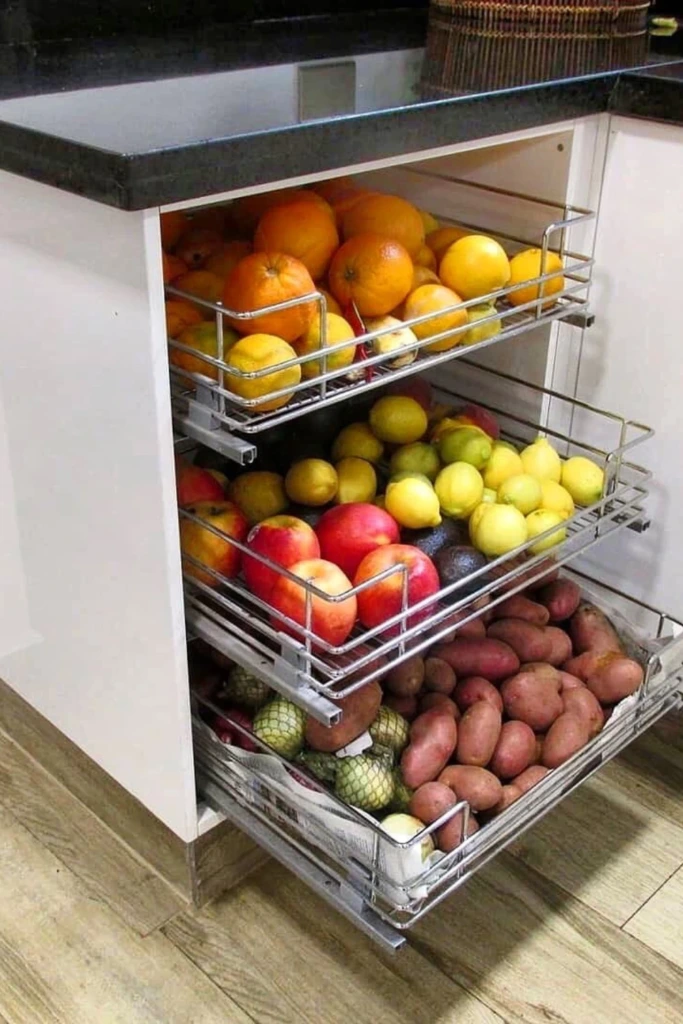
6. Pull-Out Fruit Storage Drawers
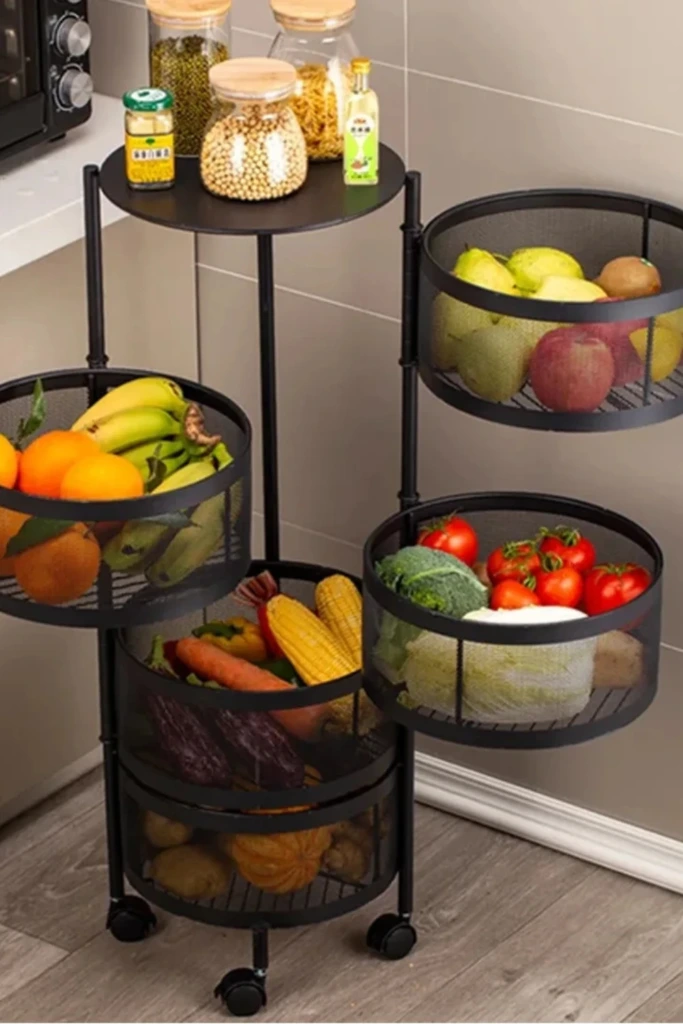
Pull-out drawers are useful for kitchens with deep cabinets or dedicated pantry storage.
Install sliding wire baskets or ventilated drawers to make room-temperature produce easier to reach.
This setup works especially well for citrus fruits and other sturdy items that do not require refrigeration.
Avoid using enclosed cabinet drawers for highly perishable fruit that needs cold storage.
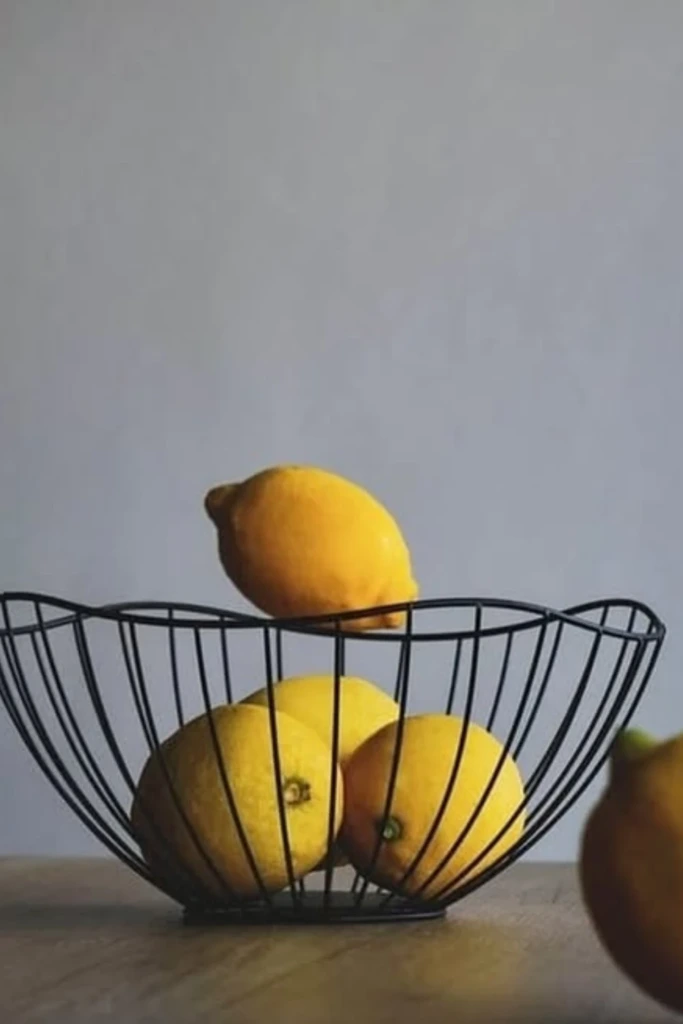
7. Countertop Ceramic Fruit Bowl
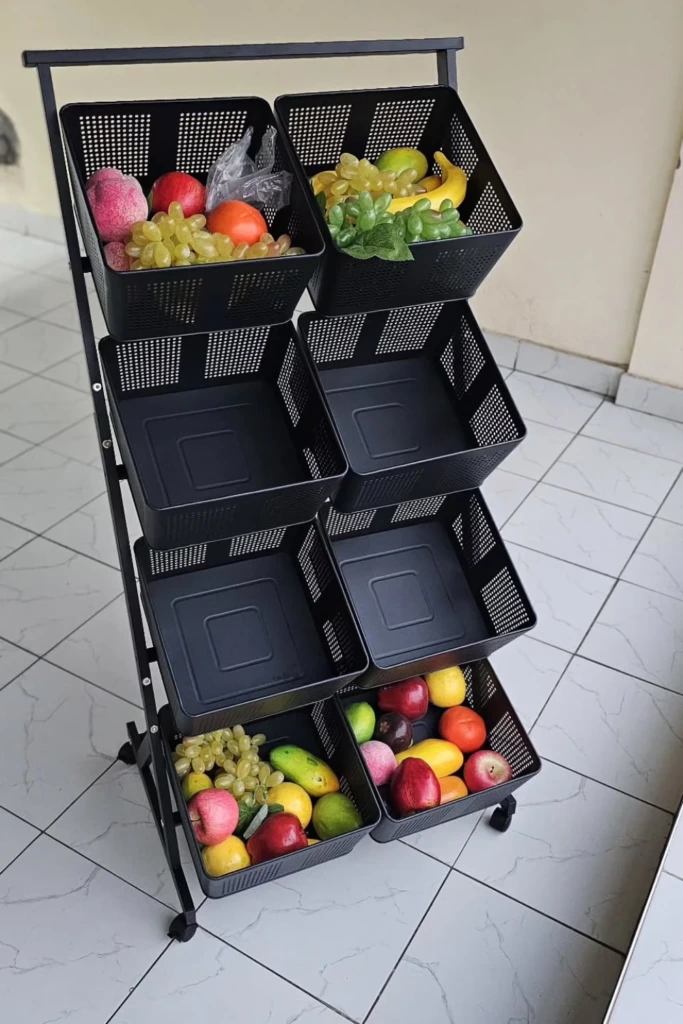
A ceramic fruit bowl provides simple storage while complementing your kitchen decor.
Choose a wide, shallow design instead of a deep bowl. Spreading fruit across a larger surface reduces stacking and makes bruised pieces easier to spot.
Place it away from sunny windows and heat-producing appliances.
A neutral ceramic bowl filled with oranges or apples can also serve as a natural kitchen centerpiece.
8. Hanging Wire Fruit Baskets
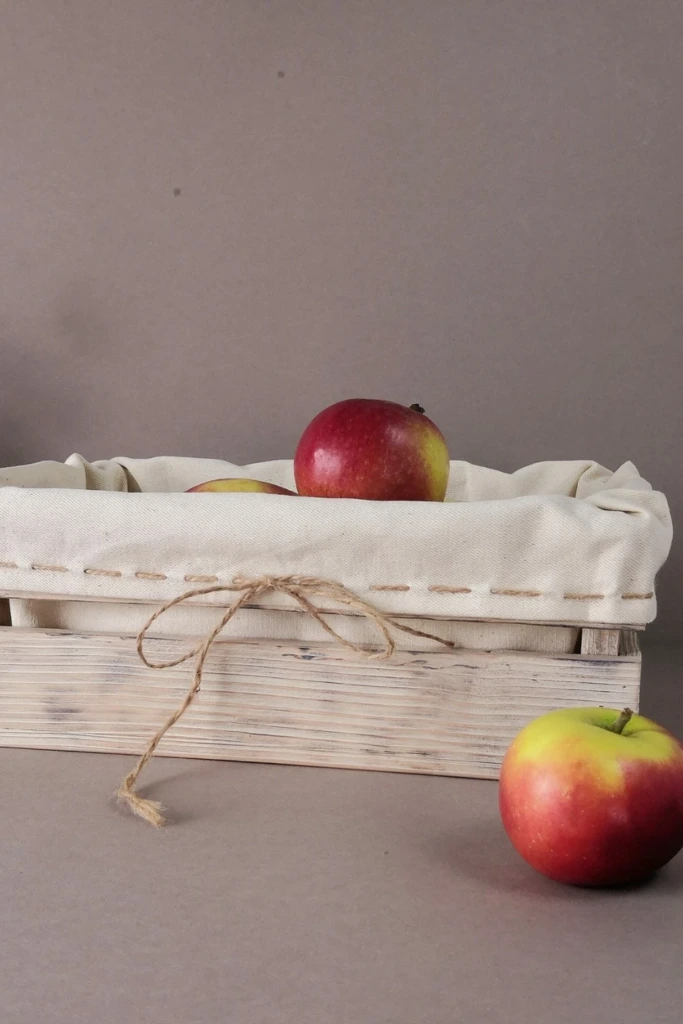
Hanging wire baskets make practical use of vertical space.
A two- or three-level hanging system can hold several types of fruit without covering your countertop.
Position heavier fruits in the lower baskets to improve stability. Keep softer fruits in shallow layers rather than piling them together.
Use a ceiling anchor rated for the full weight of the basket and its contents.
9. Refrigerator Fruit Organizer Bins
Clear refrigerator bins help prevent fruit from disappearing behind larger containers.
Assign separate bins to berries, grapes, cherries, and other refrigerated fruits.
Select food-safe containers that are easy to wash and fit comfortably on your refrigerator shelves.
For moisture-sensitive fruit, use containers designed for produce or add a clean, dry paper towel when appropriate. Avoid sealing wet fruit into a container without ventilation.
10. Stackable Fruit Storage Containers
Stackable containers are useful when refrigerator shelves are crowded.
They allow you to organize several fruit varieties vertically while maintaining a clear view of what is inside.
Choose containers with suitable ventilation and removable drainage inserts when needed.
Avoid stacking heavy containers on delicate berries, and leave enough room for cold air to circulate throughout the refrigerator.
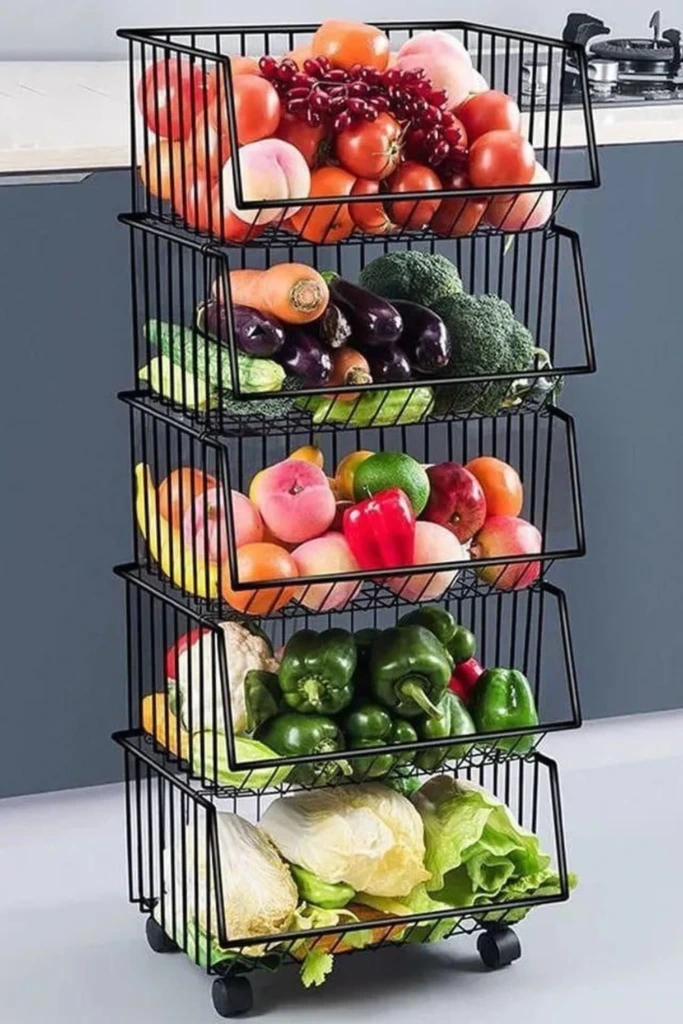
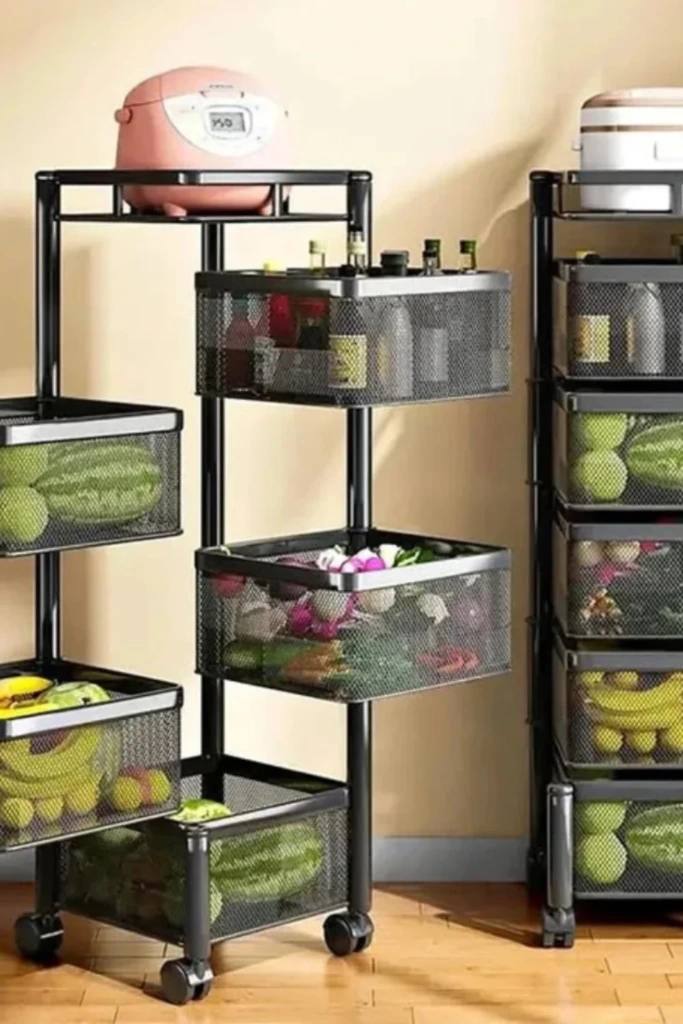
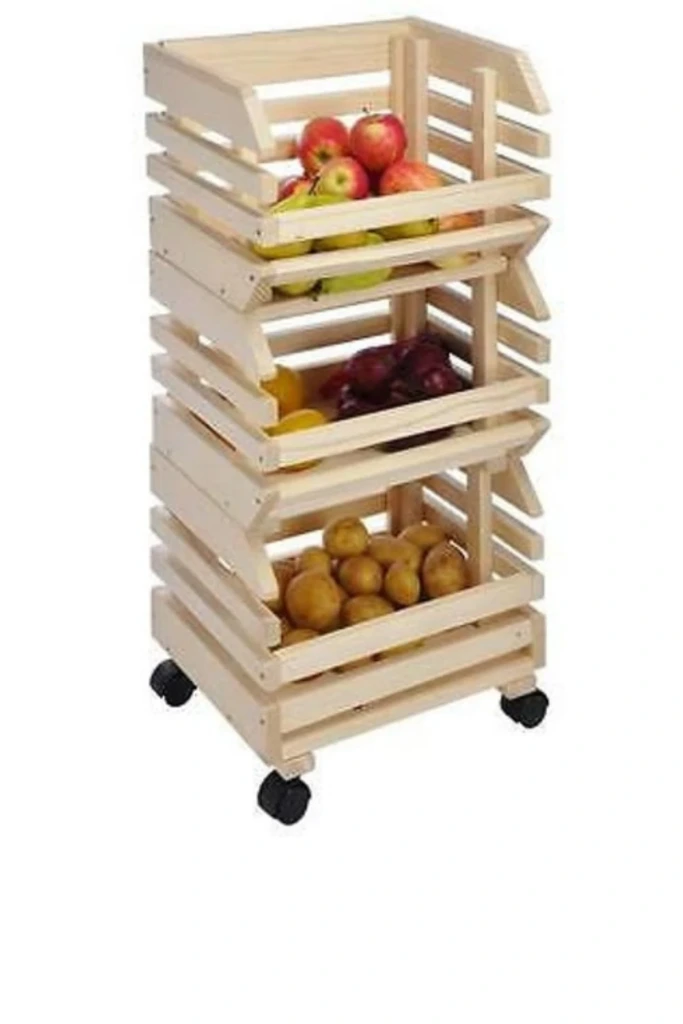
11. Rolling Fruit Storage Cart
A narrow rolling cart provides flexible storage for kitchens with limited cabinet space.
Choose a cart with ventilated baskets and locking wheels. Place it in a cool, shaded location away from ovens and radiators.
Use the upper shelves for lighter fruits and lower shelves for heavier produce.
A rolling cart is particularly helpful when you need to move ingredients closer to your preparation area.
12. Fruit Storage in Glass Containers
Glass containers make refrigerated fruit easy to see and organize.
They are especially useful for cut melon, sliced pineapple, and prepared fruit portions.
Use clean, food-safe containers with secure lids, and refrigerate cut fruit within two hours, or within one hour when temperatures exceed 90°F (32°C).
Whole fruit should not automatically be transferred into airtight glass jars, because storage requirements vary by variety.
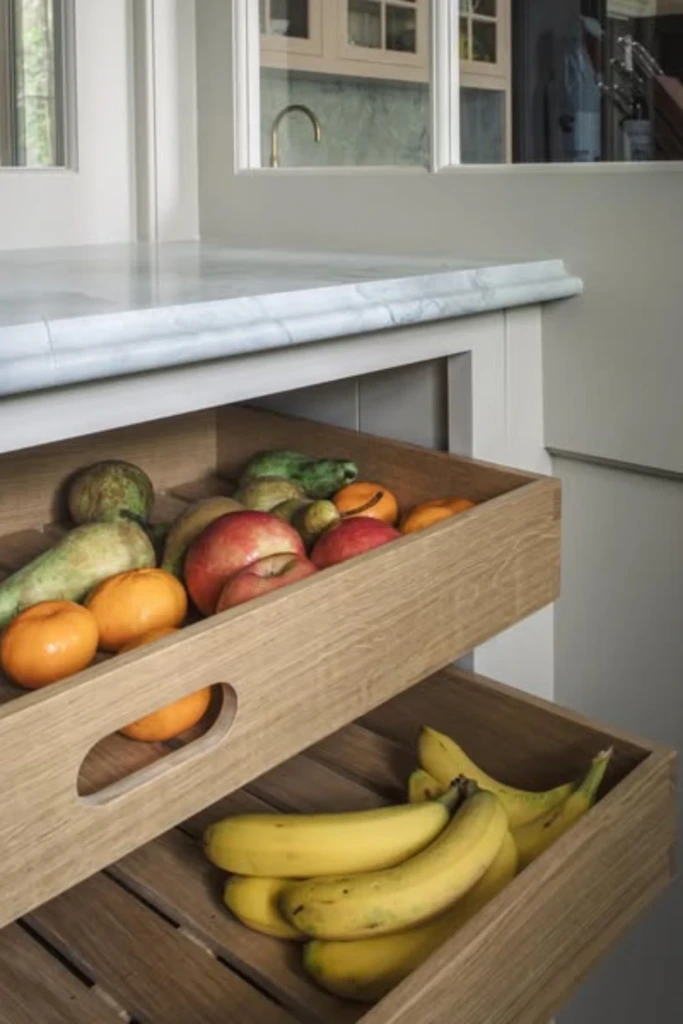
13. Built-In Kitchen Fruit Drawers
Dedicated fruit drawers create a streamlined look in custom kitchens.
Ventilated pull-out compartments can be incorporated into kitchen cabinetry for produce suitable for room-temperature storage.
Choose washable surfaces and allow space for regular cleaning.
If you want to store refrigerated fruit, use the refrigerator's produce drawers instead of an ordinary cabinet drawer.
14. Rustic Wicker Fruit Baskets
Wicker baskets add warmth and natural texture to traditional or cottage-style kitchens.
Use a shallow basket to display oranges, lemons, or other firm fruit on a kitchen island or sideboard.
Choose a basket with a smooth interior or washable liner to protect fruit from rough fibers.
Because woven materials can trap crumbs and moisture, inspect and clean the basket regularly.
15. Over-the-Door Fruit Storage Rack
An over-the-door organizer can create extra storage in a small pantry.
Choose a rack with shallow, ventilated baskets and secure mounting hardware.
Use it for lightweight, room-temperature fruit, making sure the door can still open and close properly.
Avoid loading it with heavy melons or stacking delicate produce in deep compartments.
16. Corner Fruit Storage Stand
Kitchen corners often remain unused because standard organizers don't fit comfortably.
A compact corner stand can transform that space into a dedicated fruit station.
Choose a triangular or rounded design with open shelves for good visibility and access.
Position it away from heat and keep the stand stable, especially if it has several levels.
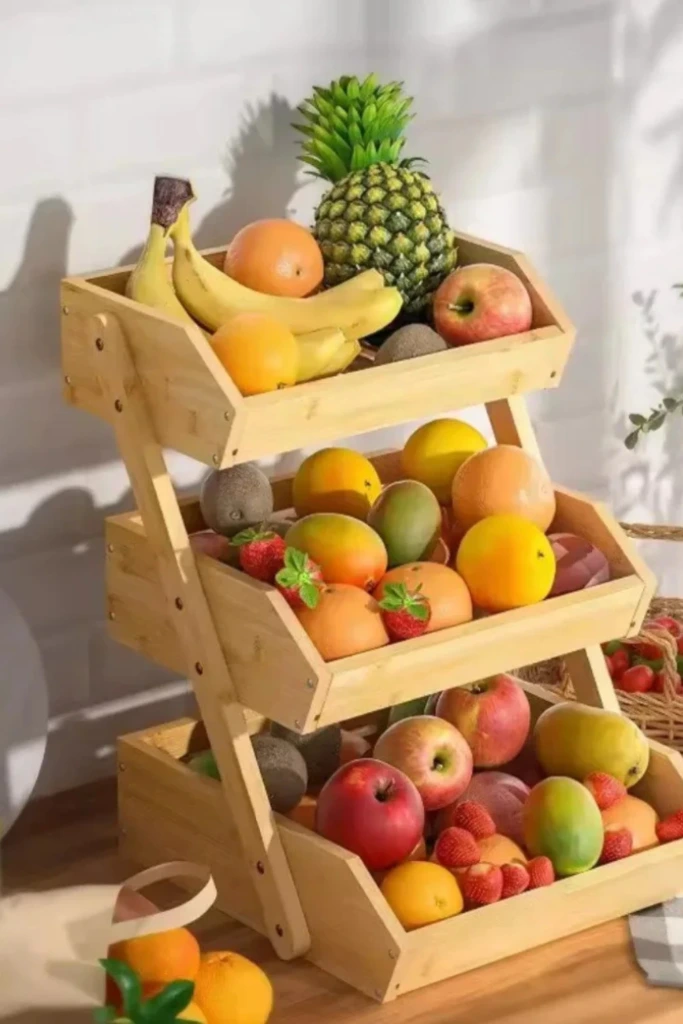
17. Bamboo Fruit Storage Organizer
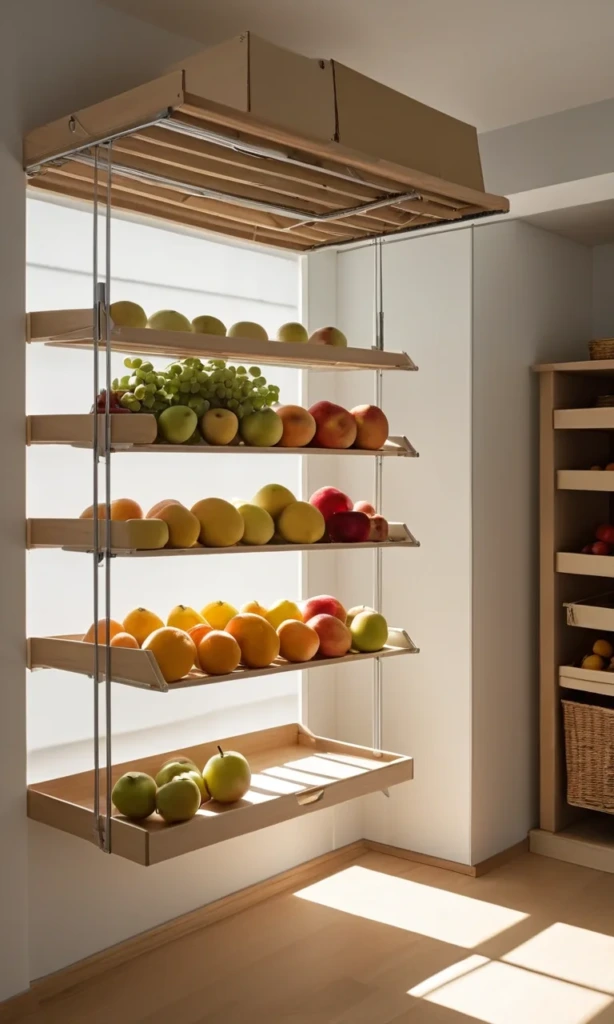
Bamboo organizers are a good option for kitchens with natural wood finishes.
Look for a design with open slats or ventilated compartments rather than a completely enclosed box.
Use separate sections for different fruits, leaving room to check ripeness and remove damaged pieces.
Wipe the organizer regularly and dry it thoroughly after cleaning to prevent moisture from accumulating.
18. Fruit Hammock Under Kitchen Shelves
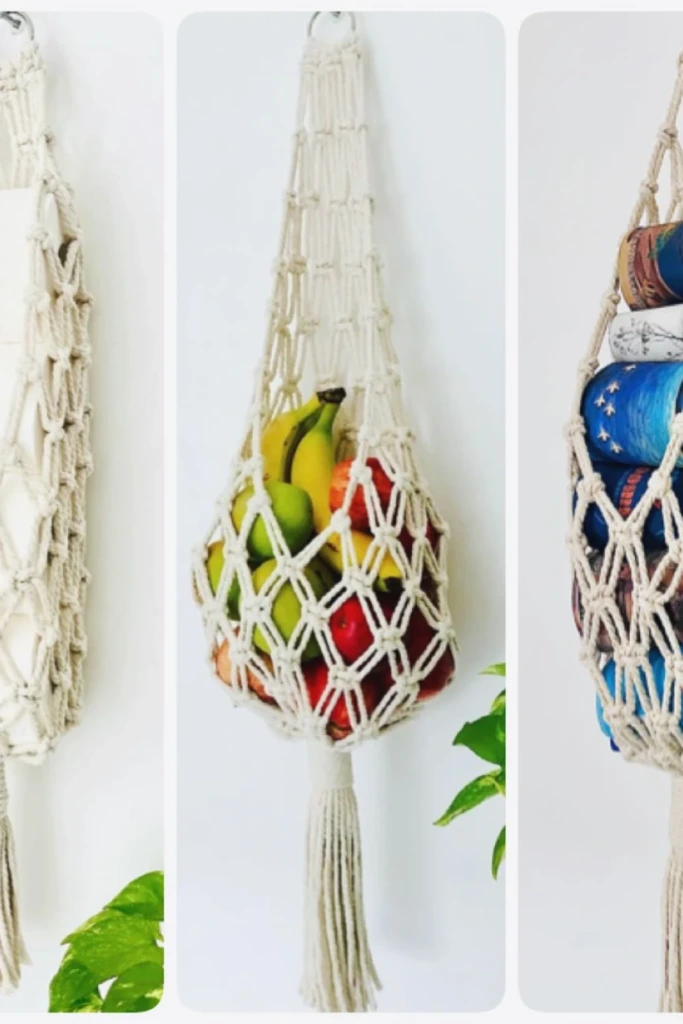
An under-shelf fruit hammock offers a simple way to store lightweight produce without adding another countertop container.
Attach a washable fabric or mesh hammock beneath a sturdy shelf.
This idea works well for small citrus fruits or a few firm apples, provided the hammock is properly supported.
Avoid stretching it too tightly or placing heavy fruit inside, as pressure can cause bruising.
19. Open Pantry Fruit Shelves
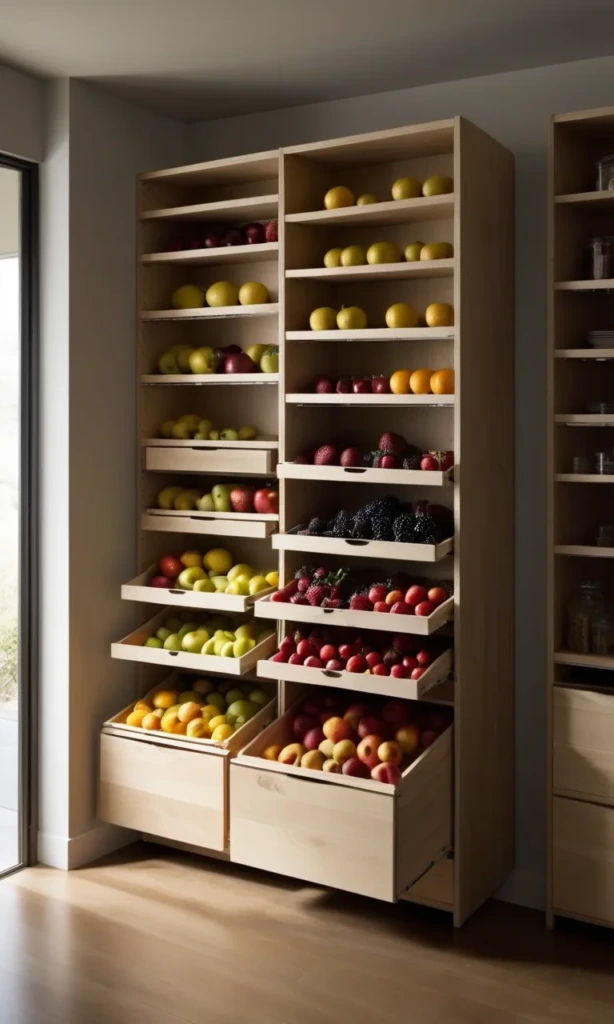
Open pantry shelving allows you to create a dedicated area for fruit that does not require refrigeration.
Use shallow baskets to organize citrus, unripe avocados, and other suitable produce.
Keep the shelves away from direct sunlight and excessive heat. Check the fruit frequently, especially during warm weather.
Labeling each basket can also help family members return items to the correct place.
20. Rotating Fruit Basket Organizer
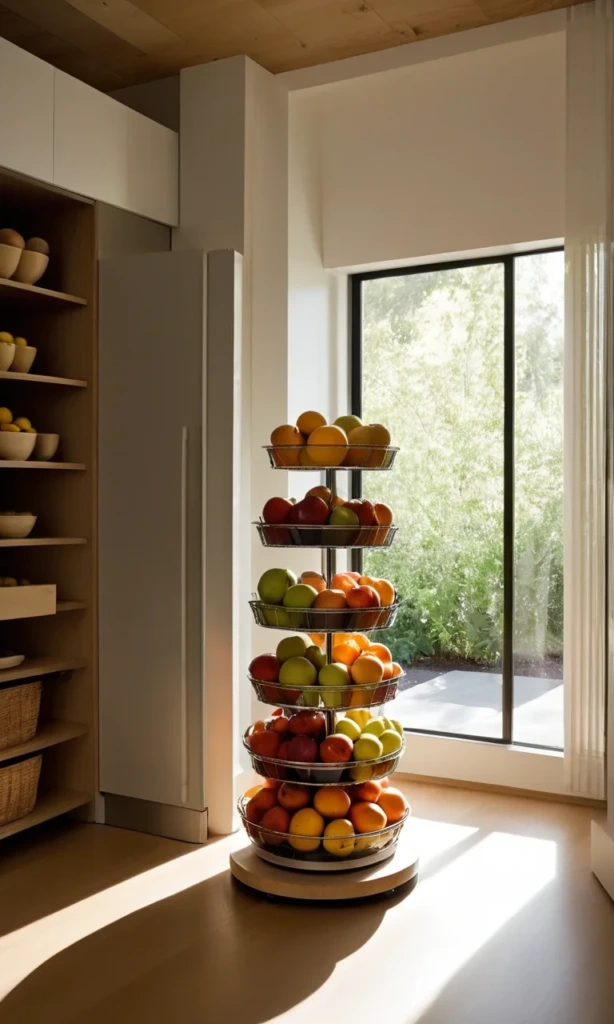
A rotating fruit organizer makes produce easier to access on a deep countertop or pantry shelf.
Choose a sturdy turntable with a raised edge to prevent fruit from rolling off.
This arrangement works best for firm fruits such as oranges, lemons, and apples.
Keep different fruits in separate shallow sections where possible, and avoid stacking them too high.
21. Fruit Storage with Divided Compartments
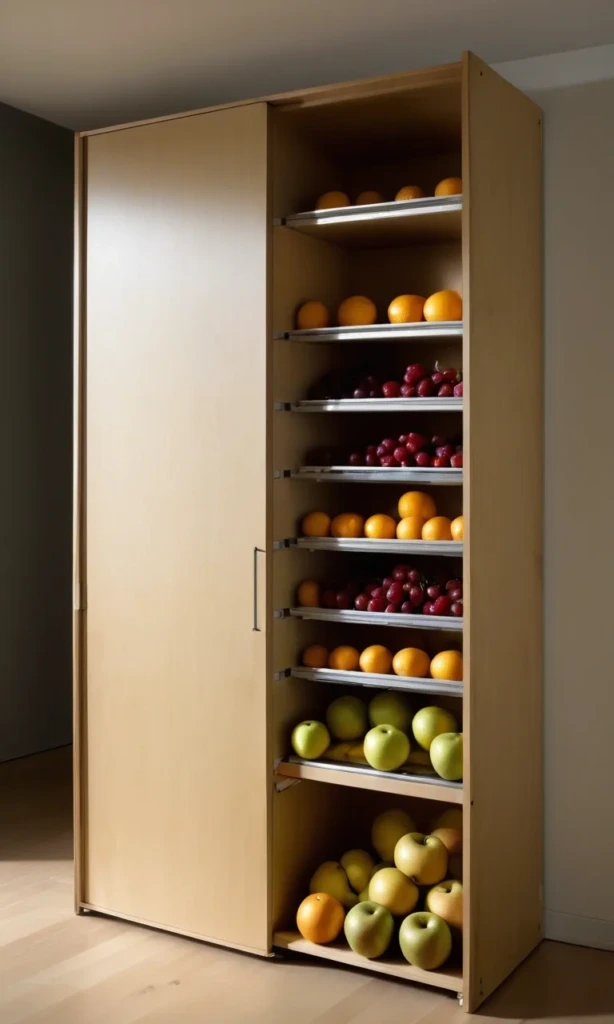
Divided containers help separate fruit varieties and reduce unwanted pressure.
Use a shallow compartment organizer for apples, citrus, and other firm fruits.
A divided design also makes it easier to inspect each section and remove overripe fruit.
Choose a container with ventilation if it will be used at room temperature, and select refrigerator-safe materials for chilled storage.
22. Hanging Banana Holder with Fruit Bowl
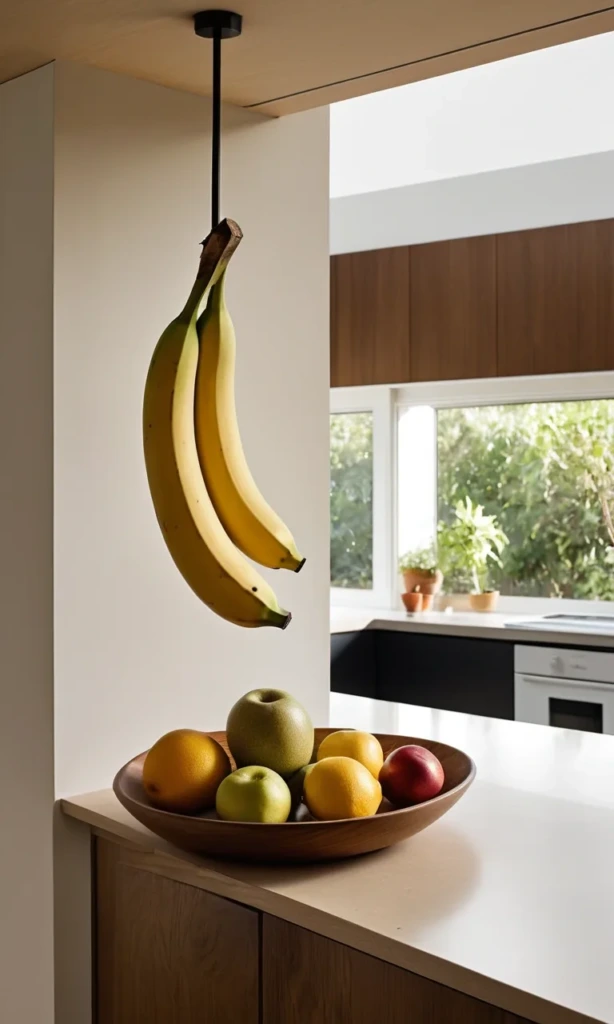
A combined banana hanger and fruit bowl is a practical addition to a busy kitchen.
The elevated hook supports a small bunch of bananas while the bowl below holds other room-temperature fruit.
Hanging bananas can reduce pressure marks caused by resting them against a hard surface.
Keep ripe bananas away from ethylene-sensitive produce if you want to slow additional ripening.
23. Sliding Pantry Fruit Baskets
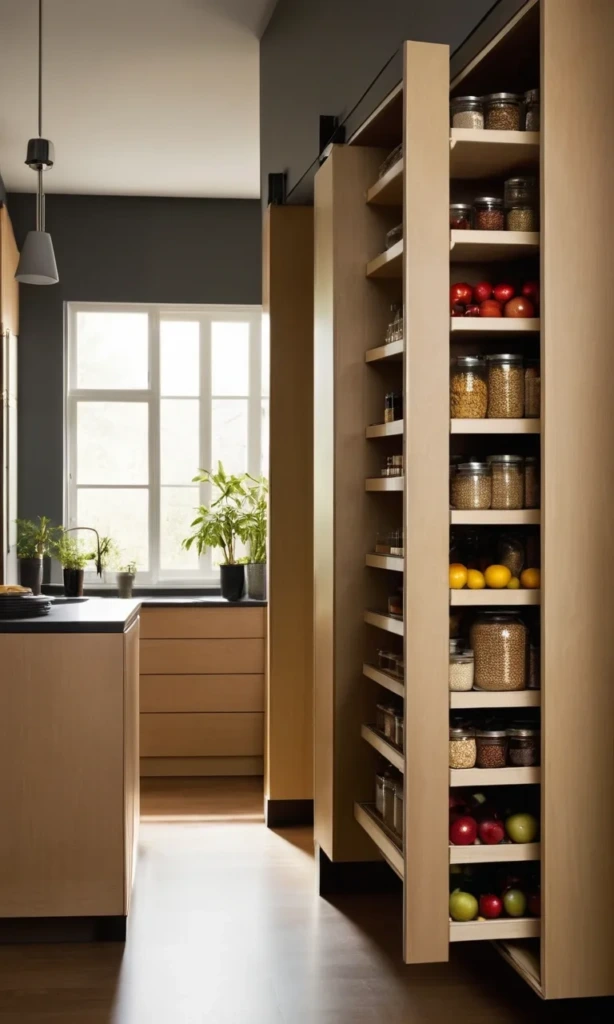
Sliding pantry baskets make deep shelves more accessible.
Instead of reaching behind other groceries, pull the basket forward to inspect and select fruit.
Use ventilated metal baskets for produce that tolerates room-temperature storage.
Install sturdy drawer runners and avoid overloading them. A removable basket makes cleaning easier when fruit juices or debris accumulate.
24. Decorative Fruit Storage Tray
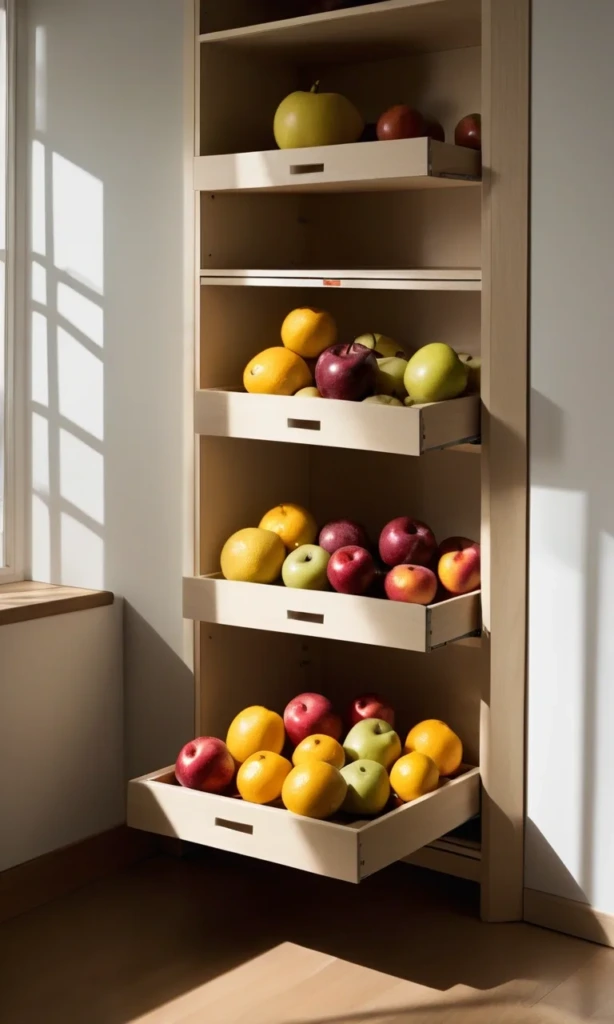
A decorative tray can turn everyday fruit into an attractive kitchen display.
Choose a wide wooden, ceramic, or metal tray with a smooth, food-safe surface.
Arrange a small selection of firm, room-temperature fruit in a single layer rather than creating a tall pile.
This works particularly well on kitchen islands and dining tables, where fruit can be seen and eaten before it becomes overripe.
25. DIY Fruit Storage Station
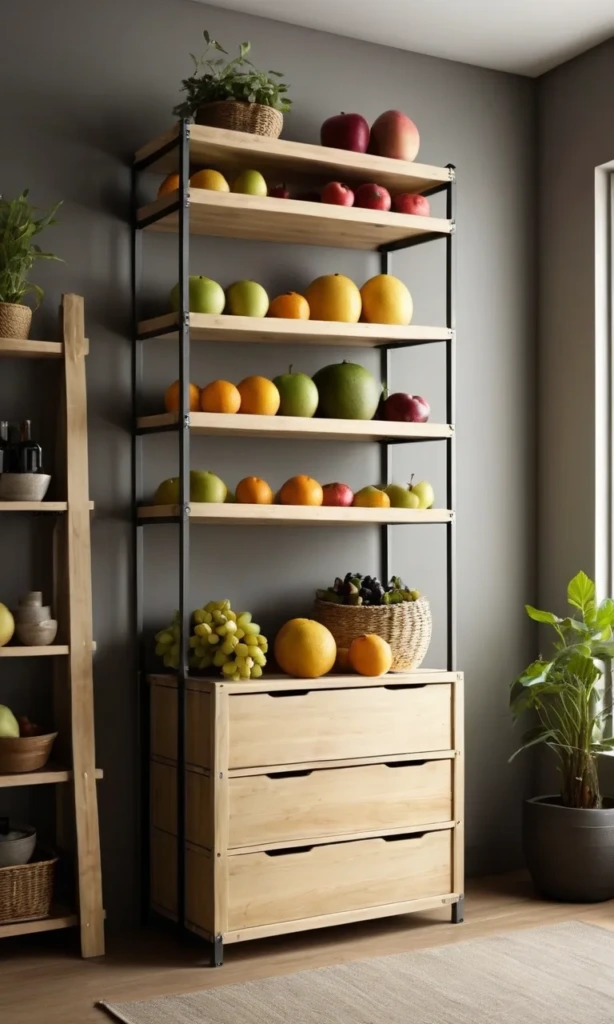
A dedicated fruit station combines several storage methods in one organized